
the trail of tears with John McLarty.
The history of the Trail of Tears in Northwest Arkansas and the development of the mapping of the entire trail routes throughout Northwest Arkansas.
season 2, ep. 21.
listen.
episode notes.
In this episode of the underview, we sit down with John McLarty—geographer, regional planner, and longtime researcher with the Arkansas Chapter of the Trail of Tears Association. Over the past two decades, John has helped uncover and preserve the routes, burial sites, and stories of the Trail of Tears that run directly through Northwest Arkansas. From his early work mapping the Butterfield Stagecoach Route to the creation of the Heritage Trail Plan, John shares how trails became more than paths—they became a framework for truth-telling and remembrance.
This conversation reveals the complexity of the Trail of Tears: its legal battles, forced detachment marches, geographic logic, and the heartbreak experienced by the Cherokee and other Indigenous peoples as they were removed from their homelands. Together, we trace the footsteps of history through Pea Ridge, Fitzgerald Station, Cane Hill, and the ridgelines of the Ozarks. More than history, this is a call to responsibility—an invitation to remember, to preserve, and to ensure that these stories remain a visible part of the land and the identity of Northwest Arkansas.
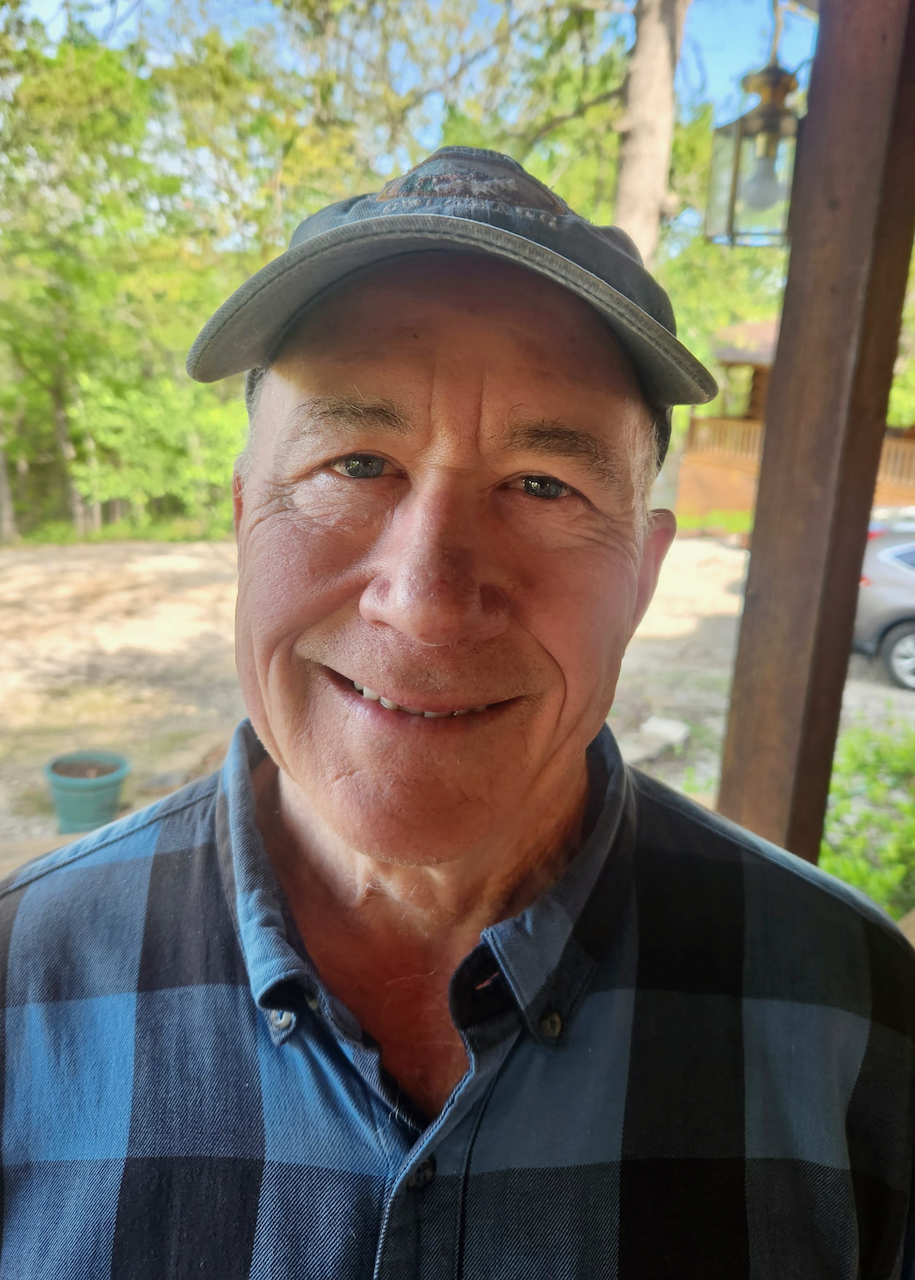
about John McLarty.
John McLarty is a respected historian, planner, and preservation advocate whose career has bridged infrastructure and memory across Northwest Arkansas. A graduate of the University of Arkansas with a degree in geography, John served as the Assistant Director of the Northwest Arkansas Regional Planning Commission from 2005 to 2015, where he also led as project manager for the Razorback Greenway, a transformative regional trail system. In that role, he ensured historic preservation remained part of the regional planning conversation, advocating for the integration of significant cultural routes like the Butterfield Overland Mail Trail, Civil War roads, and the Trail of Tears.
For more than two decades, John has been researching and mapping the Trail of Tears through Arkansas, using archival documents, county road records, and early land ownership surveys to uncover and document the Indigenous routes that crossed this region. He currently serves as President of the Northwest Arkansas Heritage Trail Partners and as Project Coordinator and Treasurer of the Arkansas Chapter of the Trail of Tears Association, where he continues to lead efforts to protect and interpret these historical corridors.
In 2015, John was honored by the Washington County Historical Society as a Distinguished Citizen for his outstanding contributions to regional planning and cultural preservation. His passion for rediscovering historic trails and telling the stories embedded in the land remains unwavering. As he puts it, “We’ve just discovered some old county road records that offer tantalizing clues”—a reminder that history, for him, is still being found, step by step, across the landscape.
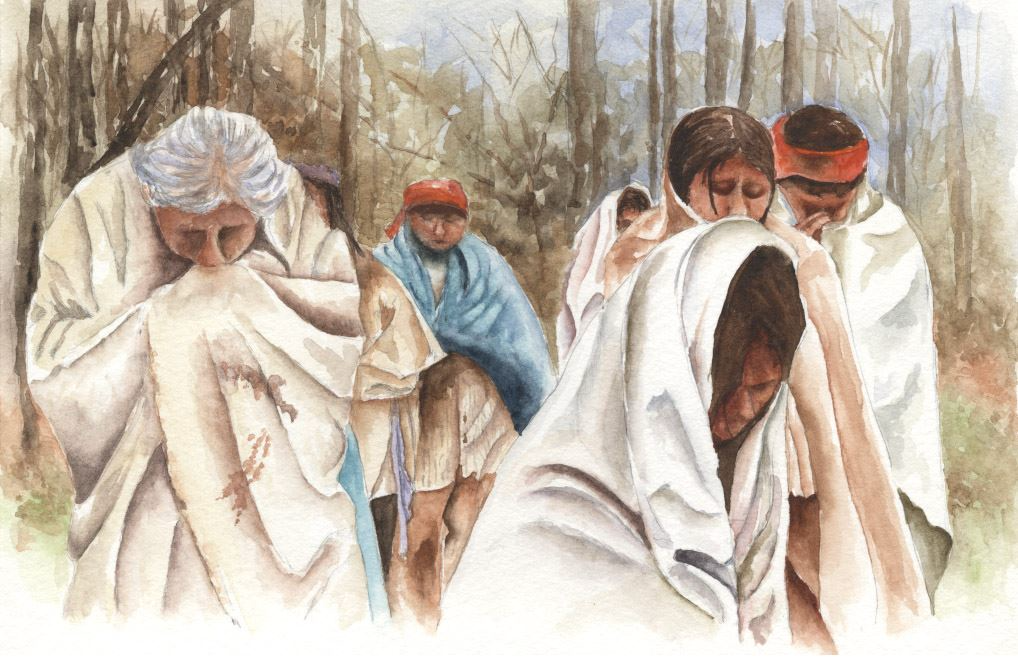
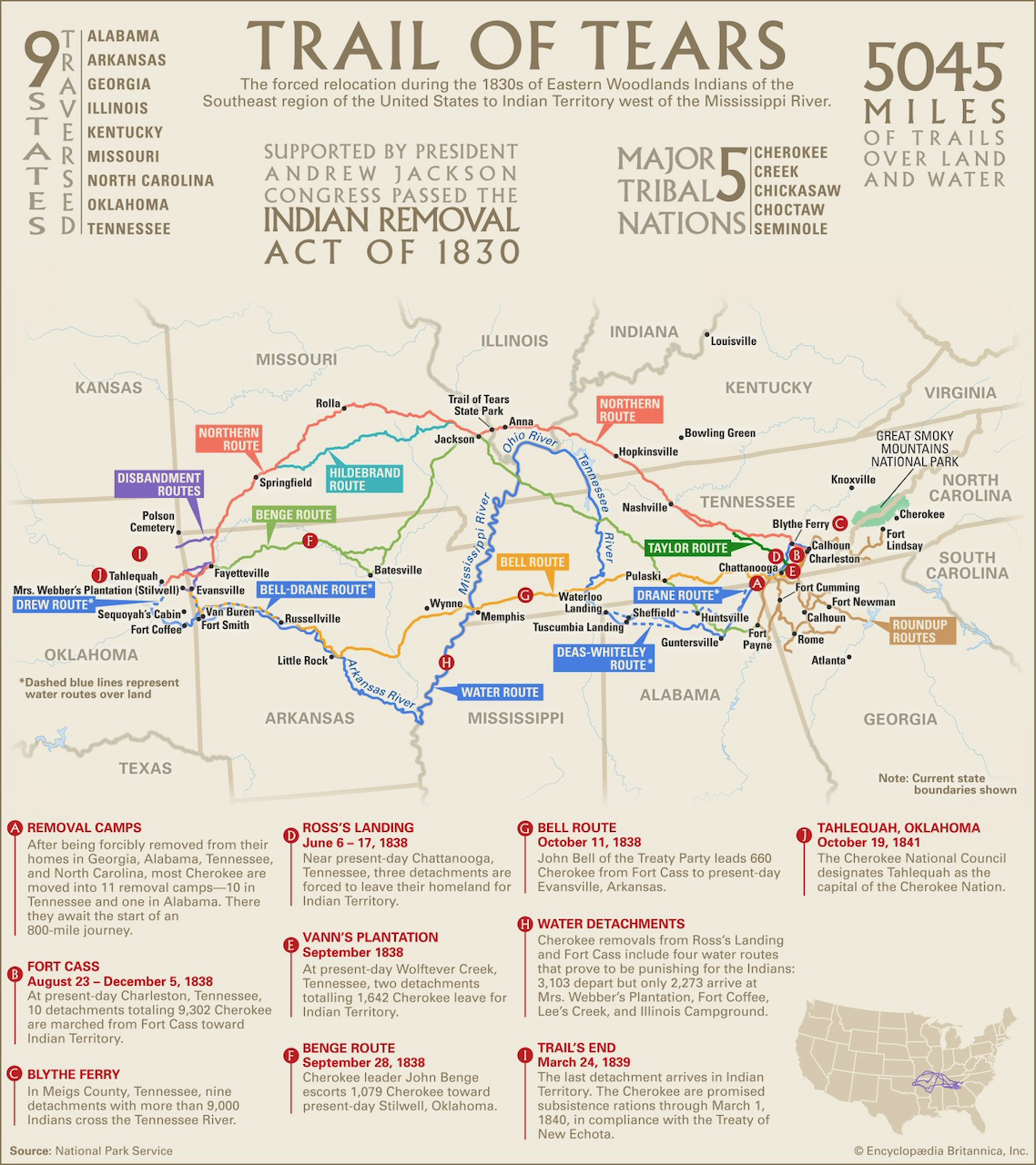
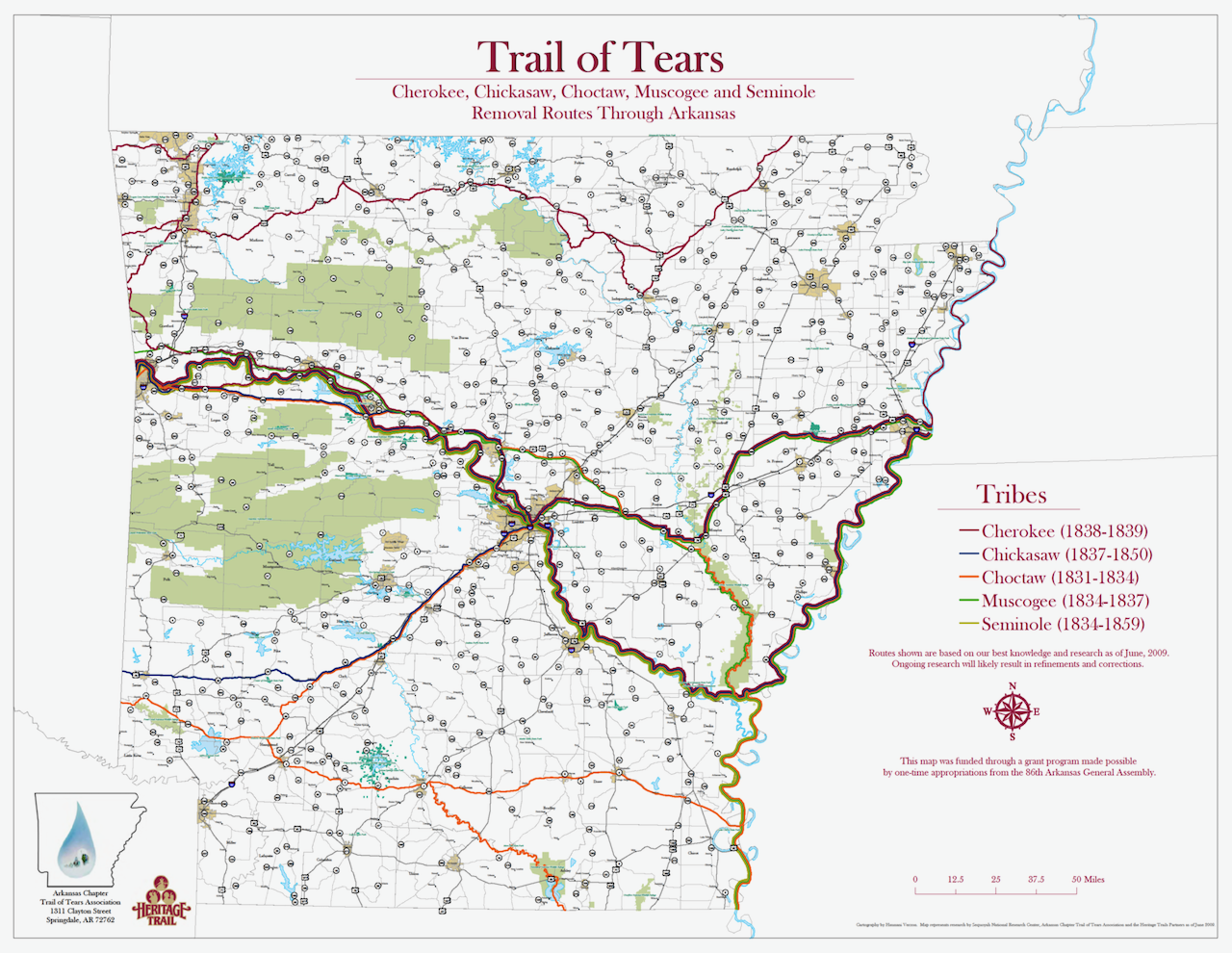
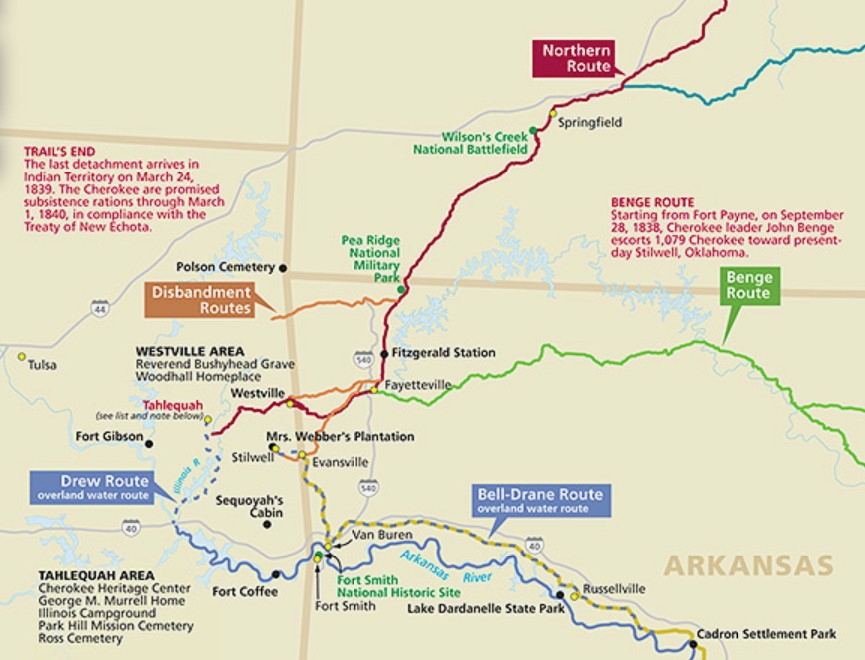
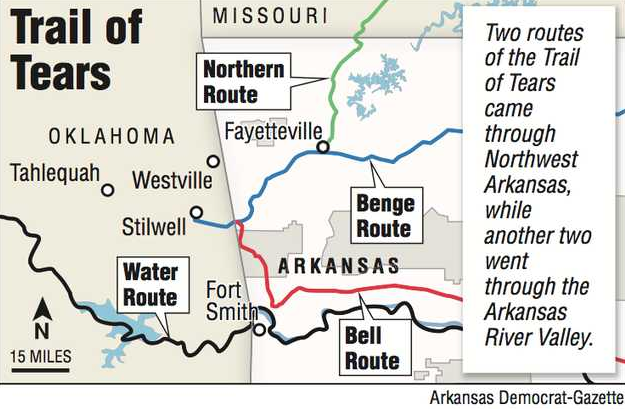

route.
episode notes & references.
- National Trail of Tears Association - https://nationaltota.com/
- Arkansas Chapter, Trail of Tears Association: https://nationaltota.com/arkansas/
- Northwest Arkansas Heritage Trail Historic Sites - https://nwarpc.maps.arcgis.com/home/webmap/viewer.html?webmap=5c3240e642124b508a624fd267ff56fe
- Arkansas State Parks Trail of Tears Across Arkansas - https://www.arkansasstateparks.com/articles/trail-tears-across-arkansas-state-parks
- Pea Ridge Military Park The Trail of Tears - https://www.nps.gov/places/pea-ridge-national-military-park-the-trail-of-tears.htm
- Samuel Worcester - https://en.wikipedia.org/wiki/Samuel_Worcester
- Treaty of New Echota - https://en.wikipedia.org/wiki/Treaty_of_New_Echota
- B.B. Cannon Journal - https://cdm17228.contentdm.oclc.org/digital/collection/frontier/id/3750
- Mount Comfort - https://encyclopediaofarkansas.net/entries/mount-comfort-washington-county-3452/
- Troy Wayne Poteete - https://troywayne.net/
- Fitzgerald Station Historic Site: https://www.nps.gov/places/fitzgerald-s-station-and-farmstead.htm
- Pea Ridge National Military Park: https://www.nps.gov/peri
- Worcester v. Georgia Case Summary: https://www.oyez.org/cases/1789-1850/31us515
episode outline.
- Episode Preview: 00:00–00:01
- Episode Introduction: 00:01–00:03
- John’s Background and Entry into Trail Work: 00:03–00:06
- Origins of the Heritage Trail Plan: 00:06–00:08
- Creation of Arkansas’ Statewide Heritage Trail Plan: 00:08–00:10
- Discovery of the Old Wire Road and Watershed Geography: 00:10–00:14
- From Indigenous Trade Routes to Forced Removal: 00:14–00:15
- Gaining Public Support Through History: 00:15–00:16
- Researching the Trail of Tears in Arkansas: 00:16–00:18
- Building the Full Story of the Trail: 00:18–00:20
- Trail of Tears 101 – Big Picture Context: 00:20–00:27
- Supreme Court Case Worcester v. Georgia: 00:27–00:31
- Treaty of New Echota and Ratification: 00:31–00:35
- Forced Removal and Conditions of Camps: 00:36–00:38
- Failed Water Removal and Winter Hardships: 00:38–00:43
- Detachments and Their Size: 00:43–00:44
- Corruption Along the Trail: 00:44–00:46
- Emotional Toll and Memory – The B.B. Cannon Journal: 00:46–00:48
- Pea Ridge, Fitzgerald Station, and Cane Hill Sites: 00:48–00:55
- Ongoing Research and Undiscovered Routes: 00:55–01:00
- Cherokee Resilience and Relationship with Place: 01:00–01:05
- Cherokee Enslavement and Freedmen Legacy: 01:06–01:08
- Preservation Efforts and Open Space Planning: 01:08–01:14
- What Wholeness Means for Community Today: 01:14–01:20
- Episode Outro: 01:20–01:23
- Cherokee Woman’s Oral History Clip: 01:23–01:25
episode preview.
[00:00:01] john mclarty.: There's so many misconceptions that the Trail of Tears was this singular event that used one road and that this March en mass of 16,000 Cherokee, and it was actually over time, even though it's a limited time framework, but there were 17 detachments in the Trail of Tears that took different roads, and it's just such a bigger story.
episode intro.
[00:01:08] mike.: You are listening to the underview, an exploration in the shaping of our Place. My name is Mike Rusch, and today we continue our journey into the layered memory of Northwest Arkansas.
When we think about the story of this region, the Trail of Tears is often treated as a distant event, a line in a history book or something that was a singular event, something that passed through but was not a part of our story, or that it was disconnected from the shaping of our home. But I would argue that the truth is the opposite of that.
My own path into this story began in January of 2024, out on a bike, on a gravel road along Little Sugar Creek. Those quiet, winding roads, they were not just part of the Trail of Tears system. They were a convergence of all of these stories. They were the corridors of history, and it was there that I began to realize that on the very ground that I rode, it carried the weight of this history of tragedy and removal and displacement.
And It was along these roads of the Cherokee Nation, along with many other indigenous nations were forcibly removed, passing through the hills and the hollows of this land, leaving behind a geography of sorrow and resilience, and in an enduring presence.
So it's within that context, that very personal context, that I sought out today as guest John McClarty. He's the project coordinator of the Arkansas chapter of the Trail of Tears Association, and a long time advocate for preserving the historic routes and the stories that are tied to this landscape.
For over two decades, John has helped uncover forgotten roads and lost campsites and quiet testimonies written into the terrain of northwest Arkansas. This work along with others led to the founding of Heritage Trail Partners, a local initiative that became the model for the state of Arkansas's entire Heritage Trail Plan.
Heritage Trail Partners was born from a project initiated by the Northwest Arkansas Regional Planning Commission in the early two thousands where John served then as the assistant director, the goal is to develop a regional bike and pedestrian plan that could link the growing trail systems across our community.
And as a part of that work, a decision was made to route some of these trails along historic roads that were originally tied to the Butterfield overland mail route in Benton and Washington counties. But as the work progressed, it became very clear to John that these roads were apart and carried the stories of the Trail of Tears.
They were once disconnected, but John's work was starting to bring them together to connect them, and to show how the feet of so many indigenous nations traveled these roads on their way to removal. And so today our conversation is rooted in these roads and how geography shaped the history and why remembering these stories matters so much. Not just for the past, but for how we understood ourselves and our place today.
Alright, let's get into it.
episode interview.
[00:03:51] mike.: I have the privilege today of sharing a table with John McLarty, who is the project coordinator for the Arkansas Chapter of the Trail of Tears Association. And beyond that, you've also had an incredible history and career in how our region looks at trails and roads and the development of this space. And so, John, welcome to this conversation. It's a pleasure to Yeah. To share a table with you. So thank you.
It's great to be here.
Well, thank you. I know you have so much in your mind about how all of these stories kind of come together. And so we can start wherever you would like. I think I would love to understand a little bit about your own personal background and how you got involved in this work.
[00:04:25] john mclarty.: Well, thank you for that. Interestingly enough, we moved here to northwest Arkansas in 1972. People would've called us hippies. We didn't, we kind of pushed back on that. We said, no, the hippies are out in San Francisco with flowers in their hair. And nothing wrong with that. But we were at the time there was this big back to the land movement and it was get back to nature, get back to clean water, grow your own food. So we were part of that.
Three friends of mine from high school came up here and bought land. We thought, we don't need college. We don't need a job. We just need 40 acres and some spring water and we'll be great.
So, ended up meeting an a hippie girl up here that was doing the same thing off in Madison County. And we ended up getting, say uh, married we were looking for every spiritual thing in the world except Christianity. And a family from Latvia just told us about Bible believing Christians, so we became Christians and changed our lifestyle. So our kids grew up in a teepee, but then they remembered this 180 degree turn where all of a sudden they were being had some direction and some rules for their life, and they actually kind of enjoyed that.
So my story is I was just working all kinds of jobs, factory jobs, truss shop, worked at the hospital and maintenance, and all the kids went to college. And once they left, I followed in their footsteps and went to college at the age of 45. So in 1995, went to college, U of A as a freshman.
Walked into class and every first class that all the kids would think I was the teacher, I was 45 and they were like 19. So, went to the U of A , got a degree in geography and loved history, but got a degree in geography because I lived maps and after college I'd specialized in computer mapping. Back then it was a GPS and GIS, which is geographic information systems. And I got a job with the original planning commission as a transportation planner, and then that kind of turned into assistant director.
beginning of Heritage Trail Plan.
[00:06:35] john mclarty.: But relating to the Trail of Tears, the topic for today, we were given the task to create a regional bike and ped system, trail system. And I had studied in college as a geographic study and a mapping study, the route of the Butterfield stage coach. And just, I had, so I had this memory from my senior research paper that the Butterfield stage coach entered northwest Arkansas around, up around Pea Ridge National Military Park, and came down through Rogers, through Springdale, through Fayetteville, and then left the county down around if people are familiar with the area, the good old town of Hogeye and Strickler.
And so it was kind of a diagonal route through the two counties. So I suggested that, well, we could use that as a spine as of a trail system and then branch off of that.
So our, we had of course a subcommittee that was studying all that. So we decided to do that and adopt and created what we call the Heritage Trail Plan. It still exists today.
And this was in, what was the time period when that really started?
This would've been about 2002, but in this process of delineating the Butterfield, we kept coming across references to the Trail of Tears. So that became part of the Heritage Trail Plan.
The first Heritage Trail plan included the Butterfield Stage Coach route, the Trail of Tears route, and I should say routes for the Trail of Tears, and then Civil War Troop movements. So that was just the Heritage Trail Plan, which became the adopted regional trail plan. It's still a subset now, the full regional trail plan, but it's still in the the long range transportation plan.
[00:08:23] mike.: The Heritage Trail Plan, how does that fit within the State's Heritage Trail plan? Did one come before the other, or how does that work together?
[00:08:32] john mclarty.: That's a great question.
The Heritage Trail Plan was a two county plan, it was official policy. It wasn't just a, a group invented this plan. It was 'cause we were working under, the umbrella of the Northwest Arkansas Regional Planning Commission which was the Metropolitan Planning Organization and is for Northwest Arkansas. So this plan you might see, had some teeth to it.
The idea was that if a road on the Heritage Trail plan was improved, that whatever jurisdiction, whether it be city or county or state, would accommodate bicycles and pedestrians in whatever way it made sense.
If you're doing a road improvement and it's on the Heritage Trail plan, you should incorporate accommodating bike and. Bicycles and pedestrians. So then that plan actually with our President at the time, Marilyn Hefner, took that idea and wrote legislation, drafted legislation for it to be a statewide plan because all those elements, the Trail of Tears, the Butterfield Stage coach, and the Civil War troop movements have a statewide footprint.
So the state actually adopted their version of the Heritage Trail Plan, which we are totally for. It does not have the same requirement of bike and pedestrian improvements, but it's more like signage and interpreting panels and a brochure that talks about it.
[00:10:01] mike.: The State plan grew out of the work that you were directly involved in actually, yes, it did. Yeah. I didn't understand how all of that worked together. So I think the context of that Yeah. Is really neat.
So as a part of that work and you kept coming across the Trail of Tears, components of this, like maybe give us a framework of why did this really matter to the state and to the work that you were doing?
[00:10:23] john mclarty.: Well, now this is where I get really excited because as we studied the Butterfield and then the Trail of Tears, it turns out that the major route of both of those historic events were along what's now called the Old Wire Road. Some places it's called the Old Missouri Road.
Up in Rogers, it's Arkansas Avenue or Arkansas Street goes right through the downtown. There's little pieces of the Old Wire Road up around Pea Ridge, and then you just find these remnants of the Old Wire Road. And it turns out we discovered in 1820s, late 1820s, the military built a road to connect the forts on the frontier. So there was a road from St. Louis to Springfield to Fort Smith. Well, the road from Springfield to Fort Smith through Fayetteville was became the Old Wire Road. It was the old Missouri Road. Some of the old maps referred as the Springfield to Fayetteville Road.
So it was, you might say the interstate of the 1830s. So when they removed the Cherokee through from their homelands in North Carolina and Georgia. At some Park, Tennessee and Alabama to Indian territory, they used that road for the, we call it the northern route. I have this quote because the road real first, because the geography was there, the road was there and because the road was there, the history was there. So they used that road to remove the the Cherokee.
watersheds.
[00:12:05] john mclarty.: One of the things I discovered as a geographer, we were in a separate study at regional planning. We were looking at the watersheds of northwest Arkansas. So we have a very interesting geography here in the sense that the White River in these two counties is flowing to the north.
It starts around Winslow and it's flowing to the north, goes up into Missouri, wraps back around table rock and becomes bull SHOs down in central Arkansas, but it's flowing north. And then we, another major river system is the Illinois River, so the white river's flowing north and kind of to the east. And the Illinois is flowing north up from around Strickler around well Devil's Den area, flows north and then cuts over towards Salem Springs. So there's actually, there's this very subtle, you might say divide, like the continental divide, but it's the Ozark divide and everything in these watersheds. Everything to the east is going into the White River system. Everything to the west is going into the Illinois, and that line is basically the Old Wire Road.
So it's a very subtle ridge, you might say, divide. And the interesting thing about that, Mike, is that in a flood event, in a major flood event, like we just had a lot of rain where all the rivers are overflowing. That divide is the only way to get from Missouri down to to Oklahoma and cross these two counties and not have to cross a major river. So in a flood event, that's the route you would take through. And it, so it has the least river crossings and it's flatter flat or terrain, less ups and downs.
So as we studied it, we got so fascinated by that and then got involved with the Arkansas archeological survey and they kind of verified that road is predates the military. The military didn't just forge this completely new path through the woods. It was like an old Indian trace. So that's what, just as a historian and you must say amateur historian, I didn't have a degree in history, but the trade between St. Louis and the spiral mounds down road Oklahoma probably used that road because the terrain made sense and the water crossings made sense.
So you just add geography and then to the history and then you know, the trail of tears. And it just became quite fascinating to me. And as, as we would show that it public events, it was really picked, piqued people's interests.
origin of the route.
[00:14:55] mike.: It sounds like these routes, they've held memories since the beginning of time that we can tell and to be used as to your point to those Indian Buffalo traces for trading routes, but like to see that route develop over time, probably originally by indigenous communities as a place of trade and movement, but also later in to be used as a tool of removal is yeah. That juxtaposition is a hard, it is, it's kind of hard to wrap my head around in many ways. And so
[00:15:24] john mclarty.: yeah, it makes the whole story becomes so compelling.
So as we discovered that.
And just a little interesting side note, at the time the idea of trails in northwest Arkansas, bike and pedestrian facilities was kind of unpopular because people thought, waste of taxpayer monies, why would we do this? This was only for people that, bicycle professionals or enthusiasts that, have these thousand dollar bicycles and, the average person just wants to go to a ballpark and play soccer.
So when we added, we didn't have this figured out ahead of time, but when we added history to our trail system it became part of like Americana. So when we said, well, this is not just a trail system, we're commemorating the Butterfield Stagecoach route, the Trail of Tears and the Civil War routes. It was like, who can be against that?
So people had these, you know, so the rodeo of the Ozarks got all excited about this and Chambers of Commerce saw it not just as a trail, but as a historic route and kind of maybe attract tourism and, tell the story of northwest Arkansas. So all of a sudden, all the opposition, most of the opposition to trails vanished. And so adding the history to the trails really helped the trail system for northwest Arkansas. I would say it was huge. It was a turning point.
[00:16:53] mike.: As a part of that kind of history process I'm curious where did you start? You mentioned some oral history around the Butterfield. How did that history, process and uncovering that history around the Trail of Tears specifically, what were your sources? Where did you begin? What did that process look like?
[00:17:08] john mclarty.: Yeah, great question. So it turns out in 1958, which was the hundredth year anniversary of the Butterfield, there's a lot of research done, signs put up. So we went to libraries and just r newspaper articles. And a lot was written about the Butterfield. And as I said, I started discovering references to, oh, and this was also the Trail of Tears. We just found a lot of research. We're doing new research today because of, things are being digitized and we've discovered new documents in the treasury archives in Washington DC But we found a lot of. Information that was already here on the Trail of Tears, Washington County Historic Society. People out at Prairie Grove had a lot of information in Cane Hill, Pea Ridge national Military Park.
building the Trail of Tears story.
[00:18:01] mike.: There is this memory, obviously, of the Trail of Tears that's in these different places, but it sounds like those were like separated memories. They weren't, your work came into really try to connect, pull it together, pull it all together. That's how I would view it. I don't,
[00:18:14] john mclarty.: yeah, it was these vague pieces and some of the stories, kind of were survived vetting and research. 'cause there's all kinds of stories. Just like the Butterfield went everywhere, according to old stories, and the same with the Trail of Tears. So we really, and there was a lot of Cherokee movement before the Trail of Tears.
There was a lot of voluntary, uh, migration. The treaty party and then you there in Oklahoma in the Indian territories, there's the old settlers that had been coming here since the 1820s, and they obviously came on roads. Then you had the treaty party, and then you had the first removal. So three different groups, so for three different periods of time. So, a lot of the old settlers might have come through a certain part of Arkansas. And that's just the old stories. Well, the Cherokee came through here. And therefore it's the Trail of Tears.
Right? Well, when you get into the history of the Trail of Tears, the National Park Service and the Congressional Act that designated, it's this very narrow time framework of the forced removal, which is 1838 and 1839. So we had to delineate a lot of stories, as to they had, they were legitimate, but they weren't the forced removal.
[00:19:33] mike.: Yeah. I think that's a really interesting component of this work is even though this memory was here Yeah. That it was able to be, yeah, it was segmented. Segmented. You were able to pull this information together.
So yeah maybe begin us down this the work that's kind of you're involved in today and what this looks like around the Trail of Tears.
I've got a ton of like little questions, but like, give us a framework to think through the Trail of Tears and the importance of that for Northwest Arkansas.
[00:20:00] john mclarty.: So as Heritage Trail Partners developed and then we beca that group, we formed a 5 0 1 C3 because our director at the time very correctly noted that you are go, you're this calls for involvements that are beyond the scope of regional Planning commission and Marilyn Hefner, our president at the time. Marilyn kind of chased the Butterfield story. She's was really interested in Fayetteville history and she was at one time the mayor of Fayetteville so she became the Butterfield expert, and I jumped into the Trail of Tears so I joined the National Trail of Tears Association there.
They have a conference once a year. So their first conference I went to was in Fort Smith. So I jumped into the Trail of Tears and met Cherokee that knew the story and we were just, tell, realizing the story that they passed through. They came through northwest Arkansas. So I ended up going to conferences in Cherokee North Carolina, Rome Georgia, Chattanooga Tennessee, and became familiar with this whole picture of the Trail of Tears.
And Mike just, I think one of the big things I like to. I inform people about is there's just this idea, there's so many misconceptions that the Trail of Tears was this singular event that used one road and that, this March en mass of 16,000 Cherokee, and it was actually over time, even though it's a limited time framework, but there were 17 detachments in the Trail of Tears that took different roads and it's just such a bigger story. Just even the roads they took, even when they came into Northwest Arkansas, we'll talk about that in a little bit. They didn't all just March one route through northwest Arkansas, into Oklahomas, they came into northwest Arkansas. They split up or took different routes into Indian territory. There's three distinct routes just through these two counties that we discovered.
But when I discovered the bigger picture of the whole idea of removal. It's just was fascinating to me because it's so much part of the American story and it's a tragedy. It's a dark story, but it has to be told. I went through a personal revelation. These aren't just lines on a map for a trail. These are from lines on a map to a story that must be told as I learned more about the Cherokee story.
[00:22:37] mike.: Yeah. 'cause and I'll share a map on the episode webpage so that people can really look at it, because when you look at the, all the different routes, this is a mass movement of people that really kind of at the end of that converges here in northwest Arkansas. It does. And so you've got a really, a national story. It's a national story and but to have that center of focal kind of ending point here in and around northwest Arkansas really brings a weight to maybe our responsibility of how we think about what these stories are. And so, yeah, I When you say that from lines on a map to stories that have to be told, where do we even begin with these kinds of stories about understanding that and how can your work, or how does your work help us start to get our head around some of that?
Trail of Tears 101.
[00:23:23] john mclarty.: Yeah, great question. I guess we can start off with I, the big picture, I always love to give the big picture. So the I call this kind of Trail of Tears 1 0 1. So the Trail of Tears is the first removal of the Cherokees, specifically from 1837 to 1839. It was originated in their homeland, which is North Carolina. The Eastern Cherokee, which they're still there by the way. There's still a nation over there, but a center in North Carolina, Tennessee Georgia and Alabama. So we actually took a trip over there and had just learned from a lot of scholars that study it over in the east, and my Cherokee friends and just some of the basics is the, there was this idea to remove the Cherokee and all of the, we call 'em the civilized tribes, and they were from the southeast.
So, there was this it was just a land to grab, really. It was the Europeans, the whites, I'll, let's call 'em the whites, wanted the land. They wanted the land. It was prime land in Georgia. It was good plantation land the Cherokee had, and then great land in North Carolina.
And then they discovered gold. In nor in Georgia in 1828. A lot of people don't know that there was gold discovered in Georgia in 1828 in Northern Georgia is one of the first gold rushes so kind of the story real quickly is bad news for the Indians. And they, by the way I say Indians and they, the Cherokee used that term Indians. So native Americans or indigenous peoples. And then and I say and Indian because so much of the history like the in May 28th, 1830. This all really got bad for the Cherokee when the, it was called the *Federal Indian Removal Act*.
So Andrew Jackson was elected president in 1828. Georgia discovered gold in 1828, and then in 1830 Andrew Jackson and the Congress passed the Indian Removal Act, and that's what started, you might say, the bad news for the Cherokee. At the time, they were wanting to assimilate. The Cherokee were actually, a lot of them were quite prosperous. We went to these homes in Georgia that were like mansions. And they were plantation owners and they had ferries and stores and they were like doing quite well. Thank you. And they, they lived in, a lot of people think of the Indians back in the 1830s living in Mud Huts or Wigwams or whatever.
They were living in log cabins. They had spinning wheels, they had cast iron. And you just have to think the, I was researching this a little last night. Plymouth Rock, the pilgrims coming to America. Well there was some earlier settle, settlements in Jamestown was a little earlier than that, but we think it's 1620. Right. So 1820, when the Southeastern Indians really became kind of an area of focus, there had been interactions between the Europeans and the Indians for 200 years. That's a lot of interaction. So the Southeastern Indians, especially the, the Cherokee Chickasaw, the Choctaw, the Creek and the Seminole, they had adopted a lot of the European ways so it's just they were very high into education and success but they wanted to keep their culture also. So I really want to emphasize that.
But they were making the cases, we can be part of this American experience. We don't need to be removed. We don't need to, we're assimilating. And they had one of my great myth disspellers of the whole misconception of the Cherokee is in one of my PowerPoints, I've got a picture of *Jesse Bushyhead*, who in 1830s was ordained of all things Baptist preacher. He was a lawyer, and he would go to Washington DC and argue their case before Congress. Very educated man. So they weren't just these, third world living, just around fires and nothing wrong with that, that if they were living like that doesn't jut justify removal, but they were very sophisticated in their lifestyle.
So 1832, this is so fascinating. This is what makes it the American story. I'll try to tell this quickly.
US Supreme Court Case Worcester vs. Georgia.
[00:27:59] john mclarty.: There's a Supreme Court case. Worcester versus Georgia. So the Georgians passed anti-Indian acts 'cause of the gold because of the plantations, and they basically said no one can come into the state of Georgia and do commerce with the Indians unless you have approval from the state of Georgia.
Well, there was already a missionary there called Samuel Worcester, and he was like, well, I have the permit. I was invited here by the Cherokee. I have the permission from the federal government to be here, so I don't need the permission of the State of Georgia. Thank you. They threw him in jail. They threw Samuel Worcester in jail and sentenced him to four years of hard labor. Then this became a national case. It wasn't an isolated state case. This became a national case and then in fact, kind of the New England. Educated like Ralph Waldo Emerson became aware of this and they were outraged. In fact, you, we can't have a missionary thrown into jail in Georgia.
And it became a state's rights versus federal issue. So it was taken to the Supreme Court and the Cherokee were part of that. So you had, friends of the court and, New England lawyers and the arguing that they took this case to the Supreme Court that Georgia did not have the right to throw Samuel Worcester in jail because he had the permission from the feds, which that's who deals with treaties, right? It's federal jurisdiction. And he had been invited there by the Cherokee Nation, which had a degree of sovereignty. So it went to the Supreme Court and I think it was Marshall. With the justice, they ruled in favor of Worcester and they told Georgia, you have to let him go. And Georgia said, no, we won't come get him. So Andrew Jackson refused to enforce the decision of the Supreme Court.
So it was a co it was a constitutional crisis of 1830s and that's still interestingly all this, these Indian rights cases going on in Oklahoma, they go back to Worcester versus Georgia, that the Supreme Court ruling is that federal jurisdiction over Indian tribes supersedes states jurisdiction over Indian tribes. And so that's the precedent that was set back then.
So what happened?
That Georgia didn't let him out.
So Worcester, his wife, and everybody's like, you know what? Andrew Jackson, the executive branch isn't going to follow the rules of the Supreme Court. So gee, what do we do? We followed all the rules. What are we going to do? So Worcester basically said, okay, I'll remove I'll leave Georgia. So rather than go back to his comforts, he's really a kind of a hero. He moved to Indian territory, he said, I'll just go ahead and move out west to the new Indian territory. So he was, quite a, he could have gone back to the comforts of home, but he was so, you might say dedicated and, entrenched with the his work there that he moved out here to Indian territory.
And so that kind of dissipated the constitutional. Georgia was threatening secession over this. They're like, no we're going to treat the Indians how we want to, they're within our jurisdiction. It was truly a precursor to the Civil War.
[00:31:41] mike.: Thank you for sharing that. I don't think I've ever heard that context before, and I'm not a historian either, but the origin of that brings a different weight to it, especially, it really does 'cause that tribal sovereignty, McGirt decision in Oklahoma, all of these things, like Exactly, these are still conversations that are, were, we're having.
[00:31:56] john mclarty.: Can you see how it got so drawn into this? Yeah. I was like, oh my goodness.
Then in December 29th, 1835, the Treaty of Echota was signed by a minority faction of the Cherokee Nation. So federal agents went down and they got a group of Cherokee that were a minority, but they were the, let's just say more affluent. And in a sense, they, Worcester had just been decided and they were not gonna follow the Supreme Court. So they just thought, Andrew Jackson's not going to recant, he's not gonna back off. So in one sense, you could say that the treaty party kind of saw the writing on the wall and they said, you know what? Let's just get the best deal we can and go ahead and move to the West. So they did.
And there's a certain, you could say, well, were they really the voluntary party? Well, you have to think of the threat they were under. And they saw, and it turns out in the sense they saw correctly, they're going to remove us eventually. So we can just go ahead and go out there and get started. Maybe go during the, a good time of year to get the crop started, or we can wait here now. So they signed the treaty.
[00:33:16] mike.: So yeah, the treaty party, this was Major Ridge in that role at the time, is that correct?
[00:33:20] john mclarty.: Yeah, it was some Cherokee leaders, of, you know of you might say, renowned of status and it was Major Ridge and Boudinot and Stand Waite. And they, you know, so they had some leadership. They weren't just, kind of pulled up from lower levels. And the opposition to the treaty party was John Ross. He was the principal chief. And actually it had, they had passed a law, the Cherokee nation had passed a law that it would be, they'd lost so much land. They said it would be the death penalty to give up any more land. So Ridge and Boudinot, and Stand Waite. They kind of said, we may be signing our death warrant, but they signed it.
ratification of Treaty of New Echota.
[00:34:05] john mclarty.: Now here's what's fascinating. So this treaty still had to go to the Senate to be ratified. It was ratified by one vote. So think about that. It wasn't like America and Mass was like, 99%, yes, let's get these Cherokee outta here. All and all the Southeastern tribe. It was a huge controversy. And again, there was the New England kind of the newspaper people saying, no, this is wrong. They have shown us goodwill, good faith in every measure.
They have a, their typical lifestyle was, 15 acres with hogs, then some corn and a musket. And, they were, had developed their educational system. The Cherokee Nation had developed a government of executive branch, legislative and judicial. They had a newspaper. They had their own language. So they really were, and they were making the case. The Cherokee were like, we don't need to, we're fine here. We're doing well, we don't need to be removed. So it was a, it was kind of a national, debate. And when you think about it, by one vote, the Treaty of New Echota was passed.
[00:35:20] john mclarty.: so my story, when I tell this in the PowerPoint, it's like, yeah. This idea that Americans are just completely evil and have always been no. It was a national debate. It was kind of 50 50, and who knows that one vote, might've been, some shenanigans going on to get that last vote, to get the treaty. So this was to get the Treaty of New Echota signed. So it was signed May 23rd, 1836, ratified it by one vote, and then the Cherokees were given two years to voluntarily move to the West. So by the spring of 1838 of about 16,000 Cherokee, only 2000 had voluntarily removed.
beginning of removal.
[00:36:02] john mclarty.: So then you get into the Trail of Tears general Winfield Scott, famous name in, in military history. He was ordered on May 24th, 1838 to, to use federal troops to begin the roundup. And here's another part of kind of the stories that have to be dispelled.
There's some professors in the east did this pretty detailed story. The federal troops, for the most part were well-behaved. They were like, this is our duty. Some of them we have quotes like, this is the worst thing I've ever had to do, is round up these Cherokee and March 'em basically to concentration camps, to holding facilities.
On the other hand, the Georgia State militia and they get a pretty bad rap. So, primarily when you hear the stories of being prodded by bayonets and herded like cattle, and there are quotes that story about the Georgia State militia rounding up the Cherokee, literally dragging them out of their houses, giving them an hour to gather up their belongings, leaving most behind. And then the Georgians were literally moving into those lands, moving into the cabins.
So they were kind of the bad actors, for the most part, the federal troops were you might say not into this, they weren't, this wasn't a joy to them 'cause they were just, they weren't from that area. They were on assignment. They lived up in Virginia or Massachusetts. They just wanted to get the job done and get home.
The Georgia State militia were moving into the territory. So it's really fascinating that even you have to delineate even these stories that the American military sometimes, there's pictures of them treating the Cherokee so bad. But it was just have to give a little credit to the military they were there under orders doing a terrible thing and it was the law of the day. And yes, they could have refused to do it, probably some of them did. But, it was the Georgia militia was like, yeah, this is, we're, we want 'em outta here.
So the Cherokee were rounded up, and then you just have the stories of the horribleness of the camps. You have eyewitnesses from some of the military officials and some missionaries that were there. If you can picture maybe some of us that listeners can picture a prison camp in the Civil War. Andersonville. And the dysentery and the bad water and lack of food. So they were moved into these camps in the heat of Tennessee, Georgia summers. And it just be, became awful conditions.
[00:38:44] mike.: Yeah. That's a terrible picture. Basically what we've seen in storytelling and filmmaking, that sounds like a, to use that imagery is Yeah is really hard.
[00:38:53] john mclarty.: And one thing to point out though is I have to, I just can't return from a trip to Houston and I've been to Washington DC to the Holocaust Museum, and I don't, I do not compare this to the Holocaust. The Holocaust was so awful, being crammed into the cattle cars and the intent was killing. I, and, most people agree that the intent with the Cherokee and the Seminole, the whole Indian removal at that time was not to round them up and kill 'em all. It was to move them, which is horrible enough, forced removal. But it was not the goal to exterminate.
So these camps is just kind of a tragic set of events 'cause they moved them into the camps and it was kind of the, um. Spring and the idea was to remove them by water. So three groups went by water and it was just fairly, like straightforward, get 'em on the Steamboats. And actually the, it was still all terrible because the Indians didn't even get on the steam boats they were pulled on flat boats behind the Steamboats and then a lot of death and sickness. And then they got to, of all things, they got around to Little Rock and the Arkansas River was low, so they couldn't get to Indian territory, to Fort Smith, and on up to Fort Gibson. So they were having to disembark and travel by land anyway, and that was a huge, they needed wagons instead of boats.
So word was coming back that the water removal wasn't working. So that's supposed to be pretty clockwork. Like they're all going by, by river and the engine territory, and it should take, what, a month or two. So when the river removal didn't work, the Cherokee themselves said, let us remove ourselves, give us the dignity. We've kind of, on our honor, we're leaving. So let us remove ourselves. So John Ross and other leaders petitioned Winfield Scott and said, let us remove ourselves.
So one of the consequences of that though, and it would've been anyway, whether it was under federal oversight or not, was they had to hire wagons. They had to gear up. So they got stuck in those Georgian and Tennessee camps over the summer, which I'm just pointing out that was not the federal intention is to get the Indians rounded up and stay in these camps all summer. But they did.
The circumstances led to that, and that's that some of the most awful stories are actually from those camps. And again, Andersonville and you just think about too many people in two small space with inadequate water. So it just turned into a terrible situation. So by the time they actually, you might say, hit the road, and it's kind of, I can just imagine this, they were glad to get out of the camps. They would've rather gone back home, but just to move out of those camps with dysentery and sickness and sewage problems. So, but the removal itself is another, the travel of removal is this awful story because now it was late in the year and they got stuck in one of the worst winters, 1838 was one of the worst winters.
It got so cold that the Mississippi River literally froze up and turned into ice blocks. So of the the attachments that came overland through Illinois and Missouri, they, about half of them got across the Mississippi before it froze up. Some of them got stuck on the other side of the Mississippi.
And had to wait for it to thaw out. Wow. That's why some of them were as late as 1839 getting here. So that's kind of the big picture. So now we have them out of, Georgia and North Carolina and they're on their way here to Indian territory.
size of the detachments.
[00:43:01] mike.: And when we think about it, like one of these detachments, 'cause that's how they traveled if I understand correctly, this is a massive amount of people. These could be groups of a thousand people or what would the size
[00:43:12] john mclarty.: That's exactly correct. There were, there was about 16,000, 17,000 Cherokee and they were broken up into 17 de attachments of about a thousand each, 800 to 1000 each. And that's what's so fascinating. People just think of the whole tribe. The whole nation moved at once. It was these separate de attachments. And they even had, there were reasons they were together. They were kind of these natural groups of geography that had lived with each other. Some of them were one detachment was a lot of Baptist led by this Jesse Bushyhead and the missionary, Evan Jones formed. Jesse Bushyhead was one of the detachment leaders. So they had things in common, they knew each other. So they kind of, it wasn't just like, line up 16,000 people and have 'em count one through 17 and that's the detachment you're in. There were natural groups.
And then there was, of course, sustenance problems along the way. Weather terrible events along, and that's the trail of tears, but it's not a singular trail. 'cause some of them came through Missouri, some of them. One group came straight across the northern counties of northwest Arkansas.
[00:44:19] mike.: John, when we think about these detachments too, some of these journeys, a thousand people, maybe over 800 plus miles, the logistics of trying to do that and the time it seems to me like overwhelming from a condition standpoint.
[00:44:35] john mclarty.: Yeah. The idea was that there were around eight, 800 to a thousand per detachment. And then the, they were traveling 800, 900 miles depending on where their camp had been. So just the logistics of that. So you had wagons, supplies, they would travel maybe 15, 20 miles a day and have to camp. And then, but when you think every, everybody's been camping. Think about a campground for maybe 10 people. And how big of a footprint people think, oh, this is like up in Pea Ridge Military Park. There, there was a camp there and you think it was, well, it wasn't on the size of a little parking lot. Think of a camp for a thousand people. That's huge. And think of feeding a thousand people.
corruption along Trail of Tears.
[00:45:20] john mclarty.: So they had pre-purchased, supplies along the way, head scouts and they were, had supply depots, but that's just again, full of corruption. And the whites overcharging, the whites got the word that the Cherokee were coming through. They had some funds to buy, corn mill and salt pork and just cheated them, doubled the ferry prices just made money off removal. So it's just, tragedy upon tragedy and, 'cause we have letters of John Ross and these attachment leaders complaining that they're being basically ripped off along the way. As bad as things were anyway, our supplies not being delivered or them getting the worst of the corn mill, it's full, it's moldy and it's no good. And just, horrible stories upon horrible stories.
[00:46:10] mike.: Maybe when I think about the history books and the things that I learned, what the picture that you're painting seems very different. Meaning like, this left a footprint, this was not an insignificant a hundred people walking down a road this was a massive movement of people over an incredible amount of time that, this left a footprint wherever they went.
[00:46:33] john mclarty.: Right. Yeah. And there, there are a lot of stories about just the corruption along the way and work got out, that, oh, we have, these, hungry Cherokee that are coming through and Chickasaw and is across the whole state. But here in northwest Arkansas, it was only the Cherokee
[00:46:51] mike.: be because by the time you get to Northwest Arkansas, if this journey was supposed to last 30 days or 45 days by water. Yet the potential, the reality is sometimes this could last six months, it could last nine months.
Right, right.
Based on like supplies, and you've got people getting paid obviously, to move people and remove them, like the being taken advantage of in those spaces feels like by the time you get to Arkansas, the, I'm assuming the conditions of what these detachments are going through is probably really bad. Is that a fair assessment?
[00:47:23] john mclarty.: That is fair. One of the stories that really struck me when I when the lines on the map became stories that must be told, there's a group that came through and actually they were one of the early group, they were actually the one of the last remnants of the treaty party.
And this is why you say they, they weren't forced to remove Well, the treaty party really was forced. It wasn't their decision. Right. Right. They weren't just sitting around 1830 and then just all of a sudden said, Hey, I have a good idea. Let's move to Indian territory. They were under the gun, so to speak.
B.B. Cannon's Trail of Tears account.
[00:47:55] john mclarty.: Right. But this one treaty party, and the reason I use this is 'cause we have this treaty party kept excellent excellent journal. They're actually accompanied by some military people. One is, this is BB Canon's account, and it's just this little t account. But it talks about this group and this the same road. That's why we use it a lot, is they used the landmarks and they purchased from people that we can trace back to the 1830s.
Pea Ridge.
[00:48:20] john mclarty.: They come into Missouri, so they've already been on the road for weeks. And they get to Missouri and they bury a child up in southern Missouri. Then they bury another child around the Pea Ridge area.
Springdale.
[00:48:35] john mclarty.: And then so they're saying, we bought some. Grain from Fitzgerald's is one of the places, Fitzgerald's Station in Springdale. He was, John Fitzgerald was there and sold the Indians. I don't know that it was, some of the people weren't, not everybody was ripping off. Some of it was just market value, but he sold them some fodder
Cane Hill.
[00:48:56] john mclarty.: and then they get down to Cane Hill and there's a receipt and an entry in this journal that the dates match and it's so eerie and it, so they purchased a coffin for a Cherokee girl, and it was from James Coulter of Cane Hill, I believe it was $2 and 35 cents.
So that's, I was reading that and at the time, just looking for geographic clues. Oh, Pea Ridge, which is the Ruddick Farm, Fitzgerald, then James Coulter in the Cane Hill area. And then upon one of my readings, I thought, wait a minute, they buried three Cherokee children and the last week of their journey. And just at the time we had this 12-year-old girl. Our daughter. And I just thought, what would that feel like? They were almost at the end of their journey. So she probably got sick in Missouri and you're talking about the tragedy and as it, the further you got, the supplies would get lowered lower, they would get more worn out, sickness and death and to be so close to home.
So Cane Hill is just a one, one more day and you're in Indian territory and you want to stop and nurture this child and she dies in Cane Hill. And I just thought, how does a family, I've known families that they lose the child unexpectedly and it just puts the family on hold. It's so tragic. And I thought then they had to get into Indian territory and instead of take a year off to grieve, here they are Indian territory and it's January and they have to find food.
Yeah, and figure out how they're just gonna live through the winter and get a crop planted in spring. So they're the Cherokee and all the Indian nations. Their resilience is so remarkable and I just gain, it's a tragedy, but, and then it's a respect for the Cherokee people and again, all the tribes that experienced this removal and their resilience and that there's, they're still here today. They're right over there, an Indian nation and doing pretty good, you might say.
But that the tragedy they went through really struck me. That's when it became stories that needed to be told. Her name's Alcy Timberlake and I don't know if you met Susan Young out at Cane Hill, but this is, we discovered her in oh five, in oh six and. Susan did a little deep dive and figured out through the census records that she was probably 12 or 13. So, we had a thought and it took the Kane Hill Historic group out there to finally put it into reality. But there's a sign we thought we need to commemorate Sie Timberlake. She was an, a tragic death, and it turns out there's still Timberlakes Cherokee and the Cane Hill invited them over.
They put up a sign in memory of Alsy Timberlake and some of the Timberlake the Family Offspring came over for that ceremony.
[00:51:58] mike.: I think one of the things that's also of interest to me too is that when we think about the Trail of Tears, we talk about a lot of that is based around what are considered the quote unquote five civilized tribes. And, but there was a lot of other nations that came through on these routes as well, too, Quapaw people.
Like this isn't just the Cherokee people, this is a story that goes beyond that to a whole lot of other indigenous nations as well too.
[00:52:26] john mclarty.: That is very correct. You know, And you really have to think about so who was here in Arkansas before the Cherokee, this isn't their native homeland. It was the Quapaw and the Osage. So the Osage were removed before, before this forced removal. Parts of Northwest Arkansas were actually part of the a Cherokee reservation. And the Osage were moved out to make room for the Cherokee. And this would've been pre-removal. So 18, 16, 1820s. So that, and that's what we call the old settlers that were here first, but the Osage had to be moved out the Quapaw. So yeah, there were these pre removal removals, and their story is, just as tragic, it wasn't as long of a journey for, the Osage and the Quapaw 'cause they were closer to, what would be the new Indian territory. But it's still, they were removed, not voluntarily from their homelands. Yeah.
sites in Northwest Arkansas.
[00:53:24] mike.: Talk about, if you will, like some of the maybe more significant sites here in northwest Arkansas. You mentioned there's three kind of main arteries, for lack of better words that people used.
Do we still see remnants of yeah. Of these detachments that came through here or Yeah. How do we think about that in northwest Arkansas?
[00:53:43] john mclarty.: Yeah, that's great because that's part of why this, these stories need to be told, but it helps to tell the story if you have remnants of the journey and the camping grounds and places where you can walk the road they walked on.
So that's so part of what became our mission. And not only Heritage Trail Partners, but the Trail of Tears is to preserve these places and tell the stories, and give people a sense of place that this happened here, this tragic story that we've just kind of hit the highlights of the death and the suffering and the, I'm gonna say starvation I have to correct that a little bit, malnutrition would be a better term than starvation.
So here in northwest Arkansas the 11 detachments that came through, the two counties entered, all entered up around Pea Ridge. 'cause on this Springfield to Fayetteville Road we talked about, they came from Springfield down and entered the state at where Pea Ridge is. And that was a camp. And that's an you want a sense of place.
Our listeners can go to Elkhorn Tavern in Pea Ridge National Military Park and stand at at Elkhorn Tavern and look to the north and walk to the north. And that is the Trail of Tears. That is absolutely, it's unpaved. It's a road you can walk on and the Cherokee come over here and have events and literally ceremonies and walk that road. That is one of the most intact road segments that looks as it would've looked in the 1830s. Yeah
[00:55:15] mike.: I've actually walked that road. It's amazing. It's amazing. Yeah.
[00:55:18] john mclarty.: Then you come from Pea Ridge, then some of the groups you get down to around Avoca area, Brightwater, Avoca. Then some of the groups, well, a backstory here, they had been assigned different disbandment Depots in Indian territory.
One of them was around Westville, Oklahoma, one's around Maysville, and then one's around Stillwell. Okay, so if you just think of, the Oklahoma border, there's three they, three Disbandment Depots. And this is kind of where you get into the, there was this sense of not to exterminate the Cherokee 'cause they want didn't want 'em all showing up at the same place at the same time.
'cause there wouldn't be enough food. Right. So they had three assigned depots and there was, the idea was that there would be food there. And so one of the depots was in Maysville, which, so five groups split off or took a road from around a voca and went almost due west through Bentonville ton area and ended up in Maysville.
So that's one route you come down, it's like north South, and then there's these three routes that go onto Indian territory. The rest of them came down to around Fitzgerald Station, which is in Springdale, and that's a site, well, I'll have to back up geographically. They came through a place, incredible place in northwest Arkansas, south of Rogers.
It's Cross hollow. That's the site of a huge civil war camp. But the Cherokee came there. There's good water there. They camped there. So from Pea Ridge down through Rogers, some of 'em split off and went to the Mayville area. Okay. Then some down to through Cross Hollow to Fitzgerald. Then Fitzgerald was kind of a turning point.
From Fitzgerald they went over, and this is a new route. We worked to put on the map of the National Park Service. Did not have this route. We did the research to put it on there from Fitzgerald Station over to Mount Comfort. Comfort was a kind of a huge known area. There were settlers there, there were the totals and the Cunninghams there in the 1830s, and there's references in these journals to buying supplies from Cunningham.
And then we found the Cunningham Place on the 1830s map. So that's a great route. And that area that goes right through parts of Springdale. And then that the Holt school over there is was around the Cunningham and Mount Comfort. So there's a campsite there. That we can, I'd say right now very few people know about it. We just literally put it on the map officially, the National Park Service Map.
Then from there some of them went from Cunningham's and went due west out toward, um, Westville through Old Cincinnati. And then other groups went on down from the Cunningham Place to Cane Hill, down through Prairie Grove Military Park is a place on the Trail of Tears, and then down to around Evansville and then crossed over to Indian territory.
Around the Cunningham Place, which a lot of the attachments came through is the Holt School, and then there's that Gary Hampton Ballpark.
And what's really amazing about that was a campground. We have a journal where they said they camped out one half mile in advance to the Cunningham Place where we know the exact location of the Cunningham Place has been torn down. But the campground would've been at that Gary Hampton ballpark, which is owned by the city of Fayetteville. And there's a creek running through it. There's a trail running through it. So that's a great site. That someday there will be some signage there and one of these interpretive panels. . And then cane Hill is a great place. Prairie Grove wants to do some interpretation, so there's a lot of opportunity, more than most people would think because the Trail of Tears split into these three routes through Northwest Arkansas, there's a lot of road remnants, some, to be honest, we haven't discovered yet.
[00:59:27] mike.: Yeah, it sounds like this is still,
[00:59:29] john mclarty.: it's ongoing research.
[00:59:30] mike.: We're still learning. Who knows what we're gonna continue to learn in that space.
[00:59:35] john mclarty.: Yeah. Like the road from the Mount Comfort out to old Cincinnati.
There's going to be, we can have in general the county road that would approximate that, but there's going to be off the county road. Some original road segments and then a lot of the county road. And see that's what this, it's research is ongoing. Yeah. And so what was the road in 1838 and then what's left of that road? Some of it, like the Old Wire Road is still intact. It's the Old Wire Road of today is just about dead on, of where it was in the 1830s.
role in preserving our history.
[01:00:14] mike.: This ongoing story of the Trail of Tears still has the ability to form and shape how we think about our community and our region. From your perspective today, how should this history inform how we think about our place and how we think about our role in preserving this history ?
[01:00:35] john mclarty.: I'm so glad you asked that question because that it's so relevant today to remember this story. And I just think about my own personal experience. I have I have this great admiration for the Cherokee people and it's personal. Like one of, I'm gonna say one of my best friends is Troy Wayne Poteete. He lives in Webers Falls. He's the executive director of the National Trail of Tears Association and we are great friends and I just love his stories. And he actually is a, he's a Cherokee storyteller, so you get him going, you think I have a lot to talk about. He has a lot to talk about and I just, Mike, there's just so much here. When you talk to, say Troy Wayne, or you get a group of the Cherokee at a conference and you're kind of in the lobby of a hotel, they start telling these stories and they start talking about Uncle Joe married so and so, and such cousin, and they're talking, all of a sudden you realize they are talking about people that were alive in the 1830s. And it's just a challenge to me.
Can you talk fluently about your ancestors from the 1830s? Do we even know who they are?
Not only, not fluently, not at all.
So see that they remember their past and they keep these stories alive and it's still meaningful to them.
And that's a challenge to me and my family. And just the importance of those stories and your family and your, you kind of, your history and then place. And so I have a great admiration for the Cherokee people. Another thing I kind of note that we can learn from them.
My first introduction to the Cherokee people was at an event at Pea Ridge. So we were dedicating a panel there, interpretive panel, and they wanted to walk that road and they brought the Cherokee youth choir over, which is so incredible. Young people all dressed in Cherokee garb and. They presented a program and about half of, not all the program were hymns. I thought, wow, this is really strange. I like hymns. They were singing in Cherokee, but hymns we know, amazing grace, things like when the role is called up yonder, I'll be there. This is really different. And then they marched in the Cherokee honor guard and it's the Cherokee flag and the American flag, and the principal chief of the Cherokee Nation got up and he said, I just want to, I want to tell everybody something here.
We want this story told, this tragedy. We don't ever forgot. And we don't want it repeated, ever again in American history. But we are not. Perpetual victims. We, our story is we survived this, we're resilient, and we came back and we reestablished our nation. We rebuilt churches, we rebuilt schools, we rebuilt agriculture, and we're doing pretty good.
We send our teams to win state championships and they have one of the highest per capita enrollments in the US military of all the Indian nations. And they're proud about that.
Oh, my word here they were treated so horribly by this nation,. I want people to make this personal.
The Cherokee, you, you think all this animosity between, the whites and the Indians? Well, it turns out pre-Civil War, there was all this interaction between Washington and Benton County and the Cherokee Nation. Commerce and people don't even believe. I couldn't believe this when I discovered it. The first sheriff of Washington County was Louis Evans. He led a cattle herd, a cattle drive from here to California, pre-Civil war, like 1840s. He teamed up with Cherokee cattlemen, and they drove cattle together, the whites and the Indians, rather than fighting each other, like we see in all the westerns. They drove cattle together from this area. The Cherokee Nation and Washington County as far as far as Carroll County, and drove herds of cattle of the Cherokee Trail and joined the Santa Fe Trail. So there was this kind of interaction starting to develop.
[01:05:06] mike.: It's so hard to just even comprehend how that all takes place. Being on so far detached and seeing our American story, but to be able to think about how that actually takes place to me is that interaction was there. Yeah. I don't even have a bucket for that
[01:05:22] john mclarty.: civility, and then not only you say, well, they were making money, but also and that brought 'em together, but, you get a camaraderie if you drive cattle California, it's hard to know someone.
And then this fascinating story. So Major Ridge was killed, he was treaty party. His wife Sarah Ridge, moved to Fayetteville, Arkansas, and her house is right over here near the downtown. And her missionary teacher, her tutor, her children was Sophia Sawyer. And they started the first female college in Fayetteville. This is 1830s, and they had Cherokee and white students.
The Civil War blew that up, that cooperation and that, respect that was developing. And then the Civil War, north, south and Cherokee were on both sides. There were Union and Confederate, and they had their own, they were settling those scores. You had the, basically, of all things, the treaty party became more confederate and the removal party, which were treated worse by the federal government, they became union, for the most part.
enslaved people with the Cherokees.
[01:06:28] mike.: I am curious when you talk about the Cherokee Nation traveling, for example, or the parts of the five civilized tribes that came they brought enslaved people with them as well, too, along this trail of tears.
[01:06:39] john mclarty.: That is correct. I don't know. I know more about the Cherokee because that's who came through Northwest Arkansas and I just know more about them. They had enslaved people for the most part that was the treaty party. So you just have to go back to Georgia. The treaty party were the little more, well to do, so to speak, had plantations more likely to have slaves. And then the removal, the, those that resisted removal, which was the majority, were more from the, you might say the mountains of North Carolina. And just had smaller farms and were just poorer. They were just, surviving. Right. They, so they didn't own slaves. And so, interestingly enough, as the Civil War broke out, it was treaty party and Cherokee that maybe had slaves that became joined the Confederacy. And so you're more North Carolina. Your mountain, your smoky mountain, you know more your, uh, rural agrarian, Cherokee were joined the union.
Yeah. So yeah, there, there was slavery and that became a and that's a big issue today 'cause that's called the Freedman of today. And then, there was a move to take their citizenship away from 'em. And it got into, several years ago, a big federal issue. And so, today the Friedman are still.
And it's the black, the descendants of slaves are Cherokee citizens.
[01:08:15] mike.: I wasn't sure if you saw in, in your research within Trail of Tears signs of maybe those kinds of parties coming through Cherokees with enslaved people that came through Northwest Arkansas on their way, if there's any archeological or just kind of historical information that you uncovered as a part of your research.
[01:08:36] john mclarty.: That became a big part of research just in the last 10 years. And did the fascinating thing about the trail tears that had the muster rolls. So all these detachments we have the list of names of who were on those roles, who came, and that's where some of them were slaves. It's indisputable that there were slaves and then they've, the Cherokee nation have come, come to full, you might say acknowledgement or grips of that.
And over at the, one of the museums in Tahlequah, there's a whole hall about the slaves that became Cherokee citizens.
The Trail of Tears, it's not just this isolated story, right. It's the American story. Yeah. So, even going back to it's complicated why I emphasized it's complicated and it's not just back in the 1830s, all American citizens rose up in mass and said, we've gotta get these Indians out of here. Very controversial. Yeah. Down to one vote in the Senate. And a lot of outrage, a lot of newspaper headlines.
how do we preserve this history?
[01:09:41] mike.: John, as I listened to you talk about this story, how do we preserve this? How do we tell more of these stories? How do we make sure that this becomes a part of really the fabric of how we see ourself and our place and make decisions about what this place should become?
[01:09:57] john mclarty.: Oh that's a great question. That's part of the mission of arkansas Chapter, Trail of Tears, National Trail of Tears, Heritage Trail Partners is to, it's kind of dual faceted.
One is to preserve these places because that's so powerful to be able to go to Pea Ridge. For instance, you can go to Prairie Grove at this point and barely know that the Cherokee went through there. Now, the superintendent out there they want some panels. They want to tell this story. So at Fitzgerald Station, you can drive Fitz by Fitzgerald Station.
At this point, you'd only the sign there that goes back a long ways, would only say it's a Butterfield stagecoach, but it's also a trail of tears. Very few people know that. So we need to preserve those places and then better tell those stories. So that can be through, obviously it's road signage.
You've probably seen road signage, but kind of events. And presentations in schools. Presentations in libraries. Because this story, I think just kind from seeing your reaction, you've heard some things you hadn't even thought of. Doubt at all. How complex this is,
[01:11:10] mike.: very complex
[01:11:11] john mclarty.: and how relevant it is today and how we treat each other, how we think about each other how we think about our friends over in the Indian nation. This makes me want to go, gee, can there be more relationships, like this Cherokee youth choir I love? We have them come over for events. Well, we need to do more of that. They represent the Cherokee Nation and they do it so well. And they will come over here in just a heartbeat.
I'm not, I don't know if you're aware of the removal riders, the bicycle riders come through here every year.
Well, we can make a bigger deal about that as they come through, and they actually love that if a community makes a big deal and has a, event as they come through and then let them tell their story and then have, some other people tell the story of removal because it's so, people think it's, it just in the distant past and has nothing to do with the today, but it's so, relevant today. So to tell that story and for us to learn more about it, we're still discovering routes in Northwest Arkansas, but the routes we know to preserve them.
I'll just tell one real quick story. At one time Fitzgerald station in Springdale, which is a Butterfield stop. There's an old stone barn there. It went on the market and it could have easily just been sold. And there could be a mini mart there, a come and go. But we were aware of its location and just us and the city of Springdale and Shiloh Museum and Heritage Trail Partners raised the awareness of it. And it turns out that a nonprofit group bought it to save it, gave it to the City of Springdale, and now it's a trailhead for the Fitzgerald Mountain Trail System.
[01:13:07] mike.: Wow. I did not know that connection.
[01:13:09] john mclarty.: So it all we, but point is we almost lost it. It could have just, it was on the market. It was literally just on the market. Somebody could have bought it. Dozed that building down. And and it'd just be like maybe a signs there. This used to be a Trail of Tears campsite, but now it's like maybe a 10 to 20 acre plot, so you could bike trails in there.
I think there's bike trails. It's a trail head that it, there's a place to go. We could have a, we're working with the Shiloh museum to, 'cause they kind of are, oversee it. It's owned by the City of Springdale and so is the shallow museum. So there could be, there's plans have interpreted panels, have events out there.
And Mike, I've just found this, I've done presentations at like the Shiloh Museum and on, but we've done Butterfield and Trail of Tears and Civil War. The Trail of Tears is so fascinating to people. We, it, we usually fill that little conference room up, and you start telling this story with some PowerPoints and maps and pictures and you get questions. I can hardly get through my material because people are Oh I didn't know that. Or they add that, or like, you've done, you had a story. Yeah. So it's a compelling story and so it's, it preserve the places and tell the story better.
fears.
[01:14:30] mike.: Within the context of the work that you're doing, you've seen a lot of Northwest Arkansas grow and change and you've been a part of planning that you've been a part of helping preserve these stories at a national level, at a state level, and a regional level. What, like, what keeps you awake at night? What are your fears for these stories in this place?
[01:14:49] john mclarty.: Great question. I think what almost happened to Fitzgerald station is to locate these places, mark them, make people aware of them and make, and just make sure they're preserved and then duly noted and, get some interpretation there.
One of the last things I was involved in at Northwest Arkansas Regional Planning Commission was the open space plan. The open space plan is, the open space plan was exactly what you're talking about. It was, let's look at these two counties and identify our great places that are still natural and whether they're, we had categories, whether they're wetlands or springs, or some kind of biodiversity there, or historic significance, and just put 'em on a map.
So this map had four or five layers. It was like a GIS thing. So there's actually the open space plan for northwest Arkansas. And then the idea, it is very, I'm gonna say conservative. So it's not like, okay, let's save all these places by rules and regulations or ordinances, but let's just be aware of them. And then when a place that's significant becomes for sale, like Fitzgerald Station, let's make various people aware of it.
I think you'll appreciate this. That is, we are growing at this, these two counties. And do we want to just look like I'm gonna, I'm a Texan so I can pick on Dallas. Do we just wanna look like Dallas in 50 years? Just this all concrete, everything's paged, but not that they haven't saved some stuff, but what can we do that in 50 years our best places are preserved. Not only, you know, the historic places, but then, you know, springs and wetlands and the natural beauty of Northwest Arkansas, and I'll just, I'll kinda wrap up by saying this. When you add to me that historic component that adds value to why save this piece of land? Why not let say the the ballpark just get destroyed and paved over well because the Trail of Tears, a trail of tears, detachment camps there, and it's a story that we need to tell. So let's do the improvement someplace else where this history didn't happen.
So it's not just a non-growth idea, it's like let's save our best places.
wholeness.
[01:17:20] mike.: I love that. And you may have like been answering this question already, but John. I think one thing that we're always trying to understand is what this idea of community wholeness looks like. And you may have just answered that question in how you laid out how we think about that. But what does wholeness look like in this space to you?
[01:17:38] john mclarty.: I think it's being aware of our past, and not just for the sake of preserving it, but remembering these events and how they shaped this area, and then how that can influence our life today.
And just me personally, that the whole Cherokee idea is so compelling that, that adds meaning to my life. I go to Trail of Tears conferences every year and learn new things develop relationships. But it was because of my awareness that, oh, the Trail of Tears came right through here. I'm walking on the ground that the Trail of Tears.
So I think, to preserve those places and that brings that wholeness, that how to apply that to our lives today to make our lives meaningful and our relationships, develop relationship. If I hadn't become involved in the Trail of Tears, I would never have met my good friend. Yeah. Troy Wayne Poteete, who, he's a Cherokee citizen who used to, he's been on their Supreme Court. He's the executive director and just the nicest guy in the world. And so that's, and knowing him is an enrich my life and just the Cherokee people. So it's very relevant for me today.
And then to think about how the past, there's some that would portray America today as this evil, horrible nation. We, and we've always been that way. But when you look at history, and that's why I keep emphasizing this Treaty of New Echot a was very controversial, signed by one vote, and then created a Supreme Court crisis that even though it went, it wasn't enforced, but somehow here's our nation still here. Kind of that balance of power fighting, fighting among those branches. So it's absolutely relevant to, informs today's events. Yeah. Things that happened in the 1830s.
[01:19:41] mike.: Sounds like we could identify with that in some ways, but I. Yeah, John I, that sounds like wholeness to me, the way that you describe that within relationship to other people and the work that you've been doing. And so, John, I just wanna say thank you for sharing the table and thanks for all the work that you've done to preserve these stories and to give us a framework and really the gift that you've given, not just in northwest Arkansas, but to the Cherokee people as well too, of a way of thinking about and remembering these events and to doing so in a way that helps preserve them, hopefully for all the generations to come. And so John just deeply humbled to be able to sit with you and to hear these stories. And I know we just scratch the surface. So I hope that the work that you do continues forward. And yeah, we'll be following along to make sure that as new things are learned, that we can share those back with those listening. And so, John, thank you for the work that you're doing. It's really incredible work.
[01:20:34] john mclarty.: Well, thank you Mike, for having me here. And this is something I'm excited about. And you've, you've pulled out a lot of good information. Yeah. I hope it's been a blessing to those that are listening.
[01:20:46] mike.: Yeah. Thank you so much.
episode outro.
[01:20:50] mike.: Well, an incredible thank you to John McClarty, and I think as we reflect on today's conversation, we're reminded that the Trail of Tears is not only a national story, it is a local one.
It is written into the hills and the watersheds and the gravel roads of northwest Arkansas. It's carried into the memory of the land and the lives and the stories of those who walked under sorrow and duress.
It's believed that at least 35 Native Nations were impacted by removal policies with more than 60,000 people forced from their homelands, and an estimated 12 to 18,000 lives lost along the way. These are not numbers alone. They're lives and families and hopes and futures that were interrupted.
And as we get closer to home, the Trail of Tears through Northwest Arkansas is not invisible if we can choose to still see it. Records show that over 10,000 Cherokees traveled the route that will later become known as Pea Ridge National Military Park. Among them were members of the BB Cannon contingent, whose journals recorded glimpses of their journey, including mentions of enslaved people traveling with them, and the later accounts that speak of exhaustion and apprehension as they neared their new homeland in 1838 and 1839.
In all of this, I think it's important that we begin with remembering. It begins with reconnecting personally to these stories in these places. One way for me where this all started was on a gravel bike. I traveled along the same ridge lines and the roads where these memories still linger. And if I go back to the first episode of the underview, there was a bike route, and I'm gonna share that again. It's a route that travels along the Trail of Tears in Little Sugar Creek, and it was the way that I first began to connect with these stories underway. And if that resonates with you as a way of connecting back to this place and its stories, then I invite you to go do the same.
And if that's not for you and you wanna start somewhere else, I would recommend a visit to Pea Ridge National Military Park, where the visitor center and the staff can help you understand the trail's path Through our region. At Elkhorn Tavern, you can walk a short distance north along the historic Springfield to Fayetteville Road, that old wire road. It's the same trail that was traveled by these detachments nearly two centuries ago. It's not a long walk, but it carries a long memory.
And as we close, I wanna share the voice of a Cherokee woman. I'm gonna withhold her name, reflecting on what her grandmother told her about the family's experience on the Trail of Tears. I think in hearing this memory and hearing her voice, it reminds us that these are not distant stories. They are still living ones. They shape the descendants who carry them forward, and they shape all of us who now live in this place.
Because perhaps wholeness begins here with remembrance, with reverence, and with the willingness to carry these stories forward in how we live and belong to this place.
I wanna say thank you for listening, and I wanna say thank you for being the most important part of what our community is becoming. This is the underview, an exploration in the shaping of our place.
oral history.
[01:23:40] cherokee woman: They were on the trail, I have, back to 1820, I've got their allot, I call it their cattle numbers, their allotment numbers.
interviewer: So your family came over the trail?
cherokee woman: Oh yeah, from, I see I had those from Carolina, Tennessee, Carolina, Georgia, and Alabama. And I've got them traced to 1791 total.
interviewer: Have you heard any stories about the trail?
cherokee woman: Oh yes, my great grandmother was there. She was whipped by a soldier and died on the trail.
interviewer: How come?
cherokee woman: She wasn't walking fast enough. This is what the grandmother told me.
interviewer: interviewer: Where'd that happen?
cherokee woman: Uh, somewhere between Carolina and Indian Territory. They, uh, came in, when they came in, uh, my grandmother's people, when they came in, it was around where, uh, Tahlequah is, who had, uh, In fact, I've got pictures down in there, early day pictures. And, oh, I guess it was quite a thing. And if you'll notice on that doings for, uh, uh, on the trail of tiers, you'll find how many left there, and how many arrived.
interviewer: And it was her mother that was killed in the trail?
[01:25:07] cherokee woman: Uh huh.
interviewer: What are the stories that you've heard about the trail?
cherokee woman: Oh, nothing except the beatings and rape and slaughter. Just what you would hear. It's the same thing that you have heard about the soldiers on the march of baton. Yes. This is equal to it. It's the same thing only in a different country.