
the anglican church with Rev. Ashley Mathews.
Rev. Ashley Mathews of Christ the King Anglican Church on planting an ancient tradition in Northwest Arkansas: liturgy, the via media, and what belonging costs in a region growing faster than it can explain itself.


episode notes.
Anglicanism has little history in the Arkansas Ozarks. This is Baptist and Methodist country, shaped by circuit riders and farmer-preachers, later by the Southern Baptist Convention, and later still by the nondenominational churches that arrived as the corporations grew. The prayer book never made it up here. So a congregation that says the same creed every Sunday, kneels to confess, and comes forward every week to receive communion is a genuinely new thing in this place, except that nothing about it is new. The creed is older than the country. The prayer book is older than the state. Christ the King Anglican Church has spent four years in a rented fellowship hall off the interstate, and is now buying a building of its own. The only new thing is the address.
The Rev. Ashley Mathews grew up Southern Baptist in a small Arkansas town, in a church where the school principal directed the choir. A turn toward faith at nineteen, at a Baptist Collegiate Ministry table in Mountain Home, set a direction she never left. She studied philosophy, then theology at a Presbyterian seminary in Atlanta, where she saw women teach the Bible for the first time. She found Anglicanism almost by accident, walking into a church in Little Rock precisely because she expected not to feel anything there, and was ordained a priest in the city that formed her. In 2022 she came home. In this conversation she describes the via media as a tradition built out of cooperation rather than victory, why she refuses to hear liturgy as a correction of the traditions people came from, and what it means to pastor a predominantly white, middle-class congregation in the most demographically layered city in Arkansas. She names her fear plainly: that a region growing this fast will come to believe its own affluence can save it, and stop extending one another the benefit of the doubt. And she offers wholeness as shalom, one integrated life, because Jesus didn't have a spiritual life and then the rest of his life. He just had a life.
about our guest.
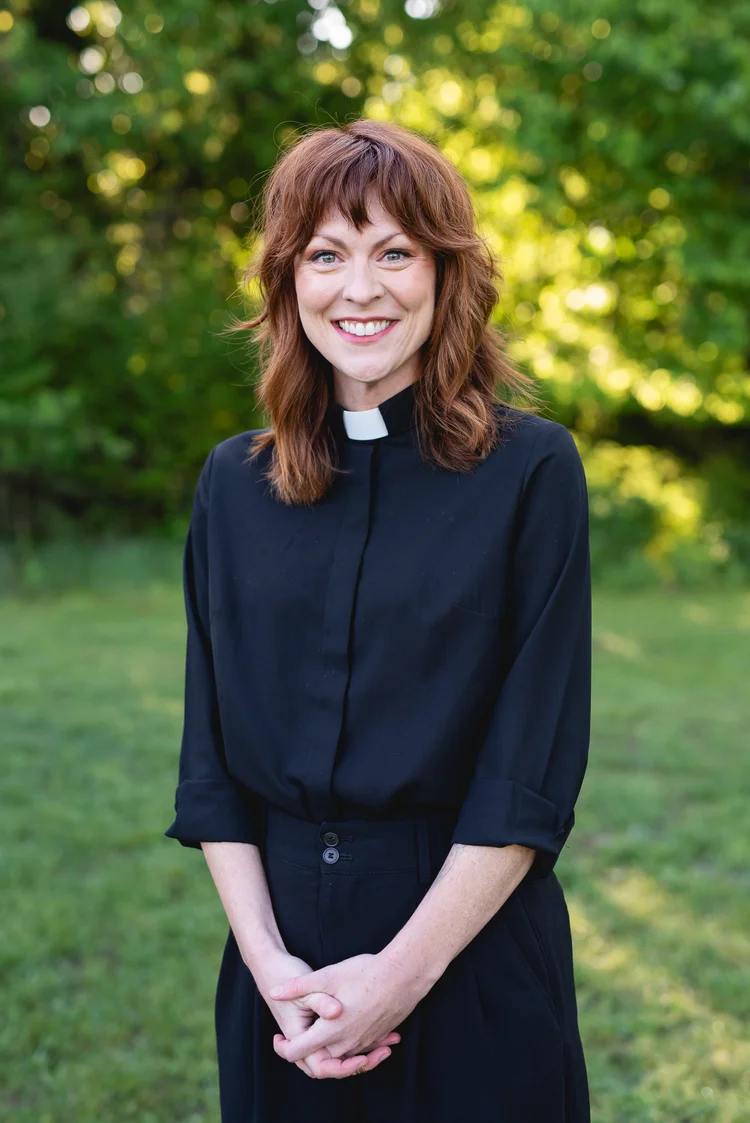
The Rev. Ashley Mathews is Lead Pastor and Rector of Christ the King Anglican Church, a growing congregation in Northwest Arkansas. She grew up in a small Arkansas town, in a First Baptist church where the school principal directed the choir, and was baptized at nine. A turn toward faith at nineteen, at a Baptist Collegiate Ministry table at ASU Mountain Home, set a direction she has never left. She studied philosophy in college, and later theology at Columbia Theological Seminary in Atlanta, drawn there by the work of Old Testament scholar Walter Brueggemann. She found the Anglican tradition almost by accident, at St. Andrew's in Little Rock on a visit home, and was ordained to the priesthood in Atlanta, where she served for fifteen years and where her two sons were born. In 2022 she returned to Arkansas to lead Christ the King Anglican Church.
episode references.
- Christ the King Anglican Church: https://ctknwa.org
- Diocese of Churches for the Sake of Others (C4SO): https://c4so.org
- C4SO, "A New Role for the Rev. Ashley Mathews" (2022): https://c4so.org/a-new-role-for-the-rev-ashley-mathews/
- C4SO, "Get to Know the Rev. Ashley Mathews" (2017): https://c4so.org/get-to-know-the-rev-ashley-matthews-video/
- Anglican Church in North America: https://anglicanchurch.net
- Trinity Anglican Church, Atlanta: https://atltrinity.org
- Columbia Theological Seminary: https://www.ctsnet.edu
episode outline.
- Episode preview (00:00)
- Episode intro (01:56)
- Welcome and introductions (04:39)
- Growing up Baptist in a small Arkansas town (04:54)
- A family coming apart, and a teenage drift (08:36)
- A Baptist Collegiate Ministry table at nineteen (09:01)
- Philosophy, and the appeal of certainty (11:57)
- Seminary at Columbia, and seeing women teach the Bible (14:00)
- St. Andrew's, Little Rock: "we won't feel things" (16:30)
- Communion, and being told what was true (17:30)
- Finding a way to imagine herself as a pastor (18:30)
- Not choosing from a buffet of options (21:00)
- Fifteen years in Atlanta (23:00)
- Coming home, and how Springdale found them (25:00)
- What to expect walking into an Anglican church (30:39)
- The via media and reformed catholicism (33:00)
- What people are finding here (38:00)
- Not a correction of where anyone came from (40:35)
- Who's here that she didn't expect (42:00)
- Welcome, the table, and the newcomer (44:44)
- The story and the reality of Northwest Arkansas (48:35)
- Listening to a place she's still learning (49:12)
- Place, neighbors, and contextualized Anglicanism (52:00)
- Being the church today (55:33)
- Church, state, and the integrated life (01:00:00)
- What "redemptive" means (01:04:57)
- Wisdom: the via media as a way through (01:06:44)
- Fears: affluence, scarcity, and the benefit of the doubt (01:09:32)
- Wholeness: shalom and one integrated life (01:12:47)
- Episode outro (01:15:56)
episode transcript.
the anglican church with Rev. Ashley Mathews.episode preview.
[00:00:00] ashley mathews.: What I appreciate about this gospel is that there's this constant awareness to be really intentional, like we're... that the Lord is always gonna call us to like push against the grain in some ways, and to resist the really natural ebb and flow of like your culture and your environment because it will sort of like put you in places and separate you from each other, and there are lots of forces at work in that. Socially, culturally, politically, socio- economically, all the things. And then there's the gospel, that's like this defiant sort of like, we're gonna mix it all up. Like culture is a thing that people wanting to belong and there are lots of different things that make us feel like we can or can't. And so I always, I feel like I'm like ever a student of or how do I as... be a faithful Christian presence, a gospel person and be aware that my culture, my preferences, my upbringing are gonna separate me from my neighbors and people who are different than me if I'm not intentional about it.
episode intro.
[00:01:56] mike rusch.: Well, you're listening to the underview, an exploration in the shaping of our place. My name is Mike Rusch, and today we have the privilege to sit with the Reverend Ashley Matthews, the lead pastor and rector of Christ the King Anglican Church in Springdale.
This season, we've been asking what faith looks like in Northwest Arkansas. What was planted here? What holds power? What's breaking apart, and what is emerging? This conversation is part of what's emerging.
Anglicanism has almost no history in these Ozark Hills. This has traditionally been Baptist and Methodist country, where the circuit riders and farmer preachers, and later the Southern Baptist Convention and the non-denominational churches which emerged as the corporations grew, these were the ones that traditionally have defined what faith looks like in the Ozark Hills.
The Anglican prayer book, it never made it up here. There was no reason for it to. And so a congregation that says the same creed every Sunday, that kneels to confess, that comes forward every week to receive communion, that follows a calendar written centuries before Arkansas was a state, that's a new thing in this place. This form of Protestantism is a new thing in this place, except it's not new at all. The creed is older than the country, their prayer book is older than the state, and they've spent four years in a rented room off of the interstate, but the book they're reading from is five centuries old. The only new thing is their address.
And here's what I ask you to hold as we listen. A region this fast, it sorts people, not on purpose mostly, it just does. Where you can afford to live, which school, which side of the interstate, which decade you got here, and the churches sort also. We end up beside people who mostly already agree with us about God and about a lot of other things. So listen for whether a room can be built where that doesn't quite hold. Not a room where everyone is the same, a room where you'd expect to stand next to someone who worships differently than you do, and stay.
Reverend Matthews will tell you there are precious few places left in the American life where anyone is asked to do that. She doesn't think it's a small thing, and neither do I.
She'd also be the first to say that she's still learning this place. She grew up Southern Baptist in a small Arkansas town, left that tradition, trained at a Presbyterian seminary, and found her way into a priesthood her home state mostly doesn't recognize. But she came back anyway, and that is a good thing.
If you have thoughts or questions or something that you're wrestling with as you listen to this episode, we'd love to hear it. There's a "send us a voice message" button on the underview.com homepage. Use it. We listen to all of them. And I would say that some of the best things that have happened out of this show have started because someone sent in a question.
All right, we got a whole lot to work through today. Let's get into it
episode interview.
[00:04:39] mike rusch.: Well, I have the privilege today of sharing a table with the Reverend Ashley Mathews, who is the lead pastor, rector here at Christ the King Anglican Church. We're in Springdale today. I get to be in your office. But Reverend Mathews, thank you for being here with us today. Yes. We really appreciate it.
[00:04:52] ashley mathews.: I'm grateful, Mike. Thanks for the time.
[00:04:54] mike rusch.: Well, I've been looking forward to this conversation for a long time. I've, I feel like the work that I here that's happening in this faith community has been a really beautiful expression of community. And so I'm excited to hear that from you. And well, I'd love to start, if you're okay, a, with a little bit of your background- Yes ... and your story. And I would love to, as you weave through this, to maybe understand who you are, but also maybe when faith for you became this real thing that you've orientated- Mm your life around.
[00:05:23] ashley mathews.: . Uh, you know, It's funny the older you get, the harder that question is to answer- That's fair ... very sincerely. That's fair. Yeah, so I I, I grew up with a... My mom, really devout. She I think her faith, my earliest memories of faith are probably pretty s- heavily centered around my mom in really positive ways, and grew up going to church.
And interestingly, even though my dad, there's nothing orthodox about my dad at all, he's a singer-songwriter and but also devout in his own ways, had a deep faith, just of a very different sort. Mm. And never really liked going to church. And I was deeply formed both by, I think, my mom's devotion to church and to she was a faithful Bible reader and prayed and and then also my dad's faith probably, which looked very different, but was very sincere.
And so when I think back to those earliest influences very much shaped by both of them. The ba- the church that we went to was a, was First Baptist of my very small hometown where my principal was like, the choir director and that sort of thing. So I loved, I loved our church. I loved it growing up as a kid.
I mean, I was just... It was... There aren't a lot of places to go when you are growing up in a very small town. So it was fun and full of people that I loved, and I realize everybody doesn't always have that experience, I feel really, probably the older I get and the more people I sit with, more fortunate- Mm
I feel to have had that consistently really throughout my childhood. I was baptized when I was nine, and I have a very s- vivid memory of a coming to faith moment. I remember learning about the work of Dr. King, having a conversation with my mom. And about the Civil Rights Movement and asking her, like, how, we could treat each other that way or I don't remember ex- of course exactly what was said, but I, I made a decision to be baptized and to wanna follow Jesus, as a nine-year-old in a very real way.
And I've never really doubted that except for if you grow up in a tradition where you're encouraged sort of constantly to be very sure and certain if you do doubt certain parts of it. I got baptized at least one more time at some point later on,
[00:07:27] mike rusch.: For those of us who grew up in the South, we have no idea what
[00:07:30] ashley mathews.: you're talking about.
Yeah, I know. You can't imagine. Yeah.
So, so positive. I lo- my pastor, ended up marrying my husband and I when I got married later in our very... my small town. And so, that felt like a very sweet and safe and yeah, positive thing in my life. And so even though, as m- is true of adolescence and my early adulthood I questioned all kinds of things, and I certainly don't know that I had a f- I, I did not faithfully follow Jesus as a teenager or even into my early adulthood.
But I never really, I never questioned the existence of God. I felt very deeply connected to the person of Jesus, always really inspired by him and who he was. I loved the Bible just 'cause I like big books, I think probably in part, and stories. But I, I really genuinely loved those things even though the lifestyle piece of it, figuring out my friends were not Christian I was not living Christianly in any respect, but still really loved the church and held my faith very sincerely, even if somewhat immaturely for a while Yeah.
We could talk a long time on different aspects of that, Mike.
[00:08:36] mike rusch.: I, I am curious, like, when, when you think about those days of faith and maybe where you are today what does that bridge look like?
Mm-hmm.
[00:08:44] ashley mathews.: Yeah.
[00:08:45] mike rusch.: Where I, I, I would assume at that time envisioning where you would be today may have-
[00:08:49] ashley mathews.: Oh, my gosh
felt like a far off
I've never been able to ask my high school classmates how they think or feel about hearing that I do what I do, but I suspect it's- ... somewhat of a shock and surprise.
[00:09:01] mike rusch.: Do you
[00:09:02] ashley mathews.: wanna ask them?
I don't really, no. Okay. Okay. I never, I never have. Yeah, I, I had a pretty if I'm...
so I, we had a, a, a tragedy in our family. My parents split up. Went through a really awful experience of my dad and drug addiction and just, awful things that a lot of people go through. There was a kind of a drug epidemic really, and that's not, if you grew up in this part of the country it's touched the lives of a lot of people, and that's certainly true in very small towns, rural towns like where I grew up, a lot of trucking and, factory workers and that sort of thing.
And it was just hard, not just personally, but in that whole community and Impacted a lot of people differently, but we were certainly part of that. And I, you know, I was... Again, I was a teenager and immature, so I wasn't, like, thinking existential questions necessarily about God. But definitely impacted my faith, my experience of the church in a l- in a lot of ways. And I felt pretty entitled to do whatever I wanted to do, which is what I did.
And so I had a pretty dramatic coming back to, or maybe even understanding for the first time, like the person of Jesus in a way where he would have some kind of authoritative role in my life, or that he- there would be like any following in any way that made demands on me that weren't already very culturally sort of assumed.
We were talking about this before, if you grow up in the Bible Belt, so much of that is just woven into the everyday life of your culture already. But not necessarily, when it comes to like, any kind of daily following. That took me time to figure out, and there was a really decisive kind of turning moment for me that was out- happened outside of the church and happened in a really personal way.
And so I had to figure that out. At the time, didn't really have any Christian friends, wasn't super connected to a particular church, didn't know who to talk to about it. But I ended up going to, I was at ASU Mountain Home and taking classes there. And they had there was an old man in his 70s sitting at a table with a little placard on the table that said Baptist Collegiate Ministry. And for lack of any better option, I just sat down and was like, "I think I'm gonna be doing whatever you do now." And that, you know, it's wild because I ended up going overseas and, my life just made a pretty sharp and dramatic turn. I got very involved in all the Christian things which I hadn't really ever been involved in in that way before.
And at the time, no aspirations for ministry, didn't, I... Women didn't lead in the church in any kind of vocational, professional way, so I didn't have an imagination for that anyway. But I was really captivated by what had happened to me, there was just no denying that something had happened that I wanted to share with other people.
And I'd always kinda liked the Bible anyway, so I started doing Bible studies and that sort of thing. Ended up at UCA in Conway, gotten very involved with campus ministry there, and it just kind of like evolved from there. Where if I'm honest with you now at 42, I've just never meaningfully really done anything else since I was 19 and had that pretty dramatic I don't know, moment with God.
[00:11:57] mike rusch.: Thank you for sharing that. I, I think as I listen to you, the, the moments of this intentional and specific shift- ... that you experienced resonates with me as well too. And I, I am curious as listening to your story that the tradition that you grew up in- you're an Anglican priest today.
[00:12:15] ashley mathews.: Mm-hmm.
[00:12:16] mike rusch.: Is n- is this, is a different tradition.
[00:12:18] ashley mathews.: Indeed.
[00:12:19] mike rusch.: I'm curious if you would share what that road looked like.
[00:12:22] ashley mathews.: Yeah. So very different. I don't even know that I could have told you certainly at 19, 20 what an Anglican was. I don't know that I'd ever even heard o- of that. So no, I mean, I grew up in a deeply evangelical, Baptist, non-denominational, different versions of charismatic circles by the time that I was trying to get into...
The Baptists weren't all that helpful in making sense of my sort of like encounter with God either, so I had this like pretty dramatic experience with the Holy Spirit, even if I couldn't have named it that way. So I, I did start to just kinda like love the church regardless of affiliation because I think when you have what feels to you like a very honest encounter with God, you care less about those things.
You know, They just matter less. And so I was learning a lot more about different traditions. But by the time I got into my mid-20s was pretty like, you know, um, read a lot of John Piper and I was like pretty, I had found my spot, you know. I wanted to be with the thinky Christians and because I, I thought myself thinky.
And so I was like, I'm gonna like... You know, I love theology, I love philosophy. I was a philosophy major in college. And so, I think that what started out in a, and I don't know, maybe people who are listening can, have had a similar journey. When you grow up in spaces where people are very devout, but not a lot of the, their, like theology is, it matters, but only really in so much as like there's a devotion to the Bible and to certain tenets of faith.
But there's not a lot of deep history. There are pretty, there are limited theological voices or resources that you're encouraged to have access to. So I had not just done a l- I wanted to learn. And the, again, through thinky Christians that I found myself, I mean, then that neo-reform movement was so, inspiring in some ways because one, they were just like so darn sure about so much, you know? and so if you're a person who has a lot of questions like I always did that's kinda nice, it's like they seem so certain. And like sincere. And so interestingly enough, I f- the longer I'm, you know, in, alive and talking to more people, a lot of people sort of make that journey if you stick with it long enough where you come out of a space where you're not really serious-minded, your faith isn't a well-reasoned one necessarily, even if it's sincere.
You move into a, a more like thinking space. For a lot of people, that is their reform movement. And then from there though, m- Certainty's pretty tiring after a while, particularly if you're not... Like, I found I'm not very good at it, actually. There are thir- certain things I'm absolutely certain about, but I- there wasn't a place for questions in a way that I probably needed there to be.
And in some ways, I didn't f- like, fit what were pretty prescriptive, um roles assigned to people, and I don't mean that disparagingly. That's just, there are real benefits to that in some ways and some goodness for me even in my own formation that came out of it. But for my husband and I and for even for me it just got more and more frustrating.
My, my theology, my thinking, my questions led me different directions, and I started reading other people and I ended up wanting to go to seminary because I was, like, wearing out my friends with questions they didn't care about as much as me. So I was like-
[00:15:26] mike rusch.: At least you're aware of that now.
[00:15:27] ashley mathews.: Yeah I know.
It's like, that... Yeah, nobody wants to talk about that really as it turns out. So I went to school just in pursuit of a conversation- and a space to ask questions where I could look people in the eye. Honestly, Mike, I really wanted to be able to just look people in the eye and be able to know myself, I believe this, because I wasn't in it for any other reason really. And so seminary was that for me. I loved the s- I ended up in Atlanta. That's where my husband's from. So we moved there in 2007 and I started seminary at what is a PCUSA, if that means anything to any of you, a Presbyterian seminary called Columbia Theological Seminary, and that's because the Bible scholar Walter Brueggemann had been there, retired from there. He was the hero of my big nerdy heart at that point and went to study Old Testament, and their whole Bible department, incredible.
I had female professors for the first time. I saw women teaching the Bible for the first time I think at 23. And so I, all of that experience, I had Catholic professors, and I grew up in a, a part of the world where it was a pretty deeply felt anti-Catholic sentiment and not like in a necessarily a mean-spirited way, but just assumptions are made about Catholic faith or tradition or ritual or some of those things, and I inherited all those assumptions. And encountering Christians who are coming from a more sacramental background and liturgical spaces for the first time in my 20s was curious. I was like curious about it because I liked them so much. But then I also hit a kind of not a faith crisis necessarily. We use pro- I don't uh, don't think that that's what it was.
I was honestly just really tired. I think my mind got tired. I, my emotions were worn out. And I still felt like a Christian, but if you don't have any spiritual practice or tradition to go with what you think or feel when your thinking feels a little bit confused and your feeler feels broken- Mm there's really no meaningful way to engage your faith. And so I ended up at an Anglican church in Little Rock called St. Andrew's. When I was in my 20s, we came home to Arkansas to visit family, and I, I kid you not, we said, "Let's do the, the most random thing we can think of on Sunday 'cause we don't wanna be triggered by going somewhere else." We'll go to that Anglican church and won't feel things .
[00:17:35] mike rusch.: I'm sorry, what did you just say?
[00:17:37] ashley mathews.: We'll go to the Anglican church and we probably won't feel things.
[00:17:37] mike rusch.: That's what I thought.
You know?
And- Yeah, I may have to cut that out, but- Uh, and then, sorry, or I need a minute to just process that for a minute. But keep going. Sorry.
[00:17:49] ashley mathews.: Oh. You know, I just, I think I, whatever, again, the assumptions I had- And it was just not at all what I expected. I found that actually I've had prayed more than I had in a while.
I'd said things I believed in spite of the fact that I, my emotions, there was a space between what I could feel and what I knew to be true. I wanted to say the things I knew to be true or wanted to be true even though my feelings felt fuzzy, and I did that. And then somebody gave me communion, and it was basically like somebody looking at you and being like, "Eat this." You don't have to... Just eat it." And it felt so good to have somebody tell me what was true in that way and give me something to do with my hands and be a part of. And I got curious about liturgy then for myself as a devotional practice. The church that we had started worshiping in, in Atlanta, how, was a Vineyard church, so like a charismatic evangelical space, but there were all of these liturgical hints, and as it turns out, just about a year later, they f- made an announcement that they were becoming Anglican. And so I felt I don't know, the it felt providential, for a, a young kid in her 20s trying to figure things out, and I loved this church so much, and I was, I'd already trying to explore this tradition. And so I s- interned with that church. And then I think that the gift is that with Anglicanism and I don't even always like calling it that because in some ways that sounds like Christian adjacen- adjacent or something. It, it's truly, it is, it's And I think that's probably that Catholic thing I was talking about.
It's like people would talk about there are Christians and then there are Catholics, and that was, it's like deeply frustrating to me now. To be Anglican is just to be a part of, it's the tr- tradition, the way you worship, your devotional practices. But like I am firstly a Christian, you know? and I, but the tradition, the gift that it gave me, the, both in history and in practice, was as I was personally, and probably we'll get here, had over the years begun to like I've been told enough and questioned enough myself my own role as a pastor, a pastoral identity.
I'd made my peace with it by this point already theologically, biblically for other people. Imagining myself as a pastor was an entirely different thing to try to do. But the tradition gave me a way to do that. Because my love for people and to imagine taking the Book of Common Prayer with me and trying to worship with people or pastor people with that and with the Bible, like now it's kinda like I had a vision for what it could look like, as opposed to a tr- not having those things, it was just I took up so much space.
My vision or my sense of calling from God or whatever in a way that, I-- was very hard for me to imagine myself doing. Men just seemed so sure in some ways. You know, They were certain that they were called, and their, their vision in the absence of having that tradition was the thing they were leading out of. And I just didn't know that I could ever do that in the same way. And the tradition was like, ugh, I really love this, and if this is meaningfully as helpful to other people as it has been to me in my pursuit of Jesus, then yeah, I could pastor people this way. And so I just stayed and ended up being ordained there.
And I can say I didn't choose this from a buffet of options. There are other wonderful, beautiful traditions. This is just where I found myself and felt found by God. Like, A gate became a way forward for me.
[00:21:10] mike rusch.: Okay, now I have 100,000 other questions for you, so
[00:21:13] ashley mathews.: Let's do it.
[00:21:15] mike rusch.: Maybe to ask you to maybe camp out here just a few minutes longer. Yeah. Because I, I heard you say when we started, like you love the church that you grew up in. And it sounds like y- it, you love the church that you're, tradition that you're in today. I, I'm curious, as we talked about through the series about what does it look like to belong- ... to a church? I'm curious, did your, does your sense of belonging change- Change ... from one tradition to another, and-
[00:21:39] ashley mathews.: Hmm ...
[00:21:40] mike rusch.: maybe how?
[00:21:41] ashley mathews.: That's a great question. I, um... You know, the thing I've always been really curious about, and just to be really honest about it, something I try to be very aware of is, I don't know that I've ever felt like I didn't belong at a church. And I'm saying that with a lot of humility because I know so many people do not feel that way. Part of the gift in that, though, for me personally, is that I don't know that I would be doing what I'm doing if I hadn't always had that feeling. It helped me name that as calling when I got older, to be able to say, I've loved this my whole life, and in some ways there's nowhere I am more at home."
And that's just like wherever people are gathered and pers- trying to be with God, I wanna be there to be helpful. And I honestly think the truth is, Mike, I could do that in a number of different traditions if Anglicanism went away, or whatever. That's been always the truest thing. And so it does look different now, but that feeling, and the, where I can really, the sort of other side of that, the more sacramental I became, the harder it was to feel at home in other spaces, to be honest about that. Because I've also had that experience where you know, something that for so much of my life felt so familiar, to be in a non-denominational space or evangelical space and just be like, "Yeah. I mean, this is just like home." And that's not true anymore, and I go and it, it feels less so, and so I do feel a little bit out of sorts. And, and can therefore in some ways probably relate more now, interestingly enough, even though I'm, like, kind of like all the way in and all collared up, I can in some ways relate more to that feeling of being like, whoa, that's, it's really disorienting to step out of what's super familiar to you and into a different space. It always helps to be like, Jesus is here, and people are not Anglican. The, no, but Christ King is not for everybody. Thank God there are other places where people can go and ex- encounter God and be, because that won't... I really do mean that. I love th- I love the church.
We say that we're a three streams church, which I don't know, you can cut this part out, how much you all care about that. But our, our expression of worship, or if you come to worship with us on a Sunday at Christ the King, it's purposely and very intentionally a blending together of these historic streams, of evangelicalism and the charismatic and liturgical. And that's just because all of our pastors and clergy have been formed by all of those streams. We have all been around the block, and the Church with a capital C has meant so much to all of us. And so I have felt, I know what it's like to be at home in a deeply Baptist, non-denominational space.
I know what it's like to feel at home in a charismatic space, and now in a liturgical one, and what it is like to feel not at home, if you go back around the circle. So I don't know. It's yes, they're so different in, in a lot of ways. My hope, though, is that if, for like my family who still worship weekly in very different churches as long as they're open to it, it, it would really bother me if they came to Christ the King and they didn't feel like they could belong.
[00:24:44] mike rusch.: Hmm.
[00:24:45] ashley mathews.: Then s- So I just like to think wherever Jesus is that in... there may be things that we don't like or don't suit our preferences or that are new or uncomfortable, but man, if like the spirit of it, and what you experience in people or the heart of it doesn't fit maybe think you could, that would really bother me.
[00:25:01] mike rusch.: Reverend Mathews, one of, one of the things that you... So you, you spent about 15 years in Atlanta. I, I'm curious what, what do you take away from those years?
Mm. How do you feel like they've shaped or formed you? If you could maybe sum it up in, in,
[00:25:15] ashley mathews.: in something- Oh, gosh. Yeah ...
[00:25:15] mike rusch.: something easy, if that's possible.
[00:25:17] ashley mathews.: Yeah, I mean, it was a really deeply formative time. We, Josh and I, got married so young, and so we, we moved there right after we had gotten married, and so we figured out how to be married there.
Yeah. All of our, our best friends. I went to seminary there. I found this church that eh, I, I have already said, I always loved the church and the things that came with it, but had I ever really had a sense of like, kind of finding my people? Probably not, no until then. And so for both of us, so young, finding our faith community where we were as encouraged and f- invested in and fed and as we, were able to give back, that was so great.
And and then I was ordained there. And Atlanta's a very Black city, so, I l- I learned a lot about um, you know, uh, racial history and a national history and a personal history that I hadn't ever m- been exposed to or had ignored. I, who knows? Maybe. I don't, I don't trust my own memory of college. It was a blurry time. So, but yeah, I mean, I could go on and on. I love that city. I always will. In so many ways, it will be, like, the home of, of my heart in, in that way because my boys were born there. Became a mom. Al- so many firsts were there. And I also do think that it helped me experience something that a- allowed me to come home. And by home, I mean home to the state and home to a predominantly evangelical particularly the faith culture here, which I had not had as much direct exposure to but knew from a distance, so to speak. And um, just to try to be an Anglican in Arkansas or a female priest in Arkansas, I really thought I would... and I love this place. I always have. I mean, for, and when I was in Atlanta, I talked about my love for Arkansas. When I'm in Arkansas, I talk about my love for Atlanta. I just have these two twin homes, and, in my heart, and I've always thought Northwest Arkansas was, like, the best-kept secret, it's not a secret anymore. Word's out. Not anymore. So all, for all the reasons that I loved it, I did not imagine ever doing ministry here, and that's just because, I've said this before, but there are just like certain plants you don't try to put in certain soils- ... or conditions, because that's un- that would be unwise to insist that this grow here, and you can't. And so I, I think I felt as surprised more so maybe than anybody at the sense of calling to come here. Northwest Arkansas was new to me. So, I grew up in a very rural, very small town. Went to college in Conway and, had maybe been a couple of times, to some games.
But that was it, the extent of my knowledge. So, I, I think though that I grew up in Atlanta. I became more settled and confident in my calling and myself and certainly in the Lord, and that allowed me to, to follow Him here when He I believe that. To come back and try to do something that otherwise I don't think would have-- I could have been able to do. Probably wouldn't have been strong enough or settled enough, mature enough to have done.
[00:28:22] mike rusch.: So you're here- Mm-hmm ... in Northwest Arkansas now. Uh, you're in Springdale-...
[00:28:26] ashley mathews.: yes ...
[00:28:27] mike rusch.: of, of all the places in Northwest Arkansas. What brought you here?
[00:28:30] ashley mathews.: Well, to be totally honest 2022, it was pretty hard to find a house anywhere, Mike. We were trying to buy houses from Atlanta-
[00:28:38] mike rusch.: I, I'm not sure that's changed
[00:28:39] ashley mathews.: a whole lot ...
sight unseen. Well, if any of your listeners- Yeah ... have tried to do that in the last five years, you can understand. And we had to move, and we had two boys to get into school, and, all the things that people have to think about when they're moving.
And we thought we needed to be in Fayetteville because the church had always been there. It started in Fayetteville. The couple who founded the church lived there. And so we just assumed that's where we needed to be. I've always loved university towns. And so we looked high and low and ended up under contract in Johnson, in this little house that has become just, and as is true of a lot of things, not what you would've chosen, and so glad it's what you ended up with. And so w- I- Springdale found us in that way. And actually, the church ended up worshiping at Springdale Adventist Fellowship. We were initially in the prayer room on College when I came, and needed to move. Had exhausted all of our options. And I remember driving home to s- our house in Springdale and passing that, that church building, and thinking, "Well, I haven't... I know it's Springdale, but it's right on the interstate, and maybe people would be up for that," I just didn't know anything about the region really. I was learning a lot. But anyway, it's been, like, perfect. A- as it turns out, it was such a gift actually. And so, our offices are here on Emma in Downtown Springdale, and I love it here.
I mean, we've, we love... We are gonna miss it so much because the church is shifting to Lowell, and so are, will our offices. And my boys are at John Tyson Elementary, and it takes me eight minutes to get them to school. And I, I have come to love and appreciate the diversity that's in Springdale that you just don't know about until you become a part of it.
My boys play soccer with the Comets. And I, I have grown to really love this community that I still very much feel like I am learning and try to be very careful and cautious about what I say I know. Or even though I've been an Arkansan most of my life, I'm learning a lot about the region here still.
what to expect from this faith tradition.
[00:30:39] mike rusch.: For those that may not be familiar, have never been to an Anglican church-
[00:30:43] ashley mathews.: Sure
[00:30:44] mike rusch.: What, what is that experience like? What would people expect when they walked into the doors?
[00:30:48] ashley mathews.: Well, I'm somewhat hesitant to say what an Anglican church would be like, because as you may or may not know, that really depends on the church. Anglicanism is quite varied depending on which church you attend, and that's one of the things, honestly, I love about the tradition, and not every Anglican would agree with me in saying this even.
But uh, as the Anglicans who mentored me in this tradition it gave to me a a a missionary instinct that's was the Anglican tradition was born out of the Reformation and some people refer to it as Reformed Catholicism. People who very much believed in and loved the Catholic Church in certain ways, but also the validity of the reform tenets and things that needed to change, both theologically and institutionally.
And, Anglicanism was born out of a kind of middle way, and some people really hate referring to it that way, and for others of us, it's become a very apt description of how we understand the tradition. The, an Anglican maxim is the via media. It's the middle way between like an extreme Catholicism on the one hand and an extreme Protestantism on the other.
And that sensibility to be able to like find the baby in the bathwater and find the beauty and the goodness in these two movements and bring them together, however romanticized as I wasn't there, I really f- really love that. And so there are Anglican churches that are gonna feel deeply Catholic. They're gonna lean towards that end of the spectrum, and there are gonna be Anglican churches like ours that are probably gonna lean more the other way. And so if, if you were to come, I think there are certain parts of the service for if you grew up in the church anyway and you grew up in a non-denominational or a Baptist or even a charismatic church, you're gonna f- you know, about 20 minutes of musical worship, and that's gonna feel very normal, and then we're gonna preach and from the Bible and read three or four passages. All that's gonna feel very normal. The parts where maybe it starts to feel less normal unless you didn't grow up in the tradition or in a liturgical space are those like call and response moments. The liturgy is designed to encourage participation, so if you are used to going and sitting in the back row with coffee or somewhere in the sanctuary and you're not expected to really engage beyond whatever you feel or think, then it... that... Some people really love that, but if you're not prepared for it, it can be a lot to get used to. It's like gratefully stood out. It's a lot of up and down and a lot of back and forth already, and that's by design. It's our common prayer, our common worship together. So I think that's the thing I f- When people ask me like, "What's it like?"
For 15 years in the church I was a part of in Atlanta, we, nobody wore a collar. There were no, we call them vestments. And unless you knew to be looking for the certain Anglican things, you probably wouldn't have noticed them. That's... We're more traditional at Christ the King than we were in Atlanta. I do wear a collar on Sundays and that's because I was called by a particular congregation and that's the way that I felt like it was the most honoring thing to do to them, to the tradition, to show up in the way they needed me to. And so that's different for people if you're not used to it. There are no robes and no incense, no smells and bells, as we say. We don't ring any bells, and there are no smells. But those, those things are different. But it is that I mentioned earlier, that three streams blending together. You're gonna see people raise their hands in worship. And I am for better or for worse, well, I am deeply evangelical in a lot of my sensibilities, and so I sound like one, probably in my approach to preaching.
And we come to communion every single Sunday, and everybody, everybody comes forward to receive. And we say the same liturgy every week. We, we say the Creed together, the Apostles' Creed every week, and we pray the confession together. We kneel when we pray the confession. So there are some of these things that are just very different if you don't know to expect them.
[00:34:37] mike rusch.: I'm curious, I mean, Christ the King has grown a lot in your tenure here. For most people in northwest Arkansas that have grown up in the Bible Belt and may be familiar with a faith tradition maybe the formality or the liturgy of the Anglican Church is probably new to a lot of people, I would assume. Correct me if I'm wrong. No,
[00:34:56] ashley mathews.: I think so.
what are people finding here?
[00:34:57] mike rusch.: I, I'm curious what you are finding or hearing or learning about the people who are stepping into this tradition, who may... This may be the first time they've stepped into a, into a church- ... that has liturgical practice. It's part of a worldwide denomination.
Yeah, I'm curious what you're finding and what- Yeah ... you're hearing, and maybe what's stirring within the people that, that walk into this, into this space every, every week.
[00:35:21] ashley mathews.: I think one of the fun things has been being able to have s- have a sense of solidarity with people who have a version of whatever I had when I went to St.
Andrew's the first time. Maybe for different reasons or, and not exactly the same thing, but the gift, I didn't expect that this would be helpful, and I'm finding it to be that. I hear some version of that from people. I, we try to explain a lot about the liturgy, and that's not always a given and actually probably pretty rare in most Anglican spaces.
It's just there is a sort of built-in assumption this is how we're worshiping, and it's kind of like, "Here's, get on board," you know? but because I was really confused and lost and didn't understand the why behind a lot of the things, it's like, why say the creed every Sunday, though? What's the importance of that?
Why do you make the sign of the cross? You know, You don't have to pray that way. Those kinds of questions, apart from bothering me, it's like I've been there. I know, I know that question. It's a really good one. And so as often as we can, we try to acknowledge those things or explain them, and I honestly think it's the gift.
I truly believe this is about human nature, even though in spite of our cultural moment or whatever the news, the stories the news might tell, the feeling of encountering something new and it being like, "Oh, I didn't know that," that is like a, it's a, a good feeling. "Oh," or, "Aha," or something, I want to give people that in the best sense of the word, not in... That can come across in all kinds of ways, but I genuinely believe it to be a kind of gift that just experience something new and you may or may not like it or decide for them to make it your own. But if I had to name it, I think people are experiencing, I hope anyway, some version of what feels to them like God maybe has provided for something they couldn't name for themselves that they needed in their own formation or their faith, in order to stay Christian, practically speaking, functionally, no matter what's in our heads, what does that look like?
How do we bring our bodies into our faith? Um Yeah. So I hope that people have a version of that experience, and the more that I talk to people I, I think that that's probably true. And I think in the, just from the ecosystem that is the church, the kingdom ecosystem here, there needs to be liturgical expressions so that people have the opportunity when they need it to worship that way
what is being found here?
[00:37:48] mike rusch.: I think as a part of that process and, and w- I, I understand 'cause I've, I've been here for a very long time around maybe this tradition or expectation of the Bible Belt. And I, I don't know if you wanna say or can say, w- when people are stepping into this tradition are they, are they finding something, or is Christ the King or this Anglican tradition, is it offering something that may have been missing- Mm ... from a previous- ... understanding of faith- or theology or tradition- ... that, that maybe is really resonating with people?
[00:38:20] ashley mathews.: I do think that that's true, and I think we can say that without it being commentary on the spaces they're coming from. Because the truth is, I met a lot of folks who grew up Catholic who experienced evangelical spaces that way, right? They found in them something that they hadn't had in their upbringing in the church or the traditions that they knew or were native to them, and they found themselves in charismatic spaces or evangelical spaces, and they were like, "Well, this is great." It's even better when we can hold on to the best of what we inherited, in some ways and bring that into wherever God's leading us in the future.
I think that's the gift of the church. And so now, yeah, I feel like, you know, what I didn't want and never want people to hear is that I think in some ways Anglicanism stands as some corrective to evangelical spaces or the spaces I grew up in. I just don't believe that to be true. It's not, I don't even feel that way myself. And I certainly don't want people to feel that way when they come to worship with us. For me, because of the spaces that were most native and familiar to me, experiencing something new that challenged me, gave me new imagination, fresh vision. I connected with Jesus in new ways that were a gift and I really needed. And that's not because anybody did something bad where I was coming from. And I hope when my kids grow up and they're like, mom, we're whatever the thing is that they need in their faith journey, that I remember these words and can celebrate whatever it is that God might be doing. Because, that has kept me sincere in my love for the church, for all of the preferences I have, or even disagreements.
It's not, there are some like really fundamental disagreements about the way we choose to worship. I don't want to make light of that. I actually really love being able to have like honest conversations with other faith leaders about why we do what we do and the convictions that inform those decisions. And they are convictions, it's not just preference. And yet that being said, I hold those as generously as I possibly can, because I think I'm like meant to do what I'm doing. And I'm thankful for that. And I can't imagine that that's any less true for my brothers and sisters down the road doing it differently,
[00:40:35] mike rusch.: thank you. I, I, I think that's a much better answer than the question that I - ... It's a much more whole answer than probably the question that I... You're struggling to understand because I think in some ways, as I listen to you and uh, knowing maybe a little bit about the growth trajectory that Christ the King has been on, and I, I don't bring up the growth trajectory as a way of like, saying that's good or bad. Sure. But it, it seems to be resonating with people in a way that is really beautiful. And so I, I'm curious, like who's there- ... that maybe you didn't expect would be there?
[00:41:05] ashley mathews.: Oh, my gosh. Everyone. And, you know- If you don't know me or whatever, I understand how something like, it could sound like false humility or the thing you're supposed to say. I don't know how to say it more sincerely. I really am surprised in general . Um, I was surprised firstly by the people that I met who I needed to be around that I didn't know that I needed to be around. I was surprised by the people who affirmed um, my sense of calling and the w- the things, the ideas and what I brought to the table in the way that I didn't expect, where I was so afraid of changes or upsetting people, and people were so generous and open-handed.
I was surprised how many... This is just how egotistical we all are. You always think you're the only one, and I- I was sitting with so many people who had such a similar journey, and who's been here. And I would have never known them had I not been given the opportunity to come here, so that was a surprise.
It would be insincere if I... Like, the deeply think about, my family, who to this day could not tell you what an Anglican is. You know, um, Farmers and blue-collar workers and, anytime somebody comes to worship with us who reminds me of my uncle or my stepdad or, I'm just like I don't know. It feels like God is there in that how do we find our way into a space where we can worship the Lord together and what a beautiful thing, and that I've had a lot of that experience, people who have been away from church for a really long time. I don't know that I'm surprised they're there, but I am very thankful.
And I think the fear that I had as soon as you put on a collar and as soon as there are like parts, that we're all supposed to do and the feels like you raise the bar on how to engage here that people wouldn't take me seriously about like my desire for people to meet and know the Lord and come to faith, I want to see people get baptized. I, I care about that. And so I'm always so thankful that people can experience Jesus that way even given our liturgical identity. So, and that that would be true here. I don't know if that totally answers the question. I could probably go on and on, but I, I genuinely am. I am less so now. It's like I've been here long enough to be able to see, okay, there was a need. I couldn't have named it, articulated it, and I wish I had. I wish I could say I like, Andy crouched it and I like looked at culture and was like, "The winds are blowing this way and given these trends in Northwest Arkansas, I should go there to do Anglican church." It's just not, wouldn't be true. Being here now four years, it makes sense to me. I see the need for it. And I've said many times that, if something happens to me that this kind of like three streams approach to the tradition, like it really needs to be here for the sake of the people here.
So.
[00:44:02] mike rusch. (2): That's good. I won't go down the Andy Crouch
road. But you know what I mean.
[00:44:07] mike rusch.: I do know what you mean.
[00:44:07] ashley mathews.: He's just so smart. I do. It's like, how does he know?
[00:44:09] mike rusch.: I do.
[00:44:09] ashley mathews.: He always knows.
[00:44:10] mike rusch.: Oh. , Um, Th- this may be an extension, , as you continue to th- think about what Christ the King is becoming I, I, I think in some ways, for me, my expectation would be that it's, there's a, there's an aspect of welcome, and it feels like just coming in here today, I feel very welcome, and I, the, the experience at Christ the King is very welcoming. And, and yet I, I also ask what does it look like to be both a welcoming space and, and to also create a real deep sense of belonging for people? I- I'm curious how you hold those two.
[00:44:44] ashley mathews.: It's such a great question It's a really great question. Um Because the truth is, our, our worship together, like in a s- an operating assumption that's built into the liturgy and the way that we worship on a Sunday is that we're coming to the table as the heart of our worship, which assumes that this is a Christian gathering, for people who, in some ways, our worship is a culmination of lives lived in faithfulness to Jesus throughout the week, and now we come to this faith meal together, and that's, like, why we're here to worship. And there's something that's so beautiful about that. How you take that built-in assumption and that liturgy and that way of worship and extend hospitality and welcome to folks who may or may not be ready to come to receive communion or maybe are decidedly not ready either because they're unfamiliar with the tradition or they're not at all Christian.
Those things are just... I mean, that's the work of the Holy Spirit, prayerfully, for any pastor. I don't know that there's a formula, and if it worked in one side of, one place and one time, it wouldn't work for somebody else in another. That, you gotta pray about that stuff and pay attention to people.
Like, how do we keep doing that in new ways? One of our values is that we're attentive, and that is, that was born out of an, my own experience of the way that I experienced people when I came to this church, is that it wasn't just hospitality, which is so wonderful. But it was, like, hospitality that was in some ways shaped with you in mind.
You want tea, not coffee, and I remember that from the last time or whatever. And so that gets harder to do the more of you there are. And so that's a live question for us. How, how will we continue to hold on to those values in a way that people really can experience them? Not in the like, let me hand you tea way but that doesn't mean it's not possible.
And for us as a community, it's about to shift even ten , minutes at the interstate. I feel very hopeful about the opportunity to lean into, we are a regional church. We have folks coming from all over the region. And the, where we are now, the leadership that we have, and the people we have to be able to extend hospitality to their neighbors where they live, and for us to be able to gather and worship together on a Sunday. But I would be an idiot not to be thinking about, how does a shift like this stretch us? And how do we need to be thinking about how we connect and stay connected to one another in new ways in light of this shift? And that is a very live question. I'll probably have a better answer for you in a couple of years.
Right now, we know I can't ask somebody whose life and neighborhood and is lived out in Fayetteville to have the same kind of connection with folks who live in Bella Vista that they have with the people who live closest to them. That isn't real. We're too s- we're too spread out. And so that is a, that informs the way that you approach community and belonging, and it informs the way that you worship together when you're together.
And the gift of the tradition, again, to go back to that, is that there is that shared... When we come together, we do have to worship together, and we participate in it, no matter where we're coming from. And that is true for every church in some ways. But I do think that it's a tie that binds.
Anglican churches are often, in my experience, of any, when they're of any size, they are regional churches, and that's just 'cause there aren't very many of them. And so that's what brings you together, is that we love, we have this shared love of Jesus and of this tradition. And so in some ways, our sense of belonging really is rooted in that, because it will not be, by virtue of the fact that we are not a geocentric church. We're not in Fayetteville, and people, everyone's coming from there, where that can become a sense of belonging, for us, our sense of belonging is so connected to the tradition probably and to each other
the story and the reality of NW Arkansas.
[00:48:35] mike rusch.: So to take it maybe one step farther, a- as you talk about this belonging in a community- Mm ... and, and being a, a regional church- ... i, I'm curious how you think about - Northwest Arkansas is growing. Mm. It's changing. There's a lot of people coming to the area every day. We have this story of prosperity. Mm. And yet you're here in Springdale, and you see the reality- Mm-hmm um, that maybe that doesn't extend- Mm ... to everyone the same way. I'm curious how you as a, as a faith leader- ... pastor of a church- ... but also just a, a, a person who lives and belongs to this space, how do you see that? How do you view that?
[00:49:12] ashley mathews.: Mm-hmm. Very slowly and humbly. I think I've... You know, this would be one of those things that I I could say yes to all the things you just said. I see those things, experience them. Understand them, know their origins exactly, yet no. Not even in a way, I was just in Atlanta long enough and had just really started to feel at home in that history, and enough of the dynamics in the city to be able to feel like I could speak to them in some ways. And here, it just feels a little different. I'm listening. People have very different experiences of what's happened in the last 10 years or so, and that in of itself is interesting to me, and I can't... I may have opinions or, or whatever, but I I'm very curious about all of that.
For the most part I When I, when people move here, you know, I'm hearing a lot of whether... Maybe not prosperity exactly, they're falling in love with the region. They're, they love it here. They came from wherever they came from, and they love X, Y, and Z thing about it. For people who've been here for a very long time, they're trying to adapt.
Yeah. Making, room for new people or to, notice their home changing in ways that makes it almost unrecognizable, I think that church culture is, it's a thing, and I... What I appreciate about this gospel is that there's this constant awareness to be really intentional, like we're... that the Lord is always gonna call us to like, um, push against the grain in some ways, and to resist the really natural ebb and flow of like your culture and your environment because it will sort of like put you in places and separate you from each other, and there are lots of forces at work in that. Socially, culturally, politically, socio- economically, all the things. And then there's the gospel, that's like this defiant sort of we're gonna mix it all up.
Mm.
And it, it doesn't always, you know, in our church expressions on Sundays, because it's...
Like culture is a thing that people wanting to belong and there are lots of different things that make us feel like we can or can't.
And so I always, I feel like I'm like ever a student of or how do I as... be a faithful Christian presence, a gospel person and be aware that my culture, my preferences, my upbringing are gonna separate me from my neighbors and people who are different than me if I'm not intentional about it.
And I don't do that perfectly, but it is like a, something I not only hope to be aware of personally, but I hope our church can be aware of. And once you lose... Either you stop caring or you stop trying to be aware, that's like we've lost something. That's it really essential to the gospel. How we work that in so that people who are coming into spaces that are very different for them culturally, let's just say, for example, I don't know, you... we are a predominantly white middle class church. If you were coming from a very different space, like There may be, there may be on the surf- there may be things that immediately you're like, "This couldn't be my place." My hope is that you could experience something that was strong enough to push against the tide a little bit. Cut against the grain. And whatever that is that we can do with authenticity and be genuine about, I think that's like Jesus' hospitality, and love, and I hope people experience that here. As I get to know people here, I'm trying to be a student of this area in ways that I, I could be a pastor to people who are coming from all different parts of this area.
I won't be to e- we won't be everybody's church, and I won't be everybody's cup of tea. But I can do my best to try to understand the people who live here to the degree that I'm able to.
[00:52:48] mike rusch.: Maybe the root behind that question is trying to understand from, from your perspective th- there is a deep caring for the community of people that come to Christ the King who have many needs, who come from many different walks of lives, come a lo- a lot of background, and obviously, the rightful place is to place a lot of attention on the people that walk through those doors- every week. I'm curious how you view, like, how does that extend beyond that community? How does that extend to the city, to the region- ... or farther- ... from a view or understanding? Dare I say, I, I say responsibility, but that may be the wrong word.
[00:53:22] ashley mathews.: No, I don't think so.
[00:53:23] mike rusch.: I'm curious the view that you carry through that.
[00:53:25] ashley mathews.: I've heard you mention place and the importance of the role that place - plays, and I I agree with you. I don't- Just so hard to imagine how I would do ministry, like in a, in a vacuum. A- and I'm saying that very much as a learner, somebody who's, who's in so many ways really truly, particularly Lowell and, the surrounding areas, I am learning.
But place really does m- matter. I, because we, we've always said we're trying to... Our approach to the tradition is to have a contextualized Anglicanism, which means it will look different the way that I pastored and led people if I was somewhere else. And some of that is born out of, like instinct and listening to people and trying to create opportunities and ways of worshiping for them that resonate with the people here. And that shapes the culture of your church in turn. The people who I sit with every week who tell me stories about where they're from those stories shape my imagination not just for sermons, but for ways we can serve our neighbors. What h- people have received as loving and has felt like help and what hasn't.
How to be a good neighbor is something you have to learn from your neighbors, so we're trying that. We're gonna take the like... And part of the reason, people feel differently about like buildings, and it's not like super inspiring necessarily to anybody that, we, we just, we bought a building and, and we're... but for us, the gift of that is so connected to our convictions about place because to be placeless and not have a, a center, either to gather or to serve people from, like a home where you're able to extend hospitality, is really hard actually. And so that's part of the excitement about being able to have our own place, is that we can have neighbors actually, that we can begin to get to know and then begin to serve those neighbors because they're there. And that by there, I mean, I'm going to be traveling to, getting my coffee from, eating in the places where they are, and if that doesn't shape the church you become, well, then something's off.
being the church today.
[00:55:33] mike rusch.: I, I think I ask this question with, hopefully with kind of the honest intention of like, um, I don't know if you noticed like, there's a lot happening in the world. It's, the noise outside is a lot. And I, I think it's, I think it's fair for a faith community to really focus on what does it look like to care for- ... for you to pastor the people that, that walk through these doors every day. And at the same time like, it's not immune from the world- ... and what's happening outside.
Mm. And I think maybe in this cultural moment- ... I don't know if you noticed our, our national dialogue is a bit of a- What are you talking about? I don't know ... bit of a dumpster fire. Maybe in this culture- cultural space- ... how would you think about or how do you think about what it looks like to be the church- Yeah
in the community- ... in the world today- ... when there's so many voices that are maybe trying to define that for you?
[00:56:26] ashley mathews.: It's obviously, I mean, it's a great question and well put. And it's, you know- prayerfully And I really do mean that sincerely because I don't Every week it changes. Every day it changes.
There's something. And al- and also it always has, it's just felt like it's been this way now for so long. But I don't ever want to assume that that posture or that approach or whatever that I, that, that that's the thing that's best or most helpful in this next moment. It's funny my, how my instincts have changed. Mm. And I'm not entirely sure. I can't chalk this up to wisdom as much as it could just be getting old. Those You can-
[00:57:02] mike rusch.: They could be the same thing.
[00:57:03] ashley mathews.: They're not always. They could be, but they're not always. I, I have a- always been a fairly passionate, ardent person, happy to share an opinion. I've always got one. And I was really frustrated by some of the like, not just benign, but almost, it felt like cowardice at certain moments for the church to not s- speak more directly to the things that were happening in the world. W- cowardice I understood as a pastor who's also leading in the church and at, at some of those really acute moments.
But It's interesting now what the, rather than having an instinct to want to speak to or address or even reference the moment that we're in, my feeling for as, as a pastor is like honestly to want to give people a break from some of it and a like actual hope. And by hope, I do not mean, everybody look over here while I distract you and tell you lovely stories.
So, you know, not pretend. It's, there's something about Christian hope that is deeply substantive and very honest about things that are hard. And so I try to, if and when we are acknowledging the, the world and the moment that we're in, try to be very honest about that, how hard it is and how confusing it is, frustrating. And also that we cannot get caught up. We can't, we can't be told how high to jump or what to feel or have the temperature set for us constantly because we're always going to be responding and we are the people of God. The, the kingdom of, of heaven is, that's where our ultimate allegiance is. And I hope to be able to be there for a counter presence of peace and hope in a world that really does need more of that. And again, that's not because I'm ignoring what's happening. I just have to put what's happening in conversation with what I actually believe about who Jesus is.
The world's always been a mess. And, the world that he lived in when he lived here with us was a mess. And he was just so different from the options available to him politically, culturally, and, and all spiritually in all the ways. And I admire that. And I don't know what our version of that looks like, not to be different for different sake but to be like a redemptive alternative that people can find a sense of respite from and comfort in and real hope that's like strengthening actually so that you can face the stuff that's hard.
Again, these are the things I pray about and that I hope for. That's more of a hope and a prayer than it is like a strategy, but if something is obviously on everyone's mind, I find it very strange to try to preach about things that nobody really cares about or is able to think about because we're all obviously thinking about this thing that happened. So it's weird to just talk at people- Yeah ... to get past the time when you know that's not where people's hearts are or their minds are. And so when that seems to be the moment that we're in, I wanna address it and speak to it in the ways that feels appropriate. And also not take the bait, Mike, for- Mm-hmm you know, as somebody on a platform, I just think that that is also something I have to be aware of, is that now it's like the game is rigged.
Everything you say is filtered through a particular lens or the sound bites or whatever, and we're so easy and tempting to make assumptions about each other and s- oversimplify one another and put, put people over here or over here, and I know that that's always, I think that, I mean, that's, I'm a pastor, so I can be pa- I can be Christianly, I guess. But like, I do believe that we have, there's like a, a- an adversarial spiritual force- Yeah ... at work in the world that, it likes it this way. And so I have to be aware of those dynamics in the things I say because I actually hope to, for people to be able to hear me, even people who disagree or might not hear me easily.
If I'm just getting like, cheap high fives and amens from the choir, it's like, I guess that's nice. But doesn't change much.
[01:01:07] mike rusch.: The Anglican tradition though, it, it comes out of the Church of England- ... where there was this fusion- between church and state. I'm curious what this tradition could, could speak to us-
[01:01:19] ashley mathews.: Mm ...
[01:01:20] mike rusch.: today, uh- Great question ... about what this looks like to maybe stand- Mm ... within the domain of faith. To be responsible community members. And to maybe understand culturally what outside influences- ... seek to gain- ... Mm-hmm ... from from drawing people or dividing people- ... into a story- ... that may not be the one that the church is telling.
[01:01:40] ashley mathews.: Mm-hmm. So, there are pros and cons to the history that we have in this tradition. The cons may be self-evident if you know anything about the, the, at least the origin story that is often told around Anglicanism, like the Wikipedia and HBO version of that story anyway. All the political intrigue and all the corruption and all of that. On the other side of it though, what I have appreciated is actually, integration for the Christian to have a purposely, intentionally integrated life where my faith not only comes with me, but informs the way that I engage wherever I am, that actually it's not like I go into a faith space and that's where I'm spiritual, and I go into a political space and that's where I'm political, or, I go into my relational social spaces over here.
It's so... It, it's tempting in some ways. That's almost like how we talk about it, almost to the point where it's like we can become compartmentalized and become different people and separated from ourselves. And you do have to be intentional about, actually I'm an integrated person. I want to be, how do I show up in all these conversations as a Christian?
And so, when it comes to the kind of marriage between church and state in history of Anglicanism, I have, never understood whatever, how you be, how you separate your faith and your faith convictions from politics. I understand what we mean when we say that. We don't want people campaigning from our pulpits. That's not what the church is about. Pastors shouldn't abuse their platforms by pushing their own, political agendas or the social issues they care about. If that's what we, we mean when we say that, then we're in full agreement. But, we... Politics is the realm of our lived life, yeah, every day lived responsibilities and our neighbors and all those things.
And so we it just... I do appreciate the encouragement to think more seriously about a Christian and my responsibilities to the, the world around me, my neighbors, and my country because of those Christian convictions. And that may not be, particularly in this moment, fun to think about or an easy conversation to have, but it is a worthy one.
And I don't think we're better if we just stop having it and pretend that we can just function s- separately. Like they'll never meet one another. It's just not real, so again, I don't know that that entirely answers your question, but I think I, I feel thankful actually for somebody's, was not, not one person, but the encouragement that I have received over the, you know, last decade of my life in this space for people to be like, "Don't, don't pretend that there is some apolitical part of your life or faith." There, that's, that's not real. You're engaging with your neighbors every single day. The laws of the land shape the way that you live and they live, and you therefore at the very least need to be aware of them and at the best participating in them in redemptive ways, being honest about your convictions or how your convictions meet certain issues. And I have a, a lot of room for growth, no doubt, but I am trying to be more thoughtful about, about that.
[01:04:54] mike rusch.: you say redemptive ways, I'm curious what you mean by that.
[01:04:57] ashley mathews.: I think that we should assume as Christians that our gospel-shaped lives are an alternative to a-- the way the world would be if the gospel were not. If the gospel were not, then maybe things would look this way, X, whatever X is. Because the gospel is, there should be a Y, a different un-- and that I don't know always exactly what that is. People disagree about what that is. But by redemptive, I mean whatever kind of hopeful alternative that I can provide because of my faith in who Jesus is and my flawed attempts at trying to be more like him. I hope for that. I, I want to Christians to have spaces where we have really thoughtful conversations about social issues and be able to have those in ways that look different from how those conversations are taking places in spaces maybe where people are not at all Christian or shaped by the gospel.
And I don't mean they should be better or whatever or whatever. I just think that there's like if we believe that Jesus is who he says he is, and he was bringing a kingdom here what do you mean? How does that influence the way that we show up at our schools and at work and when we vote?
And it's fine. We're gonna disagree. We c-- we disagree on the way we worship, what communion's about, the, the cre-- We disagree about so many things, but I would just-- I want the conversations to keep happening, and I fear that the more polarized we become from one another, that it's gonna be very hard to find any kind of like healthy version of that conversation where we can disagree well.
[01:06:41] mike rusch.: Beautiful. Thank you.
[01:06:43] ashley mathews.: Yeah.
wisdom.
[01:06:44] mike rusch.: I, I think within that vein of conversation like, if there was a piece of wisdom that maybe that you would pass along to those listening- ... about faith about belief, about this cultural moment, I'm curious from your tradition, from your experience maybe what that would be.
[01:07:00] ashley mathews.: I mentioned the Via Media earlier, and I'm just going to come back to it, that middle way. That is not everyone's instinct or sensibility, and I'm not suggesting that it should be. What I appreciate about it personally and where I wonder if it might have something to offer to us in this cultural moment, as you say, is it did require Anglicanism for all of the jokes we could make about the history and its origins. It did require quite a lot of cooperation. The prayer book is a reflection of an ecumenical spirit to pull from the Catholic Church and from Orthodox spaces and from reform conviction and let that shape the way that they were going to worship going forward. And then, and as there would be now, there are people who really appreciated that and people who did not at all.
And I just think for all the people who did not appreciate it, all the more reason that it's somewhat of a miracle that we have it. Even our own country, these are ideals, however flawed our pursuit of them. There's something there for us to aspire towards and to So that's how I feel about the tradition is that, man, if I could help people on a Sunday morning Like, I'm sorry, but you're gonna have to tolerate that woman genuflecting every time the cross pr- passes in front of her. And that may really bug you. Or I'm, I'm sorry that that person is gonna raise their hands when they worship, but they are, and that may freak you out. Those small things maybe aren't so small, because there are precious few places in the world where we're expected to have to tolerate- Mm ... and maybe even learn to appreciate our differences, and cooperate across those lines of difference.
I mean, work is a very specific kind of thing, right? You sh- you show up and y- what, um... We're cooperating in places like that. But it gets harder outside of work, any kind of political space or faith-based space or anything like that, for people to choose to meet one another. And again, however f- idealistic that may be, or naive, I, I choose to believe that there is actually something really hopeful about that, and I have experienced it since coming here.
I watch people do that every single Sunday. And if they can do it in the way that they worship, maybe that's one s- step closer to being able to do it at a coffee shop or in the break room at work or in my kids' school. And I don't, I hope for that.
fears.
[01:09:32] mike rusch.: Every guest that we've spoken with over the past few years, I, I, I ask two questions, and the first one is about your fears for this place. And, and we ask it not out of yeah, trying to understand, what keeps you awake at night, although it might. But more of a normalization that, I mean, this is a world that, yeah, to, to our previous conversation, has a lot of challenges. And yet we come here to- ... to speak with you as a faith leader.
I, I'm curious, what are your fears for this place as you see them within the context of either this conversation or your tradition- Mm-hmm ...... or your city?
[01:10:06] ashley mathews.: I think in an area where there is as much growth as what we're experiencing in Northwest Arkansas, in order for that growth to be really beneficial and for the region to flourish in the way that it needs to there does have to be a certain amount of like open-handedness and a determination to choose to see and believe and hope for the best in maybe what I don't know or don't entirely understand. People I don't know and don't know where they're coming from or, um
So, if I'm afraid of something, not just in this region, but in our, in our country and in our world, is that we will just stop doing that And extending the benefit of the doubt to one another and choosing to believe that we are better together. If we can find a way to extend that kind of love and generosity of spirit that marked the life of Jesus.
I do fear that, that there's major loss in that. I don't, I don't fear it like I know that's what's going to happen. I don't assume that that's what's gonna happen. But if I had to name something that I have would pray and pray in my own heart and for the life of our church would not be true, it's that.
I also think that anytime you're in a really, in a region that's like there is, you mentioned the prosperity narrative, there's a lot of growth, economic development, cultural development affluence in, in certain corners of it that, for all of us, for every person, there's always a temptation to believe that our affluence, our success, our achievement can save us, that that's where our security lies, and that what we're most afraid of is losing it.
And that fear, the scarcity thing, that there's not ever enough, and we need to be building more and doing more and gaining more and more stuff. And I am, again, as a person who is tempted by those same fears, Jesus stands as a helpful, redemptive corrective to me because He just didn't operate from baseline scarcity. There was a generosity in the way that He approached people in the world, and it was not material. Um, It was something else. And so I hope for this region that we... Yeah, a fear that I have is that w- we just can't put too much confidence and stock in the stuff we've got or the growth that we have.
And um, because we'll lose who we are, and it's who we are, our, at a soul level, at a human level, at a heart level, our desire to connect with our neighbors and love and support and be there for each other that is gonna make this place feel like home to people, like somewhere that you actually wanna live and be, and a, a place where you could fall apart, actually.
[01:12:34] mike rusch.: Hmm.
[01:12:34] ashley mathews.: Your neighbors are the people who would be there for you, your friends when your-- and everything's not up and to the right. And so there's a soul tending that has to be done, even with the growth and the affluence and all of that. We, we have to make sure we're tending to the other things, too.
wholeness.
[01:12:47] mike rusch.: You may have answered this, but I think the other side of that question is this one of wholeness. And it's been a question that I think this conversation when we talk about what does wholeness look like for self, for family, for community we're trying to understand w- w- how you would view that. Mm-hmm. And so when I say wholeness, I'm curious, what does wholeness look like to you?
[01:13:09] ashley mathews.: Well, we just wrapped a Bible study the other night. We talked about shalom.
Of course, the Hebrew word translated in English is wholeness or sometimes peace as a shorthand. But really in the Hebrew imagination it, was more about wholeness, that that's like our... the ultimate destination for humanity, the restoration of God is a promise that things will be made whole, that se- whatever separation or enmity exists between humanity and God, between human to human, between humans and the creation, that that will be restored and made whole. In my own life, when I think about in light of that ultimate vision it goes back to that integration thing.
I would very much hope that I could be someone who shows up as who I am no matter where I am, and that there's continuity and integration between, all of those, those spaces in my life. And so I increasingly am tr- We talk about it a lot at Christ the King Jesus didn't have a spiritual life and then the rest of his life, he just had a life. And the, those, it was all integrated together and for you to be able to, to see your physical, mental, emotional health is very much bound up in your spiritual health and your relational health. And for the longest time, the church has not done a great job actually of tending to those, the whole of us.
Um, you know, We were like souls in a meat suit, and that, but we were constantly at war with in one way or another. We could all just be like perfect spiritual beings if it weren't for these bodies, you know- ... this humanity. And then, I just, that's, yeah, the, I think the gospel, Je- that Jesus himself stands as a corrective of that. He was the integration of heaven and earth and divinity and humanity in a person, and what it means to follow him is try to figure out how do those things come together. So I think that I w- I'm trying to be as integrated a human as I know how to be, and I hope that people experience our community that way, as feeling very much connected to the world that it's a part of, rather than set apart and very other. Yeah.
[01:15:16] mike rusch.: Well, I will claim that definition of wholeness with you then as well too. And so, Reverend Mathews, thank you for your time, for being a part of this conversation, for the people and the work the people that you are the work that you're doing for the community that you're leading, and just thank you for being a voice in this place, to help us all understand what it looks like for faith to be a part of w- or even what faith is as a part of our life and uh, as our understanding of, of who we are and how we belong to this place. And so thank you so much for being a part of this.
[01:15:48] ashley mathews.: Thank you, Mike. Thank you for the conversation. It's a good one.
[01:15:52] mike rusch.: No, it's a gift. Thank you so much.
[01:15:53] ashley mathews.: Peace.
episode outro.
[01:15:56] mike rusch.: Matthews, thank you for your time and for your voice and for the honest conversation. It is truly a gift. I've been sitting with something that she said near the end, that Jesus didn't have a spiritual life and then the rest of his life. He had a life, one life, no compartments.
I know she meant it about a person, but I can't help turn it towards this place and what it means for all of us. Because if it truly is one life, then the hour on Sunday and everything that happens after it are the same life. She said it plainly. She's never understood how you separate faith conviction from politics, because politics is just the realm of our lived life. The laws of the land shape how you live and how your neighbors live. Her word for what we owe that was redemptive.
And she said this, which I keep coming back to as well, that there are all these forces pulling us away from each other, social, cultural, political, and economic, and the gospel comes in and mixes it all up. She called it defiant.
Then she named her own congregation before I could, and how someone could walk into a room and decide on site that maybe it wasn't for them. I didn't ask her to say that, or we didn't ask a question about that, but I think what I hear is the hope that something in that room is strong enough to push against the tide. That's an honest place to start, and I don't think she'd tell you that it's finished.
So here's what I've been sitting with since this conversation, and I'll say it plainly that this is mine and not hers. If it's one life, then we carry something out of that room. The question is, what? And if what we're carrying is actually faith, and not a flag or a party, and not the version of faith that agrees with everything that we've already thought, then I don't know how that shows up as anything other than an alternative.
She said it herself, Jesus, Was just so different from every option that was available to him politically and culturally and spiritually. He wasn't handed power. He didn't go get it. The kingdom he described arrives, in her words, "by listening and receiving rather than by taking."
That's a strange thing to carry into a Monday in a place like ours. This region runs on acquisition and growth and expansion and whatever the next thing is, and I'm not standing outside of that either. I'm all in it. But if the gospel is a genuine alternative and not just a private comfort, then it has to be an alternative to something.
So what? What does it push against in your life, in mine, in the ordinary decisions that don't feel spiritual at all? I don't know that I have an answer for that, and I'd rather sit with it honestly than pretend that I do.
I think if you're also asking this question, I would love to hear from you. Go to the underview.com homepage. There's a Send Us a Voice Message button. I'd love to know what you're processing and what you're hearing and how this sits with you.
I'm sorry, but we're not gonna have a talkback this week. Monica is on a well-earned vacation, and we have obviously missed her voice greatly in this conversation. She'll be back next week. We've got a whole lot to talk through. And I wanna say this, that to everyone who's made comments about what her voice has brought to this series, I wanna say thank you. You are 100% right, and the kindness and the grace that you've shown in saying so, has meant so much to both of us.
This season and these conversations, they exist because we believe this place is worth understanding, not the brochure version, the real one, the layered histories, the people who have been here for generations, the people who got here last spring, and the systems that decide who gets to belong.
I don't believe that I get to have a spiritual life and then a separate life where none of it has to touch anything else. I don't think any of us do. That's the whole reason we keep coming back to these kinds of questions.
I wanna say thank you for listening and thank you for being the most important part of what our community is becoming.
This is the underview, an exploration in the shaping of our place and our faith.