
the faithful foundations with Scott Page.
Pastor Scott Page of Christ and Neighbor Church in Rogers explains why his congregation joined ULI's Faithful Foundations program. Serving overlooked communities on Rogers' east side, he shares how churches with land can address affordable housing and why this work is central to their mission.
season 2 bridge, ep. 47.
listen.
episode notes.
In Northwest Arkansas, where housing affordability was once the region's greatest draw, working families are increasingly being pushed to the edges. Women with children in their cars are showing up at church doorsteps asking a question congregations struggle to answer: "What do I do? Where do I go?" When Christ and Neighbor Church in Rogers was approached about the Urban Land Institute's Faithful Foundations program, Pastor Scott Page saw an alignment between what his church had been given and what neighbors desperately needed. Land. And a willingness to use it to make a difference.
This episode continues the Faithful Foundations conversation by going directly to one of the six churches in the first cohort. Scott Page, a lifelong Ozarker, shares why his church said yes to a program that asks congregations to consider affordable housing development as ministry. He describes the people Christ and Neighbor serves on the gritty east side of Rogers, people who are overlooked and undervalued, who work jobs in plants and live paycheck to paycheck in fear. And he reflects on holding this dream with open hands, trusting that even if this specific project doesn't happen, the passion for affordable housing and the commitment to neighbors won't stop.
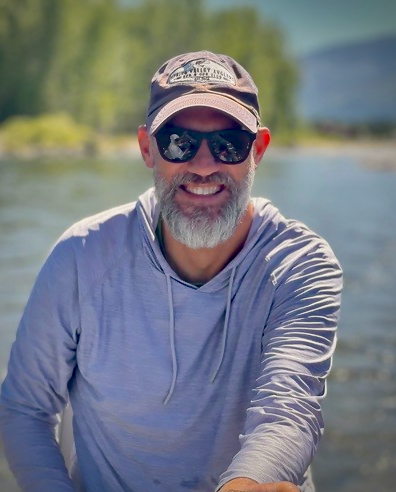
about Scott Page.
It is a privilege to work with our team, our church, and the people in our neighborhood. At this point my biggest passion is to know Christ and to be a blessing to others. I love fishing, traveling, and team sports. I have been married to my sweet wife Mollie for almost 30 years. We have 4 awesome kids: Mackenzie (husband Chase), Meme (husband JD), Rosie, and Isaiah, and the best dog in America, Whit. I could not be more blessed. I have a front row seat seeing God at work everyday, watching Him do more than I have ever asked or imagined.
episode references
- Faithful Foundations Program: https://arkansas.uli.org/get-involved/programs/faithful-foundations/
- Urban Land Institute Northwest Arkansas: https://arkansas.uli.org/
- Christ and Neighbor Church: https://christandneighbor.org/
- the faithful foundations with Candi Adams (Part 1): https://the-underview.ghost.io/content/files/2026/04/the-underview-candi-adams-urban-land-institute-nwa.html
episode outline
- Episode preview: Scott Page on being blessed to be a blessing (00:00)
- Episode intro: Why churches and affordable housing? (01:36)
- Introduction to Scott Page and Christ and Neighbor Church (04:15)
- Why Faithful Foundations made sense for Christ and Neighbor (04:49)
- Women showing up at the door asking "What do I do?" (06:30)
- The needs already being met on the east side of Rogers (08:58)
- Northwest Arkansas affordability crisis and people being pushed out (11:17)
- How housing fits within the mission of the church (13:07)
- Living and loving like Jesus through holistic care (13:41)
- Moving from immediate needs to systemic problems (15:43)
- Church land as a regional asset for affordable housing (16:47)
- Faithful Foundations approach to resources and debt (18:36)
- What partnerships and resources are needed (20:07)
- Collaboration with Haven Wood, Restoration Village, and Nicole's House (20:35)
- Regional collaboration and transforming the whole place (23:39)
- Who this housing is for: two specific stories (24:12)
- Protecting the people being served (25:45)
- If you want to see the face of God, serve your neighbor (26:30)
- Fears about this dream and holding it with open hands (27:21)
- What wholeness looks like: from garden to city (28:54)
- Episode outro: Why this work matters (31:02)
episode transcript.
episode preview.
[00:00:01] scott page.: So when Faithful Foundations came along it was like the perfect alignment of "we've been blessed to be a blessing." How do we make that happen? And so we were given that vision of we have land and we can use our land to make a difference.
If there's anything within us, Mike, to, to say, we've been given a lot, how do we help others in this process? How do we help those that, that Jesus actually cared about? And the, the vision of our church is to see Christ transform us and our neighbors. And the definition of, of neighbor being anybody that God brings across our path. Neighbors were coming to us all the time and just asking " what do I do? " Okay. So we literally had to answer that question."
episode intro.
[00:01:36] mike rusch.: We are listening to the underview, an exploration in the shaping of our place. My name is Mike Rusch, and today we're gonna continue the conversation about the Urban Land Institute of Northwest Arkansas's Faithful Foundation's Program.
In our last episode, candy Adams from ULI walked us through how this Faithful Foundation's program came to be in why churches in our region might just be one of the most overlooked partners in solving our affordable housing crisis.
But we also ask some harder questions. Should churches be doing this? Is affordable housing development part of their mission or distraction from it? Can congregations already stretch thin Take on the complexity of real estate? I ask these questions because let's be honest, here in the south, uh, here in the Bible belt housing hasn't traditionally been at the top. Of the church's priority list, food pantries and benevolence funds.
Sure. Maybe a mission trip to a far away country to build houses somewhere else. And all of these are good. Please don't take that comment as the work being done is insufficient. These are practical and tangible ways that a church can serve its community and the world. These are needed. Frankly, more of them are needed in these especially hard and challenging economic times.
But when we talk about developing affordable housing on church property as a core expression of ministry, that's not something most congregations have considered. So when six churches said yes to the Faithful Foundation's program, I wanna understand what they're seeing that made this necessary. So I wanted to talk directly to one of those churches that participated in the cohort to find out more.
Today I sit down with Scott Page, who is the pastor of Christ and Neighbor Church in Rogers, and I come with questions. Why would a church say yes to this program? What needs are you already meeting in your community that made affordable housing feel like a next step? Who is the specific person or people that you have in mind when you imagine this housing being built? And what are your fears about whether this can actually happen?
Scott's been in northwest Arkansas his whole life. So he is watched the transformation, how this region is struggling with affordability, which drew a lot of people here in the first place and how for certain people, that's simply not true anymore. Affordability is out of reach. He sees people that are being pushed to the edges, driving into town just to work and maybe even eventually having to make the choice to leave altogether.
But within the mission of his church, he names the people that he is here to serve. People who are overlooked and undervalued, who work jobs and plants who live paycheck to paycheck in fear of how they're gonna make it. And then he shares what might be the clearest articulation of a mission that I've heard. "We've been blessed to be a blessing. We have land and we can use our land to make a difference."
All right, we've got a whole lot to work through today. Let's get into it.
episode interview.
[00:04:15] mike rusch.: well, I have the privilege today of sharing a table with Scott Page. Scott is the pastor at Christ and Neighbor Church in Rogers, Arkansas. Thanks for being here on this early fall morning.
You've been one of the churches that has participated in the Faithful Foundation's program with ULI here in Northwest Arkansas, and I wanted to sit with you and just get your firsthand understanding and experience of what happened there, what that is. Scott, tell me a little bit about who you are and then why did this ULI program makes sense for Christ and Neighbor.
[00:04:49] scott page.: . Let's start with who I am. I mean, I, I, I'm a lifelong Ozarker. I grew up here in Northwest Arkansas and just feel privileged to be a part of, ULI because I feel like faithful foundations because I feel like they're really working hard to make northwest Arkansas the beautiful place that it's always been. And I grew up in Fayetteville and as I drew drove down to one of the ULI meetings the other day, it's just amazing to see how much Fayetteville has transformed. In the past 25, 30 years. And and still the, as the transformation happens, the beauty happens. Some probably lifelong, those arcs get frustrated with that, but yet change is gonna happen.
And so how do we still make it where the traditional just. Honest, hardworking, selfless, hospitable person who works day to day, how do they afford to live here? And so with faithful foundations, that's what ULI feel like was attempting to do is create affordable housing so people who can no longer afford to live in the traditional dwellings can have a beautiful place to live.
At Christ and Neighbor. We are a church that's made up of young couples, elderly people but we also have a backbone of people that are normally overlooked and undervalued. In our society they work jobs in plants. They have a hard time meeting rent and they just, they lived really just scared and feared, how am I gonna make it from paycheck to paycheck?
What's interesting, when we were approached in being a part of this program we didn't know what it meant or how we were gonna make it, but we did think about a particular person in mind because we have people showing up at our church doorsteps all the time.
And it's not your traditional homeless person asking for a handout during the day. It turned out to be women who could no longer pay their rent. And a lot of times they had children in their car with them and they weren't on drugs, they weren't addicts of any kind. They weren't mentally ill.
They were just working women who couldn't make their rent anymore. And they'd ask a simple question what do I do? Where do I go? And as the church, we didn't have an answer for 'em. So when Faithful Foundations came along, it was like the perfect alignment of we've been blessed to be a blessing. How do we make that happen?
And so we were given that vision of, we have land and we can use our land to make a difference. So if there's anything within us, Mike, to, to say, we've been given a lot. How do we help others in this process? How do we help those that, that Jesus actually cared about? And the, the vision of our church is to see Christ transform us and our neighbors. And the definition of, of neighbor being anybody that God brings across our path. Neighbors were coming to us. All the time and just asking what do I do? Okay. So we literally had to answer that question, and we're still on that journey to answering the question. So we're just waiting to see what God does to answer that. But we have at least a model. We have ULI helped us work through throughout the summer. We went to classes every other week and we collaborate with all these other churches and, builders and designers and architects, and they just blessed us with a huge conglomeration of people that showed us this is how you go about building models that will bless the most amount of people,
the reality of the needs already being met.
[00:08:58] mike rusch.: Scott, before we started recording, you were telling me a little bit about maybe some of the needs that you're already meeting within the community in Rogers that you're serving. Can you share that again to maybe give a little context that this is not like just something else that the church does. You're deeply involved in meeting the needs of the community on the east side of Rogers.
[00:09:21] scott page.: Yeah. The east side of Rogers is man, it, I've heard downtown Rogers and, and the east side of Rogers as described as gritty. Yeah. And I love just being a part of that blue collar gritty neighborhood.
Our church is the former Hudson Foods headquarters, but we're not in the headquarters, we're the 60-year-old chicken house. We, Samaritan Community Center was in there and when they built their new building over on eighth Street we have redone the inside of it. And now that it's been redone, we put showers in so people can come in off the streets and take showers.
We've created a WeWork space that we're asking people to, for a hundred dollars a month, come in and join what is happening in our neighborhood? Join the passion of what is happening here and you get free wifi, you get free coffee. I mean There's WeWork spaces all across Northwest Arkansas, but we want people to have the same. Heart and passion that you may be a business person, but all of a sudden you start collaborating with people that have a heart and a passion to make a difference in our area. So those are the type of memberships that we're selling to this. But you've got fantastic coffee, you've got free wifi, you've got different spaces that you can meet in and stuff like that.
And then we do a fifth, every fifth Sunday we take up a collection that a hundred percent goes to the community. So it doesn't stay. Everybody Every church takes an offering, but on fifth Sunday, our offerings go a hundred percent out into the community. And so there were, two middle schools in our neighborhood that struggle with free and reduced lunch. Almost 80 to 90%
[00:11:17] mike rusch.: of the Yeah, those are some of the highest needs schools in northwest
[00:11:20] scott page.: Arkansas.
Yes. And we just partnered with those schools and just financially, how can we resource those needs?
You know, Mike, growing up here the reason that Northwest Arkansas, one of the reasons it was so beautiful was because we could afford to live here and, northwest Arkansas, as long as I can remember, has been in the top 10 places to live and to move to, and it was affordable for people to move here.
That's why people wanted to come here. And once they came here and moved here, they were excited to be here because it was so affordable. And that's not true anymore. And for certain classes of people. It's just not true. And they're being pushed out. They want to stay here, but they have to go to the edges of northwest Arkansas and then they have to drive into town to actually work and that makes it unaffordable. So they're moving out of the area.
So when I say those words undervalued and overlooked, those are the people of Northeast Rogers that, that are forgotten about. And when just five years ago when we started working at Christ Neighbor, we were a neighborhood church. Now we're becoming a regional church because of that.
We try and step into where the cracks of our neighborhood and where we find we can help meet needs in those situations. And starting in January, we're gonna be the only warming shelter besides the Salvation Army. We're just trying to meet needs physically, mentally, emotionally and spiritually so that the holistic person that God created can feel cared for.
[00:13:07] mike rusch.: Scott, when you think about the mission of the church that you're leading and then you, you really look at all the needs that you're meeting, physical, social needs for so many people on the east side of Rogers. I can't help but say that, traditionally maybe here in the Bible belt, sometimes. Those needs are viewed as not the primary mission of the church. Yet you are deeply engaged, not only in just caring for people, but you're thinking like, how do we think about affordable housing and trying to bring solutions to that. Help me, from your perspective, like how does all of this fit within the scope of the mission of what you're doing?
[00:13:41] scott page.: Mike, before we shared the vision of this of the church is to see Christ transform us and our neighbors. But our mission is to live in love like Jesus. And so if we read the scriptures, Jesus wasn't preaching all the time. If we read, Jesus spent three years doing ministry where he was healing the sick, where he was caring for the poor, where he was eating with people. Those were the things that Jesus did the majority of that three years of ministry. But I also want to think about Jesus lived on earth for 33 years. So as Jesus who was, God came to earth and lived that time, he served us all of that time just by coming as God and living as a human.
So really do we live in our humanity with others each and every day? That's living and loving. Like Jesus is just being human to them. And so each and every day, if we're trying to become more like Jesus and act more like Jesus, then that's just sharing his love with others no matter who they are, no matter what they believe, no matter what it is. So my neighbor being anybody that comes across my path. That's just how we live, breathe and eat. Anybody is welcome. Anybody is welcome to the table. We'll have a Thanksgiving meal that we really don't know how many people will show up. It may be 500, it may be a thousand, but we know God will provide for it always works out. All five years we've done this, we've had enough food. That's the miracle of how this all works. God gives us enough to care. We are not a wealthy church, but we've always had more than enough to care for the needs that have come.
from immediate needs to solving systemic problems.
[00:15:43] mike rusch.: I think we could probably pause there and just talk about this concept of the neighbor is who comes across my path, right? This can be really a challenging statement in our culture, right? And I think from what I'm learned about the ULI program, what I'm hearing from you, yes, you are meeting the immediate needs that people may have, which obviously is a very good, holy thing. But you're, you're pressing in beyond that and you're saying these are. Some of these problems and I'll put, not to put words in your mouth, but some of these problems could be solved if we had stable housing for people that they could afford, and they could start to Yeah. Live in a way that is, yeah. Flourishing in many ways, or thriving.
When you think about going beyond the immediate day-to-day needs of maybe a shower or food, and you start to move into, these are some systemic problems. You're running right smack into the face of some very systemic problems that we're trying to solve in northwest Arkansas. Talk to me about your perspective about like leaning into those systemic problems and trying to bring what it sounds like our solutions.
[00:16:47] scott page.: ULI had a large gathering about place last week and they they had a professor from the University of Washington who's an expert on homelessness. And it, it was incredible from the perspective that he said, people always think it's about poverty. Well, It's their cycle of poverty, or it's about addiction. It's about, all the little things. And he said, yes, those are little factors in homelessness. But the true reason is because we don't have housing that, that the cost of rent goes up compared to the affordable ness or the amount of housing that we have. We stopped building and so he said, he told us that Northwest Arkansas, you need to watch out for this because right now you're okay, but in the future you may not be. And so with the amount of land that churches have here in Northwest Arkansas.
Just, Mike, it is, Candi from ULI has stated time and time again. There are thousands of acres that churches sit upon that are empty. Yeah, not including their parking lots and everything else that could be built upon. And then if we as Northwest Arkansas just enter in and help the churches build, because the churches don't have excess money to build, so we're gonna have to enter in together to build for that. But then that creates places that regular Ozarks can move into. That's what we need to do, that homelessness can be eliminated 10 years, 15 years down the road.
few resources, resource heavy projects.
[00:18:36] mike rusch.: This is a point we made in our conversation with Candi in the previous episode, which was, here you are moving into a church that, every resource it sounds like you guys have, is trying to be deployed in a way that can serve obviously the community.
You're meeting some real, legitimate obviously needs. For people every day. And then you move into this space of affordable housing, which is very resource heavy. And it, I don't hear you flinching about maybe the challenge between, "Hey, we are a church that doesn't have a lot of resources and we're trying to solve something that requires a lot of resources."
What's your mind frame? How do you think about maybe the challenge of that probably would scare most people away?
[00:19:18] scott page.: When we entered into this. It's called faithful foundations. And so when I sat with the group of elders that are a part of our church we've made one decision. We as the church are not gonna go in debt to do this.
When, God provides the money to do that. That's when we'll start building. So we know there is need there. And when he provides the resources, that's when we'll start doing it. Our role is to care for people, to pastor people. That's what he's put on our heart. But there are people in northwest Arkansas that, that know how to do these things, and he's gonna bring those neighbors across our path. So I can rest assured in that.
what resources are needed?
[00:20:07] mike rusch.: You, you mentioned resources. When you think about how people can help see this happen, not just for your church, but for any church that wants to do this, what are the kind of partnerships that, that you need? You're on the front lines caring for people. That's your expertise. That's where you feel that you Yeah. Are uniquely positioned to be able to make some of those a difference there. Who are the kinds of people or what are the kinds of things that you need to see a project like this really come to fruition?
[00:20:35] scott page.: At Christ and Neighbor, we're super blessed that we have, a guy that's managing our whole project. We have a builder, we have architects. We have those things in our tiny little body. It was unbelievable. And I think most churches are connected in those ways. Some churches will have bankers, some churches will have the resources.
Some churches will have all these different kinds of things with people that are just attending those churches that are attending those churches. But what we need is, where ULI does an incredible job is they bring everybody to the table. What we need for the fateful foundation portion of it is we need someone to care for the pastors because they don't know how to build finances.
And so when they hear it's gonna cost. 2 million to $8 million to accomplish the dream that is, that has been set before 'em, and it just terrifies 'em. And so we need people that are gonna step into that space and say, no, that can be accomplished and it's not going to take your church down. That's, we need that person.
Or that group of people that are coming in and say, I want to help with affordable housing, and I wanna lean in, and you show me exactly the group that you're gonna help. And I won't lean in and help. So people that we're partnering with Haven Wood, we're partnering with Restoration Village, we're partnering with Nicole's house.
So we have three partners that are doing frontline work that. Once these ladies graduate along with elderly women from our church who will mentor them, they'll come in to our housing project and they'll raise families. So community is one of the central things that we're actually bringing to this project and once that happens and once they come in, then we're able to grow them from another standpoint. And they make the decision when they want to leave the community, but we're also helping to financially resource them in that through advisors, through actually building funds for them so that they can leave with a little nest egg. Whenever they're ready to go.
[00:23:00] mike rusch.: And this sounds like some other programs that have been taking place in northwest Arkansas. So it sounds like as a region, like the expertise on how to do these kinds of things with different financial models probably exist in this region tenfold. And it's probably just connecting some of these people with these projects and maybe for those that are involved in affordable housing to really expand their ideas of partnerships to think about. Hey churches with an asset of land who are willing to do this can really be some very strategic partners in helping solve this problem and care for the people, not only in your congregation, but in all of northwest Arkansas.
[00:23:39] scott page.: Mike, that's an incredible thing, is, sitting with LI and. Hearing what has already happened with Bentonville teachers, with other places, that's where we got the idea from. So when you start collaborating with others and stop just worrying about your own little kingdom, if we'll collaborate with others in northwest Arkansas, that's what will make our region different.
That's what transforms the whole place. So if we can just play nice with everybody, then it'll transform our region.
[00:24:12] mike rusch.: I'm curious as you think about what this project could be. If you were to fast forward in your mind that this housing is completed, people are moving in, do you have someone in mind within maybe the people that you're serving, that you could tell us a story, don't share names? But like who is that person from your perspective that you had in mind? You mentioned this earlier that could be moving in and their life Could be, yeah. I would say probably easier, maybe better, if that's a fair way of saying that. Yeah, tell us the story about who this benefits. Okay.
[00:24:42] scott page.: I wanna tell you two specific people won't share their names, but one is an elderly lady that has lived paycheck to paycheck forever.
Her rent has gone up three times since I've known her. She has her daughter and three grandchildren living with her. And so she's facing eviction right now. The. From our perspectives that we have done our rent would be $300 a month cheaper than what she is paying in subsidized housing right now.
In subsidized housing. In subsidized housing. Wow. Right now. So that's the dream and the plan that we have going for her. She'd be a fantastic mentor to women just because of her life experience that she's been through. She's been a part of our church since way before I got there.
The next lady who. Is she is one of the hardest working people that I know, and she was abused by her husband. She has no children. So she's a single lady but was abused by her husband. Her husband was a meth addict. She's gone to prison. She's just recently divorced. She's trying to sell her home and she just wants to be a part of this to help other abused women.
So she'd move into, to one of our one bedroom apartments and really encourage other women that had been through this. And again, she would have such a nest egg to be able to put away, but her heart is more about creating community and helping people heal because of all that she has been through.
And just, I don't want to, Mike, I sometimes I struggle sharing stories because I know we want to do this for. To promote a project or whatever, but it's, man, I just, I think about the scripture that says, don't let your left hand know what your right hand is doing. Cause I just, I want these ladies to be protected.
I want 'em to to just know that man it's really the Lord that is caring for them and blessing them and we just get to be just the vehicle. And that's all the people. If you want to get to know people, if you want to have a relationship, I heard one time if you wanna see the face of God, then serve your neighbor.
If you're not in need, find somebody that is and you'll see the face of God. And man if you really want to experience people and build a relationship with people, then come around to Christ, a neighbor and just experience some of the people that are around there that. It's a lot of fun.
fears.
[00:27:21] mike rusch.: I love that, Scott, and just thankful for the work that you and the team and what this maybe program potentially can make possible. I hesitate to ask this, but I'm gonna ask it 'cause I ask this in all my interviews, but what are your fears for this going forward?
[00:27:35] scott page.: That it does, honestly, it's become a dream, Mike and. I have to hold it with open hands and because it's a dream and, and it's the Lord's really dream. And so if it doesn't get accomplished, it's okay. The Lord gives, the Lord takes away, blessed it be the name of the Lord. And so, I feel that if it doesn't happen, affordable housing is still a passion because now ULI has introduced me to this is a systemic problem that we have to do something about. uh, Just connecting with people to be able to say, how can we make a difference so that doesn't stop. So there are other things that are happening out there that through our church even different small groups of birthing, 'cause we're just doing something for women there on church property.
But another small group has been birthed that is doing something for felons who can't. Can't rent a place for veterans that can't afford a place. We're building tiny homes out in Garfield for them, so we've already got that launched and going and uh, so new things were birthing all the time because this dream was birthed. So affordable housing's not gonna stop this big project doesn't take off .
wholeness.
[00:28:54] mike rusch.: All right. I may not know what I'm getting into when I ask a pastor this question. One of the themes that we try to work through all of our conversations is this idea of community wholeness. And when I use that word wholeness to you, I'm curious within the scope of the work that you're doing and the scope of this project, what does holding this look like?
[00:29:14] scott page.: So we were created in the image of God and we're created in a garden and being the history of northwest Arkansas that we were in an agrarian society and now we're moving into this urban area, and so as you think of wholeness, we're still whole beings that created in God's image, physical, mental, emotional, spiritual, sexual beings. And so with that we are moving from the garden to the city. And so how do we help humanity move into that city? And so Northwest Arkansas really needs to think about how do we do that for each other? We just wanna create a great place for us all to live and uh, and be good neighbors to one another.
[00:30:08] mike rusch.: Well, Scott, I'm incredibly grateful for the work that you're doing for yeah, just being able to share this story and get a perspective of someone who's really in our community every day, meeting whatever needs come across your path, and yet at the same time, able to think about systemic solutions and what it looks like to really step into a massive gap.
It's really beautiful to see and I'm just thankful for you and the team at Christ and Neighbor and yeah, keep us in the loop on what's happening 'cause I, I want to, yeah, I want to continue to check in and understand how this is evolving and yeah, I'm gonna, I'm gonna have faith with you that this project will be funded and not just for Christ Neighborhood, for all the churches that participate in these cohorts.
And if people want to learn more about that, then we'll ask 'em to go knock on your door and let you explain how that works. So Scott, thanks for being a part of this conversation.
[00:30:59] scott page.: Thanks so much, Mike.
episode outro.
[00:31:02] mike.: Well, a big thank you to Scott for sitting with me.
What stays with me most from this conversation is how Scott answers the question of why a church would do this. He doesn't start with a program or a policy solution. He starts with people showing up at the door, people who aren't the stereotype, people who are working and still can't make the rent numbers work. And when they asked, "what do I do?" The church didn't have an answer. Faithful Foundations has given them a framework to build one.
Scott's story of who he has in mind for this to serve, an elderly grandmother who has lived paycheck to paycheck her whole life, whose rent has gone up three times since he's known her, who is facing choices about having to leave while raising her daughter and three grandchildren in subsidized housing. The housing Christ and Neighbors proposing would be $300 a month cheaper than what she's paying now in subsidized housing. I believe that gap tells you everything you need to know about where the system is broken. That's who this is for, not abstract demographics, real people that Christ and neighbor is serving.
And when I asked about wholeness, Scott brought it back to something elemental.
We are human beings in all forms, physical, mental, emotional, and spiritual people. And as Northwest Arkansas transforms, the question becomes how do we help humanity make that transition also, how do we create a place for all of us to live and be good neighbors to one another.
There's a line Scott shared that I keep coming back to. _If you wanna see the face of God, serve your neighbor._
That's why this work matters, not because the churches have land, not because the numbers work, but because people are showing up at the door asking for help and a church said yes and decided to answer that question.
We'll keep in touch with Scott and the other churches in the cohort to hear how things are progressing, but I think it's safe to say that I'm a believer in this work. I'm say thank you to ULI Northwest Arkansas's team for all that you've done to open a door in to how churches can be a part of the solution
For everyone else, I wanna say thank you for listening and thank you for being the most important part of what our community is becoming.
This is the under view, an exploration in the shaping of our place.