
the music of faith with Brian Hirschy.
Musician Brian Hirschy, the creative mind behind the season three theme of the underview, on Go Tell It on the Mountain, the static, and Johnny Cash. Faith, doubt, and certainty in Northwest Arkansas, why tension cannot be sung over, prisoners of hope, and a state of grace.


episode notes.
Every episode of this season has opened the same way. Cannon fire and the old sounds of Northwest Arkansas. A gospel choir singing Go Tell It on the Mountain. Then static, like someone turning the dial. Then something slower and darker underneath. Thirty-three episodes in, nobody has said on tape what that minute is. On Election Day, the underview steps out of its schedule for a short conversation with the friend who made it. Brian Hirschy is a musician and one of the first people brought into the creative work of this season, invited before anyone knew where a year of conversations about the faith of Northwest Arkansas would go. The only thing that was clear was that the season, like faith itself, would have to hold both sides.
Brian explains why the theme refused to resolve. A traditional song of judgment, sung for a generation in Johnny Cash's voice. A dial turned from proclamation to the signal that was underneath the whole time. He talks about worship music that offers declarations instead of honesty, about what happens when a faith tradition chases certainty and the tension it refuses to name shows up everywhere else, and about why tension can't be sung over. Then the conversation turns. Wendell Berry and the tension built into the land. A sermon on Zechariah and what it means to be a prisoner of hope. The desert fathers and the silence of God. Love as the capacity to see pain. Asked the question every guest this season is asked, Hirschy doesn't say wholeness. He says a state of grace. The episode closes with the season three theme in full, so you can hear it the way he does.
about our guest.
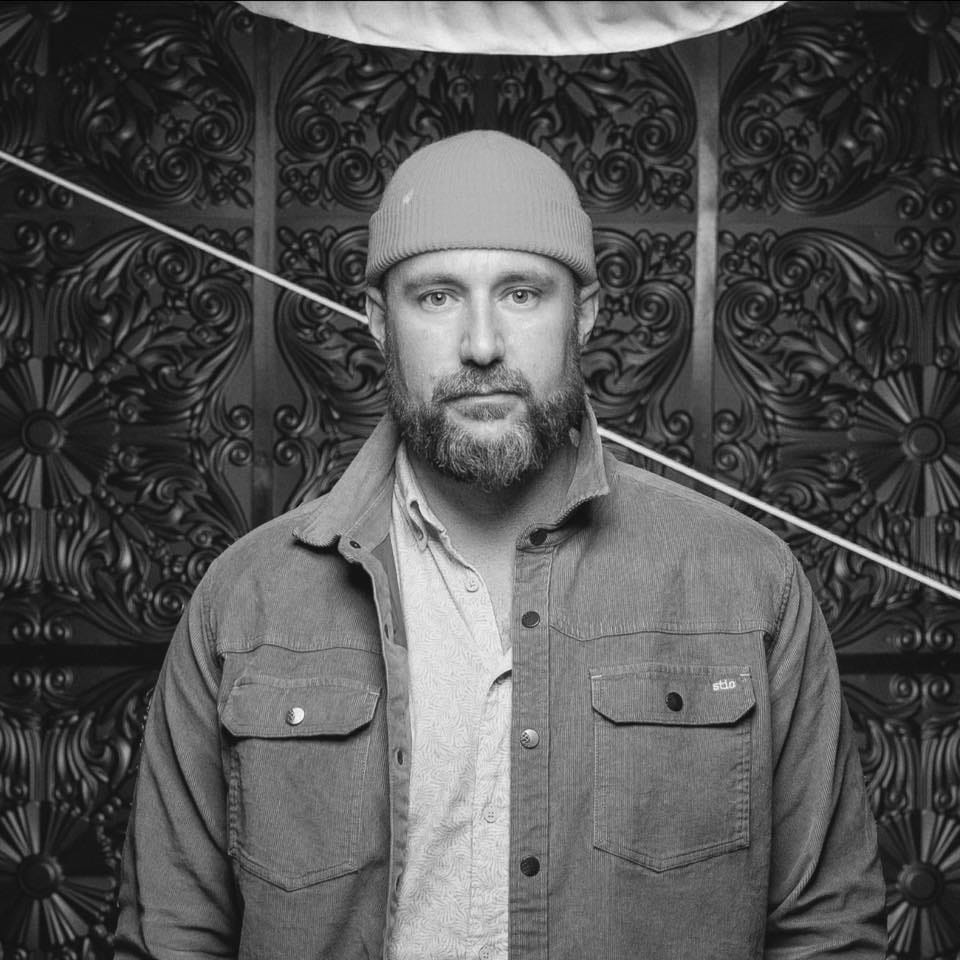
Brian Hirschy is a creative consultant, photographer, videographer, and musician. He created the theme music for season three of the underview.
Brian has spent two decades in corporate marketing and branding. Today he runs a media, branding, and marketing consultancy focused on the medical industry, along with a video production agency. From 2012 to 2023 he built and led a successful marketing agency, then handed it to capable hands in May 2023 to simplify his life for the sake of health and sanity.
Before that, Brian spent the better part of 2005 to 2012 working as a photographer on the Tibetan plateau. His work has appeared in publications and magazines around the world and has won awards. He co-founded Plateau Photo Tours, a photography workshop agency based in the Himalaya, and served as its lead teaching photographer from 2009 to 2013. He also served on staff with Love146, a global human rights organization dedicated to ending child trafficking.
episode references.
- God's Gonna Cut You Down, traditional American folk song: https://en.wikipedia.org/wiki/God%27s_Gonna_Cut_You_Down
- Johnny Cash and the Many Versions of God's Gonna Cut You Down, No Depression: https://nodepression.org/johnny-cash-and-the-many-versions-of-gods-gonna-cut-you-down/
- Go Tell It on the Mountain, African American spiritual, Hymnary.org: https://hymnary.org/text/while_shepherds_kept_their_watching
- History of Hymns, Go Tell It on the Mountain, Discipleship Ministries: https://www.umcdiscipleship.org/resources/history-of-hymns-go-tell-it-on-the-mountain-1
- Amazing Grace, Library of Congress: https://www.loc.gov/collections/amazing-grace/
- Zechariah 9:12, prisoners of hope, Bible Gateway: https://www.biblegateway.com/passage/?search=Zechariah+9%3A12
- Wendell Berry, Poetry Foundation: https://www.poetryfoundation.org/poets/wendell-berry
- the underview, the anglican church with Rev. Ashley Mathews (S03E22): https://www.theunderview.com/the-anglican-church-with-rev-ashley-mathews-christ-the-king
- the underview, the membership with Dr. Jared M. Phillips (S03E33): https://www.theunderview.com/the-membership-with-dr-jared-m-phillips-university-arkansas-ozarks
- Send us a Voice Message, the underview: https://www.theunderview.com/
episode outline.
- episode preview, prisoners of hope (00:01)
- episode intro, every place has a sound (01:36)
- welcome Brian, an invitation before the season began (05:06)
- the anthology, Go Tell It on the Mountain, the static, the darker tone (06:00)
- "oh, crap," the tension built into the season (06:55)
- Johnny Cash, love and judgment, and absolute certainty (07:07)
- no banjo at the end, why the theme stays in the tension (09:46)
- changing the channel, declarations rather than honesty, the basketball underwater (10:24)
- carrying the tension to the table with faith leaders (14:02)
- Election Day, and where do we go from here (15:07)
- the question that doesn't get answered (16:24)
- a season that zigzags, and what listeners sent back (17:22)
- flipping it, Wendell Berry, prisoners of hope, the desert fathers (18:48)
- the wisest people, and acceptance of tension as faith (22:50)
- where we place the tension (24:25)
- the hope that kills you (25:07)
- love and the capacity to see pain (25:19)
- is this wholeness? a state of grace (26:43)
- gratitude, and trumpets for season four (28:03)
- episode outro (29:24)
- the season three theme, in full (after the outro)
episode transcript.
episode preview.
[00:00:01] Brian Hirschy: There's a tension of holding hope. There's the tension of being like, "No matter what happens, I'm hopeful this will get better." And how do you hold that tension? That tension can be even w- worse than the negative kind, but it's also inherently redemptive. Ashley Mathews, she preached a sermon years ago that talked about this verse in Zechariah that like we're prisoners to hope, and I loved and hated it at the same time. And it felt so apropos in this moment, in this cultural moment, in this time. What does it feel to be a prisoner to the idea that things can get better? What does it feel to be a prisoner to the idea that things can get better and you might not see it?
episode intro.
[00:01:36] mike rusch.: Well, you're listening to The Underview, an exploration in the shaping of our place. My name is Mike Rusch, and today is a day with a lot of weight in it.
I know we said we weren't gonna do an episode this week, but Monica and I wanted to take a moment and offer something that may actually help. It's a conversation with a friend of mine who's been a part of this creative process from the very beginning, and it's about what you've been listening to in sometimes the background and the introduction.
It's about sound. Every place has a sound. You know it before you can name it. If you think about the hymn Amazing Grace, which was published in 1779 by English clergyman John Newton, well, if you're like me, the moment that hymn is mentioned, you can hear it.
I would assume most of us couldn't tell you where we learned it. A Sunday morning, a car radio, standing at a graveside, somebody's grandmother in a kitchen. Nobody sat us down and taught it to us. But if you start the first line in almost any room in Northwest Arkansas or in the Bible Belt, the room will finish it.
We know the words. We just don't remember learning them. You've known them because they are part of the people, the traditions, and the place that you live or grew up in. And to me, I think that's a good example of how I believe belonging works. Somewhere along the way, knowing the words becomes a way of knowing that you belong. And music is always a part of belonging. It gathers us. It tells us who's in the room, And if we're honest, sometimes it tells us who isn't.
Before the season began, when it was just an idea and we weren't sure exactly where it would go, I went to my friend Brian Hirschy. I wanted to ask him to help us think through how sound and place come together.
Brian is the kind of friend that speaks in the language of the soul. Maybe it's his deep voice or the way he pauses as he speaks, but there's an intentionality behind his eyes, and that is a type of gravitational force that pulls you near. Brian, among a thousand other talents, is a musician, and he was one of the very first people to be a part of the creative work this season. I told him we were going to spend a season on the faith of Northwest Arkansas. I told him I didn't know where it would take us, but I knew one thing, that this season, just like faith, had to be able to hold both sides of this conversation.
I think because we all hold both sides, the beauty and the harm, the welcome, the closed door, what we proclaim on Sunday and what we live on Monday, the dark and the light, the hope and the despair, the joy and the pain. Every one of us carries both, and so does this place, and so does faith. So I asked Brian if he could help us find the sound of that, and what he made has opened and closed every episode since.
So today is a different kind of episode. It's not an interview. It's a conversation between friends about where we started, where we've been, and where we're going, the reality of life, the reality of faith, the reality of belonging, and the reality of this place.
I wanted Brian to bring us inside the creative process to tell us what it meant to him, and maybe along the way to help us hear what we've been listening to all season. As you listen, sit with a few questions maybe. What is the sound of this place? What is the sound of faith? songs taught you that you belong? And when faith gets put to music, what do we let it say, and what do we leave out?
I think we're all familiar with half of the sound of what faith looks like. This conversation may be a conversation about the other half.
All right. Well, we actually don't have a lot to work through today, but let's get into it
episode interview.
[00:05:06] mike rusch. (2): I have the privilege today of sitting down and sharing a table with Brian Hirschy, and we wanted to have a conversation about may- maybe one of the underlying themes of this entire season. And for those of you that may not be aware, Brian uh, is the musician who provided really the soundtrack for this season. And I went to Brian before we started this season, kinda not understanding what we were really gonna be getting into.
And I said, "Brian, this is what I'm thinking about this season, about faith about how there's probably multiple sides of it." And I said, "Would you be willing to maybe think about what kind of that soundtrack- ... or that theme music could be for the season?"
So Brian, thanks for sitting down. I wanna dig into maybe your perspective and your thoughts on why you ultimately said, "This is the music that may capture this season ."
So Brian, welcome to this conversation.
[00:05:56] Brian Hirschy: Thanks for letting me be here. I hope I add something to the season.
[00:06:00] mike rusch.: I think you will. I think from my perspective, we went back, we had a conversation maybe to set the stage a little bit, and I said, "Brian, we're gonna do this Faith of Northwest Arkansas." And we realize that within faith there are all these different dynamics at play. And so for those of you that have listened to any of the episodes, they start out with this kind of, oh, I don't know, anthology, if you will, of Northwest Arkansas sounds, historical, Civil War booms of cannons- which has been across all of our season. And then we drift into this gospel rendition of Go Tell It On The Mountain which is really beautiful, something you would hear in the South, to this moment of static, and then this moment of a much darker tone.
What was it like? What were your thoughts when I came to you and said, "Help me figure out what this music theme could look like"?
[00:06:48] Brian Hirschy: Yeah. You did come to me and say, "Hey, we're probably gonna use Johnny Cash's God's Gonna Cut You Down."
[00:06:54] mike rusch.: It felt, that felt appropriate.
[00:06:55] Brian Hirschy: So built in, when you even told me what the theme of the season was, my immediate thought was, "Oh, crap." And I think that's probably your thought too.
[00:07:06] mike rusch.: That was exactly my thought.
[00:07:07] Brian Hirschy: Maybe more flavorful language than that. But, and so inherently there's this tension built into what you're about to talk about, because everyone in Northwest Arkansas has this perception of what f- the faith of Northwest Arkansas is supposed to look like, how it's supposed to play out, how it's supposed to engage with community.
And then you put us all together- and say, "Hey, figure that out." And so I think most people when it comes to faith of a region or the history of a region are feeling tension. There's tension inherently built into this. And so the song seemed really appropriate, and when I started to record it it turned into this True Detective like flavor, where it's like slow and lots of reverb and lots of like just droning guitar, and it felt apropos to build that tension into the music.
And if you listen to the song itself, it's deeply ironic and probably apropos to the life of Johnny Cash, where he's singing the song like his faith was paradoxical. And if you look at his life it's difficult to nail the man down, even though he said a lot about it, and then he writes a song about how God's gonna cut you down.
So there's... Even in the Christian faith, there's tension in this idea of overwhelming love, and then judgment. And I think people have been arguing about that for ever since the beginning. And I think the way that it's played out in American culture in the last 100 years has veered towards this idea of absolute certainty.
And the closer you get to absolute certainty in your faith the more tension shows up in other ways, other areas of life. And I think if I'm honest, that's what we see playing out in the political and public arena, is that as people have valued certainty over expressions of love you see the tension play out in interpersonal relationships. You see it play out in politics. You see it play out in socioeconomic ways. And so to bring it back to the music it demanded tension. It demanded to feel a little bit off center, like we're kinda wobbling on an edge. We could fall this way, or we could fall that way. And the tension had to be there.
And I don't know that I went into it thinking, "Oh, I'm gonna make this really tense." Just as I started recording it, it became tense and I... it was... It needed to be tense. It had to be tense just because of the subject matter of this season.
[00:09:46] mike rusch.: The one thing, like, when you first gave it to me, I was like, cards on the table, I was like, "I... no, I don't think this is... this is a little darker, a little bit slower." And there was no like... You didn't let us off the hook. There was no at the end of it busted into a banjo of some sort- ... and made some happy song. This was staying within that tension.
And the one thing that you added to it, which I had not anticipated, was my... I guess when we were talking about it, it was like, "Hey, how do we fade from Go Tell It on the Mountain into this God's Gonna Cut You Down kind of theme?" And you put this element of static, like someone was changing the channel.
Talk about that.
[00:10:24] Brian Hirschy: It seemed like to change the channel, that's actually what was underneath it all. It's like we got rid of the stuff on top- and added in just, you found the, the, the AM channel that was actually just, you heard it in the background the entire time. You just happened to flip over to where the signal was the strongest.
And so it felt almost like a stripping away. I mean, You hear those songs, Go Tell It on the Mountain, and there's anyone who has been in a church in the last 30 years has tension around worship music. And it's because I think we've stripped away the tension in it. And so we have these messages that are anesthetic to our souls. And it's saying, hey, don't, you can't bring your doubt here. You can't bring the complexities of wrestling with the divine here. And we have declarations rather than like honesty. And so anyone who's been around that, even tangentially in the last 30 years, it's kind of just in the air in Northwest Arkansas.
And if you've been a musician, you feel that tension of, yes, there's something inherently wonderfully divinely beautiful about this faith, but there's also something inherently complex and disorienting about it too. There's something that's, the tension's always there. And I think if we don't identify the tension, we go and find it.
We build it into our lives. We add tension in areas we don't need to if we're not willing to admit the tension of holding any kind of faith. There is tension in holding a faith, whether it's Christianity, whether it's anything else. There's built-in tension of I'm not inherently, I'm not omnipotent. I don't know everything.
And I'm going to hitch my wagon to this ideal and hold on to this faith. And if you strip the tension away from that, in the end, it's like holding a basketball underwater. Eventually it explodes. And that's why you've seen such a movement of deconstruction, specifically in the Christian faith, of people basically saying hey, we've refused to address the tension.
And especially in the last 10 years when we've failed to address the tension of hey, my faith, what I read in the pages of these scriptures no longer align with what I see happening in the world. I see power glorified over humility. And I see the people who need help the most getting re-- being demonized.
And so I think if we are unwilling to recognize the inherent tension of even having a faith in any way, shape, or form even to choose to be agnostic or atheistic or whatever it may be, there is tension built into being a human alive. And I think about my own journey in this music of wanting to be a better person.
We all just wanna be better, right? This is the point of faith is we would like to be better to-today than we were yesterday. And the tension is that even though I wanna be better today and the day after and the day after, you hold onto the reality that you've been hurt and the reality that you've hurt other people and the reality that you're gonna die not perfect.
And so the tension is inherent in life, and the intention is inherent in faith, and so the tension came out in the music
And I don't know if it intentionally, ironically came out in the music. It just happened, and it felt right.
[00:14:02] mike rusch.: I think it took me a couple episodes, if I'm honest, to like, maybe find what you had kinda given to all of us here in Northwest Arkansas through this music.
Because it was like I found myself trying to wonder are people just gonna fast-forward through this? Are they really gonna pay attention to it?" And I think the longer we went in the season, the more not only comfortable I became- ... with this, but the more I think it, it gave permission for me to live within the tension that you're describing.
So here's an example. We're sitting at the table with a faith leader, and we're talking through w- "Tell me the beautiful things about your- ... your community." And then we get into conversations about what's, t- tell, tell me some of the hard edges. And I think, a- and I'm not being facetious, I think I carried some of that ability to handle the tension that this was gonna be a harder conversation sometimes, and almost universally in every conversation we had.
This is gonna be a harder conversation than I probably wanna have, than is comfortable, that that maybe the, the person sitting across the table from me wants to have. And I think in many ways it just set this tone-
...
[00:15:07] mike rusch.: That, that gave me permission to say, "It's okay to step into these spaces where that is tension, and to sit in this tension really with the expectation of: How are we gonna resolve it?" Not how you, faith leader, are going to resolve it, or how am I, Mike, as the host here, or Monica as the host, how are we gonna solve this? How are we gonna, how are we gonna solve this tension together?
Because the tension is there and it exists, and it's real, and we can pretend like it's not there. But what kind of faith does that set us up for when we pretend that it's not there or we don't really understand or don't have the ability to reckon with it or address it?
I think I found myself in my own mind just kinda running through those things every ti- every, every episode we'd go and we'd lay that soundtrack in, in the beginning or at the end.
And finding myself walking through that, proclamation, to the tension, the static- ... and then this darker tone. And now, this episode is gonna come out on Election Day.
[00:16:07] Brian Hirschy: Oh, perfect. And
[00:16:07] mike rusch.: so now I'm like, "
[00:16:08] Brian Hirschy: Brian, what have you- Great. I'm associated with the election.
Yeah. Wonderful.
[00:16:10] mike rusch.: What have you done to us, Brian? Is... Well- I guess my question is, from your perspective in this music is this is this where we stay? Is this what, is this where we leave? Like, how do we think about this tension? How does... Where do we go from here?
[00:16:24] Brian Hirschy: The irony of this season for you is that you- You've not come to a conclusion
[00:16:30] mike rusch.: Not yet.
[00:16:31] Brian Hirschy: And maybe you aren't. But even having this conversation can't lead to clarity, total clarity. And so there's tension already built in to this entire season. There was tension the second you told me what you were doing, and you're like, "I'm really not sure how this is gonna go." And even this many episodes in, you're still not sure where this is gonna go.
Yeah,
[00:16:52] mike rusch.: I think that's fair.
[00:16:53] Brian Hirschy: And so you're gonna end it without even a real, a ton... more clarity than you had when you started, more, and also more questions you had than when you started.
[00:17:02] mike rusch.: Yeah.
[00:17:02] Brian Hirschy: And so was the lack of total resolution worth the price of the season?
[00:17:08] mike rusch.: Yeah, no, you don't get to ask me
[00:17:10] Brian Hirschy: questions.
Oh, I don't get to ask, I don't get to ask questions. All right.
[00:17:12] mike rusch.: No.
[00:17:12] Brian Hirschy: Let's just leave that in the air. Yeah. And so that is to... not to just beat on a, a dead horse with the word tension, but there's tension built in, 'cause you didn't solve anything.
[00:17:22] mike rusch.: Yeah, I think that's fair. I think that tension, this is, I think- But it was worth it.
Oh, it was 100% worth it. There is no question. And like every season, you kinda go into it with this idea of what you think it's going to be, and Monica could testify. "Oh, I thought we were gonna go right, now we're going left," or- ... "We're going left-" ... "or we're going right." And this zigzagging through where are we in this cultural moment?
What is the tension that's in the world? How do we be sensitive to that? Who are we talking with across the table? W- what kind of story or conclusion are we trying to work towards? What questions are being answered? What questions... Yeah, the whole season is tension.
And the feedback that we received, care- I even with the feedback we've received, probably every one of them, it's a reflection of that tension, of either being resolved. People are like, "Man, I listened to that interview and I didn't think there was somebody like that who could speak like that from that tradition."
[00:18:15] Brian Hirschy: Sure.
[00:18:15] mike rusch.: There's a release of that tension or it's y- you didn't answer my question." "I still live in that tension."
[00:18:22] Brian Hirschy: Yeah.
[00:18:22] mike rusch.: And so I feel like your insight, whether you intended it or not, I didn't know where we were going. You may not know, have known in totality either. But I think the music and that theme that you provided really helped set the tone and has carried us literally and has been a tool for, for Monica and I to be able to walk through what it looks like to sit in that tension and to live in it, and hopefully to try to work for a solution.
I don't know, I don't know where we go from here per se.
[00:18:48] Brian Hirschy: We could flip it a little bit. Please. So there's this idea that tension is bad or tension is negative. And as we lean into modernity, in my life and your life and everyone's lives around us, you see this element, the further away you get from tension, the tension of living that Wendell Berry would argue is inherent in the land.
It's built into the land. It's, the beauty and the disaster are all built into the land. And as things grow, there's tension. You read his poems where I mourn for this field," which is no longer a field. "What will happen to this stream?" A- and even some of his poems where he talks about the idea that you know, as we progress in our knowledge and our - modernity, Our lives are disconnected from the thing that provided us with life, inherently the Earth.
And that's just the way it goes. This is the way life goes. It's cyclical in our nature, but he even talks about the idea like, yeah, hey, s- we've removed ourselves from the land, so you gotta go work out to be in shape to go do the thing that you wanted to do. There's a great irony in that.
And so I think tension again, not to harp on the word, but that's what we're doing here, is built into life. Now, like that all feels really negative. It's-- But it's just the, the inherent nature of being a human and being alive. There will be tension. Like I watched it play out in my kid's life this week.
Life and death came into their world, and there's nothing I could do about it. And you see it as a parent for the first time, and you're like, "I wish I could have stopped that, and I know I couldn't, and I feel guilt, but I know it's not my fault." So it's built in. But there's also this other tension that is not deprecative.
There's a tension of holding hope. There's the tension of being like, "No matter what happens, I'm hopeful this will get better." And how do you hold that tension? That tension can be even w- worse than the negative kind, but it's also inherently redemptive. And gosh, Ashley Mathews who you had on early-- earlier this season, she preached a sermon years ago that talked about this verse in Zechariah that like we're prisoners to hope, and I loved and hated it at the same time.
And it felt so apropos in this moment, in this cultural moment, in this time. What does it be-- What does it feel to be a prisoner to the idea that things can get better? What does it feel to be a prisoner to the idea that things can get better and you might not see it? And so there is a tension whether you go negative or positive.
And you think about like the desert fathers, the tension that they felt. It's like, "Hey, how do we define the absence of God? What do we do about the idea of when the divine is silent? And how do we spin that in a way that explains my humanity and my connection to the divine?" And so there can't be anything but tension built into being human, and it-- I think we have tried to remove tension, and what we see is that sometimes that tension plays out in our faith narratives because we're trying to remove it everywhere else.
We want certainty. And the more certain you drive a faith tradition, the more certain it feels, the more tension just creeps out. It oozes out 'cause it can't be, it can't be sung over, and so that's the idea of the song. It can't be sung over. That tension is there. And so when you flip the station and remove all the stuff off the top, there's tension at the bottom, and it's not inherently a bad thing.
It's just the nature of being alive, nature of being a human.
[00:22:32] mike rusch.: So maybe for everyone that's been listening to this theme music, underneath it all, is that where we stop? Or what would you push us towards? It-- should we be resolving this tension, or do we sit in it until it resolves itself? Like, how... I don't know.
[00:22:50] Brian Hirschy: Think about the wisest people you know, which is certainly not me. The wisest people that I know, the wisest voices, have come to terms with tension, have come to terms with doubt, have come to terms with even holding a faith strongly in light of all that. I'll always think of Anthony Bourdain, who is a paradox. The man put his finger on the heart of so many issues so vibrantly and beautifully over decades and said, "This is the way it is."
"Hey, there's still hope." His famous line is "I'm gonna let you in on a secret. This doesn't end well." It doesn't end the way you thought it was going to. And the older you get, everyone you know is not living the life they thought they were gonna live. They d- It's not happening the way they thought it was gonna happen.
And if you can't come to terms with that tension, that this is not the life I would've written for myself it's inherently destructive to the human psyche. And so acceptance of tension maybe is faith, maybe is the cornerstone of faith. And so it has to be tense. It can't be anything but. And how do you deal with the fact that this man understood so much, and then in the end, it undid him?
What do I do with that? I don't know what to do with that. .
But there's this idea that the people who tell better stories about their lives... the stories we tell about our lives dictate how we see the world.
We can all tell really terrible stories about our lives, or we can tell, " Man, I did not see it going that way, and here's what's so much better about it than I thought it could be and here's what's worse about it."
[00:24:25] mike rusch.: Yeah, and I think about that too just in terms of, like, where do we place that tension, right? I think so much of what we work through this season is, people are putting the trust of that tension into faith, into God. Or they're taking that tension and they're putting it into humanity or politics or power or whatever that may be that it's going to find a way that it works itself out into the world- some way, shape or form.
And I think your your statement about maybe that is faith that faith is living within that tension with the hope, and I love this idea, especially from from Reverend Mathews this idea of a prisoner to that hope.
That maybe in their maybe there's
[00:25:07] Brian Hirschy: some peace.
What language, though? What language, being a prisoner to the idea of hope? Ted Lasso, it's the hope that kills you, right? So hope is a, is a complicated thing.
[00:25:17] mike rusch.: Yeah, I think this has been the journey of our season.
[00:25:19] Brian Hirschy: . I wanna go to this idea that if you think about love, if you think about this idea of love, and we, when we look at it from 30,000 feet, it's like this nice, cushy- ... pink, fluffy pillow, and you get closer to it, and you realize the depths of love that you can experience in a faith towards another person a- and even towards yourself is really contingent on your ability to also synthesize pain.
And so your ability to love is is reciprocal to your ability to recognize and see pain in yourself, in other people. Your ability to forgive is, hey, can I see the pain of the world, the tension that's showed up in this other person's life? And if you can't see that if you can't recognize the tension, you can't recognize the opposite, which feels like love.
And so I think that's some of what you are getting at this season is this idea that if we can't recognize the tension, and if we can't recognize that we all believe different things in the face of in a lot of ways the same evidence that we see on a daily basis, and everyone comes to different conclusions about that if we can't recognize that tension or even value that tension am I gonna be able to love my neighbor?
And so tension has to have its day, and if it doesn't, it will show up in every other place, and probably places we don't want it to.
[00:26:43] mike rusch.: Is this wholeness?
[00:26:46] Brian Hirschy: Oh, why would you ask me that? '
[00:26:48] mike rusch.: Cause I ask- Is that wholeness? I ask everybody that. You should know that's coming, but is this wholeness?
[00:26:52] Brian Hirschy: I don't know if it's wholeness, but it's maybe a state of grace. Maybe that's what we're all after, is a state of grace. And so if you think about your cycling journey is a state of grace that on a hundred and twenty mile-- the-- on a hundred and twentieth mile of a one-day ride, you feel stronger than you did at mile one.
Is that not the state of grace we're after? Jon Krakauer who wrote Into Thin Air has this, this famous quote. He says why is everyone on this mountain?" Some people came for glory, some people came 'cause they're bored, some people came to test their limits, but i-in the end, we're all seeking a state of grace.
Like this, this thing that's like built-in forgiveness, intention, and love, and all these things mixed together. So I suppose wholeness is the idea of accept-accepting the hard with the good. And so maybe it's wholeness, but I'm not really... Of course, I'm not sure
[00:27:54] mike rusch.: I think a state of grace, given where we are in this world and this time of the year is would be a really great place to land.
[00:28:02] Brian Hirschy: Yeah. I agree.
[00:28:03] mike rusch.: Brian, I am so thankful for the gift of your music, for walking through, for being willing to step into and really have, I would consider, a major role in what this season has become and how it's played itself out. And I've known this since the very beginning. Monica has as well.
But I think as we near kind of the conclusion of this, I w- I really wanted people to understand that there are some layers to this season that are that we've been like previewing, that we've been working through from the very beginning, and I'm just deeply grateful for your contribution to this for your ability to give, in many ways, I think me permission and Monica permission, the ability to walk into these conversations with holding this dualistic nature of humanity-
This unknown nature maybe of God and faith. And, resist the temptation to jump to the conclusions or the stereotypes or the labels that are so easy these days. And so just I'm deeply grateful for your contribution to the season. It's been a gift.
[00:29:05] Brian Hirschy: I loved being a part of it.
Thank you for asking.
[00:29:07] mike rusch.: Okay. We'll see. People have asked if there's a season four, and I always say, "No, there's not." So maybe next season you get some trumpets or something.
[00:29:14] Brian Hirschy: Sure. All right. Yeah. Just s- a Rickroll. I'll Rickroll everyone. There you go.
[00:29:18] mike rusch.: All right. Brian, thank you very much.
Appreciate you.
[00:29:20] Brian Hirschy: Yeah.
episode outro.
[00:29:24] mike rusch.: Brian, I wanna give you a very insufficient thank you. Thank you for the music and for being willing to sit down and talk about it. You gave us this season its sound before any of us knew what this season would become.
What you made carried Monica and I, and maybe this entire community, into every conversation that we've had, including the ones we didn't want to have. That is a gift, and I'm grateful.
Brian asked me a question today that I didn't answer about what we learned this season. And thanks, Brian, for letting me not answer that, because we'll come back to it after the election. Monica and I are gonna sit down for the final episodes of this season. We're gonna leave you with Brian's theme in full. Listen to it all the way through. Listen for what he talks about as this tension.
I wanna say thank you for listening, and thank you for being the most important part of what our community is becoming.
This is the underview, an exploration in the shaping of our place.