
the beginning with Dr. Melissa Zabecki.
Unearthing 14,000 years of history - lost civilizations, hidden stories, and the land beneath our feet.
season 2, ep. 4.
listen.
episode notes.
the beginning with Arkansas State Archeologist Dr. Melissa Zabecki.
In this episode of the underview, host Mike Rusch sits down with Dr. Melissa Zabecki, Arkansas's State Archaeologist, to uncover the deep and layered history of Northwest Arkansas. From the early hunter-gatherers who roamed the Ozarks 14,000 years ago to the powerful Mississippian culture centered at the Parkin Archeological Site, this conversation explores the vibrant civilizations that shaped the land long before European settlers arrived. Dr. Zabecki reflects on the challenges of preserving archaeological sites in the face of rapid development and shares why the stories of those who came before us are crucial to understanding our present and shaping a more thoughtful future.
Learn how artifacts, ancient soil stains, and Indigenous voices are transforming our understanding of the past and inspiring more ethical approaches to archaeology. This episode invites you to pause and reflect on the significance of the land beneath your feet and the people who lived, thrived, and shaped it. Join us as we dig deep into the origins of Northwest Arkansas and the lessons this history holds for today.
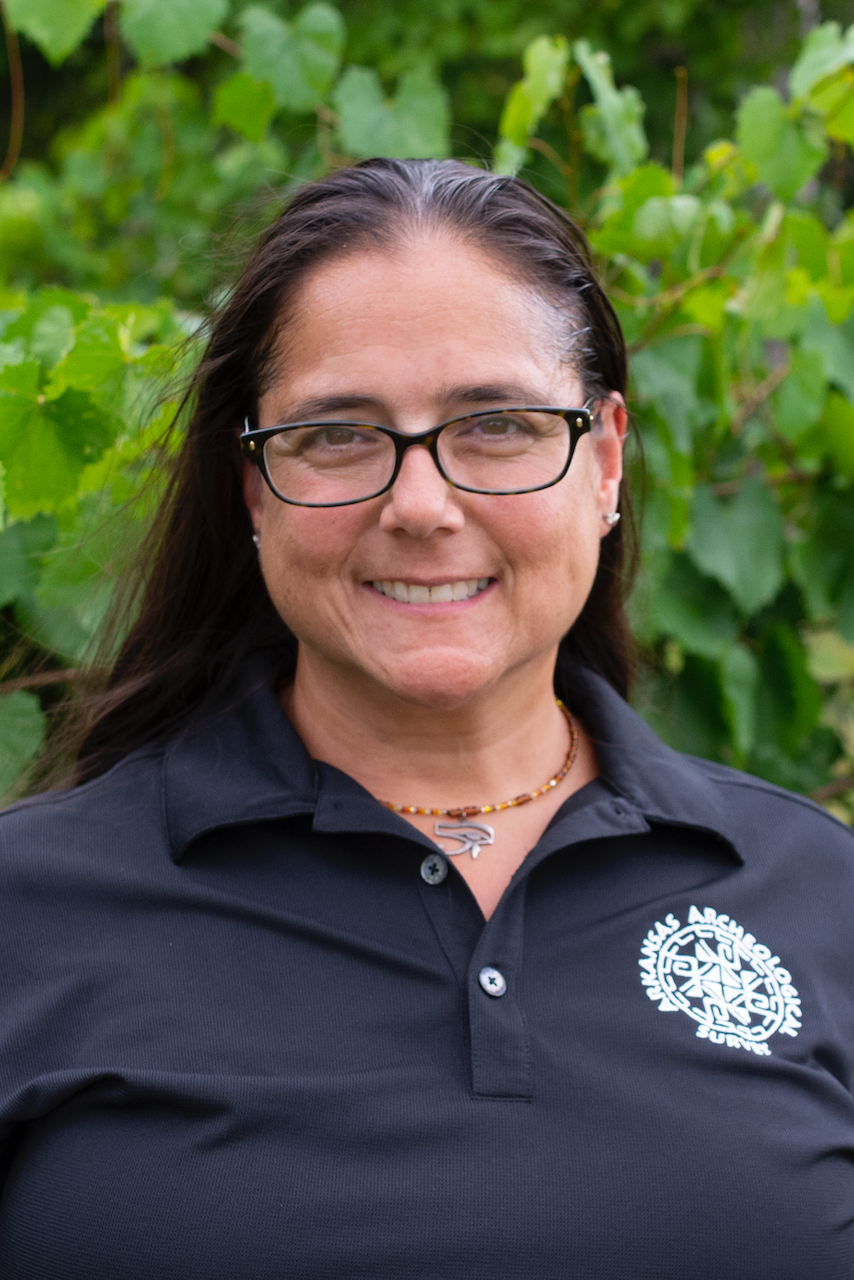
about Dr. Melissa Zabecki.
Melissa (Mel) Zabecki (PhD University of Arkansas, Fayetteville, 2009) will be the new State Archeologist starting in January 2021. She will replace Dr. Ann Early, who retired in June 2020. Mel has been the Survey’s Education Outreach Coordinator since 2018 and was a Park Interpreter at Parkin Archeological State Park for 6 years before that. Mel has been dedicated to sharing archeology with various audiences for the past decade, both in school and public settings. She collaborates with Survey Station Archeologists and other Survey Staff to create programs to spread two important ideas: 1) archeology is a science, not a treasure hunt, and 2) Arkansas is full of amazing history and Arkansans have a reason to be proud of where they are from.
Before delving into public archeology, Mel worked in CRM for SPEARS, Inc. and was an archeologist and lab director for the University of Kentucky’s Program for Archaeological Research. Before turning her focus stateside, Mel was an ancient Egyptian bioarcheologist and she still contributes her osteological expertise to the documentation of ancestral remains in Arkansas.
Mel teaches online anthropology classes for the University of Arkansas, Fayetteville and Arkansas State University Midsouth, she serves on the Board of the Arkansas Humanities Council, is an active Washington County Master Gardener, is a veteran beekeeper, and spends a lot of her free time in the woods or on the Razorback Greenway. Mel looks forward to serving in this new role in the upcoming year!
episode notes & references.
- Arkansas Archeological Survey
https://archeology.uark.edu - National Park Service - Parkin Archeological State Park
https://www.arkansasstateparks.com/parks/parkin-archeological-state-park - Native American Graves Protection and Repatriation Act (NAGPRA)
https://www.nps.gov/subjects/nagpra/index.htm - Quapaw Nation Official Website
https://www.quapawnation.com - Mississippian Culture and Cahokia Mounds
https://cahokiamounds.org - Osage Nation Official Website
https://www.osagenation-nsn.gov - Caddo Nation of Oklahoma
https://www.caddonation-nsn.gov - Fayetteville Black Heritage Preservation Commission
https://www.fayetteville-ar.gov/3712/Black-Heritage-Preservation - University of Arkansas - Anthropology and Archaeology
https://anthropology.uark.edu
episode topics.
- Introduction to the Episode: 00:00–00:03
- Dr. Zabecki’s Background: 00:03–00:06
- Arkansas Archeological Survey: 00:08–00:10
- Early History of Arkansas: 00:11–00:14
- Parkin Archaeological Site: 00:15–00:19
- Hernando de Soto’s Connection to Parkin: 00:20–00:24
- Relationship Between Parkin and the Quapaw Nation: 00:24–00:26
- Shifts in Archaeology: 00:27–00:32
- Cemetery and Cultural Preservation: 00:33–00:39
- The Impact of Development on Historical Sites: 00:40–00:46
- Ethical Challenges in Archaeology: 00:46–00:49
- Fears for Northwest Arkansas’s Future: 00:50–00:53
- Reflections on Wholeness and Community: 00:53–00:55
- Encouragement for Citizen Involvement: 00:55–00:56
- Closing and Call to Action: 00:56–00:59
episode transcription.
episode preview.
melissa zabecki.: [00:00:00] I absolutely don't want to justify what happened. But, back then, we're talking about pre science culture. the white folks did not under, not that they would have cared if a scientist would tell them this, and unfortunately, people still sometimes don't care when scientists tell you this.
We are all exactly the same. We share the exact same everything. Nobody's smarter than another person.Nobody has more athletic capability than another.
Nowadays, we know that people are the same. We have the genetic, the DNA proof that everybody's the same. And like I said, unfortunately, some people still don't believe that. We're all the same. we just we just fulfill our needs differently. And some people don't like that. [00:01:00]
episode introduction.
mike.: You are listening to The Underview, an exploration in the shaping of our place. My name is Mike Rush, and this is the story of Northwest Arkansas. Together, we're uncovering the layered and often complicated history that has shaped our region, its people, land, and identity.
This story of history, it matters because it roots us in the human experience.
It grounds us in who we are and where we've been. It reveals the successes and failures of those who came before [00:02:00] us. It amplifies the voices of those who have been left out, and it connects us to the memory and heritage of different cultures. History invites us to listen, to learn, and to offer a critical context for understanding the present and the shaping of our future.
It's not just about preserving the past. It's about reckoning with it, honoring its complexities and finding the lessons that guide us towards a more just and compassionate world. Our hope is that through this we discover not just the stories of others, but the truth of ourselves.
This is the beginning of our story.
And so the work ahead is to go as far back as we can. Back to the earliest known history of our place. If we want to begin to understand the story of Northwest Arkansas, then we must start at the beginning or perhaps even before the beginning.
And to do that, our guide today is Dr. Melissa Zabecki. Dr. Zabecki is our state archaeologist, which means that she is at the center of everything happening with our state as it relates to the study of our history, both physical and cultural. The [00:03:00] state archaeologist is involved in all aspects of our public archaeology from site reporting to coordinating with the public and local, state, and federal agencies to public education and outreach programs.
no pun intended. Well, maybe a little intended, but we have a lot to dig into today. And yes, I can already hear the collective eye roll from the archeologists that are tuning in. So we'll dust off the layers and we'll get back to the very beginning of what we know about our beginning of humanity and what is now arkansas today.
episode interview.
mike.: Dr. Zabecki, thank you for your time today. I appreciate the opportunity to sit and talk with you about the story of Arkansas. I'd love to hear your story.
melissa zabecki.: Sure, it's it's a long and winding story. I grew up in New Jersey and was obsessed with Archaeology. Really, I was obsessed with Egypt for most of my childhood. And but didn't really realize that I could become an Archaeologist and get paid. I guess I missed the point in Indiana Jones that he was a professor.
So I thought he was just some kind of random [00:04:00] treasure hunter. So I went to college and I knew I liked being outside, so I was going to be a geologist. But I didn't really know what that meant either, but I took an anthropology course and said that Archaeology is part of anthropology. I said, Oh my goodness.
So I went full speed ahead, did my junior year abroad in Egypt was obsessed with skeletons, got a specialty in human remains. And when my undergrad advisor said, what do you want to do with the rest of your life? And I said, I want to dig up dead ancient Egyptians. They actually said, you have to go work with Jerry Rose at the University of Arkansas Fayetteville.
I said, okay. So I came here and work with Jerry Rose. So I, I actually got my degree. It's an anthropology degree, but it was. It's very specialized in Egyptology and human remains. And so that's a weird specialty. And so I was just after I finished my degree, I was just teaching at random colleges and stuff in Arkansas. I went and became a park interpreter at Parkin Archaeological State Park, and that's where I learned about North American Archaeology [00:05:00] and realized that, that the folks here in pre contact times were just as vibrant and productive and as the ancient Egyptians were. They just don't, didn't leave as much behind that people go and visit.
Really gotta a deep respect for North American Archaeology and especially Arkansas Archaeology. So wound up coming here where we're sitting to the Arkansas Archaeological Survey as the education outreach coordinator. And then our state Archaeologist, Anne Early, who was the second state Archaeologist in Arkansas, she retired.
And so I somehow moved into this position where I am now. So that's my life story.
mike.: That's a very short story for probably a very well lived life for sure. And I want to get to your role but tell me what does Arkansas mean to you?
melissa zabecki.: It's cheesy. It might be cheesy to say, but it really is to me, the natural state. I have lots of outdoor activities that I've participated in. When I first started, I came here as a caver. I became a whitewater kayaker. Cyclists, road [00:06:00] cyclists and then broke too many bones and got too old.
And so now I'm a trike, I ride a recumbent trike and I'm a backpacker. So I, I've explored a lot of the state and to me, it I really focus on the natural areas that have been. lesser impacted than than where we're sitting at this University setting right now. So it's, yeah, Arkansas is still really deeply steeped in history as well as natural resources.
It's just an amazing place.
mike.: Tell me about the place where we are today. Can you tell me a little bit about the building we're in?
location.
melissa zabecki.: Yeah. So we're in the Arkansas Archeological Survey.
It's a really cool organization that is We are a division of the University of Arkansas. So system, so we're on the Fayetteville campus, but we have this is what we call our coordinating office. And so we have 10 archaeological research stations spread across the state. And that's why I have this map on my wall with these weird territories [00:07:00] mapped out.
So we've got Archaeologists mostly associated with universities but two are with state parks and one is with Winthrop Rockefeller Institute, which is also a part of the University system.
We are the coordinating office. We have our director, all of our money people here, me as the State Archaeologist. We have the Registrar, which is the the end all, be all of Arkansas Archaeology. They're the ones that collect all of the information about Arkansas Archaeology. They are the ones that Produce the site numbers and give people their site numbers when they find archaeological sites.
We're called the repository for all information. No matter if ADOT digs it up or the Corps of Engineers digs it up or whoever does the Archaeology, they have to report back to us. And usually the artifacts that are found are curated with us as well. But our Station Archaeologists. It's really take care of their own territories and, communicate with the citizens in their territories as well as do their own research projects. But I always like to remind people that we're not the only Archaeologists in Arkansas. Because, [00:08:00] because we we do a lot.
Because we are the repository. So we're very in tune with all of the sites around. We have control of our main database which keeps all of the sites organized and stuff like that.
But there are tons of agencies that, that also have Archaeologists as employees and they are, like I already mentioned, Arkansas Department of Transportation, the Corps of Engineers. Other agencies are smaller that people don't think about but USDA has natural resources conservation service and we have of course, the two are two and a half forest service forests, the Ozarks St. Francis National Forests and the Ouachita National Forest. So they have tons of Archaeologists, and then our national parks Hot Springs National Park has an Archaeologist. So anyway, there's tons of stakeholders in Archaeology and it's not just us.
And it's not just Archaeologists that are stakeholders. They're citizens that either care about the history or have historic things on their land. And then of course, the indigenous people that originally lived here [00:09:00] and settled it that are now what we consider Native American tribes.
We also call them Nations. Those are there's stakeholders there as well. Tons of people interested for various reasons in Archaeology and the preservation of sites.
role of state archeologist.
mike.: That's great. That's incredibly comprehensive. I was not aware. So thank you very much for that.
So you are the State Archaeologist. What does that role mean?
melissa zabecki.: Doesn't that sound fancy?
mike.: It's, I feel like I'm sitting with someone that I should be using a great title with.
melissa zabecki.: No, it's, it sounds fancy, and of course, there's only one state Archaeologist per state. Okay. But each one of us does a completely different job.
A lot of the State Archaeologists are actually positioned in their government. Our Archaeologists in the government are totally separate from what I do. The ones I'm talking about, the government, they're called the State Historic Preservation Office. So basically what I do, and it's hard to explain and it sounds really vague, I basically connect everybody to the Archaeology, whether it be people that [00:10:00] are coming in to do Archaeology for other agencies that don't live here, but that are coming in I communicate with the citizens a lot, every, you we have a sort of a "Ask an Archaeologist" link on our website, and I get all of those questions, and I get to answer Lots of questions about not just Arkansas Archaeology unfortunately people somehow find our website and just I mean I get questions about Artifacts from everywhere in the world and sometimes I'm like I don't even know what that is you know
So I basically know most of the people that are doing Archeology in the state and who to get in touch with, and that's just because I was, I've been here so long that a lot of my grad school cohorts are now in these other agencies. So I get to, Be like, hey, remember when we shared an office back in grad school? Can you do this? Let's do this now. So
the beginning.
mike.: when we think about Northwest Arkansas with all the growth that's happening I've had the privilege of living here for probably over 30 years.
It's home, but, [00:11:00] probably like most people, I'm fairly ignorant to the history of Arkansas, especially before European immigrants came. I'd love to know your thoughts as you think about timeline of Arkansas, where does that start?
melissa zabecki.: Yeah. And. Even less new people, even people that grew up here are pretty ignorant about the history and it's it's one of our goals is to make it more accessible, like the history more accessible to people. It's just really hard, there's so many different distractions that people aren't necessarily, this isn't their first priority.
History started here probably somewhere between 10 and 14,000 years ago. And that was the hunter gatherers that that settled they didn't really settle because they were moving, but they spent lots of time, seasons in various places. And, the Ozarks are pretty rugged, right?
So a lot of people didn't consider, there, there used to be a belief that The Native Americans did not settle here or they [00:12:00] didn't have a long term settlements here and stuff like that and we're finding out more and more that's false. People did live here for long periods of time and people settled here.
And so it really, like I said, 10 to 14,000 years, hunter gatherers we also call them foragers. And they stayed here or some people came and went, but a lot of people have are not confused, but it's hard to connect these pre con, we call them pre contact indigenous folks with the Native American nations that exist today, because everybody, that finds something, they'll be like what tribe is this from?
there weren't the same organizations of people then that there are now. we seem to have had, had as much ancestral territory here were the Osage nation, but the Osage nation didn't exist 500 years ago. It was some other group of people that had ties, so it's this weird we're going from pre contact times where Normal people call, or [00:13:00] most of the time we used to call it prehistory, right? But that's like a misnomer because that just means nothing happened in prehistory. Tons of stuff happened in prehistory. So we've been moving to the term "pre contact" lately.
But the pre contact folks do have, of course, a connection, a genetic and a cultural connection to the folks that live today, to the tribal nations that exist. They weren't called Osage back then, right? But the Osage still have complete connection to this land as well as Cherokee and other people that had to pass through Choctaw Nations and but again when the Cherokee were Cherokee when they came through here But the Osage weren't always Osage and the Quapaw weren't always Quapaw.
They know they're connected, but it's just a muddled history because of the removal. And people lost so much when they were moved out. Anyway, hunter gatherers. People started to settle started to put down roots they move into what we call the Woodland Period and people were starting to make pottery and start to horticulture and started raising [00:14:00] different kinds of crops.
And then they moved into what we call the Mississippi Period where they have, it's characterized by maize corn agriculture, so that's what happened. And then they were living perfectly fine until the Europeans came through and messed everything up. Some fared better than others as far as their connections with with the white settlers.
But then eventually everybody got moved out to Indian Territory in Oklahoma and lost so much of their culture because they were forced to speak English and of course moved into housing that they weren't used to living in traditionally, so that happened and then we have white settlers, right?
, and unfortunately they're enslaved folks that were brought in and then so you think about it, this happened three, four, 400 years ago that people were starting to settle here. 400 years is not anything to shake a stick at, right?
So if you have relatives that were here for 400 [00:15:00] years you feel like you have a claim to that land, so it's still, it's hard to tell people but no, you still are immigrants. There were people here before you, you just kicked them out .
So that's I think I got off on a tangent there, but I'm just trying to follow the history. I don't want to disrespect the history of the European Americans and the African Americans and then later the Chinese Americans and all the other groups that came here. They all have history here. A lot of people just think Archaeologists only dig up Native American stuff, right? We also, anything older than 50 years is fair game to us.
So we do recognize the deep history of other cultures here. But Native Americans had, thousands and thousands of years over everybody else.
parkin archeological site.
mike.: Dr. Zabecki, can you maybe share a little bit more about your time at the Parkin Archaeological Site, maybe the significance of that site to the history of the region or to the state?
melissa zabecki.: Yeah I spent six years as one of the park interpreters [00:16:00] at Parkin, so there was actually an archaeologist station there from the Arkansas Archaeological Survey, so I was not involved in any of the excavations or any of the research pertaining to the site, so I was On the other side of the park side where I would visit with with anybody that came in whether it be just regular people just passing through the area or school groups or I ran a bunch of adult workshops based on skills native or ancient skills, I should say.
And the thing is that came from a place that all of my knowledge of archaeology was based in Egypt and the Middle East, so when I got to Parkin it was like a completely new learning experience for two ways for both learning about American archaeology and also learning about being a Park interpreter, which means, Getting the public involved and making them understand why this place matters.
So it was as if I went back to grade school because I was learning everything over again. All I had was the [00:17:00] archaeological background of how you do excavation and how you do research and then everything else was brand new to me. because I don't think if I had
worked at Parkin that I would be where I am today because I went there with the with the prejudice of, oh, these North American, cultures, they, they were not as, as advanced as the Egyptians ever because, these little dirt Piles that are mounds or nothing compared to the, the great pyramids and the the, the huge stone temples of Egypt and other places in the Middle East. So I went there, just expecting this to be like a piddly, like easy job and it turned out. that it was not at all because I was so humbled when I started learning about the cultures that were in and around Parkin through, through multiple periods of history and especially during the Mississippi period, where the height of the Parkin phase and other mississippian cultures were at their height in in North America. I learned about all the all these [00:18:00] places and realized that this place was filled with high what, what people would think of as high civilization incredible trade networks from all over the country, all over the continent, so Parkin was in the Mississippi period, what could be considered as a capital city in a province that, that archaeologists call Casqui, and the province was basically in northeast Arkansas, and it wasn't all of northeast Arkansas, but it was centered around the current town of Parkin and in a radius of, I don't know, maybe a radius of 50 miles all around it were other villages that Sort of paid tribute to the leader at Parkin, the chief.
as a sort of a benefit to paying tribute to them. They would be protected by any, any other groups coming in or threatening them, and also they would share in the the [00:19:00] trade networks and they would share in the resources that were available to them and then things that were traded in.
It, it had a one very large mound, not large compared to maybe the Plum Bayou mounds or, and definitely not as large as the, as Cahokia or anything like that. But it had one one mound that was thought to have the chief's house on top of it. And then there were supposed to be many other mounds on the property or in the 16 acre village, but most of those were plowed down and only tiny remnants of them exist and they might have just been house mounts. So we're not really sure about that.
But anyway, so it was a place where it was a hub for trade. It was, it's on the St. Francis River and very close to the confluence of the St. Francis and the Tyronza rivers. So it was like a. Like a central place where people that were trading stuff would meet. And there was evidence of different kinds of materials, luxury materials, like copper that would have come from the Great Lakes. There were [00:20:00] shell large shells that would have come from the Alabama coast so there was lots of like I said, sort of luxury materials or luxury items that, resources that were not available anywhere near here or anywhere near Parkin that were, and that, demonstrates that this place was a place of power.
So we know that was, it was an important place during the Mississippi period, butearlier habitations have been found there too, but they just the main focus is on that Mississippi period.
And one other important part of Parkin, actually, that most people don't think about, and especially if you don't ever go there, you don't learn about, is that there was another period completely in the early 1900s, that there was a sawmill placed right on the same site.
So that's a lot of houses were on the property and the big sawmill on the side of the river. And most of the folks that worked there were African Americans. So there was an African American one room schoolhouse that's on the property. And [00:21:00] and that, that sawmill community, even when the sawmill moved on and closed perpetuated into a sit, a town of a community of folks that, that were actually the founders of modern Parkin, I guess you could say, so there were houses there up until the park was purchased by Arkansas State Parks. So that's another community that, that was there that the Parkin Site represents.
mike.: Thank you. Now it's my understanding that there's a connection between the Parkin Site and Hernando de Soto's expedition into this area, which is thought to be one of the first, if not the first European explorers into this area. Can you explain that connection or give us maybe a little color to that?
melissa zabecki.: So there's two sort of reasons that Archaeologists and historians believe that Parkin was one of the places that De Soto visited when he came through Arkansas.
One is because there were a few artifacts that were found that relate to the De Soto expedition. One of them was a glass bead very tiny when you go and [00:22:00] see it. It's so small, it's like the size of your pinky. fingernail. It's very, it's a very small bead. Amazing that it was found at all but the bead was known to be carried by the de Soto expedition. And then also a bell made out of, I think it's brass that a bell that would have probably maybe been on horses but that became a trade item was also found at Parkin.
So those two things coupled with the other set of evidence that I alluded to was that when when de Soto scholars were trying to retrace the footsteps of de Soto, they basically used the chronicles from the various folks that wrote stuff down when they got back to Spain on how long it took to get their, To different places and what that place looked like and how far away it was from this other place.
They basically were able to like trace the map and say that Parkin was probably one of the places and it was the province of Casqui. That's, they are the ones that, and the Casqui, the word, we don't know if that was the, the name of the chief, the name of the [00:23:00] town, the name of the province. But we use that into that word for everything because it's the only, Mississippi period word we have. One of the few. We have a few others, but so that's and then came this whole story that, that sort of plugged Parkin into the actual expedition was that De Soto we tell this story and I might embellish when I tell the story, but basically, this rumor of these great white ghosts are not really ghosts, but creatures covered in beards and riding giant deer, which because they didn't have horses back in the Mississippi period, that they could command. And they had all this, weird clothing and they looked very different. There was maybe a rumor, going around that these people were approaching.
And so when they got to Parkin supposedly the story goes is that the, the Folks in that area had been suffering from a a multi year drought, so resources were running low. Food was not scarce, but the farms were, the [00:24:00] agriculture wasn't doing as well to help this population prosper as it had for many years. So supposedly the chief asked De Soto to pray to his god for it to rain and supposedly De Soto raised the cross on the top of the giant mound and they did all their prayers or whatever and then the next day of course it rained. Now that's the, that's the story that the Spanish, the, brought back to Spain to, to tell the story.
So that, that connection, fit well with Parkin. And that's a story that that we tell of Parkin when the actual contact of DeSoto. So
mike.: Thank you. Interesting. This is this is also the same place where the Quapaw Nation was and spent a lot of time there in, in early history of this region. Is there a direct connection between the people at Parkin and the Quapaw Nation today, or is that maybe a little bit, maybe unclear at this point?
melissa zabecki.: of course, the Quapaw Nation was not called the Quapaw Nation back in the 15, [00:25:00] 14, 13, 1200s but the, we would say that probably the ancestral Quapaw were the people that were living at Parkin and so we don't have a 100 percent direct connection, but we do have the history that the Quapaw, understand about themselves, of course, and and also there are artistic motifs that, that, that translate down from ancient cultures to the modern artisans and elders that have just, significant meaning to folks and also stories and pat that get passed down as histories that get passed down as well as important ceremonial systems and other things that get passed down through time.
So we don't have, the cultural material. Materials like pottery the Quapaw Nation elders still have that memory of how to, the kinds of pottery and the way that it's decorated and the [00:26:00] uses of it and others. It's I guess ceremonial items, but there's no there weren't any. Of course, there weren't any indigenous people left after, after the other Europeans who come through the trappers and the traders and everything like that. So there weren't still people, physically living on the Parkin site. When Europeans or when the, of course they were there when De Soto showed up, but then they were gone. In the 16 and 1700s when the rest of the sellers came through, so we don't have direct connection, but we have the understanding of their their history. So .
shift in values.
mike.: as you look at the work that you're doing, how have those cultures changed over time?
As well as the fact that, as you said when Europeans came, white settlers came and made a mess of things. What does that time period look like?
melissa zabecki.: I absolutely don't want to justify what happened. But, back then, [00:27:00] we're talking about pre science culture. They didn't know that the white folks did not under not that they would have cared if he, if a scientist would tell them this.
And unfortunately, people still sometimes don't care when scientists tell you this.
We are all exactly the same. It doesn't matter if you are, some native person that doesn't look like another person. Every like humans are like, totally, we share the exact same everything. Nobody's smarter than another person.
Nobody has more athletic capability than another. We're like 99.999 exactly the same. It's just weird because we look different. Supposedly, I used to teach biological anthropology and supposedly fruit flies have more genetic variation than humans and penguins who like look alike, right?
And I think it's just because we look so different that people really believed that we were different. So when the [00:28:00] settlers got here or the European Americans got here and they saw folks I don't know, living what they considered backwards or uncivilized is really what they were, the savages the uncivilized people that didn't come up with guns and these democracy or whatever, whatever people thought they were bringing in here.
They really did honestly, truly think that the people needed help. They needed To be saved from themselves. And it was okay for white people to take the land because the Indians weren't using it anyway. That's what they claimed, right? And or they weren't using it properly. Why don't you, I don't know if they, Why don't you build this, I'm trying to think of like older technology, because they weren't building dams back then, but like, Why don't you build this water wheel so you have more power to run a sawmill or something like that I don't know.
But the Native Americans that were here didn't need that. They lived for thousands of years like that, and there was no reason for them to change. They adopted new stuff as they saw it, [00:29:00] but the people still thought that the Natives were backwards and uncivilized, and so that's how they justified moving people out.
Nowadays, we know that people are the same. We have the genetic, the DNA proof that everybody's the same. And like I said, unfortunately, some people still don't believe that. But if you understand anything about science, you'll understand that we've all evolved to the same level. We're all the same. We just we just fulfill our needs differently.
And some people don't like that.
what can we learn?
mike.: I think what you're speaking to is something that obviously we, we need to hear and be reinforced. As you think about the work that you're doing it brings us to today , what can we draw from that? What can we learn from you or for the people that were here before?
melissa zabecki.: Right. And this is something that's really changing quickly. Used to an Archaeologist to go out there and start a [00:30:00] research project and blah, blah, blah, and dig stuff up and try to make sense of what they were seeing.
And finally, we are start, we're white. Most Archaeologists are like, because who else has time to do silly, like non-paying jobs, right? So it's a it's, basically, it was a bunch of people digging up somebody else's history. And we're finally realizing that, wait a minute, we need the other voice.
We need the indigenous voice. And slowly, probably too slowly, but slowly we're starting to realize no, you don't just go to that site and dig it up. You need to find the people that that claim it as their ancestral land and say, what do you, we want to do this. What do you want? to know about what we've like, how we want to know what, instead of our research questions, what do, what should we be asking?
Which, what do you want to know about this place? And so that's really changing a lot of Archaeologybecause we want to have the indigenous voices because it's their stuff. It's their [00:31:00] culture. It's their history. Why would we stand around? Okay. So we figured out dates, right?
We now, because of science we could figure out what type of pottery was where at different times, which indicated. A loose idea about culture. But now we have all that science to back stuff up, but now we need like the indigenous voice to know you came here and you're a matrilineal society, so maybe that would affect the cultural, the material culture.
Now, and let me step back for a second. I want to remind, or maybe either remind people or teach people that Archaeologists don't, We're not looking for like artifacts. Everybody thinks it's artifacts that we're looking for information about culture. A lot of that stuff happens to be artifacts. That's what in a museum.
But when we're actually digging, we're reading the soil and we're looking at organization of villages that you can't excavate. You can only see the stains in the ground where these were structures were, right? So a lot of people only think Archaeology is artifacts, but we can [00:32:00] do a lot more with with social organization and stuff by how people were physically orienting themselves on the landscape.
So it's like a lot deeper than what most people think it is. It's not just artifacts or treasure hunting. I think I forgot what your original question was.
mike.: You're answering it.
melissa zabecki.: Oh, are we going with it, kind of thing, yeah.
mike.: Yeah, the values that you see over time that are yeah. Yeah,
melissa zabecki.: I used to, it was just like, first it was, honestly, like a hundred years ago, it was treasure hunting. Then it was Let's just find chronologies. When did these things happen? At what places? And now we're like, okay, let's, now let's look at the people who was here, what, who has stake in this and who wants to tell part of their story? And how can we mix it in with what we're seeing in the ground?
reflexive anthropology.
mike.: When you talk about the study of cultures what changed over the course of this hundred years or the course of how Archaeologists even approach this work.
melissa zabecki.: It's called reflexive anthropology.
And basically you're doing anthropology of yourselves. What are you doing? [00:33:00] And then who's got a lot of push, not pushback, but the tribal nations had finally gotten themselves their own tribal historic preservation officers. Now I mentioned the SHPO or the State Historic Preservation Office.
They have now the nations have equivalents called Tribal Historic Preservation Officers, so they were able to, get enough people that were interested in their historic preservation that now they have whole offices dedicated to the historic preservation. And it's it's it's very challenging because there's the Caddo Nation removed to Oklahoma, but their ancestral territory is Oklahoma, Texas, sort of Oklahoma, but Texas, Arkansas. They're basically speaking for counties that they don't even get to live in anymore.
They could, but now they're, they've have 300, 400 years of history and where they're placed. So what changed is the tribal nations were finally able to get enough [00:34:00] people that they could have a voice in the story, in the process of science. And then our SHPO, our State Historic Preservation Officer, has to actually consult with Tribes that have ancestral ties to the land and say, okay, here's what's gonna happen. do you have anything to say about it? This new airport is going in, do you have anything? And they have to pick and choose their battles and they have to see has any Archeology done before?
Oh God, there's this giant site. No, please don't do it, kind of thing, so basically they they just have more of a voice and we're also learning to listen to that voice. a lot of people have different ways of knowing, we call it ways of knowing, right? So we're scientists, Archaeologists, by the way, Archaeologists are scientists. A lot of people don't realize that either, that we're like, like hard scientists.
Anyway, so the scientists have our, we have our way of knowing, right? Empirical knowledge. Look at this here. We can measure this. We can see it, but then there's a cultural ways of knowing and a tribal ways of knowing that have [00:35:00] more to do with what your culture believes what happened. So we're trying to find an equal ground. you can ask this question in 25, 30 years, and it's going to probably be a different answer because we're going to be further along, hopefully, in the understanding of each other.
mike.: I think that's an incredible comment because what you're saying is this is not a finished work. This is something that continues to go on.
melissa zabecki.: And that's the nature of science. Honestly, I'm comparing it like that, but you make a new discovery. Oh wait, there's native Americans that have their own history.
they know what the symbol means and they can help us understand, and so no, yeah it's an ever evolving Idea and we're having more ethics, ethical conversations now. Where it used to be like, no, we're scientists. We're just going to dig all this stuff up and it's going to be put in our museums.
And now it's, now there's a lot more ethics that are being considered and some of it was because of laws that were passed. The big one was in 1990, the Native American [00:36:00] Graves Protection and Repatriation Act called NAGPRA . So that made a lot of people listen up and, wake up and say, oh, wait, we just dug up all these people's people.
We need to, account for our, our doings or our wrong doings and start like getting into a conversation about stuff. So we're finally getting ethical, not there a hundred percent yet, but we're trying,
mike.: What are the things that we still need to consider from an ethics perspective, as we think about Archeology, we think about our own community that we live here.
melissa zabecki.: I think we, when you say the, we, I always think of the archeologist cause I've been in this community for so long, but I'd rather do it as a citizen of Northwest Arkansas or of Arkansas in general, we need to just be considerate and Make space for the people that were here before us and when we buy our five acres and we have the deed and we own It if we find something on it, that's not [00:37:00] ours and I'm not just I'm let's go to us an enslaved person's cabin. Let's go there and even if it's not necessarily Native American remains, it could be an enslaved old cabin or something remains like buttons and broken glass and we just need to Remember that there were people here before us that lived and died on that land that might not be connected to us culturally, but just to respect that and not monetize it.
And because a lot of people buy and sell artifacts, and that's. Really unethical to, unless it's, a Native American living on land and then finding their own people's stuff and selling it. But that's, they don't do that because it's not, they don't, we don't monetize things, but a lot of people do.
So I think what we need to just start considering is when you find something on the private land, yes, it's yours, [00:38:00] but maybe think about either leaving it there or trying to learn more about it as opposed to just putting it on your shelf and thinking it's cool, which is, everybody does that.
I did that before I learned about ethics and Archaeology because it is cool to have something from another time. But just not to take it for granted or monetize it. There's another word I'm looking for, but I can't seem to think of it right now. But just take advantage of it.
Don't take advantage of it and just remember that's someone else's stuff.
mike.: As you talk about the cemetery preservation, there's some work that's happening in Fayetteville around some of that. Is that correct?
melissa zabecki.: Yeah, absolutely. We have a another staff member named Dr. Jamie Lockhart, and he he does a lot of remote sensing. A lot of people think about ground penetrating radar, but he has a really high tech technology that can find graves, but not very easily. It sounds easier than it's, because it takes many days to do this. But he's been working [00:39:00] with the the Black Heritage Preservation Commission in Fayetteville to locate boundaries of cemeteries that have been forgotten over time.
And there's a few other, one of our old station Archaeologists assistants, Jerry Hilliard, he also works with the commission. There's some graves out by the Drake Field, by the airport like a cemetery over there that they're trying to get more information on so that they can establish boundaries.
And so basically there's just a ton of cemeteries, that, Whether it be African American or other that are being encroached upon by by development most often private, right? So if you're if it's public. If it's any kind of project that has federal funding, there are laws that state that you have to do an archaeological survey, do a damage assessment kind of thing before that stuff happens.
But if it's private development, sites get plowed through all day long. Now, if it's a [00:40:00] cemetery, there are state laws that protect any human remains of any culture of any time period, and the cemeteries themselves because, sometimes the bones will just disintegrate, but it's still sacred ground because there's, headstones or whatever there.
So cemeteries are real challenging because they're oftentimes landlocked. In the middle of private property and access to those sometimes can be difficult. There's rules, for access, but it has to be. It's pretty specific and I can't get into that right now, but it's not an easy conversation.
And yeah, some of our Archaeologists are working all across Arkansas with various cemetery preservation groups.
mike.: Obviously, there's a preservation of people and culture. And the dignity, that people deserve just in and of itself. Are there things we're trying to learn that have been lost?
melissa zabecki.: I think it was because people didn't Get a voice. Just [00:41:00] like the Native Americans didn't really get asked questions. African Americans also didn't get asked questions. Now, this isn't just, I'm not just saying that it's African American cemeteries that are in danger. But a lot of times it is. And you just got it's a hard thing to even think about that would be an issue, African American preservation commissions didn't used to exist. And so everybody was just kinda, I feel like everybody was just like, let's just make Fayetteville great.
Just, let's keep building and oh, Fayetteville is the best place to live and we're going to have All this infrastructure and it's, make it better for the people now, but people are finally like, wait, but what about our ancestors or the people that founded this place? And we need to start protecting them.
I think it was, it's just something that happened as a result of all the development. So I think if it weren't being developed, it wasn't going to get messed with. But now that it's being developed, and like I said, private as long as it's not a burial ground or whatever, human remains you [00:42:00] can plow through an archaeological site if it's your own private property. So we're seeing that happen all the time here.
mike.: Northwest Arkansas is growing like wildfire. from your perspective, to see lands or areas of our community plowed over for development. What would you say to people about developing and growing this place?
melissa zabecki.: It's really difficult because people need places to live, right? So we can't just, a private landowner is not going to leave a tract of land undeveloped because they want to preserve history that might be there. But there are private landowners that absolutely know for certain that there's some kind of archaeological site there.
It's, but it all comes down to money. Right? So there, it is very possible for a private landowner to hire an Archaeologist to [00:43:00] go out there and do what we call shovel tests and do an assessment to see if they're going to mess up anything by, and then they'd have the option to cap it, like just put a ton of fill on top of it, sometimes that's not possible if it's some kind of big structure that has to go deep into the ground or something, but like you really literally could hire an Archaeologist.
But it's extremely it's prohibitively expensive for but you got to say I don't know how much like big developers make I don't know if it's a drop in the bucket and they just don't want to bother with it because it could hinder. there's that whole thing Also that Archaeologists slow down progress right because if you do find something important Then you have to let them have time to investigate before you can put your roundabout in right?
So You know, ARDOT, because they are federally funded by the Federal Highway Administration, they have to do the Archaeology, and that's why all the roundabouts that go in are now being surveyed by Archaeologists. But if it's just a regular housing development, like I said, it's hard because it's extremely expensive [00:44:00] to to alter your plans to work around an archaeological site.
So I understand, but it also is heartbreaking when I know that it's happening.
mike.: Would you say we have a moral obligation to?
melissa zabecki.: Oh, heck yeah. Heck yeah. But it's like I said, it's the money. It's the money of it all. A landowner buys a hundred acres to develop, to put whatever on, I'm not going to name names, to put whatever they're building on it and it's you can't put a big courtyard in the middle to protect an archaeological site because what's the, it just doesn't work functionally for the architecture or whatever. But yeah, I, there have been a couple of examples here that that stuff was preserved, but it's in a weird way. It is like an outlier. It's what is that doing in the middle of that? And luckily they did preserve it. But it's just, it's very hard because there's tons of history here
mike.: as we think about situations like that what are we losing as a community as a result of those decisions?
melissa zabecki.: We're [00:45:00] definitely losing the story of the land piece by piece. We always, I always like talk about Archaeology as being like a puzzle. You're just putting puzzle pieces together. And you can get part of the story, but what about that one little piece that could change the whole story? And it's, we don't know where that little piece is. So it's more important to preserve all that we can. And like I said, there is an option to cap the land.
If you can put a big, huge The red dirt fill on top of it, but that's not, that's extremely expensive to do. So I don't know, I'm not a private land okay, I own my like little tiny lot, my house lot, but that is on fill, and it's gross. So there's nothing going on where I live, but, it's so hard.
But smaller places people that own their own acreage, it's just like individual, like regular People that own houses, not like big developers. If you find something, you can always ask an Archaeologist what it is, [00:46:00] and that's not going to stop you from being able to do anything on your land, by the way.
A lot of people are actually under the impression that if they do have something important on their land, that land's going to be taken away. That has happened during eminent domain stuff, like along highways and whatnot. Our Archaeologists cannot take your land. We're a University. We can't do that. So that's the, one way to help with that. Sure.
mike.: We've talked about private landowners. What about the obligations of cities or municipalities in this? Decision making about
melissa zabecki.: land use?
Right?
Because that, considering all that stuff really does, again, slow down progress.
And so if I can personally talk about Fayetteville because that's where I live. Fayetteville recently had their historic district commission had passed their 5 year preservation plan and it has to do mostly with standing structures. Historic preservation, is commonly [00:47:00] focused on standing structures to preserve historic things that happened.
So, I very much love that plan and I eventually would like to have Archaeology work into that maybe next year five year plan or something. I'm working with Britton Bostic and, I'm in conversations and I hope to be able to be well versed enough to say, Hey, can we like stick this into your next preservation?
But I have been fortunate to be taken seriously by Allison Jumper of the Parks. Department. She's the Director of Parks, and we were, I was able to get two, two new ordinances passed in Fayetteville. Back in November, they passed the city council approved of two new ordinances. One is one is one that Allison and her crew had already been working on.
I just happened to get in at the right time. One is a cultural resources protection ordinance in that on any Park property. You're not allowed to collect any dig up or collect anything of cultural [00:48:00]importance, historical importance. Now, of course, what's historical importance is this 50 year old Coke bottle important?
Actually it is, it's considered an artifact, anything older than 50 years. But the other ordinance is a metal detecting ordinance, and this is one that can cause lots of people to get mad. Metal detecting is considered a fun recreational thing. However, we have so much important stuff that happened in Fayetteville that has to do with metal because of the civil war. So there's not just bullets, but there's buttons and there's all different kinds of hardware that got lost in the ground that people are finding. And and again, it's like a fun thing to go out and metal detect and see what you find. But it hurts, it hurts the Archaeology, so they actually passed on all City property, you, you can't metal detect without a permit. , so cities like Fayetteville are [00:49:00] thankfully ethical enough and forward thinking enough to understand that cultural resources are important, but convincing other cities I don't know.
I'd love to, since I'm not a resident of other cities, I don't think I'm, I can go and do that. I've encouraged my Archaeologists around the state to maybe, it takes a long time though, it's, one of those things like, do I really want to sit through city council meetings? I said yes. I wanted to do it, But it's a hard thing. So I would just hope that there are some history buffs in a city council. They're like, wait, let's make this ordinance, but we just have to hope there are people around like that.
mike.: From your perspective, as we think about growth are we making decisions that we can't undo?
melissa zabecki.: Absolutely.
mike.: Can you talk more about that?
melissa zabecki.: Oh, absolutely. Once it's dug up, it's destroyed.
Even if you collect every artifact on that site and give it to us, not that we want your artifacts because we've got enough artifacts. But even if you Get a student to do a [00:50:00] project on all the artifacts that were found, the context itself, like I told you already that where things are found and the stains in the soil are just as important.
And as the artifacts themselves even if you think you're preserving something by collecting the artifacts it's not, it's only half the story. once we dig into that site to put that building foundation in, it's gone forever. So yeah we're definitely making decisions that we cannot undo and people don't think about it.
People just don't know. And I can't blame them for not knowing that it's not just the artifacts that make a site.
mike.: One of the questions that I've tried to ask everyone that I've spoken to iswhat are your fears for this place, for Northwest Arkansas?
melissa zabecki.: Are we going to end on a gloom and doom? No, I'm, I've got a better question after this, but I don't know what your fears are. I'm naturally a pessimist. So you've got a critic sarcastic pessimist on your, at your table right now.
My fears were just the question you asked before. "Are we doing things we can't be undone?" [00:51:00]my fear is that we're going to lose, so much more because of this ginormous sprawl and development that's happening.
I understand people need places to live. We need safer roads that need to be expanded. We need, safer stuff in general for the people that are here. We can't our, I think our, of course, in most people's eyes, our people come first and our safety and our our ability to, find a place to live and stuff, but my fear is that people don't know enough about what is what we're losing. And it's hard to weigh. It's very hard to weigh the weigh those consequences against what you need.
But I always feel like, do we always have to make it bigger and better? ? Do we really have to have the bigger, and it's just materialistic tendencies of people to have bigger places and to have more stuff. It's [00:52:00] just it's the nature of humans. But there, there are a few of us That don't want to take up that much space and that don't want that much stuff. I can't stand all the stuff in this office is too much stuff. I've started giving my stuff away because it's just I don't need all this stuff.
Anybody that wants to Google YouTube, George Carlin and his stuff.
mike.: I've seen that.
melissa zabecki.: Oh my goodness. It's the best. But anyway, it's just we don't need that much stuff. Everybody, let's stop buying stuff and let's start paring down and getting smaller so that we can leave some of the green spaces for both nature and history.
Because, I'm also a nature person. So when I see. The trees go down. I cry. I honestly to do shed a tear when I see the large amounts of trees going down, but that's also, and I, the trees and the nature are the first thing that I think of at the forefront of my mind is the living creatures that are losing their [00:53:00] housing to give us housing.
But then of course, the second is, oh man, that land has been protected for hundreds of years and there's probably a ton of Archeology in there as well. That's my fear is that we're just going to keep taking the land over.
mike.: If you could wave a magic wand and enact change, What would it be?
melissa zabecki.: I don't know, just less, why do we have to keep growing bigger and better?
What, and I think this is an American thing, I think it's not just us, I think it's just America, everything has to be better better, better. It's nice, it's, I still have an iPhone 8. I don't, that's fine.
mike.: It's not an artifact yet .
melissa zabecki.: Almost, I bet. But I think, I just wish people would like just get ahold of themselves and think about okay, it's really fun to have all this stuff, but what's it doing to the earth?
mike.: I'm going to assume, correct me if I'm wrong, that, your perspective is born out of your view of [00:54:00] cultures from thousands and thousands of years beforehand. We must be happier today than people were in the past, correct?
melissa zabecki.: I don't know. They didn't know about iPhones back then.
They didn't know that all of the information about anything in the whole wide world could be at your fingertips on Google. If you don't know what you're missing and are we really missing? Like when I, sometimes when I Google something, I'm like, man, there's no mystery left in the world.
But they were the people that lived before us, before industrialization. Okay, I lie. I'm a lying liar. The people that lived a really long time ago, before agriculture, were so much healthier. Sure, they like fell off the cliff and died at an early age. But they were stronger people, they didn't have to go get braces, they, all their teeth came in correctly.
Pre agricultural peoples were extremely, they were adapted to their environments. So they were perfect specimens of animals because [00:55:00] they evolved and where they were. And we've just once agriculture came and we started like hoarding stuff, it just got worse and worse. And we love our Twinkies and really all kids should be eating bagels and beef jerky so that your teeth do come in correctly.
But again, I have a very weird perspective on life and death.
mike.: I love it. No one can see it. I'm trying not to laugh out loud because the humor and sarcasm and pessimism is an art form. And you're very good at it.
Okay. On a serious note, part of this conversation is a conversation about wholeness. What does community wholeness look like? What does wholeness look like to you?
melissa zabecki.: I think it's balance. I think wholeness needs to have balance, because We've got to have the Necessities we've got to have plumbing we've got it's not even really in life and death necessity, but it's yeah it could be because it could be a social problem like a. Anyway, we need [00:56:00]plumbing. We need, we need this stuff, but then I would just like for people to find out what really makes them truly happy, and and sometimes things that can make you truly happier, a lot less than you can live on a lot less then what we're living on right now.
And of course that comes from me carrying a backpack that's 25 pounds on my back for 6 days with nothing else in it. You know what I mean? And just sleeping on the, in my hammock, in the woods. So I've learned to like really pare down my stuff because I've realized that it's not material stuff.
So I think the community wholeness comes with balance of respecting each other Respecting the people that came before and trying to make it nice for people that are coming after you But everybody's got different perspectives, you want the water slide for people for your kids that are coming after you right but Do we need sorry to do this but my boyfriend will love this do we really need 20 car washes Do we really need another?
He's always, every [00:57:00] time we look, there's another car wash guy. I go to the car, I use the car wash, okay? But, do we need 20 of them?
mike.: You may be listening to me because I had the 20 car wash conversation just last night about that.
melissa zabecki.: Really?
mike.: That doesn't feel like wholeness to me.
melissa zabecki.: No. Yeah, like just balance it all out. Have what you need, but don't have all the extra stuff because you don't need it.
mike.: For the everyday person like myself, who's learning, what am I not asking? Or what would be important that you would want to emphasize?
melissa zabecki.: I'm, I have all these, like the extraneous non archaeological personal soapbox stuff, but I'll go with, I'll stick with the Archaeology part since that's what you're here to you're not asking
so how, what can I do as a citizen to help with preserving people's history? And what you can do, first of all, we always, and this is like the [00:58:00] spiel that we give if you find something that you think could be important Ask. So go to the Arkansas Archeology. Just type in Arkansas Archeology. You'll get to the survey's website immediately. Take a picture of something and then just send it in and say, what is this? Say where you found it. Not exactly, but like what county, because that, the county will decide what Archaeologist gets to answer the question. Because we forward it on, like I forward stuff on if I'm not 100 percent sure.
And don't, if you, this is really hard because this could come into a safety thing too, but if you see people writing on a wall that's got rock art on it, or if you see people like, digging stuff up, Report it. If it's on national park service land, it is federal. It's a federal crime to remove stuff.
If it's on state parks, they have their own, it's a state law dealie. So just like respect the stuff. Don't dig stuff up. If you do have questions ask [00:59:00] and then also figure out like do a little bit of learning, do not watch ancient aliens, go and open an Arkansas history book and learn a little bit about what, what really made up the State.
But just yeah, what you can do as a citizen is to just try to try to help just discourage looting, discourage buying and selling of artifacts discourage treasure hunting kind of thing. So that's like what I would say to ask.
Yeah,
mike.: Dr. Zabecki. Thank you very much for your time.
It's exciting to listen to you speak with passion, not just about the past, but how it really relates to the today and the future and the decisions that we make. And obviously, it's incredibly relevant to the decisions that our community is making and the decisions we're faced with. And so thank you for your voice and for speaking into this conversation.
melissa zabecki.: Thanks for letting me have the voice. I appreciate it.
episode outro comments
mike.: Well, as we close this episode, I wanna extend my deepest [01:00:00] thanks to Dr. Melissa Zabecki for guiding us on this journey to the earliest known history of what is now the state of Arkansas. Her knowledge and passion for uncovering the layers of our past has provided us with a profound starting point, one that reminds us how deeply our present is connected to the people, places and culture that came before us.
Dr. Zabecki's expertise has not only highlighted the significance of Arkansas as a hub of Mississippian culture and early Native American life, But it also reminds us of the complexity and richness of this land long before it became part of the United States. Through her insights, we've begun to see Arkansas not just as a backdrop for history, but as an active participant in the shaping of human stories, stories of innovation and adaption, conflict, and resilience.
As we move forward in this season, we'll continue to peel back the layers of Arkansas's history, to examine its role in the broader national and global narratives. But today, thanks to Dr. Zabecki, we have a clear foundation, a recognition that understanding where we came from [01:01:00] means honoring those who were here first, preserving their stories, and acknowledging their enduring impact on the identity of this place.
Zabecki for helping us set the stage, and for joining us as this exploration in the shaping of our place.
And I invite you to continue as we now work towards uncovering more of the story of Northwest Arkansas.
next episode preview.
mike.: Our next episode will stay within the origin story of Northwest Arkansas's culture. I have the opportunity to meet with Jocelyn Sanderson. She is the director for our local museum of Native American history here in Bentonville.
jazlyn sanderson: Understanding history, understanding , the land that you live on, understanding the culture of what that land originally inhabited is so important. It gives you a different perspective on life, for sure. It reminds you that, you're not the only person in the world who finds what you love important There are other people out there who [01:02:00] have different perspectives and different ways of life that they also feel is important
mike.: My hope is that we can continue to expand our understanding of not just what happened But to understand a little bit more about who these ancient arkansans were from their art and their culture.
I believe it's critical to see our past, not just a set of ordered events, but much like today within the relationships and humanity of who people were and who we are today because of the people that are still here with us. And so within that spirit, we'll continue this story of Northwest Arkansas.
Until then, I just want to say thank you for following along, and thank you for being a part of the shaping of our place.
[01:03:00]