
the cries from the cotton field with Larry Foley.
Filmmaker Larry Foley unpacks the journey of Italian immigrants from Sunnyside Plantation to Tontitown, Arkansas—revealing a deeper story of labor, faith, and migration in the American South.
season 2, ep. 23.
listen.
episode notes.
In the late 1800s, a group of Italian immigrants left the mountain villages of Northern Italy in search of opportunity and land in America. What they found instead was exploitation, malaria, and broken promises on the cotton fields of Sunnyside Plantation in Southeast Arkansas.
In this first of a two-part series, filmmaker and journalist Larry Foley joins us to trace their story—how they came, what they endured, and how their exodus from the Delta to the Ozarks led to the founding of Tontitown, Arkansas.
Foley’s documentary Cries from the Cotton Field becomes our guide into a story of labor, faith, and survival—while also illuminating the structural forces of colonialism, racism, and capitalism that shaped their journey. Through the voice of Father Pietro Bandini and the legacy of the families who followed him, we uncover a story that still echoes in our region today.
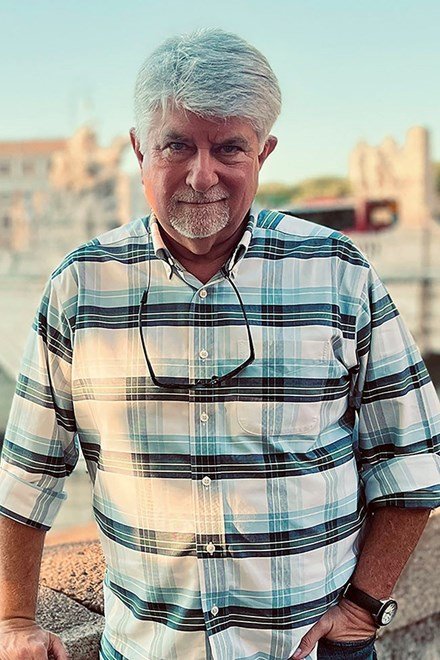
about Larry Foley.
Larry Foley is a celebrated documentary filmmaker, award-winning journalist, and professor at the University of Arkansas, where he has taught for over 30 years. As chair of the School of Journalism and Strategic Media from 2014–2023, Foley led the transformation of the department, helped secure millions in funding for new facilities, and guided the program to record enrollment and national accreditation. He also founded the student-run UATV station and continues to mentor the next generation of storytellers with the same passion and curiosity that fuels his own work.
Foley’s career began in television news, first as a bureau chief and anchor at KATV and later as senior producer and deputy director at Arkansas PBS. His documentaries are known for weaving together historical depth, cinematic storytelling, and a deep love for Arkansas. He has earned eight Mid-America Emmy Awards, 25 nominations, and four Best of Festival awards from the Broadcast Education Association. In 2024, he was named Teacher of the Year by the Arkansas Press Association and is a Mid-America Emmy Silver Circle inductee.
Foley’s documentaries include:
- Cries from the Cotton Field
- Indians, Outlaws, Marshals and the Hangin’ Judge
- Bass Reeves, the Invincible Black Marshal
- If This Walk Could Talk
- Making Straight the Way
- Make Room for Pie
- The Favored Strawberry
- The First Boys of Spring
- After the Tsunami
- The Art of Crystal Bridges
- Up Among the Hills
- Growing Hope
- Bridge to War Eagle
- Sacred Spaces: The Architecture of Fay Jones
- The Greatest Coach Ever
- Beacon of Hope: The Story of the University of Arkansas
- Charles Banks Wilson: Portrait of an American Artist
- The Forgotten Expedition
- It Started Here: Early Arkansas and the Louisiana Purchase
- 22 Straight
- Arkansas’ Natural Heritage
- Out of the Woods
- The Keetoowahs Come Home
- The Black Swamp
- The Governor from Greasy Creek
- Arkansas: A Special Place
- Hell on the Border
- Natural, Wild & Free
His national PBS credits include:
- The Buffalo Flows
- Saving the Eagles
- The Lost Squadron
- When Lightning Struck: The Saga of an American Warplane
Foley’s films have featured narrators such as President Bill Clinton, Billy Bob Thornton, Mary Steenburgen, Ray McKinnon, Joe Nichols, and Charlie Jones. His work is available on Amazon Prime, Tubi, Plex, Docubay, and StreamGo.
He lives in Fayetteville, Arkansas with his wife Susan, three dogs, and two cats—and continues to tell the stories that help Arkansans see their place, past, and people more clearly.
episode notes & references.
- Cries from the Cotton Field: Watch on Amazon Prime
- Tontitown Historical Museum: tontitown.com/museum
- Sunnyside Plantation History: Encyclopedia of Arkansas – Sunnyside Plantation
- Pietro Bandini Biography: Encyclopedia of Arkansas – Pietro Bandini
- History of Italian Immigration in Arkansas: Encyclopedia of Arkansas – Italians
episode outline.
- Episode Preview (00:00)
- Introduction to the Series (01:27)
- Larry Foley’s Discovery of the Story (04:13)
- Why This Story Mattered (07:04)
- Father Pietro Bandini’s Role (12:20)
- Conditions at Sunnyside Plantation (16:50)
- Recruitment and Exploitation of Labor (20:50)
- Race, Migration, and Power (23:52)
- Journey to Tontitown (33:13)
- Community Building and Assimilation (36:14)
- Modern Parallels to Immigration (39:41)
- Final Reflections on Racism and Wholeness (48:40)
- Closing Words (54:52)
episode transcript.
episode preview.
[00:00:02] larry foley.: There are a couple of biographies of the priest that, I call him a Moses figure, that led the Italians to Tontitown. Father Pietro Bandini. If they will come to America and go to Sunnyside Plantation and grow cotton. It sounded like a great idea, but the problem is they knew nothing about growing cotton. They really weren't gonna become landowners. They were gonna become sharecroppers, and the conditions that they moved to were pretty terrible. And Bandini goes down there and they come to him and they say, "please don't abandon us." And he said "I was left with no choice. I have to find another way. We're going to have to leave." It's a story that happened in the late 19th century, but resonates with things that are going on today, immigration, racism, nationalism.
episode intro.
[00:01:27] mike.: You are listening to the underview, an exploration and the shaping of our place. My name is Mike Rusch, and today we begin a two-part story that bridges generations and identities and the long arc of European migration into northwest Arkansas.
In the story of northwest Arkansas, following the forced removal of indigenous nations and the end of chattel slavery, one thing has remained constant the demand for low wage labor to sustain economic growth. That demand has repeatedly driven migration, welcoming those who could benefit from it, and often exploiting those who came to seek a new beginning.
Immigration then is not just a thread, but a structural feature of our regional development, changing in form and face, but consistently marked by a harsh truth. The newest arrivals are often placed at the bottom of a racial and economic hierarchy. They have been othered, excluded, and used for labor that builds wealth of the region. Its railroads, farms, homes, and highways. While rarely being granted full access to the systems they sustain or the rights that come with belonging.
The Italian immigrants who founded Tontitown, Arkansas are no exception. They came with hope and Faith seeking the American Dream, yet they were met with something very different. Hardship and exploitation and brutal working conditions when they arrived in southern Arkansas that never contained a way out, and yet their story includes something many don't know, they found a different way forward to resilience, reclaiming a place, a culture, and a community that continues to shape the identity of northwest Arkansas today.
In this episode, I'm joined by Larry Foley. He's a University of Arkansas journalism professor, and the director of the film "cries from the cotton field." like me larry is an outsider to this story, but he is walked ahead of me asking questions about labor and injustice and identity in this place, and so I invited him to help us begin and to do that with care and clarity and the humility that comes with stepping into someone else's story. Today, Larry is going to be our guide, and if you'd like to go farther, cries from the cotton field to streaming on Amazon Prime. I've included a link in the episode webpage if you'd like to watch it before or after this conversation.
And then in the episode that will follow. We'll sit with Emily Pianalto Beshear. She is a direct descendant of the original settlers of Tontitown. She'll help us connect this history to the present, reflecting on what that Italian identity means today in a region where the Italians are no longer the newest immigrants.
These episodes offer more than a glimpse into the past. They challenge us to think about the systems that we've inherited, that have built and continue to build this place. And this begins a critical question about how the systems and institutions still shape us today.
Alright? A lot to work through.
Let's get into it.
introduction.
[00:04:13] mike.: well, I have the privilege today of sitting with Mr. Larry Foley, who is a professor at the University of Arkansas, a journalist, and a filmmaker. Specifically today we're talking about his film Cries from the Cotton Field. And so Larry, thanks for being with me today. I really appreciate your time.
No, I'm happy to be here, Mike. Thanks for asking me.
Absolutely. I'll start wherever you want. I've had the privilege of watching the film and just digging into this history of Italian immigrants, which ultimately became the foundation for where Tontitown is here in northwest Arkansas. And so maybe start with where your, what your, maybe start with what your connection is to this film and what drew you to this?
[00:04:50] larry foley.: I've always subscribed to the idea that pay attention to chance encounters and as a storyteller. As I teach, there are stories everywhere. It's up to us to seek them out and find them and figure out which ones really ought to be told.
As a professor in my 32nd year. I'm gauged on teaching, research and service. So I'm always looking for a story because my area of research is in the content and visual research that turn into published into documentary film, typically in the area of cultural history. So while this was going on, I saw a little deal in the paper that at the Tontitown Winery, there was gonna be an oral history presentation called the Italians of Sunnyside. I really didn't know a lot about that, but having grown up in northwest Arkansas, I knew that the Italian enclave up here in Tontitown had a direct connection to Lake Village, Arkansas way down in the southeast corner, right on the Mississippi River. But I really didn't know what that connection was. So I got in touch with my friend, Ed Eves, who is a guy that I've known for 40 plus years editor, filmmaker in his own right. And he'd worked with me on a previous film. And I said, why don't we meet up there and go to the presentation and we can take our wives and go have dinner in Tontitown after it's over. And very quickly in with Anthony Borgononi presenting his mother's research, his mother Livy, who is the daughter of those direct immigrants from Northern Italy to lake Village, we leaned into each other and said, oh, this is a story.
And from that first time, which was March of three years agoFrom that moment in time that we went to that event we released the film two years later. And that's the film that we call _Cries from the Cotton Field_.
this is story.
[00:07:04] mike.: You said when you first heard some of these, you said this is a story. Yeah. What is it about the story that you feel like needed to be captured and needed to be told?
[00:07:14] larry foley.: It's full of characters, it's full of heroes and contradictory individuals and villains. It's a story that happened in the late 19th century to begin with anyway, but resonates with things that are going on today, immigration, racism, nationalism. And I always think that I had the opportunity to get in a machine and go into the future or into the past, and I don't know why this is Mike. I'd go back in the past because I just tend to get almost seduced by old black and white photos that's a moment frozen in time and I knew there were a bunch of 'em here and I knew that it would be a challenge to bring this story to life. Now, lemme tell you, it is a bigger challenge than I thought. But that's part of the fun of it.
[00:08:16] mike.: Did you have a vision from the beginning when you started making this film and did that change or evolve over time?
[00:08:23] larry foley.: I always say that it starts with your research and the research will lead you down the road. My vision certainly had a vision and it evolved and adapted over time.
Went to Rome pretty quickly in August of 2022. And I had read some material, been here to the Tontitown Museum and had talked to some people, but it was when I got to Rome that I really dug into the story and realized that it was richer and deeper than I had imagined. And so when we're talking about vision, that's really where the vision happened.
There are a couple of biographies of the priest that, I call him a Moses figure, that led the Italians to Tontitown. Father Pietro Bandini and Bandini is a, an interesting character. He was charismatic in many ways. He is a curious character in that he had been kicked out of the Jesuits but not kicked out of the priesthood. Of course that already made him interesting, but he ultimately, when he leads the folks up here, he becomes the mayor of Tontitown and was, as one of my sources, says on camera, he was in charge of everything. And he was imminently quotable and he wrote about things and he was quoted about things.
And very early on, I realized there is no story without Father Bandini. And I got a lot of material on him. I'm going to have, I didn't, had never done anything quite like this. This film is going to be narrated in first person by Father Bandini. Using his own words and blending his own words with historical documented fact. And so that's when the vision began to take place. Once I had realized that Bandini is going to be my first person storyteller. And then the history began to lead me down different places.
When I was in Italy I began to dig into and found out where these Italians had come from. They'd come from northern Italy in the Vicenza area and predominantly in a couple of communities in the Dolemite Mountains beautiful country. One of them is Velodelsuvio, the other is Quero. And, and so my research indicated that right before they left, Bandini is not involved at this point. Before they left, there was a mass held at the Catholic Church in Ade Passio to pray for those 150 or so who were about to catch a boat and come to America to work the cotton fields in Lake Village, which they were recruited to do.
And so I wondered is the church still there? Everything in Italy is still there and began making overtures. Can we film in the church? Yes, you can film in the church. Would the padre let us put a microphone on him? Yes. The padre will let him, let us put a microphone on him. So it began to set up interviews and the word got around.
I began to be contacted by people who knew I was on the film. I was on the story. It's a big deal up there and when we showed up to film, the media is waiting to interview me. Now, that never happens. It's happening today with you and me, but typically I'm the guy that's asking the questions and I work in the shadows which I like just fine.
But it, it was really interesting. And of course my research also led me to understand why they recruited these folks, how they, what was their sales pitch, how they got them to the cotton fields of southeast Arkansas, and and what happened when they got there, which was a nightmare.
challenge to make.
[00:12:20] larry foley.: One of the things that I realized about this particular film is that it was going to be a challenge to make because it, yeah, there are some still photos, actually quite a number up in Tontitown, but and a decent number in northern Italy.
But the story moves from northern Italy to Lake Village, Arkansas, and I just didn't see any photos. Sunnyside plantation that was huge. Doesn't exist now, and it hasn't existed since the 1929 great Mississippi River flood. And there were no still photos that anyone knew of. And there were no homes, sharecropper's homes, there were no rails left.
They were ripped up from the rail cars that came in and ship the landing, that shipped the cotton down the river to New Orleans, all gone. And so I'm thinking what are we gonna do? I didn't feel like this film lended itself to a lot of reenactment. And we did some involving Father Bandini. Very subtle, but what am I going to do? And so this is where the researcher comes in. I just looked at everything I could look at. I dig, I dug into everything and I found a photo or two obviously not original, printed in a book and it said courtesy of the Greenville, Mississippi Senator Leroy Percy Memorial Library.
And I thought, man, if I could get, if there, I wonder if there are more photos. And I got in touch with the library and they said, the lady that, that knew about that collection, she's long gone. And then I thought, yeah, but they've still got 'em. So I called back and I got this one lady and and she said, yeah, but I don't know what I've seen them but I don't know what happened to them. And one day she called and left me a message saying she had found the photographs. They were in a file off in a storage room in a, on a shelf. And I said, can you scan them and send them to me? And it was a gold mine. There were the sharecropper homes, there was the landing, there was the cotton farm, there were the railroads, there was a steam engine. There were the people working in the fields, and we had it.
And that is part of the challenge of working in a film that happened before there's a lot of photography or any motion picture photography. No motion picture photography. But it's also part of the fun of it when you find something like that.
Yeah. You bring that back in, making sure that it's not lost forever.
I can't tell a story unless we can show something on the screen. It's, It's the art of, of filmmaking.
Father Bandini.
[00:15:17] mike.: You touched on this a little bit, but father Bandini is really the central kind of character in this film. Who is the. I guess the protagonist, if you will, for lack of better words, he is in this, and you've started to unpack him a little bit. As we go through this conversation, what do we need to know about him to get a framework or a foundation of how this story and really how these lives unfold?
[00:15:39] larry foley.: Pietro Bandini is colorful, he is controversial. He is conflicted at times and heroic. And that was a little bit of a dicey thing with these folks up here in Tontitown. They revere him. He is a Moses figure, and in fact, they even submitted the paperwork to to try to get him named a saint. Now that didn't go over. Didn't happen, but one of the first questions I began to get early on was, how are you gonna treat Father Bandini?
I didn't know, but the answer at the end was, I think Father Bandini is a heroic character. I believe that. And I had no problem talking about his contradictions and the skeletons in his closet. But I had no problem through the point of view of the filmmaker of really holding him up the way he is seen here. He is a sainted character in Tontitown.
connection to Crow Nation.
[00:16:40] mike.: His story starts in Italy, but you highlight in the film in the beginning that he was a missionary to indigenous people, Crow Nation in Montana?
Right.
Where he was there as a teacher. What is, this is a really interesting connection, right? To be connected back to indigenous history of this country, but also his role as a Jesuit, as a, as an educator and a person out doing social work. But to do that in a place that's obviously now as we look back on that a very difficult time in our American history.
[00:17:12] larry foley.: Very difficult and a part of our history that hasn't been told accurately or very well. Unfortunately it wasn't in the history books that I read. It was only in recent years that I realized I think because the story wasn't told, that the real story behind the slaughter of the buffalo, which we touch on in the film, was not about getting meat and pelts to the guys who were putting the train tracks across the country in.
It was once you kill the buffalo, then the Native American tribes were easy to round up and dump over in Oklahoma. So Bandini is a little bit of a of a Forest Gump character. And then he's in a lot of places. Yeah. He was born in Italy and became a missionary to the Western United States. And for reasons we don't really know, he is asked to leave. And then when he goes back to Italy, there's an issue there in the school that he's teaching and he's excommunicated. I, it's prob it's probably not the Catholic term, but he's removed from,
[00:18:11] mike.: he's dismissed.
goal to be an Agrarian Priest.
[00:18:12] larry foley.: He's dismissed. Exactly. Shown the door, I think is the term that one of my interview subjects used. And then he connects with a, with another guy who's in direct. Father Scalabrini, who is in direct contact with all of these Italian immigrants who are pouring through Ellis Island in New York.
But during his time in the West, he developed this goal that he wanted to return to the United States, not to New York, where Scalabrini sent him, but he wanted to go to rural America and be a parish priest for an agrarian community. And so in all kinds of interesting ways, he connects with the guy who has recruited these Italians to come to Lake Village, Arkansas. And once they get there, he figures out a way to get sent down there to become their priest. And it's really rather interesting. It's almost plays a role in all of this because we can't go back and interview some of these people. It's just impossible to know exactly what was going on with Bandini, except that he had this goal in his mind that he wanted to be a parish priest at a in rural America, either in the south or the west. And ultimately that became his life's work.
conditions to come to US.
[00:19:47] mike.: So set up the conditions under which both the people that ultimately would come to the United States to, to Sunnyside Plantation but also the connection of how he got connected to those, give us a foundation
[00:19:58] larry foley.: Economic conditions in Italy were not good. If you were the firstborn male, then you inherited whatever property you had. But, these are Catholics and they were big families, and so everybody else was left out. And these Italians that came to Lake Village and many of them to Tontitown, they weren't starving, but there really wasn't a way for them to get ahead. And a new England businessman. It came who had, after the civil War reconstruction is over and this guy bought up a huge cotton plantation on the Mississippi River in Arkansas.
[00:20:38] mike.: So we're in like the 1890s.
Austin Corbin & Sunnyside Plantation.
[00:20:40] larry foley.: In the late 18 hundreds, Austin Corbin, who is a rich financier railroad baron, maybe a robber baron had this idea. Reconstruction's over those huge cotton plantations in the south. Many of them had returned to seed. There was no one to work the plantations. The civil War is over, reconstruction is over. So he comes up, so he buys this massive cotton plantation in and around Lake Village, Arkansas called Sunnyside. The problem is that yeah, he got it for really cheap and he can run his railroads down there, but who's gonna grow and tend to, and hoe and pick the cotton.
So somehow or another, and this is another one of these little curious things, he comes in contact with the Mayor of Rome, and together they cook up this scheme of going to Italy where immigrants were escaping and going through New York, searching for a better life, finding often a troubled life. And they go to Northern Italy to recruit them. Prince Ruspoli is the mayor of Rome. And there's a quote from him that says, "I, prince Ruspoli will find you some people." And, and so these are folks that were living up there in the Dolemite Mountains who were looking for a better life, and they were promised streets paved with gold.
If they will come to America land ownership and go to Sunnyside Plantation and grow cotton. It sounded like a great idea, but the problem is they knew nothing about growing cotton. They really weren't gonna become landowners. They were gonna become sharecroppers, which is peonage at best. One step removed from slavery being an enslaved person and and the conditions that they moved to were pretty terrible up there in northern Italy it's a beautiful country. Cool. I. Kinda like Eureka Springs looks a little bit like Eureka Springs. They moved there and shortly after they realized this is hard work.
We're not trained in becoming row crop farmers. And they don't have cisterns and they're drinking water right out of the swamps and they begin to get dysentery, and the malaria, the mosquitoes are carrying malaria and it's horrible. And they just start dying. And the, and that's the reason I call, ended up calling the film _*Cries from the Cotton Field*_. And Bandini gets sick and Bandini goes down there. He's not part of the group, but he hears about 'em. And so this is his opportunity to chase his own dream. So he goes down there and he gets sick and they're dying and it's a terrible way. And and they come to him and they say, please don't abandon us. And he said I was left with no choice. I have to find another way. We're going to have to leave.
how did they end up at Sunnyside?
[00:23:46] mike.: Before you transition, I have a couple questions just about Sunnyside there. If you'll ask within that kind of movement into Sunnyside, this sounds like this is not what they were expecting, right?
So how would you characterize really the situation by which they ended up there? It feels a little shady the way you're maybe describing it a little bit, but I, is there some nefarious activity going on there or is this just the plight of an immigrant that is really looking for a better way, really being taken advantage of to to end up in the place that they did?
[00:24:19] larry foley.: I think it's safe to say that Ruspoli and Corbin were not honest with these immigrants because they promised them land ownership and literally come and chase the American dream.
But the land that they arrived at was nothing like what they were accustomed to. And it wasn't land ownership, it was sharecropping. They were not accustomed to that climate. And that's one of the reasons why so many of them got malaria. And it was just a really, a sad situation. Now, were they taken advantage of?
I think they were taken advantage of but it got worse because Corbin, who really wanted it to work, if not for them, for himself. Because, that's the way he's gonna get the cotton out of there. And he didn't want a bad name in the papers. He gets killed very shortly after they arrive in November of 1895. He gets killed in a carriage accident. And the family, his family, Corbin's family, his kids don't want it, and the plantation ends up getting taken over by a Senator, United States Senator from Mississippi, who is a real interesting character, buddies with Theodore Roosevelt.
But he's the kind of guy that doesn't appear trustworthy. And so it got worse. And that's what happened when Bandini heard those cries from the cotton field and decided, I gotta find a place, we gotta get outta here. Now, not all of them left. Some of them stayed in Lake Village, some of them moved to Missouri. A few of them went back to Italy. Some of them moved to other Southern states. But the greater majority was that group in late 1895, early 18 96 that came to Tontitown. They came on, they walked, they came on wagons, they hopped on trains, and they came up here and they moved into makeshift housing of some abandoned homes of farmers that had left because of the depression.
And they began building their own homes. And after one pretty tough winter they made it. And why did they make it? It's because Bandini was in charge and no one was in charge. down at Lake Village it was a mess.
racial tensions at Sunnyside.
[00:26:49] mike.: What, maybe one more question around the Lake Village, 'cause you highlight this in the film, which was really surprising to me that I had not heard before as a part of the history and that yes, the labor conditions were terrible, but there were some significant racial tensions where Italian immigrants were being lynched from a kind of culture war. I guess if you, I don't know how to, I don't even know how to characterize that necessarily. Maybe you can help me do that, but this is not just a situation of them being taken advantage of in labor, but there's some real racial they're moving into this southern racial filled tension space.
Is that a fair interpretation?
How or how would how do you describe that impact onto their condition and maybe that influence on them also deciding that it's time to go.
[00:27:35] larry foley.: One of the sad epithets of American history is how race has been an issue forever. The treatment of the American Indian our indigenous people, African-Americans who were enslaved, but we know of the treatment of the Irish and the Italians and other groups of people.
But one of the reasons why this particular group was recruited to the Sunnyside plantation is that they went to northern Italy because they were lighter skinned. Now, if you go to Italy, different, Italy's a pretty big place. There are darker skinned Italians and lighter skinned Italians. And and so these guys were recruited not by accident because they were lighter skinned, because there was an issue.
With some people with immigrants and Italians. There was a massive lynching in New Orleans. There was another lynching not too far from Sunnyside. And that was one of the things that the owners of the plantation held over their heads that if you leave, you might be lynched. And so that really was a significant issue.
And in fact, when they moved to Tontitown some of the locals didn't want 'em up here. What's a Catholic, do they worship the Pope? Who are these people? They don't speak our language. In fact, a group of people tried to burn down the school and it didn't work. And then Bandini let loose in a sermon. And basically said, if you do this again, our people are armed and they're good shots, and we're gonna take care of business. Yeah. It wasn't all harmony when they went down there and race was definitely an issue.
type of racism experienced by Italians
[00:29:24] mike.: I, this, I don't even know if this is a legitimate question. I may cut this out.
I'm trying I'm trying to understand the context. I don't know if you can discern anything from your, from what you've read or in these studies, but like when you think about how in those situations, like to me. To see in the film and to hear you talk about the plight of Italian immigrants being really treated in the similar fashion, obviously in the south post reconstruction as formerly enslaved people.
This is not a dynamic of our history and our stories that we really talk about at all. And so I think I'm trying to understand, and in this story, how do we place this or even understand this? Is this a lesser degree of racism or exploitation? Is this an equal? Is there any way to, to navigate through an understanding of how to place this?
Yeah. Within that culture of post reconstruction or and not to compare necessarily. That's not the idea. I think what I'm trying to understand is to try to understand this component of our own southern agricultural industries, if you will. As those evolved.
[00:30:36] larry foley.: My job as a documentary filmmaker I've always looked at my role as a reporter of history. I'm a storyteller. I'm a journalist. I'm not a historian, but I love history. Yeah. And so I'm a reporter of history.
But if it, you don't have to stretch very far to see some of the same issues keep rearing their ugly heads in when we study American history, American Indians African Americans who were forced to come here. And then freed, but were they really freed because the conditions were terrible for a long time and we still have problems. And they needed a labor force, so they recruited these Italians.
Race was at the, is at the core of why they went to the northern part of Italy to get lighter skinned Italians. And I think about this today because I've done, I did a story in my career. I've done stories about I, I've done a lot of farming stories. I've done stories about the tomato harvest in south Arkansas where Mexican immigrants were brought in to work the tomato fields. I did a story called the favored strawberry, where we filmed strawberry farming in nine states. And we went to Florida and California and different places who picks the strawberries, immigrants, Mexican immigrants, largely other Spanish speaking immigrants from other countries.
And here we have a situation right now where the folks who were in charge of the government are trying to shut down the borders. And the argument is, and I can't argue against it 'cause I don't know we've got a, there are bad people coming across. They're killers, they're drug pushers. Maybe, but there are also good people and they're working those farms and some of them one of the issues that's going on in America right now is legal migration. What are we gonna do with that? You see my point? So what's the difference? We didn't want 'em in 1895 and some people don't want 'em now.
And I think of my friends up here in Tontitown, Italian descendants, and my friends down in Lake Village and some of my best friends. And think about their ancestry and how they were persecuted and threatened, and some of them lynched. As we've talking about. And I think of some of my Mexican immigrant friends today, people I know well, and students I've taught multiple dreamers. And these were people who were not bad. They came to this country because they were seeking a better life. That's exactly the story of cries from the cotton field.
These folks they came to this country for a better life and many of them found a better life. But man, they walked through the depths of hell before they found it, and they suffered all kinds of issues. And some of it was bigotry.
Now, as a filmmaker, how much of that shows up in the film? None of it. But you asked me, so I told you.
[00:33:46] mike.: But you don't shy away from the exploitation of that laborer
[00:33:48] larry foley.: its what happened. Yeah. I'm reporting the story as I see it in, in a documentary film. It's the point of view of the filmmaker. So I'm picking and choosing what I want to tell right. And how I want to tell it. Another filmmaker might not have even concluded Father Bandini in the depths that I did or maybe would've gone more deeply into his sins. My interpretation of the story is that this is a man, not unlike what we teach in church, not perfect, just forgiven.
how history views Father Bandini.
[00:34:22] mike.: I'll, I would gladly claim that as well too.
And I think this is what is so interesting to me because you have this, you have Father Bandini who's literally on, in federal Indian boarding schools in the west. He comes back to comes back to Italy, where now he's sent back to the United States under whatever circumstances. But he's really on the front line of so many of these stories of our American mythologies and our American stories. And got to see these from different perspectives. And so as you study him, his role in this story is really as you said, so multifaceted and so deep. And I'm sure as you have studied him, you're, you get to draw kinds of conclusions and maybe assumptions in a good way. But it's just a very interesting perspective that he probably got to experience and live that we don't see today as often.
[00:35:11] larry foley.: I think one of the things I tried to do is walk around in Bandini shoes. Who is this guy? What is his story? Because I knew I was gonna be asked, and I remember talking with one of the direct descendants of the first wave up here. Philip Taldo local Springdale businessman, long time Springville businessman.
And he, I remember very early on he asked, how are you gonna treat Father Bandini? And then we did a little post coffee meeting after it was over and Philip's in the film, we interviewed him over at the church, St. Joseph's Church. And he said, Philip, when we met year or so ago you asked me how we were gonna treat Bandini. And I said, now let me ask you, how did we treat Bandini? He said, I think you treated him just fine. They said, now let me tell you, 'cause I know the story a lot better than I did then I think he's a heroic character and if that comes through. I'm good with it.
[00:36:09] mike.: Maybe let's pick that up because to your point, he connects with this group down in Sunnyside Plantation and says, I'm going to step into the lives of these Italian immigrants. And this ultimately starts to remove them from that place. So maybe pick up the story there and what you see ultimately now is a journey to, to Northwest Arkansas.
[00:36:30] larry foley.: Well, Bandini figures out how to get this land up here. Now he's connected to the Catholic church and he is a forceful figure. And so.
[00:36:38] mike.: Still though, even after his being excused from a few,
[00:36:42] larry foley.: I don't, I think one of the things about Bandini is that he was strong-willed and he wasn't afraid to butt heads with folks. Years later he would butt heads with the Catholic church leaders in, in Little Rock. I think he was was a man of vision. But he wasn't afraid to butt heads on behalf of his flock. So basically what he did was provided leadership and those who wished to go with him, went with him.
He even said it would've been easier on me had I not done it because I've been sick twice. But I cannot abandon them. I'm paraphrasing here. I cannot abandon them to these people who ultimately didn't have their best interest in mind.
One of the things we do in the film is that because Bandini was an Italian immigrant, I. We don't really know if he ever became American citizen. I, I remember asking that question, but so his English would have been probably pretty good over time. And he's a smart guy and a teacher, but I didn't need a Shakespearean actor from New York to be my voice so when I was in Rome, the director of the Rome Center for the U of A is Francesco Bedeschi. And I would certainly interact with Francesco a lot. And he's got a really interesting, colorful, native Italian voice, speaking in English. And one day I said I pulled a quote and I said, Francesca, I want you to read this. And it was a bandini quote. I. And I said, Francesco, from here on you are Pietro Bandini.
And and so he is the voice of Bandini because he is a native Italian speaker and I wanted it to be authentic. And when I was, I did several interviews in Italian, many in English, several in Italian. I found Italian, native Italian speakers to read those parts so they would sound authentic.
But Francesco's great. I've taken Francesco to dinner several times at Mama Z's Cafe and and he loves the lasagna, which I think is great because
[00:39:10] mike.: he is an Italian.
arrival in Northwest Arkansas.
[00:39:11] mike.: I'm gonna say no pressure on Mama Z there. Exactly. But an endorsement for sure. Alright, tell us like, so this as this as this group of people now arrive in northwest Arkansas and start to really reconnect with the land in the way that maybe they had been originally when they came from Italy. What kind of community starts to form here?
[00:39:32] larry foley.: When you go to Northern Italy, where they were, where they originated mountains a little bit taller, mountains in here, but mountains, hills, great vineyards. Free flowing streams. That's what attracted bandini to this land up here. And they knew, they didn't know how to grow cotton, but they knew how to grow grapes and they knew how to grow viney crops. And so what happened when they came up here is that they had housing and they began growing grapes, and they were good at it. And and the community at first did suffer some bigotry with the, there was an attempt on burning the school.
But over time, as Tontitown grew up as this Italian enclave, it became known as a place where Italian immigrants lived. In fact Rinali farms here in Tontitown. Chris Rinali, who is the. Family proprietor of the farm. Now, his grandfather was not part of this original wave. His grandfather processed through Ellis Island in the 19 hundreds and someone told him about the enclave in Tontitown, Arkansas. And he just got here somehow. He got here and got a job working the vineyards and bought a farm that still Rinali farms where they grow all kinds of things. Tomatoes and certainly grapes. So what happened is that it and this is a typical thing in America, these Italians look like everybody else that already lived here. We've discussed this. So over time, yeah, their names may have ended in an I or an A, they were Italian. And it is fascinating to me to. Look at the names here of Rinali and Maestri. And so many of these, Pinalt o, these names that directly relate back to the first Tontitown, land plat that shows up here when you're looking through research papers at the Tontitown Museum.
But over time, they began to become assimilated in Northwest Arkansas culture. And other than their last names, they weren't thought of anything different. Jeannie Wayne the foremost professor of History at the U of A is one of the folks that we lean on in the film to, to talk about things. And, And she says, you know, over time they might've been Italian, but they became our Italians and they had nice restaurants and we'd enjoyed going and eating their food. And she says, this is Jeannie. Southern people are a peculiar lot. After a while we think, yeah, they're Italian, but they are our Italians now.
They didn't look any different than anybody else up here. And so let's be honest, that impacted it.
story of immigration in two cities.
[00:42:37] mike.: I feel like I have to go there with you. I don't know if this is what you want out of this interview or not. But you have this people, this is really interesting observation because. Here we are in Tontitown, not too far from Springdale. We have, in many ways, like the story of two cities of Italian immigrants here to start over again, who have become part of the community, a strong part of the community, revered in the community, loved in the community. And yet at the same time, we lived not too far from a community of people from Latin America, Hispanic, Latino who are facing in some ways, their stories as I listen to you, are not that different, if they're different at all. And yet, what we see today happening in our world is a very different thing. And yet these two worlds seem to be literally within, within an arm's distance of each other.
[00:43:30] larry foley.: Well, America is a story of immigration. If it's not a story of immigration, it's a story of immigrants, stepping on the lands of those who are already here. I find history fascinating, and I love to work in the late 18th and early 19th century because at least there are still photos around and they can help bring those stories visually to life.
But it amazes me sometimes to see the stories that happened then and to see how closely related they are to some of the things that are going on today. I'm just aghast at, I think there's a lot of racism going on right now. And it, it saddens me and sometimes it angers me because as a long time teacher I've taught students from all kinds of nationalities. And all kinds of from socioeconomic backgrounds, and I've taught gay students and straight students. And um, you know, the way I've always looked at it is that they're all God's children. And my job is not to pass judgment on anybody. My job is to pass along useful information to teach them to be critical thinking thinkers no matter what they end up doing, to do a good job with it. And I wished we could get rid of racism in America. But it is a live and well today. And there are some, there's some kinship to what was going on in the story that I tell now. Once again, that's really not showing up in my story, but if someone wants to ask me what I think I, I will tell you that I think differently today than I did 40 years ago.
I do I've stood outside in Indonesia working on a film project and heard the call of prayer, and I've seen Muslim people's flock, Muslim people flock into the mosques and and inviting me in. Now I'm not a Muslim, but I thought, you know what, these are good God-fearing people. They're not anybody for us to be afraid of.
And I think about these Italians that are here and these Latino people who are coming in and some may be deported, some I know. I just I hope that we will get through this time in history as we got through the, that angry mob that tried to burn down the church in Tontitown. And over time, I think the folks around here realized, you know what, these are good people. These are God-fearing people. We don't need to be afraid of them. We certainly don't need to be burning down their church.
how this film helps inform today.
[00:46:22] mike.: Yeah, I think your film and I don't want to spoil this because I do, I want people to watch it. And we will share where it can be found from a distribution standpoint for sure. Yeah. Because it, in many ways, the story of Tontitown and the Italian immigrants is a very beautiful one. The way that it comes to, to rest. And I, I'll let your film do the talking for that, but it also seems to parallel an American story around immigration that is still going on in the world that we live in, that we're still trying to reconcile, it feels like, as a culture and as a community, as a nation.
And I guess that's my opinion. Like I, I'm curious your thoughts, like what do you feel like this film has to say? What can we learn from this film that's gonna help us navigate through this world today?
[00:47:10] larry foley.: I always have the same hopes when someone's watching a film that I have made.
That they enjoy the story, that they get caught up in the story and they don't think a thing about how it was made. That's my job. They that they see things, they hear things and they want to go read more about it. But, I also hope that they learn some things and there are some stories that we can learn in this film that shame on us for tricking those people. Shame on us for trying to burn down their school. Shame on those who lynched those Italian people. Shame on those who held them such themselves higher than them. Because now all these many years later, we look at some of these folks with those Italian names that relate directly back to that first group in 1896 that moved up here. And we look at them as community leaders and pillars of Northwest Arkansas. And why in the world were they ever thought of as lesser people?
There are lessons to be learned for all of us and um, and and you know, I'm not beating you over the head with a big club, but yeah, there are direct feelings I think you can have about what happened then and about what's going on now. If you just open yourselves up to honesty.
fears.
[00:48:40] mike.: All right. I always ask people like, what are your fears within this story, within what you've seen around this story within what you know about northwest Arkansas, you've been here for a long time. What are your fears for this place?
[00:48:53] larry foley.: If you didn't know what you were looking for, you could zoom on the highway past, through Tontitown and not know that this little enclave of Italians existed. And so that's a challenge. And it is a little bit sad that we don't have the great vineyards like we once did, and that Mary Maestri's is long gone. But we still have some Italian restaurants and those kind of things.
The way I look at it is if you go to New York, you're gonna see Italians in, from way back, you're gonna go to Chinatown, you're gonna see folks who were of Irish ancestry. I think what Northwest Arkansas it's a little bit like a bigger city. The region is a little bit like a bigger city in that you will find folks from different ancestry. You don't have to go to a big city to see those enclaves or those pockets of immigrants, I don't think that's gonna change.
I think what's happened here is that if we really look around, if we really look around, we're all from some place and we're Americans and it saddens me sometimes to think why in the world were we ever afraid of those Italians? Or why in the world did we enslaved black people?
What the hell was that? And why in the world did we treat Irish people like dogs? That's the sad part of America. We, we tend to criticize and be afraid of somebody that looks different or sounds different. And it just seems like sometimes we don't learn from that. But but maybe we will over time, at some point in time there'll be a reckoning.
wholeness.
[00:50:45] mike.: The theme of all of these conversations is around this idea of community wholeness.
Yeah.
And so this community, this Italian community and this is why people should go watch your film. 'cause I think you paint this picture really beautifully. But within the context of our conversation, what does wholeness look like in this space?
[00:51:04] larry foley.: I did a film several years ago that's also streaming called "The Buffalo Flows," the story of our first National River, and that river's being threatened again. And my minister, my pastor came up to me after he saw it and he said, I heard your voice in that film. I said, my voice is not in that film. He said no. I heard your voice in that film. If you really paying attention. My voice is in all of my films. While I was in the early stage of working on this film. Some old friends of mine called me back to do a presentation, talk about whatever you want.
You've had a career in film and I went back to some of my films and I plucked different things that related to faith in those films. Not trying to beat anybody up about it at all, but I think that when I'm teaching documentary film, I talk to the students about, yeah, I look at myself as a reporter of history, but documentary film is different than a television news story or a news article. There is the filmmaker's point of view, and sometimes I and always, it's not intentional, it's just who I am no doubt permeates the story that I tell and how I tell it. I know some filmmakers, one from Arkansas and they like to do these stories about that, that I just couldn't do.
And when I say that, I mean I can't do a story about meth addicted people and it's tragic from start to finish. I can't do it. It's not who I am. It's not who I am as a filmmaker. So if somebody wanted to come to me and tell me that they wanted to pay me all kinds of money, by the way, that's never happened, to do a story that is, is gonna be how everything is terrible. And, and, we just might as well go crawl off in a corner and die. I can't do it. I just can't do it. I think one of the, I think one of the things that drew me to this story was, it's a story of faith. It's a story of hardship and hope and adversity and of resilience and faith that attracted me to this story. It's the kind of story I like to tell.
thank you.
[00:53:40] mike.: Well, Larry, I would agree with you that it it does come from a place of hope. And I think to me, it's so important to see these kinds of stories with a hopeful narrative because sometimes we may be in the middle of some other stories in our world that need some hopeful narratives as well too.
And I just wanna say thank you for the work that you've done and the research and being a filmmaker and sharing this story with us. Because I think it gives us language and it gives us the ability to see what could be, what has been and give us some hope in this world that we can move toward. And Larry, thanks for being here. And yeah, thanks for being a storyteller.
[00:54:15] larry foley.: Thanks for inviting me. Move toward the end of my career I have been more reflective than I once was, and I just feel like I've been blessed. I don't often know how it happened, but I'm grateful that I've had this career I've had as a storyteller.
And I've, I I don't know what I'd do if I had it to do over. I know what I'd do if I had this film to do over. When people ask me, are you happy with it? And I'll say What? I often say, you know what? I made the film I wanted to make.
[00:54:52] mike.: I would encourage you to continue to go make films like this because you find those stories and tell 'em. And maybe speaking just personally that, that these are the stories that I am a believer in and that I think our world needs. And yeah. Thank you for doing that. Go make some more and of course a shout out. We'll get the links on the episode webpage for everybody to go find and watch this film as well too.
So Larry, thank you for your time.
[00:55:14] larry foley.: Thank you.
episode outro.
[00:55:17] mike.: A Huge thank you to Larry Foley for this conversation. He's a filmmaker and journalist, and so you get to hear that perspective come through in our conversation. But he's someone who spent years tracing the undercurrents of labor and identity and justice here in Arkansas, and his film cries from the cotton field.
It reminds us that even stories that we think we know, like the founding of Tontitown, often hold deeper truths about migration, exploitation. And resilience. Larry helped us step into the story from the outside with care. But in our next episode, we're gonna move from the outside in.
We'll sit down with Emily Pianalto Beshear. She's a direct descendant of one of the original Italian settlers who made the journey from Sunnyside Plantation to the Arkansas Hills. She's also the museum manager of the Tontitown Historical Museum.
Emily's story helps us bring the history forward to understand not just what was endured, but what has endured.
As Northwest Arkansas continues to change the story of the Italians who came, it offers us a lens in the questions that we're still asking today. Who belongs? Who labors? and what does it mean to carry a family legacy when the ground beneath you keeps shifting.
I wanna say thank you for listening. I wanna say thank you for being the most important part of what our community is becoming. This is the underview, an exploration in the shaping of our place.