
the doctrine with Melissa Horner, part 1.
Melissa Horner unpacks settler colonialism’s ongoing impact, land, culture, sovereignty, and the systems shaping us today.
season 2, ep. 6.
listen.
episode notes.
In this episode of the underview, Melissa Horner introduces listeners to the foundational principles of settler colonialism and its enduring impact on U.S. society. Beginning with her personal story, Melissa shares how her identity as a Métis citizen and descendant of the Turtle Mountain Band of Chippewa informs her work and perspective. She frames settler colonialism not as a historical event but as an ongoing framework that influences every aspect of American life, from land ownership to cultural norms. Melissa also explores the Doctrine of Discovery and its role in legitimizing colonization, alongside concepts like terra nullius, manifest destiny, and westward expansion, which reinforced settler claims and erased Indigenous sovereignty.
Throughout the conversation, Melissa details the systemic policies—such as the Indian Removal Act, the creation of reservations, and the Indian boarding school era—that systematically dispossessed Native peoples of land, culture, and community. She outlines four key components of settler colonialism: the elimination of Indigenous peoples, the imposition of property systems, the erosion of relationality, and the limiting of societal options. By weaving historical context with her own experiences, Melissa invites listeners to reconsider how these structures persist today and to begin the work of understanding their pervasive influence on both history and the present.
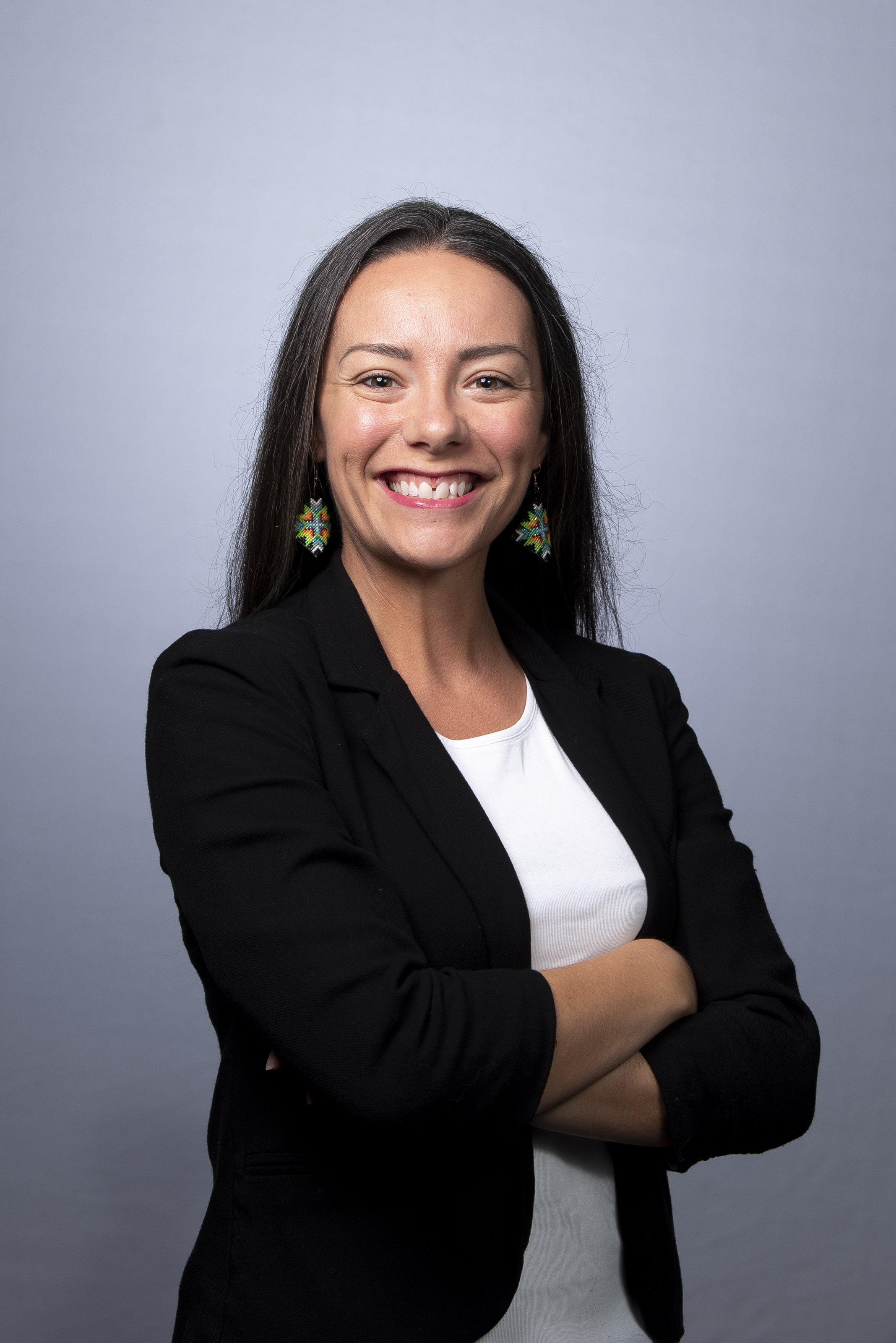
about Melissa Horner.
Melissa is a citizen of the Manitoba Métis Federation and a first-generation unenrolled descendant of the Turtle Mountain Band of Chippewa. She also has settler lineages including German and French. Melissa grew up in Montana and revels in spending time with her family, practicing archery, traveling, reading, hunting, and hiking with her dog Koy, all of which shape the cultural, relational, and personal experiences that continuously inform her thinking, writing, research, teaching, and creativity.
After teaching high school in rural Montana, Melissa transitioned to the PhD program in Sociology at the University of Missouri.
Melissa’s research examines the social structures of everyday, ongoing settler colonialism in the U.S. while also exploring Indigenous knowledge systems that persist in Native Nations and Indigenous communities through policies in the state of Montana.
Melissa pursues her research as a Health Policy Research Scholar for the Robert Wood Johnson Foundation.
call to action.
If you are ready to deepen your understanding of how settler colonialism continues to shape the United States and its impact on Native Peoples.
Join Melissa Horner in the Ongoing U.S. Settler Colonialism & Native Peoples Teach-Out on Coursera.
This free course offers seven transformative modules that explore historical and ongoing systems of colonialism, Indigenous resilience, and actionable paths toward equity.
Whether you’re looking to uncover how colonial structures influence your daily life, analyze everyday forms of settler colonialism, or imagine anti-colonial futures, this course provides a powerful starting point. Let’s learn, reflect, and take meaningful steps together.
Enroll now: https://www.coursera.org/learn/ongoing-us-settler-colonialism-native-peoples-teach-out
episode notes & references.
- Manitoba Métis Federation: https://www.mmf.mb.ca/
- Turtle Mountain Band of Chippewa: https://tmchippewa.com
- Doctrine of Discovery: https://www.un.org/development/desa/indigenouspeoples/doctrine-of-discovery.html
- Terra Nullius: https://www.un.org/development/desa/indigenouspeoples/terra-nullius.html
- Manifest Destiny: https://www.loc.gov/classroom-materials/united-states-history-primary-source-timeline/expansion-reform/manifest-destiny/
- Westward Expansion: https://www.loc.gov/rr/program/bib/ourdocs/WestwardExpansion.html
- Indian Removal Act and Trail of Tears: https://www.nps.gov/trte/index.htm
- Indian Appropriations Act (Reservations): https://www.loc.gov/rr/program/bib/ourdocs/Indian.html
- Dawes Act (General Allotment Act): https://www.archives.gov/milestone-documents/dawes-act
- Religious Crimes Code (1883): https://americanindian.si.edu/online-resources/religious-freedom
- Indian Boarding Schools: https://boardingschoolhealing.org/
- Indian Citizenship Act of 1924: https://www.archives.gov/milestone-documents/indian-citizenship-act
- Urban Indian Relocation Program (1952-1972): https://pubmed.ncbi.nlm.nih.gov/1900433/
- American Indian Religious Freedom Act (1978): https://www.doi.gov/pmb/eeo/public-civil-rights/american-indian-religious-freedom-act
- Quapaw Nation: https://www.quapawtribe.com/
- Osage Nation: https://www.osagenation-nsn.gov/
- Caddo Nation: https://caddo.org/
[caption id="" align="alignnone" width="1280"]
episode topics.
[00:00:00] Introduction
- Melissa’s background: Métis and Turtle Mountain Band of Chippewa heritage.
- Discussion on settler colonialism as an ongoing framework.
[00:05:00] Indigenous Relationality
- Michif language introduction and cultural significance.
- Indigenous knowledge systems and relationships to land and community.
[00:10:00] Settler Colonialism
- Definition and systemic origins.
- The Doctrine of Discovery and its role in colonization.
- Terra nullius, manifest destiny, and westward expansion.
[00:20:00] Historical Policies
- Indian Removal Act, creation of reservations, and Indian boarding schools.
- Cultural and generational impacts of assimilation policies.
[00:30:00] Framework of Settler Colonialism
Four components:
Elimination of Indigenous peoples.
Imposition of property systems.
Anti-relationality.
Limitation of societal options.
[00:40:00] Historical Case Studies
- Trail of Tears, Dawes Act, and other examples of displacement.
- Land’s central role in settler colonial goals.
episode transcription.
[00:00:00]
episode preview.
melissa horner.: In thinking about settler colonialism as a framework of society, it automatically corrects this narrative of settler colonialism being an event that happened in the past, that was horrible, and that a few explorers who came over on ships and hats did. That's not what it is. That did happen, of course, but that's not the totality of settler colonialism. Today, and in the past 500 years, it's an ongoing process that shapes just about every domain in U.S society, from education, to media, to law, health, medicine, environment, what have you.
[00:01:00]
episode intro.
mike.: You're listening to _the underview_, an exploration in the shaping of our place. My name is Mike Rusch, and this is _the story of Northwest Arkansas_. Together, we're uncovering the layered and often complicated history that defines the place that we call home. It's the story of its people, the land, and our collective identity.
This is not just about remembering, it's about reckoning. Reckoning with the complexities, confronting the uncomfortable truths, and finding the values that guide us towards a more just and compassionate world.
In this story of Northwest Arkansas, it's time to turn the mirror towards ourselves to continue this series [00:02:00] without confronting how European immigrants established and expanded their presence here, often at the expense of everything that came before would be impossible. The United States did not come to be by chance. It was built upon an ideology, a framework that shaped not only our state but our entire nation. A framework that continues to define the structures, institutions, and policies that we navigate today.
It reminds me of a story about two young fish who were swimming along when they encountered an older fish. And the older fish said, “Hey guys, how's the water today?” And the younger fish looked at each other and asked, “What is water?”
And much like these younger fish, we often fail to recognize the systems and ideologies that shape our environment. The ones that are influencing us so deeply they become invisible to our everyday awareness.
This episode is the beginning point of critically examining the water that we swim in and how this water has shaped our society for centuries, often unseen, but deeply felt in every facet of our life. If we [00:03:00] truly want to understand our place in the present, we must step back and see how this land, and this history, is woven into the larger story of a nation.
Today I have the honor of speaking with Melissa Horner. She is a Robert Wood Johnson Foundation Health Policy Research Scholar and a doctoral candidate at the University of Missouri. Melissa's research explores how settler colonialism continues to shape our systems, from policy to cultural narratives, and it highlights the enduring strength of indigenous knowledge systems in challenging and transforming colonial frameworks.
Together we're going to explore the complex intersections of identity, history, and belonging. We'll unpack the founding ideologies, the systematic imposition of property, And the fracturing of relationality. Most importantly, we'll consider how the lessons of the past might guide us towards a more equitable, relational, and grounded future.
As we begin, I invite you to reflect. What are the unseen systems and ideologies that shape the world around us? Much like the [00:04:00] water in the story that I mentioned. What does it mean to truly belong to a place with such a layered and complicated story?
Let's go ahead and dive in.
There's a whole lot to work through together.
episode.
mike rusch.: well, I have the incredible privilege to be able to sit and talk with Melissa Horner about really the formation of this place, of this land that goes well beyond maybe what most people's definition of history looks like.
And so Melissa, thanks for sharing this time with me. Thanks for being able to connect with you. And I know you're in Alaska today, which is amazing, but yeah, Melissa, welcome to this conversation.
melissa horner.: Thank you so much, Mike. I really appreciate the invitation. And yeah, I am really excited to talk about just all of the things that we're going to get into today related to land and colonialism and native nations. It's always a conversation. I'm really excited to have. And so I really appreciate being here with you [00:05:00] today.
mike rusch.: Thank you. We're humbled that you would accept the invitation. So thank you so much. I'd love to start with your background and your story of who you are and yeah where you find yourself in this world.
melissa horner.: Yeah, such a big question. As it is for many, all of us, probably.
I am going to start I, I'm going to introduce myself. I'll just be really explicit about this. I'll introduce myself in the Michif language, which is one of my family's indigenous languages. So I'm just going to go ahead and do that. And then I'll. Share a little bit about why I wanna start like that. So
Tan Melissa vie Rouge de Man, Montour Pi Rome Montana. Do p Missouri weekend.
And so that is a really common way that Métis people introduce [00:06:00] themselves to people that they're meeting for the first time. I won't translate it directly, but I basically just shared with you all who I am and who I'm in relationship to.
And that is people and places. And I gave you some of the names of my family. And I also let you know where it is I come from and where it is I live now.
And so that's really important to a lot of native folks. There isn't a space when I am engaging with other indigenous people on this continent that they don't ask me who my people are and where I'm connected to.
And so it's a very common practice for people beyond Métis communities as well.
mike rusch.: And so I
melissa horner.: get, yeah, for sure. It's always, it's a privilege to get to share some of that language. I'm, one of the things I said too, is that I'm learning Michif. It's not a language I grew up speaking. Like again, like so many native people in this country Indian boarding schools really wreaked havoc on our [00:07:00] families and our languages through the process of assimilation.
And so it's been a couple of generations since Michif has been in my family. And it's been a real privilege to go on a journey to try to reconnect to it and hopefully be able to pass it down at some point in time.
And so maybe I'll just give a little bit more details here. So I am a citizen of the Manitoba Métis Federation. Which is a native nation in Canada, and I also belong to the Turtle Mountain Band of Chippewa which is a native nation in Northern North Dakota. And the distance between those two nations isn't very far. It takes two or three hours to drive that distance. And my family has always been hanging around that 49th parallel, that boundary between the U. S. and Canada. Really just around North Dakota and Montana. And I grew up in Southwest Montana and a lot of Metis and Turtle Mountain folks ended up in Montana due [00:08:00] to colonial pressures, more natural pathways of migration, those kinds of things. And then I also have settler lineages, including German and English.
And I have a couple of grandparents who are the children of German immigrants and English immigrants. And so one of the ways I think some of these things I'm sharing have come into play in my work is I have long just experienced being a human in the world who is both indigenous to this place in what we call the United States and have family that have also arrived in this place as settlers, as immigrants from other places who are not indigenous to this place.
And there have been tensions just in my body and my family in my life as a result of this sort of dual experience. And so it's really shaped how I've approached understanding colonialism, understanding indigeneity and it's made it [00:09:00] a lot more robust. I think.
mike rusch.: I'm just gonna ask you to keep going because I feel like number one, there's probably 100 questions just within what you said.
Because it's, it's not obviously the way most people from European descent think about their place or their identity, or it's not the duality as you express that they have to wrestle with in many ways.
And so I think that's the purpose of this conversation is try to understand that. So yeah, thank you for number one, sharing that. I I, this is not just a personal, although I know it goes much deeper than that, but this has also become part of your profession in the work of your life.
So I'd love for you to share that.
melissa horner.: Yeah, absolutely. In some ways with my work, I think, so prior to starting a PhD program. I was a high school English teacher. And then prior to that, I, did a bunch of things as people do. I bartended and I cleaned rooms at a hotel and did all sorts of things.[00:10:00]
But I think all along that journey, in some ways I have always been trying to figure out what happened here. And just meaning, I experientially learned about settler colonialism from a very young age, even though I never heard that term or heard anybody use it. I could see and feel the ongoing impacts of it in my family.
And I also saw a lot of different examples of what it looked like and meant to be a native person. And when I started teaching high school, I really got some opportunities to start exploring different literatures and different texts. I was a high school English teacher, and so I used some of those texts and media sources to really start thinking about some of these ideas alongside my students at the time.
And then when I left teaching high school and started pursuing a PhD, I just kept learning as much as I could about, again, about the sort of what I call like the [00:11:00] “what happened here?”; There was a lot of things that were unclear. There was a lot of things that felt confusing. There was a lot of ways, like I said, it showed up in my family, but then I also started noticing in society.
That I couldn't quite make sense of. And so one of the things as a sociologist, which is what I'm getting my PhD in is my research looks at how ongoing settler colonialism manifests every day in the United States. And so that can look a lot of ways that I'm hoping we'll talk about like more of the details and examples as the conversation goes, but my current research really looks at how indigenous knowledge in state level policy has the capacity to lead us to an “elsewhere” In a place where maybe indigenous knowledge isn't included in policy, then we're probably more likely to be reproducing colonial knowledge in those spaces. And so a lot of my work is actually most interested in some of the messy and gray [00:12:00] areas where colonialism and indigeneity get tangled up.
And like I said, my research right now is in a settler colonial state government with a large population of native lawmakers in the state of Montana.
mike rusch.: I want to talk about obviously the topic of your work being settler colonialism and have you define that, but maybe before we get there, I'd love to start us in a place of this idea of indigenous knowledge, pull us out of where we are today a little bit and maybe are there some principles that we could start in to just understand that maybe we're not all starting in the same place from this conversation.
melissa horner.: Yeah, so this is really important to understand it. So one of the things I'm thinking about is prior to the beginning of settler colonialism, there was this place, a lot of indigenous people today call North America Turtle Island, and that comes from a lot of different creation stories across indigenous [00:13:00] communities in North America. And prior to colonialism arriving here, These Indigenous peoples here had robust societies. There were thousands of Indigenous languages spoken, cultures practiced, really intricate foodways, systems of governance, economic systems. People traveled, they traded, they had medicine, they played sports. And so it just goes on and on. All of the constituent parts that make up a society were here prior to colonization. And it's hard to think about indigenous knowledge. I use that in my work and it's really important to nuance it too because indigenous knowledge isn't a monolith. It doesn't, it's not just like a singular thing. Because Any people attached to any particular place with particular values are going to have differences in their knowledge systems, the ways that they understand the world, the ways that they [00:14:00] be and know and do in the world.
But one sort of common thing that a lot of indigenous people on this continent have is this idea of relationality. And I think it's a good example to think through a concept of indigenous knowledge. And so a lot of indigenous peoples have understandings about what it means to be in good relationship. One of my family's other indigenous languages is Anishinaabemowin, and so Machif was the one I spoke first, and there's another indigenous line in my family, and Anishinaabemowin has information in it. It has knowledge inside the language that lets us know how to be in the world, how our ancestors were in the world, because these are very old knowledge systems that carry these cultures and values inside of them.
And one Anishinaabe law, really, is something that we call [00:15:00] Dbaadendiziwin. And Dbaadendiziwin can be translated, to the English word, humility. That's a rough translation. But, this word, Dbaadendiziwin, broken down linguistically, it has some Sort of flavor to it that really is closer to meaning he or she or they think lowly of themselves.
And, You don't know this at first glance when you say this word, Dbaadendiziwin, but I have gotten the opportunities to learn from Anishinaabe linguists and educators. One really great one, his name is James Vukolic and he's just fantastic. And he talks about this word as, from a non Anishinaabe perspective, a person might hear the wordDbaadendiziwin and translate it to, “I think lowly of myself” and that non Anishinaabe person might think that I have low self esteem Or that I'm thinking lowly about myself in that kind of [00:16:00] way But, Dbaadendiziwin really can be understood through an Anishinaabe perspective as This understanding and way of knowing that means that I know that no human or more than human Relative like Plants, animals, land, is more important than any other. And me thinking lowly of myself, or me practicing Davosane Disowin, allows me to understand that I'm a relative, and I'm in a relationship, that I'm not more important than anybody else that I'm in relationship with.
And if I'm thinking about relationality from the perspective of Anishinaabe knowledge in this case. It also means that I understand that in this broad ecology of relations that I am part of, and that are part of me, all relatives in that impact one another, whether that be in the past, in the present, or in [00:17:00] the future. And so to put this in really stark contrast with like a settler colonial view that, again, hopefully we'll get more into as we go in these ways, the primary way that I'm in relationship through understanding Dbaadendiziwin is not through an economic system, like capitalism, or through a social system that promotes hierarchy or individualism. But I understand that I'm actually relationally bound within these interdependent networks that exercise reciprocity and these flows of responsibility to each other, care for each other, all of these kinds of things. And so in thinking about Indigenous languages, which is always one of my sort of points of entry to think about Indigenous knowledge, Anishinaabemowin actually tells me how to be in good relationships.
And so that is a piece of Anishinaabe knowledge that I know existed prior [00:18:00] to settler colonialism, and it persists today, too.
settler colonialism beginning point.
mike rusch.: Thank you. It was incredibly beautiful to hear you unpack that, because I think it's an incredible example of just maybe where we're starting from, because and this is now going to turn into our conversation about settler colonialism because it's not where we are today, right?
And maybe let's start there. for those that are listening that don't know what settler colonialism is where should we start with this conversation? What's the right posture to begin?, that's probably an unfair question to ask you because your brain just exploded maybe a little bit, but yeah, where do help us find a starting place?
melissa horner.: Yeah. It's just, we could start anywhere, is the broad answer. We could start anywhere because settler colonialism is everywhere. And so we can start a lot of places. I think maybe We'll start with just thinking a little bit about this idea of a definition of settler colonialism.
melissa horner.: [00:19:00] so settler colonialism in the U. S. more or less officially began when the first settlers started arriving in North America in the 15th century. But it also took a while for settler colonialism and its all of its moving parts to start to become systemic or to start to become part of all of the social structures in United States society.
And so the what is settler colonialism is exactly what I've spent a lot of my life and career trying to figure out, trying to think about.
I think the short definition of settler colonialism is the removal and erasure of indigenous peoples. In order to take land for use by settlers in perpetuity, forever.
Indigenous peoples were really in the way of settling. There was this place that was newly discovered for Europeans, they didn't [00:20:00] know that it existed before. The people who had been here for thousands of years, of course, already knew that it was here because that was part and parcel to our lives.
But it was probably pretty surprising to European folks when they were coming over initially, that there was, it was fully populated already. There was all of these people here with their own societies. And so the project of settler colonialism in large part has been to try to figure out how to remove indigenous peoples from the physical land and erase all of the ideas about what society was already in this place.
And that, again, was all in the service so settlers would have physical space to stay and could build their own replacement society with their own knowledge, their own values, their own ideas and laws that they brought with them to North America. And so that's a [00:21:00] more or less compact understanding of what settler colonialism is.
And one of the things I have found just in my teaching and just even in my own thinking and understanding, giving a definition like that is certainly helpful. It provided a really good entry point for me when I first started learning about it. And a definition inherently flattens it. It takes out all of the nuance in some ways.
And I often today think about settler colonialism as a framework for society. And that kind of infuses the kind of texture that it deserves and represents it a little bit better. And one of the ways that it does that is in thinking about settler colonialism as a framework of society, it Automatically corrects this narrative of settler colonialism being an event that happened in the past, that was horrible, and [00:22:00] that a few explorers who came over on ships and hats did. That's not what it is. That did happen, of course, but that's not the totality of settler colonialism. Today, and in the past 500 years, it's an ongoing process that shapes just about every domain in U.S society, from education, to media, to law, health, medicine, environment, what have you.
settler colonialism origin (Doctrine of Discovery).
mike rusch.: Thank you. Super helpful to just, gosh, that's a huge starting place. Like is there an origin to this ideology, if I can call it that? Where did this begin? Or has this been something that has emerged over thousands and thousands of years?
melissa horner.: So settler colonialism in the U. S. is connected to what feels sometimes like infinite amount of time and other places globally. And I just want to [00:23:00] acknowledge that it is of course connected to, we could follow these threads back and back. And again, to all of these global places and peoples. And I think for our conversation here. limiting our scope a little bit will be helpful.
And so I do think one place we could start that is leading up to the arrival of settler colonialism on the shores of North America would be to talk a little bit about the origin of the Doctrine of Discovery and some of the principles that underlie those practices.
The Doctrine of Discovery is a really it's a pretty commonly used phrase. I didn't know exactly what it meant until I really dug into it, but it was certainly something that I had heard a lot and that had been included probably in my social studies or history classes when I was going to school and K 12 [00:24:00] education.
And so the Doctrine of Discovery really established a combination of a religious, a political, and a legal apparatus, or a justification for colonization and the seizure of land. And this was happening globally. We can see the beginnings of the Doctrine of Discovery in the 1100s. So that sort of gives us a starting point that's a long time before now, of course, and even before settlers first arrived in North America.
And in the 1100s, there was a series of Papal Bulls which are basically just like these formal documents issued by the Pope of the Catholic Church that communicates proclamations and decisions that the church is formally making. And so the 1100 saw a series of those, but it really was in [00:25:00] 1493. There was a papal decree that really justified Christian European explorers claims on lands and waterways that they allegedly discovered. And what it did is promoted sort of a Christian superiority. That started being applied in places like the continent of Africa, different places in Asia, Australia, New Zealand and then that started being extended over to North and South America.
And so that 1493 papal decree really said that if an explorer proclaims to have discovered land in the name of a Christian European monarch. And said explorer puts that flag down in that land and then formally reports that discovery to the Christian monarch that person found that [00:26:00] land, they put down the flag, then this papal bull says that land is now that Christian European nation's land, even if someone was already there.
Now, One of the things that the doctrine also did was that it fueled white supremacy in terms of these were white European settlers coming to these places and one of the sort of beliefs or systems of reasoning that they were using was that they were instruments of the divine and so they were going back to this idea that God told them that they could come here and take this land.
That was coupled with this idea of cultural superiority or this belief that Europeans thought that they knew what was best to do with land, regardless of what people in any of these [00:27:00] places were already doing with this land, how they were living their lives, et cetera. So I'm going to extend this just a little bit more because I think there's a couple other important things here.
Is that cool?
mike rusch.: Yeah, please. This is phenomenal. Yeah.
melissa horner.: Okay. So you have this international doctrine that's being applied all over the world, again, Africa, Asia, New Zealand, so on. And so it's informing how settlers are approaching the lands known as North America as well. And one important thing to keep in mind is that the doctrine of discovery being this political international framework at this point is not working alone. It's a legal framework that's also being drawn upon alongside other ideas. Terra nullius, manifest destiny, westward expansion. Again, these are probably familiar terms to most folks that really often show up in history textbooks in the United States.
But really digging [00:28:00] into some of these helps us understand Why the doctrine of discovery became so powerful in the process of settler colonization in the United States.
mike rusch.: To me what's, number one, you articulated it so well so it makes it easy to get my head around, but I think it, Like it's going to take people a while to get their head around this. If we did nothing but spend an hour here I feel like there's great value. So please, yeah, keep going.
melissa horner.: Definitely. Yeah. Okay. So understanding some of these additional ideas I think are really important because Again back to myself in my own education hearing words like westward expansion, manifest destiny I think they get taken for granted. I think I took them for granted, that I took them as maybe a one sentence definition, took it at face value, and it just doesn't really do justice to understanding the sort of origin story, I think, of settler [00:29:00] colonization in this country.
So one of the things that was a really foundational idea that the Doctrine of Discovery relied on a lot was this idea of terra nullius and the a sort of direct translation of it is it refers to a sort of “;a territory with no master”; or like “a nobody's land” And so it's a term that shows up a lot in public international law And it's used to describe a space that might be inhabited, but it doesn't belong to a state, meaning that land isn't owned by anybody legally.
And according to this term, terra nullius, people being in a place really only count if they ascribe to the concept of ownership and property and legally own the land. And if they don't And [00:30:00] or if this land belongs to people that are not globally recognized as a formal nation, according to Europeans, for instance, then they don't count either as being in that place, which means the land is up for the taking, according to this sort of entanglement of these international laws.
So I'm going to leave us with terra nullius for a moment and I'm going to segue us into Westward expansion because these things all connect.
mike rusch.: So can I ask one question? And this might not be the right place so I can come back to it, but I think the question is it's, you mentioned this, I think a little bit like this, the rooting of it in this idea of sovereignty.
Right. I'm curious. I don't know if this fits into the conversation right now, but like, How, when we think about the strength of that argument or the posture or the, just the mindset of a papal bull coming down from the Pope and this idea of sovereignty of land, I'm curious your thoughts there, [00:31:00] how you would help me understand really the power of that?
melissa horner.: Just let me make sure I understand the question. So just in terms of are you, one of the things I'm I don't know if I'm inferring this or if this is the actual question, are you asking about who gets to be sovereign in some ways?
mike rusch.: Oh, that's a much better, that's a much better question.
I'm here in the Bible belt, right? So this idea of, and you said this God told us to go do these things, right? So this idea, like it carries with it this, absolution of any wrongdoing that may come from that. And so people coming from a, I guess my, and I don't know, this is probably a question, not a statement, but it's I'm coming from this idea of sovereignty to come to a land that to your point is, there's, there is no master for as they would define it.
So I get to fulfill that role of sovereignty in this place. And I don't know if that's, I think that's my question or the root of that.
Like when we think about the doctrine of discovery, rooted in the [00:32:00] church, the, for lack of better, at the time, the global church, this idea of sovereignty or this idea of where does this idea of sovereignty come from ordained by the church, but maybe the question is like who gets to be sovereign to your question?
melissa horner.: Yeah. I think this is a really important part of all of this. One of the things that is creating sort of a collision here is this concept of, This concept of ethnocentrism, this concept where these Christian European explorers that are doing the bidding of these European monarchs, they're also bringing with them this idea that their way is not only the best way, but it's the only way.
And so their sovereignty really tramples any it, it does more than trample. It doesn't even allow for the possibility [00:33:00] that the lands and or people that they're encountering are already sovereign innately. Nobody has to give them sovereignty. Those lands have already been sovereign even before people were there.
All of these things are completely different worldviews that ensure People and places have inherent sovereignty. And so these processes that the doctrine of discovery holds up, for instance, really don't account for that. They really assume that their sovereignty is the only sovereignty that exists.
mike rusch.: You answered the question. I didn't know how to ask. So thank you that yeah their way is it's not the best way. It's the only way. Okay. So keep going. So you had a second principle that you're going to go through.
melissa horner.: Yeah, definitely. No, that's perfect. I'm so glad that you asked that question really we're continuing to like loop these threads in there's so many of them.
Yeah. Okay, so these other, there are [00:34:00] two more concepts that really work in tandem. Westward Expansion is one and Manifest Destiny is the other. And so maybe I'll start with Manifest Destiny because it's pretty closely related to the Doctrine of Discovery.
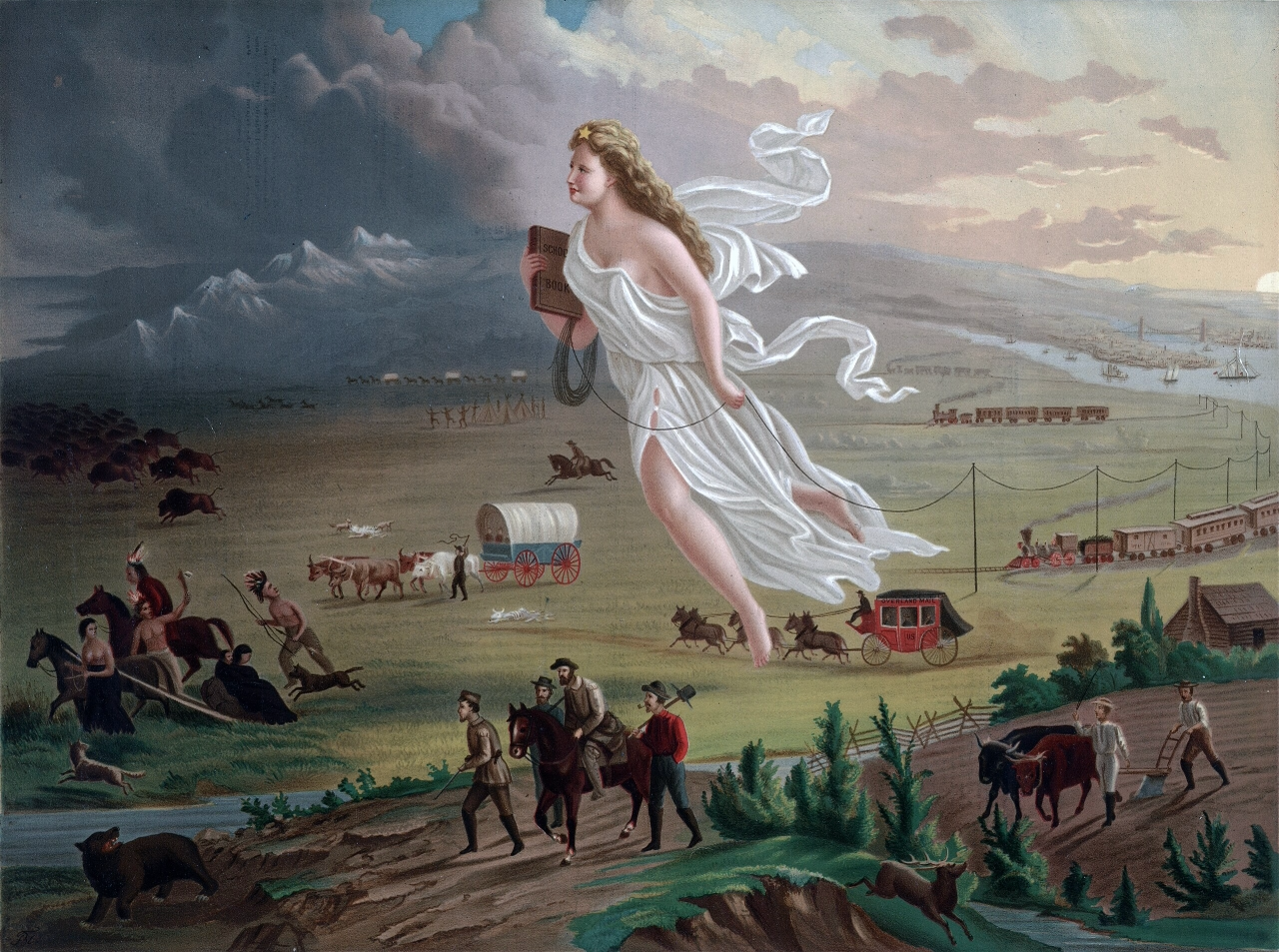
And so Manifest Destiny again I'm sure many folks are really familiar with this idea in a lot of ways, But it's this idea that the United States was destined by God to expand its dominion and spread democracy and capitalism across the entire North American continent. And again, we're back to this idea that these are realities that are trying to be fulfilled through a combination of legal, religious, political, spiritual, cultural avenues. And so let me just layer in Westward Expansion and then we'll bring all of this together. So Westward Expansion, this [00:35:00] word, this phrase is so interesting to me because there's no there's no actor in this phrase.
Westward Expansion makes it seem like there's just this inevitable push toward the West Coast of North America. And the way that it's often described as if, it's described as if it's this passive expanding, it was just naturally creeping along with no agentive actors that benefited from it. No one being specifically targeted and no laws and policies that made it happen. And all of that is not true. We know that particular people and institutions benefited from Westward Expansion. We know that specific people were targeted. And we know that a lot of laws and policies created the circumstances for this expansion to happen. I have a friend who's Blackfeet. He's a teacher in Montana.
And he teaches his students, he teaches on the Blackfeet Reservation, he teaches his students. About [00:36:00] westward expansion by using the term Eastern invasion, and he really turns it like that to describe what it felt like and what it was like for Blackfeet folks living in Montana to experience this idea of westward expansion. They experienced as an Eastern encroachment. And I think that can really help us make this familiar phrase strange, which I think is really helpful when we're trying to more deeply understand some of these concepts and phrases that tend to be taken for granted.
Okay, so in some ways, the Doctrine of Discovery links all of these concepts together. Terra Nullius, Westward Expansion, Manifest Destiny. Doctrine of Discovery is the umbrella that provides the sort of shade under which all of these things are growing. And so all of these concepts the idea that land is intended to be owned by a state the [00:37:00] relationship between religion and land acquisition. Hierarchy within colonization that indicates only certain people of a certain religion count and matter in a place. And if European explorers arrive to a place that's new to them, and there are already people there with their own society, and those people are not Christian, then they're irrelevant from a settler colonial lens of who gets to claim that place.
And so If even one of those phrases that we're talking about with all the attached understandings, make our way through society, then and now, and become general knowledge, that's always going to shape how people think about and behave and do and know about the United States. And that's One reason it's really important to understand the sort of origins of some of these things, both how did this actually happen historically, but it also starts to give us entry points and on-ramps to understand [00:38:00] what's still happening today in, some of the ways that we're going to keep talking about.
mike rusch.: Melissa, thank you. I think. This the way you've described this versus how you described where we, where this place started is incredibly, very different ideas. These are very different positions. What happens now, as far as when these two cultures come together, what happens?
melissa horner.: I'm wondering okay, so i'm thinking of two things that might help us because if i'm hearing you we've laid out some historical stuff, right? and now we need to start segwaying into You What does this mean for people right now in 2024? Like how might we think about some of that?
mike rusch.: And I want to slow roll that if we can because I think the way you've articulated this is like It's not this it's coming from all these different places and we've got these political systems and we've got these Religious systems and legal systems that now start to form, But it took hundreds and [00:39:00] hundreds of years for this to happen, So I think my question is as we have these ideas, these settler colonialism ideas arrive to this, to, to what is now North America what's the first step? Where's the first maybe indication, that what the course is going to look like from here?
melissa horner.: Okay. Yes. This is, let me ask you one, I feel like this is a really good question that I think I definitely want to answer, but let me ask you just one in return to see how all of this can work together.
One thing I'm wondering is if it would be helpful to lay out There are, there's probably more than this, but in my work, in my understanding, there are four parts of settler colonialism
mike rusch.: yes, that would be helpful.
melissa horner.: Okay.
mike rusch.: With the arrival of this framework maybe we'll call it that to begin with, we'll give and these ideas of manifest destiny and westward expansion what's the framework of [00:40:00] those, like what are the components that help us even understand how those ideas maybe start to become a reality and become a part of how these legal and religious and political systems start to get created over the course of time?
four parts of settler colonialism.
melissa horner.: Yeah, absolutely. This is we're getting to understand the, I think framework is a perfect sort of way to describe it because it's okay, how do we think about how settler colonialism then has structured the United States?
the way that I think about this is there are four really important parts of settler colonialism. And these four parts can all stand alone and they work together. And so I'm going to briefly outline them and give a few examples here and there, but I think they'll show up again as this conversation goes, and so the first part I already [00:41:00] mentioned a little bit,
part 1, eliminate indigenous peoples.
melissa horner.: and this first part is that settler colonialism, one of its primary goals is to always attempt to eliminate indigenous peoples. Historically, this used to look like the U. S. Army massacring native communities. or the Indian Removal Act like when the Trail of Tears happened.
Literally, these things are physically removing Indigenous peoples from land, whether it's through massacres or geographically forcibly relocating folks. And as colonization as gone over 500 plus years, elimination of Native peoples have taken other shapes. And for example there's this idea of socially erasing Indigenous peoples, and that can show up as non-Indigenous people wearing costumes or mascots that impersonate Native peoples. It makes it seem like Native peoples [00:42:00] don't exist anymore in real life. So that is a current example of this attempted elimination of Native peoples.
And again, just because this is a really important part to understand, the elimination of native peoples is a key part of settler colonialism, because native people have to be gone one way or another in order for settlers in the past and present to make their own version of a replacement society in place of indigenous societies that have always been here. In some ways, this first part is Sort of the end all be all, like settler colonialism can't happen unless this is an active project for it. It's connected really closely to the second part though.
part 2, ideas of property.
melissa horner.: The second part is this idea that settler colonialism imposes ideas of property in U. S. society. One of the ways this happens is that [00:43:00] settler colonial laws cement together land and ownership in a way that makes it seem unquestionable. It's thinking about all the ways, even linguistically in our society, we just interchange land and property all the time. It's oh, I'm going to go out to my property today. Okay. Or, I'm going to plant this tree on this land. Most of us know what we mean, but the idea that land is property has gotten so embedded because of settler colonial ideas first, and then laws, culture that came over, that now it just seems like this very typical, natural thing for most people in the United States to think about.
One important thing just to note about this second part of settler colonialism is in the U. S. settler colonialism has also transformed a lot [00:44:00] of other things and beings into property too. And so some, again, just day to day examples are in the U. S. we regularly buy flowers. We have grocery stores where we purchase food that then belongs to us. We participate in these monetary transactions to get medicine. We legally own dogs, cats, cows, horses. We have a patent system that says these ideas are legally mine. I could go on. But those are all examples also that are attributed to settler colonialism. Settler colonialism has laid the foundation and put in place hundreds of years of cultural understandings and legal policies to transform land first and then this wave of all this other stuff that I mentioned into things that are owned. Even though none of these things are inherently ownable or [00:45:00] intrinsically property
Yeah, I think those are the important parts of this sort of second part of settler colonialism.
part 3, anti-relationality.
melissa horner.: The next part, again, these are all very closely related, and so that's why they're a framework. These are not siloed, isolated parts.
This third one is how settler colonialism has produced anti-relationality. just meaning that settler colonialism has really created circumstances to erase and damage certain kinds of relationships between people, land, ideas, plants, animals, and it's necessary for settler colonialism to try to eliminate native peoples and their knowledges. Because within that knowledge and those people, there are ideas about [00:46:00] relationality, about what it means to be in relationship with a place, about what it means to be in relationship with an animal or a plant medicine.
And this first part of eliminating Native peoples ties in really intimately to this third part of being anti-relational. And so if we think about it as settler colonialism has put in place a lot of social behaviors, a lot of cultural norms that really indicate to us that the deep and wide and reciprocal relationships between all of these things don't really exist. then it creates a really perfect sort of slot for other kinds of relationships to exist, which are primarily rooted in property and ownership in the United States. And so we can see a through line between these three parts so far that really work together to prioritize [00:47:00] Certain ways of being in the world and understanding how we're related to other things and beings in the world that again, have supplanted the ways that relationships were happening prior to the onset of settler colonization.
part 4, limited options for “how to be.”
melissa horner.: The last part that I'll just layer in here, this one is a little this one's everywhere. So it's a little hard to capture with words, but, for this last part, there's a sort of pervasive mainstream assumption that there are limited options for how to be in our lives. This limiting makes it seem natural that there's only particular options. Settler colonial approved ways of being in relationships or of getting an education or of governing or attending to health or generating and sharing knowledge. And this one is better with [00:48:00] examples. I'd have to see if I have some here to give.
mike rusch.: It sounds like our modern political system first and foremost, obviously.
melissa horner.: Yes, exactly. That's exactly right. That's You know, it's so easy to get caught up in the, the Republicans, the Democrats, this two-party system, the way that democracy looks to us. And there's a lot of other ways that governance happens and has always happened. And so I think that's a really good example of just, that's a certain way that a settler colonial government is being run, and there are many other governments that predate it and that are coexisting globally with different options. And these, the first three parts, the elimination of Native people, the imposing of property, and then this producing of anti-relationality, all really work to Create this fourth part, which is essentially limits people and how they understand the world, how we can be in the world in relationship to [00:49:00] each other.
mike rusch.: Goodness gracious. I've been through my brain is just like full at this point, but now it's
melissa horner.: you're telling me, Mike, I'm like,
mike rusch.: I'm just like, it's so we're going to have a 10-minute break for all of you to process that.
I feel like part of how profound I think some of these ideas are or, and maybe not just profound, maybe are, this is not part of our education systems. This is not part of the conversations that people have. I think it's this idea that it just, it's always been this way, right? Is the is the weight or the gravitational pull, maybe to use that term, that it feels like there is no other way to be in this world.
And so I think why I just I love listening to everything you have to say is because this pervasiveness of settler colonialism in our world isn't just this idea of taking over land, but in removing people it goes into how we think about who we are as [00:50:00] people in a way that we're not even aware of in so many ways, I think is what I'm drawing and hearing from you say.
maybe, I don't know if we need to go back. We can before we draw into what does this mean for us today. But historically, when we think about how this country, the United States has come to be over a couple hundred years, are there significant movements or significant examples from a historical perspective that can maybe help us understand maybe the incrementality, because if it happened to, it feels like if it happened over hundreds of years in these small incremental places, it's a lot easier to absorb that as if someone came in and said, Hey, this is the way it's going to be from now until forever. And so if that makes sense, what I'm asking, but Maybe the history of how this works itself out into our country.
You mentioned Indian Removal Act, the Trail of Tears, [00:51:00] which runs, is five miles from where I live. These are things that are real and came into this place. And so I don't know, can you walk us through maybe some of the major movements in the history of the forming of this country that we can point to maybe help unpack this a little bit more?
federal indian policy.
melissa horner.: Yeah, absolutely. I think one of the ways that is really helpful as a lens to think about this is through what I know as, or will refer to as this federal Indian policy. And just again to make this a little bit more bite sized to think about specific ways that policies over the course of a few hundred years have created the circumstances that we're in today.
1778. first treaty with native nation.
melissa horner.: And so I'm going to start us in 1778. This is not an arbitrary year. I promise. I promise. 1778 is important because that's the year the [00:52:00] United States made the first treaty with a Native nation. And so that is the sort of birthplace of a political relationship between the United States and Native nations as sovereigns that are interacting with each other.
And one just Interesting part about that is one of the reasons that the United States was interested in making treaties with Native Nations was to demonstrate to a sort of world stage that the U. S. as a burgeoning, global, sovereign power, could make agreements with other sovereigns. And so it was a move to demonstrate particularly to England, France, these places, especially [00:53:00] because the U. S. was so recently independent and so close to colonyhood that they were like, all right we have all these nations here already, so let's make some treaties with them so we can show everybody else that we are sovereign. So at that point in time, I'm going to fast forward us and I'm going to hit on some really important parts of federal Indian policy that are going to show us how the elimination project of Native peoples was happening and also how cultural values of the United States were also starting to get put in place of Indigenous values that were pre-existing.
1830. American Indian Removal Act.
melissa horner.: Fast forward about 50 years from that first treaty, and we have 1830, and we have the American Indian Removal Act. And this, like I mentioned a little bit earlier, is the place where the Trail of Tears lived in history. This act [00:54:00] really Was trying to physically move as many indigenous people as possible from their locations, their home places, East of the Mississippi and move them west of that at that point in time.
And so the Trail of Tears is the most well-known removal process, but there were many others that were happening to many other tribes North and South in the United States at that time. And we also don't often times think about in that kind of removal the sort of cultural catastrophe that was for people getting removed.
These are Indigenous people who had been on these lands for thousands of years. All of their spiritual practices, all of the ways they got food, all of the ways they stayed well and healthy through medicine and movement, were all attached to these specific places. These people were deeply connected. in deep relationships with the land.
And so they were moved [00:55:00] basically overnight because of this policy to other places. And so that was a really good way for the settler colonial government to start fracturing indigenous knowledge as well. You take the people away from the place where their knowledge lives and you're doing a pretty good job at making sure they can't keep that knowledge with them.
1851. Indian Appropriations Act (creation of reservations).
melissa horner.: Very similarly, 20 years later, the Indian Appropriations Act in 1851 that created reservations. And so this was another sort of move that, again, the U. S. government realized that they were still running out of land for settlers. And so they were trying to figure out ways to, Native peoples into smaller portions of their territories and making available more land for settlers to have and to be on the one interesting part about the creation of reservations to is that it started the process of making [00:56:00] land that indigenous people had collectively belonged to. It's the reservation process started making it be put in parcels and making it seem like people owned land rather than people belonging to a land or to a place. And so that again was an important part of removal and the property-making process.
1871. last treaty with a native nation.
melissa horner.: In 1871, that was the last treaty that the United States made with a native nation. In total, the U. S. made about 370 treaties over about 90 years. And that was the point that the U. S. felt like they had, enough sort of political and physical, literal land that they had in their possession that they didn't even have to pretend to honor the sovereignty of Native nations anymore at that point.
And so the 370 treaties that were [00:57:00] made still exist today. I always invite my students when I teach to look into the lands that they're from and or the lands that they're living on to see what treaties are attached to those. Treaties are living documents and the terms of them are still alive and valid and so not a lot of people, know that and so it can be interesting to look at the treaties that the U. S. government made with the indigenous peoples in a place that you're in. So I'm not sure what they are for Arkansas, but I imagine there are some attached to that place in particular.
mike rusch.: Yeah, absolutely.
The Quapaw, for which the state is named after Osage, Caddo and of course, people don't think about Arkansas as a frontier place. Missouri, Kansas City, Fort Smith, all of these, and obviously Oklahoma is, 20 miles, 25 miles from where I sit. This was Osage hunting territory. but because of the Ozarks are so rough, there wasn't like many permanent settlements. There were permanent settlements, not many.
White people were not allowed here, but they [00:58:00] came anyway. So all of that. For sure, but keep going.
1883. Religious Crimes Code.
melissa horner.: So another moment that's important is in 1883. And so in 1883 Congress passed what they called the Religious Crimes Code, which banned indigenous ceremonies like potlatches. And they were particularly keen on outlawing. Indigenous cultural practices that included dancing, like the ghost dance or the sun dance.
And so the 1883 Religious Crimes Code was a formal exclusion of Native people's First Amendment right to freedom of religion. And the policy really impinged on and affected Native people's ability to practice their cultures. It also gave Real authority to the Bureau of Indian Affairs agents employed by the federal government to halt any of those cultural practices if they saw them happening. And they [00:59:00] often did this through physical and carceral violence because Native people practicing these ceremonies and Being involved in their cultures were deemed to be subversive to the project of the United States and the nation the United States was trying to build.
This is skipping ahead, but I'll just say it. Now the policy wasn't legally reversed until 1978 with the American Indian Religious Freedom Act. And so that was only 45 years ago. And all of that time, it was about a hundred years, Native peoples could not legally create or be involved in ceremonies and practices that connected them to their lands, to their communities, to their cultures. And a couple just parts that I want to highlight about this particular policy is that this was really key in making sure that Native people's knowledge started to be [01:00:00] decimated.
It was illegal, and so some people just stopped practicing for fear of consequence, repercussion. It also became really hard to pass it down to subsequent generations, because if it has to be done in hiding, or it can't be done on the land that it was meant to be done on, then it becomes really hard to generationally transmit these knowledges that indigenous people had. The thing that was happening simultaneously between 1883 when it was passed and 1978 when it was finally repealed is that during that stretch of time that near 100 years settlers also started taking what they wanted from indigenous ceremonies and from indigenous cultural practices for their own use and for their own benefit.
A really common one that still exists today is you might go into a store, see online these little sage bundles. I think they're called like sage-burning kits. [01:01:00] And that is connected to a practice that like my tribe, for instance, called smudging. And we've done that for thousands of years. We've been in relationship with these plants whether it's white sage or sweet grass or cedar, and we have specific ways that we burn these medicines for particular reasons in our life. And so that was outlawed for a hundred years, nearly. And during that time, because indigenous people and settlers were still living in close proximity in a lot of places Settlers were taking up some of these cultural practices and appropriating them, frankly, for their own use because they didn't have to be worried about facing any kind of consequences for breaking that kind of law.
1887. Dawe's Act (General Allotment Act).
melissa horner.: All right. So I have just a few more here to finish our journey through federal Indian policy. So 1887 is a really important moment as well. That's when the Dawes Act was passed. It's [01:02:00] also called the General Allotment Act. Typically US history classes do teach about this a little bit, but the important part that I want to highlight is, so we had in 1851 reservations were established. 1887 the Dawe's Act starts chopping up these reservations.
The Dawe's Act basically starts dividing reservation land into individual parcels of homesteads. And so this opened up millions of acres of what the federal government called surplus land to white settlers. And one of the reasons the federal government did this is because they realized that Native nations were maintaining a lot of their community-based cultural and political power in these reservation epicenters. These were the heartbeats of some of these nations. And the U. S. government was like, [01:03:00] ooh, that isn't really going to work well for this whole project we're doing.
Let's start to parcel out this land. So again, we're eliminating the ways that Native people were being in relationship to each other and the land eliminating the ways that they were governing, and simultaneously parceling off collective land that groups of Native people were living on together and the Dawes Act was making them into individual pieces that could be owned by individual settlers.
And so it was designed to dismantle Indigenous communal living and governing while also, of course, making available more land to settlers should they want to settle those spaces. So that's in 1887.
1880 & 1960. Indian Boarding School era.
melissa horner.: We also have simultaneously happening between 1880 and 1960. We have the Indian boarding school era. [01:04:00] And so that is the period of time where hundreds of Indian boarding schools were built all over the United States by many different religious institutions, but this was primarily a project affiliated most closely with the Catholic church. And thousands of indigenous children were sent to these schools. This is not something that's taught about in current schooling very often, though I have seen it increase in recent years a little bit.
And the project of these schools in short was to assimilate native children. To again if none of these previous sort of measures worked, they were really, the federal government was really hoping at this point to catch young indigenous kids when they were young, bring them to these schools and teach them European, religious, And cultural values kids in native kids in these [01:05:00] schools are punished really severely, and sometimes the punishment was death if they spoke their language, or if they wore or tried to wear familiar clothing associated with their tribal community and any number of things. And so that lasted for about 80 years. And again, was really instrumental in the project of. eliminating Indigenous knowledge of how to produce societies, how to live in the world that the U. S. government was trying to replace with European ways of doing things, ways of speaking, practicing spirituality.
1924. Indigenous people citizens of the US.
melissa horner.: Okay, so we get to 1924 now.
1924, the U. S. government makes Indigenous people citizens of the United States. And this should sound ironic as I say it out loud. It was. A [01:06:00] lot of people continue to believe that it is.
Indigenous people in 1924 already belonged to their own communities and their own nations. They didn't want to be citizens of the United States. And that's not to say not to be. That all of them didn't but many of them recognized it as a very strange thing for the United States to do and the United States, Really delivered it in a way that I would call sort of Benevolent paternalism like the united states is like we know what's good for you. You can be part of us now You're welcome, and the reality is You Again, it should feel overwhelming, this timeline that I've gone through so far. Native people did not want to be a part of that nation. They did not want to be citizens of the nation at that point in time. This was three years before my maternal grandma was born.
And so her parents were born and lived here as indigenous people that were not citizens [01:07:00] of the U. S. Midway through their life, they suddenly became citizens of the United States. So again, I just offer that from my own life to contextualize this that this wasn't that long ago.
1952 to 1972. Urban Indian Voluntary Relocation Program.
melissa horner.: 1952 to 1972, we have another chunk of time that's important.
Over that 20 year period of time, we have the Urban Indian Voluntary Relocation Program. And so this was a program that was created by Dylan Meyer. He is also the architect of Japanese internment camps. And so the United States found the same person who constructed those camps to construct this program.
And the point of this program was to incentivize Native people to leave reservation lands and move into urban centers. What the U. S. government [01:08:00] did was print a bunch of flyers and send them to reservations and basically say to Native people in those communities we will buy you a bus ticket to St. Louis or Minneapolis or Seattle or Denver. We'll buy you this bus ticket and we'll give you 50 bucks to start your new life there. And it's going to be great. You're going to be employed and it's really going to be wonderful. And so Again, this was another way to A assimilate native peoples into mainstream Society and B to break up The political cultural power on reservations where native people still had a stronghold of Indigenous knowledge of tribal sovereignty and the U. S. Government was threatened by that. And so they came up with this plan between 1952 and 1972 to relocate native peoples.
1960s to current.
melissa horner.: So I could keep [01:09:00] going, but I am going to just end with From that point, from about the 1960s through current there have been just a slew of really good policies that have tried to give back some of these rights.
I mentioned the American Indian Religious Freedom Act. There's also the Indian Child Welfare Act. The American Indian movement was active in the 1960s. The American Indian movement were inspired by the Black Panther movement. And so the reason things started shifting a little bit for the better was because Native people started to organize and model themselves, frankly, after civil rights activists from Black communities and started to try to figure out how to counter some of this damage that had been done in the couple hundred years leading up to it. and so [01:10:00] one thing That i'm wondering is if folks listening to this Are feeling fatigued by this timeline
And not that I want them to feel fatigued Or you to feel fatigued mike, but it gives a flavor of the really systematic Attack and movement of the settler colonial government on native peoples to do these things that the framework of our society hinges on to eliminate native peoples and knowledges to build property, to create anti relationships, to make sure no indigenous knowledge is available to be shared amongst people to think about ways that we might be able to do society.
And so this isn't even all of it, of course, but there is a sort of fatigue in it and just even going over it, let alone living it and building a country that has been [01:11:00] founded on a lot of these things.
overwhelming.
mike rusch.: it, it can be overwhelming for people who maybe have spent their lives not having to think about it, right? Which is obviously a privilege that many people have that we don't have to think about it from predominantly white communities.
But the necessity of understanding this in the long view of history maybe allows us to start make, making sense of where we are today and who I would say I say who we are as people, although that's probably a really insufficient way of saying it because the reality is that we don't share a common story, a common history.
And our views of that history even are not the same, right? Even if we subscribe to an understanding of all these historical events. And so I think this idea of having an authentic conversation about the reality of the forming of our place, how we feel like we [01:12:00] belong or frankly don't belong to that place has a incredible amount of relevance to how we even think about where we are in the world today.
And number one, I'm incredibly thankful for for you walking us through that. And unfortunately.
I think one of the conversations that when we talk about our history, because of the way that the history books have been written. There are a lot of voices that are not represented in those spaces. And we see that in the history of enslaved people or civil rights, that people from those communities have to tell that story that are there telling that history.
Coming from an indigenous place you're the one having to educate communities on what the reality of these stories and this history is. And which is, feels deeply unjust and deeply unfair. And so I'm, I am, I do want to acknowledge just the duality of a [01:13:00] history that, yeah, it has created a situation where the, in many ways the way that history has unfolded has really alienated most communities from it in a way that has allowed so much of that to continue to be perpetuated in the world today. And and I know that's a very insufficient statement, but I think that's the processing of why this matters.
And the hope is we start to think about these events and how that works itself out around the country, how that works itself out in Northwest Arkansas. Is an absolute part of the conversations we are going to have if we want to have an authentic conversation, and If there is a way to move forward, how do we do that if we don't have that common understanding of history and that the reality of those stories and that our inability to share the same story in many ways.
And anyway, I'm just verbally processing to you, which is, I'll see how that works. I may have to cut that out before I get into it.
But I [01:14:00] think that's from a, yeah, from a mindset perspective like full stop, right? Like we, I think there is, this is an insufficient conversation to really unpack the realities and the sizes and the impact of what has happened. And so I want to acknowledge that and we may have to come back to you and continue to work through this.
episode outro.
mike.: Well, it's more than a huge thank you that we owe to Melissa for sharing her wisdom with us today. And as you can tell, our conversation is far from complete.
So in the next episode, we'll continue exploring the profound impact of this founding ideology On both our individual lives and our collective society.
My hope is that when you walk away from this episode You can do so with a deeper understanding that settler colonialism Is not merely an historical event but an ongoing framework. One that continues to shape societal structures relationships and values in the United States.
We're asking this [01:15:00] question: is settler colonialism the water that we swim in?
We're trying to understand, how does this framework perpetuate systemic inequalities by prioritizing property ownership, individualism, and hierarchical relationships? How do these priorities lead to systems that are inherently anti-relational, and thereby anti-community?
melissa horner.: Even though the settler colonial systems and structures that are in place in this country do privilege different people differently and harm different people differently.
It doesn't spare anybody. there are costs to everyone, and so one of the things we're talking about in this moment is the cost of not belonging to a specific place, knowledge system, language that we can track for centuries in terms of white folks, white communities in the United States.
That's a loss. And we see that over and over again through different symptoms and manifestations [01:16:00] of disconnection in this country.
mike.: And so if this is anti-community, then it's going to absolutely work against our ability to create a sense of belonging and an understanding of how we should shape our place.
next episode preview.
mike.: Next week, we'll release the rest of this conversation in the hope that we can continue to understand the impact of settler colonialism, both historically and how this ideology is impacting us today. And perhaps most importantly, we ask this question, can indigenous peoples and their knowledge systems guide us towards a future that reimagines and redefines these structures?
The good news is this. There are some incredible ways that we're going to talk about in the next episode that we can work towards a more just and compassionate world. So I look forward to sharing this next part of the conversation with Melissa.
And until then, I just want to say thank you for following along. I want to say thank you for being a part, a critical part in the shaping of our place.
[01:17:00]