
the doctrine with Melissa Horner, part 2 & 3.
Part 2 & 3: Settler colonialism’s lasting impact, Melissa Horner explores Indigenous resilience, systemic harm, and paths to repair.
season 2, ep 7 & 8.
listen.
episode notes.
the doctrine’s impact with Melissa Horner, part 2.
In part two of the underview with Melissa Horner, we delve into the enduring impacts of settler colonialism on relationships with land, community, and identity. Melissa contrasts Indigenous relationality, rooted in responsibility and reciprocity, with Western notions of ownership and possession. From historical land dispossession to modern systems like conservation, medicine, and capitalism, she unpacks how settler colonial frameworks persist today. The discussion highlights how these systems affect everyone differently, sparing no one, while offering a pathway to reframe our connections through responsibility, relationality, and equity.
the doctrine today with Melissa Horne, part 3.
In part three of the underview with Melissa Horner, we explore how settler colonialism continues to impact Indigenous communities today, from intergenerational trauma to systemic challenges. Melissa highlights the importance of shifting from deficit-centered narratives to celebrating the resilience, agency, and cultural beauty of Indigenous peoples. The discussion addresses the Vatican’s 2023 repudiation of the Doctrine of Discovery and President Biden’s formal apology for the Indian boarding school era, examining the need for meaningful action to pair with these symbolic gestures. Melissa emphasizes the work still required to dismantle settler colonial frameworks and invites listeners to consider their roles in creating a more equitable and relational future.
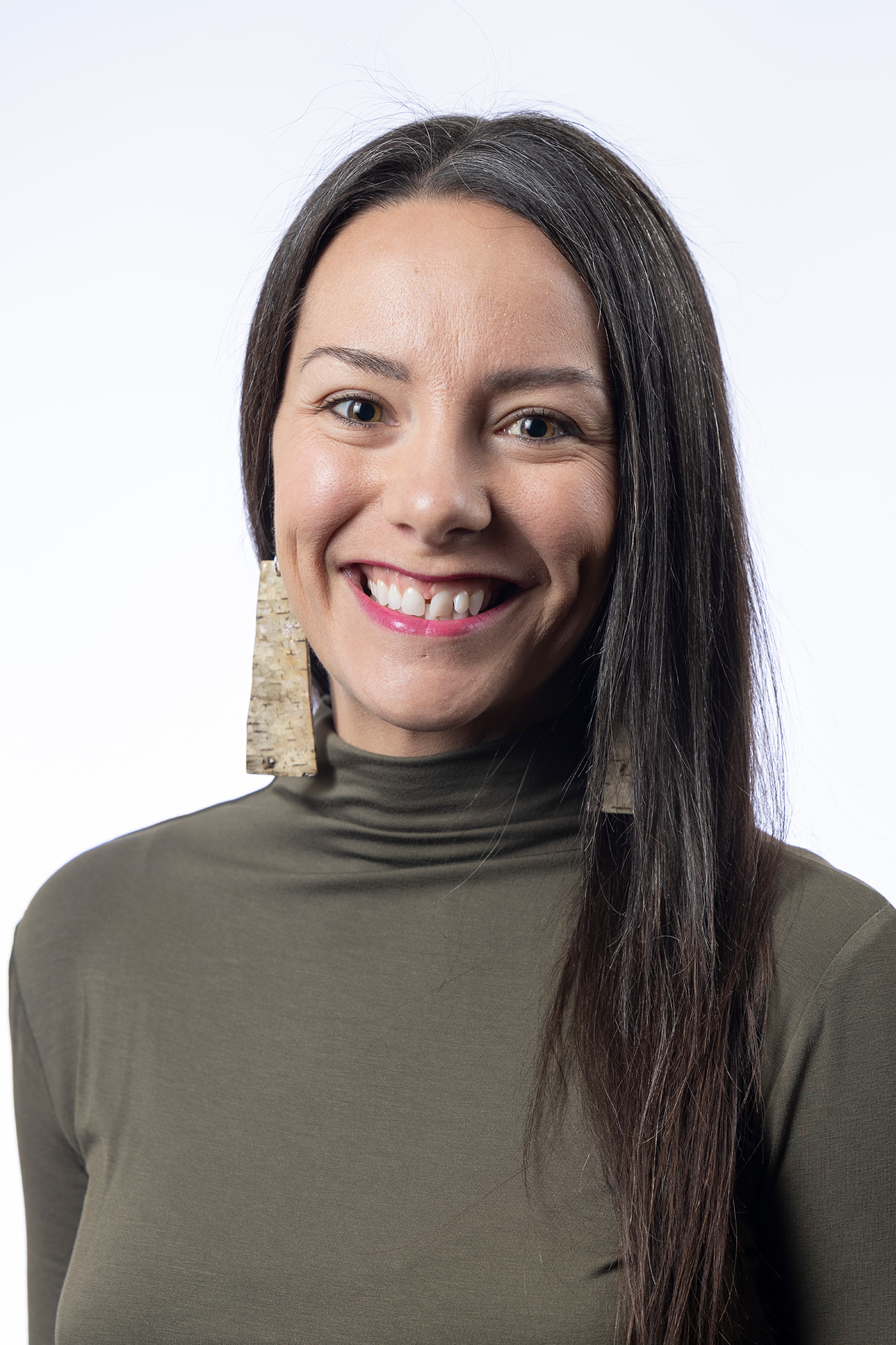
about Melissa Horner.
Melissa is a citizen of the Manitoba Métis Federation and a first-generation unenrolled descendant of the Turtle Mountain Band of Chippewa. She also has settler lineages including German and French. Melissa grew up in Montana and revels in spending time with her family, practicing archery, traveling, reading, hunting, and hiking with her dog Koy, all of which shape the cultural, relational, and personal experiences that continuously inform her thinking, writing, research, teaching, and creativity.
After teaching high school in rural Montana, Melissa transitioned to the PhD program in Sociology at the University of Missouri.
Melissa’s research examines the social structures of everyday, ongoing settler colonialism in the U.S. while also exploring Indigenous knowledge systems that persist in Native Nations and Indigenous communities through policies in the state of Montana.
Melissa pursues her research as a Health Policy Research Scholar for the Robert Wood Johnson Foundation.
call to action.
If you are ready to deepen your understanding of how settler colonialism continues to shape the United States and its impact on Native Peoples.
Join Melissa Horner in the Ongoing U.S. Settler Colonialism & Native Peoples Teach-Out on Coursera.
This free course offers seven transformative modules that explore historical and ongoing systems of colonialism, Indigenous resilience, and actionable paths toward equity.
Whether you’re looking to uncover how colonial structures influence your daily life, analyze everyday forms of settler colonialism, or imagine anti-colonial futures, this course provides a powerful starting point. Let’s learn, reflect, and take meaningful steps together.
Enroll now: https://www.coursera.org/learn/ongoing-us-settler-colonialism-native-peoples-teach-out
episode notes & references.
the doctrine’s impact with Melissa Horner, part 2.
- Ongoing U.S. Settler Colonialism & Native Peoples Teach-Out
- Doctrine of Discovery: https://www.un.org/development/desa/indigenouspeoples/doctrine-of-discovery.html
- Robin Wall Kimmerer - Braiding Sweetgrass: https://www.robinwallkimmerer.com/braiding-sweetgrass
- International Traditional Games Society: https://www.traditionalnativegames.org
- Lorette Savoy - Trace: https://www.lorettesavoy.com/
- Land Grab Universities: https://www.landgrabu.org/
- Return the National Parks to the Tribes (David Treuer): https://www.theatlantic.com/magazine/archive/2021/05/return-the-national-parks-to-the-tribes/618396/
- National Park Service: https://www.nps.gov/
the doctrine today with Melissa Horner, part 3.
- Intergenerational Historical Trauma: https://www.ncbi.nlm.nih.gov/pmc/articles/PMC6194583/
- Vatican’s 2023 Renunciation of the Doctrine of Discovery: https://www.vaticannews.va/en/pope/news/2023-03/pope-francis-repudiates-doctrine-of-discovery.html
- National Native American Boarding School Healing Coalition (NABSHC): https://boardingschoolhealing.org/
- NDN Collective: https://ndncollective.org/
- Truth and Healing Commission Act (Senate Bill 1723): https://www.congress.gov/bill/117th-congress/senate-bill/1723
- Senate Bill 1723 - https://www.congress.gov/bill/118th-congress/senate-bill/1723/text
- HR 7227 - https://www.congress.gov/bill/118th-congress/house-bill/7227
- Deb Haaland - U.S. Secretary of the Interior: https://www.doi.gov/secretary-deb-haaland
- President Biden’s Apology for Indian Boarding Schools: https://www.whitehouse.gov/briefing-room/statements-releases/2023/10/25/president-biden-apology-on-indian-boarding-schools/
- Land Grab Universities (Bobby Lee and Tristan Aton): https://www.landgrabu.org/

episode outline, part 2.
[00:00:00] Introduction
- Recap of Part 1.
- Importance of relationality in understanding settler colonialism.
[00:05:00] Indigenous Relationality vs. Western Property
- Reciprocity and unownable land in Indigenous worldviews.
- Western property laws: "bundle of rights" vs. "bundle of responsibilities."
[00:15:00] Historical Trauma Responses
- Intergenerational trauma and health disparities.
- Cultural loss as a consequence of systemic displacement.
[00:25:00] Deficit Narratives
- Critique of damage-centered portrayals of Indigenous communities.
- Reframing narratives to highlight resilience and cultural agency.
[00:35:00] Cultural Preservation
- Traditional games and Indigenous knowledge systems as acts of resilience.
- Celebrating Indigenous histories and their cultural richness.
[00:45:00] Broader Impacts
- Disconnection in non-Indigenous communities due to settler colonial systems.
- Role of ancestry research in reconnecting to relationality.
episode transcript, part 2.
episode preview.
[00:00:00]
melissa horner.: Even though the settler colonial systems and structures that are in place in this country do privilege different people differently and harm different people differently.
It doesn't spare anybody. there are costs to everyone, and so one of the things we're talking about in this moment is the cost of not belonging to a specific place, knowledge system, language that we can track for centuries in terms of white folks, white communities in the United States.
That's a loss. And we see that over and over again through different symptoms and manifestations of disconnection in this country.
episode intro.
[00:01:00]
mike.: Well, you're listening to The Underview, an exploration in the shaping of our place. My name is Mike Rush. In this episode, we continue our incredible conversation with Melissa Horner.
Originally, I thought that this conversation could fit into one episode, something neat and tidy, but as you can tell, I was clearly wrong. When we step back from our region to ask the deeper questions about the influences that shaped Northwest Arkansas, it quickly becomes evident that understanding this place requires understanding how it fits into the story of Arkansas. But we also have to understand how Arkansas fits into the story of the United States and then how the story of the United States fits into our larger global history. [00:02:00]
If you've been listening for a while, or if you go back to my very first episode of The Underview, The Invitation, you know that this place is unique in many, many ways.
It is layered with the full complexity of the American story. Indigenous presence and forced removal, the Civil War and its lasting divisions, the expansion of railroads that reshaped the region, the development of agriculture and poultry farming, and the urbanization driven by commerce, migration, and global capitalism. So we zoomed way out for a moment, not to get lost in abstraction, but to establish the necessary context for understanding the shaping of this place.
Our purpose for the interview remains the same.
In a world where communities and people are increasingly fragmented, the road to wholeness lies in reconnecting with the land, remembering our past stories, and repairing what is broken to form a renewed collective understanding of what we value.
This is that work.
And because so many of our history books were written by people like myself, people who have benefited from the structures they uphold, I wanted [00:03:00] to open us up to the full story. The story that we may not have heard before.
One that allows us to see our past and therefore our present through a different lens from a perspective that helps connect us to the land, to our story, and ultimately to each other. This collective understanding, I've called it a communal theology of place, and it serves as the foundation for building a shared and hopeful future.
Melissa's work helps us get there. It also provides a framework for understanding our connection to the broader story of this nation. One that, in this moment, if I'm honest, feels as disconnected from itself as I have ever known. And so this is part two of our conversation, and today's episode is rooted in the question, what is the impact of settler colonialism, this ideology founded in the Doctrine of Discovery?
And one more note before we begin, Melissa and I had this conversation both before and after the November election. You will hear references to what was happening at the time that is still very relevant today. and some assumptions about what could happen based on the results. I [00:04:00] do step in a couple times with updates and reflections on where we are today that I think are relevant.
All right, let's jump back into part two of this conversation with Melissa Horner and examine the impact of settler colonialism in the United States.
We've got a lot to cover and I'm anxious to get started.
episode interview.
mike.: All right. Well, I have the opportunity to sit back down again with Melissa Horner to talk through really part two of our conversation that relates to understanding of settler colonialism here in the United States and the impact of that. And Melissa, thank you again for your time. It's great to sit back down with you again today. And yeah, thanks for being here. I appreciate it.
melissa horner.: Yeah. Thanks, Mike. It's great to be back and I'm really excited to keep diving into this conversation that we started last time.
mike.: I am too. I feel like I walked away from our conversation. I've listened to it probably four or five times. And every time it becomes this opportunity to really just think through the framework of our of our culture, of our country, of our state and in ways that yeah, you've really opened [00:05:00] up and expanded how I can think about these things. So I'm incredibly grateful.
And I think one of the things that I really draw away from our conversation that, that seems to be this underpinning of so much of our conversation is this concept that you talked about around relationality,
and its role in settler colonialism. And so I'd like to maybe we can go back there and start there as a foundation for how we Really start to process this conversation to ultimately get to what, so what is the impact of settler colonialism today? So if that's where we're going, maybe we can start there.
So when we talk about this idea of relationality, when we think about indigenous communities and that concept, maybe versus Western or European cultures, can you help me understand how these two things are connected or disconnected or maybe are completely different understandings of how we approach the world around us?
melissa horner.: Yeah. I think this is really important how you say to really understand [00:06:00] some of the foundational Basis of settler colonialism comes down to really differing understandings of relationships. And there are hundreds of unique indigenous worldviews that have always existed on this continent. And most of them are connected to particular languages cultural practices and rooted in specific places. And at the same time, some principles of relationality are held commonly across many of those hundreds of indigenous nations, peoples, groups, and so a lot of indigenous understandings of relationality describe these interdependent relationships between plants, animals, land the cosmos, humans across time.
That means I'm in relationship to all those things in the past, as well as in the present, as well as in the future. And these deep and wide systems of relationality are really at the center of indigenous existence and are often [00:07:00] at the heart of indigenous understandings of how to live in connected, curious, caring, and ultimately livable ways that can sustain not only ourselves, but all of the ecologies that we're part of as well.
And If we're thinking about looking at relationships with land in the U. S., one way we can contrast Indigenous relationality is with Western possession, which is also a kind of relationship, but it's a very particular kind of relationship. And in the U. S., that, a lot of that comes from property law. Property law helps create a lens to look at physical land through ownership and possession. And oftentimes legal scholars call it a "bundle of rights." And without getting into all the details of that, it basically just says that in the founding of the settler [00:08:00] colonial U. S. Property was represented as the guardian of every other right and that was because early settlers and architects of settler colonial social systems really thought that without the right to own and use and enjoy one's own property, there would be no liberty at all, including things like freedom of expression, right to privacy, right to vote, stuff like that.
And so I'm just going to keep going down this private property model just for a couple more minutes. In that model, a person, of course, pays money for land, and in turn, that person owns that land. They can do whatever they choose with that land, and then they legally receive sort of social and cultural advantages and clout even of being a landowner.
That's a really important thing in the Settler Colonial U. S., and, Notably, of course, originally, the only people that were allowed to own property were white men of a [00:09:00] high enough sort of social class or standing, and so property and any of the related freedoms were never intended for everyone from the get.
And if I shift back over a little bit to indigenous understandings of physical land those are colored by the relationships with land that are always assuming that land is inherently unownable. And so back to these indigenous worldviews that understand. Mountains and rivers and lakes and animals and plants as living beings who cannot be bought sold owned.
Humans and these more than human beings are, of course, in these intimate ecologies of relationships with one another, where we rely on each other. And one of the sort of, contrast to this idea of a "bundle of rights" that comes out of Western property law Robin Wall Kimmerer, she's a Pottawatomie scientist, author of Braiding [00:10:00] Sweetgrass, she talks about Indigenous relationships to land as a "bundle of responsibilities" meaning that the relationships between humans and land actually create responsibilities that those beings have to one another rather than a bundle of rights that Western property law gives to privilege the human over land and anything that's existing on the land. Kimmerer also talks about this idea of how we approach land depends on what we believe land means. And so she talks about that as thinking about how understandings of land are also linked to social norms and mainstream knowledge that circulate in any given society that work to infuse meaning into land and create laws about land.
And so I really like some of her work because some of these questions. That she raises. Ask what kinds of legal shifts, relational shifts might take [00:11:00] place if dominant approaches to land were reconsidered if we consider land as our teacher or land as a community member, rather than land as something that we own or control.
And that's a really a beautiful way that she renders indigenous relationship versus the ways that Western culture have created this much more limited relationship and kind of relationality with land and place.
one thing that is a little tangential, but still, I think, illustrates this is in a lot of indigenous cultures, relationships with other humans were important as well. And one kind of fun thing, a lot of tribes used sports for settling disputes. And so there's an organization in Montana, they're called the International Traditional Games Society, and they've been doing work for about the past three [00:12:00] decades collaborating with indigenous communities to recover Games that have been played for thousands of years, and these games are they have names like Double Ball, Plum Dice, Shinny Ball, Rockin Fist, and there's a lot of them there, but one thing I really love about some of these big team games like Double Ball is that there are no set field boundaries.
There's no time limit there's no score limit or prescribed number of players, and so you can play 200 against 200 across 17 acres for 3 days, if the purpose of the game calls for it. And, many of these games, Were and continue to be for play pleasure learning connection and some of the team games like double ball.
We're also used to create good relationality and sometimes being in good relationship meant settling territorial disputes or dividing belongings during a divorce or resolving [00:13:00] conflict. And so these are all really good examples of the sort of robust ways that indigenous nations. practiced relationality pre colonization.
And I think there's something really beautiful about thinking about playing rather than warring to resolve a difference. One thing that these millennia old games tell us about indigenous societies is that they understood that in order to maintain good relationality in light of disagreements, you had to have options besides declaring war or killing each other. And Like I said, that is only tangentially related to land, but I think is another really good example of all the ways relationality can look in a setting that doesn't have settler colonialism imposing on it.
lack of relationality.
mike.: It's an incredible example. just to think of all the wars related to who physically owns [00:14:00] the land. I guess if you remove the concept of having the ability to own the land they really, the focus becomes upon the human being, it becomes upon the community. And so that yeah, and it just, again, another just huge difference in how. we think about relationships to each other and to place as well too.
When we think about, how this relates back to people who are, from Western European cultures, what do you feel like is lost or missing because of this lack of relationality?
melissa horner.: Yeah. This is, I feel like this comes up in my classes a lot. My students will oftentimes when we're talking about settler colonialism I always invite them to think about their own histories and home places and families, and inevitably they often bring up that the students who are white and come from families of settler descent oftentimes have a hard time tracing which people, places, [00:15:00] languages, cultures they come from, or that they're connected to beyond immediate generations of relatives, and I think this is a really common seller colonial reality that can create a pretty profound sense of disconnection for a lot of people and one of my own wonderings. And again, this comes up in some of the classroom conversations is. wondering if it's one of the reasons the 23andMe and Ancestry DNA tests have become so popular because people are really trying to understand and learn and connect to something, some place, some culture, some way to feel rooted in relationships, whether that's relationship to a place or a people or a language or knowledge.
And I think on top of that, a lot of white communities also aren't. very aware of the millennia long histories of the places that they call home. And so it's a kind of [00:16:00] vacancy that lives on two levels, both in their own families and selves at times, as well as on a sort of broader historical social level.
There's a author and Her name is Lorette Savoy. She wrote a book called Trace. And That book introduced me to this concept of a palimpsest. And I think about this concept of a palimpsest in terms of place. And when applied to place, I understand it as the remnants of one history and story showing through beneath the account of another history and story.
And so learning this word has helped me really realize the placemaking process. That is always and has always been happening variously across time and space and groups and individuals, even when it's the same place that's being made. And when I think about my home place, for instance, and the places that I have visited, or lived I try to [00:17:00] capture the layers of how a particular place can be made in present day.
And knowing that a palimpsest, contains historical and futuristic layers as well and that sort of has helped me feel reconnected, even though I do have a lot of knowledge about who my people are. And so that's one thing, again, that a lot of white students in my classes, we talk about how then to feel connected, how to reconnect.
And if you're going to reconnect, What are you reconnecting to? And if you don't have that knowledge, what are ways that you can seek it responsibly and one sort of example of this a couple semesters ago, I had a student who. Identified as Italian. That's how he was identifying and he had a lot of epiphanies in my class about that.
That didn't feel quite right to him anymore. Because what he realized is that he. [00:18:00] He has never been to the country of Italy say he doesn't speak the Italian language. He doesn't vote in. Italian political systems, and so it did feel important to him to maintain. That he knows about his descendants that he knows that he is a descendant of Italians who came from Italy to the United States, but he really started leaning into what it means to be Italian American and really understanding how that's place based, how that has been created because of migration and movement and colonialism.
And so he wrote a whole paper on this by the end of the semester, but that was 1 version of a student who did identify as white. started identifying as Italian and then it shifted as he learned more about his own connection and reconnection to place and people.
settler colonialism spares no one.
mike.: Yeah, you use this term vacancy. And I think in listening to our conversation, and this is maybe more of a [00:19:00] question than a statement. I'd love to understand in this idea of settler colonialism, this ideology one of the components that you talked about is the removal of indigenous people from land.
But what I hear today also is this "vacancy" that seems to emerge this disconnect from place within the, those that are practicing settler colonialism or from that colonial past. And I'm just, I'm curious if that kind of sets the stage for just this almost like this kind of full circle that today we inherit this displacement or this vacancy or this belonging in that the, for lack of better words, the machine that has been working for centuries has now coming full circle.
It feels and maybe I'm speaking of my own story or my own life, but this idea of wanting to reconnect back to belonging or the 23 and me, or the ancestry DNA. That what white communities, colonial European communities have been practicing has now come full circle to, to be an [00:20:00] impact and disconnecting from themselves as well too.
So I don't know if that's a fair assessment. I also want to be very careful. The European white descendants are not the victim in this space, right? But it feels like this object of settler colonialism is going to be working within this perpetual cycle of how that works today. I don't know. You're welcome to blow that out of the water, but I'm curious. Just, am I thinking about that in the right way?
melissa horner.: Yeah, I think that's, I think that was beautifully articulated. The thing that I would pick out of that is really important is that settler colonialism spares no one.
All right. Even though the settler colonial systems and structures that are in place in this country do privilege different people differently and harm different people differently. That is absolutely true. And It doesn't spare anybody. And so there are costs to everyone. And so one of the things we're talking about in this [00:21:00] moment is the cost of not belonging to a specific place, knowledge system, language that we can track for centuries in terms of white folks, white communities in the United States. That's a loss. And we see that over and over again through These different symptoms and manifestations of disconnection in this country.
One of the things, too, that I think this segues into is, it's so important to keep in mind that these settler colonial fracturing, the fracturings that have happened in this country as a result of colonization It is experienced differently by different people. And if we think about, if we just think across a few different groups, indigenous people, settlers, immigrants, refugees, arrivants All these folks have different experiences of their origin stories on these lands, and the cleaving of relationships to place that has happened over [00:22:00] time differently for all of these different groups of people, and then even more minutely within these groups of people in all of the diversity that exists within them.
And for example, just to extend this a little bit, most black families and communities, specifically African American folks in the U. S. haven't been here as long as white settlers. And their coming to story is a lot different. I just used this word a second ago, so I'll hover on it. Some scholars use the term arrivant which is helpful to understand one slice of this history.
An arrivant is a person who is of African descent who arrived to this continent, Through force and coercion through settler colonial systems. And so we know that many Black folks were taken by force from the African continent, enslaved, and made to participate in the existing settler colonial society in the U. S. under slavery practices. [00:23:00] And so Black folks relationship with this place And the place they and their families originally came from are different from settler relationships and different from indigenous relationships on this continent. And all these relationships are always overlapping and related.
And I always. Resist thinking about these histories and experiences in isolation, because if we start to do that. it becomes impossible to work together and across experiences, even though there is value, of course, on hovering on the uniqueness of each of these. So to make this just a tiny bit more concrete, one thing that I often think about, and there's so many brilliant people out there that are writing books about this, and really that I've learned a lot from, Thinking about discourse, say, of 40 acres and a [00:24:00] mule and the broader conversation about reparations for black communities in the United States, if we focus on that.
But forget to remember indigenous dispossession of land, then we run the risk of reaffirming the same kind of settler claims to lands, but through black communities, rather than white. Alternatively, if we become too focused on indigenous belonging to land and indigenous sovereignty, but forget to remember the presence of formerly enslaved people and the agency they and their ancestors have always had, then we run the risk of denying the connections Those folks and their descendants have to land in place. And so all this is just to say that settler colonialism is always trying to separate and fracture. And so one good tool we have is to keep making connections within, across, between groups and [00:25:00]experiences within this sort of settler colonial beast that has been attempting to keep us apart really.
mike.: Melissa, I, again I feel like we're 10 minutes into this conversation and my brain is full because I think how this settler colonialism spares no one, I hear as you talk through this how it's perpetuated even to, to communities who had no choice in it as well too. And I'm curious, as you think about the formation of the United States and you think about industrial versus agricultural communities, for example, North versus South, if we want to put it into that relationship are there differences? Or how do we think about maybe potentially differences within geographic regions of the United States as well, too?
melissa horner.: Yeah, I think this is really connected to this sort of building conversation. So I do want to just say I'm not from a Southern state and so I [00:26:00] can't speak fully on this just because again, that's not where my home place is. Those aren't where my connections are, but one thing, if I'm thinking about this through a settler colonial lens, it becomes very layered when we're thinking about Southern states, and the history of enslavement and the realities of segregation, the prison industrial complex, and all of the ways that this has happened over time. And one of the really unique things that happened in the South, in the U. S., is that both the land as property and humans as property became deeply entrenched in the South.
extractive colonialism vs. settler colonialism.
melissa horner.: And so one thing that southern states have that is a particular entanglement that the northern parts in general of the United States just have less of and looks different, is the presence [00:27:00] of two kinds of colonialism. Extractive colonialism that stole people indigenous to the African continent, and settler colonialism that used the stolen labor of enslaved people to work on the land stolen from indigenous people.
And with that, we have intersections of historic and ongoing anti black racism, economy that was built on two forms of theft and a lot of divisions between native nations, black folks, and white communities in the south as a result of this really gnarly entanglement of these two kinds of property and these two kinds of colonialism. ,
mike.: you have much better answers than I have questions to this. No, I'm like, I just like you you're, yeah, you're exploding even the framework that I bring to it about how these [00:28:00] all work together. I've tried really hard to try to get my head around this and still coming up way woefully, which is why you're here to help us unpack this.
So this could take us down a whole lot of different paths extractive colonialism, settler colonialism, the layering on top of each other. The fact that it's sparing no one Has, as we've talked about, allowed this system and allowed this, I call it ideology to, and this framework to just perpetuate itself over hundreds and hundreds of years. I don't want to fast forward to today too quickly, but how after hundreds and hundreds of years of these really looping back on themselves. How do we arrive at today? How do we think about settler colonialism in the U S today? can you bring us to today? Is it fair to even ask that question?
melissa horner.: Yeah, absolutely.
I think this is what a lot of my work is about is. How do we find it today? [00:29:00] What does it look like? What does it sound like? What does it smell like? Where does it live? All these kinds of things. And one thing that we can always use to bridge how settler colonialism looked in the past versus how it looks today, for instance, is that land always has been and continues to be the basis of settler colonialism. So anything that has to do with land, you will find at least two things. The first is the erasure of the indigenous people and their knowledge systems who always and still have a relationship with any given lands. And the second thing is an imposition of settler colonial ways of treating or being with, or deciding what to do with said land.
So to make this more specific, Land grant universities are a good example of this. I believe University of Arkansas is the land grant institution.
mike.: That's correct. Okay.
melissa horner.: And if we think [00:30:00] about even the phrase land grant university, that phrase is often made to seem ordinary and unremarkable.
But whose land was granted and how did that happen? And now we could go through the whole history of that, but for right now. I think the more important thing is that it's just a space where intersections of land, settler colonialism, and education converge. And so asking questions about often used phrases like living the land grant mission or the imperative of supporting land grant universities. These are common phrases at these institutions. Those, interrogating those kinds of phrasing, language can give us entry points to think about these institutions and how they're upholding ongoing settler colonialism. And like anything in a settler colonial nation in the U. S., it's complex.
Like myself, I have gotten multiple [00:31:00] degrees from land grant universities. Montana State University, the University of Missouri, and I get to do some really purposeful work alongside really smart, driven people in those spaces. So that's true. And, it raises questions for me. What might it mean to acknowledge the successes of land grant institutions? While also creating space to discuss what cost has, what the cost has been and what it continues to be for Native peoples today?
There's a lot of people that are thinking about this topic and taking action on it. But Bobby Lee and Tristan Atone have a really fantastic article called Land Grab Universities. And they lay out the history, they have all the data for where all the land at these institutions has come from, what tribes are connected to them, the impact, and then really they have some compelling [00:32:00] ways to think about some ways that some universities are trying to reconcile all this stolen land and wealth that they have accumulated at the expense of Native peoples. And again, that's just one sort of very small example of what settler colonialism looks like today, where it shows up.
That one thing too, that I just want to say to tie back to some of the stuff about relationality, one way that we can plug in this example to that is. There are at least 2 choices. There's many more, but I'll just present it as 2. We have, we'll just say the University of Arkansas and any other land grant institution for that matter in this country. If they take the approach about, wow, we have all these resources. Look at all the power we have. Look at all this stuff we own. Look what we can do for this. And again, some of that stuff is really good that these institutions do. They support a lot of initiatives, help a lot of folks, et cetera. So that remains true.
But if we think about this from a [00:33:00] relational perspective, one of my questions would be because the University of Arkansas has all of this land that it owns, that native peoples in that area were dispossessed of, what then are the relational responsibilities of the University of Arkansas to those native nations? And so that's a very different kind of framing and understanding of amassing land and thinking about it through a relational lens rather than a property lens, for instance.
mike.: I think that's a really, It's an interesting example for Northwest Arkansas because yes, we are obviously a land grant university, but that responsibility within that context is not something that I have really thought through or maybe even understood, so are there other examples that, that we should be considerate of today, I assume?
melissa horner.: Yeah, definitely. I have a bunch, so let's,
mike.: Go through, you can go through all of them if you want.
place names.
melissa horner.: It's honestly everywhere. Our entire legal [00:34:00] educational and medical systems are based on Western settler colonial principles.
I'll talk a little bit, at least about medicine and education in a minute, but one really common way that settler colonialism is ubiquitous is through place names.
The names of towns, cities, mountains, waterways, landmarks, a bunch of other stuff. So many of these current place names often come from colonial languages, English, of course, French, Spanish. These place names are often the names of individual white settlers. Or they're also, they can be a mispronunciation or a misnomer of an indigenous word or concept. And so all...
mike.: like this, literally like the state of Arkansas.
melissa horner.: Exactly.
mike.: I don't know. Yeah, you may have, I'm just going to say it if that's okay, but keep going.
melissa horner.: Yeah, absolutely. No, that's fair. And so all over this continent, settler colonialism has imposed its own names on top of pre existing [00:35:00] indigenous place names. So many of these places were already known and named by the peoples who had been here for millennia. And In my own writing, I often use the phrase, colonially known as so I'll say, I live in what's colonially known as Missouri, and I do that to just linguistically flag that this is just one name for this place.
And, I do it to disrupt the settler colonial practices of renaming places that already had and still often have place names based on indigenous relationships to lands and indigenous people in many cultures and locations still refer to many places and lands in this country. By the names that they've always called them.
And one kind of cool thing is that there are movements across the U. S. to formally change some of the colonial place names back to indigenous names. And this again, parallels and [00:36:00] intersects so many of other movements that are going on in the country about removing, say, the names of people who enslaved black folks and all the places and buildings that are named after those white settlers as well.
mike.: Yeah. the highest peak in Arkansas was just renamed back to the Osage original name too. so it is good to see some of this happening, but I think that's a great example as well too.
Denali/McKinley.
mike.: Well, pardon me for interrupting, but I wanted to insert a quick comment about this from President Trump's address that he gave at his inauguration, because I think it demonstrates this point.
donald trump.: A short time from now, we are going to be changing the name of the Gulf of Mexico to the Gulf of America, and we will restore the name of a great president, William McKinley, to Mount McKinley, where it should be and where it [00:37:00] belongs.
mike.: the President is referring to Denali in Alaska that had its indigenous name returned in 2015. But this is a call for that name to be removed again, highlighting Melissa's point.
And if you're not familiar with President William McKinley, he was heavily criticized for imperialism, overseeing the annexation of the Philippines, Guam, Puerto Rico, and Hawaii as a result of the Spanish American war that justified U. S. expansion. as really a civilizing mission. He is criticized for his silence on racial injustice that allowed Jim Crow laws and racial violence to persist, offering little support for black Americans.
And some may characterize his presidency as being marked as a turning point where the United States embraced overseas empire building while neglecting racial justice at home. And I'll let you determine if that parallels or has any relevance to us today. All right, let's pick our conversation with Melissa back up.
melissa horner.: Another thing I'm thinking about is. I don't know how [00:38:00] pressing of a topic it is in Arkansas, I imagine somewhat but conservation is a huge topic.
Okay. Conservation's a big topic in where I'm from in Montana, where I live in Missouri, and of course many other places in the U. S. And this might be a hot take, for some, but the reality is that conservation is a settler colonial invention and practice. One of the ways this is abundantly clear is through the national park system in the United States And I believe Arkansas has at least a few national parks, right? I know like hot springs national park.
mike.: That's correct. Okay
melissa horner.: and so again I always return to the complexity and the contradictions the settler colonialism always Creates and so this is not to say that all conservation or all national parks are unilaterally bad or good. But we're trying to get into some of the [00:39:00] generative weeds here and in some ways, national parks provide people access to land in ways that they wouldn't otherwise have access to. And so that's really helpful. And that brings a lot of connection, a lot of many things to a lot of people's lives and these national parks are stewarded with certain principles in mind that have accomplished some good of course. But if we lean just a little bit more deeply into the concept of national parks, some really interesting things start to bubble to the top.
So John Muir is often called the father of conservation, and he really went hard for the establishment of national parks. He once described this continent as a garden that was favored above all the other wild parks and gardens of the globe. That's, I think that's a pretty direct quote. And so we get that perspective, but then we have other perspectives.
David [00:40:00] Treuer is a journalist. He's Ojibwe. He has a great article in the Atlantic called Return the National Parks to the Tribes. And it's just this sweeping, beautiful article. But one of the things that he writes about is how the North American continent has not been a wilderness for at least 15, 000 years.
Many of the landscapes that became national parks had been shaped by Native people for millennia. You get these great forests on the eastern seaboard that looked really plentiful to white settlers because Native nations had always strategically burned them to increase forage for moose, caribou, deer, etc.
You get the Yosemite Valley. That landscape was tended by Native peoples. Famous the black oaks in the area were cultivated by the local tribes. In this Treuer article in the Atlantic, he has some quote, this isn't [00:41:00] verbatim, but it's going to be close. He says "the idea of a virgin American wilderness, some sort of Eden that's been untouched by humans is an illusion and it's an illusion because of the process of elimination of Native peoples from all of these lands." Physical removal because many parks were created only after Native peoples were removed forcibly sometimes by an army that was invading, other times through treaties that Native people were forced to sign under duress. And also the removal of the Indigenous history and knowledge connected to those places, how, we've been circling back to in this conversation.
And to bring this to, I'm always asking questions of these examples myself, and so if we think about conservation as a, an example of ongoing settler colonialism, I would ask questions about National Parks, like, How many national [00:42:00]park signs offer information about the millennia long and ongoing relationships Native Nations have with the land that make up any given park?
How often do we see the tribes who are the original inhabitants of these national parks sit in positions of power and make decisions about the care and stewardship of these parks? And so those are important questions, because they help us dissolve some of the hardness of settler colonialism and allow us again to see ways that, ways and possibilities, that could be different, I think.
medical health care.
mike.: Thank you.Arkansas is 95 percent privately owned is what we're told. But the national park system, our Buffalo National River, one of the only national rivers in the country is something that is very near and dear To a lot of people here, And so I think this concept of how center of colonialism even works into that is really helpful. I think you mentioned medical as well too and medical health care and i'd [00:43:00] love your perspective there if you have an example
melissa horner.: Yeah, absolutely. Medicine, of course, is just a huge topic in this country. So i'm just going to take a slice of it And i'll start with Pre settler colonialism. Medicine existed most coming from immeasurably diverse plant, mineral land based sources. Indigenous peoples didn't own these medicinal plants.
The medicines that came from them were not anybody's property and the medicine was available to people who needed it, who requested it. And To turn this into a mini story. Say you have a person, pre settler colonialism, who needed medicine that person would have navigated pretty complex networks of relationships to seek health. This might be preventative medicine. This might be a medicine to treat some kind of illness this person's experiencing, but. This [00:44:00] person might have had to go to someone who knew a lot about plants, about which medicines came from which plants how much she needed to take what form and She probably would have given the person guiding her to health, a gift or an offering to demonstrate her gratitude.
She would probably have offered the plant itself a gift for supporting her health, recognizing that plant has a lot of wisdom that humans have learned from and offering a token of gratitude for that. She wouldn't have paid the medicine person any money for helping her and she would not have paid money for the medicine itself because the person helping her or the group of people helping her did not individually own the medicine or the knowledge they carried to guide her to health.
And so back to this cleaving of relationality, settler colonialism has worked really hard to break apart the [00:45:00] deep relationality inherent in health and medicine. In the ways that indigenous people practiced prior to colonization and in place of this relationality settler colonialism has created the medical industrial complex and has imposed on most people who live in the U. S. Understandings of medicine as property. Of medical knowledge as individually owned by colonially certified health care workers. Health as transactional rather than reciprocal. And so if we think about the sort of disaster of health insurance that a lot of people experience in this country.
Another thing about our medical system in the U. S. is that most of us, what we, what most of us probably just refer to as health care or medicine. It's very important to recognize that in the U. S. these healthcare systems are nearly entirely allopathic [00:46:00] medicine and emergency medicine. Both of which are fantastic and very useful if say your appendix bursts and you need surgery. Then allopathic medicine, emergency medicine, that's what I want at least. And so they're really great specific types of medicine to address some acute illnesses and emergencies, but say, you have chronic symptoms of an unknown cause, or say, you're just trying to be healthy and well in the world. Allopathic medicine and emergency medicine are not the right kinds of medicine to address root causes and health issues, nor do they take into account holistic preventative care to keep people healthy. And so I think that's an important thing, because oftentimes. in the U. S. medical system other kinds of medicine get labeled as alternative medicine, holistic medicine, naturopathic medicine, when the reality is the current kinds of medical [00:47:00] practices also have these qualifying words, allopathic and emergency.
One thing that's important too about this is that outside of mainstream medicine, There still exists Native folks all over the continent who carry and share old and deep ways of supporting holistic health, treating illness, birthing practices, and being in really good relationship with a web of plants, knowledge, and resources and medicines that remain despite settler colonialism's attempt to erase all of those ways of knowing and replace it with what we know as sort of modern medicine today.
And I think the last thing I'll say is just that this isn't to say that in order to support indigenous health. or everyone and anyone's health that we need to try to revert to pre colonial ways, but it is to say that there's still a lot to be learned and recovered and practiced from pre colonial [00:48:00] ways of guiding health practices, I think.
capitilism.
mike.: So maybe to my earlier comments, not just our rooting and our belonging, but our physical health is also really the systems of caring for that are controlled and oriented by settler colonial ideas. I'm maybe we'll go to the next step in our system of capitalism. Do we want to step into this?
If we haven't made anybody mad yet, maybe this weekend we can seal the deal here. No, just kidding of course. You mentioned in part one of our conversation that part of settler colonialism was to bring this idea of spreading freedom and capitalism to the United States and, or to this land. help me understand what is the connection here? Is there a connection? Can you have one without another? Are they separate things or? Are they tied together at the core?
melissa horner.: Yeah, this is a huge question. I really love it and I'm gonna try to do it some justice here. Okay, so we don't [00:49:00] have time, of course, to talk about the whole project of capitalism.
mike.: Maybe that can be our part 47 conversation.
melissa horner.: Exactly. That's right.
But I will share just a few thoughts that do tether capitalism and settler colonialism together. So I'm not going to take us back too far or get us too into the weeds, but so the economist sociologist, Karl Marx, he developed A really well known capitalist concept called "primitive accumulation" and so Marx believed that this process, was is, foundational to capitalism as we know it. And very briefly, "primitive accumulation" is a process that strives to separate the producer from the means of production.
In other words, in the U. S. there have been colonial, historical, ongoing [00:50:00] processes and policies that ensure separation of people from land since a lot of means of production come from land. And so the purpose of the separation of people from land is to create a social and economic circumstance where the only thing that some people have left to sell is their labor. While other people own more properties besides their labor. So this might be they own land or they own resources of some kind. And so the way that is set up then gives the people who own their labor, of course, plus land, plus resources, it gives those people a sort of basis to exploit the people who only own their labor. And so these are the very foundational layers of how we can see modern day, poor working class [00:51:00] and affluent classes in a capitalist society like the United States.
Okay, so that's just like very tiny slice of capitalism itself. And so to bring this closer to settler colonialism, this idea and process of "primitive accumulation" is often driven by the state, often by governments, because governments like the United States have always been trying to figure out ways to secure economic development.
That's one of their primary aims. And that's one way that we can understand the phrase or a phrase like "state sponsored violence." Because the process of "primitive accumulation" has often amassed land and other resources in violent, discriminatory ways. Think back to the last conversation that we had about all those ways we went through how the federal government dispossessed native people from their lands. That is "primitive accumulation," [00:52:00] according to a capitalist economic model.
So settler colonialism and capitalism are linked in those ways. And they're also linked through, I would say, mutually created systems of idea about property and what's considered ownable. Now, land is arguably the most crucial form of property to settler colonialism because it's what settlers need to make their new home in a place where people already lived. But in addition to land settler, the sort of settler colonialism, capitalism duo also create cultural understandings and laws. That have a real knack for transforming just about anything into property and things that can be possessed by individuals, corporations, et cetera.
And so it's so common, so common that it's rarely acknowledged at times. Humans and [00:53:00] corporations legally own and make property of plants, of food, of medicine, of animals, of ideas, of writing and research, even though none of those things are inherently property. And so we get, concepts like, Plagiarism and intellectual property that says these ideas legally belong to me, even though I know that even all the ideas that I'm talking about here, I learned from other people and they learned from other people and I've read things and watch things and had conversations and so that's onevery specific part of capitalism is this property making process that settler colonialism has really found as a useful tool to create the circumstances of ownership and possession of so many things in this country.
mike.: Yeah, melissa. Thank you. I think I know we could probably talk about that for days. And I think, but to [00:54:00] just get a small understanding of how these concepts are connected from, for me personally, is super, super helpful.
episode outro.
mike.: I'm going to pause here for the second part of our conversation, because this conversation is so important that I think it's fair to give people a moment to take all of this in, and if needed, to take a moment before starting the third and final part of this conversation.
This third part is also being released this week, so you can continue with that if you are ready. Either way. I believe it's more important to process this conversation at the pace that you need, because it will be something that we come back to in future episodes. In fact, if you're like me, I've gone back and listened to Melissa's interview three or four times, and every time I'm drawing something new from it.
So when we return with part three, we will take this conversation right up to our current time and current cultural moment.
next episode preview.
melissa horner.: settler colonialism impacts all of us. [00:55:00] It's structural, it's cultural, so very few of us in the U.S are able to not participate in it.
This is part of just barrier around white communities in general, that there's a belief system that settler colonialism doesn't apply to them in their lives and that they're exempt from it somehow. It's not just the job of Native peoples to recognize settler colonialism Settler colonialism is not a Native problem. It is an everybody problem. the sooner folks can get a toehold in understanding the prevalence of settler colonialism the sooner we can have a different starting point for conversations.
mike.: Well, you're welcome to continue on to part three, but it's also okay to pick it back up tomorrow if you need some time for it to all settle in.
If this is a new conversation for you, I do not want to [00:56:00] underestimate or diminish the depth of need to process Melissa's words. I have had months to process through it myself, and I still feel like I'm at the very, very beginning.
If this is challenging and not sitting well, send me a message through social media or website and let's reckon together. Please know that I'm incredibly grateful that you are still here and still willing to listen. It matters. In fact, it matters a whole lot. It is the evidence that you are willing to cross the borders that I mentioned in the season's beginning episode. It is evidence that you are willing to embrace the layered and complicated history to work towards a community where we can all belong.
So thank you for listening. This is the underview, an exploration in the shaping of our place.
episode outline, part 3.
[00:00:00] Introduction
- Ongoing impacts of settler colonialism on Indigenous and non-Indigenous communities.
[00:05:00] Intergenerational Trauma
- Health disparities, cultural loss, and resilience within Indigenous communities.
[00:15:00] Contemporary Developments
- Vatican’s 2023 repudiation of the Doctrine of Discovery.
- President Biden’s apology for Indian boarding schools.
[00:25:00] Calls to Action
Reparative suggestions:
Providing access to boarding school documents.
Returning lands to tribes.
Supporting the Truth and Healing Commission.
[00:35:00] Settler Colonialism in Modern Systems
- Land grant universities, conservation practices, and ongoing colonial structures.
- Relational frameworks for education, conservation, and governance.
[00:45:00] Capitalism and Settler Colonialism
- "Primitive accumulation" and property-making processes.
- Links between economic systems and colonial ideologies.
[00:55:00] Future Directions
Dean Spade’s three-part framework:
Dismantle harmful systems.
Provide direct support to impacted communities.
Build alternative infrastructures.
[01:05:00] Reflection on Wholeness
- Wholeness as embracing complexity and engaging in relational, anti-colonial futures.
- Collective work required to counter settler colonialism.
episode transcript, part 3, settler colonialism today.
[00:00:00]
episode preview.
melissa horner.: settler colonialism impacts all of us. It's structural, it's cultural, so very few of us in the U.S. are able to not participate in it.
This is part of just barrier around white communities in general, that there's a belief system that settler colonialism doesn't apply to them in their lives and that they're exempt from it somehow. It's not just the job of Native peoples to recognize settler colonialism Settler colonialism is not a Native problem. It is an everybody problem. the sooner folks can get a toehold in understanding the prevalence of settler colonialism the sooner we can have a different starting point for conversations.
episode intro.
mike.: [00:01:00] You're listening to The Underview, an exploration in the shaping of our place. My name is Mike Rusch, and this is the final part of a three-part conversation with Melissa Horner. We've been discussing the historical impact of settler colonialism in the United States.
And for the third part of this conversation, we're going to focus on how settler colonialism impacts all of us today.
About half of this episode is the conclusion of Melissa and I's conversation. And then after Melissa and I finish our conversation, I've gone ahead and included two examples from January of this year. [00:02:00] The first being Mike Johnson being sworn in as Speaker of the House of Representatives, and the second is from President Trump's inaugural address. I've done this because I think they provide the reality of the situation that we find ourselves in today. Alright, let's jump right in. The best is yet to come.
Yeah,
episode main interview.
mike.: melissa. Thank you. I think I know we could probably talk about that for days. And I think, but to just get a small understanding of how these concepts are connected from, for me personally, is super, super helpful.
And I know probably these examples, we're really talking about how this has impacted our larger culture today, but I don't want to move on from this without the understanding of like, how is that impacting indigenous communities today?
melissa horner.: When you have a population of people that have been the targets of settler colonialism for the last 500-plus years. It creates a lot of [00:03:00] problems in these communities both historically and ongoing problems, so if we think about native nations, Indigenous communities being the targets of massacres, boarding schools, land seizures, economic and governmental disruption, Forced assimilation, removal and relocation programs, food source interruption, ongoing racism.
historical trauma responses.
melissa horner.: We could go on and on when that happens over and over again, over generations, over centuries to tribes, groups, families, you get a form of what there are some Indigenous psychologists and folks who work a lot on this, but they call it intergenerational historical trauma, which is essentially a complex form of trauma that consists of cumulative emotional, psychological physical, [00:04:00] social, cultural wounds that have been happening to generation after generation in the same tribe, in the same family, what have you. And so from that compounded trauma, That is transmitted intergenerationally. We see what are known as historical trauma responses in native communities. And so these are when we get things like disproportionate health statistics when we see things like Native Americans suffer from cardiometabolic diseases at higher rates than any other race, or we get these really disturbing depictions of alcoholism and addiction on native reservations, or we think about things like the over-representation of the prevalence of diabetes in Native communities. These are all historical trauma responses. These are social and physical circumstances that have been produced [00:05:00] because these folks have been targets of ongoing traumas for so many centuries. And that is all sort of part of the harm that settler colonialism has created for Native folks really across the whole country.
I don't personally know anybody, friends, family that haven't been affected by some of these things. And so it definitely hits close to home, and one important thing I think too, to remember, they do want to share in this, is that settler colonialism has produced a lot of challenges for Native peoples. That's undeniable, and The Settler Colonial Project to eliminate Native people was never complete like it didn't actually succeed. And so that's really important and empowering for a lot of Native people today and a lot of Native nations and Indigenous families are really innovative and draw on our deep cultural [00:06:00] resources, our connection to land, to continue to heal, to practice, to live well in the ways that we always have before settler colonization started disrupting our life ways 500 years ago.
mike.: I realized that the question of how settler colonialism is impacting Indigenous communities today is obviously built on what has been done, but maybe I do, maybe I hear a little bit of hope in your voice or in your comment because it feels like maybe a little bit of a shift, if you will, into how maybe these communities have been portrayed for hundreds and hundreds of years. I'm curious your perspective on, on, on how we, because of this, how we have viewed indigenous communities maybe versus how we should be viewing them today.
melissa horner.: Yeah, this, I love this framing. I think this is really important because [00:07:00] the sort of, I would say the mainstream social awareness of Native communities is oftentimes deficit oriented, or it centers around damage and oftentimes represents Native nations and Indigenous peoples as people who are suffering or people who have a lot of problems. Might get portrayals of extreme poverty or really poor health outcomes. Those are just some really common ones I see in the media. And some of those things are true, like I mentioned, because of the damage that settler colonialism has wrought. But what's really important to take away from this is that any time that there are these damage-centered narratives and portrayals, It's actually revealing information to us about settler colonialism, not about Indigenous people. Indigenous [00:08:00] people still have a lot of beauty, a lot of desire, a lot of joy, a lot of health and this is just another sort of settler colonial mechanism to portray Indigenous communities as suffering and needing to be helped rather than as powerful and agentive in our own right.
mike.: Yeah I feel like we could talk about that for another hour or two. I definitely want to be in a position of honoring Native communities, and Indigenous communities around the beauty that is there. And I think some of the guests that we've spoken to in this And the season has, it reveals some of that information and reveals a lot of that, the beauty of culture, the beauty of people, the beauty of just the inherent dignity that, that everyone holds. And so I really appreciate that to, to encourage us to continue to center that narrative around the beauty of people who have, yes, they have gone through great, [00:09:00] hard things, but still are not centered in that narrative. And so thank you for the reminder of that. I'm super, super thankful for that.
church repudiation of the doctrine of discovery.
mike.: I want to ask this question because as we talk about settler colonialism, I know we could continue to dig into this topic. I want to understand the ongoing role of the church and maybe go back to the origin a little bit. I know in 2023 Pope Francis formally denounced settler colonialism and formally repudiated the doctrine of discovery.
What does that mean today? Is it, yeah, maybe I'll stop there. What does that mean? How should I look at this? How should I view this?
melissa horner.: Yeah, this is, there's a lot of folks across native country that have really been taking this up and thinking about this because I guess I'll start by saying it doesn't have no value. It's a recognition [00:10:00] by the head of the Catholic church that says what we did was wrong. It's an apology. Part of Pope Francis's is formal repudiation. He said things like the Vatican acknowledges that the papal bulls that made up the doctrine did not reflect the rights of indigenous people. He also said that those bulls were manipulated for political purposes by colonial powers. And there's a lot of really great, I think detailed information about how the church recognizes the purpose and the harm of the doctrine of discovery, and it's long overdue, of course. It's egregious that it took until 2023 for this renunciation to happen.
But I think that your question raises thinking ahead to And so one question, for all of us that I've been chewing on myself is [00:11:00] okay so the Doctrine of Discovery has been renounced, but what happens to all the structures and ways of being that have been put in place as a result of the doctrine of discovery?
I don't know how the Pope can renounce all of those. I think that'd be very challenging to undo that. I think another question is, how have, let me think about this.
mike.: You can say whatever you want. You don't have to measure it at all. If that's what you're considering.
melissa horner.: I think I'm wondering too, about the ways the doctrine of discovery has transferred wealth to certain people in communities and away from others. Because there are social impacts of that, of course, but also material consequences of generational wealth. And the other side of that too. And ultimately, how are we as a [00:12:00] global and national society in relationship with the intergenerational harm the doctrine of discovery has created? How will we move forward? Being in relationship with that harm? I think is one of my questions.
All of this doesn't go away because the Pope apologized. And so thinking about next best steps, I think, is a good way to go about this. A lot of native folks believe the Catholic church also needs to commit to action alongside the Pope's renunciation. That the renunciation itself isn't enough. And it's almost okay, the Vatican has these points in the sort of recognition of wrongs and so it's okay, what kind of action might be paired with those recognition of harms done?
Deborah Parker, she's Tulalip, and she's the CEO of the National Native American Boarding School Healing Coalition. She did some of this labor for the church, and she offers three really [00:13:00] practical suggestions as starting points that the church could take up.
One thing she says is that The church should provide access to Catholic Indian boarding school documents to tribes. Tribes still don't have all the information about what happened to all the kids that were taken out of our communities, the church has those documents. And so she's like, all right, give us access to these.
A second suggestion she has is that the church could return boarding school lands to the tribal nations that they were originally stolen from. The church still has, hundreds and hundreds of acres of land where these boarding schools were
and then the third one brings us really up to sort of policy change. There's a Bipartisan bill right now with, I believe, 32 cosponsors. It's the truth and healing bill. The, I think the formal name is Senate Bill 1723. And so Debra Parker requests that the Catholic church politically [00:14:00] supports this bill. This bill just really in short would establish what they're calling a truth and healing commission, which would provide a platform for survivors of Indian boarding schools and their families to share their stories and experiences and the commission would do things like conduct a comprehensive investigation, make recommendations to Congress, locate native children that have still never been returned home, and then ultimately make a public report available. And so the Catholic Church was the major operator of Indian boarding schools in this country for about a century.
And over that time It's still unknown what a lot of the realities of those schools were. Families and tribes certainly feel the effects, and we know them well. But realities like I believe there was about 520 known boarding [00:15:00] schools in the U. S., 408 of which were directly funded by the federal government. But all those records are scattered across the U. S. Federal, State governments, church archives, private collections and part of this Truth and Healing Commission would help gather and document and put resources into basically bringing together a more comprehensive picture on the full impact of this federal policy and removing Native children from their homes.
And so this sort of goes into to another. Just very thing that has been with me since she's taken office, but Deb Haaland first native American U. S. secretary of the interior, she has been a big part in Trying to prioritize this truth and healing commission and I don't know, of course, how this would be going if there wasn't Laguna Pueblo woman in that office, but I have to think that since she has spoken [00:16:00] on her lived realities and experience and knowledge of these schools that her position has helped bring awareness and potential policy change to the federal level in the US that maybe wouldn't have been happening if Deb Holland wasn't the secretary of the interior right now.
mike.: Goodness gracious.
melissa horner.: There's so much, Mike.
mike rusch.: Yeah. So much.
President Biden's apology on indian boarding schools.
mike rusch.: Melissa, it's on October 25th of this past year, President Biden made a formal apology for the U S government's role in the Indian boarding school policy. And I want to play, some of the key remarks from that statement and that I'd love to get your response.
joe biden.: as time moved on, respect for service for tribal sovereignty evaporated, was shattered, pushing native people off their homelands, denying, denying their humanity and their rights, targeting [00:17:00] children to cut their connection to their ancestors and their heritage.
At first, in the 1800s, the effort was voluntary. Asking tribes to send their children away to vocational schools. But then, then the federal government mandated, mandated the removal of children from their families and tribes. Launching what's called the Federal Indian Boarding School Era.
Over 150 years span, 150 years! From the early 1800s to 1870, to 1970, one of the most horrific chapters in American history. It should be a shame, a chapter that most Americans don't know about. The vast majority don't even know about it.
The policy continued even after the Civil Rights Act, which got me involved in politics as a young man. Even after the Civil Rights Act was passed in 1964, it continued. All told, [00:18:00] hundreds and hundreds of federal Indian boarding schools across the country. Tens of thousands of native Children entered the system.
Nearly 1000 documented native child deaths, though the real number is likely to be much, much higher. Lost generations, culture and language. Lost trust. It's horribly, horribly wrong. It's a sin on our soul.
After 150 years, the United States government eventually stopped the program. But the federal government has never, never formally apologized for what happened. Until today. I formally apologize as President of the United States of America for what we did. I formally apologize.
But just because history is silent doesn't mean it didn't take place. It did take place. [00:19:00] While darkness can hide much, it erases nothing. It erases nothing. Some injustices are heinous, horrific, and grievous.
They can't be buried, no matter how hard people try. As I've said throughout my presidency, We must know the good, the bad, the truth of who we are as a nation. That's what great nations do. We're a great nation with the greatest of nations. We do not erase history. We make history. We learn from history and remember so we can heal.
mike rusch.: I'd love your thoughts on that apology. Maybe you can help us like how do we think about this?
melissa horner.: Yeah, I really appreciate this question. It really was a sort of landmark thing that has happened. And so across Indian country, just meaning the various, native individuals, communities, organizations, and [00:20:00] nations.
There have been a lot of different responses to President Biden's apology, and so I'm thinking that rather than just share my own perspective, I'm going to give a flavor of the spectrum of responses that I have been bearing witness to folks talking about. I know some folks who were actually invited to the apology who are descendants of boarding school survivors.
I also know other people who work really closely with living boarding school survivors. And in both of these cases, I've heard from these people that impactful for them. They finally felt seen and known. in the atrocities and the traumas that they and their families experienced at the hands of the federal government religious institutions and in these schools.
And the U. S. government finally acknowledged that the boarding school system was designed [00:21:00] for the purpose of taking 60 some thousand Native children as a way to damage and eliminate Native culture, language, food. So many more things. And really the, this is the government acknowledging that these schools were mechanisms of cultural genocide.
And so many of the survivors and descendants of survivors. Really want to be able to just take in this apology for as long as feels. necessary for them. The apology matters for them and for all the relatives who were subject, who were subjected to this kind of really gross mistreatment that boarding schools imposed on our communities and our families.
And so that's one thing that is, that has been going on since the apology, that feels just really important. And then there are other native folks I know who are, less interested, less [00:22:00] able for a variety of reasons to stay in the space of taking in the apology. And those folks have been really quick to state that, this apology, similar to the Pope's denunciation of the doctrine of discovery, doesn't have much meaning unless it's also attached to action that the federal government is able to commit to.
So action that helps heal the ongoing intergenerational historical trauma of boarding school harms, or action that supports tribal sovereignty action that returns children who died at these schools home to their lands and their people. And that's just, those are some kind of short lists of action.
But again, like the renunciation of the Doctrine of Discovery, there are Native organizations and nations who have already done the labor of gathering the next steps of what the United States could do in terms of action.
NDN Collective.
melissa horner.: I'm thinking about one in [00:23:00] particular, the NDN Collective and that's spelled N D N. NDN Collective is an indigenous-led national organization dedicated to building Indigenous power across many levels of society. And shortly after the apology, they released a list of actions that they are formally requesting that the federal government pair with the apology. And like I said, it's a list, but I'll just share a couple right now.
1 thing they're asking is that the federal government. Immediately invest in indigenous language and cultural revitalization programs. As a way to support and really counter the harm that boarding schools did to indigenous languages and cultures. Another thing that they have on their list is they want the federal government to rescind all medals of honor that were awarded to U. S. soldiers at the massacre at Wounded Knee in 1890. [00:24:00] And I'm sure some folks are familiar with this, but just in short, the Wounded Knee Massacre 300 Lakota people, mostly women and children, were murdered by the U. S. Calvary after they surrendered. And the NDN Collective does a really thorough job thinking about how this kind of physical genocide, in the form of a massacre, Is also linked to the cultural genocide of boarding schools. And so that's why something like that is on the list, because they're trying to make sure action on the part of the federal government really, understands and spans the ways that settler colonialism has been operating in this country. And so those are just some of the ways I think action can be paired with an official apology like this, but there are, of course, many ways to think about what kind of action makes an apology meaningful and what kinds of action helps repair damage and pain that has been caused. [00:25:00]
And I think one other thing that I'll just say is, it's also important. I think to recognize that this presidential apology didn't come out of nowhere. President Biden didn't wake up on October 25th and was like, Oh, I think that I should apologize for all of the atrocities the federal government, did in these ways. There have been many indigenous people, nations, organizations that have been educating those in positions of power in the U. S. government who have been Doing grassroots organizing to raise awareness around these things. And so I mentioned it earlier, but the National Native American Boarding School Healing Coalition, their one NDN Collective of course. And then there's another one the National Indigenous Women's Resource Center, and so that's just a very small slice of the native folks who were really behind the apology and making it come to [00:26:00] fruition.
mike rusch.: Thank you. I think that helps give a longer view of, what that day was like meant and means and maybe expectations from there. I, now the reality is we're in an era of a completely different administration do you have ideas on what that is going to look like? Expecting probably a different policy approach to the Department of the Interior and how the U S government relates with native peoples.
What are your thoughts now? Does it matter given that maybe the Trump administration is going to take a different approach?
melissa horner.: Yeah, this is something I know I've certainly been thinking about and I doubt that I'm alone in that. I'll say a few things about it.
The first is just. I think with any change in administration at the federal level, 1 thing that. Frequently gets lost that I've heard folks talk about who work in policy spaces [00:27:00] is that it can hinder some momentum for any number of issues. Of course. And so if I just think about this apology, it is unfortunate that there won't, there likely won't be continuity with this particular administration since, we're. have a new president. And also, Deb Haaland likely won't be the Secretary of the Interior anymore, and she's been really instrumental in a lot of these movements that have been going on for decades, but having a Native woman in that position has helped move things along. And We aren't going to be able to rely on that moving forward in terms of thinking about what kinds of action might be paired with an apology like this.
And I think the second thing I'll say is just that since Biden gave this apology as President of the United States, it stands that the federal government apologized for this. That wasn't Biden acting as an individual. [00:28:00] He, is. The president and so the things that he does are on behalf of the United States government and so I carry that with me that I'm like, it doesn't really matter who the next president is in some ways, because that stands, that happened. We now can build off of that and in thinking about that, too, there have been so many different people running the United States government since the onset of colonization that. It also just reminds me that Native people will keep doing this work regardless who occupies these offices in this settler colonial government. And if I think about the new administration and what they may or may not have capacity or understanding to be able to do to move some of this forward I don't know that, but I do know that I have full confidence in the Indigenous peoples and native nations who will continue to tirelessly work on this and create movement around healing and [00:29:00] revitalization and all of the things that are connected to action on the heels of this apology.
mike.: All right. Thank you very much. I think that's a good yeah, that's a wise word. So thank you very much for that. I've opened something I don't know how to, Not that I want to put it back in the I don't that I've opened something that is, Yeah, I think trying to put it into something that people can take away and this is, but I'm fine. I'm fine to blow it all apart too, in many ways. Like I'm not afraid of that.
repair.
mike.: So the way I end most conversations is I ask two questions. One, I ask about what are your fears for this. And then the other question that I ask is about what does wholeness look like?
Fears, I think is a relevant question. Wholeness, asking you a question about wholeness scares the hell out of me, if I'm honest.
I would like to ask you that question, but you're also welcome to throw it back in my face and say, how dare you ask that question, [00:30:00] and that would be appropriate response. I want to clear and it'd be okay for you to say that.
Because the question that I think part of the, what we're trying to always work through is this idea of repair. One of the conversations that I had with Betty Gadke, who's a member of the Qapaw Nation tribal elder. I asked her, what does repair look like? And she was very clear. She said, you can't repair it, right? It's not a repair. It cannot be whole in many ways.
And but the question really baked into that is, is also around what what would you ask of a society today? As a practical, maybe real next step. I'm going to ask people to go, obviously do your teach out for further education, but I think that's the root of it.
If you're okay I'm, I would like to ask you those questions unless you tell me to go take a hike.
melissa horner.: Yeah, that sounds good to me.
Is that okay?
Bring it on. Yep.
fears.
mike.: And you can say whatever you want. And you can just hang up too. Like I don't want you to do that. No, I don't want you to do that, but I don't take lightly what I'm asking in that area.
I do and cannot comprehend or really even understand the impact of a repudiation of the doctrine of [00:31:00] discovery or all of the things, all the tentacles, all of the places where that goes. And the work that to me feels an incredible amount of work still is to be done.
mike.: I asked this question to all of our guests. I asked people what their fears are because I do want to normalize the fact that we, we all have fears within the work that we do or the space that we have. And so I will defer to you how you want to answer that, if you want to answer that. But within this work I would love to understand, what are your fears?
melissa horner.: I think that one of the ways. I am just sitting with this question is thinking about what kind of information my fears might offer me. And one of the things that came up pretty immediately when you asked this question is a fear [00:32:00] around folks feeling like this is either too big to take on and sit with, or that it doesn't apply to them or relate to their life, or trying to take it up too fast and not sitting slowly and deeply with this massive social structure that affects all of our lives. And so that's just a handful of fears that came up right away.
And I think underneath some of those is really a fear that myself and other indigenous people I know and love, we'll have to keep doing this by ourselves. And it's hard. This work is really hard to do. The learning and healing and trying [00:33:00] to collaborate to create change is a massive effort and for native people, it is so connected to our beings and our families and our home places that we also have to wade through all of the emotional experiences that come up, all of the pain and trauma. And so doing work like this. is a lot easier when there is more people doing it. And so some of that too, I think relates to maybe just a more general fear that that people won't be able to feel like they can contribute to a sort of resistance of settler colonialism or an awareness building of settler colonialism.
framework for replacing settler colonialism.
And one person that I really admire and helping me think about this, his name is Dean Spade. [00:34:00] He's an organizer and teacher and lawyer. And. He has this framework. It's a three part framework. That's actually very basic, but it has helped me and so I want to share about it too because it helps assuage some of my fears when I'm like Oh, no, how are we gonna do this?
melissa horner.: This is massive. What are we gonna do? And Dean Spade has this framework To help us think about social change to maybe move us into less colonial and more livable futures for all of us And so He has this tri-part framework that tries to honor different ways different people can contribute to, a project like thinking through how settler colonialism might be replaced, or how might we move away from it.
And so the first part of that is, Spade says that some people who are working on this can try to dismantle the harmful system or at the very least prevent their [00:35:00] expansion. And so this might be like, a question, like, how do we get rid of settler colonial media or education or healthcare systems? Something like that.
He says the second part that some people can be working on is directly providing for people who are targeted by settler colonial systems and institutions. And so this is in the space of the everyday people are harmed every day by ongoing seller colonialism, whether that's due to a lack of housing or a lack of health care any number of things, of course. And so this has a question attached to it. That's while macro work is being done at a systemic level. How do we collectively care for and support one another and the daily needs of people who are suffering under this system that creates a lot of pain.
And then the third one is, Spade suggests that the rest of some of us can be working on building alternative [00:36:00]infrastructures through which people can get their needs met and more hopefully. And a question that I often think about with this part is, how can we also think alongside Indigenous leadership to consider what alternative infrastructures might look like? Indigenous peoples have maps, memories, knowledge for ways of being and knowing that we're here before settler colonialism was and so they're always a good source of knowledge to follow the lead of.
I think that's what I got for the fear question. It got away from me, but.
mike.: No I think if I'm following, if I'm understanding, you're actually, in my opinion, it's like the next question that I always ask people is this question of what does wholeness look like? And it feels like even in that response to fear, you're moving towards what does wholeness potentially look like? And so I don't take lightly that question as I asked that to you, given, yeah the conversation in the history [00:37:00] that we've been discussing, but maybe to lean into that a little bit more what could wholeness look like, or what does wholeness look like within this conversation?
melissa horner.: I think one thing that for me, it doesn't look like is perfection. Like in order to become more aware and work on any number of these issues from wherever we're at doesn't have to be something that's perfect.
Settler colonialism and the impacts of it in all of our daily lives it, Is complicated, it's not neat and tidy so neither are any of the solutions or paths that we might involve ourselves in. I think part of it is this idea, and I think I mentioned this to you a long time ago, but this idea of being part of "a [00:38:00] mess" that has been created in this country. I think that's part of the wholeness, is being in the mess of it, all knowing that we're connected to people who have already been working on this for a long time, connected to people who will continue to make this world more livable after our parts are over. And it's slow. It took 500, over 500 years to build these settler colonial structures. And so I think too, part of the wholeness is the allowance that I know for me, at least, I often find that thinking and feeling through settler colonialism can be empowering and it can be overwhelming all at the same time.
And it is messy and it's complex because so many of our identities and our relatives and our home places and the things we care about are entangled in settler colonialism which can make it feel really hard to be in [00:39:00] while also trying to analyze it and counter it in whatever ways feel right in our lives. And the reality is most of us are contributing to ongoing colonialism and being impacted by it in various ways. And we don't have to pick between those things, like we can acknowledge that both of, we can acknowledge that both of those things are true for many of us, and that can help shape how we want to move forward individually and collectively.
And so I think my hope in the wholeness is that if we can allow space for all of this to simultaneously exist then we can collectively feel more equipped to recognize, describe, respond to ongoing settler colonialism in our own lives and alongside others that are also interested in moving forward in ways that are not burdened [00:40:00] by ongoing colonialism.
white communities & settler colonialism.
mike.: One of the things that we have talked about is the differences between different groups of people. I'll just say white communities. I would like to understand the ongoing effects of settler colonialism and how that impacts the perpetrator, as well as those, who have been affected by it. I'm curious what do you view as the challenges for white communities to change their understanding their historical understanding and how settler colonialism has influenced the way we live and the way we think about our world today?
melissa horner.: Yeah. So this this is one that I really try to. have pretty deep conversations with students in my classes about. A lot of students come into my classes interested in various ways, but they're interested in [00:41:00] learning about settler colonialism in terms of indigenous peoples. That's part of the reason they're there.
But what they don't come in with most of the time is the recognition that settler colonialism impacts all of us. It's structural, it's cultural, so very few of us in the U.S are able to not participate in it. And so this is part of I would say it's just barrier around white communities in general, that there's a belief system that settler colonialism doesn't apply to them in their lives and that they're exempt from it somehow including the privileges as well as the harms, depending on, any number of social realities that people experience. And so in this is that it's not just the job of Native peoples to recognize settler colonialism and to do something about it. [00:42:00] Settler colonialism is not a Native problem. It is an everybody problem and so the sooner folks can get a toehold in understanding the prevalence of settler colonialism and how it does impact everybody the sooner we can have a different starting point for conversations.
mike.: I think I think all of our conversation, my hope that we can walk away from this as a, as an understanding within white communities about its impact on us and I think we talked about this a little bit earlier, just in the, I use the term vacancy too, as well, just this idea that that I am impacted by it while not the victim of it. It does impact me in ways that are not helpful to understandings of place and belonging and my relationality to the world and other people around us. And so I think 100 percent agree. All of my words are just to say, I agree with you. And so, [00:43:00] um,
melissa horner.: absolutely.
mike.: I, there are literally no words to to express just my gratitude to you. You have been unbelievably kind and unbelievably generous with your time and your knowledge. And I'm incredibly thankful for all the work that you are doing, for you bearing with me to try to allow me to step into this space of trying to better understand our structures and our systems to understand myself.
And I guess my hope in all of this is that these messages can be carried forward into our lives, into our everyday lives about how settler colonialism is impacting us, how it has impacted us. And that we do not have this limited way of being that we do have permission to step into our worlds, to think about things differently in a way that can remove and stop the effects of how colonialism has impacted and is impacting us today.
And so Melissa, thank you for your time and thank you for who you are and the work you're doing. Please do not stop. The world needs it. I need it. We [00:44:00] all need it. And so just thank you for, thank you for everything that you've done and thank you for sitting and sharing all of your knowledge with us. It's been incredibly humbling and incredibly fulfilling and incredibly overwhelming and incredibly empowering all at the same time. And so thank you so much.
melissa horner.: So well said, Mike.
Thank you. Miigwech.
I so appreciate being able to visit with you about this. And I know this conversation will be in relationship to the other conversations during this season. And so I feel really grateful for that as well. And I'll leave by saying gigawabamin that's a word in Anishinaabemowin we have no word for goodbye, and so gigawabamin means I will certainly see you again.
mike.: You may have to turn we have to change your phone number or something so that because I'm, I can tell you based on this we're going to have a lot more questions, but Melissa, thank you.
I am incredibly grateful and incredibly humbled to have spent this time with you. And yes, I have great [00:45:00] now obligation to make sure that everybody in the world can listen to this. And so thank you, Melissa, for your time.
episode outro.
mike.: I feel like I can only repeat what I said earlier, That there is no way to adequately say thank you for all of Melissa's wisdom, her time, and her investment into this conversation. To be a guide to us as we try to understand how these structures, institutions, and ideologies of colonialism have shaped not only Northwest Arkansas, but our state and our nation.
Melissa, thank you for your voice, for being a truth-teller, and being the newest addition to my hero list.
I look forward to congratulating Melissa as she completes her PhD and addressing her by a title that she already deserves in my mind. And I think her newly formed fan club here in Northwest Arkansas would also agree with me.
To the future Dr. Horner, I would simply return to you miggwech gigawabamin.
closing.
mike.: [00:46:00] At the beginning of this conversation, I shared a story about two young fish. And if you remember, the story goes something like this.
Two young fish were swimming along when they encountered an older fish. And the older fish said, hey guys, how's the water today? And the younger fish looked at each other and asked, what is water?
So before we close this episode, I want to share two more sound bites to see if maybe we can answer our own question about recognizing the water that we swim in.
These are two soundbites from our National Dialogue, and I know this is a conversation about the story of Northwest Arkansas, but how we got here today is part of the story of our nation, and we can't remove ourselves from that. To understand our story, we first have to understand our nation's story. And so I want to share these two quotes because I feel like they demonstrate with abundant clarity how this topic of settler colonialism is not only a historical event, but an ongoing force in our nation today.
mike johnson swearing in.
mike.: [00:47:00] The first quote that you'll hear is from January of this year. When Congressman Mike Johnson of Louisiana was elected the 56th Speaker of the House of Representatives.
I want to play his comments after he was sworn in as the Speaker and simply ask you to filter them through everything that you've heard from Melissa over these past three episodes.
mike johnson.: When I first took this gavel, many of you heard me say that I don't believe in luck or consequence. I believe in the idea of providence. This morning, I participated with many of you early this morning in the 119th Congress Interfaith Prayer Service. It was held at St. Peter's Catholic Church. Many of you were there. It was an ecumenical service in a bipartisan service, which was great. Thank you. My good friend, Hakeem Jeffries, began by reading with the Old Testament, he read out of Deuteronomy 10, and then I was asked to provide a prayer for the nation.
I, I offered one that is quite familiar to historians and probably many, many of us. It said right here in the program, it says right under my name, it is [00:48:00] said each day of his eight years of the presidency, and every day thereafter until his death, President Thomas Jefferson recited this prayer. I wanted to share it with you here at the end of my remarks, not, not as a prayer per se right now, but as really as a reminder of what our third president and the primary author of the Declaration of Independence thought was so important that it should be a daily recitation.
Let me just read you that prayer. It goes like this.
Thomas Jefferson's Prayer for the Nation, it's entitled,
Almighty God, who has given us this good land for our heritage. We humbly beseech thee that we may always prove ourselves a people mindful of thy favor and glad to do thy will. Bless our land with honorable ministry, sound learning, and pure manners. Save us from violence, discord, and confusion, from pride and arrogance, and from every evil way. Defend our liberties [00:49:00] and fashion into one united people the multitude brought hither out of many kindreds and tongues. Endow with thy spirit of wisdom, those whom in thy name we entrust the authority of government, that there may be justice and peace at home, and that through obedience to thy law, we may show forth thy praise among the nations of the earth. In time of prosperity, fill our hearts with thankfulness, and in the day of trouble, suffer not our trust in thee to fail. Of which we ask through Jesus Christ, our Lord. Amen.
That was Thomas Jefferson's prayer. I, I, yeah.
Suffer not our trust in thee to fail, we will not fail. We cannot fail. We are all in this together. Our nation is counting on us to band together and solve these problems and get this done. I've said before that I believe God has [00:50:00] elevated each one of you, that is my belief, to your positions of leadership.
And it's an act of providence that you've all been placed In your specific roles, in this specific moment, at this historic time, at the 250-year inflection point of the greatest nation in the history of the world. It is no small thing.
We're also witnesses to the providence that spared our incoming president, President Trump, from the assassin's bullet. Remarkable as that was. And to the new coalition of Americans that has risen from every creed, color, and cul de sac, who want us to put America first. Our people are asking for a thriving economy and a rebuilt middle class and strong borders and a strong military, and we can deliver that. See, these objectives and these aims don't have an R or a D behind them, they have a U S A.
That's what we're about.
trump inaugration comments.
mike.: and then the next quote that I want to share with you is from Donald Trump's presidential inauguration address. In it, I believe that [00:51:00] we can see clearly another example of how settler colonialism is a current, real and present-day ideology that will set the course for the foreseeable future.
donald trump.: Over the past eight years, I have been tested and challenged more than any president in our 250-year history. And I've learned a lot along the way. The journey to reclaim our republic. Has not been an easy one that I can tell you those who wish to stop our cause Have tried to take my freedom and indeed to take my life.
Just a few months ago in a beautiful, Pennsylvania field and assassin’s bullet ripped through my ear, But I felt then and believe even more so now that my life was saved for a reason. I was saved by God to make America great again.
America [00:52:00] will reclaim its rightful place as the greatest, most powerful, most respected nation on earth, inspiring the awe and admiration of the entire world.
Above all, my message to Americans today is that it is time for us to once again act with courage, vigor, and the vitality of history's greatest civilization. So as we liberate our nation, we will lead it to new heights of victory and success. We will not be deterred.
The United States will once again consider itself a growing nation, one that increases our wealth, expands our territory, builds our cities, raises our expectations, and carries our flag into new and beautiful horizons, and we will pursue our manifest destiny into the stars, launching American astronauts To plant the stars and stripes on the planet [00:53:00] Mars.
Americans are explorers, builders, innovators, entrepreneurs, and pioneers. The spirit of the frontier is written into our hearts. The call of the next great adventure resounds from within our souls. Our American ancestors turned a small group of colonies on the edge of a vast continent into a mighty Republic of the most extraordinary citizens on earth. No one comes close. Americans push thousands of miles through a rugged land of untamed wilderness. They crossed deserts, scaled mountains, braved untold dangers, won the Wild West, ended slavery, rescued millions from tyranny.
mike.: well, as you work through the layers of these comments, can you see how settler colonialism is alive and well in these United States?
I shared these two quotes because I believe that they show how our founding ideologies [00:54:00] are still very much a part of what is continuing to shape our nation and thereby will continue to shape our state.
next steps.
mike.: So where do we go from here? What should our next steps be?
I want to return to something that Melissa spoke about in her response to my question about fear when she said this.
melissa horner.: and I think underneath some of those is really a fear that myself and other indigenous people I know and love, we'll have to keep doing this by ourselves.
mike.: My greatest hope is that this would not be true. So I want to ask you to participate in what it looks like to work towards a societal framework based first in relationality. And if you don't know where to begin, or even if you do, I want to ask you to take Melissa's free online course titled "Ongoing U. S. Settler Colonialism and Native Peoples Teach Out."
This is a comprehensive deep dive into settler colonialism that highlights perspectives from Indigenous people and nations while focusing [00:55:00] on examples of ongoing settler colonialism as it shows up in our education, law, food systems, media, land, gender, race, ethnicity. health, medicine, and the list goes on and on.
And through the course's framework, which includes native perspectives and knowledge, those who take this course will better understand ongoing settler colonialism while being able to reimagine anti-colonial processes in the United States as a way to co-create a thriving future for everyone.
And if you would hope for relationality to be the founding framework of our community, this is one of the very best places to begin. I've gone through it and it was incredibly life-giving for me.
And to help, if you visit the episode webpage, I put a link to Melissa's online course in settler colonialism.
next episode preview.
mike.: And so from here, our path will take on a new depth because we're going to spend some time in the next couple episodes hearing directly from elders of the Quapaw Nation, of whom the state of Arkansas owes its name. We will hear their stories, their voices, their concerns, their pains, [00:56:00] and above all, their pride and joy at being who they are in this world.
Our next episode's guest is Betty Gaedtke. She's a Quapaw Nation elder who is reclaiming her Quapaw heritage, not only for herself, but for her nation.
betty gaedke.: it's amazing to be a Quapaw. It's probably, it's one of the proudest things that I wear, actually.
I look at Arkansas as my home. I don't look at Oklahoma as my home. I want to go back to where we really thrived and that would be East Arkansas. The Quapaw people are very resilient. People just keep thinking that we're gone, and we just will not disappear. We're still here, and we're strong, we keep coming back.
mike.: Well, I can't wait to share these next episodes with you because these are the voices that are not only our guides, but they are the voices of wisdom and resilience. Until then, I want to say thank you for being an incredible and critical part in the shaping of our community as we look towards [00:57:00] building a community based on relationality. Again, thank you. This is The Underview, an exploration in the shaping of our place.