
the downstream people, the elders with Barbara Kyser-Collier.
The Quapaw Nation’s resilience, identity, and sovereignty..Barbara Kyser-Collier shares their fight to reclaim history.
season 2, ep. 10.
listen.
episode notes.
the downstream people, the elders with Barbara Kyser-Collier.
In this episode of the underview, Barbara Kyser-Collier, a leader and elder of the Quapaw Nation, shares the history, resilience, and cultural restoration of her people. From the impact of federal policies that led to the loss of full-blood Quapaw to the ongoing fight for sovereignty and identity, Barbara’s story sheds light on the enduring strength of Indigenous communities. This episode explores the creation of the Quapaw Nation’s flag, the significance of cultural preservation, and what it means to reclaim a future rooted in history. Tune in for a powerful conversation on Indigenous resilience, tribal governance, and the legacy of the Quapaw people.
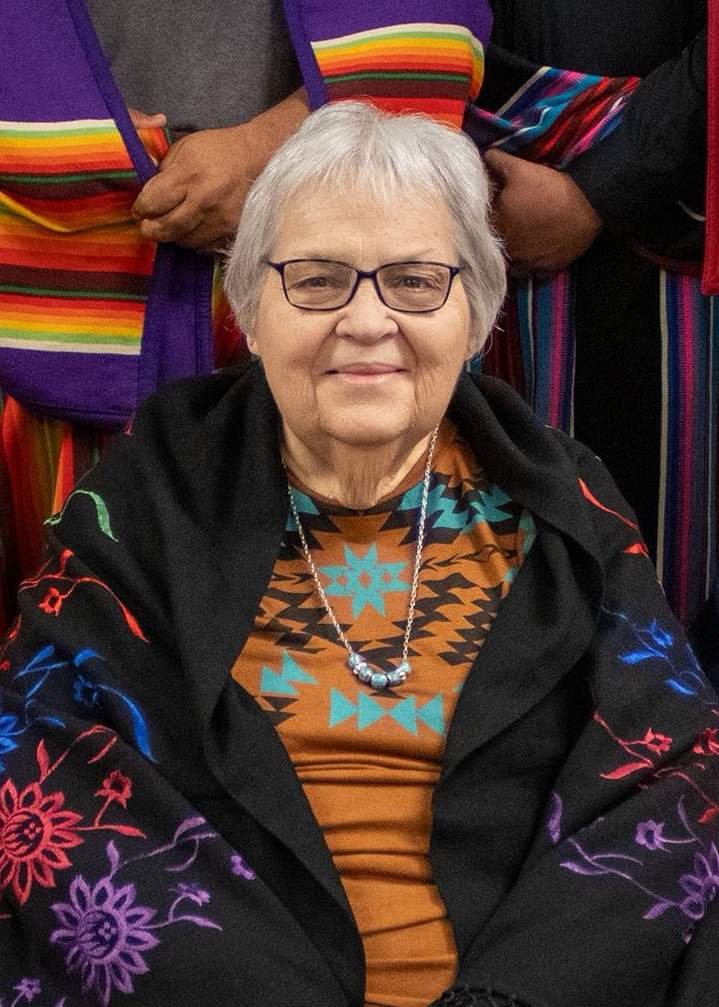
about Barbara Kyser-Collier.
Barbara (Mi-ska-nu-bah’-me/White Sun) was born in Miami, Oklahoma, to Billy A. and Reberta Hallam (Mi-he-we-hi-we/Sun Coming) Kyser on July 21, 1948. She is a proud member of the Quapaw Nation (the Downstream People) and a descendant of the Beaver Clan. She grew up in Miami, graduating from Miami High School in 1966 as an honor student, President of the Art Club, and a member of the drumline in the award-winning Miami High School Marching Band. Following high school, she attended Northeastern Oklahoma A&M College. She resided most of her life in Ottawa County before moving to her current residence between Joplin and Neosho, Missouri.
Her career in Native American business spans over 40 years, beginning in 1968 at the Seneca Indian School. Barbara has been a staunch and tireless defender of tribal sovereignty and economic self-sufficiency, serving and working with many of the eight tribal nations in northeastern Oklahoma. In 1973, she began her accounting career with the Northeast Eight Tribes at Inter-Tribal Council, Inc. Barbara started her long career with the Quapaw Nation as a secretary/bookkeeper in 1974, eventually advancing to comptroller, tribal administrator, and a key figure in the development of the gaming industry, transitioning from big bingo to the Native American casino industry.
During her time serving her tribe, she contributed to multiple programs, including Social Services, Education, and Enrollment, all while striving for the advancement and success of the Quapaw people. As one of the first two employees of the Quapaw Nation in 1974, she has witnessed significant changes and accomplishments for the tribe. Alongside Lloyd Buffalo and Walter King, Jr., Barbara helped create the tribal flag (seal), sketching the first copy on the back of a calendar pad. In 2013, she made the motion and campaigned to change the name of the Quapaw Tribe of Indians of Oklahoma to the Quapaw Nation, reflecting their growth and their global membership. This change paved the way for government-to-government relations on a national and international level.
Barbara also worked with the Bureau of Indian Affairs Housing Department and, for over nine years, assisted with multiple programs for the Wyandotte Nation, focusing on cultural and environmental initiatives.
She has served as secretary of the National Tribal Gaming Commissioners/Regulators (NTGCR) from April 2006 through November 2009 and as the charter chairperson for the Oklahoma Tribal Gaming Regulators Association (OTGRA) from its inception in May 2006 through November 2009. She was also a distinguished participant in the National Indian Gaming Association and worked diligently with the National Indian Gaming Commission's regulatory department.
Barbara has been honored by many entities throughout her career. She received the Regulator of the Year Award from the Oklahoma Tribal Gaming Regulators Association and the Outstanding Regulator Award from the Oklahoma Indian Gaming Association. She was recognized as one of the 15 most influential women in the Joplin, Missouri, area, one of the first Native Elders honored by the State of Oklahoma, and received numerous other accolades. She remains deeply humbled by these recognitions, valuing the acknowledgment of her peers above all.
Oklahoma tribes have greatly benefited from Barbara’s expertise and willingness to tackle complex issues. She is consistently present wherever pressing issues arise—whether at home or abroad. Her voice is recognized nationally by tribal, state, and federal leaders as one of reason and passion. Barbara’s contributions span gaming, education, housing, environmental issues, and administration, including her key role in the growth of the gaming industry from "paper" bingo in the 1980s to the sophisticated Class II and Class III gaming of today. Her commitment to excellence has helped ensure the integrity of gaming regulation, not only for the Quapaw Nation but also for tribes across the country.
Barbara is, was, and always will be “O-gah-pah.” From her childhood, participating in pow-wows and celebrations, to her career as a pioneering employee of the Quapaw Nation, she has carried forward the pride and traditions of her people. Today, with over 1,000 employees, programs, and businesses, the Nation continues to thrive. Barbara is honored to serve as Chair of the Quapaw Nation Cultural Committee, where she and her fellow members work to preserve and pass on O-gah-pah traditions to future generations.
In closing, Barbara often recalls the song by Barbara Mandrell, “I Was Country Before Country Was Cool.” She proudly adapts the sentiment, wearing a favorite T-shirt she has owned for over 40 years, saying, “I Was Indian Before Being Indian Was Cool.”
Photo by Hans Veth on Unsplash
episode notes & references.
- Quapaw Nation: https://www.quapawnation.com
- National Tribal Gaming Commissioners/Regulators (NTGCR): https://www.ntgcr.org
- Oklahoma Tribal Gaming Regulators Association (OTGRA): https://www.oktribalgaming.org
- National Indian Gaming Commission (NIGC): https://www.nigc.gov
- Oklahoma Historical Society: https://www.okhistory.org'
- McGirt v Oklahoma: https://en.wikipedia.org/wiki/McGirt_v._Oklahoma
episode outline.
- Episode Preview: 00:00 – 00:50
- Episode Introduction: 00:50 – 01:30
- Barbara’s Background and Connection to the Quapaw Nation: 01:30 – 04:31
- The Quapaw Nation’s History and Treaties: 04:31 – 07:49
- Forced Removal and Government Broken Promises: 07:49 – 14:42
- McGirt Decision and Quapaw Reservation Status: 14:42 – 16:55
- Lead and Zinc Mining’s Impact on the Quapaw: 16:55 – 18:50
- What It Means to Be Quapaw Today: 18:50 – 24:23
- Barbara’s Contributions and Leadership Roles: 24:23 – 27:07
- The Creation of the Quapaw Nation Flag: 27:07 – 38:18
- Changing the Name to Quapaw Nation: 38:18 – 44:32
- Navigating Identity and Belonging Between Arkansas and Oklahoma: 44:32 – 46:39
- Challenges Facing the Quapaw Nation Today: 46:39 – 49:01
- Cultural Preservation and the Next Generation: 49:01 – 55:05
- Boarding Schools and Federal Indian Policy: 55:05 – 01:05:36
- Telling the Truth About Native American History: 01:05:36 – 01:12:45
- Hopes for the Future of the Quapaw Nation: 01:12:45 – 01:14:14
- Reflections on Wholeness and What It Means for the Quapaw: 01:14:14 – 01:24:04
- Episode Outro: 01:25:02 – 01:27:15
- Next Episode Preview: 01:27:15 – 01:28:18
episode transcription.
episode preview.
[00:00:00] mike rusch.: I'd love to ask you this question. What, what does being Quapaw mean to you personally today?
[00:00:15] barbara kyser-collier.: I probably can't answer you without crying. Pride. Much pride. Much pride. I think about my ancestors and what they must have gone through so that we can be sitting here today, you and I. They endured and they sacrificed a lot of things for us to continue to be Quapaw today. So I'm very proud of that. Words can't express how glad I am that I'm, was brought up like I was, and that I lived the life I did as a Quapaw.
episode intro.
[00:01:34] mike.: You are listening to the underview on exploration and the shaping of our place. My name is Mike Rusch and today we continue our journey with the layered histories that have shaped this land and its people. This is a conversation about identity, endurance, and the ongoing work of belonging.
Today I have the privilege of sharing a table with Barbara Kaiser Collier, an elder of the Quapaw Nation, who has spent her life advocating for tribal sovereignty, economic self sufficiency, and the preservation of the Quapaw culture.
She has not only witnessed the transformation of the Quapaw Nation, she has helped to shape it. From the early efforts in tribal administration, to her work in tribal identity, To her leadership in gaming and economic development. Barbara's story is one of resilience, but perhaps more than anything, it's a story about what it means to carry history forward while fighting to secure a future for generations to come.
Her story matters because the story of the Quapaw nation is the story of this place. Their history was written into the land long before anyone else was here. It was written into the treaties that reshaped their homeland and into the systems that still determine who holds power today .
To understand Northwest Arkansas, we have to understand what was lost, what was taken, and what still remains. And Barbara's voice reminds us that that history is not a thing of the past. It's alive, still shaping our world today. And within that history lies something even more vital. Indigenous knowledge carried forward through generations, offering us not just a deeper understanding of this place, but a path towards a more just and sustainable future.
We have much to cover today. Join me as we travel to Quapaw Tribal Headquarters in Oklahoma to sit with Barbara and to hear her story.
[00:03:20] mike rusch.: well,
main episode interview.
[00:03:20] mike rusch.: I have the privilege today of sitting with Mrs. Barbara Kyser Collier, who's an elder with the Quapaw nation. And Ms. Collier, thank you for the opportunity to sit and share a table with you.
I'm honored and humbled to be able to do that. And I look forward to hearing your story, but thank you for being here today.
[00:03:33] barbara kyser-collier.: Thank you. And I'm honored to have been asked and to represent the Quapaw nation. And I'll do the best I can do to. Give you a little background of what I have knowledge of, the tribe. Been around for 76 years, so I've been Quapaw my whole life, was raised native American and lived Native American and worked Native American. So for the, for several tribes, not just the Quapaw Nation, but several other tribes in the Northeast area also.
[00:04:07] mike rusch.: I look forward to hearing all of your story.
And so to the extent that you want to share it, but maybe let's start there. I'd love to understand. Your background and wherever you want to start, however you want to define your story, I'd be really curious to, to know your background.
[00:04:21] barbara kyser-collier.: my grandmother was full blood and my great grandfather, of course, too. My mother was half because her father was English and then of course my father was not Quapaw either. So I'm a quarter, but nowadays that's getting more rare as the bloodline thins. So there aren't a lot of quarterbloods either. And I'm very proud of that. I, I'm not very dark complected. My mother was a beautiful woman, very. You could tell by looking at her that she was Native American, but as we grow older, we lose our color a little bit, and of course our hair turns gray and white, and it's not dark anymore. But anyway, that's life.
My mother was on the second business committee that was created by Robert Whitebird, Sr.
In 1956 he took it upon himself to get the tribe a resolution to act on. He was a very wise businessman and a full blood Quapaw. He traveled himself at his own expense. Of course, the tribe didn't really, what existed was the, those folks that were on the role that were allotted land here when they were moved here, removed from Arkansas the last time. Was just a community of people, I guess you would say, and no formal government as such. So he went to Washington and met with Those that be, powers that be, whomever that was, to get the tribe known.
And whatever he did, it worked. So He created this business committee with this resolution and then my mother was one of the ones that was on the second one, I believe. And then my father, of course, was very supportive of her in her endeavors with the tribe and whatever she did and they were close to Robert Whitebird was like a father to her because her father died when she was very young.
But they were close friends for the rest of their lives, all of them. So we grew up She was on the business committee, as I said, and then they were on the powwow committees and things like that. When the ceremonies continued, I would assume, I really don't know, I haven't heard anyone say, but they never stopped.
Originally, as I'm sure you are aware, some of the Quapaw's own billions of acres of land in what's now Arkansas and some of Louisiana and those states over in the east, until the government started removing Native American tribes from the east and bringing them further west, as well as. And as we often know, they're white people.
Yes, ma'am.
And whether they were white or whether they were orange or yellow or black, I don't know. But, others. I'm sure the French were probably more dark skinned than probably some of the English and so on and so forth.
treaties.
[00:07:39] barbara kyser-collier.: And we have several treaties, as is known in our history, starting in 1818, I believe it was and moving on. And we just celebrated recently, November 15th 2024, 200 years of the final removal of the Quapaws to Indian Territory. And it makes me almost want to cry. It's sad, but, but proud, I guess you could say. Because at that time the last time that they were removed from their homelands, of course they had been made many promises from the government, and from the very beginning.
But then I stop and think about what was then. And maybe that's not right to do, but, because It's very sad as well as it could make you angry if you really wanted to dwell on it. Those people lived a wonderful life. They had plenty of pristine land to grow things. They were farmers and hunters. And they had plenty of wildlife to feed.
There was approximately 10, 000 originally that came from the Sioux and the other Sioux and Indians, and the Omaha went upstream, means upstream, and Quapaw, Ogahpah means downstream people. And then there were the middle people. And so they got separated when they traveled to begin with. So that made them even less than what they were originally. And then to get removed and promised things by the government several times. I always envision a feather that's just broken, an eagle feather that's broken in two, because they broke promises.
How could you expect Native Americans that couldn't even speak English, that didn't even have English names, to be overtaken by this American government from England, basically, and France, partially, and so on and so forth? They couldn't even understand what they were being told. They were, they believed that the government would do what they said they would do. They were being told. . And then of course the government never did so once in 1824, when they got moved here, finally the leaders of the tribe and at that time the Ogahpah tribe, they had four chiefs of which one was the head chief, and they were longhouse, livers dwellers.
They lived in longhouses. I don't know I don't know that anyone can know because there's no photos, but probably like family communities, I would guess. With, they had to cook on fires and they had to use anything that was available to sustain their life. But the chiefs would meet when they need to, and they decided when we were sent here finally to Indian Territory, which wasn't Oklahoma at the time, that they did not want the tribe to receive money.
They wanted each individual to be allotted land so that they could, try to survive. And so each individual on the roll at that time And I'm not sure how many there were. There weren't After moving back and forth, each tribe has their trail of tears. They were moved. They got smallpox. They got diseases. They died of starvation. Think of how hard it would be to walk a hundred miles, you had, they had no transportation and, but you wanted to go home. They wanted to go back to Arkansas, so every time they were removed they tried to return a lot of them. And, of course, they never made it.
There were not very many on the roll at that time that received the 240 acres of allotment. And at that time, my grandfather was, I think in his 30s, my great grandfather, and my grandmother was just three years old. But she received an allotment anyway. And it was partially conjoined by my great grandfather's allotment.
But that was a wise thing that they did, they knew the government had not kept their promises all those years and, for hundreds of years, and so they wanted each individual to be able to sustain their life, and so that was the beginning from coming from Arkansas, and, they were potters, and pottery is a major asset that the Quapaw still have today, as well as farming and celebrations and things. And they were very giving people, and very trusting people, which is sad because, that's what Was part of their downfall. It wasn't really a downfall. It wasn't their fault that the government didn't keep their promises.
But anyway, I as a little girl, grew up knowing, not knowing all of that until I got became an adult. But knowing that my mother believed in her tribe and her people and was taught celebrations and dances and different ways of even to burial ceremonies and coming out ceremonies and ceremonies that so you can dance and so you can have eagle feathers and just different things like that.
Prejudices were I don't know if they were in Arkansas. I'd be curious to know that, really. But whenever we arrived finally in Oklahoma, of course there were already a lot of other tribes in Oklahoma, and each one at that time had a reservation, which is what we were allotted. That is one thing that these new laws that have come out in Oklahoma and in the United States recently, more in the last few years, have shown the Quapaw's never relinquished their reservation status.
[00:14:32] mike rusch.: And you're referring to the McGirt decision?
[00:14:33] barbara kyser-collier.: McGirt, yeah. Yes ma'am. Yeah. And some of the others, so we still have a reservation, for years after my career even began with the Quapaw Nation, we were told there's no reservations in Oklahoma. You were always, they always said that there's no reservations in Oklahoma. That's not true there. Some of the five civilized tribes still have their status. And then, the Quapaw's and I think one other tribe.
The Quapaw's retained their, they never relinquished their reservation status. So we still have our reservation status. Where a lot of the tribes did, for whatever reason, probably because they were forced to, for some reason or other. But we never did, so we have found that out just in the last few years. And so that's a very positive thing for our nation. There were several Indians, of course, the Quapaw's, in this area that became wealthy and prejudices were not big, or a big issue. But to some they were.
And then when you traveled somewhere, I can remember as a child we traveled. My dad's position with his career deemed him to leave town whenever he had vacation, or they wouldn't leave him alone. And so we would always go somewhere. And I can remember one time traveling up north a little bit further.
Maybe we were going to Yellowstone or somewhere, I don't even remember where. But we went in a restaurant and sat down to eat and get away. And they waited on everyone but us. And we waited and waited and. And finally, I can remember my mother looking at my dad, just like it was yesterday, and saying, Let's go. And they wouldn't wait on us, because we were Indian. So their prejudices ran deeper there than they did here.
mineral discovery.
[00:16:45] barbara kyser-collier.: But of course here, during the Depression, lead and zinc was found on the allotments, some of the allotments, and several other Quapaw families became wealthy. My grandmother at one time in the, during the Depression and during the early 20s was probably one of the richest women in the world.
But she really didn't care. She, she knew she had money and so she did what she wanted and when she wanted and but we are, we have been assured and, it's pretty much been proven that she wasn't the only one that retained wealth from her Lenzing mines. And my great grandfather had some, our family had, together they had five mines.
And but as far as me as a child growing up, I grew up with that knowledge. And I was proud to be Native American, proud to be an Indian and we didn't call it Native American back then, we called it Indians. I can see people now, say for instance, when I come to our meal program, Next door. I can see people that I went to high school with and I never knew they were an Indian.
But they're there eating free now because they are an Indian. And that was, that's something that I think is, I'm glad that they're proud they're an Indian now, but it, the reasoning is not there. It's sad that they, just because there's benefits now that, I've been here since beginning and there was no money.
There was no, even though some Quapaws became wealthy, the tribe itself was, had no money. There was I can probably go on to some of your next questions, I'll cover some of that stuff that happened, but.
[00:18:40] mike rusch.: Yeah, maybe I would say thank you, because in many ways, I just, you're welcome to just continue to talk, because you've seen so much, and you've been a part of so many stories, Maybe before we get into some of the questions just about some of the history and culture and where we are today.
I'd love to ask you this question. You've hit on it a little bit, but maybe I want to ask you directly. What, what does being Quapaw mean to you personally today?
[00:19:15] barbara kyser-collier.: I probably can't answer you without crying. Pride Much Pride. Much pride. I think about my ancestors and what they must have gone through so that we can be sitting here today, you and I. And I know, as far back as my mother and father, my grandmother, I didn't know my great grandfather, but he was the second chief and I wouldn't have been a good Indian back then, I know I wouldn't have. They, whenever we do things today, make pottery, or do beadwork, or make ribbon skirts, or have a powwow, I think about what they had to do that. Knowing from the 70s, 60s, 50s, and 70s, On it, what we had to do to have a powwow.
What they had to do, and then I, like making pottery in pottery class. Did those ladies sit and talk about their kids or their, what happened yesterday or while they were making pottery or, I'm sure it was harder because there weren't modern, there weren't lights, there weren't, There wasn't anything, just the natural nature of things.
So it would have been very difficult. And they did, they endured and they sacrificed a lot of things for us to continue to be Quapaw today. So I'm very proud of that. It's very heartfelt for me to think that my ancestors before me, had to struggle so much and but I guess everybody did. It wasn't just them, but then they got removed and they got treated like they did.
And that to me is very sad that of course, the government these days is probably not any different than it was then, and they do whatever they want to do, it seems but Not to be anti government, but because I'm glad that we're living in the United States and we're free, but they were done wrong.
And a lot of people come over here, and say you're a foreigner, or they try to do this, or they do that. And I don't want to get too political, but the Indians were here. This is our land, and it's all been taken from us. And not us, but from our ancestors. And because they shared, they were willing to do that.
And then were killed, and called savages, and, went through, Who knows what, television doesn't tell the truth. Books don't even tell the truth, columbus didn't discover America. Indians did. And that's not ever been told correctly. So I think, I would like to see Native Americans today get their just due as far as history.
I think it's only fair.
But to me, being part of an ancestor, part of that, just makes me prouder than anything. I can't even, words can't express how glad I am that I'm, was brought up like I was, and that I lived the life I did. As a Quapaw.
[00:23:02] mike rusch.: I think sitting across the table from you, people won't be able to see what I see, but I can see in your face the the pride that you express at a greater cost than I could ever imagine. And so I thank you for your just your vulnerability and that and thank you for being a truth teller.
In so many ways. I think part of these conversations are to have an honest and authentic conversation about the truth and reality of where we are today and how we got here. And these stories. Your story is critical to that for us to understand what does it look like to live in the place that we do. And to be honest about the history of what happened here with the hope of
gosh, I don't even know if I can say that.
Yeah. And I don't know that it may be with the hope that there is a way forward to honor I dare say to work towards restoring or repairing all that has been taken. And yeah.
you've left me without any questions now.
That's the profoundness of what, the profoundness of what you say is. I think my response is to be quiet and to be still.
[00:24:13] barbara kyser-collier.: In honor of our families have gone on before us A moment of silence is always a good thing because we can reflect on that, on them.
And not to say that I'm not glad I'm part of my father's heritage. They were German and and a lot of other things. And I, there are no pureblood Quapaws any longer. Robert Whitebird was the latter of the Quapaw. The last male in the GNN, Hoffman Blue, was the last female. It was a full blood that passed away. We're all mixed with something. And, it's not that we deny our other heritage. I've never denied my other heritage. I My great grandfather on my dad's side was told that he should change his name because it was Kaiser and, during the war that was really a bad thing.
I can see that, yeah.
Yeah, and so he didn't change it, but he changed the spelling of it. That's one of those things that happens and we have no control over that. Just like they had no control over their lives, even though they should have. They tried to, and they tried to do what was right with the government, but the government, of course, did them wrong. And we all know that. And it continues today. I'm not saying it's over.
I moved from Oklahoma about six years ago. And lived in Oklahoma all my life until then. The current governor of Oklahoma I have nothing good to say about him. He just, and of course it's not wrong to want what's best for Oklahoma, but it's wrong to want what's best at the price of others, and still the Native Americans are, they're wanting to take advantage. And they wouldn't have some of what they have now if it wasn't for the casinos and all the Native tribes. There's 35, I think 35 gaming tribes in Oklahoma currently that are paying them big money. Continue to be greedy. Is that a good policy? I don't think so. But let's not get off on that.
[00:26:29] mike rusch.: I do want to understand you've had a significant contribution to the Quapaw nation. I know you are the chair of the cultural committee. And for those listening it wasn't until 1978 that the American Indian Religious Freedom Act was passed that really made it legal again for the culture of all indigenous Native American people to be practiced without fear. I could maybe dare say.
You're also a member of the Ogahpah Wisdom Keepers as well, too.
[00:26:57] mike rusch.: I had the privilege last month of attending a film screening and at Crystal Bridges where we were able to meet and to watch a film about the story of the Ogahpah people. And yeah, you've had a significant contribution to your people and to this place. And I would love to understand as you think through that, I'd love for you to share your roles and what those roles mean to you what work you feel like has been important to the cultural restoration and the keeping of that wisdom for so many years.
[00:27:29] barbara kyser-collier.: When I moved, I, like I say, I lived in Oklahoma in Ottawa County all my life until about six years ago. But I moved back to Miami. I think it was in 1972 or three and I had to find a place to live and for my daughter and myself and a job because I'd left my job and where I'd lived and moved back to town.
So I got a job with Jake White Crowe, who was the head I started a group called Inter Tribal Council in Miami and it was several tribes, five tribes that were in the area and three tribes that were not at the time reg regulated. Not regulated, but with the government.
To be recognized.
Recognized, yeah. And so they had business managers each tribe did. And the Quapaw tribe was, I think, the first in the Seneca Cayuga tribe, second to move from on their own and have their own facility. And, but I worked in accounting there at Inter Tribal Council for about a year.
And the business manager was Lloyd Buffalo at the time. He was the first one. And the chairman was Jesse McKibbin. And the eight tribal leaders were on the board of Inter Tribal Council. For there was an opening for a clerk typist second employee with the Quapaw office, and they came to me and asked me if I would be interested in applying or doing that job. And I said, I told them I'd be very honored to, it would mean a lot to me to do that. And this was in 1974. And so I was hired and went to work then. And our office was in an old hotel building in downtown Quapaw with leaky pipes and cockroaches and all sorts of things that you wouldn't dream of. But we and we operated for two or three years on a grant, a community development block grant from the government for 25, 000 a year.
That paid two salaries, the taxes, the rent, and anything, supplies, whatever we had to have, 25, 000 a year. But it, it was great. We continued that the business committee, as set up by the resolution with Jess as chairman, and there were there's always seven members continued to want to have this powwow celebration every year. And of course, as office, as the only office staff, we were in charge of doing that and we had no money. We had to have pie suppers and, What do you call them where you go shoot? Turkey shoots and ticket sales, for prizes and just that people would donate, and we had, of course, our tribal grounds. It didn't look anything like it looks now. It looked like a run down, I don't know, little shacks here and there. I don't know. But it was fine. It was fine. It was good. We had a great time.
Now, Beaver Springs, where the tribal office is part of my family's heritage. It was my great uncle's allotment. And that's where our family cemetery is up on the hill there. And their home was very nice back then. Of course, they had Money from the mines. And and they were very giving people, but them as well as the Otis Dean McWater's family and others contributed to having a big, it was like a big they'd have merry go rounds and all sorts of things, and people would come, other tribes would come from miles, and they would bring them and they would feed them and they would, they would celebrate with them for a week or so, and then they'd pack them up, so they could go home.
Some of them came horseback, some of them came by wagon, and it was just a, celebration. And that continued for many years. So I learned about a lot of things about the treaties and when I started working for the tribe and then along intertribal council built a new building out by the Turnpike went in had gone in the 50s, I think it was.
And they built a new building out by there. And they wanted to put up flagpoles for all eight of the tribes. In the meantime, I think back in the 80s the three tribes that were not recognized. Where we recognized the Eastern Shawnees, the Wyandottes, and the Peoria's maybe, or the Miami's. I don't remember which now, for sure, which ones it was.
national flag creation.
[00:33:04] barbara kyser-collier.: But, anyway, there was So that made eight. So they put up these big, and they're still there, the big flagpoles. But they wanted each tribe to contribute flags so that they could fly them on these flagpoles. The Quapaw Nation had no flag or symbol or seal. The five civilized tribes, of course, but had already had that and they were copying after that.
So the tribe started coming up with a seal for each one. And the Lloyd and I and by that time we had a third employee that was working part time, Walter King Jr. And And We looked into fashioning the seal as we have it now. And we, like I said, we had no money. So I drew a picture of it on the back of a calendar pad. I took the cardboard off the calendar pad and drew it on there. So that we could show them, this is what we're going to have And Because of the traders, and back in when the when we probably in the not 1818, but maybe 1824 or maybe 1833, the French befriended us. We have several families today that are partly French. And so they, French and English, of course, brought things from Europe over here and traded. We traded with them. And one of those was broadcloth. And, of course, broadcloth, originally, back in those days, the only colors that I saw was red and blue. And they always had a salvage on the edges of them that were, was like a stripe with a yellow or gold.
And so we took that as our base because that was, helped sustain us, back in the 20s and 30s. And then the buffalo, of course, was almost extinct by The time, most settlers came about and went west. But that was our, I heard somebody say one day that was our Wal Mart, they used everything, every part of the buffalo they used for something, the meat to eat or the hides or the, the bones or the internal organs, some of them. And so that's how they, sustain their part of their life. So that was our figure that we, we felt should be a part of it. And then a shield, which we were not really warriors. There were warriors. We did have warriors, but we were farmers and gatherers. We were peaceful people unless we were made not to be. And so the shield there with the leather around it and the buffalo inside. And, of course, grass, Mother Earth, and the sky. And so that, that's what we believe in and we, sustained us. And then the four cardinal directions, four is a special number for the Ogahpah. And there was eagle feathers from all four directions on there.
And then the name Ogahpah. So that's why the flag was, is such as it is. And now, since the name has changed, the Quapaw Nation goes on top. But we were very proud when we got through and went outside. I think we had a camera, a Polaroid camera, somebody did. And we took that cardboard picture outside and took a picture of it. I don't know what ever happened to it. But anyway, we were very proud. To get these flags, they wanted them to be huge. Because these flagpoles were so big I don't know how many feet long they were, maybe 20 feet, 8 by, I don't know, they were huge. And back then you couldn't they didn't do so much of, what did they call it, screen printing. So we had an artist, I knew an artist that I grew up down the street from named John Fitzgibbon. So we got canvas, blue and red. Painted blue and red and had him paint the pictures on both sides of these flags. We bought three of them and he painted all three of them. Of course, eventually they cracked and, looked awful. But by then they were creating printed things that other manufacturing, so on and so forth, but that was our story about our logo.
[00:38:08] mike rusch.: Keep going, right? I do have a question about that.
[00:38:10] barbara kyser-collier.: Okay. And then of course as time progressed, we we wrote more grants and contracts and got more things from the government.
Of course, it was all government funded programs. But it wouldn't be enough to Habit, like we might get something for arts or education might be 4, 000 a year, what can you do with 4, 000 a year? You can't even that's not even a salary even back in those days, but we got enough programs and we got a program called Indian Action Team.
And we hired a Quapaw man, Bill Ehrlich. To be the director of that. And he was able to get 10 Quapaw guys, young men and women. There was a couple of girls to train them to build, construct construction and built the tribal office, the initial tribal office out at the, at Beaver Springs now that sits there by the gate, and And so they built that from start to finish.
Drew the plans, did the building, did all the construction and learned how to do that as well as do it. And we were the first tribe then to have our office facility, our own office facility in of the eight tribes. And so that progressed. And as I say, all along, each year we would have a powwow. We would have, raise money for that and, this and that. And then it just kept growing from, grants and things. We built the community building that's still there. And they came in and did some things, but, when we had our first powwows down there, we'd have, it was all volunteer security, volunteer there were two guys in Quapaw, one one was a sheriff, his name was Hoot Gibson, and he looked like a, Old Timmy Sheriff, he wore khaki pants with his pant legs stuffed down his boots and a big gun on his hip and an old sweaty banded hat and but they volunteered and then people would come down just to pull the electric to a camp, just so they'd have a light bulb, not so they'd have air conditioning or, electric skillets or anything like that, or mobile homes, which now we, they have, but this was primitive and people cooked on open fires, and open fireplaces, and had outhouses, everybody.
So it was, but we continued to celebrate our existence and to celebrate, to keep doing what our ancestors taught us to do. During all those times, and then as in the 80s, we finally got to Big Bingo before then, there was a young man that came through this area, and he wrote, he was writing a series of books, he was from he went through OU Press, I assume he had something to do with OU, the university. And he wrote these series of books about the different tribes. And we were one that was chosen. We got the, when he finished, they, the publishing company sent us, I think it was 2, 500 books. And with the books, there was a medallion. 99. 9 percent pure silver. And they were all numbered, and they were unregulated, and They were in plastic, in other words, in little containers. And so we sold those for 25 apiece. And I can remember going over to the bank and making the deposit and was happy leaping across the street coming back saying we had 10, 000. Was elated because we had 10, 000 in the bank. It was hard times. It was really hard times to get started, but once we got Big Bingo, then we got a little bit of money and coming in.
And, of course, that went back and forth for several years also. Not succeeding and then succeeding and so on and so forth. So the tribe grew from there, but there was two employees in 1974 with 25, 000 budget. And now there's probably 300 and millions of dollars.
shape a nation.
[00:42:42] mike rusch.: I'm curious, being a part of not only restoring culture, but to be a creator of, of a tribal flag which defines a nation is incredibly significant. And I'm just curious how you reflect on just the weight and the significance of what it means to be someone who has literally from nothing it sounds like, to help restore the identity and the culture of a nation.
[00:43:13] barbara kyser-collier.: I've never really thought about it that way. I just did my part. I, I I'm proud that I was able to participate in doing it. And I think all three of us were We're proud of the outcome, that it came.
I really hadn't thought about it, going down in history as that. I guess it has, though, and I've learned that it has. But I didn't really think about it at that time, and that's not the reason. Yeah, that wasn't the reason, just we participated because we were requested to and then there was a lot of meaning, I'm sure the other tribes flags share their meaning also, but there was a lot of meaning for us.
I know the other day somebody said something about, Oh, what's this deal with the buffalo? Why is it buffalo everything? And that's when I heard the lady say, She said that was our Walmart. And I never really looked at it like that, but that's true enough. It, Back in those days, there were no stores, and so you did what you did, but I'm proud to have been a part of that, and I'm just glad that it's historical now.
O-gah-pah name.
[00:44:22] barbara kyser-collier.: I am I also made the motion, I don't know, I think maybe it was 2013 or 14 to change the name of the tribe. And in our meetings, in our general council, you have to submit something, and then you wait a year until it comes back around for voting. And I don't know why one of us that had been in the employed by the tribe, I hadn't thought of it before 2013, that's when it was for sure, to change the name because the name did not reflect the people.
The legal name on all the documentation was the Quapaw Tribe of Indians of Oklahoma. There was more Quapaws other places, especially, longevity wise, initially, there was some in Kansas, they weren't just all in Oklahoma. And they're all over the world now, so to me, that was just not reflecting what we were.
And we would get these grants and things from the government would come up with new ideas, government to government contracts and government to government this and that. If we're a government, then we're a nation. And I wanted it, I felt like it should reflect that, so I made a motion to change the name to Quapaw Nation.
We've always been this, or we've always been that, was the argument, which is true. We've always been the Quapaw Tribe of Oklahoma, but we're proud Quapaw, Ogahpah.
[00:46:09] mike rusch.: I'm curious, how do you navigate or feel about maybe that dual I don't even know if it's a dual belonging as a people from Eastern Arkansas, what is today Arkansas, but to be here in Oklahoma, how do you navigate through that sense of belonging or that sense of place?
decolonized patriotism.
[00:46:29] barbara kyser-collier.: First off, I'm proud to be an American. Many Quapaws fought for this country. . Whether they were Quapaws or whether they were Arkansas. Arkansas. . Where were they? Wherever they were from, my family's a family of veterans and, I think that we, we, even though the government did us wrong, so wrong, so many times, we're still proud to be part of the United States of America.
And I am also. I wouldn't want to be anywhere else. I wouldn't want to be a citizen of any other country. But I'm also Quapaw. And no matter where we've come from, we weren't initially in Arkansas. We just, we ended up there. So coming from the Siouan tribes, which were more up north and west probably some, in the Ohio Valley migrating down, just like people move now.
I'm a Missourian now, whether I want to be or not. I am because that's where I live. But I'm still an Okie. And I think you just, the transference is, you are what you are. And I think that we, myself, I just I know that we were a Siouan tribe and and, a part of many other tribes.
That's just, I compare it to living in the east. My aunt and uncle lived in Maine for many years. And you know how they talk. And then the people in Louisiana, how they talk. And, I, and they lived in Canada for a while. And I, had a person when I was there say you talk like you're from the South. I said, oh no. I said, if you heard somebody from the South, actually from the South talk, you would know that I wasn't from the South.
It's just like languages. You just meld, I guess you'd say. You just, you're just satisfied to be what you are.
[00:48:42] mike rusch.: , based on your perspective today what do you feel like maybe are some of the biggest challenges that the Ogahpah people face today?
[00:48:51] barbara kyser-collier.: That's a hard one. Because I really don't know. It depends on your family and your background. I know some struggle with drugs and alcohol. I'm fortunate that I, my family does not. Some struggle with, jobs and having jobs. That's one thing that, you know, opportunity wise, the tribe has supplied a lot of jobs for those that may not have had jobs. Or maybe they have better ones now, hopefully. As far as the nation itself, I still see a lot of issues with the government.
There, there are people that, and maybe they don't do it intentionally, but they have a job to do with the Bureau of Indian Affairs or whomever. To help the tribes. And I really don't feel like they still put forth the effort that they should to do that. Of course, the tribes now are getting more and more independent from the government. And they're getting more and more Independent in their culture and in, in their land use and in everything legally and, where before we had to depend on them wholly. And that's a good thing. But still there's that I don't know, In the shadows, they're like, they still got their thumb on you, kind of thing.
I don't know how to explain it thoroughly, but there's that. And then in this area, there's not so much prejudices. But like there used to be. I don't think that's probably an issue. The struggles would be to maintain our culture. And now I had a, I had an interview with a man from the local television station several years ago. And he was following up with a story that had been with Pauline Whitebird, who made Hundreds of buckskin dresses, she and Midge and Bert. And that entails the hides and the beadwork and just everything to make an outfit for a young lady to participate in the powwow.
And I guess at that time she told that gentleman that was interviewing her that she thought it would be a lost art. So when he interviewed me, he asked me why I thought that she said that, because it wasn't. And of course, growing up with that being there seeing that happen continually for years, I learned how, but I really didn't pass that on at the time.
I did assist others, in making a ceremony dress for their children or their, my relatives or whatever. But a lot of families were not doing it. A lot of people were not doing it. At the time that she was doing it, or in her end time, they weren't. Following that path. And I said, I think that she felt that it probably would be a lost art because young people, or even not just young people like youth, but middle-aged people were not doing it. They weren't passing it on. They weren't learning how to do it. But that changed after she passed away. And I saw the change, not just in my, but my children's ages. And young people were people my age were teaching them how to do it, and teaching them how to sing, and teaching them the songs, and teaching them the the culture. And they started doing that because they could see that it was lost, gonna be lost if they didn't.
The language, especially the language. And so that changed. And I think she probably thought when she was in her latter years that it would be lost. And the language, it was almost lost. Not necessarily the dress and everything. But now the cultural committee currently is trying to find the original photos or what the original dress was. And I'm almost afraid that it is probably almost too late to find out what that dress was originally was, because it wasn't buckskin dresses like we know now. There weren't beads like that, like we have now, or, there were hides, there was plenty of those, but the times have changed.
That's why, Quapaw dresses, for one thing, there's a collar, and I use this as an example. My first one, the collar came down, to my shoulder maybe. Now they hang over. Now they're fancier. Now they have, beads or silver on them or whatever and, girls want to, want it to be better than what they've seen before.
They want it to be fancier and stuff. So times change and we realize that, but I would like to see. I'd like mine to be like it used to be. But times change and kids change. Electronics, for instance, you know yourself, or maybe you're electronic, but I'm not. If I have something go wrong with my phone or my computer, I have to ask my granddaughter to come and fix it for me.
I hope I answered your question.
boarding school.
[00:54:55] mike rusch.: Absolutely. I think the root of the question is really that historical cultural reclaiming, if you will, or rebuilding of that.
Really curious. I know as early on you worked at Seneca Indian School and I'm curious your experience there. Around what that experience was like.
[00:55:15] barbara kyser-collier.: That's another one of those situations where with Indians. It was good, but not good. Now, Seneca Indian School, the when I went to work there, it was in 1960
Eight, I think. And I worked in the school building, for the principal. Of course it was a boarding school. But by that time harshness was supposed to be something that Was done away with and superintendent was Richard Fitzgerald at the time And he made sure of that. He was one that actually, he did not I Allow it or if he knew it, he would not allow it There were only children there that were a school age at that time now previous to that there were You younger children. And some of the children that were there were from Florida or Louisiana or somewhere in the south, Georgia. Some of the Choctaws. And it was my understanding that it was either there or a reform school for those some that had traveled far.
Some, of course, were just because of poverty, or some that came from homes that were just not where their parents were just not being parents, and couldn't afford for them to be there. They had everything that a Public school would have. They had sports and activities. But of course they were confined. And they did have runaways. The principal would Send me out, look for kids and, as an adult, you're not going to find them. You're not. They're going to hide and they're going to come out whenever they get ready. So it was a lost cause. You'd go in one end of the dormitory and they'd go out the other. It was just a futile issue. But you try.
But they did have a they created a grandparent program, which was really a good thing. And I don't know if they did all over, in places like Carlisle and bigger schools, because Seneca was just small. They fed them. But they had this grandparent program where elderly people or people that were still capable of mobility to come and stay in the dormitories with the little kids during, after school and before school, help them get ready for school, help them after school, help them with their homework and things like that.
And then in the summertime they had programs with arts and crafts and different things for those that had no homes to go to which, there weren't a lot left in the summertime, but seneca was pretty calm, unlike the larger schools. Carlisle was horrible. The situation there, I don't know if you watched, and I hate to compare this to a TV show because they most of the time they're lying about what they show, but 1923.
[00:58:45] mike rusch.: Yes, ma'am.
[00:58:48] barbara kyser-collier.: That was probably true enough. From the stories that I've heard over my lifetime and about some of the Quapaws that were sent to Carlisle and the things that they had to do and they couldn't speak their language, they cut their hair, they made them wear white people clothes and not that they didn't learn English and reading and writing. Not that wasn't a good thing, but how they went about it was so wrong.
Again, the government. It was a travesty. So sad. How would you have to put yourself in the position of those people. Say you lived in, on the reservation in Arizona, and they came and took your children and sent them to Pennsylvania. And then you never saw them again. Maybe they were dead, and maybe they weren't. But you never saw them again. And they were completely taken away from their families, their homes, their way of life. How wrong is that? It's horrible. It was horrible. And it's still horrible today. And no matter how many apologies the U. S. government can make, it's not the same people. The government now is not the government then. It's not the people that made the decisions of what to do, what not to do. You can only hope that they had to pay the price for what they did. Or I do. And maybe that's wrong, but How wrong did they do? How wrong was that to take those children from their parents and from their families? I don't care how bad your life is. Moving you clear across the country to a whole different life is just wrong. Sad. Very sad.
[01:01:00] mike rusch.: I am curious your reaction to the recent apology. And milestone? Is that a marker? Is it does it matter?
[01:01:12] barbara kyser-collier.: If it was your child, would it matter? I don't think so. I think they got caught. That's my opinion. They got caught. They found all these graves. They were caught. They had to answer for it. They wanted to go away. So apologize. The people they need to apologize to are dead and gone. Sure, maybe their family, some of them still are here and realize that, but would it mean anything? No, probably not. It wouldn't to me. I don't think, I'm not in that position, so I really can't say for sure how I would feel, but I can think that I would not care what they say. And what is the answer? There really isn't one because offering money or something, that's, what would that do?
That's not going to bring them back. That's not going to make the change. That's not going to make history. It's just a black mark in the history of the United States government. And they need to own it. They need to tell the truth. And I don't think they can make it go away, nor do I think they should try to make it go away.
I don't think they should try to apologize and think that it's going to be all better because it's not. It's not going to change the fact that it happened, and it should never have happened. All of those graves, all of those children, I just can't even imagine, I can't even imagine if I was in part of that.
And, I will say this, at Seneca, I only knew of one time when perhaps a teacher got overzealous with a child in a closet. But, they weren't angels, and I'm sure, probably, but what kid is, and, would you want to be rebellious? Would you? What, what reaction would you have if you were, especially a, maybe a teenager, and you were removed from all the things that you'd ever lived your whole life doing and knowing, and treated like that?
Would you be rebellious? Yeah, I think so.
But and one time while I, right after I left there, AIM came to the school, but they were just traveling across the United States. Trying to make people aware of what some of the things that were going on and they weren't rebellious or, there were no fightings or boisterous outbursts or anything like that. They were just meeting with the tribal leaders.
Yeah, I don't know what the answer is to that. I think they just need to own it and it's not going to go away. It's just part of the history. Just like slavery and, different things that, it's not going to go away. Do I wish they'd make more movies about it? If they tell the truth, If they'd tell the truth. And I believe that was part of the truth in that show that I saw. As well as the Quapaw's had, every tribe had their Trail of Tears and every tribe had, the Quapaw's the Killers of the Flower Moon, and the Osage, of course the Osage and Quapaw's were one at one time.
Some of the wealthy Quapaws at the time of the mines had history like that too. They killed people for their money and they not as severe as what they did with her and her family, but Jeff Standing Bear, Chief Standing Bear is a friend of mine, and I called him and congratulated him when I saw the movie and he said they had total control over, except for the dramatic parts in the storytelling, and I said it was really great to tell those stories, and they need to tell them.
[01:05:26] mike rusch.: And I wish more of that would happen for the Native American tribes, because we all have stories that are just unheard of, that should be heard and known, what's happened to us. It's not just, not certain ethnicity that have had that. We've had it too, since the beginning.
I'm very thankful for your willingness to just talk through that. It's a very I can tell you it's a very difficult thing to talk through. And I don't want to ask questions that that cause that. I do agree with you that those stories need to be told though from a, from an understanding. And I think what I have seen, I had the privilege of attending this powwow this last year. And what I see is a lot of beauty and a lot of hope. And so I think what I see today is moving towards a place of great hope and great beauty. And so I I do, we will go there, if you will.
[01:06:25] mike rusch.: I, I'm not a member a part of the Quapaw Nation. I'm eager to learn your story. I'm eager to understand what it means to honor the past and to be truthful about it.
I'm curious what you would say to maybe people like me that are not, that are from other places, either in Arkansas or across the country. Who are asking questions about what does it mean to honor the original caretakers of the land and the place and to and to have an honest conversation about the actions of what's happened?
I'm curious what you would want to say to maybe communities outside of this place that you feel like is important for them to know about your story or about the people.
[01:07:09] barbara kyser-collier.: It makes me think back to what did it take for other ethnic groups to make people aware of their plight. How did they start their stories and things. And of course I think, you can't believe what's on the internet. You can't believe stories that you see always in the movies. You can't just like in the video that the tribe has made, the voices of the elders. When Vicki Jones was talking about, she's, of course, she's very dark complected. You can tell she's Native American just by looking at her. And she didn't want to be the, when she was little, she didn't play with her friends. She didn't want to be the Indian. She wanted to be the cowboy because of the TV shows, because of what people are led to believe.
I would want to look back maybe on what other ethnic groups did to make people more aware of their plights and maybe utilize some of those ways. Now, in the past, it's been books, and I don't think that's the case anymore.
I think that's Past, going to be something in our past. But for whatever that is that they can, that we can do to make people aware, more aware, like Killers of the Flower Moon.
The thing about Native Americans is they're very closed, grouped. What, this tribe might not want others to know about them. Or, each one might not want them to know their story. Want people to know their story. But how are people going to know about us if we don't allow them to know? Our story. So I do see electronics
YouTubes, Netflix. We have a lot of things now on YouTube, the tribe does. But what do you do to get people to. People want to look at that. Sure they have the business committee meetings on there. Nobody wants to look at, except tribal members want to look at that and see what.
But there are things now, people were making, Several years ago, people were making videos of powwows and how to make a fan or how to bead work or how you do this or how you do that. And more and more of that, I think is being put out there, which I know, helps. But what do you do to get a lot of people I.
to note that, I, and I don't know the answer to that. I don't know what you would, I don't think probably in my lifetime that Native Americans will be the center of attention. And to me that's sad because we were the original citizens. And not taking anything away from others, other ethnic groups, but, we were here first.
And there's not that much knowledge that has been shared and that's probably partially because the tribes are, they didn't write down history. They told the stories and they passed them down internally. And so now it's getting to where a little bit more Voices of the Ogahpah are getting out there more. And they're adding more to it and more to it all the time, which is a good thing, I think. I'm all for it if it's the truth. But then, I'm sure some people look at it and think, Oh that's not, that's just, they just made that up. That didn't really happen. When, probably it did.
And, cause it's hard to think. Like if you lived in Arkansas, as you do, that the Quapaw's owned millions of acres of land. Millions, with an M. And now they have nothing in Arkansas, basically. Mounds and a casino. But, is that believable? Is that really believable?
Do you think people in Arkansas believe that? Those that have possibly studied it or looked into the history of Arkansas, But I don't even know what the history books of Arkansas say. Maybe it starts there. Maybe Arkansas needs to, include that in its learning process.
Establish the actual beginning of Arkansas and then what happened to it. And they'd have to put the Quapaws in there because they were there, I really don't know the answer in succeeding in doing that, but I'd say probably it's going to come to visual knowledge of somehow If the truth can be known if the truth can be told
[01:12:35] mike rusch.: What do you feel like in that truth telling If you were going to tell the truth, what would you tell?
What would you want to see in the books and the stories? that you really feel represents The true spirit, of the Quapaw people
[01:12:51] barbara kyser-collier.: Just like the Voices of the Ogahpah says, we came down the rivers, we landed in different places, going upstream, downstream, and the middle people and became, That was our home. That was our homeland. We owned it. We wanted to be there. We, like in the movie, in the show, it's accidental. Some of it was accidental. But it, but they were traveling on purpose to get a better life. And they found that in Arkansas. And they found that in the lands where they ended up.
And I think they were proud to, to be those people and to be there and I would have been. I, and I'm still proud for them to have been there and to have lived that life and had that. They said they could see cornfields for miles and I'm sure they could in my mind's eye. I can see that. I can see them doing that. Think what they had to do it though. So they had to love it. They had to love their life and love where they were at and love being there and love doing that in order to be so successful.
[01:14:04] mike rusch.: Yeah, I'm curious, standing here today, what are your hopes for the Ogahpah people?
[01:14:11] barbara kyser-collier.: And you said that about Ogahpah, it came from, Ogalpaw, but, Arcansio, English people put their spin on it, thusly why the name of your state's Arkansas.
Yeah, we mispronounced a whole lot of words, I think.
Yeah, that's right. I my hopes is that we can, as a people
We can continue to succeed. Now, as an, the ex gaming regulator, I feel that we should put more emphasis possibly on diversity. Not so much on, depending on gaming, of course that's where it is right now, but if the laws change, and internet gaming or sportsbook gaming goes legally across the United States.
Bricks and mortar will be in dire need. And of course that's our dependence. We depend on that. So I would like to see the tribe look into In the future, more endeavors, more, something that's more definitely not going to go away, or not possibly go away at some point in time. Now, will gaming ever go away completely? No. But, something that would be more substantially profitable for long term. And I would like for them to continue now that we have, they have, in the last few years, they've started many wonderful programs. Language being one of the most important, daycare and dress and classes in beadwork and the words, reading, writing language and just getting together and doing things and then continuing cultural activities.
Like we just had our gathering last weekend and continuing to bring back some of the things that have gone by the wayside. And I'm in hopes that they continue to do those things. To have the people interested that are and not necessarily someone that gets paid to do it, but someone that really wants to do it in their heart. They want to continue doing it. They want it to continue.
As a nation, we want to, continue our culture. And that the division there's of course in some of the things that have happened in our past there's been several divisions. And for us to get together and again and be In one accord, I know, you're dreaming if you think everybody's going to get along all the time, because they're not, and I know that. But for us to, look to the future in a more positive group, you might say. And those are some of the things I think the young people now are,
fear.
[01:17:37] barbara kyser-collier.: I am. I'm afraid, though, that the downside to that is there are so many that aren't teaching their children, or their children's children. Now, I've even tried to teach my granddaughter that's Ogahpah. She knows some of the ways, but not enough to, I'm afraid that generation, even her generation, she's 20 years old, won't pass that on as much as it was passed on to me from my mother and father and, that's a fear. There are so many that are just a little bit Quapaw. They haven't been brought up this way, and that's not their fault. It's really not anybody's fault because some didn't have the opportunity.
But will it be possible? I don't know. Probably not. I just hope that even though they may just be one 2024th Quapaw, I hope that they at least try and maintain the history and some of the culture, and pass that on to future generations.
[01:19:07] mike rusch.: That's why your work that's why the work that you're doing is so significant. And yeah, I hope, I will hope with you because I from my very limited, very small view of of watching and having conversations with people who are the wisdom keepers and the cultural committees and watching the beauty of a powwow. It is a beauty in a culture that must persist for sure.
wholeness
[01:19:36] barbara kyser-collier.:
I want to maybe close our, our conversation with the question that I ask everyone. When you think about our conversation and the work that you're doing within the Ogahpah nation around rebuilding a culture and celebrating the beauty of a people. And I'm curious, what is, when I say wholeness, what does that mean to you? What could wholeness look like for you within the context of our conversation?
[01:20:06] barbara kyser-collier.: Well, in the real world, we know that probably is something that can never be reached for the Ogahpah. To be whole as they were originally. You can't remove people from their land that they bought in good faith and now live in Arkansas just like yourself. Unlike when the Quapaw's were there, the government came in and said, we're moving you.
What would people in Arkansas now, what would they do if the government came in and said, you have to move. We're going to move you to, Oklahoma. Would they protest? Would they rebel? Would they fight? Would they shoot people, probably? All of those things. So in order for the Ogahpah to get any wholeness, At this point in our history, it's probably not possible.
It's possible to move on from here with what we have to work with. And like I said before, I think we need to try to strive to be more professionally caring about each other. And Possibly, I think that there are many that are striving to be better and to have to try better and to hold the culture and to get back the customs and continue on with them as they were or make them even better. And I think that's probably what we can hope for.
But as far as wholeness in our heritage, in our past, I think that's gone. And you just have to make the best out of what you have left. And I hope that we can do that. We've gone from a tribe of 300 and some to 5, 000 and some. Now, is it different? Yeah, it's a lot different. And is it good?
Good and bad. And I hope that those that are getting placed on our enrollment status can realize that they are part of something that's wonderful and huge and have a goal to continue having it that way and to keep the culture and to keep the language and the tribes and the ways and some of the things that go on.
And I guess that was probably all you could wish for wholeness in this day and age. I just hope that can happen. If that can happen and they can continue on then. Maybe there will be Quapaws for the rest of time and there, and someone to tell the story or to pass on the story that has started many years ago.
[01:23:54] mike rusch.: miss Collier, I, yeah, I don't know that I have a response other than I'm going to hope with you that the work that you're doing continues to build a culture and, people in an incredible way. And I'm so humbled and thankful to just sit at a table and share it with you to have the privilege of hearing your story firsthand. And just thank you for who you are, and thank you for showing me the beauty of people that I've not known before. And thank you for this time. I'm incredibly grateful to you.
[01:24:26] barbara kyser-collier.: Thank you. I'm honored to have been asked, and just hope that you got the information that you were actually needing. And I'm sure there are a lot of other people that can probably give you much more historical information than I, but, I've been around a long time, so I guess that's good.
[01:24:45] mike rusch.: Yeah, it's beautiful.
[01:24:46] barbara kyser-collier.: So thank you. Thank you very much.
[01:24:49] mike rusch.: Thank you so much.
episode outro.
[01:24:52] mike.: Well, this conversation with Barbara is more than history. It's about presence and resilience and the ongoing work of belonging. The Quapaw Nation story is deeply woven into the land that we now call Arkansas, not as some distant past, but as a living thread that continues to shape this place today.
Barbara's life and work reminds us that the fight for sovereignty, for cultural preservation and for justice is not a closed chapter. It's still unfolding here and now. From advocating for the Quapaw Nation's self determination to carrying forward traditions passed down through the generations, Barbara's story challenges us to listen, to learn, and to see the land that we stand on now with new eyes.
And I want to mention this. The fact that there are no full blood Quapaw people left today is not just a historical detail. It's the direct result of generations of policies that sought to dismantle indigenous identity, break apart families, sever cultural traditions, and force assimilation into a dominant society. This systematic destruction of language, traditions, and sovereignty was an attempt to erase a culture, but it did not succeed.
For many, this is an uncomfortable truth, one that challenges the narratives that we've inherited about progress and expansion. But I believe that if we can be honest about that truth, there is freedom to be found. The story of the Quapaw is not just about loss, it's about endurance and resilience and restoration. Despite every effort to erase them, the Quapaw people are still here. Their presence is not just a memory. It is a future being reclaimed, and it's testament to the strength of all people, something that we need to learn so desperately.
For those who believe in justice, reconciliation and the restoration of all things. This is a story that we cannot turn away from. It is an invitation to see and to listen and to reckon with what has been broken so that together we can work towards what renewal may look like in this world today.
As we continue this season, we're going to keep working within the layered histories that shaped Northwest Arkansas stories of removal and resilience and reckoning, but also stories of strength and survival and the knowledge that indigenous communities carry forward today that can shape the future for us all.
next episode preview.
[01:27:05] mike.: And from here, we're going to begin to move forward in time in the story of Northwest Arkansas.
My next guest is Boyce Uphold. He is an author and editor and his recent book, The Great River is an expansive and deeply researched work about life on the Mississippi River. But Boyce's work goes beyond the river itself. It explores how this body of water not only shaped the history of Arkansas, which shaped Northwest Arkansas, but it also is the expansionist vision of manifest destiny and shaped the mythology of American masculinity.
[01:27:36] boyce upholt.: One of the lasting legacies of these early years on the Mississippi river is, there's this Jeffersonian vision of expansive land, and we have done that, but more so this wild, feral idea of American masculinity emerged on the Mississippi River, I tend to think and
that's what American men on the frontier wanted to be. They didn't want to be gentlemen farmers. They wanted to be these rough and tumble half horse, half alligator men.
And I think today, like I look at what's happening today in our political culture and some of the schisms in our culture. And I'm like, that's never gone away.
[01:28:08] mike.: I look forward to sharing this conversation because we're going to discuss how the Mississippi River has been more than just a geographical landmark. It has been a force of power and economy and imagination, shaping the land and the people and the very identity of this place.
Until then, I want to thank you for listening to the underview. If this conversation has moved you, I encourage you to share it, talk about it, carry it forward. These are stories that I believe deserve to be heard. So thank you again for your work, your work is an important, maybe the most important part in the shaping of our place.