
the downstream people, the elders with Betty Gaedtke.
Reviving Quapaw culture, reclaiming history, Betty Gaedtke shapes clay, culture, and identity for future generations.
season 2, ep. 9.
listen.
episode notes.
the downstream people, the elders with Betty Gaedtke.
For centuries, the Quapaw people called the river valleys of Arkansas home, thriving in communities along the Mississippi, White, St. Francis, and Arkansas Rivers. Their culture, artistry, and traditions shaped the land, yet forced removal and broken treaties nearly erased their presence. But the Quapaw are still here.
In this episode, we sit down with Betty Gaedtke, an elder of the Quapaw Nation and the only known Quapaw potter actively reviving the traditional art of her ancestors. Through her work, Betty is not only shaping clay but reclaiming history, restoring cultural identity, and ensuring that Quapaw traditions endure for future generations. She shares the deep connection between Quapaw pottery and the land, the stories embedded in each vessel, and the resilience of a people who refuse to be forgotten.
From the sacred role of pottery in funerary traditions to the ongoing fight to protect Quapaw heritage, this conversation is a powerful testament to survival, creativity, and belonging.
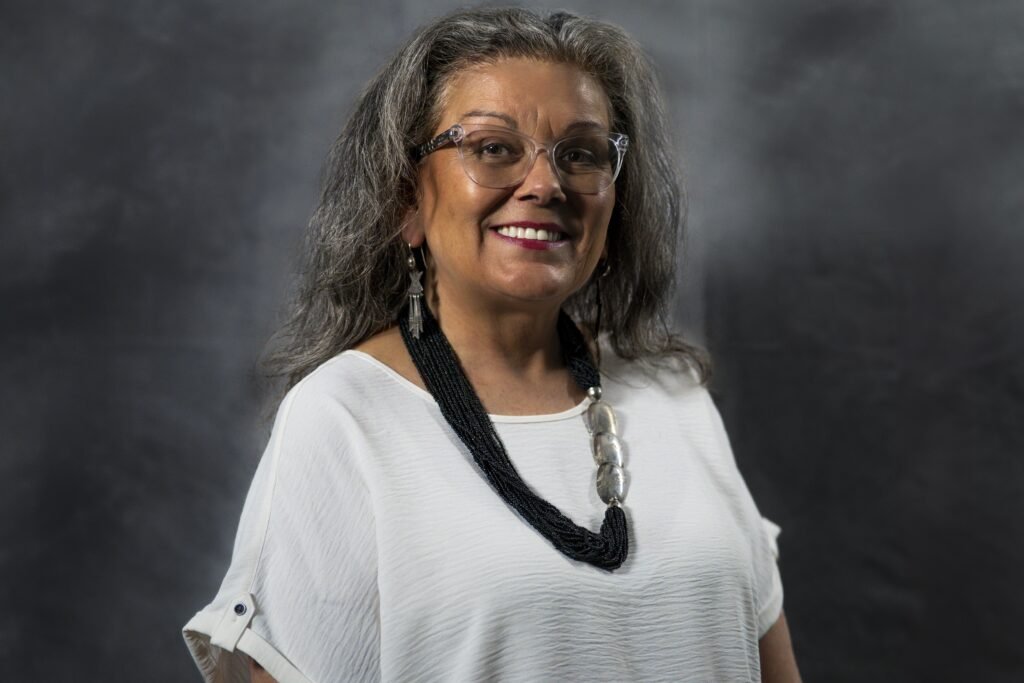
about Betty Gaedtke.
Betty Gaedtke, known in the Quapaw language as Te-Mi-Zhi-Ka ("Little Buffalo Woman"), is an enrolled member of the Quapaw Nation and a dedicated artist, educator, and cultural preservationist. A former Quapaw Business Committee member and Cultural Committee leader, Betty has spent over a decade reviving the lost art of Quapaw pottery, ensuring that traditional craftsmanship and storytelling remain vibrant for future generations.
As the only known Quapaw potter actively working in traditional methods, Betty's work is deeply rooted in history, incorporating ancient techniques, distinctive red and white swirl patterns, and effigy forms that reflect the humor, creativity, and spirituality of her ancestors. She teaches pottery classes to Quapaw tribal members, emphasizing the importance of reconnecting with cultural traditions. Through her instruction, she helps ensure that Quapaw funerary customs, artistic expressions, and communal knowledge continue to thrive.
Betty’s work has been exhibited at Crystal Bridges Museum of American Art, the Downstream Casino Resort in Joplin, Missouri, the Quapaw Nation Museum in Oklahoma, and the Saracen Casino in Pine Bluff, Arkansas. She remains a fierce advocate for the protection of Quapaw heritage and burial sites in Arkansas and beyond, urging respect for the history and sacred spaces of her people.
With a lifetime commitment to preserving Quapaw traditions, Betty sees her pottery not only as an art form but as an act of resilience, remembrance, and restoration—an enduring testament to the fact that the Quapaw people are still here, still creating, and still thriving.
episode notes & references.
- Quapaw Nation History & Culture: https://www.quapawtribe.com
- Betty Gaedtke & Quapaw Pottery: https://quapawpots.com/about-me-and-the-quapaw-tribe-2
- Quapaw Removal & Treaties: https://encyclopediaofarkansas.net/entries/quapaw-tribe-594
- Mississippian & Quapaw Pottery: https://archeology.uark.edu/ozarkprehistory/quapaw/
- Museum of Native American History – Quapaw Collections: https://www.monah.us
- Crystal Bridges Museum – Indigenous Art: https://crystalbridges.org
- Environmental Impact of Mining in Quapaw Lands: https://www.epa.gov/superfund/tar-creek
episode outline.
1. Introduction & Quapaw History (00:00–07:00)
Betty Gaedtke, a Quapaw potter and cultural educator, introduces herself and her family lineage. She discusses the Quapaw’s migration to Arkansas, early settlements along major rivers, and encounters with European explorers, highlighting how the Quapaw name shaped the identity of Arkansas.
2. Quapaw Pottery & Cultural Significance (07:00–15:00)
Betty explains the artistry of Quapaw pottery, known for its red-and-white swirls and effigy pots, and its role in burial customs. She recounts how pottery nearly disappeared after forced relocation but has since been revived as a crucial part of cultural preservation.
3. Displacement & the Quapaw in Oklahoma (15:00–22:00)
The conversation shifts to the impact of forced removal, broken treaties, and the near extinction of the Quapaw population. Betty reflects on Arkansas as the true homeland of the Quapaw, despite their current residence in Oklahoma.
4. Revitalizing Quapaw Traditions (22:00–32:00)
Betty discusses her journey in rediscovering and teaching Quapaw pottery. She describes traditional techniques, the deep connection between pottery and the land, and the importance of passing down cultural knowledge to future generations.
5. Challenges & Strengths of the Quapaw People (32:00–45:00)
She outlines historical trauma, environmental struggles from mining, and the economic impact of casinos. Despite these challenges, the Quapaw remain resilient, using cultural revival efforts to strengthen their identity.
6. The Future of the Quapaw Nation (45:00–55:00)
Betty shares her hopes for the continuation of Quapaw traditions, emphasizing the importance of storytelling, community, and preserving cultural identity beyond economic ventures. She calls for respect and recognition of Quapaw heritage, especially regarding sacred sites and burial grounds.
The conversation closes with reflections on the resilience of the Quapaw people and the role of art in preserving history, ensuring that the Quapaw remain a thriving and visible part of the region’s cultural fabric.
episode transcription.
episode preview.
[00:00:00] betty gaedtke.: it's amazing to be a Quapaw. It's probably, it's one of the proudest things that I wear, actually.
I look at Arkansas as my home. I don't look at Oklahoma as my home. I want to go back to where we really thrived and that would be East Arkansas. The Quapaw people are very resilient. People just keep thinking that we're gone, and we just will not disappear. We're still here, and we're strong, we keep coming back.
episode intro.
[00:00:31] mike.: Well, you're listening to the underview, an exploration in the shaping of our place. My name is Mike Rusch, and after an incredibly challenging, but incredibly beautiful conversation with Melissa Horner, I want to take what we've learned and ask all of us to consider the stories of the people who have called this land, now known as Arkansas, home.
This would be those who have shaped these lands from the very, very beginning. There's a thread that I've been following from the very beginning of this season.
And today, we have the privilege of being able to see it more clearly. My guest today is Betty Gadke. Betty is an elder of the Quapaw Nation. When we begin, Betty will share more of the origin of the Quapaw people, but for a frame of reference, the Quapaw people have deep ancestral ties to this place now known as Arkansas.
This is where they thrive for centuries along the Mississippi, White, St. Francis, and Arkansas rivers. Their villages, notably near present day Pine Bluff, were home to a flourishing culture Known for its exquisite pottery, agricultural abundance, and rich ceremonial traditions, European contact, believed to have begun with Hernando de Soto in 1541, and later French and Spanish explorers, Marked the beginning of displacement culminating in forced removal to Oklahoma in the 19th century.
Despite this the Quapaw Nation continues to honor its connection to Arkansas viewing it as their true homeland advocating for the protection of their ancestral sites and Revitalizing traditions like pottery to sustain their cultural heritage. Today You will see how Betty is the thread of her ancestors here today. I wanted to speak to Betty because I want you to put a name to a story. I want you to hear directly from the voices of those impacted by settler colonialism. I want you to hear a voice that still carries the blood of her ancestors.
Betty and the work that she is doing was referenced in episodes two and three with Dr. Zabecki and Jazlyn Sanderson.
Just a little reminder from Dr. Zabecki.
[00:03:07] melissa zabecki.: we would say that probably the ancestral Quapaw were the people that were living at Parkin but we do have the history that the Quapaw, understand about themselves, of course, and and also there are artistic motifs that translate down from ancient cultures to the modern artisans and elders that have just, significant meaning to folks and also stories that get passed down as histories that get passed down as well as important ceremonial systems. the Quapaw Nation elders still have that memory of how to, the kinds of pottery and the way that it's decorated and the uses of it.
[00:03:50] mike.: And Jazlyn was the connection back to Betty and her story.
[00:03:54] jazlyn sanderson: the people of these lands were removed to Oklahoma during the Indian Removal Act but , they're still very much alive. So for example, Betty Gaedtke she's a Quapaw potter who still works in the same traditions as what you're looking at around us. She's a magnificent woman and she pops into the museum every once in a while to say hello, but she is still harnessing her ancestors ideas and traditions and putting it into the pottery today.
[00:04:23] mike.: And so today we have the incredible privilege to be able to share a table with Betty Gadke and to hear her story and the work that she is doing. I can't wait for you to listen. Let's go ahead and jump right in.
main interview.
[00:04:38] mike.: Betty, good morning. Thank you for sharing a table with me. I'm humbled that you would be here. Thanks. Yeah, thanks for being here. I would say to you, you probably would say this to me, but Hawei, did I say that correctly?
[00:04:49] betty gaedtke.: You did. And you might even go a step further and say Hawei Hagita. That means hello. How are you?
[00:04:56] mike.: Oh, that's beautiful. So thank you very much. I'm trying to be a student and so I want to, yeah, absolutely bring that into the conversation. And so Betty I typically ask people when we start this to tell me your story. And your story is a long one, and I want to hear all of it. And maybe we can start there. Tell me your story and who you are.
[00:05:14] betty gaedtke.: Well, I'm going to just briefly tell you a little story here. Which Basically, my name is Betty Gadke. My O-gah-pah name is Tevmishika, which means little buffalo woman. I'm an enrolled member of the Quapaw Nation. I'm a former council member. I'm a former cultural committee member. I served on the culture for over ten years, and currently the only Quapaw potter. I am just a Quapaw Nation tribal member reviving the art of Quapaw pottery. I am part of the Buffalo clan, and my grandmother was Nora Buffalo Brock, one of the last pure blood Quapaw Indians when she passed away in 1987.
Sadly, there are no more living pure blood Quapaw Indians left in existence, to my knowledge. My great grandparents were Joseph Buffalo and Sini Brown Buffalo, and I will touch on in a moment, but also they were pureblood Quapaw. My great grandparents were Tashika, whom is who I am named after, and his name was that translated into buffalo calf, and Kadaska, and Red Sun Quapaw, and Watashika, all pureblood Quapaw.
The Quapaw Indians are a branch of the Sioux from the upper Ohio River Valley that broke away and went downstream on the Mississippi River. Hence our name. O-ga-pah or Quapaw. But they all mean the downstream people. We settled in many places from the Missouri Boothill down through Arkansas, along the ST Francis River, the White River, the Mississippi River and the Arkansas River. We prospered very well in those areas with our most populated area being along the Arkansas River about 30 miles southeast of current day Pine Bluff, Arkansas. We numbered 10, 000 or more at that time.
De Soto was the first European to briefly visit the Quapaw in 1541. The main village of Asatoy, located near Gillette, Arkansas, and was visited by the French explorers Marquette and Julliet in the late 1600s, followed by La Salle, and then by the Spanish explorer Tonti, who built a fort there named the Arkansas Post, the first capital of Arkansas. The Explorer Scouts were from various tribes and pronounced Quapaw, K W A P A, in variations and translated several times, ending up sounding like Arkansas. Hence the name of the state, Arkansas. It has been documented that Quapaw were a friendly and handsome people. I believe the Quapaw potters incorporated their sense of humor into the pottery vessels in many different ways.
And here we are sitting here amongst a bunch of Quapaw pottery. If you would look around, you could actually see, especially this group here. So, Our tribe is most recognized for our exquisite pottery we made and is some of the most sought after Mississippian pottery today. These pots are recognized by the Nodina red clay, red and white swirl markings, and the head pots, effigy pots, and the gray clay pots which incised markings. Pots had multiple uses and were also buried with the dead.
By the time the Indian relocation began, our tribe had severely dwindled due to disease by the French and Spanish. And the early, in the early 1800s, we seeded millions of acres of land to the United States for 500 and 10, 10, 000 in supplies, which we Most never came with no place to go we settled briefly with the Caddo Indians along the Red River. Due to disease and starvation, our numbers further dwindled to less than 200. Some went back to Arkansas around the Little Rock area and barely survived, while most relocated to northeast Oklahoma, where we currently reside today. And now our numbers have since grown back to over 6, 000. However, We do not have one pureblood left.
My passion is creating pottery in keeping with the Quapaw culture. In 2012, I learned how to make our pottery with the styles, the decorations, and ways of our past. My pots are not antique, but they are authentic Quapaw pottery and all of them are signed and smoked. When I started researching for information on Quapaw pottery making, I found that there were no Quapaw potters left, and that this was a lost art. That motivated me even more, and it became my goal to not only learn the art, but to teach and carry on for our people.
I currently teach pottery lessons for tribal members in our tribal pottery studio in Oklahoma. Part of which we do during our lessons is to make small bows for tribal members to take with them on their journey when they pass on. So what we do is we make two vessels. The students get to keep one and they have to donate one to our tribe. We are once again including pottery in our funerals.
One of the most obvious ways to recognize a Quapaw vessel would be the red and white swirl. If a vessel has a red and white swirl or other shape, it is almost certain to be Quapaw. There is also a lot of conversation amongst the elders speculating on the headpots and what they stood for. Could they be a trophy?
Possibly from killing an enemy warrior? Could they be in the likeness of the owner of the vessel? Could they be used for special ceremonies for honoring top warriors or high ranking officials? These all have question marks. The Quapaw love to adorn themselves with multiple tattoos, ear piercings with copper earrings, bird feathers, and were common on many headpots.
Many headpots also have a tab on the nock a tab or a knob on the forehead. I usually decorate my head pots using horse hair in the tab to represent the scalp of an enemy. Another giveaway to recognize Quapaw or Mississippian vessels is when they are in the form of different effigies such as animals human body parts. Now when I say human body parts, I am literally talking about feet, legs, an arm, possibly I don't know what possessed them to do it, but there are quite a few out there. Fish, birds, frogs, shells, and turtles. Many of the effigies were used as teapots, and that came from the French when they visited. The Quapos also did incising on some of their vessels with various shapes and lines, and some were even just plain.
They generally used slab and or coiled methods for building a vessel using various tools that you would find in nature. These tools were used for both building and decorating the vessel. They used various types of temper to keep the clay from shrinking and cracking, and some included sand. sand, crushed mussel shells grog is broken pieces of pottery and they just crunched them back into a powder and put them back into the next batch of clay. And sometimes they use cattail fluff. To decorate, they would paint using clay slip, which is basically just diluted down clay into a liquid form and use some type of hair utensil to paint with. incised and even use the reverse smoke technique at times. The reverse smoke technique is right now. It's currently my absolute favorite technique.
I went up north and help my tribe do a repatriation and It was hard to watch some beautiful vessels go back into the grave that were this reverse smoke technique. And it's where you double fire your vessels. And the smoke would anything that wasn't covered with a slip, the smoke would turn black. Then when they washed off the slip, you had a completely reversed pattern on your vessel. And it's spectacular to look at. That's the end of what I just had to say about the Quapaws. Just a little brief synopsis. I'm willing to break it down and get in deeper.
[00:13:56] mike.: Betty, thank you. There's a whole lot there that I want to dig into. Maybe let's start here. What does it mean to be a Quapaw today?
[00:14:04] betty gaedtke.: Oh, it's amazing to be a Quapaw. It's probably, it's one of the proudest things that I wear, actually. My father is non Indian. I got that influence, but my grandmother was a pure blood Quapaw Indian, and that influence was even stronger. When you have a grandmother that can't run from who she is, and embraces it full heartedly, and pass that on to us, we just grew up just knowing the ways because it was everyday life for us.
A lot of people today don't have that. But I'm lucky enough, that I did get that from my family. I remember my grandmother very well. She was a big influence and she was a huge influence, of course, on my mother who, then again, I got that double. I got the double whammy. I will say that my grandmother she was a serious woman. She had a lot of negative things happen to her in her life. She wasn't fond of non Indians with good reason. And I don't think remember her teaching us how to speak the language. She taught us everything else. She taught us how to cook, traditional meals. She taught us the ways of our funerals, and as far back as I can remember, even as a little toddler, I can remember our funerals you know, most of the time back when I was young, they were in people's homes and we had things that we had to do. We immediately, would start a fire and we would have people that would pray over that fire for several days.
So we come in and we do a lot of smoking and cedar. And I can remember, I can remember gagging from all the smoke in the house, and uh, tobacco was a big thing for Indians. It's always been that way and it still is today. Any time we do any kind of a meal for a funeral, there is always tobacco on the table. At every plate, there's a cigarette on every plate, whether you smoke or not, it's there. A lot of people that don't smoke will smoke that cigarette just for that person that we're trying to send to creator,
Kind of got sidetracked, didn't I?
[00:16:31] mike.: No, No. This is good. We're going to come back. I've got a lot of questions. Okay. I'm not going to stop you from talking in any way, shape, or form.
I'm really curious as you think about your identity as a member of the Quapaw Nation and this place that we're in here in Arkansas how do you think about your relationship to this place here versus maybe where the Quapaw Nation is today in Northeast Oklahoma?
[00:16:55] betty gaedtke.: Our young people they feel like Oklahoma is their home, right? We have to share with them. And I do, even during our pottery classes, I always throw facts out about the Quapaws, especially if it's a child class, but I look at Arkansas as my home. I don't look at Oklahoma as my home. I want to go back to where we really thrived and that would be East Arkansas
I still look at East Arkansas as our home. We have still never been paid for, that. Our treaties, we've had three treaties and they've not honored any of them so far.
So yeah, I, they put us in Oklahoma and I like it there just fine. It's it's where most of my relatives are. Even my dad, even though he's a non indian, he grew up in that same area. We didn't live there. My dad wanted more for us kids in our family. He wanted us to have more opportunity because where we reside today, it's a very poor area. And back when they first put the Quapaw in Quapaw Oklahoma wasn't considered to be anything but badlands. It wasn't good soil there. There just wasn't a lot of positives about Oklahoma, they thought. And then once we got there gosh, we discovered the mining industry, and we mined for lead and zinc and the poor little Quapaw became rich little Quapaw.
And For an example Her last name is Beaver. And she was probably, well, she was considered one of the top two richest women in the entire country. Who would have thought, and That's how my grandmother actually met my grandfather was through the mining. He was a miner and they got married and, which again, my grandmother was the first to marry outside of the Quapaw Nation. And she didn't even go to another tribe and marry another Indian from another tribe. She went and married a white man. So that, that was the first influence for my mother, because granddad was white and he was from Iowa of all places, not even from Oklahoma.
But yeah, the Quapaw became rich Indians because of all the mining. And to be honest, Miami, Oklahoma, Pitcher, Oklahoma, Baxter Springs, Kansas. That was all a very booming area, 50 years ago. And it's now it is almost just wasteland. There's so much waste from the mining, the water got contaminated and it got to the point to where the cancer rate was just extremely high and it still is very high. It's way above normal in that area for the, compared to the surrounding areas and it comes from that lead and zinc poisoning. The Quapaws are in a big movement of cleaning up our land and we have approached the government and they have given us all kinds of grant money to clean up the waters and stuff and and so we are making headway.
And then, of course, the Quapaw discovered casinos. And, again, that started bringing in lots of money for the Quapaw people. As the mining was dying down, And pretty much gone. It left just a big land of waste and contamination. And you know what? The Quapaw people are very resilient. People just keep thinking that we're gone, and we just will not disappear. We're still here, and we're strong, and now we have casinos. We have the downstream casino. We have the Quapaw casino and we have the Saracen casino, which is in Pine Bluff, Arkansas. So we keep coming back.
[00:21:00] mike.: Let's back up for a minute cause I'm, I wanna, I'm trying to get the foundation here a little bit of give me a foundation for the culture of the Quapaw people before any contact with white.
[00:21:12] betty gaedtke.: Well, from everything that I've learned about our past we migrated, down from up north and we didn't live individually. We lived in long wooden homes And they were multiple families, and you know what? Everybody had a chore. There were no free rides, at that time. Everybody had a job and quite frankly the women did most of the work.
The men hunted and they did politics, but the women pretty much did everything else. They had the children. They took care of the children. They raised the children. They took care of everything else. They were the potters, the mothers did the pottery and they taught their daughters while the men would take the boys out and teach them to hunt.
Betty, when you think about the artisan history of the Quapaw people.
[00:22:05] mike.: You, you are spending really so much time and energy to learn this and to bring this back into the world today. I'd love to understand, from your perspective, why is this important to bring back this artistry in the form of pottery of the Quapaw people today?
[00:22:24] betty gaedtke.: Because I feel like we've lost enough. We've lost so much. The trail of tears was so hard, and when you have all these traditions that you live your life by and they're handed down from generation to generation and then all of a sudden you don't have it anymore. And it's because the Trail of Tears robbed us of 80 to 90 percent of our people. That's a lot of traditions that went to the grave. So that trail is just paved with dying traditions that never made it to Oklahoma and the few people that did make it to Oklahoma there, they've tried really hard to keep those ways alive.
A lot of this, you just have to speculate because and maybe use common sense and maybe compare it to, okay, All of my life I've been doing it this way because that's what grandma and my mom taught me, and I'm assuming that's what was taught to them.
But it's important because we have lost so much of our history and pottery was probably One of the things that the Quapaw's were really mostly known for. To let that fall to the wayside, you just take for granted. When you're young, you take for granted it's always going to be there. And, I've always been from the time I can remember, my mom, Always taught me to work with my hands.
I can, I can't even think of a time when we weren't doing something with our hands. So I had that already instilled in me and I've already been doing that my whole life and I had always said when I retire because I worked up in the Kansas City area. So that was like 2. 5 hours north of where my tribe was.
And, I had a career through the post office. And for those first probably 10 years, it was guaranteed that I would work on a Saturday. So I just kept missing out. Then you have family and then you have to, you're raising your family. And so you keep putting that Pottery on the back burner.
So when I finally did retire, I decided the first thing I'm gonna do is go back to Oklahoma. I'm going to learn Quapaw pottery. Cause that was really something I've always wanted to do and just couldn't find the time to do it. And once I did start seeking out, it was like, Oh yeah, that person died like 12 years ago or, that person's no longer here. And that's then it got down to, well, who is doing pottery? Well, I don't think anybody is. And that was what really upset me. And so I just decided, that it, that's something that we have to bring back. It's too important to let it go to the grave.
And that's been my motivation is that this is what we're known for. We need to keep this going.
[00:25:24] mike.: so we're in the Museum of Native American History here in Bentonville, Arkansas. And behind me, there's Quapaw pottery from the 1400s that goes back hundreds and hundreds, if not thousands of years. And here you are today reclaiming that. I'd love to understand how you feel, or how you view the connection to what behind me.
[00:25:45] betty gaedtke.: I'm in love with it. Quapaw pottery, it's just so different.
And when you look at this pottery you have to wonder what was going through the creator's minds. And I'm telling you, we still have those genes today. We're fun loving people. We're very creative. We have a sense of humor. We do a lot of joking around with people. And I really think that this pottery, this ancient pottery reflects those same things.
Some of the faces on some of these animal effigies are hilarious. It makes you wonder what was going through their mind because some of these things look like they're actually smiling at you or grinning, they may have wanted them to maybe look vicious, but it's just the opposite effect.
But just I just have a real deep connection to it because I've made it my business to learn how they did it. Not the way we do it today. Not the way, not where we can just go to a clay bank and buy commercial clay that's already been, mixed for us. The Quapaw's, they would go out and they would dig their own clay and they would process it from the ground up. And that's a huge process. It's actually not easy. And by the time you go through all of those processes, you have a real connection with the piece. That you're creating. Because you do start from the ground up,
[00:27:18] mike.: yeah, maybe talk about that a little bit more, because it is, it comes from the earth, it comes from the ground, and if I understand correctly, and please correct me if I'm wrong what makes this art form unique to the Quapaw people is that it comes from the place of origin.
It comes from the place along the Mississippi River in southern Arkansas. So you have this connection through this art to the land and to the place that, that makes it unique. And I'd love to understand your perspective, how you view that in your mind.
[00:27:50] betty gaedtke.: Well, Mother Earth is so important to begin with, and for the Quapaw to be able to figure out how to make their pottery, it was a game changer for them, cause they made, they made bowls and plates and things to eat with, and that was just such a big game changer.
And even though all of these vessels, because everything that the Quapaws did, they didn't do anything for fun. Everything had to have a purpose. Now they did have fun making them, because when you look at them, and you're thinking, okay, there's a fish, this really strange looking fish that is actually a teapot. So they're just using their creativity, to express themselves. And again, I think it's part of their inner being of having a great sense of humor, but it's really, it's deep. My connection is just deep. I don't know how else to put it. It's everything.
[00:28:53] mike.: As I watch you, I'm curious. It feels like mentally you're actually there 500 years ago. in that place as you're creating this art form.
[00:29:05] betty gaedtke.: I do feel that way. And you know what, when we do our pottery classes which by the way, I'm here in this, in Arkansas, because I am here doing pottery classes for my tribe. And so we just we just did a child's class, which I really love those.
Because you know what kids are so brave and they don't know yet to be afraid of clay we've done all different age groups and the kids just they dive in they don't worry about anything and it comes out beautifully every time, but Yeah, we talk in our classes. We talk about the Quapaws. We talk about Families because I think that's what the Quapaws did Hundreds of years ago, while the mothers were sitting and talking to other mothers and daughters, talking to other daughters, and they're just, interacting and they're, they're talking about everyday life.
Who's having a baby? Who's getting married? Whose kid is this? This person, and that's what we do in our classes today. Because I want our people that come and take these classes. I want them to know about other people that are in that class because it's like a, it's like a quilting thing. Even, back in the day when people would quilt together and they would all be around one quilt and they would still be conversing back and forth talking about current events, I believe it's the same way with the Quapaw and their pottery. And that's what we still do today. We laugh, we joke, there's always that person that does that oddball piece of clay.
We laugh about it. We, we congratulate them for going off and doing their own thing. And I really think that's what the Quapaws did on the riverbed.
[00:30:52] mike.: I was at Crystal Bridges some months ago and you've had some of your pieces displayed there as well too. What does that mean to have, to you, to have some of your pieces at Crystal Bridges here in Northwest Arkansas?
[00:31:05] betty gaedtke.: I couldn't believe they called me. I got that phone call and I was just completely blown away.
To have a piece of Quapaw pottery sitting at a world renowned museum Again, it's all about asking questions.
Who's a Quapaw or how do you even pronounce that word? And it's all about making sure that people know that we're still here. We're, we didn't go to the grave, not all of us, and we're still here and we're coming back, and we're working hard at that.
[00:31:40] mike.: I've heard you say a couple times now there's no pure blood Quapaw people remaining. I'd love to understand what that means to you and how that maybe influences what you're doing as it relates to why this art form that you're practicing is so important.
[00:31:54] betty gaedtke.: Well, first of all, it's heartbreaking. It literally is heartbreaking that we don't have any purebloods left. Now, we have plenty of fullbloods in our tribe, but to be a fullblood. That means you would have to be part Quapaw and part something else to make that a hundred percent. So we, when I say we have no pure bloods, we have no pure blood Quapaws and it just makes me sad. Every time I think about it makes me sad and it makes me worry because again, I'm a quarter blood Quapaw, which is considered high blood quantum within my nation.
And, we have some people that are like one over 250th that, in the government lifted that restriction where it used to be the cut off was a quarter. And Because we weren't able to keep marrying within our tribe, of course this is how we ended up here. And again, that's because of the Trail of Tears, so I feel the urgency to keep our ways going because I feel like I'm one of the last ones that got to experience this my whole life. There's so many that don't, and so I feel like I have an obligation to the rest of my people. I make sure that my son was Privy to all this and I made sure that he knew our ways and he's just a carbon copy of me.
So I'm not worried about him not doing his part, but, and a lot of it is you just have to keep repeating and repeating so that they don't forget. And I feel grandma's gone, mom's gone. It's pretty much my generation. And now they're looking at me like I'm the old one.
And. And again, that comes with, you have to share that. You have to make sure that our young people know what I grew up knowing and expose them to it. Otherwise, we're going to lose it. And that's my biggest fear.
[00:33:55] mike.: I don't know if this is a fair question. Again I think language on how I ask these questions, I want to be very careful because I don't want to. Oh, you're fine.
Well, I know. I just, I
[00:34:05] betty gaedtke.: How You know what? I just, I do have to stop you for just a second and say how appreciative I am of how genuinely you want to word this so right.
[00:34:18] mike.: Thank you. That's very kind.
[00:34:20] betty gaedtke.: Well, grandma's generation was just the opposite. I grew up when I was a young kid, I remember hearing people say the only good Indian is a dead Indian.
I, at the time I just thought that was really a crappy thing to say, but it really rings more to me today than it did back when I was actually hearing it.
[00:34:39] mike.: What do you mean by that?
[00:34:40] betty gaedtke.: Well, well, to be brutally honest, it's The government really wanted to do away with all of us. They really wanted to just wipe us off the face of the earth and got very close to doing that for some of the tribes. So when you are so kind it makes me feel bad for my grandmother's era because they treated her like she was garbage. They treated her like she was not even human.
[00:35:09] mike.: Yeah, I'm, I think that's the rooting, right? Like I want to understand, I want people to I want them to come face to face with the reality of the history of how people have been treated, especially Native Americans, indigenous people, have been treated and the impact of that today.
Like I, I think if we want to be honest about making this place in this community All that it can be then we have to be honest about our past and at the same time to be honest about our past I Want to walk very carefully because there's a lot of trauma. There's a lot of historical cultural trauma that I it's not my That's the word.
I don't have the right to ask you to go back into those places. And it's this duality of wanting to understand so that we can communicate, so that we can provide a sense of empathy to, to create a foundation to move forward and yet not inflict the historical traumas that are beyond comprehension in so many ways.
And I think to your point we look at policies of the United States. It's very clear that the goal was to remove is this process of exploitation and removal. And as I've read about the history of the Quapaw people, the systemic, over hundreds of years of re, of not honoring treaties, of moving, of taking land away, of not compensating, of putting people, human beings, into a place to not be able to provide for themselves in suffering and disease and going from a nation of, 10 people down to hundreds, yeah, down to hundreds.
Yeah.
I just can't get my head around that and so I think what you're doing today to say that this culture matters and what who we are as people matters to me is some of the bravest work that I've ever seen. And I want to walk delicately through those spaces and say that this history matters because if we want to, as a people find a path forward, then the question that comes into that is how do we understand those stories? What is the, and I'm now I'm talking all the time. I'll cut off to cut all of this out, but I think that's the tension that I walk through in these conversations is wanting to understand that story without trying to inflict anything that is inhumane or undignified into it.
And find to, to the, you mentioned your grandmother, like she has every right to be angry. And she has every right to do the things that she does based on on, on, yeah, the history of this place and so like where that lands us today, for me, from my perspective, it comes from a place of deep pain and deep suffering.
And yet your response is creating something beautiful. And to me, that duality of humanity is something that I, yeah I'm trying to understand.
I think where I see you today, what you've done with that is you've turned it into something really beautiful to create and celebrate the culture of other people before that all happened. And so how do you balance that? Do you balance that? Is that even the right word or way to look at it?
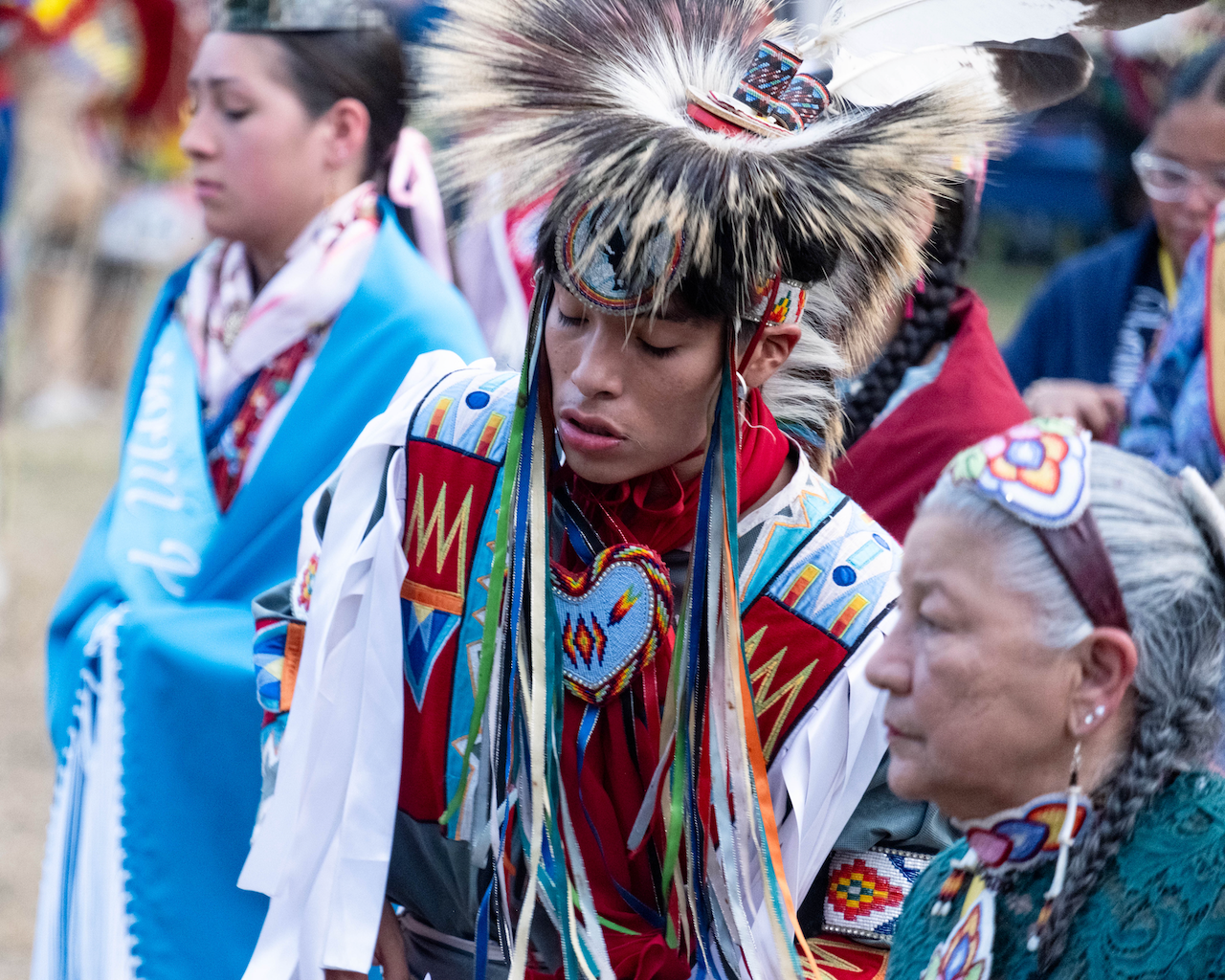
powwow.
[00:38:30] betty gaedtke.: Yeah, I think that is a good word. What choice do we have? Basically, we came from sorrow and hardship, but we don't want to live in that. We want to rise above it. And I think most of us do for the most part. It's funny. I have this part of my life, where most people, like you go to school, you graduate with a group of people, you might have lifelong neighborhood friends, that you carry with you a whole lifetime. But for me, it's more about keep coming back into the Quapaw Nation, and I'm talking about even just like our powwow. That we do every year, which is getting, it's coming up. Our first day of the powwow, our general council is July 4th. So this year it's the 4th, And, I've never missed a powwow yet.
Mom and dad from the time I was born, we came, we camped the same place every single year. It was my grandmother's original campsite and it was handed down from her to all of her kids one at a time. And then as they died off, the other one took it, the other one took it. My mom ended up And she just, when she passed, she handed it down to me because I am one of the few that have never missed, I have siblings that come in and out and, but I've been very consistent.
And But what you do is you build up a lifetime of relationship with fellow Quapaws. And I can honestly look back over my life and say, this means so much more to me than going back to a high school reunion or going to college and, doing that experience and graduating from that. This is even way bigger for me. This is a lifetime of knowing people that I would have never known had we just had this one thing in common, which is Quapaw blood running through our veins. And so there are people that I am very close to that I haven't really interacted with throughout my life except through the Quapaw Nation. And so for me, this is Golly, I don't even know what the word to use but this is My biggest part of my life.
I look back and have all these relationships. And, I've went to funerals. Oh my gosh, I don't even know how many funerals I've went to. And a lot of that comes because I serve my tribe. In 2017, I ran for office after I retired and got elected and served a couple terms before I decided that the Quapaw Pottery is the road that I really want to be on, and in a way, that's how I discovered what my purpose for my last road, my last years. Yeah. I don't know quite how to put it, but this is the last segment of my life. I'm 70 years old, basically. And this is probably to me going to be the most important segment of my life if I managed to make sure that this stays put and that it doesn't dissolve again after I'm gone, which I don't think it will.
we have a waiting list right now of 57 people just dying to get into our classes. I can only be in Oklahoma so much because I don't, I live in Arkansas. And so yeah it's hard to put into words. It's more of just a feeling that I can't put into words for some reason, but it's everything. It's my entire life of being part of this. Tribe. Can't call it a club. It's not a club.
[00:42:14] mike.: What, yeah, maybe to that question what did, 50 years from now, 100 years from now, what are your hopes for the work that you're doing today?
[00:42:23] betty gaedtke.: I'm hoping that somebody is thriving doing Quapaw pottery.
I'm hoping that, there's no cobwebs in our pottery studio. That was one of the last things I did when I left the council. It was literally the last meeting that I set up on before I gave my chair to the next person. And the one thing that meant the most to me was how did we let the Quapaw go, the pottery go?
And Going to the culture committee meetings and we were dashing around for years. Now I wasn't literally on the culture committee while I was on the business committee but that was four years that I sat in every meeting, as a tribal leader. And then when I stepped down from there, then I was actually put on the culture committee.
So I served another couple terms and but the one thing is that we kept saying, How, who are we going to get to teach pottery? We don't have any cuapas anymore. And I kept coming up with people, because I was dabbling in it in Arkansas. I fell into a group of real, really great artists in the back hills of Arkansas, literally.
And I kept saying these names no, they're non Indian no, non Indian. So they would rather be taught by, Any other type of Indian than an actual Quapaw or a non Indian. But that was my last request. It's We kept trying to put on classes they finally suggested, Betty, why don't you do it? And I'm like, I don't feel like I'm a teacher, I feel like I'm more of a student at this point in my life. And it's well, why don't you teach as a student, just catch them up to where you are. Well, it turned out that The more that I did it with them, the more I learned. And of course I do pottery every single day, so I have managed to get on top of it. And so I'm more comfortable teaching now than I did in the beginning. That's for sure. But just letting it, I'm worried about it falling back to the wayside. It's getting solid. I just need to live 10 more years then I think we'll be okay.
[00:44:26] mike.: I hear within what you just said hopes for a nation as well too. maybe take that another step forward. What are your hopes for the Quapaw people today?
[00:44:37] betty gaedtke.: I just don't want to become the Quapaw casino people. That would be the worst thing, in my opinion, to happen to us, even though it's bringing in us lots of money, which takes care of a lot of problems, it takes care of, higher education it takes care of utility assistance, it takes care of our elders, we do a lot for our elders, and so that money does, you programs for sure, but I truly feel if you lose your ways and you lose your traditions, you've lost your tribe. And that would be my biggest fear is not letting the casino business be who the Quapaw people are.
[00:45:19] mike.: Describe to me then, who are the Quapaw people?
[00:45:23] betty gaedtke.: Well, the Quapaw people today are a thriving group of people that have managed somehow to save our language save our pottery program. We're working on the basket weaving because again, we had, We have no basket weavers.
And the thing about pottery is that all of these pieces pretty much came out of the ground, out of our graves, but the baskets and stuff, they didn't make it, so we don't really, we're really even further behind on the basket weaving but the Quapaw today, we're struggling to stay the Quapaws of yesterday and there's a lot of poverty. There's there's a lot of drugs and alcohol and we're working on that. We have a court system now. The Quapaws have really come back. We, we have really come back in many different ways, but we have a court system now and again we're trying to rescue our kids through, through culture through the pottery. And that's what my classes were the last couple days. Anybody that was involved with the law in any way no matter how big or how small they go into a program and these are grant funded so we can try and get our kids off the street through culture. And that's pretty rewarding.
So
[00:46:50] mike.: When you think of the strengths of the Quapaw people what comes to mind?
[00:46:54] betty gaedtke.: That we pull together. We're a close knit tribe. There's not a lot of Quapaws that I don't know at this time in my life. So we struggle like everybody else. We come together. We celebrate together. We love each other together. We're a very loving, close knit tribe, actually. And I think that's our biggest strength. I really do.
[00:47:21] mike.: When you think about the people that live in the state of Arkansas today, what is known as the state of Arkansas today, what do you want them to know about the Quapaw people if you were to boil it down? What would you say to them?
[00:47:35] betty gaedtke.: Well, we're still here for one thing. And that was probably debatable a couple of generations ago, whether we would be yeah, we just want to say we are still here. We still love our Arkansas land. We still consider this home and we're friendly people. We're outgoing people. We're loving people. We're good people. The Quapaw's are good people.
[00:48:04] mike.: What does the state owe to the Quapaw people?
[00:48:08] betty gaedtke.: Well, they owe us 500 and 10, 000 in supplies to begin with.
[00:48:13] mike.: Plus interest.
[00:48:14] betty gaedtke.: Well, that's the thing. Plus interests. I think it comes out because you know what? The Quapaw's did sue the government. We, we have a couple lawsuits going right now. One did pay out and it hasn't been completely paid out to who it belongs to yet. And the other one every time you get a new administration, you get new ideas. They think differently and because the people, we have elections every single year. You may put in several years, or you may only put in one term, which is like a two year term. It depends on who's in power, actually, as to what direction we're going in. Right now, the current administration she's fighting for the Bayer lawsuit. I think she set us back a little bit.
Not because she meant to, but just because, the lawsuit had already been written. They're trying to manipulate the wording a little bit. She wants to divide this equally between every tribal member where originally it was supposed to go to, The people that really suffered like my grandmother had land that was mined She wasn't considered a poor woman. She was actually considered a wealthy woman During like the Depression times, she was probably bringing in 1, 500 a month, which you know People would think she was a rich woman however You know, all the royalties off those mines, she was only getting like 1 percent of what was supposed to be coming to her.
So you know, even though she didn't do without much, she was still very ripped off. And so again, that takes us back to these lawsuits, it's the ugly part of all of this, but it's still a reality.
[00:50:04] mike.: And this may not be a fair question. Tell me though. Be quiet if you want I mean beyond the, I understand the monetary compensation aspect is huge.
beyond that as a people of Arkansas that are here today how do we acknowledge and support the Quapaw people today?
[00:50:26] betty gaedtke.: Oh, that's a good question. I guess just acknowledging that we are still here, that we do exist and that this was our home. Just acknowledge that and not make us feel like, it's not home for us because it still is for us. Respect. is a good word, just to be respected. Have a lot of pottery in the ground in the state. Please leave it alone. That is like my biggest, saddest problem. And A lot of times, when I first started doing the pottery, I tried so hard to make them look dirty, like they just came out of the ground, I was putting the stuff, these patinas on them, so that they would sit amongst ancient pottery, because we want people to stop digging them up.
I know that archaeologists think, there's information there, and there is, and. And I support that to a degree, but this grave robbing, it, it's just, it just, it's a knife in my heart, how would you like it if I went and dug your grandma up and took her jewelry off from her? That would just be the worst thing possible for you. And it's the same way with us. And it's all about not respecting who the Quapaws are, or any Native American for that matter. But especially for me, the Quapaw.
[00:51:54] mike.: within these conversations we've used this term of to repair. Okay. What does it look like to repair so that we can move forward together? When I say that word to you from your perspective, what are the things that people in Arkansas can think about that need to be repaired back to the Quapaw people?
[00:52:15] betty gaedtke.: I don't know that it can be repaired. The damage is done. Frankly, the damage is done. We're just trying to survive it, basically. And I think we have. And I think we've even we're even thriving in a lot of ways. We've gotten a lot of our culture back. We've kept a lot of our traditions going in spite, and a lot of the keeping this alive is things like Like I said, the last time I recorded my mother and she was, she took herself back to her childhood, which was amazing, to listen to her go on and on and again, the damage is done. That the fact that the way, my grandmother raised my mother, is a direct Reflection of how grandma was treated.
And, I've heard people, a few people say that they remember grandma being a mean woman. Well, grandma wasn't the only one that was like that. That whole generation was like that because of the way that they were treated, and so that triggered, trinkled down to my mother's raising and my, You ask anybody in my family, my siblings, we can all agree that my, my mother was a very strong and hard woman and that was a direct reflection of her upbringing.
[00:53:32] mike.: Again, I feel like I'm treading into areas that I maybe should not so you have the right to tell me to
[00:53:42] betty gaedtke.: Now I'm very open and you're willing you're you can cut out anything you would like
[00:53:46] mike.: no I think I think to your point like the reality You know, if the reality is that it can't be repaired.
[00:53:53] betty gaedtke.: Yeah, it really can't.
[00:53:54] mike.: What's, what does that look like as a dominant culture group, if you will yeah, to support what the Quapaw nation needs today?
[00:54:06] betty gaedtke.: We're just doing the best we can, we I think we're doing okay though. Right. I do. I think we're doing really good, actually, for the most part.
[00:54:14] mike.: Let me ask you this, then maybe rephrase it differently, like as, if it can't be repaired, what does it look like to be honest, and to honor yeah the history of the Quapaw people here in Arkansas?
[00:54:27] betty gaedtke.: Well. I don't think it can be repaired. However, those people that were really affected so drastically are no longer with us. So they're not suffering it any longer. And it doesn't hurt me like it did them. And so every generation, I think we're healing. Basically, and we're getting on with life and trying not to dwell on the really negative stuff and focus on what we do have, which, we still have each other. We still have our powwows. We still have our traditional meals and our ways and the pottery. And so I think we're good. Okay. I really do. And I don't think that we hold anybody responsible anymore. If we probably shake our finger at anybody, it's going to be our government, but then maybe you guys should be doing that too.
I'm just saying,
[00:55:21] mike.: That is a valid argument. All right, I have two more questions for you for this round, okay. I've asked everyone that I've spoken with this question, so I'm not picking on anybody, but the question is like, what are your fears for the work that you're doing, for your people, for this place?
[00:55:38] betty gaedtke.: I don't have the fears today that I had 10 years ago. Because I do feel like, We're in a solid place.
So I'm just, I am doing it because I figure, sooner or later somebody's going to be just like me and they're going to fall in love with this and they're going to see the importance of it and they're going to pick up and they're going to keep going on after I'm gone.
So that's the goal for me anyway.
[00:56:06] mike.: One of themes of this conversation, all of these conversations is this idea of wholeness. When I use that word wholeness, what does that look like from your perspective?
[00:56:20] betty gaedtke.: Oh, to be whole as a Quapaw, honestly, I think we are. I think we are already. to be a Quapaw today is so different from being a Quapaw when I was a kid.
Now that's where the Quapaws had some real poverty, and but the Quapaws are really very generous people. I don't know if you're aware of it or not, but the Quapaws actually, do you even know about Haskell, the Haskell Institute in Lawrence, Kansas.
[00:56:52] mike.: I would say yes, but probably not to the level that I should.
[00:56:56] betty gaedtke.: Okay. So it's, it was multiple things over the years. It used to be a boarding school. Then it turned into a two year college and now it's a four year university and, and we've lost a lot of them, but Haskell is a real strong university, a Native American university. And, the Quapaw's have a lot of really strong ties with Haskell.
And my point was that we were such a poor tribe for so many years. We were just dead broke by the time we reached Oklahoma, starving, the whole nine yards. But yet We were one of the biggest contributors to the Haskell University and you have all these tribes that have so much more money than the Quapaw's and yet we were one of the biggest contributors and we we funded for the stadium and there, which, back then I don't even know how we came up with the money, but we did.
And so I think we are whole still and We're doing okay. There's some that do better than others, just like everybody in life, some fell into the wrong road, a lot of the people, especially not, well, I guess it would be my generation maybe a little bit, maybe 10 years younger than me, but they started, alcohol was a way to escape and And so that's what they, a lot of them did. And that's probably one of our biggest problems today.
I can remember one time, Oh, I was probably 40 ish and I was staying at a bed and breakfast and I remember this lady. She just wanted to talk to me so badly and back then I was skinny. I had that long, pretty black hair. I has dark skin and and she came up to me and she kicked a conversation and she was like, Oh my God. You are so pretty. She said, you Mexicans are the best. She said, you're not like the Indians.
She said, you guys work hard and I just, I was boiling inside and I just sat there and smiled at her while she was telling me all this. And I fully intended to let her just finish everything she had to say before I enlightened her. And yes, I did. And then I. When she got all done and was so proud of herself because she was so sure that I was Mexican, then I told her that I was a Quapaw Indian and I just watched this poor lady just deflate right in front of me.
And I wasn't mean to her, but I wasn't overwhelmingly nice either, but I let her know, who I was. And, before you start judging the Native Americans, I said, you need to start, first you need to educate yourself about their past.
[00:59:40] mike.: I sense in you though, a spirit of incredible resilience.
[00:59:46] betty gaedtke.: Oh yeah. I think that's who the Quapaws are. They're very resilient people. Very much and things happen, things happen, and quite honestly you get more out of negative. I learn more from my mistakes in pottery than I ever do in a successful pottery. When you never make mistakes, you're not growing. And I feel it's that way in life as well, I've had hardship in my life that I've had to overcome, and a lot of it was because I was a Native American Indian and I didn't even put that two and two together until years down the road, I don't think it's like that today as much as it was when I was growing up, and I saw very little prejudice. I, I have to say I didn't see much and I'm happy to say,
[01:00:31] mike.: I I appreciate your vulnerability and your transparency. Thank you. I think there's so much woven through your story that That, that influences the work that you're doing today.
And I think for me, it's trying to understand that and draw that out of you, to the extent that you want that to be. And at the same time it's not my story and it's not my right to, to ask you those things,
[01:00:52] betty gaedtke.: Well, I am happy that I have the opportunity to be able to talk about the Quapaws, and I would not have had that opportunity if it wasn't through my pottery.
It's opened a lot of doors for me to be able to talk about our people, and so that I'm really grateful for.
[01:01:12] Speaker: Well, Betty, I want to say thank you for the time to sit with me and I hope this is one of many conversations.
[01:01:21] betty gaedtke.: Well, we'll make it that way.
[01:01:22] mike.: Absolutely. I love the beauty that you are bringing into this world and reclaiming. And I'm anxious to learn more about it, and so please keep doing what you're doing, don't stop, and thank you for being who you are and showing the beauty of a people that we cannot, as a community forget that we have to acknowledge as a space in our world, and so thank you for being that light to me, I appreciate it.
[01:01:45] betty gaedtke.: Well, thank you. I appreciate being here. I appreciate the opportunity to just talk about who we are and where we came from and maybe where we're going.
Thank you.
episode outro.
[01:01:59] mike.: Well, it's been a true honor to sit with Betty. Her grace and patience have revealed the depth and abiding truth that is woven into her work. These conversations are not easy, and I try hard not to push into the spaces of pain.
But Betty's transparency and willingness to share her story, To be a truth teller, it offers us all a path forward. She invites us to ask hard questions and to imagine a world where these injustices could never happen again.
It would be easy to call the Quapaw people resilient, but we cannot say that without acknowledging why resilience has become their only choice. The story of the Quapaw is one of loss and hardship, but it is also of immense light and hope and Betty reflects that hope like the sun. When so much has been taken, you hold onto everything that you can. Betty's work to reclaim Quapaw Pottery is not just about clay or tradition. It's about survival. Yes, even more It's about the flourishing of a people and without her this art form this history And the opportunity for cultural renewal may fade into silence.
Her work is more than creation, it is an act of resistance against centuries of erasure and removal. But perhaps even more, it's an act of restoration, of knowledge, of memory, and of belonging. As she shapes every vessel, she does not work alone. And every class she teaches and In every conversation she sparks, she is rebuilding what was nearly lost.
The Quapaw once shaped the clay of their homeland, just as they shape their communities and their cultures today. And Betty is ensuring they will do so again. The Quapaw are still here, they're shaping their future, one vessel, and one story, and one generation at a time.
next episode preview.
[01:03:38] mike.: And so we're going to continue this storyline because in our next episode we have the privilege of sitting with another Quapaw elder, Barbara Kyser Collier. And like Betty, Barbara has a story that speaks to the beauty and strength of a nation and a people.
[01:03:53] mike rusch.: I'd love to ask you this question. What, what does being Quapaw mean to you personally today?
[01:04:07] barbara kyser-collier.: I probably can't answer you without crying. Pride. Much pride. Much pride. I think about my ancestors and what they must have gone through so that we can be sitting here today, you and I. They endured and they sacrificed a lot of things for us to continue to be Quapaw today. So I'm very proud of that. Words can't express how glad I am that I'm, was brought up like I was, and that I lived the life I did as a Quapaw.
[01:04:43] mike.: So I look forward to sharing my conversation with Miss Collier with you because you're going to meet someone who has held a role as one of the founders of a nation, and I can't wait to share this with you.
nora buffalo brock.
[01:04:53] mike.: And as we close, I want to share two more things.
First, you heard Betty share a number of times about her grandmother, Nora Buffalo Brock. And Betty sent me some recordings of her grandmother being interviewed. And I wanted to share one of those clips with you. I want to say thank you to Betty for sharing that audio with me and giving me permission to include it in this interview.
[01:05:14] joe todd.: And then when they closed it, you were sent to Pennsylvania?
[01:05:17] nora buffalo brock.: Yeah.
I've, uh, I've got a paper somewhere where, uh, I was baptized by one of the priests, but I have a little time finding a paper. Mm-Hmm. where I, I don't have no birth certificates, so I have to go buy that baptism paper.
[01:05:33] joe todd.: I'm going up to Pennsylvania. How come they sent you to Pennsylvania Close?
[01:05:39] nora buffalo brock.: I don't know. I guess after the school. School closed down here when I faced him. Not only me, but my two sisters and, and uh, Bill Conner. I made him one up there.
[01:05:53] joe todd.: Yeah, cause I've heard, uh, I've talked to some people that went to Haskell up in Kansas.
[01:05:58] nora buffalo brock.: Some did.
[01:05:58] joe todd.: Seems like Haskell would have been a lot.
[01:06:01] nora buffalo brock.: Kids were sent to different places. The Indian office used to be in Wyandotte at the time they were going around getting the school aged kids and send 'em away to school.
[01:06:15] joe todd.: When you were gonna, the Catholic school, were, were the kids allowed to speak their old language, the Indian language?
[01:06:23] nora buffalo brock.: Well, I didn't know how to talk English when they sent me.
[01:06:28] joe todd.: Did they? Were you allowed to speak Indian at the school?
[01:06:32] nora buffalo brock.: I have to. I don't know the other way.
[01:06:37] joe todd.: Because I've talked to some people in some of the schools, they were punished if they were caught speaking English.
[01:06:42] nora buffalo brock.: No, they didn't punish us.
[01:06:49] joe todd.: What did you think about being sent to Pennsylvania?
[01:06:52] nora buffalo brock.: Well, I liked it up there. It was a good school.
[01:06:56] joe todd.: Had the Quapaws retained much of the old tradition, the old ways? The ceremony?
[01:07:03] nora buffalo brock.: Not anymore, I don't think. All, um, main, old timers, they're all gone. Mostly all young class.
[01:07:17] joe todd.: Uh, talking to Lloyd and Mrs. Prodger, They said that a lot of the old timers didn't teach the younger ones the old ways.
[01:07:25] nora buffalo brock.: They didn't.
[01:07:26] joe todd.: How come?
[01:07:27] nora buffalo brock.: I don't know. I don't really know.
[01:07:34] joe todd.: So there's not many Quapaw speakers left in this.
[01:07:38] nora buffalo brock.: Now that Victoria I was telling you about, she knows how. She could probably tell you a lot of stuff. I don't know. I don't know whereabouts she lives over there. She's in poor health, so we'd better catch her.
closing.
[01:07:52] mike.: And as we listen to the words of Betty's grandmother about the old timers teaching the old ways, I have a feeling that Betty's grandmother would be so incredibly proud of what Betty has accomplished in making sure that those old ways continue for generations to come.
And then Betty was kind enough to invite myself and a friend to the Quapaw Nation Pow Wow in Oklahoma last year. And I cannot even begin to explain how profound of an experience it was for me to be there, to observe, and to just be able to honor their story. So watch for social media for more information, but today I'm going to close and leave you with some of the sounds from last year's Quapaw Pow Wow.
It's an incredible display of the beauty of a people, and I sure hope that I can return next year. I want to say thank you again for following along and thank you for being an incredible part of the shaping of our community. This is the underview, an exploration in the shaping of our place.