
the historic cane hill with Vanessa McKuin.
This episode explores the deep history of Cane Hill, Arkansas—from the Trail of Tears and slavery to the state’s first co-ed college and a thriving Black community.
season 2, ep. 20.
listen.
episode notes.
In this episode of the underview, we travel to the southern edge of Washington County to explore Cane Hill—one of the earliest white settlements in Northwest Arkansas—and speak with Vanessa McKuin, Executive Director of Historic Cane Hill. Vanessa brings her personal and professional insight as a preservationist and native Arkansan to help us understand how this small community became a cultural, educational, and historical crossroads. From its founding by Cumberland Presbyterians to its role along the Trail of Tears, its high population of enslaved people, and its ambitious effort to become a center of education, Cane Hill reveals how many threads of Arkansas history converge in one seemingly quiet place.
We uncover stories of resilience and contradiction: the founding of Cane Hill College in the 1850s; its destruction during the Civil War; the reemergence as Arkansas’s first co-ed college; and the often-overlooked Black community of Happy Hollow that existed just a mile away. Vanessa also shares the challenges and triumphs of modern preservation, including efforts to recover stories of enslaved people and Black students who later desegregated Fayetteville schools. What emerges is not only a sense of Cane Hill’s significance, but a larger reflection on what gets remembered, what gets preserved, and what wholeness might look like for a rural place with such a layered past.
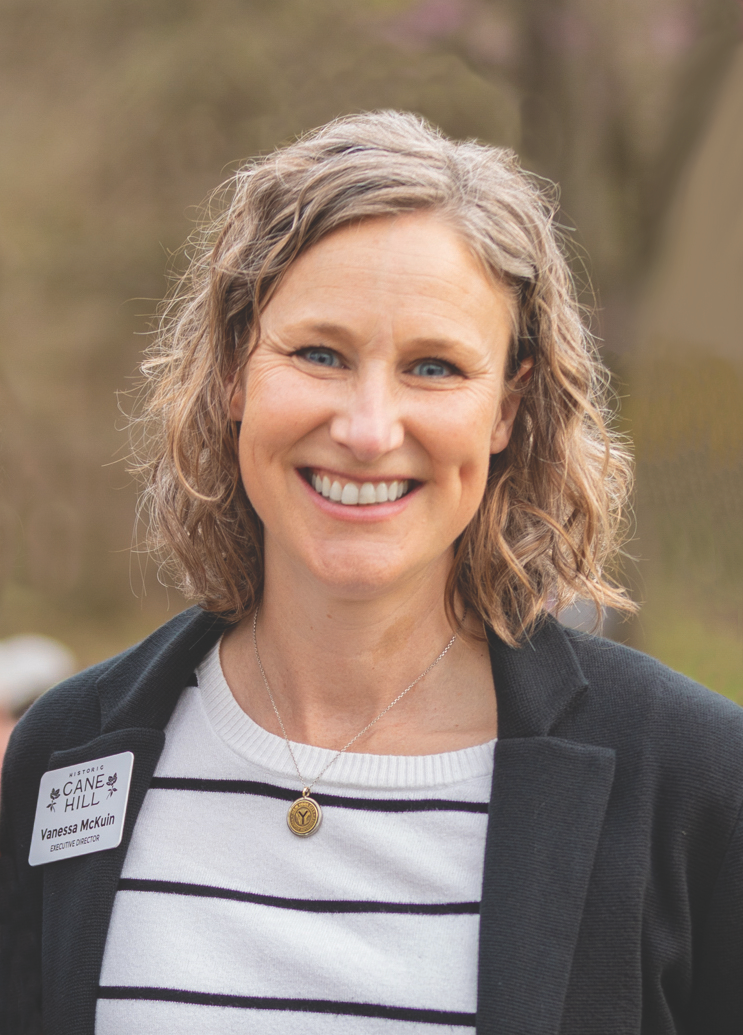
about Vanessa McKuin.
Vanessa Norton McKuin is an Arkansas native with family ties in South Arkansas and in the Ozark Mountains. She first became engaged in historic preservation when her family acquired and restored the May Farmstead in Newton County. Her family’s involvement with the project sparked her passion for historic places and the important stories they embody.
Vanessa began serving as Executive Director of Historic Cane Hill, Inc. in June of 2020. Prior to moving to Northwest Arkansas, Vanessa lived in Little Rock where she was the Director of Development for UA Little Rock Public Radio stations KLRE and KUAR. From 2008-2016, Vanessa was the Executive Director of Preserve Arkansas. Her work experience also includes the New York Preservation Archive Project, the Old State House Museum, and Norton Arts. Vanessa currently serves on the Historic Arkansas Museum Commission and she has volunteered with the Quapaw Quarter Association and the Central High Neighborhood Association.
Vanessa is a graduate of Hendrix College in Conway, Arkansas, where she earned a bachelor's degree in Art, and Pratt Institute in New York City where she earned a Master’s degree in Historic Preservation. Vanessa lives in Cane Hill with her family. When not at Cane Hill, she can often be found hiking and exploring in the Ozarks or floating the Buffalo River.
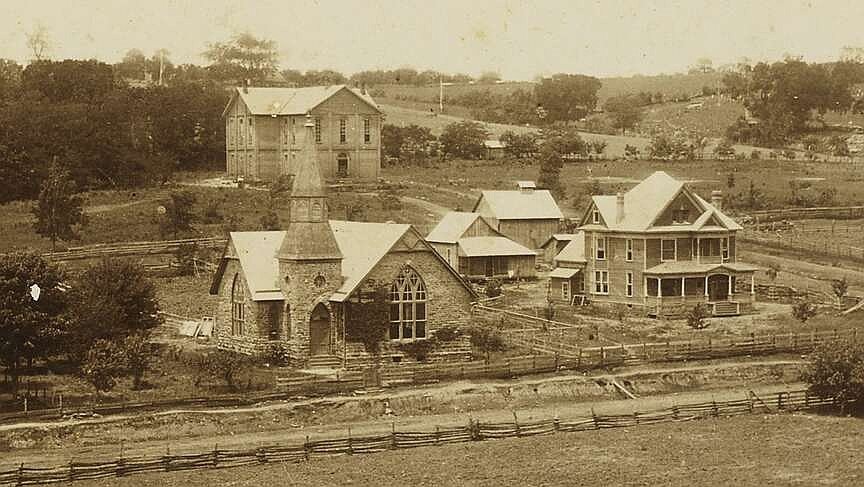
episode notes & references.
- Historic Cane Hill: https://www.historiccanehillar.org
- Encyclopedia of Arkansas – Cane Hill: https://encyclopediaofarkansas.net/entries/cane-hill-washington-county-2705
- Trail of Tears (B.B. Cannon Detachment): https://www.nps.gov/trte/learn/historyculture/index.htm
- Cumberland Presbyterian Church: https://www.cumberland.org
- Cane Hill College: https://encyclopediaofarkansas.net/entries/cane-hill-college-2242
- Happy Hollow Black Community: https://www.blackheritagenwa.org (contextual resource on Black communities in NWA)
- Maude Duncan – Arkansas’s First Woman Mayor: https://encyclopediaofarkansas.net/entries/maude-duncan-7712
- Wadica Watie and Cherokee Nation Educational History: https://www.cherokee.org
- Dutch Mills / Hermannsburg: https://encyclopediaofarkansas.net/entries/dutch-mills-6596
- Buffalo National River (Newton County): https://www.nps.gov/buff
- Searcy County & Snowball, Arkansas: https://encyclopediaofarkansas.net/entries/searcy-county-799
- May Farmstead (Newton County Historic Site): https://www.arkansaspreservation.com
- Fayetteville School Desegregation (1954–56): https://encyclopediaofarkansas.net/entries/fayetteville-school-district-7763
- Arkansas Humanities Council: https://arkansashumanitiescouncil.org
- University of Arkansas Entomology Department (Bug Crawl Partner): https://entomology.uark.edu
- Henry Moore – Arkansas Artist (Cane Hill alumnus): https://encyclopediaofarkansas.net/entries/henry-moore-9878
episode outline.
- Vanessa’s Background and Preservation Roots – 00:00–03:00
- The Founding of Cane Hill (1827–1830s) – 03:00–10:30
- Cumberland Presbyterian Influence & Contradictions – 10:30–14:30
- Enslaved People in Cane Hill and 1847 Church Records – 14:30–18:00
- The College, Civil War, and Coeducation – 18:00–21:30
- Notable Figures: Maude Duncan and Mary Mock – 21:30–22:00
- Trail of Tears and the Timberlake Family – 22:00–25:00
- Cherokee Connections and Cane Hill College – 25:00–26:30
- Happy Hollow: Cane Hill’s Black Community – 26:30–30:00
- School Integration and the Lackey Family – 30:00–32:00
- Humanities Funding and Preservation Challenges – 32:00–34:00
- Restoration and Community Use of Historic Buildings – 34:00–38:00
- Cane Hill in the Regional Story of NWA – 38:00–41:00
- Holding the Tension: Progress and Preservation – 41:00–44:00
- Events: Harvest Festival, Hermannsburg, Bug Crawl – 44:00–48:00
- Fears and Wholeness in Historic Work – 48:00–54:00
- Closing Reflections – 54:00–end
episode transcript.
episode preview.
[00:00:00] vanessa mckuin.:
I think what we are trying to do here is more reflective of the complex history that is here and to both celebrate the things that make, this place interesting and special but also to grapple with the things that make our history difficult, and that those themes that are still with us and that we're still grappling with today. Not to glorify the people here who were complex, who were, those, the early settlers who were in a lot of ways problematic. But history is built on that, and Northwest Arkansas is built on that.
episode intro.
[00:01:26] mike.: We are listening to the interview, an exploration and the shaping of our place. My name is Mike Rusch and today we head to one of the oldest settlements in northwest Arkansas. Cane Hill. Tucked into the southern hills of Washington County, Cane Hill was founded in the 1820s by a number of Cumberland Presbyterians who brought with them not only a religious tradition, but also systems of education and land ownership, and unfortunately, enslavement.
Though often overlooked in the larger narratives of Arkansas's history. Cane Hill was a place of cultural convergence and contradiction. The site of the State's first co-educational college, a way point on the Trail of Tears, a community shaped by slavery and scarred by Civil War and home to a once thriving post emancipation black community, known as Happy Hollow.
My guest today is Vanessa McEwen, executive Director of Historic Cane Hill. Vanessa brings both a professional background in historic preservation and a personal commitment to telling Fuller stories. She helps us to trace how this small town holds some of the most important and most difficult chapters of Arkansas history from newly discovered church records naming the enslaved, to the memory of families who helped to desegregate Fayetteville schools, to the quiet power of trails and springs and cemeteries. Vanessa shows us what it's like to do the work of restoration, not just of buildings, but of truth.
Cane Hill matters, not only because of its past, but because of the way it invites us to wrestle with the present. It offers a kind of living classroom for how we might hold the tension between preservation and progress. Between pride and pain, between what we honor and what we've long tried to forget. And in doing so, it challenges to imagine what it would mean to restore, not just the structures, but the stories that can lead us towards a more honest belonging.
alright a lot to work through today.
Let's get into it.
episode interview.
[00:03:10] mike.: Well, I have the privilege today of sitting with Vanessa McKuin, who's the Executive Director of the Historic Cane Hill.
So Vanessa, thanks for sharing the table with me. Thanks for being here today. I appreciate it.
[00:03:20] vanessa mckuin.: Thanks for having me.
[00:03:20] mike.: would love to hear the story of this place. it's springtime, it's beautiful here in Cane Hill, but I would love to start maybe with you and your background and your story. Yeah, give us a sense of who you are and what drew you to this place.
[00:03:33] vanessa mckuin.: So, I was born in North Arkansas, north central Arkansas, in Leslie so in the Ozarks. And I have family roots going back, I think about six generations in in the Ozarks in Newton County mostly. But my parents were back to the landers too, and so we have some connection in, I, I spent most of my childhood near Snowball in Searcy County.
[00:03:58] mike.: I actually know where that's at.
[00:03:59] vanessa mckuin.: Oh, okay. Well, it's yeah, definitely an interesting little Ozarks community and spent a lot of time on the Buffalo River growing up. But then we moved to New York City for a little bit. My dad was an artist and wanted to pursue that, and so I had this opposite ends of the spectrum childhood between summers in on the Buffalo River and the rest of the time in New York City for about five years. Came back to Arkansas for high school in the metropolis of Marshall. And really came to appreciate, having been outside of Arkansas for a while, came to appreciate what a special place it was.
Right after I graduated from high school, my parents had the opportunity to acquire my great grandparents homestead in Newton County. It had been in the family for, since the 1880s. But it was came, came to the end of a line of a, of another side of the family and my parents bought it and renovated it, restored It really got it listed on the National Register of Historic Places, and that was a really formative time for me. And I started to realize through that process. How important places were to embodying the stories of just regular people and how important the existence of those places are to understanding what, history as a whole. That places where George Washington slept are important, but also the places that my great-great-grandmother who was a midwife and birthed lots of babies and, people would come and take baths at their house. And how important that was to the community history to the identity of, I came to realize, of me, of my family and other families and other places that didn't make up the whole of the state of the country.
So I went to college at at Hendricks College, and I studied art and was very interested in art. My parents had an art conservation business, and so I really fell in love with material culture and art and what you can learn from culture about cultures and about history, looking through art and objects. But then when I decided that I wanted to figure out the thing that was really my own, and I discovered historic preservation.
And it was kind of like the, what I learned from from May farmstead and from that process of restoring that place and figuring out the importance of it to the community. And it was like one big object that helped tell a story. So, I pursued a master's degree in historic preservation. I was living in New York at the time living in Brooklyn. So I went to Pratt Institute and loved it. But Arkansas is a strong pull home and I got the opportunity to come back here and run at the time the Historic Preservation Alliance of Arkansas, Statewide Preservation nonprofit and it's now, called Preserve Arkansas.
[00:07:08] mike.: And I started getting to know and love all the historic places in our state and found out about Cane Hill through that job. And so, what was it, Worked for Preserve Arkansas for about eight years, and then had a little detour into public radio when I started to raise my son. But had the opportunity to come up to Cane Hill and when this executive director position came open and took the opportunity, 2020 was a weird time to, to move, to change, change locations, to to pick up and move, but, it was a good time for change too. So, my family and I moved up here in 2020 and have been living in Cane Hill and been the director of Historic Cane Hill ever since.
I'm curious what talk, talk a little bit more about what drew you to this place. You had this comment, you said that place that embodies stories, which I think to me is really fascinating. This is obviously a living testament of that, but I'd love to hear what you mean a little bit more about like what drew you to this place specifically.
[00:08:14] vanessa mckuin.: Yeah. Well, Cane Hill is a really special place for a lot of reasons, but one of the main ones being just how intact it is as a historic community, especially a rural, historic community. In, in cities oftentimes large blocks of historic buildings or neighborhoods that have been well preserved, but in rural communities, especially in rural Arkansas, it's rare to see, one or two historic buildings that have been preserved. And Cane Hill has well, historic Cane Hill owns 15 historic buildings and there are more here that we don't own. So, there are, I think, 17 buildings in Cane Hill on the National Register of Historic Places, and that is just mind boggling.
That's how I felt when I learned about it, was what an exceptional place, what an exceptional opportunity to be part of that, be part of stewarding these places. And I think it speaks a lot about the dedication of this community over the years, to preserving the history, to telling the story, to, just to recognizing the importance of this place, it's, it's common for especially smaller communities, I think, to not realize what's in your backyard and not realize how important the places are that you're familiar with. But in Cane Hill and in this community, there really has been a strong sense that this is special and this is something that we need to make sure exists long term for a long time.
origin of Cane Hill.
[00:09:58] mike.: you know, today in northwest Arkansas, it's probably not as well known Cane Hill as it once was, but this is a really significant place in the formation of this region. This is one of the earliest settlements, the earliest arrival of white European settlers that came here, but help, help give me a framing context around the kind of the early story and the significance of the settlement here of Cane Hill.
[00:10:22] vanessa mckuin.: Sure. Well, we are right on the edge of, on the western border of Arkansas for one thing. And so early on this was Indian territory, it was not within the boundaries of current Arkansas. And early in the 18 hundreds, all of as things were shifting and changing, borders were shifting and changing. Treaties where land was being seeded. This place was amidst all of that and in shifting area. But the story that we're working to kind of expand the story that we tell, but the story that has been told about Cane Hill and what's most known about it is this early European American settlement particularly of Cumberland Presbyterians.
So starting in 1827 group of *Cumberland Presbyterians* from Kentucky and Tennessee moves west and first into the Crystal Hill area, which is down near Little Rock. And then decides to, that's not quite it, that's not what they're looking for. And sends a scouting expedition up the Arkansas River and then over by Wagon train to scope out a place where they want to set up a community.
And, so in 1827 two, two guys James Buchanan and Guilford Pilot, I believe were their names came up on a scouting expedition and found this place, which is has abundant springs. Jordan Creek runs right through here, so, water and plenty of hardwood. There was lots of river cane at the time.
Just really a lots of life giving elements to the landscape. And so they quickly decided this was the place. And set up a community. 1828 when this area opens for white settlement. More settlers started coming. A lot of Cumberland Presbyterians, a lot of families from the same area moving to, to not just here, but northwest Arkansas as a whole.
But especially in Cane Hill, the is where the Cumberland Presbyterians came. And education was very important. Cumberland Presbyterians as part of their mission, but also part of the religious education education was part of that. And so they set up a school in 1834 Cane Hill School, which eventually grew into the first co, one of the first colleges in the state of Arkansas.
And there, there was a lot here to work with in terms of the building of the community. Of course they the early settlers, a lot of them brought enslaved people with them. So, building, building the houses in the buildings and the infrastructure and the agricultural community was thanks in large part to that stolen labor of enslaved people.
So it's a complicated story. That's the very beginning of Cane Hill. I mentioned education, of course is one of those themes that just runs through even to, to modern day Cane Hill. But but that's the beginning of it.
Cumberland Presbyterians.
[00:13:45] mike.: When we talk about this group of Cumberland Presbyterians this is not, this is unique, I think to Cane Hill and Northwest Arkansas to my understanding.
I I'm curious because it came as a community, not as just a couple of individuals that started, if you will, to become a town. This was a community of people that probably brought an identity and obviously a belief system. You walked me through the the second church that was built of this place. But I'm curious that early formation, what you can tell or from a priorities or meaning or what influence that may have had.
[00:14:16] vanessa mckuin.: Yeah. I'm not an expert on Cumberland Presbyterianism but what I do know is that in, in a lot of ways it was a progressive group of people. They were some of the earliest, presbyterians Protestants to allow women to be to be educated and to to serve in, in ministry. And so that is reflected in Cane Hill through there, there was a women's seminary in Clyde, just about a mile away from Cane Hill where we're sitting. Cane Hill College became the first co-ed college in the state of Arkansas,
[00:14:50] mike.: And that's where we're sitting here today. Is that correct? That's right. In the college, yeah. That's
[00:14:53] vanessa mckuin.: right. Yeah. So. On the flip side of that, a lot of the Cumberland Presbyterians were enslavers. And so there, there was there was, there were parts of that religion that were and that worldview that were very progressive and there were parts that were very much of the time. But certainly they weren't abolitionists.
Right. I also found, I was surprised by this, but found that Cumberland Presbyterians were some of the earliest to ordained African Americans to the ministry. According to the website about Cumberland Presbyterians the Cumberland Presbyterian sect around 1830 was the earliest that they started to ordain African Americans. So I find a real, there's a real conflict in that that they were allowing women, they were allowing African Americans to be part of the church and part of the the ministry, but still holding slaves.
1847 church records.
[00:15:53] mike.: Before we sat down and talked, you walked me through the what the church is today, which is not the original church, but there was a building there before and there's some interesting.
Kinda stories that you all have found as a part of the preservation efforts here. I'd be curious if you'd share that.
[00:16:07] vanessa mckuin.: Sure. So one of the interesting things that we've just received pretty recently is a collection, an archival collection of some of the first session minutes from the Cane Hill Presbyterian Church.
They were found in the basement in a safe of Presbyterian church in Fayetteville. And there, just really important and interesting records to, to teach us about the early church here. And that collection included session minutes from an 1847 meeting that contained the names of 14 enslaved people that were entered into membership at the church and their enslavers. So we know, just a little bit about those people and what the early churches looked like.
[00:16:55] mike.: Were their names as a part of that?
[00:16:58] vanessa mckuin.: So there's, yeah, there were names of all 14 of the enslaved people and their enslavers. I have a transcription of it. Susan Young, who I mentioned is a wonderful local historian, and she transcribed them. And we've started trying to research one of the the women's name, I know that there are, important stories in there and I think that we definitely is on our priority list to, to try to find out more about those individuals that were,
[00:17:31] mike.: That sounds like a very rare thing to find at that, especially from that time period.
[00:17:35] vanessa mckuin.: Definitely.
[00:17:36] mike.: Thank you for sharing that. I think there's a, the obviously complex times in the duality of that maybe progressive nature. Yet also to be enslavers in such a small community. It's not this is not a large place. I don't know if it was a large place at the time, but this was not a disconnected segregated community in many ways.
[00:17:58] vanessa mckuin.: Yeah, I think it, it was a small place and I, one of the things that we sought out, and one of the things we were seeking to to research and to learn more about is Cane Hill existed as in the northwest Arkansas tradition of slave holding in very small numbers.
And so, Cane Hill was, I don't know if we're ready to get into this, but Cane Hill was the largest number of enslaved people in Washington County, lived in Cane Hill, and, most of the enslavers, like some of your earlier guests recognized were, not this large scale plantation style enslavement but smaller smaller households with enslaved people.
And so, that tracks for Cane Hill it, it seemed like most everybody in Cane Hill in was enslaving people. And so, that, speaks to that nature that there were, and I think it was Kelly Houston Jones who was talking about the intimate nature of those relationships. Not intimate in, in, necessarily, that it was a good thing but just that was the nature of it, living in close proximity to each other. And I think that was true in Cane Hill as well.
forming of the College.
[00:19:21] mike.: Tell me a little bit more about the, kind of the forming of the college and what kind of eventually happened within that educational system that was established here.
[00:19:29] vanessa mckuin.: So the school that had begun in the 1830s grew into what would become Cane Hill College in the early 1850s. 1852 is when the college was chartered. It was, operating as a college before that, before it was officially chartered. But we know what happens. 1861 there's not a whole lot of time between the time that the school was chartered and the outbreak of the Civil War. The college completely shut down when the Civil War broke out. A lot of the faculty here, a lot of the students were enlisted including the President FR Earl, Major Earl went off to, to fight in the Civil War and. Pretty much all of the college buildings were burned during the Civil War.
So that was a huge impact and a huge casualty of the Civil War for Ca Hill. It's amazing that it reopened after the Civil War and was able to operate until 1891. And in between the time that it reopened after the Civil War and the time that it closed it became the first co-ed college in the state when the Women's Seminary in Clyde closed and those students moved to Cane Hill in 1875 is when the female seminary closed and the women were admitted to Cane Hill College. The first degrees were awarded in 1877.
maude duncan.
[00:21:03] mike.: There was some really key people that came out of that study or attended here, is that correct?
[00:21:07] vanessa mckuin.: That's right, yeah. Maude Duncan was an alumna of Cane Hill College and Maude Duncan was the first woman elected mayor in Arkansas. Her Petco government out of Winslow. And it's actually the. I guess it's the centennial of her election this year. So she's a very important figure that graduated from Cane Hill College and I mentioned Mary Mock, who was the artist unusual to have a woman artist who was painting scenes of Cane Hill at that time.
So quite significant.
[00:21:43] mike.: It is significant. I was not aware of
trail of tears.
[00:21:44] mike.: that.
Maybe we can back up just a little bit, because we sit along the Trail of Tears here as well too, correct? I,
[00:21:51] vanessa mckuin.: yes.
[00:21:52] mike.: Yeah. I'd love you've got all these stories that are really layered on top of each other here.
So talk to me a little bit about maybe what this place was either like, or the engagement with the Trail of Tears, or there's some pretty significant things that happened here as a part of those stories.
[00:22:08] vanessa mckuin.: Yeah. You're hit the nail on the head there. There's so much I often visualize the the various momentous historic events. That all intersect here. It's like a bunch of roads coming together here in Cane Hill. Even though it feels like we're off the beaten path there's tons of stories that come together. And one of those is the Trail of Tears.
So Cane Hill is on the route of the Trail of Tears. The BB Cannon Detachment was the most well-documented group that came through Cane Hill in 1837. And we can read the diaries the journals of BB Cannon, talking about just a grueling punishing trip in December of 1837. And one of the stories that's most closely tied to Cane Hill related to that.
Is the Timberlake family the Timberlake family was so this was, let me back up just a minute. Yeah. This was a treaty party. So these were people who had signed a treaty to leave their ancestral land. And so it was a smaller group of people, but they were facing not just the trauma of leaving home, but also were, criticized for signing treaty for willingly, I say in quotes at leaving that land. And so, Charles Timberlake, his family he had several children, and you can read in the journals of BB Cannon, lost a son on December 17th, and then just 10 days later when they're in Cane Hill loses a daughter, Alsey Timberlake, who's 12 or 13. And Alsey was buried here in Cane Hill. We don't know exactly where, but there's a there's a, a receipt in the National Archives for the coffin that was purchased here in Cane Hill from James Coter, who was a local merchant. And so we know that she was buried here and they're just less than a day away from their final destination.
And so it's just, such a tough story on so many levels.
proximity to Cherokee Nation.
[00:24:36] mike.: You walked us past earlier the witness tree, which was here when those events happened. And so it's very sobering to walk through this space knowing that yeah, there are memories here that are incredibly significant.
It's my understanding too that, I mean that was not the only engagement, obviously with the Cherokee Nation, that there were addition, there was more engagement that was maybe an ongoing basis.
Yes. Is that correct?
[00:25:00] vanessa mckuin.: Yes. Yeah. And I, I don't know a ton about that but there was certainly proximity to Cherokee Nation is fairly close and one of, one of the, I think, the most interesting. Examples of that is that the former principal, chief of the Cherokee Nation from 1862 to 1866 was Stan Wadi. And he was a Confederate sympathizer. And he, they, by all accounts he, they lost everything after the Civil War. Barely had anything to get by on. But he manages to send his son Waca Wadi to Cane Hill College in 1868, I think. And there's a paper on this, on the connection between cherokee Nation in Arkansas, and this is called out in it. And there's a letter from Wadica Wadi writing back to his father, thanking him for sending him to college, to be educated and talking about there are several Cherokee girls down the road at the women's college. So that, indicates he, he's not alone here.
[00:26:14] mike.: He was willing to stay, yeah,
[00:26:15] vanessa mckuin.: I, he even mentions that as things are good here.
Happy Hollow.
[00:26:19] mike.: Yeah I think these stories all coming together in this place, it's just not a place today that you think of. Maybe all these stories coming together, but it's really a significant place here in many ways.
So Vanessa, within that time though, you've got, yeah. You've got this emergence of cultures coming together of both enslaved people, obviously removed people and there's small communities. It's my understanding that, that take place here. And I know one of those is the Happy Hollow community.
I'm curious if you could give some background or some context about that. 'cause that is close to here, if I understand correctly.
[00:26:51] vanessa mckuin.: It is, yeah. Happy Hollow is about a mile a little less than a mile south of Cane Hill. And there's a road named Happy Hollow Road which marks that there's, not much physically left of the church and the school that were there.
So in Happy Hollow there was a church and a school and quite a few people living in, in the area. It was a community of post-Civil war of obviously free black residents. And it's about three quarters of a mile from Cane Hill, from downtown Cane Hill. And it was an important place for African Americans.
There was quite a center of a community there. But what we found when we were doing some research we got a grant from the Arkansas Humanities Council about a year and a half ago to look into the history of the black community in Cane Hill because there. Absent a few papers on slavery and a few papers on there's one paper called The Abandonment of the Happy Hollow that talks about the last black residence in Cane Hill.
And how that came to be. We didn't know much about the personal stories about the people who, and the families who, who lived in Happy Hollow and why they lived there and why they left. And so we got a, this grant from the Arkansas Humanities Council to look into really scratching the surface, but trying to gather as much information, as many family names as we could find, looking at census records, looking at the slave schedules of those early census records, looking at post-Civil War census records, figuring out who stayed who left. And this other story emerged later in the 19th century and then early 20th century into mid 20th century.
And what we learned was that there's a really important educational story here, so, we were able to connect with some descendants of families who, who lived here in Cane Hill, some people who actually did live here as children. And find out, firsthand information that they knew about their family's situations.
And one of the really fascinating things that we learned was there was a school not just at Happy Hollow, but there was a school for black students just across what's now Highway 45 from the school for white students, which was here in this building in the Cane Hill College building. And they shared a cafeteria.
This little building that's out right here. We have a a. Oral histories from a white woman who was a student here who told us about taking the pots of lunch over from the cafeteria to the school for black students. And then we were able to verify that on the other side. A woman named _Peggy Taylor_, who's who has since passed away, told us about bringing the pots back to the back of the cafeteria.
Fayetteville School desegregation.
[00:30:18] vanessa mckuin.: So there was this connection and a school that, that we at Historic Cane Hill previously thought was located in Happy Hollow. There was a school in Happy Hollow, but there was also this really important educational piece. Just right here, less than two quarters of a mile from the school where the white students attended and several of the students who attended school at the, I wish we knew the name of the school for the black students. I, we've not been able to find that. But several of those students were part of the first seven students to desegregate Fayetteville schools. So five of those seven students that desegregated Fayetteville schools went to school in Cane Hill.
The Lackey family was had three, three siblings that were in, involved in that. And looking at at school census records and looking at and talking to El Nora Lackey Jackson, who has since passed away and her brother Tom, you were able to, just completely.
There, there was this new narrative. Obviously it wasn't new for them, but it was new for historic Cane Hill to, to learn that. And a really important connection between Cane Hill community and Fayetteville community.
Southeast Fayetteville relocation.
[00:31:38] mike.: Yeah, it's interesting you talk about as the families move from Cane Hill as they're departing this area and there's an integration element that's happening in Fayetteville.
So, I can, I assume that some of those families were part of the families that went to Southeast Fayetteville. Is that my understanding is that correct?
[00:31:55] vanessa mckuin.: Yes, definitely. Yeah. Several of the students that we see enrolled here in Cane Hill when the school closed moved to Fayetteville there were some students who moved to Fort Smith, I think.
But several of those students moved to Fayetteville to attend schools there.
impact of cuts in Humanities
[00:32:13] mike.: That's really, it's just, it's amazing how all these stories flow together in so many ways.
You talk about the humanities. There's been a lot of change in just the funding of humanities. Has that impacted the work here at Cane Hill?
[00:32:26] vanessa mckuin.: Yes, it has. We've been able to do a lot of research and a lot of a lot of programming through funding from the Arkansas Humanities Council.
We actually had some funding that we got from the Arkansas Humanities Council at the end of 2024 that was going to fund the restoration, the conservation of a really important painting by Henry Moore, who I mentioned was a student at Cane Hill College. And we learned at the beginning of the year, that funding was on pause and we weren't sure if it would come through. The conservation work was already underway, so there was really nothing we could do but continue on. And we learned actually just last week that funding has completely been canceled, has gone away.
So it, for this project. It's really important. And, we are, we're working on fundraising for that painting because we will have a bill due before we get the painting back.
But also, we've, we have been able to do a lot with and leverage a lot of the humanities council funding to do the research that, that we've been able to do, the archeology that we've been able to do. And so it's gonna have future impact on, I think the work that we're, our investigation and research that we're able to do.
preservation and restoration.
[00:33:50] vanessa mckuin.: There's so much history here and I think the work that you're doing today around preservation and restoration is really it's really incredible and I'm, I would love to understand like where that spirit of this preservation and restoration came from and maybe give us a little bit of an understanding of kind of how that emerged and what you've been able to accomplish, and maybe where that's going as well.
So historic Cane Hill was founded in 2013 and it was really came out of. The realization, looking around and realizing that there were buildings, there were places, historic places that were on the verge of being lost if, something didn't happen. And so this building, the Cane Hill College building had for many decades a group, a community group that was working to preserve it and working to maintain it working to ensure that it stayed standing.
[00:34:45] vanessa mckuin.: The Cane Hill Harvest Festival was grew out of trying to match a grant, an early grant for maintenance of this building. But I think the realization was that this was a huge project and it was larger than a community group. Would be able to tackle at once to do it in the way that would ensure the long-term existence of this structure.
And it was in really rough condition. And in the 1930s there were some changes made to the building structure. The windows were expanded and which weakened the structure of the walls. And so there were some really big problems that, that the group that owned this building was dealing with.
And so historic Cane Hill was formed. We were able to get a major grant to a major gift to fully restore this building. It was over $2 million restoration.
And so that was the first major project that Historic Cane Hill took on. And really our initial purpose was to. Preserve the historic places that help illustrate the history of Cane Hill.
We have since we restored the Cane Hill College building, I think we've, we stabilized, restored around 13 buildings. And that's a we consider that part of not that we're done preserving places, not that we're done doing renovations or stabilizing buildings but that initial focus has expanded now.
And so we really. Recognize that just to preserve a building, just to restore it. If it doesn't have a use, if it doesn't have a life, if it doesn't have people who care about it and want it to be used in, into the future, well into the future. What is the point? Yeah. Historic Cane Hill definitely wants doesn't want this place to be placed under a bell jar.
We want this to be, and it is a living community. And so a lot of the work that we're trying to do now is focused on activating these places and creating activities that. Will ensure their maintenance and ensure their their use in, in, into the future. We've restored so from the Cane Hill College building, the Ar Carroll Drugstore which is where our gallery, and there's an art studio upstairs where that is housed now.
We have four exhibitions a year in that gallery and tried to bring life and new artistic opportunities in there. Our museum building is also a historic building that's been restored in the process of restoring the Kirby Colburn house, which is one of the very prominent structures as you come into town that you see that for decades was vacant and has, just the.
Just the stabilization that we've done on the outside makes a huge visual impact. But also is, a boost for the community to see that property that has Kirby Colburn, the those families are still around. Yeah, they're still here. And so that, holds a lot of meaning, I think, for people to be able to see that those places are being brought back to life.
Cane Hill place in story of Northwest Arkansas.
[00:38:19] mike.: I'm curious, when we think about Cane Hill, what does this mean to Northwest Arkansas? What does this mean to our story collectively? Or what do you feel like this place represents? Yeah. In the story of northwest Arkansas?
[00:38:30] vanessa mckuin.: Yeah. Well, I think it's, in some ways it, it feels a little bit like a microcosm of northwest Arkansas because you have education, you have the arts.
I didn't mention this earlier, but painting and music were two parts of the Cane Hill college curriculum. We have paintings that were painted by students here. There we have this great photo of the Cane Hill musicians. So learning these, learning and being part of creating part of the artistic landscape of northwest Arkansas, goes way back in Cane Hill's history.
There's a spirit of innovation here. So one of the other parts of Cane Hill's history is apple cultivation and production, which of course was a big part of northwest Arkansas as a whole.
Some of the earliest apple growers in northwest Arkansas we're here in Cane Hill. The Russell family, JB Russell was starting in the 1840s was growing apples here. And so you have these themes that are part of the overall northwest Arkansas larger history that are very much part of Cane Hill's history as well.
And then just thinking about Cane Hill today and how it fits into northwest Arkansas, I think as Northwest Arkansas continues to grow and change, we are in a really, Cane Hill is in a really unique position. Because we're so different from the landscape of many places in northwest Arkansas that are growing and changing quickly we hold this historic memory and are a place where people can actually experience a feeling of real rural ruralness. But also because of the existence of these historic places, you can imagine what. Northwest Arkansas looked like in a particular period of time.
[00:40:44] mike.: Oh I feel like driving in here a hundred percent. It's not a stretch to look, to see yeah. How this place could have been, 200 years ago by any stretch to the matter.
It's feels very undisturbed in many ways, and I know that's not true. You've put a lot of time and effort and money into the restoration of this place, but to make it feel so yeah, so unique and different from so much and maybe a way of looking back and reminding us in some ways of what has been and what really place can matter and what stories place holds.
And so it's been incredible to see that.
[00:41:20] vanessa mckuin.: I think, there can be a tendency to, in a historic place, to, to think about the good old days and to, step back in time.
And certainly that's, could be easier to be a living history museum, to be a place where, you step back in time. But I think what we are trying to do here is more complex and more reflective of the complex history that is here and to both celebrate the things that make, this place interesting and special but also to grapple with the things that make it and that make our history difficult and that those themes that are still with us and that we're still grappling with today not to glorify the people here who were complex, who were, those, the early settlers who were in a lot of ways problematic.
But history is built on that, and Northwest Arkansas is built on that. And so it is a place to hopefully reflect on on that history, on that legacy, on those many legacies because it's more than just one legacy. And to be able to. I find great clarity in going to walk the trails and just, getting out and looking at and appreciating the diversity of the plants and the, the native plants and the even some of the invasive plants that are pretty, but I it reflects it allows me a chance to reflect on this place in a quiet way that I think it's hard sometimes when you're in the midst of it, in midst of louder, louder things.
holding the tension of history and place.
[00:43:09] mike.: Yeah. And I think from my perspective as an outsider, Cane Hill is this place that seems to be holding those tensions well in many ways. And that there's been a very it's not a short term thought process around what it looks like to preserve both the history and the place, but the stories as well too. And it feels like, that's a lesson that can we should learn in some places.
If you could speak to the rest of Northwest Arkansas about, when we think about place and we think about story and holding that well, the importance of why that matters. What is, what does the Northwest Arkansas without Cane Hill look like?
[00:43:45] vanessa mckuin.: Well, is it some place or any place?
I think that's, you're in Cane Hill when you come here. I, and I think there are definitely places throughout northwest Arkansas that you clearly know where you are and then there are lots of places where you could be anywhere.
Yeah, that is the tension. That is the challenge of growth is how you find that. I don't know the answer. Except that I think it's important for lots of people to be at the table when there's our discussions about what we're keeping and what we're doing away with. Yeah I don't know the answer to that.
I think there is a rural character that maybe the quickest thing to disappear.
events.
[00:44:33] vanessa mckuin.: So people can come here and they can visit and there's a lot of activities going on. Those are all on the website that they can go what maybe what's your favorite activity or event that goes on here that really says, this is what we're about and that people should come and see and visit and see for themselves?
Yeah. Well the Cane Hill Harvest Festival is the, is the biggest event that we have here each year. It's been going on since at least 1986, but there were definitely festivals before that that. That took place as a way to celebrate the community as a way to showcase Cane Hill.
That's the third weekend in September. And we have it really showcases Ozark crafts. We have Jared Phillips brings his, his draft horses. We have sorghum making demonstration, which is a lot of fun. And a quilt show, which features both historic quilts and contemporary quilts. We have a bunch of the fiber artists from the area who come out the Dogwood Lace Guild comes out and does lace tading, and we weavers and spinners and. So it's, a quaint little community festival that draws people from all over to, to see some of those elements of Ozarks culture and history.
But then we also have food and music and crafters and makers selling their wares as well. So it's a lot of fun and we try to showcase all of Cane Hill. The museum and the gallery are open and really is just an opportunity to explore all that Cane Hill has to offer. We have an event, which probably by the time this comes out will be over because it's this weekend.
hidden Hermansburg.
[00:46:21] vanessa mckuin.: But through, through our programs we're trying also to explore elements of the history that maybe less lesser known and lesser explored. And so we're working on a program. This weekend with the a professor at the University of Arkansas called Hidden Hermannsburg. So there was a community in the 1850s that was founded by two German brothers, the Hermans.
And they were fleeing civil war in Germany moved to, to landed in Arkansas in the 1850s, right, right before the American Civil War.
[00:47:00] mike.: That's not good timing.
[00:47:01] vanessa mckuin.: Not good timing. And they, they had a really thriving community before the Civil War broke out. They ended up leaving Hermannsburg and moving to St.
Louis which seems like they, they did just fine there, but, the community's called Dutch Mills now, so that, that same story of the Deutsche to Dutch. And but it's a it's a forgotten history. Nobody very few people know where the history of where the name Dutch Mills came from.
So we're exploring that history this weekend. And then having hardly anything to do with history at all. One of my favorite events is the bug Crawl. We partner with Austin Jones at the University of Arkansas in the entomology department, and he his love for insects is just contagious. But it's set up as a scavenger hunt for different orders of insects.
And he comes out with grad students and other volunteers to help people identify different orders of insects. And people go out in teams and collect insects and explore by, by doing that, exploring the grounds and the various little habitat. Areas. We have a one right by Jordan Creek.
We have, a woodland area. We have it, it showcases the diversity and of the natural environment that we have here as well. And kids love it. It's just, it, adults love it. Adults kind of trotting through the, across the campus like kids looking for insects.
And it's really a a neat hands-on educational opportunity. That's good. Yeah.
fears.
[00:48:39] mike.: Well, Vanessa, as we think about the work that's happening here at Cane Hill I'm curious within, from your perspective, and you talked about this a little bit, but I'm really curious, what are your fears for this place?
[00:48:50] vanessa mckuin.: Well, I constantly worry over this place. Anytime there's a strong storm, of course I'm, up and thinking about making sure that all of the buildings are safe and that we don't lose the bur oak tree. So those are day-to-day fears. But overall, and I think this is, this translates to the larger northwest Arkansas community, and we talked a little bit about just the visual cues you have for being curious about the past and being curious about your environment, being curious about the place where you live.
And for Cane Hill, there are many visual cues in the forms of historic buildings historic landscape features. And so I worry about the loss of those and what that does to to people's curiosity about things, to people's desire to ask questions and to wonder about, to wonder about the history, to wonder about where we've been and to what that means for where we're going.
wholeness.
[00:49:59] mike.:
I, I'm biased of course, but I think this is a place of memory and of story that needs to be preserved and represents an opportunity for us as a community to reflect on what it can look like to continue for this place to grow and for new people to be welcome, but also to be remembered. And so I will hold that fear with you for sure.
[00:50:16] mike.: On the flip side of that we talk about, the one thing that threads so many of these conversations together, this idea of wholeness. I'm curious when I say that, what does wholeness look like in the work that you're doing and maybe in this place.
[00:50:28] vanessa mckuin.: Well, I think it, it, means physical wholeness, obviously, but it also means rounding out the stories that we tell and recognizing that there are pieces of the history here, pieces of the story that haven't been told, that haven't been highlighted, that time is of the essence to find and to collect and to share.
And talked earlier about the students who help desegregate Fayetteville Public Schools. And one of the reasons that we chose to focus our interviews on that particular subject was a, because it's important, but really because the people that hold those memories and that had those experiences will not be with us for forever. And in fact we've lost a couple of them since we started that, that research project.
So. Just the time. That, that's true of many of the stories of Cane Hill that the, a lot of the people who have lived the history we need to collect those stories. We need to learn from them.
Now before that opportunity is lost. I think there's also, there, there's the story of the black population of Cane Hill. There's a story of the indigenous people in this area. There is the story of women in Cane Hill that has largely gone untold. There are some small steps that we've taken to, to remedy all of those things and there's so much more work to be done.
One of the things that we've done is just simply adding the names of the women who were part of the households in Cane Hill to the, we, we have several kind of, of several historic homes of prominent Cane Hill. And they're listed on the National Register as just John Edmondson house. And so being able to identify and name the John and Alice Edmondson house is a, just a small thing working to make sure that we include that, going further than that, being able to identify other people that were part of that household is important. And, a little more difficult but I think making sure that the people who were here and who helped build this place are known is very important.
I think that's one of, it can be difficult to, especially in our current environment, to have conversations about slavery and about removed people and about oppressed people, but finding the humanity and those stories is, I think it's central to, to creating understanding and empathy and, all of those things that we need to be a stronger community.
And I've been really very pleasantly surprised that everybody who we've asked to share their stories of Cane Hill has been very willing to and to talk openly about, about how whether it's growing up in Cane Hill as a white person or growing up in Cane Hill as a black person. They've all been very open and and interested to share those stories.
So, wholeness, to bring it back to your question, I think is is a constant state of striving to be more whole and to, to both answer the questions that we have identified that we do know we need to answer, but also identifying the questions that we don't know to ask yet.
[00:54:19] mike.: I love the way you answered that question. I think it brings the depth in many ways to not only the work that needs to be done, but the reflection of where we are today. I think I know the answer to this question maybe, but like, what does that have to say to our current environment and what we see is happening to stories historical stories history may be starting to be reevaluated. The stories that we decide that we're going to keep. I don't know. Do you, would you, do you want to say anything into that space?
[00:54:51] vanessa mckuin.: I just I think the humanities are incredibly important, and especially to a place like Cane Hill. It allows under the umbrella of the humanities. It encompasses basically everything that, that we do here. Archeology is, incredibly important. Those the human histories doing research, historic preservation. It's all part of trying to answer who we are as humans and who we are as Northwest Arkansans and Ozarkians and or Ozarkers, I think I learned is the right term. But I, I think to be curious and to be constantly open to thoughts about your experience and other people's experiences is key to is key to our future in northwest Arkansas and everywhere.
[00:55:45] mike.: Well, Vanessa, I'm biased, but you hold a sacred responsibility here as you hold all of those stories and their wholeness and their completeness. I, I think in a way that is necessary and serves an example, frankly to what it looks like to preserve our history and to be honest about it, to be a steward of it, and to seek to continue to do that in a very holistic way. And so, yeah, I just wanna say thank you for sharing the table and thanks for this time.
I'm a fan and I'm embarrassed to say I've not been to the Harvest Festival, but I have to come back this year.
[00:56:15] vanessa mckuin.: You can fix that, or
[00:56:16] mike.: I have to come this year. I want to absolutely do that. But thank you for the work that you're doing, and thank you for the story that you're telling here.
I think it matters greatly, and I think everybody needs to come down here and spend a little bit of time. And so, yeah, thank you for that work.
[00:56:28] vanessa mckuin.: Yeah, thanks for it is an awesome responsibility. I feel like, just a steward of this place and these places for. For a a short while.
And appreciate you helping shed some light on the questions that we're asking. And Al also just bringing some attention to Cane Hill.
[00:56:47] mike.: Yeah, well, thank you for what you're doing. I very much appreciate it.
[00:56:50] vanessa mckuin.: Thanks.
episode outro.
[00:56:51] mike.: Well, an incredible thank you to Vanessa McKuin. She helped us explore how a small community tucked into the hills of Southern Washington County can carry within it the full weight of our Arkansas history, early white settlement, indigenous displacement, the enslavement of black people, the trail of tears, the Civil War, and the long shadow of reconstruction.
Vanessa helped us to see how Cane Hill's founding ideals of education, faith and community existed alongside systems of racial violence and exclusion and erasure. And she showed us how the work of preservation isn't just about buildings, it's about memory. It's about reckoning with the complexity, and it's about telling the stories that we haven't been told.
We learned about the rediscovery of an 1847 church record that named the enslaved people by name, about the nearly forgotten black community of Happy Hollow, and about the ways that Cane Hill is reconnecting with its own past. Not to glorify it, but to face it with honesty. I think that's a lesson that we all in Northwest Arkansas can learn from.
But what makes Cane Hill matter even more today is that it holds this tension openly and intentionally. It holds the tension between beauty and injustice, between the desire to preserve what was, and the responsibility to tell the full truth.
In a region like northwest Arkansas, where change is happening so rapidly where development, growth and prosperity are rewriting the landscape, it's easy to lose sight of the stories that shape the ground beneath us. Cane Hill shows us what it's like to resist that, forgetting to slow down and to listen, and to carry forward both the wonder and the weight of a place. This season of the underview is about more than the facts of history. It's about memory and power, and the search for wholeness in a place shaped by contradiction.
Cane Hill stands as an example of what's possible when we do this work with humility and honesty and care.
Alright, I want to say thank you for listening. I want to say thank you for being the most important part of what our community is becoming.
This is the underview, an exploration in the shaping of our place.