
the immigrants with Emily Pianalto-Beshears.
Emily Pianalto-Beshears shares how Tontitown’s Italian immigrants shaped belonging in the Ozarks through labor, tradition, and memory.
season 2, ep. 24.
listen.
episode notes.
This episode explores the story of Italian immigration to Arkansas through the deeply personal and historical perspective of Emily Pianalto-Beshears, director of the Tontitown Historical Museum and descendant of one of the original Italian families who arrived at Sunnyside Plantation in 1895. Through Emily's oral histories and family documents, we trace the harrowing conditions of Sunnyside, once Arkansas’s largest slaveholding plantation, where Italian immigrants were lured by promises of land but instead faced disease, debt bondage, and racial violence. We learn how Father Pietro Bandini led a group of survivors north to Washington County, founding the town of Tontitown—a place shaped by memory, tradition, and resistance.
As Emily recounts her family’s story, a broader narrative unfolds—one that links past immigrant exploitation to present-day questions of belonging, labor, and justice. The episode offers a compelling reflection on the power of oral history, the fragility of memory, and how immigrant families carved out space in a land that never welcomed them. From the loss of language to the preservation of traditions like the Grape Festival, this is a story about identity, survival, and the shaping of place in Northwest Arkansas.
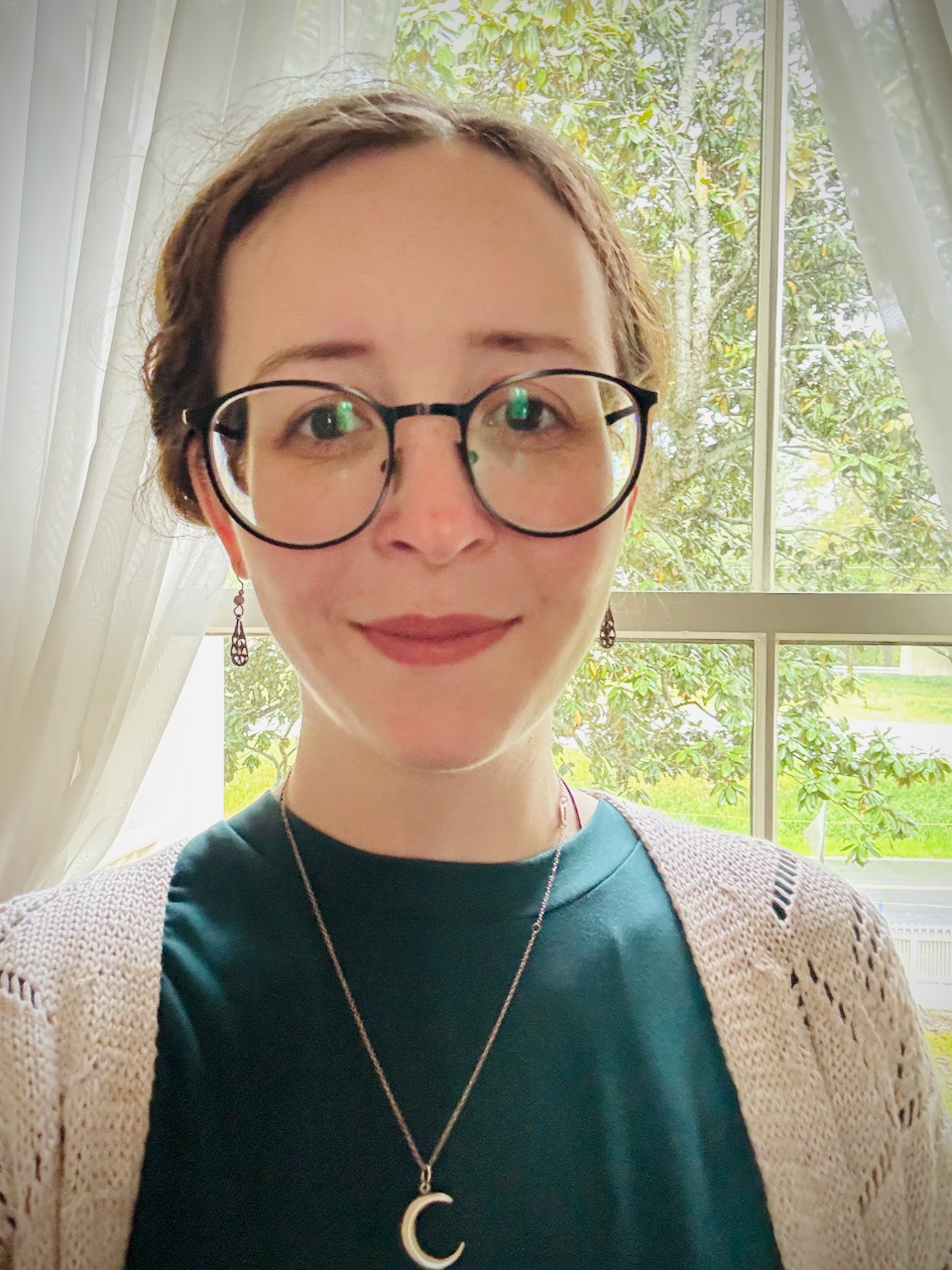
about Emily Pianalto-Beshears.
Emily Pianalto Beshears was born and raised in Tontitown, Arkansas. The year she was born, her father served as co-chairman of the Tontitown Grape Festival, and at just two weeks old, she attended her first festival—an annual tradition she has continued for over 32 years. Her family holds deep pride in their Tontitown roots, tracing their lineage back to Domenico Pianalto and Catterina Penzo. Emily's great-grandfather, Leone “Leo” Pianalto, was the eldest of their children. He married Lucia “Lucy” Ceola, and together they raised 14 children, including Emily’s grandfather Edward, the third youngest. Edward married Elizabeth Shuster of Huntsville, Arkansas, and they had eight children, with Emily’s father, Christopher, being the second eldest.
Leo Pianalto was a founding member of the Tontitown Band under the direction of Father Bandini and was also a gifted singer. He performed locally with Memo Morsani, including at the 1919 Tontitown Picnic, now known as the Tontitown Grape Festival. He was known for singing at his children’s weddings and even made appearances on local radio. His love for Tontitown was literally set in stone—he dedicated 86.5 days of labor to help build the original stone church for St. Joseph’s Catholic Church, a structure that served the community until 1993.
Emily’s passion for Tontitown’s history was sparked early, listening to her grandfather recount stories of their family and the broader Italian immigrant experience in the region. Though her academic interests initially focused on medieval and Tudor England, it was during her studies as a history major at the University of Arkansas that she turned her attention fully to Tontitown’s legacy. Since then, she has been deeply committed to researching, preserving, and sharing the town’s history. Today, she serves as the Director of the Tontitown Historical Museum, where she continues to honor the stories, artifacts, photographs, and documents that have defined the community from 1898 to the present.
episode notes & references.
- Magaly Licolli: Organizing poultry workers starts with learning together – Facing South
- The Mafia in America: A CBS News Documentary (1971) – Context for Tontitown in national Italian-American narratives
- Lynching of Italians in New Orleans (1891)
- Sunnyside Plantation history – Arkansas Encyclopedia of History & Culture
- The Pope’s 1895 blessing of Italian immigrants – referenced in oral history via Emily Pianalto-Beshears
episode outline.
- Italian Immigration & Racial Prejudice (00:00)
- Episode Intro by Mike Rusch (00:01:19)
- Emily’s Family History & Arrival at Sunnyside (00:03:35)
- Oral Histories and Tontitown Preservation (00:09:07)
- Reality of Sunnyside Plantation (00:13:02)
- Conditions & Exploitation at Sunnyside (00:17:35)
- Lynching of Italians in New Orleans & National Prejudice (00:20:24)
- Immigration Law and Racial Hierarchy (00:22:39)
- Leaving Sunnyside and Settling Tontitown (00:26:27)
- Interactions with African American Neighbors (00:31:03)
- Power Systems and Labor Exploitation (00:34:53)
- Founding and Growth of Tontitown (00:39:24)
- Cultural Practices and Grape Festival Origins (00:53:49)
- Belonging and Radical Hospitality (00:57:01)
- Modern Immigration Parallels (00:57:40)
- Final Reflections on Courage, Wholeness, and Storytelling (01:13:05)
episode transcript.
[00:00:01] emily pianalto-beshears.: The Italians were just seen as a problem upon a problem. They keep coming in. We can't stop them. By the, 1910, there are immigration laws specifically written to keep Italians out of America. Those laws are still in place, but they are not targeting Italians anymore. They're targeting the new other.
[00:00:21] emily pianalto-beshears.: It's this revolving door of, who's the new group that's coming in en mass. It's not just, oh, there's a few people coming from Italy and we're worried. It's, there are thousands of people coming every day from Italy and we're worried, well, why are you worried?
episode intro.
[00:01:19] mike.: Well, you are listening to the interview, an exploration in the shaping of our place. My name is Mike Rusch. Today we enter the story of Italian immigration in northwest Arkansas. It's a story of displacement and labor and resistance, and a long struggle to belong.
[00:01:33] mike.: Our guest today is Emily Pianalto-Beshears. Shes a descendant of one of the first Italian families who came to Arkansas in the late 18 hundreds, and also the director of the Tontitown Historical Museum.
[00:01:43] mike.: The story begins in northern Italy with families seeking land and freedom and opportunity in a new world. That hope led them to the American South and to the cotton fields of Sunnyside Plantation in southeast Arkansas where promises of property quickly gave way to a reality shaped by debt, racial hierarchy, and exploitation. Many didn't survive their time at Sunnyside, but some chose another path led by Father Pietro Bandini. A group of families left the delta and journeyed north to the rocky Hills of Washington County. There they founded Tontitown, a place where they could protect their language and traditions, faith and dignity. Through Emily's family memories and research, we begin to understand the layers of that story. How place was claimed and kept through music and architecture and kinship, but also how fragile it was. How easy immigrant histories can get erased or absorbed into a dominant narrative that often prefers nostalgia to truth.
[00:02:37] mike.: This is a conversation about power and place and the quiet work of remembrance and before we begin, I do wanna add one personal note. As I listened to Emily share a family story, I held it in tension with my own, and maybe some listening also share that same similar story. One of my great-great grandfathers came to this country through Ellis Island in about a 1872, an immigrant from Germany. I imagine he came for the same reasons as these Italian families hope, land and survival. But his story ended differently. He folded into society, absorbed into the promise of America in a way that others were not. And I'm still asking what made that difference. Why was one group of Europeans given a path while another was made to walk through cotton fields and prove that they belong. This episode won't give us all the answers, but it does invite us to ask better questions about who gets to belong and why.
[00:03:29] mike.: Alright, a lot to get through today. Let's get into it.
episode interview.
[00:03:35] mike.: Well, I have a privilege this morning of sharing a space with Emily Pianalto-Beshears, who is in charge of the Tontitown Historical Museum, and probably most importantly is a descendant of the first wave of Tontitown settlers and immigrants that came to the space. And so, Emily, thanks for sitting with me. Thanks for sharing the space. Welcome to the conversation.
[00:03:55] emily pianalto-beshears.: Yeah, happy to be here.
[00:03:56] mike.: We're here this morning to hear your story and not only your story, but the story of the people that came to this place. So I'm gonna defer to you and your vast expertise on where you wanna start, but maybe we can, maybe place us within who you are and your connection to this story and how all of that works.
[00:04:13] emily pianalto-beshears.: So I am a, I guess would be considered a fourth generation descendant. My great-grandfather came to America as a young child. He was born in Italy in the early 18 1880s. He was born in 1882, and his father and mother were the adults in this situation. They, his father got a hold of this contract from a Sunnyside company in southeast Arkansas and saw this as a great opportunity to give his sons and his children, better opportunity.
[00:04:47] emily pianalto-beshears.: Where they were coming from in northern Italy, they were living in a house, a four story house with his three younger brothers, their wives, their children, and their unmarried sisters and their parents. Only three stories of the house were livable. The bottom story was for the animals. They all worked on the same farm that was, very landlocked. They were up in the Alps,. They would keep hogs, chickens, things like that. But predominantly they worked on the farm. They farmed corn. They didn't farm wheat up there. So when I tell people that pasta was not a staple, like spaghetti was not served daily in northern Italy, they're shocked. They're shocked when we talk about the polenta being what they ate in the early years of Tontitown and spaghetti was not a factor because they didn't make it at home.
[00:05:38] emily pianalto-beshears.: But anyway, they're in northern Italy, they're landlocked. There's no inheritance. So if you have multiple children, multiple sons. The oldest gets the land, the younger ones are just off to fend for themselves. And so Domenico, my great-great-grandfather, was looking at this contract saying, man, this is an opportunity to give my sons land, like more land than what they could have now. So he and two of his three brothers decided they're signing the contract and heading to southeast Arkansas. They left early November, 1895 and Dominico. His trade in Italy, he was a teacher. He taught Italian, Latin, grammar, arithmetic. He was, that's what he did during the day, and then he farmed at night. He was also in the military. He was a high ranking Italian official for about 10 years of his life. And so he didn't start a family until he was in like his late thirties.
[00:06:40] emily pianalto-beshears.: That was very typical because mandatory military service, it was required. In Italy, you didn't have a choice. You also didn't have a choice If you were a peasant you worked for the aristocracy. That was still very much what their life was like. So the freedoms that America offered were vast. They get here on the ship, voyage over his younger brother. Dionisio lost his youngest son. So they arrive with already one less of their family members. They're on the plantation. And he he wrote about the voyage. We have his actual writings that survived over 150 odd years. And he talks about the voyage. He talks about getting to Sunnyside, and there's hope in that last line where he talks about everything they promised us is here. They had a house, each family had a house. Very different than back in Italy where you're sharing a house with all your siblings. Each sibling had a house right next door to each other. They had room. They thought, this is great. It's exactly what we were promised. And then it all falls apart.
personal connection.
[00:07:48] mike.: Maybe before we get to that part, yeah. Tell me how does this story connect with you maybe today? Obviously you have a role to preserve the history of this place, but this is. Not some abstract history. This is your own personal family history. How do you, like, how do you navigate between those two realities?
[00:08:06] emily pianalto-beshears.: Well, whenever I'm giving a tour in here I do really bring in my family's history because as they move through the two and a half years that they're at Sunnyside. A lot happens to my family. My great uncle Dionisio is the first man to die at Sunnyside. He's crushed by a falling tree. His wife is seven months pregnant with their last child, and she gives birth to her child after he has died. She almost didn't make it to giving birth because she was in such despair.
[00:08:37] emily pianalto-beshears.: And these stories just hit you in waves when you're thinking about, this could be my life if I was back 150 odd years ago, this could be my life. But it's not because they went through all of this suffering and just kept saying, I'm keeping the faith. I'm going to keep putting my foot one step forward and just keep going because it has to get better. And that's really the story of Tontitown, is they just kept saying it has to get better.
story origins.
[00:09:07] mike.: Tell me a little bit how do these stories come to you? Are these you mentioned a little bit, you have written records of these. And I, I'm sure you've researched more than anyone probably on the planet, but like, how are these oral histories that come to you?
[00:09:19] mike.: Yeah.
[00:09:19] mike.: Tell me how these stories come to you today.
[00:09:21] emily pianalto-beshears.: A lot of oral histories.
[00:09:22] emily pianalto-beshears.: My grandfather, he was one of the youngest of the 14 kids that my great-grandfather had. They also, my older cousin, so my dad's older cousins, they actually got. Got the opportunity to sit down with Leo with my no, Leo, that's what I call my great-grandfather. They sat down with him and with a recorder on. They did an interview with him. They would record down stories of him saying, talking about being five years old on the ship. And he was the only one not to get sick, and he was so proud of that being this little boy. And everyone around him is getting sick or watching his mother labor in the fields and calling her a small but mighty woman and having these memories of his uncle, working alongside his mother and they were, each other's best friends. And then watching, literally watching him die right in front of him, watching his friends die right next door to him. These are stories that were passed down through oral histories, through written history. And it's all very hard to hear sometimes.
[00:10:23] emily pianalto-beshears.: I just recently, going through documents. One of my other older cousins had gone through and talked with my great Aunt Eugenia, one of Leo's younger sisters, and reading these stories again and reaffirming the things that, like you hear, that you're thinking, oh, is this a legend? Is this a rumor? And then it's no, this, she's telling the story. And it's exactly how I've heard it told over and over again. It's this is true, it's fact. So there's a lot of, I hear things and I take it with a grain of salt until I find another story or another person tells me, oh yeah, my grandma said the same thing. Okay, well we can maybe put a little truth, stamp on that and say, okay that comes down to, our oral histories.
[00:11:08] mike.: Yeah. So this is not, to your point stories that may have a air of legend to them in any way. These are firsthand accounts.
[00:11:15] emily pianalto-beshears.: Firsthand accounts Yeah.
[00:11:16] mike.: That you've been able to reconnect back with or family members have that recorded these very sounds like very diligently as well.
[00:11:21] emily pianalto-beshears.: Yes. Yeah. And that's one of the Tontitown truisms, is that we find our history very important and recording it is so important to us because memory only lasts as long as the person is alive. So what happens with those memories if they don't record them? If they're not documented, if they're not, someone sits down in front of you and says, tell me about your life. Tell me what happened when you were a child.
[00:11:46] emily pianalto-beshears.: Susan Young and the Tontitown Historical Museum, when they first got started, it was known as the Preservation Project.
[00:11:53] emily pianalto-beshears.: Their goal was to go through and talk to all of the people who were children of those original children, settlers, to ask what was it like living in during World War II and World War I? What was it like living in Tontitown in the forties and the fifties? Tell us what growing up in Tontitown meant like.
[00:12:12] emily pianalto-beshears.: So it was really important, from a very young age, I'm sitting on my grandpa's, lap. He's telling me stories about his dad and telling me, oh, my, no-no. She died down in Sunnyside. My, my great grandfather watched his mom die in childbirth because there was no doctor for the plantation, the doctor that was there, he was too busy.
[00:12:33] emily pianalto-beshears.: He didn't have time to come over and be a midwife to a woman who had given birth five times before. She shouldn't have any problem. She had problems 'cause she was having twins that got tangled and so she bled to death in front of her family. These are stories that they are passed down and as you get older and older, you've, it hits you a little bit harder each time. 'cause again, you're just thinking, wow, I appreciate my life so much more because of this.
the idea of Sunnyside versus the reality.
[00:13:02] mike.: Well, thank you. These are, gosh, these are heavy stories. Yeah. Even even with your obviously a no, I don't even know if that's fair to say, but like I, I can, as I listen to you and watch your face, other people won't be able to see this. I can see the weight of those stories, right? Yeah. Um, so maybe let's pick back up that story of this idea of Sunnyside. Which sounded like from the brochures and what they were signing up for was maybe what that American dream looked like at that point.
[00:13:28] mike.: Yeah. But tell us, take us through what happened.
[00:13:31] emily pianalto-beshears.: We're looking at the 1880s, early 1890s. Italian immigration to America is heavy at this point in time, and it's because of all those things that I said early on.
[00:13:40] emily pianalto-beshears.: In northern Italy, there's no room to grow in Southern Italy the Cosa Nostra the Mafia, they are big, they are part of your day-to-day life. So a lot of the immigration to New York, they're escaping. They're trying to get out, or, they're trying to escape the law because they are part of those gangs. So the Sunnyside Plantation Project came about with this idea that this Austin Corbin, he needed labors. He couldn't get any. He was a New Yorker. He, no one wanted to work for him in the South. So they come up with this scheme to get Italians. You bring Italians over, it's gotta be the right kind. They said Northern Italians are the ones you want, not the southerns, because that's where the mafia comes from. You don't want that entanglement. You need good Italians.
[00:14:26] emily pianalto-beshears.: So all these Italians are coming and for the most part, these northerners, they, they do farm. This is what they're, they do in their day-to-day life. So being a field hand is not strange to them. But cotton is, so they're working on this plantation now that with a product that they've never, they've, they wear it. They don't necessarily work with it though. And, you know, there are hardships along with, the learning curve. They're also told, oh, it'll be two to three years before you're acclimated. Acclimation means, you're good in the summer, you're good in the winter, you're good with all the diseases.
[00:15:03] emily pianalto-beshears.: So in northern Italy, there are no mosquitoes in northern Italy. In the Alps. Guess what? There's a lot of, in southeast Arkansas, there's a lot of swamps in a lot of mosquitoes and malaria runs rampant through the plantation. There's roughly over a thousand Italians, on the plantation. 98 families we've documented, were on that ship, that first ship, that arrives and you got malaria, you've got the fact that there is no drinking water. Dysentery is running rampant as well because they're not given all the tools to properly boil and strain and make sure they are healthy. They aren't given the proper care, in my opinion. They were just dumped and said, okay, go to work. And the more that they, realize things just, this is not right, we should not be living right next to this swamp that is just infested with mosquitoes. We shouldn't be living like this. We should have screens on our windows. We should have a artisanal well that we can, collect rain water.
[00:16:12] emily pianalto-beshears.: They knew that they deserved better treatment and when they asked for it. They were ignored. We've got accounts of them writing the Arkansas Bishops writing New York, asking for aid, writing back home, asking for aid. The Pope at the time, he knew about this project, my great-great-grandfather. I love his tenacity because he he really understood the value of writing. He wrote the Pope before they left and asked for a blessing on their journey and the Pope on, on All Souls Day. The day that they left Italy, the day they left their villages in Del Poso, the Pope sent a blessing that was read to all of them leaving this village and the Pope was aware of what was going on. Talk about pressure for Austin Corbin. You don't just have the Italian government keeping an eye, you got the Pope aware that there are Italians in Southeast Arkansas and things are not going great. And then Austin Corbin dies in June, 1896, right as that first harvest is really, starting to bloom and things are happening and it just all falls apart. Dionisio Pinalto, he dies in a logging accident in early spring. And then it just the ball just starts rolling after that death.
conditions of Sunnyside Plantation.
[00:17:35] mike.: So this situation that your ancestors stepped into at Sunnyside Plantation, culturally, maybe give us some context about what that looks like in the late 1890s, because they're stepping into an environment that was really formed and shaped by a history of violence, and exploitation. Give us some idea of what this looks like.
[00:17:54] emily pianalto-beshears.: Yeah. So, Arkansas, Sunnyside Plantation for most people won't know about it because it doesn't exist today, but Sunnyside Plantation was the largest slave owning plantation in all of Arkansas. All of Arkansas. It was the largest cotton plantation in all of Arkansas. It passed through many owners who, you know, during the Civil War, the owner, he absconded to Texas with all of his enslaved people. And he came back. He had children that were mixed race and his son actually ended up becoming a senator and a sheriff. His daughter was educated. The plantation holds this very kind of fraught history where it passes through all these owners and eventually Austin Corbin has it, and he thinks, oh, we're gonna create a community.
[00:18:47] emily pianalto-beshears.: He says, we're not gonna do the sharecropping thing. We're gonna create a community where eventually they're gonna be landowners. That was not what was going on in the south on cotton plantations or any plantation, it was sharecropping. It was, Hey, we're gonna, we're gonna have you plant the crop, you'll get part of the profit, we'll get part of the profit, and then we'll just, shake hands out the end of the harvest, it was not clean. It was not, no one benefited from sharecropping unless you were the landowner. And essentially, these Italians they're, they've got this contract that says you'll get 12 and a half acres after 20 years. So it's yours. And it's that idea of I'm gonna rent the land for 20 years and then it will be mine.
[00:19:33] emily pianalto-beshears.: Well, most of these men were signing these contracts in their forties, fifties, sixties. Do they really think they're gonna live for 20 years to see that actually fall into their ownership? No, they're doing it for their sons because there was a stipulation in the contract that if they die before their contract term is up, their sons could take over the remaining debt. So they were giving, this opportunity. Again, in their minds, this contract is just everything. It's everything they wanted and for, other sharecroppers in the area, that was not something they had seen before. So it looked clean, but it wasn't they're coming into an area where just the contract alone was illegal.
lynching in New Orleans.
[00:20:24] emily pianalto-beshears.: They were contracting workers outside of the country. They were going to Italy with contracts to bring them over as laborers, but under the smoke screen that they are landowners. So they're tricking the US government, the Italian government, and saying it's all clean. It's not clean. And they're bringing these Italians, the first group comes through New Orleans in 1892. I believe it was about three years before the largest lynching of Italians happened in New Orleans. And they're coming into this area that is already anti Italian. New Orleans had a huge Italian population in the late 1880s. 1890s. And, police officer gets shot in the middle of the night, his dying breath.
[00:21:18] emily pianalto-beshears.: He says the dago's did it and dagos, dagos is a racial slur for Italians. And they round up 60 men for one murder. He had no proof that it was, a daygo. They had no proof. They try, over a dozen, they're all acquitted and return back to the jail. And in the middle of the night, instead of being told you can go home, you're free, you're innocent.
[00:21:42] emily pianalto-beshears.: They go back to jail where a mob masses pulls 11 innocent men. Some of them hadn't even gone to trial yet and lynch them in the city center. Imagine pulling up on a boat three years after that happened with your children and thinking, are we gonna get through this city alive? Are we gonna be allowed to get to the plantation where we own land?
[00:22:11] emily pianalto-beshears.: The Italian government had to have assurances before they got into New Orleans that they were not going to be lynched.
[00:22:18] mike.: Help us frame this, because I think probably for most people who aren't familiar with this history it's definitely not a part of the history books that I heard.
[00:22:26] emily pianalto-beshears.: No.
[00:22:27] mike.: This kind of racial environment is something that we talk about. I think from an American perspective, we understand that in the terms of African American violence and racial segregation. Yeah. And yeah,
prejudice towards Italians & immigration laws.
[00:22:39] emily pianalto-beshears.: there was a huge prejudice against the Italians because they were the new other, the new immigration populace that's coming in and taking jobs and taking land and taking up space. That was the thing up in New York, was they're taking up space. We don't want them in our space, but they didn't wanna help them get out of New York. Father Pietro Bandini, at this point in time, 1892, he is in New York trying to get someone to back his plan to literally take Italians from New York City, put them on a train and send them to Wyoming. Wyoming's wanting more immigrants, wanting more people, 'cause they wanna become a state at that point in time. They need more people to become a state. Father. Bandini has this idea, let's get them out. Let's get them outta the places where they're not wanted. And the government's we don't wanna give them a handouts if we give them a handout. And they go cause trouble out there, then that's just another problem we have to deal with. The Italians were just seen as a problem upon a problem. They keep coming in. We can't stop them By the, 1910, there are immigration laws specifically written to keep Italians out of America. Those laws are still in place, but they are not targeting Italians anymore. They're targeting the new other. And it's just it's this revolving door of, who's the new group that's coming in en mass. It's not just, oh, there's a few people coming from Italy and, we're worried. It's, there are thousands of people coming every day from Italy and we're worried, well, why are you worried?
[00:24:19] emily pianalto-beshears.: It's the stigma. Up in New York, you get a lot of Southern Italian, central Italian Sicilians. Northern and Southern Italians are different. Ancestry.com actually stipulates that there is a difference in DNA between Northern Italians and Southern Italians. So in, when I did a DNA test, it says, you are X amount. Northern Italian. It doesn't say just Italian. It specifies the difference.
[00:24:49] emily pianalto-beshears.: We're all loud, we're all, we use our hands as I'm doing. We, we're always fighting between each other. That's Italy. Italy is a country that was always fighting, always bickering. There was always something to fight about. And so, you know, you have these people, they don't speak the language. They're not Protestants, they're not Baptist, they're not Methodist. They're Catholic. Up in New York, you get a lot of Sicilians, a lot of Southern Italians that are very dark. They don't look like us. They're, they got slick back hair. They're, they just don't, they're not American. And that was really what it was. They weren't American. And so how do we trust them? How do we communicate with these people when we don't understand where they're coming from, what they're doing here, and just what they're about? And so that's where the Tontitown story kind of evolves.
[00:25:41] mike.: I mean, Emily, there's a lot, there's a lot right there. And this may, this could turn into 15 episodes, I feel like. 'cause I wasn't sure as you were describing that situation, if you're talking about the reality of modern day and you're both, not both specifically, but this, I think this perspective, there's this situation mm-hmm. that these Italian immigrants find themselves in
[00:26:04] mike.: Yeah.
[00:26:04] mike.: Has incredible parallels to the story of immigration to this country in many ways. Yeah. And I think, you know, sitting with you the goal is to try to understand that from a perspective that maybe we've not seen before.
[00:26:16] mike.: Yeah.
[00:26:16] mike.: And maybe I within, maybe before we go into modern day implications, although that's hard to do, is I'm like, yeah.
[00:26:25] emily pianalto-beshears.: It's so easy to just go straight into it. Yeah.
leaving Sunnyside.
[00:26:27] mike.: Well, I want to jump to all of that, but maybe maybe place this in the story a little bit. Because that they step into this space, it's Sunnyside Plantation to find themselves in a place that they didn't expect amongst a very hostile environment to say the least. But ultimately they have the ability to leave that place, right?
[00:26:44] mike.: Yes.
[00:26:45] mike.: And so I'm happy to talk more about the reality at Sunnyside, but I'm also really curious of what what is it that they finally say enough is enough and something has to change?
[00:26:56] emily pianalto-beshears.: So really Austin Corbin dying in 1896 in that summertime, his heirs, they.
[00:27:04] emily pianalto-beshears.: They were already contracting a second group. Another group was being, handed contracts saying come to southeast Arkansas. Come to the plantation. They put a pause on that. His heirs were like until the will is set. We really can't bring any more people. We can't be responsible for more people. And then, they quickly get everything in order and say, okay, if we're gonna make this, if we're gonna make money off of this project, that, it, his son-in-law was one of the people that takes over. They're like, we need more people. To make more money. So they ended up bringing another shipload over.
[00:27:36] emily pianalto-beshears.: And by this point, father Bandini is down with the Italians. He is, he was working with Austin Corbin, trying so hard to get all of the things that were needed, trying to get screens on the windows, trying to get mosquito nets for the beds, trying to get wells, and all these things that they were asking for done. The new owners don't care. The new owners are once again saying, why should we put more money into something that we haven't seen a profit from? So until we see a profit, we're not doing anything. Second group comes in and, it's 1897, by the time that they're in Sunnyside and everything has just basically fallen apart by this point.
[00:28:17] emily pianalto-beshears.: The Italians start actually sending different groups of people. So the way Sunnyside was set up, it was regional. Yeah. In Italy, we all speak different Italian. From region to region. If you're from Vineta, you're not speaking the same Italian as if you're from Orvinio, from Rome. Very different dialects. And so they almost couldn't communicate with each other. And so that was an issue on the, and.
[00:28:42] mike.: Maybe right, maybe by intention.
[00:28:43] emily pianalto-beshears.: Yeah. Yeah. And so each group, they did have various different regions represented, especially from that second group. The second group was actually from more Central Italy. They were also not farmers. They were shopkeepers. They were shoe makers. They were carpenters. Stone masons, they did not farm. Said they were shocked when they were on the plantation. They had been told, oh yeah. Eventually this'll be a community. There will be shops, there will be industries other than farming for you to do. That was all taken away with the new owners. They said, Nope, it's farming only. Then they started to rip up the contracts and say, you know what? If you're gonna keep complaining, we're just gonna make a whole new deal. And the new deal was even worse. And then the original deal, they were no longer gonna be paid in US currency. They were gonna be paid in Sunnyside company money, meaning that money was not good outside of the plantation. You are locked to the land. You are stuck where you are at.
[00:29:46] emily pianalto-beshears.: And so you have these delegations from all these different groups going out into the south. Some of them went to Alabama, Louisiana, Texas and just searching for other opportunities. And they go back. The owners are saying, okay, we've got a new contract, if you will sign it. Stay, you'll, we'll keep going with, the way that we've stipulated or you can leave, we're not helping you. That was one thing that an investigation had started in early 1897 and the investigation said, this place is uninhabitable for human life. Any human life, these people need to be given reparations. They need to be paid what they were due and all of the money that they invested into. This land needs to be repaid and they need to be helped back to their homeland. The new owners say, okay, you can leave without having to repay your debts. That was as good as they were gonna get. You can leave with your life and whatever little money you scrounged away and saved. Go and have a good life.
[00:30:55] mike.: Were this is maybe just for my own knowledge, were, was this were they in Sunnyside with other immigrant groups as well too?
[00:31:03] mike.: Yes.
[00:31:03] mike.: Or formerly enslaved people as well?
[00:31:05] emily pianalto-beshears.: Yes.
[00:31:05] mike.: What did that situation look like?
[00:31:06] emily pianalto-beshears.: Some of the stories, I don't have a lot of stories of that, those specific interactions, but from what I've read, there were some formerly enslaved African Americans who were living on the plantation and it seemed like they were taking the Italians under their wing and teaching them about the crop that they were having to work with. Because again, they don't know what cotton is as far as the plant goes. They know what the fabric is, what the fiber is. But we do know that there were some interactions. I can't tell you what other immigrant groups were down there because predominantly it was Kentucky origin for the white people that had eventually moved to Arkansas to buy plantations had descendants. So they're white. More than likely Irish German descent, but then African Americans. So there were still there and there is still a big population down in southeast Arkansas. As far as those interactions and those stories, we don't have a lot.
[00:32:04] mike.: There's still a big population of Italian
[00:32:06] emily pianalto-beshears.: african American and Italians down there as well. Because after the split happens, after, all the groups that want to leave, only 31 families signed that new contract. Out of 178 and 178 is the rough number because from what my great-grandfather has told all the family, he watched whole families die. He's, he said Sunnyside is the place where Italians went to die. That is what he thought as a 6-year-old, they brought us here just to die. They didn't care about what happened to the families. And the fact that you could have a mother, father, and six children all die in a week and be buried all in the same grave. And the cemetery that's down there that his uncle, his own mother and his twin young siblings that did not survive birth, that cemetery was almost developed.
[00:33:04] emily pianalto-beshears.: All of the headstones are gone because in, in the thirties they, someone said, oh, this land, we could till this land if the stones weren't there. And nobody knew that this was a cemetery. This is, almost a generation after, these deaths happened and it's still. They're still kinda kicking us while down. Why take headstones out of a cemetery That was marking this point of history on this plantation, that this plantation happened and that these deaths happened because they did not want to help them. They didn't wanna give them drinking water. They didn't wanna give them, ways to keep the mosquitoes from just absolutely wrecking havoc on their homes.
[00:33:44] emily pianalto-beshears.: Southeast Arkansas is not a pleasant place to be in July. Now imagine being down there with no screens on your doors or windows and no ac. And so the only thing you can do to, keep the air flowing in your house is opening all the windows, inviting all of those bugs in. There's no safe place to go.
[00:34:03] emily pianalto-beshears.: You are going to, you are going to get sick.
[00:34:06] mike.: Does that cemetery still exist today or is that...
[00:34:08] emily pianalto-beshears.: it does. I actually had the opportunity last summer to go visit it for the first time. And has it
[00:34:13] mike.: been cared for or reestablished or
[00:34:15] emily pianalto-beshears.: No. That's something that there's a goal within a group of Tontitown descendants who have ancestors buried up there that we would like to get up there.
[00:34:25] emily pianalto-beshears.: Do some, you know, I'm not sure what the terminology is, but to do some land graphing some care. Yeah. Yeah. And actually try to find where each person is buried or where, multiple people are buried. And just try to start gathering those names because we know they're there. The flood that happened did not wash away those graves. There's a cross that memorializes and then there's a place marker that actually talks about the story, but that's about it.
power system.
[00:34:53] mike.: Given all of these stories, like how would you describe the power system that existed at that time?
[00:35:00] emily pianalto-beshears.: Well, especially think of the Italian. You're coming into this country, you don't speak the language. You don't look or dress the way that everyone else is dressing. You don't even have necessarily the same currency. So you're coming in and you're relying on others to help you. And that's all that they were doing is they were relying on Austin Corbin and the managers of the plantation to help them to understand what they were getting into. Explaining, how to farm cotton, how to communicate with their neighbors, with, the other Americans that are, outside of Sunnyside Plantation.
[00:35:36] emily pianalto-beshears.: And, they're really relying on others. And so that's why it's so easy for them to be taken advantage of. Italian immigrants, all immigrants face exploitation at a higher rate than any other person. Children, of course, but in a way, an immigrant and a child are hand in hand.
[00:35:57] emily pianalto-beshears.: They don't necessarily understand what's going on around them to be fully informed by experience. An immigrant might see something and say, that's not right. But how do they communicate it?
[00:36:08] emily pianalto-beshears.: If, they're using their hands? They're just seen as oh, they're wacky. They're, we don't know what they're trying to say, but, they're funny to, to try to listen to. They're mocked in a way. They aren't seen as the same level of citizenry, immigrants. They're the lowest of the low in a way. On the plantation, they were seen as lesser than the formerly enslaved African Americans. They were oh, in a term, white trash. They weren't even white.
[00:36:37] emily pianalto-beshears.: They didn't see them as white. They were immigrant trash. They were just there to do what they needed to do. And if they died, that's okay. We can get another boatload. And that's what they did. They got another boatload. And after the Italians separated and they're left, the company was left with 31 families.
[00:36:54] emily pianalto-beshears.: They waited a couple years and then they started bringing more Italians over. More Italians over every year for over a decade are brought over and treated the exact same way, if not worse. There were immigrants who tried to leave the plantation because they were trying to earn more money to pay their debt off quicker so they could own the land or leave.
[00:37:16] emily pianalto-beshears.: These men went to the manager, got permission to leave when it was off season to go work in a mine. They're on the train headed to this mine. That's, just a couple hours away. They're pulled forcibly from this train by the sheriff and arrested. For leaving when they owe a debt and they are returned to the plantation.
[00:37:40] emily pianalto-beshears.: And then the next day in the middle of the night, the owners come to their house and say, you no longer have property here. You no longer have a contract. Get off of the land. And they're kicked out in the middle of the night in February. It just, the treatment is, it's just horrendous. And this happened after my ancestors left.
[00:38:04] emily pianalto-beshears.: I just can't even describe, what else happened down there because for, from the point that my family leaves and in 1898, we hear good things about their life because they left. Yeah.
[00:38:21] mike.: Good Lord. I think you're giving me a context that I didn't know existed. If I'm honest. Yeah. I've tried to do my homework of which I've failed miserably. I think I've, I'm starting to, there's so much.
[00:38:32] mike.: Well, but I think what you're revealing is not is the story of Italian immigrants, but what you're revealing is a even broader cultural narrative and framework that affected so many people that it's obviously we see how this also comes into modern day as well too.
[00:38:49] mike.: So I think the framework that you're providing is just much, much larger than what's happening to a group of Italian immigrants that is significant. Yeah. I don't, I'm not saying it's not, but when you talk about the plight of immigration and you talk about the plight of labor exploitation, these are some massive frameworks that have developed over centuries. Yeah. That now find themselves yeah taking their toll taking their measure on these Italian immigrants that came to your ancestors.
[00:39:15] mike.: Yeah.
[00:39:15] mike.: Walk me through, I want we'll get to modern day, but walk me through. What happens if you will, once they come here to northwest Arkansas on this journey?
[00:39:24] emily pianalto-beshears.: Yeah, so Father Bandini he had gotten sick several times on the plantation as well. And so at one point in time he was ordered to leave to get better air to Convalesce so he actually, he came up to northwest Arkansas to rest and recover from his illness. And we believe he was up in Rogers, so he was aware of northwest Arkansas.
[00:39:46] emily pianalto-beshears.: When he goes back down to the Italians and they're just all up in arms like, we're leaving, we're done with this. And he's okay, I know a place. It's got clean air. All of the towns have spring in it, Siloam Springs, Eureka Springs, spring Dale. There's clean water, there's natural springs all around this area. Let's go there. So he brings Felix Artem. Pietro, Pinalto, Dominico Pinalto. And my great-grandfather, Leo, he was eight years old at the time, they actually come up to Northwest Arkansas. Bandini is okay, what do you think? And they all are like, this is it, this is like a scouting expedition. This was a scouting expedition.
[00:40:25] emily pianalto-beshears.: They were the delegates from their group, from the Vito group that were like, okay, we're gonna go find our new home. So they get up here and the story, this is, one of those lovely legends, Felix Emani, as they're cresting the Boston Mountains. I always tell people, the tunnel, the Bobby Hopper tunnel didn't exist back then. They had to go over the mountains to get up here. But the story goes out as they're cresting over the Boston Mountains. Felix Emani says, we are home. When you look at pictures of Del Pessoa, where my family's from, it's right on the Alps. There, there are mountains, there are rolling hills, there are trees. It is just gorgeous. What do you have up in northwest Arkansas? You've got rolling hills, you've got small mountains or people always say those aren't mountains, but they're mountains for Arkansas. It reminded them of a little Italy. So they get up here and it's this is home.
[00:41:16] emily pianalto-beshears.: Um, they get up here and there was a family called the Smith family. They owned most of the land, like what we're sitting on today. The numbers go all over the place from 200 to 600 acres, but it was a large amount of acreage. They the family had served in the Civil War, so they were given land and they couldn't farm it. They couldn't make a profit. So they were like, you want this land?
[00:41:43] emily pianalto-beshears.: Sure you can have it for $8 an acre. And we don't know if it was personal prejudice or pressures from neighboring towns, but when they found out who was buying the land they, father Bandini is, he speaks English, Italian, Latin. He spoke several native languages as well. He was a missionary. So he comes in he's the dealer. He's, making all the contracts, signing all the deeds and everything. But when they find out that it's actually Italian immigrants, poor Italian immigrants coming and moving they raised the price of $15 an acre and Father Bandini couldn't afford that.
[00:42:22] emily pianalto-beshears.: So he actually had to go out and get loans. And luckily Father Bandini, I always loved to say he was the politician, he would shake hands and kiss babies and he made friends with everybody. It was really good. He did a man named JH Meagle from magnolia, Arkansas was a Catholic. Heard about the Italian immigrants, like what was happening down at Sunnyside. And I say he heard Sunnyside Plantation was published about Nationwide. I have found references in Chicago, New York Connecticut of the Carolinas. I have seen references in Oklahoma just about this plantation and what was going on, and the fact that there were investigations at this time and JH Meagle hears about this.
[00:43:09] emily pianalto-beshears.: He's they're Catholic, they're poor. They are just trying to get their start that they didn't have on the plantation. He foot the bill, he pays $4,800 for the initial purchase of Tontitown Land with the stipulation that the Italians would repay the debt within the first Good Harvest. And it was really good, he said first, because it took two years to get to Good Harvest.
[00:43:32] emily pianalto-beshears.: The Italians, they come very slowly. It depended on their contract. I've got newspaper records that there were Italians as early as February in Northwest Arkansas. And then, more references of, 10 more families have arrived as late as May. So they were coming in small groups.
Emily's family.
[00:43:48] emily pianalto-beshears.: I know personally that my family came via train. My great grandfather, he was fairly wealthy back in Italy. He was able to amass, money from teaching. So he had some money set back and luckily he did make a little profit off of that first harvest. So they were able to buy, train tickets and get up to Northwest Arkansas.
[00:44:08] emily pianalto-beshears.: And they did try to live in Springdale just for a little bit while they were waiting on everyone else to get up here and Father Bandini to settle purchasing all of the land in the houses. And my great-grandfather talked about, they tried to go to the school in Springdale and they were almost stoned. Local kids and adults would throw rocks at them and just hurl the worst racial slurs.
[00:44:32] mike.: These are firsthand accounts too.
[00:44:34] emily pianalto-beshears.: Yes. And this is, an 8-year-old boy walking to school with his 6-year-old sister, 5-year-old sister. His little brother wouldn't have been going to school yet. He would've been three, but these are little kids and adults are doing this.
[00:44:50] emily pianalto-beshears.: And very quickly they said, yeah, we tried to go for two days and we stopped because we knew if we kept trying, we would end up getting hurt or worse.
[00:44:59] emily pianalto-beshears.: So they stayed home until Father Bandini and everyone else got up here. And then when enough of the families are up here, they're living just like back in Italy, two to three families per house, and they're not relatives anymore.
[00:45:13] emily pianalto-beshears.: You've got the Morsani's and the Pape and the Bassineli families all living in the same barn, together. That's, you know how so many of these children of the first settlement, they end up all marrying each other because they grew up in this very concentrated point in history of Tontitown where they were old enough to have known what happened down at Sunnyside but they got to grow up with Tontitown. So they got to be here when it was settled. Got to see Ambassador de Planche arrive in 1905 and say, wow, what a great town you guys have made. And see Father Bandini, become mayor and see him die and then go all the way through World War I, world War ii.
[00:45:55] emily pianalto-beshears.: And they are, I call them, they're the Tontitown generation. Mm-hmm. Linda Basstinelli, the, one of the owners of the house that we're in she was 16 when she arrived in America. And she died in 18 or 1985 at 102. Wow. She got to see Tontitown, literally from dirt Road 412 that barely had two lanes to a five lane highway that has semi-truck driving right in front of her house. She, these people got to see it all. And so their stories are so important and why it was so important for the museum to really gather all these stories up because they saw it all. They experienced the racial slurs, the prejudice firsthand. My great-grandfather had to walk into the schoolhouse that was almost burned down over the weekend and sit and take, grammar class because he was trying to learn English.
[00:46:58] emily pianalto-beshears.: That way he could go get a job. Ms. Bernadette Brady was the first school teacher. She was from Arkansas. She was hired by Father Bandini to go to Sunnyside Plantation. She started teaching the kids at Sunnyside, and she loved Father Bandini so much. She came with him to Tontitown and continue teaching the children. She would teach the kids during the day and the adults at night because the adults wanted to learn English so badly. They all wanted to become American because they just wanted to fit in. Father Bandini really instilled the need to learn English, because if you do not know English, you'll be taken advantage of.
[00:47:39] emily pianalto-beshears.: If you don't know the language, you cannot protect yourself and what is yours? They learned that very quickly. Father Bandini went he was out of town. I think he was in Eureka Springs. I haven't found the record yet, but the tax people come through and back then they would knock on your door and do your taxes right at your door and, you would then have to pay them.
[00:48:01] emily pianalto-beshears.: The tax act guy came to Tontitown and no one in Tontitown paid their taxes because no one was in town who could read English and translate it to them saying, taxes are due. They had the money for taxes. They just didn't know it was time to pay them. Father Bandini gets back and finds out they've all been fined, and he goes to the Washington County judge and says, they have the money. Could you just be lenient? They did not have a translator. We just need, some grace in this learning period for them. The judge said, no he fined them and the Italians learn very quickly how important it was to know English, but also how important it was to be have applied for citizenship.
citizenship.
[00:48:48] emily pianalto-beshears.: Back in those days early 1900s, if you had declared your intent to become a citizen, there were, it was about a four year process to be fully a citizen. But if you had signed a Declaration of intent, you could vote. Most of them had signed that declaration of intent within the first two years of settlement. That's, you have to be on the land for two years, then you can sign your declaration of intent. So by 1900 you've got all of the men signing their Declaration of Intent and all the 18 year olds signing their Declaration of intent. Guess what? Judge gets voted out the next election. They learn the power of the vote, the power of English, the power of being part of America, and being in it, and how important it was.
[00:49:38] emily pianalto-beshears.: And that was Father Bandini's doing. And, people always say, we've got people up in New York. I've got friends from New Jersey that are Italian, and they look at us like, you guys have lost so much of your culture. That's exactly what Father Bandini wanted and what my great-great-grandfather wanted, what my great-grandfather wanted.
[00:49:59] emily pianalto-beshears.: They wanted to be American because that's why they came here. They came here to be American and to get the American benefits. We still hold our Italian heritage close in our hearts. I still consider myself Italian American, even though I'm Polish and Cherokee and English, like I'm still Italian American because of the history that I hold so dear to my heart. But being American and being part of the society that we're living in was so important to them. And World War I Was that that turning point where? By that point, they already felt themselves American, but they weren't seen American by their neighbors. Springdale didn't want the tines in their school district, so they said keep them in Tontitown.
[00:50:50] emily pianalto-beshears.: The St. Joseph's school was it was built in the thirties, but in the early 19 hundreds, St. Mary's Academy opened and it was a boarding school and a day school. And it was led by nuns. It was more religious. But when the fire happened in 1927, burned that building down, they rebuilt the stone church that's currently sitting there. And it was a public school. It was publicly funded by the state and taught by nuns. And the reason for that was, again, they didn't want the Italians in Springdale. They wanted them to stay in Tontitown. They wanted that separation of the cultures and. It just then in the eighties, that kind of changes.
[00:51:32] emily pianalto-beshears.: And they didn't like the fact that there was a state funded school that was run by, by Catholics. So changing times happen through Tontitown.
cultural position today.
[00:51:42] mike.: I'd love your perspective too because I think today I've been in northwest Arkansas for, I don't know, 35, 40 years I feel like. Yeah. And there's this awareness of Tontitown that I've known of an Italian Yeah. Immigrants. But I think in many ways that identity is probably, it feels like it's shifted in some ways and obviously the, the value in what you're trying to hold onto here at the museum is to hold onto that identity. Yeah.
[00:52:06] mike.: But culturally. Where do the people, these Italian descendants such as yourself, where do you, like, where do you sit within this space today culturally, if that makes sense?
[00:52:15] emily pianalto-beshears.: Again, I still consider myself Italian American, and there are still traditions that we hold dear to our hearts. The Grape Festival is the longest running fruit festival in Arkansas, and we still do a grape stomp, and that hearkens back again to the old country, to, to Italy.
[00:52:34] emily pianalto-beshears.: And specifically the museum. We, we hold a polenti smear every year, and most people they hear polenti smear and they say, what is that? That sounds medical, that sounds gross. And it, again, it hearkens back to northern Italy and the fact that they grew corn. And we hold these traditions just so dear, because if we don't, then they fall away. And why they're important falls away as well. In Tontitown, the first winter polenta with rabbit was all they could eat. So that's why we still hold the polenta smear, not just for Northern Italy, but because that first winter, the only meat they could catch was rabbit. And they said, if it hadn't been for the rabbits, we would've died.
[00:53:17] emily pianalto-beshears.: And so we hearken back to that, that first winter, 1898 of them suffering and just trying to feed themselves because again, if you couldn't grow it, you couldn't eat. And they weren't going, they were poor when they got up here. So they weren't going to Springdale and buying, groceries upon groceries. That was not a thing back then. And not only just holding those Italian roots close to our hearts, it's holding those first couple years of Tontitown. Very dear in our hearts, because through the struggle is where we reap the benefits.
origin of Grape Festival.
[00:53:49] emily pianalto-beshears.: That first summer, 1898, they hold a picnic and it was in June. June 29th is when the picnic, the Tontitown picnic was, it was to celebrate Father Bandini. And the fact that he saved them, that is what many of them talked about, was that Father Bandini was like the savior. He was the Moses that led them out of the swamp land. And he heard them, he heard what was going on, and he wanted to help. And so they, they host this picnic, not only for Father Bandini, but to just thank God for their lives and the fact that they have a chance to live a new life and to actually do what they came to America to do, which was farm, raise their families and embrace this new culture that they had moved into.
[00:54:37] emily pianalto-beshears.: And so the picnic happens and they all bring their family dishes. Most of them bring polenta, stews, the Morsani, Virginia Morsani brings her spaghetti. And very quickly, it happens every year, every June it happens. And then by 1913 we have grapes. It's moved to August and we have the grape festival. When you read stories of, my grandfather's generation, they talk about the grape festival. It was so much fun as a kid and it's just so much work but you hear them talk about their parents and how important it was for their parents. So my great-grandfather's generation, it was important to them because this was their connection to northwest Arkansas. This is how Northwest Arkansas came to embrace Tontitown.
[00:55:23] emily pianalto-beshears.: If it wasn't for the festival, their neighbors and Johnson and Fayetteville, Springdale, Eureka Springs, Siloam Springs would have never come into the city center and sat down at a meal with them under the trees 'cause that's what they were doing. They were having Virginia Morsani. By 1904, she's making her spaghetti at her home. She's mixing it, putting it on a pan, and walking from her home to the schoolhouse, the Smith Schoolhouse and city center, about mile and a half with the pasta on her head to feed guests. They eat under the trees, they eat picnic style, and it was inviting their neighbors and for this simple meal.
[00:56:02] emily pianalto-beshears.: A very simple meal to have races they would use like sack races, ladies races they had a fat man's race once and the same guy won two years in a row. They would have like mule races, slow mule races. They had fun and they just showed their American neighbors, this is how we have fun. And the neighbors are like, well, that's also how we have fun. We have a connection now, and it just builds year after year with this festival. And again, in the newspapers, they continuously say, especially in those early years, all are invited. They're not excluding anyone for religion, race, gender. They said everyone is allowed to come here and enjoy this afternoon with us. And it was so important and it's still true today in northwest Arkansas. The Grape Festival is one of the highest attended festivals in our region and everyone is welcome. A hundred, 126 years, everyone is welcome.
no one is excluded.
[00:57:01] mike.: Well, I love that it speaks to Yeah a sense of belonging and a sense of place and building a community. Mm-hmm. coming here, Given the history that that your ancestors had of maybe not of not being welcome
[00:57:13] mike.: Yeah.
[00:57:14] mike.: To a place where your response is to say, all are welcome.
[00:57:18] emily pianalto-beshears.: Mm-hmm.
[00:57:19] mike.: It's a pretty tremendous transformation.
[00:57:22] emily pianalto-beshears.: Yeah. Big turnabout.
[00:57:23] mike.: Yeah.
[00:57:24] emily pianalto-beshears.: Where they were excluded from everything they in turn said, no one is excluded.
[00:57:32] mike.: I feel like we have some things to learn from these stories for our modern day culture and our attitude about what it means to be welcome in a place.
immigration then vs. now.
[00:57:40] mike.: I'm curious, given the history of Tontitown and given the history of your ancestors and immigration maybe if you want to invite you to speak into the modern day situation around what immigration looks like. We're obviously here in Springdale.
[00:57:56] mike.: There's a large immigrant population and given our national dialogue, if you wanna call it that I'm curious what lessons, what do you see happening from your perspective in this world that maybe your history and your background, your Yeah perspective could maybe give us some insight into
[00:58:16] emily pianalto-beshears.: Yeah. I went to Springdale. I was in Springdale Public Schools, so I was around a lot of, first generation immigrants. They came with their parents, grandparents, they were born here or they weren't born here. And so now that I'm working here we have a group of students that come from one of the local middle schools.
[00:58:35] emily pianalto-beshears.: And they come in new group every year and they always wanna get a tour and learn about the history. And so when I tell the story, I spent it, talking more about my great-grandfather and his experience as a child. He came over as an immigrant. He did not know English, so he had to learn English.
[00:58:53] emily pianalto-beshears.: And then very quickly, 'cause the children, they're sponges. They learn the English so quickly, they're translating for their parents. And that was one thing the. This group of students, they came in and I'm telling the story and talking about how the kids would go, their parent with their parents to Springdale to buy groceries and they'd be trying to translate, they need a tub to make whiskey to make wine.
[00:59:15] emily pianalto-beshears.: But they, they needed certain things and they were trying to, translate for their parents. And the girls and boys are just looking at me like, I do that for my parents. I thought this was just something that, that we did because we speak Spanish and it just dawns on them the story of immigration.
[00:59:34] emily pianalto-beshears.: It's a revolving door, like I said earlier it's a new group every so many decades. There's a new group, a new language that is the barrier. And so those connections that we're making with our story of immigration and the modern immigration is so important because. We get through the hardship, we get through the prejudice.
[00:59:56] emily pianalto-beshears.: It takes a generation to get through prejudice in Tontitown, you know, as far as, trying to burn down buildings and trying to, arrest them for petty crime. My father still had racial slurs slung at him when he went to St. Joseph's school until eighth grade and in ninth grade he's walking into Southwest Junior High and being called a wop.
[01:00:23] emily pianalto-beshears.: This is the sixties, and you just have to, he is third generation. So as an immigrant, you're always going to be faced with those things, whether it's name calling, whether it's inaccurately, stating, oh, you must be this ethnicity. And it's handling it with grace that is, super important in the way that the Italians handled most of their problems was they just handled it with grace.
[01:00:55] emily pianalto-beshears.: And that's hard to do nowadays because we're in a society where, it's like you should know better. They should know better than to say these things or do these things. And I feel bad for the immigrants now because it's just non-ending. Social media did not exist when the immigrants, my ancestors were coming over, the newspaper existed.
[01:01:19] emily pianalto-beshears.: Springdale News published, in 9 18 95 that Italians, that Degos were coming to Arkansas. This was three years before they come to Northwest Arkansas. But they felt the need to publicize that their Italians in Arkansas and basically be warned, criminals were moving in. Had social media been a thing back then, I can only imagine what would've happened.
[01:01:43] emily pianalto-beshears.: And they probably would have left, they probably would have not stayed. And having Grace to accept people for who they are and not the ethnicity, the race, the religion that they are personally is so important. Italians were given this moniker. They're all thugs. They're all gangsters, they're all mobsters.
[01:02:12] emily pianalto-beshears.: They they were just lumped into this whole class of people. And then you get Tontitown, CBS News in 1971, did a documentary and they came to Tontitown, Arkansas. Population 474. They filmed at a great festival and they talked about the assimilation of these Italians. They were not, Italians or Italian Americans.
[01:02:44] emily pianalto-beshears.: They look like everyone else, in northwest Arkansas. They speak the same language. They don't have an accent anymore. You couldn't tell that they're Italian or German. They just were from Tontitown. They're set, they build it as we're gonna be talking about Italian American Life comes out.
[01:03:06] emily pianalto-beshears.: The title is The Mafia. Tontitown was used in that documentary to show what Italians should have done when they came to America. They're showing, this is the year the Godfather comes out. They're showing Colombo being shot. They're showing these gangsters in New York and New Jersey, wrecking havoc all over the streets, and then clip to northwest Arkansas.
[01:03:38] emily pianalto-beshears.: And watching that documentary, it made me really understand how important it was for Tontitown to do what they did in the early years. Because if they hadn't done that stigma would've just stayed on them for generation after generation. And I don't wanna say, everyone needs to become American and speak the language.
[01:04:02] emily pianalto-beshears.: I wish my ancestors had continued to teach us Italian. My dad doesn't speak Italian. His dad didn't know. He knew a little Italian just from being yelled at by his father and mother, but they lost the language, which in a way, they lost part of that culture because. Again, our village in northern Italy speaks a very specific dialect, so when we go back, we can't even communicate with them.
[01:04:31] emily pianalto-beshears.: I have cousins still in Italy that are still living in the family home that I can't communicate with because we lost our language. We lost part of our culture in that. So it's a delicate balancing act of becoming American and still holding your culture and holding those roots that you come from.
[01:04:54] emily pianalto-beshears.: Whether you're a third, fourth generation, it's still important to know where you came from because that informs who you are as an American. You know my story with Italian immigrant background, I do hold a special place in my heart for immigrants coming nowadays because I think, man, you could have been my great-grandfather.
[01:05:20] emily pianalto-beshears.: You could have been this little boy, on a boat, just so excited for the future because you're going to America, you're going to the place where, everything is sunshine and daisies, and you get here and you're not treated how you thought. Father Bandini, he had a scathing rebuke for the vandals who tried to burn down the school. And he actually said, perhaps if I had taken my people among savages Native Americans, they would have been treated better.
[01:05:55] emily pianalto-beshears.: It just speaks to the culture that Americans always hate others generation after gener, the Irish, the Germans, Japanese, Chinese, every group has gone through it. And right now. It's our citizens from Mexico, from South America they're dealing with it. And again, social media has so much influence over the attitude.
[01:06:22] emily pianalto-beshears.: If social media wasn't as big as it is now and in every everyone's pocket, I think the acceptance would've been a lot quicker coming about. We need them, we need immigrant laborers, we need them. There's no longer great vineyards in Arkansas or in Tontitown. There's no longer chicken farming in Tontitown. Tontitown was the first contract with Georgia's and Tysons when they started up. Those industries don't exist because they're not people in this town that want to do them. So we've lost part of our culture in farming. Maybe if we'd had more workers that were willing to do that work, to keep that part of our cultural alive, it would still be here. They're needed. And it's also, it's part of the American story Immigration. I'm sorry. I have links all the way back to the Mayflower on my mom's side. We are immigrants. Unless you were born from a native tribe, you are an immigrant. Everyone has an immigrant story. They didn't want the people on the Mayflower here. There, there has been anti-immigration since the Mayflower. It's just a story. It just revolves,
[01:07:46] mike.: You have a very prophetic voice in this space. I'm sorry for what they do to prophets. .
[01:07:50] mike.: You have the authority to say what you are saying because of the reality of what your ancestors have been through and the reality of what's happening in our world today.
[01:08:03] mike.: Can you, is it easy, it's probably not easy, but can you articulate the disconnect that we have today that maybe has not just been today, but maybe it's been here for, from the beginning?
[01:08:14] emily pianalto-beshears.: It really has been here from the beginning. I watching commercials on like CBS they always do these documentaries and one of them's about the immigration crisis and I hear this one guy say, we don't want them here. And this might be, me just conjecture, I'm looking at him, he's in New York and I'm thinking, you're probably an Italian descendant.
[01:08:39] emily pianalto-beshears.: So how are you having this hatred in your heart for an immigrant when your parents or grandparents were that person coming off of Ellis Island and just trying to find their way in the world and trying to find sanctuary from, a lot of the immigrants that were coming in those early days, they were trying to get away from the mob. They were trying to get away from the bad things happening in their homeland. They were seeking refuge in America. So how do you have that attitude that these people are unwanted and that these people don't belong here and that we shouldn't do anything for them? When someone in your family's history decided to lend a hand and welcome them into their space, into the space, just the town and say, you're good here. You have a spot here. Yes, it could have been in Little Italy, but that was still a space for them in America that you, that was created. So they had a place to go and communicate and have, family, whether it was their, blood family or just the family that you create through relationships.
[01:09:48] emily pianalto-beshears.: You have to have an open mind and again, think about your own family. Everyone has an immigrant story in America, everyone, African Americans have an immigrant story that is very different than the immigrant story of the Irish. But then you have Italians, like my ancestors, whose immigrant story in a way Shakily correlates to some African-American immigrant stories.
[01:10:18] emily pianalto-beshears.: My great-grandfather came to America on a ship that was chartered just for the Italian immigrants coming to the plantation. How do you correlate that with, an immigrant who bought a ticket by himself came to America by himself with no family and just made a go of it. I've talked to immigrants who, they came over as teenagers by themselves or with their parent, and their parent died and they're just left on their own.
[01:10:46] emily pianalto-beshears.: Having the space in your own heart and mind to just put yourself in their shoes is so important. And it doesn't have to be the modern immigrant. Go back and think about your great grandfather great grandfather. Put yourself in that space and think how much courage. Does it take to leave your home?
[01:11:08] emily pianalto-beshears.: Leave the place that you know the language, you know the laws, you know the people, the religion, you know the dirt that you are standing on. And to just say, I'm starting over in a whole new country with a new language, new laws that you do not understand, and all these people that you know might speak 50 different languages around you.
[01:11:35] emily pianalto-beshears.: You're in a place that is totally foreign. How much courage does that take? Do you have that courage to leave your home in America and go to Africa and go to go even go back to Italy again? A place that you probably aren't gonna, you're gonna hear some English, but I've got family that have gone back and said it took an hour to find someone who spoke English. Courage. People aren't as courageous as their ancestors were. And it's that courage that we need to think about in our own stories. And just look at that person, that immigrant that, that came to Arkansas and is working at the Tysons, you know, chicken plant who's taking a job that you don't want to do.
[01:12:23] emily pianalto-beshears.: How much courage does that take? They could have been a teacher back in their village. They could have been a police officer that was being hunted by gangs and they're here working a menial job, maybe 12 hours a day, and they're just trying to get by. How much courage do you have?
[01:12:47] mike.: I don't think there's anything else to say.
[01:12:49] mike.: I have two questions for you. Yeah. That I'll finish with I ask this question to all of our guests 'cause I feel like some ways it, your articulation to the answer of these questions helps us with our own reckoning our own understanding of ourselves.
[01:13:04] mike.: And the first question is this.
fears.
---
[01:13:05] mike.: What do you fear for this place?
[01:13:09] emily pianalto-beshears.: Honestly I fear a disconnect with the history. Um, Tontitown is the fastest growing town in all of Arkansas. They came out with that last year from the Census report, and we do have a lot of new faces. They're not Italian immigrants of those descendants.
[01:13:26] emily pianalto-beshears.: They come in here and they have their own stories and it's so important for you to know the place that you're inhabiting and to know the story. So it's so important for people to learn. The local history whether you're in Tontitown or Springdale, Bentonville, Rogers, go to your community museum, go ask some questions.
[01:13:48] emily pianalto-beshears.: Go figure out how the town got named. 'cause that will tell you so much about the history and why this place is important. Just really asking those questions and that's my biggest fear is when people stop asking questions, they stop learning. You need to keep learning. Learn about your space. Learn about yourself.
[01:14:08] emily pianalto-beshears.: I hope, and what I've heard from people, as they come in and we talk, I tell the story, they ask questions and some of them, just wanna know about where the vineyards are. Some of them wanna know why the church got taken down. They wanna know different things, but then they leave and they think, man, you know so much about your history.
[01:14:29] emily pianalto-beshears.: I need to know more about mine. And that's my hope is that when people come here, they have their own leap into history. They want to journey back and see their own immigrant story and see where their families fit into this history. That everyone's history is so unique and it's just so important to know where you came from.
wholeness.
---
[01:14:49] mike.: You already are starting to move to my second question but my second question is around this idea of community wholeness and trying to understand what that looks like, maybe individually, maybe as a community, but when I use that word, wholeness what does wholeness look like for you in this space?
[01:15:06] emily pianalto-beshears.: For me it really means embracing everything I. Not just the nitpick history. That's one of my big goals now that I am in charge of the museum, is getting Tontitown past the 1960s. We have so much history that is from the early days. We have founding family photos, we have the original city ordinances written in Father Bandini hand.
[01:15:32] emily pianalto-beshears.: We have so many things from those early years, but we need to start embracing the more modern history with the incoming of non Italians. Father Bandini actually a advertised Tontitown as a refuge for Italians and for Catholics. So early on there were a lot of Nont Italians that came in. They loved the town just because it was like got a Catholic priest who's also in charge of the city, and were all just like living in harmony nowadays.
[01:16:05] emily pianalto-beshears.: Most of the town is not Catholic. The Catholic church, is still there, still at city Center. We have different ethnicity, ethnicities, different religions, different ideas, different just different people. And I think making sure that we represent all of the growth and all the different ways that it's happened is so important.
[01:16:27] emily pianalto-beshears.: Because, again, if we don't embrace it, if we don't tell it, we lose it. We've got to keep the history alive, no matter whether it's good or bad. I'm a true historian, and that if it's bad, I'm gonna write it down. I'm gonna figure out how to put that into the story because it's just as important as the good.
[01:16:48] emily pianalto-beshears.: We can't have day without night and the good and bad are always hand in hand. I,
[01:16:54] mike.: given this idea of wholeness how do you, what represents Tontitown to you today?
[01:17:00] emily pianalto-beshears.: Oh gosh. I think one of the biggest representations that I see is our Italian immigrant statue, and the fact that we have American and Italian flags on all of the buildings. When you go into city Hall, they still have an Italian flag standing. There's no one directly from Italy living in this town anymore. But it's embracing that part of the history and knowing how important it is and teaching it.
[01:17:35] emily pianalto-beshears.: The museum's here to teach this history and to include the newcomers. We've had new people come into the museum and they said, I had no idea about this and I want to learn more and embracing it. Coming to the great festival, coming and enjoying a lunch at Mama Z's, dinner at Venetian Inn, going and getting a pizza Guidos. It's embracing these local traditions and then giving back in your own way.
[01:18:04] emily pianalto-beshears.: We have a farmer's market that local people in Tontitown, again not Italian descendants at all, but they come and bring their own, vegetables and baked goods. And it just hearkens back to what the Italians were doing at the beginning.
[01:18:18] emily pianalto-beshears.: They were baking bread communally. They were bringing vegetables and trading and just still embracing those traditions that we had in those early days. Just in a modern view. And again, your neighbor is your neighbor, and your neighbor has a story. And that's really what makes the community is all those stories coming together and forming this collective history that is Tontitown.
[01:18:43] mike.: Well, Emily, thank you for your role in this story. Thank you for sharing it. Thank you for giving us a perspective that I think is absent in our world today. I. And yeah. I just wanna say thank you for being here, for being a part of this conversation and for your wisdom and for your work. People can come visit the Tontitown historical museum.
[01:19:03] emily pianalto-beshears.: Yes. They can visit Wednesday through Saturday. We're open different times during the day, but just check us out on Facebook. And we've got all of the information there. More stories are posted on social media that, that aren't in the museum. So we try to hit all the angles in many different ways.
[01:19:21] mike.: Emily, thank you again for being a part of this conversation. It's been a pleasure.
[01:19:24] emily pianalto-beshears.: Yeah, thank you.
episode outro.
[01:19:25] mike.: Well, a special thank you to Emily. The story that she shared with us today is more than a chapter in Northwest Arkansas's history. It's a window into how communities are built, not just from stone and soil, but from memory and sacrifice and the refusal to disappear. We heard how these Italian immigrants left the hills of northern Italy with hope in their heart only to find themselves caught in a southern system of labor, exploitation, and racial hierarchy at Sunnyside Plantation, we heard how they walked away, how they refused to remain silent or invisible. And in the hills of Washington County, they built Tontitown, a place where song and faith, food and family could once again take root.
[01:20:04] mike.: And through Emily's grandfather's stories of grape harvest and wedding songs, we began to see how that belonging was passed down one generation at a time, but we are left with questions that stretch beyond Tontitown.
[01:20:16] mike.: Why were these immigrants seen as outsiders while others, like my own great-great-grandfather from Germany were quickly folded into the American story? What made one group's labor disposable and another's dignified, and how much of that story still plays out today in who picks our food, who is asked to prove they belong, and whose histories we teach or ignore. This episode reminds us that immigration has never been a single story. It has been shaped by power, by geography, and by race, and by those who get remembered. It invites each of us, especially those whose families were given the benefit of the doubt to sit with that tension, to ask what stories we carry and what responsibilities come with them.
[01:20:56] mike.: In our coming episodes, we're gonna continue to move through these complex, layered, and often difficult stories because they reveal the beginnings of our region, the sense of place and belonging that someone finds or doesn't find, and the willingness to thrive even under the hardest of circumstances.
[01:21:12] mike.: I wanna say thank you for listening and thank you for being the most important part of what our community is becoming. This is the under view, an exploration in the shaping of our place.