
the ozarks with Dr. Jared M. Phillips, part 1.
In this episode with Dr. Jared M. Phillips, we explore how the geography, agrarian limits, and early settler beliefs shaped the foundation of Ozark identity and the enduring mythology of the region.
season 2, ep. 19.
listen.
episode notes.
In this first part of our conversation with Dr. Jared M. Phillips, we take a necessary pause to consider not just what happened in the Ozarks, but how it began to form a new identity. Before this region had a name, it began to be reshaped by those who came here looking for something hard, rugged, and remote.
Dr. Phillips helps us explore how the geography of the Ozarks, its agrarian limits, and the beliefs of early settlers gave rise to a cultural mythology still present today. We trace the roots of that identity through the stories we tell, the stereotypes we’ve sold, and the realities that often get left out.
This episode lays the foundation for understanding how Ozark identity formed—and how that story is still unfolding.
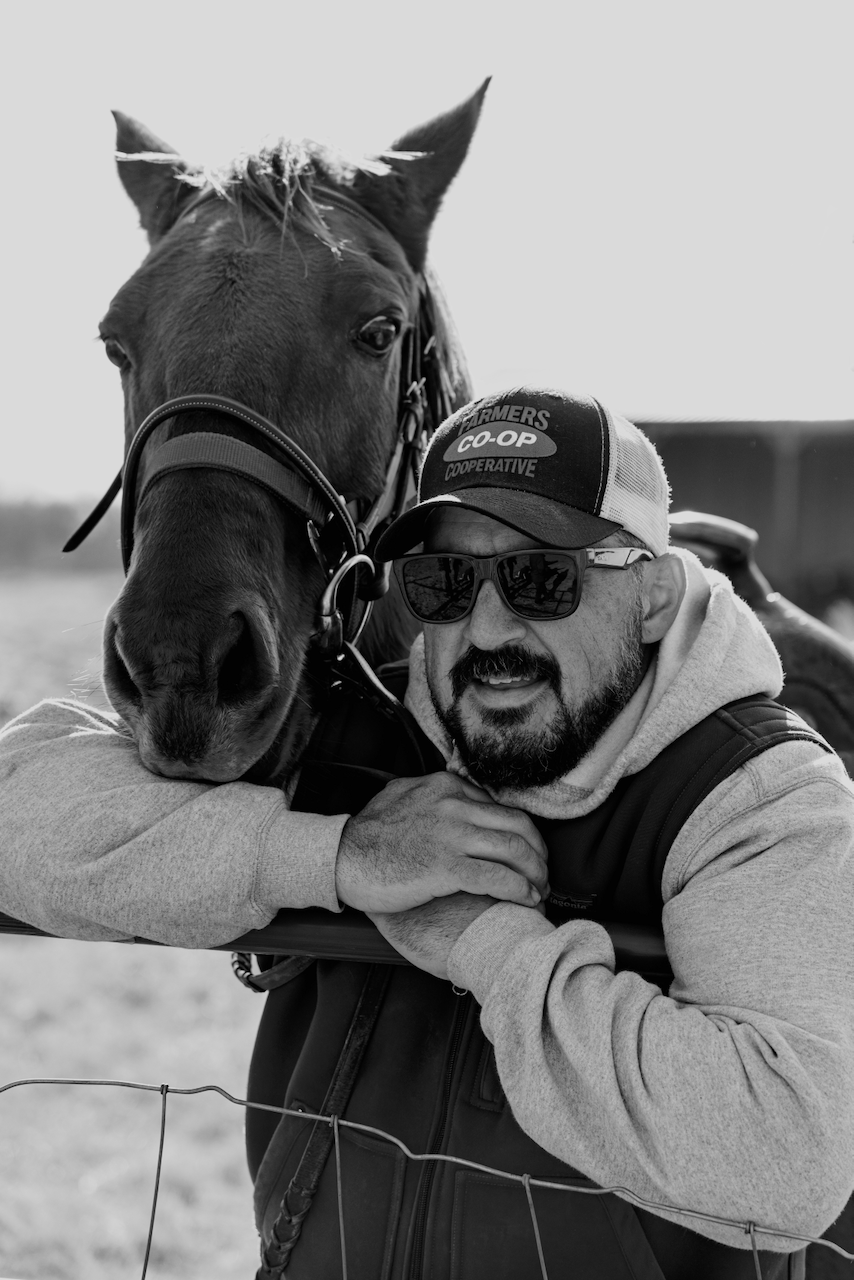
about Dr. Jared M. Phillips.
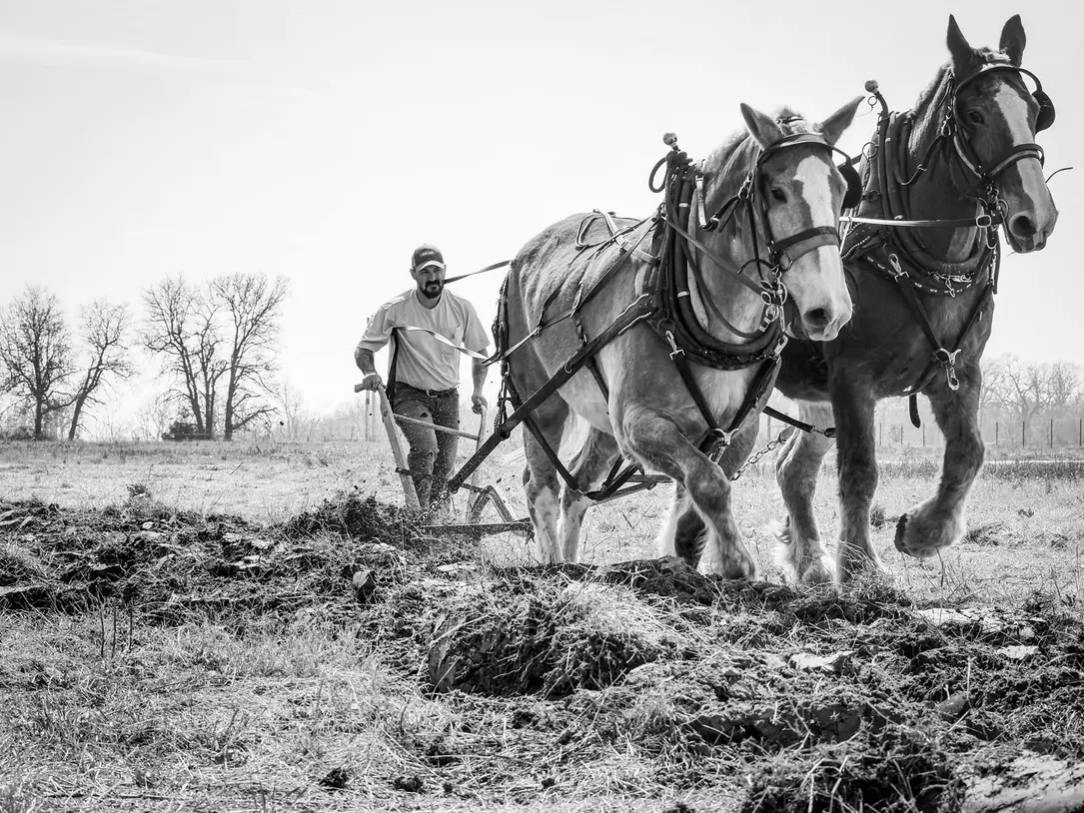
Jared Phillips is a writer and farmer with deep roots in the Arkansas hill country. He and his wife farm above the Muddy Fork of the Illinois River, relying on draft horses for their farm work.
In addition to farming and writing, he’s a historian at the University of Arkansas where he teaches on Ozark and rural history and is working on a history of the Ozark Organic Growers Association and the development of the USDA Organic program.
He’s an alumnus of the Rural Writing Institute, led by Wainwright Prize winner James Rebanks (A Shepherd’s Life; English Pastoral; A Place of Tides).
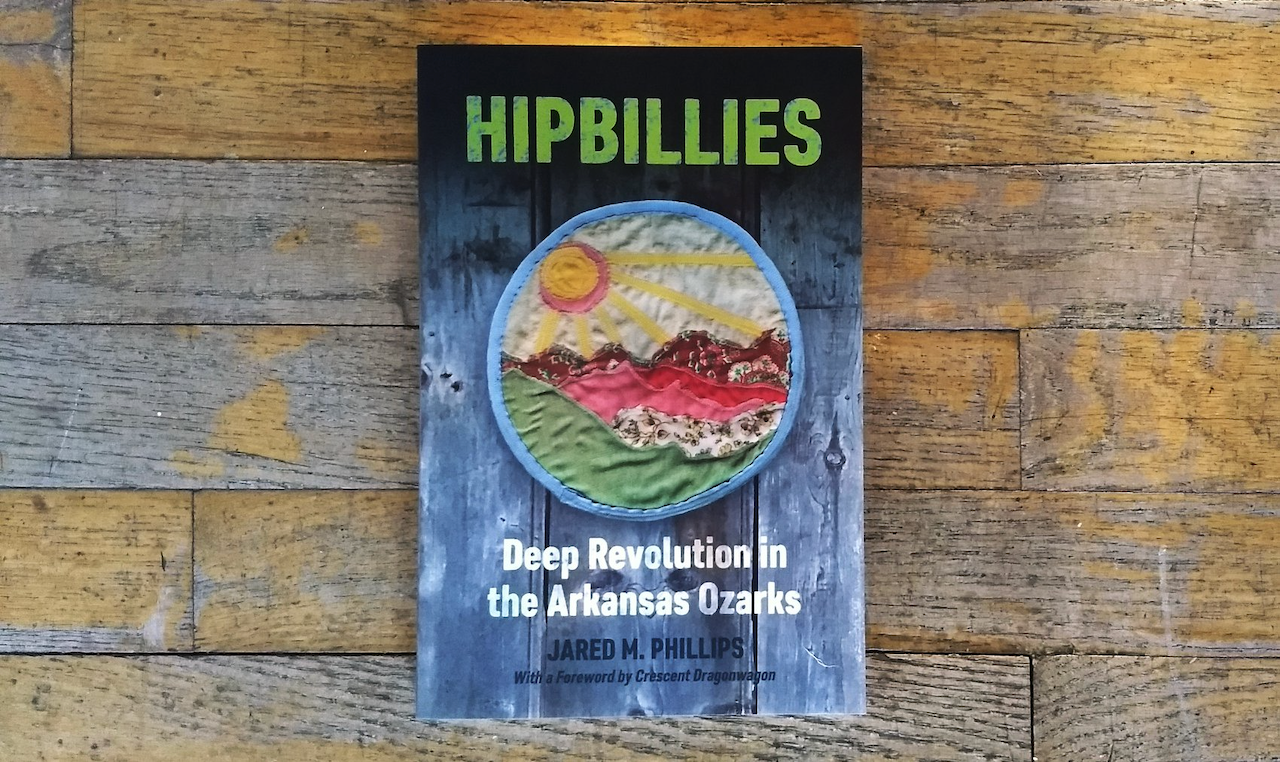
In addition to his academic book Hipbillies: Deep Revolution in the Arkansas Ozarks, other work can be found in Front Porch Republic, Skipjack Review, the Arkansas Times, and the Arkansas-Democrat Gazette.
episode notes & references.
- Dr. Jared M. Phillips: https://history.uark.edu/directory/faculty/uid/jmp006/name/Jared+M+Phillips/
- Hipbillies by Dr. Jared M. Phillips: https://www.uapress.com/product/hipbillies
- Vance Randolph: https://encyclopediaofarkansas.net/entries/vance-randolph-2265/
- Brooks Blevins: https://history.missouristate.edu/profile-display.aspx?p=brblevins
- Map of the Ozarks: https://festival.si.edu/2023/ozarks/map-fun-facts
- The Berry Center (Wendell Berry): https://berrycenter.org/
- Christ of the Ozarks (Gerald L. K. Smith): https://encyclopediaofarkansas.net/entries/christ-of-the-ozarks-5633/
- Otto Ernest Rayburn (Ozark folklorist): https://encyclopediaofarkansas.net/entries/otto-ernest-rayburn-3003/
- Essie Ward (folk artist): https://encyclopediaofarkansas.net/entries/essie-ward-5804/
- The Arkansas Traveler (folk tale): https://encyclopediaofarkansas.net/entries/arkansas-traveler-399/
- The Beverly Hillbillies: https://www.imdb.com/title/tt0055662/
- Deliverance (1972 film): https://www.imdb.com/title/tt0068473/
- Explore Branson (tourism): https://www.explorebranson.com/
- Eureka Springs, Arkansas: https://www.eurekasprings.org/
- Boston Mountains – Ozark National Forest: https://www.fs.usda.gov/recarea/osfnf/recarea/?recid=43463
- White River – Encyclopedia of Arkansas: https://encyclopediaofarkansas.net/entries/white-river-2974/
- Ozark Plateau – USGS: https://www.usgs.gov/programs/energy-resources-program/news/ozark-plateaus-region
- Agrarianism – Internet Encyclopedia of Philosophy: https://iep.utm.edu/agrarian/
episode outline.
- Episode Introduction: 00:00–01:22
- Preview of Themes – Mythologies and Identity: 01:22–03:33
- Dr. Phillips’ Personal and Academic Background: 03:33–06:50
- The Agrarian Lens and Historical Framework: 06:50–10:22
- Mythologies of the South and the Ozarks: 10:22–12:55
- Geography and Settlement in the Ozarks: 12:55–16:05
- Three Regions of Arkansas and Cultural Differences: 16:05–21:45
- The Ozarks as a Cultural and Economic Borderland: 21:45–23:33
- What Defines the Ozarks – Physical vs. Cultural Geography: 23:33–26:50
- Vance Randolph, Brooks Blevins, and Constructing Identity: 26:50–30:23
- Commodification of the Hillbilly Stereotype: 30:23–32:31
- Tourism, Myth, and Christian Nationalist Influences: 32:31–36:14
- Reflection on Culture, Change, and Preservation: 36:14–43:14
- Episode Outro: 43:14–End
episode transcript.
episode intro.
There's a lot of mythologies around why the South is the way that it is, why places like the Mountain South, that's Appalachia and the Ozarks, why they are the way they are. And in some of those mythologies there are things that are true.
[00:00:14] jared phillips.: There, there was a strong drive for independence for people. There was a desire for liberty. There was a desire for this Jeffersonian ideal of a democracy or a republic of yeoman farmers, and that land was going to be the drive for independence.
Some of these impulses are there and they're true, but they're also balanced by things that are also equally problematic, right? So you look at, we look at the legacy of enslavement. We look at the legacy of removal at the legacy of unintended consequences.
episode preview.
[00:01:22] mike.: We are listening to the under view, an exploration in the shaping of our place. My name is Mike Rush and today we're spending time with Dr. Jared Phillips, author, historian, and someone who knows this land, the Ozarks not only as a scholar, but as someone who has been shaped by its ridges, its rhythms, and its relationships.
As we've journeyed through the early histories of northwest Arkansas, through the voices of indigenous leaders, cultural historians, and the descendants of early settler families, we've been asking how did this place become what it is today?
What forces seen or unseen? Have shaped its identity. In this conversation with Dr. Phillips, we pause at a critical moment in the story. This is a bridge episode. A moment to step back and ask not just what happened, but how it began to form the cultural identity of our region.
Because the people who first came to these hills didn't just bring their families or wagons or livestock. They brought a worldview. They brought memory and belief and myth, and a desire to build something in their own image. And those early settlers, those who came to this rugged, rocky terrain, came with an ethic that would become the foundation of an Ozark mythology, a belief in self-sufficiency and distance from power and in a certain ruggedness, real or imagined.
We still have more to work through in the early history of northwest Arkansas. We're not done with that yet. There are more stories to uncover, more truths to name, but we introduce this conversation now because it helps us see where we're going.
The ideas explored here, the agrarian roots, the economic limitations, and the cultural framing of quote unquote hill people. These aren't footnotes. They're the beginning of a story that we're still telling.
So in part one of my conversation with Dr. Phillips, we're gonna introduce the Ozarks as both a geographic place of identity and also a cultural place that begins to develop as these early white settlers begin to arrive in the 19th century and take root into the early 20th.
This is not a complete conversation about the cultural identity of the Ozarks, so we'll be returning back to Dr. Phillips in further episodes as we approach closer to the modern era. But for now, we invite you to lean into this foundation because it's here that the Ozarks began to imagine themselves.
Alright, I'll lot to get through.
Let's get into it.
episode interview, part 1.
[00:03:33] mike.: All right, Dr. Phillips, welcome. Thank you for sharing a table with me. I'm incredibly humbled to be able to just sit here with you.
We're talking about the story of Northwest Arkansas, and I know this has been an area of deep focus for you, your doctoral studies, your writings. And we've been asking a lot of questions about where we are today and what is the state of Northwest Arkansas?
And so this conversation to me is really the time that we have to focus on this question about really what happened before we got to where we are today?
But before we begin, I would love to number one, say welcome. Thank you for sharing this table. But number two tell me your story. I'd love to hear your background and yeah. How did we arrive at this place?
personal story.
[00:04:13] jared phillips.: That's a good question. So we, my wife and I we are multi generation Arkies so we go back at least five generations, probably a little bit longer than that. And my people are from South of the Arkansas river down in outside of Logan in the Logan County region which used to be considered part of the Ozarks. And then someday, sometimes it's still not, but, and then my wife's people are from up here in the Northwest part of the state, Oklahoma. And we yeah, I think we take our heritage quite seriously in the sense that we're proud to be from Arkansas. We're proud to be from the mountain country of Arkansas, and we are proud to try to figure out how to uphold the values that we feel like our families have passed on and our communities have passed on, but also try to figure out ways to bring those values forward into an era with, that's got a better way of thinking about everything, life, love, nature, whatever the case may be.
Yeah.
[00:05:06] mike.: I would be remiss if I didn't notice that obviously the work that you've done academically is tied to who you are and the origins of your own story.
And I guess in many ways, I'm curious. Where does, what's the origin? Give me some insight behind the drive of that. Is this simply an exercise in trying to understand yourself or, and I know that's not, I'm just kidding, but yeah, give me some insight into this duality in many ways of your academic study, but your own personal background story.
[00:05:32] jared phillips.: Yeah. They say all scholarship is autobiography. And that at the end of the day, no matter what we're doing, we're trying to understand ourselves. And I don't know if it's true for all of my academic colleagues. I think it is true for myself. When I started as a historian, I actually did not write on Arkansas, at least directly. I worked on foreign policy and on Jimmy Carter. And so I spent, but if you talk about Jimmy Carter, you have to talk a lot about the South and you have to talk a lot about religion. Cause. Jimmy Carter takes being from the South very seriously and he takes being a man of deep faith very seriously. And so I spent a lot of time digging into the back story of Southern Baptists, which is what I grew up as.
And then I also, like I said, I'm a proud son of the mountains and I grew up hearing different stories like all of us around here did from grandparents and neighbors and old men and hardware stores and just over time I became more and more, really as my wife and I decided to, to anchor ourselves more and more deeply here, I became more and more invested in the history of the place.
I was already, I'm prone to picking hills to die on argumentatively, and so I was already doing that anyways. And and then now I was able to, able to find some way to make it feel a little bit more legitimate, but at the end of the day, it's really, I'm trying to understand my home and understand where my home is going and through that, understand maybe what the future that my family will face. Yeah.
[00:06:50] mike.: Yeah, I'm curious as you think about it, we're going to get into a lot of these conversations about the founding of the state of Arkansas and what that looks like in the Ozarks.
But if you were to look down the road what would you hope the outcomes of your work and your study, could be?
[00:07:05] jared phillips.: Oh man, that's a great question. I, what I would hope is that my work as a historian and my work as a, an active member of my rural community helps to, preserve the good things of traditional Ozark life. There's not everything in Ozark history, and I'm sure we'll get into this, but not everything in Ozark history is pretty and it needs to be preserved as a teaching tool. And so that we can count the cost of how we got here, but it doesn't need to be preserved as a way of being, but there are plenty of things in our place that I would hope don't get lost as we push towards whatever this drive of modern life is pushing us towards in the region.
agrarian foundations.
[00:07:46] mike.: I'm really curious if maybe we can start with Helping place the beginning of this country And how that connects us to the South and to our state and ultimately to the Ozarks. And I know that's a lot of history to go through, we'll step through that, but give me a framework or a context of how to think about into where potentially we, where we can get to where we're headed today.
framework of the ozarks.
[00:08:07] jared phillips.: What I would say is, the, there's a lot of mythologies around why the country is the, why the country is founded, why the South is the way that it is, why places like the Mountain South, that's Appalachia and the Ozarks, why they are the way they are. And in some of those mythologies, things are, there are things that are true. There, there was a strong drive for independence for people. There was a desire for liberty. There was a desire for this, Jeffersonian ideal of a democracy or a republic of yeoman farmers, and that land was going to be the drive for independence. And there's some of these things that some of these impulses are there and they're true but they're also balanced by things that are also equally problematic, right?
So you look at, we look at the legacy of enslavement. We look at the legacy of removal. We look at the legacy of unintended consequences. there's So many works of history that tell us that when folks, when explorers show up here and they do things like they had done back in England or in France, but all of a sudden it changes the ecological foundation here and then they have to pivot and move, so it's hard to pick one central theme that I would say organizes us.
What I would say is I can tell you how I think about history. And I tend to think about history through what we call an agrarian lens, and so most people today, when they think about agrarianism, are probably familiar with either the weird cottagecore boom on Instagram during the pandemic, which I do not have much time for, or they think about the work of of thinkers and writers. People like uh, Wendell Berry potentially would be probably somebody who comes to mind. And Mr. Berry he's a seminal figure in the movement. He, like all writers and thinkers has got his flaws in his philosophy, but that agrarian component. So like thinking about life rooted most likely in a rural existence, most likely in a community of people engaged on building a life in that place, a life that stretches across generations and increasingly thinking about the, what that, what a life across generations mean is not just between human generations, but the generations of the trees, of the waterways, of animals, stuff like this. That's how I tend to think through history. That's the approach in the stuff that I've published and the stuff I'm working on right now, that's the approach that I come back to is how do I understand the movement of time, The progress of changing consequence in that lens, that's how I approach it.
[00:10:22] mike.: Arkansas has grown out of that agrarian foundation, if you will. And so even though maybe the reality of our world today, it looks very different, especially in Northwest Arkansas with global companies affecting commerce. But as you think about that agrarian environment, like I've heard you talk about this idea of the global South can you explain that, what you mean by
[00:10:45] jared phillips.: that?
the global south.
[00:10:45] jared phillips.: Yeah. So the global South if you grew up hearing words, phrases like the third world or the developing world, that's what the global South is essentially in 1990s is the cold war was coming to an end policymakers, at the world bank and at the UN, we're trying to figure out a way to better understand some of these big macro problems that we're facing, the plan of poverty, increasing, we're thinking about climate change education, healthcare.
And they they came up with this thing called the Brandt line named after the former German chancellor, Willy Brandt. And and basically anybody north of that line is probably a developed country, but not always. And everybody south of that line is probably an undeveloped country, but not always because there's always exceptions to the rule.
And. I don't know. It's a, it's just as tricky of a terminology as developed and undeveloped or first and third world. It's none of these terms are perfect, but scholars of the American South and rural America do tend to pay attention to this one, because we are not unconnected from the world. Especially if you live in the place, it's the headquarters of Walmart and Tyson and J. B. Hunt, like you have to understand those connections, but to so often, so many of the places in our region, statistically at least in comparison match some of these underdeveloped spaces in the global south, places that have persistent levels of poverty, persistent problems in healthcare access, persistent levels of disease and addiction, massive gender imbalances, education, all these things are there.
We see similar problems reflected here, right? So some of the work that that I've done in the classroom and with like study abroad, training and training of students and stuff has been to help kids think through, you can be a kid from Arkansas, a landlocked state that until really recently didn't have a direct international connection. But you can still learn lessons about the world because we're not in a way that dissimilar to a whole big mess of the world, and so that's how I think about the global South. Yeah.
influences.
[00:12:34] mike.: And you mentioned all this a little bit, but what are some of those influences that I think maybe are generally true, if that's fair, across the South that are definitely true, when we come to the state of Arkansas.
[00:12:46] jared phillips.: Yeah, so we're a colonized place, right? And so, other people can speak into this better than I can, but we are the product of European colonization. And with that means there was a long period of Native American removal, and then there was a period of the spread of enslavement, both of Native American people, and then also citizens of various communities in Africa were brought over here.
that's the bulk of how we think about our regional development up until the civil war and I'm speaking very generally, right? And then after it, after the civil war the long range impact of setting up a slave based agricultural economy impacts how we think about industry, impacts how we think about the use of resources, impacts how we think about political equity. All of these things are impacted there.
So, colonialism is one of these long range impacts. The impact of of an agricultural system that depends upon unpaid labor is problematic across the South. It sets up the foundations for what will become sharecropping which in turn sets up the foundations for, you can make the case, certainly and I think the case is too, is there to be made. It sets up the foundation for everything about modern contract farming which we see through a lot of the large sort of industrial confined animal operations. So that's a long term impulse that we see there. I think when we get across the Mississippi River We don't have some of the, like the long range impact of the slave legacy that the deep, true deep south has, but we still have it. We still have slaves in Arkansas nowhere near the numbers of say, Georgia or, or South Carolina. We still have a heavy presence of slavery, particularly in the south and eastern part of the state.
frontier expansion.
[00:14:18] jared phillips.: But we We also get to share a different legacy. We share the legacy of frontier expansion a little bit. We border Oklahoma, what became, it was Indian territory became the place where so many of the nations removed peoples were frankly, just dumped and then ignored for the, the next several decades and centuries. But that gives us a little bit of a frontier mythology though, right?
so a former colleague of mine, Dr. Elliott West likes to talk about Jesse James, Jesse James is one of the iconic frontier outlaws, but he's from Missouri, but when we think about his story, he's like in Kansas or Colorado somewhere, but He's really a hillbilly gone amok, and but we, so we had this, these historic legacies of thinking about slave economy, agricultural the style of large scale agricultural slow systems. We've got the legacies of colonization. Cause because like elsewhere, we're dealing with not just Americans coming over the Mississippi, but before that we have French, French guys in the region. Then we have Spanish folks in the region. Then we have the Louisiana Purchase and, all this kind of stuff going on. And then we have the Western Expansion.
poor mountain place.
[00:15:17] jared phillips.: And then, We, I think we also, because we're a mountain we're a poor mountain place and by poor, I don't mean economically that is also true. Our soils are not strong in the Ozark mountains where we are here. And so we share a legacy similar to Appalachia. And so we get we become these weird, we get to hold onto these funny mythologies in American life. Hillbillies have to have mountains, essentially. They gotta have hills to be a hillbilly, right? And and so we get to hold onto hillbillies like Appalachia and all of the weirdness that comes with that. But in, in a way because of the mixing of these legacies and the mixing of other legacies as well. It means that we hang on to a, not that we hang onto it, but that a, that we're given a job by the country that we didn't really ask for. And we've had to deal with, and that is that we hold on to a mythic American past here. And that we, where the place you go, if you want to find self sufficiency, where the place that you go, if you want to find that mythic Scots, Irish, perfect language of our Anglo Saxon forebearers who came across the water, that, that's the.
I don't know. That's a lot at one time. I think. Yeah.
who were early settlers?
[00:16:23] mike.: Keep going. I feel like this idea of this frontier aspect, I mean, we have European settlers coming in up the Mississippi and down the Mississippi into these agrarian agricultural spaces in early Arkansas, obviously displacing Native American communities there. are these the same people that then move into the Ozark regions or do we see a different influence of people coming in?
[00:16:48] jared phillips.: Yeah, that's a good question.
On the eve of statehood, the state of Arkansas had, Oh, I just looked this up earlier today. I don't remember. No, we didn't have very many people. 1803, 1807. We had something like 500 white people in the state of Arkansas. And then that starts to jump almost at a algorithmic level, over the next several years. But we have very few white people in the region. The Ozarks in particular, which span across the, most of North Arkansas, a little bit of Eastern Oklahoma, and then up in the bulk of central South central Missouri, the Ozarks.
As a rule of thumb nobody is permanently living, no white settlers, are permanently living in the Ozarks really until the 19th century as well. I mean, You see some French, mining efforts in the 18th century. But for the most part, this is all open hunting ground that's dominated by the Quapaw in the South and largely by the Osage up along the Osage River in Missouri. And they're being, they're in competition with one another for power over the region, but then they're also being pushed by the imperial struggles across Mississippi and they're being pushed by the continued arrival of Americans, especially after the revolution when we have Americans, and that, that's going to start to change and start to change what we see happening, but the bulk of early folks that are, that show up in the state of Arkansas and that will gradually wind their way into the Ozarks are people coming out of places that look like the North part of Arkansas. So they're coming out of Tennessee, Georgia, the Carolinas, the mountain parts of Carolinas and they're coming in like, some historians like to say that like calls to like a little bit and that makes sense. I don't know that, I don't know that I wouldn't want to write a book based on that. But the. There's at least a similarity and a familiarity and so they can understand how to succeed. And big planting cultures emerging in the, along the Mississippi river on both sides that are sharing, sharing economy, sharing cultures. And as the, as they move through there.
And so those planting classes are not moving North into the hills, West into the hills. They need a different sort of land. They need a different sort of market access. The folks that are coming up into the Hill Country are coming out of hard scrabble communities and they're being pushed as well. This is a story that we have to remember that we're pushing native populations out. And usually who's pushing native population, it's a combination of wealthy folks, military struggles, and then, poor folks that are coming from the old world over and trying to make a living here. And then those folks are also going to get pushed later. And so then they're going to come across and then they're also joined by other new settlers. Arkansas is going to get a whole big contingent of German settlers. At some point, we're going to get Italian settlers at some point, but for the most part, the Ozarks are attracting in the scheme of wealth and sort of internal movement, we're attracting a poorer community because we're a poor ground in a way, right? And, I want to be careful how far we would push that, but the academic in me is saying don't make too big of a statement on that.
three regions.
[00:19:33] mike.: Yeah, I've heard you referred to Arkansas is basically three regions. And I think my question is rooted in both the evolution of these regions, but also I'd love for you to maybe unpack them and maybe even define if you will, when we think of Arkansas, I think, many of us want to think of Northwest Arkansas as a region, right?
Yeah, maybe connected or not connected to the state or the Delta or right where we are in the football. Yeah, that's true.
But help me understand when we think maybe geographically or even from an identity standpoint how people think about what this state is.
[00:20:07] jared phillips.: Yeah. So geographically, we can think about the state in three, I tend to think about it in three regions.
Some people think about it in four. I, I think about in three regions cause I'm frankly not smart enough to hold the four in place. But so you have the whole eastern side of the state. So that's running along the Mississippi River. This is going to be today. This is the heart of our, rice, soy, cotton economy.
That's where, that's what we're talking about here. This is also the ancestral heart of the slave economy of Arkansas is there. Then we have the Southern and like Southern Central, Southern Southwest part of the state, which is increasingly rocky and mountainous, but that's dominated by a, like pine timber operation. Still more of a slave presence than you see in the Northern part of the state. And I should be not because the Northern part of the state was opposed to slavery. It's just that for the most part, slave owners in Arkansas only had one or two slaves. The vast majority of slave operations in the state were at that smaller scale.
Then you have a bunch of people that are in that 20 ish, their own, they've enslaved 20 some odd people. And then you have, you do have outliers that, that own several, dozens and hundreds of people, but they're that they're the exception.
And the Ozarks, we have very few that even make it to that 20 the number of 20 enslaved people at 20.
So we've got that deep soil that's being worked by slave labor. We have a similar band of soil that's moving to the rocky timber country in the south part, southwest part of the state that, that begins to develop a timber extraction economy in the 19th century. In the 20th century, it'll also develop an oil economy.
NW Arkansas.
[00:21:37] jared phillips.: And then we have the northwest part of the state. So depending on who you are, that's beginning just south of Fort Smith running through the bottom of Sebastian County down across over through Franklin and Logan County. And then it's going to peel up around like along the black and strawberry rivers, out on the Eastern edge.
And then it rolls, the Hill Country just rolls right on up into Missouri. And those are the three regions that I see. Some people will also say that you should. You should take, you should consider taking the Arkansas river out as a distinct cultural space. It, to me, it crosses and it reflects the places that it crosses these other regions as well. And it reflects them. And so I don't tend to think about it in that particular way. But you're not wrong if you do
the, each of the three regions is going to develop in its own. In its own way, I would say that the western half of the state, the western half of the state, includes the Ozarks, includes that southwest part, is more culturally similar than it is to itself, to themselves, than they are to the eastern part of the state, because we can't support historically or today the type of agricultural, industrial agricultural system that they have there.
It's a very different system. And so you, what I tend to tell people is that we, the, if you divided the state basically by, Rocky spots and not rocky spots. The not rocky spots tend to look east across the Mississippi for how they're starting to think about things. And then they, the rocky spots tend to look towards either inward on themselves or we look towards Oklahoma into the plains. That's how we think about it.
And so I think about that, even in the context that we're like, wait, where my neighbors sell livestock, they don't bring livestock into, the middle part of the Ozarks to sell at a cattle barn. They take them to stuff that's on the border, right over the border in Oklahoma, because that's where the markets are for it. So we're cattle, we're livestock country and small crop country, not big plantation style country. That's good. So yeah,
the ozarks.
[00:23:19] mike.: Okay. so we think about the Ozark region, like talk, define that for me.
[00:23:24] jared phillips.: Yeah, the Ozarks, broadly speaking, are around 50, 000 square miles. Like I said, they're in Arkansas, Oklahoma, Missouri. There's a tiny, to be totally fair, there's a tiny little fraction that's in this very southeastern corner of Kansas. And there's some debate about whether or not Illinois gets to have some of it.
I'm looking at a map of the Ozarks on my wall right now as I'm saying this. Those are like most places in the world, we're not that unique in this, in that there is a geographic or geologic definition of us, and then there is a cultural definition of us. And so geographically or geologically, the parts south of the Arkansas River would not be Technically be considered a part of the Ozarks, but culturally they absolutely should be.
And I make that claim for two reasons. One very good historians and cultural anthropologists would suggest that. And my grandfather also believed that and that's probably all the authority. That's all I need right there. And but the Ozarks historically are, and then we can break that broad chunk of the Ozarks up into some more discreet areas. And so if you're listening to this and you're in Arkansas and you live in Washington, Minton County, you're in the very Southern end of what's called the Springfield Plain, which kind of starts here in the, in East Oklahoma and in Washington and counties in Arkansas, a little bit of Madison and Carroll.
And then it goes up towards Neosho and Joplin and then hangs a sharp right or sharply to the East and out towards springfield, the Springfield plain. That's probably the best agricultural ground in the place. So if you think about where there is commercial cropping of any type, the bulk of it is there.
It's not to say that doesn't occur elsewhere in the river bottoms and the other parts of the Ozarks, but it's the easiest country to work in. It does it, the terrain is not as severe. And so that's one of the reasons why we. see the type of urban semi urban development of Springfield, Joplin, Neosho, Bentonville, Rogers, Springdale, Fayetteville this cause you can simply get around.
It's easier to build roads here. You move into the interior of the Ozarks. So we're moving east. So we're moving from west to the east, moving to the interior of the Ozarks, so into the white river valley area. In the Arkansas side, we have the Boston mountains. And so this is going to stretch like the Buffalo river down to the edge of the plateau.
Most people. I would argue when you look at the topographic relief that this is some of the roughest country, if not the roughest country, in the country. Because of the rate of elevation change, the rate of elevation loss and gain that we see per square mile, you really would be hard pressed to find somewhere else in the contiguous 48 that can beat it.
Let's not say there's not lots of rough country elsewhere, but man, we take the cake. And that's a function of a history that's, billion years old. This is the discussion of uplift and an erosion and everything, cause we're not properly speaking. We're talking about the Boston Mountains or the Watchtower Mountains or whatever. Properly speaking, hardly anything in the Ozarks is actually a true mountain range. There's a little bitty corner up in Missouri, the San Francisco mountains or St Francis mountains that are that are properly mountains, but they're very eroded today. And then, and the Boston mountains and then everything else is still pretty rough, through the rest of the Arkansas side of the Ozarks and then up in the Missouri side of the Ozarks is still pretty rough and rocky.
It's dominated by oak and hickory forests. That's been the ball game for the last 200, 300 years. And that's the nature of the uplift, the nature of the forest, the nature of the soil quality has dictated how Settlement has happened. It also in part dictated the way that native American communities interacted with the space. This was a hunting ground, largely speaking, there are permanent settlements, but it's not the norm across the region. This is a great place to come and get white tail deer. This is a great place to come get beaver. This was a great place in the day, way back in the day to hunt bison and giant beavers and stuff like that.
ozark cultural identity.
[00:26:50] mike.: Yeah. So you're talking geographically to give us a cultural identity, if you will.
[00:26:56] jared phillips.: Yeah. We touched on it a little bit earlier. The prevailing mythology of the place would probably would have been set by the folklorist, *Vance Randolph*, who affectionately is Mr. Ozarks. Although I think the historian *Brooks Blevins* probably has a viable claim on that title today. But Vance ran off through the publication of his works. And then a couple of other folklorists in the, at the time *Allen Rayburn* out of over in Kingston and Eureka they help establish a mythology of what we look like as a region.
And this is building on the old Arkansas traveler song. If you're familiar with that, where we're poor, we're self sufficient, we're probably ignorant. We're probably a little bit on the lazy side. And we work just hard enough to not die, but not hard enough to be a good, like a good member of the American sort of rational land management system.
arkansas traveler song.
[00:28:46] jared phillips.: Now, what I would say to that is that it's, all mythology has a little bit of truth in it. So there absolutely are people like that. We can look at the diaries of explorers that come through in the early 19th century, and they are absolutely encountering people that fit that stereotype perfectly.
The vast majority of people that work, that live in the Ozarks from the middle end of the 19th century up until, the massive change that we see at the end of the Cold War so 1980s, 1990s, they are the, the descendants of this sort of hardscrabble imagery and they are themselves hard, hardscrabble people.
The Ozarks, culturally, we are a place where you make do. But you don't generally get rich, you're proud of the work. You're probably the community, whatever that work is. It doesn't have to be farming. Those are, cause it's a largely rural space and the majority of people that live in a rural space are not actually farmers. And this is true truism in the data, but lots of small farming. When we have farming in those arts, it's lots of small farming mid 20th century.
There's plenty of people though that are engaged in industrial work here and there but it's a, it tends to be a fiercely independent place, contrarian traditionally both in religion and in politics. So you can look at the, the various types of religious experiences that you see here from, Hilltop Baptists and Holy Rollers to universal Unitarians, and Quakers, that have been here for, for decades and decades, Catholics, there's a healthy Jewish population in Little Rock, Arlington, and there's a Jewish population that's moving around in Springfield. A colleague of mine has done a ton, she's just done some tremendous work on that as well.
And it's just, it's a fiercely independent place. The, like we were talking about earlier the basic idea here is that you take care of yourself, you take care of your neighbor and as long as your neighbor is not doing something that's causing direct harm to you or the community, you just leave them alone. And that, that has brought with it a certain political culture that was relatively steady for most of the 20th century. It changes like so many things do in the 1980s and the 1990s, where it, The there was a healthy disregard for any and all people who were promising silver bullet solutions, be they political or economic that changes in the 1980s and the 1990s. Which is a whole different story, but yeah.
mythic american past.
[00:30:49] mike.: I want to go back to something you said about the Ozarks. You said that we hold this kind of, or we're asked to hold this mythic American past.
Yeah.
How does help me understand the context of that.
[00:31:01] jared phillips.: So this is particularly true of the as we move into the late 19th century and through the 20th century and I would, I would argue even still today, although what we mean by that mythic past has shifted just a little bit in the last 30 years or so, but. If you think about what the American dream is, the American dream is we think about it as really perfected as the 20th century comes into being. And then it's a really simple kind of thing. It is not actually to be a self made millionaire like Andrew Carnegie. That's awesome. Everybody's this is great good for him. But that's actually not the dream that most people understand that's an outlier kind of situation.
The dream really is when you look at, When you look at all of the advertising and PR money that's spent over the 20th century, it's to be upper middle class, to pass as super wealthy, but to really you're just middle class, right? And so there's all these trappings in it.
But one of the things that is interesting, at least to me and to people who dig into this stuff, is that it also always seems to need a foil. Because middle class existence in American life en masse only really comes into being in the, after the Second World War. We, we talk a lot about the power of the New Deal. The New Deal is an incredible moment in American history. It's incredible in places like Arkansas and Missouri. But the New Deal, And the New Deal does do a lot to pull people out of poverty and pull them into a sort of a middle class. But it's really the combination of the New Deal setting a floor and then the Great Society Programming of Lyndon Johnson in the 1960s that actually creates the American middle class.
That middle class is brand new and they're afraid of going back into poverty. They're also all the kids or the door where they were adult young adults during the Depression so they know what that means. But, they also know that those people are their grandparents or their parents, and they have fond memories of going to the farm and for Christmas or helping with the cow or picking strawberries or whatever the case may be.
And so on the one hand, we're holding up this the idea, the mythology, the American dream, because it is a mythology. There's nothing wrong with it. All nations have to have a mythology to have cohesion. But it is a mythology And like all mythologies, it's got, it can be dangerous, but it has to say, it has to hold up on the other hand, the mythology of what it is better than, and what it is better than is the dirty, ignorant hillbilly in tucked up in the backwoods, who's afraid of progress and can't get on in the modern world. And so we have, but if you eradicate that entirely. Then you no longer have anything that you've set yourself as better than or as like improving from right and so Folks that work on the hillbilly mythology and the hillbilly image in American life Myself included we tend to see the hillbilly is standing as a As the, as the foil for the American dream.
And so it has to be maintained even if it's not real.
[00:33:54] mike.: Yeah. Keep going. Yeah. Yeah. Explain that. What do you mean? Like how to, can you talk about it being maintained? Where do we see that?
the ozark hillbilly.
[00:34:01] jared phillips.: Yeah. So hillbilly. So there's two versions of the hillbilly that are put, that are kept forward in American life throughout the 20th century.
One of them is Deliverance, which we've all seen or heard of, or we've heard of dueling banjos and we don't really need to go there, but it's that dangerous, ignorant, reactionary person in the backwoods who seeks violence above all. And that's. That's a version of the hillbilly that I think most people can get behind. Yeah, we don't ever want to go there. We don't want that. But then there's the comedic idiotic hillbilly. And so we've all seen Beverly hillbillies and I don't mean the horrible movie from the late nineties or early 2000s. The show, they're Ozarkers. They come from the Arkansas, Missouri Ozarks and they go to California.
And so it's not even that hillbillies in general are given to the, are like this they're the laughing stock. They're ignorant. They can't figure anything out. It's Their simple homespun charm can only get them so far. It's that it's our people. It's Ozark people that are given to the nation as that's the foil, right? It's Appalachia gets the mean people. We get the funny ones, but in a way, I think that was more dangerous for us in our community because it creates that mythology. if you're trying to create a dream and convince people to buy into what this American dream is, you have to show that not just economically, not just in education, but that in all facets, you are better than what you're coming from.
And if you figured out a way, if by the 1960s and by the 1970s, Mountain poverty is still a very real thing, it's still a very real thing today, but it's lessening to the extent that people aren't necessarily super worried about it, anymore, at least if you're not living in the place so you have to figure out a new way to weaponize that old hill folk image, and so you turn it into something funny. Man, boy, that granny is funny. Jed Clampett's funny, but boy, we don't want to be like him, but boy, we'll turn on the TV and we'll watch him and we'll laugh with him. Andy Griffith even can exist in this a little bit, right? He's a little bit more law and order though, right? He's representing a sort of a bridge between that comic comedic kind of folksy world that should be mocked and left behind into something that could be aspired to a little bit, right? But even that's still a mythic, it's still a made up kind of thing.
[00:36:09] mike.: Yeah, I'd love for you to keep going because I'm not from here originally. I've been here for a long time, but compared to others, not maybe compared to many of them. You may know all right, if it's all right. Yeah, I don't know.
But I'm drawn to this idea that you have here because it's both an image that I feel like is placed upon people in this region but in some ways also an identity that people may want to cling to.
Is that a fair statement?
[00:36:34] jared phillips.: Yeah. I call myself a hillbilly. I don't have any problem with that. I'm careful cause I'm a historian in my mind. I always have nine footnotes. I'm like, I'm a hillbilly, but I'm not this. I'm not this. I'm not, yeah. So this imagery is put upon the region and to be clear, Appalachia is getting the same treatment as well. But we do get it. We do share the experience to a degree, but we do have our own kind of unique storyline within it.
The idea of the hillbilly is being put upon us over and over and over again. And it causes problems. Chambers of Commerce across the region are not happy about this. They're not, but they don't really know what they can do about it. Especially when people start to, Say all right, if this is who we are, we might as well make some money on it. And so this is why, when you, if you drive from here to Branson or here to Springfield or wherever. The roadsides, especially if you're not on the major highways are awash with some version of a hillbilly, a caricature of a hillbilly for reality, for real estate agencies, a cafe, a gas station, a retirement village, a bait shop, whatever the case may be. And it's variety shows, you go to Eureka Springs and you've got the Ozark mountain Jamboree, which is no disrespect to the Ozark mountain Jamboree, but its logo, it's image, the its image is a bes spectacle. Bill upturn, barefoot overall w wearing hillbilly. And so they figure out how to make money on it. Great, good for them. This is not an economically thriving region, especially mid 20th century. But it is problematic for the long term health of the place because they have what we create a system that has to trade on a negative stereotype that's put upon us in order for us to to thrive because we can't thrive agriculturally. There isn't an agricultural silver bullet here. We can't make the economic gains that Kansas, Nebraska, the Dakotas, Iowa are making with the advent of a lot of the new, agricultural technology in the 20th century.
We'll start to make some of those gains Thanks to the work of Tyson Foods, which on the one hand is this really important economic engine in the Ozark countryside. On the other hand it's a really detrimental economic engine in the Ozark countryside. And I think some of that is unintentional. I don't think there was this like effort, like they're trying to make things worse. They, there wasn't viable economic solution and there were "unintended consequences," which is what a lot of what we study as historians, unintended consequences of things. But if your whole cultural form is foisted upon you and then you have to turn a caricature of yourself into an even worse caricature to be able to make a living at a regional level. And that spawns a sort of tourist experiential economy. So when people come out of Chicago or come from Memphis or where they come into the Ozarks, they go float and fish and hike or whatever in our, in the natural resources, they also want to see a hillbilly.
They don't want to see a deliverance hillbilly. They want to see you get Jed Clampett, right? And so that colors how we think through it. And so that means then that people think that we don't have our own culture here. We don't have our own way of expressing ourselves, our artistic values, our philosophical values what our heart and vision of our place is. It creates a problem for us. what will happen then is that means that it encourages more people to foist off more ideas on our place.
And and it's not like it's a one and then sometime and then another and then sometime, it's happening rapid fire. And so the 1950s, the 1960s are going on. And this idea of hillbilly Americana is happening. We've got radio shows in Springfield. We've got the shows on Eureka shows, increasingly, the tour at shepherd of the hills, booming and in Branson voicing all that stuff on that's presenting a particular image of the place that's built on the history of the removal of black residents in the region so we have this Lily white space has all these hillbillies who are traditional Americans. They're poor and they're silly. And isn't it great we can go look at them and experience that and then go back to suburbia in Chicago until it's time to retire. And so we start to see retirement villages being born.
We want to move back where there's no hippies and we want to move back where there's no civil rights violations or anything like that. We want to go there. And then they come in and they bring all of their understandings of what our place is, even though that was never what our place was with them.
And then It means that people like Gerald L. K. Smith, who's going to create the passion play over in Eureka Springs, the big Christ of the Ozarks. This guy, he comes here in part because of this mythology that's here to build this sort of, I don't know, Christian nationalist tourism kind of idea.
We were calling it that at the time, but that's what it becomes, right? Or standing for it. And it's bought hook, line and sinker by a particular brand of community booster in Carroll County. And and it's part and parcel to this site. It's a really, to me, it's a really good example of how there are these Once that ball starts rolling, if this identity is foisted upon us and then we have to figure out how to live with it and then people start to use it as a way to make money, then it furthers that cycle, it creates a cycle that keeps looping around, to where by the time we get to the end of the 20th century, early 21st century, we're seen as a blank comedic canvas. We got two things going, we got natural resources. And then we got no culture because we're just hillbillies. We got nothing here. So there's no conversation about the incredible artists that live here, that were born here, or that came into the region and made a life here. There's no conversation about about traditional singing that's been preserved here.
That makes its presence known it's a Smithsonian festival for arts, in the 1960s. There's no there's no discussion about the uniqueness of our folk art. So the paintings of people like Essie Ward are totally disregarded in that kind of a deal. And sure they're not Van Gogh, but they're unique and special to our place, right? And there's no reflection of the. the artistry that goes in the work of making a living in a place as hard as this. Because to live in a landscape like this, one you've just, you've decided you're going to live here or circumstances are such that you have no choice, but to live here, but to live well here. And that, that living well can mean a lot of things to a lot of different people, but to live well here means that at some point you're no longer acting in a mechanical mode of existence. You have to find the Some type of artistic way of living. And that can be everything from how you think about growing your garden to the way that you think about if you're in the 1950s, how do you think about utilizing, a pair of horses in the logwoods, whatever that may be, there's all kinds of modes of being in the rural countryside, but it all boils down to the artistry of everyday life.
That's its own worthy culture, right? In Appalachia, In a way, Appalachia is a little bit better off than us in this in that they, because of the way the national park system develops there, they're able to, they're, it's still a problem. They commodify, but they are able to commodify those things. The arts and crafts of daily life quickly become commodified there, right? And that causes its own problem in Appalachia. And here we don't see that evolve in quite the same way in part because of the rapid fire change that we over time.
episode outro.
[00:43:14] mike.: Well, that's where we're gonna pause for now. This is part one of our conversation with Dr. Phillips. We trace the contours of an identity that's still shaping our place. The Ozarks is a land of ruggedness, of resilience, and of contradictions.
We explored the migration of white settlers into the hills of Arkansas, the mythologies that started to grow from that movement, and how these early decisions, economic, agricultural, and cultural planted seeds for the stories that we still tell about this region today and its identity that is preserved in our American story.
Dr. Phillips reminds us that the Ozarks didn't just become the Ozarks by accident. The people that came here brought with them ideas about land and liberty and independence, ideas shaped by enslavement, indigenous displacement, and an agrarian ideal of a Jeffersonian republic.
We talked about the ways that these ideas hardened into stereotypes, hillbillies and outlaws, backward folks, or comic relief, and how those stories became tools to both market and marginalize this place.
I wanna thank Dr. Phillips for his wisdom and his honesty and the way he helps us see the layers beneath the surface. His voice is obviously one we'll be returning to because the story of the emerging Ozark identity is far from finished.
And as we continue the season of the interview, we'll continue asking hard questions of how this place was shaped by the land and by the people who came here and by the people who were pushed out.
Because to understand Northwest Arkansas today, we have to reckon with the forces that built it from beneath the gravel roads to the halls of political power.
Thank you for listening, and thank you for being the most important part of what our community is becoming.
This is the underview, an exploration in the shaping of our place.