
the beloved community with Chris Seawood.
Chris Seawood. Our conversation centers around understanding the work of building a beloved community here in Northwest Arkansas.
season 1, ep. 15
listen.
episode notes.
Episode 15 is a discussion with Chris Seawood. Our topic of discussion is “What is the state of Northwest Arkansas?” Our conversation centers around the work of building a beloved community here in Northwest Arkansas.
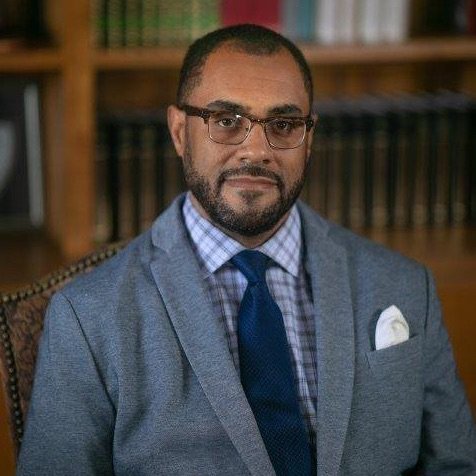
about Chris Seawood.
Chris Seawood is the Corporate & Institutional Giving Manager at TheatreSquared. In his role he leads in establishing and managing all corporate and institutional giving programs and relationships. Chris also worked at Wal-Mart Stores Incorporated for nine years in various operational and supply chain management roles. He is a graduate of the University of Arkansas holding a Bachelor of Arts degree in Political Science.
Chris also serves as Treasurer of the Northwest Arkansas Martin Luther King, Jr. Council and is a member of the Northwest Arkansas Juneteenth Committee. He has been married for 23 years to his lovely wife Maranda, an educator, in the Fayetteville School District and is the father to three boys: Caleb, Micah and Joshua.
The BeLOVEd Community Podcast
route.
The route for this episode is back in Fayetteville. And it's a tour of some of the traditional areas in Fayetteville where the majority of the residents are black or African-American. There's a lot of history here and we'll be unpacking that in future episodes.
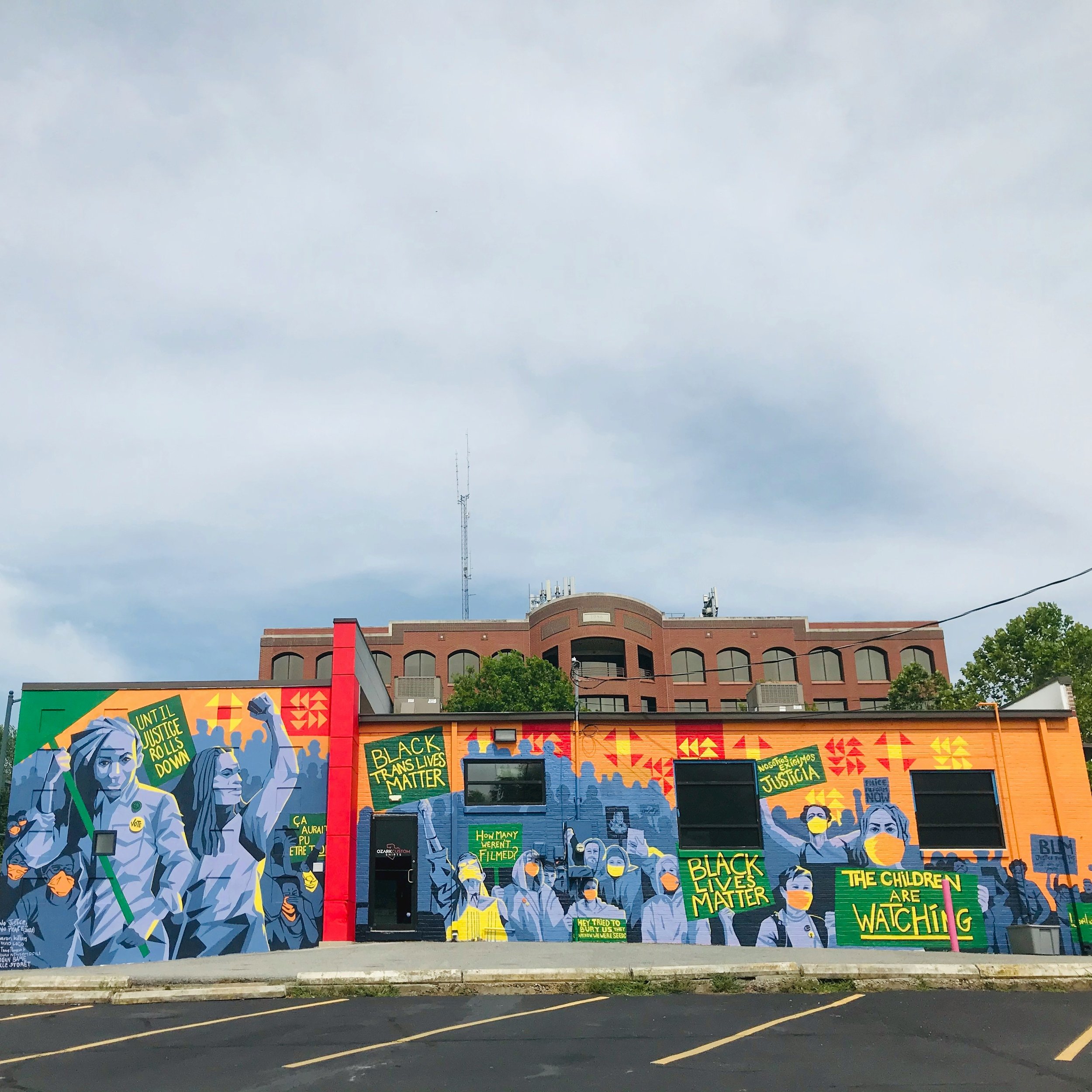
However, it's an opportunity to go see some of the beautiful parts of the Fayetteville community. It also has some spots on the route where some of the beautiful murals in Fayetteville that are celebrating diversity, the different communities in Northwest Arkansas.
Take your time. It's a short route, but I think you're going to enjoy it.
music.
episode notes & references.
Northwest Arkansas Martin Luther King, Jr. Council.
episode transcription.
opening quote.
[00:00:00] chris seawood.: I think we just have, there's just a cognitive dissonance that occurred that exists in our country, and until we are prepared to deal with the truth of reality that exists in this country, the reality, which is we have not, and we continue to struggle to deal with what is just a, the race question that exists in this country, and not just the race question the race tragedy that exists in this country.
intro comments.
Well, you're listening to the underview, an exploration in the shaping of our place. My name is Mike Rusch and today we continue our series of discussions asking what is the state of Northwest Arkansas.
However, we are moving to the next portion of these conversations to start to talk with people who have a voice in the different communities in this region. We really want to understand how is the growth of Northwest Arkansas being experienced by these different communities in our area?
So start this next phase. I'm really lucky to be able to sit down with Chris Seawood. Chris is the corporate and institutional giving manager at theater squared. He's the treasurer of the Northwest Arkansas, Dr. Martin Luther King Junior council. And he's a member of the Northwest Arkansas Juneteenth committee. And he's also a board member of a new organization in Northwest Arkansas called the Zacchaeus foundation.
Chris is a cohost of the beloved community podcast, which I highly, highly recommend listening to. There's some great wisdom in those episodes. I'll put a link to the podcast on the episode webpage.
One thing before we start this conversation with Chris is that he brings something to the conversation that I didn't anticipate. He brings a question of not only what is happening today in Northwest Arkansas, but he brings a second question. And it's a question of when.
And as you listen, listen closely because in Chris's story, you can just listen to his words through the lens of what is happening, but I would also encourage you to listen through the lens of when it's happening. Because to listen to this conversation as some point of reference for our community today, without considering the full context of this conversation over time in Arkansas. It would be to miss the depth of Chris's words.
So let's get started and jump right in.
episode interview
[00:02:53] mike.: Chris, good afternoon. It's great to sit with you. Thanks for sharing a table with me.
[00:02:57] chris seawood.: Sure, Mike. I'm glad to be here. Thanks for having me.
[00:02:59] mike.: Thank you. Tell me your story.
[00:03:02] chris seawood.: My story. Wow. Well, I am 47 years old will be 48 come this April 18th. So I'm old. Number one.
[00:03:12] mike.: I'm older than you though. So, yeah, what are you saying about me? I feel like I make it about me all of a sudden
[00:03:20] chris seawood.: you're younger than me. Young at heart anyway. No, but I'm, I've been Arkansan born and bred. I've lived here mostly all my life short of Three years was expatriated to Florida because of Walmart. Did work for Walmart for nine years of my life, but I grew up in the Eastern part of the state, Forrest City born and raised there with six of us, three boys, three girls, mom, dad.
In the mighty Delta, Mississippi River Delta decided to come to Northwest Arkansas in 1994 for college decided to follow my older sister up here and middle sister cause I was like, well, I could go to college on my own or I could follow them and get free meals and free laundry, or go be on my own and starve to death and be naked.
No. So yeah, just followed him, them up here for school. And and this is where I ended up.
I graduated from the University of Arkansas with a degree in political science. Met my wife here. She's a graduate from the U of A as well. And we raised three boys here and I've been here, like I said, besides moving away for those three years in Florida.
That's my story.
Still live here, work for Theater Squared full time now, and engage in the community in a various, in various ways. So, that's my story in a quick two minute version.
[00:04:59] mike.: Let me ask you this yeah, what does Arkansas mean to you?
[00:05:03] chris seawood.: I actually love the state of Arkansas. I know people have their views of it. But I guess, living in Florida for three years, there was being out of the state for the first time. There was something that drew me back that made me want to come back here. Whether that being my, all my family was still here or whatnot, call it being homesick.
There was still something call it something in the water or whatever you want to call it that, that drew me back. So, I'm back here. Call it a sense of calling, destiny, fate, the Lord's calling, God's calling, the universe, however you want to coin it, but I feel a sense of kinship, if you will, to the state, have always, will always And if I was to be called away, I guess I would always have a sense of kinship to my state.
With all of our problems, this is, I guess this is home for me. The eastern part of the state, which I don't get to go to nearly as much as I would like to. That's still home for me. The giant mosquitoes, the soybean fields, the rice fields, the cotton fields where, I grew up.
That's home. The very muggy days, the sweltering heat at night. I still have an affinity for that. So yeah, Arkansas is home for me.
[00:06:35] mike.: A chance to talk with other people, I asked him, is this home and you said it is, but you use this word kinship. It seems to have a deeper meaning than home. Is that fair? I'd love for you to maybe dig into that a little bit.
[00:06:47] chris seawood.: I don't know. I think so. But it probably is also because, it's deeper rooted in that we have a, and I have a multi generational rooting here.
It's also because I recently learned our family is multi generational here from, I want to say it's, I think we've got six generations here now. My family moved here from Mississippi. I think it's six generations ago. So, so now it is, we have very deep roots here now in this state.
So I guess it is now a kinship in that, that it's, it is very deep rooted now where. not only did my parents grow up here, did I grow up here, but my parents, my grandparents, my great grandparents, and on back. So I can say it's deep rooted to a level of kinship that there is this deep love and affinity and that, we are tied to it, tied to the land.
And that That they were sharecroppers. They have an invested tied to this land that, you can't easily get over. Which I would say a lot of people, black, white, or different, but probably particularly African Americans and black people, not only in Arkansas, but even across the South would definitely be able to say because you invest your blood, sweat, tears in your lives.
It's literally, In the land and that is passed on from generation to generation and that's not easily forgotten that's passed on. Even if you're not working directly in the soil, I think some kind of way genetically that's passed on, so, and even if not genetically, your parents, some kind of way, figure out a way to pass that on to their generations, whether that be through oral teachings or just in the lessons learned they figure out a way to pass that on to their kids to help them understand the values of the lessons learned that they learned from the generations before them.
So I would say that's a lesson in kinship that is tied to the land and thusly tied to the state. So it's a value lesson that, that we gain that I can say, yeah, I can say I love the state of Arkansas because again, it's tied to the land that's tied to my family that becomes just cyclical and I have as much right to the state of Arkansas that anybody else does.
If that makes sense,
[00:09:25] mike.: Chris, I feel like we could sit here. Cause I have a lot of questions about the way you describe that. I think obviously Northwest Arkansas is growing quickly. There's a lot of new people to the area. My family has been here for maybe 35 years or so, which feels like a long time, but is like, it's like a moment compared to what you're describing.
And that generational I guess wisdom teaching of rooted in the land is not something that I'm familiar with. I feel in many ways I would hope that for six generations of my family to come. How does that form and shape your sense of belonging in place here in Arkansas?
[00:10:07] chris seawood.: Well, I think, like I said it helps form a sense of belonging to a large degree and helping create a sense of connectivity. Because you have a familial connection with your direct descendants. You have family, extended family, friends that help build this sense of community.
But yet at the same time, and I'm, this is something honestly here later in life I've been grappling with Because in one sense you feel that this is your land, but yet at the other, on the other hand, at least for me, this is the grappling you feel as if you're a stranger in a strange land. Because yes, I can make the claim that this is my land, but it also is not.
Because of how we've been treated in this land. And that there is also this separation of not knowing also our heritage of where our ancestry truly comes from, or at least my ancestry historically. And i. e. Africa, and beyond Africa, because we always use that. monolithic term, Africa, is if Africa is a country, Africa is a continent that contains hundreds of countries.
And so that has become a bit of a disconnect for me. It's not as if I don't have a rich history here in America that I shouldn't embrace, and I should, and I do. And I should embark on learning more about that and I am and I have been, I think that's important to know my history of being a black person in America and know all that history.
That's why I said, learning just now about my generational history, and I'm still not privy to all the history of who I am before we came to Arkansas for Mississippi. And also learning now that I think it was one of my great grandparents was an enslaved person to an indigenous person on the Trail of Tears. So that's a whole nother piece of history. So it's like, wow, this stuff is coming out. This is incredible. But there's also this piece of like, okay, well who were our people? Before they came over as enslaved people in Africa, like what is my Ghanaian history, which I just learned? Oh, Ghanaian. I'm also part, I have people from Senegal. So what's my Senegalian history? I'm also part Sierra Leonean. What's my history from Sierra Leone? So when, to answer your question, all of this belonging, belonging, So it's like belonging, but truly not belonging fully, I don't fully know who I am. And so that makes the belonging part incomplete. So it's like being in a room full of people and like being in your home.
You can make me feel as welcome as possible. And I could. Like, be fully welcome in your house with your wife and your kids and just be having a wonderful time. But not fully feeling complete. You know what I mean? Because it's not like, well, I'm part of the family. My family fully embraced me. Even as a child, like they fully embraced me.
I'm part of the Rusch family, even to my last name. I'm Christopher Rusch, but am I? And you can do everything in your power to make me a part of the Rusch family, but there's still just this something missing. And it's not you. I could call you dad all day long. But there's just something.
And it's that something, like a splinter in your mind that's always not fully, so it's that piece that, at least for me even living in this state, even with, fully, having a fully complete family. My family did a great even, we have a flaws in our family and we fully embraced each other, fully embrace each other.
I love my family. But at least for me, that complete sense of belonging that it's that juxtaposition that exists. And I don't know, I can't speak for anybody else, but maybe at large, I don't know. Maybe that exists for other folks, but I don't know. Sorry. I didn't mean.
[00:14:56] mike.: No, Chris. Number one, thanks for your vulnerability. I'm humbled to just be able to sit and yeah, to be the recipient of your words and your wisdom. I think it it makes me think about, Northwest Arkansas. And, one of these questions is, what does community look like here? Right. This place is growing and thriving and in many ways by some, by many definitions.
[00:15:20] chris seawood.: Yeah.
[00:15:20] mike.: But it's ultimately grounded in the community and the people that we form or that form it. Yeah. And so when we think about Northwest Arkansas and where we are today and maybe where we're going,
[00:15:32] chris seawood.: yeah. Yeah. Yeah.
[00:15:32] mike.: It even sounds like the way I would define community, which is a generic term, just from the very beginning, may be very different from how you would define community.
[00:15:43] chris seawood.: Yeah. Yeah, probably so and the way people in general define community. But I think we should be mindful of, I think that's very true, but I think community should always, to me also is community can be defined to is that the one thing we can be thing that is, we can be commonly unified around if that makes sense. So as much as we may have common differences, black, white gay, straight, rich, poor what are the common Rightness is that we can unify around number one that makes great community.
And I think Northwest Arkansas does try, in some senses, to do that. I give our community credit in that. But, yet and still. I think there is much ground to be made up in not always appreciating that difference is okay. And the fact that, sometimes differences are strength in that organizing community around differences is not, in fact, alienating to the point of, well, Well, we're going to segregate people and that's bad. No, it's not segregating. It's allowing people, particularly in these, in the sense of people who are already in your community, and just, are coming to your community in minority status anyway.
If you know you have people coming in into your community in minority vulnerable positions anyway, just understanding and appreciating that and allowing yourself from a position of majority and privileged status, using your majority and privileged status to allow them to enjoy themselves in those minoritized communities in safe ways.
I think that's, I think that can be a beauty of utilizing a majority Privilege status, as much as that becomes a pejorative and people don't like hearing that I'm not a privileged person. Well, okay, whatever you feel the status is, you, whatever you feel like you, you've got it, use it for that particular, in that instance because they're obviously are people that are vulnerable, feel that they're vulnerable.
And if they feel that way, and you don't, just wake up, smell the coffee, and just help them out in that particular instance. Okay, well, we're going to help you out, and here's an opportunity for you to have some community, where you do feel an opportunity to feel safe. And seen, and heard and it's a value for that community, and it is not an opportunity for you in that particular privileged state to not be welcomed in most instances.
It is, most time it is an opportune time for you to come into that community as well to learn, to experience as well. I've never not seen it any other way whether it's whether it's a small meeting to a larger community meeting, whether, or if it's a larger community, whether it's a larger Latin, Latine or Hispanic community, and they've got larger businesses African American community, Indian American community, I've never seen it any other way, I don't know, that's my take on it. So,
[00:20:02] mike.: yeah, that's super helpful and taking, stepping back and getting me out of my comfort zone, if you will, thinking what maybe is familiar or what community looks like to me and think about it through the eyes of another person.
[00:20:15] chris seawood.: Yeah.
[00:20:16] mike.: I wish I did that more.
I wish we as a community did that more. And maybe from there, like, as we think about Northwest Arkansas and it's where we are today.
Like where's, do we see places where that's working well, that we can celebrate where that's working and that, that needs to be given more fuel for like a better words to, to yeah, to continue to open up those definitions of community in ways that people feel welcome.
But you actually, you said the word safe, which I, it feels much more whole in many ways.
[00:20:47] chris seawood.: Oh, that's a great question. Well, I know that there are, I think the, again, I think the Latin, Latin Hispanic community just outside looking in. I think they do a great job of really building building out their community.
I really admire their sense of community here in Northwest Arkansas. The Marshallese community does a pretty good job. Though it seems like they, and this is just, again, purely conjecture outside looking in, but it also tends to be a somewhat isolationist and they isolate themselves. But I think, but also I think it is with good cause particularly if you look now with even what's happening now with the Washington County how they're reacting with the Marshallese community, which in my opinion is somewhat atrocious and tragic.
I can't blame them for wanting to be isolationist. So I think for sure, I think the Indian community is doing a very good job at building community and also embracing and welcoming other communities into their spaces. The, I think the disparaging, what is disparaging is honestly the lack of true community or community space within the African American community here in Northwest Arkansas.
To be quite honest with you, with a community that honestly has existed here in Northwest Arkansas specifically in large numbers in Fayetteville, but in the region since around 1860. But And it seems like there's evidence now that there's been just really a proactive working of erasure of the African American community since that time where numbers have just dwindled.
You see a steady uptick over the last decade or 20 years of the number, but that's due in large part to, steady in the flux of the growth of Walmart, Tyson. J. B. Hunt and the vendor community. But if you also look at, current census data, that those numbers, you won't see a steady growth in the African American population over the next 20, 25 years, there'll be a stagnant number of growth.
So I would argue there is no active plan by the powers that be to really proactively attract or go after. To try to grow the African American community here in Northwest Arkansas. That's a miss. But there are people that are working on the ground to at least try to proactively build and acknowledge the community that did exist here in Fayetteville.
So that's a plus. And at least try to give a sense of community for those that do reside here. So, so that gives me some hope. I'm hopeful about that to see what comes about because it's desperately needed. And again, I think it's to the benefit of us all to see something like that come about.
[00:24:11] mike.: What does that say about us as a region, as a community?
[00:24:16] chris seawood.: Well, I think it, again, I think it speaks to our desire, honestly, to be seen as a region of A positive growth, a great track record of attracting talent, of equity and those in and of themselves are not bad at all. They're positive but you have to look deeper and go beyond the surface.
You mentioned before we started the broadcast of talking about positive growth, positive urban planning. It's, and my mind started for some reason, thinking in colors, and it was like, okay, I was thinking about this, taking a paintbrush with all these beautiful colors, and it's like, sweeping over this beautiful landscape with all these beautiful colors, but, and it's like, well, we're going to paint this beautiful picture, and it's going to create this beautiful scene.
But then I started thinking, I'm like, but I wonder if the painter that's painting over everything with this broad stroke of the brush is considering what's going on beneath the surface of that brush. Who's being impacted? Maybe they didn't want to be painted purple. Maybe purple wasn't the best color for that particular area of the city.
Maybe green was the best color there. Maybe the purple was better over there than the green or the blue here. So it's just, so it's equitable to the painter, but maybe not to the people that are being impacted on the ground. So I sometimes am wondering from the powers that be, are we truly taking into consideration with all this wonderful, positive, impactful growth that's happening 10, 000 feet in the air, are we really taking into account what's happening on the ground, grassroots level, are you truly talking to Truly truly talking to the African American community.
I don't mean not your African American resource groups that are working at Walmart, because honestly, they might not give you the truth because Some of them are risk averse. I'm just being honest. They're risk averse. The resource group at Tyson may not tell you the complete truth because they're somewhat risk averse.
Same way with the Latin, Latinx resource groups, Asian American, so on and so forth. You may not get the truth of the resources needed truly to make the community be the most beautiful as it could be to make the community as resounding and as impactful as it could be. For. Your employees at your company, but the community at large if that makes sense.
[00:27:26] mike.: It does. And I think you're, the idea of this painter, I think is really profound. I've not heard it described like that before. And I think your comment about, what is the truth of what's happening in Northwest Arkansas is a huge question, I think, because, to me, anyway, I'll personalize that I do believe that one of the things that I want to understand, we have to have an open, honest conversation authentic conversation about where we are today.
[00:27:55] chris seawood.: Yeah.
[00:27:56] mike.: And so when you say that, like, I'm curious if you want to go deeper into that, what is the truth that we need to hear that white communities may need to hear what our entire community needs to hear about how that, I guess that image of the painter is being, how that actually works its way out, into our daily lives?
So, I don't know if that's an example that you maybe would want to share, or if there's, if it's more of an aspect of just, this is the truth and reality, Arkansas for all the things we say we love about it, there are very hard stories that, that, that live in that land that live in that dirt.
And so, I'm trying to understand authentically what is the truth that we need to be speaking to today? And we need to be addressing.
[00:28:45] chris seawood.: Yeah, well, I think to use the, go back to the painter's analogy, I think for certain, the, there is a, at least for me, without question, there is just America in general, but, state to state, country to country, region to region,
Power uses that brush to stroke and tell a story, or to paint, and end up with a certain mythology or romanticized story that they want, no matter whatever it is, and they're going to end up masking whatever is underneath, whatever was there originally, regardless. I think that exists here for a certain in Northwest Arkansas, specifically in Fayetteville, certainly in the state of Arkansas.
We just saw that we just viewed a film screening with Elaine. Even to the standpoint of building a memorial in Elaine, not in Elaine, but in Helena of all places. You build a memorial in Helena to commemorate the massacre that took place in Elaine. In my mind, that's like why would you not put the memorial in Elaine where the massacre occurred to me, that's I don't know. So you're trying to dissuade people from going to, I don't know, anyway. Yeah.
[00:30:10] mike.: Something else is going on there.
[00:30:11] chris seawood.: Yeah. It's sinister in, in my opinion. But I think we just have there's just a cognitive dissonance that occurred that exists in our country. And until we are prepared to deal with the truth of reality that exists in this country, the reality, which is we have not and we continue to struggle to deal with what is just a, the race question that exists in this country and not just the race question the race tragedy that exists in this country.
And not even just the race tragedy, I would dare say now at this point in the 21st century the disparity that has occurred due to race just to be more further transparent, it's one thing for you to apologize over the transgressions of race that have occurred on my, fine.
But there's another thing altogether, as Dr. King aptly put it 1967 or 68 it's a cruel gesture to tell me to pull myself up by my own bootstraps, but, if I have no boots, how can I do that? cruel jest, tell a bootless man to pull himself up by the bootstraps and to make the argument that the African American should be further along, when we were put at a severe disadvantage in the first place, when, in effect, our ancestors were let go from enslavement with no advantage, no help whatsoever is tantamount to a slap in the face.
mike interruption.
[00:31:53] mike.: Hey, this is Mike, and I'm sorry to interrupt Chris, but I wanted to take a minute because as Chris was speaking about this quote from Dr. Martin Luther king Jr. He's speaking to this quote from the full context of this quote. And I want to make sure that everyone listening also has the full context of this statement. So in the clip that follows, it begins with a question from a white man who is interviewing Dr. Martin Luther King Jr. In 1967. After you hear Dr. King talking, we'll return back to Chris to continue on with the conversation.
[00:32:24] interviewer.: I mean, every other group that came as an immigrant, somehow, not easily, but somehow got around it. Is it just the fact that Negroes are black?
[00:32:34] dr. martin luther king, jr.: White America must see that no other ethnic group has been a slave on American soil. Uh, that is one thing that other immigrant groups haven't had to face. The other thing is that the color became a stigma.
American society made the Negroes color a stigma. America freed the slaves in 19, I mean 1863, through the Emancipation Proclamation of Abraham Lincoln, but gave the slaves no land, or nothing in reality, as a matter of fact, to get started on.
At the same time, America was giving away millions of acres of land in the West and the Midwest, which meant that there was a willingness to give the white peasants from Europe an economic base. And yet it refused to give its black peasants from Africa, who came here involuntarily in chains and had worked free for 244 years, any kind of economic base. And so emancipation for the Negro was really freedom to hunger. It was freedom to the winds and rains of heaven. It was freedom without food to eat or land to cultivate. And therefore it was freedom and famine at the same time.
And when white Americans tell the Negro to lift himself by his own bootstraps, they don't look over the legacy of slavery and segregation. I believe we ought to do all we can and seek to lift ourselves by our own bootstraps. But, uh, it's a cruel jest to say to a bootless man that he ought to lift himself by his own bootstraps.
interview continued.
[00:34:12] chris seawood.: And it's worse than a slap in the face when the rest of the country had a multi century head start to gain an economic advantage and are still reaping the benefits to this day. It's just tantamount to it, it is an insult to every economic standard to every biblical standard, whichever stand ethical standard you want to go by, in my opinion, and I think that has to be addressed.
And as we look at the growth in Northwest Arkansas as explosive as it is if we're talking about real community, I think, if we're talking about real inclusivity, true equity the African American community to start has to have a seat at the table in those conversations. If we're talking about building true community. How that looks that's another discussion.
We don't have enough time for me to really open that up right now, but I definitely do think that it's a discussion that needs to be had, should be had in some form or fashion.
[00:35:22] mike.: For that seat at the table, are there specific areas here in Northwest Arkansas as it relates to policy or work or growth or whatever that may be that we need to talk about that need to be addressed that Maybe there isn't a seat at the table today.
[00:35:38] chris seawood.: Well, I would definitely say yes. Number one, this is coming from a person that honestly, if anybody that knows me they can tell you're talking to a reparation cynic. So let me just get that out there. Because I do not believe that White America has the social, political, or spiritual will to do what is necessary.
But if we were, and if white America was, I believe it is in the arena of education, then It would have to be in the arena of business, and I then would say housing because I would there argue those were the areas where we were highly and systemically disenfranchised. And then if there were any areas where white America got a foothold and we were systemically disenfranchised and are still behind, those are the three areas.
So, those would be three areas I would address. I don't see anything at all wrong with, to start, okay, you could put a, a 20 to 30 year moratorium on African Americans that wanted to pursue a higher education, particularly from a family that was their first time wanting to pursue a four year degree.
The federal government could African Americans that wanted to pursue a business loan for the first time, 100 percent guaranteed business loans for first time business owners and then same way for home ownership, low or guaranteed home ownership for first time black homeowners.
Some of these things have already been studied and suggested, so I may just be, repeating what's already been suggested. But something of those likes. But some people are just also just say just an outright one time payment Which I can't necessarily argue against that because I also don't believe that why do we have to be again now?
We're at you know we're at the beck and call of the powers that be and they have to dictate what we're, And I get that argument too, but how it looks, what it should be at least the discussion could be had or should be had. Where we end up at, that could become another discussion, at least we could have the discussion if the will was there.
I just don't know, at least in my lifetime, that we'll never get there. But regionally there could be, and I think, but I do think that we could do creative repair without maybe using the word because what I tend to find sometimes if I'm just being honest, sometimes people become scared of a word not afraid to help a good cause. They just become afraid of words and it's, I don't know why they become paralyzed at words, but not afraid to do the work as long as you remove the word. It's weird to me. I'm like, I don't know. It's crazy. So, So maybe there's a way around that, like, I didn't say reparations.
I just think we were going to,
[00:39:17] mike.: I was going to have to say the word just to put it on the table.
[00:39:22] chris seawood.: So there, maybe there's a way around, there's a workaround. Nobody said anything about corporations. We're just going to come over here and build houses and these people are in need and we're going to give them away.
[00:39:36] mike.: But I think to your point though, the three areas that you mentioned are, that may be true across the United States, but it's definitely true here in Arkansas and in Northwest Arkansas as well too, though. So that's not a in, in the clouds national thing that we can't do something about, or we can't address.
And I say we I feel like we meaning the dominant culture of communities that maybe are saying, Hey, we want to create a community that is inclusive, that is gives a sense of Safety and that where people can come to the table obviously you've been, you're working and actively with Dr. Martin Luther King jr council here in Northwest Arkansas and talking about this idea of a beloved community.
What are the practical tangible implications of practicing and pursuing a beloved community here in Northwest Arkansas.
[00:40:32] chris seawood.: The practical implications and workings of the beloved community as Dr. King laid them out and as we practice them is working to eliminate injustice where it exists on a day to day, so in your personalized Anywhere, everywhere. Justice takes sides. So as Dr. King so aptly put it, injustice anywhere is a threat to justice everywhere. So, so an injustice can look like something as simple as being simple, voter disenfranchisement to something as major as I mentioned earlier about the Marshallese community or people not being able to engage in it's like we're doing our, one of our major projects right now is the State of Black NWA Census where we're, we've been vitally concerned about like I mentioned earlier the population growth with the African American community.
It's at a certain growth rate right now. When we looked at the last NWA council report their census report, minority census data report. And we looked at the African American population and we noticed that every minority population had a level growth that was going to increase over the next 20 plus years.
Ours was stagnant. So we were like, that kind of alarmed us. Like, well, why is our population the only one that has a stagnant to like a very negligible level of growth 20 plus years? So that caused us a level of concern. So we've got to see what's going on with our population. It seems like nobody else was alarmed by that.
So as members of the beloved community, we wanted to see on a deep dive level from levels of economics, culture, social justice, and a few other buckets. Hey, what's going on? It may not be anything, may be doing great, but may show some anomalies. And then we'll share that information out.
But also there are people, other grassroots organizations that are doing great work. We want to know who those folks are. But those folks need to know that they have an ally. And they have people beside them that are taking notice. But that's the impetus of the beloved community, and that your work matters and in belonging. And in doing that kind of work, you are helping to build the beloved community. And Dr. King's vision of the beloved community is a community where people, regardless of race, gender sex, et cetera has a sense of belonging and we should be working to dismantle all systems.
Any and all systems that would be deemed oppressive that prevent them from living within that community. So that's all I'm going to say. Yeah,
[00:43:58] mike.: I feel like I should just ask you to please keep talking because I have the privilege of being able to record all of this so I can come back to it.
But I think the truth and the way you talk through this is. Yeah it's beautiful to listen to you talk through it. For sure. I haven't even got to any of my questions that I wrote down, but that's fine. I hope this will be one of many conversations that we can continue to have.
Chris, everyone that I've had a chance to talk to I've been able to ask them, like, what are you, what are your fears for this place, Northwest Arkansas, as it sits today, or as it continues to move forward?
[00:44:35] chris seawood.: Wow. Man, I fear for this place.
[00:44:44] mike.: You can take as much time as you want.
[00:44:46] chris seawood.: If I'm honest, I fear that the bubble will pop. And what I mean by that, in that, and I definitely don't mean to disparage me. I so love this. I do love this place. I love Northwest Arkansas. I do believe, I've come across some of the nicest people. Genuinely, all the nicest, kindest people.
I think I could ever meet anywhere in the world. Just genuinely. And that's across the spectrum. Black, white, gay, Christian, Buddhist. It doesn't matter your makeup. Just genuinely. Just love beautiful people. Rich, poor
But, they're it's just always seemed like there is this air of what do we call it?
I don't know what the right word is. I don't know the right word for it, but this air of, It's not superiority, that's definitely not the right word, but pomp or prim, proper ness, almost like this southern chivalry exists. And maybe that's not my fear. Maybe that's my hope that pops because it's like, it's almost like it's not real.
I'm like, what is this that we can't we can't be genuine and honest about who we are or what really is happening. In our lives or more deeply in the community. I know we want, and it's great to put our prosperity on display. That's fine. That's awesome. But it's also okay to say, there are hurts that happen in the community.
Why would we have three, four, five thousand non profits in this region if that were not the case? Or let's figure out a way to eliminate some of the redundancies that exist in the non profit space so that we don't have as many, All the redundancy in the nonprofit space and really create some active results in the nonprofit space to, to create some lasting results for some of the problems that exist, but that's neither here nor there.
So maybe it'd be some of my fear and my hope or cross over goals. I don't know that maybe a little sadistic I hope that doesn't sound like the case. Just but I don't that's it. Maybe, yeah, maybe there, maybe I've got a crazy crossover. I don't know. And saying that
[00:47:45] mike.: maybe you live in the tension of both.
[00:47:46] chris seawood.: Yeah. Yeah. I don't know. That's what I come up with right now.
[00:47:51] mike.: Okay.
What am I not asking you that you feel like as we think about Northwest Arkansas that you maybe feel needs to be put on the table or talked about as it relates to, yeah, community maybe black African American community here in Northwest Arkansas.
[00:48:13] chris seawood.: Sure. As we talk more, I'll probably come up with something that's,
[00:48:16] mike.: Then I'll retract my question as, as long as we can talk more. That'd be my question, .
[00:48:20] chris seawood.: Yeah. Yeah, we can talk. I'm enjoying. This
[00:48:23] mike.: chris, we have traditionally ended every episode with this idea, this question, what does wholeness look like? But we've also talked about the beloved community, which sounds very whole, if not more than the word wholeness. I'm curious as you think about that if I were to use that term, wholeness, what does wholeness look like for you here in Northwest Arkansas?
[00:48:47] chris seawood.: Oh man, wholeness for me?
I have a vision of being able to, it's like a completed work. And I guess it's like a completed work of I guess it's never complete, but at least for me it's complete where I'm like this. I mentioned being old earlier, but it's like an old guy, or an older, or at least old enough to where I can like, pass the baton on to some younger folks.
And I'm further down the road, and I'm just like Sitting on some, my, some land and I'm sitting on my front porch and I'm looking out on my fishing pond.
[00:49:39] mike.: That may be the best definition.
[00:49:43] chris seawood.: That's wholeness for me. That's like my vision. I'm like, Oh, I don't have to like, well, you can come out here and let's talk about it.
And then you go on. Yeah,
[00:49:59] mike.: that may be the best definition I've actually received so far to date.
[00:50:03] chris seawood.: For me and my wife and she won't be mad because I'm like, you're gone again.
[00:50:10] mike.: Well, Chris, I'm humbled to be able to sit with you. Thank you for taking some time.
[00:50:15] chris seawood.: I really enjoyed this. Thank you so much.
[00:50:17] mike.: Well,
I love the spirit. I love the joy that you carry with you. And I love the truth that you tell as well too. And I need more of that in my life. I know.
So, Chris, thank you for your time and yeah, I look forward to, I'm gonna take you up on that. Yeah. We're gonna talk more because I feel like as this community moves forward I want to make sure that I understand, that we all understand. Yeah. What does it look like to move towards that concept of a beloved community?
[00:50:42] chris seawood.: Yeah. Yeah, absolutely. Thank you for all the work you're doing and thank you for highlighting what we're doing.
[00:50:48] mike.: It's been an honor. Thank you, sir.
[00:50:51] chris seawood.: Thank you.
outro comments.
[00:50:54] mike.: Well, I was incredibly humbled to spend some time with Chris and as I walked away from our time together, the thing that really stuck with me was simply this.
The kindness that Chris carries with it himself.
Before our conversation. I mentioned this idea of listening through the lens of when, and I hope you walked away hearing that question being asked.
I would ask you to take a look at our community through this lens of when, because it may actually help us understand where we are today.
Let me give you an example that comes out of episode two, the invitation. Go back and listen to that full episode if you haven't already.
One of the common routes that I ride on my bike as described in episode two, it's out on Little Sugar Creek around the bright water tunnel.
And every time I ride it the story's there, they envelop me. Cause I'm reminded over and over again about the layers of stories over hundreds and hundreds of years. But I passed by this house every time where a Confederate flag, still flies. It's a symbol of something it's a symbol of "when." It should have passed into history long ago. Yet today it's still here. It's still waves when the wind blows, it still stands as a marker of this idea of "when." a marker that today informs the question of how our community is being shaped. It's still a marker of a wound still torn wide open. A wound needing to be repaired.
This is just an example of why the white community, that I'm a part of, must listen, we must reconnect to these stories and we must work to repair them.
As Chris responded to my question on wholeness, he simply said it was "a completed work." And so once he passes that Baton to the next generation, I hope I can first say that I walked along that path with him helping to embrace this idea of a beloved community.
And second, I would love to sit in that chair next to him on that front porch waiting for the fish to bite. Because his answer to wholeness sounds like the best answer I've heard so far.
Other than that I can't and shouldn't try to add anything else to Chris's words. In fact, I'll just go back and listen to them again.
route
[00:52:58] mike.: The route for this episode is back in Fayetteville. And it's a tour of some of the traditional areas in Fayetteville where the majority of residents who were black or African-American along with some of the tours of some beautiful murals in Fayetteville that are celebrating the diversity of the different communities here in Northwest Arkansas.
For our
next episode preview.
[00:53:14] mike.: next episode, we're going to continue this exploration of how different communities of people here in Northwest Arkansas are experiencing the growth that is happening.
The Northwest Arkansas council reports that between 1990 and 2021. The nonwhite population of Northwest Arkansas grew from less than 5% to over 29% and it's projected to continue to grow.
So we'll talk with Mireya Reith, the Executive Director of Arkansas United. Arkansas United. works to empower Arkansas immigrants through advocacy and service.
[00:53:43] mireya reith.: My hope is that what we do, what we're seen as doing with immigrants, that we can finally elevate that it's not just about immigrants. It really is about all Arkansas.
I think that's one of the things I struggle with the most. It's making the case that we're not just another self- interest group. That immigrants aren't just yet another self- interest group that wants their piece of the pie. That this really is thought about, well thought about, it's systemic, it really is about making everything work for everyone.
[00:54:17] mike.: And as always, I can't wait to share this conversation that I had with Mireya.
music.
[00:54:22] mike.: And for the music today, this is twice as fun because first of all, it's a local artist, but second, this is Chris Seawood's son who has published some music under the name Shi Woodz.
I did ask Chris if he had a favorite song of his sons and of course he didn't, he loves them all. But I wouldn't say that I could hear the pride in his voice as he talked about how proud he was of his son who was out there creating music. So enjoy this today from local artists, Shi Woodz.