
the historic district with Tommie Flowers Davis.
Tommie Flowers Davis shares the story of Fayetteville’s historic Black neighborhood and the urgent need to protect it through the creation of a Black Historic District.
season 2, ep. 27.
listen.
episode notes.
In this episode, we speak with longtime Fayetteville resident Tommie Flowers Davis about the disappearing legacy of Southeast Fayetteville’s Black community—and the movement to establish a Black Historic District before it’s too late. As a native of the neighborhood, a former educator, a developer, and a member of the Fayetteville Historic District Commission, Ms. Davis offers both personal testimony and a call to action. Through her story, we learn about the deep roots of Black families in Fayetteville, and how over time, through policies of exclusion and neglect, much of that history has been erased.
We explore how infrastructure disinvestment, zoning barriers, and city planning practices have disproportionately harmed Black residents and made it nearly impossible to access housing preservation resources. But this conversation isn’t only about what’s been lost—it’s about what remains. Ms. Davis helps us understand what it would mean to name and protect this history, not as nostalgia, but as a step toward belonging, justice, and repair in a city that still struggles to tell the full story of who built it.
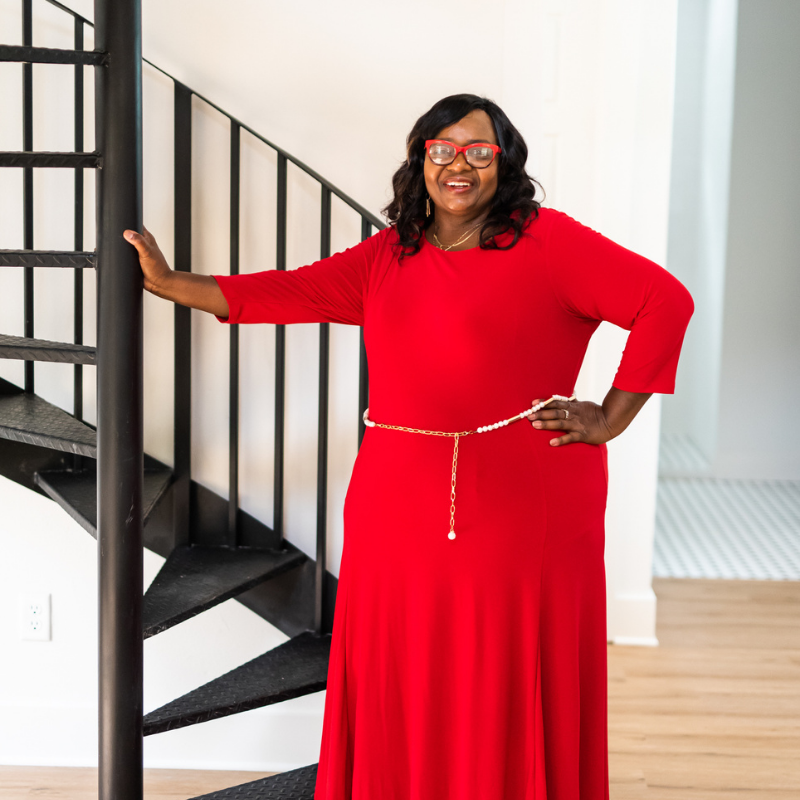
about Tommie Flowers Davis
Tommie Flowers Davis is the founder of Flowers Consulting, Construction and Development, LLC, doing business as Another Door Opens Construction & Development. Based in Fayetteville, Arkansas, Tommie is best described as determined, dedicated, and faithful. Her current work in infill development—building small cottages and townhouses in historically neglected areas of Fayetteville—marks what she calls her “second act” after a decades-long career in social work and community advocacy.
Tommie spent over 40 years in Little Rock, Arkansas, serving as a therapist, social worker, and agent of change. A Fayetteville native, she attended Fayetteville Public Schools and began her college education at the University of Arkansas before transferring to Arkansas State University, where she earned a BA in Social Work. She later completed a Master of Social Work at the University of Arkansas at Little Rock in 1981.
Her transition into construction was born from a personal and profound journey. In 2016, Tommie suffered a traumatic brain injury in a motor vehicle accident—ironically, while commuting to her job managing a brain injury rehabilitation team. Following her injury and the loss of both her mother and brother in 2017, she returned to Fayetteville and inherited family property. Frustrated by the challenges she encountered in dealing with builders and contractors, she enrolled in the Construction Technology program at NWACC in 2019. Despite being over 60 and living with the effects of a brain injury, she graduated with honors in 2020.
Tommie’s first development project—a set of three cottages completed in 2021—was made possible through an internship partnership and her own tenacity. She has since earned her Residential Building Contractor’s license and is now preparing for her next project on the same inherited land. The property carries deep family significance. Her mother, a self-taught carpenter, once dreamed of building there but faced barriers from the City of Fayetteville, including the threat of condemnation and a lowball offer after a sewer main was installed through the middle of the land. Despite being told the lot was undevelopable, Tommie has invested substantial time, finances, and determination to prove otherwise.
This next build is not just about housing—it is a tribute to her mother’s legacy. With a team of dedicated supporters and her own unwavering commitment, Tommie Flowers Davis is reshaping not only the landscape of Fayetteville but the narrative around resilience, community, and what it means to honor the dreams of those who came before.
episode notes & references.
- Tommie Flowers Davis (Fayetteville Historic District Commission): https://www.fayetteville-ar.gov/658/Historic-District-Commission
- City of Fayetteville Historic District Preservation Program: https://www.fayetteville-ar.gov/4231/Heritage-and-Historic-Preservation-Plan
- Desegregation of Fayetteville Schools: https://encyclopediaofarkansas.net/entries/desegregation-of-fayetteville-schools-5278/
- Negro Motorist Green Book: https://www.nps.gov/articles/000/the-green-book-an-historic-context.htm
- Arkansas Listings in the Negro Motorist Green Book: https://encyclopediaofarkansas.net/entries/arkansas-listings-in-the-negro-motorist-green-book-11828/
- Fayetteville’s Southeast Historic Black Community Map Project: https://fayetteville-ar.gov/4353/The-Historic-Black-Community-of-Southeas
- HUD Community Development Block Grant (CDBG) Program: https://www.hud.gov/hud-partners/community-cdbg
- Brown v. Board of Education (1954): https://www.archives.gov/milestone-documents/brown-v-board-of-education
episode outline.
- Introduction & Family Roots in Southeast Fayetteville: 00:00–07:40
- Segregated Schooling & Integration in 1965: 07:40–15:21
- Community Life, Belonging & Black Institutions: 15:21–23:02
- Impact of Urban Renewal & Infrastructure Disparities: 23:02–30:43
- Preservation Challenges & Building Code Barriers: 30:43–38:24
- Sherman’s Tavern, Green Book Sites & Cultural Memory: 38:24–46:05
- The Case for a Black Historic District: 46:05–53:46
- Policy, Displacement & the Role of the City: 53:46–1:01:27
- Historic District Commission & the Path Forward: 1:01:27–1:09:08
- Closing Reflections & Call to Action: 1:09:08–1:16:49
episode transcript.
episode preview
[00:00:02] tommie flowers davis.: and I also see how just bits and pieces of our community, it's not there anymore. So at some point in time we won't have that story, we won't have that history, we won't have that acknowledgement or any awareness of us being there and how we contributed to the fabric of Fayetteville.
[00:00:23] tommie flowers davis.: I know a lot of our structures are no longer there. Just, in talking about the first black elementary school in Fayetteville, Arkansas, the fact that was not an important enough structure to be historic or maintained. I have a problem with it.
episode intro.
[00:01:24] mike.: We are listening to the underview and exploration in the shaping of our place. My name is Mike Rusch, and today we're diving into a story that's critical, not just for Fayetteville, but for all of northwest Arkansas. A part of the story of Southeast Fayetteville, one of the city's most significant and often most overlooked historical black communities here in northwest Arkansas.
[00:01:42] mike.: For generations black families built homes and churches and businesses, and a thriving sense of place in Fayetteville, despite the systemic barriers of segregation and racism. But over time, continued development and displacement have slowly been erasing much of that history through urban renewal projects that are built on Jim Crow era zoning policies, the loss of black owned land, and a widespread failure to acknowledge the significance of the community that once thrived Here.
[00:02:08] mike.: My guest today is Tommy Flowers Davis. Mrs. Davis's lived this story firsthand. Her family has been part of the fabric of Southeast Fayetteville for generations. In 1965, a full decade after Brown versus a Board of Education, she was one of the very first students to integrate in Fayetteville's Elementary schools. She's been a social worker, an educator, a member of the Fayetteville Historic District Commission and a local developer, and she has seen both the resilience of this community and the forces that have tried to erase it. Today, that works underway to remember and reclaim that history. The city of Fayetteville is considering the establishment of a black historic district, an effort to formally recognize and protect the stories and the spaces and the legacies of black families who have shaped this city. But that recognition won't happen unless a broader community understands why it matters and is willing to act.
[00:02:56] mike.: Because the truth is, you can't tell the story of Northwest Arkansas without the stories of the families who built shape and sustained it. Many of those families came to Southeast Fayetteville after the Civil War, freed people seeking land, stability, and a chance to build something new. They were often pushed to the margins, placed near industrial zones or floodplains, and kept close, sometimes physically and economically to the families who once enslaved them.
[00:03:20] mike.: Still they fought to establish themselves, founding schools and churches and businesses that became anchors of the community. This neighborhood was home to establishments listed in the Green Book that provided safe refuge for traveling black families in the South.
[00:03:32] mike.: Today, Mrs. Davis shares about her work to define, reclaim, and create a community that reflects a deep heritage, demanding our attention and respect. But that work has not been without great challenge. This episode and the episode to follow will work in combination to tell this story and explain how policy planning and land use have long been tools of exclusion and expulsion.
[00:03:54] mike.: But today we begin with Mrs. Davis and the neighborhood that raised her.
[00:03:57] mike.: A lot to get through today. Let's get into it.
episode interview.
[00:04:02] mike.: I have the privilege today of sharing a table with Tommi Flowers Davis, who is a longtime resident of Southeast Fayetteville, member of the Fayetteville Historic District Commission and is a local developer as well, too, who's deeply invested in what it looks like to create equitable opportunities for housing and the development and places for people to belong in this community.
[00:04:25] mike.: And Ms. Davis, it's a privilege to be able to share a table with you. Welcome to this conversation.
[00:04:30] tommie flowers davis.: Thank you.
[00:04:31] mike.: I'm anxious to hear your story. I know there's an incredible amount of history within your life and so I'm anxious to hear all of it. So please share all of that with us, but maybe we can start, I'd love to understand. A little bit of your background and your story and maybe what roots you in this place.
[00:04:48] tommie flowers davis.: Okay. I am a native of Fayetteville. Born, raised, attended the Fayetteville School District.
[00:04:55] tommie flowers davis.: And my parents, my mother was originally from Fort Smith and they moved here to Fayetteville when she was young, very young. My dad is originally from Mississippi, and the way he ended up in Fayetteville he met someone from, I don't remember if it was Coca-Cola or Dr. Pepper Company here, who was working in that area I guess trying to get business or whatever and he met my dad. He saw him several times, was real impressed with him, and told him if he ever wanted a job in Fayetteville, that he would give him a job in Fayetteville. So my dad eventually moved to Fayetteville and this is where he stayed, this is where his roots and my mom's roots were.
[00:05:44] tommie flowers davis.: My mother she attended the district when it was not integrated and was bused to Fort Smith and they stayed in someone's house and were taken care of throughout the week. And then they were bused back to Fayetteville. And I think it was a pretty, not traumatic, but, they never knew for sure about eating and just basic things and just the fact that they had to leave their family for an entire week to go and get an education. That was her experience. And she graduated Lincoln High School. And basically I think because of the educational experience she did not advance as well as she could have when she was growing up.
[00:06:38] tommie flowers davis.: My dad, he quit school in the eighth grade because his mother passed and he became a contributing mem member with his dad to take care of all of his siblings. So my dad had an eighth grade experience education. I have two, two brothers. One is deceased, one older, one younger. And my my experience with Fayetteville High School was or Fayetteville School District.
[00:07:05] tommie flowers davis.: The elementary schools were integrated the year that I was to start the first grade. And Lincoln High School, they no longer would have any classes there. And the way it was integrated, Center Street, which runs in our community, basically, they drew a line down the middle of Center Street. Anyone south of Center Street went to Jefferson and Ramey, anyone north of Center Street went to Washington and Woodland.
[00:07:36] tommie flowers davis.: So I don't know that it was intentionally done, but what it did was to create some kind of, I am not gonna say cast system, but and I didn't learn this until later on, but the kids who went to Jefferson and Ramey thought that the kids who went to Washington and Woodland thought they were better than them.
[00:08:00] tommie flowers davis.: That in and of itself was not helpful as far as stabilizing the community and community re relations, but that's just the way it went. I did not originally start out at Washington. When I, with the first grade, I actually went to Peabody, which was on the campus, and they were allowing faculty, staff, children to go to Peabody, and that was their attempt at integrating Peabody. And there were six children. There were two from. Each family who went to Peabody. And that was probably the best ex experience I ever had because they were very progressive and they basically taught us so well. When I went to Washington in the second grade, I was well above my grade level, but conversations were not favorable of them advancing me a grade, even though I was well I was able to do that. And that was a loss for me because I think that would've helped me in the long run because I was bored when I was in, in the second grade and maybe didn't learn as much as I could have.
[00:09:08] tommie flowers davis.: But I went through Washington, went to Woodland, and the situation with Woodland is that you had I think we had about seven elementary schools there in Fayetteville at that time five of them probably had no black children. So you go from seven elementary schools to two junior high schools. So you're gonna have a number of white children who had not experienced going to school with black children at that point in, in their educational life. And some didn't wanna go to school with black children. And, we experienced we experienced those issues and had to work through them, not only with the students, even some of the teachers but we were able to, and I don't know how this was arranged, but I remember Mr. Vander Griff, who was the superintendent at that time, would take a group of us to the administration. School district administration and would talk to us about situations that we were encountering when we were going to school. And I, I don't know if his his thing was they wanted to make sure that we felt safe and comfortable and okay about, going to school at our respective schools.
[00:10:27] tommie flowers davis.: And so that really gave us an opportunity to say, Hey, we're being picked on this way, or this teacher is acting this way or that way toward us. So it gave us an outlet for verbalizing those things and not real sure what he did with them, but at least he was able to get our aspect of what was happening during that transition period.
[00:10:50] tommie flowers davis.: And of course I went to Fayetteville High School. I left Fayetteville High School after the 11th grade and although I did go back and finish my couple of, uh, classes that I needed for my diploma, I actually graduated with my class even though I left a year before. But I was involved in the Upward Bound program and they let me go to college after my 11th grade year mistake.
[00:11:20] tommie flowers davis.: How many people can go back to, to high school after you've been to college? So even though I did try and go back and go that year of high school. They would've considered me a full-time, high school, full-time college student, and I was told that could not happen. And so even though I was registered in, enrolled for three hours in the morning at high school, and then the afternoon I did my college courses I had to withdraw from high school because I could not do both according to their guidelines.
[00:11:55] tommie flowers davis.: The other impact was I didn't qualify for any kind of honors or anything that I had made up to that point because I didn't go my senior year, which I thought was ridiculous. But, it didn't matter because I told my mother I would graduate, I did graduate, I did get my diploma, and that's what she wanted.
issues at high school.
[00:12:15] tommie flowers davis.: There were issues at the high school even. Not a whole lot, but there were issues where sometimes we were targeted. And in particular I was a driver when I was in high school, so I would drive, I would park in the lot where all the other drivers would park, and there was a set of steps going into the building.
[00:12:37] tommie flowers davis.: Every morning, four girls would sit across the steps and would block me from going in the building. I reported it, nothing was done. They continued to do it. And one particular day I was just real frustrated and there was one of the girls I saw by herself. And so we had words and then we had a physical confrontation.
[00:12:59] tommie flowers davis.: This young lady went to the office and reported the confrontation, but actually said it was my friend instead of me. And I didn't understand that. And so when I found out that they were getting ready to send my friend home, then I went to the office to say, but it wasn't her, it was me. And I said, I have been telling you all that these girls were bullying me.
[00:13:24] tommie flowers davis.: They were trying to stop me from coming into the school every single morning. Y'all hadn't done anything about it. And now that something has happened to one of them, you're ready to send her home. But this other girl gets a pass when she's been bullying me every day. And he got the principal at that time was Mr. Bruner. And he said to me that okay, he wouldn't send her home, but he was gonna put her in. In school, SU and it was still not her that did it, and I didn't understand that. And so I guess he decided he would put me in school suspension too. But the other girl the white girl, he was just gonna let her go.
[00:14:02] tommie flowers davis.: And I said, I say I, and I admit probably wasn't the right thing to do, but I called him a bigot and he said you're probably right, but you are too. And I said, you're probably right too. I said, we probably all are. And that's the way I handled that conversation with him. And so I knew that there was no support coming from him.
[00:14:24] tommie flowers davis.: And I just didn't even wanna have anything else to do with him at that level because when they could have intervened to help me, they didn't. But when it was time to to make, have consequences, then they were ready to have some consequences that were negative. So I just really was ready to leave Fayetteville High then I didn't wanna go there anymore, but I stayed there through my 11th grade year and did well and transitioned to the U of A and at the U of a I was
[00:14:55] mike.: Can I ask real quick
[00:14:56] mike.: Yes.
[00:14:56] mike.: Tell us what year that was.
[00:14:57] tommie flowers davis.: that was I left high school my junior year. I fin yeah, 11th grade. I finished in 76. I graduated with the class of 77. Even though I hadn't, I didn't have those two classes yet, but I graduated and then I went back that summer and finished the two classes that I should have had those two credits that I should have had, and that was 77.
[00:15:20] tommie flowers davis.: And so when I went to the U of went to the U of a, I loved to go into the U of A. But it was time to leave home. It, I was, it was time to get away from Fayetteville and so I did stay there until I was a second semester junior. And that was primarily because I wanted to get all my basic stuff done and already working on my my special area, which originally was psychology.
childhood experience.
[00:15:47] mike.: Before we can we back up for a few minute? I wanna understand 'cause obviously you've described your experience which this does not sound like obviously a good experience through Fayetteville Public Schools at that time. But can you take us maybe back a little bit farther?
[00:16:02] mike.: Mm-hmm. And I would love to understand like your earliest memories of maybe growing up in Southeast Fayetteville. Or what. What did the neighborhood feel like? What was it like? What do you remember? What are your memories from that time in that place?
[00:16:14] tommie flowers davis.: I'm glad you asked that because I don't want it to look like it was all a bad experience because when we were younger, we had different community people who would take, for example Ms. Bacher and she would take a group of us to her house and she would work with us on reading and English and all those other things. And then we had strangely enough we would be we would go to a house that was on campus and I think that's where the alumni building may be, right? We learned to play orchestra instruments.
[00:16:47] tommie flowers davis.: So we were involved in orchestra and that was when we were young. That was probably before the first grade. So we were very young getting exposed to a lot of different cultural things. And we knew that when they finally integrated us. The goal was assimilation and they did everything possible to involve us, engage us in activities that would make us more like them.
[00:17:16] tommie flowers davis.: The majority. And for the most part, that was a I can't say easily done, but when you live it every day, that's what you learn. And what an invaluable experience. I didn't recognize it then, but when I left and really faced worldly things, I was prepared and I would not change that trade, that experience for anything because we were essentially taught by whites and we were taught how to function, live, work in that environment with that culture.
[00:17:52] tommie flowers davis.: So when I went out into the world. I was prepared, and I think to the extent that I was able to not only, go to school with white children, had lots of good friends, and what was so unusual is that most of the kids who befriended the black children were children of the more prominent white families, doctors, lawyers, business people.
[00:18:21] tommie flowers davis.: They were the ones who basically connected with us for whatever reason I do not know. And even now, we have long lasting friendships with a number of our peers who we went to school with over time. And the thing that I understand and know the most is that. I would be a totally different person if I would not have had that experience because I would not have been prepared for living in, in the world basically.
[00:18:52] tommie flowers davis.: I think the the sad thing about it is we were very connected as a community and we did things as a community and, everybody was, everyone's child. You didn't do anything wrong without getting con consequences from, that person and your parents once you got home. So you were raised in that community and it was none of these don't mess with my child, don't discipline my child.
[00:19:17] tommie flowers davis.: No. It's like you have the authority, you have the right, you discipline them, and then I'll take care of 'em when they get home. And we knew that, and that was a part of how, how we were, how we developed. But we also had those institutions that supported that level of community and connectedness, whether it was Lincoln School before they demolished it, because we were having lots of cultural events at Lincoln School.
[00:19:45] tommie flowers davis.: We'd have some form of school in the summer where they would work with us on all kinds of educational things. We would have parties, we would have, I did my very first piano recital at Lincoln School. So it was, that was how we formed our community. That's how we stayed connected. And even Sherman's Tavern, I know it was just a little what, a little whatever it was.
[00:20:12] tommie flowers davis.: But that's how we stayed together as a community. You could go inside there, you could play pool, you could listen to music, dance, whatever you wanted to do. Or there was a whole cultural of a cold culture of people just sitting out and around and talking and enjoying themselves. So that was gone.
[00:20:33] tommie flowers davis.: Lincoln School was gone where they had the head start now at Willow Heights, the Head Start. We did a lot of activities there as community people. Once those things were gone and then you moved the church out of the community. And that was a big factor that also affected how we functioned as a community to the point that we have generations of kids now that can't even relate to.
[00:21:02] tommie flowers davis.: That part of Fayetteville being a part of their culture they don't understand it. They don't even understand community though either. So I think that was, that's been the, that's been the hardest part for me to see is that I know how rich our culture was because of how we grew up and because we were a very strong knit community.
[00:21:26] tommie flowers davis.: And the kids who couple of generations after us on, there's no relevance to them. And that's not good.
definition of community.
[00:21:33] mike.: You said something that I think peeks my interest. You said they don't understand community.
[00:21:38] mike.: Mm-hmm.
[00:21:38] mike.: I'm assuming your definition of community was formed and shaped in this place in southeast Fayetteville.
[00:21:44] tommie flowers davis.: Yes. Uhhuh,
[00:21:45] mike.: I'd love for you to speak. What does that mean to understand community?
[00:21:48] tommie flowers davis.: My community was, for example, I have young ladies right now, we call each other sisters because we grew up that being very close, very close knit. And it was as if nobody's gonna let them bother you. I'm, we just had that type of relationship.
[00:22:06] tommie flowers davis.: I have people who now, now they may call me, mama, because I developed those kind of relationships with them throughout time though. But it's just how we did everything together. We may have not had any blood relation, but we all considered ourselves as relatives, even though, and it's who are you related to?
[00:22:30] tommie flowers davis.: And it's, the question is who am I not related to? Because we all felt that type of kinship, even though it may not have been a blood relationship, we would have all kinds of community activities. We would eat at each other's house. We would have slumber parties. Anything that, that we did, which kept us as being a part of each other's lives.
[00:22:56] tommie flowers davis.: That's what we did. As community and our parents, they'd make sure we had Sunday dinner. We would have those kind of things. And it may not have been just our family because everybody was a part of the family people would drop in for our family dinners. We'd go to their family dinners.
[00:23:14] tommie flowers davis.: It's just, it was just a whole system of how we how we functioned with each other and around each other and that kind of thing. Church was a big one. We did a lot of church types of activities and it was not okay to not go to church. It was not okay to not go to Sunday school. And so families have gotten away from that too, but that was a source of our strength as well.
community today.
[00:23:40] mike.: I'm curious as you search those memories, like what does this community in South Fayetteville mean to you today?
[00:23:48] tommie flowers davis.: The community in South Fayetteville now has, change significantly. I don't see the connectedness. I don't see community as a matter of fact. And it makes me sad because I know of all the advantages we had, just being able to develop strong relationships how we connected and the things that we did together.
[00:24:13] tommie flowers davis.: Those things are not happening now. There's not even this real strong affiliation or association with a church now. And, that's where, a lot of people have gotten their strength and their understanding of just people in general is being connected through the church. But there's no real church anymore to be connected with. I know that we have churches in the community and St. James, which was the more prominent. Black church is now no longer. St. James Baptist is no longer in the community. St. James United Methodist, which was my church it's almost non-existent. It's lost most all the members. And it's a dying church. It really is. And it could have so much potential because it is positioned right there in the community where it could attract so many different residents of that community given the right ministry. But that's not what's happening. So that's a dying church. Church of Christ is a pretty good functioning, um, church.
[00:25:22] tommie flowers davis.: And I think there's a lot of community, family, those types of relationships that that's formed in that church. But as a whole. The community is totally different. The gentrification that's gone on because of how families have lost their legacy, they've lost their property, they don't own anything anymore.
[00:25:46] tommie flowers davis.: We have the big eyesore that's big eyesore that's sitting on the hill Willow Heights, that has had no resources or anything put into that whole, one of the nicest parts of Fayetteville has one of the worst housing, pre representations, pre presentations that we could ever have. And that I'm still struggling to understand that.
[00:26:12] tommie flowers davis.: And there's a whole. I have a whole lot of feelings about that whole situation.
[00:26:16] mike.: Let's maybe this would be a good time to, like, maybe I have one more question for you. Okay. And then I wanna move to your kind of what the work that you're doing today Okay. And your background to that too.
[00:26:27] mike.: When I asked you what does this community mean to you today?
[00:26:30] mike.: Maybe oh, what's the word I'm looking for? Maybe compare that to what it meant to you growing up.
Okay.
[00:26:37] mike.: If I can, I'm gonna ask you to return back to that space. Okay. What was, when you think about this community from your childhood and the beauty of it, what was the essence of that really returns to you in that
[00:26:48] tommie flowers davis.: space?
[00:26:48] tommie flowers davis.: I think the, what I remember the most about that community is how close and how relevant each one of us. Was to the others, we just, it, there was just a level of friendship and kinship and understanding and respect we had for each other and for institutions that were, and I, I mentioned Sherman's, I mentioned the church.
[00:27:16] tommie flowers davis.: There was just such a a level of, I guess I used to when I would go outside of Fayetteville, I would have to advocate for Fayetteville and what it was really like, because I've, I had a lot of people who would say, you're from Fayetteville? No, black people live in Fayetteville. And I would say, yes, we live in Fayetteville.
[00:27:39] tommie flowers davis.: We live east of the courthouse. That was a very distinct boundary that I could. I can't say that now because we, some of us live east of the courthouse, but it's not the same, I don't know how to say it. It's not really considered a black community anymore, even though that's probably where we still have the majority of the black community.
[00:28:04] tommie flowers davis.: But I was like a, an ambassador, of Fayetteville, I would say. Oh yes, but Fayetteville, this, Fayetteville, just to try and some of the myths that people had about Fayetteville and basically sharing with them how good I felt about growing up in Fayetteville which was hard for people who were outside of Fayetteville to really understand.
[00:28:26] tommie flowers davis.: So I think just having a very good a meaningful experience as a child and. Young adult was, I get a warm feeling when I talk about Fayetteville, then Fayetteville now it's just okay, it's a place for me to live and I'm wanting to contribute to my community so that I, and put something in that community that people can be proud of.
[00:28:50] tommie flowers davis.: And that's one of the things that I really wanted to do. Just like my mom, she fought the battle. She wanted to build, she wanted to do something for her community and was blocked every way that you could think of by the city of Fayetteville so that she would not do that. And I want to do that. And that's what my real purpose, hopefully, is to do something that's going to really make our community something that to be proud of.
[00:29:20] tommie flowers davis.: And right now I see it as I'm here, I live here. I exist in this community. But it's not really, it is not really that, I don't know how to say it. I don't have the same feeling, as it being my childhood community that I had. Then
[00:29:37] mike.: let's come back to that.
[00:29:38] tommie flowers davis.: Okay.
[00:29:38] mike.: Because I would love to learn a little bit more about the work.
[00:29:42] mike.: You, you have a career in social work
That
[00:29:44] mike.: you started in.
Yep.
[00:29:46] mike.: And you're welcome to share anything about that, that you would like. And I also know that you're working as a part of a developer in Fayetteville in this area to help create housing opportunities for people and to do that in a way maybe that's not being done today.
[00:30:03] mike.: And so I would love for you to share your background or your story about how you maybe either got into social work. Okay. How you transitioned into to becoming a housing developer. Maybe just a little bit of the background there. Okay. Okay. And then we'll come back to Okay. What you were talking about, because I wanna be, I wanna make sure that we've got some context around that.
[00:30:20] tommie flowers davis.: Okay. I started out in psychology at the U of a and what was unfortunate is my advisor who I really liked committed suicide. And I think that was probably that, not that I don't know if I wanna be in psychology, but, it was probably more just a subconscious thought of, okay, I have this advisor, he's in psychology.
[00:30:46] tommie flowers davis.: Do I really wanna be in psychology? But I did a. A pivot at that point into social work? Not that I knew anything different between social work and psychology. I don't think I had a clear understanding of the difference or anything like that. But sometimes I just say things that it is, it was God, because I don't know what led me into social work.
[00:31:09] tommie flowers davis.: I've always been a helper. I've always, I could always talk to people. I have always been someone that other people can talk to. I have always been someone who was nonjudgmental and I guess those were some of the things that, that got me into this social work environment. So when I went to a state, I was a second semester junior, and when I transferred to a state, I thought, okay. Jonesboro pretty much the same makeup as Fayetteville. I could, I'll do okay in Jonesboro, but that was probably one of the worst mistakes. Totally different culture between Jonesboro and Fayetteville. It was very backwards and not very open to blacks there.
[00:31:57] tommie flowers davis.: And so I didn't have I didn't wanna stay. I stayed there to complete my degree. But the day after I left and I went to Little Rock, I did not wanna hang around in Jonesboro, so I went to Little Rock. I started the master's program and once I completed the Master's in social work, I just decided to stay in Little Rock.
[00:32:15] tommie flowers davis.: I liked the environment, I liked the culture. I was also married at that time, so that's where I stayed. And I actually started out. And I was a paralegal slash social worker in a law office. And Reagan happened and those positions were eliminated. A lot of those were eliminated because I worked for legal services.
[00:32:39] tommie flowers davis.: So at that point I went to work at children's Hospital. And what was my experience at Children's started out really the director at Children's Hospital told me that she hadn't hired anyone like me before, and she didn't know if I would be able to work up to her standards. So what she was gonna do was give me a position, but as a temporary worker, I'm thinking to myself.
[00:33:07] tommie flowers davis.: She didn't know me. I grew up in Fayetteville. I was taught by the best, and she only offered me a challenge at that point in time. So of course I, she hired me and I stayed there. But as I was working for her, I also realized there was no chance of me advancing under her as long as she was director. I would never go any further.
[00:33:28] tommie flowers davis.: So I eventually went to timber Ridge Ranch, which is brain injury rehab facility. And I started out as a therapist and after a year I advanced to a program case manager. Basically, I had one of the rehab teams that I managed for a group of clients. And I've always worked with adult clients that had traumatic brain injuries.
[00:33:53] tommie flowers davis.: And then I worked for them for. I was into my 29th year when I had my accident on the way to work, had a brain injury, had other injuries, and was not allowed to go back to work. That was a hard pill for me to swallow. But not only was I working there, but I also was involved with a drug and alcohol program.
[00:34:15] tommie flowers davis.: Our church had they had a
[00:34:18] tommie flowers davis.: prevention intervention. I don't know, sometimes my words just get lost. Prevention, intervention treatment pro not treatment program at, through our church. That was one of our ministries under United Methodist Church. And so I was on the board and then I just decided. We've got something good going on here.
[00:34:37] tommie flowers davis.: This needs to go to a different level. And up until that point, it was mom and pops, they basically were getting a little grant funding here, a little there. But I saw the potential in this program. So I did all the policies and procedures, protocols handbooks for the staff, and then trained everyone.
[00:34:59] tommie flowers davis.: And I submitted our application to the state of Arkansas and we became the first faith-based program that was certified under the state of Arkansas. And, they used us quite a bit as a model when talking about the type of holistic, we were treating every aspect of that person through our program.
[00:35:22] tommie flowers davis.: So that was like my baby that I birthed and I just didn't wanna give it up. So I stayed involved with that program until I had my accident as well. And then just a little bit of involvement even after that. Anything from being the director of the treatment program to being the I did the um, training of staff in servicing all those things throughout my involvement there.
[00:35:45] tommie flowers davis.: So I also did that as well as I worked in private practice and I did the families that were involved in the court system because of abuse and neglect. So I would do individual family therapy with them as well as also another part of that was going into homes, doing home assessments, home evaluations to either open the home for foster care or adoptions or to continue those homes in the foster care system.
[00:36:17] tommie flowers davis.: So I had a whole umbrella of things that I did in the name of social work. And when I had the accident, those things came crashing down. And that was a big, that was a big eyeopener. That was a big that was a big experience for me. And that was in 2016. My brother had heart issues and he had to go to Dallas.
[00:36:43] tommie flowers davis.: I went with him to Dallas and they ended up keeping him because he was, uh. They didn't feel like they could send him back. He was too sick. So we stayed in Dallas from like January to the end of March, getting his care. He continued to deteriorate and came back to this area ended back up here in Fayetteville and he passed in April.
[00:37:08] tommie flowers davis.: My mother was already sick and I started having to be her companion. I couldn't really take care of not any physical needs, but other things. And she passed in July of 2017. So I had two family members who passed back to back who had property. So I had no interest in building construction, none of that.
[00:37:29] tommie flowers davis.: I just didn't, my mother was a self-talk carpenter. I had no desire to return to Fayetteville. I'm in Little Rock, why would I wanna go back to Fayetteville? And then things started happening with their properties and, people were staying in the properties. It didn't matter how we secured them.
[00:37:47] tommie flowers davis.: They were just, 'cause I didn't get the utilities turned off. I to, to me that's more one of those other final things. And I guess maybe I wasn't quite thinking that. So at some point in time I just couldn't figure out what I was gonna do with myself. I had my, both my boys were graduating, I think they graduated in 18, 2018 yeah, 2018.
[00:38:13] tommie flowers davis.: They didn't need me as much. So I basically going through my little depression trying to figure out what's next. Next, I got a, I don't know, I say a message from the Lord. I have to say that. Basically telling me that I really need to look around and feel I need to look at this. I didn't understand it at first.
[00:38:34] tommie flowers davis.: I was getting so many calls about the properties, do you wanna sell? What are you gonna do with your property? And I'm thinking, I'm not gonna do anything with that property. Eventually when I got that message, you need to look around, you need to figure this out. Then I, and I ended up having to demo my mother's house.
[00:38:51] tommie flowers davis.: It was it was like 4,200 square feet and she had just built and added on. And I realized later on that was her ministry. She would go to Salvation Army in Seven Hills and get those guides to do day labor. She would pay them, she would feed them. They'd be company for her. They'd help her lift, heavy, it was, that was her ministry.
[00:39:14] tommie flowers davis.: And I just couldn't keep the house because when the tree fell on it and the roofer did not repair it, it continued to rain in the house. So I had to demolish her house. And that's another property that I will hopefully develop before I finish my what I'm have going on. And so then when I decided, okay, I can probably build something or have something built, and I started talking to contractors and developers, I had no clue what they were talking about.
[00:39:46] tommie flowers davis.: It was way, way above my head. And so I went to Inac and I talked to a guy Inac, and I said I see you got these two certificate programs and I'm thinking about getting a house built. Maybe if I do the certificate programs that'll help me understand the industry. And he said you need to be in our construction program, our construction technology program.
[00:40:09] tommie flowers davis.: And from that conversation I went to enrolling in construction technology. And I it was a challenge because here I am, 60 plus brain injured and old, and haven't been in school since whenever. But, and it was very challenging. But I graduated magna cum laude. Yes.
[00:40:32] tommie flowers davis.: After all of that. That's amazing. And it amazing. It, it was very, I believe that wholehearted very shocking. And as I was going through that program, I was needing to have to intern under someone. And I had been talking with a contractor already and he was gonna, I was gonna intern under him and basically he was gonna gimme an hour a week.
[00:40:55] tommie flowers davis.: He started getting busier and then it, the, it just, the time was not good. So I asked z Erman. Now mind you, I had already asked Z twice and he told me no, but I asked him this time and then we were into Covid at that point and I said, I still have to do an internship. And he was telling me all the reasons why he didn't think it would be a good thing for me to do.
[00:41:17] tommie flowers davis.: And, he's small and he can't get his group together. Covid this, I said ZI said, I'm gonna have to do all that. I may as well learn how to do that too. So I started an internship under him. The best experience I could have ever had, best experience. He was so transparent. I knew where everything was going dollar wise, I knew when we messed up, I knew everything.
[00:41:44] tommie flowers davis.: He kept me involved in every aspect of learning how to build. And that was probably the saving grace for me because he also pushed me and said, you gotta get your contractor's license. You gotta do it. He said, because I want you to do your next project. And the difference between him and the first contractor I was working with, the first contractor said when you build, when you realize you won't make anything out of your first project this is just gonna be for like a learning experience.
[00:42:16] tommie flowers davis.: I'm thinking, okay, but. I got the property, why wouldn't I make anything? But that was his thing. And then when I took the the information to the banker that he set me up with, the banker said, you must be using top of the line, everything. And I said, no. I said I to the contractor that, we're not gonna do top of the line, we've gotta do good products, but not top of the line.
[00:42:41] tommie flowers davis.: He said, have you got this bid out by anyone else? And I said, no. He said, I want you to take this and let someone else bid on it, then come back and we'll see what's gonna happen. And so basically I had some other just gut thinking vibes and I said this is probably not the person for me to work with.
[00:43:00] tommie flowers davis.: So I had already attempted to get, loans RVE twice. Now when I talked with Genesis, which is the bank I was working with the other contractor on, he didn't say no, he wouldn't work with me. He just, he was just telling me what I was gonna have to do for them to be able to work with me. And then the situation happened.
[00:43:20] tommie flowers davis.: So I went with the bank that Z was already working with, and he introduced me to the senior banker in the commercial loans. Did a pitch for me, vouched for me, everything. And this senior banker said, I'm gonna connect you with someone else because I'm already doing two of these projects, and I don't wanna get you all's money mixed up, when you're doing draw downs.
[00:43:45] tommie flowers davis.: So he. He connected me with another banker and he said, we know z, we know his product. We know how his houses turn over quickly and he's vouching for Ms. Davis, I want you to work with her and make this happen with her. Now, every time up until then, I was told that I would need to have 20 to $30,000 in an account that was expendable.
[00:44:10] tommie flowers davis.: And I did not have that, I had not been working at that point for a number of years, and for the first probably year, I didn't have really have any income. And so I knew I didn't have that. But I said I have my 401k. We can't use that. I have all this property. We can't use that.
[00:44:28] tommie flowers davis.: Why can't you? Okay, so I didn't understand that they couldn't use my property, couldn't use the 401k. It had to be the expendable cash. So I've been told by Rve S twice even the other two banks said I needed, ex expendable cash. I went to Rve, SZ introduced me. I ended up getting that loan to build my three houses without having a penny, taking a penny to the table.
[00:45:01] tommie flowers davis.: And that wasn't nothing, but God, I know, because if it wasn't something that was right, then it wouldn't have worked out. And so that really inspired me to know that, he's got my interest, God's got my interest. He's sending me to all these good people. Z is good. Z introduced me to Allie, who is with flintlock.
[00:45:23] tommie flowers davis.: And Allie has basically driven this process for this next project that I'm working on. And there have been so many issues with the city in this particular project that both Allie and Z said, this has been the most difficult project that they have worked on. And they both have built all over Fayetteville, Northwest Arkansas.
[00:45:47] tommie flowers davis.: This one has been the most difficult build that they've ever dealt with, and we're still jumping through hoops.
[00:45:52] mike.: Is that Allie Quinlan?
[00:45:53] tommie flowers davis.: You know her? I do. Yeah. She has been. I don't know. Like I said I believe in a higher power. That's all I can say. And I have to give him the honor because I would not have gotten this far without her, without z pushing me to get my contractor's license and him being and.
[00:46:13] tommie flowers davis.: He basically said, I wanna make sure when I was talking about the internship, he said, I wanna make sure you have a good experience, that you learn a lot and that you make some money. And I'm thinking, make money so you think I'll make money. And the other one said, I won't make anything. So those were things that were very encouraging to me in just, this whole process.
[00:46:35] tommie flowers davis.: And then Allie who picks up the ball and runs with it. And when I'm encountering these issues with the city and I have to get her involved, then there's a totally different perspective. And it's why are you all taking me through this if we're coming back to the same point anyway? It's if it comes from Ali, it's, it is great.
[00:46:57] tommie flowers davis.: I. But if it comes from you we're gonna, we're not gonna work with you like that. And it's been such a struggle. I have had to get them to give me back pieces and parts of my mother's property that they took, and they're having an issue saying that they took it. But basically when you tell a person that we're gonna run this sewer main across your property, and they make sure they run it across the center of the property, and they tell her if she doesn't, if she doesn't go along with it no.
[00:47:31] tommie flowers davis.: They're saying, we're gonna start this condemnation process. Here's a thousand dollars. You can take it, you can leave it. But we're gonna start the process. Or you can take us to court. Either one now, she didn't have any money to, it was like a bullying thing. You've got to give us this property.
[00:47:46] tommie flowers davis.: And she was telling me all along that they were taking her property. Then she told me she, they took her property. My mother went to her grave with me saying they didn't take your property, because I didn't understand what had happened until I actually did my own research into it, getting ready to build.
[00:48:04] tommie flowers davis.: And that's when they told me the property is considered undevelopable. So they did that, and then they deemed it undevelopable so that she could not build. That was in 90, but in 70, 79, they approved her for a plex. And when she, after she finished with the, board of adjustments or whatever they're called, they told her she had talked to the engineer.
[00:48:27] tommie flowers davis.: The engineers shut it down. They said, you are building in a flood zone. You can't build in a flood zone. Everybody knows you can build in a flood zone, but that's, that was the first thing they used. The second thing they used was you gotta get rid of some of those permits you have already before we'll issue any more permits.
[00:48:44] tommie flowers davis.: She was rehabbing her house had nothing to do with that project. She was rehabbing her house. So she would go to the city on numerous occasions asking if she could get her permits and they were telling her no, we're not gonna give you the permission. I even went with her twice when they told her that.
[00:49:02] tommie flowers davis.: I didn't know all the other pieces and parts of it as far as why they weren't giving her the permits. And I know one time my mother went to the city and I have a cousin that worked for the city and when she left, they were making fun of her. My cousin went to them and said, I don't know if you all know it, but that's my aunt and you all better not ever do her like that anymore.
[00:49:25] tommie flowers davis.: And she called me crying. And she said, will you please tell your mom not to come to the city anymore like that? She said they're just making fun of her. I said, I can't tell her anything. And I couldn't, I could not tell her anything. But that was one of those things where if she would've had me advocating, I probably could've gotten her a little bit further along, but I didn't have that kind of understanding and knowledge of things.
[00:49:47] tommie flowers davis.: And I certainly didn't think they took her property. And they actually did because they told her it was undevelopable. And so when it was presented by Flintlock as taken a property without compensation. Kit Williams said We paid her for the property and I know where to get the information. So I had done a FO year request and when I did the FO year request, I asked them for anything, any documentation related to that property and that line.
[00:50:16] tommie flowers davis.: And they sent me about three or four pieces of paper and I called and I said, is this it? And they said that's all that we have. I said, so was the property owner compensated? And they said, no, the property owner was not compensated. Allie even followed up to make sure that she was not compensated.
[00:50:31] tommie flowers davis.: They said, no, she was not compensated. So that information was not provided to me with the, in the Foy year request. And then I realized they really hadn't given me anything from water and sewer. So I called Cory at water and sewer and I says, I said, I did the Foy year request, but I didn't get anything from y'all.
[00:50:49] tommie flowers davis.: And so he did the research and he called me back. He said, I have some stuff, Ms. Davis, and I'm gonna send it to you. He said, now some of it is handwritten and it may be hard for you to read. He said, but I'm gonna send you all this that I have. And that's when we started discovering, 'cause we were trying to figure out why they changed where the line was running.
[00:51:08] tommie flowers davis.: They changed where it was running because Nip Lock didn't want it to run through his property, which was across the street. So they didn't wanna hurt his ability to, do what he wanted to with his property, but they didn't care about how they did my mother's property. And then deemed it undevelopable and continued to harass her about donated it, donating it for Park Space and Green Space.
[00:51:30] tommie flowers davis.: That was their whole agenda. They wanted it for park space and Green Space, and she would not do it.
[00:51:36] mike.: And this is in the seventies.
[00:51:38] tommie flowers davis.: This was in. She got it approved to build in the 79, but they did the water, the sewer line in 1990. So from 79 I, and I can imagine how she was going up there on a regular basis trying to get her permits to build her building that they had approved.
[00:51:55] tommie flowers davis.: But 1990 is when they actually rent that sewer main across her property. And it's so obvious the way they did it. It's obvious they meant to do it that way, and especially because they had adjoining properties on both sides of her property. But that's the way they chose to run it.
[00:52:32] mike.: That I'm trying to get my head around that. In 1990. I really am. Oh my gosh. Okay. We have to maybe mentally reset here a little bit.
[00:52:40] tommie flowers davis.: I know that's a lot. I understand.
[00:52:42] mike.: No, it's because I think, it's a systemic
[00:52:44] mike.: ins, governmental, institutional actions that maybe I'll ask you this, and I. This may not be a fair question, and you can wave me off, I think, but like when I hear this story of maybe what's happened in Southeast Fayetteville around your family's property, it's hard not to draw back and think about systemic policies that have discriminated against people over years and years. Is that a fair comparison? Do you view it that way, or what can how should we place that kind of Yeah. These kinds of situations within the broader scope of not only the history of our, maybe our country or our region but the history of this place as well too. In Southeast Fayetteville.
[00:53:26] tommie flowers davis.: I definitely think that it is systemic and it started way before that because Fayetteville. City wanted that whole area. And there were attempts to, or talks about condemning houses so that they could take over that whole area.
[00:53:49] tommie flowers davis.: And they talk jail expansion was the convention center, different things, but they did not want the blacks living in the area. So when they originally proposed to the blacks that they would buy them out, the community organized and they would have their meetings at the Methodist church. And what was happening is that you had some blacks who were custodians and stuff and they would work courthouse, different places where they would overhear conversations.
[00:54:17] tommie flowers davis.: Sometimes the conversations dealt with whose house they were going to target next. And so the community would organize, they would talk about who house next. And they would all try and get together and. Bring that house up to a better standard of living. So they decided back during that time that they weren't gonna sell, they weren't gonna let the C city take their houses and they weren't gonna sell, they wanted to relocate 71 right through that community.
[00:54:47] tommie flowers davis.: So it was property that the city had its mindset on getting long ago, and when the opportunity came for them to do some zoning things or running infrastructure kinds of things, how you run it across people's property where it, it takes away the value of it. They did those things and it's very obvious.
[00:55:10] tommie flowers davis.: You, you can look, they did those, just like the sewer line that runs through my property starts on Spring Street, goes to Huntsville and they've run it across several pieces of property just like that, where it's taking. Someone's ability to use their property the way they want to use it.
[00:55:28] tommie flowers davis.: 'cause you've got this waterline in a 20 foot easement down the middle of someone's property and it's, it was the plan, basically it was their plan for us to not live in that area. And when it didn't happen in the manner that they thought, which was condemning and buying people's property, their mindset was, we'll just wait.
[00:55:50] tommie flowers davis.: 'cause these adults, these home property owners, they're gonna die and the next generation is not gonna have that same level of commitment. That's exactly what happened. People started losing their property. 'cause the thing about when we grew up in the ghetto. We grew up in the undesirable part of Fayetteville.
[00:56:11] tommie flowers davis.: So our goal was to leave that area and they knew that we were leaving and we weren't really we didn't really care about the property. We didn't really care. The houses were substandard. They built with what they had to build with, and a lot of times it was su, substandard materials.
[00:56:31] tommie flowers davis.: Right now, they always say you, you use the community development block, the CDB. CDBG. But one of the things with that is that the foundation has to be stable. Those houses were built on unstable foundations because they didn't use the correct materials. They used what they had. So that's an automatic exclusion to accessing those resources that could work wonders.
[00:56:55] tommie flowers davis.: If they would have a pot over here that would say four foundations, and that would give people an opportunity to access those resources to make their homes better. It's people who would literally live in their houses if they could get rehab source of rehabbing those houses. It's not happening.
[00:57:14] tommie flowers davis.: It's not going to happen because as long as they exclude due to foundation issues and these are people who really don't have that type of money to, to build. And then we have the the. Okay. Storm water drainage off of Mount Sao that has moved every one of our foundations that live on the hill including mine. And it's a, an issue where they're not willing to put, and it don't, that doesn't only affect, the blacks, it doesn't, but because our houses are probably built less st sturdier or whatever, it has a harder effect on our houses. And that's a city issue.
[00:57:50] mike.: Ms. Davis, one of the things that I, as I sit across the table from you, this is, this is a work of establishing a historic district in Southeast Fayetteville. But this is your home. This is not an abstract
[00:58:02] tommie flowers davis.: right.
why does this matter so much?
[00:58:02] mike.: Thing that we're talking about in any way, shape, or form. Mm-hmm. So, maybe from your perspective why does this matter so much to be able to establish a historic district in this place?
[00:58:13] tommie flowers davis.: For our culture, our history, our heritage, to be acknowledged and recognized and talked about in a manner where people know, black people did live in Fayetteville. Black people did contribute to this culture, and that is not being told. And or maybe it's not being told in a way that sometimes it's not being told, sometimes it's just not correctly told. That is so important to me right now.
[00:58:42] tommie flowers davis.: And I also see how just bits and pieces of our community is being, it's not there anymore. So at some point in time we won't have that story, we won't have that history, we won't have that acknowledgement or any awareness of us being there and how we contributed to the fabric of Fayetteville.
[00:59:04] tommie flowers davis.: I want that to be, that, that's what I want to see. I know a lot of our structures are no longer there. If there's anything that's still there that can be salvaged. Let's do that. Let's also make sure we acknowledge where other structures were and the historical perspective of those structures. It just, in talking about the first black elementary school in Fayetteville, Arkansas, the fact that was not an important enough structure to be historic or maintained.
[00:59:39] tommie flowers davis.: I have a problem with it.
[00:59:41] tommie flowers davis.: This was the, I guess it was the first elementary school, public elementary school from what I understand. So why was it not important enough to maintain that as a historical structure? I just don't understand that. It is it's as if we are not important, and I know I'm important enough to.
[01:00:03] tommie flowers davis.: I, and I don't even consider my story a, when I hear people talking about my story, your story, I have to really wrap my head around that even this is just my life and this is how I lived it. And I don't see it as anything really special, but I do think the stories that we have, the lives that we lived, the ways that we have contributed have to be told and salvaged.
[01:00:30] tommie flowers davis.: And I also think there needs to be a concerted effort on the city of Fayetteville to do something with the infrastructure in that area, to do something to make it look like a thriving community. There's no investment in the, in, I can tell you since I've been here. It not so much lately, but it seems every week there was the water going off because another break in the pipe and they just patch the pipe up and keep going.
[01:00:59] tommie flowers davis.: Then it'll break somewhere else. And why is it that they're not replacing the pipes? That's some of the oldest part of Fayville, but they just pipe, patch a pipe and keep going. I have to pay for running a waterline from Willow Street to my property because the city did not keep that waterline maintained and it galvanized.
[01:01:19] tommie flowers davis.: So as a developer with limited resources, I have to put in a water line because the city doesn't. Pay for it. And obviously they don't maintain them either, but that, those are things that when you look at that community and you look at what it can be, if there was any kind of attention paid to that com, only time it got attention was when they were talking about tearing down the projects and doing this luxury community there.
[01:01:46] tommie flowers davis.: That wasn't for us, but they see the value in it. How, the fact that I can sit on my porch or look out my window and I see woods and I see deer, and I see, it's like you're living in the coun in the city, but you have such beauty in that, you have such beauty in it.
[01:02:05] tommie flowers davis.: And why is there nothing that the city can contribute to make that a healthier environment? It just hasn't been. It hasn't been their goal.
[01:02:16] mike.: What would you ask of our community?
[01:02:20] tommie flowers davis.: I would like for the community to understand that this is just not black people saying we need to have something. We gotta have something. I think that if they could recognize the the value in what us having something would bring to this community. Because if done we could bring a lot of value to the, not just the community, but the community as a whole to, to Fayetteville.
[01:02:48] tommie flowers davis.: Because not only will we have a much better living. Environment a much better, from a physical standpoint, I think there are just so many economic and cultural things that we could add that would attract more people. It's like, why did black people not come to Fayetteville? Because they don't know black people live in Fayetteville.
[01:03:07] tommie flowers davis.: They don't know there's this rich history of this heritage that, that we have to share. And maybe if we can make that known to people here who can accept it and maybe even feel a little bit proud of it from you, maybe that will encourage other people to come. I don't even know if I answered your question.
[01:03:26] mike.: You a hundred percent are answering my question.
[01:03:28] mike.: What do you ask of the city of Fayetteville to make this happen?
[01:03:32] tommie flowers davis.: I would love to see the City of Fayetteville deal with some of the infrastructure that has not.
[01:03:38] tommie flowers davis.: That we don't have I think they need to do, unfortunately, they need to do the water and sewer lines that are horrible. They need to tell, they need to deal with the storm water drainage that comes off of that mountain. Now that's, like I said, that's not only gonna help us, but that's something that needs to happen.
[01:03:58] tommie flowers davis.: This is a responsibility that the city should be taking care of anyway. I would just like for them to see and support the fact that we have a contribution to Fayetteville. And just us getting to this point has been a challenge because there are people in Fayetteville who don't support this. They don't understand why we need to have a black historic district. Not only blacks, not only white, but there are blacks who really don't understand what it means either.
[01:04:29] tommie flowers davis.: And just trying to get them to rally around it and understand it is something that we're struggling with. We have people on the city council who I think went along with it because we had a mayor who was running that as something that he supported. Otherwise it probably would not have gotten supported.
[01:04:49] tommie flowers davis.: So you can support it because that's what you are supposed to do, but do you really support it? That's another thing. That's another thing. You don't really see the I, I don't really see the support in, in, in this happening.
[01:05:04] tommie flowers davis.: But that doesn't mean we're not gonna keep going and that doesn't mean that we're not gonna try and create the best district that we possibly can with the limitations we have to work with. Because I just, I just, my mother told me a long time ago, you can do whatever you wanna do and because my mother said it, I believe I can do whatever I wanna do now.
[01:05:25] tommie flowers davis.: I know they're relentless, but I think even with this project.
[01:05:30] tommie flowers davis.: As we're doing more, as we're getting it to be a more viable type of project and getting people to really understand what it's about and what it could do for the city,
[01:05:41] tommie flowers davis.: I think we'll have more support more support, not only just from the folks who are out there and they know this is a good thing, but for the folks who are making decisions about what needs to happen with the city and what areas they need to support and where the money needs to go and that kind of thing.
next step from city.
[01:06:00] mike.: From a support within the city of Fayetteville, from residents and city council.
[01:06:04] mike.: And what do you feel like the next step is? What would you like to see happen to show some forward movement or what is the next step that we can rally around to try to continue to see this work take place?
[01:06:17] tommie flowers davis.: Of course a lot of things end up being financial. And I know that's not the only issue, but that is a driving force behind whether something makes it or not. And so I think there, there may be ways that we can get. City officials to see the benefit of this and they can put more things into their budget to support this happening.
[01:06:43] tommie flowers davis.: Whether it be infrastructural development, or things that they can do to allow something like this to be created without a lot of bureaucracy behind it, and also in, in their other, I'm thinking parks and rec and that kind of thing, other avenues that that we can secure support or funds or resources as a city, start including this as a part of that.
[01:07:11] tommie flowers davis.: I think if it's not supported by the mayor, it will not happen with the council that I know for a fact. So we've got to have her be more. More involved. And I'm thinking just making sure that any places where it can be where there can be some resources that she's keeping that in mind, that she's keeping the project in mind.
[01:07:35] tommie flowers davis.: This is going to benefit Fayetteville if we do it the right way. There are lots of economic benefits from this if we do it the right way, but we've got to have the buy-in from the folks who are making the decisions. The council. We've got to have the buy-in and the driving force from the mayor if it's gonna happen.
[01:07:54] tommie flowers davis.: That's what I would like to see. Okay,
[01:07:57] mike.:
fears.
[01:07:57] mike.: I, I typically end every conversation with two questions.
[01:08:01] mike.: Okay.
[01:08:02] mike.: And the first question is around our fears. I feel like it's important to normalize the things that we are fearful for. 'cause it puts on the table and allows us to really, hopefully, maybe objectively address those. I think my question for you, within this scope that we've been talking today, what are your fears for this place?
[01:08:18] tommie flowers davis.: I hate to say it, but one of my big fears is lack of community support. And I say that because historically. If our community thinks that the city is involved, they know that the city is not invested in anything that helps our community. So that makes the community members stand back or be uninvolved or negative about things that, that are going on.
[01:08:46] tommie flowers davis.: And that's my biggest fear is that we have to get as many folks involved in this process as we possibly can. And I just hope it doesn't break down before it gets going. Due to lack of community support, that's my biggest fear. And the other thing is just not being able to stay the course.
[01:09:08] tommie flowers davis.: Having the process, but being able to stay the course for the amount of time that it takes. To really make this a viable project. We're not looking at overnight, but we're looking at stages of development where we can make this become a real long term, sustainable type of, um, pro of project that everybody can access and be happy about and that kind of thing.
[01:09:35] tommie flowers davis.: So just having the, what it takes to sustain the process to make it work. So
higher power.
[01:09:44] mike.: You've mentioned that you believe this is driven by a higher power. What? What do you mean by that?
[01:09:48] tommie flowers davis.: I believe that my marching orders came from God. I believe that this is not my idea because I had no interest, no desire, no, there was nothing in the fabric of my body that was interested in building anything or even returning to Fayetteville at this level.
[01:10:12] tommie flowers davis.: 'cause I knew that my family wouldn't be coming with me. So I had to. Hear the message, be obedient to the message and realize that he was going to make sure he, meaning my high power, was gonna make sure he gave me what I needed to make this something successful. So I'm just following the orders of the man above and 'cause I, I believe that's where this comes from.
[01:10:38] mike.: Amen to that.
wholeness.
[01:10:39] mike.: One of the questions that I try to end on is, and really the theme of so many of these conversations is this concept of wholeness. As we look at a community, what does it look like to try to create a community that is whole? And so this is the work that you are doing. And so within the scope of this conversation and the work that you're doing, what does wholeness look like?
[01:11:01] mike.: What could it look like?
[01:11:02] tommie flowers davis.: I can say this. I am not very encouraged about achieving wholeness based on the sign of the times right now. But because I think in order to achieve wholeness, you've got to be able to accept differences in others. You've got to be in touch with your implicit biases that you have and be okay talking about them and addressing them, in a meaningful manner or else things don't happen to get everyone on the same page going in the same direction.
[01:11:41] tommie flowers davis.: This whole thing about DEI that's an issue right now, and I'm very thankful that Mayor Molly took a stand, to a certain extent. But that's something more than many other people will not take. That's a stand that many people will not take, but it at least shows an effort on her part to recognize that people are diverse.
[01:12:10] tommie flowers davis.: There's nothing wrong with that. As a matter of fact, if you can include people who have different mindsets and ideologies and backgrounds and all that, it'll make the process better. There's so much data that they have on why it works better when you have a diverse group of people working.
[01:12:31] tommie flowers davis.: That's how you achieve wholeness. Recognizing the diversity, allowing people a voice, allowing people to be able to express different opinions and ideologies about things, and coming to some. Conclusion about that, but people are afraid of doing that now. So how do you get to that point?
[01:12:52] tommie flowers davis.: I don't know. It is one of those things that I should have answered that as a part of the last question because that is a that's a fear is that unless there are some changes in the way the country is going right now it's gonna be hard to even create a black historic district. That's gonna be one of the things that will be a hindering factor because somebody will challenge it as being just for the black people, and that's not what it's about.
[01:13:23] mike.: Well, Ms. Davis, I couldn't agree with you more and I think what the work that you're doing and the voice that you have is necessary and needed. And so I just wanna say thank you for the work that you have been doing, that you are doing and that you will be doing. ' cause our community needs it.
[01:13:39] mike.: Maybe in ways that we don't even fully understand.
[01:13:41] tommie flowers davis.: Right. Right. That That is so true.
[01:13:44] mike.: So thank you for sharing a table with me. Thank you for your time and the work that you're doing. Our community is better because you are here and you are working and calling us to a higher standard.
[01:13:54] mike.: And so it's been a privilege to be able to sit with you today and hear your story and just. Please continue to tell us how we as a community can support the work that needs to be done. So much thank you so much for your time.
[01:14:06] tommie flowers davis.: I appreciate you inviting me. I don't like to do interviews, but sometimes I talk and I don't know when to not talk. I appreciate you inviting me to share this.
[01:14:15] mike.: It's been a privilege. Thank you very much.
[01:14:16] tommie flowers davis.: You're welcome.
episode outro.
[01:14:20] mike.: Well, a deep thank you to Mrs. Davis who is helping us to remember what so many communities across northwest Arkansas are fighting to preserve. Their place, their presence, their history. She reminded us that the stories of Southeast Fayetteville aren't just important. They're foundational to understanding who we are as a region. We have heard about the legacy of families who have stayed through hardship and attempts at expulsion. They built despite exclusion, and they held on even as institutional systems work to erase them. And we were reminded that honoring those legacies requires more than money. It requires policy, it requires recognition, and it requires courage from the broader community to speak up before it's too late.
[01:14:58] mike.: But the work of preservation doesn't just happen through oral history or cultural storytelling. It happens in zoning hearings and planning documents. It happens in the language of land use maps and building codes, and permit approvals, the bureaucratic tools that have for decades, quietly, but systematically displaced black residents from Southeast Fayetteville.
[01:15:18] mike.: In our next episode. We're gonna continue this conversation with Ali Thurman Quinlan, she's an architect, the owner of Flintlock Lab and a former Fayetteville Planning Commissioner, and she helps us to understand how these systems have been used to target black neighborhoods under the disguise of neutrality. I. Together. We'll ask what it means to take these same tools and use them not for exclusion, but for repair and protection and justice.
[01:15:40] mike.: I wanna say thank you again for listening, and I wanna say thank you for being the most important part of what our community is becoming. This is the overview, an exploration in the shaping of our place.