
the great river with Boyce Upholt.
How the Mississippi River shaped Northwest Arkansas, its land, people, economy, and myths, revealing deeper truths about place and belonging.
season 2, ep. 11.
listen.
episode notes.
the great river with Boyce Upholt.
The Mississippi River is more than just a body of water—it’s a force that has shaped the land, the people, and the very mythology of America. But more specifically, it has shaped Arkansas and, ultimately, Northwest Arkansas in ways that still define our place today.
In this episode of the underview, I sit down with Boyce Upholt, author of The Great River, to explore how this river became the backbone of American expansion, the driving factor in Manifest Destiny, and a symbol of American masculinity. The Mississippi’s vast watershed carved the geography of Arkansas, fueled early settlement, and dictated the economic and political forces that shaped the state’s identity.
We’ll explore the histories of the rivers, the Mississippi’s role in shaping Arkansas, and how its tributaries, including the White and Arkansas Rivers, funneled movement, industry, and conflict that would eventually lead to the development of Northwest Arkansas. From Indigenous civilizations to European expansion, from agriculture to the rise of commerce, and from forced removal to modern conservation, the river’s power is still felt in the way we live, build, and understand our place today.
Join us as we navigate the currents of history, myth, and the great river that continues to shape our place.

about Boyce Upholt.
Boyce Upholt is a “nature critic” whose writing probes the relationship between humans and the rest of the natural world, especially in the U.S. South.
Boyce grew up in the Connecticut suburbs and holds a bachelor’s degree from Haverford College and an MFA from the Program for Writers at Warren Wilson College. He moved to the Mississippi Delta in 2009, where he discovered an unexpected wilderness amid an agricultural empire: the Mississippi River, which for hundreds of miles offers a corridor of islands and sandbars and wetland forests, with no settlement or development.
An obsession with how this wild place came to persist, despite so much change and engineering, inspired a wider interest in the strange nature of “nature” itself—this thing that we call separate but are really a part of. Boyce’s work ranges from straightforward journalism and science writing to travel writing that invites readers to better connect with the “more-than-human” world.
His work has been published in the Atlantic, National Geographic, the Oxford American, and Virginia Quarterly Review, among other publications, and was awarded the 2019 James Beard Award for investigative journalism. His stories have been noted in the Best American Science & Nature and Best American Nonrequired Reading series. Boyce lives in New Orleans.
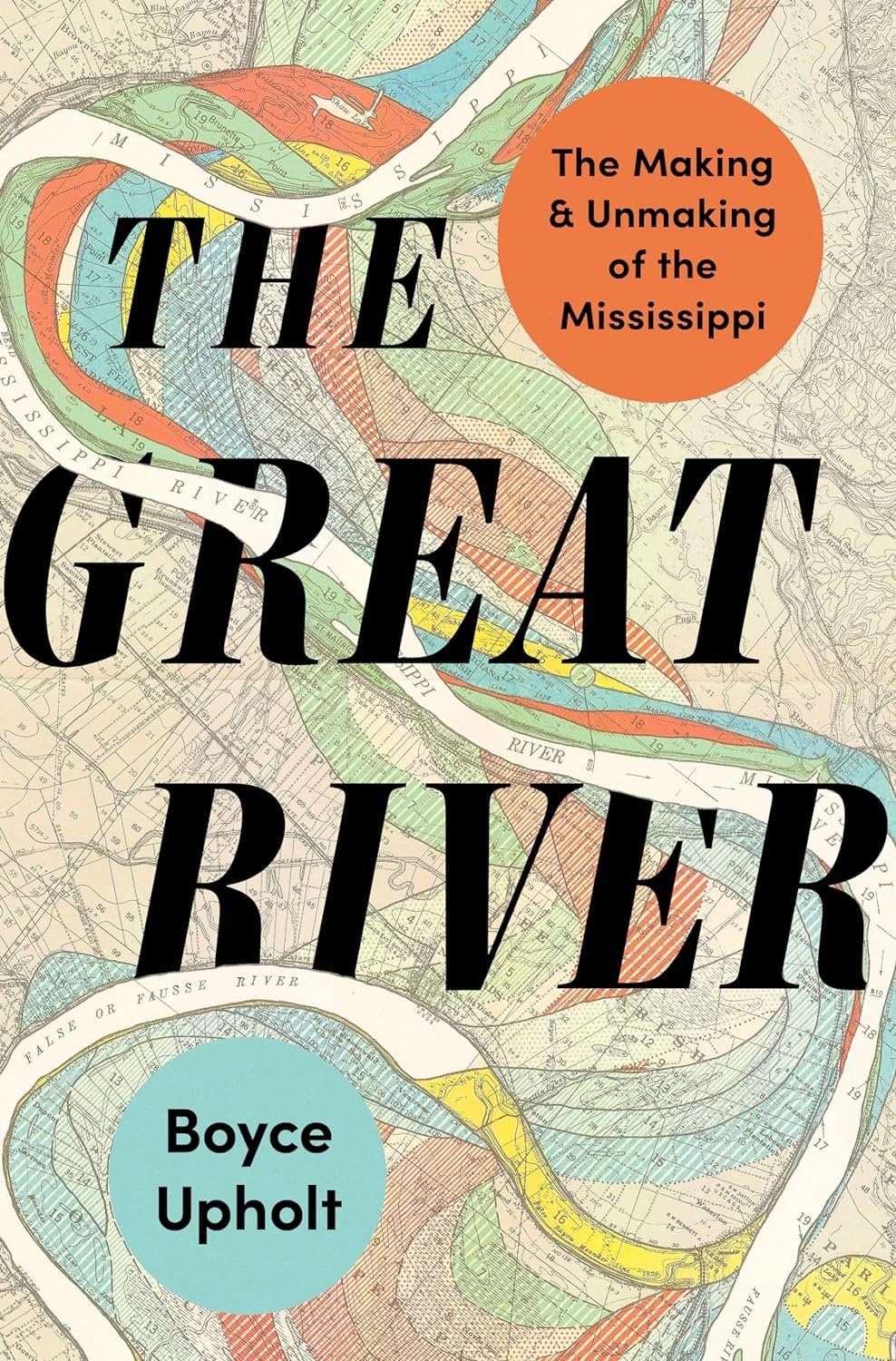
The Great River: The Making and Unmaking of the Mississippi
A sweeping history of the Mississippi River—and the centuries of human meddling that have transformed both it and America.
Over thousands of years, the Mississippi watershed was home to millions of Indigenous people who regarded “the great river” with awe and respect, adorning its banks with astonishing spiritual earthworks. But European settlers and American pioneers had a different vision: the river was a foe to conquer. In this landmark work of natural history, Boyce Upholt tells the epic story of human attempts to own and contain the Mississippi River, from Thomas Jefferson’s expansionist land hunger through today’s era of environmental concern. He reveals how an ambitious and sometimes contentious program of engineering—government-built levees, jetties, dikes, and dams—has not only damaged once-vibrant ecosystems, but may not work much longer, and explores how scientists are scrambling to restore what’s been lost. Rich and powerful, The Great River delivers a startling account of what happens when we try to fight against nature instead of acknowledging and embracing its power.
[caption id="" align="alignnone" width="5000"]
episode notes & references.
- Boyce Upholt's Website – https://boyceupholt.com
- Book: The Great River by Boyce Upholt – https://www.boyceupholt.com/thegreatriver
- John Ruski & Quapaw Canoe Company (featured in discussion on river exploration) – https://www.island63.com
- Cahokia Mounds State Historic Site (referenced in discussion on early Indigenous settlements) – https://cahokiamounds.org
- Plum Bayou Mounds Archeological State Park (formerly Toltec Mounds, Arkansas) – https://www.arkansasstateparks.com/parks/plum-bayou-mounds-archeological-state-park
- National Park Service - Mississippi River History – https://www.nps.gov/miss/index.htm
- New Madrid Seismic Zone & Mississippi River Geology – https://earthquake.usgs.gov/
- History of Hernando de Soto & European Exploration of the Mississippi River – https://www.britannica.com/biography/Hernando-de-Soto
- Manifest Destiny & Westward Expansion – https://www.loc.gov/rr/program/bib/ourdocs/ManifestDestiny.html
- Andrew Jackson & The Myth of the Frontier – https://www.whitehouse.gov/about-the-white-house/presidents/andrew-jackson/
episode outline.
Here’s the updated episode outline for the great river with Boyce Upholt (Season 2, Episode 11) using the most recent transcription:
1. Introduction to the River’s Significance (00:01:08–00:04:50)
- The Mississippi River as a force of creation, destruction, connection, and division
- Indigenous civilizations and their deep ties to the river
- The river’s role in shaping Arkansas and American identity
- Introduction to Boyce Upholt and The Great River
- The Buffalo River’s parallel story and its tensions between wilderness, control, and identity
2. The Geological and Ecological Origins of the River (00:08:11–00:10:02)
- The Mississippi’s deep geological history and the formation of the river basin
- The ecological importance of its wetlands and diverse ecosystems
- How the river shaped the North American landscape
3. Indigenous Relationships with the River (00:10:36–00:14:42)
- The river as a spiritual and life-giving force for Indigenous cultures
- The significance of earthworks and ceremonial sites
- Indigenous creation stories and the river’s role in shaping their cosmology
- The Mississippi as a landscape of abundance before agriculture became widespread
4. European Contact and Colonization (00:18:00–00:23:17)
- Hernando de Soto’s accidental encounter with the Mississippi and its consequences
- French and Spanish perspectives on the river’s potential
- The river as both an obstacle and an economic gateway
- Early European misunderstandings of the Mississippi’s scale and complexity
5. The Mississippi as White America’s First Frontier (00:23:17–00:26:07)
- The river’s role in shaping early American expansionism
- Thomas Jefferson’s vision for land acquisition and farming societies
- The shift from controlled settlement to rugged frontier expansion
6. The Half-Horse, Half-Alligator Archetype (00:26:07–00:28:33)
- The emergence of the rugged, violent, and hyper-masculine frontier identity
- Andrew Jackson’s adoption of the "half horse, half alligator" myth in his political persona
- The river as a breeding ground for an aggressive form of American masculinity
7. The River and American Expansion (00:28:33–00:39:08)
- The Louisiana Purchase and the Mississippi’s central role in U.S. territorial growth
- How the river enabled Manifest Destiny and further westward expansion
- The transition from steamboats to railroads and the diminishing importance of river commerce
- The river as a tool of economic extraction and wealth accumulation
8. The Mississippi’s Role in Arkansas History (00:39:08–00:44:58)
- The river’s function in the establishment of Arkansas as a state
- The Arkansas Delta as a product of river-driven settlement and agricultural development
- The Trail of Tears and its connection to the Mississippi’s transportation networks
- The transition of the river from a natural boundary to an economic property
9. The River’s Role in Slavery and Racial History (00:44:58–00:53:06)
- The expansion of slavery as an economic system along the Mississippi
- The role of the river in Indigenous displacement and forced labor economies
- The long-lasting impact of racial disparities in the Delta region
- The Elaine Massacre and racial violence in Arkansas
- The out-migration of Black residents and the economic devastation that followed
10. The River Today: Challenges and Hopes (00:53:06–00:57:11)
- The ongoing economic struggles of the Arkansas Delta
- Agricultural monoculture, environmental degradation, and chemical pollution
- The Mississippi as a "forgotten river" in modern America
- The beauty and wilderness that still remain despite human intervention
11. The Future of the Mississippi River (00:57:11–End)
- The inevitability of the river’s power despite human attempts to control it
- The increasing movement toward river restoration and reforestation
- The role of Indigenous leadership in conservation and land back efforts
- The question of whether American attitudes toward nature can shift to work with the river instead of against it
episode transcription.
the great river with Boyce Upholt.
episode preview.
[00:00:02] boyce upholt.: one of the lasting legacies of these early years on the Mississippi river is, there's this Jeffersonian vision of expansive land, and we have done that, but more so this wild, feral idea of American masculinity emerged on the Mississippi River, I tend to think and
that's what American men on the frontier wanted to be. They didn't want to be gentlemen farmers. They wanted to be these rough and tumble half horse, half alligator men.
And I think today, like I look at what's happening today in our political culture and some of the schisms in our culture. And I'm like, that's never gone away.
episode introduction.
[00:01:15] mike.: You are listening to _the underview_, an exploration in the shaping of our place. My name is Mike Rusch and today we start the next chapter of our season. We're going to build on everything that we've learned so far.
So today we continue our journey through the story of Northwest Arkansas by following the path of a great river that has shaped not only the state, but the entire American landscape. And that's the Mississippi River.
If we want to understand the forces responsible for shaping our place, we have to understand the broader story of our state and our nation. It may be easy to think of a river as just a boundary or a passageway or a resource. But the Mississippi has always been more than that. It has been a force, a force of creation and destruction, of connection and division, and of power and mythology.
As a reminder of where we started, and to give a little context, Mississippi River was the lifeblood of thriving indigenous civilizations, spanning over 1. 2 million square miles. Its vast watershed sustained at least 50 to 70 indigenous nations, shaping the trade, agriculture, and the culture of a people across the continent. At its headwaters in present day Minnesota, the Ojibwe and the Dakota lived with the river, seeing it not as a border, but as a source of life, trade, and spiritual significance. At its mouth in Louisiana, nations such as the Houma, the Chitimacha, and the Tunica-Biloxi thrived in the shifting Delta, shaping their world through the rhythms of the water.
In between in the land that we now call Arkansas, you've heard the story of the Quapaw, a people deeply connected to this river, Their settlements marked the land along the banks, and they lived with the river rather than against it, building a world that worked in harmony with its flow.
But when the Europeans first encountered the Mississippi, they saw something different. in 1682, French explorer LaSalle laid claim to the entire Mississippi watershed for France, naming it Louisiana after his King. This claim would later form the foundation of the Louisiana Purchase in 1803, doubling the size of the United States and cementing the river's role in westward expansion.
And unlike the Quapaw who lived with the river, we became a people who turned it into property and have spent hundreds of years trying to control and to rule over it. And as you'll hear, with limited success.
In today's episode, I'm joined by Boyce Upholt, an award winning author of "the great river," a book that dives deep into the Mississippi river's role in the shaping of American mythology and ultimately Arkansas itself.
Boyce's work has been featured in the Atlantic and National Geographic, and he was awarded the 2019 James Beard Award for Investigative Journalism. His writing explores the relationship between humans and the natural world, especially in the United States South.
Most recently, Boyce wrote _The Wonderful River of Oz_ that was published in The Bitter Southerner. It's an article that unravels the tangled history of Arkansas Buffalo River, America's first national river. Through the stories of those who fought to protect it and those who sought to tame it, Boyce exposes the deeper American tensions between wilderness and control, progress and preservation, and the struggle over land and identity. The Buffalo River, much like the Mississippi, forces us to ask, do we see rivers as forces to be lived with, or as obstacles to be conquered?
Together we'll explore how the Mississippi River shaped the nation's ideas of conquest and control and how its waters still carry the weight of our history today.
This is more than a story about a river. It's a story about us, about how we have tried to shape the land and how in turn the land has shaped us. All right, much to cover. Let's go ahead and get started.
episode main interview.
[00:04:55] mike.: I have the privilege today of hosting Boyce Upholt, who is a writer and editor and recently released the book, the great river, which is an incredible piece of work around the Mississippi river. Welcome. It's great to have you. Thanks for accepting the invitation to be here. I really appreciate it.
[00:05:10] boyce upholt.: Yeah. I'm really excited to be here. I'm happy to be helping out.
[00:05:13] mike.: I think I, I told you earlier, I think you've answered a question that I didn't know to ask, which was really what this river means to this continent, to the people that have been here for so long and its role in really the establishment of a nation and people and really in American mythology in so many ways.
And so I'm really excited. I've had the Privilege of reading your book. I said earlier it's not just like one PhD, it's probably two PhDs worth of work. So congratulations on getting this out into the world. It's just an incredible piece of work.
[00:05:43] boyce upholt.: Thank you. Yeah, it was two PhDs, but scattered across seven disciplines, I think.
So it was more work And I expect it,
[00:05:50] mike.: I think you're an expert in every area of this. I would struggle to know who knows more about this in our world today than you do, whether by choice or by, by discipline.
I'd love to hear a little bit about your background. Tell me your story and I'm sure that's going to lead into what drew you to this topic and to this book.
[00:06:07] boyce upholt.: Yeah, I think these days I tell my story with that lens, I think, because it's I always knew I wanted to be a writer growing up, but never would have guessed that a book about the Mississippi River would have been my first book because I grew up in suburban Connecticut, so a place where we didn't really talk or think about the Mississippi River.
But guess what happened was after college, I was like, I don't know how to do this. So I wandered around for a while. In my mid twenties, I wound up taking a job with a nonprofit in the Mississippi Delta. And that is where I finally managed to get my start as a journalist. So in the shadow of the Mississippi River in land that had been built by the Mississippi River, but it wasn't until six years after Living there in the Mississippi Delta that I actually spent any time on the river itself.
I went out to write a profile of a canoe guide named John Ruski, who's based in Clarksdale, Mississippi, and sometimes Helena, Arkansas. And just a magazine wanted a profile of kind of what is it like to run a tourism business out on this big river? And I was just fell in love with what I saw out there.
I had no idea. But even like definitely not growing up. No one had told me the Mississippi River was this wild and beautiful river. But even in those six years that I had been living 20 miles away from the river, still, no one told me what was out there. And it was as beautiful a place as I've ever been.
And so that's, that was the origins of this book. I got obsessed with it. Wanted to go back as often as I could. And trip after trip, eventually I canooed it from St. Louis, the Gulf of Mexico. And my thinking kept expanding until I came to realize this river does really sit at the heart of a lot of American history.
[00:07:36] mike.: Yeah I, not to share my own story, cause this is about you, but I had the chance to actually take a canoe ride a little bit. I've only spent one day though. So I don't know that it counts with John and I never viewed the Mississippi River like I did in that day.
And so I think what you've learned in your journey through this is yeah, is something that I think a lot of Americans probably don't really think about the Mississippi River in the way that you think about it, the way that you've laid this out.
And I'd love to understand from your perspective, as you think about this river What's the original place we should start? Get our minds into a place of, how should we start to think about this river just as a foundational element.
[00:08:14] boyce upholt.: I think one of the things I found as a writer is it's, that's a really hard question to answer.
It's what is the beginning of this river? Hydrologically, that's hard to answer. Historically, that's hard to answer. Because I think part of that title, the Great River, part of what makes the Mississippi great is the fact that it drains more than a million square miles, right? So it touches 27 states, I think.
And so the officially the headwaters are up in Lake Itasca in Minnesota. But I've if you just trace the Mississippi as being this one line of water down the middle of the continent, you're not grasping what makes it so great. And so you can't really tell the story as a, there's a lot of travel logs on the Mississippi river, but I didn't have any interest in doing that because that is incomplete.
But in the same thing, it's it's also hard to say when did the Mississippi River, like, when are its origins at all? To me, I guess where I went back ultimately was, I don't even have the dates in my head anymore, but hundreds of millions of years ago there's this rift under the under the ground in Arkansas, right in the new mad, right by new Madrid, excuse me.
The real foot rift. And that is the remnant of ancient super continents breaking apart this weak point in the crust. And in many ways it's the, Like the existence of that rift that makes the Mississippi River what it is. And there's a whole lot of geology that goes into that, but ultimately what we got is this trough at the bottom of North America maybe 70 million years ago.
And so that became the site where All of the water was going to drain to, and so I can, to me, that's where you have to start telling the stories like what that makes on this con and what it made was this giant meandering river that was surrounded in wetlands this really important global ecosystem in many ways, one of the largest sort of Contiguous sets of swamps and wetlands anywhere in the world.
It was a really rich landscape and ecosystem that shaped the story of North America long before white people were ever here.
[00:10:04] mike.: I know there's the geological formation, but this is a river that has seen and known people to your point really from the beginning of time.
And so I'd love to understand as you go back to those origins. Yeah, maybe before colonization happened, how do we think about this? I think in your book you even talk about like how really the view of this river is not just this resource. It almost, it has this yeah, spiritual component to it that so many people looked at this river in a way thathad so much more than just the formation of water flowing in one direction. Right.
earthworks.
[00:10:39] boyce upholt.: Yeah, absolutely. And that's also a hard story to quite get the origins on of. We don't know when the first people came to the Mississippi River, but what we can, we do know is the oldest open air cemetery anywhere in North America is in Arkansas, in the Arkansas Delta, I think in Greene County, right?
And so people have been there. Yeah. Along this river. That's that site's probably 12, 500 years old. So that gives us some sense of how long people have been along the lower Mississippi river. And I should say the lower Mississippi river, as we know it today, right? This slow meandering river surrounded by these wetlands that essentially is also 12, 500 years old, because that's about when the last ice age ended enough so that sort of the river could settle into its current hydrology.
So for as long as the rivers looked like, it looks people have been and to me, it's really hard to know what those people thought of the river, but what I tried to do in the book was. Tell the tale of what are often called Indian mounds that I have picked up the phrase earthworks from a scholar named Chadwick Allen He's an indigenous scholar.
I think that like mound sounds so Dismissive almost and so if people don't know the example in Arkansas that is most compelling is the Bombay you site right outside a little rock which is a really important site as well. But these are I think of them as spiritual architecture that has been built up and down the Mississippi river.
Cahokia is the largest and most famous site that's near St. Louis. But when I tried to piece together the long history of these kinds of sites, you realize the first constructions of this sort were along the lower Mississippi river, south of Arkansas, down in Louisiana, mostly. And more of these.
Just tremendous gathering sites like the level of engineering required the kind of scale of gatherings that they seem to bring together staggering when we're talking about places that are, 654, 000 years old. And in trying to understand, what was going on, why are people building these things?
creation story.
[00:12:34] boyce upholt.: I tried to turn to oral history, like the tales that have been passed down to indigenous people today. And the most compelling story is this creation story. There's a lot of tribes in the Southeast that tell stories that the earth was created, the earth began as a big ball of water.
And the land we live on now was created when some creature sometimes it's crawfish, sometimes it's a muskrat, dives down and brings up some of this mud to create stable ground. And so you can see the construction of these earthworks as being like a ceremony that was repeating the creation of the earth.
And it, there's a lot to it, but through those kinds of stories, I came to see these seem to be places that are about interconnection, about how, the chaos of water connects with uplands, and I don't know I'm rambling, it's hard to put all these stories together.
Please keep going. Yes. But the other thing that, that really strikes me is that this landscape. That to jump forward briefly, right when white settlers came, they looked at the landscape along the Mississippi River and we're like, it's too muddy and chaotic. It's not what they wanted. But for the people that have been there for thousands of years, it was a excellent place to live, right?
Wetlands are just incredibly biologically productive. And so there's so many food resources that you can get out of these spaces. And That, to me, is part of why these sort of huge gathering sites appeared along the Lower Mississippi River earlier than they appeared anywhere else in this part of North America, because this seemed to be, before agriculture, a better place to live.
And one of the things that was really interesting to me is it, the Lower Mississippi River, The cultures down here resisted agriculture for a long time and didn't adopt it. But interestingly, cultures elsewhere that did adopt agriculture credited in this strange way, the landscape down here, these stories of this figure known as grandmother who lives on an island in Louisiana, where I live, she lives near the mouth of the river. She bathes in the Mississippi waters and continually is reborn through those waters. And she, in many stories, is the figure that taught farmers how to raise crops. And so there's something about the abundance and life in this landscape that's and so you see that this place this landscape that when white settlers came later and rejected it for a long time was the most important spiritual place anywhere in North America. I tend to think,
[00:14:45] mike.: I'm curious to, and you're like studies and research and even your time on the river, like, when you think about the earliest people that interacted with this waterway, the, maybe the principles or the values that they held around this body of water around this river, how did they approach that?
And you're welcome to maybe contrast that to where we are today. If we want to start moving into that space, but I want to hang within this kind of, What was it originally about this river or what was this river in its original form that, that maybe we can hold in our mind as some sort of ideal so that we have something to compare and contrast it to as we move further on in history.
[00:15:22] boyce upholt.: And I do, I always do this cautiously and that again, I'm talking about cultures that are thousands of years ago were oral cultures and not written cultures. And so there's a lot of presumptions being made. So some of this comes from talking to, contemporary indigenous people who have received, I think the values of ancestors that have been around for these thousands of years.
And there's a village known as Grand Bayou village down here in Louisiana, like right near the mouth of the river. And that's A key scene late in the book, I won't totally spoil it, but one of the elders in that village was talking to me about how what she was taught was that everything was connected, right?
That and so speaking, essentially, she was implicitly critiquing kind of contemporary engineering, things like levees that, um, levees very intentionally split the landscape and split apart the interconnection between the river and its floodplain and say, we want the river here. We want dryness there and she saw that as a mistake in value because nothing like when you disconnect things, they fall apart, right?
Everything has to be integrated to work. And I do think when I look back to these earthworks to what remnants we have of ancient cultures. It's that seed does seem like a larger cultural value in that, the earthworks themselves in some cultures did serve as a place to go when the floodwaters came to escape them, but they probably had the capability to build small scale levees and never really did right.
So there wasn't, there, there was like, let's build ourselves a single safe. Place instead of saying, let's wall off and create territories that separate separated from the river. And the other thing about the earthworks that I think is important to notice that sense of interconnection is not just interconnection between the landscape and the people, but between the people as well.
These the 1st earthworks were built by entirely egalitarian cultures. And I think even as hierarchies arose within these indigenous communities, the earthworks were often community building collaborative constructions, right? And so in every scale, when thinking about the landscape and building in the landscape, these cultures seem to think about how do we take care of one another with one another being human and more than human?
And so that became really important to me as I, I didn't think that indigenous cultures would be such a important part of this book. But as I learned more and more, it did, as you said, it set up this really essential contrast to what I see happening today that I wanted to hold on to.
[00:17:36] mike.: Boyce. Thank you. I think that's like super helpful. I think it speaks to a different way of viewing maybe the world around us and relationships and things and probably most of us in our modern day American culture are probably really, yeah, really even understand and so I think the drawback to trying to understand what this river and the people were there were in their original form is it's really important maybe to how we approach this or how we've changed or altered as we go.
eurpoean contact.
[00:18:03] mike.: so let's talk maybe into European contact the first time maybe we see what happens here could you paint a story for us about this river and its role and really the Europeans coming to this continent and how that played itself out specifically into this river.
[00:18:21] boyce upholt.: I think the one thing I note is the official discovery of the Mississippi River.
And I say official pointedly there. There's a painting in the U. S. Capitol called, I think, the discovery of the Mississippi by DeSoto, right? So in the Sort of white U. S. Settler culture. That's the guy. But her native de Soto discovered the Mississippi River by accident. He came to America, not knowing much about it, dreaming that he would find a city of gold somewhere kind of his other Spanish conquistadors had found elsewhere further south and wandered around and hit upon the Mississippi River as an obstacle in that path.
It became a very consequential obstacle. He got stuck there for a while. He had to ward off some attacking tribes wall or cultures while he Creating trying to create some boats to get over it. And then later when he died, some people say maybe of a fever that he contracted in the swamps along the river.
His body was sunk in the Mississippi, and then his men fled North America coming down the Mississippi River. So it's not a very auspicious start for white people in general on this river. And it's interesting that it was 180. It was a long time after that, more than a century before white people came back.
And so it was really the French who started to recognize the potential of what the Mississippi River could be, in part because they had the Spanish didn't have much of a toehold on the North American continent, north of the Gulf of Mexico, but the French who were, Already wandering the Midwest and parts of the West getting furs, look at this and realize, Oh, this river is, could be really important for our kind of interlinking our emerging empire with global trade.
This can be a sort of passageway. We can take our first downstream instead of trying to go on this long voyage along the St. Lawrence river in Canada. And so I started to notice that, yeah, if you want to hold onto North America as a place, holding onto the Mississippi river, it was going to be very key.
And that was true over the next couple centuries, basically every major fight of any kind in North America between European powers up to and even past the Revolutionary War, always the Mississippi River and its watershed was a really key part of those battles.
[00:20:28] mike.: Yeah. I'm curious to as you think about the maybe early European contact with this area, maybe give us a little insight into what you've learned about their perspective of what this waterway was. How did that kind of evolving understanding of this river? I guess before it became a part of the United States. So help us understand the kind of that early understanding of how they approached this river.
[00:20:53] boyce upholt.: Yeah, thinking about the French specifically, I think they're both over and underestimated the Mississippi. Initially, there were rumors that maybe it would drain west into the Pacific Ocean and really give us like dreams of Allowing people to traverse the entire continent very easily.
And so I think it was with some disappointment that the first French explorers were like, okay, no, this isn't going to the Pacific. It's going down to the Gulf of Mexico. So it's not quite as useful as we hoped. But at the same time, I think while it was not this giant continent, cross traversing river that they expected, it was still bigger than anything the French could wrap their heads around.
It is, it's Delta in particular is, the river's biggest superlative, right? So deltas are the place that are for. It's like when the river comes out, it's dumping its mud and creating its own landscape at the edge of the ocean. And it's this interplay between river and the river pushing out with its mud, the ocean washing in with its tide.
And the Mississippi has the largest, the most river dominated large delta in the world. And that means like the power of the river coming into a relatively weak sea, the Gulf of Mexico doesn't have huge shifts in its tide, and that makes a really complex delta that Europeans had never seen anything like that in Europe.
And so there's LaSalle was the first Frenchman to come down the river and reach the river's mouth. And then he tried to come back later and sail back to the mouth rather than coming down river. And he very famously never made it there. And we can't entirely know what happened, but I am pretty attracted to this theory that he.
We have notes that suggest that he checked out the mouth of the river in his boat and that he made it there and maybe didn't like what he saw. And so my theory, a theory I've adopted from other historians, I should say, is that he got there and just was like, I don't see a river here. I just see a bunch of muddy mess.
And that's this, to me this very important initial example of how this river did not fit the scale of European thinking. It was just bigger than anything they knew. And they were taking cultural notions that didn't work and trying to apply them to the Mississippi River. And you see that repeated again pretty quickly as the French get back there and settle in and try and look at this Delta landscape and say, we can, we can tame and control it and turn it into the kind of farms that we're used to in Europe.
It's just a very chaotic place and it's. Not very suitable for a form of settlement that is dependent on stability and permanence. And so that I think was this cultural mismatch that has really shaped the river in the centuries since.
white america's first frontier.
[00:23:20] mike.:
I think one of the things that I'm curious about, you use this term in your book "white America's First Frontier." And so I, I'd love to understand kind of the background behind. Yeah, you're thinking in that because obviously this became a place that so many Europeans were drawn to and became this borderland in so many ways. And so I'm, yeah, I'm curious what you mean or help me unpack what that would look like.
[00:23:44] boyce upholt.: Yeah, I and I want to back up and I think it's not just in some ways, not just America's first frontier, but there's an argument that the Mississippi River watershed is what dragged America into being.
I grew up in New England and the stories I got told about the American Revolution were all about that. Boston Tea Party and taxation without representation. But a lot of historians point out that another big point of contention was that King George III had forbidden white settlement anywhere past what was called the Proclamation Line, which was the, continental divide of the Appalachian Mountains, which is also the easternmost edge of the Mississippi watershed.
And there's this deep frustration of people, this, there's an American sense, right? That the part of what was driving the first White British colonists was this sense of like private property and land ownership and right and this expansive notion and that was a little bit different than the French or the Spanish even and so there is frustration that the king would then put a limit on that and say, you can't go into this territory. And so part of the revolution was like trying to seize control of the eastern part of Mississippi watershed.
Even after that there's this debate that remained. There were some people on the In the colonies that were like no we've got to keep our colonies small and compact and tidy.
We've got to stay on the east side of these mountains and other people like Thomas Jefferson were much more expansionist and looked westerly. And I think. In many ways, yeah, like we today are so obsessed with the wild west of cowboy movies and things like that, that we have forgotten that it was the territory along the Ohio, the Mississippi River, that was the, the kernel of the emerging American identity of a place that has a frontier.
And so the very first frontiersmen were these Mix of people, but often fairly poor people that were tumbling over the Appalachian mountains and cutting down the forest on first the Ohio River, and then they would come down the river and sell their goods in New Orleans. And so that was the first moment that sort of the beginnings of the manifest destiny emerged.
People were looking westerly there.
[00:25:38] mike.: Boyce, I think this is important because within this quote unquote, first frontier, to your point, these ideas of what america, for lack of better words at the time, what it would become or what it could become, and this idea of exploration and settlement or what the Mississippi River started to mean in terms of what it looked like to create a new country.
I want to go deeper into the mythology aspects of what you're asking around the frontier. So let me,
half hourse, half alligator-man.
[00:26:10] boyce upholt.: let me give it an, it's a period that really fascinates me. And when I think about like the elastic impact of it there's the one example that, or it's a phrase that I use a lot throughout the book, right?
This half horse, half alligator, man. And this was a, it's like a forgotten cliche of early American literature. So specifically what that comes from is, um, we've got this emerging frontier culture. We've got these farmers bringing their goods down the river. And I noted that like Thomas Jefferson had this idea of Oh, this massive frontier is going to be a place of like genteel farmers.
That was his vision and trying to acquire the Mississippi River. I tend to think right. It's something about virtuous small farmers, but the reality on the ground was it was a very difficult river to traverse. And so this sort of professional culture of boatmen emerged of these guys that work on these boats, moving goods up and down river, particularly up river was the hardest part. And they tended to be hard living, hard drinking. And so in 1808 outside of Natchez, Mississippi, this writer sees two of these boatmen get in a brawl but before the brawl, they have this boast match where they're just going back and forth, trying to out insult one another.
And one of them talks about how he's half a man and half a horse. And the other talks about how he's half a man and half an alligator. And so this gets written down in a letter that gets republished extensively. And that really embeds itself in culture to the point where so Andrew Jackson, who I'm sure will come up again in your series thinking about the history of Arkansas in 1828, when he runs for president, he has a lyric in one of his campaign ballots talking about how, when he fought in the battle of New Orleans, every man was half a horse and half an alligator.
And so I think that to me is one of the lasting legacies of these early years on the Mississippi river is, um, there's this Jeffersonian vision of expansive land, and we have done that, but more so this wild, feral idea of American masculinity emerged on the Mississippi River, I tend to think and That became right by Jackson's day that's what American men on the frontier wanted to be. They didn't want to be gentlemen farmers. They wanted to be these rough and tumble half horse, half alligator men. And I think today, like I look at what's happening today in our political culture and some of the schisms in our culture.
And I'm like, that's never gone away that remains deeply embedded into me. This is a very tenuous theory in some ways, but I'm like, that is an important early example of this, and it had so much to do with the landscape of this river and the material reality of trying to conquer it and pull it into this empire that was emerging.
[00:28:36] mike.: How did that set the tone, for what would come next then as we think about the establishment of the United States as we move into the Louisiana Purchase and how all of this kind of land and water and people start to come together around this kind of massive idea of a new nation, manifest destiny and then maybe this idea of what it means, maybe even to be an American.
I'd love to, for you to keep, keep going around, how this river helps form really the identity of a nation and of a people and what it looks like to have a country that's going to continue to, ultimately continue to move west.
[00:29:15] boyce upholt.: just sticking with the half horse half alligator specifically, I think It stays there, right? And it's we, when I look at the history of, I've read these journals of travelers, young men traveling on the river, like again and again, people are proud of this wildness.
But often it is you, I don't know, it like sits amid a more complex tangle of economic ideas as well. And I think that a lot of things were done. by powerful people invoking that image of we're going to go and fight and be rough and tumble. But often the people that were truly served as the region got developed were not those rough and tumble people, but much more powerful people.
I think of the fact, right? Like specifically the Mississippi river, right? It began as Basically just a passageway, right? That's why we wanted to acquire it. And that's why this culture developed. But for a hundred years after, almost a hundred years after Louisiana purchase, there was very little settlement along the lower Mississippi river because the land itself was barely land. It was so swampy. And so when it did get settled, basically late 19th. Century, right? The 18 eighties is really when you first start getting large scale land clearing. It's clearing not for rough and tumble half horse, half alligator men, but for very wealthy men that have in previous generations, in most cases, profited off enslaved labor.
And now they're trying to reconstitute exploitative economic conditions. So it's just this, I don't know. I don't know that I can, I am answering your question. But the Mississippi is this sort of strange tangle of ideas and economic forces that again and again, like violence and wildness is there, but also exploitation, control, and an economy that, that serves the powerful at the At the detriment of a lot of other people.
Yeah, but yeah, give me some more questions. I feel like we could unpack some stuff in there, but
[00:30:57] mike.: it's yeah. Like you're the expert here. So it's I'm trying to make sure like there, there's this idea of the formation the, what this river means and the formation of a nation. And and I think wrapped in that are some really hard stories of, Obviously indigenous removal that we see there, the role of slavery and the formation of this, I think, but before you even get there, this idea that this land, this was land to be taken, this was part of an American ideology around manifest destiny that could be used and would be used ultimately to create just vast agricultural empires.
And so I think I'm trying to understand, or from your point of view, the, maybe the critical steps or the critical ideas or the critical timelines around all of this kind of American history coming together to the establishment of I guess what would become a plantation society within the lower Mississippi, as it relates maybe to Arkansas how we should think about, yeah this time and this place and all of the ideas that seem to just be crashing into each other within a really small amount of time.
[00:32:02] boyce upholt.: . One thing that occurred to me while you're asking that is and this is my, I call myself a nature critic sometimes, right? So it's like this more than human world, as I sometimes call it, it's always at the center of what I'm thinking about. But one thing that strikes me as I'm hearing you summarize this history and asking me to summarize it, I don't know that there was an idea of a river, right?
Like that there, I think that American history has been shaped by the presence of this river and it like was this given some of the economic ideas, some of the ideas about private property, it was inevitable that white American settler culture would have to seize this river and use it as an essential passageway to expand westward.
Take one. Interesting pivot point is by the 18 fifties, railroads are starting to be built. And really, you see the steamboat traffic fall off precipitously. And so by America stops thinking about the Mississippi River, except for as like a symbol of its past. Once you get to the 18 seventies, 18 eighties, in a lot of ways it's no longer, like it is important during the civil war and their efforts afterwards to rejuvenate the steamboat industry, but really it's dropped out of our psycho Geographic imagination at that point, because we've got a new technology that's more useful.
And that's the thing, like we talked earlier about indigenous conceptions of the river. I tend to think that these indigenous cultures saw the river as kin, right? That this is a being that they lived alongside and had to respect and so that it would respect them. And I don't think American culture, right?
Like we knew a river was there but I say, I think I probably said we already in this. I know it's something that we've talked about off the problem of we in this culture. But when I say we in a lot of this conversation, I'm gonna be like sort of white Americans before me. I think those people didn't really stop and think about what the river was.
They're just like, what can be useful from this? And it was useful as a passageway. And then it became useful as a place to say can we Can we firm up this mud and turn it into farms? And okay, we can, but the only way to do so is to use, spend a lot of money, build really big levees.
And so that led to plantation economies instead of like this, we were supposed to be a nation of yomen farmers, but that was never going to work on the Mississippi river. And so part of it is, yeah, This lack of actually pausing and looking at the river and contemplating it in its fullness and just instead we've again and again looked for what is useful in it and taken advantage of those.
[00:34:23] mike.: I think one thing that you painted out real well is it's sometimes we just think about the Mississippi River and maybe the what we would look on a map and not really the entire watershed, but I'd love for you to share too a little bit about maybe What it gave access to as far as the rest of the lands, maybe interior to the west of the United States, what is now today the United States and how it was used for exploration and access into so much more territory within that watershed that eventually led to settlement and so many other places within the continent.
[00:34:56] boyce upholt.: Yeah, absolutely. This is the problem with thinking of the Mississippi as the Mississippi is that it is this complex sort of branching system of rivers and the Missouri river I think by rights should be the right, this should actually be the Missouri river system, not the Mississippi river system, because the Missouri a Is 2000 long, 2000 miles long from its headwaters to St.
Louis. And the Mississippi's a thousand miles long, right? It's twice as long there. That goes all the way up to Montana, the Arkansas River goes all the way up to Colorado. And if you wanted to get anywhere east of the Rocky Mountains, you were going to. The best way to do this at an era before we had roads was going to be by traveling by this river system.
And there was a big effort in the 18 twenties to 18 fifties to clear out these riverways. And by 1848, every tributary in the Mississippi system that could accommodate a steamboat was being traversed by steamboat. But it was even before that, right? It was even the French. Her traders that we talked about earlier, we're using the Missouri River, the Arkansas River as their passageway to extract goods off this continent.
And so that's part of, yeah when people came to this continent with designs on continental scale, extractive economies, they were going to pay attention to this river. It's interesting to me that most indigenous cultures did not have, that they would name their local particular stretch of river and didn't necessarily have a name for the totality of the system.
And yeah it's a strange contrast. I think it's really useful to, to understand the grand scale of what's in the Mississippi system, but in some ways it's also really useful to pay the most attention to just where you, what you have, where you are, and not to try and reach beyond that.
[00:36:26] mike.: I think one of the other things that you painted in the book was like, once people had gone through the exploration of the watershed and there was no more little water left to explore or to navigate.
Those became the origin story in many ways of the railroad and how that became the launching point into even farther areas out west, but also how it changed access to the Mississippi river area from the east as well. I'd love, Help us understand the role there. And it sounds like almost like a launching pad for even more and greater exploration of a larger continent.
[00:37:03] boyce upholt.: Yeah, I do. I tend to think that Americans, white Americans got addicted to this sort of like quick rapid expansion in the 1840s. And that was and when we got to 1848, and all of a sudden, the entire Mississippi River system had been quote improved for steamboats. It was like we can't stop there.
Now we need to go further. There was a really big just to make the point on this sort of yeah. The way the Mississippi river helped feed the explosive growth of the United States of America in the 1840s, there was this cliche that later got applied to railroads, but was first applied to steamboats is that steam annihilates distance, right?
And it would, it used to be a week's long joy journey to go from St. Louis to New Orleans or from New Orleans to St. Louis would be even harder. And it becomes a four day steamboat journey once you have the steamboat. And so there, there is this. Pretty brief moment in the middle of the 19th century, where the presence of the steamboat on the Mississippi River just changes the nature of what America is both for individuals because they could reach new places because we could use the river to move.
Forests being cut down in Minnesota and take that wood and build homes on the frontier in Missouri because we could take groups of enslaved laborers from Kentucky down to New Orleans because we could take indigenous people from, Georgia, Alabama and the, the steamboats were a huge part of the Trail of Tears.
And so their capacity to move goods rewrote the shape of the center of the nation helped it turn into this imperial nation. On the grand scale, it just gave America so much money and turned us into sort of the economic superpower that we made today. And that would not have happened, I don't think, without this tremendous investment and success of a transportation system right there in the middle of the country that allowed so much to move.
And so then, yes, once that system Kind of reaches its limits, people were like we, the steam engine that did so much good on this river. We can probably put that to other uses. And then you start to get railroads and you start to then look beyond the geography of the watershed and we become the more famous wild west manifest destiny country that we have today.
[00:39:11] mike.: I'm curious how should I, or people here in Arkansas, how should we think about this river as far as its role in the establishment of the territory, its its role in in agricultural economy, its connection back to the United States? I'd love to hear from you. I'm sure there's a hundred different directions you could go, but where can we start as an understanding of what it means to maybe to this place and to this state?
[00:39:33] boyce upholt.: Yeah, it's a good question. And I'll caution that I love Arkansas and I've written a good bit about it, but I am not I caution that I'm not a student of the specific progression of Arkansas history.
I may get jumbled somewhere in here, but to start at as we've discussed Arkansas, wouldn't Arkansas would not exist as it exists today if not for the Mississippi River, right? Like the presence of white American culture there is predicated On the pulling of this watershed into this American project, I think, interestingly, there's there's the site called the initial point, which was as the federal government was preparing to survey all of the land west of Mississippi River, they needed sort of one point towards which to orient the coding of all those feature maps and the point they selected was in the Arkansas Delta. It's now a really curious little state park. It's a little bit of swamp in the middle of the soybean fields of the Arkansas Delta. And there's a placard there installed by the state that says this is where the American West began.
And so I think That's an important thing to know, right? It's just the way that this landscape there in the Delta that I think is largely forgotten. Most Americans outside of Arkansas don't know about the Arkansas Delta. And I've found often, people up in, in the sort of Bentonville, Ozarks area often haven't spent much time in the Delta.
It's become overlooked but it was that landscape when it was one of the early initial draws that sort of brought. money into this region because people saw the promise of can we turn this floodplain into farms? And it happened in Arkansas a little bit later than Mississippi but it did happen.
I think it's important to note that sort of the birth of Arkansas as a state was essentially happening amidst the trail of tears. A lot of the money that's powered the early state was people profiteering off the trail of tears and that again is deeply tied up with the Mississippi river.
That was because these boats were coming up the Arkansas as a path to reach West. And so to me it's just this starting point. And it's interesting that it's again, now the economy of the Arkansas Delta is so deeply struggling. It's easy to overlook and forget that. But this floodplain landscape was the beginning of so much and it's important to remember that.
[00:41:37] mike.: Maybe walk us through the early ideas if this is going to be an agricultural epicenter, a channel for navigation and commerce, and capitalism and all those things,you write extensively about all the work that's been done over hundreds of years, if you will, probably billions and billions of dollars.Yeah, I'd love your perspective on kind of the transition of this time and how that maybe how that even helped to form and shape and establish states and economies and, all of the things related to that.
[00:42:09] boyce upholt.: I want to start by going back to an anecdote. I was at a conference years ago and I heard it was about the Mississippi river and I heard one scientist leaned to another and say, what is the purpose of a river?
And when I started, when I knew I was going to write this book, I tried Think about organizing the book around that. And there's multiple answers. I think we've been talking a lot about the river being a passageway. And that was true for indigenous people. And you can see it's some of the earthwork sites the way it's clear to trade goods move very far in the system. And clearly that was true for the steamboats. But you're mentioning transition. I do think there was a moment where America started looking at not just as a passageway, but as property was the second category that occurred to me, right? And again, this goes back to some of these initial manifest destiny tendencies and even the desire for land that I talked about with the American revolution that's embedded in the what sort of the invention of the United States of America was invented as this land of private property. And of course, people were going to look at this muddy landscape and think, how can I build wealth by making it property?
Interestingly, that was a very challenging thing to do, right? Because it was so swampy because it was so flood prone. And so it's not until you start to see levees being built in maybe parts of Southern Arkansas, down like Lake Village by maybe 1810s, 1820s as Americans start to, to move down after Louisiana purchase. But it's not until the 1880s that the federal government gets involved in this project in part, because before that they said, we don't muck around with private property. Private property is this, the responsibility of the landowner. And what changed that was essentially a moment of political compromise during reconstruction, where there's some wealthy, powerful white Southern men that had a lot of say.
Rutherford B. Hayes was only going to be able to take power if he found a way to acquiesce to them. And they said what we want is levees. And there's a lot of like tangled backdoor secret history to that. It was done in this secretive way but by the 1880s, the federal government is spending money repairing and then building new levies. And that project grows and grows through the years. And then you get the 1927 flood, big devastates up and down the Mississippi river and in a new era of technology after that. But again, yeah, that it was the thing that's interesting to me. It was not until right. You, I think late 19th, early 20th century is when you really start to see large scale settlement in the Arkansas Delta. Again, there may have been settlement further west, but it's not until then because it is such a difficult landscape to deal with. And it was not just levees but we needed the technology to build sort of drainage canals and to get the water off the landscape and into the river.
And so to me, I did spend a couple of weeks driving around southeast and Northeast Arkansas exploring some of these drainage canals. And it's not until you really stop and look at them that you understand the scale of the undertaking to create the agricultural empire or the agricultural economy that, that you have there in Arkansas.
[00:45:01] mike.: Yeah, I'd love your perspective too as the river starts to move into this idea of property and agricultural economies start to develop around it. What this river means to the expansion of slavery or indigenous removal and what form does this river take or the areas around this river take as it relates to issues of segregation and equality and even race relations.
I know today there are still just deep scars in this land around a lot of these early actions as far as enslaved people coming in and indigenous removal. Like, how do we even start to think about this kind of part of American life around this river?
[00:45:38] boyce upholt.: Yeah. And so we are, we're jumping around in time there in part because again, the Arkansas Delta itself was not settled until some of these Trends and issues and ideas were established, right? But I think they then inherited ideas that had been seated on the Mississippi River. So, Yeah, to back up this is an idea I take from a historian, Walter Johnson, who has a really wonderful book called River of Dark Dreams, where he talks about Expansion of slavery and cotton in the sort of Mississippi River Valley.
And he notes that until before the Louisiana purchase, before people start looking south, the property along the river slavery starting to wane and its usefulness a lot of the landscape of the upper south is just it's hillier. It was losing its fertility. It was difficult to farm in these ways.
And there's something in particular about these, If this the massive landscapes along the Mississippi River, that's, um, demand the economy of scale that was being accomplished back then through enslaved labor. And so as landowners make their way like families would start in Virginia and move to Kentucky or up to Tennessee, and then they would acquire land in Mississippi, maybe Arkansas, Louisiana They, they are bringing this institution of slavery with them.
And by the time that settlement is really occurring along the lower river by white Americans instead of the French that preceded them, slavery is actually becomes resurgent because of the acquisition of this land. And so I think that's one important point there. And you also mentioned the Trail of Tears again, that was this is all happening in tandem.
This is 1820s, maybe 1830s, right? This land that has been acquired has has to be cleared in multiple ways, it has to be cleared physically so that it could become farms, but it has to be cleared of its current, at the time, inhabitants, the indigenous people, and that Yeah it's this vision of the landscape as being a place of property, but property devoted particularly to the growing of monocultural crops. Back then it was cotton was the key thing demanded a rewriting of it entirely, both socially and ecologically. And so by the time you do, people do, it takes a while to get to Arkansas because people focus on land east of the river first but when Arkansas and the Arkansas Delta is more and more established in many ways it's.
This doesn't happen till after the civil war, but all of this is so deeply embedded in what then happens in the Arkansas Delta. And so you get things like the Elaine massacre in 1919, right? Which is this conflict between workers, deeply frustrated with the conditions on basically the sharecropper economy, which replaced slave economies.
But still it finds ways to manage to exploit labor to the benefit of the people who own large amounts of property. And People got tired of that and tried to fight it. And then there's, they were killed in essence, but then they were also the black people fighting at the system where the people that got in prison instead of the white people that killed, I think, hundreds.
I don't you may know the numbers better than me on that, Mike.
Yeah. And it's it's a legacy. I, the last thing I'll say, and it's a legacy that remains today. It was actually in Arkansas just a couple of days ago, up near Mariana talking to some black farmers that had managed to work their way to, they were 750, 000 in debt because they felt like their family had suffered generations, basically exploited of policy by the federal government, they wouldn't be given loans and this and that. And they managed to finally have that be forgiven, but they'd felt like for decades, it still was, there'd be like sort of white farmers watching, participating on the committees that were making decisions about whether or not they should get money, waiting there to, to take their land as soon as it got foreclosed on.
And traveling around the Delta now, it's still hard to miss sort of the deep reverberations of all this past.
[00:49:22] mike.: You talk about this in one of your chapters around what this kind of, yeah, racial construct looks like within the Delta and specifically within our, within Arkansas you do mention the Elaine massacre there, but I think one of the things you're talking about is this, out migration of blacks, white people remaining this minority within this Mississippi area and what that did is it left this area of where the black residents that were remaining it really just the poverty that becomes rampant.
You use this term from one geographer that really called maybe the existence of this new type of "black ghetto" within the interior of the United States.
And so I'd love for you to, I'd love to understand what you mean by that, if you could give that some additional context and maybe help us understand a little bit of how that kind of has led to some of the economic conditions and racial conditions that we see in the Delta region today.
[00:50:17] boyce upholt.: I'm gonna talk a little personally on this one, like I'm 40 years old. I moved to the Mississippi Delta when I was 25 and how, I, again I didn't know a whole lot about the region. I just was like, sure. I want an adventure. I want to live an interesting life. Let me move down there.
But I think I like I knew at that point, right? You can go back all the way to you know, For, or at least a generation, people have been talking about the Mississippi Delta as the poorest place in the country. And so I just what I saw there when I arrived, which was, there would be, I lived in towns like Indianola, Mississippi, Cleveland, Mississippi, where there were some white people these bigger towns of 10 to 12,000 people but then there'd be other smaller towns. I lived for a while outside the town of Shaw, Mississippi, which was 2000 people where there were almost no white people left. And when I arrived, that just felt, Things feel natural if that's all you do. And I thought, that's how things always had been.
And what I learned in reporting the book was like, no, not that far past, right? It was not that there was ever racial harmony in the Mississippi or Arkansas Delta, but right, you would have a, People more intermingled where if you in the sharecropping economy, you'd have some white farmers, maybe living in the big house, but then you have black people living in the small tenant houses around that and people intermingled and the changes in the agricultural economy, the lack of need for labor and other changes, right? So there was this giant out migration of people both black and white leaving the region. But then eventually white people realized we're always going to be a minority in this place. And not that they was quite disconscious, but essentially they decided let's settle together.
Let's all move to the towns like Cleveland, like Indianola off in the county seats. And so those towns become more like 50, 50 white, black, and then the smaller towns, the people that can't afford to leave are the only ones who are left. And so that's what this sort of new sort of ghetto, that, that was what that, term was referring to is how I was saying before part of what was driving this was also the Voting Rights Act, right?
Like this consolidation of whites in certain central communities in these in this area in Arkansas and Mississippi Delta helped them consolidate their voting power as blacks began to vote as well. And so in some ways, it's like the Voting Rights Act itself drove further segregation in the region because it led to just deep poverty in these communities.
So if you drive in the Arkansas Delta today, if you go to places like Elaine or other small towns that have been the site of the most out migration, they're just deep, you got just staggering poverty. You drive through these towns and see the conditions of the housing. I used to work for an organization called Teach for America, so I've spent a lot of time in the schools. The schools are deeply struggling because they're so under resourced. And so it's this, it's just one of these curious things where yeah even the solutions, things like the Voting Rights Act When you place them apart on top of such a troubled geography and troubled system, they create their own problems as well.
[00:53:08] mike.: I know there's so much it's come. It's not just complicated It's these generational layers institutions working together to take us to where we are today.
I if we can maybe fast forward a little bit I, I really understand like where's the river today, like your perspective, I think one of the things you lay out in the book so well. It's just the development over time of all the work that's been done. And I won't even be able to, capture that. This really is an incredible part of the book around all the engineering and time and federal policies and administrations and acts that brought the river to where it is today.
But it's not a finished product. yeah, bring us into the, maybe. a little bit closer to present day, But yeah, what's the state of the river today? How should we think about this resource today?
[00:53:55] boyce upholt.: Yeah, that's a good question. That's a, it's a big question. I will say to help organize my answer. I'm basically the last third of my book is addressing this question, like what's going on today. And the way I tried to organize that book is splitting up that geography and do a couple of things, right?
So we built these levees that's that I think of the river as being. In its natural state, the floodplain is part of the river, but now we have the floodplain that is separate, right? So what we call the Mississippi Delta, what we call the Arkansas Delta used to be the river's floodplain. And so when we talk about the river today, we have to talk about what's going on between the levees on the river channel itself, and then what's going on in its old floodplain.
And we've basically been answering the latter there, right? We've just been talking about the really troubled Economic and social conditions in the Mississippi and Arkansas Delta. And that's the place where I'm most pessimistic in many ways. I just think the agricultural economy that we've built there has been so exploitative and so destructive. And then even ecologically, right? It used to be the super rich tapestry of oak and cypress forests. And now it's these giant monocultural stands of rice or corn or soybeans, and we dump all kinds of chemicals on them, right? There's I devote a little bit of time talking about dicamba, this chemical that has caused such conflicts that there was a murder in Arkansas over.
It's just a system top to bottom. It's broken, which is so tragic to me because I love Mississippi Delta is one of the places I consider home. I think it's a beautiful place. I love spending time in the Arkansas Delta as well. I hope in that last answer where I was talking about these issues, I also want to emphasize there's so much beauty, so much rich culture, so much resilience in those communities. But it is a place that I think we need to completely rethink for the future.
But I think when you were asking like when people think about the river, they often think about the water itself. And I think that's a more interesting and more nuanced thing. I think the river when I think of it in totality, right? And I think of all of these many tributaries, the Missouri River, the Ohio River, the upper Mississippi River, these rivers have been really simplified for the sake of navigation. And that
has not been great for ecosystems. And so there are Complications there, but I think one of the things that is really important to me is that the lower Mississippi River.
So the river that goes from like Cairo, Illinois, down past Arkansas to the Gulf of Mexico is so big that even with these levees in place it remains very wild. I said at the beginning, that's how I found how I came to write this book as I went out there. I'm on camping and I found it so beautiful.
And so it is wounded, but far from killed and does remain this really beautiful place. And I want people to know that because I think the other thing, when I think about what's the state of the river today, a word that comes up a lot is forgotten. Sometimes I call it lost river, right? It was so important to the beginnings of the United States of America, the beginnings of places like Arkansas. And yet now, if you go to the. If you try to go to the river in Arkansas, you're going to hit a levee, so you can't see it. And if you try and go over that levee, you're probably going to hit a no trespassing sign because it's all private property. And so people don't know how beautiful it is, and so one of my hopes for the one of my goals for this book really is like to convince people that it is a beautiful thing worth going to see because I want it to reenter our culture for various reasons, some of which have just again, like places like the Arkansas Delta that are so struggling if people realize that the river is a beautiful place to go recreate, that would be one small piece of rebuilding an economy there.
[00:57:14] mike.: When we think about the river today, what are its challenges? What are it's going to be it's things that are going to chart its course for the next 25, 50, a hundred years.
[00:57:25] boyce upholt.: And I think we're inheriting a lot of challenges is like we have done so much the river, we've built so much up along the river, and so one of the challenges is like we know now that I think there's an increasing recognition again, like rivers need floodplains that rivers need interconnection and yet we can't just put the Mississippi River back right.
The Arkansas Delta is there and people live there. It's people's homes, it's people's property. You can't tear down that levy. And so one of the challenges like how to, intertwine our recognition of increasing understanding of what the river needs with what is realistic socially today.
One thing that I find interesting though is that like increasingly, I think that all signs point towards restoration, at least on a small scale. You're seeing farmers in the Delta that are realizing, I probably never should have cleared this ground. It just floods too much. And then. Towns realizing if we put that back into wetland forest, that means when it rains, there's just a little bit less rain that runs into our rivers and causes urban flooding. And so there are, I do see recently several different efforts for several different reasons leading to reforestation and the historic flood point in the Mississippi. Is that going to be enough to get the river back? Definitely not that project is going to be much longer, but the other thing about the Mississippi river is as much as we've wounded it it's going to win in the end is one of the conclusions I have from this book of it.
It's a wild thing. It's an ever changing thing. And so I don't say that as a Rosie or even that positive of the thing. It's I love, I live in new Orleans. I love the city. I love so many of the communities and built along the Mississippi river but ultimately the Mississippi is going to find a way to, to yeah. break through these levees and continue to exist for longer than humans are around. And so I think the thing, it just behooves us to wherever we can find ways to live with the river since now that we've learned it's undefeatable power. So rather than fighting against it how can we work with it so that we can be here as long and as successfully as possible?
[00:59:20] mike.: I ask everybody this question. I'd love to know like today where we stand today, what are your fears for this river?
[00:59:25] boyce upholt.: My fear, in this moment in particular, where we're I feel like we're gonna see a lot of rollbacks of environmental protections. So I, I fear that some of the progress that we've made of late may go away. I think of you get real wonky real fast, but Right. Like the Supreme Court last year ruled that made a major ruling about wetlands and said it used to be that sort of like wetlands were, protected under the Clean Water Act and no longer if they're not a obvious surface connection, they are no longer connected in that way. And there's been subsequent research of like after more of the water that comes from the Mississippi starts in ephemeral streams that are no longer are going to be losing some level of protection because of that.
And yeah. My, I guess my big fear is in this complex political moment. I see a whole lot of people waking up to how important nature is generally and rethinking the Mississippi River. But I also see a whole lot of people reentrenching old American ideas that developed on this river that I think are so wrong. And so it's not clear to me which set of ideas are going to win out.
[01:00:30] mike.: Yeah. Are these old ideas that are coming back or are these in maybe a new form?
[01:00:36] boyce upholt.: Again, I think about that half horse, half alligator man wildness image. And I think to me, it's a lot of what I see in the sort of ugliest parts of right wing politics to be explicit about my politics are. Seemed to celebrate that old idea of, we need to be rough and tumble and violent and conquerors and that has never sat well with me. And so it is old ideas resurfacing in, in jumbled new forms that are alarming.
[01:01:12] mike.: If I were to flip that question it's something that I ask a lot of our guests. When we think about the wholeness this idea of wholeness. When I say that I'm curious when you think about the Mississippi River, what is, what does wholeness look like for the river today?
[01:01:25] boyce upholt.: I think one thing is, Completing the circle. In some ways, the book itself, I tried to shape it like a circle. And then I started with some indigenous thought and ended visiting an earthwork in the Gulf of Mexico called the Lemon Tree site. And which again is where I spoke to this elder named Rosina Philippe, who talked about how everything is connected to bring explicitly that idea of wholeness in.
And since the book came out just in the past few weeks, that the land at that earthwork. It had long been owned by a Catholic church. I think they didn't even know they owned it. And when they realized they owned it, they very quickly decided we want to give this land to this tribe. And so it's, I think the, land back is not a very common thing here in Louisiana. So this is perhaps our only major example, but that is a real piece of wholeness of this river is getting the river back into the hands of people who have taken care of it for so long. But more than that, I think it's just The wholeness of bringing back the idea of wholeness and say, like making, this is putting land back in the hands of people who understand the relationship to the land as being one that needs to have interconnections. And so that was really heartening for me to see.
[01:02:31] mike.: Boyce I know we've only just got scratched the surface of all of the themes and all of the richness of your book. But I think, The context that you've given to me and thinking about this river in a different way is tremendous. And I just want to say thank you for your time and the work that you've done. Obviously, we want everybody to go read this book just because it's such a powerful statement about, the power of the land, the power that this river has had in the formation and shaping of people and a country and a nation, and that our understanding of this river even today is really important to understanding all of that.
Boyce, thank you for the work that you've done. Thanks for sitting and just giving us a, yeah, a very abbreviated understanding of what this river means. Yeah, thanks for being here. I really appreciate it.
[01:03:20] boyce upholt.: Thanks, Mike. I'm honored to be here and can't wait to hear the rest of the conversations that are part of the series.
Thanks so much.
episode outro.
[01:03:29] mike.: Well, this has been an incredible journey through history and myth and the raw power of the Mississippi River. My deepest thanks to Boyce for sharing his knowledge, his incredible work and his insights into how this river has shaped the land, the people and the very identity of this country. Boyce's book, The Great River, is a masterwork in storytelling and history, and it reveals how this waterway has been the backbone of expansion and exploitation and resilience.
If you've ever thought about the Mississippi as just a boundary or a shipping route, I hope this conversation has expanded that view. It is, and always has been, a living entity, one that is both shaped and been shaped by the people who have relied on it. Do me a favor and go pick up a copy of Boyce's book for yourself. I've left a link in the episode webpage and we'll post more on social media.
With this context of the influence of this river in the shaping of our state, we can now begin to understand how Arkansas began to take shape.
next episode preview
[01:04:23] mike.: In the story of Arkansas, we're about in the 1830s, and at this point, almost all indigenous peoples have now been removed. And this has set the stage for something new to emerge, but it's a place that's been formed by settler colonialism and so the growth of a cotton empire in the South is about to arrive. However, this cotton empire required something to serve as the power behind it, and that was the institution of slavery.
My next guest is Dr. Kelly Houston Jones, associate professor of history at Arkansas Tech University and a leading scholar on American slavery with a focus on the trans Mississippi South, particularly Arkansas. She is also author of the book, "A Weary Land, Slavery on the Ground in Arkansas." It's the first book length study of slavery in our state in over 60 years.
[01:05:11] kelly houston jones.:
Slavery has from a very early point been an essential facet of the creation of Arkansas as a political entity, Arkansas as a place, Arkansas as a concept. What comes to Arkansas in 1819 with that political organization was chattel slavery based on race. And so in 1819, when the territory comes in without those restrictions, they're able to do that and anchor that into the society and the politics. Just like all of those things that we study and all of those things that we think about when we try to understand a place's history. Slavery is in all of those. The term that historians have used lately is the “second slavery.” So the “second slavery” meaning a newer, harsher form of chattel slavery based on race.
[01:06:09] mike.: And as we did with the story of indigenous peoples in this country and in the state, we're going to dig deep into a history that shaped Arkansas in profound ways. We'll examine how agriculture and the systems of slavery influence the development of Northwest Arkansas and the state as a whole.
This conversation will not be easy, but it is necessary. And if we can reckon with it honestly, we open the door to a deeper understanding and the critical question of what can be repaired. Not just surface level repair, but true, meaningful repair. We want to understand what that might look like, but this is where we must start.
So I want to thank you again for listening. I want to thank you for being the most important part of what our community is becoming. This is The Underview, an exploration in the shaping of our place.