
the greatest way with Dr. Nick Ogle.
Part 2: Dr. Nick Ogle, PhD. Our conversation about the state of Northwest Arkansas pauses momentarily to dive into the fundamental aspect of communities, which is the relationships we have with each other.
season 1, ep. 28
listen.
episode notes.
Episode 28 is part two of a discussion with Dr. Nick Ogle. Our conversation about the state of Northwest Arkansas pauses momentarily to dive into the fundamental aspect of communities, which is the relationships we have with each other.
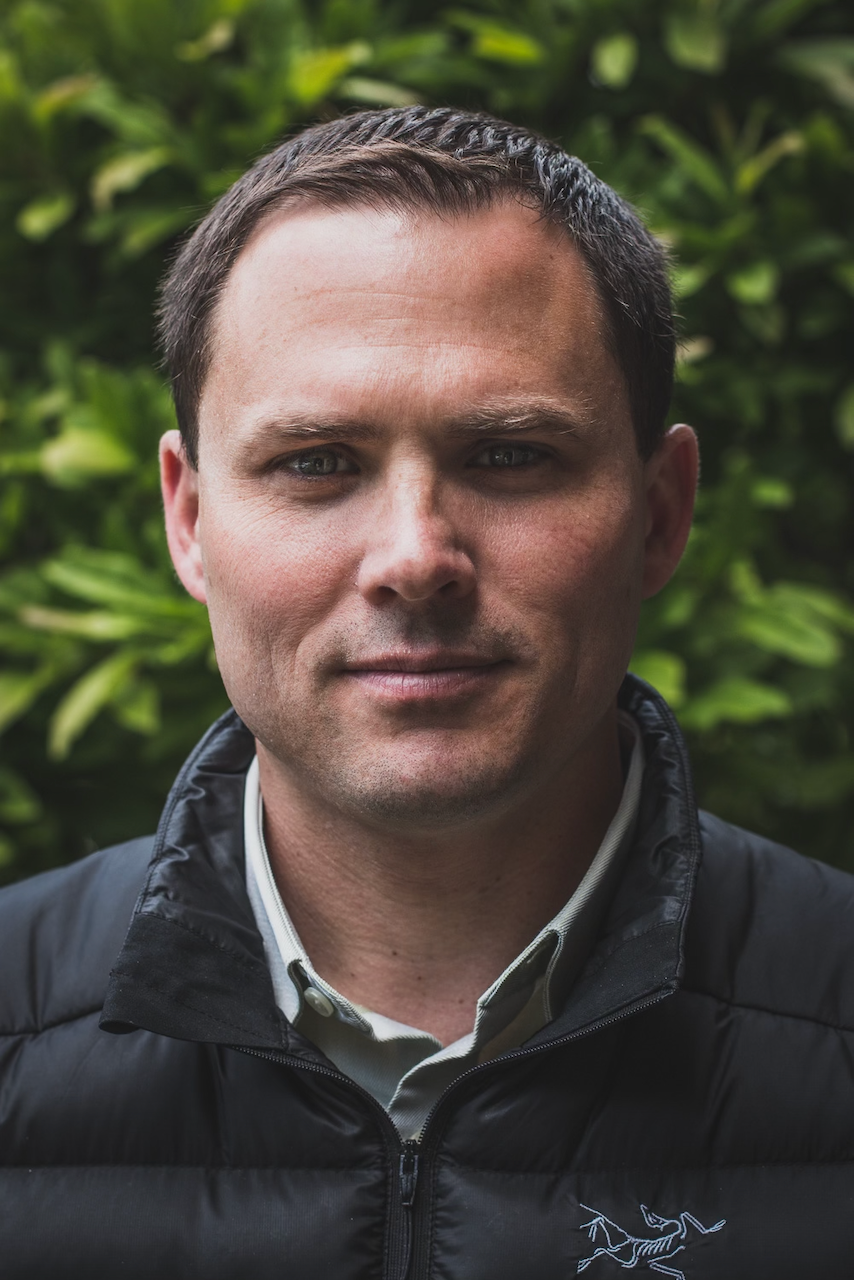
about Nick Ogle.
Nick Ogle received his Undergraduate Degree from John Brown University, a Masters Degree from Denver Seminary in Community Mental Health Counseling, and a Ph.D. in Counselor Education from the University of Arkansas.
Nick is the founder of NudaLabs.
Nick has had an incredible career journey of creating and building programs, clinics, and divisions for healthcare organizations such as Mercy and Centene. He served as the architect of HARK to address social determinants of health issues in NWA and has worked with stakeholders to build wraparound services in states such as Washington, Oregon, and Nevada. Nick frequently speaks at conferences for corporations on topics such as community building, mental health, burnout, and organizational development. Currently, Nick serves as the COO for a Private Family Office based out of Arkansas and spends over 3 months a year in Africa working alongside organizations and governments to build sustainable communities.
Nick lives in NWA with his wife, Chanika, and their 5 kiddos. Most days he can be seen serving as a chauffeur (carpool dad), chef, or riding his bike!

Photo by Marlon Reyes on Unsplash
route.
The route for this episode is an oldie but goodie. This is the most common route that Nick and I ride when it's just the two of us. It's a route that winds its way out to Avoca through the Brightwater Tunnel, and then back on Little Sugar Creek, one of my most favorite gravel roads in all of Northwest Arkansas.
episode notes & references.
US No Longer in Top 20 of the World’s Happiest Countries
Benton County Storm Relief Links
https://relief.bentoncountyar.gov/
https://bentoncountyrelieffund.com/
episode transcription.
two stories update.
[00:00:01] mike.: Well, you're listening to the underview, an exploration in the shaping of our place. My name is Mike Rusch, and before we start today, I asked Benton County Judge Barry Moehring if it would be helpful for him to provide an update on the current storm relief efforts.
[00:00:14] barry moehring.: Hello everybody, Barry Moehring, Benton County Judge here wanting to record a quick snip for the underview audience.
just in the wake of what we've been going through the last couple weeks in regards to the disasters that hit early in the morning on the 27th of May.
First of all, I want to thank everybody out there for all of the generosity. and the heartfelt help that has come from the community to help those who have been affected by this tornado from all the way on the state line border with Oklahoma all the way up through the lake. We've had a devastated community but we've seen an unbelievable amount of giving, of outreach, of generosity, and of grace and we've really appreciated that here at Benton County amongst all of our citizens. It's been tremendous. Going forward we're now all about recovery. FEMA's on the ground here. Their disaster recovery centers are up and running at NWACC and out at Falling Springs Church near Decatur. They're already dispersing checks. We've already had more than 2,000 people go through the application process with FEMA.
The other big issue that's on everybody's mind now is debris. What do we do about all that debris? And I can tell you that there is help coming. That help will be in the form of contractors that are going to work within our cities and in unincorporated Benton County to pick up The debris that's on people's property but there's some stipulations there that debris needs to be moved down to the right away down to the curbside and it needs to be separated.
You got to separate your vegetative debris from your C and D debris, your construction and other kinds of debris from your furniture, from your appliances, and we'll also be communicating on how to dispose of your hazardous waste. So the most important thing. About debris removal, get it down to the curbside, get it separated, and then have some patience. It's going to take us months to get it all picked up.
To give you an idea, the Benton County Road Department just in the first few days had picked up 25,000 cubic yards of debris on county roads. 12,000 of those were on one road, a devastated community out in Coon Hollow by Decatur alone. So there's a lot of debris out there.
But again just so many good things have happened in our community in the wake of this tragedy. I appreciate everybody's help. I appreciate what everybody's done. You can always reach out to us at Benton County at the Benton County Judge's Office. We're out there online. We also have a great website out there. If you go to the Benton County website, you can click on our disaster relief website, please feel free to go there. We have all of our updated information out there.
And I'm also pleased to announce that in partnership with the Excellerate foundation and some other foundations locally, we've created the Benton County relief fund. And the Benton County relief fund is a fund to help people here in Benton County. With local dollars and to help them quickly. These are grants of up to a thousand dollars per household for households that have $125,000 income or less.
And these can be quick infusions of help. Maybe it'll help you with debris, maybe it'll help you with transportation. Maybe it'll help you with shelter. But that site is up there and running. And the link to that site is also at our Benton County Disaster site. So if you need some help, go out there and look at the Benton County site and find that link to the Benton County Relief Fund.
And finally, if you want to help others in your community, you're looking for an easy way to do it. You want to give a little shot of money to it. That's a great place to also make a contribution. All those dollars will stay here. They will be used by locals and they'll be used for disaster relief.
Again, thank you, Mike. I appreciate the opportunity to reach your audience at the underview. I hope everybody has a safe rest of your summer. And if you need anything, feel free to be in touch with us at Benton County. Thank you.
two stories comments.
[00:03:43] mike.: Well, thank you to Judge Mooring, his team, and the countless others at the city, state, and federal levels that have been working so hard to provide essential services to those impacted by the storm.
For everyone who is responding, thank you is insufficient. And I've included the links that Judge Moehring named in the episode webpage.
We'll keep checking in with people and see what is needed of this community during this critical, critical time.
For now, let's continue with the week's episode.
episode preview.
[00:04:08] nick ogle.:
when you want to live in true community, when you want to work towards true wholeness, we're going to have hurts, we're going to have wounds, we're going to have brokenness, we're going to have fights, we're going to have ugliness that exists in that.
And as you're pointing out all throughout this podcast and your different guests that you've had on here so far, there is a lot of darkness, there's a lot of ugliness, there's a lot of hurt that exists in the community in which we live and ride our bikes on a regular basis. But that doesn't mean that it's bad, or it's wrong, or it's not good.
episode introduction.
[00:05:21] mike.: My name is Mike Rusch, and today we're going to pause for a moment on our question about what is the state of Northwest Arkansas. I'm going to share part two of my conversation with Dr. Nick Ogle to hopefully provide some context for a few of the upcoming episodes.
Originally, I had planned about 16 episodes for this first season. However, we're now at episode 28. Because the depths of the forming and shaping of this community is just so much deeper than I had ever first imagined, and this is also an exploration, so in honor of that we needed to have the freedom to go where these conversations needed to go.
We only have a few more episodes remaining in this first season then we're going to take a break because there are some areas of our community that need more focused attention than I can cover in just one episode.
If we really want to understand where we are as a community, that means we also have to understand where we've been.
One thing that I've been learning along the way is that we don't all share a common memory of the founding of this place. For some, it's a memory of coming to pursue opportunity, jobs, wealth, freedom. And for others, it's a memory of discrimination, exploitation, or removal.
And so to set the stage for the remaining episodes, this second part of my conversation with Dr. Ogle looks at what it means to be open to repairing our relationships. And not just today as individuals, but those relationships over the centuries that are also embedded into our institutions.
I've said it before, and I really do truly believe that the road ahead for us as a community is as promising as it's ever been, but we do have to be willing to repair that road and to make sure that we as a community can travel it together.
Our future is shaped by our past and repairing our past holds the power to create an even stronger community.
So I asked Dr. Ogle to help give me a starting point and a little self awareness, so let's jump in.
episode main interview.
[00:06:57] mike.: Okay, Nick, I think this conversation we've been having to me starts to now maybe turn back a little bit, the mirror on myself a little bit and say, I'm a human being and to the extent that I want to build friendships authentically. And I want to be transparent and I want to be vulnerable and I want to have empathy towards others.
I'm also real with myself that I'm probably going to mess this up. And there's going to be some sort of thing that I do intentionally, unintentionally, out of pain, out of anger. That starts to work against me. How do we, number one, like, am I the only one that does that?
[00:07:41] nick ogle.: No, you're not the only one. And you can ask anybody else's significant other.
They would tell you the same thing.
Okay.
We used to have a joke all the time in therapy that said, Hey, if you really want to see yourself at a vulnerable place and really understand yourself, go to your significant other and say, Hey, I'll give you 15 minutes. I won't hold this against you. I won't interrupt you.
Tell me where my blind spots are and let that person really give that out to you. And man, that, that rocks somebody's world. The point I say for that is, a lot of times I think there's a lot of conflict, hurt. avoidance that exists in relationship. And that's not just with significant others, that's in friendship groups, that's in communities that we live in.
And so the idea goes, hey, what we're talking about here isn't all flowers and roses and deep meaning and playful stuff. It's really about going, when you want to live in true community, when you want to work towards true wholeness, we're going to have hurts, we're going to have wounds, we're going to have brokenness, we're going to have fights, we're going to have ugliness that exists in that.
And as you're pointing out all throughout this podcast and your different guests that you've had on here so far, there is a lot of darkness, there's a lot of ugliness, there's a lot of hurt that exists in the community in which we live and ride our bikes on a regular basis. But that doesn't mean that it's bad, or it's wrong, or it's not good.
And the reason I say that is because if you look at a lot of where psychology and philosophy has evolved to today, they're using words like resilience, repair, grit, bonding, those type of words, and they all mean the same thing to some extent, they get to the same point, which says this. If we have these wounds, the greatest way to make relationship with one another is to repair it, to have resilience, to press through it, to go back to the core of having a bond with one another.
So we don't need to be afraid of the conflict or the hurt or the woundedness or the brokenness that exists there. We just have to have a mindset of, hey, we are going to repair, we are going to have resilience, we are going to bond over this. It's like this idea that I always tease my kids about, I say, if it wasn't considered "parental abuse" these days, I think the greatest thing to ever do to my kids would be to break their iPhone, drive them out in the middle of nowhere, drop them off and say, figure out how to get home.
It would create such conflict, anxiety, fear, all the things in them that they need to realize that they can survive. That they're going to be okay. That they're going to make it home. That they know the questions to ask.
The idea goes, Mike, it's through our greatest pains and hurts and woundedness and brokenness and conflict and strife that we actually build the deepest bonds.
That we build the greatest levels of resilience. All throughout history, if you look at civilization that have been resilient, that have revived themselves, that have been through everything that they possibly could and become great again, so to speak, it's because they weren't afraid of the hurt, the argument, the pain, the brokenness that existed there.
We cannot be afraid of that. And what's happening right now is we keep shutting that down. It's a one sided argument, and when you don't believe the same thing I believe, or see it the same way I see, if there's an anger and a shut off that exists, well, more. Well, now all of a sudden we're just, well, this is what I value, you're off.
So we've lost that we ness. And this is killing us, Mike, because what we really need is resilience, repair. But that means we have to go out and have hard conversations about what happened during slavery. We have to have hard conversations about what's happening with gentrification. We have to have hard conversations about inequalities that exist in our society and our culture. We have to have hard conversations about the impact of evangelicalism on the homosexual community in Northwest Arkansas, and yes, I'm going to say that.
We have to have those conversations, but when we shut it down and we don't go into those spaces, we can't be resilient. We can't reconcile, we can't bond, we can't have grit and push through and become greater in the sum of our individual parts making though.
And so that's where we have to arrive, and the greatest theorists and psychologists and talk show hosts today are all talking about this. And what you and I have to sit here and wonder is, are we really listening? Are we hearing that or then do we leave those conversations and go back to these little devices and get into our little worlds and start scrolling and all of a sudden it just becomes about me and what I think and what I feel and how I've been wronged.
And if we sit in that spot, no matter what your issue is, we will never move forward.
[00:12:22] mike.: I think part of some of the early conversations that we're working towards within these conversations is this idea of repair.
And some of these things are, Nick. These are really, these are not insignificant things. These are deep. generational, institutional things that continue to be perpetuated. Things that we've tried to move forward over as a community, as a country for hundreds and hundreds of years, and yet we're still here. And I guess to me, it begs the question is within some of these conflicts that need to be repaired.
I'd love to think that this idea of healing is possible, but it doesn't even feel like we've even scratched the surface of what it looks like to even move into this place of being able to, as a community, start to repair, can talk about the history of our state and our country and enslavement of people, of human beings, and while there may have been progress along the way, it is, there is still deep pains that I think our community may not even be able to acknowledge in these days, like, And there's other areas where we start to think through these kinds of problems.
Like how do, where do we start? How do like, is it even, is it really possible? That's my question is maybe the pessimists. Like, is it really possible to move into these areas and have a conversation where we can start to authentically think and take steps about what repair looks like?
[00:14:00] nick ogle.: Yeah, that's a great question.
The answer is yes, right? We can. We are. There are groups out there, as you've highlighted some on this podcast, that are having those conversations, starting those conversations, continuing those conversations. over and over again. And that's all we can do is we have to keep bringing them back to the center point of this.
A good example of this, Mike, is, if you've studied anything about Ireland, right, we have the great conflict that exists in Northern Ireland specifically, where we still have active peace walls. And those active peace walls divide Catholics and Protestants. Now, pause and think about this, you've got the whole, U2 song that was so popular, Sunday Bloody Sunday, you've got the understanding of what happened there with Bill Clinton going over in the 90s and signing the peace treaty between them, and then you have the latest bombing slash shooting that I think took place in the early 2000s in Ireland, in Northern Ireland.
And it was because these two groups, Catholics versus Protestants, That have the same foundational belief system, if we're going to talk from a religious perspective, have been killing one another for what, 50, 60, 100 years? Because they have different ideologies and belief systems? No, it's because all of a sudden they lost the value of who they were as people and couldn't have the ability to recognize similarities that existed in one another.
And the reason I bring that up is because I go, that problem's not fully fixed even though they haven't had a killing or bombing since the early 2000s. The conversation is ongoing. The peace wall is still there. You have to drive through gates that close at night. It's still here in 2024. Between Catholics and Protestants.
Division is going to exist among us. It's going to take place. But the only way to repair or be resilient in that is to continually enter into spaces and places where we talk about it, where it becomes a part of our lives, where I am open to have empathy and hear your story and see your side and experience it how you experience it, Mike.
But if I don't do that, I'm never going to get into a place to where I really get it or understand. We have a million and one reasons to divide ourselves. You and I bike a lot of miles together and one of the things I always chuckle at when we go through some of the intersections that we go through is that we got First Baptists on one side of the street and we got Second Baptists on the other side of the street.
And if we were to take their dogmas or take their religious beliefs and put their doctrines right beside each other, they would be divided over one thing. One percent. Of what they believed they would have truly started two different churches. And it would be something ridiculous, like whether or not you were sprinkled or dunked in baptism.
But hey, we believe on every other fundamental belief exactly the same. We will find ways to divide ourselves. We do it in our communities all the time, but the only way to be resilient, to repair is to go back to the core of I have to sit with you, I have to have empathy with you, I have to have vulnerability with you, I have to get myself into a space where I go, I want to understand the world as you see and experience it and hear this.
Whether or not I agree with you, but I need you in my life because you show me a different way of seeing and experiencing the world. And the further we get away from that, Mike, the greater risk we are to no longer being people that value one another. The context in which I'd want to draw an idea or an understanding of that is the idea that throughout history, we have fought for survival.
And to survive as humans, sometimes we believe we have to take from somebody else. So in order for my, me or my family to survive, I have to take the bread that you have, Mike. And in order for me to get that bread, I have to take your life. So there's a violent component that can exist to that. But the idea becomes all of a sudden that I didn't value your life.
As much as I valued my own. And right now, in America, we don't fight for that level of survival. The level of survival that we fight for oftentimes is an ideology, or a belief system, or a right or wrong way of living. And so, I have to kill you off sometimes because your belief system, your ideology, the way that you live or experience your life, doesn't fit mine.
So I have to almost cut you off from that. And while I don't physically harm you, or even probably Own up to the fact that I cut you off and severed you from that's exactly what I did. And so that type of belief system, that type of living all of a sudden puts me in a place where I'm caring about I more than I'm caring about we.
And that's the idea of survival today.
[00:18:37] mike.: I think in this idea of repair, and we talk about this idea of trying to move through some legitimately really hard. Issues and topics that, that frankly, I think even as a culture, we're not even equipped to really our language around how to talk through the repair is really hard.
Like, I don't even know that we have a common language sometimes to think through this idea of repair. To your point, this idea about fear and our kind of our fear response, absence of really a common language, maybe it reinforces this idea of fear about how we even step into the arena of being able to think about repair.
Because I think, and this may be true of a lot of people I think it's true of maybe, I don't speak for all white men but this idea of, well, then we're going to fix it and we're going to, like, I know that it comes from this place of privilege, this place of entitlement, this place of maybe just cultural understanding or cultural belief in some this challenge, romanticized idea that I can fix it myself.
And I, I think time and time again, we show up and we find that so utterly false. How does a dominant culture group who may be responsible for many of the transgressions, probably is responsible for a lot of the transgressions. Do I just need to sit down and be quiet and listen to the voices in our community?
Do what is my role? What is my role as a human being, as someone who's a part of a, I say, dominant culture group, majority culture group? How do I do this in a way that really does not further entrench and moves towards this idea of repair?
[00:20:25] nick ogle.: Yeah, I love that. And this goes into the bigger picture of humanity and who we are as humans, which gets in the meaning making.
We are all searching to make meaning in our lives and so you asked that question and immediately my mind goes all the way back to Carl Jung, Jungian theory, again that we all studied in Psychology 101, but he said the sole purpose of human existence is to kindle a light in the darkness of mere being.
We have to kindle a light in that darkness that exists. And so you ask the question of what's my responsibility in that? And I go, you gotta build the light. You gotta create a space for that light to come forth. And the only way that happens in order to create meaning and value in that is for you to show up and be a part of the conversation.
And if that conversation isn't happening, then you start hosting it, which is one of the things that you've started doing with this podcast, which I absolutely love. You're creating a space for us to have these conversations and not just in having the conversation going, this is what I believe, this is what I believe, but you're going no, let's hear what somebody else has to say about that or somebody else's experience with that.
Or even this, somebody else's grandparents experience with that. And all of a sudden, when all of these stories begin to be heard and had. And we truly enter into that place of empathy and unconditional positive regard and authenticity. Then, Mike, we begin to see it, experience it, and because of that, we want to change it.
I love the question that you asked, what is the language for this? Do you know the history of the Scandinavian countries in the last 30 years? They were in the shits at one point, Mike, they had the highest suicide rates, drug rates outside of what we know, quote unquote, about Russia. They had the highest, they were failing as a country on that, happiness index that we put out every year on CNN.
They were at the lowest, they were at the bottom. In the last 10, 15 years, they've moved to the top. And one of the number one ways that they contribute that they've been able to do that Is that in their elementary schools, they went back to the fundamentals of teaching kids language of words like what does it mean to listen?
What does it mean to be authentic? What does it mean to be in community? What does it mean to all of a sudden experience life together? They went to fundamental basics of being human again as a class in elementary school. And then they took it a step further and all of a sudden I know a lot of the, you're having a lot of housing communicate, conversations on this podcast, they went into housing and they looked at what does it look like to do mixed living and communal living and they have communities in which you have ultra wealthy people living in apartments right next to somebody that's living off of government welfare.
And the house looks exactly the same, or the apartment looks exactly the same from the door. And you even had a member on your podcast that talked about all of our doors may look different, but all of a sudden, really, when we look inside, it's all people, it's all the same, and we need to invite one more into that space.
We need to learn from the Scandinavian countries of what they've done, because now, if you look at the happiness index, they've gone from the bottom all the way up to the top. And it's not that our goal is to be happy. But our goal is to all of a sudden find the language and the things that we need to start living in that community and experiencing that over and over again, Mike.
And those are the conversations that need to be had and the spaces that you and I need to step into consistently and constantly. I had an experience with one of my kids the other day that I think is really relevant for your podcast.
My son came home from me and we were talking and my wife and I were getting ready to go out to dinner that night. And I said, we were going to Barcleta and the owners of Barcleta are friends of ours. And they also own this restaurant called the Big Lieutenant, Big Lou, that's over by the community center.
And my son immediately perked up and was like, Oh, you go to that place. And I said, yes, we love they're some of our favorite restaurants, we love to sit at the couch at Bar Kalita. And all of a sudden he goes, I was out with some friends the other day and one of the parents was talking about how that's like the gay place and that they keep hiring all these trans and really interesting individuals and that they won't go there anymore because that's what that space is.
And it just hit me all of a sudden what my son had experienced out of the mouth of an individual with no context, no understanding, but because I said I was going to that restaurant all of a sudden, his belief system or his understanding is, well you must agree with and belong to a different ideology than what I experience.
And it caught me off guard, deeply. But it caught me off guard a little bit because it was a prominent individual that my son had heard that come from, and the tone in which he heard it was a negative, a bad thing. Now let me say, I know that individual's belief system, I know it's a very strong fundamental belief system, a fundamental belief system from a religious ideology that they hold it.
And the reason I say that is because that individual operates from a place of fear. And that fear is that if these type of restaurants are coming, if we are hiring quote unquote these type of people in these places, something's going to go wrong in our society or in our community that we live in. And that's what my son is experiencing.
Now he knows I don't believe that, or I don't value that, or that I'm a very prominent advocate for the gay and lesbian community, but it caught him enough to where he needed to say that to me when talking about where we were going to eat that night. Fear does funny things to people and I don't even think sometimes we realize how much we project almost an anger or we project almost a negative tone on a story about something or someone because we're afraid.
And what are we afraid of, Mike? I love what one of the members of your podcast said, which is basically, hey, we need to stand up and go, you don't need to draw these extreme conclusions based on stories or ideas of what we might or might not be doing, because all of a sudden then you're just operating from a place of fear.
Her value system creates fear. And that fear is that you're gonna destroy or take away from what I believe to be right, true, and good. Instead of, oh my gosh, I want to embrace a place that's different. I want to embrace a place that I don't understand because I believe in the we culture. And in the we culture, we need inclusivity.
We need places where you feel accepted, safe, and valued. That's what we're missing. And when we have stories like this over and over again, we have to back up and go, let me talk up to you, son, about what you just heard and what you just experienced. And why that happened and why I want you to never operate from that perspective. It's not bad. Good. It's we.
[00:27:12] mike.: It's good.
[00:27:13] nick ogle.: We create what in the family psychology world, we talk a lot of times about what are called family norms or societal norms. And right now all around you and I, Mike, we're building family and societal norms. I tell my kids all the time when I was growing up with my dad, he's a he came from a pretty, challenging experience growing up in his life.
He deeply valued education. He went all the way on and got a PhD. I sometimes jokingly say that the only reason I got a PhD was so my dad would love me. I think that's partially true. And this story I'm about to tell you ties into that.
[00:27:43] mike.: I, do you want to talk to me, Nick? I feel like, can I help you work through that a little bit?
[00:27:48] nick ogle.: Can you please be my therapist here for a moment? Help me process what I'm about to do.
[00:27:51] mike.: I'm so unqualified to be a therapist.
[00:27:53] nick ogle.: It may actually work with you. That's not true because on the bike, you're therapizing me all the time. But as I, as we would drive around as kids or my dad would take my brother and I to school or to wherever we were headed, a sporting event or just, out, whatever we were doing, if we passed by an individual doing manual labor, painting a house, picking up trash, doing landscaping, my dad said the exact same words my entire childhood and it was these words right here.
That's why you get an education. That's why you go to college. That's why you get an education. That's why you go to college. And he would point at those individuals every single time. His fear Over and over again, that got expressed from a perspective of this is why you get educated, you can get a job, you never have to live like that, was because he watched my grandfather work at Dillard's, selling shoes, having a hard time trying to support four kids.
This fear in him is that if you don't go get an education, son, you're going to end up living hourly, working a job like that, and that's not good, that's not healthy. This is what I want from you. So growing up my entire childhood, right, wrong, or indifferent, my narrative in my head was you had to go to college.
That's what made it good. That was the family norm that existed inside of me. We have to begin to recognize, Mike, all the different norms and values and biases that exist inside of us. And from that, We just have to own it. It's okay that if it's not the popular one or it's not the right one or It's not the politically correct thing to say I have biases that exist in me But if i'm not willing to see them and own them, I will never be able to move forward in my life I will be stuck in the exact same point in time And i'll believe that the only thing right and good is if people go to college and if people go to college They get good jobs.
Therefore. I want to avoid being around people that don't have college degrees You That's what we're talking about when we're talking about those societal norms, those family values and norms that get created inside of us. We have to push back against those.
episode outro comments.
[00:29:56] mike.: Well, thank you to Dr. Ogle for his time and his wisdom to help provide a starting point to what Nick is calling the greatest way, the way towards the repairing of our community. It's not an easy way in any shape or form, but it's a necessary way. It's a way that leads us and enables our goal of community wholeness.
This is a part about how we develop that theology, that word again, the theology of our place, our communal understanding about the things that we believe about the place we live in the community we are building.
The work starts with us first, the individuals, the decision makers and the people who are waking up every day deciding to work towards building a better community. I've said it before and I'll repeat it because it continues to be true.
Cristiano Figueres says that "systematic transformation is deeply personal." And I said that if you're going to take this journey, it has to get deeply personal.
Well, here we are again.
next episode preview.
[00:30:47] mike.: In our next episode, we're going to spend some time with Sharon Killian, the founder of the N. W. A. Black Heritage Organization. N. W. A. Black Heritage is at work in Northwest Arkansas doing a lot of things, but you may be most familiar with their work to create the region's first historical district.
This will be a black historic district in Fayetteville to remember, preserve, and acknowledge the black community's roots, history, and contribution to the building of this community, a contribution that was seldom acknowledged and often forced.
As we talk about community, I wanted to understand Sharon's perspective and how this work is critical to the shaping of our place.
[00:31:20] sharon killian.: I hear belonging from white people a lot. We don't really talk about it that way, but we know what we've done, and we feel it, it's inside of us and if it's being eroded, there is a real problem. It's And we know how that happens. It is our responsibility, our as a people, as a region, well, as a society to dismantle the systems that create a situation where people's belonging is taken away, I think.
episode outro comments.
[00:31:56] mike.: So when we talk about what it means to repair relationships and communities, this is where we will focus first. Sharon's voice and her work is not only critical to the forming of our community, it is necessary. And so I look forward to sharing this conversation with you.
Thank you again for following along and being a part of the shaping of this place.