
the new community with Mireya Reith.
Mireya Reith, Founding Executive Director of Arkansas United. Our topic of discussion is “What is the state of Northwest Arkansas?” Our conversation centers around serving new immigrant communities that now call Northwest Arkansas home.
season 1, ep. 16
listen.
episode notes.
Episode 16 is a discussion with Mireya Reith. Our topic of discussion is “What is the state of Northwest Arkansas?” Our conversation centers around the work of building a new community here in Northwest Arkansas.
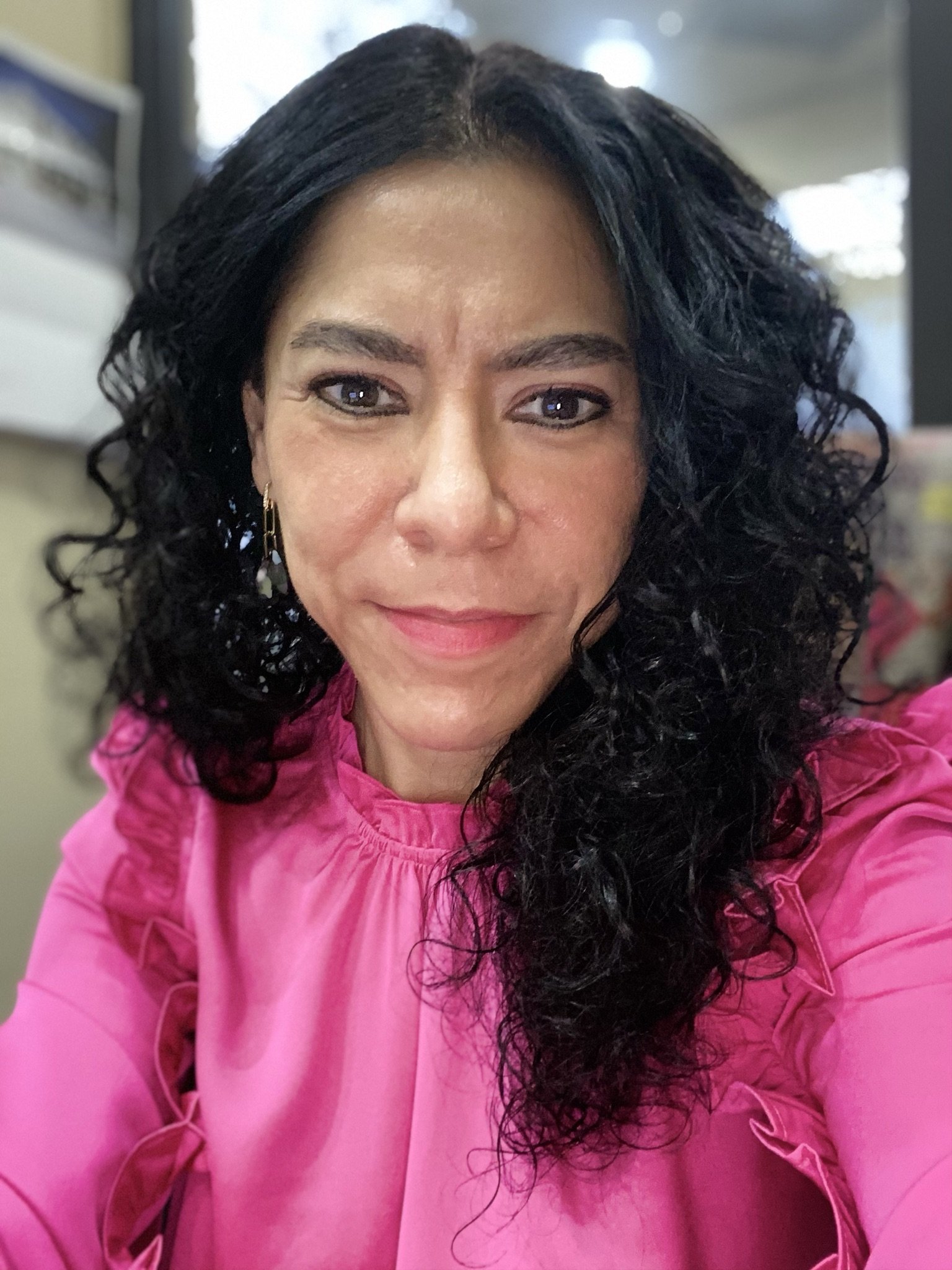
about Mireya Reith.
Mireya Reith is the Founding Executive Director of Arkansas United, a nonprofit dedicated to empowering immigrants and their communities through immigrant rights advocacy and closing service gaps. Founded in 2012, Arkansas United boasts a network of over 200 immigrant organizers and 800 members in 17 communities across Arkansas, operates regional immigrant resource centers in Springdale and Little Rock, and represents Arkansas in leading, national coalitions advancing comprehensive immigration reform, Latino and Asian civic engagement and immigrant integration.
Reith spent the first 14 years of her career in the field of international political development, working across five continents with American nonprofit organizations, Peace Corps-El Salvador and the United Nations to engage marginalized communities in democratic processes. In 2010, Reith begin to explore how to bring these international experiences to her home state after her involvement in launching a Latino-Marshallese nonprofit leadership academy and directing Hispanic voter outreach in election campaigns. Despite promises that year to pass a federal DREAM Act, both Arkansas senators were key, swing votes, denying a pathway to citizenship to undocumented youth. Reith was personally inspired by the Arkansas DREAMers who continued to rally the Hispanic vote, and found her voice as a community organizer, determined to ensure that Arkansas also showed-up for the DREAMers and all immigrants who wanted to call Arkansas home. Having first-hand experienced racism as the daughter of a Mexican immigrant, Reith continues to strive to connect Arkansas and immigrants to the broader movement for social justice, grounded in the beliefs that equity is the key to achieving our collective potential, and immigrants themselves can and should be change agents and decision-makers. In 2011, Reith served her state as the first Latina appointed to the Arkansas State Board of Education, and became, in 2016, the youngest person in state history to chair the State Board.
Reith has been awarded: Fayetteville Schools Foundation Hall of Honors (2019), Washington County Historical Society’s Woman of the Year (2019), Cox Communications Local Hero Award (2018), Arkansas Business Arkansas 200 (2017), the University of Arkansas Latino Alumni Society Individual Excellence in Advancing Latinos Award (2017), the Democratic Party of Arkansas Chairman Award (2017), Seis Puentes Community Activist of the Year Award (2016), Mexican Consulate in Little Rock Hispanic Woman Champion Award (2014), the White House Cesar Chavez Champions of Change Award (2013), Arkansas Advocates for Children and Families Sister Joan Pytik Child Advocate of the Year (2013) and the Arkansas Times 40 Most Influential Arkansans (2012).
Reith has proudly also served on the Board of Directors for: the National Association of State Boards of Education (NASBE), the Fair Immigration Reform Movement (FIRM, is the current co-chair), the National Partnership for New Americans (NPNA), the Movement of Immigrants in America (MIA), Ozark Center for the Arts’ Latin/x Youth Theatre Project, Faith Voices Arkansas, University of Arkansas-Little Rock Anderson Institute on Race and Ethnicity, the Northwest Arkansas Housing Committee and Arkansas Teachers Corp.
Reith received her Master’s in International Affairs from the School of International and Public Affairs at Columbia University (NY), concentrating in Economic and Political Development, and earned her BA in Political Science and Spanish from Williams College (MA). Reith currently resides with family in her hometown of Fayetteville, Arkansas, where she is an avid runner with her Lakeland terrier Louie and passionate salsa dancer.
Photo by K E on Unsplash
route.
episode notes & references.
episode transcription.
episode preview.
[00:00:00] mireya reith.: My hope is that what we do, what we're seen as doing with immigrants, that we can finally elevate that it's not just about immigrants. It really is about all Arkansas.
I think that's one of the things I struggle with the most. It's making the case that we're not just another self-interest group. That immigrants aren't just yet another self-interest group that wants their piece of the pie. That this really is thought about, well thought about, it's systemic, it really is about making everything work for everyone..
episode introduction.
[00:01:19] mike.: You're listening to the interview and exploration in the shaping of our place. My name is Mike Rusch and we're continuing our question, "what is the state of Northwest Arkansas?" We are answering this question by talking with those who have a voice in the different communities in our region. The goal is to try and understand how the growth of Northwest Arkansas is being experienced by these different communities of people who call this place home.
Today we have the privilege of talking with Mireya Raith. Mireya is the founding executive director of Arkansas United. It's a non profit dedicated to empowering immigrants in their communities through immigrant rights advocacy and closing service gaps.
It was founded in 2012. Arkansas United boasts a network over 200 immigrant organizers and 800 members in 17 different communities across Arkansas. It operates regional immigrant resource centers in Springdale and Little Rock, and it represents Arkansas in leading national coalitions advancing comprehensive immigration reform, Latino and Asian civic engagement, and immigrant integration.
Mireya's background and experience is extensive, and I'd encourage you to read her full bio on the episode webpage.
A little background.
The Northwest Arkansas Council reports that between 1990 and 2021, the non white population of Northwest Arkansas grew from less than 5 percent to over 29%. And it's expected to be at over 32 percent by 2026. Students in Northwest Arkansas school systems come from over 90 different countries, and they speak over 87 different languages.
Specifically, the Hispanic Latino population in Northwest Arkansas is estimated to be approximately 17 percent of the total population, and that's up from 1 percent in 1990, with Springdale being the most diverse city in Northwest Arkansas, with 53 percent of the population, and Rogers coming in at the second most diverse at 43 percent of the population.
I wanted to talk with Mireya because her story of living in Northwest Arkansas as the daughter of a first generation Mexican immigrant provides a first person point of view of both the opportunity and the challenges for the many new families that are coming to Arkansas to make it home.
For this conversation, I want to ask you something before we start. I want to ask you to listen with curiosity, curiosity, because first and foremost, unless you are a member of the Osage, Quapaw, or Caddo nations, somewhere in your family history, your family, just like my family were immigrants to this country and this region at one point also.
Second, immigration is currently at the center of our national dialogue. It's having a huge impact on the many families that call Northwest Arkansas home. You see the rhetoric isn't just bad. It's bad. And it's continuing to get worse.
And so we really need to understand why is this topic of immigration being treated like this? If we're all immigrants to this country and we're all immigrants to this region, what is it about today that makes this situation different? Or, has this been the situation for history as long as we can remember? We've got a lot of ground to cover, so let's jump right in.
episode interview.
[00:04:10] mike.: Good morning. It's great to sit and talk with you. Thanks for grabbing some time with me. I appreciate it.
[00:04:18] mireya reith.: Oh, thank you for the invitation and buenos dias.
[00:04:21] mike.: Ah, I love that. Buenos dias to you as well too. It is a cold, rainy morning here in Fayetteville, Arkansas.
I'd love to start a little bit with your story however you want to define that. Tell me your story and how you got to this place of Northwest Arkansas.
[00:04:35] mireya reith.: Oh, well, I'm, the girl born on the 4th of July, I should probably say, because it does run occurrent to everything that's in my life and my identity.
And I'm the proud daughter of a naturalized Mexican citizen and and a former Marine from Wisconsin. Whose love story began in Mexico started in Wisconsin our life there but we came here in Arkansas. And we found Northwest Arkansas, interestingly enough maybe closing on now three decades ago, the same way that a lot of folks are doing so now.
My dad was reading in a magazine, the top 10 places to live, and Fayetteville was on that list. And, yeah. He was going to take early retirement, worked for a family company and and there was a good, good opportunity for him and he wanted to go somewhere warmer. So did my mom. She wanted to be closer to Mexico and my dad wanted it to be a good university town and I wanted it to be somewhere where
there was a community and a home because he was seeing this as part of his retirement chapter. And so we landed in Northwest Arkansas in 1992 which is when I was still very much in junior high here. I won't lie. I came kicking and screaming at that point, my only just association with Arkansas was the, the Beverly Hillbillies.
And I, I really was worried about what my life would look like here. But my parents did an excellent job and found some friends, found my niches immediately. I think the, the one thing, although it wasn't so different from Wisconsin, at that time there wasn't a growth in the immigrant population there wasn't a lot of diversity.
And so. I, I have a lot of memories of rejection statements said about my mom being Mexican myself. I don't feel like there's a moment in my youth where I wasn't conscientious of overt racism toward our family that was, whether Wisconsin or here. And I think the salvation I found within all of that was school and education.
My family held on to the American dream. My dad working class family in Wisconsin, my mom, Mexican and for them, the American dream was education. It was going to college because neither of them had the opportunity to go full time to college and to be able to hopefully make more money than they did.
And So, thankfully, even here, I had great teachers who saw my potential led me on the pathway to become the first Hispanic valedictorian in the state of Arkansas. And and was really proud to matriculate and then have my chance to go on to, to the colleges that I dreamed about, that my parents dreamed about, like Williams College, Columbia University where I did my Masters,.
But it was always my family back in Mexico that inspired my personal passion. They were involved in politics. And I'm really proud to say my aunts were some of the first politicians, elected officials in our local town. And they're the ones that opened my eyes. They said, look, look, Mireya, look who's in politics.
And it didn't matter what country you looked at it was mostly an elite male group. . And my aunt, I will never forget, she's, she has my name. She said, just imagine what politics could be like if people that look like us were also in there. And that was what did it for me.
So my undergrad, grad school, my whole first leg of my career, which was internationally focused, was all about diversity and participation in democracy. And much to my parents surprise, I did get paid to do that and travel the world. And I was actually heading to Afghanistan to help start up women candidate schools when my dad got sick. Stage 4 lung cancer.
So I didn't think about it twice. I came back to Arkansas, but I came back to a very different Arkansas. And I still remember being greeted in Spanish in the airport, to which I asked, wait, did I land in Arkansas? And very quickly we came to learn that Arkansas had become the fourth fastest growing immigrant population in the country. And now you could legitimately get tacos here. And it wasn't Springdale anymore, it was Espringdale.
And so, because my last gig was with the International Arm of the Democratic Party, I was engaged with the Democratic Party here. First time they were going to try and get out a Hispanic vote. And and I had the opportunity to be part of that.
And that's what led me to meet the Arkansas Dreamers. Our, our youth who are from Arkansas lived a lot of the same experiences I did, but they just didn't have that social security number. And so we had two Arkansas senators key votes, swing votes, one was up for election. We thought we could get out the vote and secure the DREAM Act, and unfortunately both of our senators voted against it.
They were afraid they'd lose more white votes than Hispanic votes. And so, it was the DREAMers though that inspired me. They kept knocking doors. They kept making phone calls. They said that this is their state. And they know that only in showing up were we going to get a difference. They'd lived disappointment before, and they knew that it was in their hands to make a difference. So that's when we founded Arkansas United.
And now I've been on this very unexpected journey of taking that skill set and that passion for diversity and participation to my own state in our own moments and in the process of getting Arkansas United up and going to do immigrant rights advocacy I was asked by Governor Beebe to become the first Latina to hold state office and appointed to the State Board of Education in 2011.
And the girl that used to be called Mexican Monkey became Madam Chair for a full year.
And and with that the work that we've done I think I've learned the humbling lesson. Politics is slow to change. And so I've just been really humbled and grateful to be surrounded by amazing, mostly Latina leaders who have showed me that we can do work to give our community access to life, to dignity while we're doing that systemic change. We can do both. And that's when we started up our immigrant resource centers and we started our community navigator programs in a whole bunch of fields where we're still leading with this idea that I hope to bring to politics, but this idea of immigrants themselves being change agents.
We want and we're grateful for allies and people that support us. But in the end we want to define our change and what that change looks like. And we want to be part of it. We want to be part of the change we want to see. And it's been really exciting to accompany now over 800 members across the state of Arkansas as they go through that journey.
[00:10:59] mike.: Thank you for all of that. Can I back up for a minute? Is that okay? In your description of growing up here, tell me what Arkansas means to you.
[00:11:08] mireya reith.: Arkansas' home. It's home as much as I was born in Wisconsin.
And I will say this. I am a fierce Green Bay Packers fan own stock in the Green Bay Packers and they won yesterday. So I'm in a good mood today. And we're heading to the playoffs. So, that's exciting. That was one of the ways I connected with my father and one of the languages I was It's grateful to be given was sports, but the home was Arkansas home is whenever I traveled around the world and in different careers and such this is where my family has chosen to stay.
My nephew's growing up here. My sister built her family here. My mom's still here, and where in any place there's pros and cons. This is the place that I feel is my community. And so where I want to define change and be part of the change and help is here in Arkansas.
[00:11:58] mike.: This is home for you. I assume you're not going anywhere anytime soon.
Is that correct? Is that a fair assessment?
[00:12:05] mireya reith.: Yes. Cause I'm about to grow my family. So, and I, I want to do it here at home.
[00:12:11] mike.: Within the work that you do you're working with families from all over the world who are coming here bringing hopes and dreams you'd mentioned they're trying to find a place and a home, maybe like your family did when they first came here.
What does that process look like? What do you see in those stories?
[00:12:32] mireya reith.: I think that's actually why we started the work we did with youth. It's other folks like me who've lived enough of their life in Arkansas that call Arkansas home, at least within the immigrant community. I will say something that we find here in Arkansas that actually hasn't changed a lot for me in the now we're going on to 14 years of doing this work. A lot of our first generation immigrants still have that guest mentality. And that means that they feel like their guests in this State but also this Country. And so it's a different type of work because you're trying to have people to have a dream that is about a place when what they came here was not necessarily about a dream about a place, but just survival, right?
Or trying to find a better life. All their hopes and dreams are in their kids. And so a lot of and actually within my recent travels and the national work that we do at Arkansas United, I had a chance to go to Europe and meet, and there they don't call them immigrants, they call them "economic migrants," and I actually feel like that term Is what relates a lot to me for the type of immigrants we work with, they see themselves as "economic migrants" and what we want to inspire them because they like Arkansas, and they see that potential for their kids.
So what does it look like to feel that way for themselves and have high expectations about their relationship with community, with their work, that they can have dreams? I think when we see a lot of our immigrant community have dreams here, it's about being an entrepreneur. It's starting their own business.
And we still see that. And actually in Northwest Arkansas it's the best time to be an entrepreneur. And so we find ourselves actually working quite closely with some unexpected allies, not just the corporations or the big companies that are hiring immigrant workers, but those that are working in the small business entrepreneurial space and that keep Fayetteville funky, right? The Northwest Arkansas we want to invest in small entrepreneurs. I actually see this as a really exciting time to help elevate more of our immigrants feeling like Arkansas is home vis a vis this dream of being an entrepreneur.
[00:14:53] mike.: My family, if I go back generations and generations are immigrants as well, too. I am now far away from that, so I didn't get to see what that looked like for, for my family. I'm curious your perspective on people who are coming to this place.
You mentioned that people's dreams were in their, were in their children. Is that a bypassing of their own dreams? Is that, what does that look like over, is it generations? Is it years? I'd love some insight into that.
[00:15:23] mireya reith.: I would say with the first generation, some of our second generation are newcomers because we are still seeing a lot of newcomers and they're now more diverse than ever.
I think a lot of times you know, the immigrant growth was associated with the Latin American population and the Marshallese. And now we're seeing from all over the world. And the reality is folks aren't going to have dreams about home, stability, themselves until they have just basic safety and basic economic dignity for their families.
And that is not something that is easily won, right? It's just, there's hard work in there. And I will say, I think we made a lot of progress in COVID, actually, because there was an engagement with the community based organizations, the hospitals, the local government, and everything, where we were able to do some of that direct bridge building.
And now I think it's the fight to let's hold on to that. Let's keep being part of that effort. And now there's tons of programs that talk about basic economic dignity, the certifications, all of this. Northwest Arkansas is far ahead of the rest of the state in the provision of a lot of these opportunities.
So now it's the awareness, right? And, and the thing that I think is still the challenge with a lot of our immigrant community, we are still very self siloed. Some of that is language. Some of that is trust. Because of their lived experiences not just here, but even in their home country. I mean, you're talking about communities who've been deceived upon deceived and, and trust is a hard thing that's won.
And so that self siloing the language just means we have to engage members of the community themselves. We have to get to the trusted people, the elders in the community, the church leaders, the restaurant owners, the places where we go for our culture and for our food. And. And then hopefully once we can build that trust, get some basic dignity, tell that success story.
Unfortunately, one of the things we're always fighting is that bad experiences that, that moves much more quickly, whether it's in social media or in social circles than the good news. And so I do think that part of the, the, our hope and our challenge, I think with this moment is the counter narrative of being able to give hope and dreams of success that then inspire others to do so as well.
But I will say one statistic that does give me hope that we're making progress. When we started this work, there were 40,000 legal permanent residents in Arkansas. These mean that they're green card holders who could become citizens. And now we're down to 26,000. So that says to me, more people are choosing now, that, and, and, and making this arrangement, this agreement, with state, with country, I'm going to be an American too, right?
And, and we are seeing more naturalization ceremonies than ever, and, and we're seeing, and it's all, it's, it's across party lines. Everybody wants in on the celebration of citizenship, and that's that gives me hope that we're making some progress with the new groups and with the newcomers as well.
[00:18:36] mike.: You mentioned maybe sometimes their first priority is a economic stability.
That's fair. Um, uh, and maybe a sense of trust. Can you dig into that a little bit more? , obviously, Northwest Arkansas is growing by leaps and bounds. One of the conversations we're having through this is who's participating, who is able to participate in that and so for people new to the area. with maybe barriers of trust or economic needs that are different. Yeah, what's working, what's not working to help bridge that gap between those two things?
[00:19:13] mireya reith.: No I think what's, whether it's a working or not working, it's the reality that So much of that is still done by word of mouth and people's personal experiences.
, we're, we're fortunate that within the immigrant community, there's some common use of still a Facebook and WhatsApp. So that does give us some opportunities to kind of dive into some tools that let us try and expand messaging, but there is also a lot of distrust around a lot of those and experiences.
And so what we find is we need those disruptors, the people that are going to use their trust circles and that word of mouth and to talk about good things and opportunities. We did 25 focus groups last year as part of our 10 year strategic plan with workers and employers. And 95 percent of people got their job through somebody they know, right?
And so, and that doesn't have to be a bad thing, but it does limit in regards to what could be opportunities, skills, engaging in some of these other jobs, and getting into that pipeline, the ones that are getting connected. What is working is the youth. They're the ones and I would say the schools here have done an excellent job in being those connectors and spaces and, trying to also build the case of finishing school, right?
Because I will say one of the big challenges they have in other parts of the state are immigrant youth will come to school, they'll sign in and then they go right to work because they came here to work, right? But here in Northwest Arkansas, they've done a good job of making the case of the validation and giving them opportunities to start making money while they're still in school and getting those certifications.
I think the challenge that I find with the youth actually is that because they are more connected because they're in the schools. They're also aware of the political rhetoric and the negativity that's expressed. They are connected to the news and other sources where they're hearing a lot of negativism toward our community.
And I think it's just a hard thing to navigate. You have trust leaders and schools and churches that say, yes, you're welcome here, and political leaders too, that will do welcoming proclamations and events. But then you still have people at the stores that will say to them, "go home, where you came from and not be here."
And I think that for me, where the rubber meets the road about the, the people actually establishing roots here is, is with those kids. And can we win those kids in regards to staying here, building a life, feeling that right mix of economic opportunity with inclusion acceptance, and that we finally break the barriers of seeing more of our people as political leaders, because that's one thing that has been very slow and very hard over the last 14 years has been actually getting people into political positions, being able to see that somebody who comes from an immigrant background is going to bring something new and diverse to the table that helps everybody.
It's not just about self interest of a community. If we all achieve our potential, then the community as a whole achieves a greater potential. We're not fighting for a slice of a cake, right? Or a pie. We are an elastic band that all of us, right? When we achieve, we grow possibilities. And that's the Northwest Arkansas story, but it hasn't I think, fully trickled down to all of our newcomers.
And I think it's our youth who are most conscientious of it, and so it's watching them and how quickly they're coming and going that is my kind of measure of, okay, how are we actually doing on full on integration?
[00:22:56] mike.: Gosh, I have a thousand questions. I think it's still worth understanding because we're still have barriers where you say people in positions of influence or elected leaders are saying welcome, but maybe sometimes that's not feeling, it's not going throughout our community.
Would you be so gracious as to maybe share where that disconnect is happening or how or why?
[00:23:28] mireya reith.: Well, I will say this because we're really proud. Our main identity is as an immigrant rights advocacy group. And we have actually successfully passed seven laws in the state that put immigrant workers on equal footing with citizens.
Thank you. On everything related to higher education and having access to careers and jobs. The way that we were able to do that across party lines was it wasn't an immigration policy that we pushed. We were, it was a workforce issue and we were able to find that right balance of immigrants who were able to tell their stories to be a face because we wanted our community to claim that success. It was us that brought it up. It was us that was pushing it forward. But then at the same time be able to bring those allies to the table that helped make the case that this is exactly what our higher education needed, our workforce needed.
And, and I will say this we monitored the last couple elections. There's been a lot of shaming of politicians for positions that they took on both sides of the aisle, right? And unfortunately, that's become part of the political fabric of how campaigns are run. It's more about shaming than it's about actual positive postures.
And nobody was shamed. Nobody was shamed for pushing forth our workforce bills, our immigrant worker bills, and it was because there was such a clear connection to the economy and and a bigger umbrella. And I think that's one of our big challenges right now. Immigration isn't just polarized. It has been weaponized, and weaponized for the purpose of winning elections.
And, unfortunately, that weaponization, because it gets so much visibility is still in our day to day rhetoric and dialogue and that is what people unfortunately are following. But at the end of the day, I think we have found that we have pragmatic leaders across party lines that do know that there are shared interests in the economy being as strong as possible for everybody. And so we're starting there, and we're trying to tell a success story there. And we're still working to build that success story. And I will say this politicians with whom we work on these issues, and I don't think they even acknowledge this, but if you follow their rhetoric and dialogue, they're, it's less hateful.
They, they don't talk about these diversity issues. It's like, and we didn't have to ask them to do that. It's just by accomplishing something good by seeing our faces at the Capitol. And that's something all the, the legislators will say. They recognize us. We're mostly Latinas. We're dressed up in heels and red lipstick and we used to joke. We're very, very visible. And but it's different than the white male lobbyists that they're used to seeing. And, and they enjoy it and they enjoy that there's a humanity and a connection. Now we do say, because we do agree on this, doesn't mean we agree on everything.
And that's the part you're always pushing. Can we keep broadening the dialogue, but it's starting off with that humanity. And I think that's the hardest part for us is because of the weaponization, right? It's getting away from rhetoric and weapons and actually talking about humans, and shared interests and connecting with humanity.
And, and then from that, having positive experiences and change, telling that story. And then and then continuing to move the needle so that we can see that we actually have more in common than not and it's one of the reasons I choose Arkansas. And I've said this in a lot of recent conversations because I have had the chance to go back to D. C. and abroad. And I'm not saying it's, it's easy in Arkansas, but I choose here because I still have hope that because there is still this deep fabric of small town, we are neighbors. There are people that we can talk to. There are stories of success that we've been able to make and there are allies.
And one of the nice things in Arkansas, I know not everyone sees it as nice, but everyone's a phone call away and we don't have to deal with the same bureaucracy hierarchy that we see in other states here. Our members can go directly to the Capitol and meet with their elected officials and they want to, and in other states it's all assumed that lobbyists, third party people have to carry the message. And I actually think that's one of the things that's wrong with the system. And not to say that lobbyists don't add value. They definitely add efficiency, but then you lose the relationships. And I think that for those of us that are looking not just to pass a bill, but let's talk about systemic changes, talk about changing narrative, then that is all about relationships and there's nowhere you can do that better than at the local level.
[00:28:33] mike.: You mentioned the national dialogue being weaponized, which is really hard it's hard to hear. I obviously don't disagree with you. How does that work itself out into the daily lives of people here in Northwest Arkansas?
[00:28:47] mireya reith.: I will say this and it's been, it's been really fascinating for us because I currently head the Fair Immigration Reform Movement, which is a coalition of 37 states, immigrant rights advocacy groups like ours that work together to try and pass comprehensive immigration reform and, and get a path to citizenship. And and I will say, being in these other spaces and other states, their immigrant members actively, they're exhausted, they're tired and they're angry and they, they're ready for reform.
They feel like both parties, all sides, have promised and then now this weaponization and we're in this moment right now, right? This idea of this swap of Ukrainian funds and border funds. And they feel it in their day to day. Here It's, it is somewhat sad our immigrant members expect I'm going to go in the community and feel racism.
That's the guest mentality that still prevails. And I think where the rubber meets the road is, is it affect my day to day security in life? And I will say this, that is where we've made some progress, especially with local government. It's not as the type of fear that our community used to have when we started.
The assumption used to be with our early members, if I got in a car, I have to be prepared that I might get deported. Someone might stop me and I might get deported, might be separated. And we've, not to say that laws aren't being enforced and there's still issues, but it's not as prevalent day to day.
Racism is something, it is really unfortunate, but it doesn't seem to scare them as much in security. And so our community here, we are getting newcomers, but because we're a Republican state, we're not getting buses. So Abbott is intentionally sending to blue and sanctuary states, and he's firing up the dialogue there. Here, not as much. And we don't even have the bus routes. Our people are so proficient in monitoring these buses, the bus routes aren't even passing through Arkansas. They're going instead through Tennessee and they're being so super strategic about where they're going. Purple states, blue states, where can they fire up this dialogue? Arkansas's kind of missed that.
And so instead our community does everything possible to hide from the border conversation. And, and it is because, like I said, your expectation already is I'm going to experience racism. So why am I going to bring on more attention to myself than I need to? And again, guest mentality. Let me keep my nose down. I can deal with just enough there, right? With, and, and as long as I can pursue dignity for my family through a job then I'm good enough. That's the parents.
Like I said, kids, much more aware. And I am seeing more and more of our youth. Choosing, like I did, when I was 17, to leave the States. And then the question is, will we win them back? Or can we try and keep some of them here? Because that rhetoric feels like something they can't escape in the circles that they're in.
[00:31:49] mike.: How does it resolve itself? Does it resolve itself? Is this a generational resolution? Is there sudden or immediate or impactful change today possible for those situations?
[00:32:01] mireya reith.: So for us, again, we're community organizers, we meet the community where it's at. And I can say again, in 14 years, and there was a little while, 2010 to 20, I would say 14, we had a window because we had senators who were actually swing votes. And and there was a broad national awareness. There was a community awareness. They cared about the fight for citizenship.
I will say since we passed DACA and since things have gotten so, not just polarized, weaponized We don't lead with comprehensive immigration reform here locally. That the shared issue that we find for our community has actually been driver's licenses. And so we have a very active driver's license campaign where we're trying to. Right, achieve reform. And we're finding a lot of allies in the farming community and law enforcement in local governments. And so we're continuing to have that conversation. We think it's something like that that shows hope, hope for the broadest community possible, including the undocumented that is then going to help People then re engage in this national conversation.
But right now that feels so far, so distant from them that as long as it's not making life worse they need, they need, again, to have hope, to believe, trust to be able to even engage in, in making this place a home. And we think that something like driver's licenses is where the rubber meets the road and getting that started in Arkansas.
And we're seeing a lot of potential, a lot of interest and growth.
[00:33:35] mike.: You've mentioned trust a couple times. What does that look like for the everyday citizen who is going about their daily lives, whether it be work or in their neighborhoods? What does that look like to build trust with maybe people who are new to this area or are unsure about their, their place?
[00:33:56] mireya reith.: Well, the good news there, there's a lot of room for growth and, and potential and we've seen it. Because there are those welcoming spaces as I was sharing in the restaurants or businesses or churches or schools. The folks that really are caring and wanting to, to create and we've seen that impact at the individual level, right?
Where a family was actually treated with dignity, respect, kindness. I think one of the things that surprised me from time to time, we'll have somebody come into our office, not an immigrant that what we would call a white ally, who's like. I, I personally give my time to trying to help their workers find a pathway to citizenship or figure out services that they didn't even think to look for other service providers.
They're like, no, I'm going to take this on my own. This person crossed my path and I want to make sure that they're taken care of. And again, though, that that goes back to the community organizing. It's that neighbor taking care of each other, seeing the humanity, taking care of my worker caring.
And I think for us, it's the hope then comes in those cases with the white allies, because if they have to feel like they're doing it all on their own without support, then it's a lot because it's a lot to navigate the immigration system. Plus, getting services, support to the community and so that's actually a whole new program that we're doing this year, so the last year's we focused on how do we build up these navigators to be that bridge right to create the trust within the community and to give them the information they need to help educate to activate. Now we're thinking about how do we take stakeholders like schools, municipalities, employers and give them that same sort of knowledge and know how. So they're not starting from scratch. And it's not this unbelievable, difficult thing to navigate. That they too know that they have support. Right? And, and that this is doable for us to each do our part, in our own way, in our own spaces to help that, again, bring that kind of neighborly care and and contribution.
[00:36:07] mike.: It's encouraging. I, I guess my assumption is, is that our elected leaders and the positions they take are representative of someone in our community.
[00:36:17] mireya reith.: Yeah. Yeah.
[00:36:18] mike.: And so trying to understand where or who or how that someone, yeah, is trying to represent themselves back with our Elected leaders who are then making votes or taking actions or setting priorities against that is sometimes that's not as visible or as understood as maybe many in the community may assume.
And so I think trying to understand how individuals and neighbors and communities are who love this place and who are drawn to this place are helping form it or how they can help form it and make it a place of welcome as a, as a place I'm trying to understand.
[00:36:57] mireya reith.: I think what I've personally observed is the folks that vote most and most frequently, and this is pretty well known, are retirees or people in the later end of their career or life and, and I think that there is something inherent about that and the scarcity frame.
I think when you're later on in your life you're more inclined to see the pie and your piece of the pie and hold on to it, right?
Versus when you're younger when dreams and hopes and everything seems possible, it's easier to embrace this idea of abundance, right? And, and we're not going to be fighting for scraps. They're holding on for what they've earned, their life, their lifestyle. And, and then they vote accordingly and they give money accordingly, to political campaigns. And And then they bring it to their family.
One of the things I learned in the political work I've done is that the number one influencer of somebody's political views is their family, right? It's, it's what they hear and live day to day in their household. And and that's just something that for families who've been here generations and generations in Arkansas, they're bringing that sort of scarcity frame and and these feelings of, well, if newcomers are coming, they must be taking a piece of the pie, right? And, and, and then bringing that into their youth and, and they're trying to navigate. They're hearing all these different things.
And I think that's why we're seeing the culture wars playing out in the schools. And this whole concept that it is a culture war when actually it's just trying to broaden the frame, and the education and such, but people are concerned about it because then the secondary place of where one gets their political influence is in the schools, right?
It's in those young ages where people get formed, and that's where you have a chance to disrupt and introduce different things. So why are we not surprised that the schools are targeted within that conversation?
And, and I get it, for what it's worth, the scarcity frame, and again, I'm the daughter of a white man, right? And so it, I don't think people, they do go to church and they really do believe that what's motivating them isn't racism.
But that is the outcome of holding on to that belief, and I think we just have to do a better job in Arkansas around the abundance and this idea that we're all going to do better together. And right now there's studies, there's reports, the Northwest Arkansas Council has tried to help make that case. The decade prior, previous Winthrop Rockefeller Foundation did a story about the economic impact of immigrants in Arkansas. Those things aren't broadly published, or they're not getting into the circles. And and I think we just have to be able to arm the people that are in those spaces where scarcity is probably most common, try and find those allies that will bring in those conversations and do the work there as well.
So, it is a long time work. It's just, there's no shortcoming to it but I do have some empathy that it is more than racism, but it's this idea of, and they're hard, and people that live in Arkansas, they're hard fought for lives, right? They're hard fought for. Nothing comes easy in a place like Arkansas to anybody.
And so, I can also see why there are generations who think that, you know, it's scarcity , and so we really have to work with everybody at all levels of all generations if we're going to tackle this.
And I do think that's one place I do get concerned when I hear certain political leaders speak, they say it's all about the youth. No, the youth get it from the adults. It has to be all generations, and I think that's one of the things we've been really excited to spend some time, especially with immigrant adults, and getting past the guest mentality, right? To do what we can with the adults that are in our circles. And I think we need to do that as well in other circles, too.
[00:40:49] mike.: That's very, beautifully said. Thank you. I think it, I think it opens up a line of, I may cut this for me and I may not, but Arkansas for all of its beauty does have some very hard stories in its past, not too far from here. or In this community that deals with with race and privilege. And I'm curious your perspective on how maybe that history. Either still works itself out today, and it may be what you've already spoken about, but or how that continues to influence the way we live here or the way we view our communities.
[00:41:27] mireya reith.: . So I will say when it comes to this conversation on race and privilege. I'm still evolving in my thinking on how we tackle this. I do agree and and celebrate our region has put a lot of investment into these diversity, equity, inclusion conversations and, and being able to train more people that this is even an issue, right?
And I get that it has to start there, but I also have been in those spaces where people receive trainings and then there's no follow up right in regards to what they do with that and and then I'm also seeing that a lot of people that do and are the kind of people that care about these issues and are, you know, volunteering for those type of spaces, they leave Arkansas. They don't stay here. They don't stay on to do the work despite being part of this conversation that really is very local based. And so it is the reality is race, privilege is still an issue here. I'm, I'm, I will be amongst the first to say it. As I said, it's an immigrant in Arkansas you leave your house assuming you will have racist encounters.
So, we know that these are issues. And privilege, I also see in politics. One of the things that was super fascinating for us as we were trying to break that barrier of Latinos elected into office. The number one way when somebody doesn't complete their tenure on the school board or city council. The number one way those positions are many times replaced is appointment. And actually that was one of the exciting things we did for a few years there was we asked ourselves the question, what would it look like to ask a superintendent or a school board or a mayor replace that appointment with a Latino, right?
Let's give some opportunity and visibility. It's hard for somebody to go from you know, scratch. And be the first and I can say that as somebody who was the first in those spaces and and then you're not just the first, you're alone. And it's not a friendly space and always to be in. So what does it look like to appoint?
And then what does it also look like to create those support networks? And so, and we've had some success with that as well but like I said 14 years in and we're still not seeing systemic changes in those spaces. And I, and I do think that part of where we go with this race and privilege conversation is going to be within that differences, coming back to what's in common. And again, when I meet people who are talking about from a scarcity frame, the hate, it's because they feel they're not being seen for their own struggles, right? So could we start somewhere about those shared, like that common, everyone here in Arkansas has struggled, right? And and what would it be look like to kind of grow some of that? I feel like that's a contribution, at least within Arkansas United the people we work with, we're excited to do, but I get why there's truth tellers. There has to be truth tellers. There have to be the people. They are angry. There's nothing that's going to calm the anger. Their position has not been out there and, and their truth deserves to be heard. Part of what helps us to do the organizing is because truth tellers are out there speaking their truth.
But we just have to understand that sometimes when you're leading with anger and hate. Not everyone's going to want to sit with you at the table, but that doesn't mean and make any less valid those positions. And then our goal has to be, how do we help educate and realize, and all of us play different roles, but something that I've frequently done in speaking to both high schools and colleges is challenge more people to think about mediation, diplomacy as careers. What does it look like to be those people that can help make sense? Meanwhile, continuing to elevate and create spaces where we can for a new generation of leaders who are diverse and such to come in. So we need all of those and it is all tied to race and privilege. But I do feel that in recently we don't tend to lead with that conversation. We try and find bigger frames to start the conversation to find that common ground and to try and help push some of these needles from the inside in addition to the outside.
[00:46:12] mike.: Okay. I've got two more questions for you if I can.
[00:46:15] mireya reith.: Okay.
[00:46:15] mike.: Or maybe I'll squeeze in the third.
I've tried to ask everyone this question that I've met with and it's simple question, maybe not a simple answer, but yeah, my question would be.
What are your fears for this place?
[00:46:30] mireya reith.: I still have fear like I said, I, I look at the youth as sort of, them building lives and homes and careers here as sort of my gauge.
I still, I see, I see folks coming I see some youth changing, but I still see a lot of them leaving, and I just feel that at the end of the day, and I've experienced this across the state, across policy issues, the people that are really going to help Arkansas, the ones that care, that love Arkansas, they're going to do this tough work, because like I said, it's tough.
I'm, I'm not going to lie. It's, it's not easy and it requires a whole lot of patience. Are the people that have roots here that are connected to here or develop some, right? And I don't know if I see enough of that happening. I don't know if I see enough of the folks. And so I think there has to be a lot of intentionality, whether it's grow your own or come back home?
As in my case.
Go get those experiences, those skills, views of the rest of the world, but come back. And I, and I, I, I do worry if we're going to do that. And then I just this weekend heard from a local elected official who's going to move abroad because people are afraid. About what might come with this elections election cycle, the rhetoric, the policies that could come from that.
And And, and at the end of the day, I get where people are at. The rhetoric can't be denied. It's put out there. And even though we can find spaces for reform, it's there. And so I think where I'm trying to see with Arkansas United with the work we do is Just trying to make it to every leader we can and make a personal case for opportunity around shared interests.
So that again, if we develop that relationship and we do something positive and soon, then maybe they won't get down that hole of that rhetoric, right? Because the possibility of work is there. It's just if, if we can't get past some of that weaponization and what scares me is that, Who fosters this weaponization.
It's both sides. There's equal benefit on both sides on on this rhetoric based rights analysis and and in the interim, you lose all these and it's both all generations of people that they stop believing in government. They stop believing in politics. They stop believing in systems. And where I don't think systems have to be everything. We have, and there is history, there's generations that systems do matter.
And so, that's where I worry on the timing. Can we get enough change and get enough buy in from people before we go down a road where our only alternative is to be truth tellers and continue the polarization? Can we make enough change quick enough? And so I think that's something that motivates me every day and doing the work nationally, locally.
I just, I always feel like there's a clock there of like having to prove, yes, the systems can work and this is possible and people can engage before we get to a place where we just can't work with each other anymore.
[00:49:39] mike.: We've used this term wholeness. I'd be curious if I asked you, what does wholeness look like in this work that you're doing or in this space? What would be your reaction to that?
[00:49:53] mireya reith.: I, I think my hope is that what we do what we're seen as doing with immigrants That we can finally elevate that it's not just about immigrants, it really is about all Arkansas.
I think that's one of the things I struggle with the most it's making the case that we're not just another self-interest group, right? That immigrants aren't just yet another self-interest group that wants their piece of the pie. That this really is thought about, well thought about, it's systemic, it really is about making everything work for everyone.
And then I do want to get to a day. I'd love to see a day where our kids, adults don't go to work, don't go to school and expect racism. I haven't seen that yet. I do want us to get to that day.
[00:50:50] mike.: That's a hard, it's a hard truth. It's a very hard truth. And I appreciate you saying that because while it's a hard truth, it needs to be spoken.
Within the scope of the conversation we've been having what am I not asking you? What would you want to emphasize or say that maybe is top of mind that I've not asked about?
[00:51:14] mireya reith.: Not being whole, I don't feel like that's the intention of the folks that are maybe fostering that the most. I don't think on the flip side, anyone goes into work and says, I'm planning to be racist. I'm planning to be exclusionary. I think it's an outcome of their own circumstance. And again, just life is tough in Arkansas, right?
It's tough, fought for. And, and just some of the realities around now, rural America and all of this, and and I guess that's kind of my main message, whether it's our to community to others we do find that there is more in common than there's not in choosing, because in the end I don't know a single immigrant that doesn't say they feel forced to stay in Arkansas. There's still a choice. Whether it's tied to the job, the community, family, whatever it is, there's still choice. And I would say that that's something that's probably true for everyone in Northwest Arkansas, everyone chooses to be here. So can we start with that? And and what some of those conversations look like.
And I'm grateful for spaces like this, because there's no way to have these conversations and not be uncomfortable. And I'd like to see us get to a place where the choice is also an acceptance of it's okay to be a little discomfortable because that's how we figure out who we are, right?
Change and potential doesn't come from easy and, you know, comfort. It comes from challenging things, right? And seeing things change. And so, and that includes within our immigrant community. One of the things we work hard on is that self siloing. Break the silos, right? And don't yourself continue the silos that exist here.
So, that is also going to have to be part of the conversation.
[00:53:14] mike.: Mireya, thank you very much for your time. Thank you for the work that you're doing on behalf of so many. And to your point not just on behalf of immigrant communities, but on behalf of everyone here in the state of Arkansas, it's obviously incredibly relevant to the conversations that are happening in our country and in our community. And it sounds like you're you are on the front lines of trying to bring hope and, and maybe healing, if I can use that word to the space. And so, yeah, thank you for the work that you're doing. Thanks for grabbing some time to sit with me. Please keep doing what you're doing.
[00:53:49] mireya reith.: Thank you.
episode outro comments.
[00:53:51] mike.: Well, it's a huge privilege, and I'm incredibly thankful to be able to sit with Mireya.
I've been able to sit with this conversation for a little while now, but it's still taking me a while to process and really unpack it. It hasn't been any easier to think about as time goes by.
Let me explain.
First, she's a truth teller. She's honest about the experience of both herself and her family and all the others that are coming to Northwest Arkansas to make it home. I'm thankful for truth tellers like Mireya. I really believe it's the only way we have hope of moving forward.
Second, the deep and systematic racism that Mireya has experienced is real. It's not something out of a history book or somewhere else. It's here today, in our community. It's something that she and the immigrant community are on the front lines of every day.
You see in my family on my mom's side, they came to the United States from Norway in around 1870, and then my dad's side, they immigrated from Germany in around 1872. On my wife's side of the family. They came from Ireland in 1880 and from Germany around 1844. They may have crossed different national borders to get here, but they came here wanting the same thing that families are still coming for today.
So what really is the difference between my family then and immigrant families today? What has happened in the past 150 years that has changed? Or maybe the question we should ask is what has not changed in the past 150 years?
These are the hard questions that we have to answer honestly.
Third, the term economic migrant that Mireya uses, I think pretty much describes everyone who has come to Northwest Arkansas looking for a better life, a better job opportunity, or a way to start over again.
It is certainly not unique to this new immigrant community.
At the core of this conversation, it's a conversation about what it means to be human together.
When we forget that, this turns into conversations about policies and fear using some stereotyped character to represent that fear. It becomes declarations about our side and whose side is right and who you should vote for on our side while losing sight of the mothers, fathers, daughters, sons, grandchildren and families have all the same dreams as everyone else.
These are the levers used to weaponize a conversation.
And last in closing, I made a statement to Mireya as we were closing about healing. And after the microphone had turned off, I realized that I had said something that maybe wasn't appropriate.
I realize that it may not be time for healing because the reality of our national dialogue is that it is still tearing wounds wide open.
Mireya's graciousness with me in the moment is something that I won't forget.
I want to hope that healing is possible, but until we can move to a place of repairing this road and repairing this conversation, I'm not sure it's going to heal. But I'm not going to give up on the belief that we can still, in the midst of all of this, continue to create a community where everyone can be included.
next episode preview.
[00:56:35] mike.: And for our next episode, I'm going to pause for a moment because between Mireya's comments and Chris Seawoods from the previous episode, I feel like I need to get some perspective and counsel. I need some counsel because we've been talking about how communities are being shaped. I'm realizing that how I'm thinking about shaping communities may be very different than how others are thinking about it. Frankly, I think the way others are thinking about it is a different and more substantial way than I am.
So I'm going to ask a friend, Dr. Nick Ogle, Dr. Ogle holds a PhD in counseling education and has worked in the space of human relationships for over 20 plus years.
And I asked him to help us step back for a moment to dig into this question of how our community shaped, what is the basis for our community? How do we really work towards building authentic communities together?
[00:57:20] nick ogle.: We have to have the conversation and it not turn so conflictual that one person shuts down and the other one becomes irate. Which is what we watch 90 percent of our Political interactions become where we watch 90 percent of our harder decisions as a community become. It can't do that to get to wholeness we have to back up and get more into a repair resilience mindset that says, Hey, these two live in harmony together. We need the hard things because by going through the hard things together, we ultimately get to a place of creating unity with one another, which then allows me to reconcile things inside of myself.
[00:57:59] mike.: And so if you remember in one of the early episodes, I quoted Christiana Figueres, who said that "systematic change is deeply personal."
So in the next episode, we're going to go back to this deeply personal part, because we want to move forward together in a more holistic way. ,
I'm going to break from a normal pattern of closing with a route and music, because frankly, this has been a heavy conversation, and I think I could use a moment to make sure that we understand where we are, plus I have a future guest planned who is going to give us some inspiration about this area very soon. So thank you for digging in today.
As always, I would love to hear your thoughts, questions, and challenges with our conversations. Feel free to send them in via the website or social media. I am listening.