
the ozarks with Dr. Jared M. Phillips, part 2.
Dr. Jared Phillips explores how corporate consolidation, industrial agriculture, and political power reshaped the Ozarks, connecting civil rights and labor history to the modern rise of Latino immigration in Northwest Arkansas.
season 2, ep. 29.
listen.
episode notes.
In part two of our conversation with Dr. Jared Phillips, we trace the transformation of the Ozarks from an agrarian culture built on land, memory, and mutuality into a region shaped by corporate industry and consolidated power. We explore how poultry integration, economic policy, and the rise of companies like Tyson and Walmart reshaped Northwest Arkansas, altering not just the economy, but the identity of the place itself. This episode bridges the legacy of civil rights and labor with the next wave of regional change: the rise of Latino immigration, the demand for cheap labor, and the political decisions that continue to define who belongs.
about Dr. Jared M. Phillips.
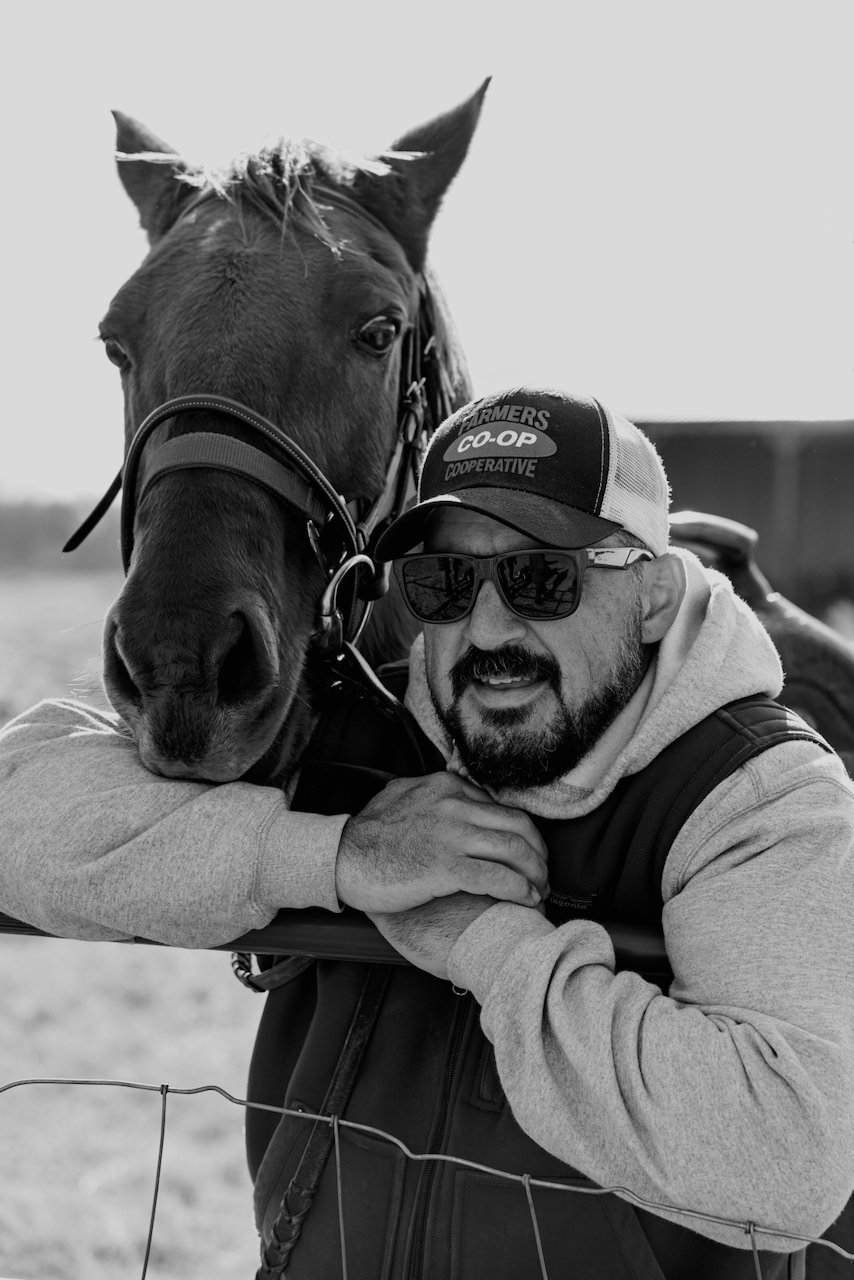
Jared Phillips is a writer and farmer with deep roots in the Arkansas hill country. He and his wife farm above the Muddy Fork of the Illinois River, relying on draft horses for their farm work.
In addition to farming and writing, he’s a historian at the University of Arkansas where he teaches on Ozark and rural history and is working on a history of the Ozark Organic Growers Association and the development of the USDA Organic program.
He’s an alumnus of the Rural Writing Institute, led by Wainwright Prize winner James Rebanks (A Shepherd’s Life; English Pastoral; A Place of Tides).
In addition to his academic book Hipbillies: Deep Revolution in the Arkansas Ozarks, other work can be found in Front Porch Republic, Skipjack Review, the Arkansas Times, and the Arkansas-Democrat Gazette.
episode notes & references.
- Jared M. Phillips: https://history.uark.edu/directory/faculty/uid/jmp006/name/Jared+M+Phillips/
- Tyson Foods History: https://www.tysonfoods.com/who-we-are/our-story/where-we-came-from/our-history
- Walmart Corporate History: https://corporate.walmart.com/about/walmart-museum
- J.B. Hunt History: https://www.jbhunt.com/our-company/our-foundations
- Bill Clinton: https://obamawhitehouse.archives.gov/1600/presidents/williamjclinton
- J. William Fulbright: https://www.senate.gov/senators/FeaturedBios/Featured_Bio_Fulbright.htm
- Dale Bumpers: https://encyclopediaofarkansas.net/entries/dale-leon-bumpers-90/
- Agricultural Integration in the Ozarks: https://encyclopediaofarkansas.net/entries/poultry-industry-2102/
- Jeffersonian Agrarianism: https://www.jstor.org/stable/1404453
- State of Arkansas Office of Outdoor Recreation: https://adpht.arkansas.gov/office-of-outdoor-recreation/
episode outline.
- Episode Opening and Welcome: 00:00–03:00
- Recap of Part One: The Mythologies of the Ozarks: 03:01–06:30
- The Impact of Corporate Agriculture: 06:31–10:45
- Rise of Tyson and Industrial Poultry: 10:46–14:00
- The Role of Land and Loss of Agrarian Identity: 14:01–17:30
- The Political Influence of Fulbright, Bumpers, and Clinton: 17:31–20:45
- Cultural Transformation of Northwest Arkansas: 20:46–25:00
- Poultry, Labor, and the Changing Demographics: 25:01–29:00
- Nostalgia and Its Political Use: 29:01–33:15
- Modern Migration and Latino Labor: 33:16–36:45
- Dr. Phillips’ Reflections on Place and Belonging: 36:46–41:00
- Conclusion and Preview of Next Episode: 41:01–End
episode transcript.
episode preview.
[00:00:02] jared phillips.: The change that we're seeing today is breaking principles of the past. And that's where people that sit in my shoes, sit up and be like, now wait a minute. One thing or another one, one amenity developed, one like piece of ground conserved here or whatever, is not in and of itself a problem.
[00:00:23] jared phillips.: But if it's part of a broader trend that breaks the social system, tears the social fabric, that has sustained the place pretty well for the last 150 years. If that's what's happening. And that from where I sit and the statistics that I look at and the stories that I see, that is what's happening, that's when I get worried about the kind of change that we're seeing.
episode intro.
[00:01:28] mike.: You are listening to the underview, an exploration in the shaping of our Place. My name is Mike Rusch. Today we return to our conversation with historian, author, and Ozark native Dr. Jared Phillips. He's a guide who helps us understand this region, not just by what it has become. But by how it got here.
[00:01:44] mike.: In part one of our conversation, if you remember, we traced the early cultural identity of the Ozarks. We talked about white settlement, agrarian worldviews, and how mythologies of rugged individualism and self-reliance took root. Sometimes as tools of survival and sometimes as tools of exclusion. That story laid the foundation for understanding how the Ozarks began to imagine itself.
[00:02:05] mike.: But in this episode, part two, we step across a bridge, a bridge between histories of labor and civil rights that we've explored in the past episodes and the modern economic and cultural transformation of northwest Arkansas.
[00:02:17] mike.: We're now entering a period when agriculture becomes industry, when local becomes global. And when the demand for labor brings new waves of people, immigrants, refugees, and working families into this place to meet needs that the region's dominant industries have created, Dr. Phillips walks us through that transition. He shows us how vertically integrated poultry systems, the rise of corporate titans like Tyson and Walmart, and the reshaping of land and labor policy dramatically altered the cultural and physical landscape of the Ozarks. These weren't just economic shifts, they were shifts in power and identity, and in the meaning of belonging.
[00:02:51] mike.: We're gonna explore what happens when community centered agriculture becomes corporate supply chain. We're gonna ask how land moves from being held in trust by local families to being managed as assets. And we reckon with the human cost of this rapid growth, cost often paid by those newly arriving in search of opportunity stability in a sense of place.
[00:03:10] mike.: This is not a nostalgic conversation, it's a clarifying one. Because to understand northwest Arkansas today, to understand the housing crisis, the infrastructure strains, and the cultural friction, we have to understand the decisions, the systems, and the stories that brought us here.
[00:03:25] mike.: So today as we begin building the story of Northwest Arkansas, we're gonna ask again, what kind of place are we becoming? Who are we building it for, and what might we still recover from the wisdom, resilience and warnings of the past.
[00:03:37] mike.: Alright, a lot to work through today. Let's get into it.
episode interview, part 2.
[00:03:44] mike.: Lemme back up for a moment. Yeah. Because you mentioned the emergence of the poultry industry. Yeah. And, and I'm curious what that looked like. My own understanding, like agricultural commodities, like tobacco obviously was a part of the forming of these counties. Is this region
[00:04:00] jared phillips.: ish? Yeah, ish.
[00:04:01] mike.: Fair. That's fair. But. But when you talk about the poultry industry, is, is this a significant change to the region? Uh, I I'd love to, can you place that for me?
[00:04:10] jared phillips.: Yeah. I, I probably have the best person I thought about all the deep history of, of the evolution of what becomes Tyson, Tyson Foods. But up until the 1930s, 19, the agricultural, the Ozarks is largely speaking a diversified, self-sufficient agriculture with a couple of, with cyclical trends of this is how we're gonna get rich.
[00:04:32] jared phillips.: It is very specified. Where, so in northwest Arkansas, like apples and strawberries, those are the trends. We don't actually do either of them very well here. We do them in mass really quickly, really fast and for a few years. But then ultimately it's, ultimately the climate is, is just not conducive. It's too hot and humid to do either one.
[00:04:51] jared phillips.: Well, at commercial scale, especially at the time. The, the, that, when you think through all the advancements that we've had in food prep and transportation, stuff like that. Uh, and, and dairy in the 1950s, sixties, seventies. Dairy is gonna be another one of these. That's how you're gonna make money. FES combining Fes Q Seed is gonna be another one of those.
[00:05:07] jared phillips.: This is how we're all gonna do it. The reality is that, uh, we can never do anything at big enough scale. We're far enough until really, generally recently, we're far enough away from any major railhead or commodity markets, stuff like that, that we just can't, and, and, and in particular. The farmers in the interior are too far away.
[00:05:26] jared phillips.: Maybe not as the crow flies, but trying to haul a load of corn from Mount Judy to the nearest viable silo to sell it is just simply not economically viable. So traditionally, grains walk off the farm here, they don't drive off the farm. So you're driving cattle or hogs to market. Things like that. But so it was subsistence plus agriculture.
[00:05:46] jared phillips.: She would say, you gotta work pretty dang hard to make it work here. And as the 1940s, thirties and forties, actually, lemme back up as, as the step is going on, most farmers in the region also have to partake in some type of off-farm work. And usually that's gonna be migrant labor. If they'll, either they're gonna go to the strawberry fields in California, the apple orchards and the Pacific Northwest with the cotton fields in East Arkansas.
[00:06:07] jared phillips.: And so like my family where we were, because we were south of the main uplift of the Ozarks, a lot like people on, especially on my, my aunt's husband, so my uncle's side of the family, they would go to the cotton fields. People in this part of the state would go, uh, appear in the northern, northwestern west state.
[00:06:21] jared phillips.: They would go out to the West coast and work in strawberry fields and work out there. Uh, which is a pattern that we see after the Second World War. A lot of those pe, a lot of Archies who go to war, especially if they're stationed in the Pacific Theater where they muster out, they might come home. Grab family and then go back and either work in ag or work in the oil fields, which is also what my family does.
[00:06:41] jared phillips.: And then some of them come back, you know, after a few years, you know, for any number of reasons. Um, and so my point is that its agriculture is a dicey game at the time. You can't get over the hump necessarily. You know, Brooks Blevins. So Brooks Blevins is a endowed professor of history at Missouri State.
[00:06:56] jared phillips.: He is the authority on OS Lark's history. And I might get the statistic a little bit wrong, but I, but if I recall right, he said in one of his books that basically by, it was not uncommon to find draft animals powering the majority of Ozark farms as late as the 1960s. So anyway, think about that in the context of the nation's agricultural story.
[00:07:17] jared phillips.: Right? Like that. We are, we're still trying to, we're competing in a market increasingly dominated by ever larger tractors with a pair of mules. And now, don't get me wrong, I have a, a strong affinity for working stock, but that is not a fair comparison at an economic, at the marketplace level. You know, I cannot, you just can't, you can't produce it much, right?
[00:07:38] jared phillips.: So when Tyson Foods and all Tyson is like the only one, there's a lot of these other mom and pop shops that, that, that are coming, the poultry shops that are coming across the south. At the time when Tyson does a Henry Ford and perfects the system through from the 1930s up and through the, the middle part of the 20th century, in a way it's a little bit of a, it is a little bit of a silver bullet solution, but it is a incredibly reliable one because as more and more Americans hit the middle class and as they move out of a rural countryside, they're wanting to eat meat.
[00:08:08] jared phillips.: If it meat consumption globally, we know that the more people hit the middle class, the more meat they eat. Chicken became cheaper than beef and Tyson does that for the world for and those poultry, poultry houses, you could run a couple of poultry houses and still combine fescue or grow a corn crop or have a small beef cattle herd or a small dairy barn.
[00:08:28] jared phillips.: I. And so you could maintain at the time that diversity that you were used to in your farm. And I had a farmer mentor once told me that on a farm you cannot rely on a single enterprise. You need to have multiple enterprises because you never know when nature will take one of the enterprises away from you.
[00:08:43] jared phillips.: And so you could do that, but you could do it with a guar with more of a guaranteed paycheck that that because you would sign a contract to grow out this group of birds and know that as long as you were within whatever metrics that they had set up for, you're gonna get a pay a paycheck within this range.
[00:08:58] jared phillips.: You could budget, then farmers don't get to budget, especially not in 1930. They just have to take whatever the world throws at 'em. And so that it is a sea change. And as Tyson gets bigger and bigger, it's able to take the way that agriculture will work and the Ozarks associated it. It could take advantage of fewer and fewer people on the farms as the farms are getting bigger and bigger and there's still diversity on the farms, but it is a much sub simpler diversity.
[00:09:22] jared phillips.: So you'll see poultry houses, cattle. And then either beep or dairy, increasingly beef, and then hay operations, commercial hay
[00:09:28] mike.: operations. So this sounds like it starts to become this scalable idea, which you had mentioned before, largely didn't exist in this area, but at the, at the center of that, like what, what's gonna drive that ability for this agricultural enterprise to move forward?
[00:09:46] mike.: Any agricultural
[00:09:47] jared phillips.: enterprise has to be based on its land period, and no Ozarks. Of the way we're built GE at a geologic level. We cannot do some things and we can do other things. And when the American agribusiness sector, so agribusiness is this term that's developed in the 1950s. There's a big, there's a horribly boring book called Agribusiness.
[00:10:08] jared phillips.: I can't remember the subtitle of it now. But when it's coined, it starts to lay out like what will become the Tyson model of a vertical or semi vertical integrated company, much like Teddy Roosevelt was trying to regulate against. But agriculture has unique exceptions in a lot of these things. But the landscape, it's easier for the landscape to support a a chicken house or a Turkey house in a confined area and produce X amount of calories for X amount of cost and give X paycheck than it is for that same space to pay out as well.
[00:10:37] jared phillips.: You just can't do it. You just can't do it. So you've
[00:10:39] mike.: got this period of time where you've got this idea of who someone from Arkansas is. Yeah. You've got, uh, now something that appears to be in the beginnings of an agricultural scalable economy. Right? Can we move into these periods maybe rather rapidly?
[00:10:56] mike.: And not to get the cart before the horse per se, but now we have someone who's a president of the United States. Yeah. Who's from Arkansas. Yeah. Help me, how do I even think
[00:11:06] jared phillips.: about that? You have to remember that before Bill, there was Jay William Fulbright, and so Jay William Fulbright, you're right, is our junior senator.
[00:11:13] jared phillips.: He's the junior senator his entire career. Which is amazing to me. Uh, but he was the chair of the Senate Foreign Relations Committee, famously tangles with Lyndon Johnson over the Vietnam War, creates the Fulbright Peace Program. He's his own complicated legacy, right. As a senator, he signed onto the Southern Manifesto, which was pro segregation.
[00:11:30] jared phillips.: So he was, he his, his legacy is complicated, best case scenario, like most men of his time, right. Doesn't excuse him, but we should, he is not dissimilar to many of the men that he was in the room with. But Jaylen Fulbright is, he's a powerful force in Arkansas politics. Even after he is, he loses election and, and Dale Bumpers will, will go in and we can't forget Dale Bumpers either.
[00:11:54] jared phillips.: Bumpers is a part of the, sort of in the southern politics, we talk about the class in 1970. So it's Jimmy Carter, Dale Bumpers, I can't remember the third one now,
[00:12:01] mike.: but, but must have been a vice president or something. Must have been a vice
[00:12:03] jared phillips.: president. Yeah. But you get Dale Bumpers, who is governor of Arkansas, will become the chair, the chair of the Senate Agriculture Committee, which is one of the most prestigious committees you can be on Really?
[00:12:12] jared phillips.: If you're somebody like me, at least, like it's center for relations. And then I think for me, agriculture, that's the bias based on what I, the things that I pay attention to. But, and then you get Bill Clinton who rises up through the ranks, right? He, so, he and, and don't, like, he Bill is Arkansas and yet not Arkansas all at the same time.
[00:12:28] jared phillips.: 'cause he's, he's a poor kid from Arkansas, gets a scholarship and financial aid to go to Georgetown. Ends up a Rhodes Scholar, comes back, he's governor. He's a law professor, then he a governor, gets kicked outta office after his first term by Frank White, who gets into a fight with a hippie in, in, in Yuri Springs.
[00:12:46] jared phillips.: But then Bill comes back and then he becomes president. Right. And so Bill can bounces things. He confounds things on. But Bill, in a way is very, I would say, and this is off the cuff, I don't have a ton of research to back this up. So this is me speaking just as an Archie who, yeah, I don't
[00:13:00] mike.: know where I'm going to this question, but it's super interesting.
[00:13:02] mike.: Yeah.
[00:13:03] jared phillips.: Yeah. So Bill, in a way, he represents what Arkansas is becoming. He's Arkansas's aspirations in a way, right? He's neither the old, he's the folks he charm that keeps us on tv. He keeps people coming to Eureka Springs. He's got, but he's got the education and the sharp political savvy, uh, with j William Fulbright.
[00:13:21] jared phillips.: He's got the, he's got the savvy of, and the ear of people like Sam Walton and the Tysons and others. And so he represents, I think, what a certain segment of Arkansas life hoped would be. The future of Arkansas. And I don't know. I don't even know how to define what they thought the future would be. I just think when you stand back now, we're far enough away and we can stand back and we can look at his career, uh, and look at his policies in the White House, but okay, like I, I could, I could see some of these, like how some of these conversations were occurring behind, closed the doors of Arkansas to throw support behind him.
[00:13:59] jared phillips.: But I think he represented an aspiration for what this state could become. I do not think the state has become that, nor do I think that it should or should not again, 'cause I don't really know what the aspiration was. But if it was to be something that can hang onto to this folk clee charm, yet be politically savvy in an incredibly complicated international world, there's a part of that.
[00:14:16] jared phillips.: Yeah, we should be that. But we already were that the ar Arkansas was never an unconnected, ignorant place. The Ozarks were never unconnected and ignorant. The Ozarks were less connected because of Bates of geography. But we had to be connected. We're, you know all that story about agriculture I just told you a minute ago.
[00:14:33] jared phillips.: We're connected to every agricultural current in the country. You know exactly what's going on. We're also connected intellectually, the northwest Arkansas, between Yreka phrases and Fayetteville. We have, we are hosting the, some of the perons of arts and letters in the nation throughout the entire 20th century here.
[00:14:49] jared phillips.: We're not unconnected on any front, but it's a weird, it's a weird thing. It's weird state of contradictions. Hmm. And maybe that's part of what makes us a little bit exceptional. We, every state has its own contradictions. We just seem to have a whole lot of impact into a little bitty area.
[00:15:03] mike.: So let's, maybe let's back up for a moment because I, I think before we get maybe into where we are today, there's an emergence, uh, of a huge, what is now today the one of the largest companies in the world.
[00:15:13] mike.: Yeah. But that wasn't the root of that. That wasn't the conditions by which probably it was started under help us place the really, the beginning of what today now is one of the most powerful forces in our region. But where did that. What are the roots of that? So we're talking Sam Wal at Walmart, right?
[00:15:30] mike.: Yeah. And so yeah, that, that would be, that probably would
[00:15:32] jared phillips.: be what I'd
[00:15:33] mike.: be suggesting. Yeah.
[00:15:35] jared phillips.: Yeah. Walmart gets its origins in a similar fashion to Tyson. It's not, it doesn't have these, I'm sure in the wildest dreams at 3:00 AM in the morning, Sam's like, wouldn't it be cool if we could, could run the world one day Just, but I don't know if realistically he ever thought that would happen.
[00:15:50] jared phillips.: I think he's like a lot of these first generation entrepreneurs that he's, he's. Gets lucky time it, again, there's plenty of hardship in the Walmart store. You can go to the, you can go to Walmart's webpage and learn all of their story history there. And I'm not a Walton, I'm not a single Walton acolyte, and so I don't, I'm not up on all of the particulars of his biography.
[00:16:12] jared phillips.: But what Walmart will, what I can say is this. What Walmart will do is Walmart is try to answer a need like Tyson. So the 1970s and the 1980s times are tough if you are not a wealthy American, right? So we've got stagflation in the 1970s, and despite the promises of Reaganomics, it actually doesn't help rural America.
[00:16:30] jared phillips.: The 1980s. This is the decade of the farm crisis. There's a reason why we have farm made concerts still to this day. It begins in the 1980s, and what Tyson is doing is offering, is trying to offer some measure of security in the rural countryside for folks who are trying to stay out there and farm. They wanna make money.
[00:16:45] jared phillips.: That's their job, is to make money. So they're trying to find a way to do that through agriculture. And Walmart is trying to find a way to make money, but also to put goods in the hands of people who are struggling and that's save more, that's the, that's their thing, right? Buy more, pay less for it. And they do a really good job at it, and they really do through, especially when you have lots of little Walmarts everywhere.
[00:17:07] jared phillips.: They're not just providing places for people to buy stuff at, at a more cost effective rate, but they're also providing employment like the Walmart. The origins of Walmart are, are not nefarious, right? The origins of Tyson are not nefarious. The origins of Mon Anto and Bay are not nefarious, right? Things evolve over time.
[00:17:23] jared phillips.: What I think happens is in the 1990s as Walmart. Becomes this behemoth, uh, I think it loses sight of where it came from, and I think that as a result of that, there is a disconnection between the halls of power within the Walmart world, be that Walmart corporation or the foundation or whatever that may be between what they think is good and necessary and useful.
[00:17:54] jared phillips.: What the region thinks is good and necessary and useful, and sometimes that disconnect is healthy and good, and sometimes that disconnect is problematic. I get more interested in the Walmart. The corporation doesn't really impact northwest Arkansas until Walmart becomes the behemoth.
[00:18:12] mike.: Yeah.
[00:18:12] jared phillips.: Walmart of the 1980s.
[00:18:14] jared phillips.: Has an impact in the region. But when, I mean, even if, when I was in high school, I go, I went to high school in Springdale. Like we didn't go to Benton County. There was nothing in Benton County. Yeah, you sure? Walmart was headquartered there, but Tyson was in Springdale. So what? So it's the late nineties, early two thousands.
[00:18:28] jared phillips.: It's like when they decide that everybody has to move here to work for 'em, that's the change.
[00:18:34] mike.: As I listen, I think one of the things that I've heard you say is we, maybe today we have a tendency to think of the Ozo as a new place, but every day that we've talked about. You're really sharing some really, the deep roots and fabric of at this place has been, I, when we think about this idea of the Ozarks as a new or an old place, what, give us some context there.
[00:18:53] jared phillips.: Yeah. The first thing that comes to my mind always is there was an old back to Thelander. Her name was Sue Hubble, and she became a very famous author. She's passed away now, but she's famous author. And her books would end up on the list of people like Annie Dillard and Pink Pilgrim of Tinker Creek and Walden by Thoreau.
[00:19:08] jared phillips.: And she said in her book, A Country Year, the Round of Country Year. The Ozarks are being continually, are continually being discovered. The Ozarks are continually being discovered, and I think that's, that's indicative of the whole history of the Ozarks. And so we're a new place in the sense that people right now are finding out about us, but we've always been here, but a new kind of people are finding out about us.
[00:19:26] jared phillips.: And so folks interested in outdoor recreation, folks interested in in entrepreneurship, whatever that means, are interested in US books that like art museums are learning about us now. We're a new place in that we're. Compared to a lot of other places in the country we're really late in being settled in any kind of intensive way.
[00:19:45] jared phillips.: And so we don't have the long legacy of, of mountain settlement like Appalachia. So you can go to Appalachia and there's big stone walls that make you think you're back in English countryside somewhere. We have some stuff like that, but it's too and far between and they're not nearly as well done, and we're new in the sense that we, it's only been in the last 40 years, 30 years that we've had.
[00:20:04] jared phillips.: To global economic engines really settle into their being proud of where they're from. I don't, maybe I'm proud, but be owning where they're from in a literal and in a figurative sense. Yeah.
[00:20:17] mike.: As, as you think about the, this identity of the region. Yeah. Um, obviously we're going through a tremendous amount of change.
[00:20:24] mike.: We've always, it sounds like we've always been going through a tremendous amount of change. From that perspective of the history that you've been studying and looking at, uh, I'm, I'm, I'm curious, how, how do you assess where we are today with, uh, so many new people coming to this area? Uh, a culture that we claim to want to preserve, but I'm gonna be honest, I live in Bentonville when I even say that it's, I, I recognize the difference in what I'm saying, in what you're describing.
[00:20:52] mike.: So maybe I'm part of the problem, right? But. How, how do we even start to think about making sense of this today For people that are coming? For people that are here? Yeah.
breaking principles of the past.
[00:21:04] jared phillips.: One thing I would say is that change is normal in history and, and the Ozarks, I have a, been, have been a place that has experienced change continually.
[00:21:11] jared phillips.: But what I would say about the change that we've seen since say the end of the civil War has been, it has been change of of form, but not principle. And what I mean by that is that the currents that held Ozark communities together may have looked a little bit different, but they were the same. And so the small scales, pseudo agrarian kind of ideas were there, not necessarily, 'cause everybody's reading, Thomas Jefferson isn't excited about, but just because of the realities of the landscape.
[00:21:43] jared phillips.: That small, decentralized idea, is there a a, a landscape that is, we're doing new changes as technologies and stuff come through, but it's a landscape that's, the changes are all coined back to linking to working the landscape. I see. And so those changes that, that's important to point out because the change that we're seeing today is breaking principles of the past. And that's where people I think, that are on and that, that sit in my shoes, sit up and be like, now wait a minute. One thing or another one, one amenity developed, one like piece of ground conserved here or whatever, is not in and of itself a problem. But if it's part of a broader trend that breaks the social system, tears the social fabric, that has sustained the place pretty well for the last 150 years. If that's what's happening. And that from where I sit and the statistics that I look at and the stories that I see, that is what's happening, that's when I get worried about the kind of change that we're seeing. That doesn't mean that I think change is bad. So some I've been accused before of being like, you hold up, like you, you want this nostalgic vision of the Ozarks.
[00:22:53] jared phillips.: I don't, because what the full story of the Ozarks is a troubling story. I don't want everything from the past. I only want things that are useful from the past. And so what I mean by is the principle. I don't think that everybody that lives in the in the oex has to be a farmer. We don't have enough ground for that to be the case.
[00:23:07] jared phillips.: We never did. And not everybody wants to be a farmer, and that's fine, but I do wanna see the maintenance of these memberships, this whole that. To borrow a phrase from Wendell Berry, I do wanna see a creation of a new way of including disparate views into these memberships, right? Because that's the thing that we didn't do well in the past, that we need to be challenged by as we go forward in the future.
[00:23:29] jared phillips.: But we can't do that if everything that we need to hold onto from the past is being broken.
breaking things.
[00:23:36] mike.: I'd love to hear what you mean by that. Either, either an example or when we say we wanna preserve our community, yet we're breaking things. How, how do I think about that?
[00:23:47] jared phillips.: Yeah. So a simple, I mean, there's lots of really simple ways to think about it, but a really simple way to think about it is actually land values and, and this is an unintended consequence.
[00:23:56] jared phillips.: It it, it should have been a foreseen consequence, but for whatever reason, it was not, and I have a hole. Thought about that, I'm sure, but, or I could get into that. When it was, when, when it became the policy, the corporate policy for Walmart to ask so many of its folks to come and live on site in northwest Arkansas, that's great for them, right?
[00:24:13] jared phillips.: It makes their their life easier. They're strong enough, they can demand that. The ripple effect of that is that as over the decades as this builds up, this massive people builds up all of them bringing unique and interesting things to the region. But when you get all these people that run into the place. A place that has historically had low property values because we are a poor place historically, we're like eight to 10 percentage points poorer than Appalachia. Right. We can no longer compete to own our own ground any longer. Right. And so what that means then is that as farmers are trying to figure out how to expand their operation or pass that farm on to the next generation. There is not an economically viable way to do that because they will put the next generation in so much debt, they will never come out of it again. If you have somebody that's moving here that wants to start a farm, they read, they saw some old video, or they read a book, or they, I'm gonna go to the Ozarks to farm and they start looking at the price of land, they can't do it.
[00:25:08] jared phillips.: You, you, you, you can't do it. Right? And so our, the people that have been here. For generations are priced out to the point that you can't even easily get, you can't even easily get back to the cemetery for decoration day. Right. If it becomes, if it, it, our, our communities are being stressed in such a way that it's difficult for us to even observe the rituals of caring for our dead. And that's, that feels heavy handed to say and, but it is. Really that simple sometimes and that kind of like bone deep heart-wrenching to a lot of folks. And, and, and this is a thing that I don't, it it, it's not a thing that, it's just, I'm upset about something like, this is a story I see in Western Washington County. This is a story I see in Newton County. This is a story that I see in Stone County. This is a story that I see in Tanney County. This is a story that I see a, you know, Howell County. This is a story across the region. 'cause it's not just what's happening here in northwest Arkansas. We focus on it because we have the two big companies.
[00:26:03] jared phillips.: Springfield has got Bass Pro.
[00:26:08] jared phillips.: Is this an urban versus rural problem?
[00:26:12] jared phillips.: It in a really simplistic way, maybe these values, I think you could find them in an urban space and in a rural space because what I'm talking about is rural gentrification. Gentrification is occurring here in Fayetteville and in Bentonville and in Springdale and in Rogers. Just as much as it is, it it really, honestly, at a faster rate. Than it is in the countryside. What we're experiencing in the countryside right now is what Fayetteville and Rogers and everybody were experiencing five years ago or even earlier. And so these are problems that we're seeing I think across the board, the, some of the populations that are being hit in the urban centers are different. And so you're gonna see a lot more marginalized communities in an urban area becoming even more marginalized.
[00:26:52] jared phillips.: Like, I'm not gonna, I'm not gonna sit here and tell you that that white guys in the countryside are a marginalized population. We are not a marginalized population. If you're a, a Latino immigrant or a Marshallese immigrant that is trying to make it work, live in East Springdale and you're making a salary at, or making some sort of a wage at a processing plant, and now your rent is jumping by double digit percentage points, where do you go and still be able to commute to your job?
[00:27:20] jared phillips.: Like that's a breaking of a community that's been there for several generations now. This thing is hitting us all. It's hitting us all. It's not just hitting one group or another. We just experience it in different ways in our place, and that's where the conversation has to include all of us. There's things that are needed that are distinctly rural, things that are needed that are distinctly urban, but we're not gonna get either if we can't figure out what, where that common ground is that we could talk
historical lessons.
[00:27:43] mike.: are, are there lessons that we can look historically and say. This is why we have to do this, or this is what we could expect based on all the conditions of how we got here, but maybe where we are today.
[00:27:56] jared phillips.: Yeah, I think so. One of the lessons is, would be actually us accepting that we made some wrong turns. In the past we made some, as a, as communities be either because we didn't make a decision or we made the wrong decision a mistake was made and now we're paying the consequences of that.
[00:28:12] jared phillips.: There were off-ramps in the story of how, like in the story of how agriculture moves in the Ozarks that have had that, had we taken some of those off-ramps, we would've seen the maintenance of small communities last much longer. They may not have lasted forever, but they would've lasted much longer. The farmer population could've stayed longer. Had we done certain, had we prioritized certain things over the things that we did prioritize. There were off ramps in county planning and in urban planning across the region, not just in our home counties here, but across the region that could have been taken as soon as Walmart issues, their order to say, you guys can move here. Everybody knew what was coming. Within a matter of a few years, everybody saw the writing on the wall and nobody stepped up to the plate by and large. And today we still see a failure in, in, in thoughtful planning at the urban and the rural level.
[00:28:59] jared phillips.: And so we see that right now. Washington County is right now going through a big road conversation about how we resell and all of our, a lot of our highway frontage and the county. And it's, and when we look at it. On the one hand, oh, we need to, oh, I understand. The logics, the more stuff we can zone commercially, the more tax-based we're gonna get.
[00:29:15] jared phillips.: What they're not understanding is that as soon as that commercial development starts to occur on these roadsides, it's gonna create in, or like county level infill, which is then gonna create areas that are gonna be incorporated into the nearest township, which pulled out of the county revenue pocket.
[00:29:28] jared phillips.: So the county will make itself poorer in the long run. And so there's countless studies across the nation that prove this. But some of the best ones are done by the American Farmland Trusts, if you wanna look at some of that data. But, um, it's just, we have to accept that we just, the first part of fixing things is accepting that you made a mistake, right?
[00:29:45] jared phillips.: And it doesn't seem to be, uh, maybe a willingness to do that. And I think once we, once as a community, were able to do that, Naomi, we can start to look at some, what were the options that were there historically? What were the options to do different things? And so we know that agriculturally there was an option.
[00:30:00] jared phillips.: That had been, was highly successful throughout much of the mountain south, that that would've helped like sustain small, uh, decentralized, that that mythic idea of the Ozark were small, decentralized farmers who were just like hardscrabble. There was a federally supported option that worked for the better part of the 20th century. That would've been, you could have retooled that a little bit out here while we had our guy in the White House and we didn't do it. We could have said no to, uh, like a global corporate structure. We've always had that option. We just never took it.
nostalgia.
[00:30:30] mike.: We think about where we are today. I think there is this feel like, are, are we talking, and you even mentioned it earlier, this idea of nostalgia, but I'm, I've heard you say that nostalgia is dangerous in many ways too.
[00:30:41] mike.: Help me understand what you mean that,
[00:30:42] jared phillips.: yeah, I think that nostalgia, and I would bet most historians feel this way too. I think nostalgia is probably one of the more dangerous forces that we can marshal. Um. It makes us feel good. We can wrap it around ourselves and we feel good about it. But the easiest way to explain what I mean by nostalgia is dangerous is the, we're in the South Arkansas, the southern state, and the lost cause mythology is a nostalgic view of history. So nostalgia is a view looking backwards. Through highly selective rose color lenses about what you think the path was. So the Lost Cause, the South was a better place before the Civil War, which we know is absolute, absolutely incorrect. Right? For just, so, we don't even have time to list all the reasons why that was incorrect.
[00:31:22] jared phillips.: The 1950s are this mythic place that's a nostalgic view. The 1950s were not that you were a black person or a woman. The 1950s were not for you. Come along. Right? And so that's why nostalgia makes us lazy and nostalgia lets us accept things that are dangerous for all members of our community.
[00:31:40] jared phillips.: The hard part about making arguments like I make is that because I am pulling from the past, say there is this thing in this past or things in the past that are of value and that we are losing them and that we need that, that we should work harder to keep them or to find a way to revise them, is that I can walk, I can walk very close to that, or at least to somebody that does.
[00:31:58] jared phillips.: It isn't inside my brain. I'll be right up on that line of it. Tesla. Oh, you just want to go back to this old way of being because you just don't like change. Okay. I don't like change, but I'm a 41-year-old white guy. Of course I don't like change. Right? But what I'm really meaning here is that there, this, I wanna see preserved from the past.
[00:32:17] jared phillips.: These things that were the best of us, of the community and these things that were the best of us, of a community were the, the neighborly traits that allowed us. To accept lots of people that did move into the place over the years, over the 20th century. But I also, because I, because we don't wanna slip into nostalgia, like I can tell on the one hand we want this, I want this neighborliness to be preserved.
[00:32:43] jared phillips.: When the back to the land community, when the wild eyed hippies moved in here, they were relatively well received and they became integral parts of the society, uh, of Ozark society. When. Latino and Marshallese immigrants came in and were starting to work in the poultry factories. It was a little bit of a rocky road, but ultimately they became accepted parts of society by most well-meaning people. That has not always been our history. And so if we just take a, I want Ozarks, I want us to be the same kind of neighborly community that we were in the 1920s, well, 1920s, we weren't nice to people that didn't look like us. I don't want that. That's what we're talking about. We're, we're thinking through like a, an evolutionary, I want us to, we had a way of living in our space that accepted the limits of our space, accepted that the space was held in common for us.
[00:33:29] jared phillips.: All that we were all common caretakers of it. And that's a little bit of an idealized vision of the past, and I understand that. But when we look at, when we go through and we look at the folklore, we read the community histories, we listen to the stories from our grandparents and our great grandparents. That's what it is. We're talking, there's, there are community festivals in every community. So this, we're walking into fall right now as we record this right now, beginning and across the Ozarks are sorghum pressings. We're gonna have one at my farm here in a few weeks. That's a community event. That is not the job of one family.
[00:33:59] jared phillips.: One family could do it, but boy, you'll be burned out. This is, people come together to do this. We're traditionally, we're walking into the season of hog killing. Traditionally. We're walking it, we're finishing up hay season, beginning fall, harvest. These are community events, right? The school calendar is going, and so we're at for a century almost now. We've been everybody congregates at the, at the altar of football on a Thursday of, I was there last night to watch my boy play football. So these are community events that that, some of which we can figure out ways to adapt and move them through. Football is probably not going anywhere in the American South, but losing a familiarity with something like production of sorghum or the, the butchering of a hog isn't just about a quaint folk custom. It's about closeness with a landscape that is traditional for us. That taught us a lot and kept us healthy and strong for a long time in difficult times.
[00:34:51] jared phillips.: It's great. Thank you.
outdoor recreation.
[00:34:52] jared phillips.: And I would say that's a different relationship than a recreation provides. No, please explain So. Outdoor recreation has always been a staple in a, in Ozark life. Traditionally it would be some paddling, but mostly hunting and fishing at the end of which that the relationship that you're getting through your recreational output is still feeding into that longer sense of membership.
[00:35:15] jared phillips.: Right? The landscape is feeding you. You may not live in the landscape all the time, but you're going out there and you're finding some measure of connection in that place, and you're coming back with something from that, and you can make the argument, you can get some of that from somebody through the long form outdoor recreation pursuits, like paddling, the whole Buffalo River, or a large chunk of the white or something like that.
[00:35:33] jared phillips.: The way that we think about outdoor recreation today as a nation is a far more extractive experience than a relational experience, and so you go to extract something. Increasingly, I think it's, it feels like you're extracting an Instagram post. As opposed to extracting in a better way or, or as opposed to learning how to relate with your community better.
[00:35:53] jared phillips.: And that's the, that's the distinction I would say in our traditional understanding of the land.
[00:35:58] mike.: What you're talking about are these traditions of a community and in a place like this, which has gotten the new and old, and how do we think about both the value of the existing traditions, but are, are we capable as a people of creating new ones or. Like how do we venture into something that is foundational to the part of our community that we don't wanna lose, but how do we include people maybe who are new or introduce these ideas to people Yeah who are new here who are coming.
[00:36:29] jared phillips.: Yeah, that's a great question and I don't know that there's one right answer for that, to be honest.
[00:36:33] jared phillips.: I think. Part of it is on the back of the folks that are pushing for a lot of the change that we're seeing. It's if they're gonna demand a certain style of change and they're gonna invest in, in that, then if, if a fair ask to say, Hey, you should also probably put some skin in the game in protecting what it was that made your grandfather great-grandfather built des company here.
[00:36:57] jared phillips.: That's fair. I would say, but then, then a good part of it's also on us as regular old community members to ensure that we're being welcoming to new folks that are coming in and, and figuring out ways that we can figure out what's important to us, but then also work within their constructs, work within their system as well.
[00:37:13] jared phillips.: I think you've, I think we can see, we're starting to see. Different ways of being in that. So we're starting to see at the rodeo, the Ozarks, we're starting to see like a, a more and more increased Latino presence just in simple things like the parade, the grand parade at the beginning to even some like the different, like showcasing of skills and stuff that you see.
[00:37:30] jared phillips.: We're seeing that in the celebration of Marshallese boat building. That's becoming a part of the regular cultural calendar calendar of our place there. The, the food culture of folks that are coming into the region is becoming a regular part of our food culture. Like when you talk about going to. Like where you want to go eat in Springdale is no longer a question of do I go eat at Susan's or do I go eat at Neil's?
[00:37:52] jared phillips.: It's maybe one of those two plus a PAIA Plus for, it's so like, it, it is changing organically over time. That's the other thing I would say is that one of the reasons why I would say, I don't know that there's a a right answer is that this is not a process that can just happen. It will, cultural change occurs over time. It's, and it's a long process. It's our job as longstanding locals to get out of the way. Or, or rather not to get outta the way, but not to be prejudicial in what coming in. And I think it, it behooves folks that are moving into the place to come in gently and to remember that they're not, they weren't here first.
[00:38:26] jared phillips.: Not that we were here first either, right? We didn't come in gently to the place. It's the lesson that we're having to learn from history, from our mistakes in the past. Uh, how to make space for people to come in gently, not react so fast to new things that people don't feel welcome. To share their traditions, to share what they want.
[00:38:43] jared phillips.: It, it's just a balance. It's a hard bath and I don't know, I, I don't know that you'll ever, we will ever find a perfect bath. It will always be shifting. It should always be shifting.
[00:38:51] mike.: But it sounds to me, and correct me if I'm wrong, that idea of taking, and, and you mentioned this earlier, like the spirit of welcome, that that happened in this place, that is a part of our history.
[00:39:00] mike.: Mm-hmm. It is a part of our culture. Mm-hmm. We really have an obligation to continue to practice that, to be welcoming, which sounds in a really picture, picture, perfect world, we're building a community or we have the ability, or we have the chance to build a, a very inclusive community for people want to be here.
[00:39:18] mike.: Yeah. If we can be mindful of, and you said this, if we come or if people come, they need to come gently.
[00:39:25] jared phillips.: Yeah. I wish it was my phrase. It's not my phrase. I can't take credit for it, but it's dragon wagon. Yeah. One of the old, she moved here and she, it was her phrase in a, in an article she wrote years ago.
[00:39:36] jared phillips.: Yeah. That's to a certain degree that does. That means the Ozarks are no different than any other place on the planet. Like I. How do we incorporate what has been here with what is coming in a way that that preserves and goes forward at the same time? It's an impossible balance,
[00:39:51] mike.: but, uh, I ask this to everybody, and this is the story of Northwest Arkansas, but I'd love to know, what are your, what are your fears for this place
[00:40:03] jared phillips.: and my fear? That's a hard one. I think my fear for this place is that my kids will have to watch what I've had to watch happen with the place. Then I've watched a place change into something almost unrecognizable, and I hope that we can learn how to slow things down and ask the questions that need to be asked that nobody was willing to ask when I was a kid growing up.
[00:40:28] jared phillips.: Because everywhere I knew was an open space in this, not everywhere, but so many places that I knew was open spaces. As thriving farms, as small little towns are now gone, buried underneath everything that's changed here. And I hope, my, my fear is that my kids will have to see, keep seeing that.
[00:40:45] mike.: One of the things that we've, they're working through as a part of all of these conversations has been this idea of wholeness.
[00:40:52] mike.: What does community wholeness look like? Community wholeness. Oh my goodness.
[00:41:02] jared phillips.: There's a, what I would say is a community wholeness in those arts has to include those of us who are not interested in
[00:41:14] jared phillips.: upholding the way development is going. Our voice matters as well, and it's gonna be uncomfortable both for us and probably for the 'cause, for the folks that are, would have to listen to us. And I do mean listen to us. Our values are just as value are just as important, and our hopes and dreams for our families are just as important.
[00:41:32] jared phillips.: And in some cases I would make the case that they are potentially more primally significant because they can, they concern not just like fads of human nature, but the way that humans think through the production of what sustained them.
[00:41:50] mike.: Dr. Phillips, Jared, thank you for your time. Yeah, absolutely. Uh, I'm incredibly, yeah, thankful to be able to sit with you.
[00:41:56] mike.: I have a feeling I'm gonna be coming back to you a lot, so you may have to like, I don't know, block my number or something. But yeah, the work that you're doing incredibly important. Thank you for your perspective, your history, really allowing us to enter into a deeper story of what this region is and what this place is, and.
[00:42:14] mike.: Allowing us, honestly to, to find our place in it. It feels like an invitation to do that. Yeah. And so just incredibly grateful to be able to sit with you. Yeah. Happy, happy to talk anytime. Yeah. Alright. Thank you. Yeah, thanks.
episode outro.
[00:42:27] mike.: Well, an incredible thank you to Dr. Jared Phillips for continuing this journey with us, helping us trace the story of the Ozarks, not just as geography, but as a living, cultural and economic project that's still unfolding.
[00:42:40] mike.: In this episode, we crossed a bridge from the mythologies of rugged self-reliance to the realities of corporate consolidation. We saw how poultry integration and the rise of global brands like Tyson and Walmart have reshaped this place, concentrating power, altering land use, and pulling in waves of new people whose labor would quietly keep the systems running.
[00:42:59] mike.: We were reminded that the story of northwest Arkansas isn't just a story of growth. It's also a story of loss, of agrarian lifeways, of access to land of regional communities built on mutual dependence rather than market efficiency. And we were invited to ask hard questions about what it means to build a region where economic opportunity doesn't come at the expense of dignity, inclusion, or belonging.
[00:43:21] mike.: This conversation also connects us back to the threads of labor and civil rights that we explored in the recent episodes, how race and policy and power have always shaped who gets to belong, who gets remembered, and who gets left out.
[00:43:33] mike.: And it points us forward to the next chapter in this story, the rise of Latino immigration in northwest Arkansas. Because the labor demands of industrial agriculture and construction didn't disappear. They simply evolved. In the late 20th and early 21st centuries. As corporations sought to keep costs low and growth high, thousands of Latino workers, many of them from Mexico and Central America, were recruited, invited, or pushed into this region to do the essential work that built and sustained the modern Ozarks.
[00:43:59] mike.: These migrations didn't happen in a vacuum. They were shaped by global trade policy, local zoning decisions, and historical patterns that made immigrant labor both desirable and potentially disposable.
[00:44:11] mike.: In our next episode, we're gonna sit down with Dr. Steven Rosales, a historian from the University of Arkansas, to explore this more deeply how Latino communities arrived, how they shaped the cultural and economic life of the region, and how the promises of opportunity have often collided with the barriers of belonging.
[00:44:28] dr. steven rosales.: This is the magnet. It's always has been. This is the melting pot. This is where you can go, you, you get exploited along the way to get here. There's obviously something about this country that has served as a magnet for people for all over the world, if not for themselves, at least for the children, right? To set up a foundation for posterity and I don't know why you would be surprised that also hasn't included Latin America, but who you are, where you come from, how you look plays a role in how receptive people here are to you.
[00:45:01] mike.: I wanna say thank you for listening. I wanna thank you for being the most important part of what our community is becoming. This is the underview, an exploration and the shaping of our place.