
the president & religion in the south with Dr. Jared Phillips.
Dr. Jared Phillips explores the rise of Southern Evangelicalism in politics, tracing how faith, race, and power intersected through Jimmy Carter’s presidency and shaped belonging in the Ozarks and beyond.
season 2, ep. 34.
listen.
episode notes.
Religion in the South is more than tradition; it’s a force that has shaped politics, belonging, and identity across generations. In this episode, we return to Dr. Jared M. Phillips to ask for a historical view to try and understand where that power comes from, and how it takes root in the South and places like Northwest Arkansas?
Throughout the season, we’ve heard guests reference the role of faith, from schools to city planning, from community resilience to systems of exclusion. And while no single episode can capture the full complexity of religion in the South, this conversation asks us to trace the beginnings. What is the origin story of evangelical influence in American politics? How did race, region, and religion become entangled in the modern South? And what can we learn about the Ozarks, and ourselves, by looking at one of the most significant turning points: the rise of President Jimmy Carter?
Dr. Phillips helps us unpack how Carter’s 1976 election opened the door for Southern evangelicalism to enter the national political arena. But the story doesn’t end there. We explore how faith communities that once emphasized humility, justice, and community care found themselves swept into a movement intertwining spiritual conviction with political power.
This episode doesn’t offer easy answers, but it does offer a starting point. A moment to pause and ask: how did we get here? How have religious identities shaped who belongs, and who doesn’t, in our politics, our policies, and our public life?
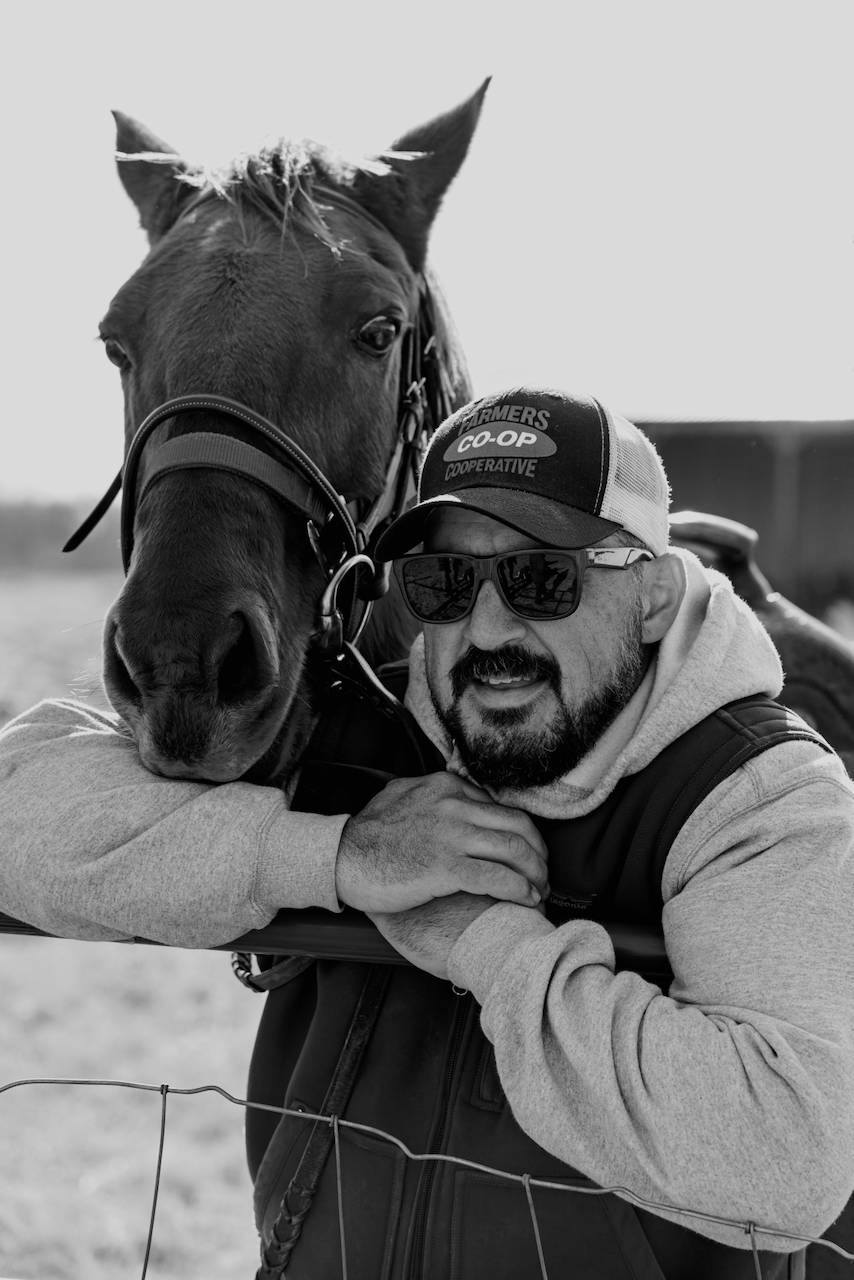
about Dr. Jared M. Phillips.
Jared Phillips is a writer and farmer with deep roots in the Arkansas hill country. He and his wife farm above the Muddy Fork of the Illinois River, relying on draft horses for their farm work.
In addition to farming and writing, he’s a historian at the University of Arkansas where he teaches on Ozark and rural history and is working on a history of the Ozark Organic Growers Association and the development of the USDA Organic program.
He’s an alumnus of the Rural Writing Institute, led by Wainwright Prize winner James Rebanks (A Shepherd’s Life; English Pastoral; A Place of Tides).
In addition to his academic book Hipbillies: Deep Revolution in the Arkansas Ozarks, other work can be found in Front Porch Republic, Skipjack Review, the Arkansas Times, and the Arkansas-Democrat Gazette.
episode notes & references.
- Dr. Jared M. Phillips: https://fulbright.uark.edu/departments/history/directory/index/uid/jmp07/name/Jared+Phillips/
- Jerry Falwell: https://www.britannica.com/biography/Jerry-Falwell
- Moral Majority: https://www.britannica.com/topic/Moral-Majority
- James Dobson / Focus on the Family: https://www.focusonthefamily.com/
- George W. Bush presidential campaign (2000): https://www.britannica.com/biography/George-W-Bush
- Evangelicalism in American politics: https://www.pewresearch.org/religion/religious-landscape-study/religious-tradition/evangelical-protestant/
- 1960s–1980s Southern Evangelical political shift: https://www.pbs.org/wgbh/frontline/article/how-the-religious-right-came-to-be/
- The Republican Southern Strategy: https://www.britannica.com/topic/Southern-strategy
- Rise of the Religious Right (via GOP realignment): https://www.history.com/news/religious-right-culture-war-history
- Bill Clinton’s religious upbringing in the South: https://www.pbs.org/wgbh/pages/frontline/shows/clinton/interviews/clinton.html
- University of Arkansas Department of History (Jared Phillips’s faculty): https://history.uark.edu
episode outline.
- Introduction and Context Setting: 00:00–03:14
- Jimmy Carter’s Rise and the Role of Evangelicals: 03:15–07:55
- The Political Repositioning of the Religious Right: 07:56–11:40
- Northwest Arkansas as a Microcosm: 11:41–17:22
- Faith, Race, and the Silence in Modern Christianity: 17:23–24:17
- The Evolution from Carter to Reagan: 24:18–29:42
- Billy Graham, James Robison, and the Southern Strategy: 29:43–34:30
- The Legacy of Evangelical Alignment with Power: 34:31–41:12
- How Political Realignment Changed Rural Communities: 41:13–46:49
- Contemporary Southern Religion and Its Contradictions: 46:50–52:38
- Faith Communities and the Struggle with Identity: 52:39–58:01
- The Future of Faith and Belonging in the South: 58:02–1:03:29
- Closing Reflections on Belonging and Power: 1:03:30–1:16:48
episode transcript.
episode preview.
[00:00:02] dr. jared m. phillips.: and I think what what we see happen is that the evangelical world becomes an evangelical world that doesn't just think about sharing good news through good actions or sharing good news just share it through, sharing good news. But it becomes a world that is, there is a fundamental set of beliefs about not just what we think of in, in, the, in the Bible, in the New Testament, in the Old Testament, whatever, but in how we understand what culture is and how we understand what morality is and that those things equal evangelicalism.
episode outro.
[00:01:16] mike.: Well, you're listening to the underview, an Exploration in the Shaping of Our Place. My name is Mike Rusch, and today we're taking on a subject that has been quietly threaded through nearly every conversation this season, but one we haven't yet stopped to name directly. And that's the relationship between faith and power in the American South. Because in northwest Arkansas, like much of the South, religion is more than a personal belief system. It's a cultural framework, a political force, a builder of institutions and identities. And as we've explored the questions of mythologies and race, labor, policy and belonging, faith has been a current underneath it all. In nearly every conversation across these two seasons, someone has named the role of churches of faith, leaders of personal faith, of sacred scripture, and in more than a few conversations, once the microphones were turned off, the topic of faith was then discussed even more deeply and more openly.
[00:02:08] mike.: But no one person can speak for a faith community, and no single episode can hold the full scope of religion's impact here in the Ozarks. So today we're gonna narrow the lens for a moment to focus on what I believe has become the single largest influence in our region and beyond. We're asking the question, how did southern evangelical power structures emerge? How did religion become such a force in Southern American politics, and what role did our region play in that transformation?
[00:02:35] mike.: Because when you bring together race, economics, labor and faith, something very powerful happens. These aren't separate forces. They reinforce each other. They create structures of meaning and systems of belonging. And in the South, these systems have often determined who gets to lead, who gets left behind, and what version of righteousness gets written into our laws. Today we're asking how faith has been used to shape belonging and also exclusion. How it has informed southern identity, racial hierarchies, and eventually partisan politics, and ultimately how some corners of the faith community have used spiritual authority for political control.
[00:03:11] mike.: To help us uncover that history, I knew I needed to go back to a trusted source, so I asked Dr. Jared Phillips historian, educator, and someone who understands the deep story of the Ozarks to speak into this topic. Through his own personal story and his work. He helps us trace the rise of evangelical political power in the south, the creation of the moral majority, and the moment when faith and politics become so intertwined that to belong in one space often meant pledging allegiance to the other. Because the question isn't just what happened. It's how did we get here and what can we learn from the past if we want to create a future where faith leads us towards justice and not just influence.
[00:03:49] mike.: We're gonna start in the 1970s with President Jimmy Carter and really the evolution of this evangelical political force in politics.
[00:03:57] mike.: Alright, A lot to work through today. Let's get into it.
episode interview.
[00:04:03] mike.: I have the privilege of sitting down and sharing a space with Dr. Jared Phillips. We happen to be at his home today, so thank you for the invitation to come and visit you.
[00:04:11] mike.: Yeah.
[00:04:11] mike.: Out on the farm here, just a beautiful time of year at spring. And I'm pursuing you in this conversation because you made a statement in one of our previous conversations that you said "_*if you want to talk about Jimmy Carter, then you have to talk a lot about the south and you have to talk a lot about religion*_" and that phrase that you said it really captured my imagination about what does that have to do with where we are in the South and in the Ozarks. Maybe help me unpack that statement you made.
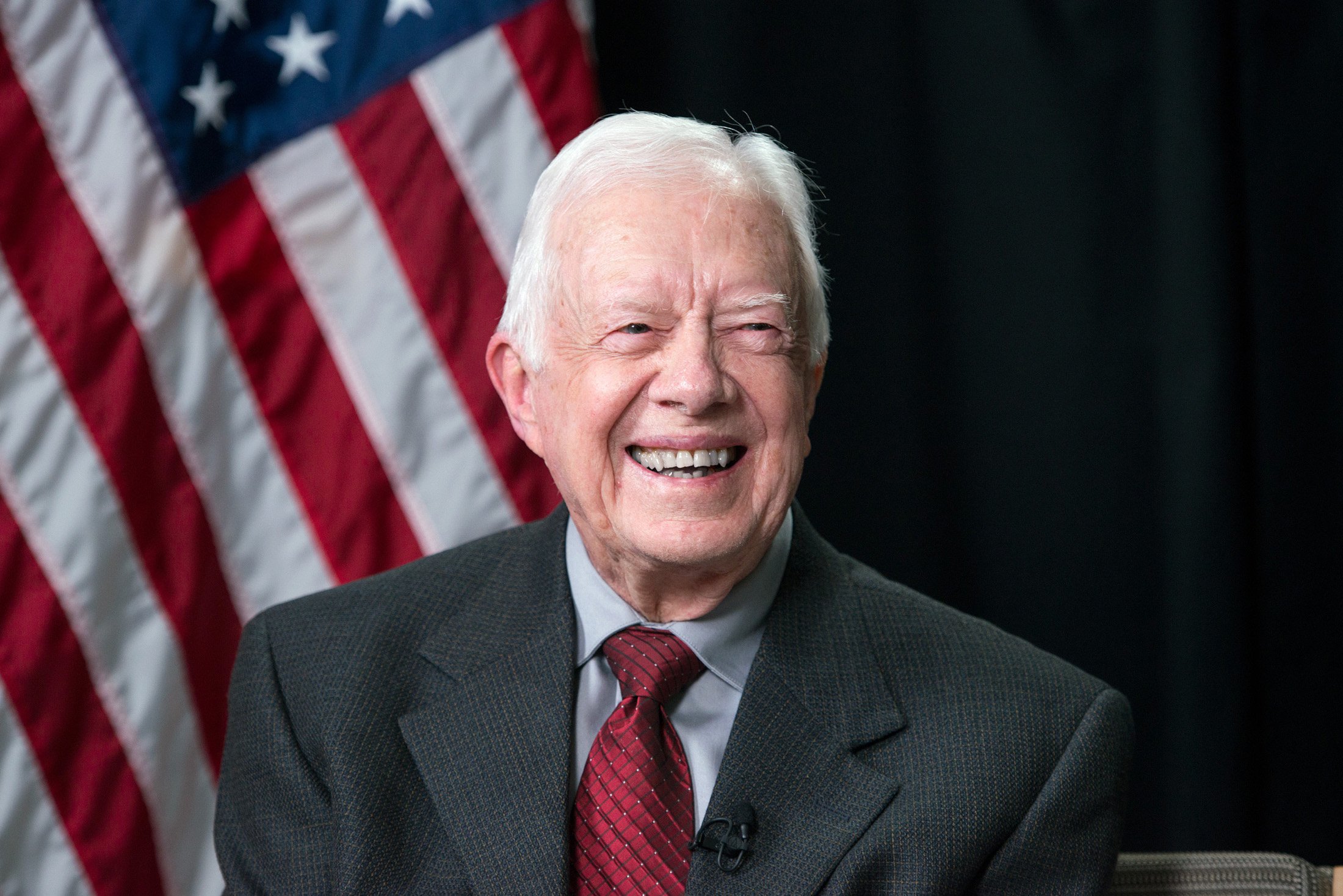
[00:04:38] dr. jared m. phillips.: Yeah. No, thanks for having me back. I I always look for an opportunity to talk about Jimmy Carter. I spent a lot of years of my life researching and writing on Jimmy and or may he rest in peace. What I would say that statement, if you wanna talk about Jimmy Carter, you have to think about the south and you have to think about religion. That statement is born from a couple of considerations that I have.
[00:04:58] dr. jared m. phillips.: One very much is rooted in who I am as a person. I'm a proud son of the south. My family's been here for a very long time. My wife's family's been here for a very long time. But when I say that I'm a proud son of the South, I say that with a giant asterisk because I understand like many of us do that the south is a complicated place.
[00:05:18] dr. jared m. phillips.: And so when I say that I'm proud to be from the South, I'm proud largely in this, in, in a way, I hope like Mr. Carter was proud to be a Southerner because Mr. Carter it, it had within him all of the different pieces that embodied what the south was becoming in the middle of the 20th century, in particular part that we call the American century.
[00:05:41] dr. jared m. phillips.: So that's that part after the second World War, really until the end of the Cold War, the first part of the 20th, 21st century. And he also is looking at how do we reform the nation and the nation internally to think about the new pressures that were emerging coming outta the Nixon era. But also he's looking ahead in a way, he's a very sort of forward thinking president. He is looking ahead and he is trying to rehabilitate America's standing within itself an internal like reassessment, self-assessment, but also it's standing in the international community. And that all comes from who he is as a person.
[00:06:16] dr. jared m. phillips.: Mr. Carter was born in 1924 in Plains, Georgia which is in Sumter County. And he, he's the son of a peanut farmer and peanut broker. He is a, but he and he's very much like others in his generation. I think these, this group of southerners that came of age or that become kind of progressive southerners that come of age.
[00:06:35] dr. jared m. phillips.: They're born in their early twenties, mid twenties. They come of age in the fifties and sixties, and then they go on to push, to push the country in a couple of interesting paths. Some are good and some are bad. Mr. Carter's legacy, I tend to be more optimistic about his legacy than some people traditionally have been.
[00:06:54] dr. jared m. phillips.: But I, even within that, I'm still happy to say there's some things that he did as president that I do disagree with. And I think most historians would agree with that. But, and so I think the two big things that he always highlighted, Jimmy Carter always highlighted as he's coming into the White House, was his faith and his understanding of of how that faith was shaped by place, but then also how faith and place were shaped by race.
[00:07:17] dr. jared m. phillips.: So for me, when we asked the question about how does Carter relate to the South in general the mood of the nation right now or even zoom, weigh in tight on our home here in the Ozarks, those things I think are really important for us.
[00:07:33] dr. jared m. phillips.: So we talked a little bit about the last time last time we talked about the nature of race in the Ozarks, and you've had other guests who've talked a lot about that. Mr. Carter is coming of age in a very different racial environment than we are, right? By the time Mr. Carter is old enough to think about voting and to be running a business or things like that the, the racial components in Georgia were very different than they are here. Here, by this point, we're relatively lily white, right? So we're not asking a racial question here, like they're asking in Georgia or elsewhere in the deep south. And then when we do ask the question, the racial question in the Ozarks is more about maintaining that mythic purity, right? That was never real, but was always imagined. And it's kinda this like post KKK kind of thing. But in, in Georgia, they're really asking the question about segregation in a very real lived sense. And they're asking the question about economic control. And they're using Jim Crow as a method for control, not a method for shoving everybody out.
[00:08:29] dr. jared m. phillips.: They don't want every, they can't afford to have, black sharecroppers leave. They can't afford to lose that labor force. There's not enough people there to do the work otherwise, and but in that context and in the status of his family, he is similar. I guess in a way to other notable figures that kind of come of age in the seventies, like Wendell Berry who comes to my mind in that they both have this conversation about how they're able to think about race in a different way than other folks had been able to because they grow up with the children with the black children of the workers who are working for their family or in and around their family. And that gives them a familiarity with race and the sort of the quote unquote race problem that maybe was unknown or not recognized prior to that. Now, I would, before I went any further down that line, what I would say is that's not necessarily, I would say that's not necessarily the best way to, to approach that.
[00:09:23] dr. jared m. phillips.: I understand what they're saying, and they're not uncommon in that idea. But it assumes that a white person in a position of relative privilege is able to fully empathize with a black person without any of those systems of privilege. And so we already know that's not the case, the systems of Jim Crow ensure that cannot be the place. But nevertheless, Mr. Carter does have a, of a, somewhat of an understanding of what race means. He understands the problems between white and black communities. His family, even though they're in the Jim Crow South was, they're not, they're not as progressive as you're gonna see up north maybe in some of these conversations. But there's more familiarity, more ease of passage between the two communities in their tight little area than maybe you would see elsewhere. You can listen, you can go back and read his memoirs and he'll describe what's happening with his father and his mother, miss Lillian and these other folks, and you get, get a picture of what he's trying to talk about. So that's, that racial side of it.
[00:10:20] dr. jared m. phillips.: But religion, he grows up a Baptist and importantly for us, he grows up a Southern Baptist. And we've talked a little bit about this before and I'm sure other folks have as well, but Southern Baptist are a unique breed. They, on the one hand, they're very Baptist, right? So they shoot all those basic Baptist tenants. So they're relatively Calvinist or reformed. They're they are a relatively individualistic the Southern Baptist Convention, especially at that time, the time that he's coming of age forties, fifties, sixties. It is a very individualistic, thing. So there's the convention that sort of passes down these edicts, but it's up to every individual congregation as to whether they're gonna accept 'em and then to what degree they're gonna accept them. And that still causes the SBC a problem today. How they govern their body. They don't have a, they don't have a presbytery, like the Presbyterians do or things like this. But in, in that Southern Baptist kind of world or in that and just generic Baptist world he very much, has this idea the in Baptist theology, it's called Soul Competency. But you could, for our purposes, we can think about it as individual self-determination. And so he, and this is a lesson that he takes very early on in life. And it'll really develop for him later on in, in the sixties by, but especially but the essential idea here is that the individual is totally free to make their own spiritual choices.
[00:11:34] dr. jared m. phillips.: So it's a weird, and if you think about Calvinism or Yeah. Don't seem like they're aligning real quick. Exactly. But this is really important for Mr. Carter because. Baptists, like most reformation Protestant communities, and here I might make some people mad, but they hold competing views at one time. They're dualists, right? That's okay. We could, humans are by nature are this right? And what Baptists do may be more formally than other folks is put that is enshrined that, that kind of idea. So on the one hand, you're Calvinist, so you're, like predestination is a big deal, but on the other hand you can choose. So it's this what do you do with it?
[00:12:06] dr. jared m. phillips.: But interestingly for Carter the hinge point of choice is the idea of justice. And for him it's often, this is often boiled down, too far in, in people's discussion of him. But for him, justice equals love. And that justice equals love. Coming out of his Baptist upbringing which is a very different take than what we're seeing elsewhere in the church in the south at this time. Even though the Baptist Convention is saying we should figure out a way to integrate, the Baptist churches are not doing this right almost to a congregation they don't do this. And, but Carter is taking a different lesson outta this and then he's gonna apply that to his understanding of race as he goes through.
[00:12:47] mike.: Okay. I have 400 questions.
[00:12:48] dr. jared m. phillips.: Ask 'em all. That was a whole lot in a hurry. And I could, I could, we could go off on any number of tangents. 'Cause we've essentially in the timeline of Mr. Carter. We haven't, he hasn't even gone back to Georgie yet, after the na He hasn't even gone to the Navy yet. We're just in the Yeah. Ephemeral.
[00:13:01] mike.: Maybe we, like, let's start with his upbringing. Yeah. I mean, He grew up in the south, in Georgia. Yep. Yep. In a southern Baptist space. But it feels like, from my understanding, there are points in his life where he is the other, in that situation as it relates to issues of race, issues of caring for community and not that Southern Baptist Convention people weren't caring for other people, but yeah, he seems to self identify himself in some ways, as being people, didn't agree with me when I moved towards issues, especially around the issues of segregation and trying to use his influence or his family to I'm trying to understand the root and the origin of how someone growing up in that environment may come to a different conclusion and yeah. Yet still stay in that environment.
[00:13:45] dr. jared m. phillips.: Yeah, that's a great que So a lot of that, we'll start with his grandfather. His grandfather was a populist in the old school sense, the word populism. So not the stuff that we talk about today that I give my students lectures about about using, making sure they use the word correctly, but populous in the old agrarian democracy, economic justice use the government on behalf of people, but in a relatively, but still maintain relatively decentralized communities, right? So we don't wanna centralize power too much but we want to have some measure of useful power on behalf of the people because populists are coming, populists are part of that gilded age story into the 20th century story.
[00:14:19] dr. jared m. phillips.: And so we're trying to push back against the consolidation of agriculture, the consolidation of rail lines, all these, the big monopolies, right? So we're pushing back against this kind of stuff. His granddad is a populist. And then that, that will pass and this is on his mother's side and his mother, miss Lillian, will receive all that kind of populist pro pro little guy kind of idea. If you want to, we're gonna grossly boil populism down, but if we want to grossly boil populism down it's essentially pro-little guy, anti big guy, but also a little bit of let's smash the big guy. Some of the more wild restraints of it, populism is just as flawed as everything else that's coming out in the 19th century so the big hero in the in the household would've been Tom Watson. He was a North Georgia populist. And in his early days he was relatively moderate on race for the 19th century. I won't, he was not a progressive racially at all. But by the end of his career, Mr. Watson becomes quite segregationist but early on, and probably somewhere where these formative lessons and what populism are when they hit the household, that Carter's gonna come of age in. It's this kind of idea. So there's this, and then the second thing would be his father was for the most part, a new deal, Democrat. With one exception we'll talk about here in a second, but but during the New Deal, Mr. Carter's father during the Depression New Deal the Carter family had been very debt averse, which was unusual in agriculture then it was unusual in agriculture in the seventies. Unusual. It's just unusual period. And so because the Carter family was relatively, if not totally free of debt, at least debt in a way that would endanger the family livelihood, they were able to amass peanut brokerage interest essentially and farm ground.
[00:15:54] dr. jared m. phillips.: And so by the time when they come out of the depression the Carter family, and this is happening as Mr. Carter, this is in the thirties, through the forties, Mr. Carter's family becomes a family of decent to heavy standing in the community, right? Because they own the brokerage. They are they have all this farm ground. They employ all these different people, white and black. And so they become a person, they become a family that is listened to, right? They were already a respected family, but they become even more so they become central to the economic health or at least very important to the economic health of the county.
[00:16:25] dr. jared m. phillips.: So there's this, and then Mr. Carter is gonna go to the Navy. And while he's in the Navy he's going to become a nuclear engineer. He's gonna serve on the USS Sea wolf. So this is the beginning of the nuclear age, but importantly other than the fact that he's an engineer and he has that kind of mind the, he is serving in the Navy right after Harry Truman has desegregated the armed forces.
[00:16:50] dr. jared m. phillips.: So Harry Truman is gonna begin this big process of desegregation that will well begin the armed forces that we're gonna see desegregation orders coming down from the Supreme Court through Brown V Board. And I should say it's not that Harry Truman starts civil rights, right? It's that the culmination of activity, it's been occurring since the end of the Civil War is finally pushing people to action.
[00:17:11] dr. jared m. phillips.: And Mr. Truman will desegregate the armed forces just as Jimmy Carter's going into submarine duty, and he's on an integrated crew and they're down in the British Virgin Islands. And they're asked, the crew is asked to go to the consulate or to the British Embassy or whatever it is, one of the big government houses down there for a fancy dinner. But their black crew mate was not invited. And the whole crew will refuse to go. And Mr. Carter's position then, and his position later in life was like we're all like you. We can't see that stuff when we're on a submarine crew. We can't see that stuff when we are wearing the uniform. We wear the uniform. And then we sort all that other stuff out. Now he's unique that crew is a little bit unique there, unique crew because of the station that they have. And this is not to say that there were not tons of problems with integration in the armed forces elsewhere. There were but in this moment, integration in the armed forces, coupled with that earlier kind of exposure that builds the capacity for empathy I think is part of what allows him to make that, be a part of that decision.
[00:18:09] dr. jared m. phillips.: Now, his dad will, this is one of the few fights he and his dad get into. His dad is not as, his dad is quietly centrist on race, but it makes sense if, when we go back, so I said his dad was a new deal Democrat at the beginning until Henry Wallace and the Agricultural Adjustment Act will force him to plow under cotton fields and kill hogs just like we see happening across the farms throughout the nation, while there are people in Breadlines and while people needed work. And so after that point Mr. Carter's father will no longer vote Democrat in presidential elections.
[00:18:39] dr. jared m. phillips.: Only in he'll vote state ticket down. He'll vote Democrat all the way till he dies in 1953, but at the national ticket, he'll never vote Democrat again. But that's another part of that southern evolution that we're gonna start to see. We're gonna see southerners across the region, start splitting their ticket beginning in the forties and fifties partially as a result of the New Deal backlash to it, partially as a backlash against civil rights, partially as a backlash against Vietnam. And so that by the time we get into the 1970s when he's coming of age as a politician, it is entirely common to see counties and states split their ticket in that way. It'll be a straight Democrat ticket at the local level and a straight or mixed Republican ticket at the national level, which is one of the weirder conversations that you can think about.
[00:19:22] mike.: Yeah, I would probably,
[00:19:23] that's probably a rabbit trail. I don't know if that's worth going down or not. We do it
[00:19:26] dr. jared m. phillips.: here. That's a, it's a thing that happens here in the olac. We start, it's not uncommon. Split tickets really quickly. Yeah. Yeah.
[00:19:32] mike.: Maybe I'll ask you to keep going in this. Yeah. I don't know if you would consider him a man of his time or not. He seems to growing up in Georgia, growing up in the south, but having a position, especially within, he was growing up in Southern Baptist, but growing up in those spaces with this idea of the pursuit of, to your point, justice and his views on segregation, right? He still progresses into more and more political offices, obviously the governor. How does that ascension work given some of the, how big some of these issues really were.
[00:20:06] dr. jared m. phillips.: Brown V Board honestly, so that Supreme Court decision was so impactful. A series of Supreme Court decisions. So Brown V Board in, in 54, then Baker v Carr in 1962, which, that's the decision that kind of formally states out that one person, one vote, one man, one vote idea. So we've always had that as the mythology of America. That actually makes it real, right? Which is really important for unbalancing segregationist political power.
[00:20:29] dr. jared m. phillips.: And it's part of one, the part of the reason why urban areas become so powerful in national elections compared to rural country. I know everybody gets upset about red, the red blue divide, and how all these big states in the middle that are red have so child-sized power. When you really look at it at a person to person level, they don't, and that's because of Baker v Carr before, before it was the other way around. And but what happens is in Brown View Board we have the desegregation decision, but the kicker about that court case that people often don't remember, is that the court said that this has to be done with all deliberate speed, but they didn't bother to define what that meant.
[00:21:02] dr. jared m. phillips.: And so this is a thing that prob this gives us problems from the Supreme Court all the time, is they never, they don't always define the really important stuff in their rulings. And in part I think it was 'cause they understood that what they had ruled was gonna be a thing. We're gonna have a problem now. And so what will happen across the south and the north because every, the north, the south is not the only racist space in American life. But mostly across the South we're gonna see the development of white communities pushing back in a lot of different ways. One of those ways is gonna be white flight, and so we're gonna see the hollowing out of the nation's urban centers. And so this is most famously we can think about Atlanta. So this is gonna be really important in the story for Mr. Carter.
[00:21:42] dr. jared m. phillips.: Atlanta, Memphis little Rock all these, all the big urban centers in the south are gonna see middle class and upper middle class and upper class white families leave the nation's centers go to the periphery and begin to start private schools. And so there's gonna be a boom in private education in the fifties and sixties as a response to Brown V Board because if it's private, then you can restrict theoretically who can come in and outta your school. And so this way we can ensure that little Susie and little Johnny don't go to school with black kids.
[00:22:14] dr. jared m. phillips.: And and I know that many lovely people have come out of those schools without any knowledge of that, but that's, it's like understanding where the Southern Baptist come from. This is that, that kind of thing. So there's this kinda idea, but then there's also the development of this thing called the _*White Citizens Councils*_. They're all over the country. They're heavily situated in the south. Sometimes they're masks for the clans. Sometimes they're not. They're openly clan members. Sometimes they're just citizens opposed to segregation. Sometimes there's citizens that are opposed to segregation that fast. It's this should happen, but let's make it happen a little bit slower or whatever.
[00:22:42] dr. jared m. phillips.: But the point is that the crux of all of it is that they are. They are not wanting to have Brown v Board implemented with all deliberate speed. And this is important in Mr. Carter's case, _every white citizen in Sumter County is gonna join the White Citizens Council of Sumter County except for Jimmy Carter._
[00:22:58] dr. jared m. phillips.: The chief of police and other community members are gonna come, says peanut brokerage. They're gonna ask him, they're gonna beg him to join. And he is, 'cause he's just come home 1953, his father dies and he's, so he will design his commission in the Navy and he'll move back home to Plains to take over the family business. And he and Rosalyn are taking it over from Miss Lillian. And it's a fledgling business. It's a changeover. There's the fifties are a big time of shakeup in American agriculture. And they're trying to figure out how to make this thing work. And Jimmy is not signing the signing onto the citizens council.
[00:23:30] dr. jared m. phillips.: They're offering the and this is a big deal because this is the, these are the other economic power brokers in the county. And they're telling him, they're coming into his office and they're telling him, if you don't do this is gonna hurt your family and hurt your business. You might go bankrupt. Like we might end up running you outta the county for this. They even offer to pay the $5 registration fee for him. And he got so angry that he takes the application or like the membership form, tears it up, goes to the toilet in the back of his office and flushes it down the toilet, tells him to get out.
[00:23:58] dr. jared m. phillips.: And it's, it hurts. It hurts his economic fortunes for a little while. And it's at that moment that he starts to really think about what if I mean what I say about my faith if, I mean what I say, if I take the words of Jesus seriously then my faith has to go into action in some way. And if, I mean that justice is love and I, I put on a uniform for fight to, to fight for that. If the need arose, but now I don't wear that uniform anymore, where did service for me lie? And so that's when he begins to think about. Politics. And so he'll start running for State House first.
[00:24:30] dr. jared m. phillips.: He'll lose that. And then in 1970 is when he's gonna be, he's gonna run for governor and he'll be elected governor. And he's gonna be part of an interesting group of people that is elected in 1970. In 1971 Time Magazine will run a cover story. He'll be the cover photo on the magazine.
[00:24:44] dr. jared m. phillips.: But they're gonna talk about what, what's called the class of 70. And Arkansas's not left out. This is when Dale Bumpers is gonna be elected governor best lawyer from a one lawyer town. And but Jimmy and Dale and a host of other young southern Democrats look like they're gonna change the way the nation perceives the South.
[00:25:04] dr. jared m. phillips.: Because up until this point, the only southerners the nation has seen in the national spotlight are either people like Orville Faubus 57, hammering at people and yelling and being horrible. Or, Strom Thurmond is coming of age. Then Dick Russell out of Georgia, so this is contemporary of Mr. Carter politically. The heavily anti-communist, heavily segregationist, I mean they are old school. Even Jay William Fulbright , as cosmopolitan and urbane as Mr. Fulbright was at the end of the day. He signed the Southern Manifesto- Pro segregation. You can't, it doesn't matter. You just, that's Jimmy Carter's not that guy. Dale Bumpers is not that guy. And even when we stack him up against the only southern president that we'd really had in, in the 20th century, which would've been at least in the recent, history would've been Lyndon Johnson.
[00:25:47] dr. jared m. phillips.: Mr. Johnson was a weirdo. He's got all of the Vietnam stuff is attached to him, plus he's got all these conspiracy theories swirling around him. And then because he was a big, loud, crass, wickedly smart, and like vindictive, almost kind of president. The Eastern establishment didn't know what to do with him. Probably one of the most effective legislators that the United States has ever had. And I think, when we and Mr. Carter will agree with most of this as well, but, and so will most, most historians that what the great society that Lyndon Johnson puts in place is gonna set the foundation for so much of what becomes the norm in American middle class life. They take, he takes that New deal project and completes it as best as it can be completed in that moment, right? But those are the examples of southern politicians that we have. And then in comes this guy Jimmy Carter, in comes Dale Bumpers and Dale Smooth and sophisticated and, he's in Little Rock and he's not Faubus. And then Jimmy Carter comes in, and importantly for the, for his kind of evolution he has begun to really think about what the application of faith means in politics. And he, in the sixties, after he gets hammered in his, because his election run for State House was abysmal.
[00:26:57] dr. jared m. phillips.: Like he just, he was a noname like person at the state level. And he was running. He just, he didn't run a very good campaign. It just didn't work out very well for him. But after this, he starts to pick up and read the work of an old theologian by the name of *Reinhold Niebuhr. *Mr. Niebuhr was a son of the Midwest. He'll end up at Union Theological ser seminary in Boston, and he became one of these kind of iconic public intellectuals at the time. Every, he was a household name at the time, but he was a household name that had a lot of heft. It's a little bit like people today talk about CS Lewis and there's a cultural fluency with him, or like JRR Tolkien or people like this.
[00:27:33] dr. jared m. phillips.: But they haven't actually read deeply in the catalog, right? And so when people start to get excited about CS Lewis and then when they read a little bit deeper, they're like, wait a minute. He said that. Yeah. So Mr. Niebuhr is a little bit like this as well. He's a very tricky guy to nail down. But what he does for Carter is he offers a philosophical or theological roadmap to apply his understanding of justice and love in the defense of those who are defenseless. And that becomes the core. This what Niebuhr calls Christian realism or Christian pragmatism, that becomes the core of how Mr. Carter begins to think about politics first in Georgia and then at the country level. And it's in that moment when he walks into the Governor's house in 1971 and he, that he starts to immediately, not just quietly, but he visibly does this. He hangs Martin Luther King Jr's portrait in the Capitol building.
[00:28:23] dr. jared m. phillips.: He removes, people from the board of trustees of the University of Georgia system that were openly segregationist and doesn't just replace them with moderates, he replaces them with black civic leaders. And, he starts to visibly reshape Georgia politics to match what he's been talking about and to try and move Georgia beyond segregation to move it beyond Jim Crow because he very firmly agrees with the idea that how Mr. Niebuhr puts it is that the, it's often the sad duty of government to coerce the population. And it sometimes that coercion can often feel like tyranny to the people being coerced, but it's, it might be the, might the right thing to do and that's how he sees the civil rights movement. That's how he'll see his human rights agenda. That's how he'll see most everything that he does is gonna be through that lens that he develops in Georgia as he's trying to figure out how to put faith into action in politics. Importantly though, he never takes a stand and says, this is Baptist theology, or this is Niebuhr's theology, therefore it is now policy.
[00:29:24] dr. jared m. phillips.: He's always trying to figure out, okay, if our country and is saying these are the things that we stand for, these are the morals, this is the system that we want to have, then what does that look like to me? How do I interpret that as a person of faith? And then how do I understand what I can apply without overtly utilizing the language of my religious system? Because Mr. Carter does, you mentioned this earlier, he does very much believe in the separation of church and state. Mr. Carter does not this is something that's gonna get him into trouble later. He does not personally agree or did not personally agree with abortion. He believed that was a problem.
[00:29:59] dr. jared m. phillips.: However, that was the law of the land by the time he was president. That court case is in 72, 73. And that's what he has to enforce. And he, that's my job. I'm the president. My job is to enforce the law of the land, not to change it, to match what my understanding of religion should be, because I understand he'll say more than, once again, hearkening to an interesting understanding of what that soul competency kinda idea is that the notions of good and evil are somewhat flexible over time. And not that like the extremes are flexible, but the way that we understand how to apply those becomes flexible over time. And because of that, it is not a good idea. He would argue to use any one religious system no matter what it is, as the means by which we define everything.
navigating seperation of church and state.
[00:30:44] mike.: It's super interesting because you have this man who grew up in this kind of evangelical world who I believe I've read it, that he's identified himself as evangelical, but not fundamental. You've got someone who uses his faith in a way to understand what his role is in the world. Yet he had a very strong belief between that separation of church and state. And how does that start to form and shape, the work that he does in the world? Because it's not holding those two things in a duality or in a dual state seems really complicated, but he seems to carry them well, if I'm not, if I'm not wrong.
[00:31:21] dr. jared m. phillips.: I think so others would disagree with me. And I, I think I, at the end of the day, he's an engineer and I think that he's just able to like sort information.
[00:31:31] mike.: There you go. I'm an engineer too. Yes. So that's why it makes sense. There you go. Yeah. I should be president, right?
[00:31:35] dr. jared m. phillips.: Yeah, exactly and I, I think I. I think it's an evolution over time and he doesn't get it right all the time. And one of the things that he tries to do, and he doesn't always do it well, but one of the things that he tries to do through the course of his political career is to be very pragmatic and understand that I have this ideal, like of what I want to see happen.
[00:31:52] dr. jared m. phillips.: Here's why I think I, it should happen. Here's how I justify it from my religion. Here's how I justify it from without my religion. But he also understands that sometimes it's gotta shove because whatever something happens, right? And so I think there's that side of him, which I think is a little bit does, is actually a little bit of the engineering him of the farmer background in him.
[00:32:11] dr. jared m. phillips.: It's like sometimes you can have all the ideals in the world, but there are law, there are fundamental laws of nature that don't change or there's fundamental crises that don't change, right? And so you just have to be ready to be adaptable. So I think that's part of it. I think he's.
evangelicals at a crossroad.
[00:32:27] dr. jared m. phillips.: He comes of age, when he decides to run for the president in 75. And, he has runs this campaign and he and he wins surprising everybody that he's gonna become the contender and then that he wins in 76. The Christian world in, or the Protestant world, I should say in America was at a bit of a crossroads. And I think that's, I think that's why they, he gets their support or at least part of it because that distinction that you made about him, A okay, a second ago, being an evangelical, but not a fundamentalist is very important because he very much was an evangelical, he believed in the Southern Baptist Mission Board.
[00:32:59] dr. jared m. phillips.: Like by the time we get into the seventies, like the, they're sending out and this is a, like a funky little thing within the Southern Baptist. They're, the mission board changes its position on how it's gonna approach international evangelical work or international mission work. And they begin to think more about human wellbeing, the physical stuff. And so really you could think about 'em as a, at the forefront of of utilizing economic and community development as a vehicle by which they're gonna go in and do stuff. And and he was all about that. Carter's all about, they go, he and his family go on multiple trips to Latin America. And they, they're bought in and and they're part of a broader community of faith that's doing this. And so that impulse though is was like it's surging in the 1970s and it's gonna fracture and break by the end of his presidency.
[00:33:45] dr. jared m. phillips.: And I think what what we see happen is that the evangelical world becomes an evangelical world that, that doesn't just think about sharing good news through good actions or sharing good news just share it through, sharing good news. But it becomes a world that is, there is a fundamental set of beliefs. About not just what we think of in, in, the, in the Bible, in the New Testament, in the Old Testament, whatever, but in how we understand what culture is and how we understand what morality is and that those things equal evangelicalism.
[00:34:17] dr. jared m. phillips.: And Carter did not see that, right? That's not where he saw that happening, but he was like, I am not that. I don't have that sin of fundamentalism that's there. And fundamentalism is this like longer story in American religious life that had always been somewhat present, but it really comes to a head right around the same time that he's born.
[00:34:34] dr. jared m. phillips.: So with the Scopes monkey Trials is our most famous early example of this. When we see the idea of what will become Christian fundamentalism in the United States, 'cause there's other versions of it elsewhere begin to coalesce. But until the seventies, for the most part. Christians, Christian Evangelicals, Protestants were not really thought of as a political force because they had chosen to not be, they had chosen to retain that. So you'll see, I mean it wasn't that Christianity was not a part of the political system, it's just that you don't see them uniting in such an open way, right? But the 1970s is changes. This everything is changing. So I often tell students that everything that everybody thinks is exciting about the 1960s actually happens in the 1970s.
[00:35:19] dr. jared m. phillips.: Part of that's my bias 'cause I research and write a lot on the 1970s and I like it. But some of it's because it's true. 'cause you have all this stuff that's happening in the sixties that really is just setting a foundation for the meat and potatoes of the 1970s. And and really, the kind of, the quick story is that the 1960s we see not just the civil Rights revolution, right? Which is gonna become this huge mobilizing force throughout the American South. And as much as, I hate to say it, Protestants in the American South, were just as likely, if not more likely to be segregationist than integrationist in the South. And then you also have the sort of the sociocultural revolution. So you've got hippies and drugs and free love and all this other kind of stuff. And then you've got rock and roll, and you've got the anti-war protests that are surging by the end of the decade. All of these things, amount to what, Nixon is gonna capitalize on in the beginnings of his southern strategy and to steal the south from the Democratic party. And he's gonna do it through, talking about law and order and Christianity. Protestantism is gonna be the vehicle for that. Or a prime vehicle for that. And this is where everybody's thinking, okay, Carter might be, as governor of Georgia, maybe we can see what this guy what it looks like to have this openly Christian Guy. 'Cause he's, he is, even then he was, very publicly active in his church in Plains and leading Sunday school and all the things that we know and love about Mr. Carter.
[00:36:33] dr. jared m. phillips.: Then that Roe v Wade decision comes down. And so you have all these other cultural battles that are happening. You've got the expansion of communities of color visibly into the workplace, into education. You've got women visibly expanding outta the home. You have sexual freedom thanks to, 'cause the pill is now an active part of American life. And then now abortion hits. And so the conservative world, the social, socially conservative world, and here I'm gonna use, I wanna distinguish, so Big C Conservative. So as an organized group that you can point to different communities within state. That's what we mean by this. Not like a little c. Everybody's a little bit conservative in that they don't like change kind of thing. This begins to really galvanize them. So this is people like Phyllis Lafley and the Eagle Forum and all these other things, all these other communities, the American heritage, a ai, American Enterprise Institute. All these groups are forming at this point as a counterbalance to what the left had seen, what the liberals had developed in the fifties and sixties. And they start to really mobilize as a political force, but they're not really they haven't figured out who their champion is gonna be yet.
[00:37:33] dr. jared m. phillips.: Ronald Reagan at the time and Barry Goldwater and some of these other guys seem like they might be, but they were all extreme, when even John Wayne is coming out and telling Ronald Reagan to sit down and be quiet, then you know, that like, all right we're okay, this is too much. But when Jimmy Carter in the 76 campaign says, I'm a born again Christian. Because this is the first time in American life that's been attached openly, willingly by a politician seeking the oval office. There hadn't even really been a notion of born again Christians as we think of them today until the 1970s. There'd been this kind of kind of discussion about them, but nothing like we see today. It wasn't a cultural force until then. So everybody gets excited 'cause we got a Southerner. So he's clearly gonna be conservative 'cause southerners are nothing if not conservative. And he's a born again Christian and he's a Southern Baptist. Clearly this is the guy, right?
[00:38:20] dr. jared m. phillips.: But then in the campaign they I'm always amazed when I go back and look at stuff why they didn't see the, that he was gonna be trouble for them. Because they as such as they're organized, they come around him, right? Some of them don't, the more ones that are more out on the fringes because they, because of other particular issues 'cause of his stance on race or whatever. But he does a couple things in the campaign that that, that kind. Shock people a little bit. So for example, he gives an interview with Playboy magazine and he talks about all kinds of stuff in there that no self-respecting presidential candidate had ever talked about before.
[00:38:48] dr. jared m. phillips.: Or Southern Baptist.
[00:38:49] dr. jared m. phillips.: Or Southern Baptist. And so he gets he, yeah, he gives warning signs, so he's not their guy. But nevertheless, he becomes their guy. And then very quickly he becomes not their guy, by the midterms of 79, 78 he's very quickly not their guy. Yeah.
[00:39:05] mike.: Maybe to that point then where do you think that turning mark or that turning point is for him because he ascended to the presidency? Yeah. At some point there is this awareness, does it come down to his views on justice or race or like what,
[00:39:22] mike.: or all kinds of stuff? Honestly, I, there's not a simple answer.
[00:39:26] mike.: Or is it may, maybe let me ask you this. Maybe it's to, to me, is like, is this the first showing that we have of that what may be the people that got him or helped get him elected? It wasn't, I don't know, was it about religion or was it about power and influence within federal government?
[00:39:44] dr. jared m. phillips.: That's a good question. I think I think it's complicated. So I but I am a professional academic and so I'm obliged to say it.
[00:39:50] mike.: Sure, that's fine. I'll agree with you. It's complicated. Yeah.
[00:39:52] dr. jared m. phillips.: So a couple things are happening. I think number one by the end of the 1970s. So midway through his term in office, the evangelical political world which is different than like rank and file people that sit in pews, right? So I want to be clear that when we're talking about evangelicals as a political force, even though most people in church might actually vote in the same way, there's a difference between the churchgoer and the machine, right?
[00:40:19] dr. jared m. phillips.: So this is the distinction that we should make between Christendom and Christians, right? And so Christendom as a political force in history is maybe not always the best thing, but your average Christian has no real bearing on that necessarily, right? So this is what we're talking about here.
[00:40:31] dr. jared m. phillips.: But this evangelical kind of thing with a capital E begins to concentrate itself in a couple of different ways. And so probably one of the best options to think about would be this idea of the moral majority with Mr. Falwell. You can also think this is right when we're starting to look at the development of stuff like focus on the family and James Dobson and all these different things.
[00:40:51] dr. jared m. phillips.: And they start to, wage a they begin to wage a culture war, essentially. And and I think they would be open with that. They believed that American life, the American way of life was first and foremost a Protestant one. And then that it was second becoming, it was heavily under fire by by some form of liberalism.
[00:41:11] dr. jared m. phillips.: And they're unclear as to what that means, but but that's the general gist of it. So they begin to mobilize and the moral majority and focus on the family and all these other groups that are becoming, that are coming into being, they begin to mobilize advocacy and lobbyist campaigns essentially.
[00:41:25] dr. jared m. phillips.: And they begin to do all the things that we think of them doing today. They begin to help write legislation. They begin letter writing campaigns, they phone call trees, all this stuff, right? Because you, I told students this earlier this year. Think about it like this. If you've got a group of people in rural and mid-sized churches across the nation. Especially, we can just pick on the south, especially in the south, what happens if somebody gets married, goes to the hospital, dies. The very first thing that we do is we set up a phone tree and a prayer chain. We can mobilize and get the word out to people and activate people to use fancy language today to faster than probably anybody since until Barack Obama figures out community organizing in Chicago.
[00:42:01] dr. jared m. phillips.: Honestly, right? Like the,
[00:42:02] dr. jared m. phillips.: it's a real thing.
[00:42:03] dr. jared m. phillips.: The real thing. It's a real, it's a this, and this is one of the reasons why I say people need to take religion in the South seriously. Not just in how we think and believe, but in how deeply embedded its mechanisms are in the way that we just approach life. Because it doesn't matter if you're a Presbyterian, a Southern Baptist, or a holy roller. We potluck the same, we phone tree the same, it's a similar language across. And so people like Falwell. They figure out how to mobilize that against abortion. They figure out how to mobilize that against affirmative action. They figure out how to mobilize it. And so this is and frankly, the Carter administration was not ready for it. Because I, Mr. Carter believed the best in people. I think, I, he certainly did post presidency and I think he did pre enduring presidency. I think he became disabused of that, some of that during his presidency.
[00:42:49] dr. jared m. phillips.: But and I think it was hard for him to understand why people couldn't see where he was at. So you have this kind of force mobilizing against him. But then you also have external factors, right? They elected him, the American people, put him in the White House because they were tired of how Republicans had been running the country.
[00:43:05] dr. jared m. phillips.: The economy in the 1970s was the worst economy we had since the depression. And we talk about this thing called stagflation. So the economy was stagnant. We had rising inflation, right? By the time Mr. Carter walks into office inflation and unemployment is in the double digits, and stay. It's there almost the entire decade. And Carter, part of the reason why he was sent there was to fix it. And he doesn't fix it. In part because it wasn't his, like how do you fix it? Like it's, it wasn't really anybody's problem necessarily. It was a macro problem. The global economy had changed and with that then came negative impacts to the United States and it was our fault. Like we had pushed a bunch of these changes and so now we were reaping the rewards of that, right? And this is the beginning of how conservatives be conservatives as a political unit, begin to think about economic populism as a tool that they can utilize. Not to actually fix stuff, let me be quite clear on that. But as a way to get voters. So this is gonna happen. And then Carter will he'll make farmers mad. He'll piss him off royally. Because what he will do we were in the middle of, so historically, especially by the 1970s, but historically, American agriculture is one of the most, if not the most productive agricultural force in the world in history, which is a problem because we can't eat all that stuff.
[00:44:20] dr. jared m. phillips.: And most of what's being produced isn't actually like farm to table kind of stuff anyways. It's commodity grains. And, but what we could do is export it. And what we were doing was exporting it to the Soviet Union. And it was a way that the Nixon administration and the Ford administration and even Carter in the first year or so have been trying to figure out a way to maintain a fragile piece between us.
[00:44:42] dr. jared m. phillips.: But essentially relations sour between Washington and Moscow and Carter embargoes this. This is a big problem in the ag country because Mo, because the surpluses ag country, just like everybody else was experiencing the poor economic conditions of the time, but with the added pressure of increasing debt load because USDA policy from the 1950s on, but especially underneath secretary of Agriculture, Earl Butts who had been the ag secretary for Nixon and for Ford had really prioritized this idea of go big or get out.
[00:45:13] dr. jared m. phillips.: And the way that you do that was to take on debt. Right now when interest rates are low, that's no big deal, but interest rates are now really high because the way that Carter decides to fix the economy was to bring in a guy named Paul Volcker to be head of the Fed. And Volcker decided to put the economy on tough love, which over the long haul proved to be the right thing to do.
[00:45:34] dr. jared m. phillips.: 'cause it will, by the time we get into the middle of the 1980s it will begin to turn the tide on the economy. But it hammers farmers. And in 1977 and 19 78, 79, we're gonna see a massive farm crisis. Farmers are not gonna have anywhere to send their grain. And we're gonna start to begin to see the ripple effects of what becomes the iconic farm crisis of the 1980s that gives us farm aid and stuff like that.
[00:45:55] dr. jared m. phillips.: That begins in the late 1970s. And it be, and it begins from Jimmy Carter, who was a farmer himself. So he understood what was gonna happen here. But he did it anyways. And that he, I mean that hits, the whole country, not just the south. And that creates this huge backlash. And so 78, 79, there's this group called the American Agricultural Movement.
[00:46:18] dr. jared m. phillips.: A bunch of guys, some of these guys are still alive and kicking. But what these guys do for the most part, they're not small farmers. They're usually mid and large scale farmers. They drive tractors across the country and go to the National Mall, tear up the National Mall. They cause a million dollars in damages or whatever. 'cause it's muddy in Washington in the winter. As the way to protest, and they're farmers from Arkansas are farmers from the Ozarks are going. As a part of this. People were mad. So there's this that's happening, right?
[00:46:42] dr. jared m. phillips.: And then there's Iran. You can't Iran, we have this Islamic caliphate as emerging and they capture a bunch of Americans and there's a failed rescue mission and all the all, I mean everybody, like the history of the war on terror. Most, a lot of people start that story with Iran in the modern moment and that, that's all of these things come together and it's important to note here that it's not just that evangelicals abandoned Carter in 1980. It's that America abandoned him in 1980. Those election results are in are stunning. When you go look at him, like the depth of victory that Reagan has is really astonishing. It's this mirrors really only what we see FDR getting, like it's total victory. And and that's what sends Carter home to Plains, in, in 1980, 81.
[00:47:23] dr. jared m. phillips.: It. Yeah. Everybody likes to push it onto the evangelical system and that is a big part of it.
role of evangelicals in Carter's demise.
[00:47:28] mike.: Yeah. I was gonna ask Yeah. Like where how does that factor into, obviously these are problems that are probably not rooted in a conservative political Yeah. Election group, if you will, out and about. Yeah.
[00:47:39] mike.: But this support of him waning and I don't know if it's fair to say shifting into Reagan, can you put that in perspective of how big of a role that played
[00:47:48] dr. jared m. phillips.: it? It plays a big role. I think it's more important as Reagan goes on. You could, I haven't looked at the polling numbers in a little bit, so I don't have 'em off the top of my head. But evangelicals are gonna start to noticeably swing to Reagan in the 1980 election, but. What's important is that there were plenty of, this is Evangelicals plus fundamentalists, right? So it's that hybrid. I don't know if we wanna come up with a fancy word for that, but but there are plenty of folks that are moderate or on the left end of the evangelical spectrum that still stick with Carter.
[00:48:20] dr. jared m. phillips.: Because Carter had created a human rights office in the Department of State. First time we'd ever had one. He said this is the, if America's gonna say that this is who we are, then dadgum it, we're gonna do it. And he starts the Country report system, which has been taken apart, most recently by the current occupant in the White House. And so all this kind of, these legacy programs that we, that had rebuilt America's credibility in the world, a lot of people in the middle of the evangelical spectrum and on the left, and even some that were maybe opposed to some of his, abortion stuff or whatever, say, Hey, that's a net win for us. That's good. That's a good thing. It'll be the midterms of 82 are gonna be when we really see the Evangelicals coming out hardcore for Reagan.
[00:48:56] mike.: So after, after his time in the White House, as he returns back to Georgia, what do we see? Is he the same man that went to Washington? How does this, how does his life become different from that point forward?
[00:49:08] dr. jared m. phillips.: He's the same man in some ways, I know. I was just shaking my head no there for a second. But he's also pretty mad for a little bit. Which is fair. I think I would be too because it's one of those things. That's it. It feels unfair when you look at what, how 80 shakes out. And the role that the hostage crisises plays and some of the kind of the theories about why that happens and all that. It's, it feels deeply unfair to Mr. Carter. It's a presidency that was half finished. He had set up in motion a bunch of things. He's an engineer, so he works longitudinally, right? And so he's setting in motion a bunch of things from ag to education to environment, whatever, that he needed four more years to really play out. And so he felt, he always felt that he was cut short in that. But I think he was in a unique situation because we had no other president that had that long of a post presidency.
[00:49:54] dr. jared m. phillips.: He was so young comparatively. And so when they go, when they returned home to Georgia in 81, he and his family had to think about what will our legacy be? And again, it goes back to justice and love. The whole crux of the Carter Center which is, most presidents set up a set up something after they're done. It's usually a presidential library. Very few of them have set up these sort of outreach centers in the way that he's done. And so then he sets the standard, he sets a new model, right? President Clinton's gonna do the similar thing. The Bushes are gonna do similar things, but Carter's really the first one that, that thinks about utilizing his legacy as a human rights advocate, as a person interested in justice and love as a tool for good in the world.
[00:50:37] dr. jared m. phillips.: And so he just, he essentially decides I can't be president anymore, or I'm not gonna, I'm not gonna try that scene. 'cause he also understands especially when we're looking at the nature of his defeat and looking at the disarray that the Democrats found themselves in the 1980s, which is very similar to the disarray we see the Democratic Party in today.
[00:50:52] dr. jared m. phillips.: The disarray was total. You, you can't, whether you love President Reagan or not, that man. Could give a speech, he could bring a crowd together. He's a trained actor. He knew what he was doing. He was very good at it. And you can't, there was nobody in the field for the, there's just nobody. And this is part, Jimmy Carter, bless his soul. He was many things, but he was not a stirring speech giver. I liked listening to him talk 'cause I liked hearing old school southern accents. But if you're not prone to liking that, you're not gonna necessarily wanna sit down here. And then, he scolded the nation a lot.
[00:51:21] dr. jared m. phillips.: Put on your sweaters and turn the heat down, this kind of stuff. And Reagan was like, we're not gonna do that. Like this morning in America, this is, we're gonna make, he's the originator of this Make America great idea, right? And this is what we're gonna do. It's gonna be awesome. And it was the eighties and so it was awesome. Carter in the meantime though, is figuring out what to do. And so he decides we're just gonna, we're gonna love the world. We're gonna find the people that are defenseless. We're gonna go back to that old idea. Of how do we take care of the, of these core things that we think about? And one of the missions of the Carter Center will become the protection of democracy. Democracy for Carter is not the best form of government but it's the best form we had so far. And so let's figure out how we protect it. And so the Carter Center will be, become engaged in monitoring democratic elections, not just in, developing countries, but here in the United States, they'll go over and they'll monitor stuff in the Cherokee Nation. They'll monitor county elections throughout the south. They, he puts his money where his mouth is, then they'll do all, they'll eradicate Guinea worm, he'll send malaria nets out, he'll help with education. All these things that were hallmarks of his faith and hallmarks of his long career before the White House are allowed to come back because he doesn't have to think about national security.
[00:52:25] dr. jared m. phillips.: He doesn't have to think about waging partisan battles in Congress and all this stuff. He's allowed to be Jimmy Carter again. And I think in that may have be maybe one of the more powerful statements of his league. 'cause he could have chosen a different path, right? He could have gone to war with the Republican party. He could have gone to war with the Democratic party.
[00:52:43] mike.: He could have tried to get reelected.
[00:52:45] dr. jared m. phillips.: He, yeah. He didn't, he said, you know what, this is what I'm gonna do now. And I think there's always lessons in Mr. Carter's life. But I think that's a really powerful one. Is he took a defeat on the chin, took it, and took it badly for a little bit. He was quite angry and withdrawn for a little while. But then he picked himself up and said, let's keep making the world a better place. That's the job. That's the job.
[00:53:02] mike.: And
[00:53:02] mike.: and I read in his autobiography. He went back and remained a Sunday school teacher. Yep. Into his nineties.
[00:53:10] dr. jared m. phillips.: Until he, he was still leading Sunday school until he was, until the very, the bitter end. Yeah.
[00:53:13] mike.: Which is remarkable. Yeah. Anyways, yeah. Okay. Let me, can I swing this towards modern day a little bit? Yeah. I may throw you a curve ball here. Okay. All right. Okay. I there's so much more to Jimmy Carter's life. I'm not, I don't wanna move on from that, but I do want to maybe swing it back a little bit towards, here, let's get proximate back with here within Northwest Arkansas, because the world that we've been talking about, Jimmy Carter and Georgia growing up, Southern Baptist, that was not the tradition here or the way that Northwest Arkansas developed or grew at that time. And but maybe today we have a stronger influence there. So I'm like, maybe set the stage for. Northwest Arkansas and what was the context from a religion in the South perspective that we maybe started with here?
[00:53:58] dr. jared m. phillips.: Yeah, that's a good question.
[00:53:59] dr. jared m. phillips.: That's a very vague question.
[00:54:00] dr. jared m. phillips.: Yeah. No, but it's interesting though, right? So yeah, I'm, I, so I'll preface this by saying I'm not an expert in southern religion. I think, I don't know. I think what I would say is that oh, it's complicated. But I think a couple things are happening. So one the pervasiveness of Southern of a Baptist theology and Baptist thought in the deep South begins to, you begin to see Baptist becoming a thing in the hill country, here in Missouri or Arkansas, even Appalachia, by mid-century.
[00:54:28] dr. jared m. phillips.: The, like, all things, like denominations come and go in faddishness, and so they. By the seventies the traditional strongholds of Methodists and Presbyterians of various varieties had begun to be diluted a little bit. The population is changing Northwest Arkansas in particular. Though the Ozarks are experiencing a massive population shift, the Northwest Arkansas area is beginning to foreshadow what will become this really dynamic place. And with that comes in a bunch of people that are not Presbyterians and Methodists, right?
[00:54:59] dr. jared m. phillips.: And so we're gonna start to see a reconsolidation of Catholicism in the place. And so the Catholic world had always been pretty strong out in the Tontitown region with the Italian immigration in there. But as we move through the seventies and into the eighties, we're gonna start to see an increasingly strong contingent of folks coming up out of Central America and Mexico. And so they're gonna bring with them their understandings of Protestantism, but they're also their understandings of Catholicism. And so that's gonna start to shake up stuff a little bit. But then you're gonna start to see Baptist churches of become that who were here. We had Baptist churches.
[00:55:28] dr. jared m. phillips.: I don't want to give the impression we didn't have any Baptist all Then suddenly they appeared. We had them, but they begin to take on more and more importance, I think. And I think some of it is denominational, I think in structure, so Presbyterian structure and Methodist structure. And I'm speaking as a, so I grew up Southern Baptist, but I'm a Presbyterian now.
[00:55:45] dr. jared m. phillips.: My and my impression from, having served on, on session and all these different things in my Presbyterian church is that as a rule of thumb, Presbyterians don't like the limelight. They're the odd ones out, of course. But as a rule of thumb, as a denomination, they would rather do good work and be seen for that than than talk about doing good work and not do things or just be loud, right? They tend to just be a quieter bunch of people. I think a lot more of the liturgically driven communities are that way a little bit.
[00:56:12] dr. jared m. phillips.: The Baptist community as a whole has always been because of the individualist nature of it, has been a more fiery visible brand of Protestantism. And I think the 1970s and 1980s evolution of the population, the social concerns that we're talking about nationally, which we're seeing here as well that those kinds of leaders in the pulpit are gonna be attractive to people because this is a population of people in the seventies and eighties that's looking for answers of any kind to try to understand what in the world is happening right now.
[00:56:43] dr. jared m. phillips.: And you've got a staid, quiet, slow liturgical system, or you've got a fire in brimstone, young preacher who can tell you the truth and do it with a Bible verse and then we're gonna, it has a point of view. It has a point of view, and that's a really, that's a really interesting thing at the time.
[00:56:59] dr. jared m. phillips.: It's just an evolution of how we're doing religion, in, in the country. And I don't know that's a good or a bad thing. I just think it's an evolution that's occurring. I think it has consequences that are both good and bad for the nation and for the region. I think out of that, we're gonna see this, and this is a part of that community of people that's gonna play into the development of the moral majority at the local level, right? Those phone trees and stuff I was talking about a minute ago, Falwell doesn't just call people and have Billy Graham just call people. He puts out the word to the church leaders and the church leaders put that out into the community, right? And so the churches become more linked into this world.
[00:57:34] dr. jared m. phillips.: And I think it's we haven't talked much about Billy Graham but we can't ignore Billy Graham. Yeah. He's such a Absolutely. He's such a complicated figure. I. Yeah. And I grew up listening to Billy Graham, on TV and on the radio and like so many of us in the south did and the nation did, but the seventies and the eighties is the beginnings of the megachurch world, right? This is what this is coming from and it's the beginnings of a, of an unrooted church world. And so by that no longer firmly associating with a denomination. And I think some of that influence is actually coming out of the Baptist world and out of the Southern Baptist world because Southern Baptists are loosely affiliated with the convention.
[00:58:09] dr. jared m. phillips.: But at a practical level, they live their own life, within their church, and they make their own decisions and all that without, they don't run everything back up to the head of the convention. What that means then is that there becomes a flexibility in how you apply the separation of church and state, how you, and at the local level, at the city council level, right? I think that story really begins at the city council and the county commission level, and then it begins to work its way up, is most things in American life tend to do that. And I think that's what we see here. Because, I can remember when I was a kid here. The rumor was that, and my understanding of it at the time was whether it was actually, a hundred percent true or not, is I don't know that to be the case.
[00:58:43] dr. jared m. phillips.: But was that the reason we didn't have MTV and VH one in Springdale was because the pastor of the Big Baptist church did not want us to. And having grown up in that church, I'm like, that, that checks out, man. Like garbage. Maybe do a fact check on that, but it wouldn't surprise me.
[00:58:57] dr. jared m. phillips.: Yeah. Because the staying was garbage in, garbage out. And that was, that stuff was garbage. Michael Jackson and Madonna was garbage. And yeah, so I think I think that's a part of the evolution of it. I think the eighties, the sixties and the seventies called into question for more Americans in the middle and lower ranks of America's economic life the wellbeing of their system, of their cultural system, and. That push that when people's definition of self-worth, of culture, of community is that sharply assailed because that's, that, that is both the real and the felt thing that's happening there.
[00:59:38] dr. jared m. phillips.: It's not necessarily assailed for the reasons that were being identified, but the fact of the matter is that working class people's lives got worse in the 1970s period. If you were somebody who believed very strongly in these sort of old school mythic American cultural values, those things were being torn apart.
[00:59:57] dr. jared m. phillips.: Those structures that had put them together were being torn apart. Now I think that's a good thing for the most part, right? But the people that live their lives according to that, felt very threatened by that and endangered by it. And you have these, you have this resurgent. Or not even a resurgent, you have a new form of Protestantism emerging by the 1980s and into the 1990s that says, we're gonna not just go to bat for you on Sundays and Wednesdays.
[01:00:22] dr. jared m. phillips.: We're gonna go to bat for you in Little Rock and in Washington, and we're gonna make the country what we always thought it was. And that's the kind of the evolution that we're gonna see.
[01:00:32] mike.: Yeah, so maybe it's interesting because as we talk about Jimmy Carter and religion in the South, and it rooted in the Southern Baptist narrative, which wasn't the dominant faith tradition here in northwest Arkansas, now we fast forward today, and in 2016 we have a church whose Lead pastor was the president of the Southern Baptist Convention. And so to me, we have this, it feels like this growth and this change of religion and politics and then being in northwest Arkansas to see this economic growth and explosion and economic power grow. We feel like some of these worlds start to come together. Yeah. And so I think I'm, I don't know if that's true, you can agree or disagree with me or not, but I'd love your perspective on how should we think about this shift or this evolution and is this unique to Northwest Arkansas or is this something we may see, in other places across the us?
[01:01:24] dr. jared m. phillips.: Yeah, I think, I don't know that it's unique to northwest Arkansas. I actually think that we're maybe late to the party. I think we saw, when you look at the history of megachurches and evangel, sort of non-denominational evangelicalism in the nation we see these concentrations of whatever that nexus of power is around a mega church pastor occurring elsewhere. Years before Dr. Floyd brings First Baptist, now Pinnacle or cross church, whatever it's called now, cross church into what it is, right? And he models that church off of some of these other churches. So I remember, the comparisons being made to big churches in Texas, big to where he's from, and big churches in, in Tennessee and big churches in California. Those churches had been there for a long time. They had been, and they had been and there they had been modeled off of other big churches.
[01:02:08] dr. jared m. phillips.: And so I think anywhere where you have this, the confluence of all these demographic trends that we're talking about and charismatic faith leadership that is interested in. Stepping forward in that way. 'cause not all charismatic faith leaders are interested in that kind of step, right?
[01:02:25] dr. jared m. phillips.: Because you see different models, right? So in the realm of charismatic faith leaders we've got the mega church guys, we have a Jerry Falwell style. We have people that become like Dr. Floyd does, but then we also have Dr. King who's very different, right? We have Reinold Niebuhr, who's very different, none of them shoo the limelight, but the reasons for taking the limelight are very different.
[01:02:42] dr. jared m. phillips.: Maybe, and I'm speaking a little bit, hypothetically because I, I don't know Dr. Floyd, I've, never spoken to him deeply about anything in my life. And I shook his hand once. That's about all I've got, and I think but I think that what makes this place unique is that so while we're late to the party, we're unique in the party, I think. And I think the reason is that the same time that we see the system that becomes Cross Church, Fellowship Bible Church, New Heights. Some of these other, the large booming Baptist churches. Yeah. Baptist or Baptist style. 'Cause, churches emerging in the region is at the same time that we see the concentrated economic impact of Walmart. We're asking more and more of its people to come into the region. We see the concentrated economic impact of the poultry industry and we see the concentrated economic impact of the university. And so for very different reasons, they all become magnets that are bringing people into this place that become. That maybe not all of them are, but many of them are coming from church homes, that are sim that are in that megachurch world or in that kind of, space. And they're looking for that here because that's what they're familiar with. And you want to go back to what you were interested in. And then they, and so they're gonna, they're gonna go help swell those ranks, and then those various churches become the hot things in the region. And those pastors become more and more visible within the community, within county leadership within not that they're leading counties, but they become more visible.
[01:04:12] dr. jared m. phillips.: They become, because they cause parking issues on Sundays, or because they're building big buildings that have big stormwater runoff issues. And so they just because of reality have to become known. To, and then I think the turning point really is gonna be the when. The First Baptist Church decides to build its second campus and they build it in Benton County. And it becomes quite clear quite early on that church, at least an outward appearance, I don't know about inside, but at least an outward appearance was built to serve the economic elite of northwest Arkansas and not to serve the small little country church that Dr. Floyd came to off just off of Emma Street, in the early days of his career. And that to me speaks to this change because this is a, this is now an economic, there's an economic engine driving religious interest. Whereas before Baptists are, as a rule of thumb, they are, they're anti power. They don't, they want decentralization. They don't want to be next to power centers. They are, especially in the poor south, like we are, as a rule of thumb, like these are gonna be some of the loudest guys in the room at a county meeting where they feel like they're getting ready to be imposed upon, and now they're going and seeking out the folks that are creating imposition.
[01:05:21] dr. jared m. phillips.: And that's a shift. That's a, that I don't think anybody's really fully reckoned with or fully teased out all that, all that's there. I, and I don't know that I would say that any one of those church leaders any one of these churches that I named, took a second and made this concentrated decision, I'm gonna do this thing because of X, I don't think that's the case. But I think that. At least in some of these leadership places you see where power has clearly become a very important thing for them. And so as Dr. Floyd moves from Springdale to the presidency of the convention, at the same time that he's doing this, he's having to deal with not just the perception that increasingly the population here at home has of what he's about and what his church is about. But he also then walks into the SBC is they're dealing with yet another sexual assault scandal. And the way that the sb community deals with that particular one, which will ultimately result in him resigning from his leadership is telling, I think, and understanding how large religious structures are now thinking about the relationship with power in the era of in the era of this resurgent heavily right driven, christian nationalism really, for lack of a better phrase. I was trying to get around that phrase, but that's, I think that's where we have to go, when you think about it.
the lesson of Jimmy Carter.
[01:06:38] mike.: Yeah I think this is, this is a big conversation, right? And we're not, we're just, we'll probably won't dive fully into that. Maybe we can save that for another season or something like that. I don't know. Let's wrap, back around to Jimmy Carter, right?
[01:06:50] mike.: Yeah.
[01:06:51] mike.: Because this life that he lived and obviously passed away here recently and what that stood for and maybe where we are today as a state or a region or even a country, if you wanna go that far.
[01:07:02] mike.: What lessons do we draw from Jimmy Carter, the way he lived his life and it, I think for me, it's hard to get my head around because on one hand he lived this life, which was of great faith. Yet the power structures ultimately decided not to continue to keep him in a place of power politically. And yet he goes on to live this life in a very consistent way. And and we watched the evolution of power and religion in our country over the next 40 years. Take on Yeah. A new a new dimension in so many ways. And so I think, I'm trying to understand maybe how do we think about this legacy of Jimmy Carter in an era where maybe the things that he represented were not the things that were valued at the time. And, I'm wanting to understand how they're valued today.
[01:07:49] dr. jared m. phillips.: Yeah. I think there's a couple of ways that we can apply Carter's legacy, if you will. I think one would be to never discount the fact that. He was a southerner. And I mean that in the sort of the truest sense that he's a son of the South. In that, I was talking earlier about other sort of southern presidents, or southern politicians. But when you think about him in the context of other, all these other presidents from the south, there's only one other president that you can say is honest to God, a son of the South. I'm sorry, two. One is Lyndon Johnson that we've talked about before. Son of the East Texas Hill country and, went to teacher's college, you know, ardent new dealer. I mean, he was, He was a man of the people, right? And that's part of the reason why he fought the way that he did, is he fought for the people. The other one would be Bill Clinton. The boy from Hope. Man, you know that guy he but Carter is not like either one of them. Because to wanna be president, you gotta have an ego to assume that you have what it takes to lead this country. You have to have an ego.
[01:08:44] dr. jared m. phillips.: But the way that, but Carter's ego, I think was an ego similar to the ego of the Ozarks. This is this might be a little bit of a stretch. This is kinda how I think about it.
[01:08:51] mike.: No, I don't know, but run with it. I've never heard anybody talk about this before.
[01:08:54] dr. jared m. phillips.: So what I Carter
[01:08:55] dr. jared m. phillips.: you could be the first, this could be your next PhD.
[01:08:57] dr. jared m. phillips.: Oh, gosh, no. Carter believed very much that the way forward was to take care of everybody. He gets that from his theology. He gets that from his upbringing. He gets that from day one. We talked about his grandfather was a populace. His mother cared deeply about these things even though he fought with his dad about race, that his dad was a part of that same household. His dad administered that. His dad gave him the work ethic to do that kind of work. And and Carter took being from a place of little. Even though his family was unique in that he, it was a place of little he took that very seriously. And he never during his time in the State House, during his time in Washington and after never diminished other places. He saw the value in what was there. And the Ozark is a place that has always had to find the value in what is here because we're too poor to do otherwise. And it's a very different thing than I think what we see a lot of folks coming in intentionally or not coming in because a lot of the driving energy that we see in the region today are more bush like or Clinton like in their southernness.
[01:09:59] dr. jared m. phillips.: And so the bushes bush, the elder and Bush the younger are both from Texas, but not really. I don't know that we could, we can call them Texans because that's where they lived in, and died and all these different things, but they're Texans a little bit in the way that the heirs to the Walmart fortune are Arkansans. Now they, they're from here, but they're not from here. Carter never forgot that he was from Plains, Georgia. We don't have, because he never had the luxury of it. That's a privilege to be able to forget where you're from in a way. And we here in the hill country, in, in Arkansas and in southern Missouri, we don't have that privilege. For the most part, we don't have that flexibility and that mobility. And the lesson that Carter gives us is to be proud of that. The lesson that Carter gives incomers is to say, Hey, wait, there's value. Don't dismiss this because it's different and poorer or remote or muddy or whatever. To be like Carter in this space is to recognize the value of this space and to recognize that even though this space is poor. Even though this space is hard scrabble, it is still a place of that beauty and wonder and joy and love and justice can be found, right? So that's one thing.
[01:11:01] dr. jared m. phillips.: And then the other thing I would say is that his insistence, his insistence upon justice. And that in that insisting upon justice was the truest form of love that that people of faith can bring into the world. He has a, he has an expansive view of justice. He does not have a retributive view of justice. He has a restorative view of justice and that. In the conversations that we're having in northwest Arkansas right now, asking the questions about how do we grow as a place, how do we think of, how do we reconcile the past of of trying to forcibly remove not just native people, but communities of color, former enslaved communities. How do we deal with child labor and processing plans? How do we deal with the fact that the, the majority of workers, the majority of households in northwest Arkansas are barely at the ALICE threshold. So asset limited, income constrained, yet employed. So they're barely able, even though they have good jobs and they do everything they're supposed to do, they still can't quite make it work.
[01:11:53] dr. jared m. phillips.: How do we deal with that? That's a, that's not a retributive question. That's a restorative question. That's a question that says, I love you as my neighbor. How do I come alongside you and help this burden be easier? That's the lesson that Jimmy Carter gives us.
[01:12:10] mike.: Yeah, I, I will add nothing to that other than just say thank you. Yeah. I think that's yeah, that's a community I could, I am for.
the gospel according to Jimmy Carter.
[01:12:17] dr. jared m. phillips.: And I think that more people than not, when you put it in those kinds of terms, you say, okay, this is what take away the fact that Jimmy Carter was a Democrat, take away the fact that he didn't want to vote against abortion. Whatever. Take all you Just say that. Just say that, that's, to me that's, I'm not much on sitting in a church and talking about the gospel or anything anymore. But if you wanna talk about the gospel, that's the gospel right there, right? Mm-hmm. That's the sermon on the mount and application. In, in so many different ways. And so I think that's the lesson I think from, yeah.
[01:12:44] mike.: All right, Dr. Phillips. Jared, thank you for your time. Yeah, thanks for having me out to the farm. And anytime once again, I'm just humbled to be able to sit and I'm gonna let that swim around in my brain for a long time and it's probably not gonna settle, so probably be back here again. Knocking on your door at some point. Call whenever you like. All right. Yeah. Thanks so much. Appreciate you.
[01:13:01] dr. jared m. phillips.: No problem.
episode outro.
[01:13:04] mike.: Well, a deep thank you to Dr. Jared Phillips for walking us through this moment in history when Southern Evangelical Christianity began to shift its posture towards political power.
[01:13:13] mike.: In tracing the rise of Jimmy Carter, we're not just learning about a single presidency. We're learning about the emergence of a new political theology in the South, one that redefined the role of religion and public life. This episode helps us ask what happens when faith moves from the margins to the center of power? When churches no longer speak from that prophetic edge, but from within the machinery of politics. And how did those shifts lay the groundwork for the moral and cultural battles that still shape our political discourse today?
[01:13:43] mike.: As Dr. Phillips reminded us, Jimmy Carter was a complicated figure, devout self-reflective and earnest in his faith, but also unable to escape the gravitational pull of Southern expectations. His presidency marked a turning point, not just for evangelicalism, but for how religion and region intersected in the broader American story.
[01:14:02] mike.: And as we've looked at the silence that seems to surround so many injustices today from immigration to labor conditions, to racial exclusion, we have to ask, what role does the church play now?
[01:14:13] mike.: What does it mean when institutions rooted in the teachings of Jesus? Say so little about the suffering around them. To answer that, we'll need to continue following that story, and I can see that in our future, because faith in the South has never been a single story. It's always been contested, shaped by race, by land, economics, and power.
closing.
[01:14:32] mike.: We are closing in on our final episodes for this season, and that is gonna start to return us to where this season began on a gravel road in Western Benton County that overlooked a cemetery long forgotten in our history. We're gonna return to the origin story of Benton County, to the story of the Anderson family who first arrived here in the 1830s.
[01:14:50] mike.: With them, they brought approximately 32 enslaved people. in that interview with the descendants of Hugh Allen Anderson, the original Anderson to come, I asked if they had any knowledge of the descendant of the people that were enslaved by their ancestors. Their answer was no.
[01:15:05] mike.: But the reality is that the descendants of some of those enslaved people are still here in northwest Arkansas. This is the story and perspectives that will close this season out. Those descendants of some of the earliest enslaved people brought to northwest Arkansas, they will have the last voice in this season.
[01:15:21] mike.: Can't wait to share this story with you because this story is truly the work of belonging. Hopefully the work towards repair and ultimately the work of wholeness.
[01:15:30] mike.: I wanna say thank you for listening and I wanna say thank you for being the most important part of what our community is becoming. This is the underview an exploration and the shaping of our place.
[01:16:38]