
the weary land with Dr. Kelly Houston Jones, part 2.
Part 2: Arkansas secession, Civil War, and Reconstruction. Unraveling slavery’s grip and its lasting impact today.
season 2, ep. 13.
listen.
episode notes.
the weary land with Dr. Kelly Houston Jones, part 2.
In the weary land with Dr. Kelly Houston Jones, part 2, we examine Arkansas’s secession and the Civil War’s impact on slavery. Dr. Jones explains how Governor Henry Rector and state leaders saw slavery as essential, with even Unionist Arkansans supporting it for economic stability. We explore how fear, paranoia, and political power drove secession and how enslaved people viewed Lincoln’s election as a turning point for freedom.
The episode also highlights slavery’s presence in Northwest Arkansas, where small-scale agriculture, skilled labor, and domestic work reinforced the system. Census records show significant investment in slavery, even without large plantations. Finally, we discuss Reconstruction’s failures and how the fight for racial justice continues, challenging us to confront slavery’s lasting impact on Arkansas today.
about Dr. Kelly Houston Jones.
Professor Kelly Houston Jones, associate professor of history and graduate program director at Arkansas Tech University, specializes in American slavery, usually focusing her research efforts on the Trans-Mississippi South, especially Arkansas. After receiving a BA at the University of Arkansas at Little Rock and an MA at the University of North Texas, Jones earned a PhD from the University of Arkansas in 2014. Since then, she has worked on uncovering the histories of slave life on the ground in Arkansas.
Her first book, A Weary Land: Slavery on the Ground in Arkansas, was published in 2021 by the University of Georgia Press and received the Arkansas Historical Association's John William Graves Award. Professor Jones carries an enduring interest in the history of Arkansas as the western edge of the American South, which informs her teaching and participation at public history events. She is currently at work on a book manuscript regarding the vigilante murders of enslaved people.
education history.
- BA-University of Arkansas at Little Rock
- MA-University of North Texas
- PHD-University of Arkansas
additional publications.
“White Fear of Black Rebellion, 1819-1866” in The Elaine Massacre and Arkansas: A Century of Atrocity and Resistance, 1819-1919, edited by Guy Lancaster (Little Rock: Butler Center Books, a subsidiary of the University of Arkansas Press, 2018).
“Bondswomen on Arkansas’s Cotton Frontier: Migration, Labor, Family, and Resistance among an Exploited Class,” in Arkansas Women: Their Lives and Times, edited by Cherisse Jones-Branch and Gary Edwards (Athens: University of Georgia Press, 2018).
“Freedom at the Pine Bluffs, 1864: A Research Note,” Arkansas Historical Quarterly, Spring 2018.
“Doubtless Guilty: Lynching and Slaves in Antebellum Arkansas,” in Bullets and Fire: Lynching and Authority in Arkansas from Slavery through the 1930s, edited by Guy Lancaster (Fayetteville: University of Arkansas Press, 2017).
“Chattels, Pioneers, and Pilgrims for Freedom: Arkansas’s Bonded Travelers.” Arkansas Historical Quarterly 75 (Winter 2016): 319-335.
“Women after the War” in Competing Memories: The Legacy of Arkansas’s Civil War, edited by Mark K. Christ (Little Rock: Butler Center Books, a subsidiary of the University of Arkansas Press, 2016). of Arkansas Press, 2016).
episode notes & references.
- Henry Rector’s Secession Speech (1861) – Governor Henry Rector explicitly stated the role of slavery in Arkansas’s decision to secede. Arkansas Digital Archives
- The Fugitive Slave Act of 1850 – Cited as a law heavily favored by Arkansas leaders for protecting slavery. Library of Congress
- Dred Scott Decision (1857) – Used as a justification for denying African Americans any legal rights. National Archives
- The Three-Fifths Compromise – Highlighted as a political advantage for slaveholding states. Library of Congress
- David Walker and the Fayetteville Secession Debate – Leader in Washington County and president of Arkansas’s first secession convention. Encyclopedia of Arkansas
- The Arkansas Peace Society – A resistance movement in Arkansas against Confederate secession. Encyclopedia of Arkansas
- Statistics on Slavery in Northwest Arkansas – Census data showing 107 slaveholders in Benton County (383 enslaved individuals) and 1,432 enslaved individuals in Washington County (nearly 10% of the population). Encyclopedia of Arkansas
- Black Unionists in Arkansas – Discussion on Black Arkansans' alignment with the Union and their fight against the Confederacy. National Park Service – Civil War Soldiers and Sailors Database
- Unfinished Business of Reconstruction – Explored in the context of continued racial injustices and civil rights struggles post-slavery. Library of Congress – Reconstruction
episode outline.
- Introduction to the Episode – 00:00–01:51
- Recap of Part 1 & Slavery’s Role in Arkansas’s Foundation – 01:51–04:40
- Henry Rector’s Secession Speech & Arkansas’s Decision to Leave the Union – 04:41–07:49
- Divisions Over Secession & the Role of David Walker – 07:50–11:30
- The Economic and Political Forces Driving Secession – 11:31–14:15
- Black and White Arkansans’ Perspectives on Lincoln’s Election – 14:16–17:49
- The Fugitive Slave Act, Dred Scott, and Federal Power – 17:50–21:00
- Arkansas’s Slaveholding Class & The Push for Secession – 21:01–25:35
- Northwest Arkansas & Slavery: Different Yet Committed – 25:36–30:15
- The Arkansas Peace Society & Unionist Resistance – 30:16–35:42
- The Civil War’s Impact on Arkansas & Enslaved People’s Pursuit of Freedom – 35:43–40:10
- Reconstruction’s Failures & The Ongoing Impact of Slavery – 40:11–46:30
- Closing Reflections on Reckoning with Arkansas’s History – 46:31–End
episode transcript.
episode preview
[00:00:02] kelly houston jones.: A lot of the roots of things that people find really frustrating now are maybe our failures to end slavery more than just ending it on paper.
for people to become free, and that's it, not become free and then actually gain all these rights.
Certainly, we added amendments to our Constitution that were supposed to enshrine the rights - birthright citizenship, an essential, an absolutely essential part of American freedom Often, people will point to granting the right to vote to African American men, but I think sometimes we, forget about birthright citizenship as well.
We add those things to the Constitution, but we didn't uphold them. That's why we had to have a civil rights bill. We didn't have to, we had to, but we shouldn't have had. That's not how that had to have gone. It could have gone differently, but it didn't.
[00:00:52] kelly houston jones.: You're having a civil rights movement a hundred-ish years later because of that sort of unfinished business. So then I guess, what unfinished business do we still have? Have we done things to chip away at the already imperfect gains of Reconstruction and the civil rights movement?
episode introduction.
[00:01:51] mike.: We are listening to the underview, an exploration and the shaping of our place. My name is Mike Rusch, and today we continue our conversation with Dr. Kelly Houston Jones on the history of slavery in Arkansas.
In our last episode, we explored slavery's role in the establishment of Arkansas. We showed how it shaped Arkansas's economy, its politics and identity from the time that Arkansas was established as a US territory in 1819.
Dr. Jones discussed the role of the forced labor of enslaved people in the building of the wealth of the state, how the system of a second slavery was intensified in Arkansas, and how both indigenous removal and the expansion of slavery were part of the same settler colonial project.
What we saw in part one was that slavery wasn't just an economic system, it was more than that. It was a system of power, one that determined land ownership, labor and political decisions at every level. And as Arkansas grew, the system became an institution.
But what happens when that institution is threatened?
In part two of this conversation, we turned to the secession crisis and eventually the Civil War as Arkansas leaders tied the state's fate to the Confederacy.
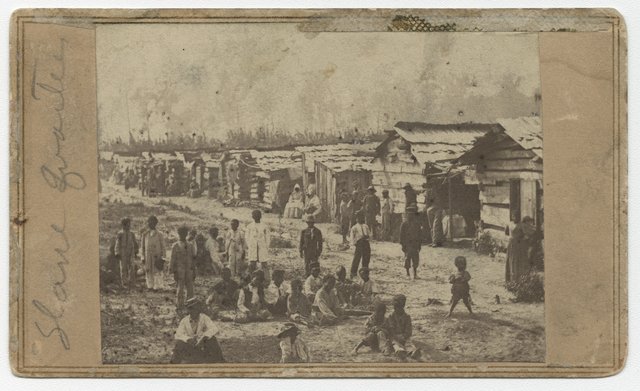
Though large scale plantations were less common in northwest Arkansas, slavery was still deeply embedded into the economic and political power structures of this region.
Enslaved people were often forced to work in small scale agricultural systems, skilled trades, domestic labor, and they experienced isolation in a way that was much different from the larger enslaved communities in the Delta region of Arkansas.
Yet the commitment to the practice of slavery in northwest Arkansas was no less firm.
Many of the region's wealthiest and most politically influential figures were deeply invested in the practice of slavery.
For example, in 1860, Benton County showed 107 slave holders, and the number of enslaved people was 338. In Washington County, there were 1,432 enslaved individuals. That is almost 10% of the county's total population at the time.
Understanding the story of Northwest Arkansas is critical to the shaping of our place. If we want to create a community where everyone feels that they belong, we must understand how the legacies of these economic and political systems continue to influence northwest Arkansas today.
Alright, let's get back into it with Dr. Jones.
main episode interview.
[00:04:18] mike rusch.: in your book, you quote Governor Henry Rector's words that say,
"_*can there be any doubt as to the cause of Arkansas secession from the Union and subsequent reasons for their participation in the Civil War?*_"
And I would love to understand how you would interpret or view the role of slavery in that decision for Arkansas to secede from the Union.
[00:04:38] kelly houston jones.: What a great question. Henry Rector, he said a lot of stuff. He's got this message that he sends to that secession convention, like laying out his case. And one really brief thing that he said was they, and I'm paraphrasing, "_*they believe that slavery is evil. We do not.*_ _*There's the trouble.*_"
He just, everyone in 1860 and 1861 knows what this is about. Everybody knows that slavery is the central cause of the dispute here. A reaction to Lincoln's election is the direct cause of the creation of the confederacy because they, they reject that new political reality. It's a backlash to that because they believe that Abraham Lincoln is an abolitionist. And so they're looking to protect themselves from what ramifications they believe could come from having an abolitionist as a president.
one of the things that's interesting about it is that Black and white Arkansans interpret who Lincoln is and what it means for him to be elected in the same way and they're both wrong. Lincoln wasn't going to implement he's really not an abolitionist in the way of being willing to label himself as such politically. He could never have been elected president saying, I'm an abolitionist, let's abolish slavery. That's just not at all what went on there. And and he had said, that I'm not interested in touching slavery where it exists. He didn't think he had constitutional power to do that anyway.
But, so how do we get here? There, there's so much fear, rage, emotion. I'm going to also say like paranoia on the part of white Southern politicians, the folks who have control of the state. They like like other states, the folks who have that formal political power, they are they have been saying so many things for so long, and they think they have been seeing this slow build to some abolitionist sort of revolution that they ironically end up creating it by reacting the way they did, right?
That sort of reaction, that backlash is what sort of opens the door for the destruction of slavery, and probably, It wouldn't have ended for a little bit longer, I'm not sure how much longer it would have lasted. black Arkansans also believe that Lincoln is the savior. He is an abolitionist. He's going to come around. And so that's how, that's one of those interesting times where they're in alignment. They do see this event the same way but the stakes for them look different. What they're pulling for is different with that.
David Walker, cemetery in Fayetteville.
[00:07:28] kelly houston jones.: So Arkansas is a little different from the other states that joined the Confederacy because they don't do this right away. And this might be covered in your other interviews. So just, feel free to cut me out if you need to for the sake of your listeners to not get a repeat, but. Arkansans they gathered a convention. I believe it started on the day that Lincoln was inaugurated and they do not vote to secede from the United States. They're going to do this wait and see. Interestingly, David Walker was the person in charge of the first secession convention that they held in Arkansas, and he was a wealthy, I think the wealthiest slaveholder in Washington County and he wants to keep the state in the union, and this convention did not, vote to secede, although many other slave states had by then, and many of them went South Carolina as early as, December and some of these others in January, and then Fort Sumter happens and so they decide to reconvene.
They had planned to wait and meet again in August to consider the question. But with the firing on Fort Sumter and all the drama associated, they decide to meet again. Now, one of the interesting things about that is in response to what happened at Fort Sumter. Abraham Lincoln had issued a call for troops.
So some of these slave states are out of the Union. Some of them are still in. Arkansas is still in. But one of the contributing factors for the decision by the folks who have, formal political power in Arkansas in 1861 to leave the Union, is the fact that one of the things they couldn't see themselves doing was sending troops to fight other slave states soldiers. And so I'm not going to go as far as to claim you sort of Lincoln pushed them out of the Union with this call for troops. It was not even 800, I think, that their sort of quota, would have been. But it is something that helps them consider, what they're going to do.
About this, it was easier for these folks to try to have this wait and see sort of attitude than it was to think, it's hard to sustain a sort of wait and see whenever. You're being asked, to send troops. So again, not blaming, Lincoln for them leaving the United States, but it's certainly in their calculus.
One of the interesting things about this is that In that earlier convention and in earlier conversations, the political leaders in Arkansas had consistently listed what their complaints were, and so many of those complaints were that the power of the federal government used to be used to help protect slavery, and we should be using it even more to help protect slavery.
It's not really a state's rights argument. It's not really, when you look at the documents, so much of their hope in staying in the union rests on the power of the federal government to continue to protect the institution. So one of the things that they love is the Fugitive Slave Act of 1850. Which overruled states' rights for the, free states and white politicians in the South, including Arkansas, loved that law.
It's the muscle of the federal government for the cause of slavery for the. Property rights of slaveholders. They love the 1850 Dred Scott decision. The Supreme Court said that African Americans have no rights that white people are bound to respect. They love the three fifths compromise, which is a tool that gives them extra representation in the federal government.
There's so many things when you look at the demands that they claim will help them feel better about Lincoln's administration, or just this, the political climate so many of those things actually rest on a concept of federal power and this is not, my original argument.
This is something that historians have recognized, is that For so long, this class had enjoyed the protection of their rights as slaveholders. The federal government, backing that, protecting that as soon as it seems like they won't, as soon as they're afraid that they won't, then okay, now it's, we're not getting special treatment anymore and that's not going to be good enough, is what what they settle on.
if you look, okay, we took two conventions for the people with the power to pull the state government officially out of the United States, then there must be disagreement, and there certainly was disagreement. But even those who thought that Arkansas should stay in the United States rather than join the Confederacy, It's not that they're, they believe that way because they're not committed to slavery.
It's because they believe that the best way to protect it is to stay in the union rather than to leave it. And that's a very sort of Sam Houston argument, for Texas. He said the same thing, and some of this is some of the folks from, Northwest Arkansas, those, some of those people who decide I'm going to be unionist, they did this and I'm still very committed to slavery, but I'm also going to join the union army and reject what my state has done.
But for some of them, it's a, it goes back to the political tradition. Some of these folks who had been Whig Party members, some of those planters in Southeast Arkansas, their political DNA that they have is not making it easy for them to consider disunion but, They've got enough interests, to just go with it.
[00:13:29] kelly houston jones.: Arkansas, not every individual, but although the state of Arkansas ends up joining the Confederacy in this kind of delayed, contested way, many white Arkansans who had Drug their feet, then become gung ho, my loyalty with my state. This is what we decided to do. All in. Okay, but that, but it remains contested. So the way that I put it to my students is this way that enough Arkansans with that formal political power wanted to do this, that they're able to take, control of the state and create this. Other Arkansans with political power are outnumbered and they may, go up to Missouri. Missouri, on the flip side, there were not enough white Missourians with formal political power to get that state to officially as a state. And so some of their folks who wanted to see Missouri go into the Confederacy could come down, to Arkansas. So this is something that, you know, And so you can find some missourians who claim we're the real government of Missouri and we're actually loyal to the Confederacy, and so in Arkansas you can find, similar, whiffs of that. There's the Arkansas Peace Society, these folks who had, actually, when they were asked about it, they said, we're just a group of people about self defense of our community, right? Community defense. We're Southerners. We're not, we're just trying to get through this, turmoil.
And then, of course, not to mention the thousands and thousands of Black Arkansans who Never believe that the Confederacy is something that has anything, to offer them, who may cooperate for obvious reasons from time to time, but who are, pretty diehard Unionists.
Yeah, so Arkansas is one of those interesting split states, but which makes it fun to talk about, I think. But at the end of the day, the reason that it's contested, the reason that all of this happens is because of the issue of slavery. That's it. It's not tariffs. It's not, now states rights, and this is true for other states that joined the confederacy as well.
States rights is a legal argument that they'll use to justify the legality, to argue for the legality of secession. So it's not that the concept of states rights has no place here, that it's irrelevant, that they made it up, that, this is just a, some word. The concept of states right has always been something that has informed political Discourse, and shifting wants, by a given state or individual, this is, that's just built into a federal system.
Where does federal power end and state power begin? We that you can, that's, we're dealing with that now with all kinds of stuff. So it's not that it's not to dismiss the concept or concern, but. It's something that they're using to explain why leaving the Union is possible, and it's legal, and it's legit, and they see themselves as the true inheritors of that founding era's values, okay, by doing this, and they're fudging some stuff to get there, but, whatever.
[00:16:45] mike rusch.: It's there, but the interesting thing is that, again, especially the really glaring one is the Fugitive Slave Law. They don't, they're not losing sleep at night because of just the value of states rights, because they certainly like it when the federal government overrules the rights of a state to say slavery. You don't have, slaveholders don't have rights here. You don't, you don't get to do this. So they love the federal government and its power. We love the federal government and its power when we're getting what we want out of it. We love our state government and state power when we're getting what we want out of them. It's the just condition of folks, in a federal system. Butthe short answer is always slavery, but there's certainly, it plays out in a lot of complicated ways.
[00:17:26] kelly houston jones.: So when we think about Northwest Arkansas specifically, I'd love your thoughts on how does Northwest Arkansas fit into this is I've, I think from reading your book, the prevalence of slavery was not as, obviously as, as heavy, it was in Northwest Arkansas. But I'd love your thoughts on how should we think about Northwest Arkansas's role in this or the prevalence of slavery in Northwest Arkansas or maybe the reality that may be different from the rest of the state.
there's a couple of ways to think about it. So the advantage that being an enslaver provided for someone coming to Northwest Arkansas, wanting to profit as much as possible, provide as much as they can for their family, it's giving an advantage as it is in other places, the essential system and its rules. It's fundamentally, the same, but the way it plays out and the experience for enslaved people can look pretty different. The people like, like in other parts of the state, the people who get the best land, the political power, the county offices, all of this stuff in Northwest Arkansas are, very often, People who are holding slaves. They are committed to white supremacy. They, it's certainly, as in other parts of the state, that the further you get into the 1850s, the more tense and defensive that class is. And they are just as apt to run someone suspected of being an abolitionist out of town as in any other part of the state.
[00:18:56] kelly houston jones.: But one of the. important differences would be the experience for the enslaved people. So they're up against the same system, like on paper, okay, if you want to think of it that way. But their daily life is so different. And not just in the work they're doing. They're, they're certainly going to be spending a lot more time on, The other types of agricultural work. They're growing corn. They're they're doing domestic labor. They're doing skilled labor. They're not concentrated on these large operations, this sort of factory in the field, operations that you see in other parts of Arkansas and other parts of the South.
And one effect that has is that It's just a lonelier black community. They are much more likely, if they want to pair up with someone, they're much more likely to take part in what scholars have called abroad marriages, where they take a wife or a husband from among a enslaved group. group on a, maybe several farms away.
And then instead of, having many options for a romantic partner, it's more limited. And instead of having, the likelihood of your romantic partner being on the same farm as you, they're going to, they're very likely to be far away, which means probably like within a day's walking distance.
So often the way that people will keep up in a broad mirror, just to start walking on Friday evening or Saturday morning and or maybe even Saturday evening because they're very often working on Saturdays to depending on what, what else going on with time of the crop year it is and then make the trek back, late Sunday night.
So that really does something to the social fabric that you're not finding in other places. And so one way we describe is just, it's lonelier, it's more isolating. They are less likely to have communities full of many people around them consistently who understand what they're going through. That doesn't mean, that's not to say that their family life isn't important and that they don't have a social life, but just that, It's such a challenge for them.
The other thing that it means is that they're more likely to work and live more intimately with whites. And I would never claim when you've got a prevalence of smaller slave holdings, that means that Whites are taking pity on them or that they don't view them with any prejudice or that they treat them equally or as family, which is one of the things you hear sometimes, "oh, they treated them like family." that's problematic.
But I do think that the constant reminder that this person is trying to extract labor from and dehumanize, I think it's a little harder to sustain that level 24 7. That level of coercion and dehumanization and deprivation. Okay. I think it's just a little bit harder to get away with that in this Type of landscape. The reason I'm stumbling here is because it's really difficult to say that without sounding like the claim is slavery is, quote, easier on people in northwest Arkansas, because it's certainly not. It's just looks a little different. So to give an example from the flip side, if The operations in Northwest Arkansas are smaller and that there's this sort of like intimacy or maybe even just proximity is a better word. It also means that it's more difficult to get away from the enslaver or their family. It's, easier to, for them to notice that you're gone. So there's that, as well. They're that, that's another kind of thread, in this, that's one of the things that they're dealing with.
One of the things that one of the ways that you can try to get put your finger on what happened during slavery, what it was like for someone during slavery to see the choices they make when it's over. And a lot of the Formerly enslaved people of Northwest Arkansas sort of stick around close and not to say that they enjoyed being in slavery, that they were treated as equals when they were held, obviously you don't hold someone in chattel slavery if you think that they're equal and, all of that.
Okay, so to get all that out of the way it can give you a sense of the ties, the benefit of I'm going to say patronage that from being known rather than one of 75 on a plantation or something. So we can get a little bit of a glimpse of that, from the choices they make later. I think that the Van Winkle mill and that sort of complex and Aaron, I believe was his name and his family sticking around and the archeological evidence that shows us the difference between that family, that black family's life when he's held in slavery there and others, versus the housing and everything that they had, later, they stick around, but their material life got a whole lot better. And I don't know, interesting ties, not a level playing field, but interesting ties that exist in that type of landscape of slavery than you're going to find, and so many of the others.
And to be fair, the average slave holding across the South is like from one to four enslaved people. So white people always experienced their view They're what they have a front seat to all the time. The average white person is small holdings slavery, and so it's this weird that the state is the political boundaries contain so many different ways that this can play out. And yeah, so it's different there. The way that that white people experience it is a little bit different than other parts of the state, and the way that, certainly the way that enslaved people experience it is different.
For example, John Drennan, a founder of Van Buren. Very wealthy. He held a handful of enslaved people there in Van Buren. He had this house, which still exists and you could tour. He also, though, had a plantation down in Chico County, Arkansas, so he would come down there, and he would come back, and so the domestic servants in his house would have to come, down there with him, and there's a little bit of exchange, back and forth, so there's these kind of like ties.
[00:25:39] kelly houston jones.: I think another example would be Bean family they're relatively wealthy enslavers in Northwest Arkansas closer to the Cane Hill area. And they've got some kind of operation going down on the Arkansas River, or Arkansas River Valley area as well. So there's not this kind of Curtain separating the different parts of the state and the different experiences. One of the things that I do in the book, and then I, can wrap this part up, but one of the things that I do in the book is follow some of the enslavers around, and as they move around, and you can extrapolate from that, how An enslaved person could actually experience different, sometimes very different geographies of slavery within their lifetime having been moved to different places. So it's all dynamic. There's nothing static about it anywhere.
There is a sort of myth or maybe better termed misconception among Arkansans or visitors, to Arkansas that Northwest Arkansas is exempt from this dark history of slavery being essential to the political and economic workings, of the state sort of being in the roots of the creation of this place. And one of my hobbies is to Debunk those misconceptions and point out things like so many of the early settler, white settlers to Northwest Arkansas make their money by selling provisions to Cherokee who are forced, to remove through the area and then putting that money into acreage and enslaved people and moving to a next stage for them and enriching themselves in that system.
I think that sometimes people are surprised to learn that the population of Fayetteville, Arkansas, somewhere between 25 and 30 percent of the population of Fayetteville were enslaved people. Now, they're not working cotton farms. They're doing relatively urban, tasks their craftspeople.
A ton of them are domestic workers. They're doing whatever kind of labor is asked of them and that's to be shifting and in ways that you might not see in other parts of the state. But it's an absolutely essential. Thing to remember is that this is not an area that's exempt from that or untethered from that.
We, we have evidence of a certainly at least one white minister getting run out of Fayetteville because, they thought he was an abolitionist. There is, there are in the records evidence of breathtaking violence against enslaved people. It's just as brutal. It's it happened.
And I think folks in Northwest Arkansas will do well to, dig into that and tease that out and figure out what is, what does that mean for the region to reckon with this.
how does history of slavery impact us today?
[00:28:42] mike rusch.: Dr. Jones, considering, all the work that you've done looking at the history of slavery in Arkansas, I think my question, I know this is an impossible question to answer in totality, when you look at where Arkansas is today, how has this reality of slavery impacted where we are today? And how should we view this history as we are making decisions about where we go as a state or as different regions? Or as, people who are asking these questions about, how do we move forward if it is possible to move forward with our dialogue, with our actions within our systems, within our institutions, within our cities given this, this history in our state?
[00:29:25] kelly houston jones.: Yeah, I think maybe the first thing to do is think about the nature of the questioning. If we don't ask ourselves Hard questions about this history and we don't force ourselves to study it and look at it and read about it in order to Make anyone feel bad about the history of their state or nation or on the flip side to remind someone perhaps painfully what their ancestors have gone through. It's not really to just rub salt in a wound, but it's I really do think of it as the opposite. It's a healing thing to do. And that's going to sound a little like warm and fuzzy and that, but if folks want to hang in there with me, I think that if you get into that history, What you find is not only that this wasn't that long ago, and so some of our problems with poverty and equity are things that come out of an unfinished business as a state in a nation.
I think one of the best examples of that is the, is generational wealth. And so if any of your listeners are interested in learning more about that aspect of slavery, there is a book by Calvin Schermerhorn called Unrequited Toil. And it's all about getting people to think about the concept of what does it mean when generations of labor have been stolen? When the proceeds of generations of a family's labor was stolen, how long does it take to get that back? What kind of trajectory have you placed your society and your economy into? How has the society been funneled, into a certain path?
I also think that when we look at these hard pasts, especially when thing happens in a very violent and destructive way. Americans had to answer the question, who are we and what do we stand for? And who gets to be at the table when we answer those questions. And that's good for us. And like most things that are good for us, it's not always fun, to do. So I really think there's some value in that.
And I guess I'm more responding to why the work is worth doing rather than, like drawing those specific connections between the historical processes. But maybe that's the first thing for any of us to do, is just get comfortable with it and then start to look at those. I do think that we're a long way from undoing even the damage when it comes to knowledge and understanding of people. one of the big barriers for Black healthcare has been the Racism embedded in medical training for so many generations. And you can cut that out if you want to, but I'm just going to I'll follow this thread and tell you like where I'm going with this.
Absolutely not.
You can connect maternal. Health outcomes to race and find that in the medical textbooks and the training that nurses and doctors have gotten, even into the 20th century, simple things that like that black women withstand pain better than white women do. Black women are naturally more fertile than white women are. They're more sexual than white women are. Those kind of things lasted Those kinds of racist assumptions and teachings continued for a very long time. And I don't think they're completely gone, and I, there are probably some black women out there who would say, yeah, you're Captain Obvious. They're definitely not gone, right? These are things that I've experienced in the doctor's office, perhaps is something they might react with. Things like that. We've got to look. We've got to look hard at how that kind of something that seems a doctor's visit seems like routine, but there's, there it's embedded there. It's embedded into our city planning. I don't know as much about that history in Northwest Arkansas as I would, or say Little Rock, but city planning, urban development, all of those things come from that. desire to continue a power structure, even if it looks very different than it did under slavery, the justification is still there.
Economic power and white supremacy. obviously, I don't think we should shy away from looking at that history. But I, and I don't know how to, I guess you didn't ask me this, but one of the things that you can't help but turn your mind to is how do we get those conversations going? I guess that's where a podcast like this, comes in to play.
I think another thing about and maybe hopefully my book helps with this. Thinking, just the identity of black Southerners, there's a lot of times our politicians will use urban and black actually, urban often as a dog whistle for black, but they really mean it's black, but they're saying urban, but there's this kind of sense that country people are white, Southerners are white, but Four million Black Southerners were held in slavery in 1860.
The South is Black. American history is Black history. Arkansas history is Black history. And so that's maybe another thing, to push back and really dig into. Rurality, identity. That's a field of history that's really blossoming in ways that I've, enjoyed seeing digging into black farmers and landowners since slavery ended and really exploring what those experiences have been like rather than the perhaps too simplistic, the system moved from slavery to sharecropping and everybody was, everybody experienced the same thing. There was no black land ownership. There was no Power, and I see why people would emphasize that because I think that we don't want people to think that slavery ended and therefore everything was great, right?
I think we're suffering from that assumption, slavery ended and then it's okay. Sometimes you'll hear people say that was so many years ago. It's over. Slavery ended in 1865. So it's done. We don't need to talk about it anymore. But of course, just because the thing called the confederacy failed. Does it mean that the values that inspired its creation and sustained the fight for as long as it did, does it mean that those dissipate?
And in fact, that's a big failure of so much blood spilled and property destroyed to not have really Answered the question, who we are, what do we stand for? What is this going to be like, or at least not answered it in a way that we should have, right? So it's this sort of unfinished work of reconstruction. The willingness Of people to give up and back off when what we really needed was this. We needed some stamina. We needed sustained effort at that. But anyway, there's a lot of reasons why that didn't happen. But yeah, so a lot of the roots of things that people find really frustrating now are maybe not quite as directly slavery, but Directly, our failures to end slavery more than just ending it on paper, for people to become free and that's it, not become free and then actually gain all these rights.
Certainly, we added amendments to our Constitution that were supposed to enshrine the rights, birthright citizenship, an essential, an absolutely essential part of American freedom. established, in the Reconstruction era. Often, people will point to granting the right to vote to African American men, and as we should, but I think sometimes we, forget about birthright citizenship as well.
Certainly we should think of those too. We add those things to the Constitution, but we didn't uphold them. That's why we had to have a civil rights bill. We didn't have to, we had to, but we shouldn't have had. That's not how that had to have gone. It could have gone differently, but it didn't.
Yeah, you're having a civil rights movement a hundred-ish years later because of that sort of unfinished business. So then I guess, what unfinished business do we still have? Are we, have we done things to chip away at the already imperfect gains of Reconstruction and the civil rights movement?
How much should we be willing to do to get a good deal, I think those are some of the essential questions. If you take a, like a sort of a broader view of this. Who does capitalism hurt? You, we've got a handful of scholars who will argue that the creation of this second slavery is what created American capitalism. And so if You follow that argument. And if you believe that American capitalism is flawed in the 2020s, then you're definitely going to become interested in slavery.
The reason I act so weird about it is because, gosh, we train ourselves so intensely to just only ask our students questions, or even not even that far to try to get them to ask the quest, ask questions that matter, rather than ever sound like we're leading them to something and that's why it's just a little, I'm just like, halting in that. I, although I talked to my friends really freely about all of this kind of stuff, but not, not recorded , right?
So it's just an interesting muscle to exercise, and it's really sad because everybody thinks that, or not everybody too many people are at least willing to claim that they think that there's all this in indoctrination going on. But I, I think that right now we're, what we're experiencing is. Not just the absence of that, but it's chilling effect. There's just a lot of folks who are not willing to say even what I'm willing to say to students or ask, students. And it is, it's hard to get people to critique our system, which is not a wide open capitalist system.
But imperfect. And there are winners, there are always winners and losers. Do we have some of the same do the winners and losers look all too much like the winners and losers of capitalism in the 19th century? That's something to, consider as well.
[00:40:12] mike rusch.: Yeah, I, Dr. Jones, I think one of the Questions that I ask. And I think you've mentioned some of this, but I'll ask you outright. One of the conversations I ask all of our guests, cause I want to normalize the things that we're fearful of. And so I think within the scope of our conversations, I would love to know what are you what are your fears in this space?
[00:40:34] kelly houston jones.: My fears for Arkansas include the possibility that our conversations, the real ones, the ones that matter and have us choosing particular paths are framed by a desire to win points on a national stage, rather than actually looking at each other as members of our community and our state and going on the path that makes sense for us.
Everyone across the country has noticed and is experiencing this intense division across some really obvious lines, but some lesser obvious lines, there's, we've got discord, we've got division, we've got mistrust, we've got a lot of nastiness. So that's not unique to Arkansas, but I really do believe that Most of what has gone well for decision making and path choosing in Arkansas history has been when we consider each other as members of the same community and as Arkansans not trying to get attention or win points or, at the national stage or even just be a member of the same community driven by non issues for us here that get attention or power or serve as even just a distraction, when you frame it in that broader way.
Certainly not arguing for Arkansas to be insular or, disconnected. And of course we have never been that. But we have enjoyed in sometimes in our history, a healthier conversation that's rooted in, a sort of sticking together and or at least seeing each other as part of the same community rather than identifying with some ideology that's rooted in something that's just has nothing to do with Arkansas. I really like us looking at what is our state need? What do our communities need? And tune out some of the noise like that. So my fear is that we won't. My fear is that we aren't. That we're slipping.
[00:42:55] mike rusch.: Yeah, I, yeah, you're talking, you're preaching the choir here. That's yeah. Okay.
Dr. Jones, I hear you loud and clear and I feel like I would echo a lot of those fears. I think a lot of our community members that I talk to you echo a lot of those fears as well too. And so thank you for helping us just be honest about that and I think in many ways, normalizing those the second question is this question of wholeness. Through the, through I think all of these conversations, one of the rooted questions here is what does community wholeness look like?
And I realize this is going to be different across our state but I think within your field of study, within this conversation I hold it loosely because we talk about what repair looks like. And I think within this topic, it's almost not even a fair question.
What is repair? Because in so many ways, this cannot be repaired. So if I could, and you're welcome to answer that question, I think what I want to move towards with our history and where we are today, what can wholeness look like for us as a state, for us as a people, for our communities given this story?
[00:43:59] kelly houston jones.: I think that the gut reaction that I and a lot of other people probably would have when faced with this sort of, what is repair? What's wholeness? How do we get, how do we move to a better place? I think the gut reaction would be to say, Peace, right? We need peace. We need, but I actually think the answer really is a discomfort.
I think that being dynamic in conversation, in things that we try to do. What I mean is, like literally trying things out. What does it look like if our systems change? Maybe not in like dramatic ways, but sitting back and reacting has not worked for us. I think that wholeness, I think that repair, I don't know that anybody has, all the answers, but I think that it will get closest if we embrace discomfort.
nobody wants to be uncomfortable. Everybody likes Social comfort, economic comfort, comfort as in, in terms of knowing what comes next, being used to, certain things.
[00:45:28] kelly houston jones.: I have the same, and maybe, we all have, we all share this desire for continuity and security and not being caught off guard, but I think discomfort is probably what it's going to take and not, and I don't even know if there's like an end to that, right?
I don't know that there's this process we can go through and then, Then everything we're going to be past it, or I don't whatever that even means, right? I don't know that you're that you can just stitch this up or, whatever metaphor, you want to use like close this wound or, whatever the thing is.
But I do think that 1 of the reasons that we haven't gotten as far. And actually, I think in some ways we've still. Taking some steps backward because we don't like discomfort. We like being comfortable in being reinforced in things that we think we already know. I think sometimes We like the comfort of supposedly being proven right when something that sounds good on paper turns out to have people, hollering at each other.
I think that our default is to want peace and comfort, but I actually think we need to just embrace the dynamism. We need to just get in there. And I don't know, I'm saying that as someone who's like the rest of us trying to grapple with. This not as someone who knows, how to do it. Yeah, I'm, my wheels are going to be turning for the whole rest of the evening.
[00:46:58] mike rusch.: Good.
[00:47:00] kelly houston jones.: I won't try to get you to record me saying anything else, but I'm just telling you that I've got all these wheels turning now and I'm not sure I'm going to get them to turn off anytime soon.
[00:47:09] mike rusch.: I think what you're laying out is why we want to have these conversations. It's through Yeah, an honest conversation about our history that we want to reconnect to it. We want to remember what happened. The hope is that there is some sort of repair so that we can ask the questions as a community. How do we move forward and how do we renew hopefully the hope that we have or the ability to move forward together as a people in a community and so I'm incredibly grateful for the work that you're doing for sharing this time.
It's it's necessary. And so I would just say, thank you, which I know is insufficient. But please keep doing what you're doing. And I have a feeling that I'm going to probably be bothering you for many for many times to come as we continue to work through this is just the beginning of the work, the beginning of a conversation around how we move forward as a community. And so thank you for who you are and what the work that you're doing. And we'll be following along in many ways. So thanks for being here. Thanks for having this conversation with me.
[00:48:07] kelly houston jones.: Thanks for having me.
episode outro.
[00:48:12] mike.: Well to Dr. Jones. I just wanna express an incredible thank you for your time and your wisdom and your dedication to uncovering the history of slavery in Arkansas.
Over the past two episodes, we've discussed how slavery was foundational to the state.
It was an institution woven into the state's economy, politics, and social structures. From the very beginning, these conversations remind us that history doesn't stay in the past. The decisions made generations ago. They still shape economic disparities, racial injustices, and the power structures that we navigate today.
What does it mean to reckon, honestly, with this history? What responsibility do we have to confront its consequences?
And if, as Dr. Jones pointed out, if slavery wasn't just ended but left unfinished, what unfinished work is ours to do Now we are far from finished with reckoning With this conversation. The structures created to establish and maintain slavery did not disappear, but they evolved into new forms, segregation, Jim Crow, sundown towns, racial inequity, mass incarceration, economic exclusion, and they continue on today in an ongoing fight over how history itself is being remembered.
The legacy of slavery was established on a foundation of settler colonialism. It's not a relic of some long ago era. It continues into the conflicts that we see today, from voting rights to housing, to healthcare, to education, and to those whose voices are heard in the shaping and forming of our community.
I wanna be clear, our reckoning with this history is not about blame. It is about an honest history and the understanding of the influences that still shape our world and our state today, and asking, what is our responsibility that we have to confront and to change them?
What responsibility do we have to create change that leads to a Northwest Arkansas where everyone truly belongs?
Because history isn't just about the past. Our history and our ability to see it for what it is, it's about the choices that we make today.
[00:50:20] mike.: so I wanna say thank you again to Dr. Kelly Houston Jones. Her work is more than needed.
It is necessary, and I wanna say thank you to everyone who's listening. Thank you for being the most important part of what our community is becoming. This is the interview, an exploration in the shaping of our place.