
the invitation with Mike Rusch.
The underview Episode 2 is Part One of my two framing principles and the theories behind them. First, we can not be whole without connecting to our place and our community in an honest and authentic way.
season 1, ep. 2
listen.
show notes.
The underview Episode 2 is Part One of my two framing principles and the theories behind them.
First, we can not be whole without connecting to our place and our community in an honest and authentic way.
The second framing principle is in Episode 3 that follows.
route.
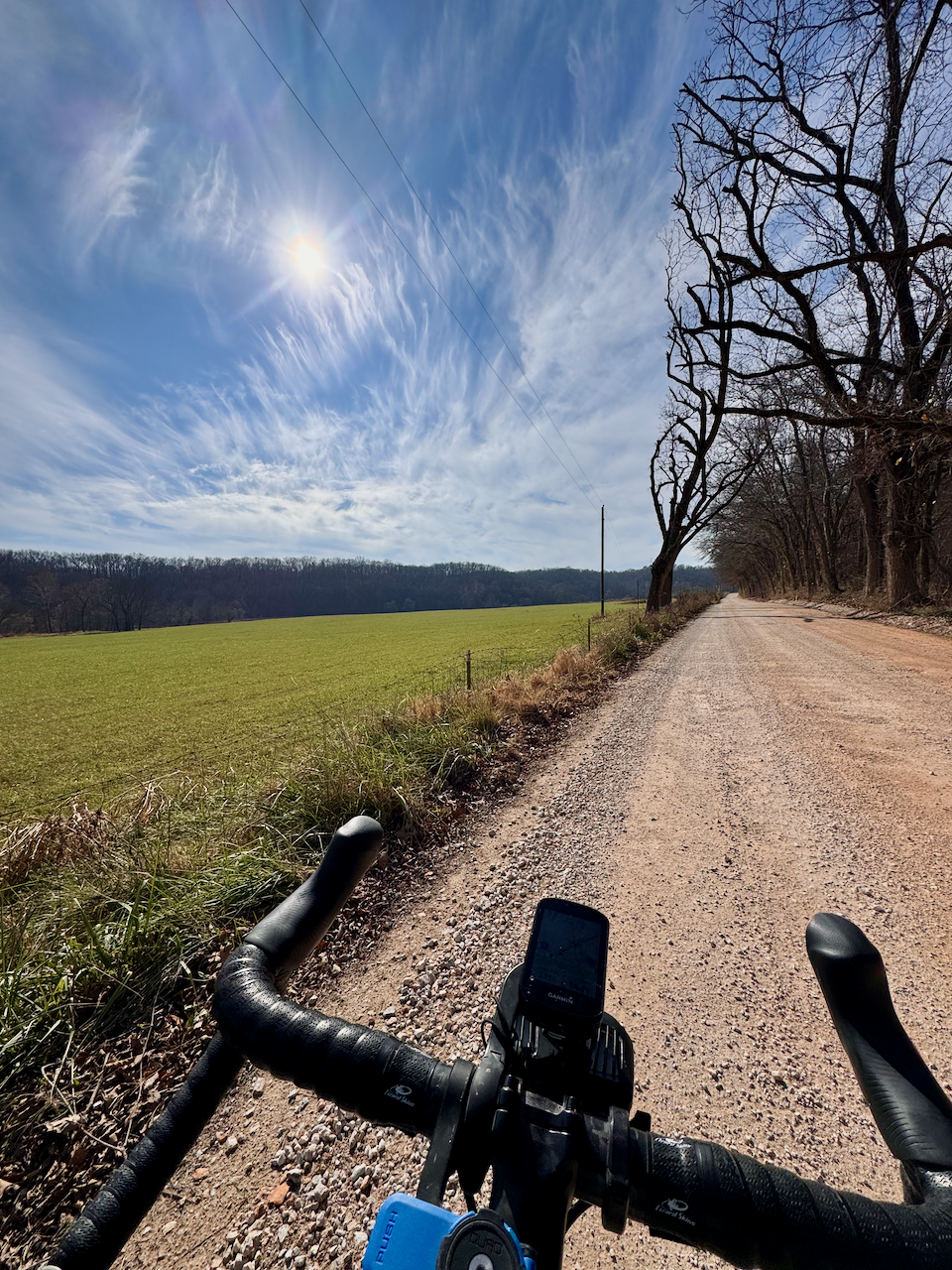
This route is a 32 mile route beginning at Airship Coffee on NW A Street and leaves Bentonville to head East towards the Brightwater crossing where this Episode first gained inspiration. On this route, you can experience Little Sugar Creek for yourself, see the trenches that were dug at the Federal Encampment, ride the Trail of Tears, and see the Tressel where the train fell. Take your time, take it all in.
alternate route.
This route is a 15 mile route beginning at the Rural Recreational Roads Pea Ridge Hub and heads East towards the Brightwater crossing.
music.

show notes & references.
History of Northwest Arkansas
- Osage Nation
- Little Sugar Creek
- Trail of Tears
- Pea Ridge National Military Park
- Butterfield Stagecoach
- Brightwater Tornado
- Brightwater Trott’s Tavern
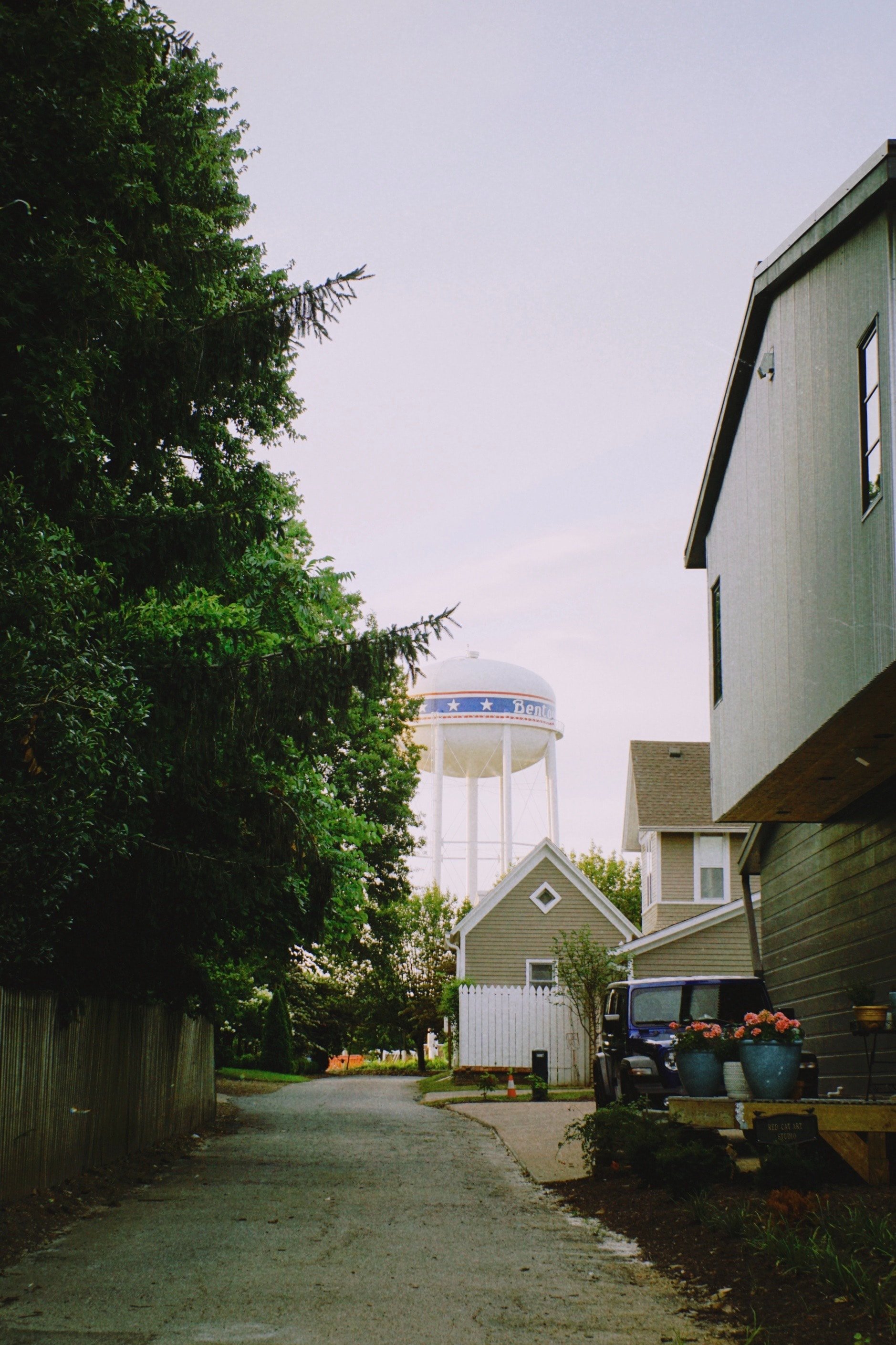
AirShip Coffee, our Start & Finish Point for this Route
Featured Artist: Will Gunselman
episode transcription.
episode main content.
[00:00:00] mike rusch.: The wheels of my bike struggle to keep traction as I descend towards little Sugar Creek near the Brightwater Tunnel. Twenty eight miles an hour is just a little fast for my experience level, but the boy inside of me wants to keep his hands off the brakes or the coward levers as some now call them.
A trail of dust rises behind my tires as rocks are ejected violently out of the way. The dust makes those behind me work a little bit harder because their clarity of the road ahead is compromised. They have to slow down while I can continue unhindered, except for my own self-imposed limits of boyhood bravery.
At the bottom of the hill, I slow to regroup with the others, even though my heart rate still reflects the thrill of being 11 years old again. As the gravel road crosses the steel-covered bridge over Little Sugar Creek, I turn left passing the southern point of the historical Old Wire Road, and I make my way west onto Sugar Creek following the sunset.
This crossroads that carries me home is heavy with stories of today and of yesterday. Stories that are layered on top of each other. They are stories that hold the road underneath me together. And over the centuries, if you were standing at these crossroads just east of my hometown in Bentonville, Arkansas, you would have seen the buffalo migrating along this natural route, followed by Osage hunters and then the fur traders, turning this eventually into a trading route.
The road was officially cut in 1835 as a post road for the stagecoaches of the Butterfield Overland Mail Company. And between 1837 and 1839, it witnessed the Cherokee Nation, almost 15,000 people forcibly relocated from their ancestral lands in what is now Georgia, Alabama, Tennessee, and North Carolina. This former buffalo trace then took on a new name. The Trail of Tears.
A year later, Enoch Trott opened a tavern here to serve the next nation that would travel this road and prepare the way for the railroad which came next, and with it progress and more people and more progress.
In 1862, a federal encampment just up the hill sat waiting for Confederate soldiers moving towards Pea Ridge to the north where they would meet to seek a violent solution that began with a violent problem.
In 1907, a runaway freight train coming down the slope towards the trestle over Little Sugar Creek slammed into a slower-moving train that was still on the bridge. The runaway train plummeted into Little Sugar Creek 40 feet below.
In 1947, a tornado cut through Brightwater Crossing and killed 21 people. The town was virtually wiped out and it never recovered after that.
But today, farm trucks and tractors tend to their cattle in the valley. Dump trucks carrying building supplies and gravel from the creek bed to be used throughout the county. And businessmen and women are going to work at the global companies holding the top spots on the Fortune 500 lists. And had you been standing here about three months ago, you would have seen helicopters following the lead group of elite U. S. cyclists as they finish the final race of the Lifetime Grand Prix season known as the Big Sugar Classic, a 104-mile bike race through the northern hills of the Ozark Plateau.
As I turn left towards home, I cannot help but face the reality that this bike is connecting me to the roads that hold all of these stories. Stories of families, stories of nations, stories of progress, stories of violence, and stories of tragedy. These are complicated stories, they're hard stories, and some of these stories have not yet healed. They are stories of pain and suffering, both of nations and podium ambitions. And yes, these roads hold a lot of stories, and I need to hear them.
I need to hear them because traveling on these roads, I find myself in the middle of them. In some way, I'm now participating in all of these stories. This bike is the medium by which I'm reconnecting to the world around me, building relationships with others, and working through my place in all of it. These roads have stories, and I'm on a journey to find where we fit within them. My simple presence on them is changing them.
So I want to hear the stories these roads have to tell, however hard they are, because these roads are changing, just like me. Seems like everything is changing, it's not like before. It's too fast, and there are no coward levers that I can squeeze to slow it all down. I blink and change has happened before I even received notice that change was coming.
People are changing, our community is changing, our world is changing, and this road is changing. But beneath that, the land is changing. Slower maybe, but the land has time on its side. Not, not like us.
And some say change is progress and progress is good. And this can be true. However, change is not progress when we fail to understand the problems that change can produce. Progress like a runaway train can get away from us. Change can create progress, but change can also create wounds, and more change on top of past change that caused wounds will not heal them. And I can see easily, based on our national dialogue, that a lot of the wounds of the land and that of its people have still not healed. Some are still being torn wide open.
So before we as a community can go forward, we have to reconnect to these stories. These stories need to be remembered. Some we need to be more honest about, and some we need to repair. Others we need to breathe more life into and renew them for our place and our time. Ada Limón said "before the road between us, there was a road beneath us." So we need a place to understand what change means and what progress we wish for us and our neighbors.
For we are not powerless to understand our stories, and we are not powerless to admit our mistakes and resolve they won't happen again. We are not powerless to decide again the things that will be remembered. We are not powerless to change our relationship with the world around us. We are not powerless to dream a right story for ourselves and the generations to come.
But in life, like on these roads, we must keep a close watch on what is ahead in order for others to safely travel these paths. Sometimes, that means we must stop and repair the road before moving forward again. See, these roads hold us, they root us, they carry our stories, and they carry our lives. And we travel them together, knowingly or not. And so together, we have an obligation to see the road ahead for ourselves and our community with eyes wide open, honest with the truth of these stories, and full of hope of the stories that are not yet written.
For soon this road may be paved. The dust the bison and the Osage first cut, the dirt on the feet of the Cherokee, the trenches dug to resolve violence, they'll be harder to reach. They'll be harder to breathe. They'll be harder to understand. The people of the First Nations have already passed from here. And at some time we will also. So, before the gravel road is gone, let us find a way to use it, to bind us to this place and to each other.
This road seems ready to hold more stories again, but they will be stories that we will layer on top of those that are already here. Not to cover or hide them, but to add to them. We will write these stories together, we just have to decide what stories those will be. So the hope of these discussions ahead is to help shape our communal understanding of our place and each other. Our communal understanding, meaning the things we believe about ourselves and our place. A theology of sorts.
A theology to reconnect, remember, repair, and renew. And for that, I propose we call this the underview. An underview is a theoretical, preemptive point of view, an independent argument at the bottom of the pages of history against the common, tired, and worn-out daily national headlines. Our national headlines are inadequate to represent me, and they are inadequate to represent you. Solving a problem or creating a dream about our future may actually require more than two opinions. In our pursuit of this underview, the medium will be a bicycle and our shared roads. Our roads hold stories, they hold scars, they hold promise. And maybe I'm naive, but I still believe as long as they can be repaired they hold more potential than ever before.
Before the road was the land, the Osage say that "to touch the earth is to touch the past, the present, and the future." And so the land will serve both as our starting point and our guide towards an understanding of the transformation of ourselves, our communities, and ultimately our world.
Christiana Figueres says that "systematic transformation is deeply, personal." So if you're also going to take this journey, it has to get deeply personal. We will do this by using the bike to connect us in a personal way to ourselves, our land, our roads, our collective memories, and ultimately to each other.
Fair warning, this may be hard, but I can also promise you it will be beautiful. Each episode will be structured with a deeper question as the foundation and be paired with a bike route that has been ridden and that you can ride also as a practical, communal and accessible format of experiencing these stories and your place in them for yourself.
We invite you to listen and ride. Explore these topics and these roads via the routes that will be posted along with each discussion and interview. And so today, from this crossroads on Little Sugar Creek, I invite you into this deeply personal process of systematic transformation. I may dare call it an invitation to a process of wholeness, for self first and for us together.
Here is your invitation to enter into this exploration of how we are creating the theology of our place.
outro comments.
Thanks for listening. This is part one of my two framing principles and the theories behind them. First, we cannot be whole without connecting to our place and our community in an honest and authentic way. The second principle is in the episode that follows. So in the meantime, see the show notes for the route that goes with this episode.
route comments.
This route is a 32-mile route that begins at Airship Coffee and Northwest A Street, and it leaves Bentonville to head out east towards Brightwater Crossing, where this episode first gained inspiration. And on this route, you can experience Little Sugar Creek for yourself. See the trenches that were dug at the federal encampment, ride on the Trail of Tears, and see the trestle where the train went in the water. Take your time, take it all in, it's sacred ground.
music comments
And we will attempt to close every episode with a music recommendation from our community or state. Northwest Arkansas musician Will Gunselman wrote an incredible song about the Buffalo National River, and I think it's worth your time.
The story of the establishment of the Buffalo National River is, well, complicated. But it was established by an act of Congress in March of 1972. Today, this national river designation protects the river from industrial uses, impoundments and other obstructions like dams that may change the natural character of the river, or disrupt the natural habitat of those people or animals that live in or near the river.
If you're listening to Spotify, the episode should roll right into the song. If not see the show notes for links to listen to Will's music. And if you want to see, Will live, I suggest following along with City Sessions, there's a good chance Will can be found in one of the upcoming shows.