
the medium with Mike Rusch.
The bicycle is the median for connecting to your community, the land, and yourself. Together, these episodes serve as the framing principles that will guide our future conversations.
season 1, ep. 3
listen.
show notes.
Episode 3 is a presentation of the second framing principle of The underview, the bicycle.
If you are new here, I recommend beginning with the Episode 2, The Invitation. Episode 2 is the beginning point and lays out my first framing principle. This episode presents the second principle.
Together, these episodes serve as the framing principles that will guide our future conversations.
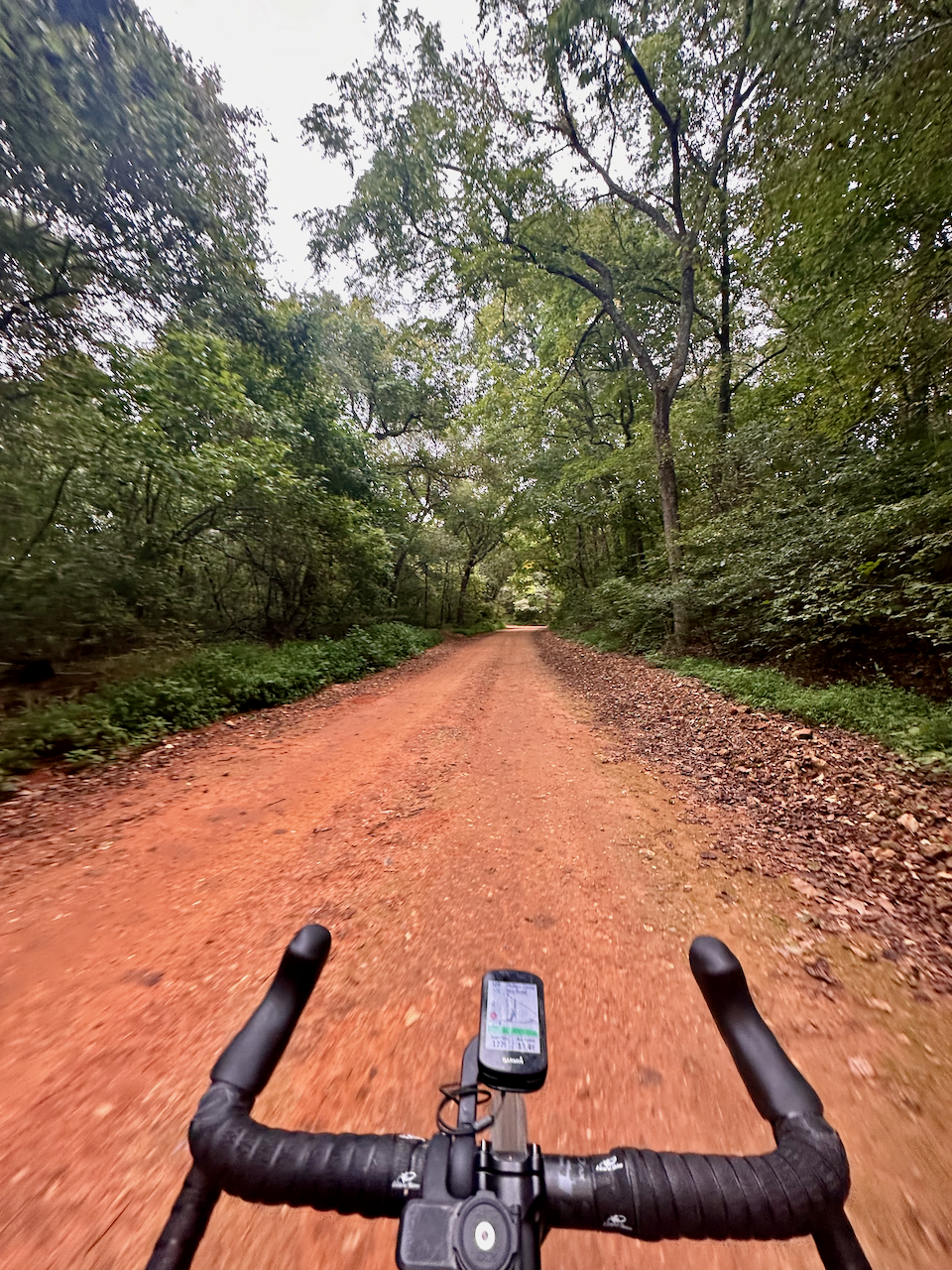
route.
The route paired with Episode 3 is a route for the perfect first step. It is a shorter route that gives you a tour of my hometown.
This route begins at Air Ship Coffee on NW A Street and heads west towards Coler Moutain Bike Preserve and returns along SW 8th Street passing close to the Walmart Global Headquarters, along the City Bike path around the Thaden School, The Momentary, 8th Street Market, The Meteor Bike Shop & Cafe, through our town square and ends where you began at AirShip. Plan on ending there with a coffee, food, or adult beverage.
music.

About Bailey Bigger
Growing up in small town, Marion, Arkansas, just outside of Memphis, Tennessee, Bailey began writing and performing seriously in Memphis at the age of 14. Since then, she’s gone on to share stages and festival line ups with acts like The Avett Brothers, Trampled By Turtles, Sierra Ferrell, and many more. Bailey released her debut EP with Oxford based label, Big Legal Mess in 2020, “Let’s Call it Love,” and has gained national attention from her earthy songwriting and haunting vocals. Bailey’s debut full length album, “Coyote Red,” released with Madjack Records in March of 2022 and her new single “Arkansas is Nice” is now available on all streaming platforms. Go to baileybigger.com to learn more and find tour dates near you.
show notes & references.
Pedal It Forward is increasing the number of people who have access to bikes in Northwest Arkansas!
Northwest Arkansas Community College Bicycle Maintenance Fundamentals Course
AirShip Coffee, our Start & Finish Point for this Route
Featured Artist: Baily Bigger
Strava “Gooseberry to Plentywood” Segment
Mike’s Local Legend Proof (at the time) for “Sugar Creek grinding westward” Segment
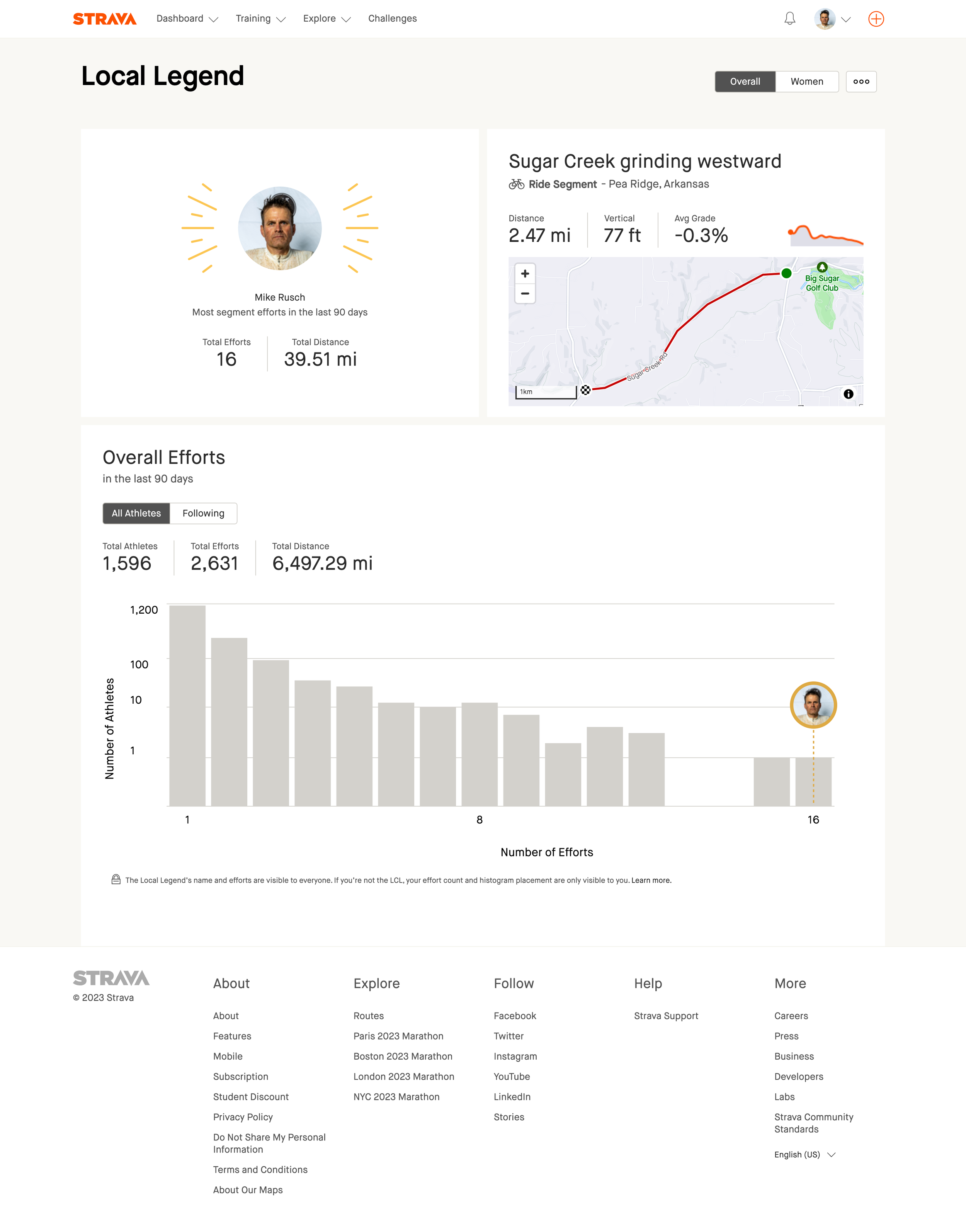
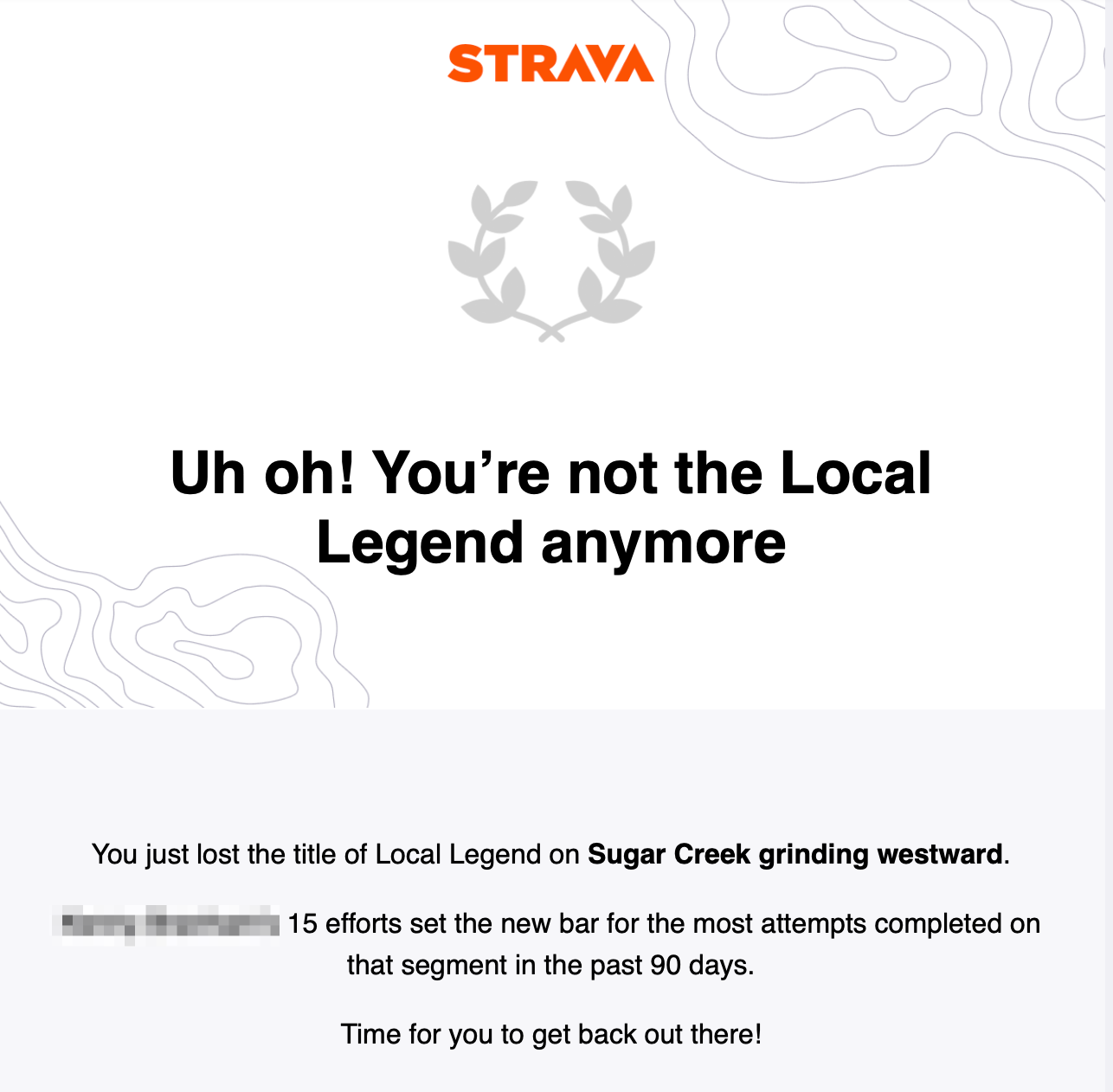
…and to reiterate how temporary this is — 5 days later, I was the Local Legend no more. Thanks Strava for helping put my ego in place (especially when the ego is based on how many times you ride a 2.5-mile of gravel road). But, those 5 days were incredible. :-)
episode transcription.
episode introduction.
[00:00:00] mike.: you're listening to the underview. If you're new here, I would recommend going back to the first episode, The Invitation. The first episode is the beginning point and lays out my first framing principle. This episode presents the second. Together, these two episodes serve as the framing principles that will guide our future conversations.
So welcome to The Medium. This is my second framing principle.
episode main content.
The hissing sound isn't good. It's like a check engine light, except this is an alarm I would like to ignore because it can mean one thing and one thing alone. It means I can't keep going. I'm gonna have to stop. So I resign to my current fate. I slow down, and with one smooth motion I break my clip free from the pedal, shift my weight to one side, and rest my foot on the earth.
The gravel shifts for a moment, but then I'm stable. White latex sealant designed to fill a puncture in the tire shoots out spraying the back of my legs without care of what it hits. This, my first defense line, has failed. The hissing sound that I hear is my judge, my jury, and my executioner. It reads my verdict.
A puncture and I know that if this is not addressed quickly, this puncture will lead to a flat tire, and a flat tire that is not repaired will obviously no longer work. It won't allow me to finish my ride and carry me home. And if you've ever ridden a bike with me, you know there is one thing on this earth that I hate more than the weatherman, and that is having a flat tire.
I hate everything about flats. Everything. I hold no ill will towards anyone, but the person, John Dunlap is his name, who invented tires without engineering a better solution, well, he's pushing me. It's like he said, well, look at what I created. It's this beautiful, amazing tire. Too bad it's going to have a flat.
Oh, well, I'll just, I'll just work on that tomorrow. Well, the problem is, is that tomorrow is 135 years ago, and no one to date has decided to solve that problem. My dad would have said, “We put a man on the moon, and yet we still have flat tires.” And I would say, “We have artificial intelligence, and yet we still have flat tires.”
I don't even understand how this is possible. And then the words of the comic Ismo then ring in my ear. Those words are, “You realize that the people who are working to put a man on the moon aren't the same people who are working to try and create a tire that doesn't go flat.” And all I can think about is that I bet they don't have flat tires on bikes on the moon.
You see, I'm a certified bicycle technician and I can perform all kinds of services from complete bike builds to suspension adjustments, replacement of motors on e-bikes, hydraulic brake bleeds of any kind, replacement of bearings, wheel building, and yet the one thing I do more than anything else is maintenance.
Thank you. Pausing for an expletive. Replace flat tires. I compare repairing a flat tire to the likes of a brain surgeon being asked to apply a band-aid to a paper cut. Certainly, there is someone else out there who can do this repair for me, some assistant of some sort. And yet right here, right now, it's just me.
At this moment, I'm my only hope. I'm faced with a simple task. Repair the tire. That is all. Do what it takes to repair the tire. There's no other consideration. There's no other option. At this moment, on this road, I am. I am my only hope. There is no magical tire fairy coming to my aid. I dismount my bike like an old Western movie and quickly place my finger over the puncture hole.
I reach for the dynaplug, and like a surgeon, I fill the puncture with a needle and a thread, perfect, exact, with no second guesses, I know exactly what to do. And then with a spin of the wheel, the pawls in the hub raise a hallelujah as the plug fills the void so that the journey can continue again, flat.
No more. My sentence is served. I can carry on. And, carry on we will, but before we get moving again, down the road I described in episode 1, I want to take a few minutes to discuss the medium of our connection to these stories, and you guessed it, it's the bicycle. In mankind's history of its relationship with machines, the bicycle seems to occupy a pretty unique place.
The first concept of the bicycle was developed in 1818, but it wasn't until the early 1860s that the first true bicycle, the Velocipede or the Swift Walker, was credited as being developed. It was soon also assigned the name of Bone Shaker because the steel wheels and the cobblestone streets made for a pretty rough ride. You could literally feel the earth in your bones.
Now there have been many refinements and advances and I can talk about those with the best of them, but the bike's basic structure of two wheels, pedals, a chain to connect to the wheels, a seat, handlebars is still pretty much the same concept as what it came into society in the 1860s.
Almost everywhere else in the history of industrialization, the machines we have made have either become much, much larger or much, much smaller. Heavy machinery or agricultural equipment have become the sizes of houses that require only one person to operate. Computer chips that were once the size of houses have become the size of mustard seeds.
And now, it's the facilities that hold the computer's memory that have become the sizes of houses. This collective memory is no longer human size. This collective memory can no longer fit into the minds of people. When our collective memory can no longer fit into our own bodies and we have power unchecked, the risks of forgetting those memories becomes all too real.
And this has shifted our perspective and our relationship to the world around us. We can now either possess power beyond our imagination, or the ability to think or process information beyond our minds. We literally hold a map of the entire Earth in our phones, where every street name on the planet can be found.
And it begs the question, is there anything left to be discovered? Yet the bicycle still stands unique in its ability to right-size our relationship to the things around us. It uses the power we provide to mechanically carry us farther and faster. But the power is self-generated, it's self-limited, it's self-controlled. It allows us to see and process our environment at a human scale and at a human speed. It's just something our vehicles and airplanes can't do.
So, the bike is my chosen conduit for these discussions, because first, the way we live is no longer human scale or human speed. In fact, we can no longer live in our world at human scale.
We're too small for it now. Practically, our country is built around the requirement of a vehicle in order to live, earn an income, or see our family, and even engage with our community. Our concepts of distance, work, budgets, homes, and relationships all have this car-vehicle factor. Hell, the Chick-fil-A in town has been closed for like four months remodeling to basically only accommodate cars in the drive-thru.
Side note, I imagine the collective impact on the city's health has improved these past few months.
Anyway, we need to find a way to reconnect to the world around us in a way that moves us differently, some way that allows us to hear the stories and process them together.
Second, the bike is something we can understand. We push the pedal, the bike moves forward. We stop, it stops. It has power as long as we give it power. To use the bike requires something from me. If I can provide something to it, it gives me something in return. It requires power, energy, and maintenance, and all of that requires me to consider how I live in this world if I'm going to give these things to it.
It has no power to take them from me. It right sizes my understanding of my own power, my livable space, my time, and the impact to my body.
Third, the bike is a proper connection to technology. Consider this, technology is generational. Generally, we consider something technology if it was created after we were born.
This means that technology for my teenage children does not include the iPhone. And for the record, I'm a proponent of technology. My degree is in computer engineering. I helped run a tech company to help raise money for vulnerable people all around the world. I get it. I see every day how technology can directly help people, but it is still okay to keep asking the question to ourselves, is this form of tech still moving us towards wholeness and newsflash? Some of it's not
Fourth, the bike builds community. For exercise, entertainment, travel, or commuting, the posture of a bike requires our presence. Stripped of a phone in our hand, alert to our surroundings, and removed from the false veil of our individualism in a car, we change the way we interact with people.
Last I checked, there were no bike rage incidences in our local news. My exposure on the bike makes me vulnerable to others, which means I need others’ participation to live safely. Listen, I'm not trying to make the bicycle sound like some, you know, like mythological creature that transcends our time and place.
I know Pegasus wasn't real. Bigfoot, maybe. But the Velocipede, it's definitely real.
Either way, I stand here with my evolving belief about the ability of our bicycle to right-size our relationships with the world around us. To reconnect us to our place, to see our place in ways that we are currently limited from. And to explore our place in ways that allow us to go deeper and not farther. I think farther is only of interest if we have forgotten how to go deeper. And I believe that there is still so much more left to discover if we can just properly learn how to go deeper. The bicycle can give us the ability to start to understand what we believe about our relationship to ourselves, and to our place in ways that are human-sized again.
This underview is a critical study of what we believe about our place and our relationships to it. It's a sort of theology and yeah, there's, there's that word again. Yes, a sort of theology of place interacting with a theology of movement through those spaces.
The point of this addition to the foundation of this discussion is this, find your bike. Dust it off, inflate those tires, and start the process of finding yourself and your connection to our world once again. Whether you ride 100 miles a week or if you have never ridden 100 miles in your lifetime, it doesn't matter where you begin this process. For those of you who are new to this, start small and make it easy.
It can be as simple as a ride around your neighborhood or a ride to the store and back. Plan a route to ride to your work or to your neighbor's house. Invite your neighbor over and ask them to ride their bike and then go for an after-dinner bike ride with your family, or Invite your neighbors to listen to the first episode and then ride the route together that's provided.
Feel the environment. Feel the road. Feel the weather. Feel the strain. Feel the bone-shaking. And for those who ride all the time, I'm asking you to add something to your ride. I'm asking you to be curious again. Lean into how you see these roads, listen to the stories that these roads hold, and seek out the hidden stories, the hard stories, and the personal stories.
Now, you may need to slow down or climb more hills, you may need to go farther, or you may need to be more intentional about where you ride or who you ride with. There is so much more to what you're doing than holding that KOM or local legend status. I'm sorry to tell you this, but those are temporary also.
Well, maybe except for the one at Gooseberry, that one isn't falling anytime soon. And just for the record, as of the time of this recording, I am the local legend on the Sugar Creek Grinding Westward segment. If only for a moment. For everyone who takes that first step towards this process, remember that this process of systematic transformation is deeply personal.
This is the beginning. This is the beginning of the deeply personal part. This is the first step in finding your place on the bike. Practically, if you need a bike or you need to know how to get your bike ready, a couple of options. Find a local non profit helping provide bikes to the community. For our community here in Northwest Arkansas, that would be Pedal It Forward or one of the many local bike shops like The Meteor.
If you want to learn more about how to care for your bike, I teach a Bicycle Maintenance Fundamentals course for adults at Northwest Arkansas Community College. Go to the community college's website to see when the next session starts. I'll be happy to teach you myself. Start this process. Fight against every reason you have holding you back from not starting this process.
Remember, we are not powerless to change our relationship with the world around us. And if your only reason to say no is because you have a flat tire, well, I raise my hand willingly to help you repair it, just so that you know how important to me this really is.
outro comments.
Well, thanks again for following along. At this point, you have my two framing principles and the theories behind them. First, we cannot be whole without connecting to our place and our community in an honest and authentic way. Second, the bicycle is a medium that can connect us to our place and our community.
We are now at the starting point. What you've heard up until now, everything before this, is the buy in. From here, we take the next step of finding out what is the state of our region today. What are our goals? What are our problems? Who's working on them? What is our role in all of it? We have some great conversations lined up, and I can't wait to share them in the following episodes.
route comments.
The route paired with this episode is a route, really, that's a perfect first step. It's a shorter route that gives you a tour of my hometown. This tour begins at Airship Coffee on Northwest A Street, and heads west towards the Coler Mountain Bike Preserve, and returns along Southwest 8th Street, passing close to the Walmart Global Headquarters, along the City Bike Path, and around the Thayden School, and then makes its way to the iconic Momentary, 8th Street Market, the Meteor Bike Shop and Café, through our Town Square, and ends you back where you began, at Airship. Plan on ending there for some coffee, food, or an adult beverage.
music comments.
And for today, we're excited to recommend the music of Bailey Bigger. I first heard Bailey in Birdeye, Arkansas at Martin and Kara Smith's home in the Delta region of Arkansas. And then my wife and I were lucky enough to host Bailey here in Bentonville through a local nonprofit, City Sessions, that is dedicated to promoting local artists and building community. The Delta influence and Bailey's music gives us some feeling for the diverse nature of the state.
We'll talk more about the Delta region and episodes to come, but please go and enjoy the music of Bailey Bigger.
If you're listening to Spotify, the episode should roll right into that song. And if not see the show notes for links to listen to Bailey's music.