
the region with Nelson Peacock.
Nelson Peacock, Executive Director of the Northwest Arkansas Council. Our discussion is about the “State of Northwest Arkansas” as a Region to include growth, opportunities, and the challenges we face.
season 1, ep. 4
listen.
episode notes.
Episode 4 is a discussion with Nelson Peacock, President & CEO of the Northwest Arkansas Council. Our discussion is about the “State of Northwest Arkansas” as a Region to include growth, opportunities, and the challenges we face.
about Nelson Peacock.
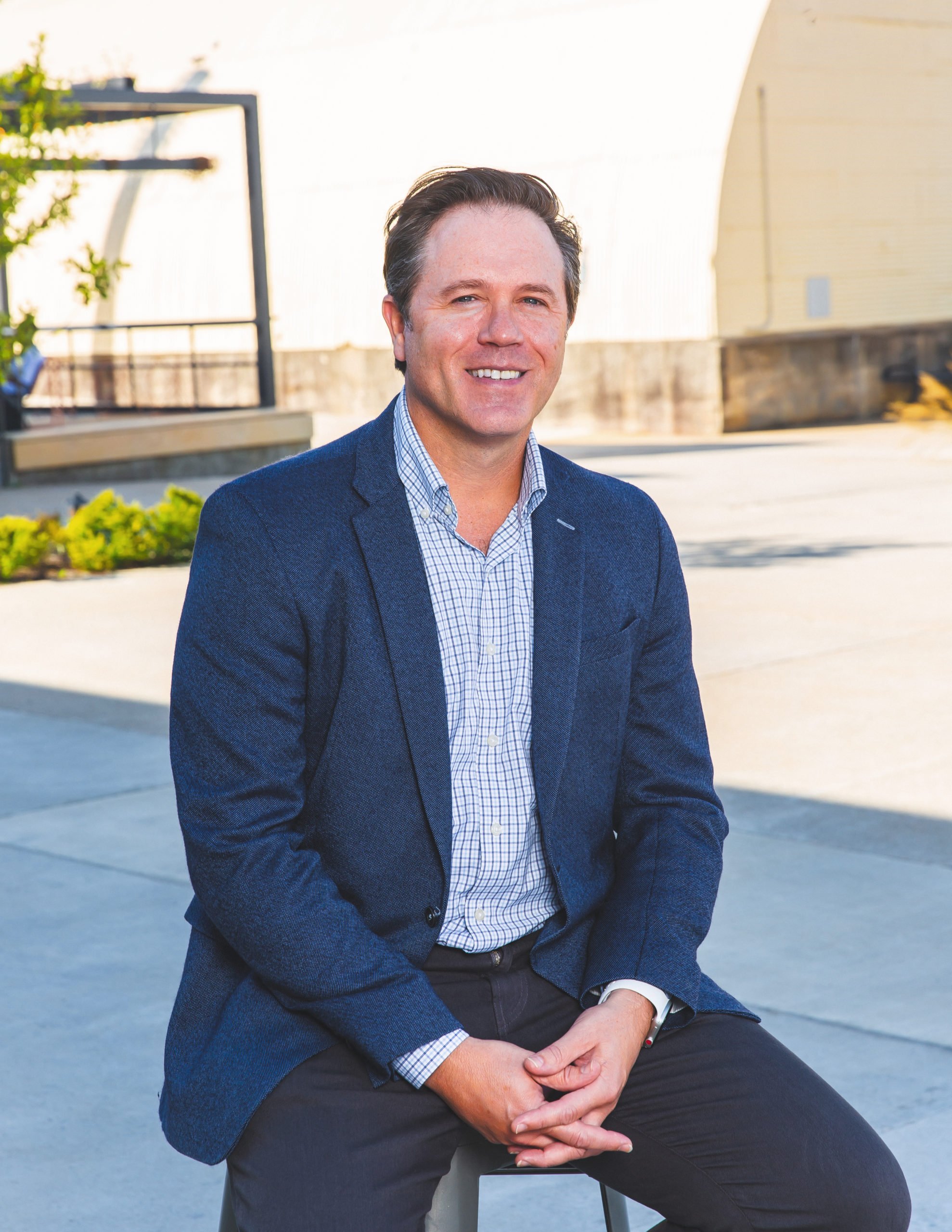
Nelson Peacock joined the Northwest Arkansas Council as President and CEO in 2017 after working as a Senior Vice President of Government Affairs for the University of California Office of the President.
Prior to that, Nelson was appointed by President Barack Obama to lead the Office of Legislative Affairs for the U.S. Department of Homeland Security where he was responsible for all aspects of the department’s interactions with Congress on issues related to counter-terrorism, immigration, cyber security, and natural disasters. Nelson oversaw the Congressional teams of seven operational agencies of Homeland Security, including the Coast Guard, U.S. Customs and Border Protection, the Secret Service, the Transportation Security Administration, and the Federal Emergency Management Administration.
Nelson also served as Senior Counsel to Senator Joe Biden on the Judiciary Committee of the United States Senate where he advised the future President on Homeland Security, Crime, and Intellectual Property issues.
Nelson has a Bachelor of Arts and Juris Doctor from the University of Arkansas and Masters of Law from the George Washington University School of Law.
route.
music.

Johnny Cash was born J. R. Cash in Kingsland, Arkansas, on February 26, 1932,
In March 1935, when Cash was three years old, the family settled in Dyess, Arkansas, a New Deal colony established to give poor families the opportunity to work land that they may later own. From the age of five, he worked in cotton fields with his family, singing with them as they worked. The Cash farm in Dyess experienced a flood, which led Cash later to write the song "Five Feet High and Rising". His family's economic and personal struggles during the Great Depression gave him a lifelong sympathy for the poor and working class, and inspired many of his songs.
Johnny Cash used his experiences at the farmhouse growing up in many of his songs. One important song that was inspired from the farm house is, "Pickin' Time".
I got cotton in the bottom land It's up and growin' and I got a good stand My good wife and them kids of mine Gonna get new shoes, come pickin' time
Get new shoes come pickin' time
Ev'ry night when I go to bed I thank the Lord that my kids are fed They live on beans eight days and nine But I get 'em fat come pickin' time Get 'em fat come come pickin' time
The family farm was flooded on at least two occasions, which inspired his song "Five Feet High and Rising".
Source(s): Johnny Cash Official Website & Wikipedia
Photo by Marlon Reyes on Unsplash
references.
episode transcription.
episode introduction.
[00:00:01] nelson peacock.: But I would say also that we're a bit of an inflection point. We've talked about this for the last couple of years. It's like, and that is as it relates to our growth. One of the fastest growing regions in the Country, and how can we absorb growth up to maybe up to a million people over the next 20 years, 400,000 additional people.
Can we grow in a way that maintains the character of our communities? Can we grow in a way that preserves the quality of life that people have? The reason people love it here. And that will be a big challenge.
introduction comments.
[00:01:17] mike rusch.: You're listening to the underview and exploration of the shaping of our place. My name is Mike Rush, and if you're new here, I'd recommend going back and starting from the beginning, listen to the invitation and the medium episodes. Those are the two framing principles from which these discussions began frames our language and it frames our method.
To begin all of these discussions we're going to first start with the question of what is the state of Northwest Arkansas today. The episodes to follow and navigate through the many unique people and organizations in Northwest Arkansas that are working to form and shape our community.
We will start first by looking at Northwest Arkansas as a region. Now, while every county and city is unique. There is no question that the region as a whole is growing together.
So to start this conversation, I have the privilege to sit down with Nelson Peacock. Nelson is the President & CEO of the Northwest Arkansas Council.
And I would venture to say that the Northwest Arkansas Council has been one of the more significant voices and helping to understand and plan the growth of our region, identify its opportunities set its key priorities and work to solve the challenges.
Just to give everyone a quick summary of what growth looks like in Northwest Arkansas today.
The Northwest Arkansas Council reports that there are approximately 600,000 people in the region. That makes it the 100th largest metropolitan statistical area in the United States. The population has increased 31% since 2010 with an estimated 36 new people per day that are coming to the region.
It is home to three of the top Fortune 500 companies that include Walmart, Tyson, and JB Hunt. It is ranked number 40 on Forbes’ list of best places for businesses and careers, and the region itself was number 10 in job growth.
[00:02:56] mike rusch.: US News and World Report puts Northwest Arkansas. Number 10 on a ranking of the 150 best places to live in the United States. Certainly, a part of what's driving that includes that its per capita income is about 18% higher than the national average. Eight of Northwest Arkansas high schools rank in the top 10% of the nation according to US News and World Report, and six of those high schools are in Northwest Arkansas itself.
The University of Arkansas has an R1 ranking from the Carnegie Foundation, which puts it in an elite category of only had approximately 3% of public and private universities that are recognized for its high level of research-focused activities.
And the quality of life initiatives are certainly front and center.
It now claims the title of the mountain bike capital of the world. It's home to Crystal Bridges Museum of American Art, and that has reported over 10 million visitors from all over the world.
And this, this is just the beginning. I think you'll quickly see why we are starting here.
So without further delay, let's jump right in.
main interview.
[00:03:56] mike rusch.: Nelson, thank you for your time this morning. It's great to sit with you and great to connect, and I'd I'd love to hear your story.
[00:04:02] nelson peacock.: Yeah. So I'm an Arkansas native. I was actually born in Fayetteville.
My dad was in law school, and grew up in Eastern Arkansas on the Delta and a little town called McCrory, Arkansas went to school in Fayetteville. That's the only thing you did back then. If you're from that part of the state and actually went to school here in law school in Fayetteville.
I moved to Little Rock after because there really weren't that many job opportunities. This was in the mid late 90s. There weren't that many job opportunities here. So I moved to Little Rock and became an attorney which after realizing that a lot of my clients were debt collectors and my job was to drive around the state.
And sue on a deficiency judgment for these creditors. I realized that wasn't in my future. That wasn't an inspiring way to to earn a living. So I ended up moving to Washington, D. C. and got really fortunate and found my way into some very interesting jobs at the Department of Justice. The U. S. Senate Judiciary Committee and the Department of Homeland Security. And that's really where I formed my guess, goal for my life, which was some kind of service oriented work. I found a policy to be very exciting to work on and how do you collaborate? How do you find common ground in an area where you have differences of politics and policy?
And so I really enjoyed that part of my career, and I knew I wanted to stay engaged in that after I'd left government service, I was asked to come to the University of California out in the Bay Area and I oversaw government relations for the entire University of California system, which is 10 universities and 4 medical schools and 2 national labs and continued that government relations work, policy work.
How do you get different institutions to work together? And so that was an enjoyable time in my life. And at some point after about 5 years of doing that a friend of mine called and said that if you ever want to move back to Northwest Arkansas or back home, I've got the perfect job for you.
And this was when my predecessor was leaving this position for a new one. And I really, I kept up with Northwest Arkansas only in terms of the lists that it were on as a great place to live and then coming back for football games or basketball games and seeing the growth. But I really wasn't familiar with what was happening in Bentonville and Rogers and Springdale just really.
Fayetteville. In the airport, of course, it was a lot easier to get home after a while. But I told my wife I wanted to put my name in the hat for this job. She was like, okay, well, that's great. She's from California. So, she was at home and she's like, yeah, go back and see your friends interview. That'd be great.
After about six months of that process, they made the offer. And when I was coming down here, I really got excited. About what was happening, the investments that were being made, the commitment of the companies the commitment of some of the families here to really to build and to establish an amazing place that had this really great work life balance.
And I was the thought and the chance to be part of that building was too much to turn down. And so I agreed to the job, told my wife we're moving from the San Francisco Bay Area to California or to to Northwest Arkansas. And yeah, we made the move and I started, I think, in July, August of 2017.
And it's been great experience being back here.
[00:07:51] mike rusch.: San Francisco, Bay Area, Northwest Arkansas. Same,. Go ahead.
[00:07:54] nelson peacock.: Well, yeah, well, when I was making that move, I was at University of California and I was explaining to my team there while I was doing this and so I pull out the list of, great places to be and all the things that were happening and Crystal Bridges and all things and they weren't buying it.
But at the same time, they were commuting 2 hours. So, four hours in the car, every day, And they were looking at me like I was crazy for leaving and so I think a lot of people lack perspective, especially in some of these big coastal cities of what it's like to live in another place a more or less urban place.
And, I think that's 1 of the things we brought to the Council over time is how do we tell that story? That we need to be able to have people understand what it's like to live here. It's going to help us reputationally, economically. It's going to attract more things to do for people that live here and so that's been a part of what we've been working on.
[00:08:58] mike rusch.: Tell me, what does, what does Arkansas mean to you ?
[00:09:00] nelson peacock.: Yeah, well, Arkansas is it's home. It's a place I take a lot of pride in. It's a place that that it's like a, it's like, our football team, right?
I love it, but I want it to be better, and I don't think there's anything wrong with that that we want the best that we can possibly get for the people that live here, the people that choose to move here, the people that were born and raised here. No matter where they live as part of this state, at the Northwest Arkansas Council, we think that by us doing well regionally we help everyone across the state.
And we're not competing with other parts of the state. We want everyone and lift everyone up here. So, yeah, and I think a lot of people feel that way they're from here. It's smaller. There's a lot of pride that goes into that, and I think you take a lot of ownership in where you live because it's so small.
I don't think. Every Californian or New Yorker feels the way about their state that people that live here do
[00:09:58] mike rusch.: you mentioned this is home. So maybe I'll ask that question. Is this home? Hopefully for good or
[00:10:03] nelson peacock.: I suspect. So my children are, 10 and 12 and, I don't think we're going to uproot them anytime soon.
You never say never. I would have never thought I'd left D. C. I never would have thought I'd left California, but our plan is to be here for a good while. Good.
[00:10:19] mike rusch.: Well, let's jump in. I'd love to learn a little bit more about Northwest Arkansas Council. Could you give me maybe a little bit of the history and maybe what that current scope and role looks like today?
[00:10:26] nelson peacock.: Yeah, so Northwest Arkansas Council, we're a nonprofit and we were founded by Sam Walton and Don Tyson and J. B. Hunt and Mark Simmons, primarily back in the early 90s. And the story is that Walmart had just become the number-one retailer in the country. Obviously, Tyson and J. B. Hunt were on their growth trajectory but I think the leaders there felt that the region was not growing in a way that would allow them to continue to scale their companies here.
There was a lack of infrastructure in terms of an airport. There was one air, the airport was in Fayetteville that had flights to Dallas, but that was about it. And the location of it would not allow for a robust expansion. There was no highway to get here. You had to either take 71 or the Pig Trail at the time.
So that's a really problem to, if you're gonna be a top company to be located in a place like that. And so, he brought Sam Walton led the effort, as I understand it to get everyone together the business leaders, community leaders, our members of Congress at the time to to set some regional priorities.
Those original ones were the airport, get a regional airport built, and some highway infrastructure bill. And so, they came together, figured out how to build the airport, which was a lot easier said than done. Getting commitments to from airlines to fly to an airport that doesn't exist to allow for the financing to go forward was not an easy process, but they were able to get that done that opened in 1990 ish.
And the Council was hey, this is a good idea. So we focused on the airport getting 412, which was a 2 lane road at the Siloam Springs getting that to be a 4 lane road. And then I-49 and so that was the reason for the Council being focused on physical infrastructure up until around 2010.
and that's when the Council, was expanded, they brought in some staff that's when Mike Malone came in to run it and they expanded into workforce development, economic development, and kind of this bucket of quality of life initiatives. And that's where the expansion started and the Council has grown and expanded to meet the needs of the region since then.
We have about 100 or so committed businesses that are members that provide the bulk of the funding with the larger companies, Walmart, Tyson, J. B. Hunt, Simmons, and the University of Arkansas, and a handful of others making up our Executive Committee, which really helps define what we're going to focus on.
[00:13:13] mike rusch.: If I were to ask you what's the state of Northwest Arkansas today? How would you respond to that?
[00:13:18] nelson peacock.: Yeah, I think, obviously the state is incredibly strong, the economy strong, the unemployment's low there are opportunities abound, still 10, 000 open jobs for people here.
A lot of those are really good-paying jobs. But I would say also that we're a bit of an inflection point. We've talked about this for the last couple of years. It's like, and that is as it relates to our growth one of the fastest growing regions in the country. And how can we absorb growth up to maybe up to a million people over the next 20 years, 400,000 additional people.
Can we grow in a way that maintains the character of our communities? Can we grow in a way that preserves the quality of life that people have? The reason people love it here. And that will be our, a big challenge. And we also, we have to, at the same time, diversify our economy make sure that that we can continue to grow our economy because the larger companies have already grown. They've scaled they're going to employ roughly the same number of people that they do now in 10, 20 years.
So we'll need other industries to come in around them to continue to grow. But it's really this inflection point of, and I put that in the buckets of infrastructure, housing, transit, getting comfortable with some density here in certain locations, we don't want to just continue to spread out and then people, we're in our cars here for 2 hours a day.
If we, if that happens where our nurses, our teachers, our firefighters have to commute an hour, because they can't afford to live in the town where they work, then, we've really lost something. And I think that is really where the Council is focused. It's this combination of continuing to grow, continuing to attract the right kind of people here, retain the right kind of people here, but also do it in a way that preserves what people find special about Northwest Arkansas.
[00:15:21] mike rusch.: It doesn't sound like an easy job by any means.
[00:15:26] nelson peacock.: Well, we, what we plan to do, no, really no region has gotten this right. We've looked at what happened in Austin, we've looked at what happened in Northern California, in Los Angeles, in Atlanta.
Not many communities have gotten this right. When we talk to experts about our housing work, the thing that they are excited about for us is that we're starting early enough. Obviously housing is a challenge now, but it's not crisis in the same way that it was in some of these other communities before they got started.
So we hope that additional runway will help us, but it's certainly there's not many models to look to say that we've gotten this just right. So it will be, I think the major challenge for us over the next 10, 20 years and really the decisions we make over the next five or ten years that's what we're built. We're building our future now. And so we need to continue to act with some urgency around, around these issues.
[00:16:26] mike rusch.: If I can, I've mentioned like we're at this inflection point, which I feel like is reflective and other conversations that I've had and that the decisions we make over the next 5 years are really critical.
If I can use that word, where do you, what do you feel like some of those decisions are that we're being faced with over the next 5 years or so?
[00:16:45] nelson peacock.: Yeah, I think it's, it's primarily around infrastructure. These infrastructure projects take a long time to plan. They take a long time to build. They take a long time to fund. So, as an example, we've been talking about the 412 bypass as an urgent priority since the 1990s. That is, the project is still not built. We talked about I-49 as an urgent priority back in the nineties. We just completed the Bella Vista bypass to complete I-49 three years ago.
So these things take a long time. So acting with a sense of urgency around some of these big projects I think it is number one. The other is housing. How can we spur housing in and around our downtowns and in around our places of employment that will happen through zoning and decisions at the city level that they need to make to encourage those kinds of developments in around places where we decide to have density. Now, every city is going to do this slightly differently. They're going to do it based on their own needs, their desire of how they want to grow, but there's been a lot of progress in all the cities and getting their zoning codes up to standards. A lot of these zoning codes were built, put in place 20, 30 years ago, and we looked a lot different.
One example of that is how we 71 is basically all commercial. If you look up and down the corridor, it's commercial only. Does that make sense with the Northwest Arkansas of today? We need to have housing, the ability to put multifamily multi use along that quarter. So we can have transit options for people that may or may not want to drive a car or afford 2 cars because there's no real city center to commute to. So there's a lot of things like that, but it really is going to involve this interplay between what the private sector needs and public sector policymakers and so what we're doing now is obviously working with all the cities on their policies and they're at different stages of development.
But we're working on a regional growth strategy, and we've been talking to the mayors and city planners and trying to figure out from them. What are their pain points? What do they see as these cities grow together? What's the consistency that we can have across the jurisdictional lines and make sure that they're collaborating when they build the next water infrastructure project, which will have impact on the city next to them.
And so those types of things, we also have to figure out our transit. The way it's funded is not really conducive to a regional transit system. And then finally, I think we will over time have to have municipalities investing more in things like housing and transit that might require some kinds of additional revenues to do that.
That's what big cities across the country do and have done. We've had to do less of that here because we've been more rural and smaller communities. That is all coming, and so we want to work with all the communities to really to provide some, structure around how we think about these collectively.
[00:20:05] mike rusch.: It's super helpful. When we talk about infrastructure and the zoning and planning. These are obviously a lot of the mechanics of how cities grow, but they grow and form and shape and those form and shape communities as well, too. It affects the quality of life that we have and not only just where we live, but how we move through cities and the things we're able to do with ourselves or family or children.
I'd love your perspective on as you think about shaping or forming or being a part of the conversations around what does Northwest Arkansas quality of life look like? How do you, how does the Council think about that? How do you take that into consideration and all these decisions?
[00:20:44] nelson peacock.: Well, I think quality of life here has always been. Hey, I can have an exciting job. I can have a good career, but I can combine that with a low cost of living easy to get around enough great things to do that. I don't feel the need to be in a big city. And I think that's what we want to maintain. That will be all the goal is to have enough density in our downtowns where we can bring more people in, have more things to do absorb, these 400,000 additional people over the next 20 years, but also not feel have it feel overbearing and too dense like, some of our major urban areas across the country and also do it in a way where, you know, the teacher that teaches, can live there or the firefighter or the police officer that they don't have to live out, in a rural community and commute in.
so I think about quality of life and character of our communities more in terms of people rather than buildings. People get focused on the building and like, is it too big? Is it too small? But really, it needs to serve what the people need, because that's what creates the character of our communities.
And so that's really where we're focused. And, continuing to make sure that people that live here that were born here that are raised here, do they have all the opportunities that this place offers, they don't have to go somewhere else and that's through good education, workforce programs, things like that, so they don't have to leave if they choose not to. We want to create a place where they have the desire to stay here because it's a great place to be and the opportunity to do that because they have the right skills and training to to work here.
[00:22:27] mike rusch.: I am. I'm biased. I lived in Northwest Arkansas for a long time. Now, the quality of life is phenomenal for me. With all the work that's being done by so many people, generous people who are investing in quality of life initiatives here. I'd love your perspective. I know what my perspective is, but I'd love your perspective on what do you think is really going well in that area?
[00:22:46] nelson peacock.: Well, yeah, it all depends on your perspective on what you're into but, I'd be remiss if I didn't mention cycling and mountain biking is the first thing, right?
That, that has clearly been the transition and change. Around what this region is all about over the last 15 or so years. Certainly that happened before started happening before I got here and I think you can see that every community on the last bond issue, big focus on cycling infrastructure.
And I think that's Regional. I think people have leaders have understood maybe they didn't at 1st, but understood what a value, add a quality of life and economically that ads. So that would be number 1. Number 2 is the arts, obviously crystal bridges, not every community can have a crystal bridges, but the way we are, providing opportunity for local artists to have places to perform or to show their art I think is really important and it matters to people. I think and then, great restaurants. People love great food. We now have a population density now and a focus. To recruit those chefs and people here.
And so, I think, I think it's those types of things. Obviously, the ability and the ease to get out to the Beaver Lake or out into the Ozarks is critically important. And I think, touting it as such. If you decide to relocate here or move here, we're offering something a little bit different than if you live in LA or in New York.
It is a little bit easier lifestyle to get outside enjoy what there is to offer outdoors. And I think all those things have really come together nicely to create a place where people desire.
[00:24:38] mike rusch.: Maybe the other side of that coin, it would be then you mentioned housing mentioned infrastructure with 1 of the key initiatives, if that's fair to characterize, that from Northwest Arkansas Council of wanting to attract and retain talent to this area. We're curious, where is it not working? Where is this place not being sticky or people are not staying here for a long time?
[00:24:59] nelson peacock.: Yeah, I think obviously we are, the sweet spot for us or the, mid career professional that's married with kids, right? I think we have less stickiness for for young singles that are, beyond their college years. And so I think that's something that where a weakness would be.
We do see some of our underrepresented minority groups anecdotally, we hear more about them having a harder time to connect. I think one of the things that is great about Northwest Arkansas is like we're spread out in these different towns. So that means it's less dense, there's different options for different people, but also, there is less, for.
smaller ethnic groups, there's less density for them as well. So, how do we form a cohesive region from town to town and let people make connections across the region? I think it's something that we need to strive to do a little bit better.
[00:25:59] mike rusch.: Can you maybe talk a little bit more about just the inclusivity aspects of I'd love to understand maybe to, if you're willing maybe is there an origin to that? Is that just the, maybe the traditional makeup of Northwest
[00:26:13] nelson peacock.: Arkansas? Yeah. So I think, this region when the Council was formed was around 96 percent white over time.
And today we're nearly one-third underrepresented minority groups has been a lot of massive change demographically here. And, this is being echoed across the country. So there's a lot of change. Happening in this region, Rogers and Springdale are a majority Hispanic school district. So a lot more democratic change to come.
So, I think for us it is how do you continue to make this a strength, not a weakness, because every economic study that you see shows that diversity, being inclusive, is an economic strength, so it's good for everyone. We just need to make sure that we provide those opportunities for people that get busy with their day to day life and what they're doing.
How do we ensure that we can have engagement and understanding across jurisdictional lines from city to city, but, ethnic lines as well. And we're doing a lot of that work through our NWAEngage program. How do you build a spirit of belonging and understanding with your neighbor? And that is literally what is happening.
We, we, this is, we're all growing up together here in this region is going to change and our role is to foster collaboration, understanding, conversation across all these different lines.
[00:27:52] mike rusch.: Thank you. As the cities continue to grow, you mentioned density and trying to prevent that sprawl that can inevitably happen without that density where that is happening currently people are moving into what is maybe traditionally more rural agricultural based areas of the counties changing the landscape, changing the makeup of those communities.
I'm curious Council's perspective on what does that look like to foster Yeah, the communities in those more rural agricultural areas of the county that are watching kind of growth come towards them or, is that a role of the Council?
[00:28:29] nelson peacock.: I wouldn't say that it's a role necessarily of the Council.
We're working with the large cities now to deal with their problems, but the lessons learned there, how do you build how do you take in this growth and build a tax base for yourself? Will be lessons that can be learned by these smaller communities. There is no doubt that these smaller towns, out in Western Benton County, Western Washington are going to change a lot and they're already seeing it.
We talked to a lot of those mayors out in those communities about what they're seeing, what they need and, frankly, a lot of folks that move here from large cities. That's what they prefer. That's why they moved here is to have multiple acre, and so, we're going to get a lot of that as well.
So there's, we're not going to prevent all the growth and sprawl and, we wouldn't want to, we want optionality for people to be able to choose the kind of lifestyle that they want and they can afford and not be required to move there and to drive an hour when they'd really love to live close to a downtown here, along the corridor.
That's the way we look at it and think about it. Right now, the major focus is, are the 5 major cities. And how we can get them on the right path and then hopefully those lessons learned will be able to be utilized by some of the smaller cities.
[00:29:51] mike rusch.: That's super clarifying to try to understand the kind of the role and the scope there.
I'm curious as I think I grew up in, in Bentonville, but think of Northwest Arkansas also as a region that aspect of balancing this regional identity versus maybe the individuality of each city and fostering that culture as well too is that a role of the Council or how are you involved?
[00:30:13] nelson peacock.: Well, yeah, we've, Obviously, people in that are live in each of these cities take a lot of pride in their city, right? So we couldn't, that's going to happen. The city Councils, the city leaders are focused on their city. We understand we get that. What we found and what we want to foster though, is the idea that if just because Rogers does well, it doesn't, it's not a zero sum game for Bentonville, and we see that across our different jurisdictions when it comes to companies that come in, Fayetteville is obviously would want, say, Company X to come in, but they're happy if they go to Springdale as opposed to going to Springfield, Missouri.
So that is the way we operate. And plus, most of these cities aren't really large enough on their own to be successful in terms of workforce development. People from Pea Ridge or Fayetteville or whatever, a company in Bentonville needs to be able to draw on that to be able to, to get their talent needs.
So there's a lot of leveraging of each other and I think at the mayor level, the city Council level, certainly at the chamber level, where we engage a lot, there's an understanding of kind of this symbiotic relationship between all the communities. And plus, I think through those leaders that formed the Council and others.
It's just the way it is. You are an outlier if you don't think about what's good for the region first, maybe not only, but you want to think regionally and then, obviously city as well. And I think even if people don't mean it, they certainly speak in those terms and that's unique.
And we have a lot of communities that come here to try to learn from us about how we do that and, a lot of it is just. Okay. That's the way it's always been. So it's, it's the culture here and we benefit from that.
[00:32:16] mike rusch.: Yeah, that's good. I'll ask you on maybe the workforce development aspect of some of the programs if I can. How do you think about balancing the economic opportunity between maybe larger companies and maybe the individuals that, that still need that workforce development type of kind of assistance
[00:32:35] nelson peacock.: yeah, the role of the Council there is really to be a connector. A connector between educators, students, and their families, job seekers. In industry we can help facilitate. Let's say, if our trucking companies need more people with CDL licenses, which this has happened recently.
We can help get the right people in a room together to create a program to do that, to stand up that, but we don't run the program. Same thing with Upskill NWA. We were involved at the outset to get the right people in the room, but that, that's a program through Excellerate Foundation, and they're doing a great job with that.
So our role traditionally is getting the educators and the business community together. What are your needs? What kind of skills do you want in your applicants? And then bring that and bring a level of awareness to students and their teachers, career advisors, and others about what's available to them out there.
What kind of skills do they need to be successful? What's their income levels of certain jobs and then, working on things like job fairs to to have a student to go in and what is it really like to work on aC units or be a coder or whatever with hands on experience and so that's really our role there when we see a significant gap
between what employers need and what students are being trained. We'll go to the educator and start trying to work through that. We've also set up a really robust interface between employers and job seekers just for Northwest Arkansas called CareersNWA. People can go in there and create a profile and they can have direct engagement with jobs here in the region. It's not one of these national job listings. So, so that is the way we engage primarily.
[00:34:35] mike rusch.: Thank you on that. I'm curious if you could, if I were to give you like a paintbrush and a palette and ask you to paint a picture for what Northwest Arkansas could look like 20 or 25 years from now to really not only what the dream of that looks like but maybe even to set expectations for people that have either been here for a very long time or maybe new people that are coming.
[00:34:59] nelson peacock.: Yeah, I think I think it would look a lot like it does right now, to be honest. It'd be a larger version of what we are right now. It would be a slightly denser version in each of our downtowns with pockets of density. With restaurants with jobs with people living there, able to walk to bike, all of those types of things.
A lots of green space. There would be nodes of connectivity and transit between them to get around. So you don't have to get in your car. Every time there would be more commuters on transit and cycling as well. I think the university, I would want the university to to be one of the best universities in the middle of the country in terms of the types of student it attracts, in terms of the research that it gets done, the national reputation.
I think that is a key for Northwest Arkansas and for the state to have that. And then I would like for this to be a place where founders, entrepreneurs can know that they can come and build their companies here. They can attract the talent they need. They can use, they can attract the capital they need.
They can get the customers they need. We have a lot of assets here, but that is one place, that is one area, access to capital and kind of this startup engine that most smaller places don't have. And that's what we need as we continue to grow how can we have these high paying jobs that create a lot of opportunity for people beyond the big companies that we have here?
To me, that's really important and then, doubling down on our social infrastructure, making sure people are civically engaged, making sure that there are opportunities, engagement across communities, across different ethnicities, making sure that we're Building a place where everyone feels like they belong here.
They can find their place here. And that's going to help us ultimately in our economy, our quality of life, the cultural richness, all of that brings. So that's what I hope to have happen. And I think it's a version slightly bigger and better version of where we're headed right now. We just have to work hard to make those decisions to make sure that we don't become too costly to squeeze people out.
[00:37:26] mike rusch.: Do you have any fears for this place?
[00:37:30] nelson peacock.: Absolutely. Yeah, you can look at other boom towns. You can look at Austin, Texas. It is losing if you ask everybody, you don't, I don't want to say it this way necessarily but I'll, so we're about 60 percent of the people that live here from somewhere else.
And that's great, right? You bring your experience with you, your understanding of the world, and there's a great cultural melting pot. But do we lose what we are right now and in the midst of all that growth? I think that's what people would say that it's happened in Austin a little bit.
There are some that remember the good old days and lament it. There are some new people that love it the way that it is. And so we're going to experience some of that. There's going to be some people that like Bentonville the way it was 10 years ago. And that's not coming back. The same thing with Fayetteville or Springdale or Rogers.
So how do we, how do we bridge that divide? I think that's the big fear for me. I don't want there to be a a, a division between people that have been here 20 years versus 5. Hopefully we can grow in a way that that takes some of the growing pains and other cities have had and make some less prevalent so that people can continue to appreciate this place.
That's probably my biggest fear and in a way that has to do with infrastructure, housing and transit and all those things we've talked about, but it's also like, how do we bring people in and make them feel welcome and like they belong here.
[00:39:04] mike rusch.: Yeah, thank you. One of the terms that we use during the scope of these conversations is really this term wholeness and I'd love to ask you within your point of view within the work that you're doing. What. What does wholeness look like to Northwest Arkansas from your point of view?
[00:39:21] nelson peacock.: Well, I think it's the theme of what kind of what we've talked about a little bit. Can you get everything that you need right here? And I think that's different for me than it is for others. The 25 year old recent college grad needs something way different than, a middle aged guy with two kids, right?
But how can we have how can we have that for everyone that chooses to be here? We haven't touched on health. And when you bring up whole, there's whole health and a desire to move that forward. And that is talking about, the entire person. Your mental health, your physical health, how you relate to your neighbors, all of those things makes up, the quality of self quality of life.
How can we build those things? Obviously. A lot of that is on the individual, people have to make choices, good choices, good decisions in their work, their personal life. But can we set up an environment, can we build on an environment that makes the right choice an easier choice? And I think that's ultimately what we want to have happen here.
And again, that gets back to job opportunities, quality of life in our communities. Ensuring that if one of your family members gets ill and has a specialized issue, they don't have to fly to Houston to get treatment. We talk about the burden on quality of life when that happens, how can we build and make sure we have that medical expertise here so we don't have to do that.
That all of those things wrap up to me in wholeness.
[00:40:51] mike rusch.: Housing infrastructure seems to dominate most conversations in Northwest Arkansas. I'd to your point about not asking about health, what else am I not asking about? What do you feel like are some of the things that we really need to pay attention to or people maybe aren't yeah, giving the attention to that they should.
[00:41:07] nelson peacock.: I, I think we've talked a little bit about it, but entrepreneurship. I believe that is a very important thing that we can promote lack of venture capital here. We are not unique. Most places in the middle of the country don't have that. But if we're going to continue to grow and scale like this region, the Council for sure is founded on great entrepreneurs, right?
Sam Walton might be the best of all time but the Tysons, the Hunts, the Simmons, they've all built these amazing companies. How can we make sure that the next Sam Walton that went to the University of Arkansas doesn't have to move that out to California to build their company? We've got to make sure that person has the resources here to build their company here, because it's going to benefit all of us that live here through new opportunity.
So I think that is a key area of focus for us for sure. Other things that, that we need to work on, but we mentioned healthcare, workforce development continues to be important. I think you mentioned Upskill NWA. That program is filling multiple needs. One, there's a shortage of health care workers and a lot of people have the skills to do it, but they don't have the time, right? They've got child care. They've got a current job and upskill gives them the time and opportunity to advance themselves. And so I'd really like us to see us build on those types of programs now that will take an investment by our community leaders, city leaders, county leaders or state leaders.
That is not those programs have not been driven by philanthropy or private sector investment in other communities. So that's an area where, city, county, state leaders will probably have to step up to continue those programs. And then, finally, I think the thing that, that we've spent some time on at the Council that we haven't talked about is telling our story in Northwest Arkansas.
We, about 5 years ago, we, we had all these great things happening, but not many people knew about us. We didn't feel like we were getting a bunch of credit for those things on a national scale. So we did some research and we found that only 30 percent of younger people in that job seeking mode had ever even heard of any city in Northwest Arkansas through aided awareness.
So the question would be, have you ever heard of Bentonville, Arkansas and 70% Would say no. So we felt that was a problem, especially when we're, obviously home to an R1 research university, home to the world's largest company and other Fortune 500 companies so we started out on our "Life Works Here" campaign.
just so that we would have the ability to be on the radar for entrepreneurs and for talented people. Because, if Walmart needs to hire someone, they can hire whoever they need to. They can pay the salary, they can do the relocation bonuses, but young firms that are starting to grow and scale like like AcreTrader out of Fayetteville, they don't have the ability to do that.
So they need to be able to Have a place where they're located that people know and at least have an understanding that it's a good place to consider and so when we Try to share the message about Northwest Arkansas it's really not about the big companies It is about these smaller startups that are looking to hire the right talent because people with expertise and let's say software development it's somewhere between three to five years experience and That is a hard person to get. Now people coming out of a coding school or whatever. That's we can hire that locally, but you can't hire people with 5 years experience locally as often. So they need. That's 1 of the reasons we were working on this program to get people to have eyes on Northwest Arkansas. I think we moved the needle up to around 68 percent now with aided awareness, so we would love to continue to do that to just have.
People across the country know about Northwest Arkansas know that is a good place to be that there's opportunity here. And that's going to help us in our attraction.
[00:45:29] mike rusch.: Well, it's got a great story to tell. That's for sure.
Nelson, I just want to say thank you for your time and the work that the Council is doing.
It sounds like it's, incredibly complicated. It's good that you're at the helm of that, trying to help steer this ship and form and collaborate. And so thank you for your, yeah, your leadership there. And thank you for the work the Council is doing. And yeah, I look forward to seeing the vision that you painted, hopefully come true here if I get to see it.
So thank you for your time.
[00:45:53] nelson peacock.: I appreciate it.
outro comments.
[00:45:57] mike rusch.: Thanks again for listening, and I'm truly thankful for Nelson's time to give some context of how the Northwest Arkansas Council started and the vision it's holding to carry this region forward.
I believe you can hear in Nelson's comments, both the excitement of where we're going as a region today, and the immense complexity of trying to collaborate across countless stakeholders to position our region to meet the challenges of growth while stewarding the incredible and special place that it is today.
growth is happening. That's not going to change. So having people like Nelson and the entire Northwest Arkansas Council team focused on what's ahead is absolutely imperative.
The scope of their work is much greater than we were able to discuss today. So I'd encourage you to spend some time on their website and learn more about their entire focus that includes the arts and culture, diversity, equity, inclusion, economic development, entrepreneurship, health care, housing, infrastructure, recycling, talent attraction, workforce development and so much more. You'll hear the counsel referenced in discussions that follow so we'll be following along closely as they do their work.
route comments.
[00:46:59] mike rusch.: The route that we've selected for this episode is one that's going to give you a tour of the entire region. You'll visit four of the five major cities in Northwest Arkansas.
You'll go through some of the areas where three of the top companies on the Fortune 500 lists have their home offices and operate. As well as experiencing both a mix of urban community via the Razorback Greenway and rural communities via the gravel roads to the west of the county.
It's a big loop so feel free to break it up. But if you want to see the authentic Northwest Arkansas, you'll find a few better ways to do so.
There are two versions of this route, one starting in Bentonville and one starting in Fayetteville, but it's the same route. So just pick a place, hop on, go for it.
next episode preview.
[00:47:37] mike rusch.: Coming in our next episode, I take one step closer to our communities and focus at the county level. I have a chance to sit with Benton County Judge Barry Moehring about the state of Benton County. As the CEO of the County Judge Moehring has seen a lot about how Northwest Arkansas is changing.
[00:47:54] barry moehring.: ...since we came out of the Great Recession, which hit us here, but didn't hit us as badly as some other places. Land values, housing values, it's just more than somebody who's had land can walk away from.
I mean, you're not, you're not doing yourself or your family or your, your heirs any favor by walking away from that. And so that's what, that's what's happening. We're definitely becoming a more urbanized county, and that does create tension because there's a lot of resistance..
[00:48:16] mike rusch.: I look forward to sharing this conversation with you. Plus I make a pretty big ask as it relates to gravel cycling. We'll see how that one turns out.
music comments.
[00:48:24] mike rusch.: And as we end this episode, a gentleman by the name of JR from Kingsland is going to be our music recommendation. Of course, others may know him as the one and only Johnny Cash who was born in Kingsland, Arkansas on February 26th, in 1932.
When Johnny Cash was three years old. The family settled in Diana's Arkansas. Diez Arkansas was a New Deal colony established to give poor families the opportunity to work land that they may later own. From the age of five, he worked in the cotton fields with his family singing with them as they worked. His family's economic and personal struggles during the great depression gave him a lifelong sympathy for the poor and working class. And it inspired many of his songs (source: Wikipedia).
Today, Cash's rendition of Tom Paxton's song, "Can't help but wonder where I'm bound" feels like a good way to end.
So if you're listening to Spotify, the episode will roll right into the song. And if not see the show notes for links to listen to the music.