
the assembly of god church with Gary Wheat.
Pastor Gary Wheat of the Assembly in Siloam Springs explores 24 years of leading an Assemblies of God church born on Arkansas soil, rootedness, hope, community service, and faith across traditions in NWA.


episode notes.
In this episode of the underview, Pastor Gary Wheat of The Assembly in Siloam Springs opens the door to a tradition born on Arkansas soil. The Assemblies of God was founded in Hot Springs in 1914, and the Assembly itself traces directly to the Pentecostal revival in Topeka, Kansas, making it one of the oldest continuously operating AG congregations in the state. Pastor Wheat arrived in 2001 to lead a church that couldn't make payroll and whose elder board had resigned. Over twenty-four years, he chose patience over vision-casting, loved a broken congregation back to health, and built a church whose identity rests on a single word: hope.
This conversation explores what it means to lead one church in one place for a quarter century as the community around it changes. Pastor Wheat describes the tension between longtime Siloam Springs residents and newcomers, the realities of pastoring on the Oklahoma border near Cherokee Nation, and the shift from drawing people in to going out and serving, painting fences, cleaning up festivals, partnering with nonprofits. He shares the Monday morning coffee where pastors from different traditions meet as friends first and clergy second, his practice of referring people to other churches when they'd be a better fit, and the Pentecostal conviction that the Holy Spirit falls on everyone without checking credentials. It is a conversation about rootedness, generosity, and what it costs to stay.
about our guest.
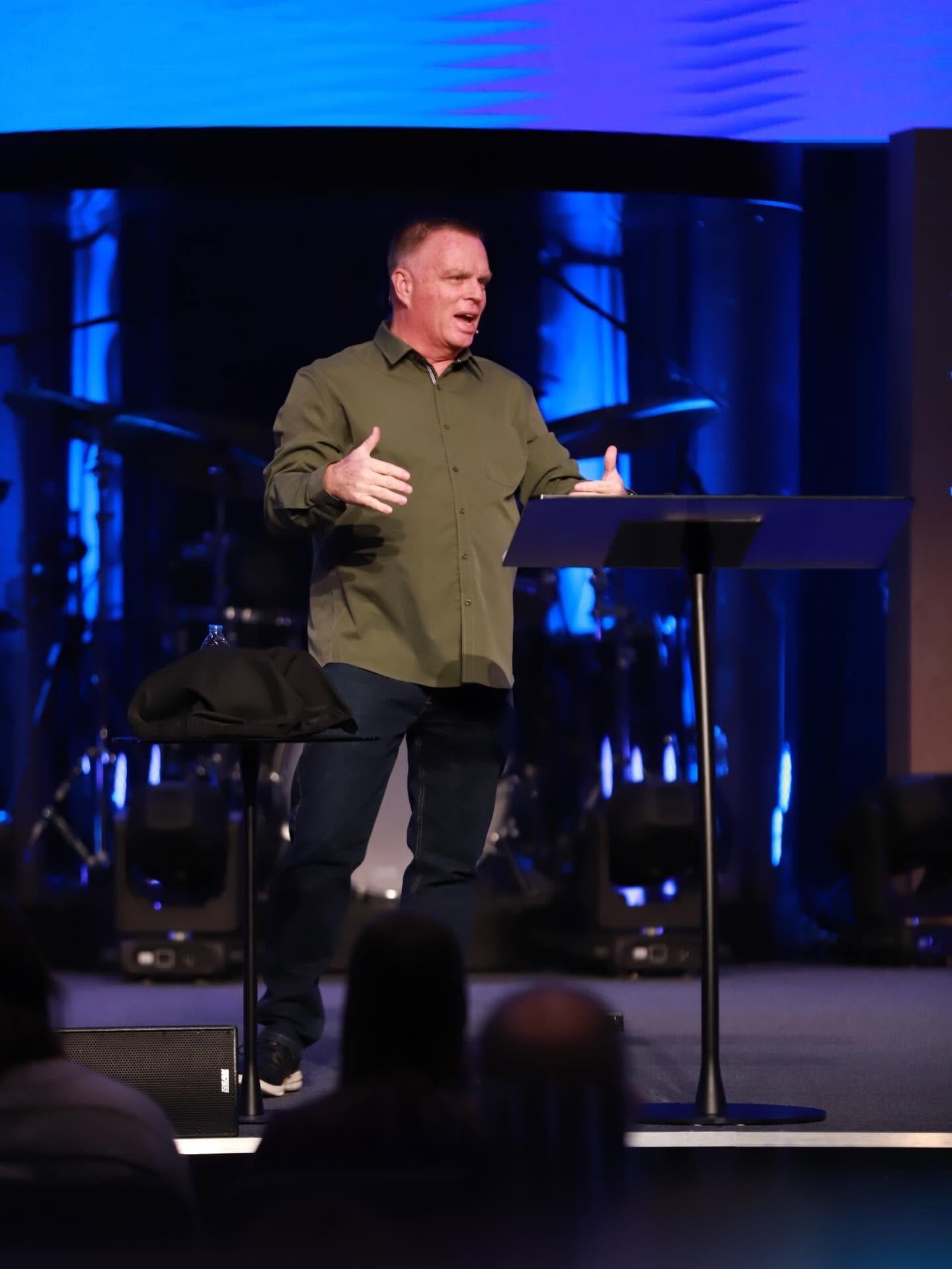
Pastor Gary and Krystal have served as the Lead Pastors at The Assembly since July 2001. Pastor Gary is an ordained minister with the Assemblies of God. He has a Bachelor's in Church Ministries and a Master's in Organizational Leadership from Southwestern Assemblies of God University (now Nelson University). He and his wife have been married since March 1991. They have two incredible children. Pastor Gary loves all things chocolate!
episode references.
- Assemblies of God USA: https://ag.org
- Assemblies of God History — Flower Pentecostal Heritage Center: https://ifphc.org/About/AG-History
- Encyclopedia of Arkansas — Assemblies of God: https://encyclopediaofarkansas.net/entries/assemblies-of-god-5121/
- The Assembly — Siloam Springs: https://www.theassembly.life
- Manna Center — Siloam Springs: https://mannacenter.org
- Bright Futures USA: https://brightfuturesusa.org
- John Brown University: https://jbu.edu
- Celebrate Recovery: https://www.celebraterecovery.com
- Dogwood Festival — Siloam Springs: https://www.siloamsprings.com/dogwood
episode outline.
- welcome and introduction (00:00:00)
- pastor gary wheat's story — farming community, call to ministry at 13, tragedy and turning away, radio/television detour, surrender and return (00:00:20)
- scrubbing toilets for Jesus — first ministry job as a custodian, learning under three pastors with different gifts (00:04:01)
- arriving in siloam springs — the call in 2001, a church in crisis, dependent status, couldn't make payroll (00:06:25)
- what is pentecostalism — describing the tradition to outsiders, the gifts of the spirit, creating a safe space (00:06:48)
- the origin story — topeka, azusa street, hot springs 1914, the assembly's direct connection to the topeka revival (00:09:51)
- not like the ag i grew up with — how the tradition has evolved, methodology versus DNA (00:15:26)
- the life cycle of a church — 25 years of learning, the split, healing, vision, and stewardship (00:17:20)
- a place of hope — church plateau, offering to resign, Matthew 12:21, becoming a place where messy people find hope (00:26:00)
- belonging to a community — life groups, doing life together, what the church offers that nothing else can (00:26:59)
- a changing community — growth in siloam springs, newcomers and longtime residents, the tension that bleeds into the church (00:29:41)
- finding a church — "I don't want to build my kingdom, I want to build his kingdom," referring people to other churches, teaching people how to leave properly (00:34:11)
- the monday morning coffee — pastors from different traditions as friends first, praying for each other at the coffee shop, modeling unity (00:38:00)
- to the broader community — shifting from "come to us" to "go to them," the easter bunny parachuting in, rethinking community engagement (00:45:20)
- project for the city — painting the wrought iron fence over sager creek, dogwood festival cleanup, partnering with manna center, genesis house, choices pregnancy center (00:47:18)
- a border church in this cultural moment — diversity, the azusa street inheritance, jesus at the well, crossing lines, sitting at their table (00:52:12)
- when things don't go well — the unsigned letter, "we give people more chances in the world than we give people in the church," how to leave a church properly (00:58:35)
- a recommendation to our community — armon newburn's definition of success, not embarrassing family, church, or jesus (01:04:52)
- fears — not wanting to be the reason someone turns away from faith, the weight of ministry on family (01:07:39)
- wholeness — soul, mind, and body, being a good steward of all three (01:10:06)
- closing (01:11:43)
- talk-back with monica kumar — the courage of faith leadership, bridges and tables, giving people more chances, the monday coffee, the interracial roots of pentecostalism and how they work themselves out today (01:12:27)
episode transcript.
episode preview.
[00:00:00] gary wheat.: Not to get political, but go down that road just a little bit. I remember when a Democrat and a Republican did not agree, but they could agree to disagree and still have coffee together. Now that seems like that can't happen for whatever reason. I pray that never happens in the church, and so I, I'm hoping that the community sees, oh, there's Assembly of God pastor having coffee or lunch or hanging out with a Baptist or Presbyterian or Methodist or whatever. And I hope that we, and the faith community can be that example of where we can agree to disagree, but still be civil about it, but also say, and if we're believers, you know what that faith community may not believe in the gifts of spirit the way I interpret it. But you know what? I don't see where anywhere in the Bible that is a prerequisite for going to heaven. They are still my brother in Christ, my sister in Christ. Jesus even said The greatest commandment is to love the Lord of your God with all your heart, with all your soul. And he said the second one is just as important, and that is to love your neighbor as yourself.
episode interview.
[00:01:53] mike rusch. (2): Well, you're listening to The Underview, an exploration in the shaping of our place. My name is Mike Rusch, and today we're sitting inside a tradition that was born on Arkansas soil. On April 2nd of 1914, over 300 people gathered at the Grand Opera House in Hot Springs, Arkansas, upstairs from a saloon and an undertaker's shop. They prayed, they fasted. In over 10 days, they formed the General Council of the Assemblies of God.
Today, that fellowship has grown into the largest Pentecostal denomination in the world. Nearly 13,000 churches in the United States and over 69 million members on every continent around the world, and it started right here in Arkansas.
But before Hot Springs, there was Azusa Street, and in 1906 in Los Angeles, a Black preacher named William Seymour, the son of a formerly enslaved person, blind in one eye, led a revival that broke every rule of its era. Black and white worshipers praying together, women holding leadership, worship that ran around the clock in a converted stable. "The color line," one witness wrote, "was washed away." It was one of the most radically interracial worship experiences in American history, And yet, within a decade, the denomination that grew from that fire accommodated itself in the South to the racial order of its time.
Now, this season we're asking what faith is planted in Northwest Arkansas, what holds power, what is breaking apart, and what is emerging. And in this episode, we're gonna sit with a pastor who has led one church in one place for almost 25 years. Pastor Gary Wheat came to the Assembly in Siloam Springs in 2001. The Assembly itself is over 100 years old, founded in 1923, just nine years after the denomination's founding in Hot Springs. This is one of the oldest continuously operating Assemblies of God congregations in the entire state.
So here's what I'll ask you to hold as you listen. This is a tradition that believes the Holy Spirit falls on everyone. That is its most radical claim. The Spirit does not check your credentials. It does not observe the color line. It does not ask for permission. And Siloam Springs sits on the Oklahoma border. Highway 412 runs right through it. The Cherokee Nation is just across the line. Marshallese and Latino communities are growing there. The town itself is changing and growing and holding on all at once.
What does it mean to be a pastor of a church for a quarter of a century in a place that has become something new every year? What does rootedness look like when the community keeps growing and changing? And finally, what does it look like when a pastor says, "I'm not trying to grow my own kingdom"? Those are the questions.
And if something resonates or if you're wrestling with any of this, I'd love to hear from you. Hit Send Us a Voice Message button on the underview.com homepage. We listen to every one.
Unfortunately, Monica was not able to join me in the room for this interview. However, we have recorded our talk back session at the end of the episode, so you'll get to hear from her as she voices her thoughts on this episode. All right, we got a whole lot to work through today. Let's get into it
I have the privilege today of sharing a table with Pastor Gary Wheat, who is the lead pastor of the Assembly here in Siloam Springs. And pastor, thank you for being willing to sit down and enter into these conversations.
[00:05:00] gary wheat.: Absolutely.
[00:05:01] mike rusch.: Really thankful for your time and Yeah. Welcome. So thank you.
[00:05:05] gary wheat.: Thanks for the invitation and always love just having great conversations with people.
[00:05:09] mike rusch.: All right. Let's dig in.
Tell me let's start with your story. I'd love to understand and not to get ahead of you. Yeah. But you've been a pastor at the church for 24 years and here in Siloam Springs, and so you I want to hear your story and what does it look like to lead a church for this longevity of time in a place that's been changing so long? So yeah, take a place to start, but tell me your story.
[00:05:30] gary wheat.: I grew up in a farming community in central Arkansas Loneoak, Arkansas, which is still a small farming community. Didn't really go much further than Little Rock from that. But yeah, I grew up in a church and just really great great story. Not to go dive too deep into it, but my mom and dad got saved in a revival and that's, they've got a really cool story as well. And from that point on, if the church doors were open, we were there. And so grew up in at Brownsville Assembly of God there in Lone Oak and just thankful for the people that that really.
Modeled not perfect, like living because none of us are perfect, but faithful in that different culture, different time. Most definitely. My my family and even that church is, not a lot has changed sometimes in churches, even today. Small country church, great people, faithful people, not perfect, but faithful. And and as I grew, I probably at the age of 13, felt a call to do that. I just, what I saw, I didn't know anything about ministry. My family had not had ministers in, in our history. And so it was like, yeah, this is what I'd like to do.
My older brother was already following the call into ministry and I had this tug of war because he was six years older than me. We were close. We were into sports and different things and, you, I had the fear of if I said yes to the Call of Ministry, people would say, oh, you just wanna be like your older brother, but it was my call. I went through some very challenging times in family, and I didn't understand that even followers of Christ have tough seasons. I'd seen my mom and dad serve in that church. My mom was the secretary. I mowed the yard. My dad was a trustee. That was our life. And yet tragedy struck our family with my older brother and I was at a very vulnerable age to where I didn't understand that bad things do unfortunately happen to good people and even Christians. And I just turned my back on God because through several different. Scenarios and through circumstances I had the question, why would a loving God allow this to happen to a family that has devoted their life?
So I went from being called into ministry and going that route to wanting to go into radio and television. So I went to college graduated with associate's degree in radio and television, and just. Living my life and and, but not that fulfilled life. I stepped away from the church and but I honored my mom and dad because my dad had a rule, if you live under my roof, you're going to church.
So I would still go, but I wasn't really I was doing the motions more than anything else and had a wake up call and just totally surrendered not just my life, but my future to the Lord. And and my, I started volunteering as a youth pastor at my home church and met a pastor in Fort Smith, Arkansas that invited me to come and join his staff. As a children's pastor, but in order to pay be paid, I had to clean the church. So I was being paid to be a custodian, but I was doing ministry. So that was my first full-time job in a church, was a janitor. I, we laugh and we call it scrubbing toilets for Jesus. So
[00:08:51] mike rusch.: I, I have a friend who's probably listening who has a very similar story.
[00:08:54] gary wheat.: Really?
[00:08:55] mike rusch.: Yeah. And is probably wanting to come meet you right now, so
[00:08:58] gary wheat.: I, Hey. I believe that the church will be cleaner if every family in the church took a week to clean the church. It's just amazing. But I, just really, not only that, but he said, Hey, I want you to come and this is how I can get you here, but as the ministry grows, we'll bring you on full time as pastoral staff.
And he did. And so that took my journey because I didn't go to bible school. I didn't, I had training in radio and television, not in, I guess public speaking was part of that, but other than that, and, but I was on staff with three pastors that I had hands-on experience, and every one of 'em had a different gift set, different personality.
The first one was really his strength was evangelism. So I learned evangelism underneath him as a janitor and evangelism. I learned that the second pastor was in Oklahoma City and he was very administrative. Just it was amazing how his mind worked. And he taught me hands on of the administrative side. And then the other pastor moved back to Arkansas, to Bebe, Arkansas. Small community, close to Loke actually. And that pastor had been there a long time. He had and he really showed me the heart of longevity, but also the heart for the people.
Not that the other pastors didn't have that was just him and my wife Crystal. And I just really began to pray. We want that longevity, we want, all these other things you have to have, but we want to go to a place and stay.
And in 2001 received a phone call from an overseer, presbyter of this area in northwest Arkansas. And I knew him. He was actually best man in my wedding. And so we had kept in contact and he called me, he said, Hey. He said there's a church that I think that you would really fit with, but also the church had gone through a really difficult season and the pastor had left, the elder board had resigned and the Assemblies of God, when that happens, the district or the state comes in, comes alongside and we call it dependent church.
And so we had a large church that really didn't have leadership and so he called and invited me to really think about it, pray about it. And in July 19th, 2001, almost 25 years ago, we moved from Oklahoma to Siloam Springs, and we've been here ever since.
[00:11:15] mike rusch.: I didn't grow up in an assembly of God tradition, and so I'm curious as you think about maybe me Yeah. Or someone who's maybe never walked into this tradition before. What would you want them to. Understand about this tradition from its, and we can go all the way back to the origin. I've got some questions there, but gimme a starting point for understanding how you think about growing up in a tradition like this. Yeah. And how that forms and shapes your story today.
[00:11:38] gary wheat.: Yeah. I think it's a great question because we sometimes our perception is framed by what we see maybe on tv or we've heard stories of the extreme. Really Pentecost, not to go into a deep theological explanation the outpouring of the Holy Spirit in Acts two happened actually on Pentecost.
So that's we say Pentecostal because that experience happened on the day of Pentecost. But really. I've had the opportunity to explain and share here in Siloam Springs, John Brown University. They had a capstone class and they would have different faiths, pastor from Baptist, church Presbyterian. They asked me to come and share about Pentecost and I would jokingly open up. But I would ask, Hey, how many have been in a Pentecostal church service? And, something took place. We call it the manifestation of the gifts of the spirit whether it's speaking tongues, word of knowledge, whatever it may be.
And and, and they raise their hands I've got my hand raised as well. And then I said how many something happened and you wanted to leave? Immediately it freaked you out and you're like, I'm done. And, and hands are still lifted minus two because I've been in those and I've been raised in that. And so I. I really, if someone came to me like you ask and say, okay, what could I expect? If I came at 10 o'clock this Sunday service, what could I expect? And my first response is, I hope, number one, you'll feel welcome, but also I hope that you felt the presence of the Holy Spirit now.
That, that can mean a lot of things, in that. But I think that people are afraid of the unknown afraid that something's gonna happen and there's nothing to explain. And it's weird because we're unfamiliar with it. But here specifically, we have a lot of people that don't have a Pentecostal background that come. They love it. And so if we believe in the operation of the spirit, I can't explain how that happens. It is supernatural, but there are biblical principles to follow in that. And that's what we try to do. We want it to be. Not only a physically safe place, but a spiritual safe place.
So we want to create a place where people feel welcome. Just by the hospitality that we, we try to exhibit, but also we want them to sense the presence of the Lord and the Holy Spirit to where they know, okay, there's things I don't understand, but I feel safe with them being exhibited in the service. 'Cause I know that there's not gonna be anything, crazy or anything. I don't know if that helps a little bit more. Now I will say this growing up in a Pentecostal church, that is not how it was in a small southern Pentecostal church, and and I've been in services that are a little bit. More, I would say energetic maybe than ours. And I think that's just style and preference, but it's the same Holy Spirit that operates. And but yeah.
[00:14:31] mike rusch.: I'd love to return, if we can, maybe to the origins, Yeah, of the assembly God tradition. This is a tradition that is in many ways rooted in Arkansas.
[00:14:40] gary wheat.: Yes.
origin story of tradition.
[00:14:40] mike rusch.: It has some history before that. I'm curious if you would maybe for those of us that are familiar how this tradition came to be as I listened to you speak I'm I feel like a pulling back to that origin story in some ways.
So maybe give us from your perspective an understanding of how did this Assembly of God tradition begin and maybe some of those core tenets and understandings and desires to, to really try to understand what it looked like to be a people of faith.
[00:15:07] gary wheat.: Yeah. And I've read the history and so I'm. I, I I'm not that good at remembering all the dates or anything, but but yeah, just going back to the beginning of the Assemblies of God, there were people who had this experience of just an Acts 2 experience, couldn't explain it, just really wanting more of the Lord and seeing what took place in the Book of Acts.
There's, of course the Assemblies of God got started in Hot Springs, Arkansas in 1914, and the Assembly actually was started in 1923. So we just celebrated our hundredth anniversary just a couple of years ago. It's interesting because a lot of times, and even people. And not everybody would agree with me. But looking at the purpose of the gathering in Hot Springs, Arkansas wasn't just about getting a whole lot of people to be Pentecostal. Actually, if you go back and you see that is definitely, one of our, one of our core beliefs, one of our core doctrines, we believe in the baptism of Holy Spirit after salvation. And then it's for everybody. And and that's how we interpret and see the scripture. And we're very open about that at our church. We're very open about that. And I think some people aren't open about that 'cause they still feel like they have to explain it and understand it to where someone goes, oh, okay.
But then you take the supernatural out of it. But going back to 1914, there were a group of men and women that started that conference, that convention, that gathering with prayer and fasting and their ultimatum. And what they wanted, their initiative was they came back together and as Pentecostals.
So the Simmons have got started, but Pentecost didn't start there. There's a whole nother part of history. Azua Street and Topeka, Kansas and different things. But their heart was to evangelize. And out of that meeting of prayer, fasting and this manifestation of Pentecostalism, if you will they, there was just this movement, this fellowship that was birthed, the Assemblies of God, that their ultimate goal was to reach the world, going to all the world. And that's really the thrust of the Assemblies of God. Now because we're Pentecost and we believe in the operation of the gifts of the spirit. That is, that's what people look at. And that is definitely part of our DNA, that is our DNA.
But for us as a church, if we come in on Sunday mornings and we see the gifts operating and I'm all for that, but we're not seeing people brought into the kingdom of God, we've missed it, but that's the beginning of the Assemblies of God, and we have seen the Assemblies of God go into all the world and we have missionaries on every continent. It's just really just inspiring to see something that started here in Arkansas is now worldwide. Almost 13,000 churches just in the US alone. And but. Going back to Topeka, Kansas, Charles Parham had a a school, a bible school, healing house, if you will. And they got labeled everything. He actually left for a weekend meeting and he gave his Bible school students an assignment. To read the book of Acts and come back with a common theme, if you will. And he came back. And in the story there's a book called God's Generals and just phenomenal book to see not only how God uses people, but also that God uses flawed people. And it really encouraged me for sure.
But Charles Parham gave this assignment. When he came back, they all just began to say, the current theme is the operation of the Holy Spirit being baptized in the Holy Spirit and everything. So they, they began to pray and they began to seek this experience. And they did. And there's some really cool supernatural stories in that which I'm sure was weird to them, but they experienced it and they knew it was true. The assembly here in Salem Springs was basically somewhat started out of that revival in Topeka, Kansas.
There was a couple of ladies in Siloam and they had requested, because out of that revival became evangelist and some young guys that would go and preach. They invited a couple of those young guys that were attending that school to come to Salem Springs and hold a revival. And out of that revival, this church was birthed in 1923,
[00:19:33] mike rusch.: directly from that Topeka gathering
[00:19:35] gary wheat.: from that Topeka.
Wow. Yes. And so some of the if I've got my history and there's a book that someone had written about our, the history of our church, and I read that and I was like, wow, this, we are like. Directly related to this move of God that happened in Topeka, Kansas. But that's the origin of the Assemblies of God.
And starting here in, in 1914 in Arkansas, of course our headquarters is in Springfield, Missouri. And it's not a perfect fellowship at all because people are involved, but I'm proud of it and proud to be a part. And it's not because it's just Pentecost, but it's, we've gotta reach the world. And so that's what, that's why I'm thankful to be a part of Fellowship like that.
the assembly in Siloam.
[00:20:16] mike rusch.: I'll ask you to maybe reflect a little bit on this church here. Yeah. And you, we talked a little bit about it, about what people would expect, but maybe to tip my cards a little bit. Yeah. When we were having a conversation before this you had said something to the effect of the assembly here is not the assembly of God that you grew up with.
[00:20:33] gary wheat.: Yeah. Yeah.
[00:20:33] mike rusch.: And I'd be curious if you would maybe share a little bit more about. Maybe that understanding how, when you think about the assembly here today within this long tradition of the Assembly of God how do you view where you sit today in that tradition?
[00:20:47] gary wheat.: Yeah.
I think more, it's more method wise, the messages stayed the same. We're still. Preaching the good news of Jesus Christ. We're still, teaching the baptism Holy Spirit and the gifts of the Spirit. I made the comment that when I was growing up, we went to church every time the door was open.
And that means Sunday morning, Sunday night, Sunday school before Sunday school, Sunday morning, Sunday night, Wednesday night. And then, you don't hear a lot of churches having week long revivals. Today you don't hear a lot of churches having revivals, but back then it was weeks of revival.
You may take Saturday night off, but it was Sunday through Friday and, start at seven o'clock or this is how I grew up and you may get home at nine or 10. And and i've seen that shift. For us we, we have service, our worship experiences on Sunday morning at 10 o'clock.
We may have some special services, at the beginning of the year and everything we have Sunday morning and Wednesday night. But it totally looks different than it was when I was growing up. Even. Even in a small community the what we wore to church has changed, and I'm not against that.
So I, I think I think the methodology has definitely changed. But the DNA of the Assemblies of God has, I wanted to keep that intact 'cause that's who we are. But yeah it has definitely evolved over time.
[00:22:10] mike rusch.: As you think about your 20, almost five years here, what sticks out to you in that history that you've been here of what you feel like this church has?
Yeah. Been becoming and how maybe over that time it has both stayed the same and maybe changed. In some ways.
[00:22:26] gary wheat.: Yeah. I, man, there's so much that I have learned
[00:22:31] mike rusch.: that may not be a fair, that may not be a fair question either.
[00:22:34] gary wheat.: No I think that in any organization, whether it's a church or a business or a non, I think in any organization there's a life cycle and I actually saw this and learned this, and I think you see that over a period of time.
I do believe that pastors are staying longer than they used to. Going back to my upbringing, pastors would come to our church, they may, if they stayed five years, it was like, wow, they made it to the five year mark. And I think that pastors are staying longer for the most part.
And for me being here almost 25 years, I've seen the life cycle. And and how important vision is and mission and core value. And I know that some people think, oh, that sounds too corporate. Our mission has never really changed, going to all the world, preach the gospel, make disciples.
So if we're not doing that, we're not doing the mission. And, and the vision is how do we do that? This is where we're at, but you know how we move forward. And then of course, what's valuable to us. And so all that to say, when we figured that out it was like, okay, we have, we know our purpose and not only do we know our purpose, but God is giving us ways to fulfill that purpose.
And when we first came backing up in 2001, when we first came, I shared that I got a call from the overseer, the Presbyter the church had gone through a really difficult time. I don't know too many churches that haven't gone through a split, and not to get into all of the reason why and the different things, but it happens.
Unfortunately we even see that in the New Testament, people had disputes. And and back then Solom Springs was a little bit smaller. And so this church had been here a long time. It was known in the community. The pastor was known the community. And so when we came.
Man. Everybody knew about the split in town and it was really difficult. The people that had gone here, that there's actually some families that the husband would go to one church and the wife's, I mean, that's how challenging it was. And and so not only that, but we came, we accepted the position.
I get a call from the associate pastor at that time we hadn't even started packing boxes to move to Siloam Springs, and we're just talking a little bit. And he shares with me that we can't meet payroll. And I'm like, okay. And I already had seen the financials. I had done, my homework, so to speak, but I knew it was very tight but not to meet payroll. And we had a daycare at that time, so it was a little bit bigger expense. And the first three years was just I wanted to cast vision 'cause I'm a visionary. Hey, let's get going, let's get rolling. And the Lord just spoke to me, he said, and I was frustrated because we had left a healthy, wonderful church.
And Norman, it was only two years old. We had built a new building there and I was like, okay, we are here. And I don't know if anybody likes me because and they, just good people. They were just hurt. And I felt like the Lord spoke that to me. He said, they're not ready to move forward. They need time to heal. And I believe those first five years, once I figured that out, and once we hit that five year, five, six year mark, it was like people were healed. They, we just loved on 'em. We were very transparent. We and we continued doing that. And so I think that year five and six was like, okay, that's we've healed, we're ready to move forward.
And I think that when we caught that, that's when it's okay we're ready to move on. And and that was a major mark. We did some remodels, we did some, we've had staff, great staff that have come and been a part in different seasons that were healthy.
One thing that we immediately did, because I believe in the stewardship principle I believe what the giving principles are in the word of God that, we don't give to get, but we can't stop God blessing us when we are generous. And even though we didn't have any money I've always had a heart for missions.
And I'd seen it in this churches that I've been on staff with, and I'd seen it in our first pastor at Norman. And I remember sitting down with the bookkeeper, actually. The bookkeeper quit. And so I hired another bookkeeper and I said, the only way that we're going to get outta this mess is to be generous to missions.
And so we sat down and we devised a plan to give to missions and continue doing that. And that we, in fact, she the former bookkeeper, she retired and she worked with me and for me for 20 years, I just. An amazing lady. And and she knew that she had the heart for that. Now she was also what we call a bean counter.
So physically she was like, oh my goodness, this is not adding up. But she goes, pastor, she said, I know you have a heart for missions and I know what God's speaking to you, so we're just gonna step out in faith together. I said, yes, we are. And so when we determined that one of our main initiatives is to be, and the church had already been involved in missions, they had gone built churches in Mexico, Navajo reservation.
And so it already had that foundation. But because of the hurt, because of the the challenge and the split that the sea that the church was going in, that wasn't really a priority or seen as that. But when we started putting emphasis again on giving and going, and. And now several years ago it was not just giving and going, but the Lord said, okay, are you willing to send?
And I was thinking about just this morning that we have three missionaries that we have sent out of this church over the past 10 years. And they're in Africa and just anyway and but that was a major, I believe, healthy shift. So finding out what our mission was and vision and how we're going to do that, and then understanding the heartbeat of God to go into all the world.
And if we're not gonna be able to go on a full-time basis, we're gonna support people who do. And but then we had to come back so mission our mission as a church, but also missions. But then we want people to feel welcome. We want to be more kind than the Walmart greeter, and and we really became intentional in being what we call now, a place of hope. You don't have to have your life cleaned up. In fact, our church had plateaued. It was in that life cycle, and I was really struggling. I honestly, crystal, my wife and I, we actually talked to the board and we said, we love this church so much, but we feel like we're struggling to, to see people saved to, and we were just like, okay, we love this church too much to stay if it's time for us to leave.
And they, we prayed and, and the elder board just said, no, pastor we just, we don't think it's time. And spent some time with the Lord serious conversations with a dear friend of mine who was also on staff and the Lord just gave us a fresh vision. Our mission was the same to reach people and.
And it's probably 12 years ago that word hope came to mind. And, and I just felt like the Holy Spirit just said, just offer people hope. There are people that and I heard, one of my friends, he came and preached. He was actually our state superintendent, our state president over the Sems of God.
And I had him come preach and he preached a message on people may they haven't lost their faith, they've lost hope, and shared some personal testimonies. And that came back to mind. So out of that, we just said, we're gonna offer hope to people. And because everybody has mess in their life, you're messy.
You know what you're looking for hope. And so we really prayed and and even today let me back up because I didn't want just a slogan. I wanted it, I needed to see it in scripture. And I was reading in Matthew one morning and I was really. Praying about this being a place of hope. And I'm like, okay I want to be more than a slogan. It's gotta become who we are. And I was reading through scripture and I saw that where everywhere Jesus went, that's what he would do. He would offer people hope. And they weren't perfect. They weren't, but they had hope, like they had never had before. And in Matthew 1221, I was reading and I told the Lord, I said, I don't want just a slogan.
I want it to be biblical. And in the new Living translation, Matthew 1221 says, and his name will be the hope of all the world. And I thought, that's it. So every, pretty much every Sunday morning when we do our greeting and our service, we just, man, we're glad you're here at the Assembly and we just want you to know that God's told us to be a place of hope. There are no perfect people in this place, and if you're not a perfect person, you're in the right place. And we share that. In fact we'll say, okay, Matthew 1221, come on, let's say it together and we have it on the screen, but our people have heard it every Sunday and his name will be the hope, of all the world.
And we just, we didn't start advertising that. And I just said, Lord, you're the one that's gonna have to bring people that need hope. And it just energized. People that, on the outside they look like they have it all together and they come and they feel welcome, and then they come to the altar to pray with you and you're praying with them and they say, man, I know I'm on the brink of divorce, or I have this habit, or I have, just, but on the outside you're like, you look like you have everything together.
And now you're not saying that, but you're thinking that. And and the Lord's just really, that was a major changing point in our church. So that's what we're here for.
belonging to a community.
[00:31:49] mike rusch.: I would agree with you. I think this world is in desperate need of hope. And, as I listen to your story there's this aspect, this place, and a time to heal. Yeah. And you stepped into this to care for a people and to provide hope and all the activities that you're doing to cultivate what this community looks like.
And so maybe I would love to maybe ask you to press in a little bit farther from your perspective, what does it mean to belong to a community and not maybe outside of these walls? Yeah. What, what does it mean to belong to this community in this space?
[00:32:21] gary wheat.: Yeah I've seen this take place for instance, Ephesians four says, equip the saints, do the work of the ministry. And I've seen people that are involved and have community inside the walls of the church.
For instance, we have life groups and the people that are involved in life groups, they're doing life together. And, we have this saying the bigger we get, the smaller we have to become. And in those life groups, there are people if they have a sickness that, you know, hospital or if they're having a baby or we've seen unfortunate where someone, a member of a family, a spouse, or a child or someone has passed away. Man, I've seen that Christian community. Now I know we have community everywhere else, but there's something about. Having like believers come. And just be with you during those challenging times. And in fact, I shared this not too long ago in a message. I said, a lot of times now we'll find someone has been in the hospital and out of the hospital and we didn't know about it, but their life group took care of it.
There's something about having that christian community even Jesus speaks about it in small numbers where two or three are gathered in my name, and so I, I want people to come together and have this community. And man there's so much that we could go down that, that road about why it's important to, to belong. But I just, we were never meant to do life alone. But there's something about a church community. Once again, man, churches are not perfect and we have to realize that. But there's also something that is not like the church. There is nothing else like the church where people can come beside you, support you, pray with you. 'Cause that's the spiritual aspect. I think that people that have community at work or their kids play sports together. There's nothing wrong with that. We did that when our kids were younger. We loved it. We still have friends, but that's not the spiritual aspect that a church can bring. And I think that I I don't think, I believe. That's the difference maker.
a changing community experience.
[00:34:30] mike rusch.: I think that's a really beautiful idea of community and I think when we were talking before you described a little bit this kind of asylum springs, Northwest Arkansas is growing like crazy.
Oh yeah. And not unique to Asylum Springs. I'm sure not unique to any city or county that sometimes you know that's changing What. Community and culture and how people step into these spaces, how people step into churches. And I'm curious, do you find how does that experience play itself out here within the assembly or within Salt Springs?
And do you feel like, is there a tension associated with that or how do you see this rapid growth in this place? Really start to interact with how you think about community and, has it changed over the years? What are you seeing? I'm really curious.
[00:35:15] gary wheat.: Yeah, it's, it is interesting. Just like you said, Northwest Arkansas is just really in this continued growth spurt. Summer Springs is unique. We have seen growth, over 25 years, we're, my wife and I look back and go, wow, this is not the same community overall it seems.
And even people that have grown up here and have seen those changes go, oh man, there's so much growth. I believe that there are some aspects in the church because it brings diversity may not be ethnic diversity, but culture. Demographic. We have people that we meet that have moved from California.
They've moved from Colorado, they've moved from Texas, they've moved from and they bring to our church, their culture, their, their way of living, their way of life, their way of thinking. And so it's like when you're getting married, both husband and wife or future husband and wife, they bring different backgrounds together, but they come in and they learn.
Sometimes they have serious conversations, intense conversations, but they learn, Hey, you know what this is a beautiful relationship. If we focus on the good, we know there's gonna be challenges. We know that, the assembly in Psalm Springs, it's gonna be different than the church that I attended in California, I and everything.
But when you realize that it's okay, that that I want this relationship to work that it, then it works. I've found, in fact, someone told me this they moved here and they began to attend our church and they struggled and they, this was what they were sharing with me afterwards.
They said, pastor, I've, I was wondering why I was struggling. We enjoyed the church. We enjoy your preaching. We enjoy our life group. But there was just something and he and his wife were talking, and they kept comparing to their other church. They went to. And they, through that conversation between them and I can't remember which one, and they said, but you know what, we'll never find another church, like our home church we moved from, because they had tradition there.
They had and he said, and I just want to apologize because I, I kept comparing. He's not in a bad way. He said, but we just made a decision. You know what, there's no way that we're gonna find a church like that one, because that's unique. And he said, and we enjoy this church that we found. And it's unique in a lot of situations.
And so I thought that was really interesting when they had that conversation and realized, I can't compare because that's not going, that's just always going to lead to this or, that. So I think with the growth, I think two, two things. I think pastors can learn from that.
That we're, but also the people that come into our church, they can learn from that, that it's okay to have a great church that you move from California, Texas, Colorado, wherever it may be. But just find a church. And it's based on preferences, what do you like, when I, when people come to our church, they're not wanting, honestly to see how they can serve the church.
They're looking how the church can serve them and their family. Hey, and I get that. I would do the same thing, and that's a question that, that we as a staff ask, if we weren't paid to be here and if we weren't called to be here, would we be here? And that's a whole nother discussion. But and, but I understand, but also at the same time.
Our style may be different. My preaching style's different than a lot of, Pentecostal preachers and not that it's good or bad or whatever, but I think it's just different. So you have to find that fit. Yes, of course belief and doctrine and all of that is definitely part of that.
But but finding a place where not only the church can serve you, but you can serve the church with a mixture of backgrounds that come with growth in an area.
finding a church.
[00:39:01] mike rusch.: I think this is a beautiful understanding of community and growth. And I think at the same time I've heard you say, I'm not trying to grow our own church necessarily. Yeah. At any expense. You wanna be true to the mission of who you are, but you've even told me that there are cases where people will come to this church and you'll refer them to other churches based on where you feel that maybe they may be able to belong even better. And I'm curious, where does that instinct come from? Where does that belief come from? Because it's, I don't hear that coming out of a lot of churches. I'm sure it happens.
[00:39:31] gary wheat.: Yeah.
[00:39:31] mike rusch.: But I'm curious where in your background or in your beliefs that within this church. Where do you find Yeah, just the peace to be able to say, Hey, we want you to fit into a church community here culturally somewhere.
[00:39:44] gary wheat.: Yeah.
[00:39:45] mike rusch.: Even if this is not the place.
[00:39:46] gary wheat.: Yeah. First it's not easy because you want everybody come to your church. Sure. I honestly I don't, for me, I don't think it was, I think it was just, and I this is gonna sound I don't wanna sound egotistical or prideful at all, but I think it's come from maturity. I still have a lot to learn in, a lot of areas to grow in, but I can't take you and tell you exactly the date or even the year. But I realized, and we say it all the time as believers and it's pastors, oh, it's his kingdom. I kingdom come, thy will be done. But at some point, I not only knew that, but I started believing that.
And so I don't wanna build my kingdom. I wanna build his kingdom. And there's a lot of reasons. There's spiritual reasons, of course. But if someone comes here. And it's not really their cup of tea. And I know another church, it honestly, it doesn't have to even be Assemblies of God. But I know another church, I know several great pastors in our community and another assem of God church in our community, great church, great, different style.
And I have to realize I can't take that personal if this isn't their style. We are who we are. But if I know of another church that would, that they would fit or feel comfortable in and grow in, then I have to ask myself. Do I really believe it's about his kingdom if I don't share that. And and so yeah, I there's been several times when, just in conversation and if someone comes two or three times or they've checked us out online before and they'll come and then we don't see them, we follow up, we try to and say, Hey I, this, what are you looking for?
What we, we try to help them find a place to where they can continue their journey with the Lord. 'cause that's the ultimate goal. So I think that comes from a spiritual maturity that honestly, I hadn't always had. I'm not saying I've arrived yet. But I think there was a point that I just saw, what this is about his kingdom, yeah. I'd love for our church to continue to grow and everybody come here, but that's not going to happen. And this is the funny part. This is more not as spiritual maybe, but if they keep coming here and they're not happy, then a lot of other people probably aren't gonna be happy. They're gonna be miserable and we're gonna be miserable.
And so you're trying to, maneuver through that. But yeah, and that's happened. It doesn't happen a lot. But I'm open to that and I would hope that other pastors, and I know one pastor has done that here in our town, say hey, did this couple come? I said, yeah. They said they came and I told 'em, Hey, you, you need to go visit the assembly and blah, blah and everything.
And yeah, I don't know if a lot of pastors do. I would hope that pastors are open to that.
[00:42:29] mike rusch.: I love hearing that posture because I don't think sometimes, and I've grown up in the Bible belt, right? Yeah. Yeah. I don't think sometimes that's what I would expect to hear. And I love hearing that in this place you're working with and communicating with other pastors and other traditions, like how does that, when you think about those relationships, how does that work itself out in the world today?
[00:42:49] gary wheat.: Yeah. Here in Psalm Springs they, there, there are a lot of pastors that when we get together, we just came off Easter and we did a sunrise service together, and there were different churches that put that on. It was downtown in the amphitheater at six 30 in the morning, had different churches involved.
One church did worship other different pastors shared and had a, a 15 minute. Sermon, if you will, from another pastor and e thinking about it, it's interesting because being here, ever since we came, there has been someone whether a pastor or. A Christian leader or someone on staff they've always talked about, and they did, even at this Easter Sunrise service, the Church of Som Springs, just the body of Christ coming together and being together.
[00:43:35] mike rusch.: And these are from different faith, traditional
[00:43:37] gary wheat.: as well. Oh, yeah. There's not a denominational of course, US ag and then Baptist Presbyterian yeah, just all of these and, and it's. It's beautiful to come in on a Sunday morning six 30 at amphitheater and you take the labels off, basically, you're not compromising your beliefs.
You're just coming saying, you know what? We do have this in common that we believe that Jesus Christ rose from the dead for and it's really maybe a little bit more traditional than the Assemblies of God. But you know what, Hey, it's, it, that's not why I'm there. I'm there to support the cause of Christ.
And it's been really interesting to see. There was a year a pastor who had been here for quite a while pastor CCF, community Christian Fellowship, and he had just this vision and heart that churches would come together on a Sunday morning. And have one worship service to demonstrate to our community.
Most of the time different Christians going to different church, but on this day we're setting aside our differences and we're gonna focus on our, something we believe in. That's Jesus Christ. And we actually had a service on a Sunday morning at John Brown University and not, and I understand not all churches could do that for a lot of different reasons.
But we did, we actually had a community church service on a Sunday morning. Now that. That's another step because there's so many things that you go how are we gonna get the offering? How are we gonna do,
[00:45:02] mike rusch.: someone's
[00:45:02] gary wheat.: gotta be in charge, somebody's gotta be in charge, but, but I also believe it, it starts with friendship.
And understanding the kingdom principle. I'm friends with the pastors here in town. We, we had talked about the coffee Monday morning coffee, and we haven't done it in a while. They still get together some. And, but there was a time up until just probably a year or so, year and a half or so, every Monday morning there was probably about four or five pastors that we just would go down, to coffee shop and just get coffee at Poor John's or wherever we were want to go.
We honestly, we didn't talk about church. We didn't talk about, we talked about the Razorbacks. We talked about vacations, two pastors they're big movie buffs, and so they would talk about movies and what latest movie, and it was just, we were friends, we weren't pastors getting together that happened to be friends.
We were friends and we developed that friendship that just happened to be pastors. And, but there, it we talked about our kids, Hey, this is what. This is what my kid did and be praying for them, or, Hey, this is what my kid did. This is awesome. And it, it was just really a beautiful thing of, these guys we're friends.
But then there were times, I know for me personally and I've seen a lot of the guys go through I was going through a really hard season and and just man, just dealing with a major issue actually here at the church that I couldn't share with a lot of people at all. And at that breakfast or coffee on a Monday morning before we're leaving, I said, Hey, I said man, I said I just really need prayer.
This is what we're going through. This is what I'm facing. Would you guys just, keep me in your prayers? That was it. And man, they were like, oh man, Gary, I hate to hear that. And gave some word of encouragement. One of 'em said, man, can we pray for you right now? At this coffee shop, and downtown.
And I said, absolutely. And I saw that take place more than for me. But one of the pastors ended up stepping away from his ministry assignment and he met with this man and he was broken, and wasn't anything major, but he just felt like, Hey, this is a change and this is what this is the season I'm going through.
And man, we met together and we prayed for him and still keep in communication with him. But yeah, and I think when the community ceased that, and I shared that from the pulpit, I think I shared with you, it sounds like a bad joke coming. There was a Baptist pastor, Presbyterian pastor and a Assembly of God, pastor nondenominational that met for coffee.
And it sounds like a joke coming up. But we just, and I miss that we don't get together as often as we used to. But I think when the community sees that it speaks volumes that, hey, if these guys don't see other churches as competition, then we shouldn't either.
[00:47:44] mike rusch.: I would love for you to just keep sharing. Yeah. Because I, and I think in our world I don't, there don't seem to be as many examples of this within faith traditions. Yeah. That I would hope for more of them. What does this say to our broader community and what do you think it says to this kind of cultural moment when.
When pastors and leaders of faith traditions can sit down around the table with that kind of willingness to step in, to, to do nothing more than build relationships and friendships, what, yeah. I'd love for you to expand and where you take that from.
[00:48:16] gary wheat.: Yeah. I hope I, I remember not to get political, but go down that road just a little bit. I remember. When a Democrat and a Republican did not agree, but they could agree to disagree and still have coffee together, now that seems like that can't happen for whatever reason. I pray that never happens in the church, and so I, I'm hoping that the community sees, oh, there's Assembly of God pastor having coffee or lunch or hanging out with a Baptist or Presbyterian or Methodist or whatever. And I hope that we, and the faith community can be that example of where. we can agree to disagree, but still be civil about it, but also say, and if we're believers, you know what that faith community may not believe in the gifts of spirit the way I interpret it. But you know what? I don't see where anywhere in the Bible that is a prerequisite for going to heaven. They are still my brother in Christ, my sister in Christ. So I need to treat them. And that's what the Golden Rule is all about. Jesus even said The greatest commandment is to love the Lord of your God with all your heart, with all your soul. And he said the second one is just as important, and that is to love your neighbor as yourself. Love other people.
So if we just love God and that's vertical, but we're not willing to love people. He didn't say Assembly of God people. He didn't say, it just says people, and if our horizontal love and compassion and care for each other, I believe will directly affect our love for God.
And then vice versa. The way that I can love those people that get on my nerves and everything is because my love for God. And so I, it's not either. It's not either or. It's both. And loving God, loving people. And it's not just something we believe, but it's something that we model.
to the broader community.
[00:50:10] mike rusch.: I love hearing that and it maybe to take us into a next step farther outside of that. And to just into our broader cultural conversation. This church is active in serving this community. Obviously we're right here on the border of Oklahoma. Yeah. When you think about what does it mean for this church to be involved in meeting the needs of this community as maybe you've talked about, I would love to understand your posture towards that.
Mm-hmm. Or your understanding of to be this community of people here within the church within faith traditions within the broader Christian community. What happens when we take another step outside of that into a broader culture that is changing probably needs some hope to go back to where you started.
What's your starting point?
[00:50:51] gary wheat.: I, yeah, I want to be a church that's outside the four walls. If we, in fact, when we built this building, we built it with the intentions of if we, this was a statement that was in one of our board meetings. If we build this church and spend the amount of money that we spent to build this church, and we only gather here on Sunday morning and Wednesday night, then that's a very bad example of good stewardship. So we've always wanted to be involved in the community somehow, some way. And so we, we have people that use our building, and we've got guidelines and policies and all that, but we try to say yes as much as we can. But we also want to go out. And it's been several years ago, but we we used to do a big, we call it Easter extravaganza. We'd have 10,000 eggs. We'd have jumpy houses, we'd have free cotton, candy free. In one year we had the Easter Bunny jump out of an airplane and parachute in. It was, okay,
[00:51:45] mike rusch.: wait a second.
[00:51:46] gary wheat.: Yeah it was just, we would just try to make this carnival atmosphere and nothing wrong with that at all.
And we'd have the AirVac helicopter come and land and the kids, and we'd invite the fire trucks and it was, and hundreds of people would come and it was great. And we felt like we were giving back to our community and we were in a sense. But then we started, and we did that for fall festival.
project for the city.
[00:52:07] gary wheat.: We'd have our fall festival, same thing, blah, and all this. And we just started looking at it and and we were like, we're trying to get people to know we're here to help them, but are. Helping them. We're asking them to come to us. We provide all this stuff, but they come and have a good time and then they leave. But we're not seeing a lot of ROI. That sounds bad, but at the same time, I think it is a stewardship thing and nothing's wrong with doing those things and stuff, but we shifted instead of having people come to us, what would it look like for us to go to them? And the money that, the budget that we would spend on. Once again, nothing wrong with that, but what if we took that money and invested and the first. The first thing that I did was I went, at that point in time, our city administrator and and he and I had met and everything. I said, listen, I said I, I just want to know what project can we do as a church for the city?
And he was like, what? And I said, what could you do if I had 50 people? And we work two hours. That's a hundred hours of manpower. What could you do with a hundred hours of manpower? He goes I, I don't know. But he said, no one's ever asked me that before. I said, think about it, talk about it, and get back with me.
That time I was on the chamber board, chamber of Commerce board, and in fact, this weekend is our big annual Dogwood Festival. And so I'm sitting there and they were talking about the cleanup and how big of a cleanup job it is, and they would have people that needed community service hours and then, the Boy Scouts and Cub Scouts would come to earn a badge.
I mean, They, they wanted to teach them and but there wasn't that many people. And I'm sitting in that meeting and I'm wanting to get involved more. Out in the community. And I went to the person that was over there, I said, Hey. I said, I don't know how many people I could get. I said, but what does cleanup look like?
And I said, , what if I could get 40 people to come after Dogwood Festival on Sunday, and we'd just help clean up? And the guy looked at me and goes, what? He said, oh my goodness. He said, can you do that? And I said, I don't know. I said, I'll try. And our church, we started doing that every year. No, we haven't the past couple years because other people have come along and that's what I like to do. I like to get something started and handed off and it's rough and going and running and going. And for many years we would show up at, on Sunday afternoon and we'd have anywhere from 75 to a hundred people and we'd order, special shirts.
So the first year we didn't do that, but the vendors, we would help them take their stuff to their car and some of the vendors who are you? Why are you wanting to help me? So we tweaked some things, but we would have, and we have pictures around the gazebo and everything. And it was just how can we go and serve the community?
The first the city administrator got back with me and there is a downtown, there is a wrought iron fence that goes across Seger Creek. And and he said, Hey, our parks and rec guy, I knew him. He said, get with him. He said They want to get that painted. And I was talking to the parks and rec director at that time and I said, man, I said I think we can have 70, 75 people show up. And he said, really? And I said, yeah, we showed up at two o'clock. On a Sunday afternoon and painted the wrought iron fence. The whole thing over this. Every, and we did it in under two hours. And afterwards he told me, he said, and I said, Hey, I said, would you mind? And he came over to me.
He said, man, he said, Gary, he said, this is amazing. He said we've been wanting to do this for years. He said, but we didn't have the manpower, but there were other projects that we needed to do, so we didn't feel like, and he said, you guys, and I said, we just wanna be here to serve. And and this was a key theme because they said, Hey, they said and I said, we don't want the paper out there, we don't want, now, if someone stops and assets fine, I say, but this ain't gonna be a photo op for our church.
We're just gonna do it. And so that began just this culture of serving. What can we do? What can we do, what can we do? They, we have some phenomenal nonprofit organizations. Mana Center is here in town. It's more than a food pantry. It, they have just so many things. And then Feed My Sheep is another one, another feeding, they fix meals, hot meals. They're great. Gentry Food Pantry, which is run out of our campus there in Gentry, but then Genesis House, mana Center, and Choices Pregnancy. Those are organizations that, that we support on a monthly basis. We, I'm not gonna say we never will, but for us, I don't feel like we need to run a food pantry out of this facility because the Manna Center's doing such a great job.
So how can we partner with 'em? We have volunteers that go, they volunteer at Manna Center. We have volunteers that Crisis Pregnancy Center Choices Pregnancy Center is what it's called now. We have volunteers that go there. We have the Genesis House director that actually comes to our church. And so we have people that go and volunteer, but just going out and serving the community however we can and and we're always looking for projects like that to do.
a border church in this cultural moment.
[00:57:01] mike rusch.: Okay. I love hearing that posture of serving the community. And really it's the city administrator. I'm sure I can picture their faces in many ways. I'm like, I'm sorry. You want to do what? So I love that. Yeah. I maybe to maybe take, we'll go maybe another step farther into this.
Obviously in the world that we live in today, the country we live in today, there are big questions Yeah. Around some very serious issues around belonging. And who this place is for asylum Springs, being here on the border with Cherokee Nation.
[00:57:28] gary wheat.: Yeah.
[00:57:28] mike rusch.: Growing diverse community here in Asylum Springs. I'd love to understand how you view our current cultural moment. And the reason I ask is I look at the, my understanding of the history of the Assembly of God tradition. Born in a very racially diverse space. The Asuza Street, if you will. Yeah,
[00:57:46] gary wheat.: yeah.
[00:57:46] mike rusch.: Coming back to Arkansas there's a way of navigating through those early years with a more diverse maybe group of people than you would expect. And then we moved through obviously segregation, the civil rights movement with challenges.
Yeah. But there's been some really key moments within the Assembly of God tradition of coming back together across maybe traditional lines that, yeah that we're split apart through part of that history, and it feels like there's something that we can learn from those spaces. And I think as we look at the history of the Assembly of God church, we look at where we are today in our culture in Siloam Springs.
How do you view. Where we are in our world and what does it look like to maybe take that kind of next step outside of those circles and to rightfully, what are some really difficult places to navigate? Does the church have a role there? What is the church's role? How do you view that from your perspective?
[00:58:39] gary wheat.: Yeah, it's a great question. I don't know if I have the answer.
I believe, once again, the church has to go back and use scripture as our basis when it comes to diversity. A great story in the Bible that we see a major meeting take place with diversity is Jesus at the well with a Samaritan woman.
Here's a Jew, a Samaritan, not only a Samaritan, but a woman. And I think the church needs to take that lead as a example. Even, looking at. The Gentiles, which we all are, we've been grafted in, into to the family of God. And so if Jesus was intentional about not just having a conversation with a Samaritan woman, but intentional on being there when he knew that she was going to be there.
So I think I, I think there's two thoughts.
The first one is if we really want to build that bridge, we can't just expect people to come to us. We have to go sit at their table. And that's what Jesus did at the well and. And then be okay of being uncomfortable because I've been in a situation where I'm like I don't know. This isn't my culture. You know what and it's okay to ask questions. And so I think understanding, understanding the culture, understanding the background, understanding where people come from and, and finding those common ground things. And so I believe, I don't know if that's making sense but once again, you have to go back to scripture and so, okay, Jesus not only hung out with his disciples and fellow Jews, he also crossed the line, if you will, and talked to a woman, a Samaritan woman, even.
Even when the lady that was caught in adultery he didn't bring condemnation on her and he didn't bring condemnation on the crowd. He just made them think. He asked them a question and I was like, oh, wow. I hadn't thought of it that way. and I know this sounds, and I don't want to sound like, oh, that's just a spiritual answer, but as a believer, and I'm not perfect by no means I, I think that's something that we just work through, but intentionality of, okay, if I say I want to be more like Christ and be a follower of Christ and be a disciple of Christ. Then I have to act like him. So I have to understand and study how Jesus treated people no matter what their background was. No matter if you look at the ragtag team that he put together as disciples, good night. You and I would never have chosen the and I. And so I, I really believe that if we want to bridge those gaps, then we have to really study Jesus and how he did that.
And I, and this is another subject, but I think that's where the church is at today because we live in the most biblical, they say that we live in the most biblical illiterate. Time in history, but yet we have more Bibles available just than ever. So I, if you don't know, you don't know. And and so yeah I think if we're going to, especially the more diverse that our culture and here at Northwest Arkansas, the more diverse it becomes. I think we have to be more open and start asking ourselves questions. Okay. When I see someone that doesn't look like me, doesn't act like me, that's totally different. Instead of going, oh, they don't look like me. They don't act, and put 'em arms length. I need to ask myself, what, how would Jesus handle this situation? What would he do? And I think we'd be surprised at our answer. I think for the most part, I think we do. Okay. I think we still have a lot of room to grow in that area.
But I think the more that the church, and it starts with leadership, it starts with the leadership. And so pastors, church leaders, whatever area that you're leading in you are the one that will help change that culture. And once again, I, we could dive deeper into that, but I also, I think it's okay.
It may, you may get some feedback on this, but I think it's okay. If there's an African American that comes to our church, they're welcome. We do we have African Americans that come to our church and love 'em. They're great. But then also understand that there's some African Americans that they wouldn't come to our church because culturally it's different, but they want to go and start their own. I get that, and I need to be okay with that. But when they do come, they're going to be loved, they're gonna be accepted. They're going to be, involved as much as they want. And because Jesus never treated anybody differently based on race, based on back, you know, and I think the church needs to take that on.
But let that choice of, Hey, listen, this really isn't my cup of tea. I like this style of music. I like, great man. Let me help you find that spot. But if it's here, you're welcome.
when things don't go well.
[01:03:24] mike rusch.: Thank you for sharing that. I think the, these are hard. These are, obviously our culture is struggling to understand, I think in many ways, what does this look like to work together for what peace should look like, especially within faith communities.
I'm curious and this is true, I think of our community, I think it's true of faith traditions. But when things don't work out really well I'm curious your perspective on what do you see within the church around what does it look like when maybe people don't feel like , they belong or that they're welcome or maybe carry into the church the pain from past experiences?
Mm-hmm. Rightfully maybe, but I'm curious your perspective on what does this look like for the individual, for the people that step into these spaces? Maybe what would you ask of them to manage through some of these? Yeah. Really these places of tension, these places of difficulty.
I'm not sure culturally we're always really very good at being able to manage through that very well.
[01:04:18] gary wheat.: I agree. I, it's it's funny to, to see, in fact, not too long ago we had an event and it was around Easter and, it was family oriented and everything and stuff. And I actually got a letter, you always enjoy getting a letter, especially when they're not signed, I really don't pay a whole lot of attention, but I just, I read it, you can't respond. And this person was, they shared their disappointment and they were pretty upset over, and they just pointed out different things about that event that they didn't like and we could have done better and blah, blah, blah and all that stuff. And that's fine. But then I think, and those letters don't bother me because you're not gonna please everybody that's being in ministry. This length of time you get everything. And it's not that you don't care, but then I think what really caught my attention and stung and I wish they would've signed it or said, if you want to discuss this, contact me.
But they didn't, but they ended the letter. We will never darken the door of a church again. Now, I don't know if they meant our church or any church, but I think it's interesting we give people in the world. More chances than we do people in the church. And I hope I hope that if they're listening to this, that they will give not just our church, but another church, another chance.
'Cause we're not perfect Christian believers churches and I've shared this with our church because we say, we hear people say this, man, there's nothing in this important as family, man, family. I'm there for family, I'm there for family. And then when a family member hurts us or disappoints us, it doesn't mean that we're not hurt or we're not disappointed, but we work through that.
But we don't do that with a family of God. We just, we leave, we, unfortunately, some people make a scene and when they leave or they not only leave that church, they just leave. Oh, I'm just not ever gonna church again. And we've heard the analogy, that saying throw the baby out with the bath water.
Why? And today it's even, I think it's even easier or even worse if you will, because now you can go online and watch, used to, it was just tv. But now, it's on your phone. And and people go I don't need to gather together with other believers. I can just watch it on my phone or I can just watch it at home.
I disagree. I, for the community part that we talked about. So it's interesting that people, when things don't work out at church, how we treat the church and the family of God seems differently than we treat. Other people outside the family of God. And I, once again it goes back to scripture, reconcile, ask for forgiveness.
Be the one to ask for forgiveness or offer forgiveness or just reconcile that and. And people, I think number one they don't know how to, but it's easier to quit than to fight. And but yeah I hope that as time progresses and as the church as a whole, I hope that's modeled more.
And and sometimes I, I'm not putting it all on the congregation because, 'cause sometimes pastors aren't good at that, we're like, oh good, I'm glad they left. And, boy, I, they they left and so I don't have to deal with it anymore. I'm not perfect and be quite transparent. There's been times I'm, oh, good, they're moving. Or, they got upset and they left. I don't have to deal with, we're human. We, and I'm not being very transparent. Yeah. And I think all pastors are, have those feelings. But there's times when I reach out and go, Hey I heard that you're leaving the church.
And can we talk about that? I'm not gonna try to talk you out of it. I just wanna make sure is, if we've done something, I want to apologize and ask forgiveness if it's, this church, or you're moving, or this church offers, whatever. And that happened once again, not too long ago.
A guy, he's a, he's an encourager and he sent me a message, a text, email, and said, Hey this. We're, I'm gonna be, we're gonna be looking for another church and, and man it shocked me. And so my response was, Hey I'm sorry you feel that way, but that is not our intention. Man I'm gonna be praying with you that, I understand that this is a need that you need and that you have. And if we can't help in that area, I totally get it. I still wanna be friends. Still want, you're welcome to come back anytime you'd like and 'cause he left properly. And that's what I tell, I said, I, in fact, even in our membership class, I, the last thing I share with our new members is how to leave a church properly. People just don't know how to do that. It's odd doing that in a membership class but it's biblical and so anyway, but but I hope that people, it's not if you'll get hurt in church, it's a matter of when, not because of the church, but it's 'cause of the people. And I hope that people, when they do experience disappointment or hurt in a church, that they will address it and then take time to heal. But don't just stop, don't quit on the family of God. 'cause we all need each other.
[01:09:09] mike rusch.: Yeah, I think if we could learn what you're describing as people and what I hear from you is really the humanity of people. First and foremost, how do you care for the people in front of you? And so thank you for Yeah, just thanks for your transparency in that.
I know that's, those are probably hard things to think through, but I think it humanizes the reality of of everyone's experience with faith or church or tradition that we're not good at. I hear you say, we're not good at how do we do this? And I, gosh. I'm like I know that in my own story that I've not been good at those things.
recommendation to our community.
[01:09:41] mike rusch.: And I think that just the reminder that, these are not institutions and walls and buildings. Yeah. These are human beings is what I hear . I'm curious as you think about your role here maybe from the tradition that you're in what would you wanna offer to Northwest Arkansas as maybe a word. That could hopefully be encouraging that, yeah. What would you wanna offer to Northwest Arkansas from your perspective to, to help us be reminded of who we are as a community, as a people? I'm curious what comes to mind.
[01:10:16] gary wheat.: I'll answer that with this short story. There's a gentleman, he used to be our district superintendent in Oklahoma. His name was Armon Newburn, just, he was from Worcester, Oklahoma, and small town in Oklahoma. And he became district superintendent. And with that comes all kinds of responsibilities, serving on all kinds of boards and just a, a position and a higher position.
And he shared this. He said, he said, I went back to Worcester and saw one of my friends and he said well, Arman, how does it feel to, to have made it to the big time? Man, you're on all these boards and you're over the Assemblies of God, churches in Oklahoma. Man, that must feel good. How does, what do you have? What's your comment on that? And brother Newburn was, he was very emotional guy when he really, something was really touching and he would just, become emotional and just cry. Just, and kinda like the weeping prophet, but but everybody respected him and loved him, and I never will forget this. And this has been years ago. And he said, I just looked at him and he said, he said, I don't consider myself successful yet. In fact, the only time that I think I will feel successful is when I get to heaven and I'm carrying on a conversation with the Lord.
And he says ar Arman, I'm thankful. And he said, and if I hear, if I make it to heaven, and I haven't embarrassed my family, embarrassed the church and embarrassed Jesus, that's when I'll be a success. And, i've just held onto that. If we as a church, whether it's us or whether it's another church, or a minister or a believer, maybe that needs to be our goal. What is success here on earth? Scripturally, everything's gonna pass away. So any success I do have here on Earth, it's gonna be gone. But what am I doing eternally? How am I emulating Christ in my words and my actions and my motives? And here at the Assembly we said, we're a place of hope and there are no perfect people.
And Jesus helped those that were very messy to find hope. And I just hope that we can do that here.
fears.
[01:12:29] mike rusch.: Yeah. I love that. Thank you. I think part of maybe the reckoning we, we have through all of these conversations is trying to understand from each faith tradition, how you've obviously view this community.
One question that I ask everyone. And I ask it out of really curiosity because people in positions of leadership don't often talk this way, and I can understand why, but we talk about our fears, right? Yeah. And we talk about when we think about our, it could be this place, people that you're serving, this community.
I'm curious, as you sit today, when I say, and I ask you, what are your fears? I'm curious what comes to mind?
[01:13:08] gary wheat.: Yeah. I one, one thing that so far. That my wife and how I feel like we've accomplished, but we, I don't know if it's a fear, but I just wanna make sure it doesn't happen. I guess that could be framed as fear. We have two kids. They're grown now. One just turned 30 and one just turned twenty one two days apart. Birthdays in February. And and even before we had a family. And talking about having kids and being in ministry. One thing that, we just had this conversation actually with 'em not too long ago, and they, they both are still in church. They serve here at this church. They have full-time jobs, but they're very involved in everything.
Just great, just talented and we wanted to make sure that they would never regret their parents being in ministry. And I truly believe that so far we've accomplished that, but I'm not full, I'm not finished with ministry. And not just our kids, but. People in general that I'm not the reason why they, our choice is our choice, but I don't want to be the reason why someone turns their back on church or on the relationship of Christ.
I know I'm not the ultimate reason because it's their choice, but I never want to, if that makes sense. I never want to be their reason for stopping their spiritual growth and spiritual journey. Yeah I also want to make sure that I'm constantly mindful that I haven't arrived. And that's pretty easy for me because I there's ways every day I see that.
So I don't know, I don't know if you'd call those fears maybe. So just, Hey, this is something that I don't want to happen. And but yeah, those are just a few. I'm sure that there are more that I can share.
wholeness.
[01:14:56] mike rusch.: Th yeah. Thank you for voicing those. I can only imagine the responsibility that you and your team here and your family Yeah. That you bear within this work of the church and work of faith. And maybe to the other side of that. Yeah. We talk about in, in many ways this not in many ways, in all ways. All of these conversations that we've had over the past, almost two and a half years has really been this idea of trying to understand what does community wholeness look like?
And so I'm curious, that kind of other side of fear when we talk about wholeness from your perspective. Maybe within the context of the community that you're leading here, or South Springs or northwest Arkansas at large. I'm curious, when I say that word, wholeness, what does wholeness look like to you in those spaces?
[01:15:42] gary wheat.: When I think of wholeness I think of how we're created soul, mind, and body. And if I am being a good steward of soul, mind and body, then that's wholeness to me. And I, for me, my experience is I go through seasons, it's, I, it's man, I physically, I feel great physically. I'm eating physically, man, I'm gonna the gym or I'm going on the trail, I'm biking, I'm whatever. So I, man, I'm doing good at that. And I may not be doing as good as stretching my mind. And I'm not a good multitasker. In fact, studies show that's not really a thing. You can't be good at everything at one time.
But but there, there are seasons and, but wholeness comes when I'm emotionally healthy. In my mind. I'm spiritually healthy and I'm physically so that's the wholeness for me. Yeah.
[01:16:32] mike rusch.: I think there's a lot of depth there and I would agree with that in so many ways.
But well, pastor Gary I, I'm incredibly thankful to be able to share this table with Thank you. Thank you. And to hear your, yeah, just your heart and your soul around what does it look like to lead this faith tradition within the context of a northwest Arkansas that's changing. And I'm just really thankful for your transparency. For your willingness to maybe say out loud the things that maybe sometimes we all assume, but we're not sure.
But it gives us permission maybe to step into these conversations Yeah. At a deeper level in a way that hopefully moves us closer to that definition of what wholeness. looks like. Definitely. So Pastor Gary, thank you for your time. Thank you. It's been a grace.
[01:17:13] gary wheat.: Thank you. It's been great. Appreciate the invitation.
[01:17:16] mike rusch.: Thanks so much.
All right, Monica. We had a chance to sit with Pastor Gary Wheat of the Assembly in Siloam Springs. Great conversation. It was great to be in the building with him, and just the kindness of sitting across the table with him was a real treat for me.
Obviously, we didn't both get to do that together. So as you've listened to this conversation, I'm curious, where do you wanna start from a takeaway perspective? I'd love to hear what you heard in this.
[01:17:40] monica kumar.: Yeah, no, I really appreciated your sitting down with Pastor Gary. And yeah, it sounds like I missed a hospitable experience, so I'm sad about that. I think the first thing that came from the conversation for me was you know, Pastor Gary was talking about an Easter experience that they had and a letter that he got that basically, you know, was somehow critical of whatever the experience was. He didn't go into that. But the thing that he said that struck me was he said something like, "We give people in the world more chances than we give people in the church." I found that really, I, I found that really, like, interesting because it reminds me of, like, it... Yes, what he's saying makes sense.
I think, I think when it comes to institutions, we, in our faith, I think we are really hard on each other about are we meeting it properly, whatever that means, and, But I, but I also think about it in terms of it resonated for me in terms of, like, our larger culture and thinking about k- kind of cancel culture and how we're so fast to judge each other and put each other into boxes, and perhaps that even leads into the bigger conversation about why we're in the polarized place that we're in right now. So I, I... That, that really struck me, and I... and at that particular line, we give people in the world more chances than we give people in the church could be than we give people in the world. Yeah.
[01:19:06] mike rusch.: I think growing up here, in the South, and I'm probably as guilty of this as anyone, like, it's almost like this idea that it's, like, in some ways it's okay to be super critical of the church, right? And it's not an uncommon thing. And I think at some level, and I'm guilty of that as myself too, but I think it is a question of, like, hearing it from his perspective, from the side of the pastor who's receiving that.
I'm reminded, it feels like, a pastor of any, a leader of any faith tradition, I feel like they're just... they're asked to do almost impossible things. And to have him share that story to me was really was really important because I think it does give us a sense of understanding what it looks like and the pressures and the difficulties, if you will, sometimes of navigating to try to do the right thing out of right intention. And yet for some people, it, it doesn't land where they would expect it to be, and it kinda causes me to flip the conversation o- on myself and say, "What are the expectations I bring into a faith community? Are those fair? Are those real? What are they rooted in? Is it my own need? Is it an understanding of this tradition? Is it a need for community and others?" And so I think it, it challenges me in many ways to just kinda hold that put that back on the table and e- reexamine my own motivations as we get into that for sure. What else? Talk to me about what else you took away from this conversation.
[01:20:23] monica kumar.: Yeah. I think one of the other things that I, I heard from Pastor Gary that I think he talked about on Monday mor- Monday coffee group and he made a little joke about it. There was a p- you know, Baptist pastor, a Presbyterian pastor, and an Assembly of God pastor that met for coffee, and I think he said that that sounds like a joke.
But I think, you know, he was, he was speaking again to, to people with different perspectives and different viewpoints on really significant pieces of their, of their tradition and life and experience, being able to come together and have a conversation and be, you know, civil in disagreement perhaps, or in, in just different trains of thought.
And I think again him bringing it up I think is not, you know, I don't think that he was just speaking to those particular pastors having coffee in the morning, but I think he, he, you know, we can widen that into our experience in our, in faith traditions in church, and also, you know, in our daily interactions in our lives and how are we thinking about bringing in people with different perspectives, different belief systems including different faith traditions, and how are we sitting at the table with them having a cup of coffee and being able to break bread and and learn and grow as opposed to challenge and be in conflict
[01:21:40] mike rusch.: I think this is such a huge takeaway for me, 'cause number one, I'd love to be a fly on the wall in those conversations. But I think what it reveals to me is, like, the ability sometimes for pastors to model what often the people that go to those faith traditions don't do, and that's just to see others as human, right? And not seeing barriers of faith or tradition or theology, to go back to our terms that we're using, right? W- that's not the starting point. It's born in a respect and a mutual admiration for the pressures that people in those roles feel, and I I love that was happening and i, that's the kind of conversation I would love to just put a microphone in the middle of and have a conversation with these pastors about what it...
Talk to me about this. Why do you do this? What do you see? How do you hold your tradition? How do you hold your theology? All of these people sitting around the table, you don't agree with each other, but you've, like, you, you're modeling for us in this space I know for your own care and your own protection, but, like, you're modeling for us something that I think the world deeply needs.
And so I, to me, that was a huge call-out, and I did ask him, I'm like does anybody wanna have a conversation?" And I don't think I'm gonna be invited into that space, and rightfully so, but it's not my space to occupy. But fascinating. And I know this kind of thing happens, and maybe, for any pastor listening, if you're not connected within that, be that catalyst to go do that.
And then share with your congregation what you're learning and what you're seeing and how that's being modeled out. I think it's something we could desperately use in our world today as well too.
[01:23:02] monica kumar.: Yes. I was curious, Mike, what, what, what sat with you after the conversation and what are you, what are you sort of reflecting on as takeaways from that conversation?
[01:23:12] mike rusch.: That could be another hour conversation probably. I think as we move deeper and deeper into these conversations, like I'm just... My whole perspective has changed around what does it mean to be a faith tradition? What does it mean to lead? What does it mean to welcome people in? Where's your starting point? And so we could talk about that. Maybe we'll probably save that to the end of the season, but I'm deeply drawn to the history of this tradition. I think it's a, an incredibly interesting historical position to start with and I think part of it is, like, where it was born. It was... it started in this place of a, just this radical, almost inclusion interracial worship experience, if you will.
Like, started here i- on the West Coast. It moved into different places like in Memphis, and like... So I think, like, it has this foundation which is not something that you often find in the South, right? And it's a very large tradition here. And so the question that I bring to that is, in talking with Pastor Gary, it was like, how does this origin start to work itself out in the community in Siloam Springs, which is on, obviously on the border of Oklahoma?
And with immigration in our region, how does this work itself out? And, I th- I think I think I walked into that with an expectation of like, "Oh, this should be working itself out, and this should be... This tradition should carry itself into this space in exactly that way." But when you look at the history of Northwest Arkansas and, especially the racial composition of Northwest Arkansas, and how our communities are divided it, this feels like a church that's doing its, its honest work to be welcoming and inclusive, and yet, here in the South, we're still, s- it still runs into these same barriers that a lot of other churches do.
And so I don't know what the answer to that is. I don't... I want... people need to belong in the places that they feel comfortable in. But I think it begs the question of, for any church really, like, how do you understand your own history, your own traditions? H- And how does that really work itself out today?
And again, I think this is an area in our c- community that we need more voices in versus less. And and I really appreciate Pastor Gary's just posture of like, how do we welcome more, and how do people find their place here, and how to be... how do we be welcoming? And so I know that's in the root, in the tradition of their community, and so I wonder, like, how does that community really think through that, I think, is a question that I walk away with. I... Not that it needs to be answered at this point, but it's def- there's definitely an awareness of that.
[01:25:35] monica kumar.: Yeah, I was fascinated when you shared some of the history and the, the growth and, and of the church with me. And especially the, the rightful place that women, women hold in the church. That obviously really resonated for me and felt really deeply meaningful me.
And then it reminds me, you know Pastor Gary speaking about bridges and tables, and I think he, he was talking about, you know, if we want to build bridges with people perhaps that are different from us or that we think are different from us or worship differently or, you know, have different cultures, we should not expect them to come to us. And then he was very specific in this. We have to go sit at that table. And I think we talk a lot about sitting at tables, having conversations. What does it mean to build belonging? And what does it mean to say belonging is built? And then what does it mean to actually do the working of building belonging and opening the invitation into it?
And I think Pastor Gary gave us a, a beautiful example a, a lived example of it's not enough to say, "I'm building a bridge," and it's not enough to say, "I'm building belonging." We have to, And then expect people, you know, build it and they will come. He, he is challenging us, I think, to say, how do we go and sit at someone else's table and have a conversation and learn about them and see things from their perspective?
And so I really... That felt really important to me and also connected so many of the conversations that we've been having throughout this season for me.
[01:27:06] mike rusch.: I think, what I'm learning, I think, in so many of these conversations is that as you sit with these faith leaders what seems to be universal so far is just a posture of welcome and a desire. Like, whether it works itself out in the world in the way that they want it to or doesn't is a different conversation.
But I, I can't sit with all of these pastors and argue that there's not a desire for them to create spaces of welcome and openness. And they do that from within their own tradition, which probably creates and not in a bad way, but, like, boundaries in some ways of, like, who is familiar with this and how it works itself out and what people's understandings or biases or stereotypes are from within these traditions.
But it al- it always feels genuine and I, in walking in their building from the moment they opened the door to the moment I left, I felt welcome. I felt like this could be a place where I could belong and a place I could be welcome and everybody was so kind and genuinely interested. And that, that aspect of belonging is something that is tangible definitely with this community.
All right, Monica, what, any final takeaways from this conversation?
[01:28:10] monica kumar.: I think the f- the final piece that I'm gonna be sitting with that, that Pastor Gary opened up for me was, and we started with this where he talked about, you know, we give people more chances in the world than we give them in church or in institutions or in spaces that we occupy. It reminds me how much courage it takes to, to hold the mantle of a faith leader to step into that place.
And I think that I, I reflect back on all the conversations that we've had with various faith leaders and community leaders and I, I think about the courage it takes to do that and to lead in that, and I think I will continue thinking about that as we move further along in this season. And I appreciate Pastor Gary for reminding us that it takes a lot of courage to lead, and especially in a faith tradition where so many people, like we have talked about, are hypercritical of faith and religion and God and politics and how they may show up together, whether we intend them to or not. So I take away that message from Pastor Gary about courage in the face of - adversity
[01:29:18] mike rusch.: And I would agree. Like, I think if we need something in the world today I feel like that is absolutely what you have named, and so all right, Monica thank you for listening. Thank you for helping us, yeah, really just approach this conversation, build the foundation of the questions. I'm always just deeply grateful for your partnership in all of this, and thanks for helping steer the ship in the right way of this conversation. So all right. Until next week Monica, thanks so much
episode outro.
[01:29:47] mike rusch. (2): Well, an incredible thank you to Pastor Gary for his time and for sitting with us, and I wanna sit with what we just heard for a few minutes.
Pastor Gary and his wife Crystal came to Siloam Springs in 2001. The church couldn't make payroll, the congregation was split open and hurting, and they stayed. For 24 years, they stayed. They didn't cast a grand vision. They loved people until they were ready to move again. That patience is rare in any institution, and it produced something real, a church that shows up to paint fences the city can't get to, pastors who teach people how to leave properly in the membership class. Pastors from different traditions praying for each other at a coffee shop on Monday mornings.
And I believe Pastor Gary, and I believe Pastor Gary when he says that he's not trying to build his own kingdom. I heard it in the way he refers people to other churches. That posture, that willingness to say, "This isn't about me," is something our world could use a whole lot more of.
And I wanna come back to something I raised at the beginning of the episode. The root of this tradition was born at Azusa Street in California before the Assemblies of God tradition formed out of that, a Black preacher named William Seymour led a revival where the color line was erased, men and women held equal spots, Black and white worshiping side by side in a way that broke every rule of its era, and that is the root of Pentecostalism. That is what was planted.
And here we are over 100 years later in a region that is more diverse than it has ever been, and yet, in one of our previous episodes, Pastor Jonathan Lowder of Historic St. James Missionary Baptist Church, he told us that Sunday morning remains the most racially divided time in our region.
So here is my question, not for Gary or for the Assembly, but for all of us. A tradition rooted in one of the most integrated worship experiences that America has ever seen now stands in one of the fastest changing, increasingly diversifying communities in the region.
What does that next chapter look like? Is there a bridge here waiting to be crossed? What it would look like for the church, not just the Assembly, but all of us, to return to the root of what was planted and asked, "What did we carry forward, and what did we leave behind?"
I don't know that I have the answer, but I think the question matters, and I think it belongs to every one of us, not just the pastors and the faith leaders, but to every person who walks into or walks past a church on Sunday morning. The stories of the traditions we've been hearing, they give us models for what tomorrow could look like.
So I wanna say thank you again to Pastors Gary and Crystal and the entire community at the Assembly. Thank you for loving this place and investing deeply in it and into each other.
For everyone else, I wanna say thank you for listening. Thank you for being the most important part of what our community is becoming.
This is The Underview, an exploration in the shaping of our place and our faith