
the faith of Northwest Arkansas with Monica Kumar.
Monica Kumar joins as co-host of Season 3 of the underview, "the faith of Northwest Arkansas." This episode is Monica's story and how she views faith, belonging, and how place is shaped by what people believe.


episode notes.
In Season 3 of the underview, we begin where every honest conversation about faith has to begin with a starting point. Monica Kumar joins as co-host for "the faith of Northwest Arkansas," and this episode is the Monica's story, the work of naming who we are, what we carry, and what we are afraid of as we step into a season-long exploration of how faith shapes place and belonging across the Arkansas Ozarks.
Monica is the founder of Bridging Us, which provides strategic consulting services, and the Chief Operations Officer at Aiding Survivors of Human Trafficking & Child Abuse. Born in London to immigrant parents from India and Uganda, she came to Northwest Arkansas twelve years ago and has spent the years since asking how community supports human rights and how a place becomes home. This conversation reaches into Hindu upbringing, evangelical Christian formation, brave versus safe spaces, the burden of the normative experience, and the common hope two very different people can carry together into a season of listening.
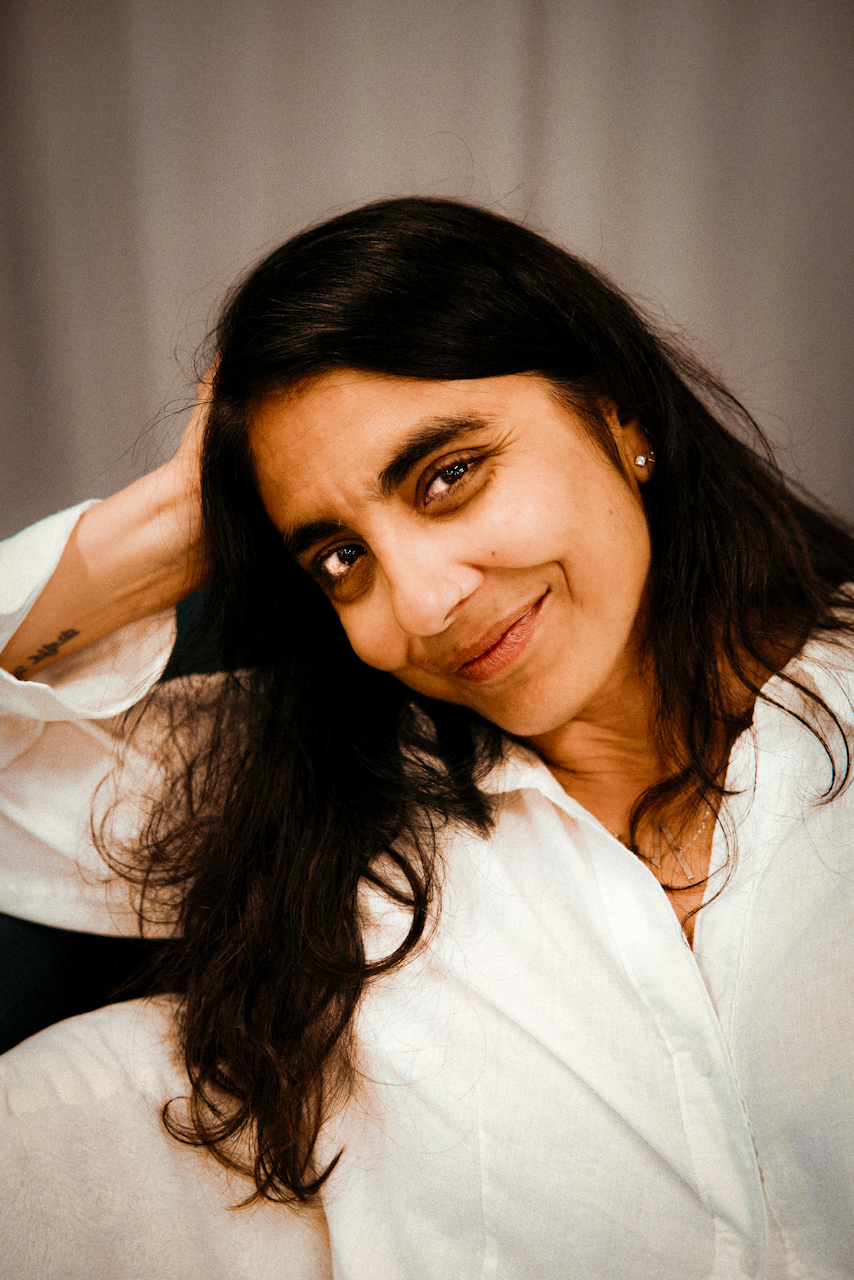
Monica is the Founder of Bridging Us, where she works with leaders, organizations, and communities who share a bold vision: to turn cities into communities, and disconnection into possibility. Through her work, Monica helps translate values into systems, relationships into infrastructure, and hope into collective momentum. Previously, she held regional leadership roles such as Strategic Consultant with Engage NWA, Director of Diverse Social Networks at Excellerate Foundation, and Executive Director of Downtown Bentonville Inc. Earlier in her career, she practiced immigration, human rights, and corporate law, bringing a systems lens and attention to rights, power, and structural accountability. Today, as the Cheif Operating Officer of Aiding Survivors of Human Trafficking & Child Abuse (AID), she finds herself circling back to that original calling—advocating for justice and dignity where it is most urgently needed.
With more than a decade of experience across nonprofit leadership, strategic partnerships, and legal advocacy, Monica operates at the intersection of narrative, networks, and systems change. Her journey has taken her into community coalitions, civic institutions, youth movements, and social justice spaces.
At Bridging Us, Monica leads a suite of services designed to strengthen relational infrastructure including strategic leadership collaboration, community experience design and interim executive function and succession planning services.
Monica currently serves on the Rhino Foods Foundation Board and the Advisory Council of the Bentonville Film Festival.
At the heart of Monica’s work is a conviction: community is not an outcome, but a practice. She believes that increasing belonging isn’t adding people to the edges, but mindfully reweaving the heart of our communities to reconsider and reimagine.
As co-host of this season of the the underview, she brings curiosity, grounded care, and an invitation to consider faith and our relationship to our humanity and each other as interconnected and vital to our future spiritual, emotional and physical health.
Monica was born in London, UK to immigrant parents from India and the Republic of Uganda. She is married to her soul mate and best friend, Kabir without whom she does not want to think about where she would be, and together they are raising their teenage son. Her personal story is interwoven with her professional one. Born in London to immigrant parents from India and the Republic of Uganda, Monica’s life has always carried the echo of displacement and the longing for rootedness. That history continues to inform her commitment to bridging across difference.
Monica’s work, whether in law, leadership, or community building, is ultimately about tending to the spaces between us to reveal those bridges that have always been present, from the very beginning.
episode references.
- Bridging Us: https://bridging-us.com/
- Aiding Survivors of Human Trafficking & Child Abuse (AID): https://aidnwa.org/
- Engage NWA / Welcoming Week: https://engagenwa.org/
- Northwest Arkansas Council: https://www.nwacouncil.org/
- Downtown Bentonville Inc.: https://downtownbentonville.org/
- Tikkun Olam (concept of repairing the world): https://www.myjewishlearning.com/article/tikkun-olam-repairing-the-world/
- Dr. Martin Luther King Jr. on positive peace: https://www.thekingcenter.org/about-tkc/the-king-philosophy/
- Music Courtesy of https://brianhirschy.com/
episode outline.
- episode preview (00:00:00)
- introduction of Monica Kumar (00:01:04)
- new to the American South (00:08:21)
- why Mike & Monica this season (00:13:24)
- fear of this conversation (00:19:07)
- our cultural moment is changing (00:22:13)
- our faith frameworks (00:23:12)
- the American South (00:28:27)
- what does faith feel like to you (00:31:16)
- Bryan Stevenson reference (00:37:57)
- the burden of the normative experience (00:41:20)
- what we hope this season carries (00:45:43)
- fear (00:49:52)
- brave spaces (00:54:10)
- wholeness (00:55:27)
episode transcript.
[00:00:01] monica kumar.: if you are a person who cares about your neighbors and your community and the people around you and building, we have to have these conversations and we can't have them in our rooms in behind the safety of closed doors. Of course we can have them there, but it cannot end there. Because I think that throughout humanity, we've seen that when we haven't engaged and we haven't been in conversation and in friction with each other and intention, it gets pretty bad and it gets worse.
episode introduction.
[00:01:25] mike rusch.: Well, you're listening to the Under view, an Exploration in the shaping of our Place. My name is Mike Rush, and today I want to introduce you to someone. Her name is Monica Kumar. She grew up in London. Her dad's from Uganda. Her mom is from India. She went to law school, she worked in human rights, and for the past 12 years, this has been her home, northwest Arkansas.
And I asked Monica to walk with us through this season because I really, truly doubted my own ability to walk through it alone. Not honestly, and not well. I carry a bias. I know that it's hard not to growing up in a place like this. This season, we're asking a question that I think our community doesn't quite know how to ask yet.
What is the faith of Northwest Arkansas? Not just what do people here say they believe, but what has faith built? What has it resisted and accommodated and what is it becoming? I grew up in the American South. I grew up here in northwest Arkansas, a predominantly white evangelical Christian space, and that has shaped me in ways that I'm still trying to figure out.
Monica grew up Hindu in London. She brings a lens that I don't carry and I need it. I think we all need it. This conversation is our starting point. You'll hear us be honest about what we're afraid of. You'll hear us fumble towards what we mean by wholeness. You'll hear me name the tradition I come from and you'll hear Monica name hers and we may not agree on everything. That's the whole point. And if we are going to be able to engage in this conversation as a community, we have to first engage this conversation inside of this very podcast.
And just to name it plainly, this season is an exploration of faith traditions, not an argument against faith. It is not meant to be an evaluation of anyone's personal, individual faith. We will talk about things like theology and religion and churches and ideology, and that's okay. These are the things that we wanna understand how they are shaping our place. And we're sitting down with pastors and faith leaders with the people who hold this community together on Sunday and on Monday.
We are listening. We're asking honest questions. We are doing the work of discernment, the slow uncomfortable work of trying to see our place clearly. We wanna understand the way faith works itself out in our community, that orthopraxy part.
Some of these conversations, they're not gonna be easy. Some of them are going to be a challenge for me personally, and some of them may challenge you. That's our collective work of community discernment. It begins with a willingness to listen, to hear someone. And so today, this is where we begin.
I wanna welcome Monica as a cohost of this season. We've got a whole lot to work through, so let's get into it.
episode interview.
[00:04:07] mike.: I've had the privilege of knowing Monica and her family not as much, but Monica more for a while now, and have just watched the work that you've done. And I think this is an opportunity to maybe for the two of us, if we can, to have a conversation that, number one, we can introduce people to you. I want people to hear your story, but I also like, where are we starting from? This is gonna be a different season and a different conversation, and I am terrified, if I'm honest.
So, Monica, welcome to this conversation. Thank you. I don't know that you know what you're agreeing to, and when I said, "Hey, should we try to do this together this year?" But you said yes without hesitation, so it's your fault at this point.
[00:04:49] monica kumar.: Is it my fault? I know I was very enthusiastic.
introduction of Monica Kumar.
[00:04:52] mike.: You were very enthusiastic and I think you still are. But Monica, welcome give us a little bit of background of who you are and your story.
[00:05:01] monica kumar.: I'm one of those people who really hates this part, but, I dunno. I was born and brought up in London by immigrant parents. My dad's from Uganda. He left in the Exodus in 1971. He tells me that England, Canada, and America had like planes waiting and you just jumped on one.
And I think he said that the one in the one going to England was like the closest one that was flying. So he jumped on that. My mom is from India and I was born, yeah, I was born in in London in the seventies. And that really has informed, the trajectory of my life, the choices that I've made.
And I feel incredibly, come circle round. I feel very lucky today to have had some of those experiences. But I went to law school in England. Originally I was a really good Indian first daughter and was in corporate and commercial law and did that for about seven or eight years and realized that my real passion was more moving towards human rights work originally around supporting immigrant women.
And I did that pro bono and then shifted fully into that work. And then it was while I was doing really human rights work and really focused on immigrant work that I recognize in London, and I recognize that human rights are so entangled, of course, in immigrant rights, but the other thing that I really recognized was that local community and the support system that people within your neighborhood and in the area that you live in mattered so deeply.
So I could have two cases that were exactly identical with two young people, same backgrounds, same length of stay, and that we would be able to look at the case and be able to say if they were gonna be granted residence or not, simply based on the way that their community received them. And I found that really, in some ways disheartening and in some ways incredibly hopeful.
And that informed a lot of my work. I met my husband in London. We we moved to America and that was really when I started considering and thinking about how to community support human rights. And that has been the question that I've asked myself and in a myriad of ways. And I unfortunately feel like sometimes in no ways I've tried to answer and serve and yeah, do the work off.
And about 11 years ago, 12 years ago, we found ourselves in Northwest Arkansas. And it was a, it was a beginning again because it was the first time I had been in, a place like this in America, first time I'd been in middle America and had to really understand how do I fit in and my, all of that work helped me understand and informed me and my entire background supported me to understand that you don't walk into a community and walk into a job and feel like trust is gonna be built and relationship is being can be built.
For me it really had to happen the other way around. I had to get to know the community first. I had to get the community to trust me. And so I looked for roles and looked for ways to do that. And ironically started with stories and started with work around getting to know people here, getting to understand the historical culture here, the connections here, the people here, people. I, if you had told me as an Indian girl from England that I would be in Arkansas talking to people, artisans, and people who cared about this country in the ways that the people here do, I would like, that would not have been in the realm of possibility.
So I feel incredibly privileged and honored to have been able to walk that journey. And I would say that's what I continue to do today. And yeah and it's why I'm sitting here, really, because it's how I met you. Like just really being incredibly lucky. And grateful that I was gonna say, God, that God has placed me here and that my life has put me here.
Yeah.
[00:09:00] mike.: I think Monica, I think I would love for you, before we get into this, maybe how we think about this conversation of faith and what it means for northwest Arkansas.
[00:09:09] monica kumar.: Yeah.
[00:09:09] mike.: I would love for you to share a little bit more. You, you've been here for 12 years. Yeah. And that's a lot longer than a whole lot of people. This is not a strange place to you. This is has been your home for a very long time.
[00:09:21] monica kumar.: Yeah.
[00:09:21] mike.: But you've also probably learned a lot of things that I will not have learned.
[00:09:25] monica kumar.: Yeah.
[00:09:26] mike.: Just because of how I grew up, which is very different. So yeah, maybe would you share a little bit, you've worked for some pretty significant organizations in the area doing some pretty significant work during some pretty significant times through just the culture of Northwest Arkansas, but also this country as well too. So I don't know where you wanna start, but I can pick and choose if you want. But I would love for you to share just a little bit of that background and experience, because I think it really matters and helps set, sets the context for the conversation That's to come.
[00:09:54] monica kumar.: Yeah. No, I appreciate you setting that up.
For the past 12 years, this has been home. For us, when we moved here, my son was four, he's 16 now or will be in a couple of weeks. And this is the only home he's ever known. Like he considers himself to be an Arkansan and from really from northwest Arkansas which he is. And, and the most informative parts or formative parts of my work in this country have been here in Arkansas and specifically in northwest Arkansas. I started out being executive director of Downtown Bentenville Inc when we first moved here, so maybe 10 years ago 11 years ago.
And the place, and anyone who knows Northwest Arkansas, it was a different, it was just. Budding, at least for people from the outside, obviously for people here, it had been blossoming forever because this is a place that is rooted in community and love and humanity, and we will talk about all of that.
But certainly for someone coming in from the outside, it was just budding. And I felt incredibly lucky to be able to take on the role of executive director of downtown Batten Ville, Inc. At a time when we were just thinking about what does it look like to start, including people who didn't have a sense of place here and were moving here to start including them and opening up the doors and the gateways of the culture and the art and the nature in this region. So those years at DBI really, I think they were so foundational. They really helped, yeah, build a foundation for me of understanding this community. Understanding how you open the doors of welcoming, how do you think about that from the ground up?
And how do you make space for people, generations, for community that's been here forever and for decades and even for five years. And then how do you make space for people who are just walking in five days, five weeks, five months? And how do you build all of that here? So I think for me, that was very formative and really helped then helped me think about how do I want to make a contribution here that is outside of like my formal roles.
[00:12:08] mike.: keep going. You've had some other very significant roles in this area as well too.
[00:12:13] monica kumar.: I feel, when I talk, when I think about my work, there are certain things in my life that I always struggle with. Relationship and who am I gonna spend the rest of my life with? And then, what does my relationship to God and my faith look like? And then the third one, and who am I gonna be as a parent? But that's informed by all of those. And then the third one has always been, what am I gonna do with my life? What is my purpose?
As an immigrant kid, work was supposed to have a purpose, but it was a very pragmatic purpose. it's how you pay the bills. And of course I want so much more for myself and the world, tells me that I should want more and I want more. And so for me that. I would say that question of what is my purpose and in my work has been answered in northwest Arkansas for me. I moved on from those roles, learned a lot from those roles, and then I ended up coming back to myself and my dream, which I would never have ever have had dared to do anywhere else, was always to work for myself. And to take on projects and build partnerships that I wanted to do. And that's what I do now. I'm a social entrepreneur. I do work in belonging and bridging and connecting and collaboration. I'm incredibly lucky to have very long-term clients. One of them is the Northwest Arkansas Council that I've been working with for the past five or six years. I work with a lot of local nonprofits. And as we sit here, I'm currently the interim executive director of aiding survivors of human trafficking and child abuse which is based in Rogers. And I have worked with them. They were a client for, gosh, four years. And the founder is currently on sabbatical and we've been planning that for a few, for almost a year now. So yeah, I have the privilege and the honor of leading that team. And as we talk here, we're in the middle of we're welcoming month. It's actually welcoming week. But again, to give us a sense of northwest Arkansas, we outgrew welcoming week and we're in welcoming month.
And it's complex and complicated because while we are talking about welcoming this month, and while we're talking about a sense of belonging. We're also having many more complicated conversations that I know we'll dive into. But yeah I feel like more than me leaving a mark or leaving any kind of impression on northwest Arkansas. Northwest Arkansas has completely transformed and changed me.
[00:14:41] mike.: Go on. I'm I'm curious.
[00:14:43] monica kumar.: Yeah. I think it starts with my impression of what. It was gonna be. And I think that started, that rooted back to growing up in London. I grew up in London at a time in the seventies when like my family was the only family of color in the area we lived in, which was Richmond. And then I was pretty much the only kid of color in my school. And so my, and every, it was a very white, middle class experience. London in the seventies, I would say, I would've probably said 10 years ago was very different than it is now. And I think that is again, shifting and that's a ongoing conversation that we can have.
And so I would say I bought that lens a little bit to Arkansas. I was concerned about my son is, and his experience here, I didn't want it to mirror mine growing up. And then of course friends on the coast had absolutely no idea why we'd move here. And then reinforced that feeling of fear. And so when I moved here, I would say I wasn't defensive, but I was certainly apprehensive and also very much armed with my understanding because of my work with immigrants and because of my work with community development. Very much armed with the understanding that I need to get to know this community and not judge the stories that I've heard and not judge it by experiences I have not yet had.
And I think for me. People will, I have, gosh, I know so many incredible people here. I know so many leaders here, and I know so many, I have so many friends here. And all of them have told a very different nuanced mosaic story of this region that I would never have. I would never have imagined to guess. And I'm now embarrassed to say that because of course that's true. No, no person, no human, no race is a monolith. And that is absolutely true. Yeah. So I think that has been a learning. And I think I'm, I remember my first impression when we got off the plane was, wow, there's so many, there's cows, which, you don't see when you like drive away from most airports, and there's so many churches.
And I think, my work at groundwater tells me that nothing is this or that everything is an, and so I would say that is where I sit now, which is, community and Christianity and community and dot, dot, dot.
why Mike & Monica this season?
[00:17:10] mike.: Monica, thank you. I, Maybe, I think that gives us permission the way, I love the way you frame that or you think about that. Because as we step into this season, this conversation about the faith of northwest Arkansas you and I think if we stood together probably next to each other in a room, people would think in many ways we're probably the opposite of each other. Is that a fair?
[00:17:33] monica kumar.: I think so. Yeah.
[00:17:33] mike.: You think so? Unfortunately, but I think that's, to me, what the beauty of this conversation is and you know, our community has been through some events here recently that has really, and I think I've lived here for a very long time.
But it's, I think it's both given us permission, but it's also exposed some things around the role of faith in our community and how that works itself into welcoming and belonging and inclusion.
And I just from the very beginning was like I don't know how to walk through this conversation by myself because of maybe the social position that I've been in, my background, my understanding, and all my biases that I've carried growing up in the American South and in northwest Arkansas and in predominantly kinda white, evangelical Christian spaces and so I think in thinking through this conversation, my immediate, I thought of you immediately and I was like, I need someone who can help broaden my own understanding of this, who has done the deep work of understanding what it means to belong to a place, but also has a perspective that I don't carry.
And so I think this is, I don't know if you're signing up to hold that position per se, but I have a deep respect and a deep value for the work that you have done and the way that you love people and the way that every time you walk into a room, there's a, it's like a light and the sun is shining and all these things, but you have this ability, I think, in many ways to show us parts of ourselves that Yeah that I think are desperately needed. And so I'm just, I'm curious your thoughts of, as you step into this conversation about how all of this may or may not work together for good or for bad. What is your starting point? Where do you, why did you say yes to doing this? Am I, do you share, I guess my question would be do you even share that starting point with why this is a conversation that we should maybe be stepping into?
[00:19:34] monica kumar.: First you asked why I said yes, and I said yes because it's you. Oh I have just tremendous. Respect for you and the work that you do. Your podcast is incredible. But more than that, we've had conversations way before then. We've been in connection and community way before then, and I have been just, yeah, I've just been struck by how thoughtful, meaningful, intentional, purposeful.
You are at everything you do. So it is, I hope I don't break your podcast
[00:20:01] mike.: feel. I feel that you're It's really hard. You've already made it a hundred percent better. Trust me. Oh my gosh.
[00:20:05] monica kumar.: So yeah. I just am I'm a big fan of yours, and I don't mean that in a small way or in a Thank you Monica pop culture way.
I mean it very deeply and intentionally. And I think that, I think if we don't have these conversations and we don't stop really be honest and try and at least try and articulate how people are feeling, where people are sitting, how we are sitting, and how we are feeling and reacting to, and reflecting on what's happening in our community, what's happening in our country and in the world, quite frankly.
I think we don't do the work of being an engaged and purpose-driven citizen before, whether it's a, it's, driven by faith or a work perspective or we are, we're meeting a podcast needs. I just think if you are a person who cares about your neighbors and your community and the people around you and building, we have to have these conversations and we can't have them in our rooms in behind the safety of closed doors. Of course we can have them there, but it cannot end there. Because I think that throughout humanity, we've seen that when we haven't engaged and we haven't been in conversation and in friction with each other and intention, it gets pretty bad and it gets worse. And I, at the end of every night, I just ask myself, did I do one thing today to just slightly make, and I can't say the world a better place because that just feels too big. But even slightly, make one person's experience of the day or experience of their week or month or goal that they're trying to reach better.
And I think that this answers that I would just feel remiss. I would feel like I was taking up space in a community and on a planet that I. That wasn't that I wasn't paying my fair share. And I, so I think we repairing, repairing and restoring and building are really just the point of community and the point of being a citizen and engaged citizen.
So I think, yeah, I don't I'm really scared to have this conversation. I am. And I, I always I'm, yeah, see, I'm stumbling now because I am really scared and I'm worried that I, I've had, I ha I have a lot of reason to know that that me engaging more and more in these hard conversations and in places that I don't fully understand and don't know deeply in my soul can be really disruptive and really harmful to me and maybe to others, but the opposite, which is, close. Keep my blindness on, do my work, go home and be with my family.
That is just not, I just wouldn't be able to look at my son. Mm-hmm.
fear of this conversation.
[00:22:53] mike.: When you talk about your fears for having this conversation, what does that look like practically?
[00:22:58] monica kumar.: We're sitting here and we're in the middle of welcoming month, which I'm leading through the, through Engage NWA with others. But I am very much a face for that. I'm also doing work with the organization that I told you about AID, and people see some hypocrisy in that. So I have been called out on social media about that. I've been trolled about it and I'm a little bit worried, like that concerns me. It also does make me double guess everything I do, can I build bridges and be a part of a welcoming community and say that, oh my gosh, I'm so proud that we are in our 11th, 12th year doing this work. And it's only growing. Last year it was one school. This year it's four schools. We're engaging young people in civic engagement. We're in, we're encouraging to think about their footprint on the planet and how are they showing up? Where are they volunteering, what do they care about? All things that I think are so meaningful. We had a fair yesterday that you were at, at the library. Like I think we had 300 young people walk through that. It was incredible.
And at the same time, I'm doing work and I'm very engaged in conversations about people who are not feeling any sense of belonging right now, who are feeling excluded, who are feeling othered. And I'm doing that work too. And I'm being called out for potentially the hypocrisy of the two things. And so that is scary to me. My family's not here with me, so that's gives me some tension. Having this conversation in this moment, I think, that, it's hard for anybody. I think it, it feels very hard right now for us to be having this conversation for me.
I've had phone calls from people that, I don't want to go into the details, but that were pretty scary and gave me reason to think that. This sounds gave, didn't give me reason. I was told that I was being watched. And that's scary, but not, not scary enough for me to think that we shouldn't be having these conversations. And I don't wanna put it on somebody else. Like I, I like, I can't just, I just cannot say there are other people maybe like you, who look like you and have the space in this world, and especially in this community that you do to be having them.
I am just not, I don't know. I just can't stand behind that. I have to feel like I'm actively participating in it and then having the not just the support, but the really deep allyship and I don't like that word either. I don't know what the word is. Having the deep fellowship and commitment and really love and friendship that I feel from you in this that, that is everything. And there are so many others that I could name that I feel that way about and then I feel, but specifically talking about this conversation I don't know who else I would be, who I would feel comfortable enough to be having these conversations with. And that is just testament to you really.
our cultural moment is changing.
[00:25:59] mike.: I'm thankful that you would sit, 'cause I feel like the cultural moment that we're in, it's probably very different than when you, probably very different and maybe not changed at all in the 12 years that you've been here. But we are in a different cultural moment. but Yeah, we're in this space where everyone has probably put all the cards back on the table of what it means to belong to a place. And it's been, I would, I think it's been very disorienting. It's been very confusing. And I fear in many ways, the old patterns that we've seen that have emerged not just in the South, but across this country of people's fear and othering are reemerging with a different strength and a different voice. And it's not just a belief system. These things are being put into, to policies as well too, or the rollback of policies that have been really important and to helping people feel that they do belong to a space or that they can belong, or at least they have equal ability to belong.
our faith frameworks.
[00:26:58] mike.: If I try to objectively like not give myself a label per se, but
[00:27:03] monica kumar.: No label yourself,
[00:27:04] mike.: then I know. I hate it. 'Cause it's universally untrue. But, I grew up here, I've been in northwest Arkansas for 40 years. Wow. And have been in the American South as long as I can remember. Wasn't born in the American South, but my family has been here. We grew up in Austin, Texas, and we moved here in the yeah, in the middle, mid eighties, if you will.
And my construct, whether I understood it to be this way or not, was growing up in very white evangelical Christian spaces. And I think that's always what I would just describe as normal. I thought that's the way the world was. '
[00:27:38] monica kumar.: cause I was gonna say, did you know that?
Yeah. And you were saying No, I didn't really know that.
[00:27:41] mike.: Yeah. I didn't like, I don't think it's become, I don't think I've become aware of the differences. It's been a long journey, but it's that, that was my starting point And yeah, most of where my biases have emerged and so I, yeah. How would I'm curious your, how, your framework of how you would describe yourself because coming obviously from London yeah. I won't describe that for you, but Yeah. How give us a starting point for, to understand who you are and the, and what maybe kind of framework or idea of faith that you bring into this conversation.
[00:28:13] monica kumar.: Yeah. No I it's so good because I feel the exact opposite.
I. I always hyper aware that I was not, so quote unquote, obviously abnormal, but not normal. And it wasn't like the normative, so it's so funny that you say that. Like you weren't aware. I was not aware anytime. The, my, my parents are a Hindu. We're practicing Hindus. I grew up in a home that was Hindu, but very secretly Hindu. We didn't ever I never shared that outside of my house. We had Mandir, which is like a small temple in our house. We never went there wasn't really a temple to go to anyway, but even if there was, I don't think my parents would've done that. They would've kept it private in our house. And yeah, so I grew up technically Hindu and then. As I'm learning a sense of self and I'm becoming a teenager and questioning who I am in the world, I became pretty religious. I started going to classes and like learning about what it means to be Hindu. At the same time I took religious education at school with a teacher that ended up having an incredibly like very deep impact on me because he was the only teacher of color in my school. And he combined religion with social education. And so from like very, and I was probably like 13 when I took that class and then ended up taking it for the next four years. And I think I didn't know that religion and social justice could be separate because of that class. That was very instrumental for me.
[00:29:49] mike.: And growing up in the framework that I grew up in, I didn't know they could be combined if I'm not Interesting, honest. So keep going.
[00:29:56] monica kumar.: No, that's so interesting. Yeah. And and then I think over the years I have never not had faith. Like I just have, like I live with God and beside me and inside me. Like I just, I don't, and when you're a person of faith, you can't describe it. And I guess you don't need to describe it because it just is true for you or for me, I should say. I would say the closest. Yeah. And so , I think over the years I've leaned more towards becoming spiritual, but with a Hindu le bent in that I think that every single path leads to God. I don't think there's only one path to get you there. And I don't think, and I actually like Hinduism would say, but something I would say, that when you try and say that it's this path or that path, you are hindering your relationship to God. And and I truly believe, in, in I truly believe in the concept behind namaste, which is, the light in me recognizes and sees and respects the light in you.
That's I just see light. I do believe that. I think we are all interconnected deeply, and it's one of the reasons why it's not even bridging work. It's not bridging work when you are connected. It's just we need to relearn that we are connected. Maybe that is the, maybe that is the journey of our lives to re, to relearn and rekindle and deepen our connection because we are connected.
That's just for me a fact because of my faith. And then I would say the closest and most like the most time my faith was tested was in my first marriage which was an incredibly. Like violent marriage very in every sense, psychologically, physically, emotionally, and, and that was when I questioned my hardest, like, where is God?
And God answered the hardest and showed themselves to me through that, as I say. Yeah. So that was probably the most that was probably the crisis point for me, that, that point, that was in my, like twenties and also the most clarifying point for me because God was there, like faith was there for me.
So yeah, I would say that I'm a slight Hindu, fully spiritual, completely faithful human who has absolutely no question that God exists.
the American South.
[00:32:14] mike.: So then you moved to the American South, which has a, this is not news to anyone, right? But like you're in the Bible belt Yeah. In a very predominantly white Christian space. How, what has that experience been like as you move into a space that would probably, and this would be my assumption, yeah. So correct me if I'm wrong, but my assumption would be that from the very beginning point within these conversations of faith, you're othered because that's not maybe the predominant faith construct that exists here. What does that starting point look like for you?
[00:32:51] monica kumar.: Yes, that's true. But also I have a really hard time recognizing my feeling of faith and my understanding of faith in a lot of the conversations and the fundamental principles that I seem to see you know, conservative Christianity show up in their faith. And so I think I, I just, I don't know, I can't link the two. I almost feel, I almost feel like Hinduism and my upbringing gave me a lot of space to to find the spiritual and let it be revealed. And I feel like the, the checking. And I certainly don't mean to say that every person or every group or every experience of faith in the south or in northwest Arkansas shows up this way.
But it does feel like having to say, oh, this is, when we say prayer, this is when we like, this is when we bring Christianity to the forefront. Or, this person is acting in the, in a God-like way or this person is not like those, it feels like very burdensome and in the way of faith for me. And so there's a part of me that just, I think, and I think I had to see I think it's one of the reasons why it's so hard for people to, to be able to truly see the light in people who practice pretty conservative Christianity. Because I think you have to be able to see past all that. And I think the way I was able to past all that was actually moving to Northwest Arkansas and getting to know like my neighbors and getting to know people. And it's almost like you have to work your way through all of that to then see the Christianity in them, in us or in this community. And for me it's been that way. So I don't know. It feels a little bit burdensome to be honest, Mike. And I know that sounds really terrible of me to say, but if I could pick I wouldn't pick it.
Can I ask you a question?
[00:34:49] mike.: I don't know. This is, I'm not used to being asked
[00:34:52] monica kumar.: questions. Okay. I, yes, you can't,
[00:34:54] mike.: I guess if we're gonna co-host this season, I have to be open to at least a question or two.
[00:34:58] monica kumar.: Yeah. You don't have to answer it. Okay. That's fair. Just
[00:35:00] mike.: pretend that I have, you can always have the power of the edit.
what does faith feel like to you?
[00:35:02] monica kumar.: Exactly. What does it one, how do you, like in, from a faith perspective, you, you identified how you grew up and Right what the label was, or maybe not label is the right word, but how, the, like, how that was distinguished for you. How do you define it for yourself and what does it feel, what does faith feel like to you?
Yeah.
[00:35:24] mike.: That, yeah. Okay. Next, next question, please. You yeah,
[00:35:29] monica kumar.: because I don't like, honestly, I like, I do, if you ask me about like faith, it's a feeling. Sure. It's like love. Yeah. Yes, you can describe it, but you have to feel it to know it.
[00:35:41] mike.: Yeah. I think, and this is probably the question of all humanity, maybe for all of time and answer
[00:35:46] monica kumar.: it my Yeah.
[00:35:47] mike.: And I think it's, it's, for me, it's something that I like, it's this constant pursuit of trying to be, I, it's this constant pursuit of trying to find maybe a place of peace. And when I say peace not in a way that is like the absence of, as Dr.
King would say, the absence of tension. But it's the presence of the way it should be. Maybe in this idea of, I'll use the word creation, maybe the way it should be. And so when I think about faith, for me it's always been deeply, I think over the years it's changed, but it's this idea of this restorative power in the world that is, that is constantly trying to be this and that, that's aspects of justice, it's aspects of of people and humanity.
That is this power that is trying to be restorative to put things in the place that they should be. And I think for me, that's why I'm probably drawn in so many ways to places of justice work is where that in many ways that's I think for myself, if I'm honest that's the only place that it actually feels real in many times.
[00:36:56] monica kumar.: It makes me think about the Judaic tikkun olam. And restoring of the world, my my son went to a Jewish, culturally Jewish, not religiously Jewish preschool. And every Friday they would do an activity. They're like two. They would do an activity around tikkun olam, which is repairing and restoring the world, and whatever that looked like, whether that meant they would pick up trash or they would, trim the trees or, and so it's ingrained in him.
And I just, that just makes me think about that, that's res a responsibility in the judaic tradition to repair the world.
[00:37:30] mike.: Yeah. I think it's hard for me to look at the way that the world is and say that this is okay. This is either survival of the fittest, or there is something that is working towards I guess you could, Christian tradition would call it something that is holy, something that would be peaceful, right?
And so I just it doesn't make sense to me that this should be the survival of the fittest. And I think probably the evidence for that in many ways is not my own internal. If people really know me, they will know that I am a survival of the fittest kind of person, which is not okay.
I'm not saying that's not okay. But you see it, I see it as evidenced in other people. That there is this part of humanity that has this aspect of restoration, of peace. Mm-hmm. Of and so I think the, maybe sometimes the greatest evidence of faith to me is found in other people. It's found in that work of restoration and renewal. And I think, so for me it's, the language culturally that I carry is that Christian tradition.
And I think I have a friend of mine who lives in Portland who I think he just said, Hey, can we. Can we have an agreement to hope together?
And I was like, okay. Yeah. And then, and what else?
And he said that's it. Can we have an agreement to hope together? Everything else may be a conversation we can have that we could agree or disagree on, but if we can have a common hope that we are in this place of moving towards this idea of restoration that maybe that's enough.
And I think for me, that's been so profound and such a, I've heard you use the term bridge and maybe, I don't know if, I don't know if this is a, if I can claim that word in that space where, to me it's been a bridge
of I don't I've ceased trying to make sure everybody agrees on all the points, right?
But if we can have this common hope, which I think is what I've always appreciated about you, Monica, is that I feel like together we carry this common hope.
[00:39:25] monica kumar.: Absolutely.
[00:39:25] mike.: And that this and I say this intentionally, this may get me in trouble with some people, but this idea of God is not this punitive idea. And so if I can remove this punitive idea away and move towards this restorative idea gosh, it sure allows there to be great peace and to have great joy. Despite the hardships of where we are in the world. That is clearly in a process of restoration, I would hope, and I, which is the way I would subscribe and look at the world today too it's harder and harder to see that. And I think that's why I would, I look to other people to find that space.
So I don't know where I'm going with that other than that would be the language that, and I realize too, when I say that, I wanna be like fully clear, there are many people from within the Christian faith tradition who would say that what I've described is not enough.
And that it's not as now we can get into conversations about what is enough and what is quote unquote absolute and what is fundamental and all those things. And that is fine. But I have a tendency maybe the older I get to just say full stop at that point.
And if we want to get into Christian Theological Doctrine, that's fine. We can have those conversations. I just don't know that I have to with people to pursue what I would hope would be this, this joining with others and this idea of what it looks like to be a part of a renewing part of humanity in this space.
Mm-hmm. To me, that To me, that feels deeply Christian. It feels deeply aligned with the person of who Jesus is. Yeah. I don't know that you have to add a whole lot more to it, which gives me tremendous freedom as well too. And so I hear the burden that you talk about because I feel like I see it in so many different places.
And this could be not just Christian fundamentalism, but any kind of fundamentalism that people just are deeply unhappy and deeply conflicted. And I just, I hope I don't carry that with me. I don't think that I do, but, yeah, that would be my very vague and never specific enough definition for people to probably con consider what I'm saying yeah.
As fundamental to that Christian faith tradition as I should be. But I know that's not true, so I don't know if that makes sense or not. There you go.
Brain Stevenson reference.
[00:41:43] monica kumar.: No, that makes perfect sense to me. And it reminds me about, I always, I'm always trying to come back to Brian Stevenson in my entire, like my day is revolving around how does Brian Stevenson think about this?
But he identifies as a Christian, right? And he taught, and he's obviously a social justice warrior and really one of the most like influential and impactful civil rights leaders that we've ever seen, and certainly in our time, but. His, one of his ways of changing the world is that you always have to maintain hope and that you just can't do the work.
And, it's one thing for me to say that, if you look at his life and the work that he does daily, and he has committed his entire legacy in life, to, for him to say that means that, for me it carries so much weight like someone who sees suffering and poverty and the effect impacts of racism and social economic, degradation and dis, disillusionment and marginalization when he sees that day after day and actually chooses to be in proximity to that. And also says, while we are proximate we must always maintain hope. I think that's what you're talking to. You can't, we just, yeah. We just can't do the work of humanity without it.
[00:42:56] mike.: And I, I don't know if this is, maybe this is my experience and again, coming from where I'm coming from, I understand that this may be a bit of a stereotype in some ways for myself.
But, I've had a chance to be and travel to some of the poorest places in the world that because of the impacts of colonialism or the stripped away of the opportunities of what capitalism could bring. And yet, I've, what I find in those spaces is some of the deepest joy that I've ever seen. And so I think it is in those spaces that I would agree that, gosh, what do I, yeah. What do I really need? And what I don't know. I don't wanna play the survival of the fittest game.
I just don't, I don't wanna be the person that, great, you won capitalism great. So what? What does that do for humanity?
[00:43:39] mike rusch.: And, I do think these are the questions that probably motivate me in these conversations of faith. And I think probably, to, not to put a bow on it, but in many ways it's how should that restorative, there are places in our world that people are not welcome. They cannot be included. They won't be included. They don't have the opportunity to belong. And if that is because of something that is broken within that space, then what does it look like to restore the ability for people to feel that same sense of peace or security or belonging. And that to me has been the work, it's been, this conversation that I think we've carried through on all these conversations within the podcast has been what are the things that are preventing people from feeling like they can be included and can be yeah, a part of a society and a community.
[00:44:29] mike.: And that's both, systemic forces, but it's also the things that we carry inside of ourselves that we don't understand how that impacts, or Yeah. Makes people feel like they don't, belong. And that is still a deep work that I'm doing within myself to understand my complicity in all of that.
Yet at the same time the more I spend, the more time we spend reckoning with that gosh the greater peace that I feel like emerges from having reckoned with it so that we can move forward to be a part of some really beautiful things in the world. So anyway.
the burden of the normative experience.
[00:45:00] monica kumar.: Yeah. No I, yeah I really appreciate you sharing that. It makes me think about going back to the burden of normative experience, which sounds so weird, but I think that one of the, one of the challenges of everything being normative to you or just thinking, oh, that's just how my day is, or that's just how my life is. And not knowing, right? That not having to wonder if, how do I fit in or where do I fit in this? Or what do I get, how do I get like something here? How do I get to a seat at the table when you don't have to have any of, when all of that is stripped away from you? I think that you also don't know the burden you're carrying of disconnection or not being, not having to build relationship and build connection and build community. And I think that, I have heard from especially some of my white male colleagues that, that like having to grapple with that and think about that has been like life changing and transformative for them. Just not, yeah, just not ever think, it is just really hard to see burden in normative. And I think that there is burden in normative 'cause I think that it doesn't like Yeah. I think that you are not, you're not, you don't go looking for connection if you think you, it's right there.
[00:46:20] mike.: Yeah. I've, I feel like personally I would identify with that very closely. Getting outta college and getting a job and obviously love my family. But doing all the things society told me to do, I did. It was so just deeply unfulfilling. And I remember, I can remember this moment like thinking like this is it? Like this is how you want me to spend the rest of my life. Yeah. Is pursuing this idea of, I worked for an incredible company outta New York City and I very thankful for doing that, but I'm like, man, I can look down the road for the next 20 years and, have a corner office and have a better car. And have and I'm like, yeah I just, I can't do that, and I think that recognition ultimately led me to some deep conversations and some deep changes, but all of faith was present in all of those conversations. And maybe that's in the redefinition of faith for me, understanding exactly what you're saying. That the burden of that I, yeah. I was starting to run into, and but when you start asking questions like that from within an American, especially the American South conversation it, now you start to work against the system in many ways. And I think that's yeah also the system will do a pretty good job of kicking you out of the system as well too. And that's a whole nother conversation.
As we think about Yeah, faith and belonging and when faith plus belonging is enough, I think our American culturedoesn't like that.
[00:47:45] monica kumar.: No. It doesn't serve,
[00:47:47] mike.: yeah.
[00:47:47] monica kumar.: That culture
[00:47:48] mike.: doesn't drive the economic engine per se.
[00:47:50] monica kumar.: No, it doesn't. And all the systems that go with it. Yeah. And some of the values that we consider American, pull yourself up, but the bootstraps. Individualism is really good. Care, just about yourself and those closest to you.
[00:48:04] mike.: Oh, we could have old conversation about Rome and Christianity mixing with Empire if you want, but all of yeah. There's much greater scholars who have talked through all of that.
how to start this conversation about faith and belonging?
[00:48:15] mike.: Alright, Monica, as we think about what this season is going to be the idea is that we're gonna sit down with faith leaders from all over northwest Arkansas from every faith representative group that we can find, who will talk to us, and have a conversation with them about how does their faith or their faith tradition work towards belonging and welcome and inclusion in our community.
This is something that I found over the past two seasons, probably almost, gosh, 70 conversations that has been this thread that has been a part of every conversation that I've had. And sometimes it's after the microphone gets turned off we'll have deep conversations about faith.
Sometimes it's a part of that conversation and it's always been something I've not steered away from, but I understand that no one person can speak from that. No one faith tradition can speak from that. And we've had some things that have happened with the city of Bentonville that I think have put this on the table, that now is the appropriate time to have some of these conversations. And so as we start to think through this, what this season can really look like, what does your starting point? What do you hope for? What do you wonder?
What do you feel? Are the things that you would Yeah. Want to, maybe some of the questions that you carry into this conversation?
[00:49:23] monica kumar.: Yeah I'm just so excited and just really appreciative to be brought into this conversation. 'cause it, it means the world to me. I think I'm curious to, to listen and learn.
First of all I'm excited to do that. And then I think that, I think one of the things I would love to hear that, I'm sure faith leaders have, have talked about for so long, but I feel faith as opposed to, and I think you've heard that in some of my tone, some of the way I'm talking about it, I feel it as opposed to one like feeling as opposed to like having a checklist or these are the things that mean, I'm a faithful person. I really go by how I feel.
And so I'm curious to hear from leaders, like how, what does it feel like to feel the faith tradition that they walk in? Like, how should a person feel? Because one of the things that really, and I don't use this word lightly, really scares me about some of the ways that faith is showing up in our country right now is that it's fueling anger and it's fueling it's fueling a sense of self-righteousness and inequity within people.
And I have just never, ever to me that's like a move, like the closer you get to fear and it, that's fear. It's all rooted in fear. And to me, the closer you get to fear, the further away from God you get because. Because for me, the feeling of God is love. And so I'm curious to hear our, to hear some of our leaders talk about that and help us grapple with that.
What does it look like in the world, but really what is it supposed to feel like within you? 'cause your faith should live inside you.
[00:51:09] mike.: Yeah. I think for me, in a lot of ways is this is gonna be a very challenging conversation for me because I, if I'm honest with myself, I walk into this conversation already, especially from a Christian perspective with some very deeply entrenched beliefs. Around how this tradition has been practiced or how it's being practiced not only just in our community, but in our country and around the world.
And I, you're gonna have to help me, Monica, because my ability to listen is going to be very, I don't hard sometimes. And not out of curiosity, but out of really being able to, for all of us, I think this is something we all are culturally not doing very well, which is listening to each other and being able to put ourselves in a position of being vulnerable enough that we can see the humanity in other people.
And give space and nuance for what they believe or quote unquote don't believe. As we move into maybe conversations with faith leaders who don't come up from a Christian tradition I feel like our roles are may may flip here a little bit. And so not that you are, you'll carry nothing but joy into those conversations, but I,
[00:52:19] monica kumar.: I don't, this is
[00:52:19] mike.: an area that I've not been exposed to in many ways. And so I think going into that is going to be a real learning experience to me. And so I'm really excited to, to do that. But I think those expectations are probably have to deal with my own biases. I've got a lot of internal work that I'm gonna have to work through. So not to put that on you, you don't have to solve
No. It's gonna be solved by your podcast,
but I, yeah. I think this is gonna be a conversation that's gonna be hard to to walk through, but I feel like it's necessary. I feel like it's absolutely necessary because of how this is working itself out
Absolutely.
In our world today.
Absolutely.
And I'm really, I'm looking forward to that.
[00:52:56] monica kumar.: I'm also really intrigued and curious and excited to hear about faith Leaders conversations about other faiths and how they see that intersectional sort of perspective and lens and how they see, like, how do we walk that all together and build connection and bridges and move away from using those as examples of barriers, so I'm curious about that too, and I'm curious to hear if faith leaders believe that is the role of faith or not maybe that is not an interpretation that every leader will bring to the table,
how we record.
[00:53:33] mike.: Monica, one of the things as we deal with just the format of these conversations, I know because of travel and all of the work that you're already doing here in northwest Arkansas, it's probably not gonna be possible, for us to do every interview together.
And I wanna work through what does that format look like? So if we're not able to do a conversation together. Yeah. It feels to me like I know you're gonna be listening to all of these and processing it through 'em, and that I think maybe, and this would be an idea, you can tell me if you wanna do this or not.
Is that we can have a period where you listen to the interview and then you and I can have a conversation about what you're hearing and processing. Not only just from the guests, but also from me in the spirit of trying to understand my own biases and how I'm looking at it, and we can really use that to guide us through each one of these conversations.
What are your thoughts on that? How should this work out in the best way?
[00:54:22] monica kumar.: I think that's a really good translation of it and I feel really good about that. And I, yeah, I, first of all, I just wanna appreciate you being really mindful about ensuring that , I'm having space in each conversation.
So thank you for that. And I also think, yeah, I wanna keep you honest, Mike. So let's,
[00:54:40] mike.: I need it.
[00:54:42] monica kumar.: Let's let's plan to do that. If I'm, if we're not together and we're not in the same space to have the conversation, then I wanna make sure that we are having a reflection on the conversation in some way.
[00:54:54] mike.: Monica, I think it's really important because I think, we're both coming to this conversation. I think from our own unique perspectives, and if I'm honest, like I think I'm trying to process mine, I'm sure you're probably trying to process yours, but this is gonna be a little bit about how we, I don't know how we actually process this together, and I'm not sure that's a real well-known path either.
And so I want to make sure that there's time and space for us to understand how do we process this together in a way that, that each of us has the ability to sit with things and ask questions of the other as we're walking through this.
To me, I think it would be great, obviously, if we can be together in all of these conversations, but I know the reality of that may not work out. If that can't, then hopefully we can have a space where, I don't know, we'll figure out the bridges that we need to cross together or maybe separately to get to the same place at the same time.
So I think that would be great.
[00:55:48] monica kumar.: That sounds great. Yeah. I'm all.
[00:55:50] mike.: All right. We'll give it a go and we'll see what people say and I would just, maybe we'll speak to the broader universe and say, Hey, if this is not working, everyone listening is gonna have to us. Can us know?
[00:56:00] monica kumar.: People will let us know. Mike, the people
[00:56:01] mike.: will, I have a feeling
[00:56:03] monica kumar.: people will speak.
[00:56:05] mike.: I have a feeling they will speak, so would
[00:56:07] monica kumar.: encourage
[00:56:08] mike.: that
[00:56:08] monica kumar.: feel. Also feel like they're just really directed at you because I'm just the guest. So
[00:56:12] mike.: Yes, that is not true. I'm looking at you to follow your lead
fear.
[00:56:18] mike.: I guess I have to ask what are we collectively afraid of in this conversation? We've talked about it a little bit.
[00:56:23] monica kumar.: Yeah.
[00:56:24] mike.: But if I were to ask outright can what? I'll go after You go first, but
[00:56:28] monica kumar.: I was afraid you'd ask me to go first.
[00:56:30] mike.: Yes. That's too bad.
That's my fear.
That's the standard question. Yeah.
[00:56:33] monica kumar.: Yeah. If I'm really honest, I, I'm, I don't wanna be misunderstood. I don't want to fuel what I am already feeling is an incredibly divisive and polarizing like experience that we have created in this, not just in our community, but in this country right now.
We have collectively done that and I'm worried that like this conversation might will fuel that and people will not know my intentions which are not to do that. I'm worried that people that I really care about and have respect for, but also maybe don't understand some of the decisions and the way they're choosing to show up are going to take this as a sign of me not.
Seeing them, and it's really not about that. It's more really trying to be curious and understand how can we work our way through this wilderness right now together. So I'm worried that this will, yeah, I'm I guess that all adds up to the same thing, which is I'm worried that instead of this helping to open some doors and bring in some sunlight and and help us like navigate together and truly together, not just people who agree with each other and not just people who have the same sense of faith, that this is going to be more polarizing and show up in really problematic ways.
I'm not worried about me, but for people that. I love and care about who are more vulnerable and in situations that where they are truly feeling scared about their sense of belonging. And even more than that, there's their, in like human physical selves. I don't, I don't want to cause more harm.
[00:58:18] mike.: Yeah. I, I see that, I think my fears are , I feel like I've been on the end of the Christian faith tradition that because of my questions that because of those questions I've been asked to take those questions maybe to other places, meaning they don't conform to this way of understanding.
And I, I have a friend who. It talks about, I think in many ways the tradition that I come from, it's this idea of if you believe what I believe, then you can belong.
And if you don't then you don't belong here. And I know that's not like a universal Christian belief set.
There are faith communities who say, no, you, you belong, and we'll believe for you in many ways. So I think I've just been on the end of that where, because I had questions about what quote unquote we believed the way that system works itself out.
So that's my fear is that this would be a continuation of that and that people won't listen or they'll use that to just be dismissive.
Yeah.
To assign a label Yeah. Of non-conformity. Yeah. Which becomes really easy then to not listen or not have to go through those processes. And so yeah, I think that's my fear through it all. And that people will misunderstand maybe my curiosity for some sort of compromise
mm-hmm.
if you will.
Of, of how they think I should or should not believe about certain things. And so I think it's gonna be really hard to deal with that. And I, I think maybe as we go through that, we're gonna just need to invite those questions to be brought to us through people asking us those questions that are we gonna stumble over things?
Sure. Are we gonna misspeak or take things outta context? I hope not. But I think if that is possible or we do that, then I think it's gonna be part of this community conversation that we need to maybe be, give ourselves the freedom to come back in and revisit some of those conversations too.
brave spaces.
[01:00:10] monica kumar.: Yeah, it reminds me of, there's this, there's the sort of duality of creating a safe space as opposed to creating a brave space and a vulnerable space. And I think that I am not someone who believes that you can create safe spaces, but I do think because you just, every human brings themselves and all of their stories and their ancestors and their histories with them into the room, and you can't possibly know any of that.
And so how, with the best of intentions, creating safe spaces just feels arbitrary. But I do think that what I hope for myself is that we're able to, or I'm able to at least show some grace and be able to create a space of grace and. And a brave space and a space where I can be authentic.
And more than that, we can invite other people to be authentic. And yeah. And maybe that will, if that, even if there's one person out there who is somehow impacted to listen and learn and grow more curious and shift a little bit um, I feel like our work will be well done.
[01:01:15] mike.: think we should we may have different definitions of fear and wholeness at the end of all of this. And hopefully that would be true because our understandings and our
[01:01:23] monica kumar.: Yeah.
[01:01:24] mike.: Exposure and our relationships will have grown through that.
[01:01:26] monica kumar.: Yes.
wholeness.
[01:01:27] mike.: From your position right now where you're at what does wholeness in this conversation feel like to you?
[01:01:33] monica kumar.: I think if we can find some ways of hearing from experts and leaders in our community about how faith should show up and be aligned with love and building a bigger table and having an open door and being open to difference, not just of like opinion, but also difference of, I don't know, like upbringing and culture and history and different ways of a person being and showing up in the world.
I think if we can find some commonality there, I will feel like we have created enough wholeness for me to be really at peace with our process.
[01:02:19] mike.: Yeah. I think I've grown up in a world where faith is so often defined our differences, that it's our starting point and i, I would hope that wholeness looks like faith actually gives us permission to find that common humanity, if you will, to build a community together, to restore together, to work together to, yeah, to build a community together in a way that fully respects the who you are as a person that you bring to the table, the faith that you carry, the tradition that you carry, the way that, that expresses itself in the world, and not as a threat, but as something that is a, an essential part of what it means to be a people living in community together.
And I'm sure that's pie in the sky in many ways, but I think that would be my hope that maybe we can't find that for our entire nation or our entire state or entire region but maybe this is a way of stepping into that for yeah, everyone that will be hopefully following along the season and asking those questions that we can find that maybe shared conversation, shared connection, shared definition of how we can be in the world that allows us to, yeah, to let faith be really something that could be a beautiful connection instead of something that has been traditionally very divisive in our space. So that would be my hope for wholeness in that conversation.
So Monica, this is a very insufficient starting point. I agree. We've got so many things to talk about. We scratched the surface, maybe not at all. But I'm just incredibly grateful that you've said yes to step into this.
I have no idea what's ahead and that's probably the best way it should be, but I'm really looking forward to the conversations ahead and I just wanna say thanks for saying yes, and I think we have a lot to learn together. And so just as we move through this yeah I think please hold up the mirror on all of this and continue to ask those questions and yeah let's see where this goes.
So I'm looking forward to it.
[01:04:24] monica kumar.: My gosh, thank you so much, Mike. I I honestly am just, I'll end where I started, which is just so feeling so honored and grateful that, that you invited me into this journey with you and then into this incredible, magical podcast that you have created. And I have, and so many others respect so much. And yes, if nothing else it just having the opportunity to be in relationship with you, in friendship with you and in a thinking and questioning space with you is honoring. So thank you.
[01:04:57] mike.: The honor is mine and I look forward to it. And I'm terrified. So can we just, yes. We'll start from a position of mutual terror and we will move forward into this space.
[01:05:07] monica kumar.: And it's faith and fear.
[01:05:09] mike.: Faith and fear. Maybe that should be the name of our season, for sure. All right, Monica, let's go see what happens. Thank you.
[01:05:14] monica kumar.: Amazing.
[01:05:15] mike.: All right. Thank you.
episode outro.
[01:05:18] monica kumar.: Thank you for letting me be part of this. 12 years in this community has taught me that the most important thing we can do is show up. Really show up for the people around us, and that's what this feels like. Showing up for something that matters. I shared that for me faith is a feeling. That the light in me sees the light in you.
I believe that. And sitting in this conversation, even the uncomfortable parts, actually maybe especially the uncomfortable parts. That's what this looks like in practice. Maybe we don't share a tradition, but I think we share something as meaningful and impactful hope, a willingness to stay in the room when it gets hard, and that's where I want to live.
That's where I think the real shift and the things that truly matter happen. This season is going to ask something of you. It certainly ask something of me. Some of what you hear will settle easily and some will sit with you in unexpected ways, and that's okay. That's not failure. That's discernment. The slow, honest, authentic work of seeing clearly. What I know is that this community is becoming something and the people who have sat down with us pastors, faith leaders, people who have held this place in their hands and in their hearts for decades, they trusted us with the truth and the faith of it. That means everything to me. Thank you for listening.
This is the underview an exploration in the shaping of our place.