
the first united methodist church with Rev. Dr. Michelle Morris.
Rev. Dr. Michelle Morris on FUMC Bentonville's 193-year history from slavery to inclusion, her call to ministry through tragedy, and the Methodist tradition of being handed a community and told to love them.
⚠️ Content Warning: This episode contains the tragedy of gun violence and suicide. Listener discretion is advised.
part 1.
part 2.


episode notes.
First United Methodist Church Bentonville has stood on the same corner since 1832 before Arkansas was a state, before the Civil War, and through nearly two centuries of transformation. In part one of this two-part conversation, lead pastor Rev. Dr. Michelle Morris shares her personal journey from outside the church to the pulpit, including a call to ministry born from a campus shooting at the University of Arkansas that killed her professor. The conversation moves through the Methodist connectional system where a bishop tells you where to live and who to love into what it means to lead a church with nearly two hundred years of complicated history, including its time as a Methodist Episcopal Church South. Morris doesn't hide from that inheritance. She reminds her congregation of it. Because you can't build a genuine welcome on top of a history you refuse to name.
The episode explores the Wesleyan Quadrilateral, why Methodists sound wishy-washy when they're actually principled, and what it means to find God in Highway to Hell by AC/DC. It is a story about a tradition that has split over moral questions again and again and a church that keeps choosing to stay.
about our guest.
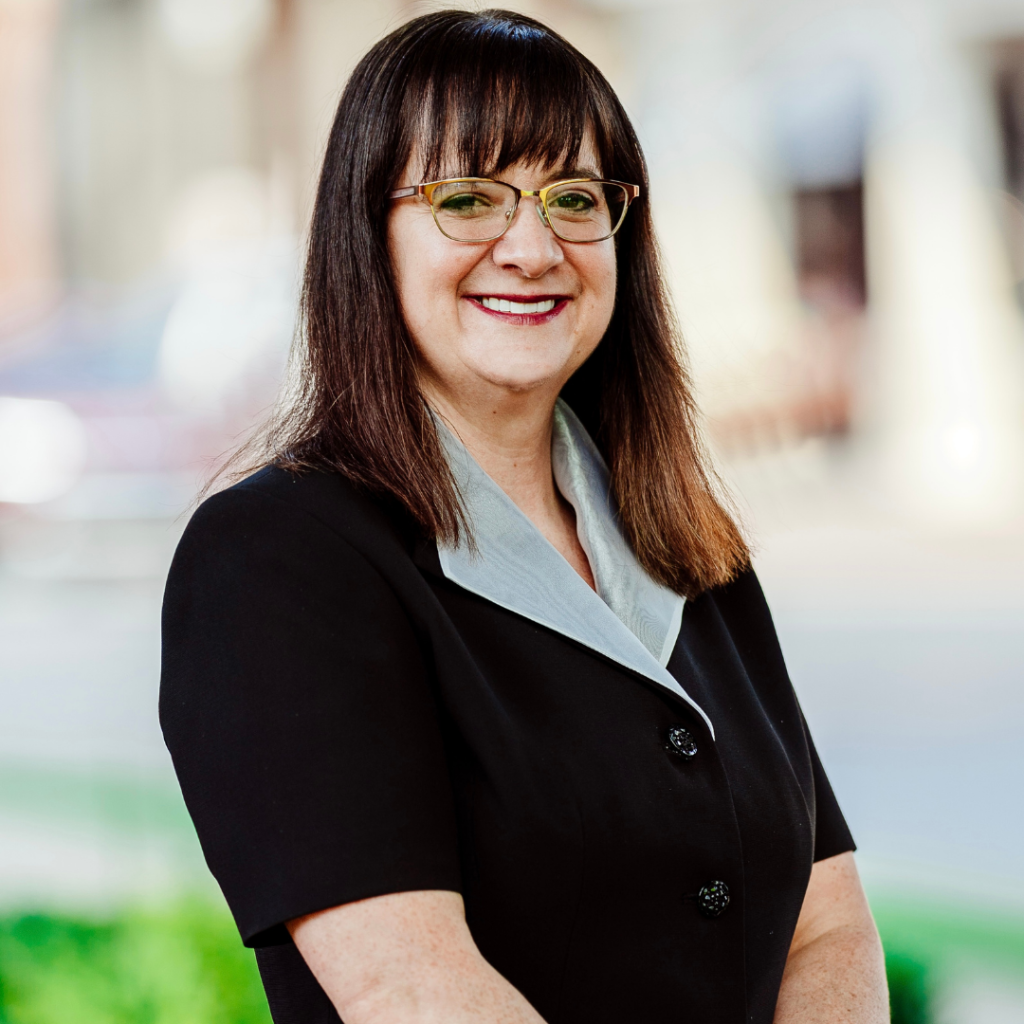
Rev. Dr. Michelle J. Morris started as Lead Pastor here in July 2021. Prior to serving this church, she served churches in West Memphis, Fort Smith, and Conway.
She also worked as the Lead Equipper in the Arkansas Conference Office where she helped launch the conference’s online learning system. Michelle is a perpetual student, holding a Bachelor of Arts in English and French and a Master of Arts in Comparative Literature (both from the University of Arkansas at Fayetteville), as well as a Master of Divinity and a Ph.D. in Religious Studies with an emphasis in New Testament (both from Southern Methodist University).
She also is the author of Gospel Discipleship: 4 Pathways for Christian Disciples, which includes both a participant and a congregation guide. Her philosophy for leading a congregation is to meet with each person and learn what your passions are, and then connect you with others with similar passions so that you can do the work that God is calling you to do. As you share your passions, it also helps reveal the vision God has for God’s church. So send her an email and schedule some time to learn what God can do through you!episode notes & references.
episode references.
- First United Methodist Church Bentonville: https://www.fumcbentonville.com/
- First United Methodist Church Bentonville, Year in Review 2024-25: uploaded source document
- ULI Faithful Foundations Program: https://nwarkansas.uli.org/
- Second Street Pantry: https://www.fumcbentonville.com/second-street-pantry
- Beer & Hymns NWA: https://beerandhymns.org/
- The United Methodist Church Social Principles (2024): https://www.umcjustice.org/documents/124
- "How to Love Your Christian Nationalist Neighbor" — referenced by Rev. Dr. Morris in conversation
- Martin Luther King Jr., paraphrasing Theodore Parker: "The arc of the moral universe is long, but it bends toward justice."
- Dietrich Bonhoeffer, Letters and Papers from Prison: "The Church is the Church only when it exists for others."
episode outline.
part 1.
- Welcome and introduction (00:00)
- Background: growing up outside the church, open communion, and the heathen project (01:02)
- Call to ministry: the 2000 University of Arkansas shooting, PTSD, and hearing the voice of God on 71B in Lowell (03:01)
- The Methodist connectional system: appointment, belonging, and passing community to each other (11:59)
- Understanding of community: loving people you are assigned to love (15:33)
- Reckoning with a 200-year history: Methodist Episcopal Church South, the burned sanctuary, and the moral arc (23:30)
- Process of culture shaping: Highway to Hell, God in all things, and the Wesleyan Quadrilateral (27:51)
- The hard middle: four gospels, four discipleship paths, and why Methodists sound wishy-washy (36:09)
part 2.
- The prophetic middle: principled middle ground, non-doctrinal faith, and the gambling example (00:00)
- The church's role in community: Second Street Pantry, Beer & Hymns, and seven-day-a-week building use
- Housing work: the RV, Faithful Foundations, workforce housing on church land
- Faith and politics: Christian nationalism as antithetical to Christianity, patriotism vs. nationalism
- Jesus of the Gospels vs. Jesus of the culture: reclaiming the gospel from culture war
- Civic engagement and the All Bikes Welcome mural: showing up at city council as a faith leader
- What the Methodist tradition says to our community: all are welcome, and the danger of closing off
- Fears: socioeconomic closing, boxing God in, losing what's faithful
- Wholeness: the reign of God, unity without uniformity, and the Imago Dei as collective
episode transcript, part 1.
episode content warning.
[00:00:01] mike rusch.: Before we begin, a word of caution. This episode contains the tragedy of gun violence and suicide. The interview is committed to honest storytelling about our place, and sometimes that means that those that we interview share the unthinkable stories of tragedy that they have endured. I would ask that you please take care of yourself as you listen
episode preview.
[00:00:25] rev. dr. michelle morris.: It's been a tough few years. It's hard to be a faith leader in this time period. I don't care what denomination you're serving. It's hard, very hard to be a faith leader.
But there is something so centering about being able to stand in a sanctuary that stands on lands that's had sanctuaries. We've had a presence here since the 1830s. To stand in that space and think of all the things humanity has been through that we have stood through and we are a blip.
This feels really hard right now and I don't make light of it at all, but at the same time I'm like, but this, in the end, it will still go on. Because our faith will continue because that witness to Jesus Christ is so powerful and loving and for me, true. It will continue. The great truths continue and whether we have a building that stands here or not, we're still standing on that faith.
episode intro.
[00:02:15] mike rusch.: You're listening to The Underview, an exploration in the shaping of our place. My name is Mike Rusch, and today we are continuing season three, The Faith of Northwest Arkansas. This season, we are asking questions that I think matter more than most people realize.
How does faith, theology, religion, and ideology shape our community? We wanna understand how faith leaders view their role in the shaping and forming of Northwest Arkansas, And how what is taught on Sunday becomes a part of our public life on Monday.
We are tracing four movements this season: what was planted here, what holds power, what is breaking apart, and what is emerging. And we are learning that some of the most interesting stories live in institutions that are old enough to have been a part of all four.
Today, I'm sitting with Reverend Dr. Michelle Morris, the lead pastor at First United Methodist Church in downtown Bentonville. I wanna give you a little bit of the history before we get in because it matters for what you're about to hear.
The first Methodist circuit riders entered Arkansas around 1815. They were preachers on horseback carrying saddlebags and Bibles, covering hundreds of miles of wilderness trail to reach new settlements that had no churches and no pastors. The Fayetteville circuit alone covered more than 100 square miles.
A circuit rider would preach at noon in a cabin, sleep on the ground, and ride to the next settlement the next day. By the time Bentonville was being settled in the early 1830s, the Methodists were already here. First United Methodist Church was organized in 1832, four years before Arkansas became a state.
It's one of the oldest institutions of any kind in Benton County, and it has been on the same corner in downtown Bentonville for nearly 200 years.
The story of the Methodist Church in America is complicated. It is split over the question of slavery, over exclusion and inclusion over and over. In 1844, the domination fractured into North and South, and here in Bentonville, the church that had been on this corner since before Arkansas was even a state chose the southern side.
The two branches would not reconcile until 1939, a century later. And then in 2022 and 2023, the United Methodist Church went through yet another fracture, this time over the full inclusion of LGBTQ+ people, and over 100 churches in Arkansas left the denomination. First United Methodist Church, Bentonville, they stayed.
So their tradition continues today with lessons learned. That is a nearly 200-year arc from accommodation to resistance, from one side of the moral question to the other, and it raises something I want you to hold while you listen.
Can an institution change? Not just survive, but actually become something different than what it was? And if it can, what does that require? What does it cost? And what does that tell the rest of us about whether the institutions we are building right now are capable of the same thing?
We also wanna hear what you're thinking and what you're wrestling with as you listen to this season. There's a send us a voice message button on theunderview.com. We'd love to hear what you have to say about your own faith community, what you're hearing from others, or maybe the absence of what you're not hearing.
All right, we have so much to work through today that we've had to split this conversation into two parts. Unfortunately, Monica was not able to join me during this interview with Reverend Morris. However, she was foundational in the preparation for this episode, and she has listened to it, and she will join us in our talkback portion in part two.
Okay, let's get into it
episdoe interview.
[00:05:34] mike rusch.: I have a privilege today of sharing a table with the Reverend Dr. Michelle Morris, who's the lead pastor here at First United Methodist Church, right here in downtown Bentonville. Mm-hmm. Which is my home, and your home as well. Reverend Morris, thank you for yeah, this opportunity to sit down and hear your story, hear the story of your faith community. I'm really looking forward to it.Welcome to these conversations.
[00:05:52] rev. dr. michelle morris.: Thanks so much. I'm really looking forward to this as well.
[00:05:54] mike rusch.: You and I have had a chance to have some really incredible conversations and I'm so thankful for the work that you do here within this city and how it just tangibly plays out in the world. And so I'm excited to have you share that with those that are following along and listening.
And, I think one of the things that First United Methodist Church here is really interesting to me. You've, this church, this institution of this church has been here since 1832 before Arkansas was the state. And so this long view of the story of northwest Arkansas and the history of Arkansas is something I'm hoping we're gonna get into. But I'm really excited about how you view this and how you view your role here and the role of this faith community in our city.
Tell me your story.
background.
[00:06:36] rev. dr. michelle morris.: Okay. The usual surprising thing that people learn about me is that I did not grow up in the church.
I was baptized when I was 25 years old at a new church start in Lowell, Arkansas, a new United Methodist Church in lower Arkansas. That actually does not exist anymore. It was only around for five years. It was what was called a parachute drop church, which means that they dropped a pastor in and he had to go around and find the people and just various, influences at the time. It ended up that we were only around for five years. But. Tremendous work done. I obviously, I got my call to ministry outta that church. And then a number of churches in northwest Arkansas were strengthened by the discipleship that happened there. But yes, did not grow up in the church. Grew up very suspicious of organized religion. My parents did not have very positive experiences in organized religion. And and I was the, I always call myself the heathen project of my friends. It wasn't that I was out there, causing trouble or, getting arrested or anything like that.
I just didn't go to church in the Bible belt. And so I was everybody's invitation when they had to invite a friend to church. So I saw a lot of different religious traditions and I was most intrigued by Methodism in part because of open communion. I had experienced that. And that was the first church that told me I was okay to come to the table, even though I wasn't baptized. And and that really stuck with me. But it would be, like I said, years later, before I would finally make my way into church. And I did so honestly 'cause I married a Methodist and then we needed, he was an engineer and I was an English major. We needed something in common. So we decided to try church.
And we struggled to find a church in the area where we connected. But this new church start was actually being founded by my next door neighbor from growing up. Her husband was the pastor appointed up here. So that's what got us connected.
call to ministry.
[00:08:34] rev. dr. michelle morris.: And then I, my call to ministry story what was interesting about joining that church was I was one of the few people, Methodists are not very well known for knowing our Bible very well. We're known for, commitments to social justice and to faith. But if you ask us to rattle off biblical passages, we're not so good at that. We know stories. We don't necessarily have vacation Bible schools that make us memorize whole chunks of the Bible. But I had read the entire Bible cover to cover and I'd done so out of defense because I had been going to so many churches that were telling me all kinds of things.
And I finally wanted to know for myself what the Bible said. So I had read it from age 13 to 16, I made my way through the King James Bible, believe it or not. That's also why I'm really good at reading Shakespeare. But anyways, and I, at the end of that. Whole journey. I loved God. I loved the Bible.
I was not sure about the church. But anyway, so we became members of this church and I was, like I said, one of the few people that had read the Bible. So I, within three months of joining was leading a Sunday school class. And then, because we were the fifth family to join, we were automatically on church leadership. And so I like to say that God let me poke around for a long time about my call to ministry. And then once I made it just the tiny bit of step forward, God said, all right, here we go. I was baptized at 25, called a ministry at 27, and my called of ministry is actually a Northwest Arkansas story.
Because I was, I worked for the University of Arkansas and I was working on a master degree in comparative literature, and I was, it was the first day of classes in 2000 at the U of a, I was waiting for John Locke to come teach my class. He was the advisor for comparative literature and it was the flagship class for comparative literature. And as I was waiting for him to come teach a freshman, ran into our classroom and said, the police told me to get outta the building or get in a classroom. And everyone started speculating and most people were saying that it was probably a bomb threat. But I had been in Kimple Hall for three bomb threats. People call 'em in 'cause they don't wanna take classes. So I'd been in for three bomb threats and I knew they always evacuated the building. I knew you didn't have a choice. So as soon as he said to get in a classroom or get outta the building, I knew we had a shooter in the building, which we did.
And it was a young man who was also in the comparative literature program who had gotten dismissed from the PhD program. And he had a list of the people who were on the committee that had dismissed him. And he had 90, 90 something rounds of ammunition. And he started in Dr. Locke's office and shot him and killed him. And the people in the rooms on either side called the police immediately and the wonderful bike cops that we had all made fun of for the longest time at the U of A actually got a cut across campus so fast that they caught the young man in Dr. Lock's office before he actually got out of there and had him barricaded in there, and he eventually turned the gun on himself.
In the meantime though, I was upstairs watching the building get surrounded by the. Yellow, do not cross tape. And I was on the side of the do not cross tape you're not supposed to be on the side of. And eventually we got escorted outta the building and I found out it was my professor. And I of course thought had he been, James Kelly was the young man's name, had he been 15 minutes later he would come to our classroom, but I didn't deal with that, a lot of that. I just pushed it down. We weren't so good about talking about PTSD back in the it was the year 2000 and it wasn't until months later when I had a student come in my office and threatened me and he had to be escorted from the building. That all of that rushed back.
And I went home that day from work and told my husband that I was not going to ever leave the house again. I was so afraid. But I decided I was okay to go to church while I was at church all of the fear and rage just unpacked. And I was in the choir area. I was in front of everybody and I went, I threw, I always described it as throwing the gauntlet down with God.
I threw the gauntlet down and told God that God had to get down here and to me why these things happened. Now, I wasn't saying it out loud. I was praying it, I was weeping. The whole church knew something was wrong. No one, I don't even think the pastor knew what he was preaching by the time things were done 'cause it was so distracting having me up there, coming apart. Everyone just surrounded me when church was over. And then that night I went to a disciple bible study and everyone just, they gave me the space and I told them about all my fear and my I had. Cousins that went to Columbine. It just, it was the early days of school shootings, but it, they were very, it was like, it felt like concentric circles wrapping around me, like eventually there was gonna be a target on me.
And anyway, I just unpacked all that fear and my pastor said first he said, you need to go see counseling. This is PTSD. He recognized it. And then they just prayed for me. And I remember leaving that space, feeling empty is the best way to put it. Like I was just shell of skin and bones. And I turned onto 71 B in Lowell. I could point to you on the road, turned onto 71 B and was overwhelmed by the presence of God. I've never been able to explain what it felt like except to just say it was all the things that were good. Peace, joy. I was crying now, but it was tears of joy and safety, love, everything good.
It was so wonderful that I almost, when I got home, called my husband to tell him I was gonna sleep in the car. 'cause God is out here. But he, I was pretty sure he was very close to having me committed. So I decided I better go inside and I slept better than I ever slept in months and the next morning I got up and I was ready to go to work and I head into work and I am I took a way to work that I'd never taken before. I don't remember taking the different turn. I took a different way and about nine blocks from the office got a flat tire. And then all the fear rushed back in. I had felt that same presence of God on the way in to work, but now it was gone and, but there was a church right next to me, so I thought, I'll pull in and change my tire here.
But I was so mad at God for abandoning me again and while I was trying to figure out how to change a tire, 'cause I've never changed a tire in my life. A an SUV pulled in and I again wasn't necessarily thinking super clearly, so I was just sure that this person was coming to kill me and I saw a man get out. And come around to my car and it was my first crush from junior high school. And I said, Hey, Doug. He said, Hey Michelle. He said, do you have a flat tire? I said, I do. He said, do you need some help? I said, I do. So he starts changing my tire and telling me all about his life and all these, things going on.
And then I said, did you see me? And he said, what do you mean? I said, did you see me? Is that why you pulled into this church parking lot? He said, no, I work at this church. And I thought, man, Doug is about the farthest away from anybody I'd ever thought was working at church. And that's when I heard a voice say, no, you are, but you asked me why these terrible things happen. And I will tell you that there's no good reason. There's no reason that's gonna take away your pain and your fear and your hurt and your anger, but you know what my peace feels come and work for me and bring that peace to the rest of the world. And so that, that's when I knew I was called a ministry.
And I've served churches in West Memphis and in, I had two churches in Fort Smith, and I had, I worked for the conference offices. I served at, served the church in Conway, first United Methodist in Conway. I call myself the ghost pastor of Conway because I was only there from July of 2020 to June of 2021. So most people, because it was the pandemic, only saw an apparition of me on the screen. And then I got appointed here to Bentonville in 2021. So it's a little bit like coming home to be back in northwest Arkansas.
[00:16:46] mike rusch.: , I first say just thank you for sharing that story. Just sitting across table and watching you tell it feels like I can watch you go back to those Yeah. To those moments. I'm curious this call to ministry and it's change in your life.
[00:17:02] rev. dr. michelle morris.: Yeah.
[00:17:02] mike rusch.: As you look back on that from where you are today, what do you draw from that?
[00:17:07] rev. dr. michelle morris.: So many things. I, it. It significantly shifted my identity. We talk a lot when we about ordination. We're in a tradition that we consider ourselves still in the apostolic line of succession. Some people don't consider Methodist in that line. That's a whole other church argument. But that, basically, that line means goes from Jesus laying hands on Peter all the way down to each person that's ordained and we consider ourselves within that line. And there's a, that's tremendous to be we have a traceable family tree in that sort of sense, right? And. And so we move into that identity of the people that are, that ordination is talked about as a set apart state.
So the people who are set apart to serve God and I often say it changes your skin. It makes you into this person. I talk, like I tell people it doesn't matter when I retire. I'm still an elder, I'm still ordained, which means that if I came across someone who really wanted to have communion, I could do it on the street and or if they wanted to be baptized, I don't, I they, one of the things they say to you when you get ordained is take th authority. And so I have that authority. And I know one of the things that we, that's important to talk about in, especially in relation to my story is how do you find yourself at home?
So United Methodists serve at the whim of the bishop. The bishop tells you where you're serving, which means the bishop also tells you where you're living, at least what community you're living in. And and so how do you understand home in that space? How do you understand community? How do you understand identity all tied into that? And obviously my identity is in Christ, but my identity is also in this call. And one of the most powerful things for me about the Methodist Church is that we are what's called a connectional system.
So Methodist churches don't see ourselves as an island unto ourselves. We. See ourselves really connected with other United Methodist churches and that exhibits in a lot of ways. But one of the more significant ways is that we may share pastors. I'm, I've served all of those churches and so I have even, especially in churches that have parsonages, I've lived in the same homes. I have so many of my colleagues. And even though we didn't live in the same home at the same time. It's like the family home that you pass down to each other. And even if we don't, aren't serving a place of the parsonage, you're passing down that community to each other. And so there's this, it creates a sense of care beyond our city.
It's a care for, since I will serve, I could serve any United Methodist Church in Arkansas. It creates a sense of care of this whole state and those churches because because they very well may be my home and how I take care of them, how I take the care of the town that I'm in now impacts the person who follows me. And it also impacts how I honor the person that I followed. So it makes home in a. In not a geographical sense. Yes, in the sense of being confined to Arkansas, but in, in a much more I don't know, there's like this invisible thread that connects all of us and creates this very extended family everywhere we go.
[00:20:25] mike rusch.: I'm curious from your faith traditions or your faith perspective, what does it mean to belong to them, to a community?
[00:20:32] rev. dr. michelle morris.: It. That's a, to a specific community, it's it's an interesting thing to serve as a pastor appointed to the community because we are supposed to disconnect, break off the relationships of the PE with the people when we move that we are handing that people off to the person who is following us, and that's become much more complicated in our current day because we don't actually unfriend people on Facebook.
[00:20:59] mike rusch.: That's encouraging.
[00:21:00] rev. dr. michelle morris.: But we do have this and different pastors respect these boundaries a little bit better than others, but we have this understanding that at most that first year that you're gone, you'll just do a thumbs up on people's posts and you won't post a whole lot of you won't get up in their business.
Because you have handed that community off to someone else. And I'll say that is one of the, it's a, the, when you, the first time you do it, the first time you move from one community to the next it's almost traumatic because you literally go from one day, like I literally went from one day loving the people of West Memphis and being so deeply ingrained in their life. I showed up when their babies were born. I buried their grandmothers, I walked through them through family crises. We laughed together and cried together and fought with each other and just like family does, right? And then the next day I have to turn around and do that for the people in Fort Smith immediately and let completely go of the people in West Memphis
But at the same time, that's so tremendously powerful.
And I think today in a day where we divide up over so much to have that call and that assignment and that expectation that you will walk in the door and love this people. And there's no exception to that, right? That is what you're called to do and that's what you will do. And that is such a powerful sign of God's love.
And I'm not saying we do it perfectly. It's very awkward. It's awkward for us and it's awkward for prisoners, but the sign that it sends that we, this is what we do. We are now alongside each other in life. It instantly builds community. There's an expectation that the role comes with community, right?
I really don't do this in isolation. I don't sit in a room and pastor no one, I we are called to be present in people's lives. My first week here, someone was in the hospital dying and I sat with her and heard all of her anxieties and her fears and everything, and I sat there for four hours. It turns out it was a screw up on medication, and she is alive and kicking in one of my church leaders right now, but I have been here less than a week and I'm into this intimate, holy place with her. It's such a powerful thing for us to remember. We divide over so much and it leaves us feeling really isolated and lonely and afraid, and there's no one there for us. And to be able to be a representation of God's love and say that's not how it has to be. If. And to expect that there will be community is, I think, an important thing. Maybe one of the more powerful things that those of us that are called into this space too, these days,
understanding of community.
[00:24:06] mike rusch.: That's such a different understanding of how community should be formed, can be formed. Maybe like
[00:24:15] rev. dr. michelle morris.: Yeah.
[00:24:16] mike rusch.: Culturally as I think about it from maybe my perspective and what I've been told, how community's supposed to work. What does it say about a congregation and a faith tradition for you to have the freedom to, to move into those kinds of spaces? And for, frankly, what does it say about a congregation that
[00:24:33] rev. dr. michelle morris.: Yeah.
[00:24:34] mike rusch.: Understands community in, in a way that, that is just the way it's going to be.
[00:24:39] rev. dr. michelle morris.: Yeah. No it requires tremendous trust on the part of the congregation too. And so sometimes you're walking into very messy space or, this is one of the, we, the Methodist Church, the United Methodist Church is a quite a bit to try and reduce the kind of abuses that can happen. We have to go through pretty extensive psychological testing and interviews and we have background checks. Extensive background checks, checking our credit, all these things to try as much as possible to make sure that people who are put in the pulpit are as healthy as can be.
But, life happens. And so some, and some colleagues make it past all of those and are, they're just slick, and I have certainly served churches that have been taken advantage of by some real snakes, in all honesty. And it's always amazing to me churches that have been through something traumatic, like a pastor's had multiple affairs, or one who's embezzled from them or something like that.
Both of those, I've, I have served churches where that's happened that they will still trust a pastor. That's a very powerful statement too. It is. It's I think we get so focused these days on our own perspective, and I don't think that, I think it's shaped by our world. Netflix tells me what I'm gonna and shapes down to it. The algorithm, the all powerful algorithm. Is narrowing my field of vision so much that it's feeding my own perspective and not as much exposing me. I have to be so deliberate to go out and find other sources that don't feed my usual understanding. That the world is really teaching us to focus down on our own comfort, our own ideas, our own reflections, our own perspectives.
And this whole system that I serve in pushes against that so hard. When a church is getting a new pastor, they fill out a, it's, by the way, it's as we affectionately called it, it's March Madness in Methodism right now. This is the season when people are finding out whether they're being moved or not, and. And it in our conference, it goes from about the beginning of March to the end of May. So it's a, it's an uneasy season for pastors. But so they, the churches fill out a profile, but they can't always get exactly what, and nor is it necessarily the wise thing for you to give a church exactly what they want.
Right. And yet we all agree to this. We agree to, to try it at least and see if it works. And sometimes it doesn't. Sometimes it doesn't, but at least we're still trying. And that involves some level of letting go of what your preferences are.
[00:27:18] mike rusch.: As you approach this faith community, you're here in downtown Bentonville. I think one of the really interesting things about this community is that you've been here for almost 200 years. And that puts you in some times of history that we've talked about in previous seasons.
Before Arkansas was a state but in a place and at a time of of enslavement of Yep. Indigenous removal. Yep. This is part of the context of where some of this faith community began. Faith community split over the Civil War. I'm, if we were to fast forward today I see it on the banner outside that all are welcome here.
reckoning with a 200 year history.
[00:28:00] mike rusch.: Those are very different positions from where one starts and maybe where one is today. How do you reconcile, how do you reckon all that? What does that speak to you about the nature of a faith community?
[00:28:10] rev. dr. michelle morris.: Oh, first of all, that they, what does it that Martin Luther King said that was a, it was a summary of someone else that the moral arc of the universe is long, but it bends towards justice.
That a lot of times it takes a long time for us to get it. Together, but oh, it's so powerful to be in this building. And the building itself, the oldest part of the building is from 1954 and that's the sanctuary. The sanctuary is from 1954, but that's the fourth sanctuary on this corner. The first one burned in the Civil War. And there are all kinds of stories that float around. Some say that the South burned it so the North couldn't get it. Some say that the north burned it when they got here. It's probably that the south burned it before the north got here. If you really wanna get intricate on details of this church, you need to talk to Johnny Haney.
He knows all the details. But what I do know and can definitely say is that we were an a Methodist Episcopal church south, and there was a Methodist Episcopal church North. In this town, the Methodist Episcopal church south. That was the split that happened. And it happened over slavery, and we chose the slavery side.
So every once in a while, I remind this church I'm routinely reminding us what it means to be a church that are all our welcome, the fullness of that. But every once in a while when I feel like we're getting on maybe a little big for our britches, I remind them we were a south. Methodist Episcopal Church South.
We know we were on the wrong side of history. We know we were thankfully the denomination came back together in 1929 to form the Methodist church. And and we reconciled. And that for me is a powerful statement of God's grace. That we are, none of us are gonna do this perfectly. And yet God's grace is still at work within it, but also a powerful statement of redemption and restitution of, we can own that we were at, we were wrong, and we can still be here.
It's been a tough few years. It's hard to be a faith leader period in this time period. I don't care what denomination you're serving. It's hard, very hard to be a faith leader. It's hard to be a leader, period. But there is something so centering about being able to stand in a sanctuary that stands on lands, that's had sanctuaries that I think the first sanctuary is actually built in the 1850s.
But we've had a presence here since the 1830s, as you mentioned. To stand in that space and think of all the things humanity has been through that we have stood through and that, and we are a blip. I went to Boston for a conference and stood in churches that have been there since the 15, 16 hundreds. And obviously I've been to Europe and stood on places where, faith goes even deeper than that. I've been to Israel and you walk on the land that Jesus touched with his own feet though all of those are centering experiences that help you go there is this feels really hard right now and I don't make light of it at all, but at the same time I'm like, but this, in the end, it will still go on.
We'll still be because our faith will continue because that witness to Jesus Christ is so powerful and. And loving and for me, true it will continue. The great truths continue and whether we have a building that stands here or not, we're still standing on that faith. It's just really nice that the building's still here.
process of culture shaping.
[00:32:08] mike rusch.: With this long history and I love your perspective that you bring just that we're going to be here. And I think it, it makes me wonder this question of this process of culture shaping and forming where the faith and culture over this long history are. Are undoubtedly influencing the direction and growth of a faith congregation. How do you view this role of culture and the church's involvement in it? Yeah. Complicit or accommodating or resisting. How do you view these two things that happened in our world,
[00:32:42] rev. dr. michelle morris.: yeah. So a really good example, if you come in, especially if you come to our nine or 10, 10 worship service, you are going to hear all kinds of music. You will actually hear less overtly Christian music than anything else. You'll hear folk music and pop and rock that I caused quite a stir. The day that we ended service with Highway to Hell by AC/DC.
We were talking about Satan.
[00:33:11] mike rusch.: Is that a real story?
[00:33:12] rev. dr. michelle morris.: That is a real story.
[00:33:13] mike rusch.: Okay.
[00:33:14] rev. dr. michelle morris.: That is a real story. C
[00:33:15] mike rusch.: continue
[00:33:16] rev. dr. michelle morris.: because I tell. Just I tell my musicians, people are going to walk outta this place and maybe they'll remember something from the sermon, maybe, but they will remember the music. The music will stick with them. It's either music they already know, or the tune and the words will automatically start imprinting on 'em. Like we're creatures built for music, and so I'm always like, here is, here's what I'm doing with the sermon. Now. Find me songs that say the same thing so that they actually walk out carrying the gospel with them.
And I tell people when people do every once in a while, the AC/DC week, we got a lot of questions.
[00:33:53] mike rusch.: I, I have some questions too, but keep going.
[00:33:56] rev. dr. michelle morris.: Again, we were talking about Satan and and so anyway, but we, I say, we either believe God is in all things or we don't. And if we believe in God is in all things, then God is in all things God's, in all the music, god's, in all the art god's in all of that.
Now are some things not of God. Yes. But when you're talking about like widespread genre sort of things, God, I believe God's imbued God's self into all of creation, right? So God's in all of creation, hip hop and country and classical, it's all there. And so I,
I don't think that I would say accommodation. I certainly wouldn't say resistance, but the reason that I wouldn't say accommodation is because accommodation implies that, at least to me, it implies that we're letting the culture drive the message. And that's not what we're doing. What we're doing is starting with the gospel message and finding that message within culture, right?
So that is really our approach. I am helping my people see God in more things than what happens in this building. If we can find God to this building, or if we can find God to one radio station, then our. Oh, we have. So that just doesn't, that's so to me, that makes us decide who God is, right? And that's idolatry.
As soon as you do that, you've made God into your image instead of the reverse. And so for me I want my people to walk outta this building. I want, of course, for them to have count, encounter God here in this space, but I want them to walk out and encounter God everywhere they go. And so what I'm trying to do is help them see it. I see it in as many ways as possible.
church and the culture.
[00:35:46] mike rusch.: I love hearing that because I feel and this is my own story and I'm wanna apply this to anybody else, but I feel like I've grown up in a place where i've been told that to be cautious, to be careful of culture. And that its influence can be this thing that maybe in some ways has always been per portrayed as having more power maybe than this story of Jesus. And how do you reconcile that? Yeah. Or maybe you, that's the wrong question because you have reconciled that help. Help maybe. Yeah. Help me reconcile that understanding of this idea of going into a world with that kind of view.
That God is there and I'm going to find
[00:36:25] rev. dr. michelle morris.: right.
[00:36:25] mike rusch.: That presence.
[00:36:26] rev. dr. michelle morris.: That's it. You gotta come in with the perspective in place. If you go into culture wandering I'm just here in culture.
I'm just being influenced. I'm just receiving. I'm not thinking about it. Then you're letting the culture shape your worldview, right? If you go into culture with that lens on where is God in this, then when you encounter something, you're coming at it with a critical eye of, and I don't mean like you're going to be judgemental, I mean that you're going to be reflective.
Is there anything of God in this space? For me, when I listen to music, I always ask myself three things. When I hear a new song, could I sing this song to Jesus? And I know that sounds a little bit cheesy, like if you're a fan of South Park, they were like, oh, you can turn any song into a Christian song.
You just replace baby with Jesus. But could I sing this song to Jesus? Could Jesus sing this song to me? Which that is incredibly powerful. Some songs that come to mind like She will Be Loved by Maroon five that is a powerful Jesus singing to me song. Oh man, I'm getting a little choked up thinking about it.
And then the third question I ask is, would this fit somewhere in the soundtrack of the Bible? So like the example of AC/DC.
[00:37:45] mike rusch.: Okay, that's not where I thought you were going, but keep going.
[00:37:48] rev. dr. michelle morris.: But like the example of AC/DC, we were doing a series, we were doing a series on heroes and villains, and we were taking a. A Disney villain or hero and pairing it with a biblical hero or villain. And we did the Lots of Love Bear with Satan. Lots of love from Bear, from Toy Story and Satan were paired together. He's, by the way, very much a Satanic figure. They get thrown into the fire pit and all of that. Anyway,
[00:38:12] mike rusch.: Oh, I'm following you. I'm a huge Toy story fan. So keep yeah, keep going.
[00:38:15] rev. dr. michelle morris.: That's right. So we were comparing those two and that song, highway to hell talks about the choices that you make, determine the direction that you're headed, right? So we had framed up this whole thing about Satan and what Satan does and how Satan tries to draw you into that space of temptation, right?
And how lots of love Bear did that too, right? Set up this kind of whole image of what it could be. And it turns out it was a whole false story, right? And that ac DC song actually fits really well to that, to raising that question. So I did have a parent catch me later that week, and he was upset.
He was like, my daughter walked out singing that song and she said. I'm on a highway to, and then she stopped and looked at me and said, can I say that word? And he said let's talk about why you're singing this. And he tells me about this story that they had. And he had to on the fly come up with why that song would be in church, even though it really disturbed him.
And so he tells me this whole thing, and I was like, what a, what an amazing conversation you had with your daughter. And he goes, yeah. And I said, don't you think that's what I meant to happen?
He goes, oh, and so I always am looking for those things that can tell the story in a different way. And so for me, it's not about going into culture unprepared, right? And it's not about handing over the reins to culture. It's about I am going into culture expecting to find God and expecting that sometimes I won't. But if I don't go with that. Intention then I'm easily captured
people and culture.
[00:39:56] mike rusch.: to maybe take it a step farther. As you go into culture with that perspective, how does that change your view of people and neighbor and the people we run into day to day?
[00:40:07] rev. dr. michelle morris.: That's our spiritual struggle right now. Because so much of the noise of culture is telling us to divide and so much of the noise of culture is telling us to make assumptions about each other.
And so much of it is trying to make one issue such a hard line that you cut everybody out that doesn't agree with you on that hard line. And I think actually we come by it honestly. I just wrote a book called Profits to the Generations. And in that book, I talk about, I pair each one of the major generations with one of the major profits. And I paired Gen Z with Daniel. The book of Daniel is one of two apocalyptic books in the Bible, Daniel and Revelation. Those are, they're apocalyptic moments in others. Jesus at times says apocalyptic things, right? But as far as full books, Daniel and Revelation are it, so I paired Gen Z with Daniel because Gen Z has only ever known a world coming apart.
They've never seen a world that wasn't. I, my, I took my son out for his birthday. He's 23, and I don't know what made me say it, but I said, did you know we used to have a balanced budget? And he said, what? As a nation? I said, yeah. And I said, do you know we did it because both sides came together and made compromises.
Okay. And he said now I know you're lying because that's not possible. And when people are in apocalyptic states, which we've been in really since about Y 2K on some level or another, we've been in an apocalypse. When you're in an apocalyptic state, you become very defensive. You become very protective.
And so it's a time when you do draw hard lines, right? So the world is creating that environment for us. But as people of faith, we can't give ourselves over to that reality. And so I want to push back to my call when I was sent here to Bentonville. I don't know what this congregation's made up of. I don't know who they are. I know I'm sent to love them. This congregation is made up of a lot of different people. We are we lean progressive, but we are not 100% progressive.
We have people that are conservative and I frequently tell them, I'm so glad that they're here because they keep us from being monolithic. We have people who absolutely object to, that L-G-B-T-Q-I-A, they would call it a lifestyle. And then we have lesbian couples, right? And I love them all because my love cannot be contingent upon a political alliance.
It can't be contingent on what year you were born. It can't be contingent on whether you're rich or poor, because God's love not contingent on that. We truly believe in the United Methodist Church that God loves all people. There is no exception to that. And so if I am, I'm not called to be God in any way, shape, or form, but I'm called to represent that reality and as a representation of that reality, as much as I can, I have to live that reality.
So when I go out into culture and encounter other people, I have to try. I don't always do it perfectly. Some days I'm not even remotely close to perfect. But I have to try to lead from love instead of, leading from a place of being guarded. Or leading from a place of assumptions even.
I'm gonna make them, I'm human. I'm gonna, I'm gonna get I have this. I sometimes go to Bella Vista rec centers, and too many conversations in the hot tub that make me crazy. But they're also good for me because they remind me it doesn't matter. I still am called to love these people. I do not have to love their ideals. I do not have to love when they hate, and I can set down moral guides, especially as a faith leader. But when it comes to how I treat other people, it has to drive from love first, and then the other things work themselves out from there.
[00:44:30] mike rusch.: I hear you. But
[00:44:32] rev. dr. michelle morris.: everybody's got one of those these days.
[00:44:34] mike rusch.: I guess my assumption and I don't think I'm alone. There's probably a lot of people in this world who to love that way is going to cost 'em something or it's going to hurt.
How do you approach, or why do you approach what that looks like in other people knowing that there's likely a cost?
[00:44:51] rev. dr. michelle morris.: I just am okay with the cost. I, and I'm not saying that is great, there's many a days I think I could just move to Ecuador, quit this job, you know, but again, I go back to, it's my skin. It's, where am I running? You know, Jonah tried to run from God really didn't work out for you. Where am I gonna go? Look, let me do say this though. There is a thing called healthy boundaries, right?
And I am human. I am not Christ, right? Christ can take on the whole of that reality of love. I can't, I'm not Jesus. I don't remotely think I'm close, but and so I can set healthy boundaries and and make decisions around that, in that sort of case. So if if I thought my physical safety was threatened, that sort of thing I could set those kinds of boundaries. I can't always set psychological boundaries.
I'm in that I have one foot in the academic world, one foot in the church because of my PhD and the work that I do for the academy. And so I'd go to this conference most years, the Society of Biblical Literature and the American Academy of Religion.
And I go to a lot of the teach sessions on teaching, because I also teach, I teach at a denominational level, and then I, of course teach congregation, right? And they were having debates about, it was a session on Bible and film, and they were having debates about the, whether they, they should put trigger warnings in when they were requiring students to watch certain films and, or should they put in an alternate film that the student could watch if they had certain trauma and I spoke up and said, if you are teaching in an undergraduate university, or if you're teaching in a, in a, like a literature program or something like that, I can certainly understand doing something like that if you're teaching pastors do not, because it's not like I get to choose who comes in my office in whatever crisis that they're in and maybe sharing a story that's going to set my own trauma off, and yet I still have to be present with that.
Now, the healthy boundary that I set in those cases, I have my own therapist, right? I go to my therapist and let that stuff loose. But but yeah, so as humans you can set healthy boundaries and when, we did the session on how to love your Christian nationalist neighbor, right? And it says in that book, and I thought that was a great thing to point out, that there, there are different contexts in which you can allow certain things to happen, right? So they said you might be visiting uncle Jim, and he, and it's just you and Uncle Jim and he's spouting some pretty hateful stuff. And you can be kind and, object, but still stay present with him. Versus if you're there with Uncle Jim and your child is with you and you don't want your child exposed to that hateful rhetoric, you may say, uncle Jim, either we're not gonna talk about this right now, or we're gonna leave. You can set those things. And as a moral leader, I can make statements, moral statements, right? This is wrong. It helps to have a denomination backing me up. It helps to have the social principles of the United Methodist Church. 'cause then I can say this is wrong. And we to address this in our social principles, right? So it's not just Michelle up here saying whatever it's Michelle and an entire denomination. And so you can do those kinds of things. But regardless, you still have to love the person.
Like the reason that you heard me recount the story of this shooting and say the young man, his name was James Kelly and I didn't say that awful shooter. And I was glad he was dead. I was glad he killed himself, is because I'm not glad he is dead. And I'm not glad he killed himself. And I'm so sorry that he got into a place that he thought gun was the only answer. And I love him. If I don't, none of this matters.
[00:48:48] mike rusch.: , I think as I, as I listen to you, I, this maybe it's me, this boundary between the humanity that you're describing and the way that a faith tradition shows up in the world.
I think in our cultural context, our American cultural context, especially in a place like Bentonville, Arkansas and saw it's not often we're faced with this type of maybe duality. We want to make it easier and or simple and be able to put it into a bucket that is always like this or always like that. And I think as I listen to you, what you're saying doesn't fit into one of those,
[00:49:25] rev. dr. michelle morris.: it does not
[00:49:25] mike rusch.: buckets. So I find myself trying to understand even where to place that. And I, I find myself trying to understand how do we apply that in a, that beautiful principle? How do we apply that into the world around us as we go about our day and we shop at our store and we walk through beauty and tragedy for those that may have those same questions that I do.
[00:49:50] rev. dr. michelle morris.: Yeah. Yeah.
[00:49:51] mike rusch.: From your perspective, how do you, what is, what is required of us who
[00:49:56] rev. dr. michelle morris.: decides to do justice, love, mercy, and walk on blue with our God.
[00:49:59] mike rusch.: Okay. That, that feels like I can put that better into a bucket. So
[00:50:03] rev. dr. michelle morris.: I
[00:50:03] mike rusch.: think you're gonna bring me back, but uhhuh, like what is how, from the, from this United Methodist tradition
What is it asking us to be in the world?
[00:50:12] rev. dr. michelle morris.: Yeah. That's a really good question. We, I was asked the other day, somebody said, that Methodists get accused of being wishy-washy of not standing for anything. And I said yes. The reason that we do get accused of that is because we stand in the hard middle.
When you read the social principles, the United Methodist Social Principles, you will find, I find them to be hilarious because they are so contrary. They're beautifully hilarious.
[00:50:40] mike rusch.: Are they meant to be hilarious? Okay.
[00:50:41] rev. dr. michelle morris.: They're beautifully hilarious. They're meant to be very serious.
[00:50:43] mike rusch.: Yeah, I was gonna say.
[00:50:44] rev. dr. michelle morris.: But they're so contrary to the way we operate in our world today, in that you do try to push into these buckets, right? You push all the way to one side, or all the way to the other side. And we stand right here in the middle. One of, one of my favorite examples to use is our stance on gambling in which we say, gambling is bad. You should not gamble. You should absolutely not gamble. It takes advantage of the most vulnerable among us. It continues to to take wealth from those that are poor. It creates dependencies and addictions should never gamble. Also, though. We recognize that Native American tribes are pulling themselves outta poverty because they have casinos. So basically we say if you're gonna gamble, gamble at a Native American casino, so
[00:51:25] mike rusch.: it's not wishy-washy, it feels dualistic, but but I see where you're going and I think I can get behind that. Okay.
the prophetic middle.
[00:51:31] rev. dr. michelle morris.: And that's where we stand almost every stance that we take, not all of them. There are some that we're really hard line on but almost all of the stances that we take, there's an exception to every rule because we just recognize that the complexity of life is such that you cannot account in a five paragraph statement. You can't account for every reality of humanity and every variable that's in there. And the most important thing is to try to walk with grace alongside one another. And so we do give a lot of these exceptions to make space for that to happen. So I just owned when somebody said, you sound very wishy-washy. I said, yes, we do sound that way, but we're actually incredibly principled. Yeah. In that space. And right now the middle is prophetic. Because everyone's trying to push to either side, and we're trying to stand in this middle and say. No, there's room for all of us here that the idea that any one of us can proclaim a hundred percent.
We know exactly what the will of God is the height of arrogance. And again, it's idolatry. So we're gonna just stand here in the middle and hold this middle ground and take the slings and arrows of being accused of being wishy-washy and of accused of being not convicted in our faith. We get that a lot.
Methodists don't believe anything, and we are what's called a non doctrinal faith, which. It does not help that label. But the reason that we are non doctrinal is that we do not require that you sign a statement of faith that says, we, you will adhere to these things. We do have things that we ask you when you're baptized, when you join our church.
They are pretty generic affirmations of Christianity. And and that's, and that really drives from our founder John Wesley, believed that we were fighting about a lot of things that really, in the grand scheme of things didn't matter and that we should extend charity to one another and recognize that the differences that we have are okay. That, that's the window dressing. And that can be switched out.
We did talk a little bit before this. I wrote this book called Gospel Discipleship and I wrote it because I was assigned to be by, I used this when I worked in the RAD offices and I was supposed to develop an, a discipleship pathway for every CH United Methodist Church in Arkansas.
And I explained to the bishop that he had brought me here from a two point charge in Fort Smith. For those of you that don't know what that means I serve two churches at the same time. I had a two point charge and I said that two point charge was those two churches were 2.5 miles apart from each other, formed within one year of each other, made up of the same demographic of people.
And I could not successfully do the same thing at either church. And that made me think there's not just a, you couldn't make a checklist and run that down. And so I was working with 20 different churches on their discipleship pathway and we were studying the last words Jesus speaks in each of his gospels.
And notice that they were all different last words. Which is interesting because you think people would really pay attention to the last words. Like last words are very important things when you're getting ready to leave on a trip, you say, I love you. Don't forget to feed the dog. Those are the things we want you to remember.
And and here were these four gospels shaping where Christianity was gonna go and they don't agree. And what I realized was that you could look through the lens of the last words and see four distinct understandings of discipleship. And then once I understood that, not only could I help people understand what their discipleship was, but I also came to realize that denominations have distinct understandings of discipleship.
And that allowed me to respond with a lot more charity to the other denominations around me who see things very differently than I do. And who. Who structure their churches differently, have different theological assertions. All of those things, they're all being faithful to the gospels.
It's just leaning into one gospel over the other. So the gospels themselves invite us into a place with a lot of diversity. We just, we tend to try to make 'em all say one thing and they say four distinct things. What we should focus on are where they actually agree. And those things that they all agree on are pretty core to the Christian faith and a.
We can hold to those and have some diversity of expression collectively on that. And Methodist happen to be the part of the Christian witness that holds to the middle. It's who we are. So I don't know how to be anything otherwise.
episode part 1 outro.
[00:56:12] mike rusch.: All right, well, that's where we're gonna pause for part one of this conversation. We heard Reverend Morris share her story, her call to ministry that came through the worst kind of tragedy, and the story of her tradition that has been splitting and reconciling over moral questions for nearly two centuries.
She walked us through what it means to belong as a Methodist pastor, what it means to be handed a community and told to love them, and what it means to lead a church that chose the wrong side of history and refuses to pretend otherwise.
Part two is next, and we get into what the church is doing right now, the housing crisis and why the lead pastor of one of the oldest churches in Bentonville lives in an RV. Their work towards the Faithful Foundations program, and what it would mean to put affordable housing on church-owned land.
We talk about Christian nationalism, the Jesus of the gospel versus the Jesus of culture, and what Reverend Morris calls the prophetic middle and what it costs to hold that ground.
That's next time. Thank you for listening, and thank you for being the most important part of what our community is becoming. This is The Underview, an exploration in the shaping of our place.
episode transcript, part 2.
episode content warning
[00:00:01] mike rusch.: Before we begin, a word of caution. This episode contains the tragedy of gun violence and suicide. The interview is committed to honest storytelling about our place, and sometimes that means that those that we interview share the unthinkable stories of tragedy that they have endured. I would ask that you please take care of yourself as you listen.
episode preview.
[00:00:23] rev. dr. michelle morris.: the 250th birthday's coming up and I decided I was gonna preach a sermon series on America, and most of my pastor friends said, I'm not touching it. And I said, that is exactly the problem.
The fact that we won't throw our voice into this space, messy as it is, means that one whole bullhorn over here gets to say whatever they wanna say. And, but I also didn't know how to do it. I didn't know how to design a series, so I invited my veterans to come have breakfast with me and I said, I need your help. I need your help designing this series. I just need your input into what needs to be said here because I feel like you have a different level of commitment than the average citizen. You were, at least on some level, willing to die for your country.
One of the things that they told me was, the thing is, it really doesn't matter to us who the president is. That's not who we swear our allegiance to. We take an oath to the Constitution, not the president. It's those ideals that we're actually defending, not whichever political party is in office. We have to rise above that political divide and serve the ideals of who this country can be.
episode part 2 intro.
[00:02:25] mike rusch.: Well, you're listening to The Underview, an exploration in the shaping of our place. My name is Mike Rusch, and this is part two of our conversation with Reverend Dr. Michelle Morris, the lead pastor at First United Methodist Church in downtown Bentonville, one of the oldest institutions in Northwest Arkansas, founded in 1832 before Arkansas was a state.
In part one, Reverend Morris shared her personal journey into ministry, a story that includes real tragedy, and we talked about what it means to lead a church with nearly 200 years of history on basically the same street corner. It's a history that includes choosing the wrong side of slavery and then choosing to stay in a denomination when over 100 churches in Arkansas left over the question of inclusion.
If you haven't listened to part one, I'd encourage you to go back and start there. Today, we're getting into what this church is doing right now in this community. Topics such as housing and wealth and Christian nationalism, and what it means for a church that feeds over forty-seven thousand people a year through its pantry to also ask a question of who gets to live here. And in this idea that Reverend Morris calls the prophetic middle, a place that is not wishy-washy, but incredibly principled.
All right, we've got a whole lot to work through today. Let's get back into it
episode interview part 2 of 2.
[00:03:39] mike rusch.: as we've talked about the church's role maybe in the community and how you view that, this becomes pretty tangible pretty quickly. I read that Second Street pantry, which operates here out of the church. Last year you served 47,000 people. Which is a reported 100% increase from the year before.
Beer and hymns which Ken and Casey lead. Who are also worship leaders here at the church. Yep. On one night they raise $50,000 for Northwest Arkansas Children's Shelter. These are real practical ways that this church's role in the community is a part of meeting community needs and part of the forming and shaping of this place.
Why? What, where did what how do you view that role in these real practical needs? Specifically these about being a part of bringing help and relief to Yeah. To people here. I'm gonna guess not all 47,000 of those people went to church here.
[00:04:38] rev. dr. michelle morris.: Most of them don't.
[00:04:39] mike rusch.: So
[00:04:39] rev. dr. michelle morris.: maybe one.
[00:04:40] mike rusch.: So like, this goes well beyond the boundaries of this faith community,
[00:04:43] rev. dr. michelle morris.: right? Yeah. And that's of course, it's all the same understanding of if we boxed God into this building, what are we doing right? And if we box our faith into this building, then it's not really changing us in, into the people who would follow Jesus.
The disciples didn't just hang out in the synagogue all day. They were out feeding. And Jesus would feed people. People are hungry. They're hungry for. God's word. Sure. But they're actually hungry, and we're called to respond to that need. And John Wesley was, this was a kind of converting thing for him.
We have one of our staff members is, has accepted a call to ministry and she's in seminary right now, and she's in a class that's basically all around this idea of submitting to be more vile. And what that was, what that, where that came from was John Wesley was only preaching in the church. And then George Whitfield, who was an evangelist at the time, challenged Wesley to preach in the coal mines and to be in the fields and to go out into the streets where the people were.
And it was offensive to Wesley. But then he went and saw George Whitfield preach to 10,000 people in a field and went, I will submit to be more vile. And basically what it was his recogni, he recognized that this dressed up place of this church building was not where it is really.
And he started going out into the world. And when we're or ordained, we hear the echo of Wesley's words, the world is my parish. And and so it's very true to Methodism and it's true to our way of evangelism. People think that Methodists are terrible evangelists. And on some level we are in the sense that we do not lead out with the story of Jesus Christ.
But we actually don't think Jesus let out with the story of Jesus Christ. A lot of times he healed people, he fed them, and then he talked to them. Or sometimes he just healed them and fed them and didn't have an expectation beyond that. And it was enough that they were, that they had a better day that day, than they would've.
That they were shown that kind of love in that moment. And that's really where we're driving from. And yeah, the secondary pantry, it's, the growth of the pantry is heartbreaking.
[00:07:02] mike rusch.: Yeah. What does that tell you about what's happening in the communities today?
[00:07:05] rev. dr. michelle morris.: We're hurting, the community is really hurting the. Prices are out of control and rent's out of control. And we have several that come through that live in their cars. And that, so we have separate bags for people who are not in a home. They get stuff that they can just pop open and they don't have to heat and that sort of thing. When I first got here, we were feeding se we, we gave out 75 bags a week.
And second street pantry, there's not a limitation. You can come as many times in a month as you want to, and you get however many. You get a number of bags based on the number of people in your family and. So we were giving away 75 bags a week. Now we give out between three and 400. And part of that is growth.
Growth naturally is gonna create that, but it's, that's a huge number of change and. This congregation is just committed to, we don't turn you away because of anything. You could come, you could be a millionaire and drive through Second Street Pantry. We give you the food, you can pull up in a really shiny SUV. It doesn't matter you're getting food. It's not about judging, it's about you. You tell us you need food, you're getting food, and then beer and hymns. One of the things I love about beer and himms and we have actually mirrored what they do. So Beer and HIMMS is a nonprofit that supports other nonprofits.
So they pick a different nonprofit every month, and they raise money for that nonprofit, which is a sign really of our understanding that we don't do this alone, right? We don't have to, we don't have to do all the work. There are great nonprofits out there doing tremendous work, and what we can do is come alongside them and help them.
We have, the way we have started to echo that in our building is we now don't charge nonprofits for use of our building. So almost every day this building is packed. Church real estate nationwide is the most wasted real estate in the nation because mostly it is occupied one or maybe two days a week. This building is occupied now seven days a week and our parking lot is free to the, to, for people to use downtown, so we just make this, we just feel like part of our mission is to be present for our community and to serve our community, and to come along those side, those folks that are already doing such amazing work.
We're gonna have a down syndrome theater camp that's hosted here this summer. We have a community theater group that started rehearsing here. We just lost a community orchestra. They found a better, a place that's better for their space, which we're so happy that they did that. They were squeezing in here. It's there's a senior group, a seniors group they do senior education on things like, estate planning and how to keep yourself healthy and all those kinds of things. They've got a space here now and over and over again. When we have nonprofits come look at our space and they ask 'em, all right, how much is it gonna cost? And we say, oh, it's free. They, we have had more than one person start crying. And Master Gardeners are here first Tuesday of the month, and it's insane. Do not come downtown the first Tuesday of the month, every parking spot is gone. And it's just, we're called to be present with our people.
And it's not about, this is what I started to say. We're accused of being bad evangelists because we don't come up to people and tell 'em, you need to believe in Jesus Christ or You're going to Hell. Because we, it really goes back to that lead out with love, right? You're hurting, you have a need. We can help, we respond because that's what our faith tells us to do. And we're happy to share about our faith. But you getting help from us is not dependent on you believing the way we believe.
[00:10:57] mike rusch.: I think in addition to what you're doing you're also participating in trying to solve some real structural issues around housing. And I know this 'cause we've had some conversations before, but you participated within the Faithful Foundations program. That ULI love the work that they're doing over there. That's not an insignificant thing to go through or to take on or to try to solve.
How do you think about, and why is this an area that you feel that this faith congregation is going to try to be an answer to this community problem?
housing work.
[00:11:32] rev. dr. michelle morris.: First this church has a long tradition of seeing kind of big problems in the community and responding. We helped found Helping Hands, we helped found legacy Village. We of course have the Second Street Pantry. We have beer and hymns, so we see these big things that are happening. And then we are like we'll just figure out something to do. What can we do? And right now we have a prime piece of property that has nothing on it, but some sheds in downtown Bentonville, and we have challenges within our own church that will have to also be addressed with that land. So we're trying to figure out creatively how that is, but arguably housing is a mix in that because we don't have a parsonage and as their lead pastor, I'm paid very well, but I could not afford to buy.
I'm now divorced and so I'm a single income and I couldn't afford to buy when I first got to Bentonville, and it's not gotten any better. And then and then renting in Arkansas is always a challenge because there are no renter's rights basically. And so I ran into a couple one, I was living in a house. I was renting a house, and they realized they could get $700,000 for it. So they sold it and away I went. And then I was in townhouses and just it's a hard, it's a hard situation being a renter, you, your rate, my rent went up, they started, inspecting the space. Every three months I had to sign, my lease included that if the pipes froze, I had to pay for any construction costs that might happen in my, if there was any damage.
And I just couldn't live that way anymore. But I also couldn't afford to buy a house. So I live in an rv. I'm the pastor that everybody knows that's in town, that lives in an rv. And I love it. It's great. Winter is not the best, I'll be honest. But all the rest of the time it's amazing and it's a great solution for me. But somebody's coming behind me at some point. So we've gotta address a parsonage, but that's gonna be workforce housing, right? Being able to apply a place for your pastor to live will be workforce housing. And then again, it drives from yes, we have church needs we need to address, but this church doesn't respond selfishly.
They, we don't, we just don't. It's not in our DNA to look solely at what we need. We really do try to keep our eyes outside the doors and ask. Housing is a huge issue in this part of the world, and we're not gonna solve it with a one acre square lot of land, right? That's not gonna magically fix housing, but it will, if we can do, if we can fix it for five people, that's five more people who have a place to live then might otherwise, right?
If we can fix it for 30 people, then that's 30 people. But we can also be a voice in the midst of that, that not only puts our money where our mouth is, but we also put our mouth places, right? So I serve on the newly formed Northwest Arkansas Housing Coalition and we show up at planning meetings.
We, we go to city council meetings. We have a team an affordable housing working group that does advocacy around town, that listens to people's stories, that continues to make this a live issue and not something that can be swept under the rug. So yeah, so we do our part because it's again, faith.
I'm gonna quote James the letter of James, martin luther called it a letter of straw. He hated it. John Wesley called it the most Methodist of letters. He loved it. We love James. And James says, faith without works is dead, right? So if we're not, if our faith is not motivating us to do some significant change, then again, what is it for? If we can help, why or why? Why not help? So that's what we're doing. We're working, we it's, I will say, don't expect buildings on that property for a couple years at least, because right now we're in deep conversation or we're starting deep conversation within the congregation to figure out. We, we did the ULI, we went outta order with the Faithful Foundations program and we told them we're gonna go out of order.
Everyone else, all the other churches that went, they had a clear idea of what they wanted to do. And when we got to the end where you do the pitch, they had designs and budgets and all that stuff. And we just had concepts because I wanted us to be part of that program so I could even know if it was possible for us to do anything. Believe it or not, in seminary, they don't train you in land development. And so I wanted to know what questions need to be asked. What do we gotta understand about all this? So we did that and we got a sense of it, and now it's, we're working it within the congregation. And then because we are Methodist and we are connectional, we don't actually own our own building, our own land. The building and land is owned by the Arkansas Conference of the United Methodist Church. So anything that we do has to go through the system before, so it'll be a while.
Yeah.
[00:16:32] mike rusch.: I I'm biased. I think how faith communities can think about serving the community and this is not a, nothing you're doing is insignificant in any way, shape or form. There's a really heavy lift to to start thinking about housing and to see faith communities step into some of the meeting, some of the hardest needs is really, yeah. It's a really beautiful thing.
Maybe because I feel like we're almost there, if not, I'll push us over the edge a little bit. This past year there was a sermon that listened to and you said from the pulpit,
you mentioned this a little bit earlier, talking about something that I see in Arkansas as something that continues to be called out this area of Christian nationalism and that it is antithetical to Christianity, but you said that from our faith should flow our politics, not from our politics, should define our faith.
faith and politics.
[00:17:22] mike rusch.: I'm really curious how you how you find yourself in a position to, to say, have to say things like that from the position of obviously being the lead pastor, but what in our community that leads you down the path of saying, Hey, this is something that you feel called to address.
[00:17:40] rev. dr. michelle morris.: So I would say that quote from our faith should flow our politics is very similar to when we were talking about how you go out into culture, right? Yeah. Put your God perspective on first when you go into it, and then critique that space and find where there's matches and where there's not. And I think that has to happen. It happens with what music we listen to and it happens with what political decisions that we make. If you let yourself be influenced by the political message and then find ways to justify it with your faith, then politics is your God, not the other way around. I said that because when anytime a pastor brings up political things, they will hear from the people who do not agree with that pastor, they will hear this. " You shouldn't be talking about politics in the church."
[00:18:34] mike rusch.: You, you sound like you've heard that before.
[00:18:36] rev. dr. michelle morris.: Maybe I may have heard it a few times. You shouldn't be talking about politics in the church. So I intercepted that 'cause I knew it was gonna come and say, we have to talk about politics because politics shapes our life and we have to be able to reflect as people of faith on the political reality around us. And so we have to talk about politics. I did say also in that same sermon that if I ever tell them who to vote for, they should call the bishop immediately and ask me to be reassigned. Because that is not my place. But the, to be prophetic, the, and part of the church's role is to be prophetic, is to speak into all aspects of life, including our political lives.
And for me, the crisis of Christian nationalism is actually that it is doing, the thing that I warned us not to do it is taking politics and using faith to justify the politics. That's what it's doing. And I wanted my people to understand the difference. This is one of the things that I think that mainline Christianity and folks that are evangelicals who do not fall in line with Christian nationalism have.
We've lost we're losing the battle because we are just saying what, we're basically throwing America to the Christian nationalists, and we're having to then be people who hate America. That's dumb, we don't have to do it. It's not a zero sum game. And one of the things I was trying to teach in that sermon was the difference between nationalism and patriotism.
And I, we've got to, in addition to reclaiming a robust understanding of Christianity and a Christianity that's not just superimposed on politics to give it that kind of authority, but a Christianity that then helps us think about our politics. But we also have to reclaim patriotism. And patriotism is a love of country, but not an uncritical love of country.
It says that our country could be better. And it's a hopeful place. It's a hopeful stance. It's what drove the writing of the Declaration of Independence and the writing of the Constitution. Those are aspirational documents. We know when they were written, we weren't actually following all of what they said. The Constitution wouldn't have amendments if it wasn't an as aspirational document. And the Constitution started with amendments because it couldn't get ratified until the Bill of Rights, which were the first amendments were tacked onto it. So they were always aspirational. They were always who we're trying to be and we need to even adjust those within that of who we're trying to be.
Patriotism is recognizing that we are not perfect, but we're trying to get better and here are some of the ways that we might try to get better. Versus nationalism says, we are perfect, we are the best, and anything else is lesser and theologically, that's humongously problematic because that really does turn your nation into God because really the only thing that ought to be perfect is God. And as soon as you make the nation perfect, and for me as someone who would proclaim that God loves all, as soon as you make your nation and your people better than all other nations and all other people you're in that idolatry space again. You're in that space where you are turning our nation, our politics into God, and that's what Christian Nationalism is doing.
It's making God subservient. To the nation and the politics versus what patriotism does, which is makes patriotism accountable to God and and influenced by God and seeks to do better within it can love the country and affirm what's beautiful about this country. There's so much that's beautiful about this country and we've thrown the baby out with the bath water, right?
And I find that most Americans are just amazing people, who are people who just wanna love their family and they want to do right by folks in general, and what happens is we are, we're too much now getting caught up in this other narrative that we should hate the person that's next to us and that. It's not who we are, it's not who we, I do not believe it's who we really wanna be. I do believe if we continue down this path, we will deeply have to repent of where we're headed. But I haven't given up hope, right? Again, we're back to, I sit in a building that's been around through a lot of history and a lot of history. We've had to repent and we've made it. So I don't know that I'll see that in my lifetime even, but I know that it will happen. And that's the thing that we've gotta fight for right now. And we can't just, we can't just abandon this whole national rhetoric over here to this space. When and this is especially poignant for me right now,
the 250th birthday's coming up and I decided I was gonna preach a sermon series on America, and most of my pastor friends said, I'm not touching it.
And I said, that is exactly the problem. The fact that we won't throw our voice into this space, messy as it is, means that one whole
bull, bullhorn over here gets to say whatever they wanna say. And, but I also didn't know how to do it. I didn't know how to design a series, so I invited my veterans to come have breakfast with me and I said, I need your help. I need your help designing this series.
One of them's gonna preach one of the Sundays he's trained as a lay servant, so he's trained in that kind of thing. So he's gonna preach and then the other two Sundays all will cover. And and I just said,
I just need your input into what needs to be said here because I feel like you have a different level of commitment than the average citizen. You were, at least on some level, willing to die for your country.
Now it was interesting 'cause I had Vietnam vets in there and they were drafted. They weren't all Vietnam vets. We had some folks that had enlisted willingly and we had those that were drafted. So it was a really rich conversation space, and they were so helpful.
And one of the things that they told me was, the thing is, it really doesn't matter to us who the president is. That's not who we swear our allegiance to. We take an oath to the Constitution, not the president.
And that's always, it's those ideals that we're actually defending, not whoever, whichever political party is in office.
We have to rise above that political divide and serve the ideals of who this country can be.
And I, I said to them, I was like, I understand that because I have to also rise above our politics and serve God. And so it was really wonderful to have that affirmation and that reflection and that space where we could relate, even though obviously their allegiance was to the Constitution and mine is to God and their faithful people.
So their allegiance is also to God. But that subsidiary, in that sense as far as what their oath is when they come into the military and I think we gotta do more of remembering that we're bigger than this mess and we're better than this mess, but we're also not perfect.
Jesus of the Gospels vs. Culture.
[00:25:53] mike rusch.: I love hearing the way you've framed that and I, it's really beautiful to go and ask people, the veterans in your congregation to speak into this space.
And I in a different sermon you drew this distinction and you said they love the Jesus of the Gospels not the Jesus of the culture. I'm curious if you could help unpack that. What's the difference and what happens in a faith community when you commit to one over the other?
[00:26:18] rev. dr. michelle morris.: So this is all the same theme. We keep coming back to, which is, where's your positioning? Where's your starting point? And this is in particular talking about, like people who have left the church or people who are not interested in joining the church. A lot of times they'll tell you they love Jesus as they read outta the gospels, but they do not like the Jesus that is talked about in the wider culture.
And it's this positioning. Are you reading the gospels and then encountering the Christ that is recounted in the gospels, acknowledging as I said earlier, there's some difference in the gospels, but there are core things that are going to be true across the board. Jesus is gonna tell you love God and love neighbor across the board. Right?
Jesus is going to respond when people are sick and hungry. Jesus is going to push our understandings of religious and national authority, push us on that. Jesus is gonna say hard things about wealth and what we are supposed to do with it, right?
So that's the Jesus that you start with. That's the Jesus. And then you go out into the world with that. Jesus, that's your Jesus frame, right? And let that Jesus shape how you interact in the world versus. This Jesus out here that's glorified for other purposes. We just talked about Christian nationalism, right?
Christian nationalism captures Jesus and makes Jesus do things or makes Jesus represent things that there's no case for in the gospels. I like when you see Jesus carrying a machine gun. When you see Jesus standing on the backs of immigrants, Jesus was refugee as a small child. When you see Jesus carrying an American flag and riding a dinosaur, that's a Jesus of culture and that's what people are, some people are using that Jesus to great benefit of themselves. Some people are enthralled by that Jesus because they've, they don't actually know what's in the gospels. They've been told that's who Jesus really is. That was one of the things that was great about that book that was talking about the woman who had only ever heard, Jesus talked about from from Christian nationalist organizations, and she had no idea who the Jesus was in the Gospels.
So that's not on her, except for the fact that she could pick up the gospel, read them, so they're tempted by that Jesus versus the people who have read the gospels and then see Jesus portrayed in this way. They wanna have nothing to do with any entity that would portray Jesus in a way that's not true to the Gospels. And they want to follow the Jesus of the Gospels. They don't wanna follow this other one. I don't wanna follow that other one either. I wanna follow the one of the Gospels. But it's very hard to do. It's again, in a world where we are now being conditioned to be comfortable, to expect your own worldview, to be constantly propped up.
I tell people, if you read the Gospels and don't get offended, you didn't read the gospels, go back and read it again. I don't care who you are, Jesus will say something to you that's offensive and Jesus will say things that are comforting to you. It's not a, again, it's not one of these zero sum games, but I Jesus is gonna push us all. Push us all. And he is not going to align up with any of us. I,
[00:29:50] mike rusch.: gosh. I'm like, I feel like I wanna keep talking for hours. Here I go. I,
[00:29:54] rev. dr. michelle morris.: I said fine.
civic engagement & All Bikes Welcome Mural.
[00:29:55] mike rusch.: I know. I'm like, but no one's gonna listen this long unless we start just yelling at things. Okay. I'm, here's what I would this. Yes. Thank you. This is I don't know. I think it's incredibly helpful.
I think as you talk I'm listening to the, the reality of how you representing this faith community show up in our community. We talked earlier about how this shows up feeding people, and raising money for abuse children. And but there's this other side that we're talking about how that shows up in our civic dialogue and our civic meetings.
One of the things that you chose to do as we remember about really what the city went through with this, all bikes welcome mural. You made a decision to come speak at city council on behalf of this message of welcome and inclusion.
I'm curious, as you think about these conversations about faith showing up in the civic political world, why did you make a decision to show up in that space to, to speak into this issue?
[00:30:53] rev. dr. michelle morris.: Yeah. I don't. I often do that because I do represent a church that seeks to be a place where all are welcome, right?
So when I was first approached about the possibility of showing up to that meeting, I said no. And then I thought about it and realized that the thing that everybody was fighting about, we basically have the same thing on our wall, right? And our welcome statement says the same thing. And so I thought, okay, this is who my people are, and collectively who we are.
It doesn't mean I never speak out when I know there's disagreement in the congregation. 'cause if I did that, I would never say anything. 'cause there's always disagreement in the congregation. But but I, when I'm going to be a public figure, especially outside of this place, I do it with the intention of who is the least heard voice in my church.
Could I, would I still be representing them? And just the, to say all bikes are welcome for that to be a battle and for us to have a banner on the side of our church that says all are welcome. It was the same fight. But what I actually went to speak about there was, I was requested to come and represent the theological side of this because it had become a fight about God.
That whole mural discussion had become a fight about which God was going to win. And when I say, which God, everyone was fighting about the Christian God, but it was an interpretation of the Christian God. But this was a city council meeting. And for me, the very idea that we were fighting about God was inappropriate for a city council meeting.
And one of the things, I do things that I know are not just me having this pers if I'm gonna take that kind of public per position. It's not just me. Not only am I representing who I believe this church is, but I'm also representing the United Methodist Church. This is again, where I go to the social principles and look at them. And I specifically went to our statement on religious freedom. You might not expect Christian Church to have a statement on religious freedom in their in their social principles. And our social principles are our guiding principles for being out there in the world. You don't have to a hundred percent agree with them to be a Methodist member, non doctrinal but they're who we are collectively agree to be as a denomination.
And we have a stance in there that says we should not in a society, there should not be restrictions and requirements that people adhere to one particular religious doctrine or not. They should have the freedom of choice. They should have free will to choose if they're going to follow a God, who that God is, and they should also have the freedom not to follow God, right? We truly believe that our free will is in the mix here when we choose to follow Jesus Christ. We do not believe that some are chosen and some are not. We believe that all have the opportunity to choose, but it's a choice.
And so that was what sort of got under my skin on all of this, was I felt like a religious leader needed to stand up and say, quit talking about religion. This isn't about religion and the. So I turned it to what is the purpose of art? But I identified myself as a religious leader, deliberately to say, as a religious leader, if you wanna come talk about God, let's get coffee. Or come visit our church. Don't fight about God in this space. Let's fight about what's behind the art. And so I turned it to that. So it, if I'm gonna take a public stance like that, I really will do so when I feel like it's really in line with who the church that I'm serving is. And really in line the local church that I'm serving is, and really in line with the Methodist social principles.
And then I'll step out there, but it's not my voice. If I was gonna, if I was gonna go as a, just a citizen of Bentonville, I would not have identified myself as the lead pastor of the first United Methodist Church. But I did identify myself as the lead pastor of the first United Methodist Church.
Rev Dr. Michelle Morris comments at City Council
[00:34:59] rev. dr. michelle morris.: Reverend Dr. Michelle Morris, thank you for this opportunity to speak with you tonight. I love a good conversation about God. I have devoted my life to it, and I will sit down with anyone in this room over coffee or a meal and have a conversation about who God is and what God means to me.
But ideas about God are not for civil servants to have to determine public art. I represent a denomination that affirms the value of the separation of church and state. I serve as the lead pastor of First United Methodist Church in Mena, and I want to acknowledge that it is not the city council's job to decide what we believe about God.
You were elected to city council to address the concerns of all the citizens, including the Jewish, Muslim, Hindu, Buddhist, agnostic, or atheist. Instead, this should be a debate about which purpose of public art we wish to support.
As I see it, there are three purposes of public art: to be provocative, to be representative, or to be aspirational.
If the purpose is to be provocative, then no matter what happens tonight, I congratulate the artist on having achieved that purpose.
If the purpose is to be representative, which is to reflect the culture, the time, the people that the art presents. If that is the purpose, then I urge you to remove this mural, because we are not a community that welcomes all. That has become perfectly clear from this event.
However, if the purpose is to be aspirational, to have a goal, a challenge, a desire to be something else, something new, something inviting, then please keep this mural, because it speaks to an a- aspirational purpose of who we could be I hope you choose an aspirational purpose. I know how difficult that is. Our church had banners on it that say all are welcome, and I will tell you they are aspirational banners. We try. We don't always do it perfect, but at least we have committed to try to be that people.
I will continue to pray that we are that church, and I will continue to pray that Bentonville is that community. A community of people who love who you are beneath, and a community that seeks to truly welcome
[00:37:54] mike rusch.: I was there that evening, and I'm just, I'm thankful for your voice and the other faith leaders who spoke into those spaces I think it was necessary and needed. And so
[00:38:03] rev. dr. michelle morris.: I do wanna sidebar on that and say the other faith leaders did talk about Jesus. But I actually, of all the people who talked about Jesus that night, I thought the lay people did better than the faith leaders just of us collectively. Yeah. And I thought that they did a wonderful job. I just, some of the lay people that got forward and talked about Jesus, that was pretty phenomenal. All that being said, I still think it wasn't a place where we should have been fighting about Jesus. For the ones that did, they did an absolutely beautiful job.
what would the Methodist Tradition say to our community.
[00:38:32] mike rusch.: That's really beautiful quote that is a very affirming to that. Reverend Morris I'm curious, like in, in this moment we've talked a lot about culture and just the role of the church and how you view your role in the community.
And I'm curious, as you look at Northwest Arkansas, as you look at Bentonville maybe what do you feel like the United Methodist tradition has to say in this moment that we're at today? What would you wanna offer out of this tradition to the broader faith community or just maybe the, just the community in general at this time.
[00:39:00] rev. dr. michelle morris.: It really pushes back to that all our welcome reality. As Northwest Arkansas continues to grow, we are, we're still, we still that old southern division of where races are still pocketed up. And I hope that continues to be challenged and I hope we continue to see a growth in the kinds of people that come into our space.
I think we're in the, in danger of closing off for Bentonville. I think Bentonville is in danger of. Socioeconomically closing off, and that we'll all be weaker for that. We are better. The more people we have exposed to. More ways of life and living increases our capacity to love. And so I really do actually hope we continue to lean into all are welcome and to do the hard work that is involved in that. And that's hard work around conversation. That's hard work around how we physically structure the place. That's hard work in our politics. It's hard work in our educational systems. It's, there's all kinds of pressures to making that be a reality. And yet we're so much better when we are.
Every Sunday I have the chance to come into this space, and there's a likelihood that I'm gonna be preaching to all kinds of Christians because we have all sorts. We've got Catholics and Baptists and Lutherans and lifelong Methodists, and people who went to non-denominational churches. And they've ended up at us for whatever reason. And then we have Jewish people and we have at least one Muslim who attend here. And we have people who are agnostic and we have atheists.
And it is such a sign of the reign of God for me that we all come together in a place of worship. It's not, we didn't get together for a class. Yeah. We came here to worship together and to all be able, on some level to proclaim the holiness of this place and the holiness of the moment from all of those perspectives, it's very hopeful to me.
So I would want our whole area to hold onto that image of hope, of who we can be and to do the hard work that it will take to actually live that out.
fears.
[00:41:32] mike rusch.: You may have answered here my next two questions, but I, I wanna end with this. I always ask every person that I have a chance to sit with their fears for this place. And really the idea or the motivation is just to articulate maybe where those fears are. 'cause I feel like it allows others to identify and to connect and to, and maybe say. I I do also. And so I think within the scope of our conversation and the scope of your role here I am curious what are your fears for this place?
[00:42:03] rev. dr. michelle morris.: I fear that we close ourselves off in all the ways that we are closing ourselves off these days. Whether it's, refusing to build new housing because other people can drive in from an hour away if they really want to work here, or if it's closing ourselves off to different ideas and listening to each other.
It's like when I was saying we, if we try to keep God contained in this building, we've boxed God in and how sad that we would contain God down into this tiny space when God can be so much more. We could do the same thing. We could box ourselves into this, the city limits and close ourselves off and say, only people who can afford to live here should, ride the bike trails. And only people who can afford to live here should go to Crystal Bridges. Crystal Bridge is a great example of, saying " all are welcome." That anybody ought to be able to come up and see phenomenal art and encounter that.
And so we have within this community, so many germs of possibility. This town has done tremendous world changing things. And I think as long as we keep ourselves open, we'll continue to do that. As soon as we start to close ourselves down, we lose what's special. And for me, we lose what's faithful. As well.
wholeness.
[00:43:30] mike rusch.: The other side of that question is this question about wholeness. And we've pursued this question of what does community wholeness look like or can it look like? And so from your perspective as well I'm curious, what does wholeness look like to you?
[00:43:44] rev. dr. michelle morris.: Like the reign of God, that's what I'm trying to get everybody to. It's and the reign of God is everyone and the whole of creation and all of us celebrating each other and celebrating God and being it. Being one without having to all be the same. It's the difference between unity and uniformity, right? I think we should, if we are a people of unity, I and can maintain our diversity. That's what I think wholeness looks like.
Genesis opens up by saying, when it's the creation, it's the firm the end of chapter one, when it's creation has come to its peak and humanity is the end of creation, right? We're the pinnacle moment in that and God says that we will make these into the image of God, right?
These will be in the image of God. This, they're called the Imago de and it's talk we're talked about in kind of plural terms, and the way we've done in the West is to bring that down to really the individual and say, I am made an image of God. And that's powerful in that it, it affirms the beautiful creation that each person is. But I think it actually makes, misses the point when God said, we shall make these people into the image of God, it's all of us. When we're all together, that's what God looks like and that is wholeness when we, and God and creation are unity again. That's what wholeness is.
[00:45:25] mike rusch.: I will gladly accept that definition of wholeness.
So Reverend Morris, thank you for sitting with me and sharing a table. Thank you for the work and the calling that you have here at First United Methodist Church. And it's really beautiful to hear more of your story and this congregation story and just the gift that you are to, to this community and to those at the margins and calling us all to recognize and see how our faith and how our presence here in this community can be welcome and can belong. And so thank you. Yeah, thanks for sitting with me and thanks for being a part of this conversation. I'm really thankful.
[00:46:01] rev. dr. michelle morris.: Thank you. And I'm thankful for this chance.
talk back.
[00:46:06] mike rusch.: Well, thank you to Reverend Morris. Incredibly thankful to her voice and her presence in this conversation.
We're gonna transition now to the Talk Back. That's where Monica and I have a chance to process what we've heard and what we're still wrestling with
Monica, we had a chance to sit down with Reverend Dr. Michelle Morris to have that conversation. What an incredible conversation. And it's really, I know the conversation's about an hour and a half long, but there's nothing I felt like we could cut out of there. I'm curious, what are your immediate takeaways, the things that came to the surface?
[00:46:39] monica kumar.: Mike, I feel like where she started just is sitting with me and won't leave me. Her recollection and her historical narrative around school shootings and her experience of being in in, in school and having that experience, that violent experience, and that sort of starting her journey.
I, I can't get that out of my mind.
Yeah. I hear the echo of that and then the empathy, the sympathy, the pain throughout the conversation that we had. It's just such a powerful place to, to have started that conversation.
[00:47:21] mike rusch.: Yeah, it's not something that I really even know where to begin on how to relate to.
Obviously this is a topic that is, in our country, in the news so very often. And in some ways you just honestly you become numb to it. But listening and sitting with Reverend Morris y- like those... that all gets stripped away. And just incredible, in many ways I think sitting with her in this conversation, it just, there's just a deep awe of just humility, and I don't know how to fix it. And I think what shines through just this tragic event and where she came back to it later in the conversation. She was just very clear that the end resol- I don't know if it's resolution.
The end, the last comment that she spoke about was really that one of love, right? And that in that place of love that she is, she has reclaimed, I think if that's a fair word, to th- this element of faith, and she's found God in it. And yeah. Just my heart goes out to, to, to her, to everyone involved in that event, and to anybody who's had these had to live in a world with gun violence.
And so it just incredibly difficult,
[00:48:33] monica kumar.: You know something she said and I'm paraphrasing, but she said, she went home, she told her husband she was never gonna leave the house again, she was so scared. But it was okay to go to church. And and then she, she said something like, "I almost felt like I wanted to sleep in my car because I felt like God was out there."
And that feeling, like for me, it, that resonated so deeply because I felt, I f- in my relationship with faith, I have felt God most clearly and visibly in my life when I'm, like, searching, like, when I'm going through something really difficult or experiencing a place where I don't know how to get out of it.
And I don't know, when she shared that, it was just like, yeah, that's how I feel about God. God is this light in the darkness that is just so vibrant when pain is present.
[00:49:32] mike rusch.: Yeah, hard to... There's no easy transition from that conversation at all. Monica, I'm curious what else comes out of this conversation, your observations from this interview.
[00:49:42] monica kumar.: Yeah, I was, one of the things as I as a practitioner of thinking about belonging and studying belonging and the science and the art of it, which I believe it is an intersectional science and art, and how do we build it?
How do we hold it without crushing it? Something she said really resonated with me, which was about the Methodist Church being a connectional system. And I think all the time about when I'm trying to build a sense of belonging or when I'm thinking about how do we build community from the ground up and from the very roots of it.
I just don't see how if we do one thing, it is not connected to another. Everything feels so interconnected to me, and I, again, for me, this is my perspective I think that is regardless of what faith you practice, what race you what race you feel connected to, what your culture is.
We are all interconnected, and when we do one thing, it connects to something else, and we are forever changed. And the systems and our physical and metaphysical and spiritual worlds are changed by all of our actions
[00:50:53] mike rusch.: Yeah, I, to me, that message came out loudest w- when, with her comments about this idea of going into culture and looking for God, looking for faith, right?
And I grew up in a time w- where the prevailing opinion within the faith tradition that I was a part of was culture was something to be careful of, almost something we should stay away from, like it, it's going to corrupt us. And, a- and I, I understand that. Not everything in the world out there is good, right? So I think I do hold great respect for the intent of that. And yet, at the same time, this is the type of perspective that I'd, I never heard. And so to see that connectiveness that you're talking about, it really resonated with me and this idea of how I believe, and I'm paraphrasing, she said, we're going out into the world, into culture, looking for God."
To fully expect what that looks like.
A friend of mine, Anne Voskamp, wrote in a book, she said I'm paraphrasing this a tad and I may have it backwards, but she said, "If God is in this place, then we should expect to see God, and if there are wolves in this place, we ex- should expect to see wolves."
And to me, it was this paradigm of, that we can go into the spaces in our world that may be good, may- they may be bad. But we shouldn't be surprised to find God in places wh- where God is going to be. And so I, I've carried that with me for a very long time, and so
[00:52:18] monica kumar.: And yeah, that culture conversation and really that really d- stirred something in me because, one of the places that I least e- I shouldn't say least expect, but I'm most often surprised about feeling a connection to God is when I go to concerts.
And o- and one of the, one of my obsessions, and you know this about me, is Springsteen. I'm thoroughly obsessed. I have been since I was, like, 12 years old, and mainly I was attracted to Springsteen's music when I was very young because I was very attract- very inspired by his commitment to thinking about people who were marginalized.
For him, it was, like, working class people in factories, people who were, like, in towns that had been left behind. And that, even though it was a very American experience, it really res- it really moved me in England. And I've... And I've seen him multiple times in concert. In fact, I just saw him a couple of months ago and it was phenomenal, and I felt that so immediately and strongly, and I expect to feel it at a Springsteen concert.
But then my son in- took, in, in ma- made, and I say that very lightly because I love that he invited me and my husband. He's super into Twenty One Pilots, and we went to their concert, and I had n- I didn't even know I knew them. There are some songs that are really, that are... But it's a very, I didn't know what I was walking into, and it's a very particular culture and community.
And my husband and I were blown away by how the music, yes, but it was more about how we felt and the sense of belonging and connection at this concert, and these two people made these thousands of pe- people feel so connected and communal and having a... it was a spiritual experience.
And yeah, it, and it remi- you know, that, I'm just remembering now I didn't know, I didn't even know I knew their songs. So there is something about culture and music and, yeah, that just, oh my gosh, it's such a bright light.
[00:54:23] mike rusch.: I know ever since listening to Reverend Morris, it's like I can't get AC/DC out of my head, and so maybe we'll have to all three see if she'll, maybe we should take her to an AC/DC concert or something. Oh. I don't know. I don't know. I don't know. That's probably a bad idea, but- Are
[00:54:35] monica kumar.: AC/DC still a... I shouldn't
[00:54:37] mike rusch.: ask I don't know. Maybe, I don't know ... if they're still
[00:54:38] monica kumar.: around.
[00:54:38] mike rusch.: I don't know.
[00:54:40] monica kumar.: Okay. So Mike, as we're thinking about this, you always ask me what did I hear, and I'm curious and incredibly interested to hear what did you hear out of what
[00:54:48] mike rusch.: else-
[00:54:49] monica kumar.: Well- ... did you hear? Yeah ...
[00:54:50] mike rusch. (2): yeah, that, I sound like a broken record, I feel like, at this point, but we spent sp- so much time here in season two that you know her comment about around the Civil War and the split over s- over slavery and where they are today is just...
I think we've heard this now in the past three interviews- Yeah ... of these congregations that, have this as a part of that historical story, and yet there is a reckoning that has happened within these w- within their walls to take what is and to move from it and to seek repair or reconciliation or welcome.
And, she said that, we chose the wrong side. We were on the wrong side." And that in that story of this denomination, they came back together and there was a reconciliation within the denomination. I don't know where it went from there into broader aspects of repair or reparations or things like that but the ability to reckon with our own stories and our own history to me, just seems to be I can't excuse those commonalities between the last three episodes that we've had and not walk away that, that we as a society, when we think about our histories and our stories, whether that be near term or long term, that we do have the ability to understand, that we don't have to hide from it, and that we can walk towards it, and that we can be honest about about what these stories entail and the weight and the damage that they have done on all kinds of fronts, and that the response to that can be a really, can be a movement towards what does repair and reconciliation and inclusion look like in our world in a very beautiful, powerful way.
And so I just, I look at these stories with great hope, and I just, I'm like anytime we start having conversations, and it's been in the news about re- you know, revisionist history or trying to think through our history into America as a Christian nation, I'll just pick on that one, right? That that w- we can be honest.
and I mean, it reminds me. we some friends, and w- we've done an event in Rogers couple months ago that was just really centered around these kind of reckoning with our history. And as they say we can handle the truth of what our history actually brings us. And so I think for me, it just really resonates, and you see this in the pastors that we have spoken with,
[00:57:03] monica kumar.: we might have similar friends.
[00:57:05] mike rusch.: We can handle the truth of those conversations in a way that allows us to move forward into greater unity and into greater peace.
And that's probably my takeaway from those things. And again, I probably sound like a broken record, but that's where I'm at.
[00:57:20] monica kumar.: And maybe I sound like a broken record now, but I just... what you just shared and, it reminds me of and brings to mind very centrally for me, like Bryan Stevenson's perspective on proximation and repairing and restoring, and that we can't move to forgiveness if we can't get proximate to the truth.
And it feels to me that if we can't start with that foundation of truth and honesty, then we're just building on top of something that is just not true, and it's a fragile structure. And if we do want, if we do truly want to move towards reconciliation, restoration, hope, moving forward in, in positive ways, that reconciliation with history and the reckoning with history just it can't not be that. It's just not possible. And I and, and being proximate to it, and I really have appreciated the conversations that we've had because so many of our wonderful guests have acknowledged that and centered it.
[00:58:20] mike rusch.: All right. Monica, thank you for just sitting in that space with me. We've had some incredible guests this season, and so it's been a privilege to be able to listen and to process these conversations with you and for your takeaways.
And yeah, we'll- I'm ready for the next one. Here it comes next week. So thank you, Monica.
[00:58:38] monica kumar.: Thank you so much, Mike
episode outro.
[00:58:42] mike rusch.: Again, a huge thank you to Reverend Dr. Michelle Morris. I keep coming back to something that she said. She repeated the quote that the moral arc of the universe is long, but it bends towards justice, and sometimes it takes a very long time for us to get it together.
Her personal story holds both unimaginable tragedy and a hope and a calling that drew her in the ministry. Her denominational story holds its own weight and shows that a story that also holds unimaginable tragedy, and yet today is a denomination that doesn't hide from it anymore. and she's not afraid of that story. . She reminds her congregation of it because you can't know where you're going if you pretend about where you've been. And then Reverend Morris drew a distinction that I think is one of the more important things that we've been talking about this entire season.
She talked about the Jesus of the Gospels versus the Jesus of culture. A Jesus who heals the sick and feeds the hungry and pushes us on wealth and welcomes the outsider versus a Jesus who is standing on the backs of immigrants or carrying a machine gun wrapped in an American flag. And she said, "If you read the Gospels and you don't get offended, you didn't read the Gospels. Go back and read them again."
What strikes me about Michelle and about this church is the refusal to be comfortable. They call it standing in the prophetic middle. "Not wishy-washy," she said, "but incredibly principled. A church where conservative members and even those of other faith can sit in the same pews. Where the lead pastor uses songs by AC/DC one Sunday and then speaks at the city council the next to say, 'Quit fighting about God in a civic meeting.' Where the Second Street Food Pantry gives out between three and four hundred bags of food a week, no questions asked, no judgment, no requirement that you believe anything.
And where a congregation is now asking what it would mean to take a piece of undeveloped land in downtown Bentonville and turn it into housing for people who can't afford to live there, including their own pastor."
This is answering the question about the relationship between faith and works. That's putting your money and your mouth in the same place. And that's a church that has been here for nearly two hundred years saying, "We are not done yet."
So again, thank you to Reverend Morris for your honesty, your courage, and your willingness to love people even when it costs you something, especially when it costs you something. Because you have learned what that cost truly looks like.
I wanna say thank you for listening, and thank you for being the most important part of what our community is becoming. This is The Underview, an exploration in the shaping of our place and our faith.