
the church of christ church with Marshall Brown.
Minister Marshall Brown of Flagstone Church of Christ in Bentonville explores what it means to be "the least Church of Christ church" and whether that's a departure from the Restoration Movement or a return to its radical origins.


episode notes.
Flagstone Church of Christ in Bentonville was planted sixteen years ago with about a hundred people from an established Church of Christ congregation in Rogers. Its lead minister, Marshall Brown, grew up in Fort Smith, attended Harding University, and spent over a decade in youth ministry before taking a leap into something he hadn't planned, building a new church from the ground up. What emerged was a congregation that Brown describes as "probably the least Church of Christ church" in the area, a community that chose to lead with connection and welcome rather than the doctrinal boundary lines that have historically defined the tradition.
The Church of Christ tradition traces its roots to the Restoration Movement of the early 1800s, a radical effort to strip away denominational structures and return to the church described in the book of Acts. That founding impulse was resistance: no creed but Christ, no book but the Bible. But over two centuries, the tradition developed its own unwritten rules, about instruments in worship, about the roles of women, about who counts as truly baptized. In this conversation, Brown wrestles openly with which of those inherited boundaries serve the community and which keep people out. He talks about preaching to a room that includes people from gated communities and people who slept on the floor of the Salvation Army the night before. He names the challenge of building empathy across economic and racial lines in one of the most affluent corners of Arkansas. And he raises a question the tradition may not be ready to answer: is Flagstone a departure from the Church of Christ, or a return to the thing it was always supposed to be?
about our guest.
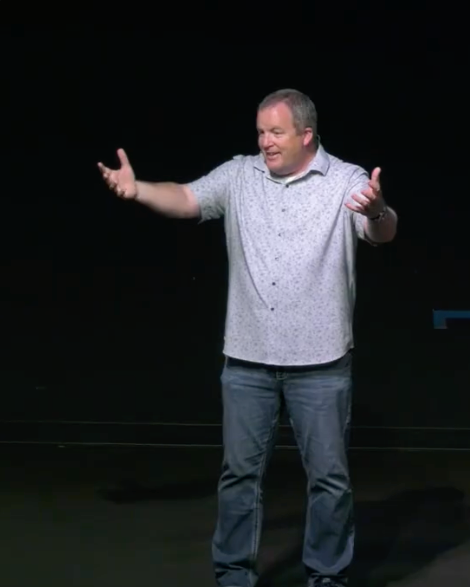
Marshall Brown is the lead minister at Flagstone Church of Christ. He spent the bulk of his "growing up" years in Fort Smith before attending Harding University. He began working as youth minister at Southside Church of Christ in Rogers after graduating with a B.A. in Bible from Harding University in 1995. He served as youth minister for 11 years and then was asked to begin serving as the associate minister at Southside in 2006.
Marshall joined several families from Southside in planting the Flagstone church in 2010 and has enjoyed watching God do amazing things through this church family ever since. While at Harding, he met Kristy Alexander, and they were married in 1996. They have been blessed with three wonderful boys: Ethan, Griffin, and Tyson.
episode references.
- Flagstone Church of Christ: https://www.flagstonechurch.com/
- Southside Church of Christ, Rogers: https://www.southsiderogers.org/
- Harding University: https://www.harding.edu/
- The Restoration Movement (Encyclopedia Britannica): https://www.britannica.com/event/Restoration-movement
- Samaritan Community Center: https://www.samcc.org/
- Havenwood: https://www.havenwoodba.org/
- The Pack Shack: https://www.thepackshack.org/
- The Salvation Army of Northwest Arkansas: https://www.salvationarmyusa.org/usn/
episode outline.
- Episode preview (00:00:00)
- Episode intro (00:01:49)
- Introduction and Marshall Brown's story — Fort Smith, Harding University, youth ministry (00:05:00)
- From youth ministry to church planting — the move from Southside Rogers to Flagstone (00:08:49)
- Calling and place — leaving an established community to build something new (00:10:36)
- Not just another Church of Christ — the vision for Flagstone in a growing region (00:15:20)
- The Church of Christ tradition and the Restoration Movement — a brief history (00:19:45)
- "The least Church of Christ church" — finding where Flagstone fits within the tradition (00:25:16)
- Women in leadership, instruments in worship, and the questions Flagstone is still wrestling with (00:31:43)
- A return to the Restoration Movement? (00:34:10)
- Reaching out, connecting, and serving — the church's role in the community (00:37:23)
- Empathy and meeting people where they are (00:42:22)
- The whole person — faith inside and outside the church walls (00:47:47)
- Faith, politics, and the hijacking of Christianity (00:50:33)
- Race, immigration, and the limits of empathy (00:54:50)
- The prophetic voice — institutional or personal? (00:57:36)
- Challenges — gated communities and the Salvation Army in the same room (01:01:52)
- Wisdom — get plugged in somewhere (01:08:23)
- Fears — traditions and comfort zones overriding connection (01:12:38)
- Wholeness — spiritual, individual, and communal (01:14:52)
- Closing (01:17:32)
- Talk-back with Monica Kumar — faith and politics, women in leadership, and socioeconomic belonging (01:18:38)
- Episode outro (01:34:15)
episode transcript.
episode preview.
[00:00:00] marshall brown.: I think sometimes we compartmentalize our faith community and our work community and our neighborhood community and that kind of stuff. And that's a natural thing to do, but I think that scripture speaks to this, and I think what we're trying to do at Flagstone is recognize that my faith should blend into my workplace. It should blend into my relationships with my neighbors. It should, drive some of the conversations that I have, especially, if there are people that I come across that are struggling or dealing with problems or just, even just dealing with conflict within your family or within a, a workplace, those things I feel like should be intertwined.
I think that's what scripture calls us to. I think sometimes we can limit those things to, okay I'm supposed to love people within my faith community, and I'm supposed to act a certain way when I'm around those people. Now, when I get away from 'em, I'm gonna do something different. And again, I think that's just a natural thing, but I don't think that's what Jesus calls us to.
[00:01:49] mike rusch.: Well, you're listening to The Underview, an exploration in the shaping of our place. My name is Mike Rusch, and today we're sitting inside Flagstone Church of Christ in Bentonville, Arkansas, with Minister Marshall Brown.
This season, we've been exploring the faith of Northwest Arkansas. We've sat with Catholic and Episcopal priests and Baptist pastors. We've shared tables with United Methodists and leaders across faith traditions. We've tried to ask the same questions to each of them. What does your tradition carry into this place? What does it decide, and what does it say about who belongs?
Today, we're stepping inside of a tradition that I'll admit I didn't know much about before this season began, the Church of Christ. And if you're not from the South, you may not know much about it either
Their story follows the story of Arkansas, and in the early 1800s, a group of preachers walked away from their denominations and made a radical claim. No creed but Christ, no book but the Bible. Strip away the institutions, the hierarchies, the man-made rules, and go back to what the church looked like in the Book of Acts. Just go back to the beginning.
That's a resistance story. It's a group of people saying the structures that stand between ordinary believers and Scripture have accumulated too much influence, and we're moving to remove that.
The movement started in Kentucky and West Virginia, but it took deep root in Arkansas. It traveled the same roads as the Scots-Irish settlers who settled in this high country, and it became part of the fabric of this place. Harding University in Searcy. Church of Christ congregations in nearly every town in the Ozarks. One of the fastest-growing religious movements in American history, and Arkansas became one of its strongholds.
But here's the thing about resistance movements, they can calcify. The tradition that once rejected all creeds developed its own unwritten rules, maybe just as rigid, maybe just as boundaries, just as capable of determining who belongs and maybe who doesn't.
And the movement that began by tearing down walls may have built some along the way on its own. So what happens when a congregation inside that tradition starts asking the founding question again?
Marshall Brown planted Flagstone 16 years ago with about 100 other people from another established Church of Christ church. And when he described what they built, he calls it "probably the least Church of Christ church in the area."
That's a striking thing for a minister to say about his own tradition. But the more you listen, the more you wonder, is Flagstone actually the least Church of Christ church? Or maybe is it the most? Is this a departure from the tradition or a returning to the thing that tradition was always supposed to be?
That's the question I want you to hold while you listen today. When a tradition's founding impulse was resistance, resistance to institutions, resistance to human authority over scripture, resistance to the idea that any denomination owns the truth, what does it look like when a tradition tries to recover that impulse 100 years later? And maybe what does it cost?
If you're listening and you have thoughts, questions, or things that you're wrestling with, we'd love to hear from you. Hit the Send Us a Voice Message button on the underview.com website.
All right. We got a whole lot to work through today. Let's get into it
episode interview.
[00:05:00] mike rusch.: I have a privilege today of sharing a table with Minister Marshall Brown, who's the lead minister here at Flagstone Church of Christ. Minister Brown, thank you for sharing a table with me. Thank you for yeah, just the opportunity to sit and learn a little bit about the faith community that you are leading.
Sure. And so welcome to these conversations. I appreciate it.
[00:05:17] marshall brown.: I appreciate it. So just to let you know, like you don't have to call me Minister Brown.
[00:05:22] mike rusch.: Okay.
[00:05:23] marshall brown.: Probably more people are familiar with the term pastor, but that's, that's even like in church Christ stuff. They don't use the word pastor that much.
But you can call me pastor, but honestly, just call me Marshall.
introduction & background.
[00:05:31] mike rusch.: Thank you. And Marshall then I'd love to start maybe with your story and your own way that you have found your way into the place that you are today.
And I'll let you take whatever direction you want, obviously, but maybe help set the context for who you are and maybe how you think of your role or your position or how you ended up here at Flagstone.
[00:05:51] marshall brown.: Sure. Very brief version of my growing up. I grew up for the most part in Fort Smith, Arkansas. As far as f my faith is concerned. I grew up in a Christian family, church of Christ family. We're probably at least third generation Church of Christ. So that was my upbringing. I didn't even go to any of the big public schools in Fort Smith. I went to a small church, Christ Private School, that doesn't even exist anymore. But that was, going to church Sunday morning, Sunday night, Wednesday night, all the different activities outside of regular church events. That's but also your typical high school stuff. I have friends, I play basketball, I, all that kind of stuff.
After I graduated from high school, I went to Harding University, which is in Ccy, Arkansas. It is also the. Has its roots in the Church of Christ denomination. And went there with the intention. When I was in high school I, was feeling led to, or called to working with kids, working with teenagers. I was really involved in the boys club there in Fort Smith. And I, was coaching and doing some different activities there. And so I just really enjoyed doing that. And so I thought, I'll do something. I don't know if that was gonna be social work or if that was, if I was gonna do teaching and try to become a coach. I'm not sure. But then my senior year at high school decided, we had a really cool youth minister at our church and I was like, Hey this seems like I what I want to do. And so I went to Harding as a Bible major, but with plans of being a youth minister, youth pastor, for the rest of my life, my goal was to be, a youth minister into my sixties.
I just, I, that was all that I wanted to do. And even when I told people that, I was going to Harding, I was gonna be, a Bible major, and they're like, oh, you're gonna be a preacher. I was like, no, I don't wanna be a preacher at all. No I'm gonna be a youth minister. And, people would even be like that's a good place to start, but you want to kinda graduate forward to other positions. And I'm like, no, that all I wanted to do was youth ministry. And so that was the plan. All through school, during the summers I would do internships at different churches, with the youth programs, stuff like that. And then when I graduated interviewed at different churches and then got offered the job to be youth minister of the South Side Church of Christ in Rogers.
And went there, fresh outta college. And spent the next 11 years doing youth ministry. And then we got to the point with the church we had some changes in staff and were in need of the church itself needed some, someone to take over the role of just I don't know working with our young families, which is the age that my wife and I were at the time.
We had young kids and that was our age group. And doing some community involvement kind of stuff. We just needed somebody to oversee those things and instead of bringing somebody new in to try to make connections and meet people and gain trust, since I already had those relationships with those. Folks specifically. I just moved into that role and we hired a new youth minister. And so I was was the associate minister, which I always told people this, what the youth minister doesn't do and what the preacher doesn't do. That's, that was my job description.
[00:08:47] mike rusch.: Interesting. I've never heard it explain that way.
[00:08:49] marshall brown.: It was the easiest way I could explain it. And so I did that for four years and then at the time, south Side was really growing and we were running outta space in our facilities for, classrooms and activities and even our worship times we were having multiple services.
I was we had simultaneous services going on, one in our auditorium and then one in our gym that we had, and I was preaching the one in the gym. And we started just, the leadership started talking do we spend the money on expanding our building? Do we build a new building? Do you know all these different options?
And financially that wasn't feasible for us it didn't seem like at the time. And so we spent some time talking about it and praying about it, and just came up with the idea, the best way for us to grow with not zero expense, but less expense than building just an entire new building was to plant a church.
And so we talked through that whole process. And long story short, about nine months later maybe 10 months later, we planted flagstone.
This is 16 years ago.
And we took, I hundred people from south side, and that's including all the babies too. So probably probably about 70 adults and kids. And and planted a church
And the first several years of Flagstone, I was the only staff.
Everything else was volunteer. We had volunteer people working with our teenagers. We have volunteers, cleaning the building. We, just everything was we just didn't even have, we became self-sustaining within a couple of months of planting. And financially we were really limited on what we could do as far as staff and anything else.
Now we've got three full-time staff members, including myself and a couple of part-time folks. And and we're we've grown in size and grown in opportunities and things too. So that's how we got to be where we are.
move to Bentonville.
[00:10:36] mike rusch.: I'm curious that move out of South side as you emerge from what sounds like a very established church but I'm curious, what was that experience like? What was that? Oh, I don't know that tipping point that said, okay. I'm, my, my lifelong dream of wanting to be in youth ministry is now turning into now being responsible for a congregation.
[00:10:54] marshall brown.: Yeah. It's I don't know any other way to explain it except just a calling. And I know some people, scoff at that, but it really felt like something that, that God had put on my heart, something that I just felt like, here's this opportunity. I wasn't thinking about it.
It wasn't something that was even a long-term goal, but all of a sudden, here it is, and it feels like it's the right thing to do. And it was, it was exciting. It was scary.
for me and for my family, I think the hardest, one of the hardest parts of it was we were part of an established church.
My, my wife at the time was our children's Minister at South Side and also doing a lot of things with our women's ministry. We had our young adults group was growing. I was also in charge of our singles group and it was growing and we were doing a lot of different community events and our kids, had all these relationships with their friends in the church and families there.
And so it's not that we completely walked away from all that because some of those folks came with us, but at the same time we didn't have the same facilities anymore. We didn't have the same opportunities. We had to create those things for ourselves, and that was hard. That was a little bit painful at times, but I just couldn't get past, this is something I feel like I need to do.
This is something I feel like God is calling me to do. And so that's why we took that leap.
calling and place.
[00:12:11] mike rusch.: And I know this is the kind of purpose of our entire conversation, and we will get into this more as it works out in the tradition. But I hear this this formation of community maybe right out of the gate. And so Oh, for sure. Coming from an established community and to be relocated to a place that may be unfamiliar and bringing a community with you.
How did that set the context for how you thought about this idea between calling and maybe it's time to go to a new place and start to understand what that community is going to require to, to be a part of a thriving church.
[00:12:41] marshall brown.: I don't know how many of the people that came with us themselves felt called. You would have to ask those folks as individuals. I, but it is something that we talked about and it, and. Honestly. And I agree with you, we'll probably get into some of this when we talk about the church Christ tradition, but even when we planted, there was a there was a sense, there was a, a purpose and a mission to not just create another Church of Christ Church.
Not just, Hey, there's not a Church of Christ Church on this side of town, so let's go plant one. That was never the intention at least for my part. And the vision that we tried to set for everybody that came with us was really more about, we just wanna be a church and we're going to a place where there's not an established, as far as we could tell at the time and established faith community around those apartment complexes. And and housing developments and things like that. And we just wanna be a church and we just, we really, our mission, our vision has always been not to necessarily attract church of Christ to our church, if I can use that term, but just really we want to be a church that's for people who currently, and wherever they're at in life, they don't have a faith community to be a part of.
Either they used to go to church and they don't anymore. They went somewhere and got hurt, some kind of church hurt. It's a real thing. And so they stop going for a while or they've never been a part of a faith community. And we really just want to be that kind of church where folks just wanna come and see what it's about.
And maybe experience, a loving, accepting group of people. No matter what the sign is outside, that's always been the vision, the background. Now, has that always been everybody's vision? Probably not, but as far as what we felt when we were planting in the first place, we didn't want to just photocopy, for lack of a better word, of what we were doing.
We wanted to really just be a faith community that was just accepting, especially for people who didn't, who weren't plugged in somewhere else, weren't trying to steal members from other churches. We weren't trying to say, Hey, your church is okay, but come see our, it was really targeted and we talked to people about, inviting people from their workplaces and their neighborhoods and that, if they got kids on the same soccer team or whatever, you're sitting in bleachers at practice, invite that person to come.
To church with, especially if you find out they're not going somewhere else, they're not plugged in somewhere else. So that's, that was the vision the whole time and has hopefully continued to be at least part of, what we're doing. So I hope that answers your question.
denominations in the south.
[00:15:20] mike rusch.: It, it does. And now I have a hundred more. No.
So I've grown up in the South and in the Bible bell. Oh yeah. And, I can't look past that denominations typically are the lead banner, for how someone navigates through the quote unquote church world in many ways.
So I think listening to you talk about just that posture when you began of not wanting to, if I understand correctly, not saying, Hey, this is going to be a, about a Church of Christ church plant. Really, this is a church plant for those in the community.
[00:15:48] marshall brown.: Yes.
[00:15:49] mike rusch.: Help me, how do you think about that?
I, is that just me or is that something that maybe was front and center at the time or, I'd love for you to unpack that a little bit more, just given, and maybe this is my own experience and I need to be quiet. Yeah. But, yeah.
What that traditional kind of denominational maybe we'll get into this now, this structure or the traditional Church of Christ experience that most people that are not familiar with that tradition may expect or what they would think they may be walking into.
[00:16:19] marshall brown.: I'll give two answers to that. Yeah. So first off I think I know part of, or I assume part of your mission even with this podcast is looking at where we are in Northwest Arkansas, maybe more specifically Benton County. And this is one of the most. Rapid, rapidly growing areas in the country.
There's people from all over the country that are moving here. It used to be, even before I moved here, it's the local folks. And it's, you got third and fourth generation folks that have grown up around here. And now we have all these these transplants for lack of a better word who come from all these different backgrounds.
And man, especially for people coming to this area outside of the Bible belt that may not be a high priority on the list. What is the faith community like, but people who move to this area, one of the things that they. You think about what are people looking for?
They wanna see what kind of schools there are for their kids. What kind of, entertainment that not just gonna the movies or their shopping centers, but are there bike trails? Are there places to go fishing? What can we do? They're looking at that kind of stuff. And they're also looking at what churches are there? If they have a church background, they wanna look and see they're Googling,
[00:17:26] mike rusch.: right?
[00:17:27] marshall brown.: Are those churches there? And our hope was not to just attract, as I said before, church Christ folks that moved to the area. Although if they do Google search and they find us great, we're not going to turn 'em away. Obviously, we want people to be a part of it but we also recognize, at least here in northwest Arkansas, there's so many more people that are flooding into this area.
I don't mean that in a negative way, just by sheer numbers who don't have. Much of a faith story, haven't been a part of a faith community, or if they have, it may not have been a positive experience. And so we hope that we are at least one of the options of places where they can at least experiment
With what a faith community is like, and find some acceptance no matter what their story is. That's been I think that's, to go back to the start of your question, I think that's what people in this community are searching for it as they're trying to plug into the community.
The faith part of it just becomes part of that search. Is this where I fit? Part of that fit is church home for a lot of folks. And now as far as the Church of Christ denomination is concerned, that was never, as I said before, that was never our intention, but we were also being planted by a church, Christ Church.
And so that was part of the discussion there was we'll, at least initially we need support. We need people praying for us. We need people financially supporting us. Let's make sure that we're not catering to, but just like we don't want to ruffle too many feathers or feel like do some things that, that may cause people, at our home church that was planting us to think, I'm not sure they wanna support that.
So we held on to that name and most of our folks that came with us came from a church Christ background. Once we started, there was a time that I would say, probably we ended up getting to a point where half of our. Of our regular attendance was Church of Christ the other half. We had all sorts of different denominations and we had atheists, and we even had a couple of different people from Jewish backgrounds, so I, I feel like that's always been maybe there's other groups doing it better but we've always had that ability to at least be a place that is safe for people to come check out for the first time.
the church of christ tradition & history.
[00:19:45] mike rusch.: Maybe before we go too much farther maybe give us a little bit of context just out of maybe the history of the Church of Christ tradition.
The Church of Christ tradition emerged out of Arkansas to become one of the largest church denominations in the country. And so this is a really significant movement not only within Christianity in the United States, but especially here within Arkansas. And I hear that woven through your own personal story.
Yeah. Maybe give us a little bit of the long view of of where this conversation within the Church of Christ church, if you will began and what that looks like over time. Okay. Maybe we can give a little bit of a historical context Absolutely. Before we get into the modern day.
[00:20:25] marshall brown.: Yeah. That, and I'll preface what I'm about to say. I, there are people who had done a whole lot more research and know the history a whole lot more than me. But, really, it has its roots in what was called the Restoration Movement. And there's a lot of people that still call it that today or even refer to it not as church of Christ, but as restoration churches.
But that, that came out of the time in America's history, this, that's one of the Great awakenings. There were two of those, and this is the second great awakening where there was just a an overall fervor towards more religious things in society as a whole, late 17 hundreds, early 18 hundreds. The two main characters in our, in the history of our tradition are Alexander Campbell and Barton Stone. Alexander Campbell was a Presbyterian preacher. Barton Stone, I believe was a Methodist preacher. And they weren't geographically that close to each other. But Alexander Campbell and his father Thomas and just their circle of friends were, they kinda become disillusioned with having to for lack of better word, cater to or two, the the rules the traditions, the parameters that were set down by these presbyteries and synods and conventions and things like that.
And they really just on their own started having this mindset of let's not worry so much about what this group is telling us. This scripture says let's study it for ourselves and let's. Let's work on just going back to, let's read the, let's read what the church was like and let's read some of these scriptures and see what they were dealing with and let's try to model the church after that.
So they branched down their own and started some of these churches that they really just called themselves, brethren or brothers or, just the church. They didn't even want any kind of name attached to it.
Barton Stone was down in, in Kentucky and having the same kind of experience with his surroundings as well, and started meeting with Christian leaders and other Christians and doing the same thing, and then they found out about each other and joined forces.
That's a really quick summation of how that came about. And so that our roots are probably, in the Kentucky and Western Virginia area and then move west from there with. This whole intention of not coming up with creeds, not coming up with a list of manmade rules per se.
Let's just go back to what the Bible says. What the Bible say about worship was the Bible, say about Bible study, was Bible study about, all these, different issues and trying to rely on that. And so over the next, a hundred years the group just began to grow, began to continue to grow, became one of the faster growing denominations at the time.
And I think part of the attraction was I don't have to, I don't have to put myself under this list of. I keep saying the rules and I can't think of a better word off the top of my head of these different denominations I've been a part of in the past. I can just meet together with some other Christians when you study the Bible together, and we can decide as a group what to do from there. And so that's been the goal of churches of Christ in general over the centuries.
Now, like any other denomination, as time goes on, you have different, that group splits into different groups over a variety of different issues. But the main mantra was to that, that a lot of church Christs know is to speak where the Bible speaks, be silent, where the Bible is silent. So if I read through scripture says let's do things this way, then that's the way we're gonna do them together as a church. And if the Bible doesn't say specifically do things this way or don't do it this way, then we can discuss that together and come to a consensus.
That's the overall hope and vision for churches of Christ in general.
But like I said, what ends up happening, as you get into the late 18 and into the 19 hundreds, you start having more, dogmatic groups within the churches of Christ that say, okay, scripture says this and then this group over here says I don't think it says that. And then they get divided among themselves, and I think that happens with probably all sorts of traditions. But the overall goal is just to go, the reason they call it restoration. Let's restore what the church looked like back in the book of acts back when the church first started. That's we want to get back to that the best that we can. So that's a really brief history of how we got to be where we are.
[00:24:55] mike rusch.: I'm, thank you. I think that's helpful and we'll circle around this Okay. As we go through this conversation. One of the things that I read that you touched on and you almost said this, but this idea of "No creed, but Christ and no book, but the Bible." And this, that's a, I would say a pretty radical place to begin. It's probably, especially within the context of the time that started that time For sure.
[00:25:16] marshall brown.: Yeah.
in a tradition but finding where you fit.
[00:25:16] mike rusch.: H how do you how do you feel like you connect maybe with that? And I know you've talked through a little bit about how that's evolved. But as you look at this idea of flagstone, coming to a new place and starting new with a new community. And I know it's been some time. How do you feel like where you are within this maybe tradition today? And and maybe I'll lead you just a little bit. That's fine.
'cause as we were talking before, some of this you made this comment to me that we're probably the least Church of Christ Church that you'll find. Yeah. And so I'm holding this duality of of this tradition Yes. Of trying to get back forth to this restoration.
[00:25:56] marshall brown.: Yeah.
[00:25:56] mike rusch.: And maybe your comment about, I, I don't know where we sit in that today. I don't know if you want to dive into that. Sure. But I'm really curious.
[00:26:03] marshall brown.: Let me give a little bit more history
[00:26:05] mike rusch.: Please
[00:26:05] marshall brown.: And more kind of understanding of our denomination as a whole, so that maybe it'll clarify a little bit more of what I was saying about us being the least Church of Christ church of Christ, at least in this area.
Okay. I think that one of the things, again, trying to be. Church of Christ trying to be as close to the thing that, what the church looked like in the first century. One of the things, and I think you had already asked me about this as well, some of our defining characteristics compared to other denominations.
So one, when you go into the Church of Christ, most churches of Christ, at least in this area you're not gonna see any musical instruments compared to a lot of other denominations. We, for the most part, you'll, there's more churches growing here in the south that are starting to, incorporate both, or maybe you have a hybrid, maybe they'll have one worship service that's non instrumental, one that is but for the most part, your church Christ don't have musical instruments.
The reason for that is when you go back and read in the Book of Acts and you read Paul's letters and Peter's letters, in, in the New Testament, you don't see any mention of musical instruments. So you. How many, a hundred some odd years ago, the leaders in the Church of Christ movement were like then we shouldn't have instruments because the Bible doesn't say anything about having them, so we shouldn't have 'em.
It is things like that. It's some of the roles of women in churches, what are they allowed to do and not do? And I know that's a type of dis of discussion for a lot of different denominations, but for us, most of your in, in scripture, a lot of your leaders, at least the ones we know by name are male. Again there's not women talked about, we don't see women being presented necessarily upfront, in front of everybody or speaking or whatever. And so women shouldn't be in those leadership roles. It is those kinds of things. We see scriptures talking about, how the church in acts met together on the first day of the week and broke bread together.
Our ancestors said we need to take communion. We need to do, we need to break bread and take communion every single first day of the week. Not every denomination does that. So it's, it is that's become some of the things that, that we have tried to stick to and at the same time, as we've moved forward, especially, into the end of the 20th century and coming, here now in the 21st, a lot of churches, our ourselves included, are starting to, it is not really a pushback, it's just a questioning how close are we being to the original church? And are some of those, do some of those things even matter?
Like I was saying before, the original mantra for the most part for church of Christ was speak where the Bible speaks. Be silent, where the Bible silent. If the Bible says it, do it. If the Bible says, don't do it, don't do it. But the Bible doesn't say anything. You have free will. Churches can do whatever they want to.
I heard a Church of Christ preacher named Rick Ashley one time say that's been our mantra. But the reality is we speak where the Bible speaks and where the Bible is silent, we usually have a whole lot more to say. And that's that's true. We, we start making, drawing some lies in saying and making some rules that the Bible doesn't necessarily say it's for or against.
And so as far as Flagstone is concerned, because we come from kind of Church of Christ roots and the majority of our congregation has that kind of religious background, it's been I don't wanna say easier, it's just been our our decision as a leadership, not necessarily to make those things priorities.
I don't preach about instrumental music. I don't talk about, women's, we can have those conversations. We didn't even have long drawn out conversations and bible studies and whatever about it. But when we're together, we're spending as a group and especially when we got, guests coming in, that's not one of the things that I really want us to be focused on.
And I think, our leadership itself, I think if you had any of our elders in here and any, the rest of our staff, we asked, what do you think about instrumental music? Most of 'em would be like, doesn't matter, we're gonna keep right now for the most part, using acapella music, no instruments, because that's what we're used to and it's what we're most comfortable with.
And probably people who are coming here for the first time are gonna be comfortable with that. We always get that question from people who come from either a different tradition or who don't have a church tradition at all. Eventually the question comes up, I'm like, why? Where's the instruments? Why don't we have instruments here?
And you kinda have to have to explain that a little bit, but it's just not worth, it's not a battle worth fighting to us, at least at this point. We are when I say we're probably more, I don't like the words liberal in tradition because that, there's a whole spectrum of that too.
So just your typical churches of Christ in northwest Arkansas we have a praise team during worship. So there's women singing on the microphone, leading worship, allowing men there's some churches in our area that see that as unscriptural, that we're doing something wrong.
We have, if you come back in, you're in our kids ministry on a Sunday morning, we're showing videos, kids worship songs, and it's full music, full, kids are dancing around and stuff, and there's some people like I don't think that's the right thing to do.
Our youth ministry that we hire most recently he's been here for two years now. He's very much very connected with just in his own personal life of worshiping with a guitar. And he's brought that into our youth mystery. So they have nights where just her teenagers, they just get together and worship, and he brings his guitar and plays, and we're fine with that, but I know there's other churches within our denomination that would be like, oh, we I don't think we can do that. Because traditionally they've heard this argument this, that's unscriptural. So we can't do that. Does that make sense?
leadership and role of women.
[00:31:43] marshall brown.: So with Flagstone, that's why I say we, we started we had a lengthy study with the whole church family, not just our leadership, about what scripture says, about what women can and can't do.
And we even, we went through it together as church family, and then we videoed all of it, we put on our website so anybody can access it. And we've expanded, at least here, the roles of things that, that women can do here. I think we need to keep pushing, me personally, I think we need to keep, expanding that more, but we also don't want to just, I don't know.
It feels. It would probably be a little bit more detrimental to just rip the bandaid off and let's just change everything. That's not the purpose. And it's not, we're not trying to be, our agenda is not to be different and to be change agents. We are honestly looking at scripture and then looking at our community as people, come to this place and go how do we have women who are CEOs of their companies, who are in leadership positions and guiding and leading and telling people, giving people instruction.
How can they do that in the corporate world and not in a faith community? That doesn't seem to make sense. And so we're still wrestling with some of that. But as far as the churches in our area that still have the label, if I can call it that, the label Church of Christ I would venture guess we're probably only one of the only ones that has women serving communion trays.
When we take communion on Sunday mornings or in, in our Bible classes, women are teaching, they're leading public prayers and some of that we're still not doing in the corporate worship service. But, who knows on down the road? I know that I went all over the place with that, but that's, but how flagstone fits into the history of our tradition, that's what I think is how we fit into it, is that we are re-asking the question, where does the Bible speak and where is it silent? And if there's specific things that scripture says, then let's do that. And if it's not specific for or against then let's pray about that. Let's do what's best for our church family and our community.
[00:33:42] mike rusch.: I'm just, I'm really thankful for your transparency.
[00:33:45] marshall brown.: I appreciate that.
[00:33:45] mike rusch.: And just in the wrestling, like I know people can't see your face, but I know you're, I can watch you choose your words very carefully out of what I assume is a desire to honor people. Absolutely. And to navigate through both tradition. And questions maybe. And so thank you for
Sure.
Bringing the rest of us into that into that into that debate, or that tension that you hold. I it. And I don't know, this would be me characterizing.
That's fine.
a return to the restoration movement?
[00:34:10] mike rusch.: So please redirect. But as you look at these the traditions of the Church of Christ movement if you will. And this desire to peel it all back to the core and the essentials of where you have and maybe how things have been added to that over time.
Could I dare say do you find yourself maybe going back to the core of that restoration movement here? Do you, would you view it that way? Is that a fair thing?
[00:34:34] marshall brown.: It's not one of those things that I think we or at least myself, I'm consciously thinking about, but, just taking a step back and even, even this conversation realizing that's yeah. I feel like that's what we're doing. Let's let's not try to fit ourselves into this box of traditional Church of Christ beliefs and and actions and ways that they do things.
So our mission when we plan this church, and it's still the same mission, is to reach out, connect, and serve. And if you ask anybody that's been going to church for a while, what's Flagstones mission? They will tell you, reach out, connect, serve. We talk about all the time. It's, those words are hanging on the wall of our lobby. Like that's everything we do. Whether it's in worship, whether it's a volunteer opportunity, whatever it is, falls under, somewhere under that umbrella.
We're either trying to reach out to people where they are, we're trying to make connections with each other, with our community, and we're trying to find ways to serve and make people's lives better. And with that as our, with that as our mission. We are consistently, I wouldn't say constantly, but just, but consistently asking ourselves what is keeping us from fulfilling that mission?
What is keeping us from reaching out and making some connections with people or serving some people, and sometimes not just the Church of Christ denomination. I think this is true for every denomination you can get so hung up on, but this is the way we do things. This is how it's supposed to happen here. That we either stop ourselves from making those connections and accepting people and building relationships with people. Or we unintentionally put up walls that keep people from making those connections. And I feel like. Not that we're, I don't feel like Flagstone is trying to champion this return to, these core values.
I think just as we look at our own mission, it I think we find ourselves aligning with at least that initial intention of our denominational roots. We just want to be a church. We just want we want to soak up scripture and we wanna live it out, and we want other people to be a part of that.
It's really at its heart, I feel like that's what the roots of our denomination we're all about. And that's what we're trying to do here. And so if there are things that are, that cause people to feel like, oh, they won't accept me there because this, and this. Is that something that we can get outta the way? Then let's get it outta the way, or that, is that something that we can at least have a conversation about? Then? Let's talk about it. So that we can bridge those gaps 'cause ultimately we just want people to have a faith of their own, but also be a part of a community that cares about 'em.
And if there's anything that's, manmade or traditional that's keeping that from happening, then let's get it outta the way.
[00:37:21] mike rusch.: I love that. Thank you.
[00:37:22] marshall brown.: I appreciate it.
the role in the community.
[00:37:23] mike rusch.: This idea of reach out connect and to serve. I'm curious , as this moves out into the community i've heard you say over and over again and in a really beautiful way around the purpose of this church is to be for the community. The context we've been talking about has been inside through tradition and and what that looks like. But, so we start to think about moving out towards the community and this idea of the mission of the church.
Maybe help me understand your view of what does this really look like for flagstone to be a part of this community in northwest Arkansas? Maybe what, how do you view your role here?
[00:37:59] marshall brown.: Our church as a whole, we're just, we're constantly en encouraging our folks to not just invite, not just to invite people to church, but to build connections with people.
And if that ends up involving, bringing the church great, but we're not trying to just boost our own numbers. We're really trying to hopefully empower our folks when they're here together or when they're in, one of our small groups, something like that to then go out into, their daily relationships and build those connections with folks and especially at least have a radar up for an antenna up for people who they come across that they just notice somebody's struggling. Somebody doesn't have a community. They're lonely. Somebody's got questions. Somebody's hurting to have open eyes, to see people in those kinds of situations and to at least initiate the conversation. And if they don't feel completely able to do that or feel like they may not know all the answers, then yeah, bring 'em here.
Let's find a way either to meet with me or somebody at our church one-on-one, or just bring 'em here and let 'em experience being a part of this community that, that is accepting to people where they are, and wanting to help 'em move forward. So that's part of it. The other part of it is, we really encourage folks to find a way to serve and that's, that can be volunteering. Here at our church for different ministries that we have we're always, like most churches, we're always needing people who want to teach kids and rock babies and things like that. We always need people involved with our, where our team ministries.
We, we've got a whole list of volunteer opportunities here, but we're also encouraging our church family. If there's something that your workplace is doing, hey, we're gonna go pass out bottles of water. Go do that. If you know of an organization that needs some help, needs some volunteers, then let us know and we'll partner with 'em.
In my personal experience growing up and even my first years at Southside, it seemed at least with. My perception of Church Christ Churches was that if they were gonna do some kind of community service, it had to be a program that they initiated, or it had to be another Church of Christ that had started that program and they could partner with 'em.
And it was almost as if, if the Baptists are doing that's their thing and we're not gonna volunteer over there. That's just an example. I'm just use the word baptism. It could be any denomination. And at least for us, because we have a mission we consider part of our mission, part of the reason we exist as a church families to serve in our community that we, that has a broad definition.
If it's something that we're doing, please volunteer and be a part of it. If there's, if it's something that somebody else is doing, go jump in. If it's something that we can partner with. Then tell us about that and let's figure out how to do that. So we've partnered with even different organizations here in Northwest Arkansas.
The I don't know if you know what the if you've heard of the Pack Shack, but we've partnered with 'em multiple times to, pack thousands of meals for the community the Haven Wood Organization that helps these women in crisis. Really we just we're on their call list if if they need something fixed, if they need some furniture moved, if they need, if they need volunteers for a certain activity that they're doing, they have a lot of different people to choose from.
We're on that list too. We partner with 'em, the best that we can. Those are just a couple I have to think of off the top of my head. We're just we don't feel like we have to invent all the different ways to get involved with community if somebody's doing good community stuff. Let's just jump in and be a part of that.
We partner with the Samaritan Community Center over Rogers. When they do their big backpack giveaway at the be end of the school year, we join in that too. And we're not trying to take that front or start our own thing that looks like it. Hey, y'all are done. How can we help? And that's the heart that we're trying to get across to our whole church.
That we're in this community together. We have this faith community that we're a part of, but it is within this overall community that we don't wanna, we don't want to put up walls and go, okay and huddle behind us. Okay, this is us in here compared to the rest of the folks out there. Now we're in this community.
We're a part of it, so let's be part of it. But let's put our faith in action. Let's be people who love and serve and connect with others. ' cause that's what our community needs. Let's join in that.
empathy.
[00:42:22] mike rusch.: I love that. I hear, I. Yeah. Really this desire to engage where the community needs its help without asking, hard theological questions or theological questions at all about what does it look like to care for our neighbor, and I really appreciate that.
I think maybe on the other side of that coin and I think about this in the position of serving the community I, I noticed in your Sunday sermons the topics for me, or at least what I, my impression come across as a high level of empathy for caring for people.
And really caring for maybe some of the internal needs that they have. And you've mentioned a couple times this idea of kind of church hurt, for lack of better words. And it seems to be front and center from my perspective and what I've understood that. That you are speaking directly to people to care for maybe some of the, I say insecurities or anxieties or hurts or pains that they're carrying.
So I don't, I, you can confirm or deny that, but I'd love to understand how you view that part of your work here.
[00:43:26] marshall brown.: Yeah. I, it, I don't, it's probably just part of my own personality, first of all that I just I am probably naturally at least sympathetic. If not empathetic.
I wanna know people's stories and I wanna know where they're coming from. And I want to know I want them to know that they're safe to share with me or to share with our church, whatever's going on. And maybe part of that, it comes from my own personal experiences. I think I don't wanna sound too derogatory of my upbringing because it was great.
But I think just in at least the, some of the churches that I either grew up in or was working at, over the years maybe not the church as a whole but some people could just naturally be judgmental, for lack of a better word, to people's circumstances. And if somebody's going through a difficult time, the background question was what do they do to get them in that situation, and and then moving forward from that, my years in, in youth ministry were really beneficial to kinda laying some groundwork for my heart with this ministry, because kids, myself included when I was a teenager, but then just working with these teenagers, man, they're just, they're trying to figure it out.
They're doing the best they can and they do really dumb stuff sometimes, and then you take a step back and go so do we as adults. I don't know that anybody gets up in the morning, is I'm gonna make the worst decisions possible today. I wanna do something that, that is hurtful to me or hurtful to somebody else.
It, we make dumb decisions or things get done that are beyond our control. And I don't know, I just, I have a heart for people like that and I, and I recognize through all the different years I've been doing youth ministry, there's some people that have made countless mistakes in their lives. And there are some people who look at it and go, man, that's a that's a solid person. They got their ducks in a row. They know all the right decisions to make. They never screw up. But if you dig below the surface a little bit, you recognize, oh no they've got some flaws too, because we all do.
And probably my preaching comes across that way. Our, the way we try to treat everybody when they come to Flagstone is, we're imperfect people. We are all imperfect people. I'm up here on the stage telling you about scripture and about this perfect savior as an imperfect person. And I want us to, I want you to feel like we're on the same level, and maybe I haven't made the same mistakes as you, but I've made mistakes and maybe I haven't experienced the same hurt, but I've experienced hurt.
And I want to, I wanna connect with you in that. And I, I hope that comes through. And everything we do, especially when people are coming here for the first time, which most people, the first time they show up at a church is usually on a Sunday morning for worship. And so that's, that does come through in our worship experience.
And a lot of my sermon series, I do research and I ask, and I try to base those things through prayer and through other people's opinions and insight. I just where are we in our community right now? What are people dealing with? What do people have questions about? What are people struggling with?
So let's talk about how the Bible speaks to that, so we'll have a series on relationships, but it's not just gonna be like here's what the Bible says a biblical marriage should look like. Although I think there's stuff in there about that, but it's mean relationships are hard, aren't they?
And here's some things that sometimes mess those up. And here's some ways that scripture says you can fix it or do it better. I'm just I really have a heart for trying to meet people where they are. And so I think that kind of drives, if this answers your question, that kind of drives my, what I choose to speak about and speak to is trying to connect with people and it, you won't hit everybody, but connect with a large group of people of situations that they are dealing with themselves. Or that a coworker in the cubicle next to 'em last Tuesday said, here's something I'm going through in my life right now. And they're like, oh, we talked about that at my church. I can, I, I can look that up, I can watch that video, or I can give that link to them. Or I wrote down a couple things that I can share with them that speaks to that situation that they're dealing with. And that kind of drives what? We try to communicate on a regular basis, at Flagstone.
whole person, inside and outside the church.
[00:47:47] mike rusch.: When you think about this idea of caring forward the community okay. And the way that you that flagstone has been doing that and you think about these ways of caring for the person,
[00:47:55] marshall brown.: right.
[00:47:55] mike rusch.: And where they're at. How do you view those two things? Are they connected as they play themselves out into the world? Are you thinking about those and maybe kind of two separate areas of life? I'm just curious how you view this life, maybe outside the church. And this life. This individual pursuit of understanding what faith looks like.
[00:48:14] marshall brown.: Yes. I think that I, my personal opinion, they're intertwined.
I think sometimes we compartmentalize our faith community and our work community and our neighborhood community and that kind of stuff. And that's a natural thing to do, but it, but I think that scripture speaks to this, and I think what we're trying to do at Flagstone is recognize that my faith should blend into my workplace.
It should blend into my relationships with my neighbors. It should, drive some of the conversations that I have, especially, if there are people that I come across that are struggling or dealing with problems or just, even just dealing with conflict within your family or within a, a workplace, those things I feel like should be intertwined.
I think that's what scripture calls us to. I think when you read through some of the things that, that Jesus talked about I think sometimes we can limit those things to, okay I'm supposed to love people within my faith community, and I'm supposed to act a certain way when I'm around those people.
Now, when I get away from 'em, I'm gonna do something different. And again, I think that's just a natural thing, but I don't think that's what Jesus calls us to. And hopefully that's. What we're communicating at Flagstone I'm the same person at church that I am in my workplace. I'm the same person in my neighborhood, that I am in the restaurant.
And I, it's all part of it. And so I am kind I'm as kind to my waitress that gets my order wrong at the restaurant as I am to a new guest that walks into our doors at church. I am as compassionate towards the person who has a cardboard sign on the street corner as I am to my, work bestie who's dealing with something like it should, the, my, my faith, my connection with God, my what I've experienced, because relationship with him should spill over into the other parts of my life. I don't think. I don't think those things can be separate, or at least I don't think they should be. Especially from a faith community. I think that's what God calls us to is not to take certain days of the week to huddle up together and reinforce what we believe about scripture and what commonalities we have, and then go out and be somebody completely different, or at least not share those things with the community around us.
I think there has to be a blending, there should be. Anyway, I hope that answered your question.
faith & politics.
[00:50:33] mike rusch.: Yeah. You gave a much better answer than I proposed the question to.
Thank you. I appreciate it.
You've I think listening to you talk about this idea of how faith should flow out into our community. I think it's a beautiful picture of what a faith community or someone's individual or collective faith should look like in the world. And I think when it works itself out in a beautiful way, it can have beautiful repercussions. I'm really curious how you deal maybe when it doesn't work out that way. And maybe how not just your tradition. I think every tradition obviously is, has got to wrestle with these elements. Every human has to wrestle with these elements. And maybe I'll pick on the easy one of it's no surprise our national dialogue is a bit of a dumpster fire to say the least. That's probably very generous given what's happened here lately. But this conversation about faith and especially here in the South and in Arkansas, about how this works out into, our town square and our municipalities and our civic institutions and the messiness of politics.
I I'm curious from your perspective, how you view maybe the church's role or the church's position within these spaces?
[00:51:45] marshall brown.: Yeah. Me personally, and I think probably it'd be hard to say I'm speaking for our leadership but I think that I it's almost too cliche to say politics doesn't belong in the church. And but it doesn't and yet it finds itself there, I don't ever, knowingly preach about politics or what people should think about necessarily certain issues or candidates or anything like that. And that's intentional. Because on a given Sunday, just the people who show up, just people in the room, I don't know all their political persuasions.
I don't know what their opinions are, what they've been taught, what they've experienced. And so how am I gonna be dogmatic and draw a line in the sand? And this is how you should feel about these issues when, they may have very legitimate reasons why they feel differently.
I don't see it as a cop out. And I, I don't want to get in trouble, so I don't wanna ruffle any feathers. I just don't, I don't see it as being helpful in that context. Having said that, I think as far as when it comes to either local politics or even national politics I think it, it really is up to the individual what's on your heart? Is there a rally that's going on that you feel passionate about? Then go be a part of that. And I don't think scripture says anything about that either way, personally. Is there something that you are definitively against and you feel like other people should be too fine? Have those conversations, just don't speak on behalf of the church, or especially on behalf of Jesus as to the way somebody else should view those things and how it should align with your views.
When I looked through scripture, Jesus didn't really talk about politics a whole lot. And you talk about a volatile atmosphere that he was living in, a political atmosphere he is living in. And he really didn't address it very much. And even when people try to get him to address it, and he is you know what?
There's political things and give them their due attention, but let's make sure we're focusing on what, what matters most, our connection with God and our relationship and serving other people. And I think that's the model that you see, throughout the rest of scripture.
There's even scriptures where people are being abused, mistreated, enslaved by political powers at the time. And you got the Apostle Paul, the apostle Peter going, yeah that's bad. Be the best person that you can in that context, he doesn't tell 'em to seek their freedom or, whatever.
You're just like be a good godly person if that's the situation you find yourself in. And I feel like that's. That's the principle when it comes to the church and politics that, that I seek to emulate, at least in my own life. And definitely my preaching is there people who have strong political views.
Okay. And if we have one-on-one conversation about that, I might share my opinions with 'em, let them share with me. But ultimately it comes back to what we were talking about before. What do they actually do? Do they actually need, is there something that I can help them with? Is there something that I can, in some way be an encouragement to them or blessing them?
reality of history and race.
[00:54:50] marshall brown.: That's what I'm gonna focus on more, and I feel like I'm maybe talking in circles a little bit here, so I apologize, but I feel like that my opinion is christianity, just the label of Christianity has been hijacked in some political circles by some political parties. And you read people's social media posts and you read, different Christian based groups, faith-based groups, endorsing or vilifying certain political characters and stuff in the name of of scripture, in the name of Christianity. And I just, I don't see that when I read scripture. I don't think that's what God calls us to as Christians.
I think going back to like our mission here at Flagstone, we're just, man, we wanna build connections with people. Maybe that's through hard political conversations. Let's have that conversation fine. When we address things at Flagstone I'll just throw this out, like racism. There have been really well-meaning people in our society, in our tradition over the years that have had some very hateful perspectives on people of different color and different race. I wanna acknowledge that. And I wanna say, man, I, as a white southern male, I wanna say I'm, I'm sorry that you experienced that or that your ancestors did. I wish I could change that. I can't, what can I do now to be a blessing to you? And, we've had these times our last like decade or so where that has really come to the forefront, George Floyd and some of those different things. And in those moments, man, I just wanted to sit down with some of my African American friends and just go, tell me what you're experiencing. 'cause I don't know what that's like.
I have no idea what that's like to experience that personally. I don't know what it's like. I got, friends are like I have to think about what I'm gonna wear to Walmart because I don't know what kind of, people, if I have, as a black man, if I have my hood up, people are gonna judge me on that.
I don't have a clue what that's I don't think about what somebody might think about me, depending on what kind of car I'm driving when I'm going down the road. I don't want to go too far down that path. I'm just saying I want to know where you're coming from and if I can connect with you in that and go, man, that's tell me how I can help with that. Or just be a source of strength for you and a source of connection for you. Then. Let's do that. But as far as like making definitive this is what the Bible says, that we should agree with this party or this platform. I don't think scripture speaks to it. And I think we do ourselves a whole lot of hurt just as a church in general when we come across that way.
I think that's what I was talking about before, about putting up walls and keeping connections from being built. I think it's so detrimental when we make public line in the sand statements when it comes to our politics. I hope that answered your question.
[00:57:34] mike rusch.: It yeah. Can I press in a little bit farther?
Sure. Go
[00:57:36] marshall brown.: ahead.
institutional or personal roles.
[00:57:36] mike rusch.: Wave me off. This is not on my question list, but you went there. Yeah. Probably deeper than I would've expected. Okay. Or asked you to yeah. I think number one, thank you for just stepping into that space. 'Cause I think from my perspective, I think this seems to be a question that we, as a culture are really wrestling with.
I'm curious within issues, especially what's happening, today around issues of race and immigration and things like that. Yes. And I understand it's complicated. But there is a humanity involved in this.
Absolutely. Absolutely.
And so I hear you speaking to that. So I wanna acknowledge that, and I'm curious, as someone who is also leading a congregation, do you view the church's role in this, as, from a prophetic voice of change institutionally or more of a personal individual calling to see. Maybe what we would hope if we can say that collectively would align with the message of Jesus.
[00:58:27] marshall brown.: I think I probably lean more towards a if I'm going to, if I'm going to choose a side or if I'm going to get involved in, in and lean more towards one perspective or another, that's gonna be on a personal level.
Again, not because I'm afraid of ruffling feathers, but I just don't think that's helpful for the church as a whole. What I think is beneficial and what I think a lot of faith leaders should do is not necessarily say, make absolute statements of this is what the church should do, this is how we should view this. I think you, you view those things through the eyes of scripture. You mentioned immigration, man, there's, that's complicated. And you look through scripture for anything about immigration laws you're not gonna find a whole lot, so how do we handle that? And I think, I might have opinions on those things. You might have opinions on those things, but if I'm talking to our church and encouraging our church, and like, how do you live this out or wrestle with this in your friendships and conversations or even in your involvement? It really comes ba it comes back to what would be the most helpful to the people that I come into contact with.
So when, I don't have definitive opinions, at least not that I'm gonna share on those on again, on immigration or race or things like that except to acknowledge that I don't know what it's like, I don't know what's I was born in this country. I don't know what it's like to try to come here and carve out a new life. And my understanding is, it's not the easiest thing to try to become a citizen. I haven't tried 'cause I am, so I haven't gone through that. So I'd much rather just have a compassionate conversation with somebody who's going through that than just kick 'em outta the country as far as that's concerned.
I would like to know, like, how hard is that and how, like how can we help with that? I would much rather us get involved that way than just draw lines in the sand of let's let everybody in, or let's kick everybody out. Let's too definitive. That's too absolute. And again I'm positive some people are just gonna see that as a cop out. But I really would it I think Christians in general should just really seek that empathy that you mentioned before of instead of just repeating political rhetoric from their favorite talk show host or political party, to actually talk to somebody who's in that context go, how scary is that? And why is that? And how would I feel if I was in that situation? And therefore, how can I help, I wanna maintain the laws of land. Sure. But I also want to be kind and compassionate to those who are struggling to fit in that context. Are there people that take advantage of that? Yeah. But I'm still gonna try to connect with people where they're at and at least try to understand their experience before I make judgements about it.
[01:01:16] mike rusch.: Oh I really appreciate just the willingness to step into that conversation. It's I'm not a, I'm not one leading congregation, so I don't bear the weight of what that looks like. Navigate through our current, where we are in the world today. And the realities of the deep pains and the great hopes that Yeah. Everyone has. And
[01:01:36] marshall brown.: And what I just shared with you, I like, that's, I would share pretty much the same thing from the pulpit. That's what I would tell our congregation. I would probably say a little more polished, but I, that's the message. It's let's find out where, what life is like for that person first before we make definitive judgments. Anyway, I interrupted you.
challenges for NW Arkansas.
[01:01:52] mike rusch.: No I think that is a great place to start. So I would, yeah, I think that is good advice. I deeply appreciative for going down that space. I think, What do you view are some of the biggest issues that faith communities are facing as this community grows? And it changes. And evolves. Where do you feel some of the Yeah, the challenges are ahead?
[01:02:11] marshall brown.: I think probably one of 'em is going back to this this concept and I keep borrowing the word that you used earlier of empathy of trying to connect with people wherever they are in their life, in their context at that, in this moment right now.
And I think for flagstone, I think for most churches, that's sometimes a struggle. Let's go back to, we were talking about race or even just the socioeconomic differences. North Arkansas in general is a very affluent community, and, but even within that, there's certain cities or at least certain pockets of the community that are a lot better off than others.
And so I think one of the challenges for our church and for our community, especially, here in Bentonville, is finding ways to connect with people who don't live in nice big houses and have two cars in their garage and, white collar jobs and things like that. And it's not even intentional that people have, I don't think people even intentionally have a superiority attitude. But it, I think it just comes across that way. And that's your context, that's what you're used to. And then if you have people who are moving into this area, and man, you compare our housing cost to, California, the kind of house I can live in here compared to where I could live out there.
And that now my lifestyle has changed. My perspective on other people changes, and I think sometimes where we're at in northwest Arkansas, especially here in Benton County and in Rogers and Bentonville and the surrounding towns, I think we struggle sometimes with finding ways to actually connect and put ourselves on the same level as those who don't have the same life experiences as us.
And I know that's the human condition in general, but I think that's one of the things that we struggle with. And I think that's one of the challenges that we have as a church. And, i'll give you an example. Less than a quarter mile from this building is the Salvation Army, and it's a overnight place where people stay on the backside of our property.
Here is the Samaritan Community Center, which is one of the places where people from the Salvation Army who get, kicked out, for lack of better word, during the day. They can't stay inside. They have to go out and hopefully find a job, find some housing, things like that. They walk right across our property, and find a place to hang out over here or they, sit outside our building and so on a given Sunday morning, we've got people who are coming from gated communities and we've got people who slept on the floor of the Salvation Army last night.
Walking into the same room. And it's natural. I'm not faulting people, it's natural for people to be uncomfortable with. That homeless person, because they don't, that's not my experience. I don't know how to talk to 'em. I don't know how to connect with 'em. I've never been that. I'm definitely not that now.
And it's just awkward for them to be here. I think that's a struggle for a lot of our churches. If you look at some of the other churches in our community that have several thousand people going, they may have programs, they may have service opportunities that meet those needs.
But when that person walks into the building how good are they? I'm I don't know. How good are they at making those connections with those people and somebody that's in a completely different economic and social circle than I am? How can I make them feel comfortable and accept it and go, you're welcome here.
I think that's one of the biggest challenges for churches as a whole. It continues to be a challenge for us. We have this concept of reaching out and connecting and serving. We don't limit that. That's everybody. So how do I serve this person who doesn't smell very good, who is probably just, be honest, looking for some way to angle for some kind of a handout or financial help, maybe doesn't even really care about the worship itself, but how do I build a connection with 'em anyway?
How do I make them feel loved? How do I make them feel like I see you and I care about you? I think that's a challenge for our community. For our community as a whole. And definitely our faith communities. I think we've I don't wanna get on too much of a soapbox here, but I think we have a reputation, maybe not always fairly, but sometimes fairly of.
Looking down on and deriding people who don't, who, who aren't on the same plateau as us. And man, if there's anything that Jesus was critical of in scripture, it is that, and I think that's part of just the human condition in general, but especially our faith communities. I think being a place where it doesn't matter what your status in the community is, what your skin color is, what your gender is, what your, any of those personality traits, you can feel safe to be here. Now are we gonna talk about how you can do some things better and different? Yeah. But you're still welcome here. I think that's one of the biggest challenges that, that we that we wrestle with.
I think just trying to get ourselves out of our own way sometimes and just not have to not rely on this is the way that I'm most comfortable doing things or this is the way that I grew up hearing this is how church is supposed to go.
And being willing to wrestle with some questions like doesn't matter what our worship style looks like or doesn't matter, if every single Sunday looks exactly the same, doesn't matter whether I've got a tie on or not. You kinda letting go of some of those things and just going let's just be ourselves. I'll let my guard down if you'll let yours down and we'll find a way to connect with each other. It almost sounds utopian and it almost sounds like too good to be true, but I think that's what we're shooting for. But I also think that's the biggest challenge too. I don't know.
I I hope that answered your question.
[01:07:53] mike rusch.: Oh, yeah. I think it's yeah. I've feel been having conversations with people a lot and this is definitely a concern of our community and our culture. And I think it's encouraging to hear you not only acknowledge that, but also to try to wrestle through what does that look like from a challenge perspective, and to maybe help us frame how we knowingly or unknowingly maybe step into spaces like that or carry some of those postures in the world. I know I'm not immune from them myself either.
[01:08:20] marshall brown.: I think I, I struggle with it. I think it's something we all struggle with.
Yeah. For sure.
wisdom.
[01:08:23] mike rusch.: From your perspective I'm curious if you could offer a piece of wisdom from your church tradition background to anybody listening who wants to continue to work to make this place Yeah. A better place. What do you feel like maybe you would have to offer as a word of encouragement or wisdom or experience?
Yeah. To our broader community?
[01:08:44] marshall brown.: I'll say this. First of all I firmly believe that one of the best ways for individuals to get through life to handle the different things that, that come up in, in life, the different struggles and challenges, whatever those are, or even overcoming things that are passed.
I firmly believe one of the best ways to do that is in a church, is in a faith community. I really believe that. And knowing that. As we said before, sometimes the church has been the source of some of that pain and some of that, some of those struggles. I really do feel like I've talked about this with our church family before, I think you can make an argument.
Faith is individual and so it's my faith in God, it's my relationship with him and it's, he's saving me. I'm staying connected to him. So can I be saved without being part of a church? And I always say I guess technically yeah, because that's between you and God, but you're gonna have, you're gonna continue to struggle in life.
You're going to struggle to hold onto that faith and that connection without a community to be a part of. And so I really do feel like if somebody, even if you unlimited here to northwest Arkansas, you need a faith community to be a part of whatever that. That is I think o of course I'm biased. I think our church family is one of the best places to find that.
But I tell people all the time, there's great churches in this area and if they find another one to be a part of that meets their needs and enables them to meet other people's needs and connect with people, great. Go be blessed. But I, but I also tell our church family all the time, like we're just a bunch of flawed people. We've all got our mistakes and we've all got our cracks in the armor and we've all got things that we're embarrassed of or wish we had done different, or even things we hope nobody ever finds out about that. We all have that. Let's be a place where it's safe to to be honest about those things and where other people can come in.
And we're not gonna force you to air all your dirty laundry, but we're gonna provide a space for you too, if you want to. And I think that's important in our community. Again, whatever your context is, whether you're one of the most successful people in, in, in this community and have a great salary and great family and great, everything's good. You still need a community to be a part of. And there's still flaws and there's still things to work on. And being a part of a group that can help with that, I think is vital. If you are, struggling, homeless, hurting, addicted, I think being a part of a community of people that cares about you. And cares about your soul as much as your monetary status is vital. And so I think just as this area continues to shift and to change and to grow and different people come in and we still try to hold onto at least pieces of what the community used to look like, even what it looked like 30 years ago when I moved here, much less, beyond that.
I think that's one of the vital things is finding a church family. Finding a church home. I really do. That's not just 'cause I'm paid clergy. That's, I really think that's a blessing in people's lives. And I it's too strong to say I, I hate it when I hear about this, but really it bothers me when I know of people who are struggling and they don't have that, I'm like, ah, I just, I want you to like, come check us out. Come talk to us if nothing else. 'cause we'll. We'll try to make a connection or we'll get you plugged in somewhere. So I, as far as what would be the most beneficial to our community? I think just telling people like, get plugged in somewhere, whether it's us or somewhere else.
[01:12:28] mike rusch.: Thank you because I sitting across the table from you, I definitely feel welcome into the space. And welcome by you. And yeah, I know that's a, it feels like a very genuine invitation.
[01:12:37] marshall brown.: I hope so. I hope so.
fears.
[01:12:38] mike rusch.: Alright. I've got two final questions for you. Okay. That I try to use in all of the conversations we have. And the first one is about your fears for this place.
I ask that question out of maybe normalizing the fact that, I don't know, maybe if our leaders in our faith traditions and communities have fears and are willing to articulate those or how they view those, that maybe it gives us all the ability to connect.
And so I'm curious when I say that and I ask, what are your fears for this place? I'm curious what you would say,
[01:13:02] marshall brown.: You always, or at least always me personally, in the back of my mind are we gonna be able to, is the giving gonna be enough to keep the lights on? Are we gonna be able to pay the salary? That's always I can't. I'm as human as everybody else.
[01:13:16] mike rusch.: Yeah.
[01:13:16] marshall brown.: It is not that we're trying to manufacture money or anything here. Just like I, I want us to keep growing. I want, I don't want that to, I don't wanna lose staff. I don't wanna lose giving, I don't wanna lose church members. So that, that kind of stuff is always I guess in the back of my mind to be honest.
But really when it comes down to just fears for this church I fear and maybe fears too strong a word. Maybe it's more just I'm always having an awareness and wary of us ever getting to the point where our traditions and our comfort zone override an opportunity to minister and opportunity to build those connections. And I think it's really easy to do.
Just within our tradition, people have had, metaphorically speaking, people have had, or maybe even literally had the church doors shut in their face before because they didn't have the right look, or because they hadn't gotten themselves fixed enough to be, accepted.
I don't ever want that to be a part of where we are here. I'm not fearful, at least at this point of us, as a society getting to the point where we start, shutting church doors and things like that. I, at least here in, in this area, I don't sense that, I don't sense that even being on the horizon. Maybe it is in other communities. I don't feel like it's here. So that's not generally anything that I worry about. It's more about just us and the kind of impact that we are making or the kind of negative impact that we can have. I worry about those kinds of things more than outside influence is having an impact on us.
wholeness.
[01:14:52] mike rusch.: The other side of that question is a question we've been asking for a couple years now, which is this idea of pursuing community wholeness. And so when I use that word wholeness I'm curious what does that mean to you in the context of faith community in the context of northwest Arkansas? What does wholeness look like to you?
[01:15:09] marshall brown.: I'll probably answer a little bit in, in a way that I've already answered. I think that individually, I think being a whole person is not just being physically healthy, but being emotionally healthy and being spiritually healthy. And part of improving your spiritual health is your own journey.
Spending time with the word and spending time in prayer and, quiet time and connecting with God and Bible studies and things like that. But also being a part of, being a part of a church family, I think that helps to provide that wholeness. I feel, I truly do feel like this sometimes when people even can't even necessarily articulate themselves.
They just say, I feel like something's missing in my life. Oftentimes it's not. Finances. It's not even like a dating relationship or a friendship. It's something spiritual and not even necessarily moral as far as, right and wrong and values, but just an emptiness. I feel disconnected. I feel there's something that, that I need to be a part of, and I can't find it. And so that's why I feel like wholeness as an individual can be found in a relationship with God in a connection with this church.
Amplify that out to our community in northwest Arkansas. I think we're constantly seeking, I don't know we'll ever fully attain, wholeness completeness as a community. But as we continue to grow and, we, infrastructure and and entertainment and school systems and all those things we're trying to keep up with 'cause we keep growing and we're feel like we're falling behind and kinda get ahead and then we fall behind again.
We're just trying to have all these pieces of the community fit together. I really feel like church needs to be a part of that. Not from a it's not that we need government funds or anything, but just as we're asking if people have a sense of belonging. Do mountain bikers feel a sense of belonging in this area? Hopefully. So do people who like to fish have a sense of belonging in this area? Hopefully. So do people have a sense of connection and faith? Hopefully. And if not man, let's get together as faith leaders and not even talk about like. How do we get 'em in our doors? How do we go to them? How do we make connections with them?
How do we help them feel acceptance and love and somebody sees them and cares about 'em? That's how we're, to me, that's how we create help to create wholeness in the community. It's one piece of it, but it's a significant piece.
closing.
[01:17:32] mike rusch.: I will take that definition and subscribe to that for sure. And Minister. Brown, Marshall, thank you for sitting at the table and for sharing, your hope for this community and the work that you're doing here for being transparent and honest about the things you're wrestling with.
And yeah, I'm just deeply grateful for the work that you're doing and for the congregation here. And yeah, thanks for being a part of these conversations.
[01:17:53] marshall brown.: I appreciate the opportunity. I appreciate what you're doing with this podcast and I'm honored that you even asked somebody like me, oh, somebody like me to be a part of it.
I appreciate the conversation. I, and I hope at least some of it was beneficial and helpful. I told you before, I, I've. I've lived in this area since 1995. I love being here. I love being a part, I've seen it grow, obviously it has already grown some by the time I got here, and it's continued to grow since, and I just want to be a source of blessing to this community and whatever, however that plays itself out, whatever that looks like.
So thank you for the opportunity to having this conversation too. I appreciate it.
[01:18:31] mike rusch.: I'm honored and humbled, so thank you so much.
[01:18:33] marshall brown.: Thank you.
talk-back.
[01:18:38] mike rusch.: , all right, Monica that was our conversation with Minister Marshall-Brown, and what a joy it was to be able to sit with him. I know you've had a chance to listen to the episode. Just jump right in. What do you take away from this conversation?
[01:18:50] monica kumar.: Yeah, so mu- so much empathy and kindness.
And I love that you were able to sit with him. I think a fe- a couple of things I heard we've been, and that we've heard in other conversations too, and one that immediately jumps out is this idea of politics and whether how and whether it belongs in our faith institutions, and specifically in this place in the church.
And I think I heard the perspective for him was that it doesn't, but it seems to find itself there, and that and that in many ways sometimes it, and this is his word, sometimes gets hijacked. So I heard that, I heard that, and I also, it makes me think about, and it opens up this conversation about, we, we've, I...
how do we want faith institutions? It opens up for me, how do we want faith institutions to think about politics or to have conversations about politics, if at all yet allow people to make the decisions in their voting booths that they want to? So I think, I that, that's what one of the things that opened up for me
[01:19:59] mike rusch.: I think it's a really interesting point that you bring up because, w- in our last conversation with Pastor Dustin Barton, and maybe it's the political climate too just religion and politics is it's in our national conversation. It's everywhere. And not that the conversations we're having are centric to that. This is a part of the conversation, but it's not the whole conversation. And I think it does beg the question of what does that look like?
I, as one growing up within the Christian faith tradition there are some things about the teachings of Jesus that, my opinion, you even heard Pastor Dustin talk about this too, that are inherently political. And it begs for me questions of charity versus justice and what does this look like and how do these... do we create just systems or do we provide charity? And I think, and this is my opinion, we would do both. And so I think, I picked up on that as well too and I, I think it's a valid question. And I think it's also unfair for us outside of that faith community to probably make a judgment about what they should or should not do, right?
And so I think the minute it comes outside of the walls of a church, Yeah, we have the right to raise our hand because it's now impacting me. But if that's a position that the church holds to take that position and that's within the context of their faith community then we wanna honor that, right?
And so I don't know. That's what I take away from it as well too. And I do believe because it's been so much a part of our kind of national, state dialogue that it, you know it i- it is easy to start to have some expectations, and I'm not sure that's a fair thing either, so
[01:21:29] monica kumar.: Yeah.
Something he said and I think, he held a line on in institutional voice, and I think he said something like, "I think it's so detrimental when we make public line in the sand statements when it comes to our politics." And I think I feel strongly that faith institutions and when I am in worship or or when I hear from other people in our season about this I tend to agree with that, and I feel the same way.
And I think then the question that o- opens up for me is, and yet faith spaces are where we look for leadership, where we look for guidance, where we look for how should we think about and interact with fellow humans in the world, and really guide our moral compass in many ways. So if that's the case, then what is that incredibly hard and fragile balance of of a church or any faith institution really sharing this is how Jesus would think about this, or this is how Muhammad would think about this, or this is how, whatever, you know, insert your tr- faith tradition of choice. This is how the Buddha would think about this. And perhaps even give a spectrum of that, and then sh- you know, and then say there's a, there's an opportunity for you to go out in the world and put this into practice." And, you know, and it doesn't escape me that in these faith institutional rooms on a Sunday or on a Wednesday or, on a Saturday or whenever anyone comes to worship, there's a lot of...
There can be a lot of power sitting in the room. And so people of power are listening to these conversations, and they're being guided by the church or the faith institution, and then they go out into the world, like you always say, on Monday, and they act. How can you help but act on what you have learnt and what you've looked for leadership, advice on leadership on.
So I do think, yeah, I think this may be one of the central questions of our season, and it's such a delicate and fragile thing to hold, I think.
[01:23:28] mike rusch.: Yeah. And I would just affirm too that I think from my impression, the way that it was being held within this faith community, it was a very healthy thing, right?
Yeah. And yeah, I don't wanna s- I don't want my comments to sound there's a judgment there, and I-
[01:23:39] monica kumar.: No ...
[01:23:39] mike rusch.: but I do think it is a thing that there's probably large question. I have large questions about this. I don't know the right answer. And at the same time we live in a culture that I think, has conflated the two in many ways. Not Flagstone per se. But it is a big question that I think people are looking for, and so I agree with your comment wholeheartedly on that, Monica,
what else did you take away? What else rose to the top for you?
[01:24:00] monica kumar.: As a woman I heard this conver- the co- the a contradiction emerging that was presented by him that I really appreciated, which was this idea of, how do we reconcile having leaders in the corporate space or in the world, and then think, and they're in leadership positions, and they're doing fantastic, and they're in public.
And then what does it look like when leaders are not matched in the faith community and in different faith institutions? And again, this feels again like a very, this is something we're all grappling with, and I think lots of faith institutions are which is, he says, we need to keep pushing perhaps and expanding and also not, not making a judgment or a harsh decision on something.
And that feels, that journey feels like such a, it resonates so much with me, I think, and I think would resonate with a lot of the folks that we've talked to and then maybe even communities outside of the people that we've had the opportunity to have conversations with.
What, did that strike you in any way, Mike?
[01:25:02] mike rusch.: Oh, goodness. I don't know that I should say anything, Monica. Like- ... this is not I'm, like, maybe I'm part of the problem too, right? I... This may sound, I wanna be careful how I say this because I, I do wanna honor what what Marshall said because wi- traditionally, within the Church of Christ tradition it's traditionally a complementarian tradition, meaning that, while women are active in the ministry of that church, they're often not serving as elders or deacons, or do they preach or lead public prayers.
And and that's for that tradition to hold, right? And for the people to, that, that attend in those traditions to, to hold and ... so I'd be very careful not to say or to place whatever value I may have to agree or disagree with that, right? I wanna be very careful of that. Absolutely. And we talked about this in our definitions, that- our faith is for us to hold, and that theology, how it plays itself out in the church is a different thing, right? And so to me, those are theological decisions that we need that the church itself needs to answer, right?
[01:26:02] monica kumar.: Absolutely. Absolutely .
[01:26:03] mike rusch.: But on the other hand listening to Marshall talk about what it looks like to not be, to not have that be a settled statement that doesn't get reviewed and talked about, and for him to talk about that outside the walls of their faith community I think really matters.
And to me it's like it, I don't know, it didn't sound like a settled question to him from what I interpreted, and I could be wrong. But, part of, I think what I love so much about the Church of Christ tradition is when you go back to their early roots of where this started, it was a desire to strip away everything, right?
Yes. That if it didn't come out of the Bible, we weren't doing it. And you heard Marshall talk about this. And to go back to the origin of what, of where the tr- of where the tradition started, I think we would all do well, anyone of any faith tradition would do well to continue to go back to the origin and try to strip away the things that humanity has added to it, right?
And if I'm honest I think one of the reasons I wanted to talk with Marshall was because it feels like they're still doing that, right? They're still trying to return to that question. And that may include all kinds of things theologically that they're trying to understand and interpret today within our culture and what that would, what would be said and what we'd do.
And to me to have that as what feels like still an open question and within the spirit of their Stone-Campbell Movement to return to that place to me that's encouraging and hopeful. And whether we agree with where they are or where they are not the fact that their leadership that Marshall is continuing to raise questions and to ask where we should be in this day and age I think is a good thing. I wouldn't wanna d- sound that any other way.
[01:27:52] monica kumar.: No, people-
[01:27:52] mike rusch.: And they're not the only tradition for that, too,
[01:27:54] monica kumar.: no. And people are very capable of making their own connections and their own, their own, decisions about this. And also, we're not trying to... We don't have a hypothesis of churches are all really bad and we need to break every institution. Or, what I want to hear is that, I wanna hear this, I wanna hear, and how we... really, Barton was a fantastic example of this.
I want to hear that it's a place where you believe in the faith tradition. There's a reason why you're there, whether it's generational, it's curiosity, it's comfort, whatever the reason is, but your church or your institution is on a journey, is on a continual journey of curiosity, and is not stuck somewhere.
I think, and it's fine if it is because that's your choice to be there. But I think that I am most intrigued by and most I'm most humbled by those institutions that, that have historical roots in a place and are still not and are still on the journey of curiosity and thinking about how does culture and time frame that and how, and that, how, what does that look like under the lens of their tradition.
[01:29:05] mike rusch.: Yeah, I think you articulated that a lot better than I did, so thank you. I will- Thanks. I will follow that definition for sure.
Monica, one of the things too that I think we've been listening to this season, or listening for maybe is really this how this faith tradition works itself out in the world with the people and the social needs that a community has.
And I think Minister Brown talked about one thing that you had called out that I would love for you to speak about, if you remember what I'm saying.
[01:29:32] monica kumar.: Yeah, no. Something that I loved about this conversation that Minister Brown put on the center of the table was thinking about socioeconomic p- possible inequity or difference.
And and he said something that really struck with me, and he said that if there's anything that Jesus was critical of in scripture, it is that. And what he meant, what he... I think the context of that was looking at people differently depending on where they, whether they live in a gated community or they, are being are being housed for the moment by the Salvation Army.
And I think that his point was both of those people, and everyone across the spectrum come into our church and come into our community. And then his question and the challenge that he put to himself was, how do we make sure that everybody feels loved, and how do we see everybody and let them know that they're all cared for, and let us know that we're all cared for?
And I thought that was, is one of the things that we talk about a lot, which is power, and inequity, and how that shows up in our faith institutions or in spaces. And I just really appreciated him him sharing that he grapples with that, and that is center- centered when he's thinking about how to serve the community in his church.
So that was really that was really profound for me, and I loved that he brought it up. And then it makes me think, where are other places? What does it look like for people to, to engage and belong when they do leave the church? And then how, what does it look like if you're going back to a gated community, or going back to your warm house, and then you're going back to the Salvation Army, and how do we build belonging for everybody?
[01:31:17] mike rusch.: Yeah, it's a powerful statement, and that resonated with me greatly as well too
[01:31:22] monica kumar.: mike, I would love to hear from you what we talked about various things, and I loved your perspective, and thank you for that. Is there anything else that, that you felt or stood out for you in your conversation with the minister?
[01:31:36] mike rusch.: Yeah, I was lucky enough to be there in person. I wish we would've been able to do that together. But I think, what- in many ways. I walk away not just with this conversation we had in my head, but just how I felt leaving there and having this conversation with Mr. Brown.
I just, I've... He was so kind. And just, and I think welcoming just making sure I was, the room we were in was fine. And just every little detail he was caring. I felt cared for to every step of the way from the moment I walked into the building to the time that I left.
And I just was very I remember feeling gosh I feel cared for. And so I think if a small fraction of that feeling is what's happening within that faith community, then gosh, we would all wanna be part of a community that cared for us in such a way.
And I, I shouldn't have been surprised, 'cause we tried to do our homework over a lot of the sermons and what was av- available that Mr. Brown was was talking about. And one of the things we wanted to talk to him about was because the things they're talking about on Sunday mornings wa- was really human-centered.
And it... and not that talking about the Bible or Bible text is not but it was framed in that way to talk about the human condition and people and what it meant to care for people in really hard places sometimes. And so just from the very beginning, my first impression as we started to try to understand who we wanted to talk to Flagstone came to the, very top of just such a demonstrated obvious high empathy level.
And I can see where that comes from, right? It comes from Marshall and that that kindness and that empathy and that caring. And so it's really beautiful to see the leader of a faith community and how that gets embodied into the institution, which can sometimes feel very disparate.
But gosh there at Flagstone it felt like it was very whole. And so for me that my... I walk away yeah, I remember our conversation. It was a great conversation, but I remember how I felt. And I, yeah I feel very lucky and blessed to, to have been in that space with him. And yeah.
So that's my takeaway. I don't know if that answers your question or not, but that's how I felt about it.
[01:33:39] monica kumar.: No, it certainly does. And I think I heard him the minister say, "I want to know do I make people feel loved, seen, and cared about?" And I'm paraphrasing, but he talked about that, and I think it's incredibly significant that you remember the way you felt.
[01:33:56] mike rusch.: Yeah. There you go. I guess the answer is yes then.
[01:33:58] monica kumar.: Yes, exactly.
[01:34:00] mike rusch.: All right. We'll leave it with there for this week, Monica. Thank you as always for being the enabler that makes all of this happen, and so thank you for your wisdom and your insight. And we've got another great conversation ahead of us next week, so thanks, Monica.
[01:34:12] monica kumar.: Thank you so much, Mike
episode outro.
[01:34:15] mike rusch.: Well, a special thank you to Minister Marshall Brown. There's a moment in this conversation where Marshall says something I haven't really been able to shake. He says that people have had, metaphorically or literally, church doors shut in their face because they didn't have the right look, because they hadn't gotten themselves fixed enough to be accepted.
And then he says, "I don't ever want that to be a part of where we are here." It's a simple sentence, but it carries the weight of a two-hundred-year-old tradition behind it, a tradition that began by tearing down the doors between people and scripture, and then maybe over time, in ways both intentional and inherited, maybe they built new ones.
What I heard from Marshall today was a minister wrestling in real time with which doors to keep and which ones to take off the hinges. He talked about the roles of women within the church, not as a political agenda, but as an honest reading of who's already leading in every other room these people walk into.
He talked about what it means to have people from gated communities and people from the Salvation Army walking into the same worship space on a Sunday morning, and the discomfort that lives in that gap. He named what so many of us feel but don't say, that sometimes it's easier to serve people than it is to sit next to them.
He gave us something I think is rare from a minister in any tradition. He was honest about what he doesn't know.
He doesn't know what it's like to be judged by what he's wearing when he walks into Walmart. He doesn't know the immigration system from the inside. He doesn't claim to, but he wants to sit with someone who does and ask, "How can I help?" That's not a political position, that's a pastoral one, and it's a posture that I think any region, especially ours, could use more of.
Marshall called Flagstone "probably the least Church of Christ church in the area," but the more I sat with that, the more I ask if that might be backwards. The restoration movement started as a radical act, to strip away everything that stands between people and the heart of the gospel. No creed but Christ, no institution that matters more than the person standing in front of you.
If that's where the tradition began, then Flagstone may not be the least Church of Christ church. It may be a place still asking the question the movement was built to ask.
I'm so grateful for Marshall Brown for his transparency, for his willingness to name the wrestling, and for the work that he and the Flagstone community are doing in this place. Reach out, connect, serve. That's their mission, and I believe them.
This season, we've been asking what the faith of Northwest Arkansas carries, what it decides, and who belongs. Every conversation this season has added a new layer to that question. And what I keep learning is that the traditions that are willing to look honestly at what they've built and asking whether it still serves the people walking through the door
These are the ones shaping something where belonging can be found. If you have thoughts, questions, or something you're wrestling with after this conversation, we'd love to hear from you.
Hit the send us a voice message button on the underview.com homepage. We listen to all of them.
Thank you again for listening, and thank you for being the most important part of what our community is becoming. This is The Underview, an exploration in the shaping of our place and our faith