
the history of faith with Rachel Whitaker, part 1.
Historian Rachel Whitaker traces faith's arrival in NWA from the 1820s through the Civil War revealing how early churches functioned as institutions of social control, how denominations fractured over slavery, and how enslaved people built congregations as acts of resistance.
⚠️ Content Warning: This episode contains references to Indigenous removal, the history of enslavement, and the dehumanization of Black communities in the Arkansas Ozarks. Listener discretion is advised.


about Rachel Whitaker.
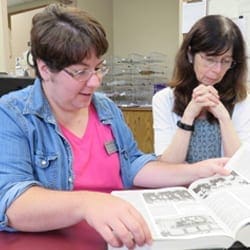
Rachel Whitaker is a historian, doctoral candidate in American History at the University of Arkansas, and research specialist at the Shiloh Museum of Ozark History, where she helps preserve and share the stories of everyday life in Northwest Arkansas. A native of Highfill, Arkansas, Rachel grew up in Gentry and Siloam Springs before attending Northeastern State University in Tahlequah, Oklahoma. Her academic background is rooted in both history and library sciences, with fields in U.S. history, Middle Eastern studies, and environmental history. Her professional path has included historical research, public programming, and digital archiving.
Rachel's deep Arkansas roots stretch back at least eight generations. On her mother's side, she descends from the Standlee family, early settlers of Berryville in Carroll County who arrived in the region by the 1830s. Her father's side traces back to the Ames and Odle families, who came into Northwest Arkansas with or alongside the Cherokee during the period of Indian Removal. Some were farmers, ministers, or merchants who lived and worked among Cherokee communities in Siloam Springs, Cincinnati (AR), and Watts and West Siloam (OK).
Rachel's work is shaped by both her personal history and a commitment to telling fuller, more inclusive stories of the Ozarks. At Shiloh, she conducts genealogical and property research, supports digitization of the museum's 500,000+ historic photographs, and develops hands-on educational programs for the public. She is particularly passionate about correcting misconceptions in regional history — working to bring visibility to voices often left out of dominant narratives, including women, Black Arkansans, and Indigenous communities.
Through her personal lineage and professional scholarship, Rachel brings a unique perspective to the history of Northwest Arkansas, grounded in place, mindful of complexity, and dedicated to truth-telling.
episode references.
- Shiloh Museum of Ozark History: https://shilohmuseum.org/
- Historic Cane Hill: https://historiccanehillar.org/
- Cane Hill Cumberland Presbyterian Church Records (1845-1922), University of Arkansas Special Collections: https://uark.as.atlas-sys.com/repositories/2/resources/1956
- Encyclopedia of Arkansas, "Circuit Riders": https://encyclopediaofarkansas.net/entries/circuit-riders-5008/
- Encyclopedia of Arkansas, "Baptists": https://encyclopediaofarkansas.net/entries/baptists-2558/
- Encyclopedia of Arkansas, "Presbyterians": https://encyclopediaofarkansas.net/entries/presbyterians-2603/
- Encyclopedia of Arkansas, "Religion": https://encyclopediaofarkansas.net/entries/religion-396/
- Spout Spring Historic Context Statement, City of Fayetteville (2024): https://shilohmuseum.org/spout-spring/
- the underview, "the Historic Cane Hill with Vanessa McKuin": https://www.theunderview.com/episodes/the-underview-historic-cane-hill-vanessa-mckuin
- Central United Methodist Church, Fayetteville — Church History: https://centraltolife.com/welcome/our-story/
- Brent E. Riffel, "A Celebration of Endurance: Fayetteville's St. James United Methodist Church," Flashback 55, no. 4 (Autumn 2005)
- Mrs. Russell [Pearl] Blye, "History of St. James Baptist Church" (June 26, 1977)
- Vernon, Walter N. Methodism in Arkansas 1816-1976 (1976)
part 1 episode outline.
- Rachel's personal connection to faith and her journey across denominations (00:02:27)
- The historian's challenge: separating faith from analytical work (00:08:47)
- Why you can't tell the story of history without religion (00:11:09)
- The misconception: was the church the first building in a community? (00:12:25)
- Faith's arrival in Northwest Arkansas: Cumberland Presbyterians, circuit riders, and brush arbors (00:14:35)
- Faith vs. institutions: the church as judge, jury, and executioner (00:18:42)
- Rachel Putman's 1843 letter: preemptive departure from a congregation (00:18:59)
- Cancel culture in the 1840s: weekly expulsions for minor infractions (00:20:16)
- What faiths arrived in Northwest Arkansas and who was welcome (00:22:43)
- National identity, forced conformity, and survival on the frontier (00:26:18)
- The church as a structure of meaning and power (00:28:31)
- The fracture: denominations split over slavery (00:35:37)
- Using scripture to justify both abolition and enslavement (00:36:09)
- Squire Jehagen and the founding of St. James Baptist Church (00:40:52)
- Caroline's lynching at Cane Hill: ministers as participants (00:43:06)
- Dehumanization as the prerequisite for exclusion (00:45:11)
episode transcript.
episode preview.
[00:00:01] rachel whitaker.: you are depending on your neighbors for survival on every different level. And if you aren't conforming and they decide to ostracize you or shun you in some way through the church congregation, that's putting you outside the protection.
And I don't wanna say that it's the faith because I think there's a difference between the faith and the institution. And I think a lot of people are struggling with this right now.
At least my generation, a lot of us have left the church because our faith in the institution are at odds or at least the faith that we think we have.
And I think that was happening then too. I think there was a difference.
I don't know how much of it was, oh, not through coercion and how much of it was always completely sincerely that you believed exactly what everybody else in the congregation did. Because you can only step on so many toes before you're left outside the collective.
episode intro.
[00:01:53] mike rusch.: Well, you're listening to the underview an exploration and the shaping of our place. My name is Mike Rusch, and we have one more foundational conversation before Season three begins in full. This season is about the faith of Northwest Arkansas, and Monica and I are sitting down with pastors, priests, and faith leaders across traditions to understand how faith, religion, theology, the institutions of the church and ideology have shaped who belong, who is excluded, and who we are becoming as a community.
Before we sit down at those tables, we needed to understand the ground that they were built on. We needed a historian, a local historian who could search the local records to see what they reveal about the faith of northwest Arkansas when it first began.
So today Monica and I sit down with Rachel Whitaker, a historian and research specialist at the Shiloh Museum of Ozark History. Rachel holds a Masters of Arts in American Studies, masters of Science and Library Media both from Northeastern State University , and, Rachel is a doctoral candidate in American history at the University of Arkansas , and Rachel's experience is extensive in US history, Middle Eastern studies and environmental history.
Rachel grew up in Highfill and Gentry and her family roots in the Arkansas Ozarks they stretched back at least eight generations. Now, some of you may remember Rachel from season two, where she walked us through the early formation of Washington and Benton Counties, and we wanted to return to Rachel because we thought we needed just two things.
First, a local expert who could go into the record and tell us exactly what happened here. Second, someone who could help us interpret what that history means for us today. And no surprise, as you'll hear, Rachel, of course, delivers on both in an amazing way.
But Rachel also brought us something that we didn't anticipate. She brought her own story, her own journey through faith traditions in this place. And honestly, that might be the most important thing that she gave to us. Because it showed us how this topic lives in all of us. The history, the interpretation, and the personal.
They're all woven together and sometimes it is really hard to pull them apart and handle them separately, which I think raises a question beyond just the scope of this episode.
It raises a question of how do we move through this season with all of these realities woven together? Can we separate them? Should we separate them?
It causes us to become very aware of where our individual faith moves to become a collective faith, how faith, religion, theology, the institutions and ideology, they all live in the same neighborhood.
And not to get ahead of ourselves, but I am deeply grateful to Rachel for helping us find this third path into our season. This is part one of a two-part conversation. It covers from the time that white European settlers first arrive in the region all the way through the Civil War, and it asks a question that we will carry through every episode in this season.
What was planted here and what has it grown into?
All right. We've got a whole lot to work through today.
Let's get into it.
episode interview.
welcome.
[00:04:55] mike rusch.: Monica and I have the privilege of sharing a table with Rachel here at Shiloh Museum again, and you've been a guest here from season two, and you walked us through history of the Ozarks and all this component. And so I knew as we started talking about faith here in Northwest Arkansas as we look at the long arc of what has happened here, this is a really big space that I don't really understand how faith has really worked itself out here. And so I said I have to come sit back down with Rachel and see what we've got and how do we approach it through a, maybe a different lens than we did before. And so, Rachel, welcome back. Thank you for doing this.
[00:05:32] rachel whitaker.: Thanks for having me. I'm thrilled to do this. I think this is an important conversation that needs to be had factually.
rachel's personal connection to faith.
[00:05:38] mike rusch.: Rachel, within this conversation and there's no expectation, I come here asking questions about history and what we can understand. But I think at the same time, this is all conversations that impact all of us. We all come from a different experience and a different background. I'm curious as you think as a historian, but also just as a human being.
Right.
First and foremost as this conversation has evolved and you've looked through the historical record with this lens I'm curious what you're finding, if you're finding anything within your own self or story that, Yeah, that you would wanna share.
[00:06:11] rachel whitaker.: So I think, I think I come with this , I'm weird. I come with a different way of approaching this. And I even within my own sibling group my, my brother is staunchly Southern Baptist. If you ask him, he's Southern Baptist. I was raised a little differently than what my siblings were, and there's only 18 months difference between me and him.
The first church that I went to was like three days after I was born. My mom had me in church at first Christian Church in Gentry. But as I was growing up. My dad, I guess I would classify maybe as agnostic. My grandpa's Jehovah's Witness, my grandma's Pentecostal on my dad's side, and then my mom tends towards Pentecostal and first Christian Church. But her family is largely Southern Baptist.
I grew up going Friday to Jehovah's Witness Temple, or at least having the Jehovah's Witness in my grandpa's grandma and grandpa's house. Grandma would take me to Pentecostal church on Saturday and then mom would take me to whatever denomination we were at the time. And I actually got ahold of my mom when we were talking about having this conversation and I was like double checking like the chronology of the different churches we had gone to. And so like I first Christian Church in Gentry, and then I was at First Baptist Church in Highfill when I was seven. And that's where I was baptized.
So I was baptized into the Southern Baptist Convention and I had the weirdest experience with that because in Southern Baptist tradition, there's a vote most of the time before you can join the church, you can be baptized. There's this whole process that you go through.
And the whole congregation gets to have a say in this. And I was seven years old and they sent me into the back room with Bruce Holland, who was the minister at the time. And he quizzed me because I was seven years old. And he's there's no way a 7-year-old can make this decision. They're not like, prepared for this.
I love Bruce. Bruce died recently. And but Bruce used to tell the story too, and he goes, he walked out and he said, "she's ready." And my mom was trying to join the church at the same time. He wouldn't let my siblings be baptized at the time 'cause they weren't, he said they weren't ready. And but he talked to my mom for a little bit and normally they go in and they, they have the service where they announce this is what we're gonna vote on, and then they have another one. And then finally they have the meeting or the service where they actually do the vote.
Bruce walked out and he goes, and the people say, amen. And they all said, amen. And that's how I joined the Southern Baptist Convention when I was seven years old. So I had a very different experience with a lot of this.
We went to Gum Springs, we went to Nicodemus. I've been to Holiness churches, I've been to Pentecostal churches not just with my grandma, but on my own. My friends were Methodists and Catholics and so I think for me, it all like this also this difference in doctrine and the points of departure from each congregation from another denomination.
I think that started really early and I started questioning like, why or what makes this different? Or, and then 14, my Sunday school teacher takes me to synagogue. There's a lot of these moments where I think people who grow up in a specific tradition and a specific denomination. Everybody around them thinks the same way. Like, this is how it is. I didn't have that, so I'm an outlier. I did grow up in the like teen mania and acquire the fire generation. And I have, I have some trauma from that. I was told I was too different in high school in the church that I was in, and I needed to act normal and act like the other girls.
And then I, we homeschooled, we had a, we belonged to a Christian homeschool group from the time I was in the seventh grade until my junior year. And I would've been in my senior year except for I got kicked out for being a bad influence because my best friend was a boy. And we rode around in a car together by ourselves without a chaperone and, and we weren't doing anything wrong. I had a convertible, but there were just a lot of things that, because I grew up on the fringes of that, and that's why I felt like when you asked me this question, it was like, I feel like I need to like preface this whole thing with like, I am coming with this baggage. I am coming with this. I'm on the outside. I didn't always conform. And so to me that was always the message was conformity with safety. This over here, whatever I was doing was totally different. But I took Konia Greek when I was in college and my professor was Catholic and my roommate in grad school was Catholic.
And so I just, I was constantly surrounded by a lot of different, just different ideas about what faith meant in a way that maybe even my siblings didn't have. So yeah. But yeah, I grew up hearing Catholics weren't Christian. I grew up hearing horrible things about Islam and one of the people I love most in the world is a Muslim, and you couldn't ask for a better person in the world. And so again, I think that also shapes, like when you put a face to it, like that's for me that moment where you're like I have all of these people that I know in these different denominations, these different walks of life, or these different faiths. And so I think that makes me question when somebody draws a hard line on who's worthy of God's love and who's not. I was a Sunday school teacher since I was 10. I was a youth pastor. I've done it all. I've been on the inside and the outside.
[00:11:58] mike rusch.: As you think about your own story and even your role as a historian how do those two worlds fit together or not fit together?
[00:12:07] rachel whitaker.: Oh, my undergrad I studied under Mike Rogers at Northeastern State University. He's gone now. He died a few years ago, but I learned a lot about church history because he was an early modernist. And so we focused, I guess now, or what most people call Ren ref or Renaissance and Reformation. But it's really that early modern period where we're looking at absolutism and we're looking at those church divisions and how, politics within the, the Catholic church and the Popes and even the Council of Nicea and all of that.
But also you start seeing like this division, Henry VII breaks away from the church 'cause he wants to divorce his wife. And I think for me. I think that moment with him teaching all of this was validating because it was that moment where it was like, it's okay to ask "why does this church say this? At what point did they, they change from this to this? Or why, was it really, was it about the organ, you know, being played in church or was it about, you know, a divorce between, a king and his wife? What was that moment?"
And I I think that helped humanize a lot of things for me and help me, I think separate that authority. And it was a good reminder that these heads of church are human. They're not God. They're not, they're not the be all end all. And so it, like for me, I also like drive ministers crazy because I'm sitting there going contextually like if you knew the historical context of this or if you knew the, the Koina. And I said, and I hate doing that 'cause it makes me sound like a know-it-all or whatever. But you're also like, but also like, there's more to this story. And it's a bigger story and I have so many questions than whenever I try a different church or I visit a different church because. There's so much, it's so much bigger in so many ways.
And then at the same time, at least in the Christian faith, it's also so very simple or should be very simple. And I think that's like, there's always a conflict, but I think having that conflict also keeps me honest.
the story of history & faith.
[00:14:21] mike rusch.: Can you tell the story or how do you tell the story of history without religion or faith? How do you do that?
[00:14:28] rachel whitaker.: You can't. I even the absence of it, you have to acknowledge because there's a belief that there is nothing like, and that is going to shape everything about your worldview.
Like regardless of what that faith is, whether you're Muslim, whether you're Jewish, whether you're Christian, whether you're Hindu, whether you're Buddhist, in some way, it speaks to your moral compass. It speaks to your belief in an afterlife or lack thereof depending on which faith you, you follow.
But there's so many things that this, that we as humans, our faith is what guides that part of our life. Sometimes our diet, I mean down to what foods we can eat. I have a kosher diet, but that's mostly 'cause of allergies. But but it works. But also like how we treat other people.
I hope most of us have a faith that honestly goes back to that loving your neighbor, like whatever version of that.
[00:15:26] mike rusch.: I'm curious maybe to start with a little bit like. When we come back and we say we wanna look at northwest Arkansas, maybe through the lens of faith traditions, historically.
Sure.
how do we look at history through lens of faith.
[00:15:36] mike rusch.: I don't know, is that a frame that most people look and approach history here with? Or do we need to readjust how we think about some things from the very beginning to make sure that we can approach this from the right perspective?
[00:15:48] rachel whitaker.: I think one of the misconceptions, I think that may be the best place to start is one of the misconceptions is that the church is the first building that's built in a community.
It's not. At least in the initial phases of of settlement here in northwest Arkansas by the white community. We have census records going back to the 1850s and sixties. They asked how many churches were in your community, how much money they had invested in those churches, and how many people they could accommodate in those churches. I have those numbers with me if we need to go over them, but, there aren't that many denominations and there aren't that many churches in the community.
The tavern is more likely to be the first building that's built in a community. Because you have stage coaches, you have travelers who are coming through, that's going to be more important and economically important as well to most people. And we have circuit riders. We don't have permanent churches with permanent pastors at this point. While we like to think of the church as being like the centerpiece to the community it's not really until later. Like after the Civil War that you start to see more churches actually constructed with permanent structures.
Before that most people are just going to each other's houses as soon as that circuit rider can make it through. And it doesn't necessarily mean that it's a specific denomination, it's just whoever was passing through at that point. It, I think that is probably one of the major misconceptions.
And I don't know if it feeds into that like " Christian nation" narrative that we wanna hold onto so hard. Because if you say, oh, the church is the first building that's built then you're saying that this is a "Christian nation," but it's it, the tavern's the first one, it's not I'm sorry to say that. Um, But it's, yeah it's less likely to be the first building built, So.
[00:17:34] mike rusch.: That's super interesting to think about it that way, because I think you're right. I think from my uneducated point of view, . I've watched Little House on a Prairie. Sure. Yeah. But like to think about that in a different way with circuit riders coming through.
faith's arrival.
[00:17:45] mike rusch.: Can you point to, or is there a place where the Foundation of Faith arrives in northwest Arkansas? Is there a starting point?
[00:17:52] rachel whitaker.: I do think that there are groups who come, so like the Presbyterians at Cain Hill, definitely come as a congregation, as a group. And they do build a structure early on before the war.
If you read the minutes to the early churches here in northwest Arkansas from the 1830s, 1840s. They are judge, jury, and executioner. They're telling you what you can get away with in the community. They're calling you in on some transgression or other, whether it's being stubborn or un-Christian, or you're drinking too much or you're saying a swear word in public.
These congregations are ruling how society is functioning and what the taboos are, and what the norms are. But as far as what the faith actually looks like, they do have articles of faith. Most congregations do, but we also have in northwest Arkansas groups that are like they're called free sects. They don't wanna belong to any of those overarching, formalized congregations that we're familiar with, whether it's the Presbyterians, the Baptist, the Methodists which are the big ones here in northwest Arkansas in those early years. The Catholics are here in the 1840s, but they're basically erased from the census records. So I don't even know how, how that happens.
But yeah, I think that , early stages we have, you have more individual homes where people are opening their doors to their neighbors and whatever circuit rider is coming through. We do have a handful of churches that are built. Benton County and Washington County in particular have a lot of more Baptist and Methodists.
Carroll County has more of those freeform which is lovely. I love that they've held onto that personality in the county. But they would also have, you'd have Union Churches, if they did build a structure, which legally meant that the two churches had paid in to build the structure, own the property jointly.
So maybe you had churches every Sunday, but you might have four different churches. Like what we had here at the Shiloh Primitive Baptist Church. It was actually the Primitive Baptist, the Missionary Baptist, the regular Baptist and the Methodists.
[00:20:13] mike rusch.: And they came together to like, to build a building.
[00:20:15] rachel whitaker.: They came together to build a building,
[00:20:16] mike rusch.: but they wouldn't meet together,
[00:20:17] rachel whitaker.: but not necessarily. And if they did, then it was whoever's preacher was there that Sunday. There's still a church in Elkins today that practices this, where they have multiple churches that share the same space. And actually they do go to the same services together. And then it's just whoever's preacher is.
So then you also have like Brush Arbors. So the Presbyterians at Cane Hill before they can get a building built, they build this brush arbor, they recreate this periodically through time, but they also would have brush arbor revivals. This wasn't uncommon. You had camp meetings. So maybe, word got out that there's a circuit rider from the Methodist or the Baptist coming through to a certain community and maybe, maybe this is the only place so people would ask for permission to camp nearby. And we have that happening here in Springdale up until the 1940s.
So this is a very different narrative than what we're used to. I think of the formal sit down even communion was a whole issue because each denomination teaches or treats the communion differently. And we have records of like, but we can't have communion because we're not part of that denomination, or we're not, we're not members of that congregation. We have to be rebaptized into that congregation. There's so many rules about all of this. But yeah it's very different. So I think they do bring their faith with them. But in the formalized manner that we're used to it, it's a little different.
faith vs. institutions.
[00:21:51] mike rusch.: So I asked you like, if we have this point where may, maybe faith shows up, but.
What you're really pointing to is like when the institution starts to arrive and, and you said this this congregation's like ruling society. Sure. Is it that, do you find records of it being that explicit or?
[00:22:08] rachel whitaker.: Sure. Yeah. No. There was this really fabulous one in ni in 1843.
So this lady Rachel Putman is called Before the congregation. I think she had missed. Services a couple of weeks in a row. Nobody asks why. She could have been a widow, she could have been on her own. But whatever. They call her up on charges for not doing what she's supposed to do according to the church.
And they're ready to write a letter to her to formally "remove the hand of fellowship" from her. And she preemptively sends them a letter and says, even though you're about to remove me, I don't wanna be a part of this fellowship. I don't wanna be a part of this Basically she's a little bit, I loved it 'cause it was a little bit petty and it was a little, I don't need you anymore than you need me, kind of thing.
And I appreciated that because it doesn't really clarify like what her charges were. And sometimes they would just say un-Christian behavior with no explanation. It's almost like they know that we really shouldn't be calling somebody out for this. Or we're all guilty of whatever this person is doing. And they just got caught. We didn't. So
[00:23:19] mike rusch.: i'm almost tempted to ask you like, is that a real story?
[00:23:22] rachel whitaker.: Sure.
[00:23:22] mike rusch.: I know it is, but I'm so glad things have changed.
[00:23:26] rachel whitaker.: Have they?
[00:23:26] mike rusch.: So I'll cut that out too.
[00:23:27] rachel whitaker.: Cancel culture today has nothing on these churches, especially the early ones here in northwest Arkansas because they are constantly there's almost a weekly meeting of them expelling somebody for some minor infraction and or what we would definitely think of as a minor infraction. And they're just constantly removing people. And these co these communities are not that big for them to be removing this many like where are you gonna have one family in the church left, at the end of the 1840s?
But after the Civil War, you do see fewer of these moments in the minutes to the meetings and stuff. And I don't know if it's because that fracture in society from the Civil War and so much loss and just like how terrible the conditions are when they get back and you're really having to band together in a way that maybe you haven't before just to survive. So you see more community and inclusion rather than exclusion at that point.
But yeah, those early years cancel culture, man.
[00:24:32] mike rusch.: I'm curious though, within those early years, like what obviously we're talking about some of what you're seeing in the record, which Sure is entertaining for sure. And I'm sure I can I push my mind back to those spaces and try to understand what on earth was going on that they got to this point. But maybe on the other side of that, like what do we see, like with these camp meetings or mutual aid networks or the establishment of care networks or hospitals or do we see any of that kind of institution or infrastructure created within these bodies, these congregations?
[00:25:02] rachel whitaker.: So in the minutes, the things that I see that are more the aid, the more Christian things that you would expect from a church to love your neighbor, those kinds of things. Occasionally there would be a widow who would need help chopping wood, or she would need help getting from her home to the church or wherever they were gonna meet. Or she would have a child that was maybe a teenage boy that was a little unruly. And they needed the men to step up and help out. But in general, yeah, no, you don't have that formalized, like ladies auxiliary kind of thing or even, even more like what you see later with the benevolent societies and stuff. It's more who they thought was worthy of their time and energy and less, less a formal set of rules.
what faiths arrive?
[00:25:52] mike rusch.: And I'm assuming from our records, this is. Is it predominantly Christian? Are there other faiths that are traditions that are showing up? Or is or is this really Christianity arriving into this place?
[00:26:03] rachel whitaker.: So Northwest Arkansas is largely Protestant. There are Catholics in the 1840s. It's a small congregation at Fayetteville, and then eventually the Italians at Tontitown come in the 19 hundreds. We do have one family that are Jewish in the area around the 1870s, 1880s and it's the Baum's. And they had a store on the corner of the square. The Baum brothers. So so yeah it's largely Protestant. I think most of them are considered evangelicals today. There's not as many of the Episcopalians, the Anglicans, the so most of them are a little, I don't know, a little more open to lay preachers, those kinds of things. So I don't know if that makes a difference.
welcome or not?
[00:26:50] mike rusch.: And is that just by virtue of who was arriving in ar Northwest Arkansas at the time? Or, are you finding any records that, hey, this is going to be, a place for Protestant faith traditions and no one else can be here? Like a rejection of other traditions or, or faiths or I'm curious if you see any of that.
[00:27:09] rachel whitaker.: I don't know that there was any formalized method of blocking other groups from being in the area. I do know that they weren't always as welcome when they came into the area. Immigration is nothing new here. The 1860s, 1870s, 1880s, they're already looking at, like nativity in the census. So we know where people are coming from and they're not all, they're not all from here and you know that they're not, they did have a word for the Germans, the drunk. They were the drunkards is what they called them, but it was the drunkard like Lutherans or something.
And it was, it was like that very clear definition, that line that said that these guys are different than us, even though we might have a congregation of this because they're German and they drink, they're different. And I don't know why drinking was such a big deal because I was just reading newspapers this morning in the 1860s and there's a hotel in the square in Fayetteville and they've got this list of alcohol drinks that I've never even heard of. And, but later that comes in, as a big prohibition becomes an issue, but not early on.
religious exclusion?
[00:28:18] mike rusch.: I was trying to understand like if there's any explicit because when we get into the aspects of race, there's very explicit racial exclusion,
[00:28:24] rachel whitaker.: I mean if you think about race, the Germans, the Italians and the Irish are as white as the rest of us. Maybe not as me. I'm pale and pasty and glow in the dark, but but they're not considered white enough to be white. So Catholic is another part of specific communities. even, Even the Protestant forms that are coming out of Germany are different. It's very much an English and white approach to a lot of things here in northwest Arkansas. We do have pockets of Germans early on. They're escaping the revolutions in the 1840s in Europe, and they're coming here. But they're
[00:29:04] mike rusch.: still the other,
[00:29:05] rachel whitaker.: they're still the other so like Hermannsburg, it's now Dutch Mills down outside of Evansville and Cane Hill. They were different. They were separate. They had their own community, their own way of doing things. But I did find it amusing that they called than the drunkard Protestants because I was like, why does this matter? It's, but it did to them.
national or religious identity.
[00:29:27] mike rusch.: When you think about this idea of maybe national identity Sure. And you think about faith
[00:29:33] rachel whitaker.: Uhhuh,
[00:29:33] mike rusch.: these things feel maybe early on, like they're maybe it's hard to tell one from the other. So I'm curious if you see this idea, when you think about this early culture, if we could even go there. Is the church community what binds people together? Or is it gonna be maybe where they, where people come from their nationality early on? Or can we even tell the difference?
[00:29:57] rachel whitaker.: Oh, you're gonna you're gonna get me in trouble here.
I think. There is forced conformity. When you look at these minute meeting meetings, minutes because you're seeing your neighbors are who you're depending on at that point. We don't have manufacturing. We don't have all these things. We don't have institutions, we don't have a sheriff's department for law and order.
There's so many different things that you are depending on your neighbors for survival on every different level. And if you aren't conforming and they decide to ostracize you or shun you in some way through this formal letter, through the church congregation, that's putting you outside the protection.
And I don't wanna say that it's the faith because I think there's a difference between the faith and the institution. And I think a lot of people are struggling with this right now. At least my generation, millennials in particular a lot of us have left the church because our faith in the institution are at odds or at least the faith that we think we have.
And I think that was happening then too. I think there was a difference. So I think yes the church was important and I think. I think it cemented some form of identity, but I don't know, I don't know how much of it was, oh, not through coercion and how much of it was always completely sincerely that you believed exactly what everybody else in the congregation did. Because you can only step on so many toes before you're left outside the collective. And that's hard early on in settlement.
a structure power.
[00:31:40] mike rusch.: I think when Monica and I were first talking through kind of the structure of this Sure season we named that faith and I would go on to say religion is really a structure of meaning and a structure of power.
[00:31:50] rachel whitaker.: Definitely.
[00:31:51] mike rusch.: I hear this in what you're saying, the structure of power.
[00:31:54] rachel whitaker.: Yeah. Is
[00:31:55] mike rusch.: that a fair assessment? Yes.
[00:31:56] rachel whitaker.: I do. And you had asked me about the Klan's connection to the church and its influence on the church, and I think that comes later, I think in the 1920s. But a lot of the narrative that you're seeing more then that. Formal vocabulary that were used that you will see later on is things that you're seeing coming from that era and not this early era? It's really more, it's really more about just survival.
And I don't know that it's necessarily the identity. Now when we start talking about national identity, when we start talking about internalized identity, I think that's a little bit different, but I think that comes more later.
[00:32:40] mike rusch.: Okay, then we'll, we will get to that. Yeah. Monica, you've gotta have a question in here. Do you have anything? I'm just gonna check in with you.
movement to white identity.
[00:32:46] monica kumar.: Do you have any sort of documentation or are you seeing when there's a movement towards a connection with Germans and with the o, with people other, who are coming from other sort of backgrounds to then think about them in a white sense, as opposed to a, those drunken Germans.
Yeah. When are you seeing that cut emerge?
[00:33:09] rachel whitaker.: I think here I think here we're seeing it more again after the Civil War. I think the horrors of war, especially from the Civil War, I don't think people understand just how horrific that whole process was. And how much loss not just to life, but everything economically socially, just, there's so many and it just re restructure so many different things. And I think at that point you start to see your neighbors as not necessarily as othered. And especially when they start intermarrying, you get that second generation of inner marriage with the other families in the area.
Like my family are from Dutch Mills and Evansville area. And I think it took, a little time. But I eventually, yes, like we're just as white as everybody else. But you also have the Italians who come in the 19 hundreds and they're still not, it's still not acceptable for them to be here.
I was looking at a newspaper article this morning that they were talking about how they were buying up all of the land in the area and then they were gonna turn around and sell it to the railroads and make a killing like they were. And so the guys were saying, maybe we should hold onto our land a little bit longer and see, so I don't know that it ever completely goes away that, that distinction. Certainly we don't see it necessarily today, even, I think there's still some distinction between Protestants. I grew up Protestant. I was told that Catholics weren't Christian. And I thought that was weird because I went to mass with my friends when I was in elementary school, and I was like, this doesn't seem that different than what I'm familiar with. But I think that distinctions still exists. I just don't know that we are as open about it necessarily.
institutions and power recognized.
[00:34:58] monica kumar.: And then Rachel, I have one more question. Sure. 'cause you started touching on the institution of churches as thinking, as moving, shifting to, from being placed like neighbors using, supporting each other to survive and sort of day-to-day living towards then thinking about them as places where power starts getting built.
Sure.
And where are we starting to see that and what, what is indicating to you that we're starting to see a difference in, in how these institutions are recognized?
[00:35:30] rachel whitaker.: I think here, I, and I think we're different necess, we're not necessarily the same as everywhere else. So when I'm saying this, I'm saying here, Northwest Arkansas, I think probably right on the verge of the Civil War, we have the colleges are coming into the area these institutions of higher learning for men and women.
But the students are required to attend a church service. Sometimes it, it depends on the denomination of the college, but sometimes, like Arkansas College at Fayetteville, they didn't care as long as you could show proof you were going to church on Sunday. I think some of those, like those kinds of things get a little muddier at the college level.
Like when the Seventh Day Adventists get added they're here in the 1880s. Our first church was here in Springdale. They have one over on Emma Avenue, but I'm from Gentry. Seventh Day Adventist is just a big part of Gentry. We have the academy there, we have everything. Like even little Debbie shut down on Saturdays because so many people were Seventh Day Adventists.
But but I think those institutions of power definitely come in because they're influencing, they're not supposed to, but they're influencing who you vote for. They're influencing whether you're a secessionist or not a secessionist on the eve of the Civil War entire churches are splitting at that point on that issue.
And I think that's coming. I think a lot of that's coming from up high, not necessarily at the lower levels of the congregation. and I I think it's interesting to see which stance, which church took. Like some of them were just silent on it, which is its own form of complicity in things. And I, but I think as institutions of power, like at that, like on the cusp of the Civil War, I think a lot of things are changing though in the country. I don't think it's just, I don't think it's just the churches. Did that answer your,
[00:37:23] monica kumar.: It did and then it, I'm sorry, it opened up another question for me.
Okay. What what were the reasons given, like you're sharing that there was a tie in that, if you're going to a college, you're going to a university and educational institution. You've gotta, you, you've gotta be attending church on Sunday, regardless of which church it is. Was there, is there any indication in the historical records of why
[00:37:45] rachel whitaker.: I haven't seen any proof that it changes necessarily behaviors. But I think the hope is that it's, I don't know, it's the same as like bringing women into a male dominated area after expansion into the frontier. It's supposed to have this civilizing influence on behaviors. So we bring women in so that men are a little less rowdy and then we bring in church to, kinda civilize 'em even more. So yeah I think that is generally it. It's just another form of keeping an eye on these kids in college. Some of these kids, even Arkansas College and the female seminary and stuff there in Fayetteville, these kids are, they're not from Fayetteville. They're being brought in from outside. So this is another set of, I don't know, parents maybe or just authority to keep an eye on them. So
[00:38:38] mike rusch.: As we move towards the Civil War
[00:38:40] rachel whitaker.: mm-hmm.
[00:38:40] mike rusch.: where do we start to see some of the fracture within and I'm gonna say theological fracture. Sure. If that's correct. If not, yeah. Please correct me, but
[00:38:49] rachel whitaker.: Oh, definitely. Because I think the churches are using the Bible to justify their stance on abolition or the continuation of slavery. Yeah, definitely.
[00:38:59] mike rusch.: So the Bible, people reading the same text, coming to very different conclusions. Sure. What do you see in the early record? Do you have debates or We have people stating opinions from one side or another, right?
[00:39:10] rachel whitaker.: Yeah, so 1800, the Methodist, because they're one of the big ones here in northwest Arkansas, the Methodists actually have their general counsel issues this pastoral letter that's in favor of the abolition of slavery.
1844, you have this divide in the church, and we have, we actually have an ad in the newspaper that this minister I was trying to see where he's from. Anyhow, there's this minister in northwest Arkansas and somebody says he has joined the Methodist Episcopal North. And he goes, no, I haven't. He puts an ad in the newspaper for multiple weeks to say no. I am a southerner, born and bred, and I definitely belong to the Methodist Episcopal South. So they're very staunchly like behind one way or the other. Like there, there's no coming together. You are either Methodist Episcopal South or north Southern Baptist do the same thing. They have their own I haven't found any like really obnoxious notices in the newspaper, proclaiming one way or the other. Presbyterians. So the Presbyterians generally I think are more, were, more abolitionists, but we have more Cumberland Presbyterians here and the Cumberland Presbyterians were founded in 1810 in Tennessee.
And so they're very much a southern institution. So they're very clearly pro-slavery. And today you will actually only find them in Tennessee, Kentucky, and Arkansas. So they are a uniquely, like our part of the world phenomenon. To be fair though, most of them sold their slaves in 1835.
But they still made a profit. They didn't free them. So even if they did think it was wrong, they still made a profit. It wasn't, yeah, it wasn't as clear. Christian Church was actually more silent. And there were Christian churches here in northwest Arkansas.
from enslavement to freedom.
[00:41:10] mike rusch.: When you think about that time in history is it the debate around enslaved people's dignity? Is it around I guess at the time, this idea of loyalty to place or identity to a state, is there anything in the record that you see that you could draw a conclusion from that says this was really the strongest gravitational pull for what ultimately became the Civil War. And this obviously the conflict right around enslavement. I'm curious if there's other factors that are at play there.
[00:41:43] rachel whitaker.: I think a lot of people have their own motivations. Like I, I think it's as unique to the individual as anything else is there are people that it's, they have so much of their money tied up in slavery that, if you think about how much an enslaved person costs I think there are some people who definitely are looking, because you do have people who are looking at this and they're going, the mark of ham, they're using the Bible to justify enslavement to.
The Mormons particularly were an, as long as they bore the mark of ham, then slavery was a Christian institution. That, when that changed, then yes then that was when they would abolish slavery. The only thing is the Mormons would also say, but slavery won't do well in Utah. But I think a lot of the motivation behind support or abolition very seldom had anything to do with the humanity of the slaves specifically, or the dignity of the slaves.
Now the slaves who were trying to free themselves and who were, because they were doing their own part probably more so than any of the white people could imagine doing. But we don't talk about that . We don't talk about that. But it was happening. They're probably talking more about the dignity 'cause they're wanting to preserve their families.
They're wanting to live their lives. They're, all of these different things that like we just take for granted. But I don't think the white people who were engaged in this debate one way or the other were looking at it necessarily as these people are entirely human. It was more just. This is the right thing to do. We don't necessarily know why it's right, but we should do it. But yeah there's economic reasons, there's social reasons there's a lot of things, but it, I don't think there's any one, one reason behind just that.
I'm sorry. It's not a
origins of black churches.
[00:43:36] mike rusch.: No, that it, I don't need it to be clean. I just, I think it's just trying to understand I, in that time before the Civil War, do we find enslaved people creating their own institutions, their own churches?
[00:43:47] rachel whitaker.: Sure.
[00:43:48] mike rusch.: What do we find in, in, do we have anything in the record that really points to how faith maybe starts to emerge within the enslaved community?
[00:43:56] rachel whitaker.: So there's one in particular and I love the story of Squire Jehagen. So Squire Jehagen is the one who starts St. James Baptist Church, not the Methodist. He starts at the Baptist Church. He is in Fayetteville and. He starts his church on the land of his former enslavers, the leper family.
That's where the church is, that's where the parsonage is. Everything is right there. And he builds this, that's the center of that community, the black community there is the two St. James churches, the Baptist and the Methodist Church. And I think we talk about that a little bit more there, and definitely faith is very much a part of the enslaved.
A lot of the times if they were in the same congregation, again you're talking about being in people's houses, they're gonna be standing outside, listening in. They're not gonna be in the same space as the white people.
If there is, a church building, a lot of the times they're gonna be either again, outside, depending on the size of the church, or maybe in a balcony or someplace separate, or they may have to come in for a separate service. It just depends. But they, that definitely is a unifying factor in black communities around here,
story from season 2, Anderson family.
[00:45:08] mike rusch.: during that time, before the Civil War and I, and there's a story that we followed last season around rock Van Winkle the Anderson family. Sure. Around their arrival into Northwest Arkansas and eventually their story. And I know within that story, there's this kind of it's buried in this archeological report around that. One of the, I think children, grandchildren, of the original Anderson that came was killed by one of the person that he had held in slavery. And then there was a but in that story, there's this lynch mob that goes after
[00:45:37] rachel whitaker.: Sure.
[00:45:37] mike rusch.: This man who was, at the, in the record. But it seems to me, if I remember correctly, like one of the people of this Lynch mob was a pastor of a church from Bentonville. Do we find these, is this true? I think it is. 'cause it's in the archeological record. Yeah. But what do we see in our
[00:45:52] rachel whitaker.: historic
Jerry Hilliard's a volunteer here and he's good. And he was at that archeological site
[00:45:56] mike rusch.: okay. Then if Jerry said this I'm curious, what do we see this complicity, I guess active?
[00:46:02] rachel whitaker.: Sure. Yeah. There's another instance in Cane Hill. There's a enslaved woman, her name is Caroline. And she helped her mistress in the morning with some stuff around the house. And then she went out into the fields to help the master the rest of the aft up until the afternoon. She's out there working alongside him the whole day. This is important. There's a reason why I'm making this point. She goes back with him for their afternoon meal and they find the mistress dead in the house, like blood everywhere. It's horrible. They have a group it they were a committee is what they called themselves. And they had come together. It was a, it was a series of ministers and local elites from Cane Hill and Washington County. They had come together the year before for the Wright murders where the family was killed in their cabin.
They bring these guys back and some of these are ministers. Caroline has two teeny tiny drops of blood on her. She's worked all day next to the master and it's a horrible grizzly scene. Everybody reports that there's no way she murdered this woman. ' cause people didn't have that many sets of clothes.
Like today you go change your clothes, you take a shower and get rid of the evidence. That wasn't how that worked. Then. You might have two sets of clothes. You had your good clothes and you had, your church clothes and then you had your everyday clothes. She's worked beside him all day.
He hasn't noticed any blood on her. There's no way she, if she murdered him, there's Lynch her right there, cane Hill. She hangs for a long time. Minister is part of that. And then they just, when they cut her down, they buried her where her body fell. So yeah, that's not that unusual. These, yeah, and it's the lynch mobs were going after, are not, they're not ragey like it, you're talking about elites and intellectuals and ministers and the creme de la creme, of society who are engaging in this. This is not that unusual at any point. When you talk about lynch mobs it was like, so yeah,
dehumanization.
[00:48:07] monica kumar.: Rachel, what I'm hearing, and it just reminds me of where we started, and you've mentioned before that there's so many points where we could have made different decisions or taken a different pathway.
And I'm tracking this to something you said earlier around, there's a need to dehumanize and to be able to justify and to be able to walk through the pathway of, enslaving and to be able to even just not say anything. And by that, make a decision to say something.
Or do something just that we have to that dehumanization has to happen. We just can't see the other person. It does. Who would see themselves or our neighbors. And I'm hearing that again, like I'm tracking that through what you're saying now too.
[00:48:51] rachel whitaker.: And it's not always a matter of race. Sometimes it's a matter of identity. Sometimes it's a matter of ideology. That's where you start getting those divides. 'cause the civil war I mean you have a lot of people who are so set on their opinion and their way. It didn't have to happen. They could have found a compromise. They could have come together, they could have talked to the other side.
There are so many other times that you see that in history, where anytime you have that rift in society where you feel like society is completely divided, it usually is because you have othered that the other side of the argument too, it's not just, it's not just a matter of race. It's not just a matter of religion. It's you have to dehumanize in order to make that decision to cut somebody out.
episode outro.
[00:49:47] monica kumar.: Rachel shared so much in this conversation that stayed with us long after we stopped recording. She contextualized lessons from history and shared her thoughts about humanity. She walked us through the Committee of Ministers at Cain Hill, the congregation standing outside while the service went on inside, the Bible being used to justify bondage through the mark of ham, the lynch mob that included a pastor.
And she named a pattern that she sees running through all of it. That faith at its core, pointing toward the sacred in another person has sometimes been recruited to serve a different purpose, to build, as Rachel described it, a theological framework around why that person, that community, that congregation perhaps doesn't count in quite the same way.
All of this raises many questions and Rachel Centers on one she has sat with and still sits with. Was there an off ramp. When she shared that Mormons declared slavery a Christian institution until they didn't. She also asked, what would it have taken in that room for someone to say, wait, maybe there's another way to consider this.
What if we start with the soul of the person in front of us instead of the doctrine behind us?
Rachel pointed to Squire Jehegan, who built St. James Baptist Church on the land of his former enslavers. She described enslaved communities gathering, worshiping, preserving their families and their dignity largely outside the record and outside the regulations.
She described this as faith functioning as something, could this be faith functioning as resistance to dehumanization and or faith in action? And then there's Caroline, she worked behi beside her enslave all day. There were two drops of blood on her by every account lab room there was just no way. And still the historical records note that a decision was made.
Rachel uplifted the question. What happens somewhere between the evidence and the verdict? She also said something that's worth grappling with, that the people debating abolition on both sides were, in her reading of the historical record, really concerning themselves with the humanity of the enslaved.
So what were they centering? Was it economics? Was it social order? Was it ideology? Rachel didn't give us a definitive directional answer because the historical record doesn't offer one. What she did observe is that throughout history, the most clear-eyed people about their own humanity tend to be those whose humanity is most actively being contested.
And then she widened the frame. She noted the dehumanization isn't only a story about race, that whenever a society fractures deeply enough, the mechanics often look similar. Maybe we construct an other. We recruit our institutions to confirm what we've already decided is true, and then that off ramp narrows not because it disappears.
Rachel suggested perhaps because we stopped looking for it, so we're left with a central question more than any one specific answer. Were there moments in these histories she shared where a different choice was available and what made a few people see a different possibility?
Rachel's invitation as a historian and as a person was as complex as it is clear. We should try and put a face to what we have been told to fear. And she implores us to ask ourselves at every crossroads, are we considering every choice that is in front of us? Thank you for being in this with us.
This is the underview, an exploration in the shaping our place and our faith.