
the home region with Robert Burns.
the underview sits with Walton Family Foundation Home Region Director Robert Burns on the 2030 strategy, belonging, and faith in Northwest Arkansas.
part 1.
part 2.


episode notes.
When the Walton Family Foundation released its Home Region Strategy 2030 in May 2026, the underview paused its season to ask what the five-year, multi-hundred-million-dollar framework means for belonging in Northwest Arkansas and the Arkansas-Mississippi Delta. In part one, Robert Burns, Director of the Foundation's Home Region Program, traces the strategy's four pillars: civic infrastructure, community building, entrepreneurship, and career-connected learning. The conversation examines the relationship between the Foundation's philanthropic investment and the systems that determine who can afford to stay, how people find their way in, and who this region is ultimately being shaped for.
about our guest.
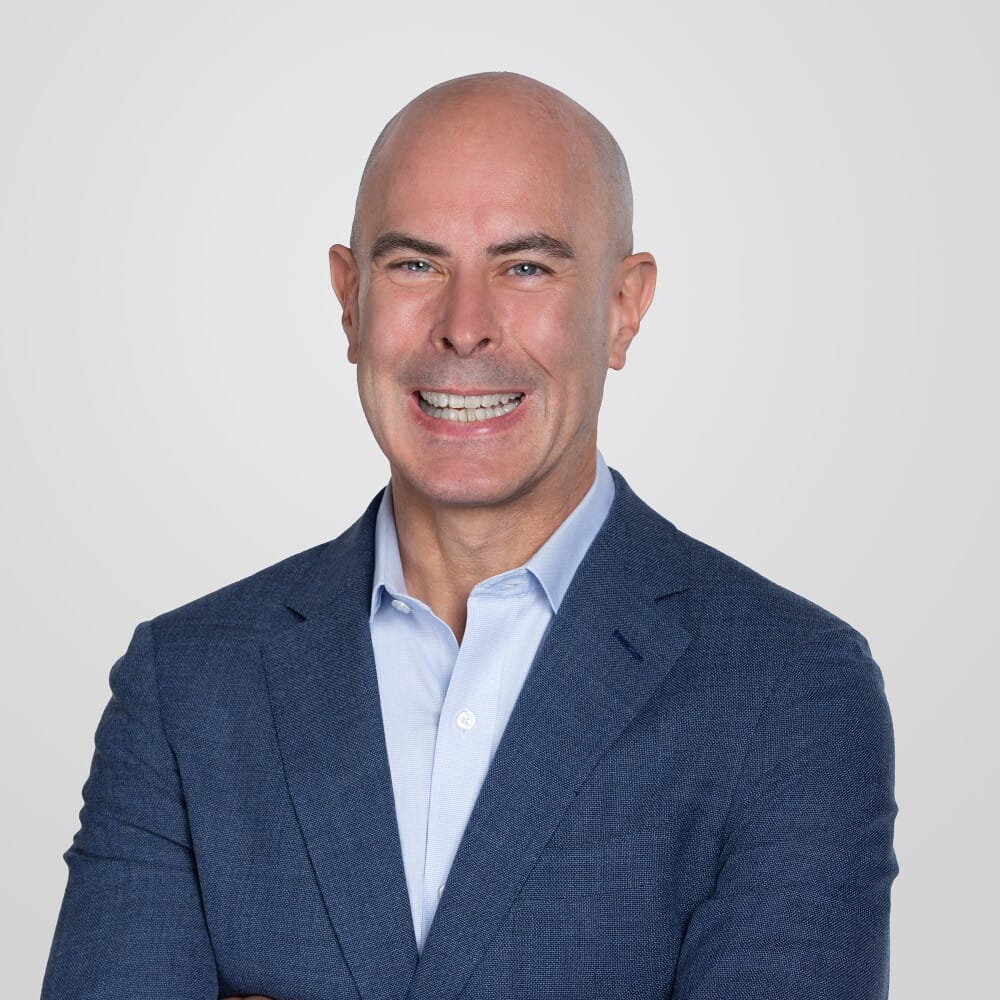
Robert Burns is director of the Home Region Program at the Walton Family Foundation. In this role, he leads the foundation’s work advancing economic and cultural vibrancy and opportunity in Northwest Arkansas and the Arkansas-Mississippi Delta.
Robert has more than 25 years of experience in workforce housing, philanthropy, community development and governmental affairs. Most recently, he led efforts to promote financial inclusion and economic empowerment as senior vice president of Citi. In previous roles, Robert partnered with nonprofit and public agencies to build more inclusive cities; managed a Community Development Financial Institution; directed nonprofit solutions for an affordable housing organization; and served in local government in four states.
Robert has a master’s in public administration from the University of Kansas and a bachelor’s in political science from Appalachian State University.
episode references.
- Walton Family Foundation Home Region Strategy 2030 Announcement: https://www.waltonfamilyfoundation.org/about-us/newsroom/walton-family-foundation-launches-home-region-strategy-2030-to-expand-opportunity-and-strengthen-communities
- Gallup / WFF — How Opportunity Takes Root: Understanding the Conditions for People and Places to Thrive(2026): https://www.waltonfamilyfoundation.org/stories/homegrown/how-opportunity-takes-root
- NWA Council Growing Home NWA / Vision 2045: https://www.nwacouncil.org
- Groundwork NWA: https://www.groundworknwa.org
episode outline, part 1.
(the home region — the 2030 plan)
- Episode preview (00:00:01)
- Episode intro — Mike Rusch (00:01:37)
- Robert's biography: rural North Carolina, local government, path to NWA (00:04:39)
- Overview: WFF Home Region Strategy 2030 — structure and vision (00:12:00)
- Pillar 1: Civic infrastructure — housing, transportation, essential systems (00:17:00)
- Pillar 2: Finding community — gathering spaces, volunteering, civic engagement (00:22:00)
- Pillar 3: Entrepreneurship and access to capital (00:26:00)
- Pillar 4: Career-connected learning and workforce development (00:28:00)
- The Gallup research — belonging, voice, and the question of who is heard (00:29:49)
- The Delta strategy: Phillips, Jefferson, and Coahoma counties (00:33:00)
- Housing: zoning, affordability, and the Groundwork NWA model (00:36:52)
- WFF and the NWA Council — the relationship explained (00:40:44)
- The Faithful Foundations / ULI initiative: faith communities and housing (00:46:00)
- For whom: current residents and those still coming (00:51:09)
- Quality of life, civility, and the value of local government (01:07:13)
- How to learn more: WFF website and resources (01:09:56)
- Episode outro — Mike Rusch (01:11:31)
episode outline, part 2.
(the home region — the person)
- Episode preview (00:00:00)
- Episode intro — Monica Kumar (00:01:21)
- Polarization, loneliness, and the gift of a specific invitation (00:03:10)
- Exclusion, coming out, and the courage to show up anyway (00:04:40)
- Church, community, connection, and Cris — the four Cs (00:07:26)
- Faith, hope, and a Category 4 hurricane (00:13:00)
- What does belonging mean? (00:20:47)
- The challenges ahead: growth and the work of building a region together (00:22:02)
- Wholeness: to flourish (00:23:27)
- Episode outro — Monica Kumar (00:25:11)
episode transcript, part 1.
[00:00:01] robert burns.: I have the great privilege, h- honor of working with the Walton Family Foundation, which is a family-led foundation. A- and I'm gonna underline the importance of family-led, because this foundation was really established at its core to be a way that the family continued to give back, and they did that together. And I really honor that. I really respect it. And to be able to work with the Walton family members is indeed a privilege.
And then Home Region the program that I have the good fortune of being able to lead and work with. Home Region is like my, my, in so many ways, like a favorite kind of philanthropy because it's place-based.
We think about the vision for Northwest Arkansas you're gonna hear a word , which is that Northwest Arkansas is the most vibrant and welcoming place in the country.
episode intro.
[00:01:37] mike rusch.: Well, you're listening to The Underview, an exploration in the shaping of our place. My name is Mike Rusch, and today we're shifting gears for a significant community update, and then bringing that conversation directly into the theme of season three.
Something is happening in this region. It was already happening before season three began. And if we're gonna talk honestly about faith and belonging, about who gets to call this place home and what that costs and who decides, We can't do that without talking about the institutions that have significant influence over the shape of Northwest Arkansas, an influence that ripples into our government, our education systems, our nonprofits, our congregations, and most definitely into how the culture of our communities takes form.
So today, we sit with Robert Burns, the director of the Home Region Program for the Walton Family Foundation.
In May of this year, the foundation released its Home Region Strategy 2030, a five-year framework that will guide where hundreds of millions of dollars in philanthropic investment go in Northwest Arkansas and the Arkansas Mississippi Delta. Housing, transportation, civic infrastructure, career pathways, entrepreneurship, and more.
The foundation's work has a significant influence in the systems and structures of this place, structures that determine who belongs, whether people can stay, how they find their way in, and what community, quality of life, and belonging actually means in practice.
This is a conversation at the foundation of belonging because it shapes who this region is being built and shaped for. That question is one we pursued from the very beginning. It is the question of the underview.
When the region's most significant philanthropic organization releases a five-year plan for this place, we wanna pause and listen because it could influence so much.
Robert's work at the Walton Family Foundation spans housing and workforce development, entrepreneurship, civic infrastructure, and the organizations that make this region function day to day.
And in full disclosure, I have the privilege of also calling him a friend. He moved here four and a half years ago, and in that time has become one of those people who genuinely loves this place, not as an abstraction, but as a home. That matters to this conversation. The work is not somewhere else. He is living and will live with the outcomes.
Monica and I are both at the table today, and we've split this conversation into two parts. I'll lead the first into the Walton Family Foundation's five-year plan, what it is, and what it's reaching for.
And then we asked Robert to stick around for a little while longer, and Monica will lead the second part, not about the institution, but about the person, his story, the long road he's walked to find community and belonging in this place and before it.
And we asked him if he'd be willing to share a little bit more because that conversation in part two connects directly with everything that we've been exploring in season three.
So first, the plan, because something is happening that matters to who we are and who we're becoming. Hold in your mind the question that the underview keeps returning to: How does the work of an organization, our institutions, shape belonging in Northwest Arkansas? And who does it shape belonging for?
All right. We've got a whole lot to work through today. Let's get into it
episode interview.
[00:04:39] mike rusch.: Monica and I have the privilege today of sharing a table with Robert Burns, who is the director of the home region for the Walton Family Foundation.
Robert, thanks for sharing a table with us. Welcome to this conversation. Yeah. We're excited to have you.
[00:04:52] robert burns.: Thank you, Mike. Thank you, Monica. I'm r- I'm really looking forward to it.
[00:04:55] mike rusch.: We've got 100,000 questions for you, so this may be, like, a 10-hour interview, if that's okay with- ... if that's okay with you. We've, as you know, we've been talking within this podcast series a lot about belonging and what this place is, and our love for this place.
And you and I have had the privilege of spending some time together, and I know you love this place so much. And the work that you do is centered here in this state of Arkansas. And I'm really excited, because the 2030 plan from the Walton Family Foundation ... is now being put in motion. And so we wanna come to you and ask all the questions possible to try to understand what does that mean for our state?
What does that mean for our region? What does that mean for us as human beings- Sure ... as well, too. And Robert, maybe share a little bit of your personal story how you got to be where you are, and then we'll just jump right into the, to the strategy plan as well, too.
[00:05:48] robert burns.: Yeah. Thank you. I, yeah, I wanna just express gratitude to you both for first doing this type of podcast, and really value it across the region.
And I think every media opportunity to be able to get the word out is really important. I had the good fortune of moving to Northwest Arkansas. I should say Cris and I moved here four and a half years ago now from the DC area when I took the role on at the Walton Family Foundation. And the journey to get here is, like lots of people's stories, is not just one thing.
I was born in North Carolina. I grew up outside of Raleigh-Durham-Chapel Hill, but we grew up rural. So my family, I still go back home. I was, I've just recently been back there. And the house I grew up in is still the house that my mom lives in. But we had a small family farm that was adjacent to the property, and we all worked it.
Mostly weekends, but, you know, often afternoons, evenings. And we raised a small herd of beef cattle, all for family consumption. Lots of cousins, lots of uncles, lots of family who still live there. Very rooted to that particular piece of land. And my family in North Carolina goes back a good ways.
I left North Carolina for graduate school to get my master's in public administration, which took me out to the Heartland and really discovered a love for the Heartland as a whole. Spent my first part of my career in local government. Got to work in a few different places, and I think it's a i-incredible place to start your career. You really get to experience what it's like in the day in the life of a resident or everything that happens, I think gives you a lot of understanding.
I wish I had kept a journal of everything that I encountered along the way, but I'll have a lots of those stories still. Really great proving ground, and I then was finding myself more and more working and fascinated by the work of community and economic development and neighborhoods and engagement.
And I moved on from my last gig in city government to work for a national nonprofit, which was doing a lot of training and technical assistance or consulting work and had philanthropy, which was my first stint in philanthropy, all devoted around the topic of affordable housing and community lending usually for small businesses and other types of enterprise locally.
I was based in Kansas City at that time, and I was regional director covering a few states. But it was really the fundamentals of grant making that I started learning at that organization. And probably at its height, the organization I was working for, we did about $110 million nationally, which we worked with about total 240 organizations across the country.
But importantly, Kansas City is also where I had the good fortune of meeting Cris, and his family lives there still. One of the benefits, honestly, of being back in Northwest Arkansas is our proximity to Kansas City, and probably his family comes here more than we even go up there because they've grown very fond of the region and the area, so which has been phenomenal.
I stayed at that organization for a long time and my-- got a really wonderful promotion, which moved us to DC. Cris never lived on the East Coast 'cause that was new, and I think a lot of DC folks come into DC, I know this from experience and having lived there, they don't think they're gonna be in DC for that long.
But we ended up being in DC for over 18 years. Lived in a wonderful neighborhood, a excellent community. I continued working at NeighborWorks for that 18 not the entirety of that time period, but for a long time. And then I just was getting the feeling I needed to do other things. I could probably have stayed at that organization for a long time, but I really wanted to try some other opportunities.
I got recruited to lead a new division for another national nonprofit, which was focused on local government solutions and Really got to do some phenomenal work in areas from disaster recovery to affordable housing. We actually contracted to manage cities in different parts of the country, administer federal grant programs wide variety of things that were just integral to the functioning of everyday life in a lot of places.
Got to work a lot in Hurricane Sandy recovery in New York City. We were doing a lot of w- work directly with residents and communities in New York City, which was also fascinating, having done housing work in New York City, but then getting to really experience in a whole different way, especially after a crisis.
And then had an opportunity after that role to become an executive director of a community development financial institution or a CDFI. And I always take a little bit of pause here to tell people what a CDFI is. It's actually a designation through Treasury. It was actually a great connection to Arkansas.
It was created under the administration of President Clinton, and was created as a way because lots of parts of the country lack capital access. The CDFI that I had the privilege of heading up worked in the area of affordable housing, and then we did a lot of lending for entrepreneurs, particularly women and minority entrepreneurs.
This was based in DC. And we also had an affordable housing portfolio there. So we got to work in that field. And then I made a move I had never worked in the private sector, and I felt like it was really important. Had a wonderful opportunity to go work for one of the largest banks in the world, Citigroup, and was based in DC, but did work all over the country.
And that work was mostly focused on philanthropy and also got to work in a lot of ways with touching some of our international work, particularly in areas like microfinance, and then got to help with cities setting up its first impact investment fund, which it set up with the bank's corpus. So when the recruiter contacted me about this role, and I remember seeing the description for the first time, I was like, " Wow ."
You know, There's so many things about the role with the Walton Family Foundation that just resonated with me, and it touched upon so many elements of my career, things that I frankly love to focus on, and things that I think are critical to everyday life for most people, if not everybody. And then when we started coming for visits, it was just clear This place had a really strong sense of community, and I just-- we both kept feeling very welcome and that feeling has continued.
So we've been here four and a half years, and I'm never shy when I meet someone who's never been to Arkansas or doesn't know much about it, to really just be one of the biggest cheerleaders about what we've discovered here. And we were just in Minnesota this past weekend for a first cousin's surprise birthday party.
A lot of people there had never been to Arkansas, but I'm showing pictures, I'm telling stories and it's great for us to move here. We were a little worried moving here more about when you move at different parts of your life, are you gonna find community? And I-- this-- that's been absolutely wonderful here. And I, I feel a real indebtedness to Arkansas and Northwest Arkansas in particular about that.
[00:13:11] mike rusch.: that. Robert, you say you and Cris have been here about four and a half years. Is this becoming home?
[00:13:15] robert burns.: Oh, it feels... It's home. Yeah, I- it, it is home. And I remember when it was, I don't know how many months we'd been here, but we were flying back from somewhere, and I'm like, you know, when you say you're going home, and it feels like, okay, that's home.
There's a definition of that. And I always think that's a critical piece in what makes this place unique, is the community that's here and the fact that I just s- I say this, but I think it's true. I think a lot of people here really go out of their way to both help each other and also just extend a hand in a way that I find Refreshing, but also something that I think is just integral to why I think the culture of Northwest Arkansas and maintaining that culture over time is really critical.
[00:14:06] mike rusch.: You've found community here. You've said that, and I'm curious how you would maybe define that from your perspective. Yeah ... you're obviously here in a critical role. You get to engage in all parts of our community, but maybe help us understand that from your perspective. What are the things that have really allowed you to feel like this place is home?
[00:14:25] robert burns.: Yeah. I always think there's part of this, it's, this is very personal, like definition-wise, so I think I really respect how people define that in multiple ways. But, And I think it can be all kinds of things that demonstrate that, but it's feeling like you have connection to neighbors, that you have people here that you can count on, that you also in turn make sure they know they can count on you, that you find ways that you feel like you're really meaningful in- meaningfully engaged with the place in which you live. And that can come in lots of forms, whether that be volunteerism or board service or ser- service through faith or service through your work with cities or... I think there's just a range of possibilities, but it's feeling like that sense of connectivity and the fact that here, a- as you both know as folks here, you get this unending array of things to do here, and I think that's the piece you have to make choices about.
And I also respect everybody's different. Some people, they don't need all of that, want it. They're fine with a smaller community. But I also just appreciate the diversity of people we've gotten to know across different different backgrounds, folks that have lived here for generations and precede their families coming here before Arkansas was even a state, and then folks that just moved here in the last few months.
And I feel a very strong need, Cris and I both do, like always to pay that forward. What we feel is also in- incumbent around that. And I always am, like, trying to seek out, and this is just the way my brain works, is like you meet somebody and you're like, "Oh, you need to meet so and so," or, "You need to come out for whatever this event is.
I think you'll enjoy it. You'll probably meet other people there." But I just think it's it's part of, it's part of what we embrace as strategy at Home Region, but it also just resonates with me personally.
[00:16:27] mike rusch.: I love that, and thank you for sharing that. I'm, I- Sure ... I'm always curious how people find themselves rooted here, and how they feel like they belong. And so it's really beautiful to hear you describe that. And I know we're gonna get to this, I know, a little bit- Sure ... about what belonging looks like, and how the work that you're doing is trying to f- help everybody find that component. Maybe let's, before we jump into the 2030 plan- Yeah
Maybe can you describe for us what is the home region? What does that entail? What is your focus really looking at when you think about the state of Arkansas?
[00:16:59] robert burns.: Yeah, absolutely. And I ... It'll give me a chance to give a little bit of definition to a few things, too. I have the great privilege, h- honor of working with the Walton Family Foundation, which is a family-led foundation.
A- and I'm gonna underline the importance of family-led, because you find a lot of foundations throughout the United States that have a family name associated with them, but the family is, in a lot of cases, no longer engaged. And there's lots of examples of that. But this foundation was really established at its core to be a way that the family continued to give back, and they did that together.
And I really honor that. I really respect it. And to be able to work with the Walton family members is indeed a privilege.
And the foundation at its current time really focuses on three core areas. Education, which is a national program, and probably the one that if you were to ask folks across America, probably is one of the best known programs.
The second is environment, and our environment program is working both internationally and domestic. And then Home Region the program that I have the good fortune of being able to lead and work with. And I have to add, like we, I have an amazing team of individuals working both here in Northwest Arkansas, and I have a team member that's based in the Delta, and I'll speak about that in a second.
Home Region is like my, my, in so many ways, like a favorite kind of philanthropy because it's place-based. It's based in just a certain number of counties in Arkansas, in our case, one county in Mississippi. But we focus on Benton and Washington Counties here in Northwest Arkansas. And then in the Delta, we focus on Jefferson County and Phillips County in the Arkansas-Mississippi Delta, and then Coahoma County, which is in Mississippi.
And for those from a geographic sense, Phillips County biggest city there is Helena-West Helena. And then in Jefferson County, the biggest - city is Pine Bluff. And if you cross the river from Phillips County to Coahoma, the biggest city there is Clarksdale. And Phillips and Coahoma have a long history of being connected across the Mississippi River. The, one of the major bridges on the river crosses right there. So a lot of history of commerce and community between those two counties together. And our commitment to the Delta at the foundation has been longstanding, and The Delta is an amazing place unto itself. And there's a degree of compatibility between Northwest Arkansas and the Delta, but also a degree, a high degree of contrast. And we have a strategy for Home Region that's focused on Northwest Arkansas, and we have a strategy for Home Region in our Delta-based program honoring both the needs of each area that are unique and also the needs of our partners and the residents.
[00:19:44] mike rusch.: I, I think one of the things that has always fascinated me, from what I know as an outsider of watching the Walton Family Foundation operate is its focus on the state of Arkansas.
Yeah. I think truth be told, I guess maybe from my opinion they could choose to invest wherever they want. Yet Northwest Arkansas, obviously the home of Walmart- Yeah ... would make sense. Not without our challenges here socially or with housing, as you are well aware. But what is it about the Delta that has also been part of why the family wants to focus there?
[00:20:13] robert burns.: Yeah. I think it's very rooted in history too. So the you know, there was such a connectivity between the early days of the first Walton five and 10 being based in Newport, Arkansas, which is clearly in the heart of the Delta, and then the move that was up here and a lot of the history that takes place there.
But I also you come to understand that there was a lot of, Notice of the needs of the Delta as the Delta became less the wealthy part of the state of Arkansas, like a lot of rural parts of America and that wealth started transitioning, especially given the transitions in agriculture. So I think the needs really arose, particularly in the area of education, and that commitment has remained steadfast to, to look at the Delta as an area to focus on.
And education for us in the Delta still remains a very strong focus and an area that even in our most current strategy for 2030 is one of those core pillars. And that really involves a lot of things from access to teacher quality to access to high-quality instruction materials, and some of that are things you might take for granted in other places.
Here in Northwest Arkansas, we have incredible variety of schools and m- many of the schools are particularly of high quality, whether they're public or charter or private or parochial. It's like a good variety of folks to have a choice. In the Delta, we aren't-- you don't have as much of that even though there is more variety, but you are really conscious of the needs there.
And I w- I'm heartened by what I see in the Delta happening, especially in places like Helena, West Helena, young leaders emerging, but also coming back and being rooted in places that either their family grew up or that they grew up. You know, I can cite specific examples where I see that happening. It also excites me no matter what. I mean, Young leaders, period, always give me hope for the future.
[00:22:10] mike rusch.: And I wanna hear about this, and I think let's start to maybe unwrap a little bit what this 2030- Sure ... strategy is, and I think maybe one more question before we get there. Yeah. Because- Yeah
I can't help but think that, this is the home region. You live in this region. This is your home also. The decisions that are made about what Walton Family Foundation is going to invest in and put resources behind and their influence th- this is not we get to do something somewhere else, and if it doesn't work we tried.
This is very personal. It's place-based, as you mentioned, and I'm curious, how do you hold that tension between the seriousness of what you're proposing and what you're working towards and the people that are also a part of the community and the region that you call home?
[00:22:53] robert burns.: Yeah. I, I think it's, to me, it's part of the beauties of being place-based because I always feel like when I'm at or- Having a meal, breaking bread together with someone, or I'm I'm at church or I'm at a community meet, whatever it is, that I'm also getting input about what's needed and I'm always conscious of that.
And I'm often asking someone that I meet who's recently moved here, you know, get- getting to know them and it's what's it been like for you?" And that question is both, you know, going back to something I said is like how could potentially Cris and I be helpful?" But the second part is like, what else do we need to do?
If we think about one of the parts of our strategy is around finding community, it's like really helpful to know what people's journey is like. So I- it's, you're o- always getting input both from that but also just it's a... You get to see the work in action. Like when I walked here today I'm seeing examples of the work, the l- the lived work and that's a real treat.
It's also I think incredibly powerful to be able to say, "Hey, here's something that we as a foundation helped catalyze." And I honor that the family has really remained committed to a place that means so much and is so rooted. And that, that's something you said it earlier, Mike, is that you don't find it everywhere where foundations have kept that local focus.
I find it intriguing that we often as a region are visited by foundations who are undergoing their own kinda journey of thinking about what does local place-based philanthropy look like. And it's become almost a regular occurrence now and I give credit, Visit Bentonville and other partners have really helped those organizations visit the area to learn and I think there's n- often something no less powerful about coming to a place and trying to learn more about it to take it back to wherever your place is.
[00:24:55] mike rusch.: Oh, thank you. I think it helps frame kinda as we approach this conversation like the maybe the weight or the responsibility that you carry into it and so I don't know if others will be able to see this but, as you talk through this I can see this is not just... this is going to be something that you're gonna put your whole heart and your whole soul into it.
[00:25:12] robert burns.: Yeah, that's what I mean. It's I really need to m- feel the work. Like I, it, it sounds trite to say but it's like the work is really meaningful to me.
[00:25:24] mike rusch.: All right, let's jump in. Sure. Um, Maybe walk us through a little bit about what the 2030 plan looks like. Maybe set some expectations for us.
[00:25:32] robert burns.: Yeah. And I'll also try, and I think y- y'all challenged me if I get jargony or something that just doesn't resonate. I just wanna, I wanna speak about it in a way that I hope will resonate with listeners, but also just be hopefully informative. 'Cause that's part of the idea is like I, I also don't I don't want philanthropy to be opaque. It's like it's good to folks understand why and what went into m- thinking about this next strategy. And I should say at the outset the foundation has traditionally operated under a five-year strategy, and that is in keeping with our Strat 2030, which we just started rolling out first quarter of this year.
And part of that is also just getting word out about it. And I always consider a plan a living plan, 'cause we know in life things are always changing. And the fact that this plan over time, the needs may change, th- may need to adapt over time, but these core areas will remain consistent to the plan.
So it's important going into it to get a lot of input. We have a lot of data and other partners of ours have a lot of data on what's going on in Northwest Arkansas, and that data was really important, but a lot of conversations went into this, particularly with our partners. What are they seeing on the ground here in Northwest Arkansas?
What are they seeing in the Delta? What are they seeing as emerging needs? Where do they see the future going? What are those things that are critical to them as an organizational level? So as we looked at the strategy I'll speak about the four core areas in Northwest Arkansas, and then happily touch upon the two that we focus on in the Delta.
But when we think about the vision for Northwest Arkansas you're gonna hear a word that I've spoken about already, which is that Northwest Arkansas is the most vibrant and welcoming place in the country. And I'm not giving that verbatim, but I wanna say it in a way that I think really lifts up the power of that.
In thinking about that and looking at the needs of the region, the areas that we're focused on the first of those is physical infrastructure. The region has grown and is growing at a very rapid rate, so we felt it was really critical to think about a number of infrastructure needs in Northwest Arkansas.
It's a recurring theme. You almost can't listen to any kind of media or read something where something about infrastructure doesn't come up. So infrastructure, and I won't name all of the things, but that includes things like water and sewer. It includes roadways. It includes bike side paths. It includes things you might take for granted, like a crosswalk or safe passage across a certain intersection.
It includes things like workforce housing. It includes the space that make a place hum in terms of park space and open space and those areas of focus, but that's a need that is growing and reoccurring. Northwest Arkansas currently is the ninth fastest-growing metro area in the country, and that is putting additional pressures on the region as it grows.
I think we have a lot of good fortune in the growth that's happening, but it also requires different strategy and thinking about how do we operate more holistically as a region. And we have some really good examples of that, so I'll say that up front.
2) finding community.
[00:28:54] robert burns.: The second area of focus in our strategy is this area of finding community.
I alluded to that earlier, but this is the one that really gets to the notion of welcoming and connectivity and how do people, as they move here maybe yesterday or they've lived here for multiple generations, how do they feel connected and part of this community that we have the good fortune of calling home?
So it includes things like, how do you get involved in a board potentially? How do you understand how cities work? And if you wanna understand how to become civically engaged, how do you discover that? How do you volunteer? We have a really high volunteerism rate in Northwest Arkansas, but there's always room for more folks to be able to do that.
How do you have the public spaces really be activated so that folks have more of these accidental opportunities to maybe run into each other or meet each other or break bread together? And we have wonderful examples here of great community organizations that are doing that kind of work on the ground.
So that, that's a bit about finding community.
3) entrepreneurism.
[00:30:05] robert burns.: The third area is an area that the foundation has had a strong focus on, which is entrepreneurism. Northwest Arkansas, you think about s- so three of the big companies here, Walmart, J.B. Hunt Tyson, all three entrepreneurial starts have grown to be some of the biggest companies in the United States, the biggest in one case.
And because of that the region has a lot of history of entrepreneurism. Entrepreneurism is still one of the best job engine creativity forces in the country, and we devoted in our last strategy a lot of focus to growing the entrepreneurial ecosystem with a lot of growth happening. In this strategy, we're focused on what are those gaps, and one of those gaps as an example is no matter what the Heartland does, and this is not just Arkansas, most capital for entrepreneurs is still focused on the East and the West Coast.
And we wanna see more of that capital availability, more creative capital coming to Northwest Arkansas. Arkansas as a whole are really important. How do you create the spaces needed for entrepreneurs to thrive? How do you bring in organizations that have put together some really creative forms of capital to help their businesses grow?
How do you help a Main Street business grow to be the best that it can be and have additional resources at its disposal?
4) career pathways.
[00:31:26] robert burns.: And then the fourth area is really around career pathways, and it's how, as a region that's growing as fast as we are really fortunate to have a very low unemployment rate, but it also means we have a lot of job openings.
We know the fields that are in need currently. That also is gonna evolve in the future. How do you prepare the next generations in the schools to both discover what those pathways may be and get exposed to them maybe earlier and earlier on? And that includes entrepreneurism but also includes intensive high school focus so that learning becomes more experiential and figuring out This is a career that I think I wanna do, and I think more importantly, I've tried it.
Maybe I find out after the semester this is not what I wanna do. So now you're going to that next point of discovery. It also includes wonderful programs where individuals can be in a completely different field and build up a new set of skills through apprenticeships or internships or on-the-job training and be able to get a job that may have seemed unattainable to them at one point, and very often increase their income significantly, which then has lots of positive side effects for themselves and their families.
Those are the four areas that we're focused on in Northwest Arkansas.
delta focus.education.
[00:32:50] robert burns.: In the Delta it's a bit more compact. I already alluded in the Delta, we think a lot about education. So we have a high education focus, particularly related to quality of schools, the quality of teachers, the quality of the instructional materials in the classroom.
career focus.
[00:33:07] robert burns.: It also gets to this career focus and how folks get exposed and trained in different pathways. But it's really holistic around the whole area of education.
Second area is around economic asset building. And that's everything from somebody becoming a first-time homebuyer who may have never thought they would be a homebuyer, helping an entrepreneur create his or her small business that has a dream for the future.
It also includes important things we might take for granted, like credit building, helping individuals who, whose credit may have some history attached to it, improve their credit, be able to do more things in the future. It also includes some things around workforce and developing those pathways for the future.
So those together with the idea that in both strategies, we're always working with our nonprofit and our local government partners to identify where their needs are. So we think about every time we're supporting a strategy is how do we also support the organization and its leadership as well? What are their needs?
And that's an important part of our work, and that kind of-- that is a foundational piece to each of these strategies. So I know that's a lot. I'll pause. But I wanted to go through and describe both, both Delta and Northwest Arkansas.
[00:34:24] mike rusch. (2): Maybe we can back up a little bit because I wanna understand this element of kinda the input, right? You had talked about before you even started down this path, you're asking people, you're getting research partners that are really trying to identify where those challenges are. The Walton Family Foundation in partnership with Gallup you guys you released a study, and there were some things in there that I have questions.
Like, how does this inform- Sure ... the current work and plan that you have going forward? Because there are some statistics in there that said that adults who believe someone would listen to their ideas was only like, one in three, about 34% of people. And so it feels that from a starting point of how the everyday citizen maybe gives you feedback about what does it, what does life look like in Northwest Arkansas or in the Delta, how do you overcome some of those challenges about people maybe not feeling like their opinions do matter? Sure. And that, a- and how does that work its way into a plan? You said you're always looking for input and feedback, and I've seen you do this, so that's not just, you're not just talking. You actually do that all the time. But, like, how does that work itself into that sentiment, into building kind of the baseline for what these strategies are gonna be for 2030?
[00:35:33] robert burns.: Yeah. And I appreciate, Mike you're bringing up some of the Gallup work that the foundation did nationally. And the great thing about that Gallup work, it really, it focused on all three of our programmatic areas. And I think the word that always I think about in relation to that is access to opportunity.
We think about this a lot. A lot of the work is about, at the core, access to opportunity in a lot of regards. And I think a lot of those national figures in a lot of ways mirror what you find in a lot of places around the country. So highly conscious of that in terms of- The work that happens locally, it's also it's fortified here because every two to three years, we undertake a very comprehensive quality of life survey here in Northwest Arkansas, scientifically sampled across equal representation in Benton and Washington counties and that feedback. And some of those stats in some ways mirror that, but also show Northwest Arkansas folks have some stronger feelings in some ways about the feeling of community and how they find community and kinda heartening around that. But it was interesting in our last quality of life survey, two areas really emerged that hadn't come out in the previous versions as much.
One was workforce housing and a real sentiment. People were increasingly concerned about the impact of the price and access to workforce housing. And the other was really around this area of transportation and how do people get access from point A to point B. But a lot of that came down to feeling in a lot of ways like traffic was more congested.
There are more people here. There's a reality to that as the region grows. So when you're saying about overcoming it I do think part of it is doing your best to listen and granted that you acknowledge upfront you can't address everyone's concern. But trying to think about as a region, which is a lot of responsibility, like how do you address these big picture thorny questions and try to be...
We think about ourselves as a catalyst. Like, how can you help catalyze what would be solutions to some of these challenges? And I do think part of this idea of like how do you get help displace some of the skepticism is just, it gets to this fundamental notion to me of finding community, that people actually understand how things work and they understand how to-- their voice can be heard, and at the same time appreciate that just 'cause your voice is heard doesn't mean that what you're saying is always gonna be done. But I think there's a difference in feeling respected and being heard and expecting that action's gonna occur. And so there is a distinction there in my mind.
[00:38:16] mike rusch.: And I'm curious, this is like philosophically how you think about there's the individual, right? And that we do have individual responsibilities to go in and help form and shape this place and create our sense of belonging, and yet the solutions that you're working on are really systemic solutions to big, large problems. And I'm curious how you view maybe the balance or the relationship between kind of that individual responsibility and then at the same time approaching some legitimate systemic problems in our area like housing-
[00:38:46] robert burns.: Yeah ...
[00:38:47] mike rusch.: that maybe an individual doesn't have the ability to overcome by themselves.
[00:38:50] robert burns.: Yeah. Yeah. And I think that's a good example. You pick an area like housing or maybe even like the career-related work. It's like these are bigger systems and it's hard to kinda know even un-understand housing. You know, housing's fairly complex in its own area, but I go back to the idea of being a catalyst.
So how, as a foundation, can we help catalyze the production of potentially more workforce housing units? How can we help organizations think about different use of their land, help them as an organization go on a journey of helping discern what might be some of those possibilities? How do you really help open people's eyes to the needs? What is some of the complicating factors around housing to help it be more understandable? I think there's some really good examples where nonprofit partners have stepped up. They're doing more units. The establishment of Groundwork through the Northwest Arkansas Council was really a key piece of helping educate folks about the need for workforce housing, and their efforts, I think have certainly gone a long way to helping do that. And then there's been multiple programs to help folks think about land, and how do you use it in different ways, and creative forms of workforce housing. So I think those are good examples where the-- it is a system, and how does the system work to actually, at the end of the day, potentially produce...
I'm just gonna break it down to a housing unit that then is available to someone who previously was able to find an affordable unit that was maybe close to where they work or in a neighborhood where they really thought they would wanna live or had high walkability to a certain place. So I think those to me are the kind of breaking it down from a systemic to then what's the person on the ground actually experiencing.
And I'm not gonna pretend that this work is going to meet all the unit demands, and I I'm always reminded we're currently experiencing workforce and affordable housing challenges all across the country, even places that aren't having the growth of Northwest Arkansas. And it's, we're in this set of extraordinary circumstances right now, especially given kind of the chal-challenges of the mortgage environment construction costs post-COVID. So there's a lot of factors at play, and it's always important to think about infrastructure, that physical infrastructure, the water, the sewer, the other. They play a pivotal role in what the cost of housing is and can be in the future.
municipal and philanthropic relationships.
[00:41:27] mike rusch.: Thank you, because I think then the question for me becomes then how do you view then the role between philanthropy and municipalities or government in making these decisions? Obviously I live here in Bentonville, have lived in Northwest Arkansas for a long time, and when we talk about housing and zoning the cities have a responsibility here also. When we think about sewer and infrastructure, the cities have a responsibility.
I think then for me, Robert I really appreciate that, but it then it makes me think about the relationship maybe between philanthropy and the role of the Walton Family Foundation and our municipalities or local governments- Yeah and their responsibilities as well too. Sure.
How do you view the role or working with those entities to solve problems like housing, where it may be zoning that you've got to think about- Sure ... or you're talking about sewer- Sure ... which has been a problem in the city of Bentonville that has had to be dealt with.
Yeah, I'm curious how you feel about that.
[00:42:20] robert burns.: Yeah. I I see the... And I really liked the fact that the foundation had a history, and still does, of investing with local government or school districts or a community college. I to me, the, what I broadly label the instrumentalities of local government, and those take on various forms, they're key partners. These are they're- also feeling major impacts of growth probably in ways that I know people read about, but just experiencing that, having to respond as the cities rapidly grow and also evolve as cities expand boundaries and grow population and increase sometimes in, in just the way the city's even laid out in the future.
So we see ourselves as a partner with those entities, and I think it's an important role. We like to see that partnership be where that organization also has dollars in into a particular project. But there's times that it makes sense to try because the s- the city or the school district sees a real need that they are putting forth where it's okay, we can help fund this project particularly around areas where they're seeking to get a better plan, get more public input, make sure there's a different degree of involvement.
And I think there's some really good examples of that. Like the city of Bentonville, when it was putting together its recent land use plan, the amount of public engagement that was undertaken is pretty extraordinary. And frankly, I think it's a good example. One of the things that-- I experienced this when I was in local government, is we often expect the citizens to bring things to us.
It's great when local g- government gets out and listens in neighborhoods and other forum because I think it includes a different degree of participation, but it also helps people understand how the process works. It demystifies some of that. That to me is equally as important. And I guess that question you asked earlier, like, how do you feel like you're heard?
And is-- are you heard actively in that way? So I feel like -- this role of catalyst always is one that's just key for us. I think it's a really good example of where we, we help catalyze things, and we can help areas pilot different things that they wanna try. Good examples of that could be around advanced technology, something that the city may fundamentally believe is gonna really improve the lives of residents. Now, that's core. And if we can help the city pilot something, they've got some funds they wanna put towards it, and we can help with that. I-- that's a really key critical area. But it has to fit. No matter what the area is, it has to fit our strategy. That's one-- that's our first question is this is the item coming in, the proposal, the idea is like, how does it fit our strategy?
NWA Council Vision 2045.
[00:45:18] mike rusch.: Thank you. I I am curious, the NWA Council just released their Vision 2045 as well obviously there is a relationship between Walton Family Foundation and NWA Council.
I'm curious how these maybe two plans work together, how you view o- one versus the other, or is it really a separation of maybe these are two different things working in isolated areas?
[00:45:42] robert burns.: I think there's a, there is a definitely an importance of that relationship, and I'll just kinda highlight. I think Northwest Arkansas Council has such a history in the region and I holistically believe that the region is benefited by the fact that this organization exists and brings together both - private and public entities. And kinda, you know, part of the origin of its foundation was around the need for a regional airport, which I think if folks kinda think back, it's hard to imagine the region without that airport now.
Which I have to add, is now consistently surpassing Little Rock in passenger traffic almost mo- I think consistently month over month, which is pretty amazing in itself, but I suspect is a trend that we will see continue in the future given the growth. But the council brings together a lot of different parties, and it often plays an important regional role along with the Northwest Arkansas Regional Planning Organization, that both those organizations play key roles to regional work.
And why is that important? Because in many cases, especially going for federal funding opportunities, or Solving for a sewer solution, or having an organization like Groundwork that is focused on the region as a whole, that's not a city-by-city approach. It's als- it's thinking about things as a region, and we have these entities that are focused on that. So we have, as a foundation, supported both of those organizations and will con-continue to do so unless their priorities change in this most current plan.
And increasingly, I fundamentally believe it's gonna require the region to more-- to work together more as a region. And we have lots of examples, good examples of this already happening more so than a lot of other places. But we gotta, we'll have to do it more. Most-- many of these infrastructure, I won't say most, but many of the infrastructure solutions are not just a city, it's multiple cities, and it's thinking across borders, and it's thinking in ways that are gonna be very future-forward, which cities do this, but it's thinking about how do you break down some of these silos?
And I think it's easy in an area, no matter where you are. I haven't lived anywhere where this doesn't exist, where you get... And I coined this term as placeism. I live in this place, and therefore, this town that's right up the road from me, eh, I don't think as much about them. You-- we need to think more about them. We need to think more as a region. And granted there's difference between I'm proud in the place that I live. People, you know, feel that way. But it doesn't mean belittling or lessening the challenge of an adjacent city, especially cities that share borders. Borders are porous. That's a thing that is absolutely the case, and I think we have to think about, like, how do you make some of these solutions work better across?
I use something I think is pretty relatable. If you're driving between multiple jurisdictions here, and if the signals aren't synced in some way, and all of a sudden you cross the border, you're gonna experience something that doesn't seem to make sense to you. But you gotta have those things function as a holistic not just as one single entity.
example of cross-partner initiatives (recycling).
[00:49:07] mike rusch.: I'm curious, Robert, is there like a, an example that we could look to as a region and say, "Hey here's a good example of what this really looks like when it works well together"?
[00:49:16] robert burns.: Yeah. I think there's some multiples, but I'll cite one that I think is really interesting and I credit some work that both the Northwest Arkansas Council and the... I will-- It gives me a chance to also explain this, the Walmart Foundation, which is separate from us. And they are also very active in the region, but they have worked with a lot of other partners to work on recycling as a regional issue.
Now, why? Why is that important? Folks admittedly across the country have varying ways of thinking about recycling, but recycling is like one of those core infrastructure areas because just like a lot of parts of this country, we have a landfill. It's easy to not think about that we have a landfill, but the landfill is really important.
Everybody, for the most part, once or twice a week sends their trash and recycling somewhere. Most people m-may not know exactly where they go, but a lot of folks think about the landfill. But the more you can actually divert from the landfill and reuse, it has multiple beneficial side effects, and I think honestly can resonate with this region because we really value our natural beauty, our natural resources, our clean waterways, our access highly.
So that regional effort to have cities have more consistency around recycling programs to then enable the folks that buy the recycling have a d- a volume that's of higher quality, that pays dividends over time to then enable landfills to last longer, for folks to be able to have access to a better recycling program.
But I think it's a really good example of a recent example where folks are actually starting to see that happen. And I think it's exciting because it's an example that's tangible. -- When you're putting your stuff out, you can actually see this at work
[00:51:01] mike rusch.: Yeah, thank you. I that's really helpful on the infrastructure side. There's so many conversations going on about infrastructure, so many different organizations and people involved in it. Sometimes it's hard to understand a little bit how to weave through- Yeah ... all of that in a way that makes sense. So I appreciate you spending some time helping us kinda navigate through.
[00:51:19] robert burns.: , Yeah. And I think you're increasingly gonna hear more of these regional conversations. There's now a region-wide wastewater examination going on, just given so many of the cities here are having some challenges when it comes to wastewater. You know, these are, in many ways really good challenges to have 'cause they are factors of growth. And I think y- you could certainly argue you'd much rather live in a region that's growing than one that's stagnant. And we are not stagnant. By far we are stagnant. I think we're probably one of the most dynamic regions in the entire country. But I just think that's a it's learning to, to also adapt as the growth occurs.
career pathways.
[00:51:56] mike rusch.: Can we talk a little bit more about maybe career pathways and the- Sure entrepreneurship side? Because I am curious as you think about what all of these look like. I guess my assumption would be that these career pathways would lead back to supporting some of the bigger employers in the area like Walmart or Tyson's or JB Hunt that have traditionally been part of driving that growth forward here in Northwest Arkansas.
But i- if... And that may be the case, which obviously would, probably would, people would expect. But for other careers, for other pathways, what do you envision or what do you think is possible from what those careers can look like?
[00:52:30] robert burns.: Yeah. Yeah. And I think and I always think this is really evolving, right? And I think this is one of those areas that we've just gotta be really mindful of, is always evolving. I'm gonna go back to probably about two years ago now. In our prior strategy, we did a study across Northwest Arkansas with the help of a partner that went out and looked at this and has a lot of experience doing this nationwide, is they looked at all the school districts, and we have multiple school districts across both counties, and they looked at the other school areas of focus, and they looked at what are students able to get in terms of career exposure when it comes to the classroom.
And what they found is, and a lot of this has to do with the history, and I'm gonna say this upfront, this has always been and continues to be a very strong agricultural region for the state for the country and it will continue to be in the future. But they found that a lot of the districts were really still very focused on those ag-related studies. There's nothing wrong with that. That, that is, and then there's the and. And if you look at our number one need right now, like a lot of parts of the country, you have a lot of need for medical professionals, and I'm not speaking of doctors, although we have need for doctors. But it's also the nurses, the allied health professionals, the physical therapists, the respiratory therapists.
And that need is how do we, have those type of careers and students become exposed earlier on and think about those as opportunities and open their eyes to what those possibilities are. And maybe while they're in school, actually get a chance to shadow or work in an internship or actually work full-time, part-time in roles. Probably not full-time, that would not be the best for their school, but probably think about what do those roles look like? And s- in a similar way, like the area that's very wide around tech and areas like cybersecurity , and things are truly evolving in those areas, especially given the impact of AI and AI technology, is how do those evolve in the future?
It also includes things like the high growth in hospitality and culinary across the region as more hotels open, more restaurants open. Folks are wanting a different variety as the region grows. So how do folks find those availability and get access to classes where they can actually touch and learn and get that experience?
It also includes things like construction and construction technology and all types of pathways. But I think one of the critical pieces to me about thinking about from a K-12 standpoint is how do students get exposed to different possibilities at ear- earlier ages? Because oftentimes a student, no matter where they are, not just here in Northwest Arkansas or the Delta or some other part of the United States they get exposed because their mom and dad has a job, or the person that they're currently growing up with, or a friend or a family, or maybe someone they know through church or another organization, and that might be it.
So broadening that aperture, like showing people possibilities, I think has a lot of positive has a lot of positive possibility for the region.
[00:55:43] mike rusch.: And I'm curious, as you think about where kind of the people come to do these jobs, is this a concerted effort for people that grow up here to stay here, or is this going to be heavily reliant upon more people coming to the region? Or we assume there's more people coming, so we're- ... trying to build out and be ready for when that happens?
[00:56:01] robert burns.: I, I think it's con- will continue to be the both. And I think that's where the, the-- it is a balance between both the folks that currently live here, but may wanna do something differently in the future, which could be a beautiful thing or wanna decide to change a career pathway, and they're like, "I don't think I could do this." It's not necessarily they have to go back to school, but maybe there's a program where their skills can be increased or they can take on an apprenticeship that is through a training that they've taken place. And our partners like the the community college or Northwest Technical Institute or a lot of other organizations that exist here, it's like those can be alternative pathways.
Good, very strong alternative pathways to learn things that could get you into a whole new area of of opportunity. But you're right. We're gonna continue to see a steady inflow of folks across the region and also be prepared to help those individuals who are often coming here with a partner or a spouse, and that person may not be coming for that individual opportunity, but help them find how do they contribute to the region with a meaningful career pathway for them that also feels like the kind of position that they could thrive in
the arkansas delta.
[00:57:18] mike rusch.: robert, thank you. I think one of the things that you and I have talked about is the Delta, and I think y- you've spent a lot of time in the Delta. I've spent a lot of time in the Delta. There's some really beautiful things happening there.
Some and there's some tremendous challenges. Yeah. And I'm curious what happening there, and I do appreciate the historic elements that you had mentioned earlier about why this place matters 'cause it matters greatly to me as well too. And I'm just kinda curious, as you think about the work that's happening in the Delta what are some of those priorities? What would you hope to see happen? What does five years look like from now to look back and say, "Hey, I think we've really hopefully moved the needle here for our friends in this region of the state"?
[00:58:02] robert burns.: Yeah. I fir- one thing I would say is and I say this a lot to people, is if you haven't been to the Delta, find a reason and go.
It's a area of the state, it has so much importance, not just to the history of Arkansas, but the history of this country. And the Delta, when we talk about the Delta, please understand I'm just speaking about a small portion of it, which is in Arkansas and Mississippi, but the Delta is very big, depending on how it gets defined, and has, is such a rich cultural history.
And m- many other aspects that I think are just important to understand. But it's it's one of those places that I think i- is a fundamental feature of the United States, like to understand a place like the Delta. And it's not the only place, but it's one of those places that has its own unique spirit about it, and that's probably one of the things I find most endearing, is to find those places that have a unique spirit. And until you experience it, it's hard to define. I can s- talk about it, but I f- I just find such a pride of place in the Delta where people are very proud of where they are from, and it's very often an occasion for me to run into somebody here in Northwest Arkansas, meet them for the first time, and they may actually know about the Delta work, and they're, they say, "Thank you for doing work in Pine Bluff," or, you know, Elaine or f- you know, one of the towns.
And then you learn something about their history. But it happens with a frequency, and it, it gives me a chance... Mike knows I love this word, so I'm gonna use it. I think it's one of the most hopeful places that, that I often find, where people and I, look, I think our work is permeated with hope because I just think that is an essential ingredient for all of us, which is that there is a strong hope that conditions can be better, and I think you, you have to believe that.
And there's a lot of factors at play that, that have caused most of these in, you know, locations in the Delta to shrink over time. And one of those biggest was just huge changes in the agricultural sector over time. But there's real assets there. The people, first of all, like just people that I could just talk about individually and tell stories about that I've had the privilege of meeting.
Or also just the natural assets that are there, whether it be the land or the water or the infrastructure that exists. Because you gotta think like Pine Bluff, even though it's a smaller city now, was built as a city that was much larger at the time and has some amazing resources at its disposal.
And, you know, it's proximate. Pine Bluff is 45, 50 minutes from the city of Little Rock, so it's not, it's it's not hard to imagine the ability to get there, and their roads are very well connected. So I, I think the Delta is a place of discovery, and I was trying to, to... I always think it's good to be curious about those places. And it's not just the Delta. It's like I feel very fortunate, and Cris and I and others you and Monica have done this, just helpfully, get out to other parts of the state. Discover what else is here 'cause the state is intensely naturally beautiful, and so much of it's unspoiled, which you could talk about other beautiful places, but a lot of them s- you know, they've got some building already that's happened. You don't get the vistas that you get here oftentimes
[01:01:24] mike rusch.: Yeah I agree. I think the more time that I've spent in the Delta I'm... Which is not as much as I should, I understand. I'm probably speaking from yeah, just some very fond memories of being in that space having ridden my bike, I feel like all over the Delta. It's been it's just been a place that I think yeah, has really I don't know, grown a tremendous amount of fondness for it, for its people- for its culture, for its place. And things that can help obviously economically are wonderful. And, you know, overcoming a lot of the historical, problems and barriers that have been faced there. I'll be following along closely 'cause I'm very interested in how this work will play itself out.
[01:02:02] robert burns.: Yeah. Yeah. And you had asked, I Mike, I feel remiss 'cause I didn't answer part of your question, which was how do you know... I'm gonna paraphrase it. Like, how do you know it's working? I think so much of that is through individual examples. I'm gonna go back to the asset building strategy.
Meeting somebody who never thought they would become a homeowner, who's now become a homeowner because their credit score has increased because of a program that we helped fund in the Delta, that's powerful. That's not only one person. That is going to be impacted over time. And to me that fundamental asset building I think crosses a lot of philosophical challenges that sometimes get faced.
It's like you're really helping lift somebody up, and they in turn are gonna help lift subsequent generations of that. And that's, that to me is one of the most powerful things that can happen for an individual or a family. And just by changing somebody's cr- you know, and this is the individual changing their credit score.
They're just getting coaching related to it. And credit, like, how do you build credit? What counts towards your credit? A lot of people don't have a sense of all of that. Most of us in the country don't have as good a fundamental understanding. But you work with someone, and they change a couple of things and maybe get caught up on a few things, it's amazing their credit score can increase by 80 points.
[01:03:28] mike rusch.: And that can change the trajectory of a whole lot. Yeah.
[01:03:30] robert burns.: Absolutely.
[01:03:31] mike rusch.: Robert, I'd love to come back to the where we started this conversation, which was this idea and the importance of community that's really baked into at least the press release that was put out around the value of community building, and I know that you've spoken to already. So maybe give us a starting point when we think about what community means and how important that is to this next five-year plan.
[01:03:52] robert burns.: You know, there's a fundamental at the foundation, and I I didn't create this, but I, it just really resonated when arriving at the foundation, but it was like it hit...
I, i- it, it's something I believe in, so I think that's why it has such a resonance with me, which is those that are closest to the issue are the ones that have the best solutions. And you can think about that across others. Now, having your voice heard, we talked about this earlier, is like sometimes you're figuring out, like, how do you best do that?
Sometimes it's, you can be heard, but maybe that's not a solution that is going to be actually one that works over time. But I do think that, to me, is a fundamental and comm- community to me is that we're just not a collection of individuals, that we are working together in some way, and that, that doesn't mean everybody, but it does mean we're watching out for each other.
It does mean a degree of that we're civil in terms of how we can choose to hear people who have different perspectives from us, and I think this is easy to do. I was speaking about this in a one-on-one meeting earlier today. I think it's so easy to run into someone and you know, maybe you know even going into the discussion that you have a very strongly different opinion from an issue with them, or you get into a discussion and you run up against something and you're like that's different," or, you know, may- maybe the individual has a lifestyle that you just don't necessarily understand or have really encountered in the past.
So I hope folks can find a real openness to be able To have that kind of dialogue with each other and try to understand each other to create a place by which we can. And I at a core, have really found that to be so often the case here in Northwest Arkansas, and I don't want that to be lost over time.
That I do think there is a desire very often here to find a solution or find a middle ground, and it doesn't mean that people are gonna agree on all issues or find that middle ground on all issues. But I've just been impressed by the ability of folks to do that in a way that I, I say coming from DC, you don't often find in DC especially.
And I think it's just, it's critical where we need to be able to understand each other better as a society but really important locally
civility.
[01:06:25] mike rusch.: I appreciate that, and I think w- this is a conversation we've been having within so many of the episodes that we've done, is what does it look like to return back to sitting at a table and finding that common dialogue. And I think it starts with that aspect of community building and seeing the other across the table from you as yeah, as a collaborative partner, as a human being, as someone worthy of dignity.
I'm curious, do you see this element of civility maybe some bright shining spots in our community of where, hey, you know, maybe it's not the headlines that we're seeing in our world today, and that it's not as divided as maybe w- we're led to believe sometimes.
I'm curious what you see maybe behind closed doors or at different tables with so many partners that can maybe help us understand and see what you're talking about a little bit more.
[01:07:13] robert burns.: Yeah. I... And granted, I haven't talked to everybody, but I just I sense this, and it's amazing how it comes up here or in different places, like just a fundamental that people just wanna get stuff done.
And I... That may just sound so basic, but I think there's this feeling of sometimes the debate and the - inability to work or s- feel like you can work with each other impedes the ability to get something done. And I just think coming together to find solution is something that, that happens.
And look, I'm gonna lift up local government, 'cause I think local government and your community is a place that can still happen. I am a fundamental and a believer. This goes back to my core, my education, the work that I used to do in local government. You can still get lots of s- things done, and I think it's a place you can do it. I think it's, it is still the place that people believe that can happen. I think that's a core. I also just think there is a desire for more dialogue. I think there's a craving in a lot of folks and I do... I worry that we're often-- we're focused on our phone far too often as opposed to maybe the person that's nearby.
We're all guilty of it, so I'm... I will do it on occasion, but I try to be focused on what's going on around, and I really value one-on-ones. I value tables of people. The table to me is like one of the best tools. Like getting people around a table is a starting point. And that always to me is like a beautiful place to start.
And that tool has worked over centuries, and I think will continue to be so over the future. And there's some great technology out there now that's helping harness that ability of conversations around a table, so I'm not negating. Technology has a critical role, and we f- we should find ways to use it.
But I just think this human h- human interaction has to occur. And I'm heartened by some things that have been happening, whether it be in the schools where there we've seen some changes there on, on how we approach or the... I lifted up a example earlier of the ability like land use plans.
Land use plan is not the most exciting thing for most communities to do, but to get like hundreds and hundreds of people out to comment on it or... And this didn't just happen here in Bentonville, other communities have done similar, but I think that's-- but it's like critical and I'll make a bet that a lot of people through that learned something about their city they didn't know. Even if it was just one thing I bet there was a high degree of that
[01:09:51] mike rusch.: Robert, what would be the best way to go out and get more information about all the plans that we've talked about ?
[01:09:56] robert burns.: I, I would encourage folks to seek out our website. There's great material out there. Some of the studies, uh, that have been cited today are out there. It's a great resource, and I would encourage you to be curious and get to the notion I was talking about earlier is, like, please feel free to reach out if you do have a question. Um, contact info's on the site, too, and, um, there's some sites to just connect others in the organization.
But, um, please.
[01:10:23] mike rusch.: robert, it is truly an honor to be able to share a table with you and Monica and to just be able to dig into what this next five years looks like from your perspective professionally back with Walton Family Foundation, and just obviously thankful for the work that you are doing and the care and the humanity that you bring to it.
And just the focus of going into and looking at our state and our region and trying to understand how to be a partner to help continue to move our community forward. And so just incredibly thankful for you, Robert, thank you so much for being here and sitting with us and sharing all that you did today, so thank you.
[01:10:57] robert burns.: Thank you. I really appreciate the time with you both, and I... Gratitude for what you're doing and the quality by which I think in which y- you both do it, the personal passion you bring to it, and I wanna just thank so many people here for just everything they've done to allow Cris and I to be a part of this community. And we feel very much like this is home and very much love working at this plan and looking at the future.
[01:11:26] mike rusch.: We are a better place with you both here.
[01:11:28] robert burns.: Thank you. Thank you.
[01:11:29] mike rusch.: All right. Thanks so much, Robert.
episode outro.
[01:11:31] mike rusch.: Well, a big thank you to Robert for his time to walk us through the beginning point of the Walton Family Foundation's next five years, and to learn what it's reaching for, what it's investing in, and how the foundation understands its role in this region.
There's a lot to sit with here. The relationship between the foundation's strategy and the recently released NWA Council's Vision 2045, the two documents that could potentially form the architecture of what this region becomes over the next 20 years.
The question of housing and who it's being built for, the honest tension between the people already here and the people still coming. And I really appreciate how Robert's willingness to sit down with us helps, as he says, he doesn't want philanthropy to be opaque.
That sentence matters. It matters because it holds both the humanity and the ability to ask questions. It's the kind of sentence that a community needs to set expectations and to also hold its institutions accountable too.
So Robert, thank you for your time and your candor and the genuine care you bring to this work. For loving this place the way you do, it is evident.
As I reflect on this conversation, I can't help but think back to my own memories of Sam Walton. Growing up here in Bentonville, it was common to see him standing at the entrance of our local Walmart welcoming everyone. And it was normal. In fact, his phone number was in the phone book that you could call him. But I'll never forget the smile that he carried.
There was also a season where I worked for Walmart during college. I even did the cheer. And afterwards, the companies that I went on to be a part of and the career that I've had and the life that I've made in this region, so much of it traces back to the opportunities that came from that connection. I am, in ways I'm still trying to work out, a product of what this family has built.
Today, the region is ten times what it was, maybe more. It's a great place to live for me. My property value has gone up, and that benefits me. I know that.
And I also know that the same growth now makes it harder for someone else to afford to live in this community at all. I can't tell the story of belonging in Northwest Arkansas without putting myself in it, without naming that I have been on the receiving end of exactly the kind of opportunity that Robert has described today.
So when I ask how that opportunity gets extended to everyone, I'm not asking from a distance. I'm asking as someone who knows what it feels like to receive it, and who believes deeply that every person in this region deserves that same ability. That's not a political statement. It's just a human one. Every human being here in our region and beyond is worthy of dignity. The dignity that opens the door for one person, it doesn't diminish when it opens for another. There is plenty.
So in listening to Robert during our conversation, I want to believe that I hear the same values. I think I do. How does what has been built in this region get to everyone in it? Not as a program, not as a strategy pillar, but as the same felt sense of welcome and possibility that I experienced when Sam Walton looked me in the eye, and we both knew that we belonged here.
So to the Walton Family Foundation and to Robert, thank you for sharing this table today. We are honored. We hope it is the beginning of a longer conversation.
And for everyone else listening, if you have more time, part two follows, and Monica leads the conversation. It goes somewhere different to return us back to season three.
I wanna say thank you for listening, and thank you for being the most important part of what our community is becoming. This is The Underview, an exploration in the shaping of our place.
episode transcript, part 2.
[00:00:00] robert burns.: I use the word community a lot 'cause I just think it's a word that has just such power to me. But faith is also about doing. I need to be in a place that's not just about four walls of a church, it's about how it lives and breathes in the place that it is, because it's largely, faith to me is about giving back. It's a principle. There's a philosophy there that I think is truly rooted in faith that crosses multiple lines
episode intro.
[00:01:21] monica kumar.: You're listening to The Underview, an exploration of the shaping of our place. My name is Monica Kumar. This is part two of our conversation with Robert Burns, director of the Home Region Program at the Walton Family Foundation. For part two, my co-host, Mike, gave me the space to lead, and I'm grateful he did because this one is very near to my heart.
If you're a regular listener, you know that season three we've been speaking into the faith of Northwest Arkansas, our own personal faith, what traditions carry into this place, what institutions decide, what communities build, and possibly what we also close off when we do that. We're spending this season with pastors and priests and imams and deacons tracing the shape of faith across this landscape.
I came to Northwest Arkansas from outside the dominant traditions here, and that's why part of these conversations matter to me the way they do. I'm always listening for who gets to belong and on what terms and how we add into that. Robert is not a faith leader. He directs the Home Region Program on behalf of the Walton Family Foundation, the work that shapes how the family's philanthropy takes form here and across the Delta.
He came in to talk about a five-year strategy, and then he was kind enough to stay and speak into something more personal because he's also a person who grew up going to church every Sunday in rural North Carolina, who lost his footing with faith for a season and then found his way back, and who here in Northwest Arkansas has found a community of faith that he and his partner Cris call home.
That arc, finding faith, losing it, returning on different terms, runs quietly through this whole season. Robert walked it too, and he was generous enough to talk about it. What you're about to hear is not institutional, it's human. That's the point. Let's get into it
polarization & communit y.episode interview.
[00:03:10] monica kumar.: So Robert I heard, you know, that the polarization sits really deeply with us as w- in this season, but also with me.
I've been grappling with this conversation and this this theme that we're seeing across the country in our communities. And then, you know, we've had conversations about loneliness and the epidemic of that. And, you know, two things come up for me, especially and quite resonant to what you just shared.
A lot of the data shows that, two things seem to bubble up to the surface a lot when it comes to loneliness or joining in or, - sharing your voice. And one is just not having a specific invitation or someone to go with to somewhere. And I will share that you are- incredibly skilled at inviting. I have been the recipient of your incredible gift of being invited to specific things alongside you. And so, so thinking about that, and then also connected to that, there's, you know, so not having a specific invitation or a person to go with, and then the other piece of it is having a personal history of feeling excluded and then being fearful- to put yourself out there because that's-
Sure
.. been your journey. And so I wanted to ask you how does that resonate for you? And then perhaps maybe if you if you would give us the gift and the honor, maybe you can share any part of your journey where you've had to sort of you've felt that putting yourself out there has been scary, but you've done it anyway, and what has that looked like for you?
[00:04:40] robert burns.: Yeah. Happy to s- you know, speak about both is I think it's all of us and I do this as well, is to take for granted sharing that invitation, but saying something simple like, "Hey, do you wanna go along?" Or, you know, "I'll meet you there." And I won't meet you... This sounds so simple, but I rem- I have felt like this in the past too, is like, I won't meet you there. I'll meet you right outside of there so then I can bring you in. Like, you're my guest or you're, like, part of it. There, there's a distinction there that I make, which is, I think, it's a-- there's a differentiation, and I think that's really important. And that's easy to also take for granted to have that be the place.
But I absolutely have felt excluded at different parts of my life. I say especially as someone who's gay, there's been times that I was really afraid about speaking out in my past or feeling like I'm not sure how to approach a certain topic. And I've just-- I've overcome a lot of that over time.
I, I will admit there's times that sometimes I hesitate in doing that. But I also just think it's I think it's important for folks to be who they are. And I also think it's important because I get to the idea that I think we are strengthened by our differences. And I enjoy conversations where somebody has a-- like may- maybe we know we have some differences.
And I have really dear friends who we have differences of varying degrees, but we're still friends. Like, I value the person. I value what they bring. I value their philosophy, what they do. It's like y- you-- I don't think you can always go for the person that you are friends with or that you have-- that you value, appreciate, that you really express that dignity for.
You're never gonna agr- I don't think you're gonna agree a hundred percent all the time. That's not-- I just don't think it's attainable. And everybody's gotta make an individual a decision about like what is acceptable and what's not. But I think that's very often, you know, key about how you approach it.
But I just find-- I think there's a richness in culture in being open to all the possibilities and just, and opening yourself up and to be very curious because that curiosity is really key. And asking questions of people is like just a great way to learn. And I-- you just find such a f-just fascinating fabric that makes up this country or if you're traveling international, the world
church, community, connection, and Cris.
[00:07:26] monica kumar.: you can run a course on asking curious questions, Robert.
So through this conversation, I've heard some things you've mentioned, and forgive me, there's no pun intended, but they all begin with Cs. I've heard church, I've heard community, connection, and then I heard Cris. And so in different ways through the conversation, these have come up.
Can you share how some of th- these things connect for you? And maybe also how they impact you and how you show up in your work and in the world.
[00:07:58] robert burns.: Yeah. I I use like a really basic... And I hope I do this, is one thing that just I really believe this is incumbent on us as individuals, and people have been super kind here about doing this, which is making connections to others. And it's somewhat analogous to what we were just talking about, is like inviting somebody to something and then taking them to it, or I'm gonna meet you and then I'm gonna take you to it. Like there's a, there's those differentiations.
It's also about, man, you know, I think this person that I'm gonna introduce you to has... First of all, I think, A, you're gonna enjoy meeting them. Second is they have something that I think you both will value in each other, and you have a curiosity about each other.
So I, I do think that piece to me is the fundamental. And it gets to community, 'cause community is, whether it be a small degree of connection or a much higher degree of relationship that's a fundamental to me. And getting to the idea that, that largely, not just the country, but the world, you increasingly read about this epidemic of loneliness, and I think you see how the benefit of just one person feeling like they are connected to somebody else has huge positive results from that.
That's not the reason I do it. It's like I just feel like at my core I feel benefited in the past by seeing that and seeing what it's brought, and I just think there's real value and real power in being able to do that for others
[00:09:38] monica kumar.: I really appreciate that. I also know you a little bit, and I know those things to all be true.
So thank you for sharing that. Something else that I heard, and again I've seen this in action from you, and I would love to, I would love people to know this pa- this side of you if they don't already, and you shared it earlier, that it's really important and exciting to you to see young people in leadership and use their voices and be in community, be engaged in community.
Can you share a little bit about why you feel that way and what your experience of that is, and then maybe even how it shows up in your and Cris's life personally?
[00:10:19] robert burns.: I I think this is rooted... It c- it has to go back to my childhood. I mean, it's been, like, a rooted factor for me. Just feels like it's been growing stronger over time, is that it is just so... I think it, it's incumbent on us. Part of this is you learn a lot from the younger genera- I believe in cross-generational friendships. I mean, I think it's really important, and I think about friends that I have that are a lot younger than me and older than me and all the in between, like, that... I get real value out of that individually. But that young leaders people were really helpful to me mentors, folks as I was growing up and I never forget that, and I just feel like it's incumbent to do the same.
Like, it's another, like, need to pay it forward, and I don't think about it. Like, I'm deliberate about trying to outreach and I've had the experience, I just recently had the experience of being at a wedding and one of my relative's daughters was there, and she was telling me what she was majoring in.
I'm like, "Oh I got somebody I want you to meet-" ... you know, that's in that world of career. And I s- I tell, I had to tell her, like, later on, I was like, "I'm serious. I want you to reach out." Now, to her credit, she did. And I wanna make that introduction because I think it's like, man, if you could find somebody that's doing i- a field like you wanna do, and you actually...
This is a real live person. That's a, what a magical thing that is. But I go back to the word hope. Like, that generation is the hope for the future. Like, and they have incredible ideas. They're experiencing life in a whole different way. We should be open to learning from them. I would love to see more opportunities for young people to be engaged at board level, in, in ways that they engage civically.
I think often the younger generation can feel overlooked or overshadowed or not sure how to get their voice in, and I l- I love opportunities where the schools really open up ways for them to engage or do problem-solving with partners or cities, so I'm a believer in that.
[00:12:34] monica kumar.: Thank you. I, I really appreciate that. And, um, and I know my son does, too.
[00:12:39] robert burns.: Well, it's a joy. I mean, that's it. The thing is like, man, you meet these incredible kids. I mean, I've had the great pleasure of meeting bo- both your son and then Mike's kids and like- Yeah ... man, these are incredible humans. And I go back to what I said, like really huge hope for all of them in the future. Like, I always jokingly say, "Hey, don't forget about all of us who are a lot older than you down the road." And so, but I think it, it's key-
[00:13:04] monica kumar.: I can certainly speak, I can certainly speak for my son and say that you have, you and Cris have had a tremendous impact on h- on him, and I appreciate that so much.
I don't think anyone is forgetting you anytime soon.
[00:13:14] robert burns.: I don't think anyone has been getting you any tonsils Oh, good. Good. Well, he's had a tremendous impact on me too. And be forewarned, don't don't play trivia with her son. A- and I don't trivialize playing trivi- trivia with her, with Ansh.
[00:13:23] monica kumar.: He takes it very seriously.
[00:13:24] robert burns.: Yes, exactly
[00:13:26] monica kumar.: Robert, can I ask you, you know, you know that this season is about faith, and we don't define for anybody who's listening or anybody that visits and we're honored to have in our chair, we don't define what faith means for them. But we certainly think about it. You know, you use these words optimism, hope, and for me personally, that is, my faith is rooted in many of those things. Can you speak a little bit about your faith? You mentioned church and your... And I think you're, yeah, I think you're connected to the church community in Northwest Arkansas.
W- if you, if if you're open to that, could you share a little bit about that?
[00:14:02] robert burns.: Oh I'm happy to. I'll go back to the story, kinda my root story is I grew up North Carolina rural but close to metro area.
And for as long as I could remember from being teeny tiny, we went to church every Sunday. And my family extended family, it was really important, like church was where the family reunions occurred on both sides of the family. That was those were huge family remembrances of all things related to church.
And I had this journey where my family originally started in, in a, once a certain denomination, and then eventually made a switch, partially 'cause we slightly moved. And that may not seem like that big a deal, but when you're rural and you slightly move- ... that proximity is like, makes a big difference.
And it was interesting to me to see like how church took on a life. And I have to admit, like, I was the kid that often would go to service, and you get to the sermon, and I just... Sometimes you're like, "Can we just be done?" I mean, because I wasn't getting as much... I remember there was a s- a specific A preacher at the church where my family went.
He was a little bit younger, and for some reason his message really started resonating more. It's like you find the person you can identify with a little bit more. You're like, "Wow, this... I'm hearing something different." And I then have to admit, like, for a while, I really I struggled with my faith because I felt as someone who was coming out and trying to figure out, like in many ways, who they were at the time, that a lot of the faith community wasn't open to me, and part of that I own.
It wasn't necessarily... Sometimes it was what you were hearing, but trying to figure out what that looks like. But then there were different points in my life that I really felt rooted and wanted to seek out, you know, my own faith journey again. And that's taken many forms, but also I just feel fortunate that here Cris and I have found a very strong community of faith. And it is, I realize, y'all were talking about this earlier, I use the word community a lot 'cause I just think it's a word that has just such power to me. But faith is also about doing. Like, I need to be in a place that's not just about four walls of a church, it's about how it lives and breathes in the place that it is, because it's largely, faith to me is about giving back.
It's a principle. There's a philosophy there that I think is truly rooted in faith that crosses multiple lines. I'm also very faith curious. Like I, I enjoy meeting people from different faith traditions. I have gone to other congregations and have had that experience and had people invite me, and I really enjoy that 'cause I learn.
I think it gets to something I talked about earlier. I think faith can often be one of those lines that people are afraid to cross if you feel like someone's from a different denomination or potentially of different faith belief, and I think it's great to be able to learn. I do think there's a lot of things that we're much more connected on around faith than maybe we often will open ourselves up to be credit for.
But I think every- I always respect people are on their different journeys and have different faith beliefs, and that word respect to me is absolutely key. I don't have any expectation that somebody is going to be of my faith. And that's totally fine because I wanna understand theirs, and I can find often just a lots of commonality about it.
And I really respect when people will actually want to talk about it.
So that's a... This also gets to my curiosity. It's, it is interesting to me the number of times it will come up and just sometimes just in conversation, and I like that
[00:17:52] monica kumar.: Yeah. I feel the same way, obviously, and I think I can speak for Mike.
We're definitely both faith curious, and spiritual- you know, spiritually and sort of thinking about community and the connection and how faith communities think about belonging and build belonging.
One of the things and I know you and I, and you've also shared in this conversation, is how much you lean toward and learn from and hope toward hope and optimism.
And I'm curious Robert, can you share a time when your sense of hope and optimism was perhaps questioned or cha- challenged or felt complex, and then how you navigated back through that into the light of hope?
[00:18:34] robert burns.: Yeah. Happy to. I mean, I, the, I had a experience fairly early in my career where I worked for a city in South Carolina that took almost a direct hit from a Category 4 hurricane and laid out significant destruction.
And talk about something that tests that hope is when you look at the degree of des- destruction, and I was living this every day. I was working in local government. My job didn't stop. It increased. I learned a lot over that time period. But it's hard sometimes and I-- boy, I feel when you see somebody after a natural disaster or it's akin to me of the tornadoes here and, like, the pain that people are going through.
It's like... But that destruction of this hurricane, it's like i- in some ways it was hard. How is this ever gonna be back to the way it was or better than it was? And then the thing I'm-- I just re-remember this so distinctly. The thing that just if you had a doubt about it was the communities coming together a lot of them led by faith communities of faith, and it didn't matter what the congregation was. Like, really coming together to do things, to cut trees, to try to restore and then people coming in from all over the world to, to volunteer.
We've experienced some degree of that here after the tornado, and honestly, that tornado period for me was one of the most meaningful periods here in Northwest Arkansas from seeing in action people coming together. I mean, that was incredible.
I think that is possible all throughout life. But that, that point to your question was like, it was easy to feel hopeless in a moment that I hadn't personally had experience for, but it was a very good test of a lot of things at that time. But my hope was soon restored.
So if it waned it came right back. And I just think it's a mindset. I also... you have a choice about how you approach life, and that's also how I choose to approach life.
what does belonging mean?
[00:20:47] monica kumar.: Thank you so much for everything you've shared. And I'm curious, as, you know, from all the things you have shared and and the journeys you've been on I know you think a lot about community, and you can't have community without a sense of belonging or at least thinking about belonging. And I'm curious, what does belonging mean to you?
[00:21:04] robert burns.: It is this feeling of connectivity, and I think that takes on different forms. But that it goes to this word that I think is really powerful, which is the word welcome, that you really f- as an individual, you feel a sense of welcome. And that might be in the most basic way that someone sees you for who you are.
And that I don't mean that in a basic way. I think sometimes that's very difficult. But I think it, it gets to some of these things that we might take for granted that we can't take for granted, that- ... not everybody's gonna have that same a- approach or feeling. And I do think it gets to like, how do you bridge divides?
How do you come up with places and ways that people can truly get to fundamentally appreciate each other, understand each other, and increase that sense of belonging? That is more of a community wide, but I think it has to break down the, to individuals, too.
[00:22:02] monica kumar.: Thank you. I love that. And then what are your possible fears for our community, looking back, thinking about now and as we move forward?
[00:22:12] robert burns.: Yeah. I'll say like, I don't know if I would characterize it as a fear. I do think it's it's a challenge, which is we are growing at such a rapid pace that we just have to keep pace with that growth. I feel very confident about that future and the solutions that I think are that, that are possible.
I mean, I think there's a whole variety of ways in which this could be approached, but I don't I, I don't find it as more of the fear, it's more of the embracing the challenge. And maybe there is a bit of a challenge in thinking about how we work together more as a collection of communities, like as a region, as opposed to just communities of individuals, and I do think that's possible.
It means there, there has to be some degree of mindset change, and it also having people be able to work together in a way where their guard is down and that they feel like it's a safe space in which they can have some of the tough conversations and figure out like how do they work together across lines or across city boundaries.
And I'm not saying that's always easy. It's just that to me, that's an incumbent part of what we have to face for the future.
wholeness.
[00:23:27] monica kumar.: That makes perfect sense. Thank you. And Robert- Sure ... we ask this of all of our guests and we love asking this question because we've never had two same answers, but what does wholeness mean to you
[00:23:40] robert burns.: To me that it's a feeling that I hope everyone would have, which is that there's fulfillment that you feel as an individual you have what you need in order to flourish. And I use that word really intentionally 'cause flourish to me is a really powerful word. Flourish could be like in the smallest way possible that you're you feel like you're flourishing as an individual, you're flourishing in the place that you live.
But it can be escalated, like it could have a significantly higher meaning. But I think it has to be graduated to where the person is, and that feeling of being able to actually say that I think is really powerful to be able to then say, "I'm... I feel as whole as I can be as a person."
[00:24:31] monica kumar.: Thank you. That's beautiful. Thank you.
[00:24:33] robert burns.: Sure
[00:24:33] monica kumar.: Thank you. We so appreciate it having you with us.
[00:24:36] robert burns.: Yeah, absolutely. My pleasure. My honor.
[00:24:40] mike rusch.: Well, Robert, it is truly an honor to be able to share a table with you and Monica and so just incredibly thankful for you, and thank you for sharing your, more of your personal story as well too. It's a beautiful story, and I'm so thankful to to be able to have you share that with so many people who in many ways, like they wanna know who is this person behind- what is some really beautiful and powerful things that are happening in our community. And so, Robert, thank you so much for being here and sitting with us and sharing all that you did today, so thank you.
[00:25:10] robert burns.: Thank you.
episode outro.
[00:25:11] robert burns.: Thank you.
[00:25:15] monica kumar.: Thank you, Robert, for that extra time,
Robert came in to walk us through a five-year regional strategy, and then he stayed and talked about faith and belonging, which it turns out is much the same but from a different angle.
He plainly named the moments in his life where he felt excluded. He talked about a faith community that didn't have room for him while he was working out who he was, and the long road back to a practice that did. He kept returning to one word, hope, in his work, in his life, and he shared what that looked like after a hurricane leveled a town he was living in.
He saw communities of faith come together, whatever their congregation, to rebuild and reconnect. He felt and saw faith in action. Robert and Cris have built their home here in Northwest Arkansas and found a sense of belonging with a local church, one we've spoken with previously this season. What stays with me is how closely the belonging Robert builds professionally runs alongside the belonging he's had to find for himself personally.
They don't seem to be two separate things, and my own experience also reflects that. My community-focused work and my sense of self feel intrinsically connected, and it feels like this is a thread this season keeps pulling at and into. The faith of Northwest Arkansas isn't an abstraction. It's people and our connections to each other.
It's the decisions we make institutionally and personally about who is welcome, what it costs to say so, and if that welcome comes with conditions, both visible and unseen threads. If something you heard today is sitting with you about belonging, about this place, about what we're building together, then please send us a voice message at theunderview.com.
We always want to hear from you. . And of course, thank you to Robert for being such an open and authentic guest. Thank you for listening, This is The Underview, an exploration in the shaping of our place and our faith