
the teoterapia church with Alejandro Rojas.
A Colombian church movement born from American evangelism returns to the Ozarks. Pastor Alejandro Rojas of Iglesia CENTI Arkansas on teoterapia, healing, Spanish-language faith, deportation touching his congregation, and belonging in Northwest Arkansas.


episode notes.
Sixty years ago, an American evangelist named Bill Bright carried the gospel to Colombia. A young man heard it, believed it, and started a church. That church became a movement, CENTI, the International Center for Teoterapia, "God's treatment" for the whole person, and grew across sixty countries. Then the movement did what movements do: it sent missionaries. To Miami, New York, Connecticut, Los Angeles, Houston, San Francisco. And eleven years ago, to Cave Springs, Arkansas. The gospel America exported came home. It came home speaking Spanish.
Pastor Alejandro Rojas leads Iglesia CENTI Arkansas, a Spanish-language congregation meeting in a borrowed sanctuary in Benton County, where, this same summer, the sheriff's office opted into the most intense level of ICE partnership available and one of the church's own members was deported, leaving a family behind in the pews. This is a conversation about teoterapia and healing, forgiveness and fathers, the Good Samaritan and the stranger, raising bilingual kids in the Ozarks, and what wholeness means when spirit, soul, and body finally work together. It's also a question the whole region has to answer: when the faith of Northwest Arkansas arrives from Bogotá, is it welcome? Is it wanted? And can a place love someone's labor without loving their presence?
about our guest.
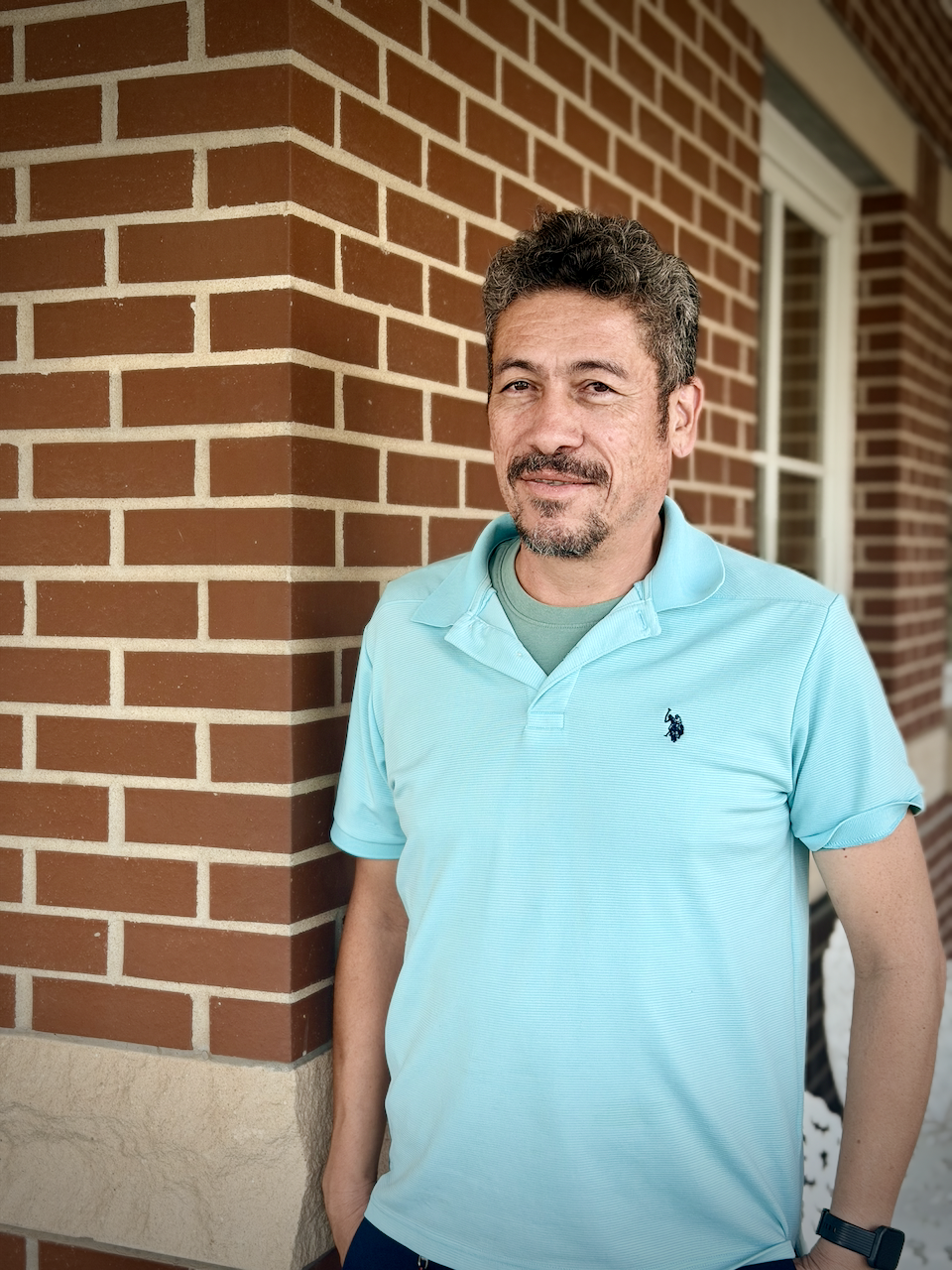
Alejandro Rojas is lead pastor of Iglesia CENTI Arkansas, a Spanish-language congregation in Cave Springs. Born in Colombia, he has planted churches with his wife across the U.S. inclue New York and San Francisco, and has called Northwest Arkansas home for eleven years.
episode references.
- Iglesia CENTI — Centro Internacional de Teoterapia Integral: https://centimundial.org
- Bill Bright & the founding of Campus Crusade for Christ (Cru): https://www.cru.org/us/en/about/what-we-do/milestones.html
- Canopy NWA (refugee resettlement in Northwest Arkansas): https://www.canopynwa.org
- Benton County Quorum Court hears local pushback over Sheriff's Office's ICE partnership — Northwest Arkansas Democrat-Gazette (Aug 27, 2026): https://www.nwaonline.com
- Monthly ICE arrests in Arkansas hit at least 4-year high in July; partnerships with state, local law enforcement credited: https://www.nwaonline.com/news/2026/aug/27/monthly-ice-arrests-in-arkansas-hit-at-least-4/
- ICE 287(g) Program overview: https://www.ice.gov/identify-and-arrest/287g
- 1 Thessalonians 5:23 (NTV): https://www.biblegateway.com/passage/?search=1+Tesalonicenses+5%3A23&version=NTV
On the podcast, Pastor Rojas answered our wholeness question in Spanish. Here is what he said, translated:
"It's First Thessalonians 5:23, and it says: 'Now may the God of peace make you holy in every way, and may your whole spirit, soul, and body be kept blameless until our Lord Jesus comes again.'
You know, wholeness would be being complete. And the way we become complete, we have three areas. We have spirit, soul, and body. And when those three areas work separately, we are not complete. When each one is off on its own, the body over here, the soul working on other things, the spirit working on other things, we are not complete. We need them to work together. And we're talking about just me, one person, but I need my three areas to work together. The only way that happens is when I work for God, when I surrender my life to Jesus, I give coordination to my whole being. So for me, that is being complete."
episode outline.
- Episode preview (00:00:01)
- Episode intro: a circle sixty years wide (00:01:50)
- What CENTI means: God's treatment (00:05:42)
- Colombia, an absent father, coming to America at sixteen (00:06:33)
- Forgiveness as the beginning of change (00:09:41)
- Choosing to serve souls; marriage and ministry together (00:12:10)
- Planting churches: New York, Connecticut, LA, Houston, San Francisco (00:15:55)
- Coming to Arkansas eleven years ago (00:18:38)
- "This is my country": home, and one moment of discrimination (00:20:13)
- Immigration, deportation, and a congregation under pressure (00:23:21)
- What holds this community together (00:27:04)
- A movement born from Bill Bright's message to Colombia (00:29:22)
- Teoterapia in practice: counseling, family, free will (00:31:57)
- Sharing a building: the church that hosts them (00:35:38)
- What this church hopes to represent (00:36:25)
- The Good Samaritan and a country's character (00:37:53)
- A refugee, a broken marriage, and a wedding (00:42:17)
- Forming leaders for every family and every town (00:44:43)
- Twenty years from now: churches gathering, a home for retired pastors (00:46:51)
- A faith of peace: what everyone needs (00:52:54)
- Fears: for the community, and before God (00:57:34)
- Wholeness: spirit, soul, and body, in Spanish (01:00:37)
- Talk-back with Monica Kumar (01:04:03)
episode transcript.
episode preview.
[00:00:01] alejandro rojas.: we would love that the community can see in our church a group of people that is willing to volunteer to help in any situation, especially like difficult situations. And a community that bring I would say blessing to the area in a way that having a good attitude with others, teaching to have good habits.
And also like they can see in us if, you know, hope expecting that the community can see as a group that know also not just represent a religion, but also re- represent the faith, which is stronger for me I believe, and represent a community as well, like doing good for others and serving, serving and helping.
episode intro.
[00:01:50] Mike: Well, you're listening to The Underview, an exploration in the shaping of our place. My name is Mike Rusch, and today we're talking with a church that most in Northwest Arkansas have probably never noticed. This season we've been asking a question: What is the faith of Northwest Arkansas?
And it would be easy, well, it would be lazy, to answer that question by counting parking lots, by going where the crowds go. But the faith of this place doesn't only live in the buildings that you can see from the interstate. It lives in rented rooms and second languages, in congregations of 50 meeting in someone else's sanctuary on a Sunday afternoon.
This season isn't about the size of our churches. It's about the range of them, and sometimes some of the most important voices are in the places that most of us don't often look. Today, I sit down with Pastor Alejandro Rojas of Iglesia CENTI Arkansas.
Now, hold on to this story because it's a circle. Sixty years ago, an American evangelist named Bill Bright, the founder of Campus Crusade for Christ, one of the largest evangelical movements this country has ever produced, carried the gospel south.
He preached across Central and South America, and in Colombia, a young man heard that message and believed it, and he started a church. The church became a movement, and that movement planted congregations across sixty other countries, and then it did what most movements do. It sent missionaries to Miami, to New York, to Connecticut, Los Angeles, Houston, San Francisco, and 11 years ago to Cave Springs, Arkansas.
Sit with that for a minute. The gospel America exported came home. It came home speaking Spanish.
So here is one of the questions that this episode asks, and I need you to hold it the entire way through. When it came home, was it welcome? Is it wanted?
This is a congregation of practicing Christians, people who pray for this country in every city they've served, people who've showed up after tornadoes, people who clean the kitchen of the church that hosts them because they were taught that faith looks like service. And this year, one of their members was deported. There is a family in that congregation right now carrying the weight of that and this is not far away. This is not the border. This is Benton County, the county where this church meets.
Two days ago, thirty-five residents stood up in Benton County Quorum Court in Bentonville to oppose the sheriff's participation with ICE. Because here's what you may not know. State law requires our county to participate in immigration enforcement at the lowest level. Our sheriff's office chose the highest, the task force model, deputies doing immigration enforcement on routine patrol. Nobody required that. It was opted into, and next month, the county decides whether to fund it.
We talk a lot in this country about immigration as an issue, as a policy, as politics, but an issue sounds different when the person describing it is a pastor telling you about his own congregation in the same county where all of this is now being decided.
So listen to how this sounds coming from the inside.
And if you're a person of faith listening who supports these policies, I'm not asking you to leave. I'm asking you to stay. Stay in the room for this one, because the question underneath this episode belongs to all of us who claim this faith.
What does it mean when the enforcement we call security removes the people who share our scriptures, our Sundays, and our Savior?
Maybe faith can hold that story together. Maybe it can't. But we won't get to look away from it because it's real, and it's true, and it's happening right here. This is what belonging actually costs, not the word on a banner, the practice.
As you listen, hold these questions: Who counts as part of the faith of Northwest Arkansas?
If this episode stirs something in you, a question, a disagreement, something you're wrestling with, we want to hear it. Go to theunderview.com and hit the Send Us a Voice Message button. We believe that your voice is a part of this story also.
All right. We've got a whole lot to work through today.
Let's get into it
episode interview.
[00:05:42] mike rusch.: Well, I had the privilege today of sharing a table with Alejandro Rojas, who is the lead pastor of Iglesia Centi in Cave Springs, Arkansas. Alejandro, thank you so much for being willing to sit down, and thanks for adding your voice to this conversation. I really appreciate it.
[00:05:56] alejandro rojas.: Thank you, Mike, for the invitation.
[00:05:58] mike rusch.: Tell me now, when I asked you earlier you talked about CENTI as just an abbreviation. Can you explain what that means?
[00:06:05] alejandro rojas.: Well, yeah, CENTI is a Christian church, and is an abbreviation name which means center integral of... Well, I will say it in English is in Spanish is Centro de Teoterapia Integral.
In English would be like Integral Teotherapy Center, which means, teo- is a Greek word that means God, and -therapy means treatment. So it's basically God, God's treatment to the, for, for men.
intro & story of faith. .
[00:06:33] mike rusch.: Well, I love that. All right, well, I wanna learn more too, so maybe let's start, I'd love to hear your story, and your story of faith, and obviously you're lead pastor there, so we'll get to that. But maybe let's start with you. Tell us a little bit about yourself and maybe your story of faith.
[00:06:48] alejandro rojas.: Well I was born in South America, in a in a country called Colombia. And when I was, like eight years old, my mom came to United States. She got a visa and moved to New York, and, but she, she, no, she was in the process to bring me also, so she just, she just came alone. And I, I stayed with my dad.
Then after, like, eight months, my dad moved with another woman, and then, and I was basically living with my aunt. My dad was an alcoholic, and I started doing it, like, as well. Wh- when I was living with him I started, like, you know, drinking. I was just a kid, but my, you know, my, my dad was an alcoholic, so he was v- very ignorant in that time, so he let me drink as well.
Basically I stay with my aunt, like since I was eight years old up to my s- 16 year old. When I was 16 year, like between 16 and 6- 17 year old, my mom brought me to US. 'Cause during that time it took a little while to do the whole process for documents even though I was her kid. But she wasn't a citizen, she was just resident, so that takes more time.
And when I came here I got a lot of conflicts with her 'cause, you know, I was a teenager. I didn't live with her for a long period and so it was, it was really hard. I, I struggled a lot when I, when I was, when I just came. And then during that time I met a friend. It was a, you know, one of those cool friends that took me to the party and met new friends and new girls. And one day he told me, "Well, I'm start going to a church." And I was like, "Okay, good for you." It's no my deal. I don't want them to wash my brain. And then he was, like, insisting, insisting, and and one day he told me, "Well, you know I met a lot of new friends over there at church, and they also have pretty girls over there. You wanna come with me?" And I said, "Okay, let's see."
And then that day I liked the message. I mean, I didn't like any other girls, any of the girls, but I just, I just liked the message. And then I, you know, I, I started going and after, like two months I just took a decision to, to give my heart to, to God.
And, and then s- I started to do a lot of changes in my personal life.
[00:09:36] mike rusch.: What was maybe the moment that faith became real to you, though?
[00:09:41] alejandro rojas.: First of all, I would say the beginning was when was my friend when I was... when I watched or I noticed a lot of changes in my friend. Because my friend not also he, he loves to drink a lot, he used to drink a lot, but also he was, he was doing drugs. He never invite me to do that. He say, "Hey, don't do this. This is trash." But, but but he quit all that stuff, and I said, "Well, this is, like, something that's... I mean, something strong."
And then I felt in my heart very empty because, you know, my relationship with, especially with my father, was broken, and with my mom, who wasn't in a really good condition.
So one of the things I learn at church is that God is a perfect father. But in order to have a good relationship with him which is like a horiz- horizontal relationship, I need a better vertical relationship with my, with my, my father in... on Earth. So when I took the decision to forgive my father, and I, I just trip, I took a trip and, and met with him. And and I asked him for forgiveness. And he said, "Well, I don't I don't need to forgive you. You need to forgive me, 'cause I was the one who made a mistake and I left you when I, when you were a kid." And I say, "Well, it doesn't matter, Dad. I mean, I, I still need to you to, to say you forgive me, because I felt a lot of bad things against you."
So I will say that was the beginning of my, my change. 'Cause a lot of things changed in my life when I took the decision to forgive. And I also was struggling with a lot of drinking even though I was a teenager. But I s- I quit and then and then I even... I didn't finish my, my high school when I came from my country.
And after I f- I changed my mind and the way I see life, I say, "Well, I need to s- to go back to school." And then, and then I took a GED diploma, and then after that I went to college. So basically that was, like, my beginning.
becoming a pastor.
[00:12:10] mike rusch.: From that beginning, maybe tell me the story about how you decided and ultimately became a pastor.
[00:12:17] alejandro rojas.: Oh, that's kinda weird 'cause when I was going to the church, I took the decision to took one of those Bible class. And I, I don't know, I start feeling like, oh, I should do this. I should I should focus on this for the rest of my life. And then I found that I was just... By that time, I was studying c- computer technology, and I thought, well, there's a lot of people who can create computer programs or fix computers. There's a lot of people that deal with psychology or, or, you know, like lawyers. But there's a few people dedicating their lives to help others with their souls. And I said, "Well, I gotta do, I gotta do this. I have to serve God."
And, and you know, serving God is basically, if you take it the right way, is basically serving others. 'Cause I know there's... You, you will find in this world you will find probably pastors that only focus on themself. But I learned that the idea of being a pastor is just helping others and giving yourself to others
[00:13:37] mike rusch.: w- I'm curious what it maybe feels like to you having not grown up in the church, it sounds like and maybe coming to faith a little bit later in life, choosing to become a pastor. If you could look back to, to that younger self of yours, did you ever think you'd be in a position like you are today?
[00:13:57] alejandro rojas.: No, I wouldn't. No, no, I never. E- even let me tell you something. When I was a teenager, my idea of marriage was like, I will never get married. Because, you know, the thing I saw in my house, you know, my, my, my parents, they they, they fought a lot, a lot of arguing, a lot of discussions. And when my mom came to this country, I, I think it was not o- only because she was looking for a better future, but she was also escaping from the relationship, 'cause it was really bad. Mm. The relationship was really bad. So I was like, "I will never get married." And then after I decide to be a pastor, I start feeling something for a girl which right now is my wife.
And then we got married, and then like two weeks later, we, we, we took the you know, the studies to be pastors. So my wife and I, we both lead a church right now.
[00:15:06] mike rusch.: Thank you for sharing that. I, I'm, I'm always curious, like how someone makes a decision to... I, I'm not the kind of person that should should ever be a pastor. And those of the, the, my friends that know me would agree with that wholeheartedly. And so listening to someone's story about making that decision, not only in their personal faith, but also to, to dedicate their lives to, to serving others and to caring for others is it's a really beautiful thing, and so I'm glad to hear that.
Alejandro, tell me about your church. Tell me about your faith community and maybe how you ended up here in Arkansas because Iglesia Cente didn't begin here in northwest Arkansas, if I understand correctly. This is a church community that comes out of Colombia and has been planting churches in the United States. And so I'd love to hear this story a little bit about how you got connected with them and where that journey has led,
[00:15:55] alejandro rojas.: Well, and you know, in, in USA, the church started like 35 years ago, probably, in Miami, and then they, they also plant a church in New York and, and that's where I, I found them.
You know, the friend, the friend of me who invite me, he was going to this church in New York and you know, I start meeting over there, and then when they when, you know, when I decide to be a pastor they send us to Connecticut to plant a church. They have like, during that time, like three families meeting, and then we moved to Connecticut and we, we start, you know, like growing a church or like planting a church.
And then, um we stayed for like three or four years, and then they move us to LA, which is a big It's a little bit of a different place. Yeah. It's quite different. And we we were in LA probably another three or four years, then Houston, and then San Francisco, and then Arkansas.
But the thing is that this is the place where we stayed, like, the, for the most time. 'Cause when we came to Arkansas, it was totally different to all the cities we've been live in. 'Cause we, w- we live in big cities, San Francisco, LA Houston, New York. And we found that, you know, this is a small area, but still has a lot of things to do, and, and a really good place to raise kids, you know?
Our children were, like, By the time we came, they were, like, around 8 and 12 or 7 and 11, 'cause my, my kids, they are, like... W- I have a daughter, a boy and a girl, and the difference between them is four years. So we found that there was a, this, this was a excellent area to, you know, to grow up kids, and we decide to stay here.
We talk to the church, like like, "Well, we would like to stay." And they say, "Okay." I mean, they support us for certain time, but if, if after that time, the s- the church still got not enough budget to to, you know, to sustain us, so we have to get a job or, like, a part-time. So that's why I decide to also have another job.
comning to arkansas.
[00:18:38] mike rusch.: What was it like coming to Arkansas, if you remember that? I mean, I, I've been here for a long time. You've been here for a long time. It's changed a lot. But, like, what was that like coming to maybe a new place to start a church, a new church tradition really here as well, too? Because there was not a church from this tradition when you first came here, so what was that like?
[00:18:58] alejandro rojas.: Well I will say it was good. I mean, 'cause this is, it was a small town, quiet and w- w- we, we like it. I will say, like, from that time, which is 11 years ago, to now th- this area has changed significantly. Significantly. Like, a lot of changes. Some, s- most of them for good, yeah? But I will say, well, when we came it was good. It di- it didn't have, like, a lot of activities or, or things to do. Like, you know us today, when you check Facebook, at least on my Facebook- ... I see, like, I- events. And every weekend we have events everywhere. During that time, no, we didn't have that many activities. And but I, I don't know. Like, we felt especially the, the part we love from Arkansas is the nature.
Because it was a long, long time since I didn't see, like, a clean river. I know right now we have some dirty rivers, but- ... 11 years ago, like, most of the rivers were very clean. And and the nature itself, it wa- is, it it was amazing for us. Was like, "This is beautiful."
home.
[00:20:13] mike rusch.: How do you feel about Arkansas now? Is this home to you?
[00:20:17] alejandro rojas.: Well, I, yeah, I definitely love it. I mean, this is m- definitely our home right now. I, I probably will say that I feel more welcome today than 11 years ago. I have a, a, well, I don't know if I could say this, but-
[00:20:35] mike rusch.: You can say whatever you want.
[00:20:36] alejandro rojas.: But 11 years ago, I have ju- just one situation when I, when I felt like discriminated. I was doing a, like a line to enter to an event, and you know, when, when you are in line, you start, you know, like chatting with your family because d- we're just waiting. And accidentally, I, I touched the, the lady who was in front of me, and she got mad, and I say, "I'm sorry. I mean, I was just distracted."
And she say, "Go back to your country." And I told her, "Well, this is my country," 'cause, you know, my kids grew up here, so I also feel USA as my country. I love it. I pray for this country. I pray for, And you know, in every city we've been, we pray for the people, and not only for Hispanic people, we pray for everyone.
And, you know, I was just like, "Okay I'm sorry. That's it." I didn't wanna argue 'cause I don't wanna be like... I feel like when you discuss with someone, you are, you are equal, equally, like getting equal to the same level of the person. And I was so, "No, I don't, I don't need to do this." But it was just the only situation.
But I will say today, I feel that the, the community is more, probably more united or, and and even when we have activities, even the Hispanic community, I see, like, a lot of different cultures come to our activities, too. So I, I feel very welcome today.
[00:22:13] mike rusch.: I, yeah, I'm sorry to hear that that happened. That's obviously not okay. I love hearing that you feel like it, it is more of a welcome place to you, and I'm, I'm curious maybe if you could describe that a little bit more. What do you feel like has either changed with you or is that a, a symptom of our community growing? I'm, I'm curious if you could maybe tell us why you feel like you're more welcome today.
[00:22:38] alejandro rojas.: Well, 'cause I will say one of the things like the community events that we have in, in different cities like Springdale or Fayetteville, even Bentonville it- it's good because it help us to feel more welcome and even schools.
Like, we, we love to, like my wife and I, we love to involve in school activities. Like, during the time we- our kids are being in junior high school or elementary, right now high school, we try to get involved. And and you know they like that parents participate and we feel, you know, that we are part of it.
immigration
[00:23:21] alejandro rojas.: So and that's the way I feel it. I will say just like probably today, one of the difficult situation- it's this thing that is going on is not just only here, but only, but it's the whole country, the, the immigration situation. 'Cause we have you know, our church is, is basically, you know, Hispanic people, so we have people from different countries. Mexico, Colombia, El Salvador Panama. So it's not just like one culture or... And that there's something that we have to deal, and now I will say especially His- Hispanic community or Spanish churches, that our congregation is very variable. It, you know, like people come and then they leave because they, if they find a job no matter how far they find it, if, if there's a way for them to live, so they move and you know, they move to work.
So like if we have, let's say five, six families and one of those families has to move because of the, the economic situation, they just move. So that's one of the things that affect like most, most of Hispanic churches. And also the immigration situation is like, one of our church member was deported and his family is like, you know, like right now dealing on economical si- situations.
And I understand that, you know, we have to respect l- laws, but I will say that this, it would be good to consider like the type of citizens that we have. 'Cause I know there, the, there are people doing delinquency or doing, doing things that they are, they're not supposed to do and, and from the Hispanic community.
But I will definitely say that it's not most of the, of the people. It's not most of our community. It's probably, I don't know, 10%. But most of our people come to work, come to be a good neighbor. They come to help. And it's, it's, it's, it's something that really affect us.
I feel, you know, I, I think, I don't know if I mentioned to you when we, when we talked, but yeah, I think I mentioned to you that we meet- In a temple that belongs to you know, another church.
And you know, they are not Hispanic, but they are very nice with us. They, they love us. And, and they, they l- they love that we also like to be, L- like, we, we consider that we're using the building and we need to help. Like, we clean the kitchen. W- w- we help with whatever is possible, like the garden.
We offer ourselves to help to do more. And I g- I, I, I tell you this because I found that it's not just my church. I see that a lot of Hispanic church, the people like to, you know, to serve the community and to help the community. And I would love, like most of the people, especially in this area, to know that we are here to help. Like, most of our community are here to, to help and, and to serve
[00:27:04] mike rusch.: Thank you. I, I, I've got a lot of questions, and we'll come back to some of these in a little bit, but I'm curious maybe if you could, if you could describe... I'd love to understand, like, as you think about your church and the church community of people that are there like, what, what do you feel like is the, is the thing that holds this community together?
[00:27:23] alejandro rojas.: I will say the, the, the thing that, the fact that we, we help each other. That's something that we teach our congregation, like we are brothers and sisters, and n- don't think just on yourself, but think of what's going on with the other one. And not only economic 'cause some people think that helping others is with money. For me it's very clear when the, you know, the, the Bible, which is the book we use to preach says that give. It's not only giving money, 'cause people think that helping is giving money. Sometimes some people doesn't need money, they need just a good advice. Mm. They need a friend.
It's like when you are in jail, you need s- in, you miss when someone is not with you. Like you missing all, all, all your family, you missing others. Or like when you are in a hospital. I remember I visit a guy who used to work in the radio, and he's very popular in the community. And when I wa- he was in the hospital 'cause he was very sick, and, and I ask him,
"May, how many people have been here?"
I was just curious. And he said, "Well, you are the second person." Mm.
So it's like I think that's the point, like that, that's the thing that keep us like united and unique, that we, we teach them that we need to be like a real family. Like worry about others. That's, that's like the main point.
[00:29:00] mike rusch.: And today though it's, you're 100% Spanish language faith community. Is that correct?
[00:29:05] alejandro rojas.: That's correct, yeah. We, we have English speakers, especially like the teenagers. They even participate in, in in the, the other church activities as well. But yeah, our community is, is is basically in Spanish, our, our meeting.
origin of the church tradition.
[00:29:22] mike rusch.: When you first started, you explained the name of the church to me. Because I don't know, m- most people may not be familiar with kind of the, the background of this faith community. The fact that it comes from Colombia to the United States, typically you hear stories about it going the other direction, right?
[00:29:40] alejandro rojas.: I don't know if if it's right to say Hispanic, but the founder of our church, like 60 years ago in Colombia, he heard the message of, of God or, or the Gospel from from Bill Bright, which is he was you know, a, a very popular preacher in United States, and he used to travel to Central America and South America to preach.
And, and our pastor heard the message from him, and, and then he, and then after a while, he started a church. He found, you know, he was, yeah, he was the beginner of this churches. So it's like a long time ago a lot of churches from United States did m- missions trips to South America and Central America.
But I don't know, lately it looks like a lot of churches from South America are bringing pastors to, to United States. It's like the opposite of what happened like 40 or 50 years ago. Is, is, is, I mean, it, it's funny or weird, but, but also I think it's because the other, by the other hand, that United States is, it's like a, I would say it's like a multicultural country.
We have people from several cultures, like several cultures, not only Hispanic. You know, we have people from India, from China, from Europe, from Africa. So I, I can see this like every day at the university. We have people from all over the world. So I, I, I, I just... That's what I think.
[00:31:28] mike rusch.: Oh, it's interesting. I, I wasn't aware of that. Bill Bright is the founder of Campus Crusade for Christ, a huge movement with the United States.
Do you feel like there's a different approach that your church is taking, or how it relates to other maybe churches that are majority Hispanic populations there? How, how would you explain maybe similarities or differences, or is this maybe as diverse as all the different denominations and traditions that just are here, you know, in our culture?
[00:31:57] alejandro rojas.: Well, our, our church belief is, is pretty similar to evangelical tradition. You know, like Baptist church or Pentecostal church. But I will say that one of the thing is like we are more focused on uh, on the scriptures more on uh, on, on the fact of you know, like analyzing what Jesus say. And so it's definitely, you know, I, I will say each church is different.
Even, even you know, I have met different pastors here, and I see like even a Baptist church, let's say one Baptist church from Rogers is not exactly the same like a another Baptist church from Bentonville or another area. M- So definitely our church has some difference to other churches, but I will say we, we... basically, the faith is the same. You know, we believe in, in Jesus as Savior and the Holy Trinity. But I will say what, one of the things that are, are I don't know if I say unique, but one of the things that we practice that not all the churches practices is that we do a lot of, mm, counseling, like couple counseling.
We, we, you know, like we meet them, with them at at their homes, at their houses and, and a lot of, we give them therapy, you know, with the Bible, with the Bible. But when, when I say therapy, it's not, we are not psychologists, but it's just like like show them wh- the options, the options, and they decide what to do, 'cause we, we don't pretend to say what they should do or not.
Like, no, it's, it's, it's their decision 'cause we are, we have a free will, and we have to understand that even in faith that everyone has to their, to make their own decisions. Well, like we just show them with the Bible like, "Okay, this is a good option and you decide, I mean, which option you wanna take."
So that's one of the things we do. Like we have a lot of family meetings with the couples and with their kids. That's, that's one of the things we practice a lot. And also, We do have we, we like to be involved in the community as well, like community activities. So we, we like to go and help. We found, and I don't wanna criticize any other churches, but we found out, like, not all the churches participate in, in social activities, or maybe they do, but in a, in a way that they, only they do it.
Let, let me give you a short example.
Probably like three or four years ago, we have a tornado in Springdale. Mm-hmm. And we went, we, we brought a crew from church to help, and we joined another group from community centers, different community centers. We joined them to help. And then we found that two churches were helping, but not with the community centers.
They just by themselves. Which is fine, but I think it's, it's it's good to join the community, so that way we show them... Like, it's a good way to show them Jesus. Like, "Okay, we're doing what he told us to do." So that's one of the things we, we like to do.
[00:35:38] mike rusch.: I, I am curious, you meet in another church's building.
I'm curious, do you have any interaction with them, or is there is that maybe services that you do together, or is there a, a good relationship, I'm assuming?
[00:35:51] alejandro rojas.: Well, it's mainly good relationship, but our young kids participate in their activities. And also, like, during the December celebration, like holi- holidays, we, we join them to the Christmas celebrations.
And yeah, it's, it's, it's probably like two or three times during the year that we meet with them, but it's basically a good relationship. Like 'cause we don't, yeah, we, we don't meet with them, basically.
hope for this community.
[00:36:25] mike rusch.: When you think about your community and what you would hope that it would represent to our community as Northwest Arkansas grows and more people come, and what makes your church and your faith community unique I'm curious, what would you hope for that it would represent to our community as a not to, not to go ahead of you, but as a maybe a source of hope or a source of encouragement to this community?
[00:36:52] alejandro rojas.: Well we would love that the community can see in, our church a group of people that is willing to volunteer to help in any situation, especially like difficult situations. And a community that bring I would say blessing to the area in a way that having a good attitude with others, teaching to have good habits.
And and also like they can see in us if, you know, hope expecting that the community can, see as a group that know also not just represent a religion, but also re- represent the faith, which is stronger for me I believe, and represent a community as well, like doing good for others and, serving, serving and helping
challenges within community.
[00:37:53] mike rusch.: As we think about some of the issues that you said that your community is having to address, and you mentioned immigration, we can talk about that if you would like.
I think it's one thing to talk about this issue kind of outside the church as if it doesn't affect, you know, what happens inside the church.
But it sounds like from your experience that this is a real and present issue that has affected your church. I'm curious how you would reconcile or what you would speak to say about hoping that our community, maybe nationally or our state, would understand that how this issue maybe informs how you think about faith, how you think about other Christians in Northwest Arkansas.
I don't know. How does that all align to you, if it does at all?
[00:38:41] alejandro rojas.: Well, I j- one thing that comes to my mind is like I know USA is a country open to any- anybody, any faith, any religion, but there's no doubt that this country founders were believers, you know, like Christian believers, most of them. And we have a lot of Christianity in this country.
So what Christianity teaches is to love others e- even bless a foreigner , and even, like when I think the story... when you asked me that, I, what comes to my mind is the story or the parable of the Sam- the Good Samaritan.
The Good Samaritan, you know, is basically the, a guy who was help for the, the person who he didn't expect to help him, and even pay for whatever he needs.
And I think this country was, has been a good Samaritan for a lot of countries, so we expect to, like, practice that insight as well in, his house.
And well, I, I think I, I told you before, like, I, I don't like to talk about politics. I respect any government. I mean, 'cause I don't have any preference. But I would s- I would love to have an opportunity to, to talk people in authority, to let them know, like, "Okay, I understand that there is a security issue and this is your territory, you're taking care of your land.
But, like, not everyone is a delinquent." And, and and there's people supporting and I will say, like, helping this country to develop better, to, grow up, to get a better even better, Like, the, the budget or the, the economical thing, situation would, would grow better if, if we have these hands.
And I will say that's, yeah, that's one of the things.
Even like when you, you ask me about like the, the, the building where we meet, we f- we feel loved by the people who owns the temple, the church 'cause even though they have, they are different culture, you know, like I, I, I don't, I don't know if they have Hispanic people congregating.
And but I, we feel loved by them, and we feel like they don't see a difference because we have different skin color or different eyes color. It's just we are brothers and sisters.
So that's, that's what I, I feel like the, the s- situation would be a little bit better if, if, I will say like if every case is, is investigated. Like, it's not like everyone treated the same way because it's, it's I will say it's very absurd to treat everyone the same way because not everyone comes to do the same thing.
Some people comes to y- to this country 'cause they're willing to have a better way to live, and they respect the laws and they respect mm, the conditions. It's just that they, they're looking for opportunities.
taking in the refugee.
[00:42:17] mike rusch.: You had told me a story about someone that came to your church community that was a refugee.
[00:42:23] alejandro rojas.: Oh, yeah.
[00:42:24] mike rusch.: I'm curious if you wouldn't mind sharing that story again?
[00:42:28] alejandro rojas.: Yeah, that was a really good I would say testimony, yeah. There was a guy who, he was at the university.
He was looking for an address. He was trying to, to get to his job. And he came to this country through a process of refugee. Uh, he was helped by Canopy. Yeah. And this organization, they help people with the process for refugee.
So I help him, and since he didn't speak English, he, he asked me like my, you know, my phone number and, and like keeping g- in, in touch so I can help him to get more information. So after like three or four months, he came to our church. And he was also in the process to bring his family, his wife and, and his children. But they were, like, in a really bad situation. Like, the relationship was broken for a lot of things that happened between them. So by the, the, the time, by the time she came, I mean, his wife came they were almost, like, over, like, "This is done."
The, the relationship was really broken. So we started, like, meeting with them, giving them some, you know, advice and counseling, listen to her and listening to him. And it tooks, like... It tooks probably, like, year and a half to reconciliate the situation. And it was really good, like, to la- last year we...
They, they do, like, you know... They, they were living together, and I think they got married by the s- civil, but they didn't, they didn't married by church. So last year they got married by church, and it was it was amazing 'cause it was it was a marriage that was a- almost, like, fall apart, falling apart.
And to help them was r- was really delightful for us.
meeting needs.
[00:44:43] mike rusch.: As you think about your role as a pastor and caring for someone who has come to this country because of the worst possible situations that they needed to be away from, and being part of not only just finding a place, but also reconciliation of re- relationship,
how do you feel as the pastor, as a part of a church, about how you're able to meet those needs tangibly here in this place?
[00:45:08] alejandro rojas.: Well, I, I, I feel this is this is like a teamwork 'cause it's also the work of you know, my wife and a bunch of people who are f- who's being formed as leaders. We, we've, we are forming people as leaders and, and that's one of, that's one of our, our goals as well that I remember you asked me also, like, w- in which way we want other people or like the community to see us.
We also, one of our goals is to form more leaders in the community 'cause we need leaders. Even, even our teenagers, we foc- our focus is to teach them to be leaders 'cause they can impact their schools in a positive way. We cannot go to the schools 'cause we are adults due to go and, and, and teach the other kids good stuff. 'Cause I know the teachers, they are there to teach just academic stuff, but moral principles and the way to be or a better way to be, it has, it gotta be through the teenagers as well, or the kids as well.
So that's one of the things that we, we more emphasize that we need to form leaders. Leaders for fa- for the family. Every family need a leader and every town need a leader. Leaders that you know, that bring the positive things and the best things from our community.
what difficult.20 years from now.youth.
[00:46:51] mike rusch.: Maybe look forward 20 years from now, what would your hope for this community be?
[00:46:56] alejandro rojas.: Well we have a concern that I will say is one of our goals. Okay. We, we pray that in the future we can have a building. Mm-hmm. Kind, kind like a senior center, but not for any type of senior. It will be for pastors. We found that especially in the Spanish community, a lot of pastors that are, you know, old they don't have any support. Like they worked their whole life for the church, but now that they are old, m- some of them older, already retired, but they don't have any, any help.
So we would like to have a, like a place for them to live and have like a church in the middle of this place, so eventually they can come and preach, or they can dedicate their life to write books, 'cause they have good stories to tell. And and also in this place have a an area to do retreats, and we can rent in a good price or a good deal to other churches to have events.
So that way is, th- that would be an income for the place. That's, that's something I I dream about it and, and we also consider like a big concern 'cause we found that there are a lot of you know, a lot of elders, pastors that they don't, they don't have any support, and they, they still have a lot of things to, to give
I would like that we have more, Like, probably the, the community centers are m- can work, like, more united, 'cause I, I know some of them, some of the communities' groups, and I would love them to work more together.
I also would like to... I, I, I respect that every church has their own activities, but I would like that in 20 years we can have at least once a year one activity for all the, all churches together. I, I would like it. I would like especially Christian churches to... so we can meet and, I don't know, maybe in the summertime have just one day of gathering. I would like to have that.
And I would also like, this is more probably, I don't know, like government thing or state thing, that more opportunities for the people to have their own houses. 'Cause a lot of people would like to have their own houses, even church members, but sometimes it's, it's hard. It's, it's not easy to, to ha- to, you know, especially to have for, to pay for a down payment.
So I would love to have more p- opportunities for that. And when, and when you talk about a gathering of, like, all churches, you're not referring to just Spanish language churches. I assume you were referring to everybody.
No, no. I- yeah, I'm referring to everyone. Like, yeah, the, all communities.
Yeah, it, it basically will be, like three or four language events because I don't wanna discriminate any community. It probably will be English, Spanish, Marshallese language event, but it will be fun. I mean, I think that would be amazing. And yeah, that's one of the things I dream one day we can have, like, a concert.
Probably just one, two event, two hours event, just, just gathering and praying together. I, I think that would be a blessing. We have, like... Well, I'm talking about Christian churches. I respect all, I mean, all the faiths, but I think will be, it will be more probably that all the Christians churches can meet. It, it's not easy t- too, but one of the things I think is, like, sometimes we focus... I'm, I'm talking about Christian churches. We focus more on the things that divide us instead of looking at the things that unite us. Like, there are a lot of things that, a lot of principles that unite us, like, that we think the same way, most of the churches.
Like, we believe in Jesus. We, we believe in forgiveness. We believe in the Father, the Holy Ghost. There are a lot of things that are, like we have in common, but sometimes we focus on those things that we don't have in common, and that's why we don't, we hardly meet together. So I think that,
We... I heard a phrase that the Christianity is the only group that is like a group of warriors, but it's the only group of warriors that they fight each, against each other instead of being together and fight against the, the evil.
It, it sounds bad. It's probably some people don't, don't like that I say that, but it's true. Like yeah, instead of helping each other, sometimes we hurt each other.
[00:52:24] mike rusch.: Well, I'm gonna hope that someone out there listening to this is inspired by your idea. And what a beautiful gathering that would be to bring so many people within a common faith tradition or whatever faith tradition people may practice together under a banner of love and unity and forgiveness, all the things that you mentioned. What a beautiful place. And I have a feeling someday that will happen. Here on Earth would be a great place for that to begin, for sure.
faith in community.
[00:52:54] Mike: As you talk about y- your faith and then your faith tradition, I'm curious how you view that being able to be a part or to help this community here in Northwest Arkansas.
[00:53:05] alejandro rojas.: Well, basically our faith is, is universal.
Like, it's, it's for everyone, first of all. But the other hand our faith is based on what Jesus said. One of the things he said is that in this world we will, we will find, like, a lot of pain and a lot of of struggle. But in, in him we will find peace, and it's a peace that we cannot understand. And I think that's something that everyone needs.
Everyone needs peace, 'cause the peace that he, he's giving us is something that I cannot explain. It's like even in the, in the worst situation, we, we can feel that he is giving us the strength. So that- that's the way I think that our faith is something that the people need, especially because of, of peace.
There are also other benefits like joy, wisdom, but I think the, the first one is, is that we offer, and I know that definitely everyone need it, is, is peace. 'Cause a lot of things that people is living right now, like stress, depre- depression is peace is, is one of the main thing that people is dealing with, that they need it.
They need to find it. So that would be, That would, that, that's the, the thing that I, I found that the peace of, of God is, is something that I cannot compare with anything. Well, I, I would soak that in deeply. I know individually speaking for myself, peace is something that I need desperately and I know our world needs that, and so your words are very comforting, and I'm thankful that you would say that because I think it's true, and I would hope everyone listening...
Just, I just, I can feel myself as you're saying those words, just kinda breathing out a little bit to accept some of that peace, and so thank you for, for bringing that up. I, I need it, and I think some other people may too. Thank you. That's good. Thank you for adding that. That was good. I'll ask you one more question, then, and we'll say let's go.
Okay. If you had one piece of advice that you would offer from your role as a pastor here in Northwest Arkansas, what would you want people to know or what advice would you extend to them? I would say that I, I found mainly that th- we have a lot of talented people in the community, the people that knows a lot about something, I don't know, like art a lot of they know lots about construction.
Even in the faith community, a lot of people knows a lot about theology. And I found this, that especially in my Christian life, in my relationship with Jesus, is that it's not useful, your knowledge, if you use it just for yourself. Your, your, your knowledge is useful when you use it for others. And also, attitude makes everything, 'cause you could be an expert and, and a professional for a lot of things, but if you have a bad attitude, that, you know, that would- won't take you too far.
Good attitude is better than a lot of knowledge. Because when you are working with a team, you prefer people with good attitude, but that, than, rather than people that knows how to do things. People with good attitude they probably don't know everything, but they're willing to learn, and they are teachable.
People with bad attitude, even if they are professional and experts you don't wanna work with them 'cause they, they don't, they don't know how to work in a team. They don't know teamwork. So I, I would say my advice is like prepare, be a professional do your things the best way you can do, but also add a little bit of good attitude.
fears.
[00:57:34] mike rusch.: I love that idea. I think as we kind of move towards the end of this conversation, there's two questions that I've asked every person that I have had the privilege of being able to sit down and interview. And the first one is around y- your fears. And I ask you this question really more out of kinda normalizing the fact that maybe there are concerns that we hold as a community, and as a pastor, to understand maybe how you hold those also. And so I think my questions are, what are your fears for this place?
[00:58:03] alejandro rojas.: Okay, let's see. For the community, my fear would be that I, I, I will say again, like the, the immigrant situation could bring could b- bring something that, you know, like in the atmosphere, like a way of think different of the community. Like 'cause it's something that is happening in, in the whole country.
So I, I, I wouldn't like to people be against the, the people. I don't know if you get me.
Like, when... Don't be pr- prejudice with the people. Like, "Oh, this is Hispanic, so he might be a delinquent, or he might be a... Be careful, there's a Spanish guy here." So it's, it... I know it's not. I mean, I don't think it's happening, but I don't, I wouldn't like that. That's my one of my, I would say one of my fears that I hope that the people, especially like non-Hispanic community, they don't look at us like in a different way, that they have... 'Cause I will say like right now when people think about Hispanic community, a lot of people think about, "Oh, okay, those are the good gardeners. They're good chef. They work in restaurants. They are good waitress. - They are good in construction." Like, people have some ideas about us, like we do a lot of work out there. And I prefer people keep thinking in that way about the Hispanic community. I wouldn't like them to think of us as criminals. That's one of my fears in the community.
In the personal, my personal fears, well, basically it's like not doing what God is willing for me to do. I would, I would love to, to hear when I... 'Cause everyone's gonna die one day. So when I, when, when I'm done in this world, that the Lord can say, "Okay, come, good servant.
In the little you were faithful I will give you a lot." I'm just paraphrasing the Bible. But yeah, that's one of my fear 'cause that, that I could do what God is calling me to do.
wholeness.
[01:00:37] mike rusch.: Alejandro, one of the questions that I've asked everybody that I've had a chance to is to talk to me about what wholeness means to you, this idea that things are complete, fulfilled. And I'm curious, and you can respond however you'd like, but I'm curious, what does wholeness mean to you? And if you'd like, and you'd like to respond in Spanish, that would be beautiful as well too.
[01:01:01] alejandro rojas.: Okay. Let me respond in, in Spanish, and I will answer that with a Bible verse. Yeah, I will say it in English the Bible verse, and then I read it in Spanish. It's First Thessalonians 5:23 and it says,
"Ahora el Dios de paz los haga santos en todos los aspectos, y que todo su espíritu, alma y cuerpo se mantenga sin culpa hasta que nuestro Señor Jesús vuelva."
Eh, you know, eh, wholeness sería estar completos. Y la manera de estar completos es porque s- tenemos tres áreas. Tenemos espíritu, alma y cuerpo. Y esas tres áreas, eh, cl- cuando trabajan por separado, no estamos completos. Cuando cada una, el cuerpo está por una parte, el alma trabaja en otras cosas y el espíritu trabaja en otras cosas, no estamos completos.
_Necesitamos que trabajen juntos. Y estamos hablando de yo solo, pero necesito que mis tres áreas trabajen sol- juntas. La única manera que eso sucede es cuando yo, eh, trabajo para Dios, cuando le entrego mi vida a, a Jesús, le, le doy coordinación a mi ser. Entonces, para mí eso es estar completo. _
Do you want me to say it in English?
[01:02:23] mike rusch.: I don't, I don't know. I, maybe we'll let that be out there for those that are willing, if they don't understand it- ... that maybe they'd be willing to go do a little work to, to do that. Or maybe I- we'll translate it and put it in the show notes, and they can read that on the... if I heard you or understand a little bit of what you said you talked about completeness. Is that correct? Completeness, yeah. Yeah.
[01:02:44] alejandro rojas.: Yeah, like, basically it's like we have three, we have three compartments in our lives. We have a soul, we have a spirit, and we have a body, but sometimes we do not coordinate. The way we think, the way we act, the way we feel sometimes do not coordinate. But m- the w- the only way to coordinate these three things is, is to giving the, to the one who create it.
It's one of the things that I mentioned.
[01:03:19] mike rusch.: I'll take that definition- ... of wholeness any day. So Alejandro, thank you for your presence here in Northwest Arkansas, for your- pastoral heart. You've smiled the whole time we've spoken. I know people won't be able to see that but there's just a joy of sitting in a room with you. And so I'm incredibly humbled and thankful to be here. And just, yeah, please continue doing what you're doing and being who you are. It's a, a beautiful thing to watch. And so it's been a gift to be able to sit with you. Thank you so much.
[01:03:46] alejandro rojas.: Thank you, Mike. Yeah. Thank you so much for the invitation. And well, I hope this interview can be helpful for, for all the listeners.
[01:03:57] mike rusch.: Oh, it already has. So thank you so much, Alejandro. Thank you.
[01:04:01] alejandro rojas.: Thank you.
[01:04:03] Mike (2): Monica, well, we just had a chance to sit with Pastor Alejandro, and what a gift that was to be able to sit with him, and yeah, I'd love to start with you and what you heard and what you're processing. And obviously, I had a chance to sit in the room with him, and so I've got all kinds of thoughts and emotions. But I would love to hear what you, take away from this conversation
[01:04:25] Monica Kumar: Yeah, Mike, what an incredible conversation you had. And, it, I think for me, this conversation just sat and was cemented in so much reality of where we are right now. And the grace and the patience and the love that that Pastor Rah has expressed and I felt in the conversation. I can't help but start w- with what I heard and felt most deeply, which was, this, this gap between his personal experience that he shared when he first moved here.
The fact that his congregants are living right now with fear and s- and a sense of, isolation in many ways, and also congregants that have been... I mean, I don't know how else to say it, but one of his congregants be- having been deported. And hearing that juxtaposed alongside with his complete love, patriotism his just, gratefulness and appreciation for America and the opportunities that he's been given through the church and his family is living.
I mean, I have to name that gap. I have to name that I heard that, and I felt it
[01:05:35] Mike (2): I also, I mean, to me, that was not a question that I asked of Pastor Rojas, but it is something that came out pretty early in the conversation. And so obviously being an ever-present reality in that I'm curious what else maybe resonate with you along that line of how, he's thinking about community or belonging and maybe how that really works with this kind of, I don't know, you wa- I wanna call it a, just a giant cloud over everything that, seems to be surrounding this faith community
[01:06:05] Monica Kumar: I think something he said, and he said it explicitly, he talked about it's so important to respect laws. It's so important to have like enforcement you know, in our country to make sure that it's safe and, we're being careful about how we protect our citizens.
He talked about that, and then I think for me, he then made a really deep case for proportionality and, and belonging, which was, like how do we investigate and make sure that we're making the right choices and we're being, and we're being individual and we're not just we're not just broadly sweeping everybody under an umbrella and saying, "This bucket of people is like this, and this bucket of people is like this."
And then I think he very much demonstrated the evidence of that by saying, the majority of people who immigrate here or who live in this country, who were maybe not born here or, are doing the right thing and they're hardworking and we can trust them and they're contributing to com- the communities, they're paying their taxes.
And so I think that, for me, like he was talking about kind of the mechanics of policy vis-a-vis like the reality of humanity. And for me that like that's abs- that's right. Tho- he was talking about the tension between the two, and I think he was calling for a case of how do we examine that and ease that tension to a place where it feels fair and reasonable and equitable and human.
[01:07:34] Mike (2): It's interesting from my point of view too that, we met with Father Tyler from St. Joseph's Catholic Church, the first interview that we had, and here we have a pastor of a multinational church who talks about immigration. But obviously he is a white man, so I feel like, sitting down in that conversation we're maybe sitting on the same side of the table from a perspective of how this maybe impacts people.
Now, sitting down with Pastor Alejandro all of a sudden... And I don't mean this in a we're divided, but it almost feels like now I have to listen across the other side of the table from someone who's leading a church and is a pastor with a multinational congregation,
[01:08:12] Monica Kumar: Yes
[01:08:13] Mike (2): Yet the way that's articulated and thought about and felt is a huge contrast. And not to be surprised by that, I think, but to sit in the room to reconcile that is... Gosh, it was... If I'm just honest, it was just... It was really hard to try to understand just how present or real this was in the life of congregation, especially having people that have, been apprehended and deported, and at the same time you have a church that's bringing in and supporting refugees who have been brought in.
And I mean, there's just so many layers. It's so complex. And maybe in some ways, like it... my hope would be, or I think it gives us the ability to... you know what? I don't know how to work through the complexity of it. I don't know that I understand it. I don't know that I can understand it.
But I... What I can hear from him is his pastor's heart and his a- desire to care for people, his desire to be a bridge builder, to make peace to honor this place and its people. And so for me, it's like maybe through... Maybe that is the kind of the, the knife that cuts through the fog in many ways, is just at the end of the day, this is a human issue, and we have to look at it through the lens of humanity.
[01:09:28] Monica Kumar: And can we just remember where this started 60 years ago? This is an American-born movement and church that has now s- in a circular way, come back home
[01:09:41] Mike (2): I mean, this is the most probably disorienting thing for me to try to... When you talk about layers Bill Bright, who was the founder of Campus Crusade for Christ, huge movement across the globe, pictures of him standing in the White House with Reagan and I mean, this was really of what is faith and politics and international, I don't know if diplomacy, if that's the right word or not.
But to have that movement be the origin story of this church denomination of Colombia, then to have that church come back and now be planting other churches in the United States and to your point that 60-year difference of... I don't know, and this is my assumptions and I'm, I could be wrong.
Maybe someone who understands the history of all this better than I can speak into it. But was a desire and a love and a hope to go down to Colombia and to start a church, and it worked. And 60 years later, we're seeing the inheritance of that, yet this climate that we're in today is so much different. And when this... When, Pastor Alejandro brings up kind of issue about, like, how does your faith, how does your church work itself out into the world? I mean, this is where we started, right? And so I... That juxtaposition where they're wrestling with, like, how do people who would s- identify as Christians, is faith the biggest umbrella that people are living under? Is it politics that they're living under? Is it immigration policy? Is it... That, I don't know, Monica. Help me under- unpack that, because I
[01:11:14] Monica Kumar: I mean,
[01:11:14] Mike (2): so many layers here.
[01:11:16] Monica Kumar: oh gosh, Mike, I feel like you understand this so much better than I do. But I, going back to sort of the pastor's words and some of his teachings I think what I sit-- my answer here might sit with what he said around he's not so scared or fearful of the policies or the politics so much as the atmosphere that's produced and the way that it works itself up out in our community.
So, so that I think for me, that distinction of, we all-- I think so many of us agree that, we need safety, we need to make sure that our communities are protected and we can raise our family safely and in, and in trustful harmony. And also what happens when we co-opt that and create an at-atmosphere of f- isolation, fear, antagonizing, brutality, like violence in every sense.
How does that gap bridge? I mean, I don't, and I think what's produced and how do we manage the production of that, the atmosphere and the, and the emotion that you churn up when we start having these conversations, or we start sh- it starts showing up in our communities the way it's starting to.
Yeah. I don't know.
[01:12:35] Mike (2): I guess the reason why for me it's maybe so, layered is because it just, if I'm hon- like, it doesn't make sense to me. These two things don't reckon with each other in the way that I would hope, right? It's not neat. It's not tidy. It feels contradictory, and so I'm just left within that paradigm of really questioning and understanding what is the priority here from a culture standpoint and a welcome and a belonging standpoint? Is it faith? Is faith or the church or the institution is that the highest belonging? is it going to be how we as a culture interpret whether we welcome people from other countries or not, or make pathways for immigration? And this is not a conversation about legal or illegal immigration.
That's not where I'm going. To me, it's the posture of, like, how do we think about, someone from South America who came to faith because of an American-born movement, comes to the United States, doesn't have the ability to through whatever legal system it is to figure this out and then is ultimately deported and sent back to wherever they came from. I don't know how to make sense of it
[01:13:51] Monica Kumar: Something that he spoke to in the interview incredibly eloquently and I think with... there's so many layers to as he talked about, how do you kind of slide, and I'm putting my own words into this, but, when we're starting, when that pers- when we're starting to talk about our good neighbors and people that, that w- work w- alongside us our colleagues who we're friends with and we're in comm- connection and community with, and then we're sliding into thinking about the same people as delinquent or as people who we need to be careful around.
That, that suspicion, it, on f- like, that just... it's where we are right now maybe in many ways with a very particular community, but it's been a historical... think about 9/11, which we're right on the cusp of, and the repercussions of that and how, the Muslim community was viewed and sus- cast as incredibly suspicious almost overnight.
And so neighbors, and community members, and doctors, and surgeons, and gardeners, and nurses were suddenly seen as people to be careful of and be wary of and, were not American, un-American. Do, we can find this parallel across history, and we find it, it I just wonder, why do we, why does fear have to live so, so deeply and entrenched, in our policies and in our communities?
Well, like, where does that come from? Why do we keep feeding that, that monster of fear, and where does it lead us?
[01:15:27] Mike (2): Monica, I think about the time that I spent with Pastor Alejandro just meeting him, and we went and had coffee, and I got to... We got- he got to ask whatever questions, so he kinda knew what the framework was, our exchanges the conversation itself. And I think I can share this. I don't think he would mind that I did. But, when we walked out of the interview room and we were leaving, and I just told him thank you again, it was great to sit with him he reached over and he put his hand on my shoulder, and he prayed for me, and he just know and that's not a critique against any other pastor, but that was just on earth does fear come into this conversation with this, uh, listening to him and understanding the kind of community that he's a part of. I mean, it just sounds so beautiful, and yet I don't know. It just seems so s-... How on earth can we, can that be the stereotype or the reaction culturally to such a, just an, an incredible human being, such a kind human being, who is literally, making a huge difference in people's lives?
And so I think for me, this one was really, it was hard. It was hard because all the other pastors, maybe except for Pastor Lowder, because when we talk about race and racism and the history of that like, I'm sitting at the table with someone who's been deeply impacted by that. And the rest of the conversations that we've had, beautiful, and we've talked about this we're still talking about the problem.
We're not talking with, someone who's has to bear the weight of that. And so to sit in a room with him, surrounded by the kindness and the generosity and the hospitality and the thoughtfulness of everything that he's doing, and the desire for him to live out what his church believes into the world I mean, it's just overwhelming, the beauty of that.
And I know there's a lot of other churches and pastors who are doing that same thing. I'm not saying that's unique, but, to be confronted with that duality is just, gosh, it was really hard for me to get my head around. And I don't have my head around it, so I'm not gonna pretend. I think maybe this is the reckoning that we as a culture need to do.
It's definitely the reckoning that I need to try to understand. But goodness it was it was very disorienting 'cause I would've probably stayed away from this topic unless he, he brought it up. But, it is definitely something that w- was a, a real and present reality in his, in his world
[01:17:51] Monica Kumar: Can we talk about the fact that he's also looking forward and talking about building like a multi-generational center where people can gather from, across churches, across communities of, in unity and honoring of culture? And can we talk about the emotional labor that he and people are carrying right now of having to be look- to be looking for the goodness and to be looking for the community even while personally seeing and feeling the repercussions of of fear and misunderstanding, and I would say hatred , I just think that there's so much emotional labor, and he talked about it so gracefully, and I don't even know that he ever mentioned the weight of that in any way. And yet I think it's really important to name it
[01:18:44] Mike (2): Agree. Last week I, went and spoke to the Benton County Quorum Court about 287g enforcement issues and some of the things that I talked about in the intro, and just I had him in my mind the whole time really understanding, like how do we as a community with Benton County...
R-really, I mean, being one of the highest volume of ICE enforcement arrests and detainment and, know, we've seen the history of arrests that have gone wrong and lawsuits and people's lives who have been impacted who should have never been arrested and detained, and I'm just like I just... it just breaks my heart because I can walk through this community and I don't think about it twice, and that's not okay.
[01:19:27] Monica Kumar: Well, that's not true. You do
[01:19:29] Mike (2): well I do think about it
[01:19:31] Monica Kumar: Laudato si
[01:19:34] Mike (2): like Pastor Alejandro and the church and I... and the people that we've met and mutual friends of ours too, Monica. And so yeah, it's... I feel like this week has just converged at a very high intensity around all of these themes and and I think, and this is me selfishly, to be able to sit down with Pastor Alejandro and to hear that generosity, to be the recipient of that kindness I'm just reminded of how our community without him in it would not be the same. We would be so much less. And I don't wanna make those kinds of sacrifices for our community. So anyway, I could talk about this forever. Sorry, I'm you're
[01:20:13] Monica Kumar: No.
[01:20:13] Mike (2): get me on my soapbox here,
[01:20:14] Monica Kumar: No, you're not. You're just being very yourself, and I love that. I do, yeah I'm sitting very deeply with the fact that we opted into sort of the highest enforcement tier in light of all these conversations that we're having around faith and a state, and certainly a region, because we're pretty regional.
But, we are, we do sit in a s- in a very sort of pivotal state s- state space too, and I would say a national space too. But if we're even just sitting regionally, we are predominantly Christian, we are predominantly guided by that in many ways and at the same time, we opted into, and we opt into some of these choices around enforcement and 287and, and I just wonder where our sense of faith and place and policy all are able to work themselves out here
[01:21:09] Mike (2): I think it's one thing to talk about the policies and the laws. Obviously, not every law that we make has historically turned out to be the right way to approach things. but it's another thing to sit in front of the human being who's, unfortunately affected by these things deeply. And I think the minute we lose that view we... don't know. It, it- that... things just go sideways. And so I guess for me, it's a reminder as we talk about all the issues we've talked about, Monica, and we talk about faith as we have been, and how faith works itself out into the world, I think the reality is you know, w- we are... this is one of the harshest realities sometimes that we've probably had to talk through or at least among the top. And we as a community, we cannot lose that humanity. So, Pastor Alejandro, like his desire to bring all the Christian churches together, like amen to that. And I hope... I don't know how to make that happen, but like what would happen if we started to think about things like that in a different way of maybe that was the priority from a faith perspective.
And not just Christian, obviously, he said to everybody. like . how could things like that really transform the way we think about our own community and about belonging, or, is the most important way of seeing our neighbors and others in a way that is, yeah, full of dignity and humanity? So, sorry. We- this is gonna be a long talk-back if you keep me going, Monica. Let me
[01:22:38] Monica Kumar: Well, I mean, I, yeah, I mean, everything you say is sort of interesting and thoughtful and insightful, Mike, and you always make me think so deeply. And I just I was just going back to, in my mind, thinking about th-the pastor mentioning, that he's, his concern and his fear of grouping and lumping people into one sort of nebulous group and not seeing our neighbor, not seeing our, social worker or not seeing our nurse or our gardener as an individual human.
And then I, and I I feel like that calling that he's calling us to do, which is see, see the humanity in every person and n-n-not see like a nebulous group of people that are faceless. I feel like that was one of the reasons why I was called to do this season, and so graciously invited by you, and so, so motivated to do it.
Because I myself have been so, I think incredibly misguided and led to do that, whether it's conscious or unconscious, of thinking of Christians in this way, Southern Baptists in this way, Muslims in this way, Hindus are like this. And I think this, the calling that Pastor Rojas is inviting us into, I think is such a sacred and important one, or reminding ourself, which is, ... when we want to and when we're in relationship with people, in good relationship, we are not thinking of them as a group. We're looking at them as a human, as a person, as an individual, and we're forming those relationships one by one. And, the caution that he's asking us very kindly to, to exercise, which is let's not fall into that because of fear and because of stories that we hear or, headlines.
Let's continue our discernment. Let's continue our relationship building. Let's continue remembering, the people we love and the people we're in community with. And I, and for me, this season, my, one of my biggest motivators and callings for joining you was that and it's been profoundly impactful for me. And yeah.
[01:24:48] Mike (2): Yeah, I think this theme that we have here is making me think about maybe some future conversations a little bit differently about maybe some of the ways or some of the avenues that maybe we need to maybe go down and explore.
And I'm like, goodness not something that's probably going to be easy or maybe popular. But I feel like this is really something, this duality from my perspective of and a faith that talks about the other, the foreigner, the migrant and what behavior should look like.
And that's not just unique to Christianity, unique, that we, we-- every faith leader that we've spoken with, and every faith tradition that's still coming has-- shares these, these beliefs about humanity.
Yeah, I think it's, I think it's hard because if we know that other or the, the migrant or the immigrant or the foreigner, whatever that may be shares that common faith, w- why... Which is probably true for most people coming out of especially South America, coming from different places around the world, w- why is that not part of our conversation?
Or what is holding us back, or what is the blockers from us seeing people is that through, maybe through that lens primarily?
[01:26:00] Monica Kumar: something that Pastor has shared and yeah, so many things I am sitting with and listen to again and again. But he juxtaposed something very personal where he shared about his experience of somebody, and I'll paraphrase, somebody basically saying, you need to go back to your own country."
And then he also shared that today he feels incredibly welcomed and included in this community. And so by, by putting both of those in the room, he doesn't flatten his own experience of discrimination, but he also doesn't let it define his whole, I think he said, eleven years plus in this community.
And for me, in that, b- i- in those two sort of the, those two bookends, there's complexity. He's sharing, I think, genuine hurt and pain, and also incredible deep gratitude, and they're both living together. They're both coexisting. And so it really-- he's really helped me resist sort of any kind of tidy narrative about this side of the immigration vers- debate versus this side, or this is good, this is bad, this, any, any one person or any one policy being one thing or another.
And I feel like for me, that is something that I'm gonna be sitting with, and I don't necessarily need to resolve that because maybe it is unresolvable
[01:27:22] Mike (2): All right, well, I'll let that be our final thought for this episode, Monica, unless there's anything else. But I think maybe sitting and talking with you has been so helpful to help just kind of unwind and process this. And I guess if we're both trying to unwind and process this, maybe that's a good thing as well too.
So right, Monica, thanks so much. We'll see you next week
[01:27:43] Monica Kumar: So grateful to you, Mike. Thank you
[01:27:45] Mike (2): Thanks, Monica
episode outro.
[01:27:47] Mike: Well, that conversation with Monica and I is why we do these talkbacks. Neither of us has it resolved. , And maybe that's the point.
I do want to say thank you to Pastor Alejandro Rojas for your wisdom, for your honesty, and the kindness that you carry into every room. Our community would be so much less without you in it.
For those listening, before you go, I want to leave you with three questions. Don't answer them too fast. Carry with them in your week.
First, Pastor Alejandro told us that wholeness is spirit and soul and body finally working together, coordinated, not divided. So what would that look like for a community? What would it take for this place to stop working against itself?
Second, who counts as a part of the faith in Northwest Arkansas? Not in theory, in practice. Who gets to be included when we say the word "we"?
And third, can a place love someone's labor without loving their presence? And if that's what we're doing, what do we do about it?
If this episode has stirred something in you, a conviction, a disagreement, something you're wrestling with, I genuinely want to hear it. I know Monica does also.
We would ask you to go to theunderview.com homepage and hit the send us a voice message button. We believe that your voice belongs in this series. This season, we're tracing the faith of Northwest Arkansas. What was planted, what holds power, what is breaking apart, and what is emerging.
Today, we heard a story of what's emerging.
The question is whether we'll make room for it. I want to say thank you for listening and thank you for being the most important part of what our community is becoming. This is the underview, an exploration in the shaping of our place and our faith.