
the civil war with Dale Phillips.
The Civil War. Causes, Impact on Northwest Arkansas, and Influences Today.
season 2, ep. 14.
listen.
episode notes.
the civil war with Dale Phillips.
In this episode of the underview, historian Dale Phillips, retired Superintendent of Lincoln Home National Historic Site, explores the Civil War’s impact on Arkansas, particularly Northwest Arkansas, and why its legacy still matters today. With over 40 years in the National Park Service, he unpacks the state’s role in secession, the battles fought on Arkansas soil, and how the war reshaped the region’s identity.
Phillips draws parallels between the deep divisions of the 1850s and today's polarization, warning: “We cannot let the polarized extremes take hold like they did in the 1850s, which led to that bloody conflict.” By understanding the war’s causes and consequences, we gain insight into how history continues to shape Arkansas, challenging us to learn from the past and build a future rooted in shared understanding.
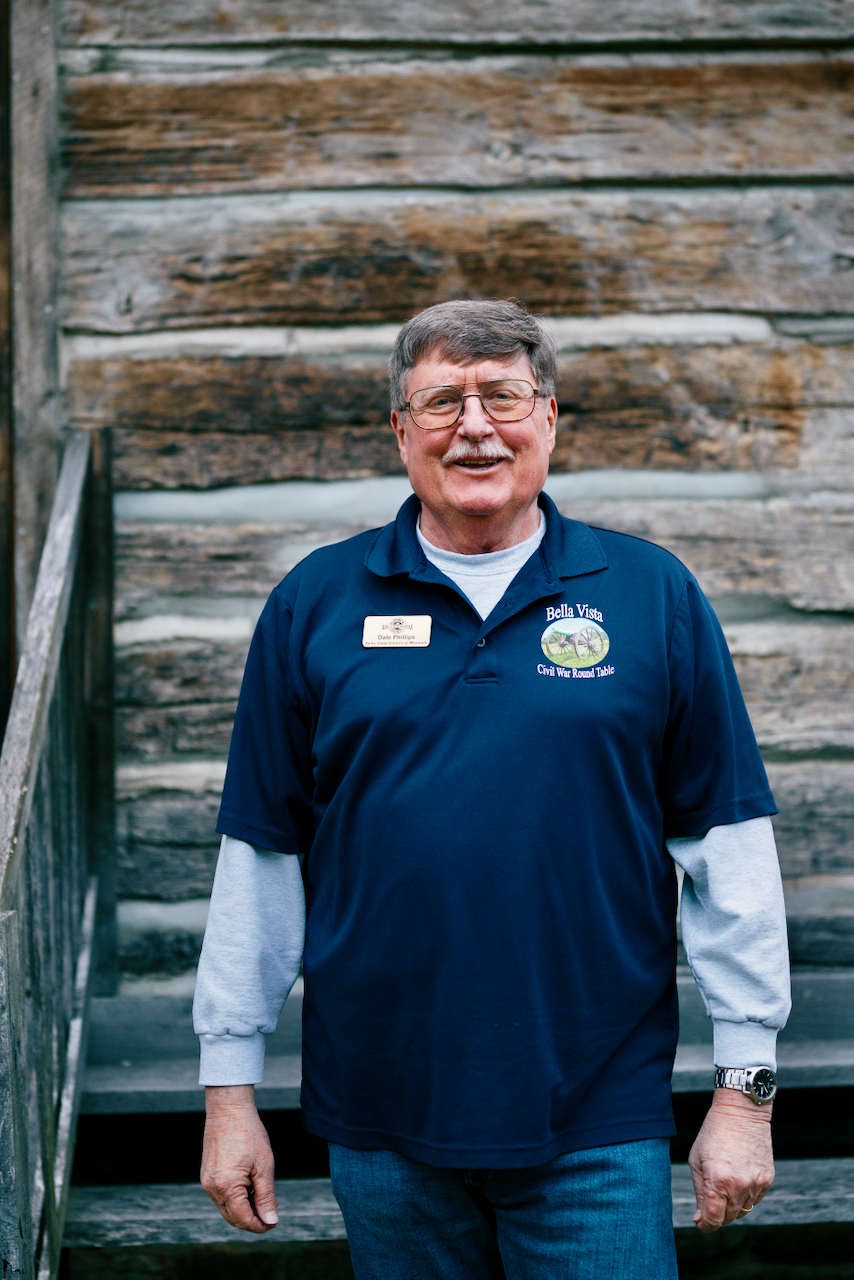
about Dale Phillips.
A native of New Jersey, Dale Phillips earned a bachelor's degree in American history from York College of Pennsylvania. In 1976, he began his career with the National Park Service as an interpreter at Gettysburg National Military Park. He has worked at the following NPS historic sites: interpretive ranger-Fort Sumter (Charleston, SC); historian-Chickamauga/Chattanooga National Military Park; manager of the Chalmette Battle of New Orleans site; superintendent of the George Rogers Clark National Historical Park. In 2017, he retired as Superintendent of Lincoln Home National Historic Site after 41 years of service.
He has authored numerous articles on United States military history for various publications, assisted historic researchers, and appeared in and assisted with historical documentaries.
He is married to the former Carol Patton of Louisiana, whose southern ancestry predates the American Revolution. Dale and Carol now live in Bella Vista, Arkansas, and Dale is the co-president of the Bella Vista Historical Society with Xyta Lucas.
episode notes & references.
- Battle Cry of Freedom by James McPherson – https://www.penguinrandomhouse.com/books/112444/battle-cry-of-freedom-by-james-m-mcpherson/
- The Confederate Constitution (1861) – https://avalon.law.yale.edu/19th_century/csa_csa.asp
- Ordinances of Secession – https://www.battlefields.org/learn/primary-sources/declarations-causes-seceding-states
- The Lost Cause Narrative – https://www.encyclopediavirginia.org/entries/lost-cause-the/
- The Civil War Roundtable – https://www.cwrt.org/
- Battle of Pea Ridge – https://www.nps.gov/peri/index.htm
- Battle of Prairie Grove – https://www.arkansasstateparks.com/parks/prairie-grove-battlefield-state-park
- Wilson’s Creek National Battlefield – https://www.nps.gov/wicr/index.htm
- Lincoln Home National Historic Site – https://www.nps.gov/liho/index.htm
- Fayetteville National Cemetery – https://www.cem.va.gov/cems/nchp/fayetteville.asp
episode outline.
- Introduction (00:00:00)
- Personal Connection to the Civil War (00:01:21)
- What Draws People to Civil War History? (00:11:32)
- The Role of the Civil War Roundtable (00:14:08)
- The Causes of the Civil War (00:24:05)
- Slavery vs. Heritage (00:26:08)
- Polarization Then and Now (00:29:37)
- Arkansas’ Role in the Civil War (00:33:41)
- The Legacy of the War and Monuments (00:40:34)
- The Impact of Reconstruction (00:47:46)
- Closing Reflections (00:49:27)
episode transcript.
episode intro.
[00:00:02] dale phillips.: What we're going through today with polarization, you see very much the same in the 1850s, and that is something we have to work at today, even though we are very polarized, we need to find middle ground. We need to not see each other because of different opinions as anything other than Americans. And we need to find that middle ground, accept that there are different points of view and work toward A concrete future, a successful future. We cannot let the polarized extremes take hold like they did in the 1850s, which led to that bloody conflict.
episode preview.
[00:01:20] mike.: We are listening to the undeview, an exploration and the shaping of our place. My name is Mike Rusch, and today we turn our attention to a defining chapter in the history of northwest Arkansas and in our country. It's known as the Civil War.
This was a conflict that reshaped the state and our region. It fractured communities and it left a lasting legacy that we still contend with today.
In the recent episodes, we've explored how slavery was central to the development of Arkansas and the state's decision to secede from the union was contested. But war is never just about political decisions. It's a lived experience. And as we begin this conversation and continue it into future episodes, we will explore what did the war look like on the ground in Arkansas? How did it shape the people in the land? And how do its echoes still influence us today?
And to help us navigate these questions, I have the distinct privilege of sharing a table with Mr. Dale Phillips. Mr. Phillips is a historian and the retired superintendent of Lincoln Home National Historic site. He has over 40 years with the National Park Service, and Mr. Phillips has dedicated his life to preserving and interpreting Civil War history, working at some of the most significant sites in the country Including Gettysburg and Fort Sumter. His insights into the war's causes, battles, and memory offer us a chance not only to understand the past, but to reflect on what it means for our present.
He also serves as the co-president of the Bella Vista Historical Society and the co-organizer of Northwest Arkansas Civil War Roundtable discussions ensuring that these histories remain part of our regional dialogue.
In this conversation, we examine the causes of the Civil War, the impact of the war in Northwest Arkansas, and the striking parallels between the polarization of the 1850s and the deep divisions that we see today.
But this episode is not just about war, it's about memory, about who tells the story and what we choose to carry forward.
Alright, let's get into it. Well,
episode interview.
[00:03:23] mike rusch.: I have the incredible privilege to be able to sit and share a table with Mr. Dale Phillips. Dale, thanks for sitting with me and I'm really looking forward to our conversation. So thanks for being here.
Thank you, Mike. It's a pleasure to meet with you.
I'd love to start with your story. I think your background and your story is really important. So I'd love for you to share that if you would.
[00:03:39] dale phillips.: Sure. Be glad to. I am a professional historian. I graduated from college in 1978 with a degree in American history, and I was lucky enough to get a summer job at Gettysburg National Military Park as a ranger interpreter. And I chose after I graduated from college to make the National Park Service my career.
I spent 41 years as a park ranger, historian, interpreter, eventually retiring as a superintendent. In the National Park Service, I worked at many sites related to our history of our country, including Gettysburg, Fort Sumter, Chickamauga, Chattanooga. I worked in New Orleans for 10 years managing the Battle of New Orleans site. I worked at George Rogers Clark, which is a Revolutionary War Park in Indiana. And when I retired, I was superintendent of Lincoln's home in Springfield, Illinois. So I have a fairly distinctive background in that period of time. I have I'm a nationally recognized speaker and author. I've traveled all over the country, speaking to Civil War round tables and other historic preservation groups, groups on subjects related primarily to the Civil War.
[00:04:45] mike rusch.: How did you end up in Bella Vista, Arkansas?
[00:04:48] dale phillips.: We chose Bella Vista, my wife and I, as our place to retire to. It offered a unique combination for both of us. My wife is a Louisianan, and a world class fly fishing person, and a world class golfer, and so it offered everything she wanted, and it offered enough history, as we're going to talk about in a few moments, not only Civil War related, but history in general, for me, to keep me happy and involved.
[00:05:13] mike rusch.: You served at some incredibly profound places in the history of our country. What do you draw from all of these years of being a part of these stories and with people who are seeking out to understand these?
[00:05:27] dale phillips.: The biggest most important thing to me was that I was. able to contribute to the preservation of these sites and to make sure that their stories and they are protected and told to generations from, for many generations to come. My responsibility to make sure those states were maintained, they were interpreted properly.
It gave me great significant. Yeah, it was a good feeling to know that my work was contributing to the long term preservation of those sites so that I know they'll be long after we're history. They'll be there for next for future generations.
[00:06:03] mike rusch.: I think one thing that's really profound to me as well is that you're not just doing this on behalf of yourself. You're there to represent the history of the country for our country or for these states or for the people that live in these areas. That's a tremendous amount of responsibility. I'd love, how do you view that, your role in that?
[00:06:21] dale phillips.: Even more than that, actually, we get so many international visitors especially with Abraham Lincoln, the story of Abraham Lincoln it very much, we see ourselves as the benefit of the world. To reinforce these stories, not only of our country, but how it might relate to situations that they might go home to.
And it, it really was a great day. There was not a day that I did not want to go to work. There are many folks in our world who have jobs that they have to get themselves excited about going to. And I have to admit I didn't make a lot of money as a civil servant. But there was never a day that I did not want to go to work in those 41 years.
what draws people?
[00:06:58] mike rusch.: I can only imagine you've seen hundreds of thousands of people come to these sites over your career. One of the things that I think that is fascinating to me is what draws people to these spaces.
I'd love your impressions or your understanding of what either common themes or maybe the unique themes, of what you would assume brought people to these places.
[00:07:20] dale phillips.: Again, like with someone like Abraham Lincoln, it's the notoriety. He's so well known in the story of Abraham Lincoln is so well known around the world, but with military sites, with battlefields, what draws people is usually the significance of that battle to the overall story of the kind of our country, or in particular like with the civil war, which we'll be talking about in greater detail here.
It was such a devastating war for everyone who lived in this nation that almost everyone that had a relative at that time was affected by this conflict in some way. And so when they go to a Gettysburg or an Antietam or a Harper's Ferry or the wilderness or a Chancellor's, any of those major battlefields, there's a personal identity because they can think about what that ancestor might have endured at that time when that's, when the struggle was going on.
people bring their opinions.
[00:08:11] mike rusch.: this would be my assumption and correct me if I'm wrong, but I, I would assume people carry their own ideas of what this history has meant into those spaces. And you have the chance, I don't know if you become a sounding wall to either agree with them or not agree with them.
What, like when people come into these spaces, what do you see as far as Their own posture or their own belief systems that puts them in a place of being willing to learn or to hear, or maybe they're seeking to reinforce some belief that they bring into it.
[00:08:42] dale phillips.: You are 100 percent correct. You, we often would get visitors.
Who would have conflicting opinions. I've had groups where I've even within tour groups, I've had individuals at opposite ends of the spectrum. And I've had to separate them at different, I almost have to play referee at times. As school curriculum has gotten much thinner as far as history goes, the National Park Service plays the role sometimes of providing almost classroom type interpretation, not just preservation.
When I first started my career, the average visitor that came to, let's say, a Gettysburg, they had a basic idea of the background of the battle, why it was fought, who the primary participants were, but at the end of my career, we found that we had to provide more context, more background information. Why is this important? More basic information because it wasn't being taught. It's still not being taught because there's too much information. Being shared. So we very much found ourselves the same as in a role of a teacher providing that basic background of why, of educating people, of why we should care. Why are we spending all this money to preserve these historic sites? Why is it important?
We became the gatekeepers, if you want to call it that, of making sure that those stories are. And yes, there are oftentimes conflicting opinions. And I've been called quite a few different names along the course of my career, none of which we can repeat here or some of, most of them we can't repeat here. But yeah and all you can do is try to share with that individual what you know. Your beliefs are, and that's the neat thing about history interpretation. There is a lot of evidence out there to form different opinions. And unless somebody invents a time machine, I don't know that we'll ever know a hundred percent for sure why certain things happened a certain way.
advice for this topic.
[00:10:31] mike rusch.: As people step into these spaces to talk about significance of past historical events, What would your counsel be, before we even get into this conversation? What kind of mindset should we bring to a table like this or to a desire to seek and understand our past?
[00:10:49] dale phillips.: The thing that the hardest thing that the hardest challenge to address is. You cannot, when you look at different time periods in history, we, you cannot judge people in history necessarily by the morals or the beliefs we have today, different time periods represented different things. Now that doesn't justify different actions, but you can't allow your personal modern beliefs to interfere with how people may have made decisions in the past. That is a very hard thing to do sometimes because you'll look at it, you'll look at a situation and go, how could they do that? And you suddenly realize that may have been the accepted way of life at that time, even though we might not agree with it in our world. That was their world. And that's sometimes very difficult to make that separation.
[00:11:37] mike rusch.: yeah. Very interesting posture to, to step back into. where are the guardrails in these kinds of conversations? I know we're gonna be talking specifically about the civil war, but when we think about history and we think about our interpretation of it as you said, or the facts that we absolutely know for sure, you did mention there, there is a an element of unknown, right?
And so how do we, what's the best posture? How do we hold these elements of the unknown about our history in a way that allows us to continue to move forward and maybe be open to ideas that we may not have been open to before.
[00:12:13] dale phillips.: Really the only thing you can do is just do your own research. Read, look at, read as many personal accounts. Be careful with memoirs. Those are usually written after the fact. But if you look at the letters and the documents written at the time of the event, you can gain a better understanding of what was going on in people's minds. That is really the only way you can do it. You have to read, you have to put yourself in their place and try to understand what was going on in their world around them.
And that's a pretty tricky thing to do sometimes, but you will get a much better understanding of what, and you form your own opinion. Basically, you read these documents read these letters, read these diaries, and then you will form your own, you have to form your own opinion.
meaning of history.
[00:13:03] mike rusch.: I think to that point, maybe I'll maybe take it one step farther and say.
The facts that are probably widely acceptable. I don't need to sit with you today to go get facts about Abraham Lincoln's life, right? I come and sit before you today because what I'm seeking, I think, is the meaning of how that applies. I'm curious when we think about, or your role as a historical interpreter, how do we draw the meaning aspect out of this?
Like how, can we, do we hold that loosely also, or is it is that desire to try to make sense of what happened in the past am I the only one, or is that a common thing?
[00:13:40] dale phillips.: No, not at all. In fact, let's use Abraham Lincoln as an example. You're right. The basic overall facts of his life are well known and easy to access, but when you dig deeper, and you look at the Abraham Lincoln who suffered from depression, who had his second born child die in his home in Springfield, had another child die in the White House and of course eventually his own assassination. When you look at more at him as an individual, And the things he experienced in life, how he educated himself, what life was like with a bad relationship with his father and his the body built with his his stepmother the loss of other family members.
And when you, and you, when you look at the person as an individual, not the Abraham Lincoln of Mount Rushmore. As an example, when you look at General Robert E. Lee, or you look at U. S. Grant, look at more than what we know from the basic textbook. Look at the challenges they faced in life. Look at the conditions they were up against, what they overcame, and in some cases, what they succumbed to. That presents you with a whole different perspective, and you begin to realize that they're really no different than us. They were just faced with a different set of circumstances. Make it more personal, make it more human.
what draws people today?
[00:14:56] mike rusch.: Thank you. I think that's super helpful. I think the context of even maybe how we approach this conversation to me is really important. You and I had a chance to talk a little bit. The Civil War is still something that is in our national dialogue, presidential politics, it's still there. We're still seeking that idea of meaning. And maybe let's just start there. I, why, in your opinion Why is the Civil War something that still draws our attention today?
[00:15:23] dale phillips.: Oh that, I can explain that fairly easily. We, I'll touch back to what I said a little bit of what I said earlier. There was not a family that had ancestry to that point in our nation that wasn't affected by this conflict in some way.
Basically we believe about 750, 000 Americans lost their lives in that war. What that comes down to is basically one out of every 50 Americans that was alive in 1861 when that war began was dead by 1865. That is a huge percentage, by far the worst conflict we've ever faced. Now that doesn't count the wounded, the displaced, the destruction of property. It's a devastating conflict for our nation, in many cases a conflict which many nations don't recover from. It the, much of the country was in ruin, all families were affected. And that number, another way of looking at it is if that number is 750, 000, if you total every American who has lost their life in combat from the American revolution to the war of 1812, Mexican war, Spanish American war, World War I World War II, Korea, and up to the fifth year of Vietnam, you just equal the number of Americans who perished in our four year civil war.
There is a personal identity and I'll share my personal story with you a little bit which is a perfect example of this. My great grandmother was living in Lynchburg, Virginia when the war broke out. Her family fearing that the war would come to Lynchburg, Virginia, which it would eventually. Disguised her as a boy. She was a young woman disguised her as a boy and sent her north to live with relatives in New York. By the end of the war in 1865, everything they feared had happened. There was nothing to go home to. And so she remained in New York, married there eventually moved to the New York city area eventually over to New Jersey. And a couple of generations later, I come along. So again, there's that personal identity. Not just to the soldiers, but to the whole population that ties us to that conflict. And as I said, almost every American who can trace their family back that far was affected by this conflict in some way.
civil war round table.
[00:17:31] mike rusch.:
one of the things that drew me here to you, to this place was the Civil War Roundtable that you hold monthly which give me a little bit of understanding. That's not unique to Bella Vista. That's something that happens in a lot of places you've told me.
[00:17:44] mike rusch.: What is this event that happens within that?
[00:17:47] dale phillips.: The Civil War Roundtable is, as you said, they exist all over the world. There are hundreds of them. Their purpose is to do exactly what we've been talking about is to provide the general public with a place to learn more about the story of that time period between 1861 and 1865, that all the things we've talked about so far.
Roundtables are a place for people to go to learn more. Not necessarily in detail there, there are times we talk about particular battles and things like that, but we look at all, everything we've talked about. We look at all aspects of that life. The role of women, the role of minorities, the effect of slavery medical conditions, music.
We basically try to provide as much information in monthly guest speakers about particular events and about particular, the way of life. So to accomplish the very thing you and I have been talking about for the last hour is to familiarize people with a different time period and what they may have experienced compared to what we know today.
In many cases round tables are our membership here, are here, ours, ours here in Bella Vista meets on the first Thursday of every month. Here at the Bella Vista Historical Museum, it is free of charge. It is open to the public. We welcome everybody and we'll be glad to have them. If they're interested in more information about the roundtable, they can visit our website or the Bella Vista Historical Museum website.
And then please come join us.
[00:19:13] mike rusch.: Yeah, I'll put that link in the episode notes. One of our first contacts, you invited me to come to that. Out of being a student and not really knowing what I was walking into, I came and it was amazing. I would highly recommend anyone coming and sitting. Tremendously valuable as far as yeah the information, the content that's shared, but also the people that are drawn to this, that are asking very similar questions, probably than I am and that you hear all the time.
And Absolutely, we recommend you go do that.
[00:19:37] dale phillips.: Yeah, and it's, again, it's not designed for a bunch of guys sitting around talking about what general did what during what battle. It is designed for a more general audience. It's much like going to, back to school. We talked earlier about having to provide that basic information sometimes anymore.
Roundtables tend to do the same thing as we do on our, I have tried to, as one of the founding members of our roundtable, I have tried to design it much like I would have an interpretive program as a National Park Interpreter Ranger.
Many of our speakers that come to our round table I learned stuff that I didn't know. Every time one of these speakers has, as it comes up with new stuff. We don't know everything.
I'll give you a quick example. New Orleans, I'm sitting in my office in Lafayette, Louisiana, and I get a phone call from the person that replaced me at Chalmette and the national cemetery. There's a family in her office asking about changing a headstone in the national cemetery. The name on the headstone is incorrect.
From their family member, they had found a bunch of letters from this soldier in a trunk in New York state. And this soldier had died in New Orleans in a hospital during the, after the red river campaign. And she's all shook up. Cause they will just contact the VA with the information and they'll send you a new headstone.
The soldier's name was Lyons Wakeman. 153rd New York. And, poor Susan is all shook up. She goes you don't understand. That's not the problem. I go, what's the problem? I said, that's not his, that's not the soldier's name. His her name is Sarah. It was a female soldier who for two years had fought disguised as a man and given her life for the union, for what she believed in. And even in death, her identity was not found out. And she's buried in that national cemetery under her alias. There's been a book written about her now based on those letters. It's called An Uncommon Soldier, the story of Sarah Wakeman. Fascinating story. The family was so pleased with the amount of information that we found that She still rests under her alias. They did not have the headstone changed. That's the kind of things we're still finding. Stories that would have long been forgotten. That people are finding in trunks because the family saw her as the black sheep of the family.
They took her letters and locked them away. And now, by our morals, and our beliefs, she's a hero.
[00:22:01] mike rusch.: Yeah, that's an incredible story. And yeah, and that's the kind of heritage that should be honored the desire to stand up and to want to be a part. Yeah,
[00:22:15] dale phillips.: there's a lot of, there's a lot of unanswered questions. Still, we don't know everything. Every time we think we do some other piece of the puzzle comes along add to the again that mosaic of the whole story.
we recovered from it.
[00:22:27] mike rusch.:
You mentioned something that I'd love for you to expand on a little bit. You mentioned this idea that we recovered from it. And that not many countries do. I maybe talk about that a little bit more. I don't think about it that way, but when you bring that up I'm curious the context of how that really does impact our desire to know and understand this even better.
[00:22:47] dale phillips.: And our Northwest Arkansas is a perfect example of that. At the end of the wars, Confederate forces, organized forces were surrendering. They could very easily have gone underground, have continued partisan guerrilla fighting. It could have gone on for years. But no, the Confederate generals, when they surrendered basically said, no, it's over, lay down your arms. Robert E. Lee being at the forefront of that saying, no, lay down your arms, go home, rebuild your farms, rebuild your homes. War's over. Let's rebuild our nation.
Now, were there problems? Absolutely. You suddenly had three million and former enslaved people suddenly thrust into freedom that they did not understand yet. So yes, would there be problems ahead? There would be and there are challenges that carry through all the way to today as we've talked about. But the nation did pull back together, did rebuild itself.
Guerrilla warfare did not happen. We did have, of course, problems during reconstruction. And that's a whole nother chapter. But as far as the war itself goes, it would, when it came to an end and Confederate soldiers, the majority of them laid down their arms. They began the rebuilding process almost immediately.
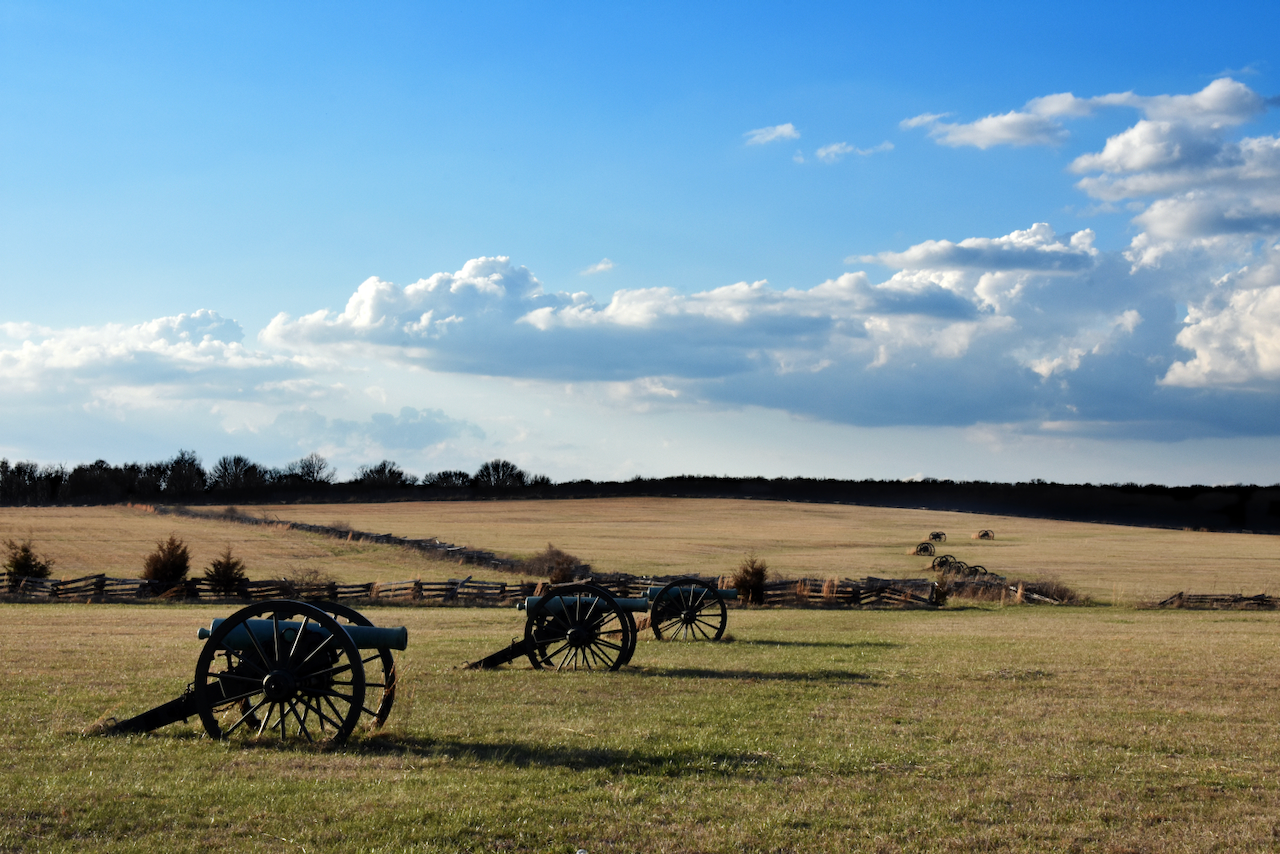
And our area of Northwest Arkansas is a perfect example of that. At the end of the war in 1865, this was a no man's land. Benton and Washington County were basically devoid of population. Bentonville had been burned to the ground. Fayetteville had been heavily damaged. McDonald County in Missouri was heavily damaged.
The courthouse burned. Basically by 1865, Southern Supporters had fled the area. Northern supporters had to move into fortified camps. This was a no man's land. It was guerrilla warfare. So when the war ended and this land was vacant, Confederate and Union veterans began to move back into this area, live side by side. They are buried together today in our area, in our cemeteries. You will find Union veterans and Confederate barons buried next to each other who came back and rebuilt this area from basically nothing.
shaped our identity.
[00:24:47] mike rusch.: When we think about the Civil War and our national identity today how has the Civil War, in your opinion, shaped our national identity of who we are as Americans today?
[00:24:59] dale phillips.: As I said, it ended the question of slavery once and for all. And another aspect of that is something called indentured servitude. Slavery was not only applied to African Americans, there were quite a few other people of other ethnic groups that were locked into something called indentured servitude, which was basically a long term contract for many years one step above slavery. And that all came to an end.
So So, the United States basically moved from, began the move from an agrarian society to the beginning of a mechanized industrial society. One of my favorite quotes is from Dr. James McPherson, who was a colleague of mine who, he, I believe he's retired now, but he was teaching at Princeton University.
And he's written a book he's written several books about the Civil War that I urge everyone to pick up and read. I believe, I'm thinking of, I think Battle Cry of Freedom is the most well known of his. But, in his, we talked earlier about reading the documents of the period. Dr. McPherson hit on a very interesting thing that is absolutely 100 percent correct.
He said that in writing, people writing about our country before the Civil War, before 1861, they always referred to the United States, are referring to a loose configuration of states, independent governments. But then he noticed something in the post 1865 writings, as people began to write about their post Civil War country, North and South, they would write the United States is a singular entity. So they had become to the realization that we were no longer a loose confederation of independent states, that we were one nation moving forward. We'd have our differences. We had a, we didn't have hurdles to today to overcome, but we were one nation and everyone realized that was in everyone's best interest.
[00:26:52] mike rusch.: Yeah, thank you. I think when we think about a transformational event, it's really interesting way to think about it that the United States are to and is huge identity implications there. And that ability to come back together is remarkable.
Let's go back to the origin, if we can. Obviously there's a ton of reasons why the conditions that turned into the Civil War occurred. But I'd love your perspective on the leading reasons for why this country had to come to a conflict that had to be dealt with this way.
[00:27:29] dale phillips.: There, as you said, multiple different reasons. The primary reason was the existence of the institution of slavery and the question of whether or not it would be allowed to expand into the other states. Abraham Lincoln, when he was inaugurated, his first inauguration, he made it clear. He understood that he had no right under the constitution as it existed at that time to interfere with slavery where it existed in the Southern states.
What he was dead set against as well as the Republican party of that time was the expansion of slavery into the federal territories that would later become the the South felt that that was an infringement on the expansion of the institution of slavery, and that was something they would not accept.
And there are those that might not agree with that opinion, and my answer to that is I urge them to please pick up a copy of the Ordinance of Secession of any of the states that seceded, or they read the Confederate Constitution, where protection of the institution of slavery is a vital component. At each of those documents and stated as the primary reason for their feeling, they needed to seceded.
The other thing that was happening that really swung the pendulum was the North was becoming much more populated. Immigration into the United States at that time was an industrialization was taking place in the North and very little of it in the agricultural South.
They knew that they would eventually become politically dominated By the more populous North as we saw with the election of Abraham Lincoln. So they knew that that slavery was probably doomed. Southern political control was coming to an end. And so they felt the only way they could protect their way of life, the Southern way of life, what they saw as their way of life.
And again, I go back to what they saw as was right for them. They felt they had no other alternative. except to break from the federal government. Whereas Lincoln would see that in a totally different point of view, that it was his responsibility under the constitution to keep the union together.
slavery vs. heritage.
[00:29:32] mike rusch.: Yeah, I think I asked that question and thankful for your clarity because and it feels like there's still conversations about it wasn't about slavery, it was about heritage. I'm curious if you have a comment about that from a framing context of those that may be listening and. And how do we think about that heritage? Maybe position.
[00:29:55] dale phillips.: Yeah. I again, I go back to my original point, read the Confederate Constitution, read the Ordinance of Secession of the states that left the Union. It's very plain. The language is right there. The difference between heritage and and the Slavery being a primary cause I my ancestors, the young woman I told you about the rest of her family fought for the Confederacy. I'm very proud of my ancestors. What I don't agree with are the cause for which they took up arms, but there's no questioning their bravery.
There's no question that they believed in what they were fighting for, that their way of life was being threatened and they felt they had to defend it. So heritage can be protected until the story told. and not have to not accept the fact that an institution like slavery was a major part of that.
And that's our battlefields we try to reflect that. We try to reflect on those in preserving those battlefields where Northern and Southern blood was shed in great amounts. That is our, that's our job is to protect that land and to tell both sides of that story and then let individuals then form their own opinions.
But that's really about the best way to deal with it..
[00:31:07] mike rusch.: So very well said. Thank you for that.
You mentioned this economic change or this economic power of a Northern industrialized way of life versus an agrarian way of life in the South. As we approach the Civil War I would love to understand maybe a little bit more if you could.
Talk about the depths of that, because I think in our world today, we're all, maybe I don't know if this is fair to say, we're almost in a digital society in so many ways. How do we here, in 2024, look back at those kinds of economic transformation shifts to try to make sense of it? How do we relate to an understanding of how powerful those forces were?
[00:31:50] dale phillips.: I get it. Tell that by every time I talk to a 10 year old. Yeah I feel like a total idiot. The technology is advancing so quickly that this new generation it what, these kids pick up right away, it takes me in some cases, I never get it right. Yeah. And that was, it's a good over, it's a good example of what they were facing.
Mass industrialization, railroads, steamboats, telegraph, things are changing so rapidly in the mid 1800s that those folks that had been born in the late 17, early 1800s, probably what was it? I'm trying to think of, there's a phrase I remember. There's something about. I think it was, I'm guessing at this, but I think Thomas Jefferson said something about once growing up in a three mile an hour world and by the end of his life, you had trains going 60, 70 miles an hour and here we today.
We live in maybe a 60, 70 mile an hour world as far as our cars are concerned. But we can get on a plane and be going 300, 400 miles an hour. Again, the rapidness of change is a difficult thing to accept sometimes and how quickly it happens. But yeah, that's that's It's a good way to look at it.
polarization.
[00:33:00] mike rusch.: That makes me feel older now.
Yeah, now me too. Like I said, anything breaks around here that's technology related, I call a 10 year old.
Alright, as we think about the Civil War specifically I'd love your perspective too on and we'll get into the state of Arkansas and then this role here, but as a broader context,
What are the lessons that we could maybe start to put some framework around about what did we learn from this period of time in our country?
[00:33:34] dale phillips.: What we're going through today with polarization, you see very much the same in the 1850s. The more level headed, the more middle ground folks, the abolitionists on the anti slavery end, the fire eaters as they were called on the secessionist end, began to take hold. And once they began to become the focal point, the two extreme ends of the spectrum, that is eventually what would lead us into conflict.
And that is something we have to work at today, even though we are very polarized, we need to find middle ground. We need to not see each other because of different opinions as anything other than Americans. And we need to find that middle ground, accept that there are different points of view and work toward A concrete future, a successful future.
We have to, we cannot let the polarized extremes take hold like they did in the 1850s, which led to that bloody conflict.
[00:34:34] mike rusch.: I think it's maybe hard for me to imagine that our country has been through these kinds of polarization events in the past obviously the fear or the Or the trajectory for the Civil War was that ultimately led to violence.
It ultimately led to tremendous pain and trauma. It led to a great deal of freedom as well too. But, I'm curious, like, when you think about where we are today as it relates to those kinds of time period. Is this the same kind of period, time period that we're in? Or culturally are we in a different place?
[00:35:08] dale phillips.: I wish we could answer that. If we could, we probably would be we'd be able to corner the market on the talking head market. We don't know. All we can do is look at what happened before us and learn from those examples and work as hard as we can to prevent it from happening again. That's really the only alternative. Where we're going to end up, we have no way of knowing.
[00:35:30] mike rusch.: Do you think it could happen again? I hear this in the national news from time to time from prominent leaders who put that out into the public space.
[00:35:38] dale phillips.: My personal belief, and this is strictly my opinion, is I don't believe we would ever, that would ever happen again.
I think we have enough examples from history of know what the ramifications are, and we are strong enough as a country and strong enough as a people to realize that would come to no good end. And that the more level headed individuals would. Would stabilize and prevent that from ever happening again.
And that, again, we go back to the very beginning of our conversation. That's one of the reasons that our battlefields and our historic sites are so important. Is to learn what the result of moving to the extreme can be. And they can serve as examples of what we want to stay away from.
[00:36:18] mike rusch.: Dale, one of the things that we've been talking about through all of these conversations is what does it look like for people to, to find an understanding of the history of Northwest Arkansas, the history of our state?
How do we have an honest dialogue about that and really understand it for the purposes of as people come and we try to build and create a sense of belonging here. That we're doing so without perpetuating historical problems, if you will. And I would love to understand from your perspective place the role of Arkansas, or place Arkansas, or even Northwest Arkansas within that context, what did it mean? What did the Civil War mean to our area, to our state? How did it form and shape, potentially the space and the place that we're in today?
[00:37:02] dale phillips.: Arkansas is very unique. Many people feel that you can draw a straight line across the country and say everybody on one side of that line felt one way and everybody on the other side felt the other way and nothing could be further from the truth.
And Arkansas is a perfect example of that. Our area of Northwest Arkansas there were very few enslaved people up here. Slavery was not a key component of the local economy. Were there enslaved people? Yes. But they were a very small minority. When you get down into the Delta area along the Mississippi or the Pine Barrens of southern Arkansas, you have an entirely different culture, an entirely different economic system than you have up here in northwest Arkansas.
When the war breaks out, as I said earlier, it was very divided. You had both sides represented. Most of the Northern supporters fled to the, fled North, joined Northern units. There were Arkansas soldiers fighting on both sides. Basically it was what it comes down to. And that's what laid waste to our area, laid waste to our area.
You had these competing forces. And what made Northwest Arkansas particularly unique is because it offered two major avenues of invasion. going north or south. The wire road, which ran from Springfield, Illinois, through what today is Rogers and down through to Fayetteville to Fort Smith. It actually ran from St. Louis all the way to Fort Smith. Basically that road. And then there was a Western road on the front. far end of Benton County called the Military Road, which ran through Maysville and eventually down to Fort Gibson in the Indian territories. But control of those two roads, either or, was a natural invasion route for armies moving north into Missouri or south into the Arkansas River Valley.
That's what brought the armies here to fight. And that's why early in the war beginning with the Battle of Wilson's Creek, and then in 1862 with the Battle of Pea Ridge, And then in December of 1862, the final conflict of the Battle of Prairie Grove would secure Northern control over this area. After 1862, December of 1862 the Confederate army was pretty much forced, organized Confederate forces were pretty much forced back into the Arkansas River Valley.
Union forces would move to other theaters, organized forces. And that's when this area basically deteriorates into guerrilla warfare. Northern and Southern supporters on both sides fighting as guerrillas, fighting as partisans. Playing out old vendettas. This became a bloody no man's land. And as I, as we talked about earlier, Bentonville burned to the ground, Fayetteville damaged.
There would be smaller actions throughout the remainder of the war until 1865, but the bulk of the heavy action would be over by December of 1862. Control of this area would remain primarily under union control for the bulk of the war.
[00:40:00] mike rusch.: Yeah I've heard some accounts of as it relates to Bentonville specifically of troops on both sides to maybe taking turns, burning structures down.
And and so I'm curious as we think about it as a region, is there a prevailing narrative of whose side was, not right or wrong, but whose side was represented, whose side was responsible, or was it just literally, as it sounds like you're describing, just chaos?
[00:40:24] dale phillips.: Yeah. You answered your question in the first part of your statement. Both sides were guilty. Some of it was vengeance. Some of it was to keep, like in the case of sawmills and gristmills, it was to keep those mills from falling into the hands of the other side. The answer to your question is both sides were guilty of destruction of private property. And as the war dragged on, that vendetta, that anger, that frustration became even greater. And so both sides would be guilty of carrying out destruction Partisan warfare. So no, no one side was killed more guilty than the other.
[00:40:58] mike rusch.: And I think maybe even to take that a step farther to, to maybe try to understand our own area a little bit.
If this was an area where we had people or residents, Literally fighting against each other or choosing sides or I don't know what the statistics were. I'm sure I can go look them up. Maybe I'll find that out. But there, there seems to be post civil war recorded in our history books uh, a of the Southern position. And you get into the late 1800s, maybe even in the early 1920s things like our community went through the removal of the Confederate statues a few years ago, but those types of Southern types of ideals or that Southern position being the one that seems to be remembered in our our landscape. I'm curious your thoughts. Is that an accurate representation or is that how the history evolved afterwards?
[00:41:50] dale phillips.: As I said, in the immediate aftermath of the war most, there was still animosity, of course, but basically things died down fairly quickly. And but in the late 1800s and early 1900s, there was an effort, it's it's called the Lost Cause.
There was an effort to rewrite history to some degree, to justify the war on both sides, north and south. In a lot of the memorialization that you see on town squares the battlefields were an entirely separate entity. Those were usually established by the veterans. Monuments placed by the veterans and they play a different role, but on many courthouse squares, North and South, you began to see that monumentation as the last of the veterans are passing on.
And the next generations come along. Um, they reflect an entirely different period in our history. The post war period, they said late 1800s, early 1900s. Part of it, the best way to explain it is, and monuments are moved. Throughout history. My personal, this is my personal opinion, is that monuments are artifacts.
They If they're on public property being maintained by tax dollars, if the people paying those tax dollars no longer feel that monument is appropriate to their beliefs, they have every right to vote to remove that property and not maintain it. Now, should it be destroyed? Absolutely not. They are part of our history.
I like very much what we've done in Bentonville. I like the establishment of the par, the new park the location of the monument, the mod, the interpretation, which tells the story of Benton County in the civil war. That is the way I believe to handle it. Don't sugar coat anything, tell the story, tell why it's important to us and definitely not destroy What is a part of our history, whether you agree with it or not, but when it comes to it being placed and maintained on public property, that is really up to the discretion of those paying the bill. Basically,
[00:43:55] mike rusch.: Maybe share a little bit more if I can about this idea of the lost cause where we're talking about.
Where do we still see that obviously maybe in monuments, but do we see that showing up in other places in our culture today
[00:44:05] dale phillips.: to some degree and again, you touched on it earlier with that idea that slavery really wasn't a major factor in the civil war. That is just unacceptable. That just is not true.
There's an attempt to, again, as I said, justify The actions of the Confederacy based on that time period. And that that's just not going to hold any water to anyone who actually is a student of history. And it has nothing to do with heritage. There is no reason not to honor our ancestors.
We may not agree with what they fought for, such as myself, but there is absolutely no derogatory action in not recognizing the valor, the conditions they faced and that they believed in what they were fighting for. And that's one of the reasons our national battlefields are so important because that is its role, not to judge, but to make sure that memory and that sacrifice is not lost by both sides.
[00:45:00] mike rusch.: I'd like to go back to the conversation you had or the comments you had about this idea of division, but also of healing. With that kind of tragedy, I'm curious, the lessons that we may be able to take from that space or the time after that could be really helpful to our community today to say Healing or unity, or maybe just the lack of active division is possible in our world today.
Are there things that we can learn from that period of time that we could maybe draw into today's world?
[00:45:31] dale phillips.: The first thing is we talked about earlier is just. Read the documents of the time period. The other thing I would suggest is, one of the things I've done is go to any local cemetery that goes back that far to the post Civil War period.
Even to the even if you go to the National Cemetery in Fayetteville, if you go to the Confederate Cemetery in Fayetteville, And just take a moment to think about those individuals. But if you go to the private cemeteries, like several we have here in Bella Vista, you will see Confederate markers, which are come to a point on top, and you'll see the rounded Union veteran markers.
Look at the fact they are buried side by side. Look at the fact and think about the fact that they came together, even after that horrible struggle, to decide What we're going to go forward, think about the effort they had to make with everything they had seen and faced and lost. They said to themselves, we're better than that.
We are going to pull together to become one nation. Are we going to forget our sacrifice? No, but we are going to pull those of us that are still here are going to pull together and make something even better. Just go to those cemeteries and look at that. There's hardly a cemetery in our area that you won't find Union and Confederate soldiers and their families resting side by side.
One of my favorite stories, I'll add this real quickly. Our oldest remaining structure here in Bella Vista dates back Just before the Civil War Jabez Hale, who was a Southern sympathizer lived there, built the structure. He fled when the Union armies approached. He left his family behind.
He took his property, including an enslaved individual, and fled to Texas. leaving his wife and children behind. When he comes back after the war he's rested, he rests today in the Pea Ridge Cemetery. When he comes back after the war, one of his daughters, I, this is my personal opinion, out of spite, marries a former union officer.
I'm sure that did not go over well at the wedding reception. But again, it shows how They came back to this area, they may not have forgiven each other, but they understood each other. And they understood that they had to make up, make outs, create something better. And that's what I would urge people to do.
Visit these places. Visit these battlefields, think about what these people went through, read their diaries, read the accounts of what the soldiers went through. Not the what generals stood on what rock at what point in what battle, but what the families went through. The families hiding in the cellars at Prairie Grove and at Elkhorn Tavern as this battle is raging around them.
Think about how it affected them and how they overcame that, and then you'll understand why this period is so important.
[00:48:24] mike rusch.: I, I don't, you, I don't even know what else to ask you. You're like, that's like it's so profound and it's so refreshing. Just, yeah, I don't really know what else to ask you.
That is so it's so refreshing. Number one, to be able to have a conversation about this time period with some clarity, with someone who's lived their whole life trying to understand and study this and watched people come to this conversation. To me listening to you and just the passion that you have for this is is really helpful in looking at our world today.
And it's hopeful, frankly. And I just want to acknowledge that cause I, I don't know that I can say anything else at this point that would draw any other lesson, any other better lesson from this conversation.
[00:49:05] dale phillips.: Yeah, just read, study, learn. And remember, and when you stand, when you go to a battlefield or you go to a place where our ancestors fought toe to toe, just think about them and think about their sacrifice and the nation that we would not be here if it had not been for their sacrifice, win or lose the nation we live in today as a result of their actions and just remember them.
Everybody, male, female, children, the whole spectrum of human existence.
[00:49:46] mike rusch.: Dale, thank you. It's so helpful. One of the questions that I've asked every guest that I've sat with is what are their fears? What are their fears for this place? Based on our conversation. So as you think about all that you've seen and all that you've done and all the experience that you have around this conversation, what are your fears?
[00:50:03] dale phillips.: That we forget. Not, we talked about the Civil War today. My great fear is that we forget All of our history and the sacrifice of those that came before us in all aspects, military, just all aspects of life.
I tend to think that in our rapid pace world, we tend to forget about those that came before us. And that would be my greatest fear is that we forget that we would not be who we are without them. One of the, one of the things I work very hard on is preservation, cemetery preservation. And that is the reason why many of our small family cemeteries that are located, our Northwest Arkansas is full of little family plots and out of the way cemeteries.
And I worry every day that they're going to be bulldozed over. Or just forgotten about and overgrown and lost. And I feel very strongly that those memories, those individuals, deserve the dignity of being remembered. Because what they built is what we live off of today.
[00:51:08] mike rusch.: One of the main themes of these conversations is this idea of wholeness, of community wholeness.
I'd love your perspective. What does wholeness look like in this kind of conversation?
[00:51:20] dale phillips.: We are one nation. We are one nation of many different pieces. And I have lived in some of the most unique places in our nation. As I said, I grew up outside New York city. I grew, I spent 10 years of my career in New Orleans, which is probably the, one of the most dynamic cities in the world.
We are a nation of multiple cultures of multiple points of view, multiple lifestyles. That's what makes us so unique. We are just a mass collection of all these different beautiful things. Every different culture has its own. high point, its own uniqueness. That one of the, one of the great pleasures of my career was building a CR overseeing the construction of a series of cultural centers in Southern Louisiana that interpreted the multiple cultures of Southern Louisiana, primarily, of course, focused on the Cajuns, but the influence of the Spanish and the African American and the French and the native American, and it just all these different cultures coming together to create this beautiful rainbow of different, lifestyles and food and music. And that is something that, that just brings a smile to my face every time I think about it that we are a nation of many different pieces and that we will build from there that what, what lays ahead of us, we don't know, but we are a nation, a unique nation of different, all these different pieces.
[00:52:48] mike rusch.: Dale, I want to say thank you for your time, for your wisdom, for your experience, for sharing a table with me. I don't I think what you've provided for me anyway, is is context and language to think about this conversation in a way that does feel whole. And so thank you for the opportunity to sit and chat with you. It's been a privilege.
[00:53:05] dale phillips.: You're more than welcome. Thank you for putting up with my blabbering on there.
[00:53:10] mike rusch.: Anytime.
episode outro.
[00:52:59] mike.: Well, as we've seen in this conversation, the Civil War is not a distant conflict. It was a war that reshaped Arkansas, divided families and communities, and left a lasting imprint on the land and the people who called it home. The battles fought here in northwest Arkansas. The decisions made in the state and the war's long aftermath continued to influence the region in ways that are often overlooked today.
A deep, deep thank you to Dale Phillips for sharing his time, and his wisdom, and his experience with us today. His decades of work in preserving and interpreting our national history gives us the opportunity, to not only understand the past, but to reflect on its consequences in our present.
The work that Dale and others are doing is invaluable, ensuring that we don't just remember history, but we actively engage with it. That we understand its complexities, its legacies, and what it means for us today. For those who want to continue exploring these conversations, I would highly recommend attending the monthly Civil War Roundtable that is currently held at the Bella Vista Historical Society on the first Thursday of every month.
I've been, and it's an incredible experience, and you would love the people and the content that they have to offer. This gathering is a space for anyone who would be interested in learning more about the extensive history of the Civil War, and not just in Arkansas, but across the nation, and for engaging in discussions about how its lessons continue to shape our world today.
It's an opportunity to hear from historians and researchers and community members dedicated to making sense of our past and interpreting its meaning for our present.
Check out their website for more details.
next episode preview.
[00:54:32] mike.: And for this week I'm going to include a bonus episode. In this episode with Dale Phillips, we talked about Bentonville's confederate statue that moved from the county square in Bentonville to a new park next to the city cemetery.
If you remember back to the summer of 2020, the statue and others like it across the country came into national focus again because of the murder of George Floyd in May of 2020.
And as a result, the way that we would navigate through this as a community was in the hands and the responsibility of Benton County judge Barry Moehring and I had a chance to sit with him in a group of people in a small room to discuss many issues around the fate of the statue. This was a group who represented all of the perspectives of the statue's controversy, both for it to stay and for it to go.
[00:55:15] mike.: And so five years later I was able to ask Judge Barry Moehring if he would be able to sit down and share his perspective of that time period. And I wanted to know if it could teach us anything about our current political moment.
[00:55:26] barry moehring: There were a lot of things that happened where the statue was just simply becoming more than a conversation piece. It was becoming a lightning rod for controversy. And it was a controversy for those who wanted it removed, and then therefore it was a controversy for those who wanted it to stay. And what I would say was really successful about that is, we are one of the only locations, perhaps the only location in the country now. Where, through a long series of events the statue was removed peacefully,
[00:56:00] mike.: well, I can't wait to share this with you. It's being released at the same time this episode is, and I wanna say thank you, as always, for being the most important part of what our community is becoming.
This is the overview, an exploration in the shaping of our place.