
the community builder with Allyson de la Houssaye.
Allyson de la Houssaye, Exec Dir of People for Bikes NW Arkansas, Board Chairwoman for the Women of Oz, Bentonville Parks & Rec Board, and Commissioner for Arkansas Natural & Cultural Resource Council. Outdoor rec & transportation is helping to build communities where all can be included.
season 1, ep. 23
listen.
episode notes.
Episode 23 is a discussion with Allyson de la Houssaye, Executive Director of People for Bikes NW Arkansas, Co-founder and Board Chairwoman for the Women of Oz, advisor on Bentonville Parks and Recreation Board, and Commissioner for the Arkansas Natural and Cultural Resource Council.
The topic of our discussion is the state of Northwest Arkansas & outdoor recreation and transportation is helping to build communities where all can be included.
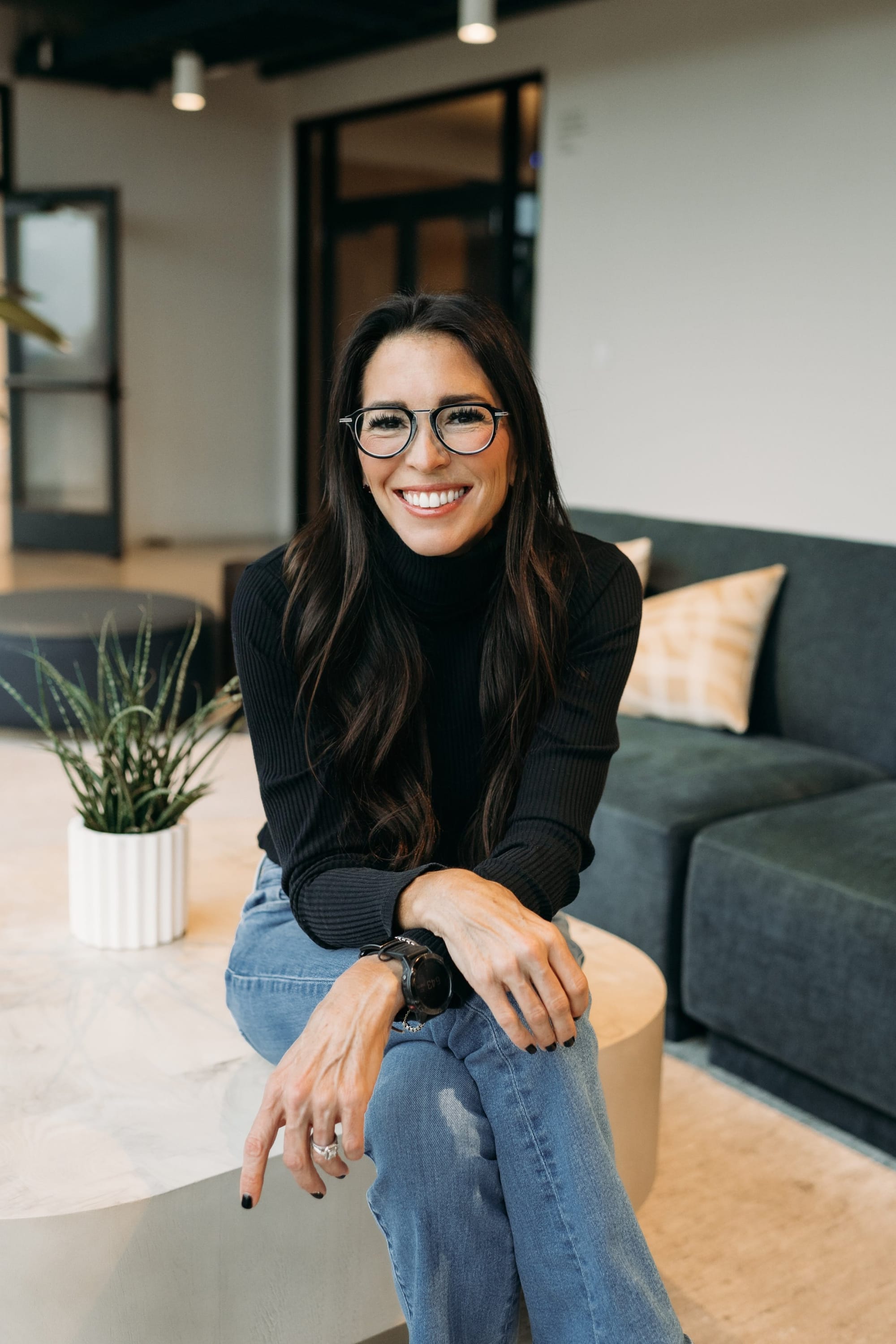
about Allyson de la Houssaye.
Allyson brings a wealth of experience and passion to her role at PeopleforBikes. A dedicated athlete, mother, and spouse, she hails from Chicago with a background as a Sports and Documentary Producer. Notably, she co-founded the Women of OZ organization, underscoring her commitment to fostering community cohesion through cycling and outdoor activities.
She continues her leadership role as Chairwoman of the Women of OZ Board. Additionally, Allyson is an advisor on Bentonville Parks and Recreation Board and serves as commissioner for the Arkansas Natural and Cultural Resource Council. Her multifaceted contributions reflect a steadfast dedication to advancing recreational opportunities and community well-being throughout the state of Arkansas.
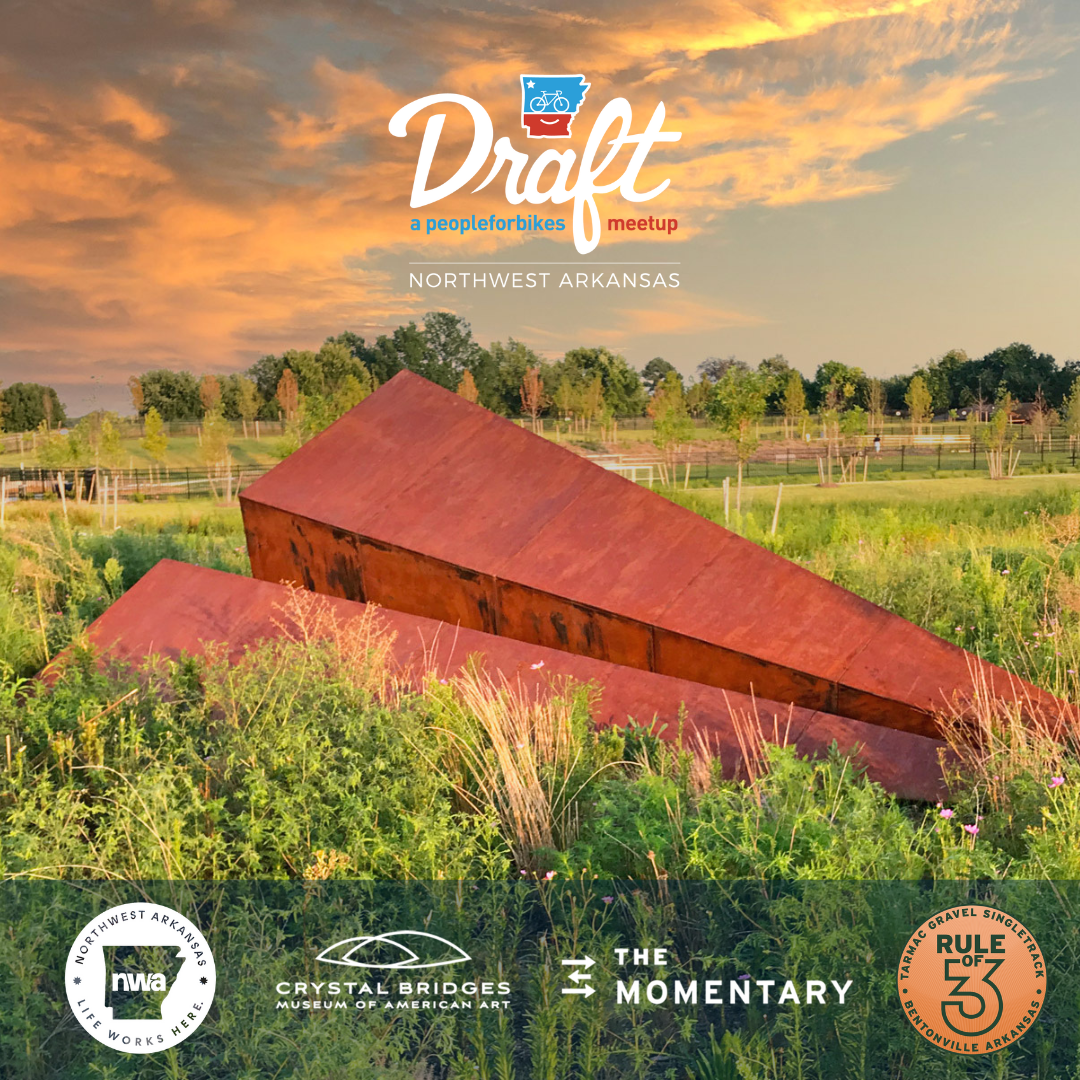
People for Bikes Draft
Thursday, May 16th, 6pm to 8pm
@ Crystal Bridges
route.
The route for this episode is…
Directions & Info for Pea Ridge Hub
music.

Sons of Otis Malone Facebook & Instagram
references.
People for Bikes Draft Event on May 16th
Commissioner for Arkansas Natural Culture & Resource Commission (http://ancrc.org/ & https://adpht.arkansas.gov/boards-and-commissio/arkansas-natural-cultural-resources-council)
episode transcription.
episode preview.
[00:00:02] allyson de la houssaye: If I have no relationship equity with you, I do not have the ability to make that connection to you. And so I think just creating a space where those relationships can develop, that's the key. And especially right now, given our national politics and local politics, you know, we're just in this state of not saying I agree to disagree and not giving people the benefit of the doubt.
You know, if you come saying, I'm going to assume best intentions, that's the way to approach it. And I hope that's how people, people are leading with their hearts and just assuming best intentions and then creating that space for connection.
episode intro.
[00:00:43] mike.: Well, you're listening to the underview, an exploration in the shaping of our place. My name is Mike Rusch and today we continue our exploration of trying to understand what is the state of Northwest Arkansas. And we're doing that by talking to the people who are helping to lead our community.
So today I have the privilege to share a table with Allyson de la Houssaye. Allyson holds many roles in our community and that includes being the Executive Director of People for Bikes for Northwest Arkansas. She's a co founder and board chairwoman for the Women of Oz, an advisor on the Bentonville Parks and Recreation Board, and she serves as a commissioner for the Arkansas Natural and Cultural Resource Center.
In short, if you can build a community through the bicycle and recreation, Allyson is probably involved or her influence is present.
As many know, our region is thriving as a destination for both cycling and outdoor recreation. Allyson is at the center of this as she helps to guide the shaping of this identity that is helping to draw so many to discover just how amazing our community is.
Fair warning. I talk way too much in this episode and that's because Allyson and a group of friends, including myself, shared an experience together last October called the Arkansas Traverse.
You'll learn more about it, but we're going to talk about that experience for two reasons. First, it's part of Allyson's story and an example how she has a tendency to see things in people long before they recognize them in themselves.
Second, it's part of the origin story for the underview. It was on the Arkansas Traverse that we started to ask deeper questions about our own community and the stories that it holds.
All right, let's roll up our sleeves and get started. We've got a lot to cover today.
main episode interview.
[00:02:59] mike.: Allyson thank you for sitting with me and yeah, sharing the table with me. I really, really appreciate it. Thanks for being here.
[00:03:06] allyson de la houssaye: Thanks, Mike. Thanks for having me. Honestly, it is such a pleasure to sit here with you and chat with you.
[00:03:12] mike.: I'm humbled that you would accept the invitation and I'm looking forward to this conversation.
[00:03:16] allyson de la houssaye: I would love to start with your story. Yeah, I mean, I think let's see. It all started on a cold day in November of 79. You know, I was born into a Navy family, and I think that was a great experience as a child because it really teaches you not only service, but an understanding of relocating and how to make new friends and connect to a new community.
And I think that's something that my whole life has been a gift in hindsight. Cause we moved every couple of years and coast to coast. And then after that, we and my family got out of the Navy, we settled in Cleveland, which was unexpected because we had come from Charleston. That sounds
[00:03:59] mike.: like the farthest away from an ocean you could find.
[00:04:01] allyson de la houssaye: It really, we, we thought we'll probably just go back to California. And then my parents said, we've decided, and it's Cleveland. And even at eight, I felt like that didn't sound right. But grew up from, grew up in Cleveland, great place to be from and then went on to play D-1 soccer for a year and then decided I really wanted more of a collegiate experience.
I was playing at a very small school and wasn't getting a ton of playing time if I'm being honest. So headed back to Ohio, graduated with the communications degree from Ohio University and then moved to the big city to Chicago to find my career.
[00:04:39] mike.: And did, did you find it?
[00:04:41] allyson de la houssaye: I sure did. I sure did. You know, I I had high hopes of moving to the big city and my parents explained that it wouldn't just be a fun experience, that there would have to be a job or an internship associated with it.
And so I spent weeks looking for an internship and I just happened to be watching TV and there was a advertisement to intern for a a talk show, a national talk show. And so I called them every day for two weeks and I think finally they got exhausted enough and broken down and they called me back and said, you can start next week, but just stop calling.
And that was good enough for me. And so I told my parents, you know, I had to sit them down. I said, I've got some news, got an internship and I'm going to work for a nationally syndicated talk show in Chicago. And my mom. Got this great smile and a gleam in her eye. And she said, is it Oprah? And I said, I'm so sorry.
It's the Jerry Springer show.
[00:05:39] mike.: It's just same but different, right?
[00:05:41] allyson de la houssaye: Right. You know, it was number one in the ratings. I will say that at the time. But yeah, so I went and on my third day, somebody quit and I got hired and that's how I started working in production.
[00:05:52] mike.: How did you make your way to Arkansas here?
[00:05:54] allyson de la houssaye: You know, it's that same old story. I met a boy and fell in love and my husband took a role here with Walmart. So I think a reason that a lot of people come to Northwest Arkansas. So we moved here in 2013. And you know, I didn't really have a large understanding of the area.
I had been for work once before. So if I'm being honest, really wasn't sure what we were getting into, but we knew this was the right role. For my husband's career. And so we came for the job with Walmart. And I think that old adage of you come kicking and screaming and you leave kicking and screaming.
I'm sure you've heard people say that about Northwest Arkansas, but it really is true. So we've been here 11 years and I absolutely can say this is home and I hope we never leave.
[00:06:41] mike.: What does Arkansas mean to you now after 11 years?
[00:06:46] allyson de la houssaye: I think that's a great question. Arkansas. For me, I have such a sense of pride when I think about the people and the landscapes and the access to outdoors and, and the innovation.
There's so many things happening. It's hard to describe Arkansas to someone. You just have to be here to experience, but it is a piece of my heart.
[00:07:14] mike.: What's it going to take to tear you away from here? Is this, you said this is home.
[00:07:18] allyson de la houssaye: I think six feet of dirt.
[00:07:21] mike.: That would make you a permanent resident then for, for the end, until the end of time, I guess.
I think one of the things that we're always trying to dig into is how people form a sense of place and a sense of belonging. And it sounds like you've, you've found that.
[00:07:35] allyson de la houssaye: Yeah. I mean, I think that you can't help but find community here. And if you haven't found it, reach out to me, I'll help you find it.
It is here. And I think the people are warm and welcome, welcoming. And I think that this is a place where you can truly create it and make it your home. If you're, if you're open to that.
[00:07:55] mike.: I love that. I'd love to understand as, as you're forming this sense of belonging, I think in the time that I've had the chance to know you it's not just for yourself.
You're, you're, it feels like you're a part of for helping to form and shape that sense of belonging really for a lot of people in this community and some of the initiatives and the work that you've been, been doing. I'd love to dig into that a little bit more and maybe I think we could start if, if you want, we can start wherever you want, but I know you've recently been appointed as a commissioner in the Arkansas Natural Cultural and Resource Commission. Tell me what that is. It sounds super exciting.
[00:08:27] allyson de la houssaye: Yeah. Thank you, Mike. That is a governor, the governor appointed board position and it is an incredible it's incredible commission for the state basically every time there is a real estate transaction, a transfer tax is collected, and that is then put into a bank account, and then we, as a commission of 11, get to help designate where that funding goes, and really the goal of it is to use it for future recreation or cultural preservation, so when you really talk about the culture, the history, The access to outdoors in the future.
This board gets to play a real part in that. And so we award 20 grants during the year to various projects. And it could be anything from restoring an old courthouse or you know, I think we did the Mosaic Templars Cultural Center. And then actually Pettit Jean state park was awarded it. And that was actually the first state park.
I don't know if you knew that.
[00:09:25] mike.: I did not.
[00:09:26] allyson de la houssaye: Yeah. And so just the, it isn't just What we could do today, but it's procuring land for future recreation use could really impact not only our Enjoyment and quality of life in the state tourism dollars, which could really impact some of the more depressed areas of the state So it's it's an awesome opportunity to have a small small small part In continuing to make this state.
So so incredible for hopefully generations to come
[00:09:57] mike.: How do you view your role in kind of making this state and it, and it's incredible resources like more available to people?
How do you, yeah, how do you view your role in that?
[00:10:08] allyson de la houssaye: I think access is key, right? If, if it's not accessible, people are not going to do it. And that was something that I saw through the work that I do through with the Women of Oz organization. And so if I can be one small cog in the wheel to reduce a barrier, then that's the part I want to play.
[00:10:29] mike.: Yeah, I think it's really important because I think in a lot of the things that you're doing, which we'll talk about in a little bit, you've played a real key role in getting people engaged in their community and outdoor recreation and a lot of different ways. And so how, why is that important? How does that. connect to this place?
[00:10:47] allyson de la houssaye: You know, I don't, are you familiar with the concept of grounding?
[00:10:51] mike.: I'm, I'm not, please.
[00:10:52] allyson de la houssaye: So it's some, it's as simple as taking your shoes off and then walking through the grass and feeling a connection to the soil and where you are.
And I think, okay. The more that we as community, as residents of the state can feel connected and feel that sense of pride, I think it's going to be better for our whole community, right? And so something as simple as going for a walk and enjoying that fresh air or going for a bike ride. I mean, you and I have both done it and I mean, endorphins are real.
Things that you can get just by taking a walk out in the fresh air, you know And so if there is a way to bring that to people who do not know this is for them or accessible to them I just think you're gonna make a better happier healthier population Right.
[00:11:43] mike.: Yeah, and I I mean you've seen this really happen in people's lives though so far
[00:11:48] allyson de la houssaye: Yeah, absolutely.
I mean, I think just through riding a bicycle and you know, it's just as fun as you remember when you're a kid, you can't help but smile, but something happens. I mean, even with my children on days when I see them riding to school versus riding a bus, they're, they're different kids and they are happy and they're excited and they want to go spend more time outside.
It just creates this flywheel where they're just better little people. So think about if we were doing that with all the people.
[00:12:17] mike.: I think that would be a beautiful thing for sure. So this is a relatively new role for you. You're in new to this area. And so what does it look like over the next year? What are you looking forward to and being able to impact or make a difference in the next year?
[00:12:32] allyson de la houssaye: You know, next month I'm going to get the honor to go to D. C. for the Davis Betts statue unveiling. And I think that's going to be a great opportunity to go and represent the state of Arkansas in our nation's capital. So I'm really looking forward to opportunities like that and bringing attention to leaders in our state that impacted the whole nation at a very critical time.
And then, you know, As far as the board work, I think just being able to help create a space for use that is going to impact people in a positive way is really my goals.
[00:13:05] mike.: A little bit closer to home. You were part of forming and founding the women of Oz. You're currently the, the chairwoman for that organization. I'd love to hear this story. Tell me, tell me more about that.
[00:13:18] allyson de la houssaye: You know, Women of Oz is something that has really blossomed into an incredible organization. I think at the time there wasn't really a thought of that's what we were trying to do. We, to say it most plainly, we just were looking for more women to ride bikes with, and we were seeing a lot of men out on the trail accessing it.
And we thought this is for women too, but maybe they just don't know where to start. And so Courtney Barrett actually, she's also one of the founders and there was a board of eight that were the founding board members, but she was just happening to lead a Tuesday ride and just showing up every Tuesday and doing this ride.
And so I got connected to that and then, you know, The ride group started out like 10 women and then it was like 20 women and then there were 40 women on this text and it was like, Holy cow, there's a light bulb here. And what about these women who don't have access to this text string? There must be more ladies that would like to learn and maybe if we just get a couple of resources, we can help teach them.
So That was kind of the starting the formation. So we called a meeting and I think there were 40 women and we were at we, we went and we had lunch provided. Someone over from the girls bike Bentonville team got lunch set up for us. And I just remember thinking, I can't believe I'm in the presence of all of these incredible leaders and women in this community.
And truly out of that meeting, we decided once a month, we're going to host a ride and anybody is welcome and you can come and we're going to give you the skills. There's three barriers here for entry that we identified is education. I don't know where to start. And this looks really scary.
Intimidation. I don't look like those other women. I'm not wearing all these pads and a full face helmet. And then equipment. I don't have a mountain bike, so am I gonna spend 80 to rent one? Am I going to be able to borrow one? I mean, that's a huge barrier in cycling. And so one by one, we set out to take them all down.
And so education, we got a grant from the Walton family foundation and we went and went to mountain bike school. We sent eight of us to mountain bike school intimidation. It is in the culture. When you show up, you're greeted with a smile and a hug. And then equipment. We went to all the bike shops in town and said, this is what we're doing on this day.
Would you please give women a free mountain bike rental? And they said yes. And so that also provide an opportunity to get women into the bike shop. So it was a win, I think on both sides. And what we saw was just an enormous reaction to this and it really created a space. And I think the thing that's really interesting and you and I have kind of talked about this before was the idea was mountain biking, but really it turned into a women's community organization.
And it is more about the connections that you're making it this. At this ride than it is about the actual ride. So it's just been really interesting in hindsight to see that's what it formed into. And, you know, now we're doing, we're averaging 150 ladies a month coming to these rides and we've had over 6, 000 women come through the program.
It's just been phenomenal. And, you know, accidentally we created the nation's largest women's mountain bike organization. It wasn't what we set out to do, but. It really was what it had turned into. And so it's, it's been an enormous experience to be a part of that.
[00:16:40] mike.: Tell me a little bit more about maybe the relationships that you've built or how that's really connected you to other people in this community through that.
[00:16:48] allyson de la houssaye: Yeah. I mean, I think the bike can be a strong tool and what we saw was it became an opportunity not just to connect as individuals, but also collaborate with local businesses and organizations. The, the opportunity it presents to create connectivity and cross collaboration has been really impactful.
[00:17:12] mike.: As you've seen women step into that space are there things that you find are maybe common with their background or their story or, or what they're trying to find in that?
[00:17:22] allyson de la houssaye: I think the most common story is I went for a ride with my husband, brother, or neighbor, or ex boyfriend, and it was awful. And we found that women in general are looking for clear cut expectations, and they want to know what they're going to get into and they want to know how it's going to work.
And they want everything to be explained before they just are told to rip down a trail and feel the bike. Right. And so what we try to do is demystify things and we try to, we really rely on the education to do that. Yeah, the story is I had a bad experience and our point of view is no problem.
Let's start over and let's make this a great experience. And then I think Part, part of it is the mountain biking, but then afterwards we have a social and that's really, that's the secret sauce. Then you get to connect and you get to celebrate this really hard thing you did and you get to meet other ladies and it's just, that's, that's really the glue.
That's the good stuff. And I will say this organization, I've seen it propel number of women to the next thing. So you say, what has been the impact of, of these relationships that have built myself and you know, for other, the women who are founding board members have all gone on to lead other organizations now.
And so it's been incredibly impactful. It just came from, Hey, we just want to go for a ride on Tuesdays to wow. Now we're really launching and investing in these women and putting them in positions where they have a seat at the table. So that's an incredible by product.
[00:19:01] mike.: Today, where it's at, where do you see the gaps in the cycling community as it relates to really engaging the incredible resources we have in Northwest Arkansas, but there's still people trying to connect. Where are those gaps today?
[00:19:14] allyson de la houssaye: I think one of the things that I hear a lot is when is the Men of Oz going to start? And my answer to that is when a man wants to stand up and start it. You know, I think there are definitely groups of people that feel like there isn't representation. And and so I think there's always opportunity.
You may want to be, you know, the one wheelers of Bentonville, or you might want to be. The you know, husbands that cycle only on Mondays, I don't know, but what I would say is that if you don't feel like you're represented, stand up and be that representation. And I think Women of Oz and there are a lot of other entities in town that want to help support that.
If you're, if you're willing to stand up in your community and lead the charge, we're there to support you.
[00:19:59] mike.: Yeah. I love that.
[00:20:00] allyson de la houssaye: Yeah. I was passionate about getting women on a bike. That was my passion. And yeah, I would just encourage anyone to go follow your passion.
[00:20:07] mike.: Do you have a favorite story? Maybe that's come out of those communities.
[00:20:11] allyson de la houssaye: You know, I think I'll never forget. This is about two years ago with Women of Oz and I was still the Executive Director at the time and I was out for a ride, but I was, On a phone call, maybe with a kid's school or something that I couldn't get off the phone call.
And I was out biking with my dog, Oscar. And I saw this huge group of women come by and they were all wearing women of Oz gear. And so I kind of stopped and waved at them, but I was trying to do two things at once. And so then I said, are you guys mountain biking? They're like, yeah, we sure are. And then, and I was kind of waiting for them to be like, Oh, you're Allyson.
And there was no recognition. None of them knew me and I didn't know any of them and I started to feel like, Oh my pride was a little hurt. And then one in the back said, you are welcome to jump in and ride with us. And that,
[00:21:02] mike.: it's like full circle.
[00:21:03] allyson de la houssaye: That was the moment. And I was like, wow. So these women don't know that I'm a part of this organization yet they just shared and showed the culture and kindness. That we wanted the organization to be built on, like it's working. And so I'll never forget that moment. It was, it was truly spectacular. What we did wasn't revolutionary, we just demystified the whole thing.
And so I think it is that simple. Who's not being included? What are the barriers to include them? Take those barriers away. That's it.
[00:21:38] mike.: Yeah, that's, but it's not easy, right? I mean, there has to be someone who's willing to kind of put their foot, you know, down first and what I see is that you've done that, and it's changed our community in a really beautiful way. Yeah. So how, how, what is that first step? What is how to dig into that? Tell me, like, where does that motivation come from?
[00:22:00] allyson de la houssaye: Yeah. I mean, I think you said it and I actually had pulled a quote from an interview of yours, Mike.
[00:22:06] mike.: Oh no, this is not, you can't turn this around on me. This is not,
[00:22:10] allyson de la houssaye: it says the people that set the table and make the invitation are the people that change things.
Right. And I think that's an idea that I love because I do think it's so true. And I think. You know, my background is journalism and I, I think people are neat and interesting and I want to know their story and there's so much curiosity for me to say what makes you tick? What is the thing that makes you do that thing?
That's so extraordinary. And so I think with Women of Oz or any other organization, it's about how are we bringing people together? How are we convening them and giving them the space and the opportunity to make those connections because really I don't know if you know Joe Saumweber. He is a long time Bentonville resident and started RevUnit and he quoted one time that "our relationships can only go to the depth of our experiences together."
[00:23:06] mike.: That's beautiful.
[00:23:07] allyson de la houssaye: Yes. And it's so true. If I have no relationship equity with you, I do not have the ability to make that connection to you. And so I think just creating a space where those relationships can develop, that's the key. And especially right now, given our national politics and local politics, you know, we're just in this state of not saying I agree to disagree and not giving people the benefit of the doubt.
You know, if you come saying, I'm going to assume best intentions, that's the way to approach it. And I hope that's how people. People are leading with their hearts and just assuming best intentions and then creating that space for connection.
[00:23:50] mike.: And it sounds like too, from women of Oz, I mean, you've, you've, you've got all kinds of people that have come into that space.
You don't necessarily, there's no requirement to think a certain way or believe a certain way or hold certain values meaning for themselves personally, but you've invited people into a space where they can start to your point, give people the benefit of the doubt as a starting point and creating these kinds of inclusive communities from a common starting point and using the bike to do that.
And so I guess I'd love to understand even more your perspective around. What is that mechanism or what is that ask to people to step into a place that may be unknown? There may be some fear, trepidation kind of, you know, related to that. But how do you, how do you encourage people to step into that place and to, and maybe to provide a little bit of trust or overcome those fears?
[00:24:38] allyson de la houssaye: Yeah. I mean, I think when it's a space such as mountain biking, you're already feeling nervous and anxious and you don't want to, you know, you kind of feel a little exposed. So you're in a very vulnerable spot and you're there with eight other women. You know, all the groups get broken up into groups of eight to 10.
So you're with eight other women, and I think that vulnerability together creates a little bit of trust and then afterwards, Oh, you're, you're a Democrat. You're not so bad. Oh, you're a Republican. You're not so bad. You know what I mean? I think going through something together that can be scary and intimidating and triumphing. Will then create an opportunity for connection. And it's Oh, your personal ideologies or views aren't the thing. That's not the main focus. That's not how we know each other. We know each other because we both love our community. We want to cycle together, you know?
[00:25:32] mike.: And through that shared experience, what do you see happening and how do you see that changing people or changing our community?
[00:25:40] allyson de la houssaye: You know, during the pandemic, when we weren't riding together and we were riding separately, I really saw the impact and I saw it over social media and I saw it within our own cycling community, people not connecting with each other anymore. And kind of, I feel like that not having that time together was creating a little bit of I don't want to say distrust, but people just weren't connected.
And it, it was showing that wow, we really need to get back to the thing that can unify us. So whether it's sports or reading or whatever you're into, I think having that FaceTime and those connections is what really makes the impact. Cause it keeps that relationship strong. You need that FaceTime and you remember Hey Mike, I'm a person too.
And I'm a good person. I've got good intentions. And I, I think that that's just. We need those reminders that this isn't a dynasty plot and I'm not out to get you, you know,
[00:26:42] mike.: that's maybe hearkening back to your national television days. But now yeah, I, I, I see, obviously I'm not Part of the Women of Oz, but I watch the impact that it's had in this community and the way people have used that as a way to bring that, that community aspect and, and place and belonging together.
And it's, yeah, it's really, it's really beautiful. Please continue to do what you do in making that come alive. And maybe if someone hasn't come before, and maybe this is the first time that they've heard about it, what, what do you want them to do? Or what would you ask them to do?
[00:27:14] allyson de la houssaye: You can get a little more information on Women of Oz on our website or womenofoznwa. com Instagram. And I would say please just come. Just give it a try. Even if you, if you're not sure if you're a mountain biker, this is the way to experience it. And you will, With a warm reception, we'll help you get a bike set up, you know, everything has hopefully been thought of for you so you can feel as comfortable as possible.
And I want you to come experience it. I want you to connect with other women in the community and I have a feeling that you'll love it just as much as I do.
[00:27:47] mike.: Yeah, I believe that for sure. As, as we talk about connecting to our community I had, this is my experience, but I had a little chance to take a little bike ride across the state of Arkansas last fall with some really incredible people.
And you, the initiative to yeah, to follow along with that journey. This thing called the Arkansas Traverse and you're in the process of starting to put together and to share that story. And I'm fine to talk a little bit more about the Arkansas Traverse. This is, I don't want it to be about me, but I'm curious As number one, what, what are you doing?
Why are you doing it? And yeah, when can we see this story?
[00:28:29] allyson de la houssaye: So we talked a little bit earlier about my background in television production. So I've worked for National Geographic, A& E, History Channel, Storm Stories. And so I love the idea of being able to curate and connect experiences and connect people, right?
And I've started, I have a production company called AWOL Productions, and that's what it is. It's really about these connections and convening in our community. And When you, Mike shared that you were going to ride 500 miles over 500, was it four 89?
[00:29:06] mike.: I think it was 5, 000. I'm just kidding. Yeah. It was four hundred and seventy two miles across the state.
[00:29:12] allyson de la houssaye: That's incredible, but I think what's more interesting than that is, and that is an incredible feat on in itself, the way that this story and this ride came together, which was, Hey, we're, we're cycling and we're taking our dollars and we're going to other States and we're doing these other rides, but what about the idea of looking in our own backyard?
What can we see in experience on this ride? And I think that is like. That's the interesting thing, right? You weren't just going to knock out all these miles, but you were going to understand the people and the history and the experiences through the state because, you know, Northwest Arkansas is very different than the Delta and the experiences are, are tremendously unequal.
And That is interesting. That is an interesting story.
[00:30:07] mike.: You know, it is interesting cause I think you probably saw the story before we did in many ways. I think I remember when you said, Hey, what would it look like to have a film crew tag along? I was like, that doesn't sound like a very interesting story.
Just, you know, a bunch of guys riding across the state to accomplish something, you know, pound our chest or something, you know, doing what? Men try to accomplish things, which is, you know, at the end of the day, a whole nother conversation that we need to have about our culture. But I, I think this yeah, I think this story that kind of unfolded in many ways unfolded, I think, because that there were people following along that you saw a story that allowed us to engage in maybe a bigger story that was available as well, too.
Yeah, I'd love to know what you thought about all of that. I mean, I experienced it, a group of us experienced it, and you've had the chance to kind of follow along and listen to all of our audio and probably our, our pictures, and you've experienced it in a different way. And I'd love to know what do you take away from that? Or where are you in the process of trying to understand what all that was?
[00:31:15] allyson de la houssaye: So I do just want to be upfront about the fact that all of you signed releases.
[00:31:20] mike.: Our whole lives are entrusted into your hands. So I, I say this with great support and admiration, of course.
[00:31:28] allyson de la houssaye: No, I mean, I think that I knew there was going to be a spectacular story and the journey in itself, but had no way to predict who and what you would meet along the ride. I mean, I think through some of the research we've done in the office of outdoor rec, Mike Sprague was tremendous help putting this together and helping with some route suggestions.
And just helping us connect us with a few people along the way for those experiences. But one of the members of the group. didn't even know his family was from Arkansas and then at the Arkansas Post It was revealed to him that his family had been the Commandant there in the late 1700s and I think the weight of that when you think through what does that mean?
You know what was happening here in the late 1700s and how people You didn't never think you had a connection to any, any of those stories or experiences. And you know, and I think you guys drove around road around the corner and there was his family's cemetery.
[00:32:29] mike.: Yeah, that is true. We were actually talking about this the other day.
[00:32:31] allyson de la houssaye: So there is no way to have predicted that or known that until you went on the journey. I do want to play a clip. For you,
[00:32:41] mike.: you're going to play a clip for me?
[00:32:42] allyson de la houssaye: Yes. It's actually a quote of you, it's very meta
[00:32:46] mike.: I listened to myself talk too much. I feel like, I feel like I'm in trouble now. I should, I need to have you sign a release real quick. I, I cussed a lot on this trip though, too.
[00:32:58] allyson de la houssaye: Okay. Let's start.
arkansas traverse quote.
[00:32:59] mike.: But you're entrusted with these stories in this community, the stories that they hold, the stories that they share, and all they ever said is, tell our story, tell the people to come, tell the people to come visit, come to tell them they're welcome, just over and over again. And yeah, I feel like we were entrusted with something probably more profound than I could have ever anticipated, not just what we hold in our eyes or the vision of the land or the experiences or how our bodies felt, but we were entrusted maybe with some people's greatest assets, some of their greatest possessions.
And that's the story of who they are.
[00:33:41] mike.: Number one, my voice had probably inhaled four pounds of dust at that point, but no, you must have edited that together to make it sound really good.
[00:33:52] allyson de la houssaye: I don't think so, Mike.
I think that is just some divine wisdom from a guy who had just spent five days taking in all of these experiences on a bicycle.
[00:34:03] mike.: Yeah, I, I, I remember, I remember it. It's, it's, it even comes back to me as I listen to that, the memories that come back through those stories. And I think, I think that's part of the rooting of these conversations is we have these stories that, that matter, matter a lot. And many times we don't invest the time to understand each other's story in a way that, that I think gives us permission to be changed by them.
I think all we do when we come back from experiences and you said this earlier, the level of our relationship really can only go so far as the level of our shared experiences.
[00:34:40] mike.: And so when you have an opportunity to step into someone's story like that, there is a an experience that, that moves you in a way that you can't predict, but if you're open to it, if you're just open to letting those experiences change you you walk out on the other side in a, in a way that's, and I think this is the root of our conversation, you come out of those on the other side of really looking Hey, this, This is moving me closer to this idea or this pursuit of what wholeness looks like.
And it's bound in other people, right? It's bound in those relationships. It's bound in those experiences. And but this is not about me. This is the story of what you're doing in our community as well, too, and I think you, you saw that long before I ever did. And so I feel like in many ways your observation or your encouragement of us going and doing this and recording those kinds of things, that would have been lost without your involvement in those. And we wouldn't have an opportunity to reflect in the way that we did.
[00:35:35] allyson de la houssaye: And I think one of the things that was unexpected, and you and I had talked about this before and after was there was a sense of maybe. I don't know, fear feels strong, but there was a concern for safety in some of these communities and a sense of, Hey, we need to be mindful that we're coming in in spandex on a bike.
Like we clearly do not fit on some of these rural roads. And I think the most surprising thing was the warm reception rather than disgust or hate or fear. You were received. And received with open arms, you know, repeatedly in different communities, way different than Northwest Arkansas. And I thought that was incredible to see this extension of humanity and warmth.
[00:36:30] mike.: Yeah. I mean, even thinking about it now, I would not have ever expected that. I think we carry with us sometimes these ideas of who we are and what we may be, or sometimes even what we don't, what we don't have or what we are, what we are not that sometimes can direct how we enter into situations and I think we have to let those down as much as we can because it just be open to the fact that I'm here. I'm human. I'm listening. I try to put aside all my biases and I try to put put aside all the whatever baggage I may bring with me. Just to be open, to be able to receive those experiences with people.
And we were, we were, I feel like sometimes we were treated like Kings and Queens unnecessarily. But it's yeah, we were treated with, with just openness and it's such a lesson because you see that. And you're like, gosh, I wish I could do that more.
I wish I could, I could welcome people in the way that I have been welcomed. And so it's an example that, yeah, that you walk away with it does, it does, it changes the way you view creating communities or building communities or bringing people together and what that aspect of welcome looks like. So yeah.
[00:37:40] allyson de la houssaye: Yeah. And I think it's worth to just talking a little bit about. What was on the journey? I mean, it wasn't sometimes it was gravel and sometimes it was road and sometimes it was very densely populated and sometimes you're on a levee in the Delta. But I also think the way that you went up through Petit Jean and got to see the beauty in the parks up through there and then come down into Russellville and then, you know, at various times you were on, I think you guys were on two different parts of the the Trail of Tears, which is a huge impact in our state's history.
And then went to the Arkansas Trading Post, enormous historic site for the state of Arkansas. And then down into the Japanese internment camp, which I don't know, a lot of people don't know George Takei was there as a child. Just, we're talking about the weight of some pretty big historic things that at certain times were quite ugly for the state of Arkansas.
But here. You are as a group of people wanting to learn. And I think the reception to that, that gives me hope.
[00:38:48] mike.: Yeah. It gives me hope as well, too. I mean, we're so lucky to live in Northwest Arkansas. It's an incredible place. But, and, and, you know, this is my, this is my soapbox is that we have to be able to connect to our communities in an honest and authentic way.
And so I think this traverse was really the idea of how do we connect to our community and to our state in an honest and authentic way. And if we're going to do that, we have to be real about the beauty that we have, but we have to be real about its stories as well too. And you know, I'm, I, I could talk forever about how a bike can be used to connect us to our communities and traveling those roads.
Yeah, we get to experience the beauty of the Ozark mountains, but we also, yeah, we, we rode, you know, upon the Trail of Tears and you have nations that have been removed by those trails. You And we were as, as a, as a white male, I sit in a place that's much different in our culture historically than a lot of people. And so I don't have to think about in this world, in many ways, the realities of the stories that formed and shaped these communities. And And I'm less if I don't do those things. And riding on places like the Trail of Tears, or riding through cotton fields that are in bloom, or stopping at Japanese internment camps these are the stories that we have to connect with, that we have to reconcile.
And I would go beyond that and say, we don't have to just, you know, remember them, but these are stories that still need to be repaired. These are still stories that, you know, are open and wounds that are still experienced in our, in our world today. And so I think part of these conversations is asking questions about our stories, our shared stories.
This is not my story. I'm a part of these stories. Now I ride these roads, we ride these roads. And and if we want to be authentic and we want to find this idea of wholeness, then we have to be honest about it. And if we can be honest about it and we can move and we can move beyond that and we're willing to ask the question that may cost us something of what it looks like to repair these stories.
I think that's where we as a community have the opportunity to, to, you know, to move beyond our differences and be inclusive and include people and give people the opportunities. And that means that I have to start with myself to understand where those, Yeah. Where my biases are in many ways. And yeah, again, I, you're going to get me talking to, this is not the purpose of this.
You're going to get me talking about my experience. I, you, you've already listened to me speak for hours on, yeah, on a camera about these things. But yeah. Yeah. I think the, I think the work that you talk about is, is now perpetuates like, how do we do that in our community today? How are other people doing that?
How do I open myself? How do we open ourselves to understanding how that looks? Maybe it's not on a bike. Maybe it's with a musical instrument. Maybe it's to your point, a one wheel. Maybe it's, maybe it's, I'm just walking and I love this community. Like how are other people using What they have and what they can to connect to our community.
And frankly, where do they need help or assistance? Maybe not to do that in an honest and authentic way .
[00:42:01] allyson de la houssaye: What, you know, something on that note, I think that these, you know, when we looked at Rohwer or we looked at the cotton fields, it felt these aren't issues that are, applying to this group.
But then when we just peeled back little, absolutely these things are still ever present. I mean, you're a former Marine, you served for equality for our country. And here we are at the site where many of these young men were shipped off and fought for our country and were treated terrible by our country.
And think it's important to share those stories. And then, you know, I think there were two men in the group who have African American children. And what's the impact of that, you know, reconciling looking at these cotton fields and knowing would have been a much different experience for your children.
I think it's just great to remind ourselves of where we came from so that we can do better moving forward. And so that's really what the Traverse is. It's how do we take the story and share it? And so the goal is to make it into a short doc and get it in front of audiences. And, and maybe it'll just inspire you to learn a little more about the state or set the table and get some people together to the table to create those connections.
I don't know or it's going to be the world's most expensive home video.
[00:43:26] mike.: Yeah, see now and I, I'll cut this out, but yeah, now mentally I'm back in that place of riding through our communities and those spaces. But what
[00:43:34] allyson de la houssaye: Do you want to listen to one more quote?
[00:43:36] mike.: I don't know. You're going to break me here. This is not okay.
[00:43:40] allyson de la houssaye: You know, one thing I will, I think this conversation and the conversation, conversations you're having is an opportunity.
And I think it's important to remember it's not about being successful, but it's being valuable and everyone has an opportunity to be valuable to your community. And if you treat your community like a bank account. With the intention of always keeping it in the black, right? You've got to make deposits.
You can't just make withdrawals. And so I would charge everyone listening, how can you make some deposits in your community? And it could be something very small, spending time with someone. It could be helping out a neighbor. It could be you know, doing some community service or volunteering to help plant some trees, whatever, find what, How do you know what your passion is and do that and share that?
[00:44:37] mike.: Yeah, I love it.
[00:44:38] allyson de la houssaye: Okay. I wanted, Oh, you had a quote
[00:44:40] mike.: I feel like I'm getting set up here.
[00:44:44] allyson de la houssaye: Okay, I'm going to play this other clip.
arkansas traverse quote.
[00:44:45] mike.: Yeah, you can't divorce this journey from what made it possible. And power of the bicycle. To move people, not just from one place to another, but from one state to another. Not like the state of Arkansas or the state of Louisiana. But to move people from one state of mind or state of being or state of understanding to a state that is different and hopefully better.
I just don't know what else can do that. I think the point that I can't deny is that the bike really does have the opportunity and the chance to, to change who we are, to change our community to change why we do what we do and the way that we look at the world. Because it causes us to slow down. It causes us to see what we didn't. It causes us to. To meet people we could not have, to go to places we wouldn't.
And without the, this basic idea, this basic machine of a bicycle, the community would not have existed. The table would have never been set to invite people out of their comfort zone, out of their known spaces into something greater.
It just wouldn't have happened.
[00:46:07] mike.: Amen.
[00:46:08] allyson de la houssaye: Wise, wise man. No. With a bunch of saddle sores.
[00:46:11] mike.: With a bunch. Yeah. I didn't sit for many. Yeah.
Yeah. I think those are the spaces in our community that I'm anxious for people to engage in. And if they can use the bicycle to do that, I'm, I would love to encourage that. And that's why I love things like what you're doing when you think about state lands and preserving those spaces and restoring and taking those stories and making sure that they are remembered and that they're held.
Or inviting people women into a community like Women of Oz that can be connected to each other and be connected to this place is yeah, it's just, it's incredibly powerful. It's, it's what builds and forms and shapes the community in the most beautiful of ways. And so
[00:46:56] allyson de la houssaye: I think it's you know, it's a great point to say we, we know the history. How do we create a better future? And I think especially with the traverse and then the work that I'm doing at the state level is outdoor rec and cycling, can these be answers to those questions? Can the bike play a role in that?
Or the outdoor recreation, can that help uplift the Delta and these other areas of the state that are a little more economically depressed? I think those are great questions and I, it's something that I want the audiences of the Traverse to be thinking about, not only the history, but what is the future for us as Arkansans?
[00:47:36] mike.: Yeah, I guess to that question is, and I, I think you believe this, but I'd love to hear a little bit more can, can it be solutions to some of these issues in our, in our, in our world today?
[00:47:48] allyson de la houssaye: Yeah, I think that I think that anytime you build an in route into a community, there's an opportunity for people to be more connected.
And so I hope, you know, the natural state initiative is working on four big projects and two of them are connectors across the state. Gravel connectors. So east to west and north to south that has an enormous opportunity to connect our communities. Just think about not just physically, but I also think from a relationship development there, there's a huge ability for that.
[00:48:22] mike.: What do you, what do you think the key is as we engage in communities maybe that we've not been connected to before?
[00:48:28] allyson de la houssaye: Yeah, I think the state sees themselves as, four or five different geographic areas I think, and, and, you know, Arkansas is unique in the fact that I think we have four different types of land and you know, we have bluffs and we have forests and we have the delta.
We're, we're really diverse in our geographic layout and I think somebody from the delta is definitely not identifying with somebody from Springdale's. And so maybe these pathways and connectors have an opportunity to bring us back together. I think there needs to be a shared pride and shared goal.
And I do believe that Outdoor Rec could rally us together behind something that could be really positive for our state. So I'd love to see that continue.
[00:49:15] mike.: Yeah. What do you hope it looks like five years from now?
[00:49:19] allyson de la houssaye: Whew, that's a big question. I mean, of course I'd love to see continued park development at the state level.
I think that Shea Lewis has done a tremendous job and Catherine over at the Office of Outdoor Rec of, of starting and maintaining these parks. And I think there's opportunity to continue to pour into the natural beauty of Northwest Arkansas. And so I hope that. Outdoor rec plays a big part in that and that we continue to lean into that And not just locally.
I mean, I think from a tourism perspective we have Probably the most beautiful state in the nation.
[00:49:57] mike.: You're currently the Executive Director for Northwest Arkansas for People for Bikes. This is a really incredible organization. I'd love to have you share a little bit about what is People for Bikes, and what is your role, and what is it doing here in Northwest Arkansas?
[00:50:13] allyson de la houssaye: So People for Bikes is a national organization. Our role in the cycling community is kind of two fold. One side is we are the number one advocacy group for cycling. And so it's about policy, it's about participation, it's about infrastructure. And we do this on a national scale.
And then the other side is we represent the trade association. So 320 cycling brands pay us dues and we rep, represent them in DC. We try to get better tariff reductions and things like that to help them succeed as business owners in North America. But the mission of the organization is to make North America the safest, Most wonderful place to ride a bike in and so the work that we're doing here in Northwest Arkansas, we have a satellite office.
We have one in DC and one in NWA. And we really act as a connector and convener, and we're trying to build the cycling community and help make connections within the community, but also to Northwest Arkansas. So it's really unique. We're getting to help build the culture, which I think is really important.
Is a unbelievable opportunity, kind of a dream job to be able to do that
And my role is really about sharing and Leading, connecting the cycling industry to Northwest Arkansas. And one of the things that I did last week was took a delegates from here to go explore other campuses and see when we talk about on campus transportation and transportation to and from campuses, who's really the leader in the nation?
So we went to Google and we went to Bill and Melinda Gates. We went to Nike just incredible access to these amazing places that are, they're the leaders. And I have to say, it makes me look around and think, but they're not Arkansas. And I think that just the natural beauty that we already possess here, coupled with the talents of the leaders and community members, we have, we have an opportunity to build some things, but continue to build something special.
I truly believe that Northwest Arkansas is going to become the learning lab for how private and public partnerships can work to build a cycling network to build to pour into your community's quality of life. I mean, If you look at Parks and Rec, I think right now they have 200 million dollars worth of capital projects happening, right? That is enormous, but it is between private donors, the city, the public. Everyone's coming together to make these projects happen.
And I don't think it's happening like that in other communities. And so I really think it's a testament to how do you bring all these players to the table together and create something phenomenal. And I think what we're witnessing here right now is going to become the gold standard. One of our, one of the organizations we work with is a little company called Walmart.
I don't know if you've ever heard of them. I've,
[00:53:11] mike.: I've, I think I, I think I know where their office is.
[00:53:14] allyson de la houssaye: But, you know, Walmart and Alice Walton School of Medicine and the whole health office. Institute. These are all employers in our region that are making a big impact. And so we have the opportunity to come along and help support some of the initiatives they're working on.
Kourtney Barrett started Velocity NWA and she's building out Walmart's cycling program with the goal of getting 10 percent alternate commuting by the time they opened a new campus. So 10 percent of their employees commuting. Walking, scootering, biking, and so we get to come alongside and help support that.
And we're doing it with this Ride to Work Wednesday campaign that Walmart And so the whole idea is on Wednesdays, we wear a neon and we ride our bikes in. And it's that simple. And so People for Bikes is hosting pop ups. So you can go check out our website and then see when our next one will be. But we encourage the community to come together, have a cup of coffee on your way into work, and maybe make a new friend.
And it's really that simple. So just getting to work with the talented stakeholders and leaders in this community to help create safer pathways for cycling and build up the programming, it's, it's really such a gift.
[00:54:23] mike.: And you're, when you say outdoor rec, sometimes we think this is parks, right?
Or this is like, all we do is recreation, but the work that you're doing is, about how people live in their communities. It's about how they move through their communities. It's about how they do that safely and conversations about active transportation as well too. So this is, this is not just something that's kind of happening in one area.
This is about building and forming and shaping a community around what it looks like to use the bicycle to move through it. Yes. Thank you very much. Thanks.
[00:54:53] allyson de la houssaye: Yes. And also culture. Culture is key. You know
[00:54:57] mike.: how so explain that. how does one influence the other?
[00:55:00] allyson de la houssaye: I think if I work in an environment where if I come in sweaty, it's frowned upon, I'm probably not very likely to ride my bike to work.
Right. So you have to have a culture that can be accepting of it. And then I think you want to be motivated by something. You want to be a part of something. And so when you build a culture that is that is something that you want to be a part of, cause you believe in it.
That makes such a difference than me just being like, Hey Mike, you should ride your bike tomorrow. But if you feel motivated or moved by the idea and you're bought in, you you're much more likely to ride your bike tomorrow. Yeah.
[00:55:34] mike.: In your life though, the bicycle is kind of built a whole lot of your relationships. It's your vocation. It's how you move through a city. Part of your identity, I think if that's fair to say. I'd love to hear you talk about what the bike has meant for you personally as a part of who you are and who your family is.
[00:55:54] allyson de la houssaye: Yeah, I mean, I think the bike really can be a tool and it's maybe a forgotten tool because we, you know, it's been around, what, a hundred and some years, but it still can be such a powerful tool. And for me, it was an unexpected tool. I mean, I always loved riding a bike as a kid, but then you get to high school and you kind of drop that bike for a set of wheels and now you've got real freedom.
But I, I think when I moved to Northwest Arkansas, I had recently left my career and become a stay at home mom. I had no friends or family here and the bike was the thing that connected me and made me feel part of this community and it just was very unexpected. I was just trying to find a way to get out and exercise and, but I think it can be such a window.
into all these other things. It's a catalyst. And it was that for me, it helped me create a sense of community. And then really a sense of validity and, and worth because I felt like I was sharing something that opened a lot of doors for me, but then could be a conduit for other people as well.
So yeah, I think, I think the bike can be a powerful tool even if you aren't necessarily planning for it to be. I certainly didn't know I'd end up here. So
[00:57:16] mike.: I love that.
What are the areas we still need to work on? What are the, what are the challenges that we still face that we need to pay close attention to?
[00:57:24] allyson de la houssaye: Yeah. I mean, I think we have at the city level, we have an exploding population and I think we need to be mindful not just to fully sprint in the direction of new, but also How are we meeting the past with the future?
You know, I want to honor the history of Arkansas and Bentonville specifically and make sure that we're making everyone feel a part and be included in the changes that are happening rather than the changes happening to them. I think that's really important for us as a community. We're really at a point where things are shifting and I There's a lot of new people moving into the area and I want to welcome them, but I also want to make sure that we are honoring those that have been here that, you know, for 30 to 50 years or generations.
And I want everyone to feel part of the conversation. So I think the growth is going to be a huge challenge for us. And all those things that come along with it certainly are going to be a hurdle for our community and, and how we react and work together out of it is going to be really important.
[00:58:33] mike.: What do you want this community to focus on as it relates to what growth looks like going forward? What are the things that you think in your mind, Hey, if we could really get our head around this, or we could really find solutions to these kinds of problems, we're going to be okay. We're going to make it.
[00:58:48] allyson de la houssaye: Yeah, I mean, with, with the explosion and population and the growth, we're going to, we're going to encounter, I think we already are, I mean, we're having housing issues, we're having transportation issues. But I think that's going to take a collective approach from the whole community to help solve this.
And I would encourage folks to think a little bit outside the box. We might have to get creative with some solutions. And I, you know, I'd really like to encourage our local leaders to come to the table as a local leader and not someone who has a a political affiliation or maybe an affiliation to a private organization that you're a member of, but remember that you're there to serve the community and listen to the community.
And I just want to see our leaders working together. And coming to the table in a way where we're asking what's best for our community and not what's best for me. And so I would encourage. One, anybody in the community, make sure you're exercising your right to vote. That's very important because the decisions that are being made now are going to have a legacy for your children in this community.
Exercise your voice and vote. Put the people you want to see in the right positions and then let's have them come and represent our community.
[01:00:12] mike.: One of the questions that I try to ask everybody as we think about Northwest Arkansas is, what are your fears for this place?
[01:00:20] allyson de la houssaye: My fears, I have great fears. Having been here 11 years and seen transitions I hope that the heart, And the soul of Northwest Arkansas can continue to be that.
You know, I think when you walk down the street, people say, hi, howdy, Hey y'all. Right. And you get this warm greeting. It really does feel like a small town. And I hope that we can still preserve that. You know, people, I say you're welcome to come, but when you get here, here's the rules.
[01:00:54] mike.: You may have to publish these, but go right.
[01:00:58] allyson de la houssaye: And you take care of your neighbors. And I hope that with our growth, we can still maintain that sense of what it means to live in Northwest Arkansas and be a part of this community. So I hope we can maintain that. That's my biggest fear is I don't want this to turn into any other version of any other city.
I want it to always be Bentonville. You know, people say Bentonville is going to be the next Austin. I want Bentonville to be the next Bentonville. I just want it to be a better version of Bentonville. That doesn't mean forgetting where Bentonville came from.
[01:01:30] mike.: Yeah. I'm biased and I would agree with that.
One of the terms that you've heard me talk about that we're really trying to get to in these conversations is this idea of wholeness, of what, what does wholeness look like for ourselves, but also for our community as well too. And so I'd love your perspective when I say that word wholeness, what does that mean to you?
[01:01:51] allyson de la houssaye: Yeah. I mean, I think wholeness is. When everybody can step up and say, I feel valued and a part of this. And I hope that's what we're able to do. I hope that people feel not only included, but pride. And so I think it's a sense of whole from the community.
[01:02:13] mike.: Well, Allyson, I'm incredibly thankful that you would sit and share a table with me and I'm thankful for the work that you're doing. It's incredibly relevant to where we are as a community and where we're going. And I'm glad that you're in the trenches helping to, yeah, chart our course forward. And so thank you for what you're doing.
Thank you for who you are. Thank you. Yeah. For all the people that you've brought together in this community. And I just please keep doing what you're doing for as long as you can. And yeah, just thanks for, for being a part and sitting down with me. I appreciate it.
[01:02:46] allyson de la houssaye: Thanks for having me.
episode outro comments.
[01:02:50] mike.: Well, special thank you to Allyson for her voice, her wisdom, and her passion in leading our community towards preserving what is special about it today, while preparing it to meet the challenges ahead.
The communities that she is a part of are intentional in moving beyond just opening doors, but they are creating spaces where people can be welcomed, Safe and known. When we talk about building a common belief about what we value as a community, I think we all know that it's well complicated at best.
There are many reasons for that, but one of the central reasons that we talked about and we'll continue to talk about is that we have to move past the labels that we've created to put people in boxes. We have to seek out the core of who they really are. We have to work towards knowing those in our community whom we need to build community with.
Allyson has been a model of this in so many ways, at least she has to me. She embodies what it means to seek out someone's story, to create a table to include others, and have the courage to invite others to join her.
This week, People for Bikes is holding an event called Draft, and I have the privilege of sharing a little bit more about what I'm learning about our community, to share more of the Arkansas Traverse story and how that story has become part of how I view our community together. The event is Thursday, May 16th. It starts at 6 p. m. at Crystal Bridges. It's a free event, but you need to register. I put a link to the event in the episode webpage notes. I hope to see you there.
next episode preview.
[01:04:12] mike.: And for our next episode, I have a chance to talk with Srividya Venkatasubramanya. Srividya is a member of the growing Southeast Asian community here, and she founded and leads the Ra-Ve Cultural Arts Foundation, an organization dedicated to promoting Indian performing arts in Northeast Arkansas.
[01:04:30] srividya venkatasubramanya.: You don't have what I call a pipeline Towards creating that common experience. You know, we're still not there. And hopefully, Ra-Ve will keep working to dig the trenches and create that pipeline and, help more of us come together and see that we really are more similar than different and continue to learn about each other and work together. Working together, collaborating is not easy. It's not at all easy, but we have to do it. If we don't do it, then we're not going to enjoy the results of it.
[01:05:02] mike.: This conversation is unique because Srividya's story is one that gives us permission to ask questions about how everyone is finding and building a sense of place, when this place is so very different than what you may have known before. Think you're really going to appreciate what Srividya's has to share.
route.
[01:05:18] mike.: The route for this episode is a return to the route that these conversations began with. We're doing this because we're inviting everyone that attends the People for Bikes draft event to go out and ride these routes to learn and to see firsthand from a bike exactly how this community is being formed. This is a route out to Sugar Creek where this series of conversations first gained its inspiration.
There are two options.
One being the original route leaving from downtown Bentonville. So 32 mile route, and then the second is a 15 mile route that begins at the Arkansas Rural Recreational Roads Pea Ridge Hub.
Both routes cross many of the significant story points on Sugar Creek and the crossroads at Brightwater Township. Route maps and more information on the Pea Ridge Hub can be found on the episode web page.
music.
[01:06:03] mike.: And then to close the day, I'm still living off the great experience from this year's City Sessions Home Sweet Home Festival.
And one of the best moments was a show that my wife Corrie and I had the opportunity to host at our house for Bentonville Moves Coalition. Bentonville Moves Coalition is working to make the community the safest and most connected city for people who drive, walk, and ride their bikes.
For that gathering, we were gifted to have the Sons of Otis Malone come and play. It was a packed room filled with smiles, and they shared a bit of Ozark tradition, storytelling, and culture. It was really great to see so much community support centered around building connected communities that involve music and transportation.
And, if you're on Spotify, you'll roll right into the music. If not, check the episode webpage for links.
And again, as always, thanks for following along.