
the state of education with Dr. Debbie Jones.
This episode explores the 2025 Arkansas legislative session and its impact on public education—including the ACCESS Act, new laws addressing mental health in schools, and the national effort to dismantle the U.S. Department of Education.
season 2, ep. 22.
listen.
episode notes.
In this episode of the underview, we sit down with Dr. Debbie Jones, Superintendent of Bentonville Public Schools, to explore the sweeping changes unfolding across Arkansas and the nation that are reshaping public education. Fresh off the end of the Arkansas legislative session, Dr. Jones helps unpack the implications of the newly signed ACCESS Act, the need for focus on behavioral health legislation, and other new education laws touching everything from school choice policies to expanded services for students and families. We also examine the national move to close the U.S. Department of Education, and what potential impacts that could bring to local schools.
Throughout the conversation, Dr. Jones offers a steady voice on how these changes will affect students, families, and teachers. We talk about the growing needs for mental health services, the importance of access to accelerated coursework, new challenges around school choice and extracurricular eligibility, and the broader pressures reshaping public education. In a time of uncertainty, Dr. Jones reminds us that public education remains a cornerstone of community life—and that its future depends on all of us working together.
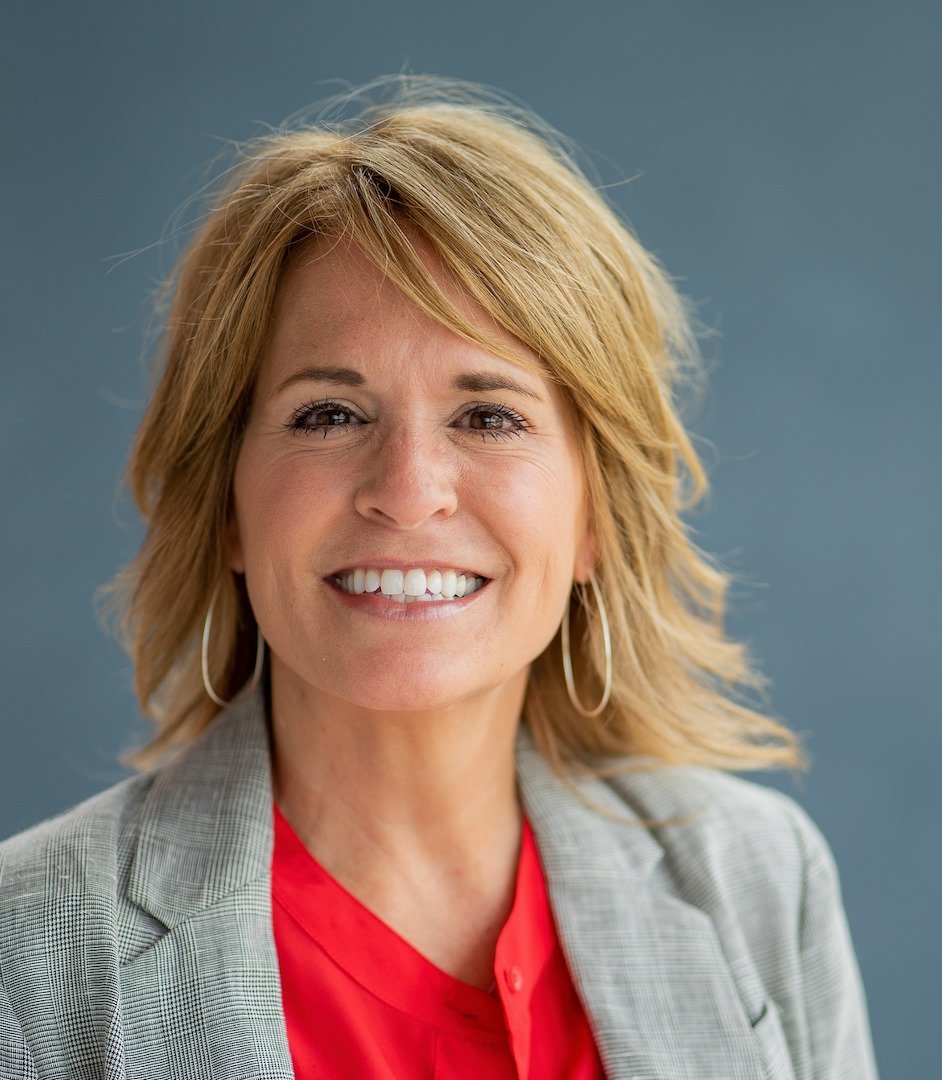
about Dr. Debbie Jones.
Dr. Debbie Jones is the superintendent of Bentonville Schools. She has more than 25 years of educator experience having previously served as Assistant Commissioner for Learning Services at the Arkansas Department of Education. Dr. Jones held the position of assistant superintendent for the Bryant School District for seven years following her principalship at Bryant High School. She worked as a teacher, assistant principal, principal and secondary director in Pulaski County Special School District.
Her academic career has led her to the highest credentials attainable for an educator. Dr. Jones received a Bachelor of Science in Education from the University of Arkansas, a Master of Arts in Secondary Administration from the University of Central Arkansas and a Doctorate of Education from the University of Arkansas at Little Rock.
She served on the Northwest Arkansas American Heart Association Board of Directors and publicly took a stand against vaping after seeing too many students, primarily high school students, become addicted. She authored legislative language to ensure superintendents across the state were notified of violent juvenile offenders. Her work represents a tremendous change in policy, allowing school principals the necessary knowledge to better protect students in the public school system.
She is CEO to more than 2,500 employees and 19,000 students who proudly call Bentonville Schools home. Dr. Jones and her husband, DJ, are parents to five children and a new granddaughter.
episode notes & references.
- ACCESS Act (HB1512): https://arkleg.state.ar.us/Bills/Detail?id=hb1512&ddBienniumSession=2025%2F2025R
- SB451 – Behavioral Health Crisis Response Teams: https://arkleg.state.ar.us/Bills/Detail?id=sb451&ddBienniumSession=2025%2F2025R
- HB1017 – Paid Maternity Leave for Teachers: https://arkleg.state.ar.us/Bills/Detail?id=hb1017&ddBienniumSession=2025%2F2025R
- SB59 – Free Breakfast for Public School Students: https://arkleg.state.ar.us/Bills/Detail?id=sb59&ddBienniumSession=2025%2F2025R
- SB142 – Bell to Bell, No Cell Act: https://arkleg.state.ar.us/Bills/Detail?id=sb142&ddBienniumSession=2025%2F2025R
- HB1633 – Eligibility for Interscholastic Activities (Homeschool & Transfer Students): https://arkleg.state.ar.us/Bills/Detail?id=hb1633&ddBienniumSession=2025%2F2025R
- SB223 (Act 400) – Religious Rights at Public Schools Act: https://arkleg.state.ar.us/Bills/Detail?id=sb223&ddBienniumSession=2025%2F2025R
- HB1705 – Religious Influence in Social Studies Curriculum: https://arkleg.state.ar.us/Bills/Detail?id=hb1705&ddBienniumSession=2025%2F2025R
- HB1550 (Act 913) – Intra-District Transfers: https://arkleg.state.ar.us/Bills/Detail?id=hb1550&ddBienniumSession=2025%2F2025R
- Bentonville Public Schools: https://www.bentonvillek12.org/
- Bentonville High School (BHS): https://bhs.bentonvillek12.org/
- Mary Mae Jones Elementary (IB Program): https://marymae.bentonvillek12.org/
- Ruth Barker Middle School (IB Program): https://ruthbarker.bentonvillek12.org/
- Washington Junior High (IB Pathway): https://washington.bentonvillek12.org/
- Sugar Creek Elementary (New Arts Integration Program): https://sugarcreek.bentonvillek12.org/
- Ardis Ann Middle School: https://ardisann.bentonvillek12.org/
- Evening Star Elementary: https://eveningstar.bentonvillek12.org/
- RE Baker Elementary (Staff Childcare Pilot Program): https://rebaker.bentonvillek12.org/
- Dr. Debbie Jones – Superintendent of Bentonville Public Schools: https://www.bentonvillek12.org/page/district-leadership
- Senator Bart Hester: https://senate.arkansas.gov/senators/bart-hester/
- Senator Jim Dotson: https://senate.arkansas.gov/senators/jim-dotson/
- Secretary Jacob Oliva – Arkansas Secretary of Education: https://dese.ade.arkansas.gov/Offices/communications/leadership
episode outline.
- Introduction and Honoring Principal Jack Lloyd (00:00)
- Recognition of Bentonville’s Achievements and Superintendent of the Year (00:01)
- Framing Today’s Challenges in Education (00:02)
- Impact of the ACCESS Act on Accelerated Learning Opportunities (00:03)
- Behavioral Health Crisis and Senate Bill 451 (00:07)
- Navigating the Emotional and Mental Health Needs in Schools (00:11)
- Paid Maternity Leave and Staff Support (House Bill 1017) (00:16)
- Free Breakfast for Public School Students (Senate Bill 59) (00:18)
- Cell Phone Restrictions (Senate Bill 142) (00:18)
- Public vs. Private School Funding Divide (00:20)
- Religious Influence and History Curriculum Changes (00:23)
- Intra-District Transfer and Act 913 (00:26)
- School Choice and Neighborhood Schools (00:29)
- Eligibility for Interscholastic Activities (House Bill 1633) (00:31)
- The Impact of Closing the Department of Education (00:35)
- Maintaining Hope and Vision for the Future (00:40)
- Closing Thoughts on Community Wholeness (00:44)
episode transcript.
episode preview.
[00:00:02] debbie jones.: Looking ahead at some of the challenges, I want us to continue to work as a community to provide needed resources for mental health, and my focus is on young children because I hope that if we meet those needs early, we don't grow unhealthy adults and just have to build bigger prisons. We have to attend to those needs.
We just have to continue as a community to work together. We all have the same goal and it's really to have kids learn, and in a society that there's so much aggression and anger out there our community's not the place for it.
episode intro.
[00:01:27] mike.: Well, you are listening to the underview, an exploration and the shaping of our place. My name is Mike Rusch and today we're gonna take a moment in our current series, _the story of Northwest Arkansas_, to have a conversation rooted in what's at the heart of the very season, our public memory, our history, keeping what we choose to remember and whose stories we elevate is all shaped by our education system.
It's through education that memory is formed, passed on, and either expanded or erased. The Arkansas legislative session just ended. And while not all details are fully known yet, the implications for public education are already significant. I wanted to take a moment to sit down with someone who could help us understand where things stand and help us make sense of what's unfolding.
Of course, as we know there's no one better to do that with than Dr. Debbie Jones, superintendent of Bentonville Public Schools. Under her leadership, Bentonville has consistently led the state and academic growth, and at a time of rapid change and uncertainty, she remains a steady, trusted voice in our community, grounded in both deep care for students and an unwavering commitment to public education.
The Governor also signed the newly passed ACCESS Act, and these acts are continuing to reshape what public education looks like in Arkansas, and it raises very important questions about the future role of our public institutions. at the national level, we're witnessing massive shifts as well. The federal government is actively moving towards dismantling Department of Education, a change that could dramatically affect funding for important parts of our public educational systems. Alongside these moves are broader executive efforts to redefine government's role in shaping public memory, decisions that influence what history is taught, what stories are preserved, and what kind of national identity is reinforced through our school systems.
Education may be the most important lens through which we understand our region, our history, and our future. I believe it is the space where memory, belonging, opportunity, and community all converge. This conversation with Dr. Jones is a way for us to get our bearings as a community, to listen, to understand, and to help put it all in perspective.
Okay. No one is here to listen to me today.
Let's get into it.
episode interview.
[00:03:32] mike.: Well, I have a privilege today of sharing the table again with Dr. Debbie Jones, the superintendent of Bentonville Public Schools. Dr. Jones, thank you for sharing a table with me. I really appreciate it.
My pleasure.
Before we get started, I do want to just take a moment and express my condolences on the passing of Bentonville High School principal Jack Lloyd. My daughter's a sophomore at Bentonville High School and just had nothing but incredible things to say about Principal Lloyd. And so I know that's a huge loss for the school district. It's a huge loss for our community and an even bigger loss for his family. And so I just wanna start there and just create some space for Principal Lloyd, who was an amazing human being.
[00:04:05] debbie jones.: Amazing man. We miss him every day.
[00:04:07] mike.: I just wanna acknowledge that.
Thank you.
Since we spoke last you've had some accomplishments, which I know you probably don't wanna talk about, but I'm gonna say it anyway.
For the 10th consecutive year of Bentonville Schools has led the state in student performance, academic growth, and you were named as superintendent of the year for the entire state of Arkansas. And so congratulations to you on that.
[00:04:30] debbie jones.: Thank you.
[00:04:30] mike.: I know I. No one else can see your face, but I know you've continued to pass those accolades on to the teachers, the administration, and everybody in the school district. So, what is an award to you is I know, an award to the entire district, and so thank you for the work that you're doing. That's, it's great to see it recognized.
[00:04:46] debbie jones.: Absolutely. It's a team effort.
[00:04:49] mike.: That's probably all I'm gonna get out of that from you, I think at this point.
But well, we finished our last conversation with two questions. I asked you what you feared and your response was that your fears were division. And I asked you what your definition of wholeness was and your response was working together to solve problems for other people. And so maybe in the spirit of picking up where we left off I, I love those two powerful ideas that you've laid out.
And so I would say let's dive into where we're at today in that spirit of trying to solve problems for other people. The Arkansas legislative session has just concluded and there's a massive amount of change that has taken place.
And so I, we can start wherever you'd like. Maybe I'll just kind of put this out and let you kind of determine where we want to go. But I would like, how would you describe really this moment kind of in Arkansas education, especially with the passage of the Access Act, which is a pretty big piece of legislation and pretty big implications.
[00:05:45] debbie jones.: Well, I'm glad you reminded me that's where we left with division and the importance of being a community together. And the legislative session is always, just, I'm still wrapping my head around all of the changes, the laws and of course we have to wait for rules so we don't know the entire impact. That's kind of a disclaimer before I share any of this.
That's fair.
But again, it's the importance of this community and in my job it is critical that I'm attuned every day of the week during the legislative session, what is being proposed? What's getting some ground, looks like passage? And there's a delicate balance in my mind of being present during committee meetings, too much, where, clearly I need to be back in Bentonville doing my job, and so I have a role for myself and I'm there when the most critical bills that impact the school district or the community are at a critical phase. But what many people don't see are the conversations behind the scene.
My legislators in the area are very responsive. It's not that we always agree. But as I send them texts and they respond to me, that's part of working together for the betterment of our community. And I do believe we live in the best place. And I do believe we face new challenges all the time, and we have to work together to solve those problems. And while this really is a dream to live in northwest Arkansas, we still have challenges that we need to address, and so I'm glad to get the opportunity to do that.
ACCESS Act.
[00:07:38] debbie jones.: If we wanna start with the Access Act and that's the Governor's to Governor's bill. Sure. That's where we start, because that, I really believe that's good news. Such good news and it's aligned with where Bentonville schools has worked very diligently in trying to provide an array of opportunity. It focuses mainly on secondary high school kids. Okay?
And so this provides the opportunity for high school kids to take college concurrent credit. Concurrent is you're getting high school credit and college credit at the same time. Many, Many of our kids participate in concurrent credit. And parents can do that now at no expense. That's right. And so that's a win.
We don't know the details of this yet. But we did really communicate a lot with the Commissioner of Education, the Secretary of Education, and our legislators to try to retain some of the scholarships because we did do the math and if we paid for the concurrent credit that our kids are taking this semester right now. It would be a million dollars for the district.
That's good news in a way because it shows how active our kids are in more rigorous instruction, and we have pushed the envelope to offer them IB, AP concurrent, and Ignite. And that's why you'll hear high school parents say, there are so many opportunities, it's because we're dedicated to doing that.
We have a very large population of students that are high achievers, and so we've been pushing this envelope for really hard, for at least five or six years now, our numbers increase every year. Those that are taking AP tests, those that are participating in concurrent credit and different pathways, and certainly those going into career fields.
Originally they did not have our existing scholarship within the bill. In working with the secretary, he realized that was a mistake and they put scholarship money back into the bill. So hopefully it won't won't be a great expense for the district, nor will it be for the parents. And so that's why we're still waiting on the rules.
But whatever way we go we are determined to support accelerated credit and we hope that students pursue their goals, they're on their way to a really nice career if they need to earn their associates while in high school, we fully support that and more to come, as I get details, I will share information with parents.
[00:10:27] mike.: I would just say I, I would raise my hand as one of those parents who has benefited greatly from that. So to hear that expanding is really good news.
[00:10:34] debbie jones.: Yes, it is. Yes, it is.
Senate Bill 451, behaviorial health.
[00:10:36] mike.: As a part of the Arkansas Access Act you know, there was pretty big focus around the behavioral health crisis and its response and that was in Senate Bill 451. This is one that you worked directly on, and so to help us frame why this matters and why this is important.
[00:10:52] debbie jones.: Okay, so Senate Bill 451, which I have to give Senator Hester the credit for really constructing this and getting this through. He worked hard to assist us. It really comes after a year's long work on the part of my team and other superintendents, we see this growing number of students who certainly, maybe through no fault of their own, they've experienced trauma in their life. They may have been in 14 different school districts in six years. I mean, there are some really sad stories out there. But they also in a few cases, probably in each district you have students that are so aggressive or, harmful. Their behaviors are out of control. They're destructive of equipment, but really the greatest concern is we, and we have the best behavior therapists to work with the, to work with them and train teachers to do their best, but they simply need a higher level of mental health support. They need medical care and families who've been in this situation and have searched for OP opportunities for their kids to get this help. They know they can go to the doctor seeking placement and are told it'll be a year out. That's not a good response when a child is in a crisis.
And so we met with all of our legislators. We had them in school. We talked with the governor, we talked with everyone that would listen and please create more day treatment, behavioral mental health placement options for families in northwest Arkansas, and that's what this bill was about. Another big part of this bill was for those centers, the day treatment centers that do receive DHS money. Remove exclusionary clauses. Exclusionary clauses like you can't be admitted if your main diagnosis is a behavior disorder. You can't be admitted if your IQ is below a certain level or if you have a sexual history or if you any, the list goes on and on, which defies logic because many times the very kids that need, desperately need that mental health support aren't eligible to attend their programs.
And so the answer of sending them back to school without that support is not the right answer for anyone. It's not the right answer for teachers who are injured. It's not the right answer for kids who are disrupted in their learning. And so that's why we have fought for this so hard, now Hester did get it through the house, it became an act.
And then on Wednesday we learned that the governor vetoed that. We were really disappointed to hear that however secretary Oliva and Senator Hester assured me that DHS will create a program in northwest Arkansas, because I don't know if our community realized that we host the majority of the students in the whole state, they live here in northwest Arkansas.
The services of that magnitude are not available in our area. And so, with DHS will run it. Department of Human Services and the division of elementary and secondary education, and I just have already reached out to the secretary and said, okay, let's go. I'm ready to help, let's build this thing and create these slots for families. And so, I look forward to the, I guess I'm happy to consult in any way that I can to try to help create more services for our families up here.
[00:14:41] mike.: Maybe help frame this a little bit for me, because when we think about educational legislation that's going on, this may not, at least for me, I don't wanna speak for anyone else. Seem to be like at the top of the list. Right?
But this is something very important and I'm, I think I'm trying to understand too, within the schools and what you're seeing directly, this is a critical need.
How are you seeing this need change over time? Is it more occurrences? Is it starting earlier? Maybe frame this for a little bit, maybe the importance of this from a community perspective as well.
[00:15:08] debbie jones.: Absolutely. And if you ask any of the superintendents, or any of the schools, it doesn't matter if it's public, private, charter, we're all seeing this and we're seeing an increase in really the aggressive behaviors in young kids, and I don't know why, but most by the time they get into or older in the, his historically older kids, they have either learned appropriate behaviors, but we are seeing an increase. And I don't know if it is, COVID related. I won't even pretend to know the answer, but I know that it becomes very disruptive for families and for the school.
And so, my job, number one is to hire the very best teachers we can hire and retain them. I feel like that's my responsibility. If I don't do that, I'm failing at my job. In our behavior classrooms, we replace the staff in there every year because it's a very difficult job. We've even increased for the teacher and the aides that work in that room. The teachers will receive a $5,000 stipend in addition to their pay. And the aides will receive the equivalent percentage of that. And so that tells you that we're doing everything on our end to try to help make that a successful experience for the staff and for the student. But I'll be honest, we need a higher level of medical assistance and mental health care for many of those, and we just don't have that opportunity for families in our area.
asking too much.
[00:16:48] mike.: In our last conversation I asked you and you were very appropriate in your response, but I asked are we asking the schools of too much? And I won't ask you to respond to that, but it feels like we're in that space where this is something very significant to our community and to obviously the education system and to families. But gosh, it feels like we're asking a whole lot.
[00:17:09] debbie jones.: It's a lot. It's absolutely a lot. We're. We're fortunate we live in this community because I do believe that we can solve our own problems, but I do think that we are going to have to be vulnerable and we're gonna have to be honest and families that need assistance have to feel comfortable in a space where they know they're going to be supported and not be judged for parenting. It's not that many times. Many times it might be a foster child that's had so much trauma in their life that this is just an outlet, the way that they behave, but, and they need mental health support. And so I don't know the answer on solving the problem either. But you know, schools can sometimes best tell what's going on in your community. And we're here to say that we have to address this problem. We need more mental health support for young kids and for families.
And so it might be simple things. It just came in such a timely, last week when Crystal Bridges called and said, Hey, would you facilitate a conversation with Dr. Becky Kennedy? And to be honest, I didn't know who Dr. Becky was, but I called my daughter and she has a two and a half year old, very active. Little Skipper and a five month old, and she's oh my gosh, mom, Dr. Becky, I love her. And I quickly began getting texts so apparently she's a pretty big deal. And so I started reading her book, "_Good Inside_" and listening to her podcast, and I'll be honest, I was old school parenting raised by a football dad. We were pretty hardcore in my family, and I was a pretty tough parent myself, and when I started reading the first probably five pages, I thought, oh my gosh, I may be the very worst person to facilitate this because it's that soft parenting and it wa it is not. It is so, it's so hopeful for me and so I, I think that we have conversations like this. It booked, I believe the first day that it opened, which shows that there's a big interest in this. Parenting is the hardest job I ever did. It's harder than being a superintendent any day. And so I think that it's a good time to reach out and support our families in the community.
[00:19:38] mike.: Well, thank you for the work that you're doing to , to focus on this and to bring it to our attention and then to engage in it as well too. And so I'm super thankful for that.
[00:19:47] debbie jones.: Well, I'm also trying to relearn so I can be an appropriate Mimi, so
[00:19:52] mike.: Well, and that's a valid reason to as well, so I would affirm that.
HB107, paid maternal leave.
[00:19:56] mike.: Talk to me about house Bill 1017, which is paid maternal leave which is new. How does this work and what's the impact of that going to look like for school district?
[00:20:04] debbie jones.: It's for a school district. We weigh the good and bad, first of all, as a mom with two girls that are 30 and childbearing age, it's the right thing to do. I, I relate. I can understand that, and I will tell you that as a superintendent, I have always been one that says, as parents, as my teachers would say, I'm gonna stay home for a while. Do that. You'll come back. It's a good time to do that. I'm very supportive of that. I support that we will provide 12 weeks of unpaid leave this upcoming year. I also recognize when I look at performance scores that I can tell, we all can tell when. Someone's out on maternity leave or they're gone for a long period of time. And so we have to be as
[00:20:52] mike.: performance scores with the students.
[00:20:54] debbie jones.: Student performance, yes. They miss their teacher when they're gone. And so that really has been the greatest. Concern in trying to provide this in the past. It's not the money but we have to prepare for this and provide the most high quality substitute certified teachers that we can in those roles. And we are approaching that differently, possibly thinking about hiring full-time subs so they're prepared to go into those maternity roles. So the state will reimburse the full sub cost for the 12 weeks of maternity leave.
[00:21:30] mike.: Sounds like good news helps you plan it is. Good news plan and prepare for that.
[00:21:33] debbie jones.: It's the right thing to do.
[00:21:34] mike.: And for the families as well too.
[00:21:35] debbie jones.: Right.
Senate Bill 59, free breakfast.
[00:21:36] mike.: Senate Bill 59 was free breakfast for public school students.
[00:21:39] debbie jones.: Again, good.
[00:21:40] mike.: Sounds great to me.
[00:21:42] debbie jones.: You don't have to qualify for free or reduced lunch. We will provide breakfast. I think that was very popular during COVID and getting students off on the right foot to eat absolutely the right idea.
Senate Bill 142, no cell phone act.
[00:21:56] mike.: Maybe give us some context too around I think the Senate Bill 142, which is the bell to bell, no cell phone act.
[00:22:02] debbie jones.: I feel we're in a great place for that because of the previous work that the team has done high school this year. They keep their phones stored during instructional time, 90 minutes, and then they can get it out and check in between periods and at lunch. We're awaiting rules, but I do believe they won't be able to do that at all during the school day next year. We do recognize, and the act itself recognizes that students need to have their phone for activities after school so likely we'll have some type of storage or they'll have it in their bags. We're just awaiting some policy guidance on that. Junior high kids could not have their phones out at all. And that's been very positive. I've heard lots of positive feedback from families and from teachers and some actually from some students too. So I absolutely think that's the right thing to do.
[00:23:00] mike.: That's good news. 'cause it sounds like we can assure our students that the world's gonna be okay for a few minutes.
[00:23:05] debbie jones.: You know, one of the most interesting things I heard from a principal and at Ardis Ann, Kevin McAuliffe, and he said. When kids had their phones availability, then they didn't have to problem solve. They could reach out to mom to fix everything. Bring my lunch, do this. We, number one, we want them to learn to be independent. And number two, we want them to be able to learn how to go ask for help. And so there are so many other advantages than not just teachers trying to compete with TikTok.
public vs. private education divide.
[00:23:40] mike.: I think one kind of maybe block of questions, and I know we can go probably a lot of different ways with this, but it feels to me, and I wanna be real clear, it feels, but there is with the educational freedom accounts and we talk, start talking about public and private funding and where dollars are going. It feels like there is maybe a divide emerging. And those are my words. Between what direction? Education's going to go.
And I would love to kind of understand like number one, is that a valid concern? Is that something that we're watching and understanding how that's going to impact our educational systems?
But I think within that, we're starting to see the inclusion of some bills around religious education and religious influence and I'm trying to understand how to navigate through that. But it feels like this divide seems to be kind of emerging within, kind of around some of these topics.
[00:24:33] debbie jones.: That's fair. And I think nationally you see that as well. And it's a lot of that is what I call theater.
And you'll see for example, students, it was Act 400, the Religious Freedom Act. It repeated many things that students already had the ability to do. Students can pray when they're, when they are on their own or when they're in class and they're not in the middle of instruction. They can have their Bible out at all times. They, all of those things were permitted in the first place. And I'm not aware of one student ever getting in trouble for that in Bentonville schools. And it's something that we welcome. Staff could have their Bible on their desk. They can pray in their free time. And so, we believe in the First Amendment right. And we will continue to follow those laws. But you're right in the fact that very much the media message out there is a little bit negative public school. I don't understand that because I do believe that, I believe in choice first of all when we lived in central Arkansas, my children started out in catholic school because that was the best option for my family. My job I think as long as schools understand parents have choices, it makes us better. And I know that in our area we outperform anyone and we are the best choice.
I sincerely believe that when you look at all the opportunity we have those that I'm not whining about vouchers. You won't hear me whine about that because I know that we can compete, but you can't sit back and think that people are going to be assigned to your school and they must go there because that time has long passed. And so just like public businesses, we have to think like business CEOs, how do we compete with everyone? And Bentonville schools and our community happens to be in a beautiful place to be able to do that well. And so I'm thankful for that.
history, Ten Commandments.
[00:26:57] mike.: Thank you. I think that's helpful to start to understand that. I think with some of these bills, yes, I can understand the theater of some of that. But I mean, there's some practical implications here for the influence of how we teach history around what's called, I guess, the founding fathers their moral beliefs in that system. The Ten Commandments coming back in the schools. These are some practical things. And I think, I'm trying to understand, and I would consider myself a person of faith. And so, but at the same time like how does the school operate within that to make sure that all students feel welcome and included within the spaces so they can focus on education.
[00:27:33] debbie jones.: The focus will remain on education as far as, there are a couple of roles. The one you talked about, the founding fathers, and that will be integrated by the Department of Ed into the state standards we have. And so, on the curriculum that's not something we do as a district and teachers are very accustomed.
And I'll be honest, I think probably if I studied the standards long enough, the founding fathers were already there. I don't know how deep it went into the religious background, but likely did if we look at our textbooks. Teachers are so inclusive of all religions. Our teachers are, I sincerely believe that. They're inclusive of all races, and I expect that will continue. It is our goal that everyone's safe and they feel included in the learning. And I don't think anything that they passed this year will change that one bit.
There is the one bill that Jim Dotson ran to install the Ten Commandments in an apparent place. That's not the word they used in the bill. But it, as long as it, you don't use state money to do that. So I expect it will be much like the American flag. Someone donates that to the school of the appropriate size and then we will follow the law.
Do I think that by installing the, in God we trust and the Ten Commandments that's going to harm us or any kid in any way? I don't think so. I think we'll continue on and we'll keep the focus, and that's learning.
change direction of education?
[00:29:15] mike.: Is there anything that's coming out of this year's legislative session that is really going to change the direction of how we think about education in the state?
[00:29:25] debbie jones.: And I think, I can't speak for the state because every district is so different. I don't think anything's going to significantly change for Bentonville schools. There were many. Many educational bills, but many of them are minor, don't have significant change whatsoever. I do think ACCESS will make it easier for us to give weighted credit to accelerated classes, and that was very time consuming to try to get that for kids and my team worked hard on that, so I think it might improve some of the conditions that's a really good thing.
Act 913.
[00:30:05] debbie jones.: We did have intra district, it's Act 913 passed, and I did speak against this and it's not because I don't believe in parent choice, but I don't believe that one student's rights are more important.
Than the host student. The student bodies rods. And what I mean by that, with intra district, we have done a really good job of not rezoning all the time. And I know that was done many years ago. Frequently it. Under my administration, we have worked really hard to recognize how disruptive that is for families. We've offered parent choice with our downtown schools. But here's the reality on intra district transfer, and this is not just for high schools. This is K 12. So if you're an Evening Star out there, which is the space is pretty limited anyway. And it, the bill does provide for 95% capacity. If you're at 95% capacity, you don't have to accept additional students, but we get to 95% capacity. We fill up with this year's kids, and we will, by August, we will, anyone that moves into the neighborhood that would go to Evening Star will have to be bused elsewhere. It's going to increase. Traffic, it's going to increase transportation cost.
And the truth of the matter is most people love their community school, but when all of the transfer options were opened last year, during the last session, I have seen a large number of kids pop in and out of the district from out of district and. I'll be honest, most of it's sports related. They pop in the district and then they pop back out. We're seeing them come and go and the, and that type of movement, in my opinion, is not good for any student. They don't learn the lessons that sports taught us. I was an athlete, my whole family participated in athletics and the lessons that we learned that we can learn through sports are being taken away by adults and that's a sad thing. And there's a whole nother NIL deal and all this stuff that's ruin the lessons, but teamwork, perseverance, learning how to lose with grace and still get up and go the next day. Those are the lessons I learned playing basketball and I didn't quit on my team. But with the transfer in the district they're open to transfer into other places. Now we still have to get rules and work through that. That's gonna be a complex process, but that did in fact pass.
[00:33:03] mike.: When we think about the school choice within the district maybe like how should parents think about that? I mean, I know we all want to go to maybe it is the neighborhood school or we wanna go to the best school for our kid, or the best opportunity but maybe from a parent's point of view, how can we think about using that well, and at the same time. You're bringing to, to mind some like the complications of that as well too for the district and how do we serve the student The best way in that?
[00:33:27] debbie jones.: And I respect the right that parents have different views and they may make different choices. If I'm the parent and I'm raising and let's just start at elementary young kids, I'm going to my local school. For so many reasons. One, because it's closest to my house. Two, the other kids in my neighborhood, the relationships they're building, those are the same friends that they're seeing every day in school.
So that's a little comfort level for them. And also because all of our schools are high quality schools. If I wanted a different experience, for example, if I knew I have a very accelerated child from early on and they're going to participate in really rigorous learning, I might select the International at Mary May to do IB, and that means I've committed to International Baccalaureate. K 12. I want to go to Mary May, and then it's going to move up to Ruth Barker go to Washington Junior High, and it finishes up at BHS where they have it. Now, it might be that my child is very much into the arts, so I might choose Sugar Creek for arts integration.
We're just starting that program this coming year. It will grow and improve, but with any model school we're starting. We're all in on it. And so they have some options. It really depends on your child, but for, everyone's gonna get an excellent education. If you look at the National Merit finalist. I love to do this. They always say, I went to elementary at TJ, then I went to, and they call out all the schools and every one of those national Merit go to every different school in the district so you can get a great education in your neighborhood school.
[00:35:20] mike.: That's great. I think that's super helpful to think about that. Not in an arbitrary way, but a purposeful way as well too.
House Bill 1633, eligibility for interscholasstic activities.
[00:35:25] mike.: I don't know if this is related to that topic, but House Bill 1633, which is the eligibility for, I think it's called interscholastic activities. Maybe explain how this works itself out in the world that we have, where it amends the eligibility requirements for homeschool to transfer students to participate in athletic activities.
Absolutely.
Yeah. How does this work?
[00:35:47] debbie jones.: A big part of this is really to, kind of get a handle on all the athletic transfers that were happening all over the state, back and forth. And so, this now requires that homeschool and public school students have can register as long as they're registered by June 1, they can participate in AAA activities. In the seventh they have seventh, eighth, ninth, and 10th. Now, it doesn't say 11th and 12th. So you cannot register and leave your school. You were playing softball. You finished your 10th grade year and you're going to transfer out. If you do, then you have to set out that sport for 360 a year, 365 days.
implications of sports transfers.
[00:36:35] mike.: I understand the problems associated with it. I guess my question is or I guess what I'm, it's in my head is like, how do we frame that to understand the implications of what you're doing.
[00:36:43] debbie jones.: I, you know, and I may not be accused of being the most empathetic person. I'm still growing in that every day.
[00:36:50] mike.: My, myself as well too, I've been told.
[00:36:53] debbie jones.: But I really try to look at the motivation. And the effects of that. And I have great empathy for an athlete who has put in the hours because they put in tremendous hours. And I'm not just talking athletes, band members, orchestra, but the hours and the work that they put in, and they think that they're going to start, for example, a quarterback going into their junior year and someone. Pops in the district and they no longer have a starting quarterback position. That's devastating to a family and to a kid many times. And so I have empathy on that end. I feel like a team should, by the 10th grade start gelling together as a team.
It's kind of like you dance with the. The person that brought you to the dance, you know, unfortunately there in the last few years, it's been wide open so much that you see athletes popping into this school outta district all over the places, and they don't really have allegiance to a school ever, and it's disruptive for them. They may not recognize it now. But down the road they will, because honestly, most of these kids are not gonna go to play college ball. And so having a really healthy high school experiences should be the primary focus. But I can't tell parents what to do on that. They will make their own decisions.
[00:38:26] mike.: Well, and I mean, I appreciate your perspective too, and you know, I, I can talk about it all day long, but what does it mean to be rooted in a place and to belong to a place and to be invested in a place? And so to me not that parents are trying to do the opposite of that, but gosh, it really is a beautiful thing to be able to watch people be rooted in a place and in a neighborhood and in a community. And so, and in a team. And in a team, absolutely.
impact of closing of Department of Education.
[00:38:48] mike.: Dr. Jones. I think within the spirit of all of these conversations I can't not ask you to spend a moment to talk about what's happening at the national level and with the kind of impending closing of the Department of Education. And really I want to kind of bring maybe that whole umbrella to you because I think, I don't know that I understand, or maybe our community doesn't understand as well too what does this mean? What is the implications of this? And I feel like as I watch, which is probably not a good idea to watch the news cycle, I feel like. We, you know, in the spirit of working together, right, to solve problems for each other, what do we know and how, what is the potential impact of what this could do to not only the state, but to Bentonville school district?
[00:39:28] debbie jones.: I. I have to do a little disclaimer.
It's like trying to guess what tariffs are gonna be tomorrow.
[00:39:33] mike.: Okay. So point, point made,
[00:39:36] debbie jones.: but I have asked lots of questions and tried to read everything I could on this, and honestly, with the closing of the Department of Ed. I am told that we aren't to expect significant changes. The grants that we use to support special education will be flowed through money that likely the Department of Human Services would flow through to the school that was done before the Department of Ed and I likely will continue. The only interaction that I've had with the Department of Ed at the federal level in my, I've been in education 31 years really has been through the Office of Civil Rights, OCR and in my experience that was just a lot of paperwork, man hours, and I don't see significant loss in that.
So we do have the OCR at state level and they get involved where necessary, and I just think closer to home is probably more successful. At least that's who I work with. I do get questions as there are things in the media about DEI and did you sign that paper? I know that Harvard, Princeton, all the Ivy Leagues are talking about how they're not gonna, that has not been applied to K 12 schools. We have been asked that we follow Title VI which is, it prohibits discrimination based on race, color, or national origin. And guess what? We've always done that. Of course, we are gonna follow Title VI in order to get next month's federal funds. So. To this point, I see little impact on our school district.
[00:41:33] mike.: Within that, I mean, do you and I don't know where the lines necessarily are, so this may be just a question out of ignorance, but are there things that we as a community should be watching or paying attention to or preparing for.
And I, I think maybe it's human nature for us to kind of go to the immediate worst scenario. Yeah. What could happen, meaning like all of that funding goes away and the impact on low income families and on students with disability and to your point, civil rights obviously these become worst case scenario type of things. Or the shutdown of public school systems not to go too far down that road, but. I think maybe an ounce of like, how do we what are the things that you're paying attention to that we could pay attention to, to kind of help us navigate through this and maybe calm things down a little bit if that's what's warranted.
[00:42:20] debbie jones.: Well, I think you have to know the bias of whatever news outlet you're reading or whatever organization, because if they lean one way or another, it's certainly through their perspective. And that's so critical. We try to teach our students don't trust everything you read, get the facts. And so I try to do that and that's by reading as much as I can and then asking lots of questions.
But what I'm watching is I expect that, especially this week's pretty critical when they start looking at the funding cuts and Medicaid and then I have to find out how does that directly impact families and the schools. And that's when I'll know more. I don't have clarification at this time and I know families are all asking this will social security be cut? And I'm not going to panic. I'm going to ask questions and find out true implications for our students.
[00:43:21] mike.: Yeah, I thank you. Because I think if you're not panicking, then I'm not gonna panic either. I'm, I would trust you implicitly that if we're gonna navigate through this well,
[00:43:29] debbie jones.: well, we'll just stick together. I feel like if there's a shortage somewhere, then we will try to figure that out together.
hope.
[00:43:35] mike.: Dr. Jones, thank you. I think one of the things that I think is true about you and we just talked about this, is just that you have a sense of optimism. And I think that's infectious and it's something that we need. And so as we look down the road at education and with all these changes and with all the things going on in the world help. What do you see? What do you see in the future of what we can be hopeful for?
[00:43:57] debbie jones.: Well, I am sometimes to a fault, optimistic, but I'm also very competitive and that's my background and being in athletics and having a dad as a coach and so what I see in public education is a whole new level of operating like businesses do, and not in a negative way, but you have to respond to the market. You have to be responsive and be competitive. We have to prepare kids to go into careers and supply the future markets and we cannot teach from an obsolete place. And I think that our teachers are very aware of that. So as long as we can compete and offer the best product, which I know we do, then we will be fine.
We are not getting distracted by the politics. You don't hear me discuss politics a lot because it's a waste of everyone's time. We still have our mission ahead of us and our mission is to offer the best education and opportunities for students and we do that.
So, and looking ahead at some of the challenges, I do want us to continue to work as a community to provide needed resources for mental health and my focus is on young children because I hope that if we meet those needs early, we don't grow unhealthy adults and just have to build bigger prisons. We have to attend to those needs. We have to really think about early childhood education and even if that's at home, to focus on the things that matter to build healthy, smart kids, and we've offered staff childcare in RE Baker Elementary.
And to see those children and what they can absorb and learn is phenomenal. So we have to really concentrate on building healthy kindergartners. So they're ready to learn and we just have to continue as a community to work together. And I mean that as teachers, I mean that as parents and both we all have the same goal and it's really to have kids learn, and in a society that there's so much aggression and anger out there our community's not the place for it. And so I think if we work together we can decrease that or eliminate most of that.
fears.
[00:46:33] mike.: Alright, well I'll close with this and your answer may not have changed and that's okay. But what are your fears at this point for the schools?
[00:46:42] debbie jones.: well, I'm always watchful for sudden growth. Construction costs are just phenomenal. A real price for a high school right now is $120 million and I fear that we grow so fast that we have a challenge with construction. That's truly one of my biggest fears right now. We're prepared for it. We study growth diligently with the company. But if, who knows what could happen tomorrow with our area. So, that's a real concern.
And, you know, we have to keep our eye on the prize, and that is hiring the best teachers. And as housing gets so expensive here, our teachers need to live in our community because the reality is if they live in another area where it's cheaper to live, then eventually their kids start playing sports or whatever in that area. Then they decide that they can work in that other school district, and we don't want that. So, we have to continue to try to find affordable housing options for our staff in our service industry in this area.
[00:47:58] mike.: Well, and maybe we can have a conversation once McAuley Place starts to open.
[00:48:02] debbie jones.: We're so excited. We've broken ground.
wholeness.
[00:48:04] mike.: That's beautiful. Give us a word. What does community wholeness look like for you in this space, in this season that we're in this world?
[00:48:10] debbie jones.: Collaboration. Every, everyone working together, that's key .
[00:48:15] mike.: Well, Dr. Jones, I'm incredibly humbled that you would sit and share a table. Thank you for all the work that you're doing. And gosh, it just sounds like a crazy time, but you handle it with poise and with excellence and so I'm thankful yeah, that you're there at the helm of that watching it for us. And so thank you for the work you're doing and everybody in the district. It's incredible work and I can walk away from this conversation hopeful for sure. And so thank you for what you do every day. It's really appreciated.
[00:48:41] debbie jones.: Thank you. Thank you.
episode outro.
[00:48:44] mike.: Well, thank you to Dr. Jones for truly being a calm and steady voice in the middle of all of this. I'm grateful for her honesty and her leadership and for the way she continues to center the needs of students and families and educators even as the ground continues to shift beneath our public schools.
To Dr. Jones and to every teacher and counselor and bus driver and nurse and administrator and support staff in the district. Thank you. Thank you for showing up every day and in the middle of policy changes and political tensions to deliver excellence. You're not just teaching lessons, you're shaping lives in communities and our shared future.
It's hard to navigate education policy at the state and federal levels at the moment. There's been a flurry of new legislation, executive orders, rumors and proposed reforms, some of it helpful, much of it confusing and all of it deeply consequential. It can be difficult to know what's good and what's not, what's political and what's practical, but when we sit down and view these changes through the eyes of a trusted leader, someone grounded in the day-to-day realities of students and teachers, we begin to feel the real weight of what's being decided. And that weight isn't meant to rest solely on the shoulders of Dr. Jones or a team or the school board. It belongs to all of us.
Public education is not just another system among many. It is the foundation. It's the common ground, where we learn who we are, how to live alongside one another, and what it means to build a better world. I believe that if we want the best possible future for our communities and for our country and for our kids, we have to invest in the generation who will carry it forward.
And that starts with listening and with understanding, and with committing ourselves to support, not just observe our schools. I also look forward to the work ahead where Senator Bart Hester and Senator Jim Dotson, who have both been part of moving important pieces forward how they will continue the work that Dr. Jones sees is critical for the long-term health and success of our public schools, especially in areas like behavioral health, mental health services, and access to opportunity for all students.
We'll return next week with the next chapter of the story of Northwest Arkansas and continue with the work of our reckoning, with our own stories and our own history, and the working towards a shared understanding, our communal theology of place that we can use as a common foundation for how we view our home.
Thank you for listening, and thank you for being the most important part of what our community is becoming.
This is the underview, an exploration and the shaping of our place.