
the early counties with Rachel Whitaker.
Historian Rachel Whitaker, Shiloh Museum of Ozark History, explores the early formation of Washington and Benton Counties, white settler power, slavery, and Black history in Northwest Arkansas.
season 2, ep. 18.
listen.
episode notes.
In this conversation with historian Rachel Whitaker of the Shiloh Museum of Ozark History, we trace the early formation of Northwest Arkansas through the lens of power, policy, and people. Rachel offers an expansive look at how settler colonial decisions—such as the displacement of Native nations, the introduction of slavery, and the establishment of counties like Washington and Benton—shaped the region’s economic and political structures.
We uncover the story of influential white families like the Walkers, Peels, Dinsmores, and Andersons while also recovering the often-erased presence of Black Arkansans and Indigenous people in the region. This episode offers a vital reconsideration of the narratives we've inherited, challenges the inevitability of progress, and underscores the importance of current historical preservation efforts, including the historic district in Southeast Fayetteville.
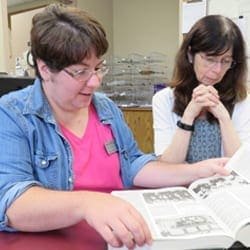
about Rachel Whitaker.
Rachel Whitaker is a historian and research specialist at the Shiloh Museum of Ozark History, where she helps preserve and share the stories of everyday life in Northwest Arkansas. A native of Highfill, Arkansas, Rachel grew up in Gentry and Siloam Springs before attending Northeastern State University in Tahlequah, Oklahoma. Her academic background is rooted in both history and library sciences, and her professional path has included historical research, public programming, and digital archiving.
Rachel’s deep Arkansas roots stretch back at least eight generations. On her mother’s side, she descends from the Standlee family, early settlers of Berryville in Carroll County who arrived in the region by the 1830s. Her father’s side traces back to the Ames and Odle families, who came into Northwest Arkansas with or alongside the Cherokee during the period of Indian Removal. Some were farmers, ministers, or merchants who lived and worked among Cherokee communities in Siloam Springs, Cincinnati (AR), and Watts and West Siloam (OK).
Rachel’s work is shaped by both her personal history and a commitment to telling fuller, more inclusive stories of the Ozarks. At Shiloh, she conducts genealogical and property research, supports digitization of the museum’s 500,000+ historic photographs, and develops hands-on educational programs for the public. She is particularly passionate about correcting misconceptions in regional history—working to bring visibility to voices often left out of dominant narratives, including women, Black Arkansans, Indigenous communities, and LGBTQ+ individuals.
Through her personal lineage and professional scholarship, Rachel brings a unique perspective to the history of Northwest Arkansas—grounded in place, mindful of complexity, and dedicated to truth-telling.
episode notes & references.
- Shiloh Museum of Ozark History: https://shilohmuseum.org/
- Sarah Ridge and the Ridge House: https://www.encyclopediaofarkansas.net/entries/sarah-northrup-ridge-4726/
- David Walker Biography: https://www.encyclopediaofarkansas.net/entries/david-walker-4553/
- Flashback (Washington County Historical Society): https://www.washcohistoricalsociety.org/
- Grand Army of the Republic in Arkansas: https://encyclopediaofarkansas.net/entries/grand-army-of-the-republic-5059/
- Arkansas’s Confederate Monument Movement: https://encyclopediaofarkansas.net/entries/confederate-monuments-2722/
- Historic Black Fayetteville Preservation Effort: https://www.nwablackheritage.org/
episode outline.
- Introduction and Rachel’s Background (00:01:23)
- Mission of the Shiloh Museum (00:05:35)
- Origin of White Settlement in Northwest Arkansas (00:07:36)
- Moments That Could Have Gone Differently (00:08:07)
- Lovely’s Purchase and Broken Treaties (00:11:01)
- Settlement and Enslavement Patterns in Washington/Benton Counties (00:12:31)
- Early Education and Cherokee Connections (00:17:01)
- Sarah Ridge and the Anderson Family Estate (00:18:58)
- David Walker: Myth, Influence, and Legacy (00:24:32)
- Civil War and Secession in Arkansas (00:28:28)
- Post-War Reconstruction and the Walker Family’s Continued Power (00:35:09)
- Interconnected Prominent Families and Regional Power Structures (00:37:13)
- Understanding Settler Politicians like Walker and Peel (00:39:36)
- Post-Civil War Resettlement and Black Return (00:44:36)
- Black Education and Freedmen’s Bureau in Fayetteville (00:45:49)
- Black Communities in Bentonville and Across the Region (00:49:38)
- Erasure of Black History and the Problem with the “Sundown Town” Narrative (00:51:44)
- KKK Activity in Northwest Arkansas and Community Responses (00:54:50)
- Why Historic Preservation in Southeast Fayetteville Matters (00:56:31)
- Civil War Statues and the Lost Cause Narrative (01:00:08)
- The Difference Between Heritage and History (01:03:53)
- Rachel’s Hopes and Fears for the Region (01:06:22)
- Vision of Wholeness Through Inclusive History (01:08:03)
episode transcript.
episode preview.
[00:00:00] rachel whitaker.: There's these moments, there's watershed moments where we could have gone a different direction. We could have not, spread into Arkansas, the Ozarks to start with via Louisiana purchase. Maybe we didn't wanna pay four cents an acre to Napoleon. But also maybe, we wouldn't have wanted to spread slavery or we wouldn't wanna push the Native Americans out of these areas. And so there are these moments where we could have made a different choice. And I think especially now that's important to understand that history is not always just this linear. There's branches, there's opportunities for different choices and different ideas.
episode intro.
[00:01:23] mike.: We are listening to the underview and exploration in the shaping of our place. My name is Mike Rusch, and today we're gonna keep our attention on the early origins of Northwest Arkansas. And we will be focusing a bit farther south into Washington County.
My guest is historian Rachel Whitaker from the Shiloh Museum of Ozarks History. Rachel brings a rare blend of deep personal connection and academic insight into this conversation.
Her family is called Northwest Arkansas Home for eight generations. And her professional role as a historian has kept her immersed in the layered and often difficult stories of this place.
In this conversation, we're gonna dig into the region's early white settlement and the legends that followed, the roots of wealth creation, the nuance and mythology of Civil War memory, and the ways that Jim Crow and the KKK actively still echo beneath the surface of our local history.
[00:02:12] mike.: This conversation is important because it helps us understand the story of northwest Arkansas, not simply as a tale of progress, but as one shaped by the power of a small group of interconnected families. Families like the peels, the smores, the Andersons, and a new name that you'll meet today, David Walker.
These families early in the region's history helped to define land ownership, politics, law, and public memory. Often through systems that privileged a few and silenced many. Beneath their influence lies a deeper, more complicated history. One that includes the practice of slavery and the long shadow it cast on the region's development.
And yet there are voices that have been left out, voices of black arkansans and indigenous people and others whose labor and lives sustain this place and they've rarely been given equal weight in our historical memory. This conversation with Rachel is in part, a broader effort to listen more closely to widen the lens.
It helps frame a growing body of work, including the effort to recognize and preserve a new black historic district in Southeast Fayetteville. That work seeks to recover stories long buried beneath monuments, myths, and selective memory.
We're not just moving through the forgotten history, we're examining the structures that kept it hidden in the first place. And Rachel will remind us this, to understand how this place was shaped is to ask what choices could have been made and what choices still lie ahead for us today.
Alright. Much to work through.
Let's get into it.
episode interview.
[00:03:40] mike.: Well,
I have a privilege to share a table with Rachel Whitaker, who's a historian at the Shiloh Museum of Ozark history. Rachel, thanks for being here this morning. Thanks for sharing a table with me. Yeah. Welcome to the conversation.
[00:03:52] rachel whitaker.: Sure. Thanks. Thanks for letting us have this moment to talk about history.
[00:03:55] mike.: Oh, I love it. Orientate us, if you will, in your background and how you ended up in the role as a historian here at the museum, and then maybe a little bit about what the museum's scope and role does.
[00:04:05] rachel whitaker.: Sure. So I grew up here in northwest Arkansas. I went to school at Gentry. Grew up in Gentry and Siloam for most of my life. And then around high school, moved to Oklahoma, went to college went to Northeastern State University in Tahlequah. Went abroad for a while, lived in Wales. And then came back home and was.
Finished out two master's degrees and started working in a library, and then my mom became ill. And I was working too many hours and was too far away, and so my brother suggested that I apply to the position here at Shiloh. And so they had a position for a research assistant at that point.
And they were looking for somebody more with a, like a library background and less about my historian background, although that was a plus obviously with being the museum a history museum. But I came back and just did research mostly for several years. And then the pandemic, we lost a lot of staff and to retirements and different things, and so they.
Restructured everything. And I ended up in the role of historian which I like to say covers a multitude of sins. So it covers a lot of the different things that I do here. I'm one of the few staff people who doesn't have a whole lot of slashes in their names to describe what they do.
But I do research. I still do a lot of research with the public. We do genealogical research, property histories, general historical research. And then I work with the digitization department. So we're digitizing our photo collection. We have the largest historic photograph collection in the state of Arkansas. Over 500,000 images that are cataloged, probably that many more, not cataloged that we're working on. And then the other part of it is public programming. I go out and do historical lectures or hands-on demonstrations. We play with toys sometimes, which is fun being an adult and getting to still go out and demonstrate historic toys. But we also make candles. We do ly soap demonstrations, things like that.
Shiloh Museum's Mission.
[00:06:04] rachel whitaker.: The museum's mission is to tell the story of the people who live in six counties in northwest Arkansas. So Benton Boone, Madison, Newton Carroll in Washington. And it's more about the everyday life.
And less about, those big man histories. We wanna tell the stories of people who lived here, raised their families here, sometimes just survived here because, we grow rocks, we don't really grow crops. Those kinds of things. And, but we some of the things that we're doing to diversify that is we're working with some of our immigrant communities or our less heard from communities to collect stories.
We have a couple of community days coming up where we be we'll be working with those families to like, hear their stories, like why are they here in northwest Arkansas? Why specifically northwest Arkansas and not someplace else? And what has been that experience living here? And also like maybe bring in some photographs for us to look at or.
Potentially digitize and add to our collection so we can help continue to tell that story and also make people aware that it's not just a whole bunch of old white dudes who, who lived here in northwest Arkansas.
[00:07:14] mike.: I love that aspect of the everyday life here in northwest Arkansas, because I think for most of us I'm not from here originally. I've been here for comparatively a long time. Yeah. But maybe within the scope of the people that you're working with, it's, but a but a little blip on the radar. But I think understanding what life was like here and its history has been really important to just understanding how should that inform The things we care about and things we preserve and the way we think about our community and what we want to carry forward.
And make sure that all of those things are a part of our history and consideration as we think about where this place is going forward. Yeah. Yeah. It's crazy.
I'm really curious if you can start to maybe give us a context or a starting place for really the kind of the origin story of Northwest Arkansas, maybe through Washington County and as that evolved and how do, how should we think about that as a community?
[00:08:04] rachel whitaker.: So I think it's, I think it's a very complex history and I think that's one of the things that I think people get so entrenched in. It's one way or the other, or it's one, one specific direction. Or even when we start talking, 'cause we're gonna talk about Native Americans, if we talk about the origins of northwest Arkansas you have to talk about manifest destiny, which is, this whole concept that informs the spread but also adds this inevitability narrative to our history. And it doesn't necessarily have to have been inevitable.
moments & different choices.
[00:08:36] rachel whitaker.: There were moments where things could have shifted. And I think some of the things that I'm doing, and I think the museum is doing too, I don't wanna speak for everybody else in the museum obviously, but is trying to maybe bring out some of those nuances so that you have a clearer picture of what really is going on that it's not always this, march towards progress. . There's these moments, there's watershed moments where we could have gone a different direction. We could have not, spread into Arkansas, the Ozarks to start with via Louisiana purchase. Maybe we didn't wanna pay four cents an acre to Napoleon. But also maybe, we wouldn't have wanted to spread slavery or we wouldn't wanna push the Native Americans out of these areas.
And so there are these moments where we could have made a different choice. And I think especially now that's important to understand that history is not always just this linear. There's branches, there's opportunities for different choices and different ideas. And it's complicated. It's so complicated.
[00:09:42] mike.: We may need to have a whole episode about these moments. 'cause I'm super interested, we've spoken in previous episodes about what you're referring to? Manifest destiny and terra nullis. Westward expansion. Sure. Just all of these concepts.
So I'm curious as we like, focus in, into how Arkansas became a place, or now colonially known as Arkansas. What, and maybe you listed them, but what are those moments that we could have gone a different way?
[00:10:04] rachel whitaker.: So Arkansas was supposed to be Indian territory, we, but they get here, they explore the area. They decide, oh, maybe no, this would be a good place to grow crops. This would be a good place to expand into for white people. This was where they were moving the Native Americans.
So you see a series of treaties like for instance, the Choctaw our given land here in northwest Arkansas. Some of the town here in Springdale, Elm Springs, we know that there were Choctaw who were deeded land here under treaties and sometimes for military service to the United States. But they are, they're told in a later treaty, oh, sorry, there's already white people who have moved into the area before it's opened up to white settlement.
And so you have to sell them the land that you already owned, but you never got to occupy. But they could have said no. Let's send the white people out. They're not supposed to be there. They're illegally, but they chose not to do that in that moment. Instead, they chose to try and relocate the Choctaw and usually at a loss for the Choctaw. Most of those Choctaw did not receive any money or anything in exchange for the land. They just lost the land. So that is one instance. And that's before we're a state, that's before 1828 when Washington County becomes, a thing and has opened up. It's before Lovely's purchase.
This is, there's all of these moments, especially like that where we could have stuck to what we said we were gonna do.
Lovely's Purchase.
[00:11:30] rachel whitaker.: We could have done things differently. Lovely purchase could have been for the Native Americans. For the Cherokee late, but it didn't happen. There's several moments like that, especially early on that civil war is another moment. Like we could have gone another way. Maybe. Maybe.
[00:11:46] mike.: Okay. Now you've totally destroyed all my questions. Sorry. Because like in the best of way though because I think what you're putting into my mind now, which I, which I feel like we've had a lot of conversations where we're exploring what this has become, but I think I, I find in that my still my own bias of this was this inevitability that you talk about.
Oh yeah.
And it didn't have to be that way.
[00:12:07] rachel whitaker.: No.
[00:12:08] mike.: And to hear you speak about some of these moments, specifically here in northwest Arkansas, where we could have made different, made different choices, decisions, choices. Mm-hmm. Think it's something that's really valuable to our consideration because I'm not gonna opine on that because I could go on forever, but yeah, I would just acknowledge and say thank you before that.
Maybe that language of thinking about these moments where it didn't have to be that way, and maybe that gives us permission to have moments where we can think about it differently, going forward as well too. And okay. Yeah. You totally messed up all. Sorry. No, in the best of way this is why I wanna talk because I think it gets me out of my mind frame that I'm trying so hard to like, because
I'm the one that's grown up in this environment that's trying to undo that framework. And so. I'm gonna cut all of this out 'cause that's fine. ' cause like I can't show my vulnerability right now. Now I have to leave it in, don't I? Keep going then I guess as far as
[00:12:56] rachel whitaker.: like 1828 in Washington County.
Sure.
[00:12:58] mike.: Yeah, go for it.
[00:12:59] rachel whitaker.: So white settlement here is opened up mostly in 1828 and most of Washington County, while it's probably one of the more, Washington and Benton County are probably one of the more populous areas even then I know we think about the Northwest corridor today being Northwest Arkansas corridor being this like overpopulated part of the state.
But even then it was probably one of the more populous parts of the state outside of maybe Little Rock or Hot Springs or Fort Smith. 'cause the fort was there, but. The white settlement that comes here, they're bringing enslaved people with them. They're farming, it's mostly farmers here in northwest Arkansas.
Like Fayetteville was just this tiny little, like 1834. We have a plat map that's just a few blocks in any direction. Springdale iss, mostly farms. William d Quentin is one of our first. Land grants here. He doesn't really stick around for very long. He has land in West Fork. There's another family here, the Holcomb's.
And they start negotiating to trade land amongst themselves. And so William d Quentin ends up more in West Fork and they end up here. But other places, you've got the McElroy's, you've got the lepers, you've got the walkers, you've got all these, all of these names. But again, they're mostly farmers.
They are bringing enslaved people here, despite the narrative that there is no slavery in northwest Arkansas that were different than the rest of the state. It does look different. It's not the plantation economy. It's not the plantation system. But that doesn't mean that we don't have enslaved people here.
The slaves that are coming here sometimes are rented out to other people. They were given some opportunities to negotiate according to some of the sources because they were skilled. They were tradesmen, they were trained to do these different things, and so they might be able to make a separate negotiation.
And eventually maybe save enough money for manumission purchase their own freedom. That doesn't mean that they had it great. Slavery is inherently evil. And I won't back down on that. But but they are here. There's lots of them. David Walker has 23 slaves that is considered plantation economy.
Numbers. There's Native American families that are still here in Arkansas because either one or the other of the spouses was white, so they could be here. They didn't get pushed over into Indian territory or what's now Oklahoma. But they have slaves. There's a lot of things going on here.
But it stays mostly rural farms until the Civil War. We have colleges, cane Hill College, one of the first colleges in the state. Fayetteville has the female seminary, has the Arkansas College. They have different things. We'll have a couple here in Springdale shortly after the war. So does that answer your kind of Yeah.
[00:15:53] mike.: Again, like you just continue to like, expand my understanding or my, even my, what was known or possible into these conversations. And we may have to have a whole season unto ourselves to talk through some of this.
Yeah. help us think about the timeline of that establishment of Washington Benton County or this region of federal coming in.
Sure.
timeline of establishment of region.
[00:16:11] rachel whitaker.: So you're talking 1828 you're dealing with, at a national level, the question of slavery. It's a hot topic at this point. Expansion is a hot topic that's tied up with that slavery question about whether or not if we expand, do we allow slavery into these places? You have the Missouri Compromise and then later you have the Kansas Nebraska Act that kind of turns that on its ear.
You just have a lot of these different things that are going on that are happening here. And I think too, one of the things that we get mired in is the preconceived notion that we're isolated in the Ozarks. We're not, we're part of the national story. We get newspapers, we get the mail. We're not completely isolated.
So you have the whigs, you have the Democrats, you have the Republicans, but mostly here you have the whigs. You have, the slow building of communities. Most people are still getting their mail at Washington County Courthouse or Washington County is what it's listed. It's Fayetteville, but they're getting their mail there, so all the small communities in the area having to come in to get their mail in one place. So basically you're asking your neighbors, do you guys need anything when I go to town kind of thing.
Cane Hill.
[00:17:30] rachel whitaker.: And Cane Hill is probably, the more I think in this time period, just because more developed, because they do have the college, but Fayetteville's not far behind them because they are developing this education system.
The female seminary is set up by Sarah Northrop Ridge, who is the wife of one of the Cherokee leaders who signed the Treaty of New O Choda. He's executed for treason and she brings her family back over here for a while. She has around Maysville, she has a like a huge apple orchard. She's enslaved a lot of people. They're running that for her. And then eventually she comes to back to Fayetteville. She brings in Sophia Sawyer. David Walker supposedly donates some of the land, or at least helps her find the land for the female seminary. So you've got these girls like, think about this girls being educated before the Civil War which kind of changes that narrative too, because we don't, we think about women just being in the home and these girls are learning Latin.
Greek deportment, they've got all these different things that they're learning and a lot of them are Cherokee girls that are coming over from Cherokee Nation. You have, boys coming in Arkansas College doing the same things. And then, Kane Hill's got the same thing going on there.
Education's important. I think in this time period you have people going to law school, David, David Walker comes about 1830, I think, to Arkansas. So he's here about this time period. Becoming a lawyer, later he is gonna go, be a Supreme Court justice for the state, but that's what's going on, is you just have this.
This development process, but it's a little slower than what we think of today. But they're also marching towards the Civil War. You've got these questions that are being asked at a national level. So there's probably a lot of tension in the communities going, what's this gonna look like and how are these changes going to impact us going forward?
Sarah Ridge & Anderson Family.
[00:19:26] mike.: So Sarah Ridge. It's my understanding that when she left Oklahoma, she went to the Anderson
did she?
Family. That's that I've seen that in historical records,
[00:19:37] rachel whitaker.: so that would make sense. She had property near there at one point. We do have the Benton County land records.
[00:19:45] mike.: But it's my understanding that she, when she leaves Oklahoma after her husband's murdered that she comes back and those enslaved people are actually entrusted and put into, I guess the property records of the Anderson family at the time.
[00:19:58] rachel whitaker.: That's interesting.
[00:19:59] mike.: Yeah. So we have this story that, that's handed down generation to generation about this Cherokee woman who owns property in Maysville. She's running a plantation, she's got all these slaves. She's got like one of the first apple orchards. We think based on the details of that narrative, that we think it was Sarah Northrop Ridge because the property that she owned did eventually pass to the gentleman who's listed in the narrative. And so they had the property in the same place. She did own enough slaves at one point to be co close to considered a plantation, and probably here did feel like a plantation. And then we do know that she had apples, that was something that her family did.
[00:20:45] rachel whitaker.: But teasing out those pieces is a mess. 'cause first of all, yes, a woman, it's harder. I work with genealogy all the time. Women are one of the hardest groups to ever find anything. Black, white, whatever. Women are one of the hardest groups because so much of their legal records are tied up either with their father or their, their husband. So you, and if you know they're widowed, then maybe they're sons, but it's really hard to come across those. So I, I can imagine that being a disaster.
and she's white that also turns that narrative on its head because she's white. She's 14 when she and Ridge elope against her family's wishes. So it, piecing, pulling these pieces out together and trying to put together a narrative is really hard from that time period. So that's interesting.
Sarah Ridge Historical Record Reading.
[00:21:32] mike.: Well, I wanna pause for a moment because I wanna return to an episode with the Anderson family to give a little historical connection between these stories. I'll read the historical account, however, I will alter the term slightly to try and hold some dignity for those who were enslaved by Sarah Ridge.
In this account, we find that Hugh Allen Anderson figured prominently. This appears in the estate of Sarah Ridge, a wife of murdered Cherokee leader John Ridge. after his murder in Indian territory in 1839 by members of the anti-treaty faction of the Cherokee, Sarah Ridge. John's widow, fled with her children to the safety of Benton County.
Because John Ridge left no will and the law probably did not allow for a woman to be the sole administrator of her husband's estate. The Benton County Court, with the agreement of Sarah Ridge, assigned Hugh Allen Anderson as joint administrator of the estate on July 28th, 1839.
Whether or not John Ridge or Sarah knew Hugh Anderson prior to John Ridge's, death is unknown. Presumably, the enslaved people on the remainder of her property left in the territory immediately after John Ridge's murder were returned to Arkansas shortly after she arrived here.
In May of 1845, Sarah Ridge brought a lawsuit against Hugh Allen Anderson as the joint administrator of her husband's estate. This was a long and drawn out affair with which all the details are not precisely known. However, we do know that Sarah Ridge moved to Fayetteville around 1840, purchased what is now known as the Ridge House, and before the fall of 1844, moved to Osage Prairie in Benton County, perhaps to try and settle the estate.
In 1854, Sarah Ridge received a patent for 80 acres located about two and one half miles north of the Anderson Farm on Osage Prairie. Presumably her improvement noted in the 1845 suit. Sarah Ridge upon John Ridge's death had inherited 21 enslaved people, all of whom are named in the court proceedings.
Coincidentally, this is the same number of enslaved people indicated in the 1840 census living at the Anderson Family Farm. Presumably they were Hugh Anderson's property, but they were just as well could have been the enslaved people of the Ridge Estate, managed by Hugh, as agreed upon by Sarah Ridge.
This case is an example of the complexity of the law, how enslaved people were regarded as property, and how they would become unsuspecting pawns in lawsuits. In any case, the suit is significant since there is a definite possibility that some of the people buried in the Anderson enslaved cemetery may be related to the slaves owned by Mrs. Ridge.
It appears that Hugh Anderson was serving as Mrs. Ridge's agent and managing her estate in Benton County while she lived in Fayetteville. That include managing the enslaved people as named in the suit. These enslaved people likely lived either on the Anderson Place or on a nearby property owned by Sarah Ridge.
Hugh may have been hiring or selling these enslaved people on credit, which as the administrator of the estate, he likely believed it was his legal right to do so. Obviously, at some point, Mrs. Ridge became unsatisfied with Hugh Anderson's management of the estate since she brought that suit against him.
This case was not settled during Hugh Allen Anderson's lifetime, but apparently it came to an end sometime in about 1849 when Robert Mecklen agreed to be the administrator of the case, Sarah Ridge and her children were granted all of the enslaved people, but they were ordered to pay the estate. of Hugh Alan Anderson, several hundred dollars for his debts and the expense of the administration over the years.
These are the proceedings as published in Flashback by the Washington County Historical Society. Alright, let's get back to our conversation.
continue with David Walker.
[00:25:01] mike.: You've mentioned David Walker a little bit. He was a pretty key individual in not only the history of Arkansas, but in, obviously in North Arkansas as well too.
do we start there? Is he a prominent enough figure to, to talk, tie his
[00:25:14] rachel whitaker.: story mean?
Yeah he's a good example of what's going on.
I think David Walker, there's this mythology around him a lot too. That, I think that's what I grapple with the most. There's this raster riches mythology that surrounds him that, he comes to northwest Arkansas, he is, got a couple of dollars in his pocket, and then eventually he becomes Supreme Court justice for the state of Arkansas. He's got thousands of acres of land and, he is one of the wealthiest men. And so I think everybody wants that to be true. But even then "the up by your bootstraps" kind of thing is an impossibility. The, the origins of that is actually that it's an impossibility. But he comes here, his dad's a banker, his uncle's well connected. I think his uncle was the sheriff at one point, made Walker a deputy sheriff for him. So he's not this rags or riches. He's very well connected. He comes here as a land speculator and he buys up land. He does end up with over a thousand acres at one point. And he buys much of what became downtown Fayetteville around the university.
He and the McElroy's both have a lot of that land. But his biographers call him spoiled and indulged. Like you can't do that without means. That's he's not this rag riches, story. That's a, that's out there. He comes at the right time too. When land is cheap or nearly free.
He has an opportunity to pursue an education. He goes to law school. Later on after the war, he's pardoned. For his loyalty to the Confederacy, like how many people get to keep their property and are pardoned out of this. So while he is a good example of some of the things that are going on, he's also an outlier.
Like he's led a little more charmed life in some ways than some of the others. So he actually keeps much of his property after the civil War. But he, yeah he comes in, he, supports education. He's bringing in different guys younger than him, to his law firm, trying to give them kind of a step up.
So he is, I don't know, philanthropic probably in some ways. And paternalistic, most definitely in a lot of ways. But he's also one of those things that like, it's proof that wealth is a key factor in whether or not we remember your story because, he's leaving behind evidence.
He was wealthy enough to leave behind evidence of his existence. He's got a large family. They survive most of them. There's, I think there's one son that dies during the Civil war. The letter survive. We have his words. His autobiography was a series of letters written to his daughter during the war. And how many things survive the war in northwest Arkansas? He has a brick house, the Walker Stone house. There's photographs of this family photography doesn't take off until the 1840s, and it's still early on, in the time period that we're talking about here. So they're wealthy enough to own these, but also preserve these for generations to come.
So there's some generational wealth going on there. He has 23 slaves though. And again, that's a challenge to that rags to riches like what broke soul can afford 23 slaves in this time period. But he he serves the state level. He's also on the constitutional convention for the state of Arkansas in the 1830s. And then he serves as the president of the secessionist convention, like to determine is Arkansas gonna secede or are we gonna stick with the United States? And the union so, there's a lot going on there with this dude.
[00:28:56] mike.: when you move into these decisions around the civil wars. Not to move too far forward too quickly, quickly, quickly, but, you have someone from Northwest Arkansas who's the president of the Secession Convention. Which feels that, I don't know, that feels like the narrative should have someone else with higher either land interest or from the southern side of the state traditionally.
[00:29:17] rachel whitaker.: Should he though, if the populations here in northwest Arkansas?
Carry on.
Yeah I mean that, that's, I think that's what it comes down to is yes, there, he's very wealthy here. He owns thousands of acres. He has 23 slaves in northwest Arkansas, one of the more populated portions of the state. So like we have a whole lot of these guys.
Issac Murphy.
[00:29:40] rachel whitaker.: Isaac Murphy is there at that same secessionist and he becomes the governor during the war. He's also the only guy who refuses to change his vote during the secession vote, and he's from Huntsville, Arkansas, if the guy from Huntsville, Arkansas can be there, why can't the guy from Fayetteville, Arkansas?
[00:29:58] mike.: I think it's just not the narrative that most people would assume. Assume, think of.
[00:30:00] rachel whitaker.: Yeah. Everybody's from Little Rock. That's where all the government stuff is. Yeah. Yeah. I understand that. But in that early period, we have a lot of governors from this part of the state. Even later on, Governor Faubus is from here, for better or for worse.
And Berry and Yeah. Yeah. Berry's from Rogers, you've got all of these guys from up here, you've got money, you've got a population for a voter base. But also you've got the tax dollars for some different things. Eventually the railroads are gonna come through here. There's a lot of, you've got the waterways.
That's how people are getting around in this time period is more the waterways. So I don't know. I think again, it comes back to that Arkansas Ozarks narrative of being cut off from the rest of the world by being up here. And that plays into that.
[00:30:49] mike.: How would you characterize his position or his, I guess then his influence within the decision for Arkansas to secede for the union?
[00:30:57] rachel whitaker.: So he's a Whigs to start with. Which whigs are funny? They come around in the, like the 1830s. Um. They're divided eventually by the whole slavery issue. Which is generally what happens to most parties when they die, is there's a big division. They lose an election in a really spectacular way, and then they fade from history.
But yeah, they come along the 1830s. They're pro-union, even if they're, regardless of whether or not they're pro-slavery or not, they're pro-union at least here. It doesn't necessarily mean though, that they are abolitionists. There's a distinction on that. A lot of the Whigs here from what our scholarship talks about they're really more. Sure that the government is going to protect their right to their slaves and their property and so a war is unnecessary.
But that party falls apart nationally, at least 1854 with the Kansas Nebraska Act, which basically says that the states have will vote on whether or not to have slavery inside their boundaries or not which overturns the Missouri Compromise from earlier.
so he, when the party falls apart, he looks at the Republicans and clearly he's got 23 slaves. He's not part of the abolitionist movement here. But he also thinks some of the Democrats might have some problems within their ranks, and I don't know if he doesn't think they're a great party or strong enough party or what's going on exactly.
But they're the better option he thinks. So he moves into this role with the Democrats, but he, he's in and out of office. As things are changing he'll take a position and then leave and then do different things based on what he thinks he needs to be doing, where he can be the most effective I think in this earlier time period it's not after the war yet where they were moving from office, but I think he's indicative too of how complicated that story is here in northwest Arkansas. I think Taylor, the book behind me on the shelf here Taylor talks about a diagonal divide in the state on slavery.
And that's where we get this notion that slavery doesn't exist here. Or at least not to the same scale. And I think this it's just more complicated than what and David Walker's a good example of that was like, no, we don't really need to go to war for this. But also we don't wanna give up our slaves.
quote from Dr. Kelly Houston Jones.
[00:33:41] mike.: Well, let me interrupt for a moment if you will, because you've heard this before, that slavery didn't exist in northwest Arkansas. Dr. Kelly Houston Jones first broached this topic with us.
[00:33:51] kelly houston jones.: There is a sort of misconception, that Northwest Arkansas is exempt from this dark history of slavery being essential to the political and economic workings of the state sort of being in the roots of the creation of this place.
So many of the early white settlers to Northwest Arkansas make their money by selling provisions to Cherokee who are forced, to remove through the area and then putting that money into acreage and enslaved people and moving to a next stage for them and enriching themselves in that system.
But it's an absolutely essential thing to remember is that this is not an area that's exempt from that or untethered from that.
[00:34:39] mike.: Okay from here, we know that slavery was not just present in northwest Arkansas, but it was active in shaping the region. We'll talk more about this as we progress in our conversation with Rachel.
Okay, so take us so we go through the Civil War. Obviously the decision to secede from the union takes place.
[00:34:58] rachel whitaker.: Yeah. And he's the one who convinces like four of the five guys on the secession vote change your vote so we can do this unanimously. And Isaac Murphy,
[00:35:09] mike.: he's the one hold out,
[00:35:10] rachel whitaker.: holds out, sticks to his principles, which I mean is admirable, one guy,
[00:35:16] mike.: but his principles being pro-union to protect the institution of slavery.
Is that correct?
[00:35:21] rachel whitaker.: I don't, I couldn't answer that part. Okay.
[00:35:24] mike.: Yeah. What would, like, how would you characterize his,
[00:35:26] rachel whitaker.: but he is pro-union? Definitely, and he's voted that way consistently all the way through. He stays, like after he's elected, he is the the union governor basically here in the state of Arkansas during the war. His family's threatened, oh, I'm sure his daughters are threatened. And he still maintains that secession is wrong, that this is, the wrong side of history. Now, whatever those reasons are, I'm not as familiar with. But that is, admirable.
[00:36:03] mike.: So curious now with David Walker, this figure. Sounds like a mytho, like a myth. A very mythic, a mythic fi figure. Yeah. What happens after the Civil War then with him?
[00:36:12] rachel whitaker.: So he's actually still in office for a lot of things. Again, he's pardoned for his loyalty to the Confederacy, maintains his property maintains his wealth.
Again, that's common too. After the war you see these more, like the rich keep getting richer, the poor keep getting poor, and before the war, your middle class kind of had the opportunity to move up. And after the war, they don't, they're most likely to go on this downward slide. And so he is an indication of, or an example of kind of how this worked.
He is in office, but because he refuses to fall in line with reconstruction policies. He is removed from office for a while. He does go back eventually. Reconstruction kind of ends here in 1873. I think some places it's 1877 is what the textbooks will tell you, but pretty much 1873 they've given up on enforcing all of that.
So he continues on. He's a lawyer. He's, um, goes on to the state Supreme Court. His son goes on to university Walker. David Walker, not his son is instrumental in getting us the university here. There is a story that he donated his land for the university.
There's deeds. He sold it. So again, that little mythology about who he is. But he is instrumental in getting the university here the Arkansas Industrial College. And his son goes on to law school. His son graduates the Vol walker Hall used to be the library. His name for his son James. So the family goes on after the war, they're, still rich.
They're still, they don't own slaves now, but they're still pretty influential Politics, local politics.
[00:38:07] mike.: Given the prominence of the Walker family do we know anything about maybe a connection to other prominent families are early settlers into this area, white settlers into this area Samuel West Peel or the Anderson family that were here roughly around the same time, but also had some fairly prominent political positions as well too.
[00:38:26] rachel whitaker.: I don't know about David Walker specifically, but I can tell you from the genealogical research that we work with here, that a lot of these more prominent families are intertwined. They're business partners. Their children are marrying each other. They're, buying and selling and trading land. They're speculating alongside each other. Sometimes one of them doesn't have the money for, a larger piece of property, but if they combine their resources, then they can come together and build it.
Up to whatever they wanna do. So yeah, I and I know people think like it's really far apart, because you're talking about Peel, who's over at Bentonville and Rogers and then walker's over at Fayetteville and like even today, that's still quite a distance in the cart, mostly 'cause of traffic.
But but like even today, that's still a distance, but it wasn't unheard of for people to go back and forth from these communities and get around. They're connected. There, the stage coach, stage coaches coming through here, even before the Butterfield stage coach, we had stage coaches. You have the male routes, you have the old wire road, the military, so there's roads people are getting around. They're not stationary. They're working hard on the farms, but they're not stationary. So yeah, there is a connection. Now what his is specifically to some of these other people but definitely him too. You're talking about politicians, he's rubbing elbows with a lot of the richer guys in northwest Arkansas who are, trying to make the policies and set the standards for everybody else.
[00:39:54] mike.: Maybe not any maybe direct lineage or understanding. It's it would be a reasonable thought to assume right, that Walker and Peel and a lot of these early, competitions specific barriers would've all probably been rubbing elbows together at some point. Sure.
[00:40:10] rachel whitaker.: Yeah. And and so I'm an eighth generation Ozark.
I'm related to everybody. If it that's been here for any amount of time, we're all related because there were only so many families to start with. So yeah, I don't think, I don't think it would be unheard of or that weird.
[00:40:30] mike.: I'm trying to understand like how do you frame Walker or Peel or the, from a political perspective being in that political environment are these are these different people, characters? Some of them have a very outsized role in the formation of our state, federal policy. How do we think about them?
[00:40:49] rachel whitaker.: So I think what we're, like we were talking about earlier, before we were recording that I think a lot of what people are looking at is maybe a contradiction, and they're not really that contradictory.
They're not that different. We're thinking about them in modern terms, that these things are contradictory. That, peel, is, he's serving with the Indian Commission. Like he's looking at some of these things, but he's also, friendly with the Native Americans to a certain extent.
Walker is doing some different things that you think are pretty philanthropic, and yet he also does some things that you're going why are you doing this? This doesn't seem right. Like our moral compasses aren't the same. And you can do it with Andrew Jackson. Andrew Jackson is fighting alongside Native Americans up to a certain point.
He's calling these people friends. And yet here he is pushing through the das commission. Here he is pushing through, Indian removal, like even, violating a Supreme Court ruling. Like he's doing all of these things. I don't think that they're that unusual. I don't think that they're that contradictory for their time period.
I don't and I don't know that it's necessarily just, I don't think even in their minds that there's that disconnect. I think this is just part of being a responsible. Voter, a responsible politician, a responsible citizen of whatever community that they're identifying with, whether it's, local, state, federal level.
I think this is just really how they think about things. And I don't think it's that big of a contradiction.
[00:42:23] mike.: Is it fair to say they're just their reflection of the community
[00:42:27] rachel whitaker.: possibly. I don't, I don't necessarily think that everybody thinks exactly this way. Obviously we wouldn't have a civil war, right?
We wouldn't have, all of these things if everybody was in total agreement. But I also think like some of the things are, it depends on where you're at, what your aims are who you are that are influencing you. And there is this idea, David Walker is mythologized for a reason, he's what these people are aspiring towards. Who wouldn't want to have, servants who wouldn't want to have this big house, who wouldn't want to have all this money, who wouldn't want to have this influence? Same thing with peel. Like I don't think it's, I don't think there's that disconnect that we would have today with, they may not even consider it an amoral or immoral question. It just is what it is. Does that answer
[00:43:20] mike.: your, it does. I think this is the part of the, I'm not a historian, right? Sure. So like I can cast judgment, all that I want, right? Yeah. But but to try, and I, and we've heard this in fu and we've heard this in other episodes of just sometimes the past is a foreign country in the way we think about it.
But also not to, yeah. Assign our, the way we think about some of these things today. Sure. As, to project that back right backwards, which is really hard for me to do. It sounds like you, this has been a discipline of yours. So I think that's why it's important that we talk about these things, right?
To try to get an understanding of perspective. Perspective. Not to let someone off the hook.
[00:43:52] rachel whitaker.: No.
[00:43:53] mike.: And anyway, and I don't hear that from what you're saying, but I think it's an understanding of we do, like what's the purpose of understanding history, right? So that we can for, Dr. Jared Phillips says, "_not everything in Ozark history is pretty right._" No. And so it's like, how do we think about it so that going forward we don't repeat
[00:44:09] rachel whitaker.: Those elements? And I like to tell my students, I like to tell the people whenever I do a program or even whenever we have really hard questions come through here at the museum.
History's complicated. People are complicated. And in a lot of cases, with a few exceptions they're not entirely victims. They're not entirely heroes. They're not entirely villains. There are some villains in history, I think, but in general, people themselves are not. And I think if we can remember that people are complicated and people are people, and they always have been and always will be, and they're fallible.
It, it helps because then you're just like, oh, this is what choices they made, good or bad. But they also did some good in most cases because with a few exceptions, with a few exceptions, nobody's really a major villain. Obviously. There are some very clear villains.
Yeah. Historically, but
[00:45:02] mike.: I'm struggling to draw any conclusion to our modern day scenarios all but I won't, that's, don't take that bait. Don't take it. Don't take it.
[00:45:08] rachel whitaker.: I won't do it. Not allowed to.
[00:45:10] mike.: Talk to me a little bit about maybe post civil war reconstruction here in northwest Arkansas.
I'm really curious kind of what that period looked like. Especially as we think about with a population of formerly enslaved people here. Sure. Give us some context for what this looks like. 'cause you still have a lot of the same people, players, power players for lack of better words in place in their positions.
[00:45:30] rachel whitaker.: You do have some so Northwest Arkansas is actually largely abandoned during the Civil War. They have what they call community or military post communities. Springdale, surprisingly, is not one of them. Some of our bigger towns today are not. Fayetteville is, so a lot of people leave in 1863 or around 1863.
They don't come back until the 1870s. But think about that. You're gone for seven years, so not everybody's gonna come back. Some people haven't survived the war, first of all. Second of all, some people have started a new life wherever they're gonna be, and they've been there for seven years. So it's a lot of trouble to pack up and come back to Arkansas.
So you do get a second resettlement of Northwest Arkansas. So you get, you have some people like the walkers who stick around or come back, but you have a lot of people who don't come back. So even the enslaved people that were here before may or may not have come back because a lot of them were taken to Texas.
They were told that, come to Texas if are escaping whatever in northwest Arkansas or wherever. Because even if the Confederacy falls, we're gonna still be an independent republic after the war. Clearly that doesn't happen, but that's the narrative they're telling.
historic district.
[00:46:42] rachel whitaker.: So a lot of our enslavers here in northwest Arkansas go there. So they take their slaves with them. So whether or not they come back is a whole other story. There are some who come back. , the enslaved people sometimes are coming back. Matthew Leper owns the property that St. James Methodist Church, I think it's the Methodist Church in Southeast Fayetteville in Fayetteville is on Squire Jehegan, we know was enslaved by the Leper family. He comes back, he becomes the minister there at the church. He builds his house there on that property where the, where he was enslaved. So we have those kinds of things. It's not a story that's really been put together. You're piecing it together from the little details you can find in the records, but.
So you're, everybody's coming back, or they've got new people who are coming back in to northwest Arkansas starting late 1860s, early 1870s. Reconstruction here is a little different. So most of our schools here were subscription schools. So you had to pay to go to school. But the first free public school in Arkansas, or northwest Arkansas at least, is the Mission School.
What became Henderson School in Fayetteville? That was a black school. It was for black children which was really unusual. And so you, but you have white teachers. It's not black teachers in this early period. And, but it's really interesting to look at like how those teachers were treated. So it's named Henderson later from the original school superintendent.
I. For the school, but like his daughter, people don't wanna deal with her. She's also a teacher for the school, and people don't wanna deal with her in town because she's getting money from the federal government, from the Freedman's Bureau to do her job. Her money is worth something. And everybody in northwest Arkansas is still working on like script and, not real, not what we would think of as legal tinder.
And so her money has more value than what everybody else's does. And so there's a lot of jealousy and they make these really petty comments in the newspaper and allegations about her. And she hasn't done anything wrong. She's just doing her job. But because she's at this free black school and she's getting money that, has some value, there's this big issue with with her.
And there's Arkansas does have, black senators, congressmen out of this time period, none from up here. Which is interesting considering we had all those white guys from up here before the Civil War, but we don't really have any black, but it. It isn't that all of the black families left.
Some people come here, other black families actually move into the area because there are opportunities agriculturally. There's free land or cheap land. They're moving into the area trying to take advantage of that. We have a lot of communities here in northwest Arkansas that are erased from history.
Wharton Creek and Madison County had a black community. Harrison had one. Obviously we all know about the Harrison story. Fayetteville had theirs. Cain Hill had theirs Cincinnati and Lincoln and that area. Summers had their black communities. Bentonville and Rogers had them. They had a school on the square for the black black students.
So they're here. Springdale has, people who are coming in. 1871 is when the railroads are coming. 1881. 1881 is when the railroads are coming in. But in the 1870s, they know the railroads are coming and so they're, people are moving into the area because they know that these opportunities are coming.
And some of them come with the railroads. So
black school in Bentonville.
[00:50:31] mike.: So tell me a little bit more about when you mentioned this black school and black community in Bentonville, tell me how do we, this is not something I grew up in Bentonville.
Sure. And this is not something that I've become familiar with until recent years.
[00:50:43] rachel whitaker.: Yeah. Even after like into the early 19 hundreds, you still have a very wealthy black community there In Bentonville, you have doctors, you have lawyers, you have teachers, you have these groups. And I think we forget that because it was made uncomfortable at a certain point.
F or more uncomfortable for them to be here. And so a lot of people leave, but some of that is also the Great Depression. A lot of people leave Northwest Arkansas during the Depression. It's not just racism. There's economic opportunities someplace else and not here. And they just don't come back.
Or some of them do and some of them don't. Like Cane Hill, a lot of those families went to California during the Depression, but there was a handful, mostly the older people that they didn't wanna move or were too old to move, they would stay here and then the family would come back from California and places to visit.
But these, yeah, these places exist all over. We have photographs of the the Negro League baseball team from Bentonville and. They have picnics and they're the ladies. Oh my gosh. The ladies are wearing the most gorgeous clothes. And we don't see that with the white families in northwest Arkansas at this point.
They're poor, and even if they're not, they're just like, ah, these ladies have these hats with all the bells and whistles, and they have the furs. And and I don't think people think about that when they think about northwest Arkansas and the black communities that were here, 19 teens, 1920s.
[00:52:17] mike.: Two questions. Number one, I may have to ask you for those photos, if we can scan
[00:52:20] rachel whitaker.: this there. Most of those are on our catalog, and I want to,
[00:52:24] mike.: I love to post that. Sure. To give a visual to that. But I love hearing that because these are stories that I've, I feel like I've lived here my whole life. And I've never heard, and I don't want to jump to the conclusion that they've been purposely erased.
[00:52:36] rachel whitaker.: I have thoughts on this.
[00:52:37] mike.:
black history in NW Arkansas.
[00:52:37] mike.: these are stories that I've not heard before and are not to, to my understanding as much of a part of our public record or easily accessible. I, I'm curious, like why is that? Were they not documented? Were these things yeah. What happened to this history?
[00:52:52] rachel whitaker.: So a lot of it, I think, and this is my opinion and like other historians may come after me for saying this, but a lot of these towns that we're talking about where people are going, oh, there isn't a black population here.
There hasn't been a black pa black population. Or we don't talk about it. They either talk about Harrison with the race riot in ni in the early 19 hundreds. Or you talk about towns that have a reputation as being a sundown town.
And so when you start saying sundown town, I think that's lazy on the part of everybody because then it gives you permission to not look for those black families, not look for those black voices in those communities, and you just say, oh no, they didn't exist here. They weren't part of this community. That isn't to say that there wasn't racism, but I don't know that a sundown town is the appropriate way of defining these towns because you have flourishing black communities in a lot of these towns. Into, like even Harrison, we say, they were all run out in the early 19 hundreds.
By 1909, there's not a black person left in Harrison. There was a black family that stayed until the 1980s. They survived the 1900, the early 1900 race riots. They were still there in the eighties.
It's erasure, like it's acknowledging that there was bad things happening, but it's still laziness. Because we're not going and looking for those stories anymore.
We just say, eh, they didn't exist.
[00:54:25] mike.: Yeah I, that I'd never thought about that. You're like this concept of a sundown town. You're as I listened to you, I'm like, oh my gosh. That's exactly how I've probably approached that subject in the past is that especially after the Civil War going into segregation and Jim Crow and how that. There just must not be any history there. But listening to you, that's a hundred percent wrong.
[00:54:46] rachel whitaker.: It is because there are people here and we do have the records. That's the thing. We have the Freedman's Bureau records that talk about those schools. They have the receipts showing you who the teachers were, sometimes they even have, land records, different things like that.
You have the census records, you have land records, you have slave narratives. You have all of these things. And even the slave schedules, they may just be a number, but we start, we at least know gender and age of the slaves. So they're here, but we're, I don't know, I guess we're lazy. We don't wanna, we don't wanna dig for the harder things or, and historians too, I mean. we're told we have to cite everything. We have to have proof of everything. And so you're asking for a lot of supposition or like making these, assumptions about what we're reading and without hardcore like letters, you know, and diaries saying this.
KKK.
[00:55:43] rachel whitaker.: But why would you have a KKK? Why would you have all of these things in these places? And They, we have the, we have their board meeting minutes, we have their ledgers, their, how do we keep the blacks in control? How, how do we deal with this situation? The KKK comes back 1920s. It actually starts as a northern movement. It's not a southern movement. It's a northern movement this time, but it's still there. They're pushing back against this challenge to white authority or the status quo. And so if you didn't have those people here, why would you feel the need? Why would you feel threatened, I guess if that doesn't exist? So Lincoln Park was actually Lincoln, Arkansas, their city park was started by the KKK. It was supposed to be a clan campground and place where you paid a, like a annual fee of $5, I think and then you could come in and they'd have cabins, they'd have all these different things and it'd be a safe space for white families to come And, and Lincoln has one of the larger black populations in this time period. So Cane Hill is not that far away, has one of the larger black populations.
[00:56:59] mike.: Okay. You've just blown apart all of my understanding of our local history in so many ways, because I think like the way that history, I think, and especially for black communities, has been presented within the history that I've learned has just not been presented in any way, shape or form. So I'm curious and we're gonna have to, you're, I'm gonna bug the tar out of you. I'm just telling you going forward, you'd be like, oh, it's Mike again. Great. This guy's got to leave me alone.
Historic District Southeast Fayetteville.
[00:57:24] mike.: Um, Speak to, I'd love to your perspective, the work that's going on in Southeast Fayetteville around the historic district that's being done. Why is this important to our historical record?
[00:57:34] rachel whitaker.: Again, I think it's important to like, bring those stories out, like however you do that sometimes it's, we're never gonna have a full story because maybe there weren't diaries, there weren't letters. But I worked last year with Cane Hill to collect stories about the Cane Hill Black community there at Happy Hollow will come to find out most of those families when they left for more economic opportunities. They go to Fayetteville, they go to the Hollow there, which is, behind the courthouse. But even Fayetteville, so the, it's not spout Spring, that was a ethnographic name given to them in a study to shield their identity and protect the community. But that community is not the only pocket of black history and culture in Fayetteville.
When we look at the census records, when we look at the land records, they're mixing in with the white families in Fayetteville. They're all over. And I think it's important for us to dig deeper, obviously, and don't be lazy and say it's a sundown town, or, oh, they're all shoved over here in this pocket of town.
Because that's not what's going on. These are businessmen. They've got businesses over on the, center street on the square, just like the white people do. They've got a church, when the church burns down, another white church actually comes and helps them rebuild the black church.
It's a lot more complicated. And I think. I think finding those nuances, like we were talking about at the beginning is really important because again, nobody's completely victim here. Nobody's completely villain and nobody's completely hero In this case, it's so much more, and I think it makes it more interesting too when we start doing that.
lynching.
[00:59:19] rachel whitaker.: But I think it is important to record those, like the Anderson Cemetery.
The, the three gentlemen who were lynched, um, in Fayetteville? In Fayetteville, yeah, Erin and the other two.
There was a girl in Cane Hill, her name was Caroline. She was lynched and then her body buried where her body fell after they, left her hanging there.
I think it's important to bring those stories out and I think it's important, but I also understand history's layered and it's gonna be messy when you start talking about properties and can we preserve every single place where something happens? So I don't know what the answer to that is.
I think is where I'm at on this is, but I do think it's important to at least acknowledge, commemorate, and note and then maybe put up a marker or something like that to say, these people were here, they're still here, and this happened. And not just say, oh, it's a sundown town, or, no, there was nobody here.
And definitely don't just isolate it to that one little pocket that's easier to research. Look around. There was more going on.
[01:00:27] mike.: as I listened to you and just think about modern day, the work happening to create the historic district in Fayetteville is not because that's the only place history was right. Like this, it sounds like from your perspective,
[01:00:39] rachel whitaker.: It's all over Northwest Arkansas.
[01:00:40] mike.: We could have a, not a historic district, but there is history Yes. In every town that we're in. Yes. That, so Southeast Fayetteville is not a, not an exception to that.
[01:00:49] rachel whitaker.: No.
[01:00:53] mike.: Okay. I don't, I'm just like, this is where the introvert in me has to sit back and just process all of this.
Civil War Statue & Lost Cause.
[01:01:01] mike.: In, in that time period after the Civil War when we look at how history was captured or how history was represented in this area. Obviously there was a lot of Civil war statutes and monuments were or established Sure. In different town squares. I live in Bentonville. Bentonville was one of those. I'm curious how you would characterize that movement or how they, how that history was represented. Yeah. From that perspective, and what that meant to our region.
[01:01:26] rachel whitaker.: With any war, I think, except for maybe with the exception of the Vietnam War, like there's a veneration of our veterans or at least a recognition of the sacrifice that they made. And here in this, in Arkansas and northwest Arkansas is complicated.
So mostly we talk about the confederate memorials and the memorial days or decoration days and how like Memorial Day is based off of the confederate, decoration days at the cemetery where they would go and put the wreaths and stuff on the cemeteries or the gravestones.
But we also had the Grand Army of the Republic. There is a union contingent here. We had a Grand Army of the Republic Hall here in Springdale on Emma Avenue. We have a photograph of it before it burned in like 1904. But those memorials that everybody talks about and that we think about of those statues like Bentonville, that one, those come after the 19 hundreds.
That is not immediately following the war. That is not reconstruction. That is decades later. You're talking at least 40 years later, that most of those go up. A lot of those veterans are gone. This is part of that lost cause narrative. This is that, that states rights, no, it's not about state rights, it's about slavery.
So it's changing that narrative about what we went to war for. If you look at any of the state constitutions from the Confederacy or their declarations of independence from the United States, they all mention slavery. It's about slavery, like no if sands or buts about it. So there does change that narrative.
The, we get a lot of questions about that statue, especially before they took it down in Bentonville and everybody's oh, it's Governor Berry, because Berry's from there. Berry was there the day they erected the statute. The newspaper articles make no mention of this being Berry, and Berry being there, he's there obviously because he's from Bentonville.
But if it were Berry, I think they would be missing an arm because Berry lost an arm during the war. Lost a leg Or a leg, yeah, sorry. Lost a leg during the war. But like his father-in-law was so worried about him marrying his daughter because, how is he gonna support it? He goes on to be a lawyer.
You don't need all of your limbs to be a lawyer. But there's all of these things that if we were really commemorating him, and it's really not a commemoration of him. It's a generic statue that matches so many of the statues across the south, across the state. It's not one single person. It is, it's a whole other thing.
It's about that lost cause narrative and saying, these guys sacrifice for states rights, personal rights, property rights, property of what other human beings it's slavery that they're fighting for. So I think that. Is an important part of it, but also let's not ignore the Grand Army of the Republic.
They are here, they're doing some of the same things. They have their own decoration days, they have their own parades. But you do see a lot more photos of the Confederate memorials and reunions. And in the, in our photo class, in our photograph collection here, we have almost every year there's a reunion somewhere.
[01:04:30] mike.: Maybe to that point, help me think, or I would love your perspective just growing up here and with that Lost Cause narrative. Which was even predominant in the, my understanding of growing up in the South. Sure. So when we think about that honoring of the veterans or this idea of heritage I don't know, do you have how do you frame that?
[01:04:47] rachel whitaker.: I. So I did grow up here and actually we've been talking about this in our staff meetings lately, like how do we deal with that? And there are a couple of us who grew up here in Arkansas and we were told there's no slaves in northwest Arkansas. The northern part of the state just lays down and lets the union walk all over them.
That is not what happened. There's a lot more going on to that or on with all of that. But one of the things that I think I had to come to terms with having grown up here, having that in my family history is that difference between heritage and history. And I think a lot of people put a lot of emphasis on this is what my family did.
So somehow or another, their successes become your successes or their failures become your failures. And so that's really hard to look at the facts objectively when you start. Putting a personal value on what happens. And we shouldn't, these should just be people who did things in the past and it shouldn't be our sins to pay for. But we also shouldn't get the credit for the good things because we haven't done that. We haven't stood up to whatever.
But at the same time, I think that's where the, where a lot of the disconnect is and where a lot of people struggle with being a little more objective about history is, but my family did this and because of this, and it's like inherited wealth, generational wealth. Did you really earn it if, you just inherited it? And so I think that's where it gets really messy and where we get more pushback when we try to complicate the narrative a little bit.
[01:06:26] mike.: Yeah. Thank you. I think that's a good word. I think that's something we can learn from for sure. I wanna end with two questions. Given the scope of your work and your knowledge, you mentioned earlier you're an eighth generation Arkansan, so you have deep roots here.
This is not just an academic study pursuit for you. This is your story and your family story is woven into all of this. And for these next two questions, I'm just curious to hold all of that together. Okay, I don't want this, I do want the historian, but I also, but you want the personal Also I want Rachel as well too.
When, yeah. My question is like, what are your fears for this place, given the scope of your work and what you do and you think about what's happening? I always think it's important to, to voice those 'cause I think it gives us an opportunity to take those and hold them out and maybe objectively understand as a community, what are the things we're concerned about? And so when I ask that question, what are your fears for this place? I'd love your first response.
[01:07:16] rachel whitaker.: Probably when I first started here, I would've said that people buy into the stereotype of the isolated hillbilly, the backward hillbilly. That Ozark myth that doesn't, I don't know, doesn't really ring true for me.
I think now I think my bigger concern would be more that we as Ozarkers own that and buy into it ourselves too much and make that too much of our identity where we can't remember that we're part of a bigger story, we're part of a global story. We're part of a national story. There's so many more pieces to that.
And having had the family that I've had without any great, you know, I don't, I don't come from the Walkers or anybody like that. I don't have those great narratives. I come from moonshiners and laborers, like I don't have that. Which maybe makes it easier for me to separate history from heritage.
[01:08:15] mike.: We should have a practical application to have that, right? You teach your heritage skills.
[01:08:19] rachel whitaker.: But because I have lived overseas, because I have done some of those things I worry sometimes that we get too focused on our local our local stories, our local feels even about things. And forget that we're part of a bigger story.
[01:08:34] mike.: Yeah, I, you're preaching to the choir at this point. 'cause I believe I, I see that as well too, so thank you for that. The other half of that coin or the other half of that equation is that what I try to do to string all of these conversations together is this idea of community wholeness.
when I use that word, wholeness within your work and your profession. I'd love your perspective of what could wholeness in this space look like to you?
[01:08:56] rachel whitaker.: Think for me it's trying to get as many of those stories pulled together. And I think we make a really good effort at that because we're not telling the big man history. We're telling those everyday stories. But I think it's by trying to get as clear and as full a picture as we can where we get those nuances where we're seeing that it's not just one person's perspective. There's a whole lot else going on in this moment and. That I think is what we need to be doing more of is, histories all the time.
So it's not just the past, it's now. And I think we need to be working with who's here too now.
[01:09:35] mike.: Rachel, thank you for your time. It's I think I've walked away from this conversation with a different paradigm of how I think about our history being told here, and not only the nuances and the complexity, but really the richness and the fullness of it.
And like I said before, I you're gonna grow weary of me, I'm afraid, so I wanna apologize in advance. It's okay. But
[01:09:53] rachel whitaker.: we like doing this. We're nerds here, so this is, this is fun. I think
[01:09:56] mike.: it helps inform there's was so much happening in our community and so much change and so many new people.
To be grounded in this space so that we can understand what it means to belong to a place. It's incredibly important. And so I'm thankful for the work that you do. That's please keep doing what you're doing it's necessary and needed. And thanks for sharing the table with me.
[01:10:14] rachel whitaker.: Thanks for coming and hanging out.
[01:10:15] mike.: I appreciate it.
[01:10:16] rachel whitaker.: Yep.
episode outro,
[01:10:18] mike.: Well, a huge thank you to Rachel and everyone at the Shiloh Museum of Ozark history, and not only for Rachel's research and clarity, but for the way that she holds both the history of this region and our own family's long roots here with honesty and care.
In this episode, we explored how northwest Arkansas was shaped, not just by geography or commerce, but by a small group of interconnected families whose decisions define the boundaries of the land, the rules of law, and the memory of what was preserving.
And some of these families benefited outright from systems like slavery, land speculation, and the erasure of black voices and the removal of indigenous communities.
But as Rachel reminded us, history is not just in the records or the textbooks, it's in what we choose to say out loud. It's in the spaces where monuments were placed and the names that were remembered. It's also what was left unsaid and unrecorded and what never made it into the archives.
This episode pushed us to consider the power of those silences and to name how black arkansans, indigenous people and others who shaped this region have been systematically left out of that dominant narrative. Naming that history isn't just an act of remembering. It's a challenge to the structures that have hidden it.
And Rachel offered something else, a powerful reminder that history isn't always linear. It moves in moments. And there were moments in the past when people could have chosen a different way, and there are moments like that now here today. These moments give us a chance to ask what kind of story do we want our region to tell going forward?
If we want a more inclusive and honest future for Northwest Arkansas, it starts with a fuller telling of our past. One that is not told to preserve comfort, but that opens up space for truth and repair.
That's why the work underway, like the creation of the new historic district in Southeast Fayetteville is so important. It's not just about saving buildings, it's about bringing long, marginalized stories back into view.
It's about honoring the people who shaped this place, even when their names weren't carved in stone. And there's more of this story still remaining to tell.
The work of the underview is to better understand how our place was shaped and how to imagine how it might be reshaped through truth and inclusion and belonging.
So I wanna say thank you for listening and thank you for being one of the most important parts of what our community is becoming.
This is the underview, an exploration in the shaping of our place.