
the zoning policies with Alli Thurmond Quinlan.
Alli Thurmond Quinlan unpacks how zoning policies in Fayetteville have been used to exclude and how land use and planning can become tools for repair and justice.
season 2, ep. 28.
listen.
episode notes.
In this episode, we continue the story of Southeast Fayetteville—this time by examining the systems that helped shape, and often erase, its historic Black community. Architect and former Fayetteville Planning Commissioner Alli Thurmond Quinlan joins us to uncover how zoning policies, preservation rules, and land use codes have operated as tools of exclusion across generations. Building on the firsthand testimony shared in our last episode with Tommie Flowers Davis, we explore how seemingly neutral planning decisions have had deeply racialized consequences.
Alli helps us understand how policies like minimum lot sizes, nonconforming use codes, and historic preservation standards have systematically excluded Black residents from housing assistance, infrastructure investment, and neighborhood protection. Together, we ask: how can cities like Fayetteville begin to repair the harm? And how can planning be transformed into a tool for justice rather than a barrier to it?
about Alli Thurmond Quinlan.
Alli Thurmond Quinlan is an architect, landscape architect, and small infill developer. She founded and runs Flintlock Ltd Co (a multi-disciplinary design practice) and Flintlock Development (an urban infill real estate development company) in Fayetteville, Arkansas. She also served on the Fayetteville Planning Commission and the Construction Board of Appeals, as well as being known to occasionally teach urban design with a focus on advanced grading and stormwater in the Landscape Architecture Department of the Fay Jones School of Design at the University of Arkansas.
Alli grew up on a large working cattle ranch in western Oklahoma and believes strongly in being hands-on in your farm. She believes that small developers have the potential to be advocates for their neighborhoods, leading the redevelopment of communities in a way that protects and includes long time residents while welcoming new, diverse neighbors. As part of this approach, she recently completed a tactical urbanism project to make walking to the community center easier for neighborhood kids, located nearby to Flintlock Development’s South St Cottages.
Working as in a range of roles (architect, land planner, owner, developer, and city administrator) over a wide variety of development projects has taught Alli to cut through the voodoo of pro formas and zoning / building code to create beautiful, lovable, walkable projects that make sense for communities and make money for investors. Her work solo and with the University of Arkansas Community Design Center has been honored with national and international awards from the Congress for New Urbanism, the American Society of Landscape Architects, the American Institute of Architects, Architizer, and the American Planning Association.
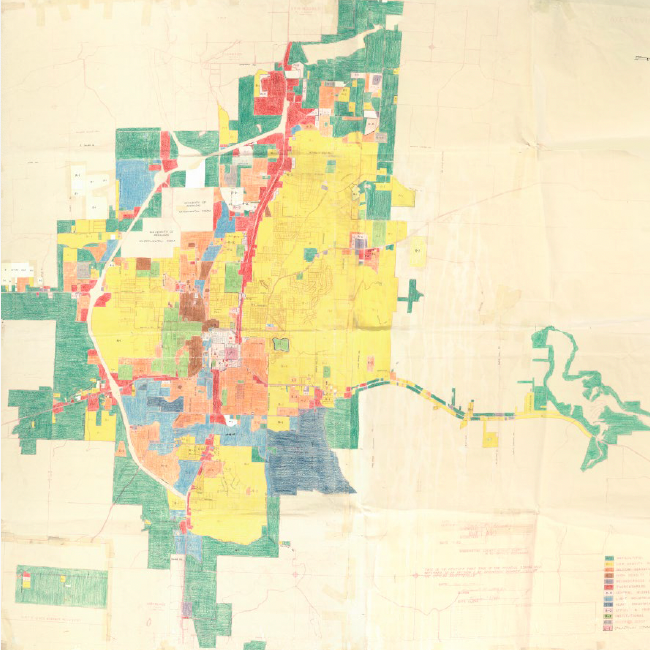
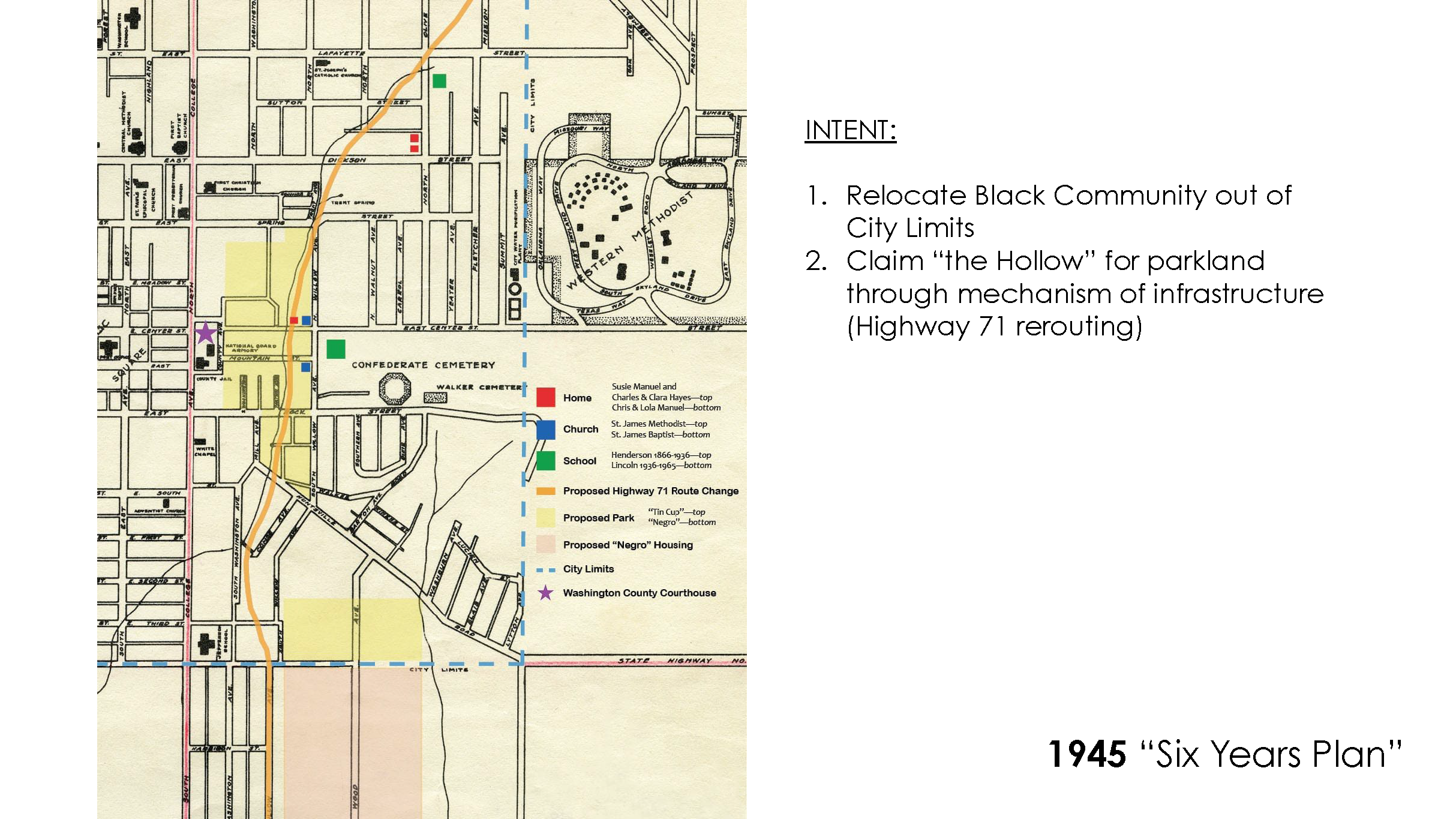
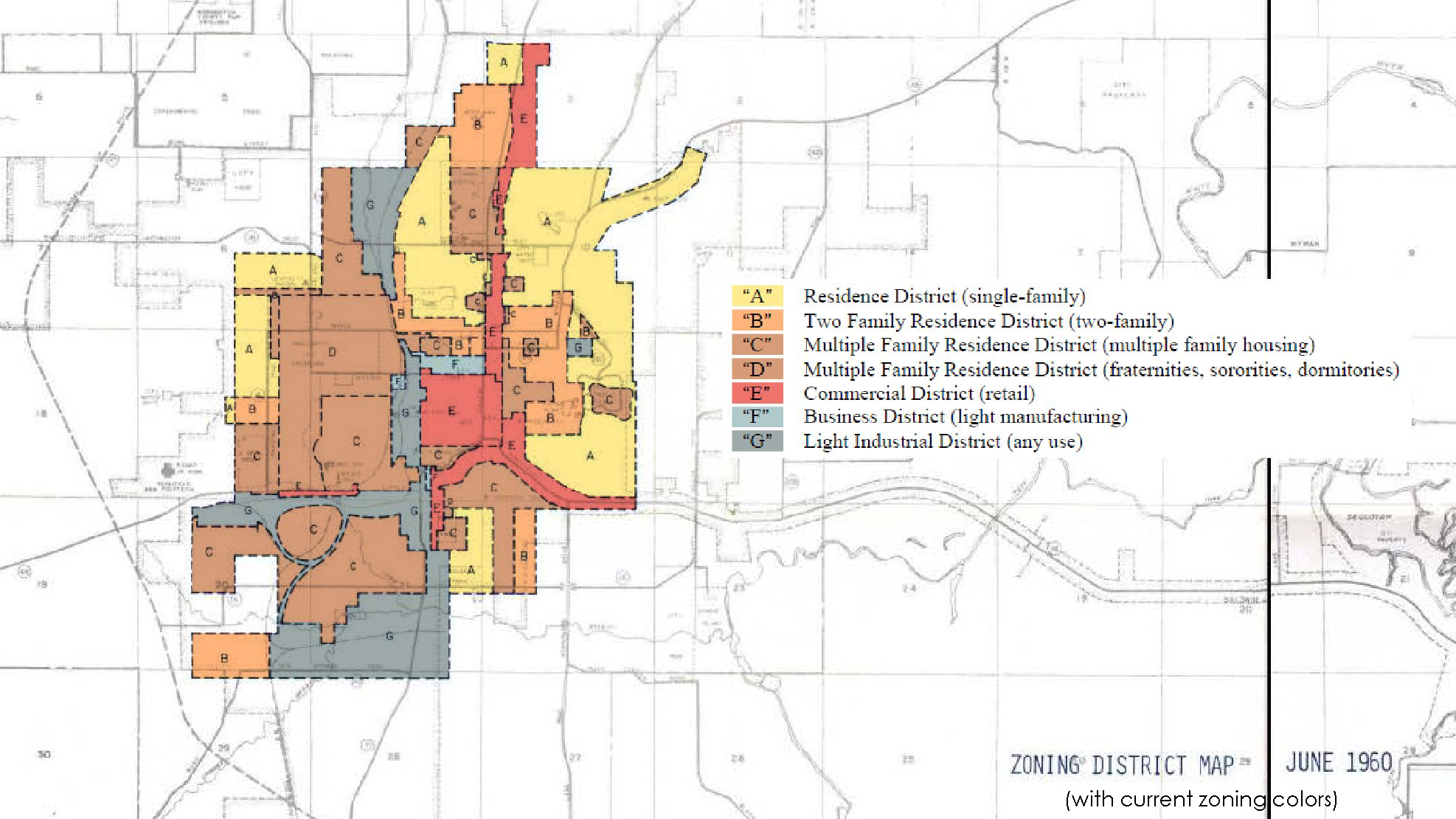
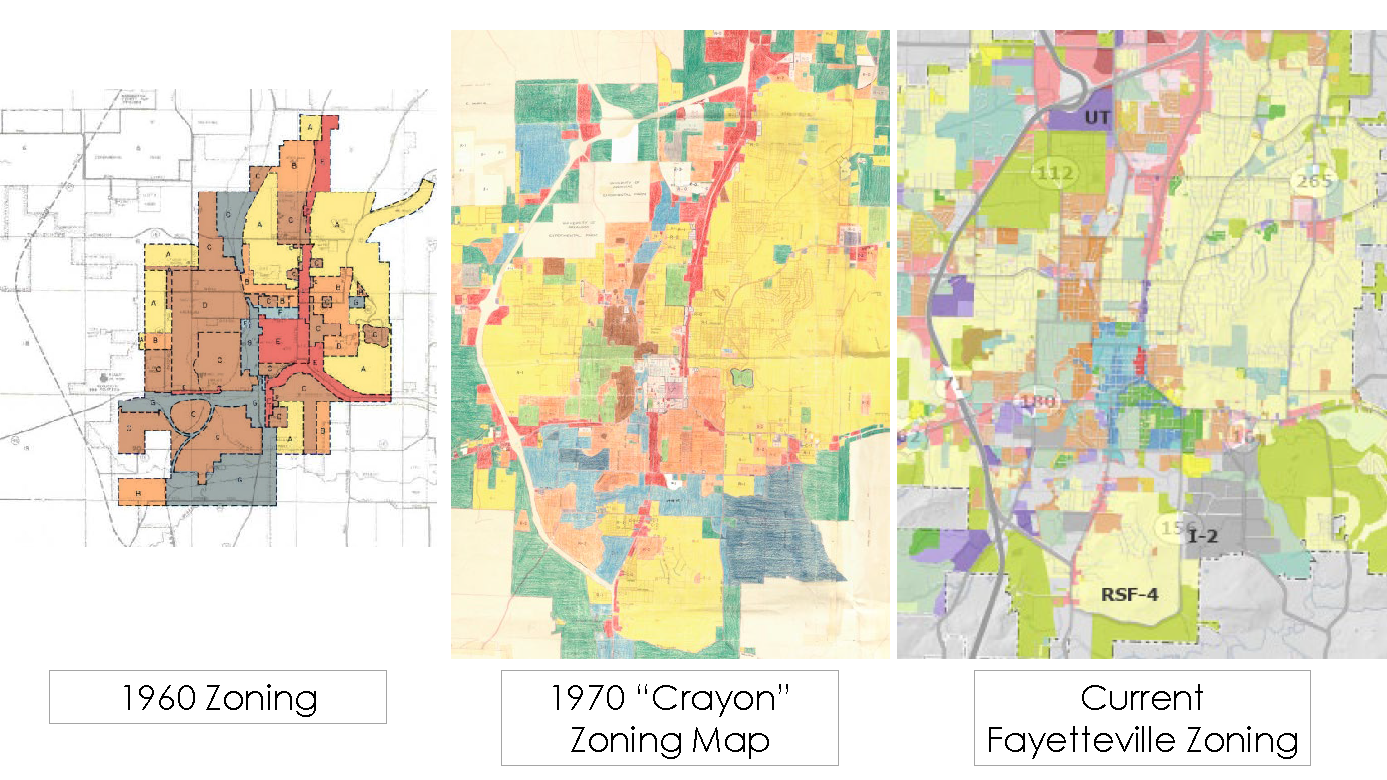
Source: research of Zoning and sewer systems in Southeast Fayetteville conducted by Alli Thurmond Quinlan.
episode notes & references.
- Alli Thurmond Quinlan (LinkedIn): https://www.linkedin.com/in/alli-thurmond-quinlan-aia-rla-4a43368/
- Flintlock LAB: https://www.flintlocklab.com/
- City of Fayetteville: https://www.fayetteville-ar.gov/
- City of Fayetteville Zoning Codes: https://www.fayetteville-ar.gov/298/Codes-and-Regulations
- Black Historic District Proposal: https://www.fayetteville-ar.gov/4353/The-Historic-Black-Community-of-Southeas
- Tommie Flowers Davis, S02E27: the historic district with Tommie Flowers Davis
- NWA Black Heritage: https://nwablackheritage.org/preservation
episode outline.
- Introduction to the Episode: 00:00–00:03
- Alli’s Research Background and Motivation: 00:03–00:06
- Connection to Tommie Davis and Sharon Killian: 00:06–00:08
- Digitizing Urban Renewal Documents: 00:08–00:10
- The Hotel Analogy and the Local Power of Zoning: 00:10–00:11
- Historical Context: 1945 Master Plan and Black Community in SE Fayetteville: 00:11–00:15
- Commercial and Residential Segregation: 00:15–00:17
- 1968 Fair Housing Act and HUD’s Segregation Workarounds: 00:17–00:19
- Fayetteville’s 1968 Urban Renewal Plan and 1970 Zoning Code: 00:19–00:21
- Housing Survey and the Elimination of Affordable Housing: 00:21–00:22
- 1970s Zoning Map and Erasure of Black Commercial District: 00:22–00:23
- Tommie’s Property History and Denied Development: 00:23–00:26
- 1990 Sewer Line and Systematic Obstruction: 00:26–00:29
- Streamside Protection and Project Redesigns: 00:32–00:40
- Final Barriers and Requests from Other Developers: 00:40–00:43
- Tommi’s Perseverance and First Construction Phase: 00:43–00:45
- Call to Action for Listeners and Zoning Reform: 00:45–00:46
- Incremental Development Alliance and Broader Systemic Challenges: 00:46–00:48
- Closing Reflections and Gratitude: 00:48–00:50
episode transcript.
episode preview.
[00:00:01] alli thurmond quinlinn.: The thing that I wanna tell everybody. There is this big, awful thing that we inherited. A huge chunk, majority of our land is still held under these codes that were designed explicitly to make housing expensive and to segregate neighborhoods. They can use their resources to help change that. Zoning reform is critical. Single family zoning and RSF four zoning explicitly came out of trying to segregate neighborhoods. Zoning reform is critical.
episode intro.
[00:01:08] mike.: You are listening to the underview, an exploration and the shaping of our place. My name is Mike Rusch and today we're continuing our story that we began in the last episode with Tommy Flowers Davis. And we're gonna shift from memory to policy from lived experience of Southeast Fayetteville's Black community to the zoning codes and land use decisions that have shaped that experience over time because the truth is displacement doesn't always happen through bulldozers or buyouts. Sometimes it happens in city council meetings, in building codes, and in the quiet language of ordinances and zoning overlays.
[00:01:42] mike.: Our guest today is Alli Thurmond Quinlan, an architect, founder of Flintlock Lab and the former Fayetteville Planning Commissioner. Originally, when I sat down with Alli for an interview, I expected to take her comments and insert a few of them into the previous episode. However, and you'll see this after my first question, it was clear that I just needed to sit back and let Alli share the story that she's been working on for years of how city zoning policies here in Fayetteville were built. Please know that Fayetteville is not an exception, but it's a common story of what we see happening throughout our country. However, because we are focusing on Fayetteville, I want us to take what Alli has to say personally. I want us to have to reckon with the reality of how city created and mandated zoning codes have been used to displace people in culture and how they still impact us Today.
[00:02:26] mike.: Alli helps us unpack how systems of planning and policy, while often viewed as neutral or technical, have long been used to separate, exclude, and erase. Together we're gonna look at how Fayetteville's historic black neighborhoods were denied access to basic infrastructure, home improvement resources, and planning protections, and how many of those barriers still exist today.
[00:02:46] mike.: We're asking questions like, who decides what's worth preserving? Whose homes are allowed to stand and whose are deemed nonconforming? And how might cities like Fayetteville begin to repair the harm caused by policies that have long pushed black residents to the margins?
[00:03:00] mike.: This is a conversation about the power behind the plans. We have a lot to work through today. Let's get into it.
episode interview.
[00:03:09] mike.: I have a privilege today of sharing a table with Alli Thurmond Quinlan, who is an architect and landscape architect here in the city of Fayetteville.
[00:03:16] mike.: Alli, thanks for sharing a table with me. I really appreciate it and look forward to our conversation.
[00:03:21] alli thurmond quinlinn.: I'm excited to be here and excited to tell a little bit about this story that we have been in the office, really deep dive researching for almost 10 years now.
[00:03:30] mike.: We've been talking about Southeast Fayetteville and the work that's going on to make a historic district and you've got a great deal of experience with your time on the planning commission and also in the work that you do around really the zoning history and how that part of Fayetteville has emerged and all the complexity that's gone on To kind of bring us to where we are today, I would love Start anywhere, but I would love to hear your understanding and your background about what that zoning history looks like.
alli introduction.
[00:03:52] alli thurmond quinlinn.: Yeah, I'd love to share. We in the, in the office here I, I run Flintlock lab, which is a multidisciplinary design practice. We do architectural landscape master planning. We also write zoning codes and, and I speak a lot nationally about housing. And so a lot of the context of the zoning work and research that we have done here is really trying to understand and deep dive into fayetteville's zoning history, not because it's special or because it's unique, but because it's normal. And that's the thing that I think is really important for people to keep in mind as we talk through the story, is that this is not a one neighborhood situation. This is not a one street or one town situation. This is a normal history of house zoning works and has worked and the why it exists. And so I think that's the piece that we found the most interesting doing really deep dive research into Fayetteville, because we can take this. Big national, generational hundred years of history and really distill it down into a neighborhood we understand a property that we've worked on, a landowner and a family that we've worked with.
[00:04:58] alli thurmond quinlinn.: And so part of what we've really tried to do to tell that story is, you know, kind of alternate chapters and, you know, we've written a document that you have that's kind of the draft of a book that is alternating chapters between the national big picture of ways that we in the US have used zoning and finance and building code and all sorts of other tools as a means of segregation and as a means of controlling access to resources.
[00:05:26] alli thurmond quinlinn.: And that has been a story that has played out in so much complexity. It's hard to understand and unpack sometimes.
Tommie Davis & Sharon Killian.
[00:05:35] alli thurmond quinlinn.: There's a property that you have interviewed our client, Tommi Davis, whose property in South Fayetteville has really been that centerpiece of that research for us. I started developing in South Fayetteville. I purchased a property around the corner from Tommi's on South Street in 2016 and started doing development there. And it was not a historically black-owned property, but it is directly adjacent to the historic black neighborhood. And at the time, Sharon Killian, dedicated some real energy and time to kind of explaining to me the complexity that I was somewhat unknowingly getting into. And one of the things that she asked was to use, you know, my kind of power and position, as small as it may have been, I had the ability to go to meetings and say stuff she couldn't say. I have the ability to go to meetings and say stuff Tommi can't say. Just via position as an architect, as a professional, as somebody that works within the city as a white woman, right? I have an ability to say stuff and have it come across differently and so she gave a really gentle kind of challenge that I have taken really seriously and also really appreciated her time and effort.
[00:06:43] alli thurmond quinlinn.: I think one of the things that people who don't grow up with an understanding of this history can really struggle with is getting defensive about it and feeling like it doesn't affect them and feeling like it's not their problem and they didn't do it, and so they don't have to interact with it at all. And so I think the, the thing that Sharon really encouraged me to do that I have appreciated so much is she encouraged me to interact with it as a structure that was overlaying a neighborhood I was working in as a structure that was overlaying a town I was working in. And that if I ignored it, I was likely to be accidentally furthering it.
research.
[00:07:24] alli thurmond quinlinn.: And so a lot of the research that we were doing was, one, trying to make sure it. Stayed relevant and became more accessible to people's. One of the first things that I did in the office is we had a summer intern who our urban renewal plan at the time, there was one copy in the reference section of the library, Fayetteville public library.
[00:07:41] alli thurmond quinlinn.: There's only that one paper copy that I'm aware existed. And so we went and had an intern spend God days sitting and scanning in and digitizing that document. We put it in a Dropbox. We scanned in paper copies of zoning maps as we found them you know, we, we digitized all these documents to try to make them more accessible for people. We downloaded the Sandborn maps from the university and got them all in one place. We tried to aggregate all of this historical data in one place and then shared that with city council and the city planning office and planning commissioners.
[00:08:12] alli thurmond quinlinn.: If, if you've seen that Dropbox link, that's thing that thing's been out there almost 10 years now. And people have added to it. And then we tried to start to use that research and understanding to really further conversations that were happening naturally about reform now. And I think the, the best way to describe zoning history. You know, in its worst to people is sort of imagining that, and this is not my analogy, I've, I've read this and it's really resonated.
hotel analogy.
[00:08:42] alli thurmond quinlinn.: Imagine that you purchase a hotel that was built by somebody who actively disliked disabled people. And they made it intentionally as inaccessible as possible. There's as many stairs tucked in as many places as you can find. There's narrow doorways and hallways that turn in odd ways, and the showers are too small and have no grab bars. And there's just a hundred little details in this building that are intentionally designed to be problematic. And they all work together too. You know, some of them work independently and are enough on their own, but then they also all sort of compound together. Imagine you don't feel that way about disabled people, but you bought the hotel, and if you don't do something about widening doorways and removing stairs, you are making a choice to uphold an effect, even if it wasn't your intention.
[00:09:31] alli thurmond quinlinn.: And I think the thing that feels professionally both so challenging and so empowering about zoning is zoning is a local ordinance. And so, you know, five of your friends that live in town who are on the city council, and you know, I use friends sort of jokingly, but like five people that you could meet at the grocery store could change your town zoning legally tomorrow, would they know? Everybody gets scared about it. Everybody feels like it's this. Sacred thing handed down from Moses. I think that's one of the things we've really tried to let our research do is show like this is a dumb, bad idea that was started in the sixties, coming from a dumb, bad place that has had not helpful effects for most communities.
[00:10:16] alli thurmond quinlinn.: And in my work nationally, we have no community that we have ever worked in that said. We have a great housing market. My kid can find a place to live near me. When they wanna start a family, it's really easy for them to find a starter home. My aging mom, who wants to be able to stay in the neighborhood 'cause she loves her bridge club and she can walk to it, can find a house that's accessible, that's a price point she can afford.
[00:10:39] alli thurmond quinlinn.: There is not one place I have ever worked that people feel like they can find the housing that they need in the location that they like at the price point that they need in a way that. Suits this current phase of life for them and the phases of life, you know, before and after that. And so I think it's really important to start from too, you know, we've got zoning as a big piece that sucks and it's negatively impacting everybody's life. And it came from a really crappy place, but it's also negatively impacting everybody today and it has to be changed locally, which means we have a ton of control over it. We could, we could do this tomorrow as a community. The downside is we have to do this in every single community in America because it, there are so many different zoning codes passed by so many different towns, and all of them have the same history.
[00:11:28] alli thurmond quinlinn.: So as you can tell already with our really big long intro. I get teased sometimes that I try to start telling this story, and the intro is always like, okay, in 1945, right? It's not something that you can tell quickly.
1945, Southeast Fayetteville community.
[00:11:42] alli thurmond quinlinn.: But in Fayetteville the story does start in 1945 on this property, specifically when the Parks master plan which is in that Dropbox, which you're welcome to post a link to so your, your readers can dig through some of that documentation.
[00:11:55] alli thurmond quinlinn.: The Park's Master Plan was published showing, I guess to, to give one more step back of context. We had in northwest Arkansas, in Fayetteville, one of the only intact black communities in northwest Arkansas because our other towns to the no were sundown towns. And so they did not have black populations because they were lynching and running people out of town. So, you know, as we start from some of our adjacent communities feeling like they can, you know, really feel strongly that they were doing a good job while Fayetteville was doing this, this bad thing. Again, I wanna reinforce this was best case scenario. This was the best place that things were happening. So keep that context in mind as we go.
[00:12:35] alli thurmond quinlinn.: We had a really intact, black population that was living on the east side of Mount Sequoia. My understanding is that there is a, a portion of that population that were the freed slaves from the Walker Plantation. And that there also were a number of other families who had come through Fayetteville had immigrated to Fayetteville, but we had a really successful, intact population that was a freestanding community. We had a beautiful black church, St. James. We had, you know, a, a thriving little commercial district. There was a, there's an inn that was run by the wife of the minister at St. James Methodist that showed up in the Green Book in 1954.
[00:13:15] alli thurmond quinlinn.: There was a cafe and you, you could rent rooms. And if you're not familiar with the Green Book, it was so unsafe to be black in America that you had to have a, a book to tell you if you had to, for some reason in your life, drive across the United States, here's where you can safely stay. Here's where you can stay and not be murdered. And I, I think that's. I come from a really conservative place and I come from a really conservative family. I grew up in a, you know, Republican family that didn't talk about this stuff much. And I think it's really important for people to lean into. That was the reAllity. I. People just disappeared.
[00:13:46] alli thurmond quinlinn.: There was a book to show you where it was safe to go stay, and Fayetteville had this great little community that was a safe place. It was an intact place where families were raising kids and it was not great. But we had a school for black kids and we were one of the first integrated communities, and so there were good and positive things happening there.
[00:14:06] alli thurmond quinlinn.: There was joy and success concurrent with some of this stuff happening.
1945 park master plan overview as tool for removal.
[00:14:10] alli thurmond quinlinn.: 1945 Parks Master Plan published by the city of Fayetteville, showed a city park covering the extents of that intact black neighborhood and described in the verbiage of the parks master plan in writing in a formal public city document that eminent domain around easements for utilities and to get, parkland should be used intentionally to move the black population out of the city limits and south of 15th Street, that same map, that same master plan shows what is labeled as "Negro housing" outside of 15th Street with verbiage written to say. We'd like people to be able to be close enough to come in and work in town, but not live in town. Right. So that was, that was sort of that first city document that we have.
[00:15:00] alli thurmond quinlinn.: Concurrent with this Archibald Yell was cut into the south, hill College Avenue and, and what is now MLK had been those main thoroughfares through, through town. Archibald Yell was cut through in a way that very intentionally separated the black neighborhood from the square.
[00:15:18] alli thurmond quinlinn.: So 1945 is that, that first political document that we really find in the city of Fayetteville. And concurrent with that, I think it's important to note that as people came back from World War ii veteran. Mortgages were a really major piece of building out a middle class culture of homeowners via a subsidized mortgage product by the United States and in the Color of Law there's some really good conversation about what was happening in the early twenties, thirties, forties, about intentionally trying to build homeowners and, you know, intentionally excluding black residents and black veterans who were coming home from the world, world War ii from that opportunity for generational wealth building. So I think there is this really post-war element that is easy to track, that's lots of writing about how much we excluded financially from the primary way our country has given generational wealth to middle class families via subsidized mortgages and housing. You know, that is built under pretty specific standards. That was a program that gave a lot of money to families that is, you know, if you look at the generational wealth difference between white families and black families, that financial piece around mortgages, especially forties to the sixties, basically explains those numbers.
[00:16:35] alli thurmond quinlinn.: So, you know, as we look at neighborhoods that don't have the wealth in them, that is the, the thing that it's really important to note. So this is too where it's all one big complicated knot of finance and zoning together.
black commercial district.
[00:16:46] alli thurmond quinlinn.: I, I wanna reinforce too, we had a really intact black commercial district because we had a segregated white commercial district, and so people weren't allowed to shop and work and interact with commerce at the square. Which was why we had an intentionally segregated, commercial district.
[00:17:04] alli thurmond quinlinn.: So that was that first public document where this, this shows up in writing that we have found. And then there's a number of documents through. We had, we had what I would call zoning light forties to the sixties where we had some zoning, but it was more about keeping industry away from residences. And it, it wasn't, it didn't have a lot of teeth to it.
1968 Fair Housing Act.
[00:17:25] alli thurmond quinlinn.: 1968. Fair Housing Act was passed. It became illegal on a national level to discriminate based on the race of a home buyer. There are, and if you have not read the Color of Law that's your prerequisite for this. That's your homework for today. It's written by a white attorney. It's a case law, history of segregation in America. It's fabulous. When the Fair Housing Act was passed, there were a number of people at HUD who, how Housing and Urban Development as a department, right. Departments are, department heads are not all consistent politically. Fair Housing Act was a big win. And also there were lots of people at HUD who, and in other departments that wanted to continue to promote segregation.
[00:18:08] alli thurmond quinlinn.: So 1968 Fair Housing Act passes. There is a division in HUD that wants segregation to continue and pushes out a set of processes by which now people can comply with fair housing and use zoning in the same way that you used to be able to use racial covenant. And so it's pretty explicitly talked about there, right? There's lots of good writings and that's not really a thing that is in question. They explained that, they said the quiet part out loud in writing, you know, ways we can find that the point of zoning that was pushed out as model zoning codes by the federal government in the late sixties and early seventies were specifically to circumvent the Fair Housing Act.
1968 Fayetteville Urban Renewal Plan.
[00:18:47] alli thurmond quinlinn.: And so in Fayetteville in 1968, we had an urban renewal plan, which was something you had to have in place in order to be able to get funding from HUD to pass a zoning code. And so, you know, that was a series of programs.
[00:19:01] alli thurmond quinlinn.: Our zone, our urban renewal plan was done in 1968 by the same planner who then wrote our zoning in 1970. I think it's also really important to note to people. He wrote the update to our zoning code in 1991 as well. And so if you are not in the downtown overlay district or one of our form-based codes, which is about 75 to 80% of the land area in Fayetteville, you are under a zoning code that was written directly out of our 1968 Urban Renewal Plan and that 1968 Urban Renewal Plan very explicitly described ways that the city should be taking resources from black neighborhoods, segregating those neighborhoods, relocating residents, and ensuring that white residents never had to live next door to black residents. It is. It will make you uncomfortable to read through that document, and I encourage you to do so. If you'd like to be radicAllized, all you have to do is like read the stuff, read the baseline of the laws that we still operate under, under in Fayetteville.
housing survey.
[00:19:57] alli thurmond quinlinn.: And one of the other things that I think is so helpful that that 1968 document has besides just not hiding, kind of how bad that entire baseline was. Again, not specifically in Fayetteville, but everywhere is that it did a poll of how much housing we had. So we had a surplus of affordable housing in the city of Fayetteville Based on their surveys, we had about the right amount of middle class housing, and we had a shortage of luxury housing. Even though luxury housing was in no way illegal or hard to build, it just wasn't that popular. And so the zoning code that then came out of that urban renewal plan explicitly was stated to have a goal and I said this at planning commission meeting minutes. When they passed it, the planning commission said we have to discourage low cost housing.
[00:20:43] alli thurmond quinlinn.: We have to make the standard a nice home on a large lot. And they said out loud the thing that we are all feeling in our current housing market, they have discouraged low cost housing. We cannot subsidize our way out of a system of housing that is designed to make it inaccessible for people and designed to make it not work for people. And you know, this is another one of those opportunities to really reflect on the ways that we have tried to be terrible to populations within our group have made it worse for all of us, right?
[00:21:17] alli thurmond quinlinn.: We are shooting ourselves in the foot. Even if you can't get all the way to the fairness and equAllity and justice and like all of these great foundational things that our country is built on. Right. That we, as you know I'm, I'm in my late thirties and I was in a generation that, like we just say the Pledge of Allegiance every morning. I think a lot of our boomer parents kind of feel like our generation is a little bit radicallized and, and surprisingly liberal. But we were all raised in churches and in schools that told us that we lived in a country that was about taking care of people, that it was about community and it was about sacrifice for the people around you. And you know, the, the greatest things about our country is that we were the land of the free, and we were supposed to use the rule of law for fairness. And so even if you can't get all the way there, I also wanna appeal to your self-interest that like, this is also bad for you.
1970 zoning & crayon map.
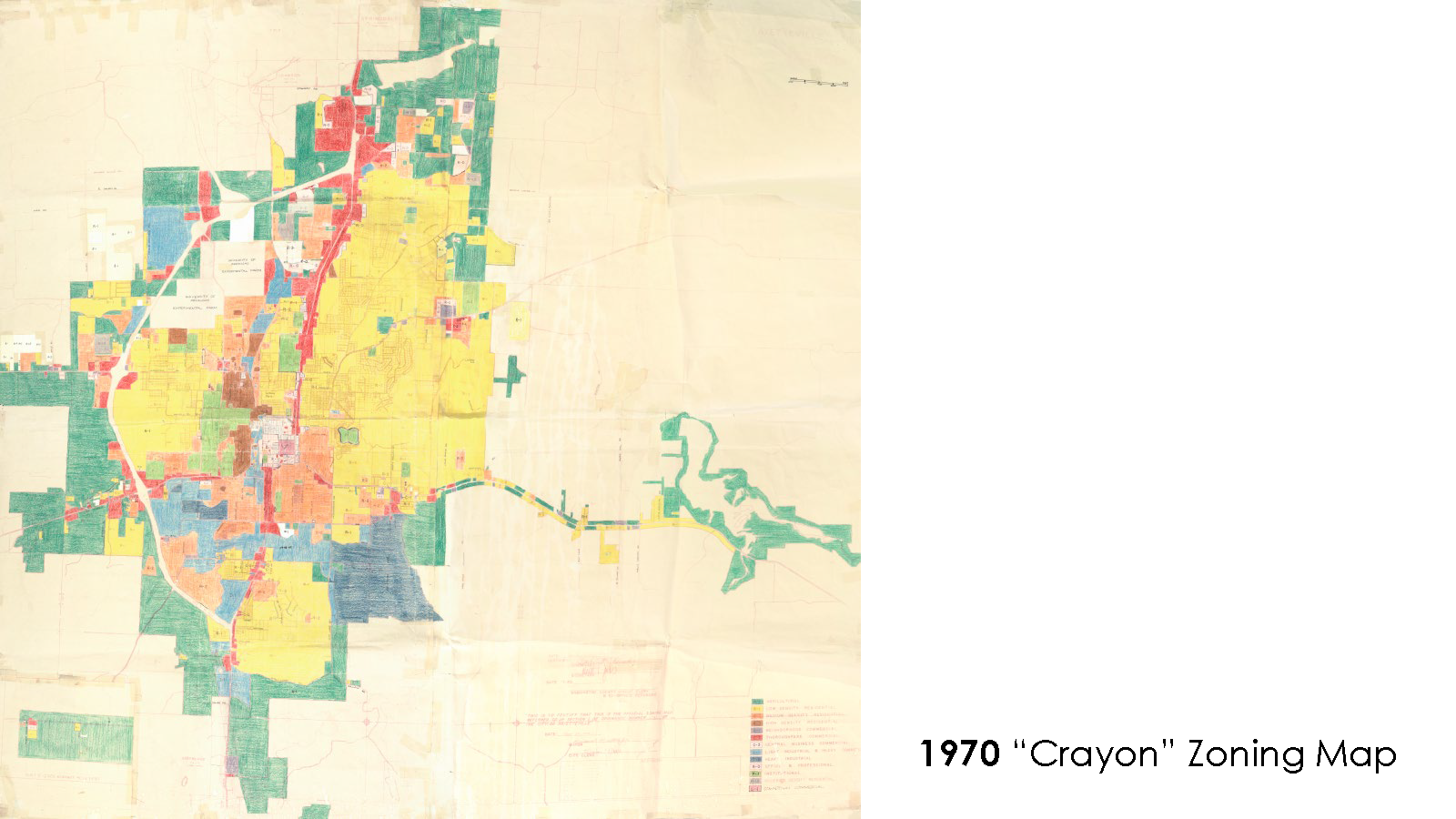
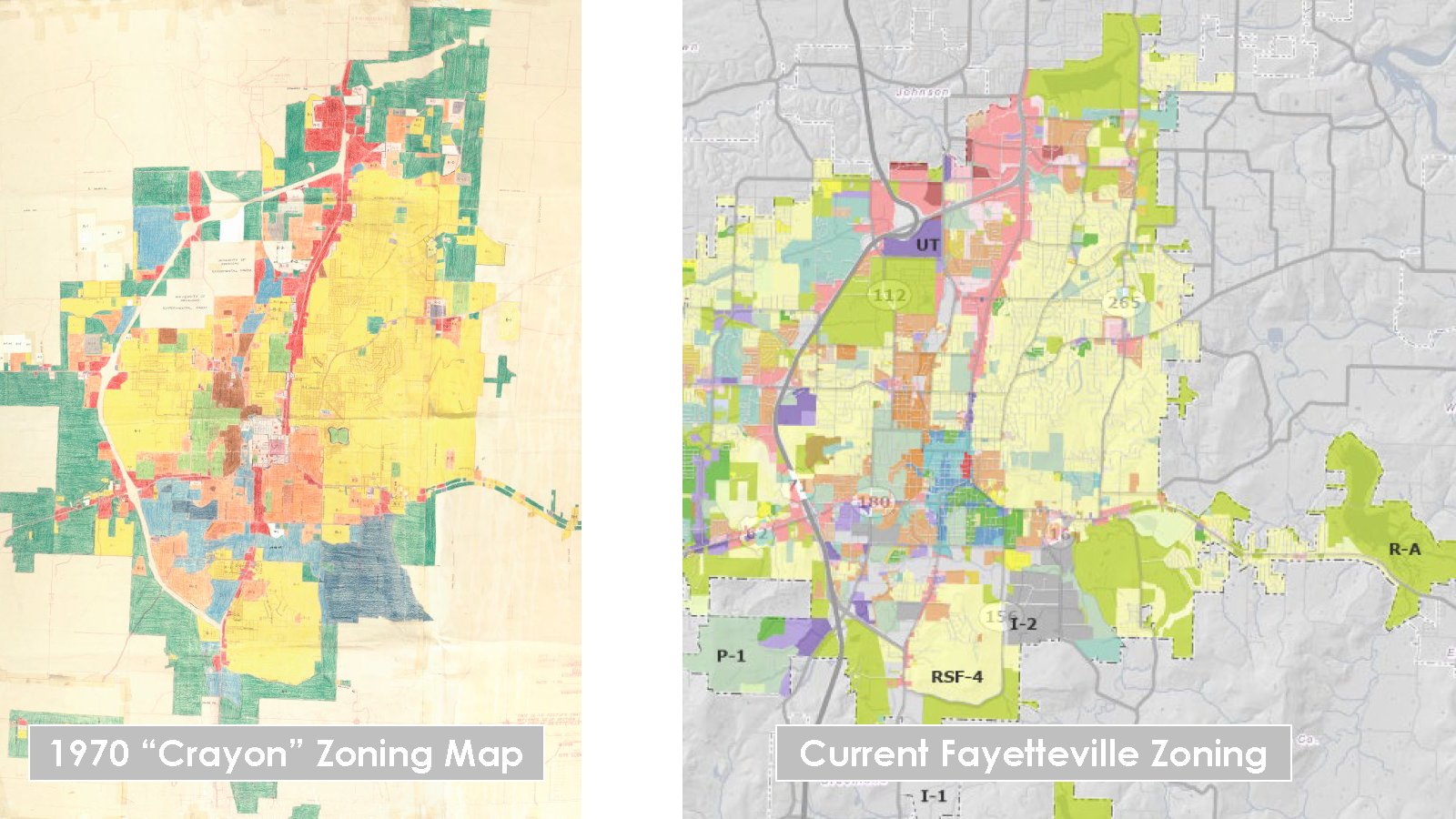
[00:22:16] alli thurmond quinlinn.: When we enacted zoning in 1970, the entire black commercial district was zoned multifamily. Every single one of those buil businesses was zoned out of existence, and we eliminated tax revenue. We eliminated sales tax. We eliminated a source of income for families. We eliminated and reduced our own revenues as a city, not to mention the active violence of using city ordinances against people and against their, their means of, you know, being able to support their own families and so it feel, you know, that 1970s, we call it the crayon map, and that's what it's long been called in the, in the planning office here in Fayetteville because it's the first zoning map that when I started working with the city of Fayetteville, I was on the planning commission for a number of years and I've been on the Construction Board of appeals for almost 10 years.
[00:23:11] alli thurmond quinlinn.: The crayon map was the oldest one that I knew that anybody knew where it was. We have since found a 1950s zoning map that's in, in that document. But the crayon map in 1970 is the one that James Visier, who's the, did the Urban Renewal Plan, wrote our seventies zoning. That's his zoning map. That's that first big one, and that orange color that designates multifamily housing over that entire neighborhood can feel if you don't know what it means, really neutral. And I just, I wanna reinforce to everybody how not neutral it was.
Flowers property.
[00:23:40] alli thurmond quinlinn.: In that story of the Flowers property Tommi's mom had the property starting in the fifties and sixties and tried to develop, first she wanted to put a beauty parlor on it. It was at a little corner. If you look at the Sandborn maps, there's a mill that is on the property where Joe and Angel own a motorcycle shop right now. Steven's family, they've owned that for a long time. Their kids live in the neighborhood. It was the site of the roller mill. And so starting in the 1850s, there was a flower mill on that site right there at the spring. It burned down in Civil War. They rebuilt it. That corner has been a little corner of commerce and it was a desegregated corner of commerce for a really long time, corner of Huntsville South and Mill. There was a grocery there was a little paint shop. There was a lumber yard. You know, if you look through the Sanborn map. 1898 to 1945 there's lots of little, you know, Fayetteville was mixed use the way all towns were mixed use because you didn't have a car and you put a business next to your house and it was this corner where Tommi's property is that was this long term corner of the beginning in the founding of Fayetteville. And this idea of putting a little business on that corner right there at at the creek on Rock Street made complete sense from a historical standpoint that. Surrounded by similar buildings when we talk about compatible uses for zoning, right? It was a very compatible use.
[00:25:03] alli thurmond quinlinn.: She couldn't get permission and we've dug through notes and, and cannot find a legal reason by which she was denied and the, the board she had to go to, I'm not sure why they made her go to the board of adjustments to ask permission to do this, which doesn't make much sense.
[00:25:20] alli thurmond quinlinn.: The board of adjustments, more or less didn't give her a reason that would've stood up in court that she wasn't allowed to do it. But functionally, they didn't let her build the beauty shop. And then they started asking her for, if you remember, back to 1945, they started asking her to donate that property for the park. People started coming to her house. This is something Tommi told me early on in meeting her, is that people used to come and knock on the door and ask them to donate their property for the park, and they couldn't understand it because they, the park owned a lot next to them that they'd never done anything with. And they weren't developing the park. They had, why did they want more land?
[00:25:55] alli thurmond quinlinn.: And I want you to call back to that 1945 parks map. And if you get curious and dig and pull on that thread like we have, every park map since then has also shown that area as a park. And I think a lot of people in our parks department probably don't recognize the history of what that means that it keeps getting repeated and that we, it, if you say it long enough, it becomes this assumption that there's some good reason that you know, we keep asking for that and there's. There's not, there's, there's the worst reason possible.
[00:26:24] alli thurmond quinlinn.: So she couldn't develop the property in a way that I want you to also think about what that would've meant from a generational wealth standpoint, owning a functioning business, for the last 70 years instead of an empty parcel that you're paying tax on.
1990 sewer line survey.
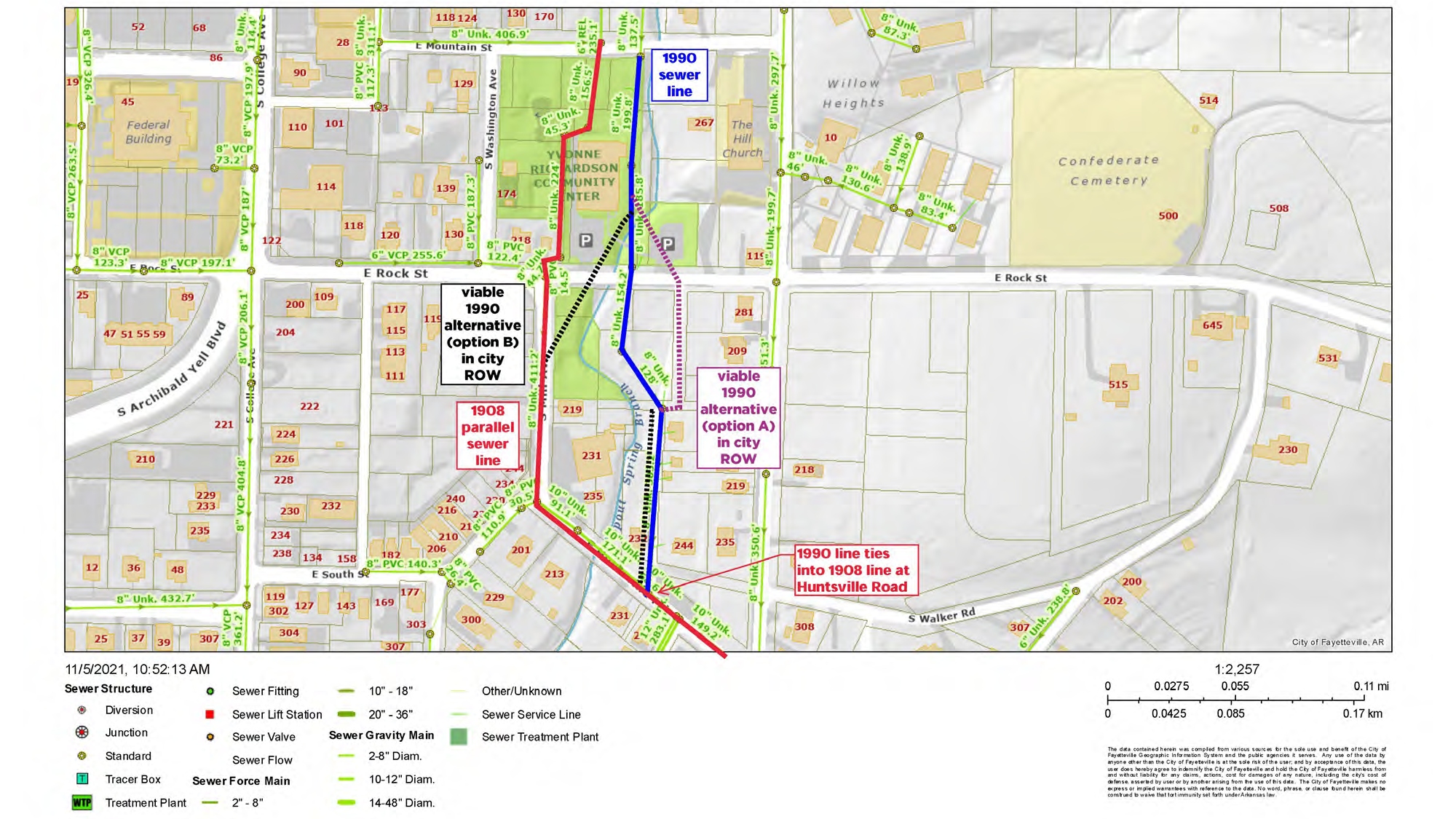
[00:26:38] alli thurmond quinlinn.: So they kept, kept it for a number of years. Her, her brother then tried to develop a set of apartments on it. They wanted to do some small cottages that were going to be affordable housing. I think that was in the eighties or nineties. Couldn't get permission to do that in 1990. And if you'll recall again, that 1945, we should use utilities to get property away from black families. The city built a new sewer line starting in 1990.
[00:27:05] alli thurmond quinlinn.: We did a full survey of the city Fayetteville sewer system. If you ever wonder what I'm like as a person, here's, here's what I do with a tiny piece of information trying to pull the thread all the way back. We did a survey of the entire sewer system in the City of Fayetteville, and we looked at every time a sewer line had been built across a lot under one acre in the middle of the property on an undeveloped property in a way that would make it undevelopable. That's an unusual thing. Generally, we're gonna put 'em at the edges, right? It's not uncommon to see utilities on property lines so that the setbacks are covering the easement. It's not unusual to put a sewer line through a property coordinated with the development of the property so that everything works around it.
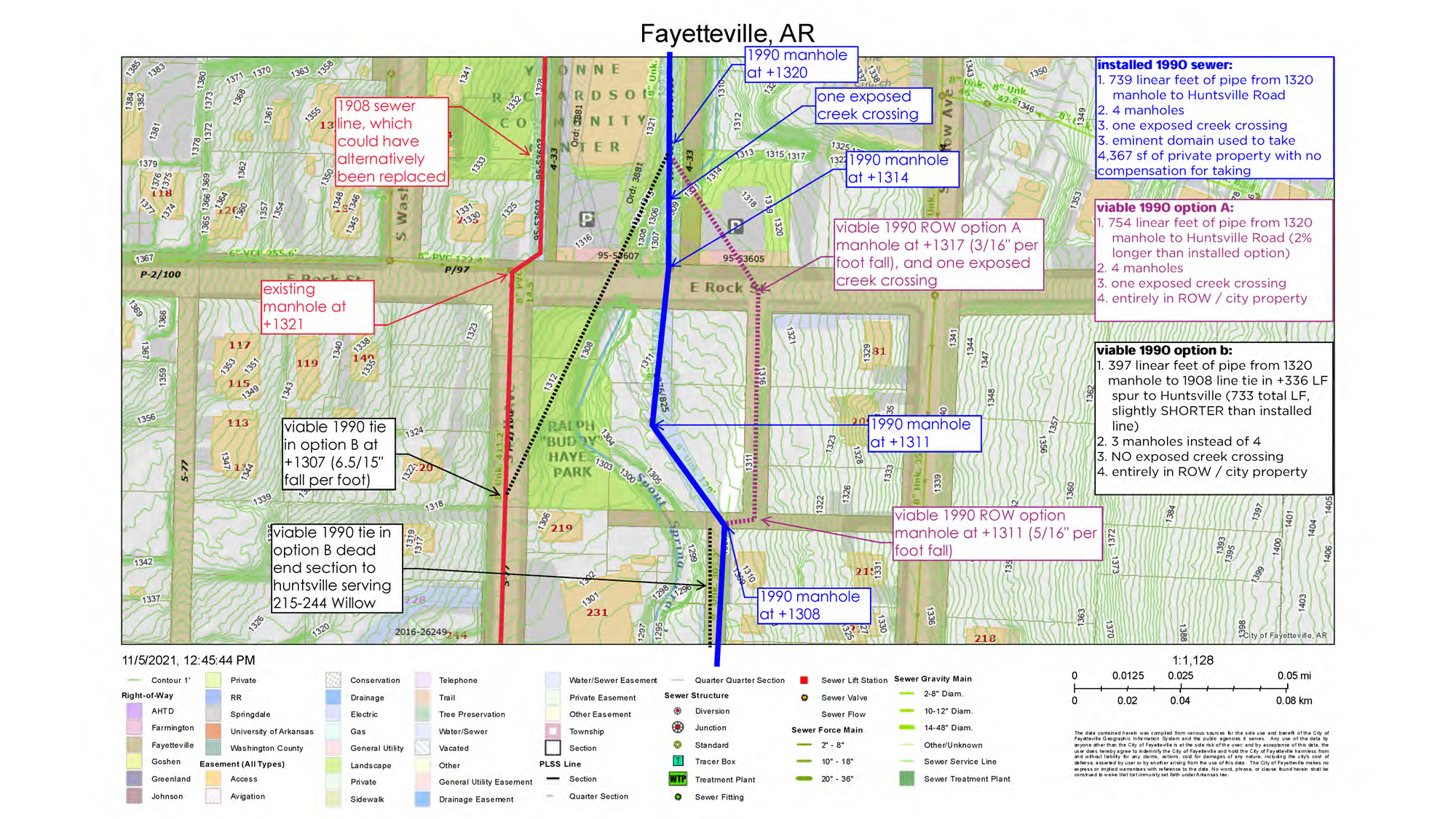
[00:27:49] alli thurmond quinlinn.: It's really unusual to run one across an undeveloped property. It's only happened nine times in the entire city of Fayetteville that we were able to find. And seven of those times are on one line that runs North South through our historic black neighborhood. And I wanna give a real shout out to our water sewer department and just our city staff generally. We, when we started researching this, were trying to track down Tommi's property had two sewer lines easements diagonally in opposite directions across the property. If you were gonna try and make the property undevelopable, it would be the thing that you would do to make it undevelopable so that it wasn't worth much so that you could get it donated to you for your park.
[00:28:30] alli thurmond quinlinn.: One of them had a sewer line in it, one of them did not. And we started pulling historical notes and we asked, are there any records on this? We didn't do a formal FOIA request. We just asked somebody at the sew department. They went and dug through files for us. They found a bunch of handwritten land agent notes and civil engineer notes about the lines. When these were done, they scanned them and provided them to us, 10 of 10 city government.
[00:28:52] alli thurmond quinlinn.: In the handwritten notes, you know, if you read through the hundreds of pages of handwritten notes as we did. You will find the city land agent write to his civil engineer in writing "_that they don't even need the sewer line._" it's 50 feet parallel running from an existing sewer line that was in good shape and is still operational. And when we started looking at why is the sewer line running across Tommi's property, we noticed and made some graphics, you know, that we had shared with the sewer department trying to figure this out, that you could have run the line more efficiently around her property than you ran it through it. It was longer than it needed to be. It had extra manholes, which are the two things as you're trying to avoid cost and maintenance that you avoid. And it ran parallel to an existing sewer line that still operational in a way that doesn't obviously serve any additional houses.
[00:29:45] alli thurmond quinlinn.: Early on, you, you notice that this doesn't really make any sense. And then we found in writing that it doesn't, and that they knew it didn't. And they routed the line along property edges for several white landowners. They, there's handwritten notes about how they value the value of those easements. And they compensated those white landowners, coming through Tommi's property they did not compensate her family which was a source of real contention. I think the spiciest memo I've ever had written about me in the city of Fayetteville our city attorney wrote while I was on maternity leave for my second baby alleging that I was secretly the developer of Tommi's property, and I was trying to defraud the city of money by asking them to move a sewer line that was making the property undevelopable. And I I will note that he was relatively good friends with several members of city council during that 1991 vote to eminent domain this sewer easement with no compensation. I will also note that he was himself on city council. Really? Soon after that. And so we, I, there are several interactions in this process that I think I started out really naively thinking this is a historical problem. This is an old hotel that we bought and we need to widen the doorways. But as soon as we tell people that the doors are too narrow and it's not working for people, we'll just fix it.
[00:31:06] alli thurmond quinlinn.: And we've had a few really disenchanting interactions and that was one of them. One of the things that has been tough too, you know, as we, we had, we FOIAed asking, was there compensation given for this sewer easement that cuts across Tommi's property? We received back from the land agent, we show no history of compensation. That was the baseline of our understanding. We found in the land agent's notes and in copies of letters that were sent to her mother. That, and I, I wanna note that they sent them to her mother. Her brother owned the, the property at the time. They were not sent to her brother because he was serving in the Gulf War in the military. He, he was overseas in a war zone while this was happening. So they sent a letter to her mother offering a thousand dollars to expedite the signing of the acceptance of the eminent domain easement.
[00:31:59] alli thurmond quinlinn.: They valued the current market value just of the dirt of the easement that they were taking at $8,000 of all of the, the sections along the line, this was one of only two that they voted to eminent domain. Most of them, they pressured people into signing. So when we got this very spicy memo from our city attorney it was sent only to city council. It was not sent to us. We received it from a city council member. It also included documentation that a thousand dollars had been paid for the easement in compensation. And so our claims that it had been taken without compensation were untrue.
[00:32:52] alli thurmond quinlinn.: So we, you know, we got into this situation, right? Where, how do you handle defending your honor, defending your reputation, feeling like we had come to the city council with probably the most polite ask I can imagine, right in this situation at Tommi's direction. She felt like she has to live here, right? This is her home. She wasn't trying to pick a fight. She just wanted to be able to develop her property the same way her mom had tried the same way her brother had tried. She was trying to get along, and so she gave us the direction up front before this memo came out. We were to handle this in the most kind, low conflict way that we could, because it wasn't really safe for her, for us to handle it the way I would've if it was my property. And so we had gone kind of quietly one by one to city council members to planning director to water sewer director, given them the cliff notes of this, Hey, we have this water line. It was eminent, sorry, sewer line. It was eminent domain with no compensation from a vet who was deployed. We didn't even need it. It's serving a couple of houses that could have been served by the existing one. This is so junky. Let's just move the line. We got a price quote to move it. It was gonna be like $40,000.
[00:34:14] alli thurmond quinlinn.: The city impact fees from us developing that property are gonna help pay for that, right? Let. Let's just move the line. We'd even offered to cost share. Let's move the line and, and vacate the easement that will allow the development of the property. We don't have to dig into the whole huge history. We're not gonna talk about this in public meetings.
[00:34:30] alli thurmond quinlinn.: Let's just move it. Let's just fix this. And then that was our response from the city attorney. And so Tommi asked us to pause after that happened for a little while and for us to figure out what the best strategy was to try to get her goal done, which was developing the property in her lifetime, which her family had been trying to do for almost 70 years.
[00:34:52] alli thurmond quinlinn.: And you know, we, we took some time to kind of dig back through. That's when we did the super line analysis and, you know, we, we used some of that spice and vim and vigor to do a lot of this research that came out of this. And a lot of the writings that came out of this we're in that time period of us to kind of taking a pause, talking to attorneys too, on both a national and a local level. Right? Like what. What is even available as options in this situation to make this property developable?
[00:35:19] alli thurmond quinlinn.: One of the other things that has happened in the interim of them not being able to, to develop the property over a number of years is that our streamside protection zones have increased significantly since the seventies when they first started trying to develop. So there's lots of properties including city developed community centers across the street that are developed right up to that creek because that was allowed until relatively recently. And, you know, not speaking to the should it or should it not be allowed, but almost 40% of that property became undevelopable as a result of increasingly stringent environmental concerns. And so as we really talked through what we could do on that property, the sewer line wasn't the only challenge. There were all of these other kind of nested ordinances that were changing as we went that increasingly made it challenging to develop. And so we'd done it. It became this Tetris puzzle. After taking a pause and thinking about it, do you know, kind of working through the options? Tommi's direction to us was to try to figure out what we could do by right without moving the sewer. She, she gave up on it. It, it felt like fighting that fight was the thing that she would be able to do instead of building something positive and she wasn't willing to do it from a really, you know practical and reasonable. This isn't what I wanna spend my energy on.
[00:36:39] alli thurmond quinlinn.: So we went forward and redesigned the site to be a series of little cottages that worked around the insane geometry of what the city had left for her to build on. I took it through and I also, I'll, I'll compliment again. We had been working really closely through this process with several city employees in different departments who have purview over this stuff. Right? We needed we needed to work within our streamside zone, right? We had to work with, with that team, we had to work with our planning team on the zoning is challenging and we had to work with our water sewer department on water connection. And, and I want to give again, like there are many employees within our city who could not have been more supportive at helping us find the legal simple way through what was a convoluted mess of the hardest property I have ever developed because it had had generations of trying to make it undevelopable that we were unpacking one step by one step.
streamside variance.
[00:37:35] alli thurmond quinlinn.: So we got to a site plan that we thought worked and we needed a streamside variance which is not uncommon. The city gives a number of those a year. There's two zones along the stream. One is 25 feet from the bank. It's called our waterside zone. You're not supposed to do anything in that. Second one is called the streamside zone, which is 25 feet from that. So a total, you know, that 25 to 50 zone that you can sometimes get a variance for, you can do a little bit of stuff in.
[00:38:00] alli thurmond quinlinn.: And we had a request to put part of one house. In the streamside zone in a tiny little corner in the waterside zone, it seemed like the most, again, we were instructed to ask the most reasonable things we possibly thought we could, took that through. And we were really surprised that it failed. We couldn't get the waterside zone. They would let us have the Streamside zone.
[00:38:24] alli thurmond quinlinn.: This second part of the story is dicey 'cause I have to walk both lines of, I'm also a city consultant in the park now adjacent to this, which with Sharon, I went and asked for bond funding from the city council for in 2016 to develop the park that was granted. We've also done some tactical urbanism at that. That corner, working with the YRCC we are now the local landscape architect for that park across the stream from, from Tommi. The architects for the building doing the, the restoration came and asked weeks after for a waterside zone variance for the building diagonally across the street from her.
[00:39:02] alli thurmond quinlinn.: And it was granted and they built a building all the way up to the Streamside zone. And I know everybody about it at the time felt uncomfortable, right? Like, I'm, I'm not saying that, that team that asked for that and got it, didn't feel uncomfortable about it, and it still happened. Right. And so Tommi lost two cottages, which change changed the valuations right? Of, of a project to lose 20% of your units, more than that, 30% of your units. So we came back and we redid a site plan again. We got, we, we switched to some townhouses. We switched from two bedroom units to one bedroom units. They switched from one story to two story. We, you know, so we, we were still trying to get a program that worked. This is like redesign, full, redesign number seven of this. And I, and I wanna reference too. My whole business is doing projects like this and we've done them ourselves as developer nearby. We do them for clients all the time. This is hands down, without a doubt, no competition. The hardest development project and design project I've ever taken through. We've been working on this with Tommi for six years for a couple of cottages with the easiest client on the planet.
[00:40:11] alli thurmond quinlinn.: Did another full redesign. Got it through you know, in that IT com. It complied with our streamside variants that had been given. It complied with Z zoning, signed off engineering signs off streamside signs off. We go to start pulling permits and water sewer, who's been lovely, who we've been working with for a really long time, who's been totally like us, focused on that goddamn sewer line. Notices that the water line in Rock Street out in front of the property is a one inch galvanized line that has been abandoned by the city and there's no water service to the property. There's been stuff developed on the street since the 18 hundreds, and there's not a waterline in the public street out in front of the building.
[00:40:52] alli thurmond quinlinn.: So then we have to restart that process of there is a program in the city that you, anybody can ask for cost share to, to install infrastructure when the city should have infrastructure there and doesn't, or it provides benefit to more than one property. So we worked with water sewer who again were wonderful who worked, worked with us to get a waterline design down an alley in the back 'cause it was gonna be cheaper than dinging up the street. They let us put it in a 15 foot alley instead of, they normally want 20 feet. They helped us take it through city council for cost share also. I mean, it's like a $10,000 cost share. It was not a lot of money. But it's months of process. Right? And when Tommi started this 20 16, 20 17, construction costs were like a hundred dollars a square foot, and interest rates were like 3%.
[00:41:42] alli thurmond quinlinn.: You know, construction costs are now 1 75 a foot. And our con, our construction loans that clients are getting right now or. Seven to 9%. And so we just, we are in this completely different rates environment and performance environment that she also now has a less productive project 'cause we've got all this extra land we can't build on. So we're then you know, working through. Okay, so now because we're putting a water line in, we need to do a grading plan for the alley. We're using our gr the alley as fire access. And so we need to do, to do a grading plan for it. So we need an engineer for that. So the engineer is working on it.
across the alley.
[00:42:16] alli thurmond quinlinn.: We've got that, almost all that We're 98% of the way through approvals and a developer buys the property across the alley from us and starts asking if Tommi will cost share their utilities, and if she will move her buildings so that they can, I shit you not build a sewer line for their property, can she build on less of her property so that they can have a sewer line for theirs in the alley?
[00:42:40] alli thurmond quinlinn.: And I bet the rudest that I have been to anybody in my recent memory is standing in that alley with them explaining why no, we will not pause our project to move, to build a retaining wall and a sewer line for your project that no, that will not be happening. And again. I'm always serving this role of like, saying it the way I would say it if it was my property while Tommi sits and is like the nicest possible person because she's just trying to get something built. Right. And so I also wanna give her sort of the vAllidation and reassurance and, and also, you know, if they're listening, give them the vAllidation. I'm, I'm sorry, I was really rude and also you came way late to this party without understanding the context of the thing that it is you were asking.
[00:43:22] alli thurmond quinlinn.: And so this, I think, too references really back to recalls, that first statement from Sharon. You have to understand the context that you are working in because I think it's so common for people to come in without all of this understanding of things that other families have been dealing with for generations and ask what feels like a reasonable thing to them, which is not a reasonable thing in the context of everything else that has happened.
[00:43:51] alli thurmond quinlinn.: And so I think this is too where there is so much power in that research and that context and that understanding and that empathy that it has not always, and is not always as easy for one landowner as it is another, even when our laws feel very rational and reasonable and you know, practical.
progress.
[00:44:13] alli thurmond quinlinn.: So, so we're, we're currently we, we then took the project to the bank and although the project, although Tommi has an enough equity to do the project and the proforma works fine. Again, we do performers for these projects all the time. The bank was not comfortable lending on the entire project at once, which is the way that it would've made the most sense to do this. And so she's currently building one first phase cottage. After seven years of work, she will build, build her first comp setting cottage. We, we've got a little set of six that are little townhouses, little one bedroom townhouses that are cute as a button. And then one little freestanding, same floor plan, but built as a freestanding cottage because it's splitting two of the easements, right? It's all fitting into this weird little puzzle piece. So she has gotten permits within the last week for those. And we are moving forward with that first construction and I think it is, you know, it is and will remain that, that perfect test case of how frustrating and hard this can be and how somebody who was less determined would've given up years ago.
[00:45:19] alli thurmond quinlinn.: Right. Somebody who did not feel the moral imperative that this is a thing that her mother dreamed of, this is a thing that her brother tried to do. She has the opportunity and the will and the patience to be the person who is willing to just keep showing up every day and saying, what do we need to do to get this done?
[00:45:39] alli thurmond quinlinn.: And remains really positive and cheerful about it in a way that I find really inspiring because every time we talk about this story and every time we, we, you know, we talk about it in the office it is the thing that I think has really shaped the way a lot of us think about the reAllities of this work.
our challenge.
[00:45:56] alli thurmond quinlinn.: And so I, I think. There are a number of ways that I really wanna encourage your listeners to, to think about how they can use their knowledge and their positions and their access to resources and their access to relationships. They can make a real difference, is the thing that I wanna tell everybody. There is this big, awful thing that we inherited. A huge chunk. Majority of our land is still held under these codes that were designed explicitly to make housing expensive and to segregate neighborhoods they can use their resources to help change that. Zoning reform is critical. Single family zoning and RSF four zoning explicitly came out of trying to segregate neighborhoods. Zoning reform is critical. Access to capital and equity is critical.
incremental development alliance.
[00:46:40] alli thurmond quinlinn.: One of the things that we, one of the other hats that I wear is I serve as the executive director for the Incremental Development Alliance, which is a national nonprofit that trains small developers to do projects like this. We've trained probably 9,000 people in 32 states and about half of them are women or developers of color, often working in formerly red line neighborhoods. And so we see these challenges. Nationally too. When I talk about my national work, we see this stuff everywhere. Fayetteville's just the place that we did all the research on. And so now we know where to look in other towns too.
[00:47:10] alli thurmond quinlinn.: Generally one of the biggest impacts that we see between our you know, 32 year olds, white from an affluent family, small developers, and the rest of our trainees is access to generational wealth. And an uncle or a parent that can just write you a check for your equity piece that can solve that problem with the bank by signing a personal guarantee, even if you don't need any extra money in the deal. And I think that's one thing that we have done that we will continue to do that. I really wanna encourage your listeners to think about is one of the most impactful pieces for us has been finding those local investors who are willing to be an equity investor to put in that 20% equity into a bankable project that is gonna impact something positively in their community that is gonna get housing or a small business built. And that they can invest as an, you know, as an equity partner. Supporting an operating partner that's gonna go do all the work. There often is a return on that, right? That can be complimentary to their other investments. That can be something that is a really meaningful impact investment for them that often they can pull money back out of as soon as often.
[00:48:11] alli thurmond quinlinn.: As soon as that project is built and stabilized, it has appreciated enough to be able to pay that equity back. And so often that's not even a big chunk of money and it's often not even a long-term investment. And so I wanna encourage people to think about all of the different ways that they have expertise and relationships and assets and things that can be brought to bear at making things better because things are worse out there than you think they are.
[00:48:37] mike.: Well, Alli, thank you for all the work that you're doing.
[00:48:39] mike.: Thank you for a perspective that we don't often hear for doing the work to really understand how, where we are today is not some arbitrary thing we just arrived at, that this is has roots and it has history and it has story. And that sometimes that story and these obstacles are not easy to overcome, if they can be overcome at all. And so, Alli, thank you for the work. Thank you for standing in the gap and thank you for being a Truthteller. I'm really thankful for that.
[00:49:04] alli thurmond quinlinn.: Thank you for the time and the opportunity, and I look forward to hearing from everybody the ways that they have found to make their own small difference.
episode outro.
[00:49:15] mike.: Well, I wanna say a deep thank you to Alli for helping us see what so often goes unseen. The quiet architecture of exclusion built into the very policies and processes that shape our neighborhoods, that shape our cities, and that shape our culture.
[00:49:29] mike.: Zoning may seem technical, but as Alli has helped us understand, it's also deeply political. It reflects our values and it determines who gets to stay, who gets pushed out, and whose communities are protected or erased. We heard how minimum lot sizes, foundation requirements and use restrictions have been used not just to guide growth, but to help people from ever fully belonging. We saw how the systems that claim to be neutral often reinforce the same disparities they've created, and we were reminded that change doesn't come just from remembering. It comes from rewriting the policies and rules that guide how cities are created.
[00:50:05] mike.: This episode continues the conversation we began with Tommy Flowers Davis, and it won't be the last 'cause if we're serious about repair in northwest Arkansas, we have to be serious about land use planning and the power of policy. These aren't abstract tools. They're the real levers of justice or injustice.
[00:50:22] mike.: So as we ask what comes next for places like Southeast Fayetteville, let's keep asking, what are we willing to preserve? Who are we willing to protect? And what kind of place are we really shaping together?
[00:50:33] mike.: I wanna say thank you for listening, and thank you for being the most important part of what our community is becoming. This is the underview, an exploration in the shaping of our place.