
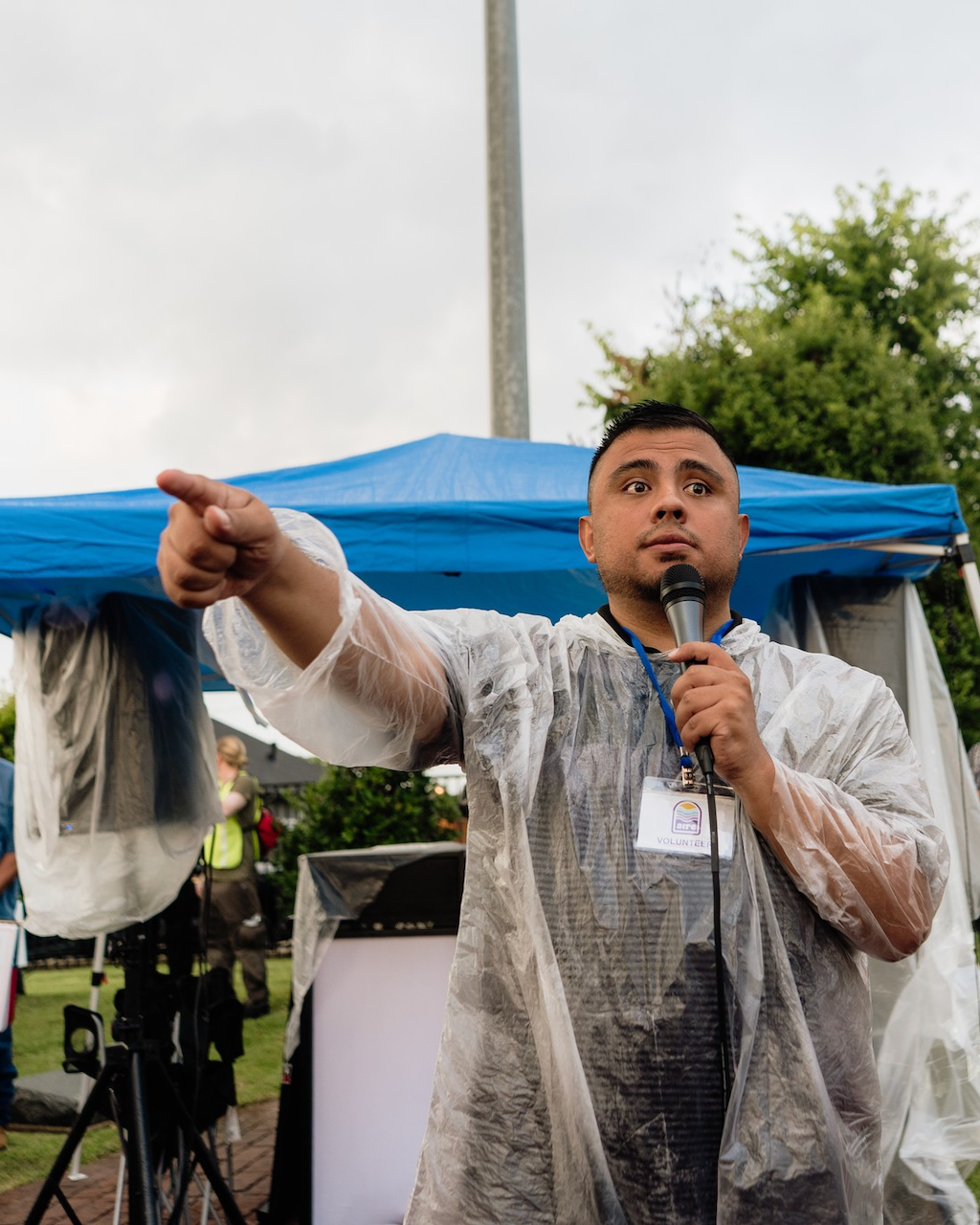
the organizer with Irvin Camacho.
Irvin Camacho, a Community Rights Organizer and immigrant advocate based in Northwest Arkansas, shares how his family's experience shaped his understanding of labor, language, and belonging.
season 2, ep. 33.
listen.
episode notes.
In this episode, we sit down with Irvin Camacho, a Community Rights Organizer and immigrant advocate based in Northwest Arkansas. Irvin shares how his family's experience—his parents working in the region’s poultry plants—shaped his understanding of labor, language, and belonging. Through his work on language justice, immigrant rights education, and deportation defense, Irvin is at the forefront of organizing efforts to challenge anti-immigrant legislation and support families impacted by detention and deportation.
This conversation offers a clear and grounded look at how recent laws and policies in Arkansas are affecting Hispanic and Latino residents, and what it means to live in a place where systems of power often ignore or invisibilize entire communities. Irvin’s voice calls us to listen, to understand, and to ask what it truly means to be in community with one another.
about.
Irvin Camacho is a longtime community organizer and advocate based in Arkansas, with over 15 years of experience championing immigrant rights and social justice. He is the co-founder of AIRE (Alliance for Immigrant Respect and Education), a grassroots organization working to uplift and empower immigrant communities across the state.
Irvin is also the creator and co-host of District 3 Podcast, Arkansas’ first-ever bilingual podcast, which spotlights stories, issues, and leaders from underrepresented communities in both English and Spanish.
In addition to his organizing and media work, Irvin serves on the Board of Directors for the ACLU of Arkansas, where he helps guide efforts to protect civil liberties and advance equity throughout the state.
episode notes & references.
- AIRE, Alliance of Immigrant Respect and Education: https://www.instagram.com/aire.arkansas/
- Arkansas ACLU: https://www.acluarkansas.org/
- Arkansas DACA Scholarships: https://www.instagram.com/arkansasdaca/
- 2024 Arkansas Anti-Immigrant Laws (e.g., HB1006, SB7): https://www.acluarkansas.org/en/legislation
- U.S. Immigration and Customs Enforcement (ICE): https://www.ice.gov
- National Day Laborer Organizing Network (NDLON): https://ndlon.org
episode outline.
- Introduction to the Episode and Irvin's Background: 00:00–06:12
- Immigrant Rights and Fear in the Latino Community: 06:12–13:28
- Organizing Around ICE Detentions and Deportation Defense: 13:28–20:44
- Legislative Threats and the Role of the Arkansas State Legislature: 20:44–28:37
- Language Justice and Barriers for Non-English Speakers: 28:37–35:51
- Resistance, Community Education, and Allyship: 35:51–42:05
- Faith, Silence, and the Role of the Church: 42:05–49:39
- Irvin’s Hope, Persistence, and Final Reflections: 49:39–57:05
- Outro and Closing Challenge to the Listener: 57:05–End
episode transcript.
episode preview.
[00:00:00]
[00:00:02] irvin camacho.: These are humans who are trying their best do things the right way. They're here because there wasn't any opportunities in their country. They're here because they escaped some sort of like persecution in their country, all these different scenarios. And I think that sometimes the nationwide politics tries to paint this violent picture of who they are as individuals, but we know our parents, we know our cousins, we know the people that I went to high school with, and we know how hardworking they are and how much they want to contribute to the society and how they're not violent criminals.
episode preview.
[00:01:23] mike.: We're listening to the underview, an exploration and the shaping of our place. My name is Mike Rusch. Today we're continuing our journey through the story of northwest Arkansas, but this episode is a flash forward to present day because across our conversations this season on labor and immigration, corporate influence, one thread keeps resurfacing.
[00:01:42] mike.: There are neighbors among us, Hispanic, Latino, and immigrant community members whose lives are shaped daily by policies and systems and decisions that many of us never see and rarely understand. The result is often a community forced to live in the shadows of the one that they call home.
[00:01:59] mike.: In this episode, we're sitting down with Irvin Camacho, a community rights organizer, an immigrant advocate, and someone whose life has been shaped by the very systems that he now works to change. Irvin's parents worked in the poultry plants of northwest Arkansas and his path from witnessing their experiences to become a leader in the fight for immigration, safety and dignity has given him a powerful, personal lens in the struggle for justice here in Northwest Arkansas.
[00:02:23] mike.: But Irvin's work isn't only local, it's part of a broader national story, one in which immigration is too often reduced to a political talking point, stripped of its human cost. Behind that narrative lies a deeper older pattern, a colonial practice of scapegoating those with the least power For centuries, immigrants have borne the blame for society's challenges, even as their labor has remained essential to its functioning, this is something we've heard over and over and over again throughout this season.
[00:02:51] mike.: Irvin is a part of a growing movement here in Arkansas that's been focused on language justice, immigrant rights education, and deportation defense. His work responds directly to the recent legislation that has made life more precarious and more dangerous for immigrant families here in the state, and his voice brings us sobering, but very necessary challenge.
[00:03:12] mike.: What does it mean to belong in a place that doesn't always make room for your humanity? This isn't an abstract conversation. Irvin has stood alongside families during ICE detentions. He's helped lead efforts to ensure that those who don't speak English still know their rights, and he is organizing his policies that seek to criminalize his community's presence. We talk with Irvin today, not just to understand what's happening, but to ask a deeper question. What does it mean to be a community? What does solidarity require of us? And how do we build a northwest Arkansas where everyone, regardless of your national origin or the language that you speak, has a chance to belong.
[00:03:48] mike.: We've got so much to work through today. Let's get into it. Well,
episode interview.
[00:03:57] mike.: I have the privilege today of sharing a table with Irvin Camacho, who's a community organizer here in Northwest Arkansas. I know you have many titles, but I feel like this has been the work that you've been doing and I'm gonna let you unpack that a little bit more for us. But Irvin, welcome to this conversation. Thanks for being here today.
[00:04:14] irvin camacho.: Thank you so much for the invitation, Mike.
[00:04:16] irvin camacho.: It's hard whenever I have to describe what I do, 'cause I have, passions, but then I also have hobbies too. But I think centrally, I always view myself as a community rights organizer. I've been doing immigrant rights organizing specifically here in Arkansas for the past 15 years. So that's my ultimate passion. Along the other hats, like board member for the ACLU of Arkansas, founder of the Arkansas DACA Scholarship as well, and other things in between. But I like community rights organizer .
[00:04:45] mike.: Irving we've had the privilege of getting to know each other over the last year or so, and I've just really become a yeah, an admirer of the work that you do, and not just the work that you do, but the way you do it as well too. And , I know, you carry a lot into caring for your community, and to this community and the region at large. And so I'd love to hear a little bit about your background and your story. and Yeah.
[00:05:04] irvin camacho.: Yeah, I'm gonna follow a little bit of what Dr. Rosales said on his episode. A little bit about, behind the scenes of my family story. My parents moved here first my dad did. I think it was like in the, might have been like the late seventies, I believe.
[00:05:18] irvin camacho.: He went to school here, he went to middle school in California. He didn't graduate because he worked in the fields over there. And, a lot of the folks in our culture, they prioritize work, specifically the parents, they'll tell us like, Hey, you gotta work. School sometimes is not as important.
[00:05:35] irvin camacho.: I'm glad things have changed in the past 20 years where our parents are like, no, you gotta go to school now. So that's good. But my dad came early because my grandpa had came part of the Braceros program where the US went to Mexico and brought people to work the fields. So my grandpa was able to bring my dad and then my dad helped my mom cross the border over here, as some people would say illegally, right?
[00:05:58] irvin camacho.: But because of Reagan's amnesty, my mom was able to become a US resident literally a year after she, she got here and they worked the fields in California. Up until the age where I was 10 years old, like my parents worked in the onion fields, lettuce fields, everything you can think of in California in regards to fields. And we lived in housing authority apartments in California. We couldn't really afford a regular apartment or a house. But honestly, it was one of the happiest times of my life, Mike, like even in poverty, we were all together as family, my parents always did what they had to do to feed us. So we never went like without food or anything like that. And we moved here to Arkansas and when I was 11 years old, because we had a family here and they were telling us about the great promise of these poultry factories that could give you stable jobs and northwest Arkansas would provide a more safer environment.
[00:06:51] irvin camacho.: We lived in areas that were, that had high gang activity. And my dad, would say, we don't want you to be raised here. We want you to be raised in a safe environment where you don't become part of any kind of gangs, which of course is a stereotype. I didn't think I was gonna become part of a gang, but, it was a fear that my dad had. So we moved over here. We packed everything that we could into my dad's little black Camaro, and we made the drive to Northwest Arkansas. .
[00:07:19] mike.: I feel like there's a lot more there that we can a lot. What do you remember about that early time in Arkansas growing up here?
[00:07:26] irvin camacho.: We, when we got here, it was snowy. So it was like the first time I ever experienced snow in my life. And it was such a funny memory for me because we got to my uncle's house and all of us slipped on the ice. Like one by one. My dad slipped, my mom slipped, my sister slipped. I slipped, my uncle slipped. So it was kinda like our first introduction is to snow. 'Cause we didn't even know how to walk on it, we thought we could just walk through it like nothing. And we fell.
[00:07:51] irvin camacho.: My parents, I remember, I think it was the, either the day we got here, it might've been the next day we went to the Tyson Hiring Center in Lowell. And a lot of families that were moving here during that time, you just go submit an application and you just wait there until they call you up and tell you if they can hire you or not. So that's one of my first memories of just, I was introduced to Tyson right away when I got here and. My dad ended up, my dad had an injury to his arm and his leg. 'cause he, back in California, he actually fell off a roof when he was working construction. And he was always like disabled because of that.
[00:08:28] irvin camacho.: So my dad didn't really last that long in the poultry industry because of those injuries and the pain. But my mom has still been, my mom has worked like at every poultry factory in the area, anyone that you can think of she's been there. And because she, what she does is that she works for a while in a company and then she'll want to go to Mexico because she wants to be around her mom and she has a house over there. So she'll just quit. And then she comes back and then she goes to a different company because some companies they have a time where you can't be rehired if you just quit. So that's how my mom has been able to work at every poultry factory in the area. But yeah, it was that, it was just very happy moments with my family.
[00:09:09] irvin camacho.: Still very poor at that time, living in small apartments, trailer parks. But the family was together, so we were happy. We love the idea that we could make something of our lives eventually in the future here. And and yeah, that's how eventually we moved from, we ended up, we started in Lowell, Arkansas, and then we moved to Springdale and when I was about 13 and I've been here ever since.
[00:09:37] mike.: I'm curious as a child of immigrants, you're now in community advocacy. As I listened to you talk about growing up, I can see it, others may not. Just the smile on your face. That feels like there's some warm memories there. And that's translated into caring deeply. Obviously for your family, but also for your community. What's your pathway to ultimately get into this space of community organizing?
[00:09:57] mike.: 'cause you're, Irvin, you're a young guy. You're much younger than I am.
[00:10:00] irvin camacho.: Thanks for that, man.
[00:10:01] mike.: This you got started really early in advocating for your community. I'd love to hear that story.
[00:10:07] irvin camacho.: Yeah. In regards to like me smiling and stuff, I had a really good childhood. I had really good parents. That even though, my dad had an addiction eventually and he passed away because of that addiction. But even then, like they were really good parents and taught me to be good to other people. My route to advocacy started at high school. I was part of bulldog News, which was our broadcasting channel at Springdale High School, where I not only did the announcements in the morning in school, but I pretty much anchored the television news for Springdale High School. And I would always bring in immigration stories because I wanted to educate the people that were listening about what was happening to immigrants across the country. I don't know why I was doing that, to be honest. I just was like, I should be doing this. Like I should be educating people about what's happening.
[00:10:55] irvin camacho.: And this young woman by the name of Amber Mendez reached out to me and said, Hey I see that you're putting in these immigrant stories in there. I'm a dreamer. I have a family that's that a brother who is in organizing and we meet, I think it was every Thursday or Tuesday at my house. If you want to come to one of the meetings. And I think I had just turned 17 when she approached me, 'cause she was one year younger than me. So I decided to go to one of the meetings and I learned that the group was called the Arkansas Natural Dreamers, which is the first ever immigrant rights group that focused on supporting undocumented people in the area.
[00:11:32] irvin camacho.: So I went at the house and sure enough, there was a group of seven people, all of them older than me. Amber was the only one that was younger than me. And they were talking about organizing, they were talking about how the majority of them were undocumented at that time. They had just lost access to scholarships at the University of Arkansas. I forgot what it was, but it's something about how they reviewed everybody's profiles, every immigrant person's profiles at the university, and the folks that didn't have a social security number ended up losing their scholarship. And they wanted to do something about it. And at that time there was immigration raid happening, in the area.
[00:12:09] irvin camacho.: I remember I had just started like with them when there was an immigration raid at a bakery in Springdale. I will go back a little bit in saying that when I learned what they were doing. I was hooked. I knew that I could contribute because I also knew that I was very privileged, right?
[00:12:26] irvin camacho.: I was talking to these individuals that weren't gonna be able to get a driver's license because they didn't have, legal status. They weren't gonna be able to get scholarships. A lot of the scholarships that me as a US citizen get and they have to pay triple the tuition that I had to pay as a US citizen. So all these things were in my head and I was like, man, I really need to use my privilege and my platform and the connections that I have, minimal at that time, but the connections that I had to support this effort. And when that immigration rate happened at the bakery, like we didn't know what we were doing. Even they had just started, they had a few months that they had started organizing too. So I remember like us going to the bakery. Figuring out who had been taken, figuring out that some of them had kids in these different schools.
[00:13:11] irvin camacho.: We went to the schools and tried to get information on the kids so we could tell them that their parents had been taken. All these different things. We didn't know what we were doing. We were just trying to figure out how to support the immigrant community. And within time, I feel with Arkansas Natural Dreamers, but with other organizations, we helped create a blueprint on how to support folks, that are going through situations with immigration.
[00:13:33] mike.: In those early days, like what was the reaction to your advocacy here in Northwest Arkansas? Were people generally welcoming of that, or was that problematic at the time?
[00:13:44] irvin camacho.: I think for the most part they were very welcoming. I think every feedback that I got in person at that time, it was good. People were just like, oh, thank you for talking about this. Thank you for talking about that. And taking mind springdale is a very like Latino heavy school, right? We have a lot of Latinos there. We have Marshallese folks there too, like a. Big concentration. The majority, I would say the probably the biggest concentration of Marshallese people and Latino people together in the whole state. Definitely Marshallese the biggest concentration in the whole state.
[00:14:18] irvin camacho.: And so most of it was positive. Do I know what people said behind the scenes? Probably not. There might have been some folks that might be a little bit worried about what we were bringing to light, but luckily I had support of, local Latino pioneers like Papa Rap, who was always supporting me behind the scenes and pushing me to pushing the envelope a little bit about the information that we were giving to students and figuring out ways to empower specifically students of color.
[00:14:46] mike.: I'm curious, in those early days , did you carry fear into that advocacy work?
[00:14:51] irvin camacho.: Not that much. I would say maybe that was a little bit arrogant of me or ignorant of me. I was just thinking about fear. I was just thinking about Hey, like they're letting me do this. They're letting me put this information out there. Some people are coming up to me and they're saying that they're connecting with the information and that, their families are going through similar situations of what I've, what I'm reporting. And for me, that was enough for my young mind to think that it was okay.
[00:15:17] irvin camacho.: And I never got any pushback from anybody. And I'm grateful for that. And I'm grateful, the Springdale School district at that time, I'm not really too into it anymore. I don't really have, I'm not really there as much as I used to be. But the time that I was there, like it's a very inclusive district where they want you as a person of color to voice what you feel. And part of their staff today even still connects with me, still shows up to our immigrant rallies, still donates to our DACA scholarship, all these different things. So I never had really had to deal with any kind of negative pushback.
beginning of advocacy work.
[00:15:56] mike.: You mentioned this a little bit, but I'm curious maybe go back to that first time where you realized that this work of advocacy could really make a difference. Where did that solidify for you?
[00:16:10] irvin camacho.: I think a lot of it was the just trying to support community members during the very difficult time that they were experiencing with family separation.
[00:16:23] irvin camacho.: Just people being grateful for you, providing resources or for you trying to connect, you trying to get their kids that have been left alone after an immigration raid to a safe space. Connected with other family members. I think the appreciation helped me realize we can do something and this is good because people are reacting in a good way.
[00:16:45] irvin camacho.: And initially it was mainly that was the majority of the work that we were doing. It was like trying to support people. During, like when arrests were happening. And eventually it evolved into, us showing up to candidate events, us providing us providing daca DACA clinics for free around the entire not the entire state, but a good portion of the state where we were able to help people apply for DACA without having to pay the thousands of dollars that they pay for attorneys.
[00:17:14] irvin camacho.: Like we had pro bono attorneys and sometimes we were able to even pay the government fees. So I think, probably just hearing the feedback of people is what got me realizing that what we were doing as a collective was good. And once people start seeing that you're doing something, other people reach out and say, Hey, I wanna support in this way. And honestly, that's how I was able to build my network because people saw what we were doing and they reached out, and and we were able to do a lot of good work just by good people reaching out.
immigrant community in the shadows.
[00:17:45] mike.: I hear, this idea of a quote unquote immigrant community that's really operating in many ways it feels like sometimes in the shadows of the larger northwest Arkansas community. I don't know if that's a fair description or not, but what's the everyday reality of this community?
[00:18:00] irvin camacho.: Yeah. I like the phrase that you used of living in the shadows because that's a phrase that gets used a lot by the organizing community specifically for the undocumented community. Because, a lot of, a good portion of our community, goes their job, spends time with their family, keeps their head down and just tries to, live what they consider a successful life, but compared to what they had in their native country. And people don't wanna rattle the system because they don't want problems.
[00:18:28] irvin camacho.: So I do think that the majority of our community's kind of that way. It's just we're just really happy with what we have. We believe in the American dream for the most part. 'cause we see this as a place that has given us so much. But there is also a portion of folks that are more aware of what's going on around the country, who read as much news articles as they can, who show up to community gatherings who also love this country, but because of the love of this country, they're willing to criticize it, right?
[00:18:58] irvin camacho.: I posted something on Instagram about this the other day of, I think it rooted from like a, I forgot if it was JFK or who I was paraphrasing from, but. We have to be able to criticize, right? Specifically us, US citizens that were born here and who maybe our voice is maybe a little bit heavier to people in power in this country because we're US citizens.
[00:19:20] irvin camacho.: We have to be open to criticize this and make this place a better environment for us. I'm always the kind of person that doesn't really I'm not the most like super anti like law enforcement person. I have friends that are right, but for me, I know people in all these agencies. I know people that work in the Springdale Police Department.
[00:19:40] irvin camacho.: I work, I know with people that are politicians that are at the Arkansas legislature, like I don't think just an agency is evil, just in general. I, but I do feel that folks that are in those agencies, in those organizations, in those companies like they have to be open to criticism and they have to be open to feedback so they can be better so they can treat people better. So that people won't be taken advantage of. And but there are times though when people of color speak. It's almost as if we're so radical and people do get upset. I've had folks whether it being in law enforcement get upset over something I said, or I did. I've had folks, in the legislature get upset. The mayors get upset sometimes because I criticize certain things, but like morally, we have to, in order for things to improve, in order for people to have, for everyone to have access to equal resources that I as a US citizen have. We have to be outspoken.
[00:20:39] irvin camacho.: And I think with this work comes criticism and it's inevitable, paraphrasing, like Eminem, Eminem once said something about how like the more you speak the more criticism you're gonna get. It's just it's not avoidable. So I do think that our community's really complicated, but I think the ultimate thing that brings us together is everybody just wants to live a happy life with their families. And they wanna feel safe and they want, maybe we don't use the phrase American Dream in most immigrant families, but I think that's what people want, right? The idea of just living comfortably and and not being persecuted. So that's one of the things that helps us come together.
[00:21:20] irvin camacho.: But also, there's folks right now that don't feel like they belong. I've seen different stories online of people that are, the Trump administration is now recommending for people to self deport. They're saying, Hey, you can show up to any airport and you can get a flag back to your home country and a thousand dollars so you can leave.
[00:21:39] irvin camacho.: There's a lot of people that are thinking about that and they're thinking like, should I do that? I'm just tired of having to live my life here in a country that I have given so much to, but I'm not appreciated. And that makes me really sad. People thinking about leaving the country and then some people thinking of just leaving the state.
[00:21:58] irvin camacho.: Because they don't like the laws here and how they're not being listened to. And I've had conversations with individuals that feel that way and just for me, like it breaks my heart to know that someone just doesn't feel like they're appreciated here and that they belong here. So with ire, with our immigrant rights group, that's part of the work that we do.
[00:22:17] irvin camacho.: We want to tell people like, Hey, you do belong here and there's a place for you here. And if, even if it is like us building a community around you, we're willing to do that so that you can feel like this is your home as well.
[00:22:29] mike.: Yeah, it makes me sad too. These are community members who have come here seeking and supporting the betterment of our community. Yeah. And to not feel well. I could talk a lot about my desire and my hope that everybody here feels like they belong. And so to hear that yeah, it's hard. And I know you see that probably every day face to face.
Irvin work background.
[00:22:49] mike.: Maybe let's talk a little bit about your work. But maybe give us a little story there about how let's move into the work that you're doing today and how did you get there?
[00:22:58] irvin camacho.: Yeah, so I started like I said earlier, doing immigrant rights work. I think it was 2010. And within that timeframe from like 2010 to 20 16 there was multiple organizations that I was in involved with. One of the things that I realized with immigrant rights organizations is that you get together, you do a lot of good work, and then either things get a little bit better or just life hits you and you're just disband. And then you come back and you start another org because the old org was ran by someone who doesn't want to get involved anymore in the work.
[00:23:30] irvin camacho.: So it's like you have to start fresh 'cause you don't wanna get that name again. So that's why there's multiple immigrant rights organizations that I've been a part of or that I've helped lead because of that. So I did that throughout 2015 and 2000 15. I also decided to run for state representative in Springdale.
[00:23:44] irvin camacho.: So I did that. I think I was the only progressive Latino running in.
[00:23:49] mike.: How old were you at
[00:23:49] irvin camacho.: that time? 24.
[00:23:50] mike.: 24 years old.
[00:23:51] irvin camacho.: Yeah. Unfortunately lost that election even though we did increase the voter turnout by 23% for a progressive candidate. But it was just not the time. Like people were just weren't like specifically people of color really weren't involved in politics much back then in, we tried increasing the voter turnout we did that.
[00:24:08] irvin camacho.: We got a good amount of Marshallese people voted for the first. For the first time as well. But at that time it was not enough. There was, it was an uphill battle, and we knew that there was a chance that we would just be part of building, and luckily the next election cycle, our good friend state representative Megan Godfrey was able to run and she won and she helped pass two good and pro-immigrant bills.
[00:24:31] irvin camacho.: So we're very grateful for that. And then literally, I think two months after my, my election day, I joined the ACLU. And I think I was, I think I might be the youngest member to ever be part of the ACLU board. So I've been with them ever since. We go to board meetings and just try to figure out statewide how we support groups that are doing good work, but also, use our legal resources to support everyday people that are going through different situations around, around the state.
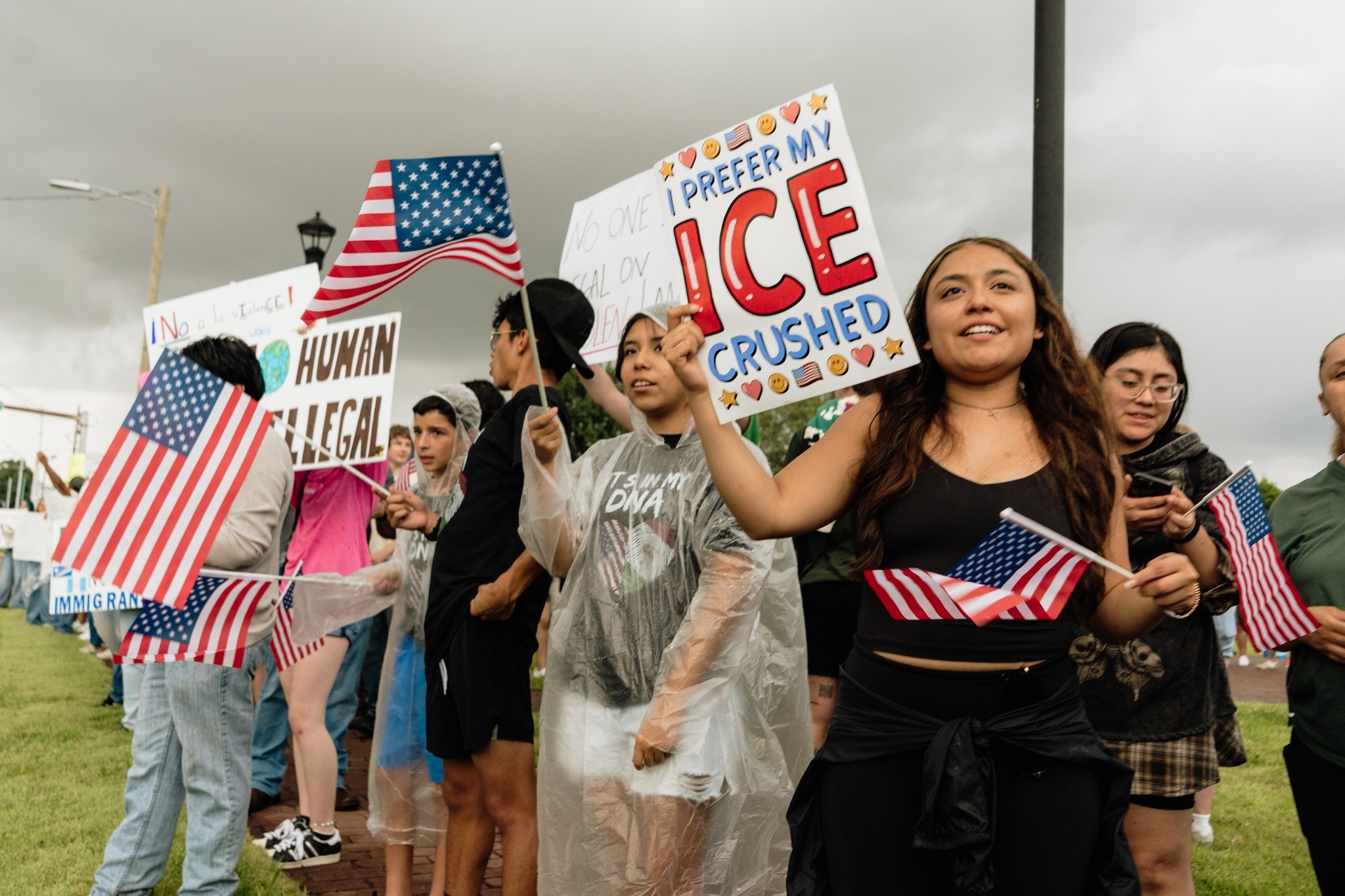
[00:25:03] irvin camacho.: And and yeah, I think one of the things that happened, it was 2024, mid 2024, there was a rise of Marshallese arrest happening by ice. ICE was showing up immigration, customs enforcement, in Spanish we call it La Migra, was showing up to people's houses. They were taking people from their probation appointments showing up like outside of the appointments, taking them, which is very unfortunate 'cause those people are trying to do things the right way and they're still getting persecuted for that. And at that time we said if there was an immigrant rights organization that we were a part of, we could support these folks. We could do more, we can bring forth more advocacy, more resources. And it wasn't until the Trump administration won reelection in November where we said we have to do something. Like we already had the idea of doing something, but now we have to, because we have to be proactive in educating people about their rights. And we have to build a base for what immigrant rights organizing is gonna look like in the future in a more grassroots level. So in December, we started the Alliance of Immigrant Respect and Education.
[00:26:09] irvin camacho.: And I took a little break from the, 'cause. I also run the Arkansas DACA Scholarship where we help people apply for we pay for their full $495. Now, the, there's been an increase in fees, so now it's $555 if you want, apply online at $605 if you wanna apply through mail. I've been doing that for four years now. But I put that on the side. During that time to focus on ire it was an alliance of immigrant respect and education where we would get leaders immigrant leaders as the majority of folks in our group, get them together and then figure out how we can best protect the immigrant community in our area.
[00:26:47] irvin camacho.: So currently we have about 80 members. We have five different committees that focus on something different. Whether it being, fighting anti-immigrant legislation, going to people's houses and giving them know your rights information, tabling know your Rights forums across the state. And also, we have a committee that focuses on translating our documents to as many languages as we can because this is not just a Latino thing, there's resources needed in Marshallese and Korean as well. Hindu, all these different languages that people have been reaching us out, reaching to us for. And and then also we're keeping an eye on the community for any kind of ice activity. So anytime that there's a report online not only do we see the reports, but people send 'em to us about ice rumors ice sightings of detaining people. We send someone to go check. And confirm if the ice is there or if ice is not there. Because a lot of the times people are afraid to drive home from their job, afraid to go to their job, afraid to go get groceries because they heard on social media that immigration is in a certain area. So we try to go there, confirm, and then hopefully give them some relief that they can go home or they can go to their job or they can pick up their kids from school. So that's been the main focus of my energy right now when it comes to organizing just because there's so much to do, Mike. There's the work there never stops. Yeah.
rhetoric of the binary.
[00:28:08] mike.: Irvin you hear the rhetoric of what's happening in our national dialogue or state dialogue even locally, and you're on the front lines of, of what the implications of this looks like for real people. I'm curious, like how do you navigate through? I. The complexity of this, how do you think, what's your framework that you're operating in as you are trying to get people to, to move and to do the right thing and to follow legal procedures and to do what's being asked of them, to find a pathway that settles this conversation about maybe, are you here legally or illegally? Because that seems to be the binary point where most people like we can't go beyond that conversation. How do you think about that? What's the framework that you use?
[00:28:49] irvin camacho.: Me, I always view things from a, like a human level, right? So I do try to correct people whenever they call someone, like illegal, right? We use the word undocumented. I do feel that once an individual, like if you're listening to this episode right now, if you probably have people that are undocumented in your life and you don't even know. It could be the coach at the high school. It could be someone that works with you at Walmart home office. Someone that works with you in construction, all these different places. You just never know until they trust you and they confide in you and say, Hey, I can't do this or I can't do that because of my status.
[00:29:29] irvin camacho.: We deal with a lot of individuals who came to this country when they were like three years old. Like literally, if they were to be deported today, they wouldn't know their town in Mexico and El Salvador and all these different places. They wouldn't, a lot of them times they wouldn't even know how to navigate that area, and the dangers that a lot of these areas do have in their native countries and like being American is all they know. The only difference between me and them is that they don't have, documentation saying that they can stay here forever, so it's very complex in that way because the work that we do, not only do we help out undocumented people, but we also provide resources to people that are residents that are US citizens who are also scared, in our not only concern for themselves, but for their family members.
[00:30:13] irvin camacho.: So I always just tell people, to make connections with immigrants and understand that. Like for us, for example, the majority of the people that we serve, these are just folks that are trying to live their life. I think one of the, one of the things that I hate that's happening right now is that the Trump administration like they're posting on the official White House account saying they'll make one post where it's we got this Mexican 29-year-old did this bad, and then in the comment section they'll post eight more posts of different immigrants that did things bad. And they do that intentionally because they're trying to paint this like horrible picture that undocumented people are bad, that the people that are coming into this country are doing all this violent crime when the majority does not. The majority is paying taxes. Whether it be in sales tax or other taxes because of their business that they have.
[00:31:09] irvin camacho.: Not only are they contributing economically, they're contributing to society. They're working at Walmart headquarters. I know several undocumented people that are here on DACA or are, or have all these other work permits that are working there, that are making, these companies better and that are contributing, as teachers in the different school districts here that are taking care of your kids. These are humans who are trying their best do things the right way. They're here because there wasn't any opportunities in their country. They're here because maybe they escaped some sort of like persecution in their country, all these different scenarios. And I think that sometimes the nationwide politics, like for everything that's happening now, tries to paint this violent picture of who they are as individuals. But we know our parents, we know our cousins, we know the people that I went to high school with, and we know how hardworking they are and how much they want to contribute to the society and how they're not violent criminals.
[00:32:11] irvin camacho.: And I think that's one of the things that upsets me is that people do fall into that rhetoric whenever, they stay watching Fox News or they end up in this algorithm on x, on Twitter that really makes them believe that individuals are this way and that's what pulls us apart as a society, right? Because a lot of the people that I know that don't look at the news that much or are not in some sort of algorithm on social media and that have connections with undocumented people, they're not intimidated by them. They're not scared by them. They're willing to share food with them, sit down with them. And once they realize like that their friend who they've known for 20 years or 15 years is undocumented, that's whenever I get messages from white folks who are conservatives and they're like, Hey, like I didn't know that my employee was undocumented. I didn't know that the person that cleans my house, I get this all the time. I didn't know the person that cleans my house was undocumented. What can we do for her? So it's it's that connection that they make with that immigrant person. And I think everyone should try to make connections with immigrants in our area so you can learn more about them. That's when they, when the empathy, starts coming out and they're like, damn, like this was a good person. And not all undocumented people are the way that, that sometimes political figures are trying to paint them. And and yeah, it makes me sad when people feel that way and undocumented people are not just, we shouldn't just look at what their economic contributions are. We should look at them as humans first and know that the, that they deserve to also be here on this land. We created borders ourselves as a society, but that doesn't necessarily mean that we shouldn't give someone a chance to thrive here and specifically someone who's contributing so much to our country.
[00:34:00] mike.: You know, as I listen to you it's harder because this term immigrant, right? Is, I think we define it in a really narrow way. In my family, I'm a fourth generation immigrant to the United States, right? You and I are not different. Just maybe my family came a little bit earlier, but, from an immigration perspective, like the, we're all I don't know I we're all in that space of being immigrants to this place.
[00:34:27] mike.: And I'm curious how you view that disconnect of how I can sit here and ask you questions about being an immigrant, and yet in some way I almost do that from the position of that doesn't apply to me, which is not true. And so I wanna recenter that in, in many ways for people listening for myself. Like, where does that disconnect? I don't know. Do you feel that disconnect? Do you see that disconnect? Yeah. How does that work itself out in the world?
[00:34:53] irvin camacho.: Yeah. And I think you know this, me and you walk into a room or we're in different rooms we will be treated different differently in a lot of those rooms. Yeah. Because even though you're you come from immigrants and I come from immigrant, like from immigrants people will see us and they'll see that you're white passing and that I'm dark skinned. So I don't wanna say that's always an excuse of how people treat us, but there is a lot of like scenarios where that does matter. And for us, people of color that are visibly people of color, like throughout our lives, we've experienced things that sometimes make us believe like. Yes. Other people that are not people of color have more of an advantage than us. But I'm always, I, whenever I've met some individuals who are also white passing, but they're able to share stories of they were persecuted in their countries and they came over here as well.
[00:35:49] irvin camacho.: A lot of this work that we're doing it's not meant to be just for people that are not white passing, because we know that immigrants come in all colors, right? There's some individuals that have reached out for resources that you would think if you look at them, that they're US citizens, but they're not. They're also undocumented and they're here. So it's really our responsibility as an organization to give everyone grace. And sometimes, as, because we do have some individuals sometimes that because of their past experiences as people of color, visibly people of color they're angry. They're angry of how they're treated. They're angry of people trying to come into our communities and be like, white saviors. Yeah. They're angry of I don't know a lot of nonprofit leaders in our area, specifically people of color, they get upset because they feel that they have, they get less access to to grant money and stuff like that.
[00:36:43] irvin camacho.: So there's all those different factors of, there's anger from some people, but I think when it comes to our role in this community as ire we understand that every, descendant of an immigrant has a story, and as long as they want to contribute to the good of this work, then we wanna work with everyone.
[00:37:03] irvin camacho.: And we want to take the time to listen to your story. I wanna learn more about your ancestors, what was their experience like, how did they, even though it's been three generations back, like how did that look like? When they came over here, what kind of hardships did they have? Because I feel like there's value in every story, right? Every experience is different and people, everyone goes through struggle some way or another. Nowadays though, it's a little tough just because. The way we're viewed. So the way society views us I know for me, anytime that I say something opposing, racism or xenophobia in general, like people label me as a Democrat, they'll be like, oh, like he must be a Democrat.
[00:37:42] irvin camacho.: Or he must be that simply because they look at me and they see a brown guy and they're like, oh he's for sure anti-Trump. He's for sure a Democrat. But if you would probably, if you would say something like that was against racism, they'd probably be like, oh, that's a really nice white guy that cares about people of color and cares to be outspoken about racism.
[00:38:02] irvin camacho.: So there is it is complicated when it comes to how society views us, but like I said, our role is to listen to everyone and know that, that everyone that's a descendant of an immigrant or a child, child loving, immigrant has something to say and we should listen to as well.
[00:38:22] mike.: Thank you for sharing that. I agree with you a hundred percent and I hate that that's the reality of sometimes Yeah. Our own ability to understand people and human beings and human dignity and I think there's a lot of work that still needs to be done in this space to, yeah. To make sure that everyone in this community sees each other for the human and that they are.
[00:38:42] mike.: And because of that, that there's just that inherent dignity and welcome and invitation. That's gotta be, yeah. It's gotta be present there.
[00:38:49] irvin camacho.: Yeah. I almost feel like the more that people get into the news the more that they wanna discuss it, the more that they want to like tweet and post on social media.
[00:38:59] irvin camacho.: I feel like that's what ends up causing a lot of the division that we have. Because if you go into a restaurant. Whatever restaurant you go, you see the people working there. You see the people that own the restaurant. Like most of the time someone will just randomly be angry at a restaurant, right?
[00:39:15] irvin camacho.: It'll be like, oh we're really appreciative for the food, we're really appreciative for the service. All these different things. And it's more when we start really thinking about, about oh, there's undocumented people here. That's when you're like I wonder if that person's undocumented.
[00:39:27] irvin camacho.: All this different rhetoric that starts being created. But, and most, all the jobs that I've had where I've worked with very diverse people, like no one really asks someone like, Hey, do you have documentation to be here? Just is just a person. Yeah. It's just an individual that you learn to either really appreciate, build a relationship with and then eventually if they ever tell you what their status is, you're by that point, you're already empathetic 'cause you care about this person.
[00:39:55] irvin camacho.: I would ask people to take the time to get to know, their coworkers, the people, their neighbors show up to community gatherings just so you can meet people outside of your bubble. Because if you get lost in that bubble and you just spend your time on social media and you don't meet other people, you're more likely to have opinions that don't really appreciate the beautifulness in, in diversity. And and diversity includes undocumented people that want to make this country better too.
[00:40:24] mike.: Yeah. I agree and I think this is what makes, looking at kind of the amplification of the ICE activity hard because it's based on how people look, is my assumption. As you navigate through this, what are you seeing? I know you, you guys have been on the front lines of identifying where that's happening and not for the purposes of creating problems, but like, who is being taken, where are they going?
[00:40:47] mike.: Mm-hmm. How do you want our community to look at this? How do we respond as a community the right way? Obviously we have to wanna follow laws and we wanna be respectful of law enforcement. Yet at the same time, it feels like the, this is my opinion, so correct me if I'm wrong, but it feels like the gate has swung open really far into a place that, that frankly is scary, not just for immigrant communities, but feels scary for a lot of people.
[00:41:12] irvin camacho.: Yeah. I think one of the things that we try to do in Aire is just hold people accountable. Like none of the work that we're doing right now is against the law. A lot of the times when ICE immigration does a arrest or detain someone, sometimes they have their face covered and they will not like confirm with the individual who they are.
[00:41:33] irvin camacho.: So that's scary, right? Because sometimes families are like, is this actually ice or did my family member just get abducted? So for us it's like we have to evaluate the situation, reach out to who we need to reach out to confirm if that was ICE or not. And then probably try to give some answers to the families as well, because a lot of the times ICE will pick up someone and then they don't end up in the Washington County Detention Center right away, or in the Bank County Detention Center.
[00:41:57] irvin camacho.: So the family member's like, where's my family member at? Like that's concerning, especially 'cause they come from countries where abductions happen all the time and they do it over there in their countries, like without face coverings and here, like they're covered in their face.
[00:42:10] irvin camacho.: So a lot of our work when it comes to that, when it comes to interacting with ICE is just holding people accountable. We've met with the mayor of Fayetteville mayor Ron to talk about what their relationship is with ice, just because we hadn't seen much activity at all in Fayetteville.
[00:42:26] irvin camacho.: So that kind of surprises that there was two, two incidents in the same day and the family members were concerned and one of the individuals from ICE had his face covered. As well. So we I feel like I'm, every time I say this, I cringe a little bit because I don't, it's not me trying to cause fear, but it's the reality.
[00:42:46] irvin camacho.: Like our community's scared. There's folks that, which, when it comes to organizing the fact that there's so many people now hyper aware of ICE in the community, that means that like they're videoing everything. They see, they're taking pictures, they're if they see something suspicious, they're reporting it to us or they're posting it on social media.
[00:43:09] irvin camacho.: So that part is good, but the part that's still, really hard to deal with is that people are scared to even go to their job or go get their groceries and stuff. And reason being is because you don't necessarily have to do something horrible or bad to be detained nowadays. There's individuals who went to their immigration appointment, they've been, they've been walking a straight line doing everything the right way, and then they get arrested when they come outside of their appointment. So they, the community sees that and they're like, wow. So even if I do things the right way. Even if I'm going to my immigration check-ins, there's still an opportunity that someone can call that ICE hotline and ICE will show up for me.
[00:43:54] irvin camacho.: That's what happened in Fort Smith a few days ago. There was a woman who worked for a meat market in Fort Smith. And two ICE officials showed up in plain clothes. They didn't, they weren't have, they didn't have their face covered or anything like that, but they pretended like they were shopping in the store. And then eventually they saw the employee and they took the employee, they did at the end present badges to the store owner to show that they were ICE. But that's scary. Like at that time, I'm pretty sure the person who was taken, maybe she didn't even see the badges. So just these two white men came in and took her. And based on what we're hearing, that, that came from an ICE tip line. Someone called the ice tip line, and I think it was a relative of that woman.
local story.
[00:44:38] irvin camacho.: And they ended up telling them, Hey, this is where she works. She's undocumented. She has a current immigration process that she's going through. She's doing things the right way. And even when you're doing things the right way you're still at risk. And people are now being deported to other countries that they don't, that they're not from, they, they're now allowing people to be sent to El Salvado or South Sudan, all these different places. And now Alligator Alcatraz just opened up too, where a lot of people in the Trump administration are boasting about how if you try to run that, you're gonna become alligator food. Like how have we gone to this point where we've lost a sense of of humanity? To be honest, we've seen this before in, in past times 1930s, 1940s, where people lost, that sense of humanity and to be able to make jokes that immigrant might become alligator food like. That, that's scary. And we're all seeing that and we're seeing that they don't care for either, you know, undocumented immigrants or immigrant representing people too. So I think our community has had enough and they're like, we have to do something. We have to come together.
[00:45:53] irvin camacho.: And that's why, our organization, Aire has received so much support, not only from undocumented immigrants who can't do anything publicly, but they want to support because whether it being financially or in other ways and immigrants and then also, like white allies and black allies they're saying like, Hey, we're seeing this. It's horrible, the black community that the black leaders are seeing this. And they're like, we've been through. Very similar situations in the fifties and sixties. We don't want you all to go through what we went through so that we wanna support, and then why folks, they see their privilege. They see that they are able to do more things and be more outspoken than other individuals. And they want to use that privilege to support people because they empathize on a human to human level. They hear those quotes of alligator alcaraz and they see how that's so inhumane to say anything like that. So we've been getting a lot of support just because people feel like enough is enough this, we can't allow this to get even worse, to eventually get to the most horrible levels that we've had in past, you know, past years around the world.
[00:47:03] irvin camacho.: And yeah, like I, I think the majority of us are we're in fear. Even the ones that are organizing. We feel empowered with each other that we're together doing this work, that there's people supporting us. But what happens if I get taken away? I'm a US citizen, right? But US citizens have also been arrested by mistake and end up in jail or in prison for a while before they, they fix the situation or the mishap. So we know that everything that we're doing, we're risking, our own personal safety. But there really isn't we just can't stay silent. It's history. But we'll remember this, and I really hope that more people wake up and realize that we can't allow what's happening right now in our country to continue happening. And, the new ICE budget that got approved by the big, big beautiful bill, what the Trump administration calls increased funding for over a hundred billion for ice and 10,000 new ice agents. And that's scary. 'cause things are already bad right now. So how far is it gonna escalate?
[00:48:12] irvin camacho.: So this is why I have a lot of anxiety sometimes, Mike. Yeah. When it comes to just what's happening and when you, when I see you and you'll be like, how are you doing? I'll be like, eh, I know I can see it because as an individual I'm fine. I'm privileged, but as a collective, as like a community of immigrants, like we're just trying to not drown at the moment. And I hate to sound like very, like sadistic or just really negative. But that's the reality. So all we can do right now is just try to educate people on their rights. Every person in this country, undocumented or not, has rights. Get people prepared with the power of attorney in case anything happens to them. Their children will be taken care of. All these different things. We're having difficult conversations with our parents who don't like to think about what would happen if they get deported. They don't like to think about that. So having those difficult conversations with them as well. And I feel like whatever we end up doing, the coalition building that we end up doing and the people that end up showing up, history will remember that we were outspoken and we try to do something about it before it got worse. So that's what gives us peace of mind. But yeah, we're, as organizers, we're just trying our best to support.
community reaction.
[00:49:25] mike.: I am curious, as the recent events have unfolded, how has the broader Northwest Arkansas community reacted to the work that you're doing? Do you, is there a growing sense of solidarity or allyship, or do you feel like it's been met with public resistance or even private resistance?
[00:49:43] irvin camacho.: It's complicated just because the, we do have a lot of support. Like we have folks right now who are doing fundraisers for us across the area. Tattoo shops, roller derby organizations different businesses that are wanting to raise money for us because they know the importance of the work that we're doing.
[00:50:02] irvin camacho.: But also, it takes money to organize, like you, corporations use their own money to get people to do what they wanna do, so we, on a grassroots level, have to do that in our own way to to be able to pay for materials, pay for gas money, all these different things that we encounter in organizing. And yeah, whenever we see something that we were interviewed for in the local news. I try my best not to look at the comments because a lot of the times, that's where most of the hate is. Most of the hate that we will receive would be on social media, whether it be a news article or whether it be a post that we make about something that's happening to immigrants in the in the community.
[00:50:42] irvin camacho.: There was a post I made, I think it was three days ago. It was about the situation with the ice activity in Fort Smith and the store owner had provided to someone images of the two ice officers that came in. And we posted that on social media and I posted it on X, on Twitter, and I think it got like half a million views.
[00:51:06] irvin camacho.: And a lot of the comments are just really, I. Are really mean. And it's not even towards me. It's more about oh I bet you this person that was arrested did all these bad things. I bet you they did. Like they were assuming the worst of this undocumented person not knowing that this undocumented person has a pretty clean record, and she was just detained because someone called ice on her.
[00:51:28] irvin camacho.: Or just not believing the story and saying, Hey, if there's no news articles on it, then this is probably not true. But not everything's gonna be covered by the news. And for people to assume that the only validity of this story would come from a news article, like that's not fair, to the individual and to the situation.
[00:51:49] irvin camacho.: But you can avoid the news articles, right? Yeah. You can avoid the comments. You can try your best to avoid social media as well. But most of the thing that we see facing us in person or people reach out it's good. It's good positive energy of people that wanna support and they realize this is the right thing to do. Yeah. And it comes down to that.
how can community support?
[00:52:08] mike.: What does it look like to be an ally to support the work that you're doing, to support our community, frankly, not just the work that you're doing but 'cause you're here to support the community. What does that look like for the broader community to, to raise their hand or to stand up and say, I don't agree with what's happening. How can they be a part of making a difference there?
[00:52:26] irvin camacho.: I think being outspoken is one of the most important ways to start. Anytime I see someone that's an ally that's being outspoken about something in favor of immigrants or against racism, it allows me to trust them a little bit more and be like, oh, this is a person that empathizes. I can trust them or I can then get them involved with this effort. So I think being outspoken helping with donations. Like I said, money goes a long way in regards to organizing of materials that we need, all these different things. So we do have a lot of good allies that either will donate or they'll host a fundraiser for us to support. And then also, getting to know what the rights are for individuals, for immigrants, for undocumented immigrants. I think it goes a long way because you're able to realize how can you defend your immigrant neighbors in case a situation ever arises. So that's one of my call to actions to people, specifically allies nowadays, is go to one of our know your rights trainings so that you can know, what the rights of an undocumented person is and how to better protect them.
[00:53:24] irvin camacho.: And then just showing up for our events that we have. Like being present is important. Being ready to protect your immigrant neighbors is important. And also using your connections, your network. For different things that can support immigrant rights organizations like Aire Or other immigrant rights organizations.
[00:53:43] irvin camacho.: I think is important. I, one of the things that I try to do just generally, even outside of Aire, is use whatever I've network I've built to help other causes, right? So there's a lot of folks in our community that have relationships with not only people that can donate, but then also, relationships with people that own a building that can be used for meetings, that can be used for fundraisers, all these different things.
[00:54:06] irvin camacho.: So there's multiple ways to support. I do think point one is by just being outspoken. Yeah. I think we need, we I have a friend that uses a quote that she says, "silence is violence." And I used to disagree with that when I was a little bit younger. But the more that I got into this, I was like, yeah, like I get it. There's some folks that. They can't be outspoken because of either their immigration situation or their family member situation. Totally respect that. But there's a lot of individuals that are privileged. They're US citizens, their families, US citizens. They have funds, they're well off. Like you need to be outspoken. We all have social media like, yeah, we can post pictures of ourselves, but let's also post about things that are happening across our area so people can support and and we can do our best to, bring peace, but also bring better access to resources for everyone.
[00:54:56] mike.: Thank you. And we'll make sure, we'll share a link to the website and to thank you donation link to make sure that if people want to step in and do well, you're asking 'em to do that. There's a way to do that. 'Cause I, yeah.
[00:55:08] mike.: This work that you're doing of knowing your rights these are rights that we all have. And so I think that call to action is incredibly important. I if I'm honest about my own privilege, those are conversations I don't have to worry about sometimes. And that's deeply unjust and deeply unfair. And yeah. What whatever can be done to, to make sure that people are informed, to follow the law, to follow a process, and to do what they've been asked to do to find a place and a home here. And a sense of belonging is what you're asking people to do.
[00:55:34] mike.: And so I'm yeah. It's just deeply needed.
[00:55:37] mike.: Irvin, I know the way I end most of these conversations is to ask you about your fears, but I feel like in many ways, this whole conversation can gravitate towards what the reality of those fears are. And so maybe I'll ask you this if I can. 'Cause I feel like we've heard, unless you have anything that you wanna say specifically to that. I wanna know what, how do you stay grounded in this work?
[00:55:59] irvin camacho.: Honestly, I have a lot of people in my life that help me stay grounded. My wife is number one. She'd be the first one to call me in. Yes, I see that. Whenever I started organizing, I was 17 years old. So whenever you start getting empowered and you feel like you can make a difference, I feel like it's easy to get a big head or to possibly believe, the whole like savior aspect to it. And I think there's value in feeling empowered. But then you should also realize that you as an individual are not the sole answer to the problems in our community. You have to do it as a collective. Like you need people, you can't do everything by yourself, and you also should work on empowering other individuals to also feel like they're strong enough to go out there and voice their opinion and to organize.
[00:56:43] irvin camacho.: But yeah, I think the people in my life, like a lot of the folks that I consider best friends, they're organizers, they're people that have been doing this work for five, 10 years and have the best intentions and care about humanity. So there's been times, where I mess up, whether it being like the language that I use or whether it be the way that I organize or the way that I say this or that.
[00:57:06] irvin camacho.: But it's really our responsibility, to take that feedback from people that we respect in our lives and be better. So I think having such a good amount of people that care about the community, a lot of them with Aire that I've known for years has really helped me. And also I would say, in regards to how I lead and how I navigate this organizing space, I've also had a lot of bad experience when I was younger from other organizers that took advantage of not only money that we fundraised or they didn't wanna share opportunities with other individuals because they wanted a spotlight. So I think all those negative experiences that I felt when I was a kid, when I was younger has helped me be like, I never want to be like that so I'm super mindful of providing opportunities for other individuals within our group to be in front of the camera to go speak at these different events happening. So it won't be just me because that doesn't, like if I die and I did all that I'm the one that's always in front of the camera, always doing this. I didn't allow other leaders to be ready to take on the position of leading this organization. But I confidently feel like right now we have several leaders that if something were to happen to me or anybody else in, in high leadership, someone else can take over. And and they already had that in them before. Before they joined Aire. But it's our responsibility as leaders to try to get people ready, for the future and for them to be ready to like, get the torch, once it's their time to take over the organization as well. In short, have a lot of good people around me, Mike.
[00:58:42] mike.: And I've had the privilege of being able to see and watch you operate, sometimes with distance, sometimes close, I know what you're saying is embodied in the work that you're doing, and so I just tell you I see it for sure. And the way that you lead and the way that you serve and the way that you, yeah.
[00:58:58] mike.: Just your posture towards everyone has just been a Yeah a really beautiful thing to watch. And so thank you for that strength. I think, we talk about yeah, these are unprecedented times. I think I've heard people say we're tired of being in unprecedented times, but I see the work that you're doing in the way that you're doing it the team that you have around you with you. And yeah, it gives me a lot of confidence that yeah, there's some really great people doing some really beautiful work in this.
wholeness.
[00:59:25] mike.: And maybe I'll end with this. One of the things that we've always tried to do with all these conversations is to try to uncover this idea of community wholeness. And I think within this conversation it's really hard. What is to understand what wholeness looks like in, in the chaos, for lack of better words. And I'm curious when I say that, what does wholeness in this space look like to you?
[00:59:46] irvin camacho.: I am, when I think about that, I just think about community looking out for one another. I think that's what I consider wholeness and what I consider where I would want, this community to go towards. I'm already seeing a little bit about, a little bit of that. Because of everything that we're going through which I hate that it takes things to escalate in a negative way for people to come together, right?
[01:00:12] irvin camacho.: But that tends to happen. It happens in families when someone passes away, the family comes together during those times. So if there is any kind of positive thing about these times is seeing the unity seeing how we're watching out for one another and, we're taking care of each other's mental health. If you see someone that's struggling, you reach out. You tell them to take it easy, you give them grace. So wholeness for me at this time is community looking out for one another and seeing each other in a human way. And understand that we're not what we contribute economically to society. We're not our degrees at the university, at college. We are, humans who just want to be happy with our families and live a successful life. And and I like to believe that there's a lot of people that are looking out for one another at this moment because of everything going on. But I hope this continues after we get through these dark times and and we're there for one another. Yeah.
[01:01:09] mike.: Irvin, I thank you for who you are. Thank you for the work that you're doing. Thank you for your leadership and truly in these hard times. I look at it and I'm yeah humbled to know you and to be able to call you a friend and I just for you and the work that's happening. And yeah I, I just wanna say thanks for what you've done. 'cause I think it's, I know you've been serving a lot of people who are probably in a lot of fear right now, but I think in many ways you've shown what it looks like to move forward in this space to a lot of people like myself and what's it look like to love and serve and be a part of a community and a, in a real tangible way.
[01:01:43] mike.: And so, Irvin, thanks for being here. Thanks for the work you're doing and just, yeah, we're gonna make sure we share this with as many people as we can, so that hopefully we can continue to lean into what the support is needed to see this work through all the way. Irvin, thanks for being here.
[01:01:56] irvin camacho.: I appreciate the opportunity, Mike. You've asked me questions that really made me think about certain things, really made me think about myself or made me think about, what our community is feeling. And I'm obviously not the voice of everyone, right? I can only tell you things from my perspective. But I appreciate the opportunity to use your platform to maybe, for the folks that don't know what's going on, maybe they can get a good glimpse as to, what's happening a few miles away from their home. And hopefully they, they do something good about it. Yeah.
[01:02:26] mike.: Thank you so much.
episode outro.
[01:02:29] mike.: Well, a deep thank you to Irvin for the courage, the clarity, and the conviction that he brings, not just to this conversation, but to his work across northwest Arkansas.
[01:02:39] mike.: Irvin's advocacy isn't abstract. It's rooted in lived experience. His parents worked in the poultry plants. He stood as ICE agents have arrived, he's walked in legislative halls to speak against bills that target his neighbors, and he's organized families, taught workshops and created networks of care so that people who feel invisible can know that they're not alone.
[01:03:00] mike.: What Irvin models here is the work of belonging. It's the hard daily labor of making room for others in a place that doesn't always make space on its own. And what we heard today, clearly and consistently, is that many in our Latino and immigrant communities are living in fear, not metaphorically, real fear of being detained, separated, forgotten, or simply erased. And that should stop us in our tracks, because if we claim to be a community that values dignity, if we say that we care about family or freedom or faith, then we have to ask, how do we explain this fear? Why is it allowed to persist? And why is there so much silence from those with the most power to interrupt it? Those are the questions white communities in northwest Arkansas and across this country need to wrestle with, not out of guilt, but out of love, because we cannot build a shared future if we ignore the pain that some of our neighbors are carrying right now.
[01:03:57] mike.: So as we close this episode, we begin to ask what are the deeper structures that have shaped this dynamic? And how have faith, power, and politics become intertwined in ways that sustain silence rather than compassion?
[01:04:11] mike.: In our next episode, we're gonna return to a familiar voice, Dr. Jared Phillips, to trace the origins of that alignment. It's a conversation about southern Christianity, the rise of evangelical political power, and how religion became a force that both shaped and shadowed the story of belonging in our region.
[01:04:29] dr. jared m. phillips.: I think what what we see happen is that the evangelical world becomes an evangelical world that doesn't just think about sharing good news through good actions or sharing good news just share it through, sharing good news. But it becomes a world that is, there is a fundamental set of beliefs about not just what we think of in, in, the, in the Bible, in the New Testament, in the Old Testament, whatever, but in how we understand what culture is and how we understand what morality is and that those things equal evangelicalism.
[01:05:00] mike.: I wanna say thank you for listening and thank you for being the most important part of what our community is becoming.
[01:05:06] mike.: This is the underview, an exploration in the shaping of our place.
[01:05:10]