
the workers with Magaly Licolli.
Magaly Licolli of Venceremos explores the lives of poultry workers in Northwest Arkansas. We discuss conditions in the poultry processing industry, the role of immigrant labor, and how grassroots organizing is challenging corporate systems and shaping the future of labor rights in the region.
season 2, ep. 32.
listen.
episode notes.
In Northwest Arkansas, the poultry industry has long been a cornerstone of the region’s economic growth. Behind the refrigerated cases and production lines are thousands of workers, many of them immigrants, whose stories and experiences are rarely part of the public conversation.
In this episode, we sit down with Magaly Licolli, co-founder and Executive Director of Venceremos, a worker-based organization advocating for poultry workers in Arkansas. Magaly helps us explore the conditions inside the plants, the structural factors that shape workers’ lives, and the role that community organizing can play in amplifying their voices.
Together, we ask: What are the realities faced by the people who keep this essential industry running? How do policies around labor, immigration, and corporate accountability intersect? And what does it mean to build a region where all who contribute to its growth are seen, heard, and valued?
about.
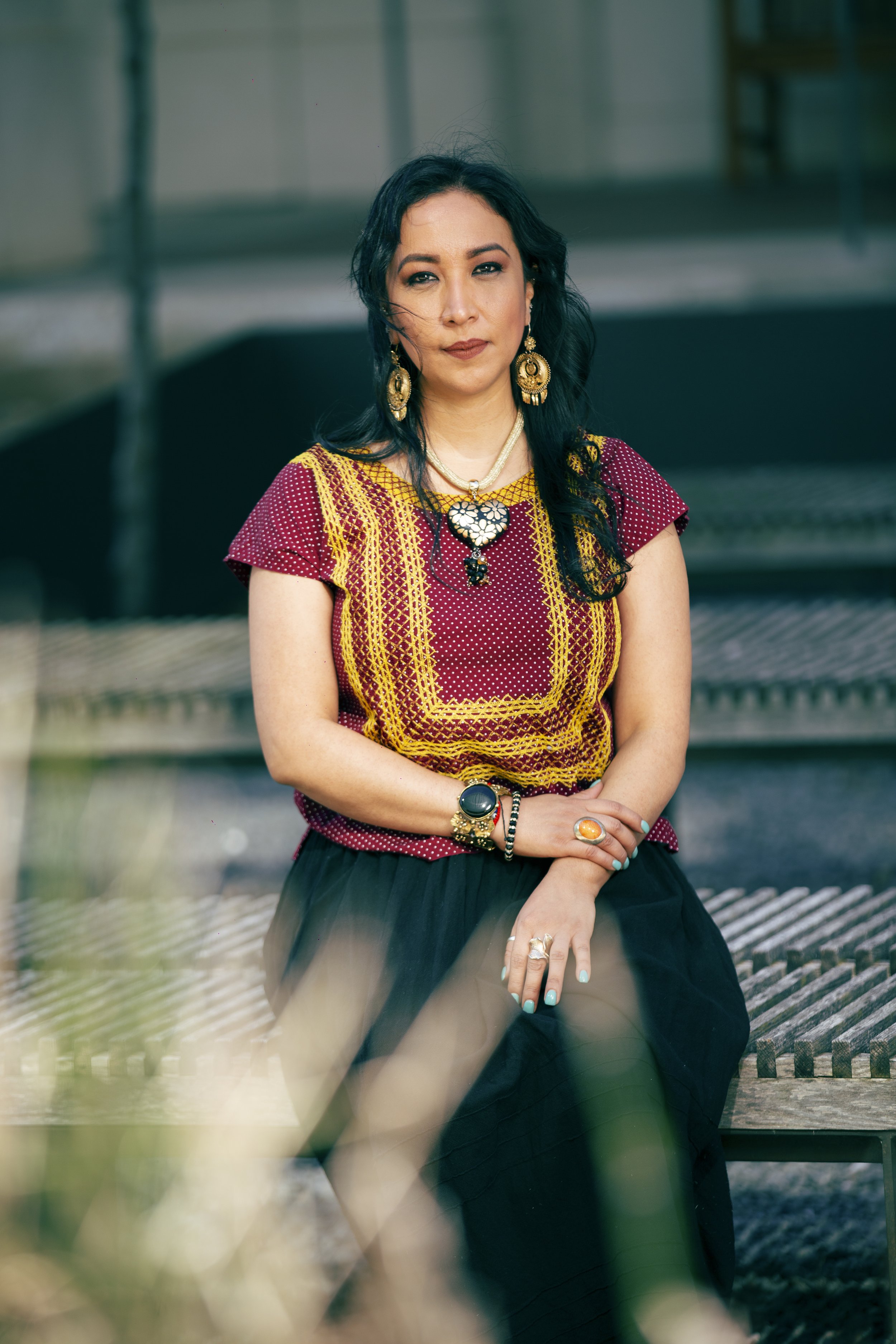
Magaly Licolli grew up in Mexico. Since 2015, she has helped lead the poultry campaign in Arkansas, which has gained notoriety nationwide. In 2019, Magaly became the Executive Director of Venceremos, a human rights worker-based organization that she co-founded, which works to ensure the dignity of poultry workers. She currently serves as a member of the Labor Research and Action Network Advisory Committee, as a Board of Directors of Labor Notes, and as a member of the advisory committee of Civil Eats. Magaly has been featured in media outlets such as The Problem with Jon Stewart, Democracy Now!, The Guardian, The New York Times, and Vox Media to name a few. She has been a guest speaker at important universities such as Harvard, Yale, and Stanford University. In 2020, Magaly was recognized by the Arkansas Business Publishing Group (ABPG) as one of Arkansas’s 250 most influential leaders.
episode notes & references.
- Venceremos Poultry Worker Organization: https://www.venceremosnwa.org
- Magaly Licolli: Organizing poultry workers starts with learning together (Facing South, by Olivia Paschal): https://www.facingsouth.org/2021/06/magaly-licolli-organizing-poultry-workers-starts-learning-together
- 2001 Tyson Indictment on Smuggling Undocumented Workers (LA Times): https://www.latimes.com/archives/la-xpm-2001-dec-20-mn-16722-story.html
- 2003 Acquittal of Tyson Executives (CBS News): https://www.cbsnews.com/news/tyson-not-guilty-of-smuggling/
- Southern Poverty Law Center: Poultry Plants and Worker Abuse: https://www.splcenter.org/news/2021/03/02/splc-and-partners-file-civil-rights-complaint-against-tyson-and-jbs
- Occupational Safety and Health Administration (OSHA) Poultry Reports: https://www.osha.gov/
- United States Department of Agriculture (USDA): Poultry Industry Overview: https://www.ers.usda.gov/topics/animal-products/poultry-eggs/BD
- Facing South article by Olivia Paschal: Magaly Licolli: Organizing poultry workers starts with learning together
episode transcript.
episode preview.
[00:00:02] magaly licolli.: I think for me, it was a change in my life when I became responsible for listening the stories. Knowing that the stories of the worker, it was a story of hundreds of workers.
[00:00:13] magaly licolli.: Then when I began talking with community leaders about do you know what is happening inside these poultry plants? What is happening inside all these companies? And people were like, "oh yes, we heard, we know, but we don't wanna talk about it."
[00:00:30] magaly licolli.: Because it was the situation that people were advocating for the immigrants. But they didn't want to recognize that those immigrants were also poultry workers and they divided the identity like I care for the immigrants, but I don't really wanna talk about the jobs that those immigrants are doing in Arkansas.
episode intro.
[00:01:35] mike.: Well, you are listening to the underview, an Exploration of the Shaping of Our Place. My name is Mike Rusch and today we're gonna continue a conversation that's been building quietly, but unmistakably throughout this season. Again and again, our guests have pointed to poultry in episodes about civil rights and labor, about zoning and immigration, about corporate power and regional identity. This story has been there, not always front and center, but it's never been absent behind the headlines and beneath the Economic Growth is an industry that has helped build Northwest Arkansas, and it continues to shape it in profound ways.
[00:02:09] mike.: And that brings us to the poultry plants, the need for low wage labor, the dependency on immigrant workers, and the difficulty, sometimes the danger of speaking up. We've heard about it in passing, we've had it named by community leaders and historians and policy experts, and at a certain point it became clear we couldn't tell the story of Northwest Arkansas without going straight into this.
[00:02:29] mike.: That is this episode.
[00:02:31] mike.: And I wanna acknowledge something from the outset. This is a difficult conversation. It's one we don't often have in public. In fact, many in our community have been conditioned not to ask too many questions because here in northwest Arkansas, the poultry industry is foundational. It feeds our economy. It supports local nonprofits. It touches lives across class, culture, and geography. And yet the workers, the people whose hands keep the system running, are often invisible.
[00:02:56] mike.: So that's why I had to sit down with Magaly Licolli. Magaly is the co-founder and the executive director of Venceremos, a worker led organization based in Springdale, Arkansas. She has spent years organizing alongside poultry workers in our region, many of them immigrants who are seeking not just the better wages or safer working conditions, but something more fundamental, dignity, a voice and belonging because that's really what's at stake here, our communal understanding of our belonging.
[00:03:39] mike.: Today's conversation is about understanding how we got here and who has been carrying the weight of our region's growth. It's about how capitalism, immigration, and labor policy have converged in northwest Arkansas and what it means to be a part of a community that depends on that convergence.
[00:04:01] mike.: Well, as you can see, we've got a whole lot to get through today. Let's get into it.
episode interview.
[00:04:08] mike.: Well, I have a privilege today of sharing a table with Magaly Licolli who's the executive director for Venceramos an organization here in Springdale, Arkansas that's working for advocacy for poultry workers here, and so, Magaly, thank you for your time. Thank you for sharing your table. Welcome to this conversation.
[00:04:25] magaly licolli.: Thank you for inviting me.
[00:04:26] mike.: Tell me a little bit about yourself and how you came to be in this work and maybe what the work of Venceremos does to help.
[00:04:33] magaly licolli.: Yeah. I'm originally from Guanajuato, Mexico. I've been in this area for 20 years. I actually graduated from the University of Arkansas in 2012. And me being an immigrant from Mexico, I had the privilege actually to learn English as my second language and being able to go to the university.
[00:04:54] magaly licolli.: it was when I graduated from the university when I began working with the community in nonprofits. So in one of those jobs, I ended up working at the Community Clinic located in Springdale, Arkansas. And it was, it is still a block far from one of the biggest Tysons plants. And through that job I was helping the patients to help 'em with resources and get them enrolled in any ways of healthcare or any programs that the community offered.
[00:05:26] magaly licolli.: So a lot of those patients that go to the clinic are former poultry workers who can't find other jobs because of their injuries that they suffer working in these companies. And it was really shocking that to learn the lots of cases that the immigrants endured while working in these companies. I was able to met with women that, for example were exposed to chemical accidents at the plant and had holes in their lungs, and were not able to find other jobs and were not even able to pay for their treatment. The many of those workers required more than $600 treatment per month and not being able to find other jobs because of their health situation.
[00:06:17] magaly licolli.: And to me, hearing those stories, it was shocking. But then hearing a story and similar stories and it was just a point that. It was not an isolated case. It was a systemic issue that the majority of the immigrants were all injured for life, for having worked in the poultry plants. And to me back then it was like I get angry for listening the stories and that and frustrated because the clinic would, was not able to really support them fully because they required a very expensive treatment to, to live every day.
[00:06:57] magaly licolli.: And that's where I was interested in learning and how to organize workers, but I didn't have any idea of the labor rights or how to organize poultry workers. But I was just. I became responsible. I think for me, it was a change in my life when I became responsible for listening the stories. And I could not just take it as a job. Oh, I help you and that's it. Knowing that the stories of the worker, of those workers that I was able to hear, it was a story of hundreds of workers, dozens of workers that I could not met back when I was working there. And then, every time that I left the job, I was like, I cannot believe this is happening.
[00:07:43] magaly licolli.: I can, and talking to people you know about what you mean this situation is happening every day and it's not alarming to everyone? Why I had to work in this job to be able to learn about these stories and then to learn that nobody really wanted to talk about these stories. So it was then when I began talking with community leaders about do you know what is happening inside these poultry plants? What is happening inside the Tysons plants? What is happening inside all these companies? And people were like, oh yes, we heard, we know, but we don't wanna talk about it.
[00:08:21] magaly licolli.: Because it was the situation that people were advocating for the immigrants. But they didn't want to recognize that those immigrants were also poultry workers and they divided the identity like I care for the immigrants, but I don't really wanna talk about the jobs that those immigrants are doing in Arkansas.
[00:08:43] magaly licolli.: And all of these narratives going around in the town that were actually learned the power of this company, such Tyson and their power they had with the charity they were providing in the community to silence the community, to silence the worker stories. It was a big motivation for me to do this job. And it was a big responsibility that I took and I didn't really thought about how hard it would be. I was just really passionate about doing something about the situation because, you know, growing in Mexico, I am from Guanajuato. Guanajuato is a city that is about 2 million people, but we also have extended family or my family part of my mom's side are from Michán. Michán is another state and I remember, going to Michán every year going to these towns every year. And suddenly I began seeing those towns getting empty because the people there began immigrating to the US because they wanted a better life.
[00:09:59] magaly licolli.: So we, I grew up listening the stories of my own family or people immigrating to the US for a better life. And we had this sense like in Mexico, oh, they're going there because they are gonna get a better life. And when I heard the stories of the workers that immigrated from my own hometown, Guanajuato, it was like, no, this is not a better life. This is not what these people left their towns and families back in Mexico to find these jobs that are really humiliating them. Who are violating their dignity, their humanity. And to me, that was a time that I said, this is not a better life for the immigrants and we need to do something about the situation because these people or these companies are making themselves richer. Whereas my community is now in the cycle of poverty because once they came to find these jobs and now they're get injured for life, and now depending on the resources the community provides to them, that is not a dignified life, right? That is not how we should end up in this country. And this is why I began doing this work.
[00:11:18] mike.: I think you hit on something that I think is at the core of a lot of these conversations and that's really the inherent dignity of the people that are a part of this community. That deserve that dignity and deserve that respect just because they're a human being Mm-hmm. if we start there.
[00:11:33] mike.: I would say, I've lived in northwest Arkansas for 40 years, and this is a community of people that's largely invisible from the broader cultural context sometimes. And probably not until recently as as the immigrant community has really grown has it become more noticeable.
[00:11:50] mike.: I would love to understand from your perspective, if you can tell us a little bit more about this community of people that come here to work in these poultry plants and meat processing facilities. What is their backgrounds, what are their stories? And I realize they're probably very diverse, but maybe help us understand from the, from that point of dignity, from the people that are here.
[00:12:10] mike.: Where do those stories begin and how do those stories bring them to Northwest Arkansas?
[00:12:15] magaly licolli.: Yeah, the immigration in Arkansas really expanded because of the poultry jobs that they offer to the immigrants. And we really need to understand that the why they, they were bringing immigrants to work to Arkansas is really the companies or their model of producing requires vulnerable people. They bend the blacks or the white people that used to work in these jobs learned their value or not their value or not their rights. And this is not convenient for a company that wants to take advantage of workers or make themselves richer because of the exploitation of workers. So they require to bring vulnerable people and those were the immigrants, right?
[00:13:07] magaly licolli.: So the immigrants what I heard with the workers, some of the immigrants immigrated actually from California. Many of those workers were working on the fields in California before they moved to Arkansas, and they was word to mouth, right? Like families began moving to Arkansas and they found at home, because a lot of these workers are from very small towns in Mexico, from villages in Mexico and o obviously imagine comparing living in California with grow bigger cities than Arkansas. They found probably like a more related plan that it was in Mexico, and that's how a lot of people, because the companies also were given back then, like we're talking about more than 20 years ago like $50 to, in bonus if they brought a worker to come to work in this plant. So they were bringing like their family members, their friends, and that's how they began growing the immigrant community because also in comparison to live in California where they had to split the house to be able to pay and afford the rent they found like a cheaper cost of living here.
[00:14:30] magaly licolli.: They were able to found or to rent a home for themselves instead of sharing the home with multiple families and also being able to buy actually their home. And so this is, was more appealing for immigrants to live in Arkansas than to live in expensive state as California.
[00:14:50] magaly licolli.: But also there is a story, so of for example, Tyson has a story of smuggling illegally Mexicans to work, to come to work to these plants. And people from Mexico, central America began to move to these jobs because also they heard the stories of the families that there were job opportunities. And this is how pretty much we have growing the the immigrant population in Arkansas that eventually there is other jobs now like construction or hotel industry, but back then it was more of, so the poultry industry that brought these immigrants to Arkansas.
comments on Tyson Foods story.
[00:15:30] mike.: Let me pause here for a moment. The comment that Magaly just made about undocumented immigrants being brought into poultry plants isn't just something that you've heard whispered about. It's verifiable. You can Google it.
[00:15:41] mike.: In 2001, Tyson Foods and six of its managers were indicted by the federal government for allegedly smuggling undocumented workers across the border to work in their plants. The indictment detailed how workers were transported and how documents were allegedly falsified. By 2003, they were acquitted, but the investigation itself paints a clear picture of how far the system was willing to go to meet its labor demands.
[00:16:04] mike.: And that story, it's not from the distant past. That was from 2003, and it wasn't an isolated case either. There have been others large raids at Agro processors in Iowa, Koch Foods and Mississippi Operation Blooming Onion in Georgia, and accusations of worker abuse at JBS and Fresh Mark. Across the country and across industries, we've seen patterns where vulnerable people, often immigrants, are brought in to do the hardest jobs under the harshest conditions.
[00:16:30] mike.: These are hard stories to hear, but I wanted to pause and just confirm because when Magaly first shared this with me, my first thought was certainly that couldn't be true. But as I looked into it deeper, these are verified court cases and verified occurrences. Alright, let's get back to Magaly
continue.
[00:16:47] mike.: Do you find that those that are working in these jobs today are the newer arrivals probably from different countries than they came from to begin with, and maybe more vulnerable situations.
[00:17:01] magaly licolli.: Now we are seeing that change. I think that like there is workers having worked for Tyson or other companies for over 30 years or forty years, and now those workers are getting retired. And this is a conversation that we've been having recently with workers because they said I don't know what these companies are going to do once this generation retires and how they're bringing more workers to do to the jobs. And this is something that we can discuss later on this conversation about what we are seeing right now.
[00:17:34] magaly licolli.: And the answer to the lack of those of. The lack of workers in this area to do those jobs. We can talk about more deep about that, but I think yes I think right now we are seeing more of the, those workers who came more than 40 years ago to Arkansas having worked for these companies for decades and now getting retired.
[00:18:00] magaly licolli.: It's something that is happening now. And actually those workers many of those workers were not able to find because they got injured for life and they were not able to find another job, and they are now depending on the other family members to, to leave. But yeah, this is a situation that we are seeing now, the shift on new workers that are coming to Arkansas.
employment structures.
[00:18:27] mike.: I think it would be helpful maybe could you explain a little bit about how these workers are placed in jobs, how that structure works of either workers being hired, maybe by third parties that are hired by some of the poultry manufacturers , maybe not all jobs like that, but give us an understanding of how does that employment process work yeah to bring these workers to this space.
[00:18:48] magaly licolli.: It's through different ways, right? Because for example there is workers that are hired directly by the company.
[00:18:56] magaly licolli.: Those workers are usually have a legal immigration status. Like for example, Tyson hires a lot of those workers that have a TPS visa, a war permit, a resident, or even citizenship. That are workers, immigrants who have been in the US for long, and they were able to get their citizenship. And those workers are hired directly by the company, but we have other ways that these, they bring workers in.
[00:19:26] magaly licolli.: For example, there is companies like George's that use temporary agencies and and so they, they get workers through those agencies to bring those workers. And it's a strategy the companies use to not check so much into the immigration status because they pretty much let the sourcing company to deal with that.
[00:19:52] magaly licolli.: So they pretty much hired these agencies to bring workers and they don't have to be hold accountable if the workers don't have immigration status and other ways, like for example, with the cleaning workers, they also use third party. Where they bring workers to do the cleaning jobs but also in the supply chain of all that industry the workers who work in the chicken farms, like the, we call them the catchers or they call themselves the catchers because they pretty much catch the bird, put 'em into the cages to transport them into the processing jobs, plus processing plants. And those workers are hired by the contractor that that the companies hire them for. And this is a way that the companies have found a very successful model for themselves, right? Not for the workers, but for themselves because they don't have any liability or responsibility over those workers who do a harder job.
catchers.
[00:20:59] magaly licolli.: For example, the catchers are really. If you ask me, I will say that those workers are the most vulnerable workers within the supply chain because those workers are mainly undocumented. And right now we are seeing, for example, in Arkansas more natives from Guatemala, immigrating to do these jobs and also kids. We have seen a growing of kids doing these jobs and they are hired by this contractor that is in charge to create groups of six workers to do those jobs in the chicken farms.
[00:21:37] magaly licolli.: But also, going deeply about like how do these workers end up, it's, sometimes it's word to mouth, but we are seeing maybe a path or ways of like human trafficking too. Because sometimes these workers are being brought from other states like Georgia, Alabama to Arkansas, and then took them to other states like by season or so. So this is how these companies get rid of their liability to protect all the workers that are working to provide the, ultimately the meat that we see in our table every day.
[00:22:21] mike.: Is that something you want to talk more about? I don't want to exploit that though.
[00:22:25] magaly licolli.: We don't have a lot of evidence on that. Yeah. Okay. Because it's pretty going to the world of learning the stories to the catchers is a challenge itself because those workers are so afraid to speak up. They are treated worse than the chicken that they're catching really. And going deeper of connecting them. Like the story, like right now I'm trying to, I've been spoken with some kids that have, are working now in this, those farms. But it is like, how the human trafficking happens is very not like clear, so there is not a lot of data or evidence that I can share on that this is something that we suspect and we want to do investigation more about what is, how is that happening,
safe environments.
[00:23:14] mike.: so when you think about just the working environment of a lot of these roles and jobs within the industry, and I realize there's a whole lot of them. What do we think about the environment of safety that exists for these employees?
[00:23:26] mike.: Certainly the companies would have a desire to have a safe work environment to obviously keep production moving and keep their workforce together. But where's that breakdown? Where, Why are we not getting to where we need to get within those environments to provide those safe environments for those workers?
[00:23:44] magaly licolli.: To be honest, I don't think that the companies care for the safety of the workers because if they would have, if they would care, they would put in place, ways that they will protect more of the workers. And I tell you this because I've seen, I've been organizing with poultry workers for a little bit over 10 years, and I've been very connected to workers through all of these years and seeing how much, how really the industry is moving too. And it's been always about how do they take advantage of the worker? How do they put them, the workers at higher risk in order for them to produce more.
line speed.
[00:24:25] magaly licolli.: For instance, the line speed. The line speed has been an issue that we have fought for years. And we bend with testimonies of workers with with actual reports from the government, that says this is putting in danger all of these workers because of the line speed issue, and yet they are still lobbying to increase the line speed.
[00:24:50] magaly licolli.: We saw that very clear with the pandemic. I think the pandemic really highlighted the stories of what the workers had been enduring for the years. And they made it worse during the pandemic, during the pandemic. It was a year that the workers were exposed to, to die, to get sick and die, like a very, in a very blunt way, and during that year of the 2020 where workers were struggling with COVID, with them getting sick with them, getting their families sick as well. The companies took the advantage of lobbying to the Trump administration and increased the line speed from 145 birds per minute to 174 birds per minute and that happened in April of 2020.
[00:25:42] magaly licolli.: The USDA gave some waivers to some companies like Tyson, George's Purdue, JBS, I believe, to increase to the line speed to some plants, right? So for people that don't know they will show them like a service slip answer like they're protecting the workers in this way, but then the reality they there is not of those practices really are put in place in the plans. And so this is why we been very outspoken about how those systems or what they said that they have is not really the reality.
corporate social responsibility model.
[00:26:26] magaly licolli.: And this is something that happened with the I believe it happened when the consumers were more concerned about how the animals were being killed, the exposure of how they were killing the animals. And the consumers were like, oh my gosh, what do you mean they're killing my, the chickens that way? The cows that way. I want more, more how do they call them? Like humane treatment to the animals. And that's how they began because of the pressure of the animals and the environment, they began to create this corporate social responsibility model.
[00:27:03] magaly licolli.: Where you could see, for example, in web, in the website of Tyson, you go to sustainability and you see a very beautiful narrative about how they're taking care of the chickens and how they're taking care of the animals. But really that is just PR for people. And that model is just for people to see it and then pretend that it's fine, but it's not really how things are running in the reality.
[00:27:32] magaly licolli.: So this is why Venceramos always challenge that model with the corporations and all the corporations. A lot of corporations have this model like sustainability models that are really for the people, consumers, to make them happy, but it's not really how things are running in the ground. And this is why we often challenge those practices because this is, That is not something that the workers are a, have access to, to really the safety part of their jobs.
[00:28:01] mike.: You've probably been asked this a lot, but I'm gonna ask it just to give some context for maybe those that may not be familiar. During Covid, these were essential workers who were allowed to work during a time when really no one knew what was going on. And so like in, in one vein, we see our society saying these are essential workers to to all of us. But at the same time, there is as you describe a, there's not a level of care for their safety that should be there. How do we deal with the duality of this scenario? How do we think about this or hold these two stories in tension?
[00:28:37] magaly licolli.: Yeah. Yeah. In 2020, I mean, these workers have always been essential because we thought their job, we were gonna have food in the table. But in the 2020, the government and the companies took at that took advantage of that to call them.
[00:28:52] magaly licolli.: They're essential to keep them work with not stop. It was really what they meant. You're gonna be working with not stop, and you're have to put yourself at risk even to die in order for us to keep running the food industry so people wouldn't be starving. Actually Tyson called the workers Heroes. They actually, they put a banner and we are the heroes who are feeding the nation. And, but in reality, they were not treated as heroes. Because when you talk about a hero or an essential people, you treat them with respect, with the due respect, with treat them nicely because you pay respect to that hero, right? But really it was just a way to manipulate the media and the people to make them work harder.
hero talk.
[00:29:44] magaly licolli.: So with this idea, you are a hero. It's pretty much you will expose yourself to die in order for others to live. And that's how we were fighting the narrative back then with Tyson. If you are calling them heroes, you need to treat them nicely. You need to give them the protections they need.
[00:30:05] magaly licolli.: You need to be sure that because during the covid, the workers were going to work every day with this anxiety, with the stress level, super high, not knowing how many cases were happening at the plant and began seeing the absenteeism of workers and not knowing what they were not coming to work. Was it because they took vacation time?
[00:30:28] magaly licolli.: Was it because they were sick of another thing? Was it because they quit the jobs? Was it because they had covid? They did. Were not informed whatsoever what was happening. And it was just pretty much them guessing, or the rumors about oh, that person got C and then oh, I was talking to that person yesterday.
[00:30:48] magaly licolli.: What is gonna happen to me? And the company didn't inform the workers, you were exposed to this case. You need to put, we need to put you in quarantine to decrease the levels of numbers. And they pretty much, were going to work completely blind. About what was happening and getting sick.
[00:31:08] magaly licolli.: They saw their coworkers dying eventually, and the company not even recognizing the death of the workers. There is this stories of the workers who have told me, Magaly. It was so heartbreaking to see that my coworker, who was next to me working for more than 10 years, more than 15 years, passed away.
[00:31:33] magaly licolli.: The company never acknowledged that death. And then when George Floyd was killed in that year, they made us pay a minute of silence for the death of George Floyd, and never made us to pay any minute of silence for our own coworkers. So that is the level of how these companies were seeing these workers as expendable.
[00:32:00] magaly licolli.: As no human value whatsoever. They were not caring about those families, about what me exposing these workers? I'm not gonna expose them him to die, but I might expose her husband or wife or kids to die. And we were like mobilizing the community, mobilizing the workers. Because the workers in that year, it was the moment that the year, the workers were more afraid of dying than losing their jobs.
[00:32:33] magaly licolli.: And that's why we were mobilizing constantly. Every month we had an action. Every month we were having something because it was alarming to see the number of cases of people who were getting sick and the numbers of people who were dying and no nothing, no. Nobody was re recognizing those people, those essential workers and the heroes.
[00:33:01] mike.: As we are here today, COVID has passed to some extent. is there anything else you wanna say about that time in Covid? Not that you have to, but I don't wanna move on too fast if there are,
[00:33:15] magaly licolli.: I could say that obviously Covid was a crucial point for what we are seeing right now because for me it's been five years, right? For everybody has been five years. But for me, we are still having the side effects of what happened in 2020. And I said this because the situation got worse. And there is before Covid and after COVD, and I said this because we began seeing a decrease of number of workers working at the plant and how the company took advantage of that situation to learn instead of having 10 workers on the line, actually eight workers, six workers are able to produce that fast.
[00:34:05] magaly licolli.: And they didn't even make an effort to bring more workers because this is something that, because I've seen and leave these stories with the workers in 2020, Tyson made even more profits that they made before. I think it was I don't wanna be so accurate, but I'm not sure if I'm too accurate, but it was around two 3 billion that they did more than the past years.
[00:34:34] magaly licolli.: So they set the bar too high of profits. So eventually the next coming years, they had to increase those profits and so they increased the price of meat, right? But they cannot increase the price of the chicken too high. So what happened is okay, how do, can we make more profits out of this situation?
[00:34:56] magaly licolli.: And the inflation and the crisis and everything going on was to learn that actually having less workers to produce was a way to save on wages. And then eventually was in 2023 when they fired their old CEO because they were in red numbers. Tyson went on a crisis for some years. Actually, there is some news about it, about like how they were not really very happy with their profits.
[00:35:25] magaly licolli.: In 20 21, 20 22, they brought this new CEO Donny King. And when he came, became the CEO of Tyson, I, we began seeing, like they started to shut down plants, for example, in Van Buren in Virginia, in the Noel, Missouri. It was because they also probably learned that production could be allocated to other plants.
[00:35:51] magaly licolli.: And to not expand so much money in the plans that were not having a lot of production or contracts. And so they placed that production to other plans and the workers saw an increase of of a job of production with less workers. So you cannot believe, if I'm telling you that in 2013 when I began hearing the stories of poultry workers and how injured they were, the numbers tripled by now of how many workers are injured for life.
[00:36:28] magaly licolli.: A lot of workers are doing the job with one hand because the other is completely injured, and a lot of workers are not even given the right treatment to do the job. A lot of workers are afraid of losing that job and then not be able to find another job because of those injury. So it is pretty alarming to see the high number of workers who are injured and working well injured to produce the food that we have.
[00:36:57] magaly licolli.: So yes, I think that Covid was this momentum and where everything became worse and worse by the year, and now it is completely unsustainable of how these companies are running. And the answer has always been how do we incr, how do we bring more vulnerable workers? And that goes to the new Trump administration, what he's doing to the immigrants and all of that.
healthcare & treatment for injuries.
[00:37:26] mike.: I never thought about COVID actually being a way of showing how they could make more money. I haven't thought about it in the way that you laid that out and that it's terrifying to, to think about it that way.
[00:37:38] mike.: Explain to me maybe if you can, within this environment what does healthcare look like when someone is injured? What are their options? How are they treated? Where can they go to hopefully recover and be given the care that they need to continue with their life and hopefully remain in, either the jobs that they were, if they want to. But what does healthcare look like for this?
[00:37:59] magaly licolli.: It looks pretty terrifying because when the workers get injured, for example, companies like Tyson has the zero tolerance to injuries. So zero record on injuries, something like that. But what that means is really they are not reporting the injuries.
[00:38:18] magaly licolli.: They are committed to zero injuries. Yes, because they're not reporting them. When a worker gets injured and it's often through repetitive motion, then they develop carpal syndrome or they get caught or amputation. But that is a higher injury. Like I'm not, yeah, like a worse injury. But for example, with the carp tunnel syndrome issue that they develop by processing and doing the repetitive motion, imagine like in the de boning department they are processing between 40, 40 to 45 birds per minute.
[00:38:57] magaly licolli.: So that means that they have to cut around 40 to 45 birds at the moment. Like the legs the wings, the breasts. And so they developed carpal tunnel syndrome pretty quickly because of that repetitive motion. Then the workers began having symptoms, like their hands get numb, numbed. They cannot hold heavy stuff anymore.
[00:39:22] magaly licolli.: And they go to this nurse, to the North Station because all of the poultry plants have a north station. And people that don't know how they function, they could say, oh, at least they have a doctor there, right? But those doctors are hired by the company and they're paid by the company and their job is to pretty much benefit the company and not the workers.
[00:39:45] magaly licolli.: And so there is a lot of negligence going on those nurse stations because the nurse will tell, just tell the worker, oh, you don't have anything. Just take this Tylenol and go back to work. And that's how they keep workers on Tylenol for years. And for example, when the worker gets a sur needs a surgery the company works with certain doctors and they are sent to the C doctors.
[00:40:14] magaly licolli.: You cannot believe the stories of what goes around that I cannot even believe how a doctor has the heart to, to not really do what a doctor should do, is to care for the health of the patient. And so all of these doctors that are connected to these companies will often, like for example, if the worker gets a surgery on a Friday, the doctor will tell them, okay, you're ready to work on Monday.
[00:40:44] magaly licolli.: And they are sent back to work on Monday without being able to completely recovered. And they often have to work with one hand or to find an easy job while they're recovering. But if they have pain, if they need something or the pills get them d dizzy or sleepy, they have to cope up with that because there is not like a, you can go home and relax and take care of yourself.
[00:41:13] magaly licolli.: It's not, it's just like you have to be here inside. You have to stay here, otherwise we're gonna put you a point.
point system.
[00:41:21] magaly licolli.: And these companies have disciplinary point systems where if the worker reaches up to 14 points, they get fired. So obviously the workers don't want to get these points because often they use them, for example, if they have to go to the school because the kids.
[00:41:41] magaly licolli.: Because of their kids, they will say, okay, I will miss my job because I have to go to the school for my kid. I will get one point because that's an urgency for their parents. And often when it's about their own health, they don't want to earn points because they've been accumulating certain points that they don't want to lose the job.
[00:42:03] magaly licolli.: So this is how they keep them trapped into working while injured. And there is no we sometimes with the cases that we hope is once you get injured, you have to get a lawyer. But there is not enough lawyers here that will take those cases. We recommend, if, I'll be honest, it's three list of lawyers that we know. They will take those cases. But and sometimes the lawyers have fought with Tyson and to say, we have to change the doctor because the doctor that is your doctor for that is working with the company is not really diagnosing the workers with the right thing and they need a second opinion. And that's how, through a lawyer, they are forced to change the doctor. But if the worker don't have a lawyer, they will get stuck with the company's doctor and whatever. The doctor is determined. Imagine that I have a case for a worker who has, who was exposed to a chemical accident and plant in 20 20 11 and still she is dealing with that chemical accident. And she was, she developed asthma, she developed a lot of respiratory problems.
[00:43:27] magaly licolli.: That in 2017 when I told her, you need to hire a lawyer because you cannot be only with these treatments and the company not really compensating you for that injury. She went with the with the lawyer and she found out that the, actually the doctor was not really giving her the di diagnosis.
[00:43:50] magaly licolli.: And when the doctor wrote a letter to the attorney, he said he, knowing that this worker became a patient of him because of that accident, he there to write a letter to the workers' comp to say that injury is not because of work related, is not a work related injury. And it was like, oh my God, we need to have a second opinion.
[00:44:17] magaly licolli.: And we fought really hard to change that doctor because that doctor was pretty much screwing the case of the worker. We had to get a second opinion and the second doctor said, yes, this act, this problem began when that accident happened at this plant. And this is, I'm talking about one case there is like hundreds of those cases where workers don't get the right compensation or the right treatment.
[00:44:47] magaly licolli.: And it's because everything is, the company controls, the doctors, control the lawyers, and it's something that it's it's heavy. It's very hard to fight for justice when all these people are in complicity of this company because of money.
organizing workers vs. unions.
[00:45:09] mike.: Magaly, thank you. I think it brings us into where we are today and maybe the work that you are doing. Explain to me, you're here, you're not creating a union, if I understand correctly, you're here about organizing the workers to speak for themselves.
[00:45:22] mike.: Is that correct? I would love to maybe explain that difference to us a little bit and why you feel like that's the, the pathway forward
[00:45:29] magaly licolli.: to really help. Yeah. As I said, for me, since the beginning of organizing poultry workers has been to find the right solution because we want to see changes. We want to see justice. We want to see that workers have dignity on doing those jobs. And me working for 10 years on this and this journey also of learning how to organize these workers. What are the current solutions?
[00:45:56] magaly licolli.: We are in a work and a right to work state which is Arkansas. And we are also in a corporate state. The state is running by corporations. And the corporations like Walmart and Tyson have a lot of power in the laws that we have in the state. Also the labor rights in the South are pretty weak. And the unions in the south are pretty weak because of the right to work state laws.
[00:46:23] magaly licolli.: And since the beginning when I was working, I was connecting with the unions and then learning that the unions didn't want to expand the unions to other plants because among the meat processing, the PO chip plants are the less unionized. I think it's only 30% of the plans are unionized. And it has been because they pretty much adopted the plans when they were already have unions.
[00:46:53] magaly licolli.: But ever since the companies or the industry has grown, there is no more efforts to unionize more com more plans because of the union don't want to lose what they have won already. They want, they don't wanna put in risk the contracts they already have. That is just the truth. And me, at the beginning of my efforts of organizing, obviously we focus a lot of OSHA on teaching the workers about the rights on osha, on how to file a complaint through osha.
[00:47:26] magaly licolli.: And if they had a discrimination or a sexual harassment case, they will fight the cases through the EEOC. And if they had a problem with wage theft, they will, we will filing a case on with the Department of Labor. But then actually I learned, what I learned first of all, that the workers didn't trust osha because they said, whenever we talk, I talked with the workers and said we can file a claim through o They will say, no, my God.
[00:47:57] magaly licolli.: The OSHA doesn't do anything. When OSHA comes to the plant, they already notify the plant. So the plant makes sure that when OSHA's coming to visit us, everything is clean, it is low, everything is staged for osha. So OSHA won't do anything Magaly, they will tell me, right? Like straightforward. And then with the cases of discrimination and harassment.
[00:48:25] magaly licolli.: It is very, the lows are very narrow and very ambiguous that it is very hard to really see a successful case coming out of those agencies. And I found myself, like me as a leader, an organizer, I cannot bring solutions to workers that I know that are really not working those solutions, right?
[00:48:52] magaly licolli.: Those solutions are not really the solutions and me, for me it is important to earn the trust of the workers. Because if I imagine me as an organizer and I bring the solution that they, first of all don't trust and that the solution is not really doing anything, they won't tell me my, lose the trust on me, right?
[00:49:17] magaly licolli.: And that's when in 2019, I traveled with the group of workers and myself to Florida to learn about the farm workers in Florida and the model that they established. And when we learned that they also had this journey of finding solutions, that at the end they ended up creating a powerful model to organize and to bring changes.
[00:49:43] magaly licolli.: It was the moment that the workers and me were like, we need to follow that model, and I think that's what I also talk about when organizing. We really need to humble ourselves and learn from others, and what is the best way to learn about what the farm workers have done for decades?
worker driven social responsibility model.
[00:50:04] magaly licolli.: Because the farm workers are very vulnerable. They are exempt from lows, like organizing laws, right? They don't have the right to organize. They're very vulnerable workers in the labor laws in the us And yet they've been very successful about creating either, either their own independent unions like we have seen in California or even Washington state. And the workers, the farm workers in Florida created this model that is called the "*Worker Driven Social Responsibility Model.*" And this is the counterpart model of what, the model that I taught before, the corporate social responsibility that don't have teeth. That model is just a PR for people. Beautiful way page, that they talk.
[00:50:53] magaly licolli.: But what the coalition of Immo worker was what created was the worker driven social responsibility model that is basically that the workers created their own cut of conduct. They brought it to the supply chain, to the corporate companies atop those companies to force them to adopt this set, like a standard, the same way as McDonald will say, I'm not going to buy the chicken because it has antibiotics, or I'm not gonna buy a chicken that is that has been killed with cruelty.
[00:51:30] magaly licolli.: The same way that they can set standards for the workers' rights. And this is how Remos was born, with the idea of duplicating that model to the poultry industry so that eventually we create a code of conduct written by workers, and that we can go to the corporations at top these companies and force them to set a standard or how they should buy their products with the dignity of the workers.
[00:51:59] mike.: Are you finding that is effective?
[00:52:01] magaly licolli.: Obviously, it is challenging, right? Because it's a bigger, it's a bigger industry than the tomatoes and this model has been adopted to the daily industry in Vermont. It's challenging also to bring workers together, but it's, we are moving forward. I think for us, establishing Venceramos itself was a challenge. Now we are gonna be five years, or we are gonna be six years this year. And it's still is a growing organization, right? But we are moving forward to, to adopt that and we're working on creating that.
why is this type of advocacy necessary?
[00:52:41] mike.: Maybe speak a little bit to the hesitancy of workers wanting to speak up for themselves and why this kind of advocacy work that you're doing is so necessary.
[00:52:54] magaly licolli.: The model in Florida, obviously if we create that model, it will have a a faster mechanism to solve the problems and more protections because the rights of the workers will be reinforced through the market, either, if we make corporations like McDonald's, burger King, Chick-fil-A, Walmart, to adopt our code of conduct.
[00:53:20] magaly licolli.: Then obviously they will be protected by retaliation. So we will need to create another third organization that will monitor the companies to the implementation of the code of conduct and the powerful part of this model is that it creates legal binding agreements between the corporations and Venceramos, for example, with these legal binding agreements there's risk. If they don't compliant, right? So they are in the risk of losing the contracts of those corporations and precisely is that the companies don't want to lose those contracts. So this is a way to, to grab them for, in that power, right? And to force them to, to respect the dignity and the human rights of the workers.
[00:54:10] magaly licolli.: So obviously before we implement such model, which is very ambitious model right now, obviously the workers are pretty afraid to speak up because there is not protections. And particularly Mike in this town is not only the retaliation of the company, it's also the retaliation of the society. Because in the society here in the northwest Arkansas, there is a huge respect for the companies because they have this idea of they are creating jobs, they are bringing charity.
[00:54:46] magaly licolli.: If we have a tornado, these companies will give us chicken, right? And so when the workers speak up, often they hear like, why are you biting the hand that is feeding you? Even in the churches, like they get charities from these companies and even the pastor will discourage workers to organize or to speak up.
[00:55:08] magaly licolli.: So it's not only they're afraid of like the company itself, it's, they're afraid of the retaliation and how they're perceived in the community by sharing or speaking up those stories that often if the pastor will hear the stories, will silence them and that story doesn't go anywhere.
[00:55:27] magaly licolli.: This is why Venceramos has been really powerful because I've done a lot of work of really handing the microphone to workers to expose the stories. 'Cause yes, I can share the stories and it can be impactful. But when a worker shared their stories, even way more impactful because they are sharing their own story, and people really need to listen to those stories.
inclusion of poultry workers in community.
[00:55:55] mike.: Maybe talk a little bit more about maybe this community response. This, the series of our conversations is really about how do we as a community create a community that where everyone is welcome and where everyone is included, and this feels like a part of our community that may not feel like they belong or doesn't feel like they're included and i'd love to understand like, how is that community response either, either perpetuating that feeling of not belonging or isolation, or do you see pockets where the community is engaging and creating bridges to try to include this part of our community into the broader narrative of what a great Northwest Arkansas looks like?
[00:56:34] magaly licolli.: I think that is changing a little bit. When I was organizing 10 years ago, it was completely a taboo to speak about the poultry workers. Actually, I was not invited to a lot of tables of conversations because they saw me pretty radical, and that was something that nobody wanted to touch on.
[00:56:57] magaly licolli.: I think through the work that we've done to exposing the stories and how brave we've been and the recognition we have nationwide and the how we are motivating or inspiring artists or writers to write books or to write stories about us has helped a lot to that the community here is accepting more these conversations.
[00:57:28] magaly licolli.: And obviously there is still a lot of room to improve, but it's really this idea of we are not telling that we should destroy Tyson, right? In the larger picture, this company should not be running the way that they run. Because it's really not sustainable. And we can talk more about that, but probably it's not this time.
[00:57:52] magaly licolli.: But in reality, is not like we are telling Tyson to shut down the plans and operations because we know that is not going to be possible because people love Chick-fil-A. People love Burger King, people love McDonald's, right? This is not the job of Venceramos. We are not about that. We are about like any job that these workers have should have dignity and respect.
[00:58:18] magaly licolli.: And so I think the community right now they accept more to at least hear or learned, we have seen more interest in the last five years of people wanting to learn more about what is happening with the immigrant workers and why Venceramos is very recognized outside Arkansas. And so yeah, people are more protective or more open to receive the information. Even with foundations or now I'm invited to more events than before even to the University of Arkansas, that before was a no-no Magaly, right? And now they, even the University of Arkansas are putting themselves in that risk, right?
[00:59:04] magaly licolli.: Because at the end of the day, these stories are important because it's not what we want the community is that they should tell Tyson, you are a family owned business. You are a Christian business, right? You claim yourselves to be Christian, value family values. So when it comes to the immigrants, then there is no values on those family. There is not Christian values to respect those families. So this is why we, this year, actually, we created this march to recognize their presence of these workers or these immigrants here in the community, that people should recognize their presence or what they bring to these communities because it's often that the community, the white community, other communities value our food, our culture, but they don't value us as people.
[01:00:04] magaly licolli.: And it's a time to really reflect who we are as in community and what do we own to each other, which is respect and value and yeah, I think little by little that is changing. People are being forced to change and I think people should be forced to change because right now with the crisis on humanity, not only in the US but and worldwide, I think we should enter to a phase of really considering what is really valuable and what is not. What should be looking into be more humane, right? Because we have seen the worst already, and to acknowledge that Tyson has a lot of power to change that, but they also have this mentality, this karma mentality of I need to exploit and treat workers with zero in dignity, in order for me to get profits, because it's the legacy of slavery in this country. We need to break through that legacy and understanding that in order to have profits, we should not exploit workers. And that actually will work happily. They, it should be, they will last more working in these jobs, but the need of money and profits over people is not leading us to anywhere but to the catastrophe really.
national dialogue.
[01:01:40] mike.: That is a very powerful word. And I think it maybe it bridges a little bit to where we are today. We've seen a pretty big shift. Nationally in our national dialogue around subjects of immigration especially with undocumented people, this is a, an industry that is not immune from that being the target of that that dialogue.
[01:02:00] mike.: Where are we today? What has the recent national or state or even regional conversations how is that changing the work that you're doing? How is that changing the workers that are here in our community and their sense of belonging?
[01:02:15] magaly licolli.: Yeah. That is a very interesting question because, right now, after the five years of Covid, we have the same president. In 2020 we were dealing with Trump. That actually Trump was the one that called essential workers, right? And then after five years, now they're being persecuted and called criminals. He forgot about essential workers. He forgot about that these workers put themselves at risk in order to provide food, in order to provide the services that we needed back then.
[01:02:47] magaly licolli.: So now this is something very interesting, Mike, because I think that what we are seeing now is, or the response of the people and people supporting something that is, it really doesn't have any sense to support, is really talks about the lack of understanding, the ignorance of knowing really how the economic system works in the US. Because what I've shared with you before is a company or an industry that often is seeking more profits every year to the cost of anything.
[01:03:23] magaly licolli.: So obviously when we talk about, or when Trump uses this phrase of they're taking our jobs and people really replicating that thought like they're taking our jobs. Is it really they're taking your jobs? Is it really the jobs that I was describing just now, you want those jobs? It's not that the people are taking on your jobs, it's the bad conditions that are displacing you. The bad working conditions are displacing people that know about the rights because these companies don't care about hiring people that know about the rights and dignity because there is no way that these companies will function with that because they only care for profit.
[01:04:15] magaly licolli.: So it is not the immigrants that are taking on your jobs, the is the bad working conditions that are displacing you. So we need to tackle that situation. And how these companies are running to the expense of whom. And yeah, right now we are seeing this narrative about we are deporting all these criminal immigrants we are, and putting these immigrants that are really going to work afraid every day. Now with the immigration threat, it is like they are making these workers more vulnerable, right? These workers are not gonna be able to speak. Now we are seeing that it is harder to speak with the workers because they are afraid of losing the jobs because also the employers are using that to intimidate the workers.
economic systems.
[01:05:08] magaly licolli.: And let's suppose this is scenario right, where they deport all these people. There is no way that the white working class is gonna take on these jobs. The working, the white working class is mad at the wrong person. They are mad really because their economic system that they built displaced them because what they believed it was working before is not working anymore for them.
[01:05:37] magaly licolli.: Because with under capitalism you need to create profits and profits to the expense or anything. And they embraced this system as the system that they believed in because they were against other value or other systems or whatever, but they embraced the system that eventually displaced them because they were not useful anymore for this system that is often taking advantage of people.
[01:06:04] magaly licolli.: So right now, yes, they can deport the immigrants, but who is gonna come to do these jobs? And this is why in the march that we did in in March of two months ago, it was about sending the message to people that there is no way that the white people are gonna return to these jobs, is that they are gonna find a way to bring vulnerable workers from other countries with this idea of we are providing visas to these workers.
[01:06:36] magaly licolli.: And actually soon after we did the march, Trump began talking more about the expansion of the temporary visas. And people don't know probably what they are, and I can explain a little bit of what they are. Since the Trump first Trump administration, he increased tremendously the temporary visas that are called guest worker visas. These are called H two A and H two B visas With the H two A, they brought a lot of agricultural workers to work in the fields of Florida, California, and other parts of the state. With these guest worker visas, the workers come with a six month contract that the companies will create to bring these workers.
[01:07:24] magaly licolli.: And we have seen tons of cases of the human violations that occur with these workers. Why? Because people that, for example, Trump talks about we need the legal immigrants, right? We don't want the illegal, but we need the legal. What he means is he's training their audience, he's training his people and supporters to believe that. Now guess what? We deported the bad guys, but we are bringing them legally. And by bringing them legally, we have more control in how we are going to exploit them. And we still white people, poor white people, you're still going to be out of the question. That is something that he is not telling the audience, but that's really what it is. He's, you white poor people are still gonna be out of the equation because you are displaced by this system already.
[01:08:22] magaly licolli.: So you pay attention. Only we want you to pay attention only about the legality or legal illegality of the people because we want you to keep distracted from the real issue, right? So by them training them already, like we are gonna bring the legal people is really, we are going to bring the new way to exploit people, which we call the the the new modern day is slavery, right? Because it is that it's, it is legal, it's mother, but it's still slavery.
[01:08:59] magaly licolli.: Why?
[01:09:00] magaly licolli.: Because we have seen tons of cases of human rights violations on their these worker visas because workers will come for six months. The employer will treat them so badly that they are not going to be able to speak up because they will be afraid of losing the benefit of going back to their country and the benefit of coming back to, to work for six months. So those workers will be very hard and are very hard to organize. And they, we also have seen in 2021, actually the Department of Labor unveil one of the largest cases of human trafficking. It was like more than 80,000 workers who were trafficked to work in the fields of Georgia. With these guest worker visas because they were pretty much recruiting people from South Mexico and to tell them, we are gonna bring you to work in the US for six months, but you have to pay the paperwork and you have to pay.
[01:10:01] magaly licolli.: So they pretty much brought them and they were making them pay every week. They were paying them $50 a week per week because the rest was going to pay for the paperwork they created to bring them back. But it was just really a way to to enslave them. A way to take advantage of their wages. And so they actually jailed a lot of those people who were involved on those in that case. And we recently, last year my, we helped a case of three workers who were brought with a H two B visa. The H two P Visa are for construction and manufacturing. They are not for processing. Trump tried to expand that for processing in his last year, of his last term, but he didn't pass it so he probably was not time for that. So it was not an expansion. So what they did now was that with this case of the three workers that we helped them was that they were brought, they were hired through a sourcing company in Guatemala that told them we are gonna have this contract to work in Chicago for a construction company.
[01:11:15] magaly licolli.: Once they arrived to Chicago, they found that the sourcing company called them like, guess what? The company is no longer going to need you, but don't worry, we have another job for you, which is in Huntsville, Arkansas. Take a a plane to travel to Huntsville, Arkansas, and there is a job waiting for you, which was a Turkey plant that they were brought in. Obviously it was a violation of the contract and violation of the case worker visas.
[01:11:47] magaly licolli.: And what I wanna say is that this case worker visa have a lot of room to exploit the workers to take advantage of workers and to continue the cycle of really screwing of the dignity of the immigrants that are coming to do these jobs.
[01:12:08] mike.: The picture you paint is, I've never heard anyone speak of this in this way before.
[01:12:14] magaly licolli.: Yeah. 'cause people get distracted a lot. And then Trump is very good about keeping us so full with information and you don't know anything else but me doing this job and seeing, like there is no way that a worker with that knows the language, that know the rights are gonna do these jobs and these jobs are getting worse by day. So yeah, they have to bring now immigrant workers with these legal status to please the white people. And to please the companies and to really continue exploiting the communities in that name.
the state of labor today.
[01:13:01] mike.: Let me ask you this, because you mentioned this earlier about what is the sourcing of new labor look like to here, to northwest Arkansas within this industry? How is that shaping or evolving or changing? What does that look like today?
[01:13:14] magaly licolli.: Yes. In the past years, and actually it was before the Covid. It was that a time when we were thinking like, how are they going to bring more people to work in these jobs? And we began seeing more refugees coming to Arkansas.
[01:13:28] magaly licolli.: Mm-hmm. Actually, there is a, an organization that focus on bringing the refugees. And to me it was like, oh no. Now they're bringing the refugees to work in these jobs because obviously you're not bringing them to a state that has a strong labor laws. Or is not like Arkansas suddenly is pro refugees, and they so care about refugees because the state of Arkansas don't really care about immigrants or refugees. But they brought them here because that meant an opportunity for these companies to hire those people. So eventually we saw more refugees coming to the state of Arkansas, that they were put into those jobs.
[01:14:11] magaly licolli.: But then after the Covid, with all the situation that happened in Covid, the workers who died, the workers who were no longer able to work with the absenteeism of workers, we saw the answer to the crisis to bring kids to the state.
[01:14:28] magaly licolli.: So we saw the governor actually allowing kids to work with any permit of their parents, and people will ask so what? Yes. It was important that because a lot of the kids that are coming to work in the chicken farms are unaccomp companion kids. They cross the border by themselves and their parents are back in Guatemala or other country.
[01:14:53] magaly licolli.: And so now these companies are recruiting these kids to work there,
[01:14:57] mike.: and these are under people that are under 18 years old. Yes. When you say kids, I'm just trying to understand like an age range
[01:15:04] magaly licolli.: or, I've met with the kids that were 14 years old two years ago that were working in the chicken farms and people, or Tyson or these companies will say that their agricultural kids.
[01:15:18] magaly licolli.: Do you know that the US in the labor laws in the US is completely legal to hire a kid to work in the fields because they don't have any protections. But in the chicken farms are not considered agricultural. They still, they're not in that category. So this is why we keep claiming that yes, there is kids, minors working on that, on those jobs. And those are not like easy jobs, it's not like a kid is working distributing ice cream or selling ice cream or serving drinks at McDonald's. It's like those kids, actually last Friday I traveled to Siloam to meet with some of them. And this kid, he's now 17, but he began working when he was 15 years old.
[01:16:10] magaly licolli.: And now with the contractor that they were working, they were pretty much uploading per week between 200,000 to 300,000 birds per a group of six people. I saw their hands and they cannot even close their hands anymore, and it was like. And I had to speak with the kids. With the kids because he didn't wanna speak up and he didn't wanna do anything because the contractor didn't wanna pay their wages back.
[01:16:43] magaly licolli.: And he was very afraid of coming forward. And I had to speak with him and said, your hands right now are getting destroyed after working on those jobs for a year and a half when you are 21. There is no way that you will find another job doing this every day. Like his uncle he has his his hands, he cannot even close them. And he has worked for four years. So it was like this time of what are we doing to protect the kids that are coming to Arkansas?
[01:17:17] magaly licolli.: Why is it like there is a crisis on the kids and nobody's talking about this, not only in Arkansas, but really worldwide. We are attacking kids left and right and nobody's really alarming on giving more protection to these kids because these kids now can be 13, 14, 15, but tomorrow they're gonna be 40. Right? 50. What humans are we raising for tomorrow if we are not really caring for what is happening to them right now?
[01:17:54] mike.: One thing that tho those listening would not be able to know is Magaly just showed me a picture of the hands that she was referring to and it's hard to look at. It's very hard to see. But thank you for sharing that with me. Brings yeah. Into reality. I won't forget that image. It's very hard.
[01:18:10] mike.: What's the way forward? What would you ask?
[01:18:13] magaly licolli.: Yeah. We will continue obviously, advocating for workers and organizing workers, educating workers in the community, because we really need to change the narratives in the community in order for the workers to have, or to feel that they are more empowered to speak up. We really need to bring the consciousness. We, our work has to do a lot about consciousness, because without consciousness you cannot do a really change, really need to be conscious about the food that we buy and what is behind the food that we buy, we need to be more proactive in demanding the rights of the people that are producing the food that we consume.
[01:18:59] magaly licolli.: And on the part of the workers we also have a lot of work to do to heal the division that exists because obviously these companies work really hard to divide workers and that the workers have this idea that certain groups of workers are better treated than others. And so we do that through popular education, through art, through theater, through paintings, and we travel. We do a lot of canvassing work. And what we really need to develop is an ongoing campaign that is tackling the supply chain of these companies. But in order to do that, we need a base of supporters too. We need people that are continue con, constantly supporting the efforts of Venceramos contributing to Venceramos work and with the workers obviously is to create or to bring more workers to be, because we never act without the input of workers.
[01:19:59] magaly licolli.: It is never like Magaly wants to do this because she just has a brilliant mind and wants to do it. No, I always have to be mindful of where the workers are, how to meet them, where they are, and to encourage them to get out of that situation. And that often is a, it's a process. But we cannot do this as, as an organization that only counts on numbers. We never care about oh, we need to distribute a thousand flyers. And then I have numbers to write in a grant. That's not how we operate. We operate with this idea that we are people, we are humans, and it's not about the numbers, but the quality of the work that we do. Because it's not easy to bring a worker from point A where they are so afraid to speak up to a point B, where they're encouraged to continue organizing and to bring more workers in.
what would you ask?
[01:20:58] mike.: What would you ask of the community of Northwest Arkansas?
[01:21:03] magaly licolli.: I would ask them to be open, to really learn the reality of what these immigrants are going through and the value of the immigrants in our community to stop accusing each other of attacking each other. We need to unite, we need to understand that we need each other. That we as humans, we wouldn't survive without the other. And that these immigrants have built a house, a home in Arkansas, and they're part of the society. They're part of the community. And we need to recognize them as people, not just as workers, or even if they just recognize as workers, they should recognize that without their job, we wouldn't have food in our table.
[01:21:51] magaly licolli.: And we need to be more humane when we see our neighbor, that this hate situation is not gonna take us anywhere because they are also suffering the consequences of a system that have displaced them. And we really need to recognize what we really need to do together in order to change this company's practices, because the companies really have to understand that in order to get a profit, they should not put workers or people at risk of losing their hands, having a struggle with their own health and dignity, really.
[01:22:32] magaly licolli.: So I will invite all the allies to be part of Venceramos, to learn about what we do, to learn about the stories of the workers, because this is not only the fight of the workers. This should be the fight of all of us that don't want this, these practices to stay as a practice that we recognize, right? These should be a way to breakthrough and to change that in order to be a better human beings tomorrow.
fears.
[01:23:05] mike.: I try to finish every conversation with two questions. One is around your fears within the work that you do, and when I say that, I'm curious what comes to mind? What are your fears in this place?
[01:23:16] magaly licolli.: The only fear that I have is that that we don't get to, to see the changes that we wanna see. It's not like I'm constantly afraid of that, but I'm always aware of what we need to do to keep growing and keep moving forward. We don't work on fear on organizing because I think that's always been our identity. We are not afraid of these companies. We're not afraid of the work that we do but we just afraid of like people. Especially in the ally community, we don't get enough support that we need to keep moving forward. We are still going to be very determined to move forward anyway, but it'll be a tremendous change if that shift happens.
[01:24:08] mike.: One of the concepts that string all of these conversations is this idea of community wholeness. And so I'm curious, when I say that to you, what does that mean? What is that idea of wholeness where maybe everything is as it should be?
[01:24:23] magaly licolli.: Yeah. I think that talking about labor or poultry workers should not be stigmatized. We should be more comfortable over speaking the truth about what is happening. We should be more open to hear the stories of others to no silence them most or gas light in them. I think that the perfect situation should be where workers also know about the rights and the people work hard to reinforce those rights and that we have a sustainability in the meat industry that these companies truly care about the workers, truly care about the animals, and truly care about the environment.
[01:25:06] magaly licolli.: And that should be a perfect way to be where, there is not always going to be perfect, but at least to have the mechanisms to make the perfect or to correct them, right? Or to prevent problems that all of these issues that I've been talking it are preventable. And and so yeah, I think that should be where we should be more open of learning the real stories that happened with the immigrants or vulnerable people. Why, what is our part on changing that and be more proactive on changing?
[01:25:45] mike.: Magaly, thank you for your time and for sharing a table to listen to you. It. I think it reveals a reality that we often here in this community don't have to reckon with. And so I wanna thank you for speaking from your experience and speaking on behalf of those who don't have the opportunity to sit in front of a microphone like this. And Magaly, thank you for the work that you're doing. Thank you for seeking out that idea of dignity in every human being that's in our community. I'm deeply thankful for your time today.
[01:26:12] magaly licolli.: Thank you so much. It was a pleasure.
episode outro.
[01:26:15] mike.: Well, an incredible thank you to Magali for joining us, for her clarity, her persistence, and for helping us listen more closely to the stories that are often left out of our region's narrative.
[01:26:26] mike.: We began the season with a commitment to seek an honest history of northwest Arkansas. That means telling the stories that are celebrated, but also the ones that are hidden, buried, or too uncomfortable to name. Magaly's voice reminds us that the labor shaping this place is not just economic, it's human, it's personal, and it's ongoing.
[01:26:43] mike.: Poultry workers, many of them immigrants, are not outside of our community. They are our community. They live in our neighborhoods. They raise their children here and make it possible for many of the comforts and conveniences that we enjoy to exist, and yet their presence is often unseen, their voices often go unheard, and their dignity often goes unprotected.
[01:27:03] mike.: If the underview is about shaping of our place, then we must ask, what does it mean to belong to Northwest Arkansas? What kind of community are we building when the people who sustain it are not part of the stories that we tell about it? These questions aren't accusations. They're invitations to think more deeply, to see more clearly, and to hold ourselves accountable to a vision of a community that doesn't depend on silence or separation to function.
[01:27:27] mike.: We can't claim to care about the future of this place if we aren't willing to look at how it's built. And we can't say everyone belongs here if we aren't willing to confront the systems that keep belonging out of the reach for so many.
[01:27:39] mike.: In our next episode, we're gonna continue exploring the questions of identity, migration and memory that shape how different communities experience this place because understanding where we're going begins by fully seeing who we've always depended on to get there.
[01:27:52] mike.: Wanna say thank you for listening, and I wanna say thank you for being the most important part of what our community is becoming. This is the underview, an exploration in the shaping of our place.