
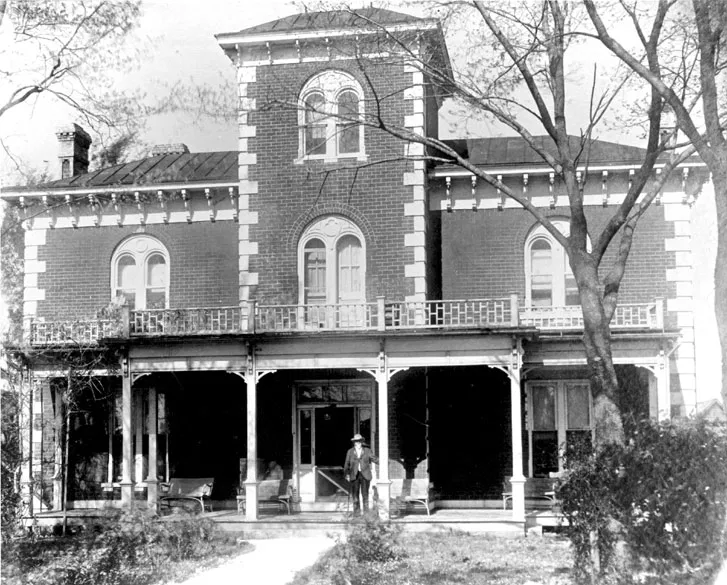
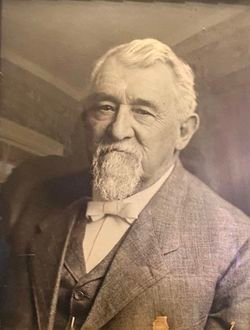
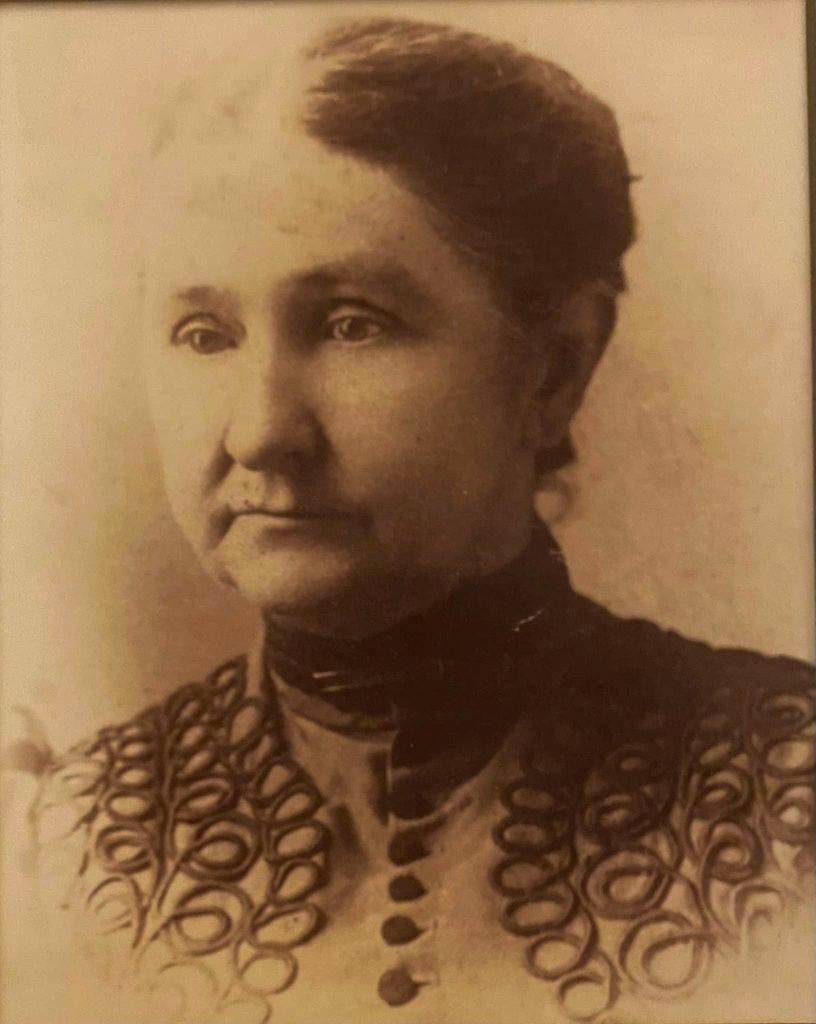
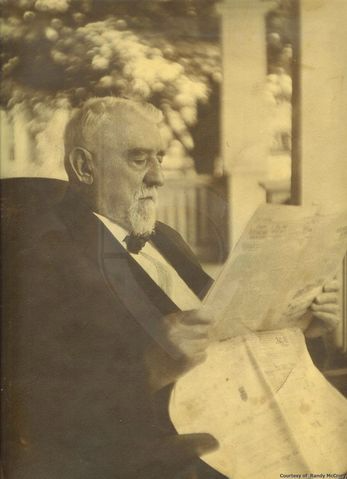
the Peel family with Chelsea Stewart.
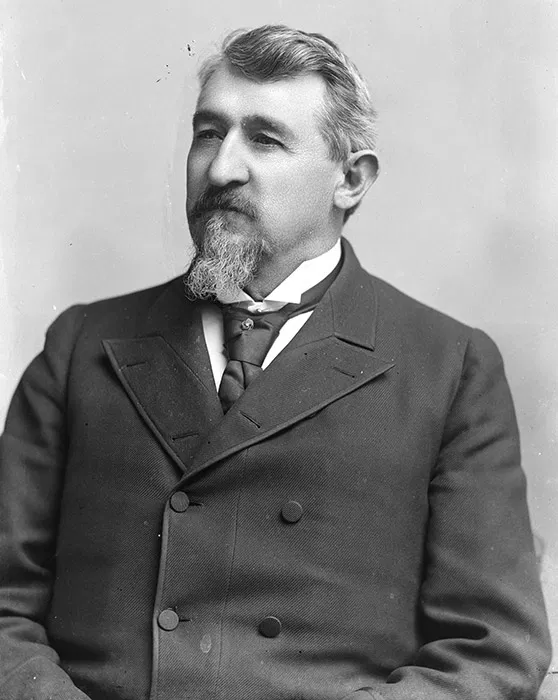
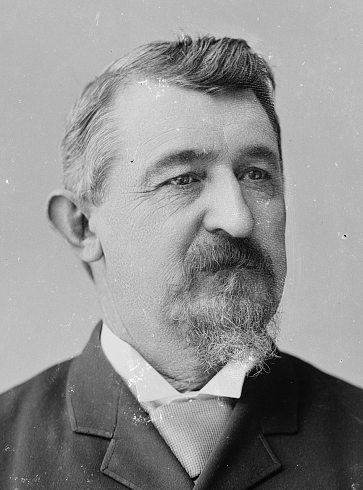
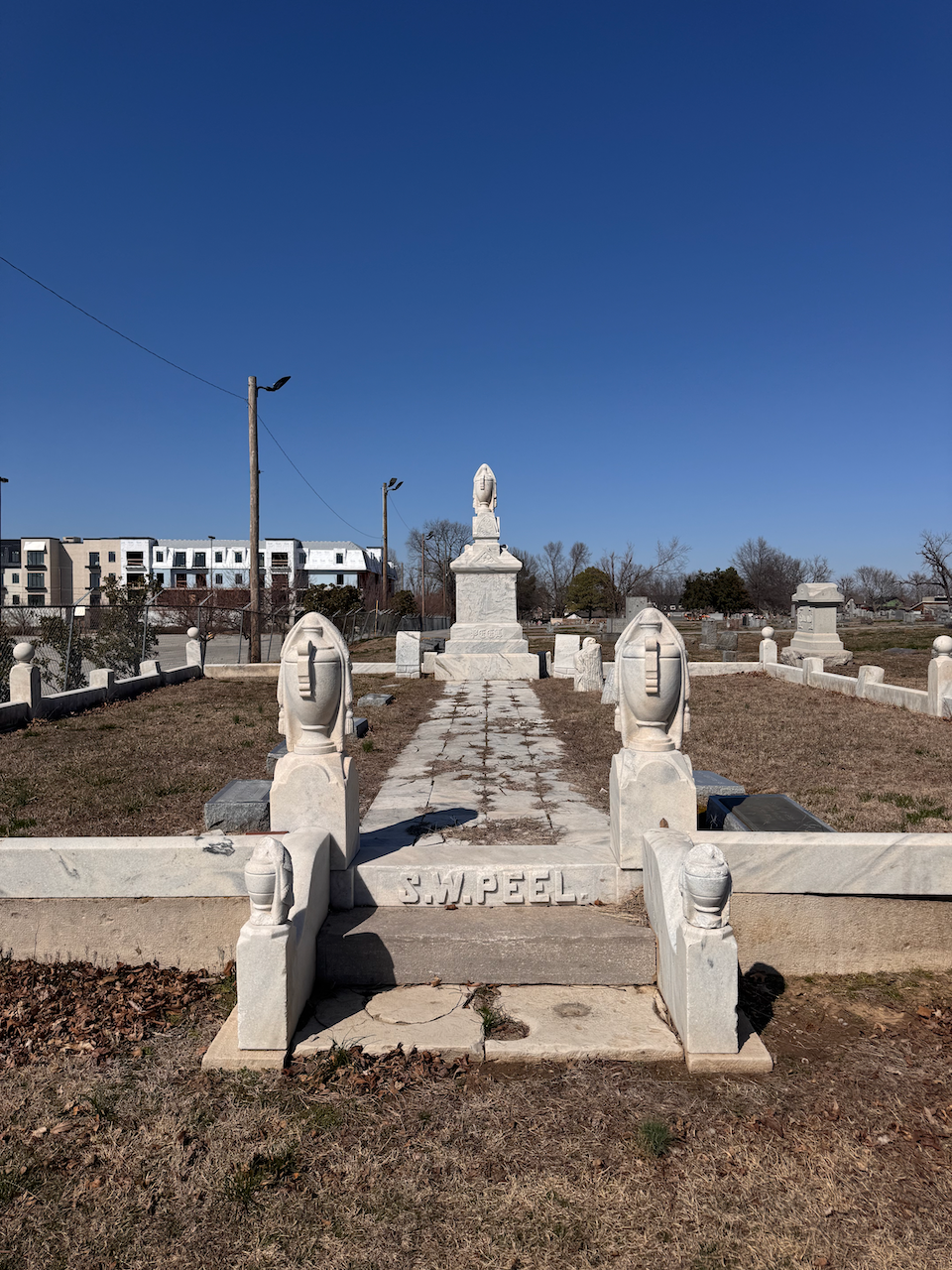
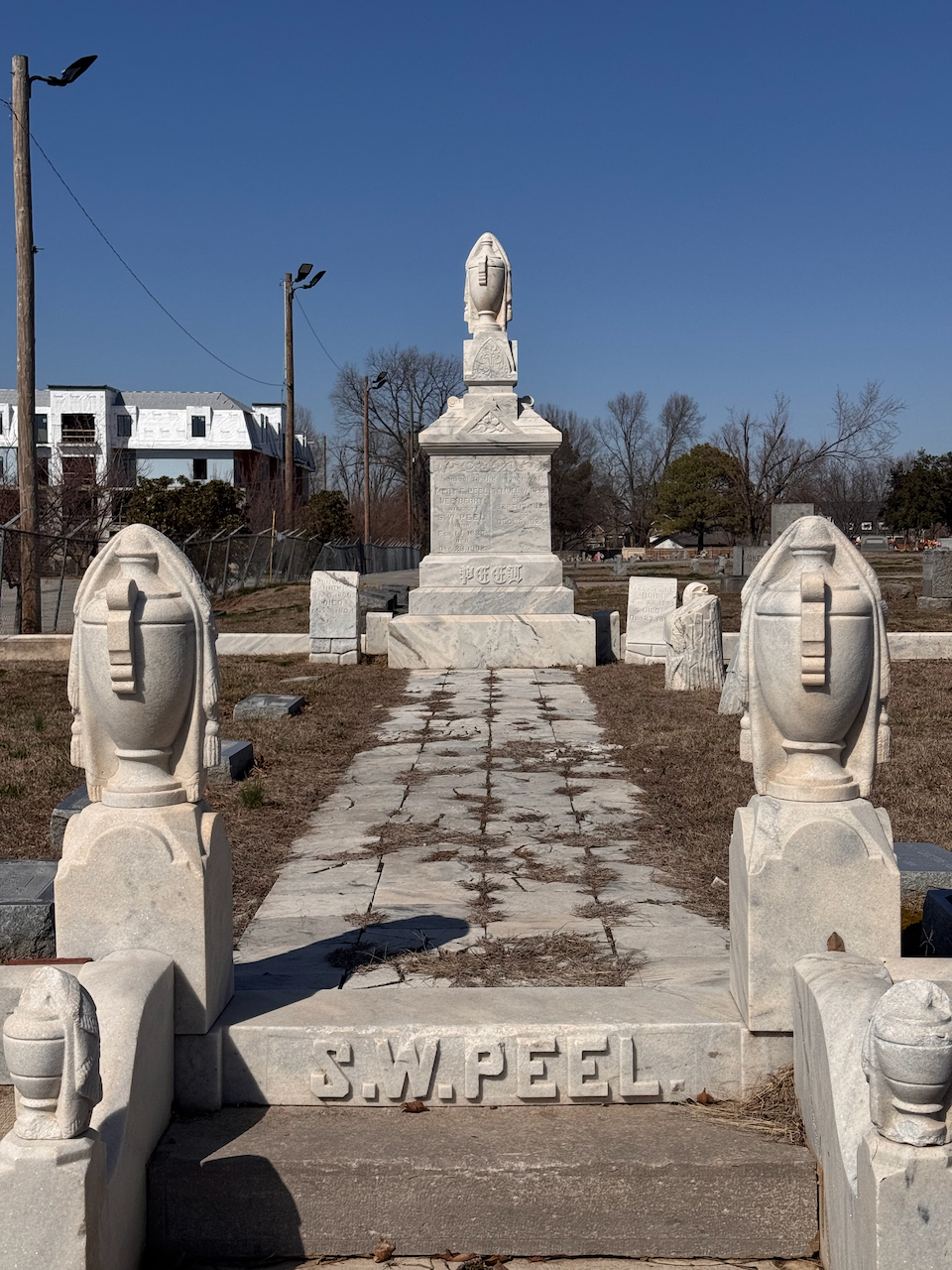
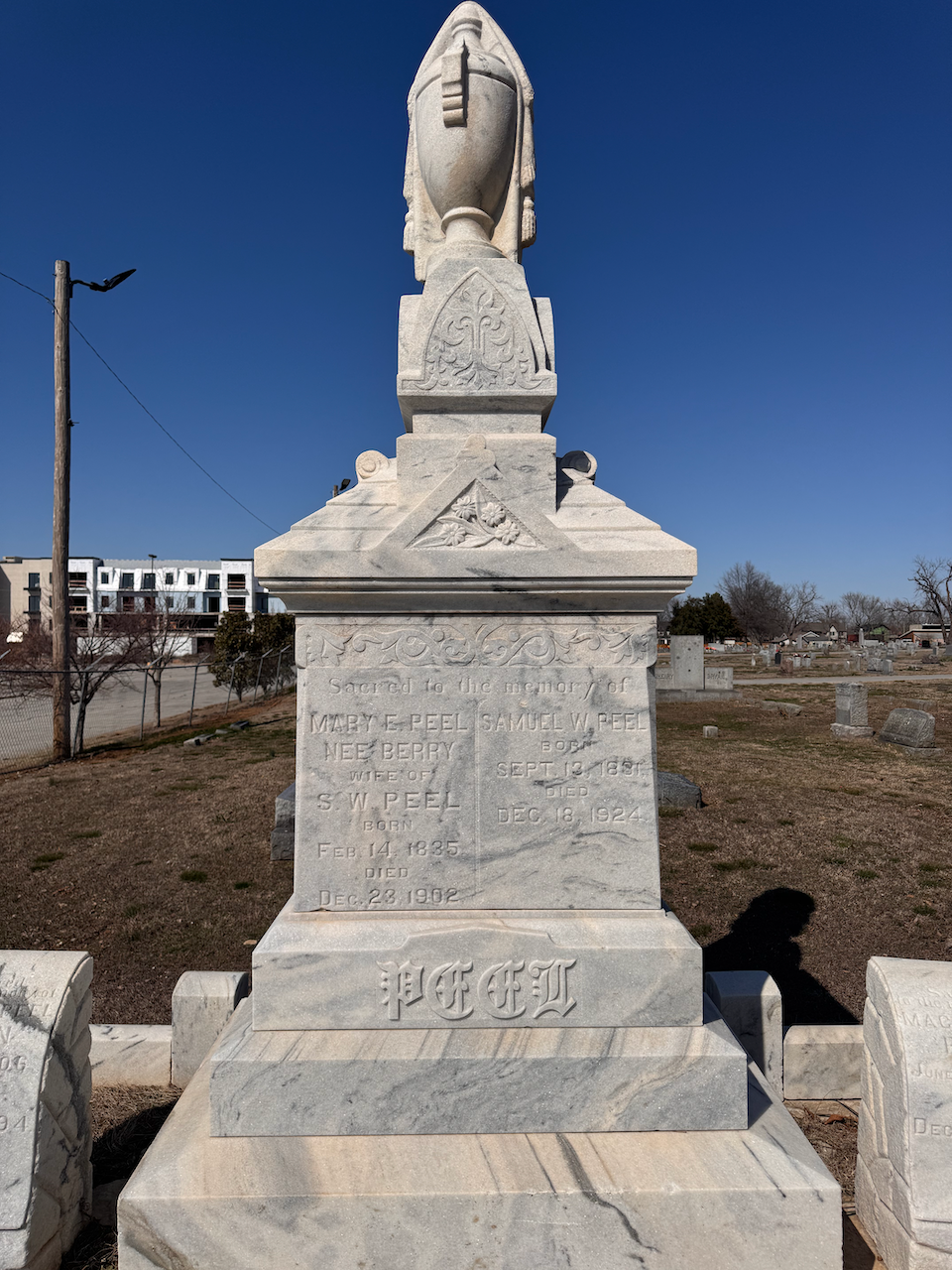
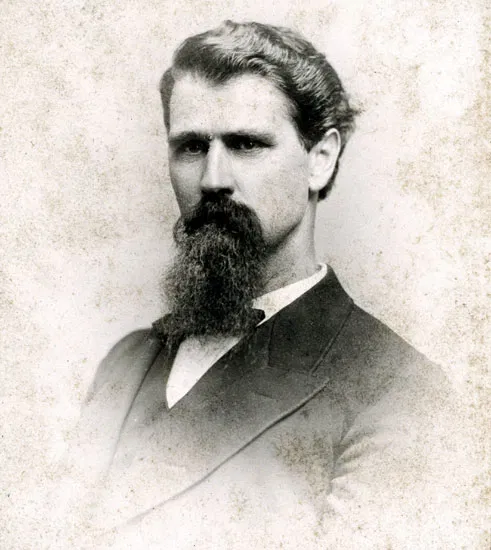
Samuel West Peel, the first native-born Arkansan elected to the U.S. Congress and one of the most powerful political figures to emerge from Northwest Arkansas.
season 2, ep. 17.
listen.
episode notes.
In this episode of the underview, we explore the life and legacy of Samuel West Peel — the first native-born Arkansan elected to the U.S. Congress and one of the most influential political figures to emerge from Northwest Arkansas. Historian Chelsea Stewart of the Peel Museum joins us to trace Peel’s rise through family connections, legal influence, and public office, and to help us confront the deeper complexities of his legacy.
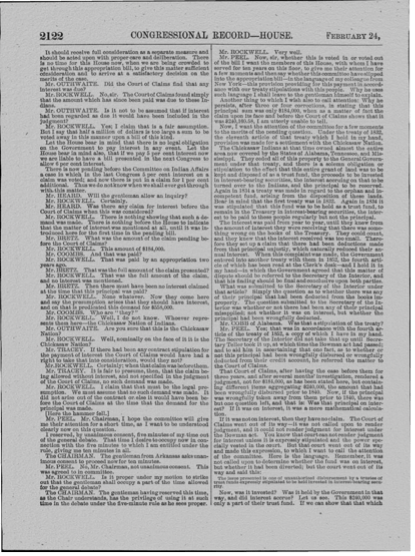
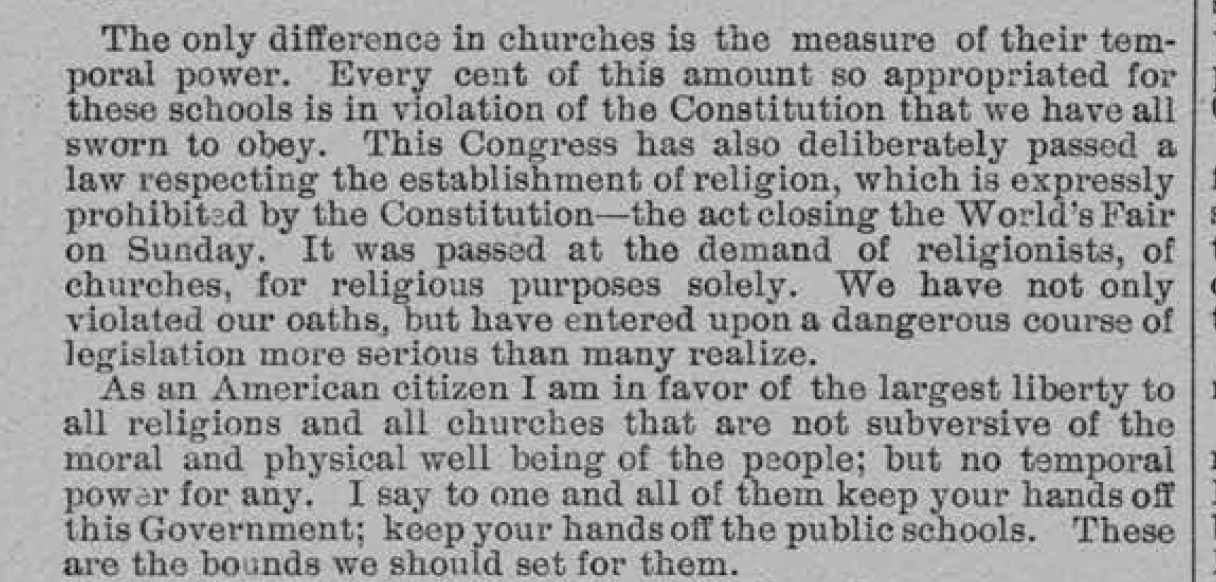
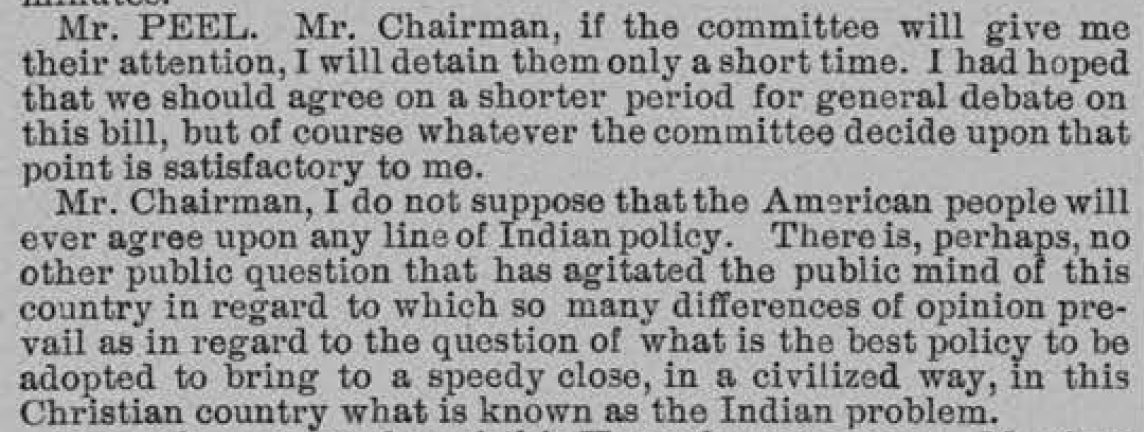
From his role in shaping U.S. Indian policy — including support for the Dawes Act and Indian boarding schools — to his later work as legal counsel for tribal nations, Peel’s story reveals how local power structures were woven into national systems of displacement and assimilation.
Together, we examine the memory of Peel’s influence, the unresolved questions around his relationships and motivations, and the broader implications of a legacy built through privilege, policy, and control. This episode invites listeners to reckon with the stories we preserve, the voices we’ve silenced, and the kind of truth-telling our region needs to move forward.
about Chelsea Stewart.
Chelsea is the Museum Manager for the Peel Compton Foundation in Bentonville, Arkansas. She received her master's degree in history and museum studies from the University of North Carolina at Greensboro in 2019 and has since worked in historic preservation before coming to Bentonville, Arkansas to work at the Peel Museum & Botanical Garden. Her passions include history through storytelling, historic preservation, and museum management.
episode notes & references.
- Samuel West Peel – Biography & Political Career
Encyclopedia of Arkansas – Samuel West Peel - James H. Berry – Arkansas Governor & Senator
Encyclopedia of Arkansas – James H. Berry - Dawes Act (1887) – Land Allotment Policy
National Archives – Dawes Act (1887) - Federal Indian Boarding Schools – History & Legacy
U.S. Department of the Interior – Federal Indian Boarding School Initiative - Quapaw Nation – Tribal Government & History
Quapaw Nation Official Website - Indian Appropriations Acts – Assimilation Policies
Oklahoma Historical Society – Indian Appropriations Act - Bentonville History – Post-Civil War Growth
Vintage Bentonville – Personal Sketches of Earliest Settlers - Peel Museum & Compton Gardens
Peel Museum Official Website - House Committee on Indian Affairs – Historical Role
U.S. Senate – Indian Affairs Committee History
episode outline.
- Episode Preview: 00:00–00:01
Chelsea Stewart on the responsibility of truth-telling in museums and history. - Episode Introduction: 00:01–00:04
Mike introduces Samuel West Peel, Peel’s role in shaping Northwest Arkansas, and today’s guest, Chelsea Stewart. - Chelsea’s Background: 00:04–00:06
Chelsea shares her education and current role at the Peel Museum. - Origins of the Peel Family: 00:06–00:09
Irish immigration, early Arkansas settlement, and Peel’s upbringing in Carroll County. - Impact of the Civil War: 00:09–00:12
The destruction of the Peel family farm, survival of Mary Emaline and the children, and post-war relocation. - Early Legal Career & Family Ties: 00:12–00:15
Peel’s legal training, connections to the Berry family, and early political network. - Confederate Service: 00:15–00:22
Military rank, battles served, family losses, and limited historical record from this period. - Post-War Rebuilding & Law Practice: 00:22–00:27
Peel’s rise in Bentonville, construction of Peel Mansion, and early legal success. - Path to Congress: 00:27–00:30
Political connections, failed first run, eventual election in 1883, and family political dynasty. - Democratic Identity & National Politics: 00:30–00:32
Southern Democratic values post-Reconstruction and Peel’s alignment with dominant ideologies. - Chairing Indian Affairs: 00:32–00:35
Role in Dawes Act, boarding schools, and Peel’s entanglement in federal Indian policy. - Post-Congress Legal Work: 00:35–00:44
Representation of tribes in Washington D.C., decline in health, return to local business with son David Peel. - Peel Museum & Descendants: 00:44–00:47
Peel family’s ongoing presence in the region and connection to the museum. - Chelsea’s Reflections on History & Preservation: 00:47–00:52
The importance of preserving history honestly, concerns about loss of historic memory. - Community Wholeness & Historical Reckoning: 00:52–00:54
Acceptance of full history as key to community health, Peel’s legacy in present-day Bentonville. - Episode Outro: 00:54–end
Mike reflects on Peel’s impact, ties to federal Indian policy, memory, and preservation; ends with the question:
“If the history we preserve shapes how we understand our community, what does it mean to preserve them with honesty?”
episode transcript.
episode preview.
[00:00:02] chelsea stewart.: we have to face that and we have to not cover that up because if we do try and cover that up or not acknowledge that history, we're gonna keep making the same mistakes that they did and never progress and never get better as a society. And I think that, as historians and as museum professionals, we've really been confronted in the last few years with how do we tell these stories? How do we represent that history? While still keeping the context and why it's important for us today, while still also not agreeing with those things and the choices that they made.
episode intro.
[00:01:18] mike.: You're listening to the underview, an exploration in the shaping of our place. My name is Mike Rusch, and today we follow the rise of one of the most influential political figures to emerge from northwest Arkansas.
Samuel West Peel.
This is a man who personally and professionally reflects the layered and often complicated history of northwest Arkansas.
Peel arrived in Benton County in the early 1850s. This was a time when the western edge of Arkansas, it was a volatile and complex borderland where white settlement pushed westward. Indigenous nations navigated forced displacement just across the line into Indian territory, and the expanding tensions over slavery, land and sovereignty. They foreshadowed the coming storm of the Civil War.
In the midst of all of that, the region was shaped politically, economically, and socially by a small group of white families. Peel was one of those families. He first established himself as a lawyer and he served in the Confederate army, but his greatest influence came after the war when he returned home to rebuild not just a life, but a legacy of power.
His ascent was not an isolated one. Peel was part of a tight network of kinship, patronage, and an elite legal and political relationships that defined Arkansas's leadership class in the 19th century. His rise was also supported by a powerful family network. He married Mary Berry, the daughter of James H. Berry, a man who would go on to become the governor of Arkansas and a US Senator.
Their families, would intertwine with others, and that shaped the legal and political landscape of the region. This was more than a family. This was a political dynasty rooted in Confederate memory reconstruction, era politics, and the consolidation of Southern White Democratic power. This foundation carried Peel to serve 10 years in the US House of Representatives eventually chairing the House Committee on Indian Affairs. This was during one of the most consequential and troubling chapters of US Indian policy.
During his 10 years Peel helped advance legislation like the Dawes Act and supported Indian appropriation acts that expanded federal efforts to assimilate native peoples through land allotment and the growing network of Indian boarding schools. These decisions placed Peel at the center of a national strategy that would have lasting impacts on indigenous families, cultures, and lands.
And yet, after his time in Washington, he returned to Arkansas and later served as legal counsel for the Choctaw and Chickasaw nations representing in court the very nations whose sovereignty had been diminished under the policies that he had helped shape. So within this story, it's more than just the story of one man. It's the story of a power structure in the post Civil War South, built on family law, land, and ideology. That shaped not only the trajectory of northwest Arkansas, but the fate of those who were pushed to its margins.
To help us examine the legacy. My guest today is Chelsea Stewart. She is the historian at the Peele Museum. Chelsea brings a thoughtful perspective to the life of Samuel West Peele, and offers us a window, not only does political rise in public influence, but also into the ongoing work to understand the legacy of his family.
Alright. A lot to work through.
Let's get into it.
episode interview.
[00:04:26] mike.: Well, I have the privilege of sharing a table with Chelsea Stewart, who's a historian with the Peel Compton Foundation, the Peel Museum. We are at the Peel Museum this morning. And so Chelsea, welcome to this conversation. It's great to have you here.
[00:04:37] chelsea stewart.: Thanks for having me. I'm really excited to be on the podcast.
[00:04:40] mike.: Well, tell me a little bit about your role here and tell me your story. I'd love to hear that.
[00:04:44] chelsea stewart.: Yeah, so just to tell you a little bit about me personally, I am originally from Mississippi and I went to the University of Mississippi for undergraduate. I have a degree from there in classical civilization and history, primarily European focusing there. And then in 2019, I graduated from the University of North Carolina at Greensboro with a master's in history and museum studies.
[00:05:08] mike.: Tell me about your role a little bit here at the Peel Compton Foundation.
[00:05:12] chelsea stewart.: Yeah, so here at the Peel Compton Foundation, I am the museum manager. And that entails quite a lot here at the foundation. I work primarily with the Peel Museum but also Compton Gardens, any collections from there I work with. And really anything from all four of the properties that the foundation covers. But, I oversee the museum, the gift shop, the staff the history, and yeah, I wear a lot of different hats.
[00:05:39] mike.: Well, we're here this morning because Samuel West Peel was a pretty significant figure not only in the story of northwest Arkansas, but also in the story of the United States. And I think today the goal is to dig into that story and the story of the Peel family as best we can. And so maybe give us a starting point or a starting context. For how we should maybe start to think about this family's role or influence in, in this place.
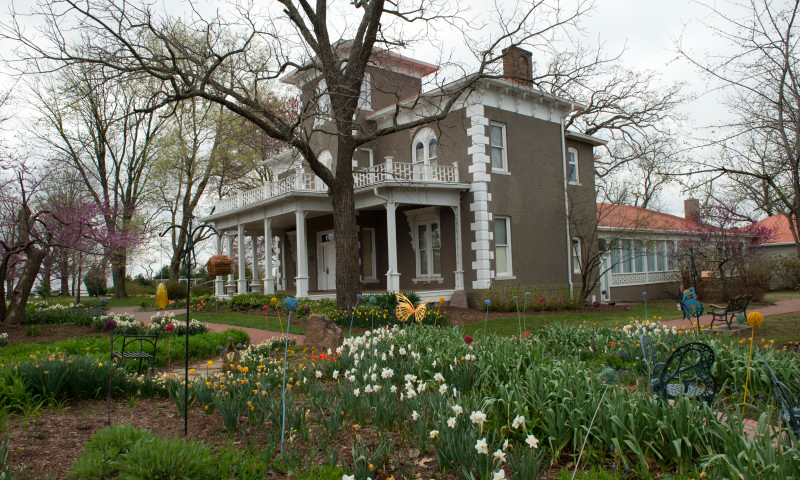
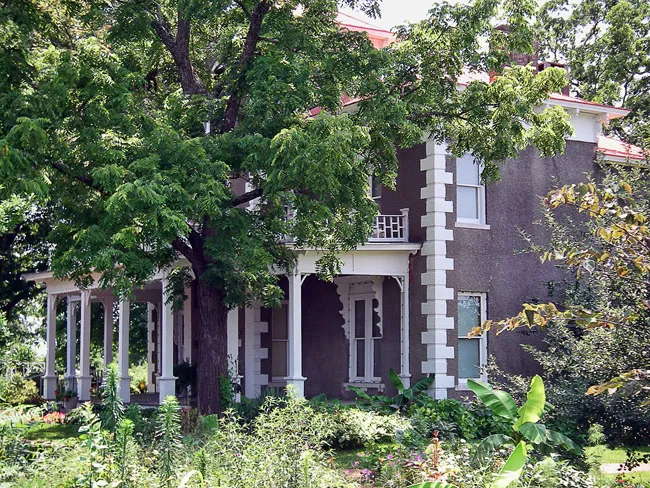
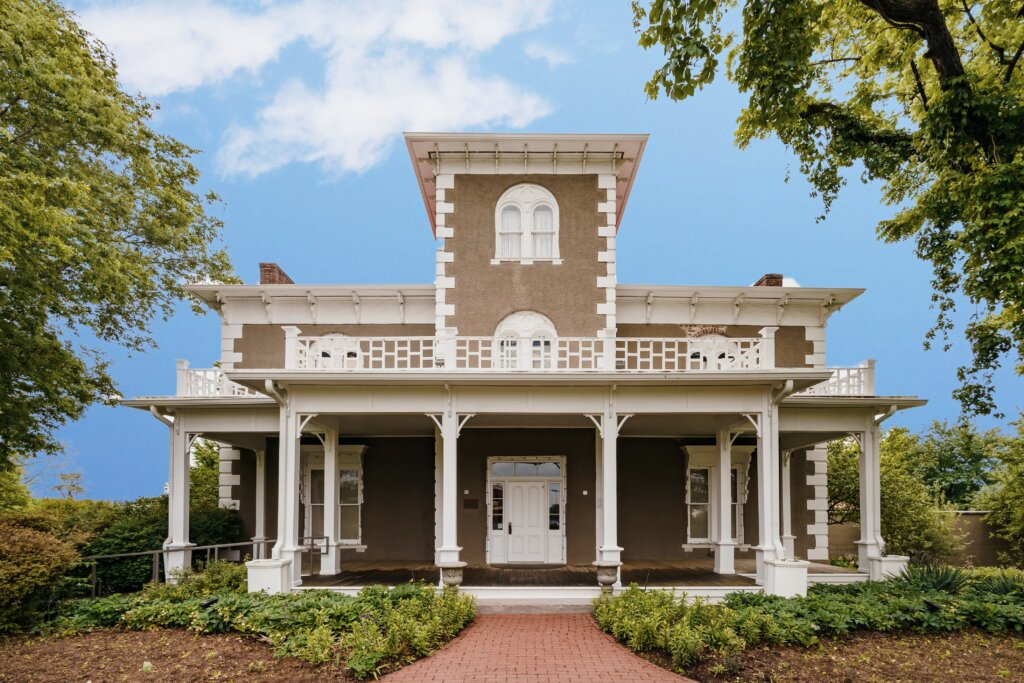
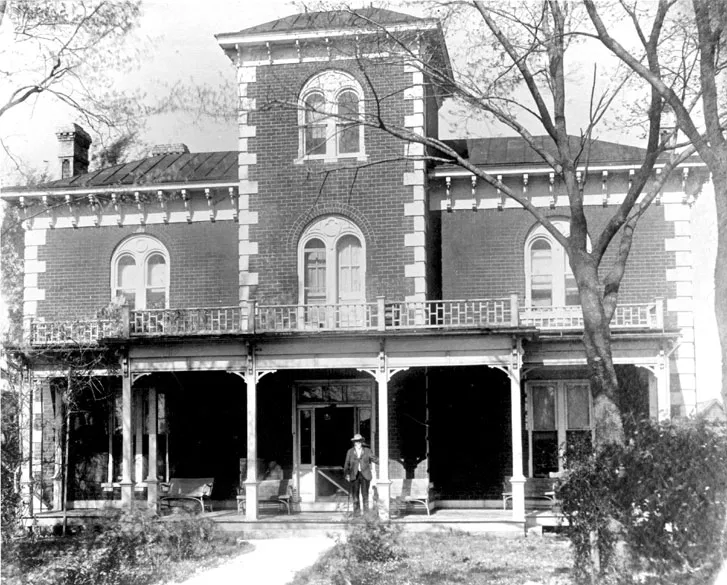
[00:06:05] chelsea stewart.: So one of the things that I always like to mention and point out as a starting point is their house in Bentonville, which most people know them for, was built in 1875, and Bentonville itself is only a year or two older than the house.
So they really came up and built up with Bentonville itself. So you can look at them in that light as they helped build this place, helped build the community. And even on a national level, like you said.
[00:06:35] mike.: Well walk me through as far back as you can go with the Peel family to maybe bring us to, I know Samuel West Peel was maybe not the first Peel in this area. Right. So maybe give us some context of where he fits or how this. Family ended up here in northwest Arkansas.
[00:06:51] chelsea stewart.: Yeah, so his family's originally from Ireland. They came over before the American Revolution and were settled in the Virginia part of the US and they were there for one generation about, and then they ended up moving over to Kentucky.
That's how they get in this area of the country. But then Samuel and his father they end up being born here in Arkansas. So his grandfather actually moves the family to Arkansas in the early 18 hundreds. And that's how they come to Arkansas. So they were here for quite a while. But they did come over before the Revolutionary War from Ireland.
[00:07:29] mike.: Do what year did they arrive here or thereabouts in northwest Arkansas?
[00:07:34] chelsea stewart.: It's hard to pinpoint in. Here in northwest Arkansas, it's early 18 hundreds. I wanna say it's around 1830s from what I've been able to tell. So yeah, in that beginning half of that century,
[00:07:47] mike.: how would you characterize this place in the early 1830s? This was pretty far away from any European immigrant communities.
[00:07:55] chelsea stewart.: Yeah, so very rural. There's really not much here but farmland. And there are a few communities more towards the east of Arkansas.
But this far out in the western part of Arkansas, it's lots of small rural. I hate to say, I hate to say wild west, but almost wild west towns. This was considered west. There wasn't a lot here. When they moved here. His father opened a general store in Independence County. And that's what Samuel did first is he was a general store clerk in his father's store.
And that's that's the type of work they did.
[00:08:35] mike.: Well I'm just gonna ask you to keep going 'cause tell me the story, if you will, around. Maybe what that early life looked like. The place where we're sitting today was not their first home here though, was it? No. Okay.
[00:08:45] chelsea stewart.: No. He was born in Independence County.
His mother actually dies when he's around three or four years old. And he goes to live with his grandparents and they pretty much raise him. His father gets remarried to another woman. He has a lot of half brothers and sisters. But he will spend most of his time with his grandparents at a young age. They do move to Carroll County at some point, which is where he primarily grows up. After a little while. And that's where he'll end up meeting Mary Emmaline, who he will end up marrying and that's where their first farm will be and their first five children are born in Carroll County as well.
[00:09:22] mike.: So what brought them to Benton County?
[00:09:24] chelsea stewart.: Yeah, so I guess
[00:09:25] mike.: it wasn't even Benton County at the time, though.
[00:09:26] chelsea stewart.: It wasn't even Benton County at the time, which is crazy to think about. But this little thing called the Civil War happens. Samuel Peel enlists and goes to fight as most men from the area did.
And while they are all fighting their little farm in Carroll County gets completely burned to the ground and Mary Emmaline and the five children are still on the farm. And this is actually a direct recount from one of her grandsons. We have an a history with him. He was still actually alive in the 1990s when they were restoring the house. And he talks about how Mary Emmaline, told him and was talking about how she was having to feed the children grass out of the yard to survive. Because literally everything had been burned and taken from them during the war. As this area saw a lot of fighting during the war. It was highly contested and they were unfortunately victims of that.
But that's what Samuel Peel finds when he comes home from the war. He finds, his farm completely destroyed his wife and kids barely alive. And like a lot of people after the war, they decided it was time for a new beginning. So they move with what is a large influx of people coming into this area to rebuild and start new after the civil War. And that's exactly what they do.
This house the museum was not even their first house here in Benton County. They actually moved here in 1867. So they had another smaller house. We're not entirely sure where, but somewhere nearby while they built this house. And he would take his time sort of buying up the land around this property.
This property would end up being over 160 acres of apple orchard's farm. It was quite large, so it took him a little while to, um. Piecemeal the property together. He would buy a little bit at a time and then he would end up with this large property that we know of today.
[00:11:27] mike.: Maybe maybe go back a little bit. Maybe before the Civil War. Can you talk about his profession? You said he was working within maybe general store, but we ultimately we're getting to the fact that he became a lawyer, but what was his early career look like? Before the Civil War?
[00:11:41] chelsea stewart.: His early career, he was a circuit court clerk. And so he would send in on all of the cases and, do the duties of a circuit court clerk and, he helped his father that way. His father would also get into politics. He was studying to be a lawyer as well. Back then you didn't have to be, I guess classically trained.
Like we think about it as a lawyer now you could basically be an apprentice. And as long as you could pass the bar, you were good to go. And so that's what he was doing. He was watching, he was learning. He was filling those smaller roles within the public system that would allow him to eventually become a lawyer.
[00:12:20] mike.: I'm curious the Peel family was one of a few families that had a lot of influence. In this region, in those early days the Anderson family who's a part of this conversation as well too, the Densmore family the Berry family, the berry as well too. And I'm curious, what can you tell me about the relationships.
Among maybe the Peel family and some of these other early families probably before the Civil War.
[00:12:44] chelsea stewart.: Yeah, so Mary Amalin, his wife, her maiden name is actually Barry, so she is part of the Barry family. Her brother is James Henderson Barry, who was our 14th governor and also served at the national level as a senator.
Peel goes and is Piti politically connected through that side of the family and his side. So he's got that on both sides. But his wife, like I said, was a Barry. So he has that connection. That family is originally from Alabama and they move over a little bit after the peels do.
Mary Amalin was actually born in Alabama and they moved up through Tennessee into Arkansas.
[00:13:24] mike.: Yeah. And I guess for those two, just as a reminder, the Berry family when we think about Bentonville and Benton County it's not there today, but the Civil War statute that was in the middle of the county which is middle of the City Square, which is owned by the county that statute was really dedicated to the gov to Governor Barry at the time.
Right. And now has since been relocated to its own park to Barry Park here in Bentonville as well too. So, just as a reminder what tell me do you, are you aware of any your, or your understanding of maybe marriage relationships to. Outside of the Berry family, maybe to the Anderson family or any connections within some of those early families by blood or marriage or anything like that.
[00:14:05] chelsea stewart.: So that's something I'm still looking into. I know there's a connection somewhere before Samuel Peel, but I haven't been able to figure out exactly where that connection lies. Now, his daughter Catherine did marry a William Anderson. And I'm not sure if he is connected somehow to this Anderson family because he is from Virginia.
So I'm not sure if that's a different branch of the family or a different family altogether. So I'm still trying to figure that out. I know there's a connection somewhere. It's just hunting it down and figuring out exactly where that connection is, which is part of the fun of being a historian. There's always something to figure out and put together as a puzzle.
[00:14:43] mike.: Yeah, I think, and I'm not a historian, but seeing. The number of Anderson names and the number of peel names. The number of there has to be a connection somewhere. There has to be, like, if there's not one, I will be shocked. A hundred percent. Tell me, because of those relationships, you said he had that kind of political influence on both sides.
shape early foundations of region.
[00:15:01] mike.: How did that shape maybe the early foundations of this region? You talked a little bit about that maybe to beginning, like he, he started here before Bentonville even became incorporated as a town. But what's your understanding of how that political influence may be formed and shaped this region as well too?
[00:15:18] chelsea stewart.: Right. He becomes a lawyer after the Civil War and that becomes his primary profession. We know that he was involved in many local cases here in the county as well. And, he would really be a lawyer in the area and also on the national level. His son would go on to be a district attorney and, that whole family just influenced everything in this area.
He, uh, there's a story that not a lot of people know about Mr. Peel involving the Civil War, but the he takes all of the records from the courthouse and he actually buries them in a cemetery. And that's to keep it from being destroyed. Because this is before civil and during the Civil War.
Yeah. So right before he actually takes all the records and buries them in a cemetery to try and save them because he realizes the war is going to potentially destroy a lot of things. And he succeeds after the war. He goes and gets those records out of the cemetery and he, puts them back in the courthouse.
Well, the courthouse had been destroyed during the war, and they had built a wooden courthouse as a temporary solution while they build another more permanent building. And unfortunately, after returning those records to the wooden courthouse, it catches fire and burns. Oh my. He saved the records from the war only to have them burn.
It's just one of those stories that not a lot of people know about him. So he was very focused on almost preserving the history and the records of the town. He knew, he recognized how important that was. And I think that's probably one of the reasons he was so passionate about Arkansas and this area.
He grew up here. He saw it form after the Civil War and after the m ajority of people moved here. He saw it grow and this was where he raised his family and where he really put a lot of time in after he leaves Congress which I'm sure we'll talk about in a minute. He also goes into banking and several of the banks here in the area his son worked for, he worked for, and he also had an influence on that side of business as well.
[00:17:33] mike.: Let's stay within the kind of pre-Civil war period, if you will. I wanna talk a little bit about his understanding of his role, in the confederacy from a military service perspective.
It's my understanding he was a lieutenant colonel in the Confederate army during the Civil War and served in some pretty notable campaigns e even those that are close to here, Pea Ridge and Prairie Creek as well. I'm curious what can you tell us about that time period in that service?
[00:17:55] chelsea stewart.: Yeah. So as you said, he served in several major battles in the area. He ranked up several times while in the service of the Civil War. And honestly, we don't really know a whole lot about his time in the war. We do know that he was the only one of his brothers and his family to not be permanently injured.
James Henderson. Barry, as a lot of people know, lost a leg in the war. His other brothers who fought his half brothers, they were also somehow permanently injured each of them. And he was the only one to come out unscathed really physically at least. And, other than that, we don't really know a whole lot about his time in the war.
One thing we do know and this sort of came to me unexpectedly a couple of years ago someone dropped off a box of just like papers and that sort of thing, and they were like, these relate to the Peel family. It's a lot of copies of genealogy stuff, con congressional records, and I don't really know if there's anything in here you can use, but here you go.
Well, I start sifting through that box and I find this envelope in the box and inside the envelope is the original 1863 deed to their Carroll County Farm. Or not the original, but somewhat close. And it was written by Mr. Peel as the circuit court clerk. And actually what this piece of paper is, this particular deed is him deeding, the Carroll County Farm over to his father John.
And the reasoning for this I can only deduce is that he is worried that he is going to die, is the fighting gets worse here in Arkansas and he doesn't want Mary Amalin and the children to not have somewhere to live. And of course, if he passes, she doesn't get the property. So he deeds it to his father John in order to keep it with Mary Amalin and the kids.
And it's a original document written by Mr. Peel. It's even got Mary Emmaline's signature on it as his wife, and it's. The only piece of writing we have of hers. And it's just a really important document because I think it shows that he was a family man, that was forefront of his mind during the war.
And, he was worried about what would happen to them. It's 1863, the fighting's getting worse on this side. And I think that really just shows the kind of person he was, he wasn't worried about, really the property. Obviously the property in a way that it would related to the family, but he was taking care of his family even in the middle of war.
[00:20:31] mike.: I think one of the things I am curious about is how that Confederate service military, sympathizing allegiance would, however we want to characterize it, really shaped his political standing here, his political thoughts or, even policies as he goes to congress as well too.
So I don't know if there's any anything we can tell from either writings or history or relationships that kind of give us some understanding of kind of what that confederate relationship really meant in his early budding political career.
[00:21:05] chelsea stewart.: Yeah. I'm trying to think. There's just not, unfortunately we don't have a lot of information on him before the Civil War. It all starts when he becomes a lawyer and builds this house.
That's about all we've got is census records, which is how we know when they move around, that sort of thing. Yeah, unfortunately there's just not a lot.
Yeah. I think he probably joined up in the Civil War because that's what everyone else was doing. I don't have any indication that. It was a particular passion or he felt one way or another about it. The men in Mary Emmaline's family and his family all joined the Confederacy as far as we know.
And I think he probably just got caught up in that wave of everybody's joining and everybody's doing this. And, the men that were mentoring him to become a lawyer and basically teaching him, they all went and joined. And may have been following his mentors at that point.
Were not really sure.
[00:22:04] mike.: Yeah. And I'm not aware of anything that if he had any influence in secession. Right. Conventions. Although some of those other prominent families, Dinsmore family. Did have pretty significant roles in those spaces but I didn't know if the peel peel had any role in that space or at all?
[00:22:20] chelsea stewart.: As far as we're aware, no. That could change at any moment. Sure. I'm always finding out new things but as far as we're aware as of this moment, no.
[00:22:29] mike.: then we'll we can move on from the Civil War then. I'm just cu curious, just, I'm like I found this too when I was talking with the Anderson family. I'm like, tell me about that time period. And it's just I, there just seems like a big hole there.
[00:22:39] chelsea stewart.: It is. It really is. And I think that. The reason we find not a lot left over from that time period is because so much did get destroyed in the Civil War. I think that, a lot of records, a lot of family homesteads all of that, it was just this region was absolutely devastated.
Bentonville was almost completely burned to the ground or what we consider Bentonville now. And I think that the reason we have I guess a whole is because so much was destroyed. I think that's why we have to rely on those census records and those more official government records to try and piece together what it looked like for some of these families.
Yeah. Okay.
[00:23:21] mike.: Yeah. And that seems to obviously be consistent across all. So, I'm also finding too, I think there's a lot of things from within that oral history, especially when we spoke with the Anderson family, that were things that have been carried down, maybe not formally recorded in certain places.
And okay. Well, let's, I he comes back from the Civil War, let's pick up the story there. What happens when he returns back to this area a after a service in the Civil War?
[00:23:44] chelsea stewart.: Right. So he finds his farm completely burned, like I said earlier, and they decide they want a fresh start.
And that's when they move here to what is now Benton County. They buy a little house somewhere or rent, we're not really sure which. And then they build this huge house that we now know as the Peel Museum. And that really cemented them in the area. The house itself was not considered to be part of the city.
It was considered to be on the outskirts and, a little bit of oral history from the family, like you were just talking about. Apparently it took him several times asking Mary Emmaline to marry him before she would actually say yes. And one of the things he had to promise was that he would build her a large house.
And as we know, he was interrupted by the Civil War. And it took him 22 years to do that. But he did finally build this house in 1875 and give her the large house and farm that she had always wanted. Their last child would be born in this house in 1875. After they move in. They had a total of 11 children, nine of which survived to adulthood which is very good statistics for the time.
And, he'll end up raising his kids here. They come here after the Civil War to get a fresh start. And that's exactly what happens.
[00:25:06] mike.: What, so this is when I don't know how to, I'll let you broach this topic, but from him starting his law practice when gives it, this is awesome.
I don't know if this will get picked up or not. I'm gonna do my best to try to cut all that out. What so when he returns, what is his career and his life trajectory look like? Post Civil War, and I guess that would be 1965 or so. That would probably be in 1865 then or so.
[00:25:29] chelsea stewart.: Yeah, so that's when he really focuses in on becoming a lawyer.
So he is gonna really buckle down. He realizes that he needs a way to support his family and he is gonna go ahead and pass the bar and become a lawyer. And he really starts to build that clientele in the area and he will do, as much as he can really to build that up. Now the farm was also a large part of his life.
Like I said earlier, this was over 160 acres of apple orchards and farmland. There were over three barns on the property. There were also three to four ponds as well. There was a carriage house. There were space for chickens. Mrs. Peel apparently had over a 10 acre vegetable garden on the property where she just raised everything she needed to run this as a home and feed everyone.
The apple orchard was quite a large production. He had several thousand apple trees of the heritage variety and not a lot of people know that Benton County and Washington County at the turn of the century they were the largest Apple producers in the nation at that time. And it would continue to be that way until the 1930s when a blight would hit all the trees and take out the crop.
He was part of that apple boom. And what helped put this area on the map as well? We see the railroad start coming in. That's gonna help with the apple production. And apples were a lot easier to ship out. When compared to some other fruit, if you think of an apple, even on your counter, if you've got apples and bananas, the apples tend to stay ripe longer than the bananas or other fruits.
And they're a hardier fruit as well. So they're gonna survive being shipped out and moved out longer than some other fruit. So it really was a good fruit to try to, invest in and grow in this area.
[00:27:23] mike.: Talk to me about his early legal practice and what he specialized in, or did he specialize in certain things or what was his kind of, it sounds like between that year of, after the Civil War until.
Maybe 1875 of building the house. He sounds like he was pretty successful.
[00:27:40] chelsea stewart.: He was pretty successful. Seems to be just a general lawyer taking pretty much whatever he was interested in. There seems to be a case where he represented one of the only murders in the area apparently. He represented in that way.
He was also very interested in business as well. And he represented a lot of business cases. And I think that probably influences his later decisions after Congress to go into business as well. So he has that dual I guess interest. Yeah.
[00:28:12] mike.: The trying to think, so that would've been 18. So he becomes, he goes, so we can transition maybe. How he becomes a congressman, if you will. Sure. And talk through what that looks like. You'd mentioned before that he had this maybe political family that he was a part of and had married into which ultimately led him to becoming US representative in the House of Congress for Arkansas.
[00:28:35] chelsea stewart.: Absolutely.
[00:28:35] mike.: Walk me up maybe what we know about that process of eventually running for office or yeah. Maybe before we get into is congressional work, but like how did, what happened in that space?
Do we know of anything there?
[00:28:48] chelsea stewart.: We don't know what. Forced him or what he found interesting and why he wanted to go into the national level of politics. 'cause that's quite a shift from local to national and we don't really know, we know that he ran once and was defeated before he was actually elected in 1883.
But we don't know exactly why he decided to do that. It obviously shows perseverance if you're defeated once and decide to run again. So it's obviously something that he wanted. And like you said, he had political figures on both sides. He had, obviously James Henderson and the Barry family.
And then his other side, his brother-in-law was also a lawyer and helped train him and was in local politics as well. So I maybe he thought it was the next. Step. He was maybe following James Henderson, Barry around a little bit because they served almost at the same time, some of the years overlap.
So yeah, we're not really sure exactly what pushes him to do that,
SWP political values.
[00:29:53] mike.: but at the time, from what I understanding, he was a pretty staunch Democrat, right? So it was probably as everyone was in this area, just those Absolutely. Post reconstruction democratic policies and values.
I don't, not that's your area of expertise, but I'm curious how those maybe policies yeah. I don't even know if that's a question more than like, how, what do those policies represent at the time? That he is running for and eventually elected to Congress.
(maybe insert that southern democratic platform notes?)
[00:30:22] chelsea stewart.: Yeah. So he seems, from everything that I've been able to tell and read up on, he seems to be your pretty typical Democrat of the time.
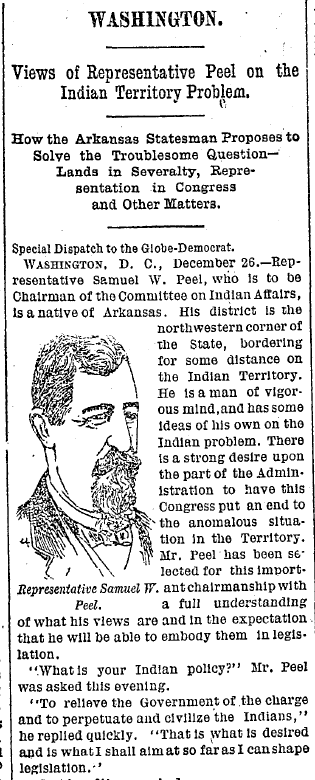
there are a few things that make him stand out. So when he is elected to Congress, he would eventually be appointed to chairman on the house committee for Indian Affairs and he was put in that position I think probably because of his being from this area, he was very close to the tribes in this regionally, close to the tribes. And that kind of put him in a position to be able to succeed in that position. And he will become really close to some of the tribes and chiefs. We know that even after he leaves Congress, he continues to represent them at the federal level.
And he had he took part in attempting to represent them in the court of claims and get back some of their money for the land that the government did take from the tribes. So he was trying to help them in that way. In the same vein, he was also the typical man of his time where he, he thought they should, come into what.
They considered white society and European society. And he did support them getting citizenship and being folded into the society here. He did try to get them some money back for their land because he did think they needed to be paid for it.
[00:31:47] mike.: Yeah. I think one, question, I don't know what records maybe are held. It, but in that role, he served in Congress for a pretty long time.
[00:31:55] chelsea stewart.: 10 years.
role in House Committee on Indian Affairs.
[00:31:56] mike.: 10 years.
But being the chairman of the House committee on Indian Affairs, he was in a pretty influential point in policy making around indigenous communities, native American communities. it's my understanding, he oversaw the implementation of the Dawes Act in 1887. Also advocated for the Indian Appropriations Act, which was. Really the Indian boarding school policy. I'm right.
I'm curious what from a museum perspective do you know about that? How do we how does the museum think about that time of his history?
[00:32:25] chelsea stewart.: Yeah, so obviously that's not something that we ever want to gloss over or cover up in any way. It's very important that we do tell these histories and when we give a tour every day we mention some of these things. We don't go into a lot of detail because, we only have 30 to 45 minutes with a group and they want to see the whole house. But, we do have that information readily available as much as we have anyways.
And that's been another one of my big research areas since I came into the role here at the Peel Museum, is wanting to see more of his congressional record. It's not really something that's been researched a lot on our end, and I think it's really important that we understand how he impacted certain policies in the area and that sort of thing.
So I think it's really important that we, we have that information. It's readily available for anyone who wants to dig a little bit deeper. It is part of our history and yeah, so we have it readily available for anyone who wants to dig into that a little bit more. Mostly in his study in the house. We have quite a few documents there because that's where he would've done a lot of that work as well.
[00:33:37] mike.: You had mentioned that he did advocate for some Native American tribes after Congress. I'm like, how do you characterize from what you know, I'd like to understand your understanding of how you would characterize his relationship or his posture towards the indigenous communities and how that works itself out between his congressional time and his time after he's out of Congress as well too.
[00:34:02] chelsea stewart.: It's really interesting because the more that I dig into his time during and after Congress, I come up with a lot of conflicting like newspaper articles, letters, that sort of thing. It's on one hand some of the tribes seem to think he has their best interest in mind. And then on the other hand, you have some tribes who don't want anything to do with him.
[00:34:27] mike.: So it's very conflicting. I don't know if it's because maybe one he helped more, the other he was not successful and so now they don't want to, so it's very conflicting and it's very interesting to see that in one newspaper. It's a positive article and the next it's a negative about the exact same thing. So it is very interesting. And we also have to remember that, we're reading the history of opinion and so I think we really need to look at it from a, a fact standpoint, which is what I try to do. And you take the newspaper with a grain of salt. He was reelected five times, so he must have been doing something right as far as the citizens of this area go. Now, as far as the tribes go afterwards it's hard to tell. They do have some newspapers in their nations that they, publish themselves. And like I said, those articles are very conflicting. One day it's positive, the next day it's not. So it's really hard to tell from that. I wish we had more personal letters between, maybe Mr. Peel and the tribes, but so far those have not surfaced.
I think the reason I ask is living here in Bentonville for so long I've heard the stories of Peel and serving Congress successful. Right. Attorney married into, very influential political families.
[00:35:46] mike.: This is not an area that I've really heard much about. And frankly, let rephrase that. I haven't heard anything about it until maybe we've started down the story with some of the conversations that we're having. And and the question would be why is that?
Is that just an unknown part of his story, or to your point, are there conflicting views on what that would look like?
I think part of living here in Bentonville and learning that role he had within the committee on Indian Affairs we have him within that role of the passage of federal Indian boarding school policy of which President Biden apologized for, last year, right? To Native American tribes for that policy. And so to me it like to find a Peel in the middle of that. I'm, I think as a person, I'm just really curious, like how do we deal with the duality of that history sometimes.
[00:36:34] chelsea stewart.: So my policy with that as a museum professional and yeah.
Does that make sense what I'm asking?
No, absolutely. Is that a fair question? Yeah. No, absolutely. Yeah. It's, how do we quote, celebrate the house and the history while still keeping in mind that maybe he was not always on what we consider the right side of history. And I say that as a historian, as a museum professional, because until, at least I think until the last 10, 15, 20 years, we, as, and I say we as a collective just public we didn't really look at the, what I call unsexy parts of history or non-sexy parts of history, however you wanna say it.
The house is beautiful, like the family story and all of this. It's all extremely important because they did help shape Bentonville and Northwest Arkansas and in some parts Arkansas and the nation. But we also, at the same time, have to realize and acknowledge that shaping was not always positive and we're where we are today because of the choices that were made. And Mr. Peel was absolutely a man of his time. As you said, he was part of, the boarding school policy, some of these other policies that may not have been favorable for people and they were not.
And I think it's important to remember that, that's how we grow as a people, as a community, as a nation, is, we have to look at those in the face and say, yeah, that was not great. He was part of it. All of these other people were part of it, but we can still look at that and celebrate the parts that shaped us to be who we are today.
[00:38:24] mike.: Yeah. I really appreciate your perspective as a historian. To look at it that way. And I think sometimes it's easy to look back and, um, I've been told over and over as we think about history, we have to evaluate it through. So sometimes the kind of what, how people lived and the values they had at that time.
Absolutely.
Which I'm not saying are Okay in any way, shape, or form.
Exactly.
But keep, I would say keep talking about that because I think your perspective on the value of that history and the learning of the lessons I dunno, it feels like there's a real opportunity there to really consider how we as a community learn from our past to draw direction to what we're are and what we are becoming. And
[00:39:03] chelsea stewart.: no, I think it's absolutely important. History is history. We don't have time travel where we can go back and change Mr. Peel, advocating for certain policies or whoever. Anybody. And as much as I think that some people would say, oh yeah, like I would get in that time machine and I would go back.
But really that's how we are where we are today. You have to realize that, things happened within the context of their time and I think that's the perspective that a lot of people lose. Like you said, I'm not saying that was good. I'm not saying that was great. I'm not saying that's the choices we should make today. I'm saying that's the choices they made and that's the choices they made for a reason. And that we have to face that and we have to not cover that up because if we do try and cover that up or not acknowledge that history, we're gonna keep making the same mistakes that they did and never progress and never get better as a society. And I think that, as historians and as museum professionals, we've really been confronted in the last few years with how do we tell these stories? How do we represent that history while still keeping the context and why it's important for us today, while still also not agreeing with those things and the choices that they made.
So it is a little bit difficult as a museum professional to tell these stories while also not agreeing with some of the choices that were made. But I believe it is a very important job that we have. Like I said, if we don't tell these stories, if we don't preserve these stories, then you know, history's bound to repeat itself.
Is the, saying that is, might sound cl cliche, but that's what it is. That's how I feel about it.
[00:40:50] mike.: It's hard to look in our culture and events of what's happening today and. Not see echoes and not see echoes sometimes in these historical patterns. Right, exactly. So I'm sure you could speak for a long time.
[00:41:00] chelsea stewart.: Oh, I could go on and on about it, but maybe we'll get,
[00:41:03] mike.: Well, no, thank you. I appreciate that. I think it's a new part of that story that I'm learning and trying to understand and to reckon with, and I think and sometimes there's just, there's not good I don't know, maybe models or examples of how communities can reckon with stories.
And Bentonville is not unique in those spaces. The Peel family's not unique in those spaces. And so I think I'm always looking for wisdom and advice about how to view the past and how to use that in a way that can help move our community forward to, to create a community where everybody feels like they, where they belong.
For sure. So thanks for.
[00:41:35] chelsea stewart.: Yeah, of course. And you mentioned there may not be models for how to take this head on, and that's just because we're still trying to figure out how best to represent that. A lot of times, it's a I hate to say trial and error, but it's, it's, it really is. It's, how do we present this in a way that makes people care as well because we want people to care about the choices that were made before us. Sure. And I think hopefully in the next few years, next few decades, we will see some really good examples of how to confront that history and how to present it.
I tend to be a little more blunt and just say, I'm not hiding anything. This is what happened, and I just put it all out there. Sure. Some historians take another approach. But yeah.
[00:42:20] mike.: Yeah. No I appreciate that. I think it's I think I'm. No, maybe it's 'cause I'm becoming part of history, I'm getting older. But just the value of the lessons learned. Right. And I think being able to, how we think about it not from a blame perspective per se, but of course to really understand how do we use that information to make sure it doesn't happen again, but also to make sure we move our community forward and make
[00:42:40] chelsea stewart.: Exactly.
[00:42:41] mike.: Thanks for that, that I didn't, of course, I didn't intend on spending that much time there, but I love that and I appreciate your willingness to talk about that.
post-Congress return to civilian life.
[00:42:46] mike.: So take us to his years after Congress. What does that look like as he leaves Washington and comes back here? As he picks up legal careers. As he picks back up his career as an attorney, but also moves into other areas as well too.
[00:42:59] chelsea stewart.: Yeah. So after he leaves Congress, he actually doesn't leave DC. He keeps his second house in DC. He will continue to represent some of the tribes at the federal level. And he will do that for about, let's say he, he leaves Congress in 1893. He'll do it for another seven or eight years. So he really keeps traveling back and forth.
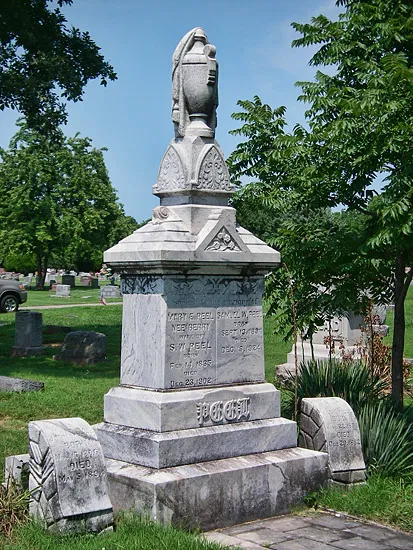
He will get, obviously he's older at this point. His health will start to decline a little bit. His wife passes away in 1902 the day before Christmas. Towards the turn of the century, that's when he stops traveling back and forth as much. And that's when he'll really start to focus more on local business, local go back to local attorney cases. And he will start investing in some banks property, that kind of thing. His son David Peel, which is a very well-known name around Bentonville and the area Dave Peel. He will also work at one of the banks, work his way up to being president of the bank. And they really team up a little bit and become a father son duo and go into business together in Bentonville and the surrounding areas.
So
modern day descendents.
[00:44:15] mike.: one of the questions is and you mentioned a little bit is like what is the connection of the descendants of the Peel family today back to the museum and back to this story as well?
[00:44:24] chelsea stewart.: So Mr. Peel still has descendants in the area. They're still involved in local politics and they still come back to the house every Christmas and other times of the year as well.
Every now and then they'll bring me things that they find in the attic or whatever. And that's always really exciting.
They had nine children that survived to adulthood. I believe when Mr. Peel passed away, he had something like 35 grandchildren. Oh my goodness. And yeah, so there are peel descendants all over the place.
And they they're pretty involved and they really enjoy coming to see the family house.
[00:44:55] mike.: Yeah, I think Chelsea, one of the questions we're trying to always work out is knowing this history obviously is helpful. And I realize as a historian sometimes you want to provide us with the information. Maybe not tell us how to think about it, but I'm gonna ask you how to. If you'll tell us how to think about it. Right.
The Peel Museum here is a, is a, a key landmark here in northwest Arkansas. Will be for the foreseeable future for a long time to come. So it does have a place in our cultural landscape. And yeah. I'm curious kind of what you think the future of that looks like and what is someone like myself who's curious or interested about this story, how do we start to think about what this means for us to today?
[00:45:33] chelsea stewart.: I think that's a really good question. And as historians and museum professionals, we do usually present the information and let people draw their own conclusions and their own opinions.
However you're asking me personally. Yes. So I'm gonna answer you. Yes, please. I think you know, the focus should be on how it shaped the community. I really think the Peel Museum is a great community partner and I think we need to keep the focus on how it shaped the community how it shaped the beginnings of Bentonville and Northwest Arkansas. Like I said, the house was built in 1875. Bentonville is only a year or two older than the house.
The house is gonna be 150 years old this year, or is 150 years old this year, and we're celebrating that. Like I said earlier, it's just seeing the house and the family grow with the community and how they contributed to the community, whether for the good or the bad, I think is just really a good way to look at it and recognizing that it is part of the history.
Um, this year we will be highlighting a lot of different events and parts of that history throughout the year. So I think the community can really get involved there as well.
[00:46:42] mike.: Yeah, maybe speak a little bit too about when you talk about its place in the community this is not just the museum, it's part of the Peel Compton Foundation.
Right, right.
Maybe give us a little bit of an understanding of the role of the foundation or the goals of the foundation in that community building and community partnerships today?
[00:46:57] chelsea stewart.: Yeah, so the role of the foundation is to really preserve and showcase these community areas and provide free programming and community spaces for the community.
And under the Peel Foundation we have Peel Museum, which was the flagship property. And then we have Dr. Compton's House, Compton Gardens and Arboretum. And then we have Kohler Mountain Bike Preserve. And then the last one that's come on board is Osage Wetlands Preservation and Park. And we have these different community spaces here in Bentonville, in the county, and, it's really part of our mission to provide those spaces for free to the public.
We believe that everyone should have access to their history and everyone should have access to these resources. That we are honestly, so blessed to have here in northwest Arkansas. We have a lot of things that a lot of other communities don't have, and we just wanna highlight those and make sure that everyone can access those.
Peel family legacy.
[00:47:57] mike.: From this story, from the work of the Peel family. Like what would you want our community to carry forward within that story or within that learning? I.
[00:48:06] chelsea stewart.: The first thing that comes to my mind when you ask that question is perseverance. Because of all of the tragedies that took place through the Civil War, losing their farm, having to start over essentially losing a war. And the devastation that came from that is the perseverance and the rebuilding and that nature of what they did. It echoes Bentonville and the perseverance of the people here in Bentonville, in Benton County and rebuilding Bentonville after the war. So I really think, like I said, that's the first word that came to my mind, and so I would really hope that people took away that from the story.
Yeah.
[00:48:49] mike.: One of the questions I ask two questions to, to everybody 'cause I'm really curious. First question is I wanna understand what your fears are for this place. When you think about the scope of your work, maybe the scope of this story what would be your fears for this place in our community?
[00:49:03] chelsea stewart.: That's a good question. Obviously a fear for this community and for a lot of the communities in the nation right now is the loss of historic material and the loss of historic buildings. Any historic house that I've worked in, that's been my fear is that time will see the building fade into.
The background and that it no longer becomes important as the community progresses. And really, I think it would be a shame to continue to lose historic buildings and historic material. Because like I said earlier, that's our history. We need to preserve it. We need to face it head on.
And part of that is preserving the places that it happened in.
[00:49:53] mike.: _Do you want to comment on the current state of national debate or dialogue around the state of our history? I'll rephrase the question._ When you look at what's happening in our culture today around the value of history that we place on a society I'm curious how you feel about that, or what do you see?
[00:50:15] chelsea stewart.: Personally, I love the significance that's been placed on looking at history over the last 10, 15, however many years it's been.
And on a personal level, I find it great. As a historian, that's always something you want to see as people getting more involved in history. I can't tell you how many people when I tell 'em that I'm a historian in what I do for work, that they say, oh, I wished I'd have paid more attention in my history classes.
And oh, it didn't interest me then. And now I, it's so interesting to me. And, I, it's good that people are finally realizing that this is something we have to pay attention to. I think it's gonna have a lot of impact. As I said earlier in the conversation about how we as museum and historians present things to the public.
I think it's gonna have impact on. Obviously the historic resources and what that means for their future whether for good or bad. But yeah, I personally like the spotlight that history's been getting lately.
current historic preservation trends.
[00:51:15] mike.: Do you have any concerns about the current trajectory of our national historic preservation efforts, if you will?
[00:51:25] chelsea stewart.: Of course I do.
[00:51:26] mike.: Lemme ask you this then when you think about the value of preserving history a society and as a community, how should we think about that?
[00:51:34] chelsea stewart.: As a historian, I feel like I am a little biased since it is my profession and it is my passion in life. But I honestly think that it should be one of the four forefront facing things that we need to be concerned about. I think it needs to be considered to be one of the main issues. Obviously, there's always gonna be issues of people surviving, people thriving. Those always come first. But then I think when you look at the list of things, okay, everybody's, we're surviving, we're thriving, we're safe, then I think that should be one of the first things that comes up is how do we preserve, Yeah.
[00:52:14] mike.: One of the themes that I have through all the conversations, or I'm trying to draw out through all the conversations, is this idea of community wholeness. And so within the scope of the work that you do here and just being a resident of Northwest Arkansas, what, when I say that what is community wholeness or what does wholeness look like to you in this space?
[00:52:32] chelsea stewart.: I think that wholeness looks like, and again, the first thing that comes to my mind, which usually tends to be the most honest thing with me is it's acceptance.
It's acceptance of the history we have here. It's acceptance of what happened in that history, good or bad. I keep saying that. But it really is, you can't have the good without the bad. And I think in order for the community to be whole and healthy, that we need to keep all of that in mind. You can't really.
[00:53:07] mike.: You can't really go forward and not confront that. I feel that's just my opinion, but I feel like it is very important that we keep all of the history in mind as we go forward.
Well Chelsea, thank you so much for your time and for sitting with me and for Yeah. Just helping us walk through this story of Northwest Arkansas. I think your work with the Peel Museum within the Peel Compton Foundation is just incredibly important and necessary.
[00:53:36] mike.: And so I'm thankful for Yeah, just the level that you engage with it and that you're willing to be a storyteller for our community. And super thankful to be able to share the space with you.
Thanks for sharing with us today.
[00:53:47] chelsea stewart.: Well, thank you for having me. It's been a pleasure and maybe we can do this again in a year or two when I dig up some more resources and have updates.
[00:53:55] mike.: I would love that. And tell us people can come visit here, the Peel Museum at any time, correct?
[00:53:59] chelsea stewart.: Yes, absolutely. We are open Tuesday to Saturday. We're actually gonna extend our hours this year. We'll be open 10:00 AM to 5:00 PM starting April 1st, and tours are always free. Awesome. That's part of that free access, so please come and see us. You are more than welcome at any time.
[00:54:14] mike.: Do you have a favorite exhibit or part of the story here that you would wanna share?
[00:54:19] chelsea stewart.: Yes. So if you come and do a tour, pay attention to the dining room. That is my favorite room. We have Mrs. Peel's original Teapot in the dining room and Mary Emmaline is a I don't know, almost a role model. She was a very strong woman and so I really enjoy her story.
[00:54:37] mike.: Chelsea, thank you. Appreciate your time.
[00:54:38] chelsea stewart.: Thank you so much.
episode outro.
[00:54:41] mike.: Well, I wanna say thank you to Chelsea Stewart for joining me today and for the important work that she is doing at the Peel Museum. Her work as a historian gives us the opportunity to look more closely at a man whose name is still etched into the landscape of Northwest Arkansas, but whose full story is far more complex and far more consequential?
Samuel West Peel wasn't just a local leader. He was part of a politically influential class that wielded power across Arkansas and far beyond. The decisions that he made from his early legal career to his decade in Congress didn't emerge in a vacuum. That reflected the values and ideologies of a society built on white Southern identity, post-war reconstruction politics, and a vision of national progress that often came at the expense of those that were outside the reach of inherited power or white society.
And we've heard the echoes of these policies earlier this season. Melissa Horner reminded us that the Dawes Act and the Indian Boarding schools weren't just policy missteps. They were the tools of forced assimilation designed to sever indigenous people from the land, their kinship systems, and their future.
And she said this. And she said it was the legal framework to make indigenous existence unsustainable.
We also heard from Quapaw elders, Barbara Kyser Collier, and Betty Gaddie, who spoke not from theory, but from lived experience describing the generational trauma of boarding, school separation, and the enduring grief of what was taken from their people. These aren't just historical footnotes. These are present realities and Peel's legacy is deeply entangled to all of them.
As we've explored his story, questions of service, not just about his policies, but about his relationships. While we've heard suggestions of a family tie between the Peel and the Anderson family, those connections remain unconfirmed. What is more clear is that the Dinsmore family who married into the Anderson family, often associated with the region's elites, may not have aligned politically at all with Peele, especially given that Alexander Winchester Dinsmore son ran against him for Congress.
Even within these circles of privilege, power was negotiated, challenged, and contested. And yet even as his influence once stretched from the Ozarks to Washington, Peel's legacy, like so many legacies of power, has been fading from public memory.
This is why the work Chelsea is doing and everyone at the Peel Museum is doing matters so much. Peel's influence in the region and the country was tremendous. And to better understand that influence is to better understand our world, it helps guide us towards the work of repair. The presence of the Peel Museum and all of the work being done, it helps us understand how to build a more inclusive community.
Chelsea's invitation to return to the story is an invitation to all of us to ask harder questions, to sit with the complexity and to examine how the decisions of the past continue to shape our present. As she continues her research to interpret peel's life and legacy, we will keep listening and we'll keep learning also.
I'd encourage you to visit the Peel Museum to learn more, to hear the voices, to ask your own questions. Because this season we have been exploring the layered histories that have shaped Northwest Arkansas. Its power, its place, and its memory. Through each conversation, we're not just telling stories. We are learning how to live more truthfully in the place that we call home.
If we go back to the beginning, this is where that work of building a communal theology, a place, meaning the things that we believe about ourselves and the place we live, this is where that work happens. These are the boots on the ground, in the dirt, working through every day to try to understand how we work towards a more inclusive community.
And as we finish today, this is the question that I'm left holding. _*If the history we preserve shapes how we understand our community, what does it mean to preserve them with honesty?*_
This question becomes even larger as we consider the recent Executive Orders signed on March 27th named "Restoring Truth and Sanity to American History," an executive order, which opens the door for history to be changed, rewritten, and re-remembered.
So this is the work ahead of all of us.
I wanna thank you for listening. I wanna thank you for being the most important part of what our community is becoming. This is the underview, an exploration in the shaping of our place.