
the city of fayetteville with Jonathan Curth & John Ray.
Jonathan Curth, Development Services Director for the City of Fayetteville & John Ray a long-term resident of Fayetteville and Executive Director of The Abide Collective.
season 1, ep. 10
listen.
episode notes.
Episode 10 is a discussion with Jonathan Curth, Development Services Director for the City of Fayetteville & John Ray a long-term resident of Fayetteville and Executive Director of The Abide Collective.
Our topic of discussion is about how the City of Fayetteville's Planning Process works, its values, and the challenges at hand. Then we go on a bike ride with John Ray, a long-term resident of Fayetteville, to hear how he sees the City and understand his point of view for the future of Fayetteville.
about Jonathan Curth.
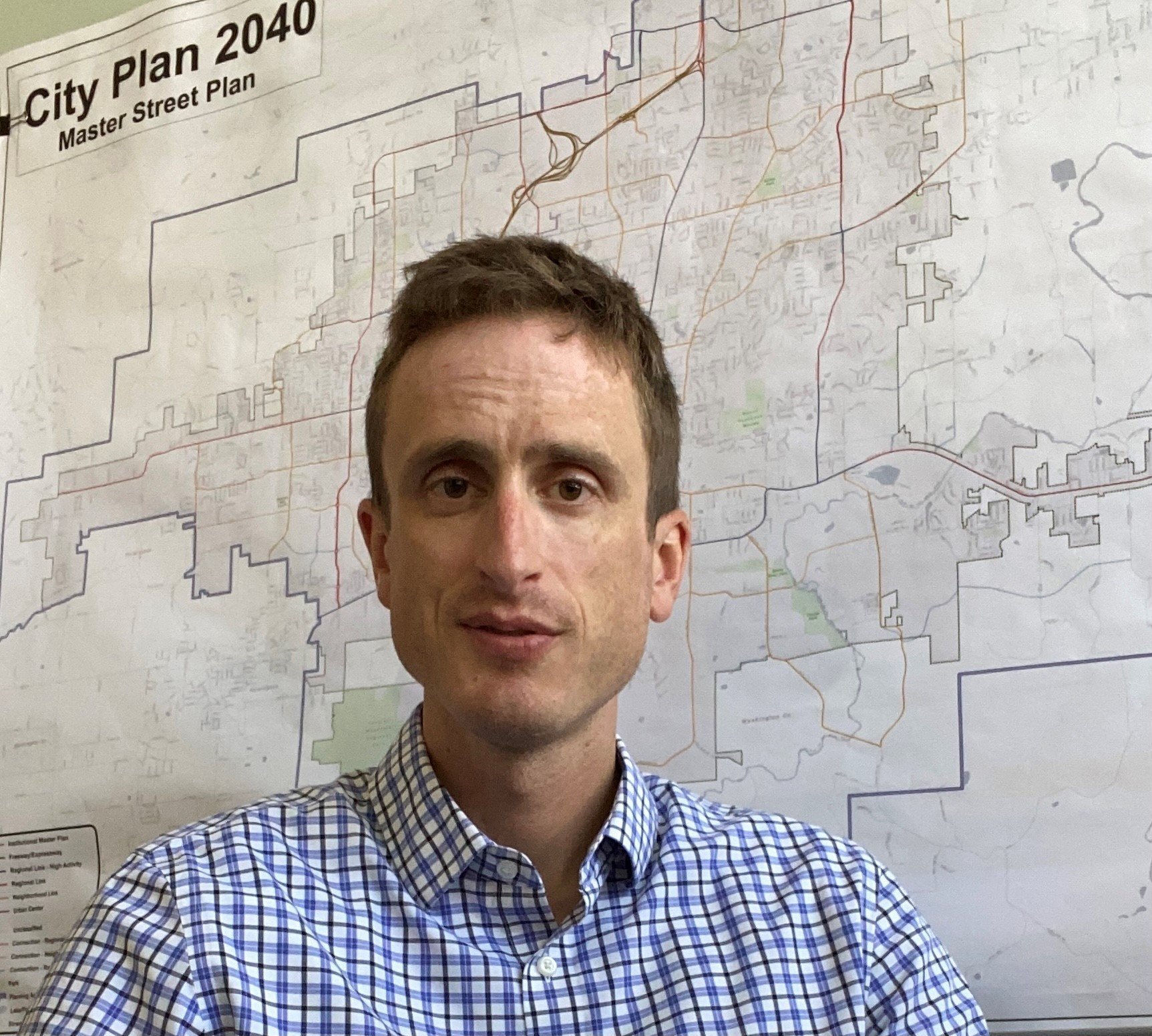
Jonathan Curth joined the Fayetteville Planning Division seven years ago from the Kansas City metropolitan area where he worked as a planner after graduating from the University of Kansas. As senior planner for Fayetteville, Jonathan was integral to development review, long-range planning, and management of various projects, including process evaluation and the adoption of City Plan 2040, the City’s comprehensive plan.
Beginning in 2020, Jonathan entered the role of Development Review Manager for Fayetteville, overseeing the City Planning’s development review staff and playing an integral role in the Development Service’s continued functioning during COVID-19.
More recently, he assumed the role of Development Services Director for Fayetteville, overseeing, development review, long-range planning, permitting, inspections, and code compliance since the beginning of 2021.
Instagram: @fyvgov
about John Ray.
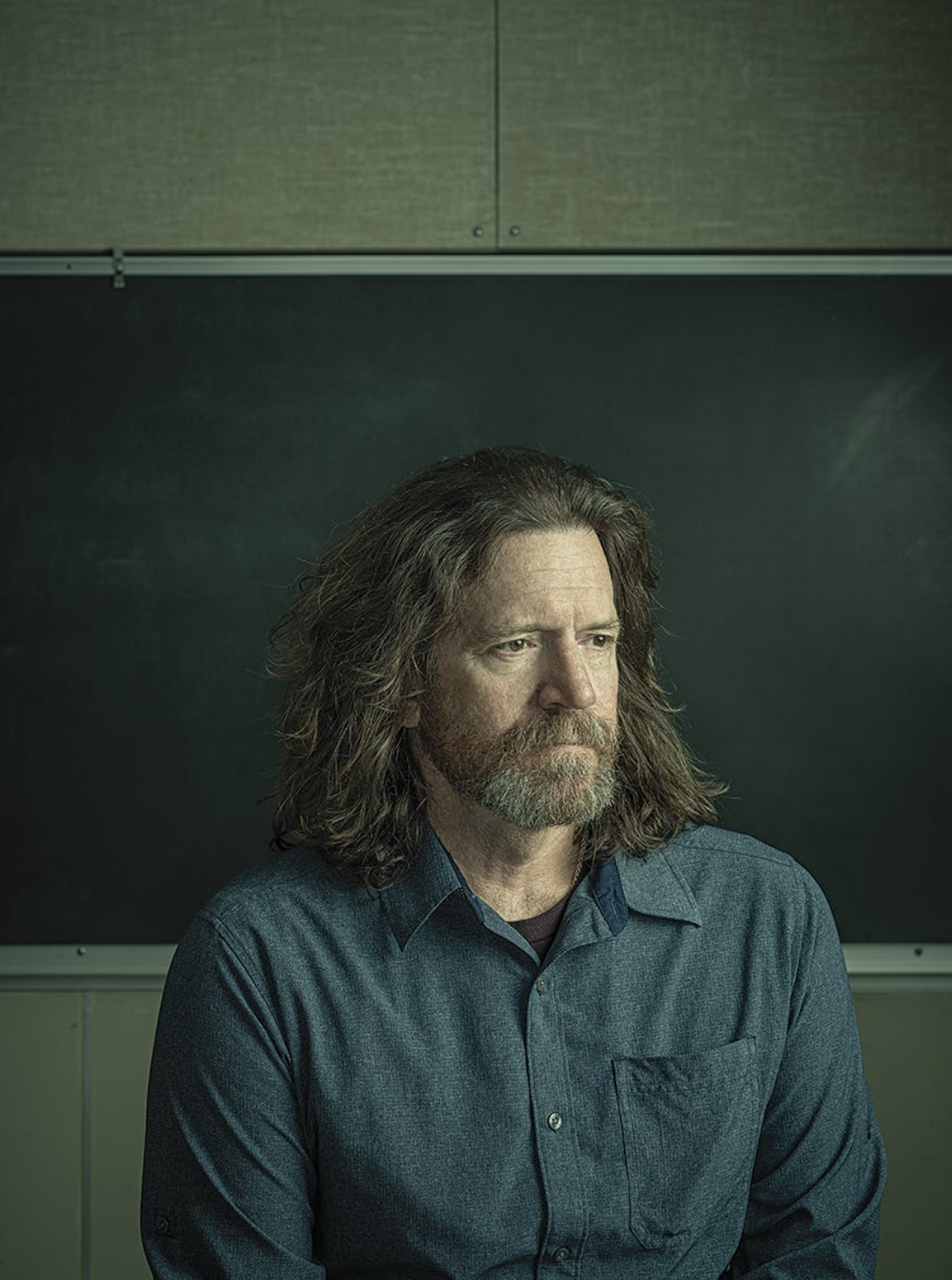
John Ray left Texas 1988 to "give God a year and see if He was real". He got a lot more than he bargained for. Since then he’s traveled to over 30 nations serving in a variety of capacities and with a number of different organizations.
John currently focuses on providing opportunities for spiritual formation as the Executive Director of The Abide Collective and helps provide leadership to Grace Church of NWA. John has a Masters of Divinity with an emphasis in Spiritual Formation through George Fox Evangelical Seminary (now Portland Seminary).
John and his wife Jane were married in 1990 and have four daughters, Hope, Hannah, Naomi and Olivia. In October of 2009, their youngest daughter Olivia was tragically killed at a crosswalk a mile from their home in Fayetteville, Arkansas. Since then much of the Rays ministry efforts have been focused on various projects supported through Olivia’s Basket, a part of The Abide Collective.
Instagram: @raysaway @abide_collective
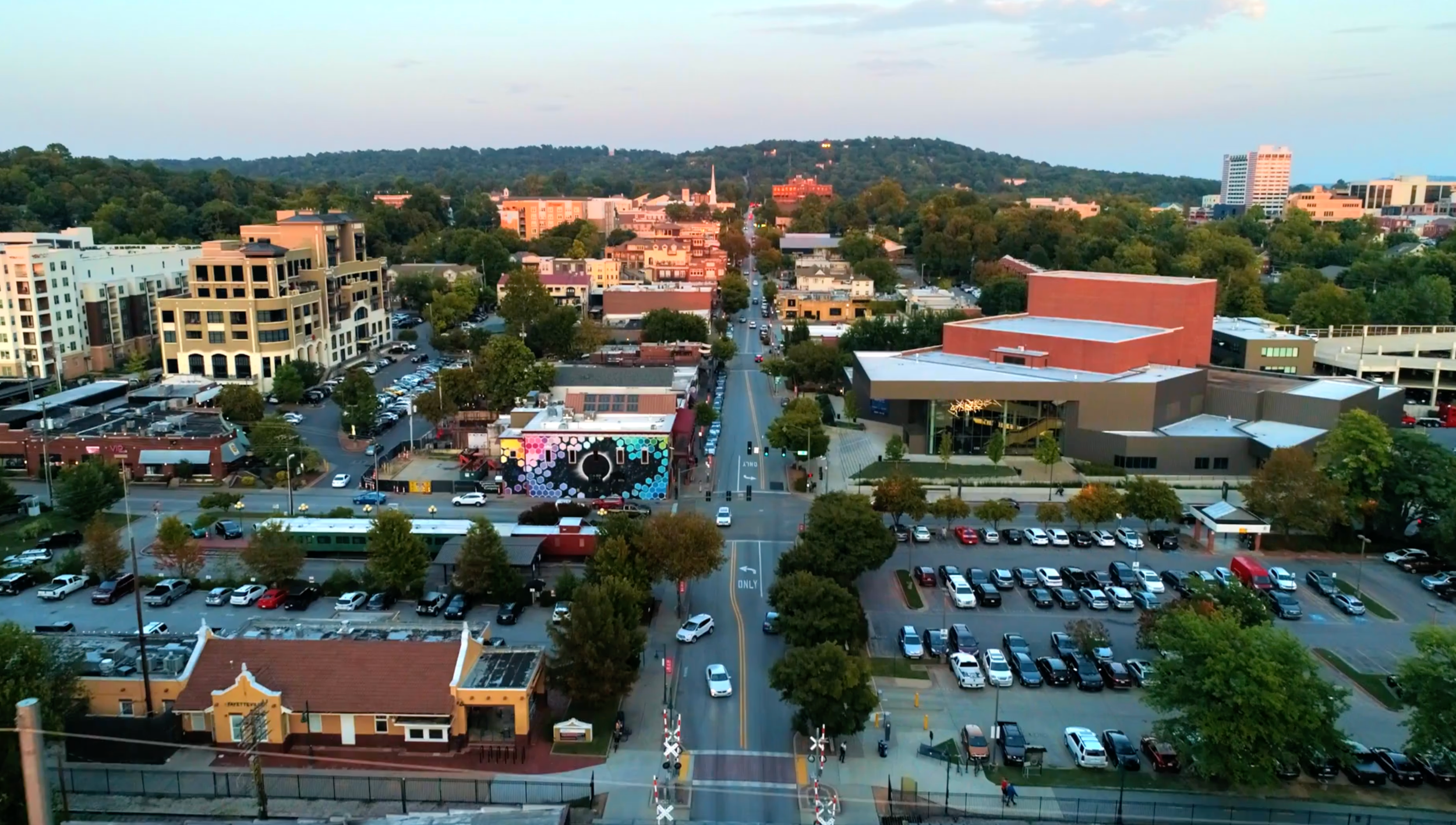
Dickson Street, Fayetteville, Arkansas
route.
This is a 20 mile route to see the City of Fayetteville & follow this story. Starting from the Fayetteville Town Square you’ll travel through the Mount Nord Historic District, around Wilson Park Park, up to Mount Kessler, up East Rock Street to the East Mountain Cemetary & Confederate Cemetary, through the Sprout Spring District, down to Walker Park, out to Mount Kessler, back to Fayetteville along the Trail of Tears, through the University of Arkansas, and finishing up Dickson Street to return to the Fayetteville Square.
music.
Loan Social. This is a duo based out of Arkansas, Jacob Evans and Cooper Clark who have a unique sound, and we hope you'll really enjoy the work that they're doing.
We love featuring local musicians and their single "Slow it Down" is something good.
episode notes & references.
Fayetteville Planning Commission Website
Rogers Planning Commission Website
Springdale Planning Commission Website
Siloam Springs Planning Commission Website
episode transcription.
episode introduction.
[00:00:02] jonathan curth.: We had a former planning commissioner in Fayetteville who used to comment that with our population projections we have built half of our city. Right now, half the housing units in the city don't exist yet, so the decisions we're making right now are incredibly important and they're going to have an extreme impact, maybe even an outsized impact, depending how we decide to do it.
introduction comments.
[00:01:02] mike.: You're listening to the underview, an exploration of the shaping of our place.
My name is Mike Rusch and today we are taking another step closer to how our place is being shaped by looking at how decisions are made within the cities. Today we are releasing two episodes to give two different perspectives from two different cities and two different types of roles.
I would encourage you to listen to both because you'll see how these different perspectives are helping to form the uniqueness of Northwest Arkansas.
In this episode, I visit the city of Fayetteville, where I have the privilege to sit with Jonathan Curth, who serves as the Development Services Director for the City of Fayetteville.
For the past seven years, Jonathan has worked and now oversees the City's development services as a part of the City Staff. Seven years is a long time to make an impact on the city, but it sounds like he's just getting started because the city of Fayetteville released their City Plan 2040 this week and that includes housing goals to try and minimize suburban sprawl and create more options for affordable or called attainable housing.
You'll find a link for Fayetteville City Plan 2040 in the show notes. I think you'll hear why Fayetteville's planning and land use philosophy is different and for good reason.
And the other episode released this week, I focus on my hometown of Bentonville.
I meet with rod Sanders. Who's been on the Bentonville planning commission for the past 10 years. I could argue there hasn't been much happened in the Bentonville in the last 10 years that hasn't passed first through the Bentonville Planning Commission and had Rod's eyes on it.
Remember this discussion, isn't about zoning as some technical detail of government. But a discussion about how we create communities that include or exclude people. Long before you see our neighborhoods and communities change this is where it all begins.
And then after the chat with Jonathan, I asked longtime friend John Ray to give me a bike tour of his hometown of Fayetteville. I want to see Fayetteville through the eyes of someone who has been there for a long time. Someone who cares deeply about a city and someone who is involved in helping make long-term decisions about how this city meets the challenges of growth ahead.
Time is precious today. So let's jump in with both feet.
episode.
[00:03:00] mike.: Thank you for sitting down at the table with me. I very much appreciate it. It's great to meet you. Thanks for being here.
[00:03:06] jonathan curth.: Oh, thanks for having me. Appreciate your interest.
[00:03:09] mike.: I'd love to start maybe with a little bit about yourself. I ask people, like, tell me your story.
[00:03:13] jonathan curth.: Sure. It was I get asked that oftentimes. I think a lot of people consider themselves amateur city planners and wonder how professional city planners come about their, their jobs.
Mine was a little bit of a circuitous route. So, in undergrad I thought I wanted to work for the State Department. I thought I wanted to be a diplomat take my foreign service or service exam. Accordingly, I went and got a, a degree in, in, in international relations and global studies and a minor in Spanish.
And then I started paying a closer attention to national politics and how a given administration interacts with the various departments of government. And it left me feeling kind of disenchanted followed my, my future wife to her graduate school program in the Kansas City area, started taking some, some courses the, the urban or the city university there in, in Urban Geography and then City Planning.
And at some point, a professor said, what are you doing surveying these courses? You have a knack for it. You need to go to grad school for planning. So I did, I went to the University of Kansas. I got my master's degree and came back working in the Kansas city area for a while. I'm from Tulsa, my wife's from Fort Smith, and so I saw a position come open in Fayetteville.
I looked into its planning philosophies quite a bit more, and it seemed like an excellent fit. I applied, was offered, and here I've been now for, for seven and a half years.
[00:04:35] mike.: Well, you wanted to be a diplomat. Those skills must come in handy while, while you're here
[00:04:40] jonathan curth.: in this role. Certainly.
Yeah. And, and when it comes to urban planning, a lot of people break it down into kind of two schools of thought there's the urban designers, and then there's the, the policy planners.
And I'm definitely more on the policy side of things. Urban Design is fascinating to me, but I recognize that my chops are mostly in, in how we write laws that translate to the urban environment, and that definitely fits in well with with the political discussion.
[00:05:06] mike.: Absolutely. Tell me what is Arkansas mean to you ?
[00:05:10] jonathan curth.: That's a great question. So I'm as a as a born and bred Okie. I don't have a whole lot of loyalty to my home state, but Arkansas has certainly grown on me. I went to undergraduate school at Hendricks in Conway. So I got my first exposures to it while I was there. Tried to get out into the state, into the wild every single weekend we could.
Obviously I married in an Arkansan, so I kept kept feeling the pull back to the state. I think if nothing else, the, Natural side of the state is is what represents it the most in my mind when I think of Arkansas, I think of the outdoors and Fayetteville as an extension of that, given its prioritization on trying to make sure there's still a lot of real healthy tree canopy in the city and that we're trying to minimize our impacts on that natural outdoors.
[00:05:57] mike.: Is, is this home for you?
[00:05:59] jonathan curth.: Yeah, absolutely. I have two kids here now. I knew wherever I started putting my kids in the schools, where I would be committed to at least for, for close to two decades.
And that, that, that's, that's what I intend to do. I certainly think of it that way. I know, I know the city as well as any place I've ever lived at this point. Close to three quarters of a decade of looking at maps and, and moving around the city professionally and personally.
[00:06:21] mike.: Tell me a little bit about the place where we're meeting. We're in your office, but where, where are we at Northwest Arkansas?
[00:06:27] jonathan curth.: That's a good question. I guess I could answer that at a few different levels. I mean, we're, we're in downtown Fayetteville that, that, Right off the bat was one of the draws for me when I came for my interview years ago was the fact that Fayetteville had committed to keeping their city administration in their downtown.
A lot of cities of comparable size and different metropolitan areas have decided to move all their city staff out to the periphery where they can build a brand new shiny city hall in a suburban environment.
Fayetteville has really committed in, in, in both in, in policy and in practice to trying to make this a more urban cities, a more walkable, approachable city in Fayetteville's downtown is definitely a manifestation of that.
[00:07:06] mike.: Jonathan, you're the Development Services Director for the City of Fayetteville. Can you give me a little bit of background? What, what does that role entail?
[00:07:12] jonathan curth.: Certainly. In a nutshell, this position oversees most of the city staff that are associated with development in the city. And I can take a lot of shapes and forms. That means our city planning staff when you think of a property being rezoned or going forward.
The these cryptic terms like a large-scale development or a site improvement plan. That's our planning group. They spearhead those with our other reviewers. I also oversee our long-range planning group which those they're they're the stewards of our our comprehensive land use plan. They're the ones who are digging into our code making changes based on how we see our our our culture they're changing. They're also overseeing our, our historic preservation efforts.
Perhaps the most nuts and bolts part of the group that I oversee is our building safety group. That's, that's building permits. That's when you see people pouring concrete foundations, framing up houses. That also includes our code compliance group, so, when somebody calls to complain about their neighbor's tall grass that for better or worse also falls under my authority or my purview.
[00:08:14] jonathan curth.: And my responsibility is to make sure that it's all moving as smoothly as possible. Because despite having a lot of those different groups under one department, which is done for efficiency's sake, there are a lot of other people citywide and outside the city that participate in development review.
I mean, it can be franchise utilities. It could be the county, it could be the school district. I'm trying to corral all those different groups into making sure they're giving comments in a timely manner and keeping projects moving forward is, is a challenge in itself. But then also I consider it part of my main charge to make sure that we're not ever just standing still that we're recognizing where we're inefficient.
Where there are changing trends in our city that are getting us caught flat footed whether it's rising housing costs or or concerns about traffic congestion, whatever it may be or even little, little tweaks in our ordinances that can, can save a project weeks or months at a time all that is something that I try to keep at the forefront of my mind.
[00:09:12] mike.: Sounds like there's not a whole lot of slow days around your office, are there?
[00:09:15] jonathan curth.: No, that's my common statement. My staff could probably repeat it as soon as they know it's coming. My favorite and least favorite thing about the job is that there's never a boring day, ever.
[00:09:26] mike.: Well, maybe that's a testament to the work that is happening, but it's probably also, you know, realistically just a symptom of the growth that Northwest Arkansas and Fayetteville is experiencing.
Maybe, maybe we start there. I'd love to get your perspective since you obviously coming from Arkansas, but also within this role, kind of the change that you've seen, what, what have you seen change? If you can sum it up into words
[00:09:52] jonathan curth.: yeah, that's it. I mean, there, there are so many different changes and how they interact with each other. It's hard to, to summarize really well. I, I certainly can't put my finger on one. I don't want to get into any particular thing that's that's causing the change or or resulting from the change.
But I think first and foremost, we are a college town. We're, well, a city of only about 100,000 of which almost a third of that is in the University of Arkansas.
So that that has to be kept in mind and that University has been growing Here are about a thousand kids a year for over a decade now. And that has a lot of impacts on the community but Fayetteville as a city and Northwest Arkansas as a region is also incredibly appealing beyond the discussion about higher education.
There have been a lot of decisions made by our forefathers and foremothers that have made this a very desirable place to live, whether it's in regards to the outdoors, employment, a combination of those things. So regardless of what's happening at the university, we're seeing a lot of growth in the city.
And that creates a lot of tensions. It's causing a huge increase in housing prices, as I alluded to earlier. That's having a lot of impact. Some people have lived here for decades. Some people are being priced out of living in Fayetteville. They're having to move further and further away. Our students are often moving out into the community because there's not enough housing on campus.
And so there's a lot of tensions to be seen there as well. I could go on and on just as you add more and more people, the dynamic and the equation gets more and more complicated on how, how, how it runs from day to day.
[00:11:28] mike.: I'd be curious if you can draw, and I realize this may be opinion, but you know, can you draw any assumptions about the people that are either new to the area or maybe some of the values that they hold or that may come across your desk as it relates to what change looks like here in Fayetteville?
[00:11:47] jonathan curth.: Oh, I don't know. That's hard to say. I think I've heard a lot of very positive feedback from new arrivals about how interactive they feel like the city is and that's a that's that's an appeal to me too when i was a new resident years ago is it's a very approachable city you can be as involved or disengaged as you want to be in Fayetteville and we take a lot of pride in having very active public processes, whether they're planning, whether they're public hearings or otherwise.
So that is something I consistently hear, but it's consistently a challenge to improve upon it, because for every two or three people that we were able to accommodate participating, there's probably two or three people that can't because they're working multiple jobs, because they don't have any form of transportation to get to those meetings.
I, it is a an interesting tension, but I think That outsiders definitely are drawn by how easy it is to move into the community and around the community once they're here.
[00:12:47] mike.: Do you feel the responsibility to weigh that with people who have been here for a long time? How do those two worlds come together?
[00:12:54] jonathan curth.: Yeah , they absolutely do. You only need to attend one public hearing to hear. At least one person say I'm so and so I live at such and such address and then almost without fail the next thing they'll tell you is how long they've lived in Fayetteville.
And it's like that in a lot of cities. I don't want to suggest we're special in that way, but there definitely is a lot of weight given to people's voices who have been around for a long time. And for better or worse, that's codified in a lot of cities, including Fayetteville, where you have a public hearing and people are invited to comment on them, people that are invited are not your future residents who might be living in a subdivision or an apartment building that's not been built yet.
It's inherently the people who already live there so there's already The lack of a kinder term, a bias for the people who currently live in a city. It's why a lot of cities are, are being caught flat footed now with regards to housing, most of our systems are set up to give the benefit of the doubt or, or exceptional input for people who live there now .
[00:13:55] mike.: When you think of some of the priorities for the City as far as growth looks like, if, if we're looking at some estimates would say almost a million people by the year 2040, 2045, but as you think through some of that long range type of planning, what are some of the things that jump out to you as, hey, we really In order to maintain the beauty of what Fayetteville is, these are some things that we really need to kinda hold out and examine and make sure that we understand. Are there any values or priorities that, that you, that you think about in terms of that long-term plan?
[00:14:29] jonathan curth.: Absolutely. I mean, for opining on that, I think it, it, I like that you led that question off the way you did. We had a former planning commissioner in Fayetteville who used to comment that with our population projections we have built half of our city. Right now half the housing units in the city don't exist yet, so the decisions we're making right now are incredibly important and they're going to have an extreme impact, maybe even an outsized impact, depending how we decide to do it. And with that in mind, I think some of the decisions Fayetteville began making the early 2000s, and that we are working to recommit and further ourselves towards are those fiscally responsible decisions with the land and the city and by that I mean.
Uh, are, are we going to continue to develop in, in low-density sprawling or suburban patterns? And, and I don't mean to diminish anybody's houses or where they live and say, that's a bad thing, but it is an unfortunate fact that when you have one family or one person in one house on a quarter-acre lot.
It requires the same amount of water and sewer and street and fire and police service as a eight-unit building on a quarter acre in downtown and one of those things is going to render the an economic burden to the City and one may make the City more economically buoyant. So I think that that's probably the biggest piece of it is a lot of decisions we need to make we need to do fully aware of the consequences. If we decide to develop in certain patterns and not others, we may not be able to continue building trails. We may not be able to continue buying our parkland that we, we, we assert we value that open space. We may not be able to to invest in the arts like we're currently doing if in 30 years we're just having to focus on repaving streets over and over again and spending large and large amounts of our City budget on fuel for our fire and police departments.
So to that end, I think a lot of Fayetteville's Planning initiatives are how to accommodate growth towards our urban core. Most recently we kicked off a project to rezone our, our former 71B corridor, which is College Avenue and South School. It's an enormous amount of land in the dead middle of our City on a, on, on water, sewer, and street.
But you can't build any housing today. And that's a reality we need to come to terms with and, and, and, and try to make the shift and to allow it otherwise.
[00:16:55] mike.: Do you feel like there are any , nonnegotiables as you think through what future plans may look like?
[00:17:01] jonathan curth.: Oh, I, if I'm guilty of anything, it's probably a willingness to see all sides of an argument. So I, I'm reluctant to say there are any nonnegotiables. I think I think a housing first perspective is an important one. I personally and professionally believe that housing is a right and that the city should prioritize efforts to make sure our residents are housed.
And I think we took a good step towards that last fall when we performed a housing assessment so that we actually had the information to know what, what what our residents needs are, like how much money are people making, who will need subsidized housing, because that is a fact of where we are in housing prices right now.
So I think if I were to say there's a nonnegotiable, it's that I realize that's a big broad. remit, but I think it's something as a community, we, we should really prioritize .
[00:17:55] mike.: Can you maybe talk through that a little bit more? I'm curious kind of the underlying reasons or kind of belief around what, what is the role of the city and creating housing opportunities maybe versus the role of developers or local landowners or, yeah, , how would you classify the role of the city in those, in those spaces?
[00:18:18] jonathan curth.: It's a, a fantastic question and a common misconception is that the city builds things. We do. We, we build parks, we build police stations. We put in water and sewer lines and streets. We don't build housing. We're not Vienna, Austria. We, we don't build McDonald's. We don't build office buildings. And, and the, the public often perceives that if there's a housing need, the city should be building housing. In the United States, that's simply not a very common role for cities. Doesn't mean it, it can't happen necessarily varies by state which statutes allow cities to do.
But that's not to say that there's not a role for a city. I definitely don't want to give that impression. The primary role for cities when it comes to land use is we have established, or we do establish the framework for what can be built where. what it can look like, how big it can be, how small it can be, what can go inside of it.
Those are our zoning and development codes. Some unusual ones we have in Fayetteville are not unusual. Actually, it's pretty common nationally. We have a lot of land that's zoned for single-family homes at very low densities. That's inherently expensive because land is expensive. Another piece of that is we have ordinances that speak about how many people can live in a housing unit in Fayetteville, and that's a product of us being a college town. There's a lot of concerns about too many students cramming into a house and you've got a, a stealth dorm or a de facto fraternity or, or wherever else the mind goes with that. But it also has impacts almost comparable to to single family zoning where we're effectively telling people what a family looks like and how many people can be in a house which can push people into more spread out housing arrangements that consume more land and are less efficient with it and force people out of housing in a lot of instances.
That's one piece of it.
The City also at least in Fayetteville, we play an active role. Financially, we try to put our money where our mouth is supporting organizations and groups in, in their endeavors. Seven Hills in Fayetteville, New Beginnings as well. It sometimes comes in the form of direct funding sometimes it's more indirect. We, we try to cost share improvements to their properties whether if they need a new sewer line or extend a sewer line, we may be able to pay for it all or pay for some of it. And I think it all comes with the realization that not only are these humans and there's a baseline reason to house them, but also not housing them has a cost to it as well. In fact, is in a lot of conversations about criminal justice. For instance, it's, it's a lot more expensive to keep a human incarcerated than it is to put them in a house. And I think a lot of those things have factored in the Fayetteville's decisions in the last decade or decades to try to fund some of these initiatives where possible.
[00:21:08] mike.: Do you feel like the decisions to fund those types of initiatives especially for maybe those without a home comes as a result of the planning department's recommendation for good city planning? Or is that out of the political will, I dare say generosity of the people of Fayetteville, or how does that, how does that work? How do those decisions get made?
[00:21:31] jonathan curth.: That's a good question. And as a self deprecating planner, I acknowledge that a lot of the reason we have homelessness and housing challenges in Fayetteville is because of the zoning and planning decisions we made decades and decades ago. In the 70s, our federal government really prioritized single family low density construction, and we fully incorporated that into a lot of our land use planning and did not really start to move away from that until the 2000s.
And we're still quite committed to it if you look at a zoning map in Fayetteville. So in that regard, I think it's a sins of our fathers kind of situation where planning has contributed to the homelessness problem, not as individuals necessarily, but as a profession, profession, or as a framework that we're hoping to undo now.
And I absolutely think that our elected officials by being selected by the residents of Fayetteville are, are executing the will of the public and helping these organizations and efforts.
[00:22:33] mike.: Do you, and this may not be a fair question, so you can wave me off if you would like, do you feel like Fayetteville's philosophy in that area is different or consistent with other municipalities in Northwest Arkansas?
[00:22:48] jonathan curth.: Depending on which of the two parts you're talking about, the zoning that's consistent almost nationwide, certainly in northwest Arkansas, that a single family home is still one of the easiest things to build on a quarter or so acre lot. When it comes to funding initiatives like Fayetteville has chosen to do from what I have seen, it's not consistently done to the same level across our region as it is in Fayetteville.
And I think that's reflected in a lot of the services you've, you see concentrated in Fayetteville whether it's shelters, whether it's food services whether it's the city's program to pay unhoused people to, to pick up trash. A lot of those are not I don't want to say they're not valued elsewhere necessarily, but it seems that perhaps other other Fiscal responsibilities have taken priority.
[00:23:36] mike.: I'm not going to ask you to respond to this. It does feel like Fayetteville in many ways shares a larger burden for some of those types of social issues than other municipalities in Northwest Arkansas, and so you definitely see a Greater concentration, and I'm just speaking from my background being involved in some of those types of issues as well, too.
But I won't force you to pass judgment or make a comment on on that one. That'll be my bias for this for this episode.
Maybe within that same vein, what are what are some of the other challenges that you see facing the City of Fayetteville or Northwest Arkansas in general?
[00:24:14] jonathan curth.: I think one of the more interesting challenges or tensions that I've seen lately, especially in Fayetteville, given some of the, the, the predilections of our residents and our elected officials is the tension between our development needs and our growth needs and our natural environment.
I say the predilections of Fayetteville, I mean, as a city, we value the natural environment. In dollar terms, in philosophical terms, you consistently see Fayetteville making outsized investments, either in acquiring open spaces or, or, or upgrading our, our facilities, like our Westside wastewater treatment plant to be have the cleanest effluent possible going to the Illinois River our development codes, which are considered very difficult to deal with by a lot of people in the region are reflection of those desires, whether it's to preserve trees, whether it's to enhance the water quality, leaving a parking lot and that, that, that creates a lot of tension because the, as we see different weather patterns, Regardless of your political view, the patterns are changing.
Whatever you think the cause is we are needing to address those in our development codes to make sure our existing residents and future ones are not being negatively impacted by that. And that translates to possibly fewer developable pieces of land. And the pieces of land that are developable might have higher standards placed upon them.
The easy flat land is almost all taken. So now we're talking about The, the, the not no longer the low hanging fruit. And our prioritization of infill properties are developing towards the interior of the city instead of the exterior is also inherently more difficult where you, you had one house and you replace it with two.
There's more what we call impervious surfaces, more concrete rooftop, things that don't allow water to soak into the ground suddenly running off onto a neighbor. And so we say we want that kind of development, but at the same time, we want to minimize impacts to neighbors. And so I, I think that's the tension I have found most interesting to watch.
And I say interesting, also kind of painful because again, my, one of my charges is to make sure development can occur in a smooth and effective way in the city. But also I consider upholding our ordinances as a reflection of our community values as just as comparable charge. So it'll be interesting to continue to see where that goes.
I found that doubly intriguing in just the seven years I've been here to see some of our, our best practices and our ordinances be picked up by other cities in the region, and to some extent, to a higher degree. I know Rogers, for example, requires homes in floodways or floodplains to be built up higher than in Fayetteville, which sounds like one little odd nuance, but the fact that it's happening at all shows that this is a conversation that's gaining speed elsewhere.
And every time we, we take a piece of property out of Out of developability, that's, that's one less area we can build houses, that's one less area we can put, put an office or a retail space for jobs, which, which makes it inherently difficult to, to, to address our housing needs and our employment needs.
[00:27:22] mike.: I'm curious if you think there are decisions that Northwest Arkansas or Fayetteville need to make within the next five or 10 years that are going to be really, really critical around planning, around growth, about what our quality of life looks like here.
[00:27:39] jonathan curth.: Yes, the short answer.
I think there certainly are. I also want to couch that and the fact that we are multiple different communities. And while I think there, Is absolutely a fertile ground for a lot more collaboration, I also recognize that each community needs to maintain its own character. We don't all need to be a bunch of Fayettevilles.
We don't all need to be a bunch of Bentonvilles or Centertons or whatever it may be. I think ensuring that all the cities in Fayetteville understand the consequences of how they grow is very important. It can seem very exciting to be in some of the smaller towns that are ballooning in size by hundreds of percents between biennial censuses sometimes.
But if that growth is not either sustainable or fiscally responsible, we're setting up those communities and the residents for a lot of pain on the back end. We have the advantage of not growing up in the quickly in the 70s like Los Angeles. We are seeing what a lot of those cities are dealing with now cities like Harrisburg, Pennsylvania declared bankruptcy because of some of the infrastructure choices they made.
So I think that that conversation needs to find its way to the forefront. And I think that goes hand in hand with a lot of, of, of other issues in the area, especially housing. We, we absolutely could build houses from horizon to horizon, but that, that may get people in houses, but that may just be trading the cost of a home for higher costs and transportation.
And so we've, we've set them back in one way and, and, and move them forward in another. So being mindful of, of not just. Not just solving one problem, gung ho with no regard for what other consequences we may be sending ourselves towards.
[00:29:30] mike.: Maybe just because you mentioned the housing aspect and I, you know, the term affordable housing is hard to throw a stone in Northwest Arkansas without running into that issue.
I'm, I'm curious how the city of Fayetteville from a planning perspective yeah, is approaching Making housing more affordable.
[00:29:48] jonathan curth.: Yeah, it's difficult. And what's affordable, considered affordable today, is not what was affordable pre COVID in 2019 and 2020. House prices are Beyond what I could have imagined when I first moved here and in 2016.
Again, it gets back to that question. What is the city's role and housing? We don't currently build housing. We don't sell housing. We don't buy housing. We don't set the prices for housing. So a lot of what the conversation revolves around is supply and demand, which is absolutely overly reductive. I don't want to come off as an acolyte who says we just need to build more and we're going to solve our problem.
But I think that is a I think that's a big piece of it. If we, if we stand still, if we continue business as usual, we're going to continue to see housing costs doing what they're doing. So I think one of the biggest roles that I have and that the people I work with have is the trying to find opportunities to build a lot more housing and do it in a responsible way.
I mentioned it at the top of the conversation, what it looks like to build housing along some of our commercial corridors, especially those commercial corridors that are mostly surface parking lots or they're, they're, they're mostly vacant buildings or buildings that have been for lease for years now.
Those are absolutely right places to build housing. They're, they're already located on streets, they're near jobs, they're near retail. We could, for lack of a nicer term, kill a few birds with, with one stone. We've got the housing, we've got we're putting people closer to jobs. They could walk there instead of having to drive there.
There's a lot of, a lot of opportunities for that. So, in a sense, and to answer your question as simply as possible, increasing supply, but I also recognize that that's not all there is to the picture. If we just build, we just increase supply, we're just increasing market rate housing, and market rate housing is simply not affordable for a big portion of our population.
[00:31:38] mike.: Are there other policies in place that support or hinder Fayetteville from doing the work that it needs to in terms of land use planning to, to meet the needs for the next 10 or 20 years?
[00:31:51] jonathan curth.: Yeah, I think, I think it's fair to say so. As I alluded to earlier, we, We still have a figurative foot in the 60s and 70s and 80s in terms of some of our land use and zoning practices. I think that may be one of the biggest holdups. I think also our development code. Not necessarily what's allowed where, but what the things look like once they're built.
The development code kind of straddles two worlds. The world of what I call greenfield development, which is new properties on the edge of town, old pastures, things like that, as opposed to infill development which is redeveloping empty parking lots or tearing down a house, a dilapidated house, and replacing it with two new ones.
Things like that. Those are both very different types of development, and applying the same standards to both makes both more difficult, and I think that, in that sense, our development code has a, has a ways to go before it is necessarily making what we need easy, much less encouraging it. .
[00:32:56] mike.: When you think about the City of Fayetteville, are there places in the city where you're like, this is, this is really special, this is really unique, this really exemplifies the direction that Fayetteville is going or would like to go?
[00:33:11] jonathan curth.: I can't think of just one. No, I mean, I think that's one thing I like about Fayetteville.
It feels like a city. It feels gritty. There's an element of organic development to it. It's not very cookie cutter. There are things that are ugly. There are things that are pretty. And both of those are subjective things. And so one may think the complete opposite of me. It's what makes Fayetteville most appealing to me of the four big cities in the region is I feel like I live in a genuine city I know some people like say "Keep Fayetteville Funky" but in a sense, there, there is some of that.
There's, there's a lot of people showing their personality and their, their preferences in how their homes look, and how their buildings look, and how their businesses look. And that, that, that's something I appreciate as I move throughout the city, not just a single particular place.
[00:34:03] mike.: I try to ask everybody this question that I've had the chance to talk with, and it's a simple question, but the question is this, what do you fear for this place?
[00:34:12] jonathan curth.: It sounds protective in a negative way, but I fear, I fear Fayetteville losing its character and when I say I, I don't like sounding protective in that.
It sounds like I don't want more people to live here. I don't want new neighbors. I don't think there should be new residents because what, what makes Fayetteville special is what's here now. And I don't mean that when I say that. I fear that What Fayetteville, I fear the character of Fayetteville being diluted either by problems that are out of our control whether it's national trends and housing prices, things like that I fear the city making decisions, financial fiscal decisions that, that compromise our ability to, to continue investing into the things we value.
That's a good question. I don't, I definitely don't think there's one thing that keeps me up at night necessarily. It's probably an accumulation of things that are really hard to define.
[00:35:16] mike.: One of the terms we use around this conversation is the term wholeness. And I'd love from your perspective, what does wholeness look like in, in the work that you're doing?
[00:35:27] jonathan curth.: Mm. I, I think that's a watchword for what planners are good I almost used a subjective term, effective planners should be doing. They should be thinking holistically, they should be thinking comprehensively when you look at a a land use decision, you shouldn't just be weighing what's on the property versus what could be on the property.
You need to look at the impacts to the community, the impacts to the infrastructure all those things. So I think wholeness in that regard means looking at our city as a system, not as a, a series of one off decisions. I think that's probably how I'd have to summarize it.
[00:36:12] mike.: Yeah. The inner connect. Well, I shouldn't answer for you sounds like the interconnectedness of, of, of all of the elements coming together.
[00:36:18] jonathan curth.: I think so. Yeah. And to, to your earlier comment about what I see from day to day, that's exactly what I see from day to day. We, you make a decision or you make a code change or the council makes a decision and you can see rolling impacts from that, hopefully mostly intended, but sometimes unintended.
And sometimes years in the making, I mean, we, we make code changes that I, sometimes I feel like we're, we only see the true impacts of them years later, but for example, we eliminated our non residential parking requirements in 2015, and it was probably only in the last three or four years that we've started to kind of see the effects of that, the realization that that actually exists both nationally and locally yeah.
So the need to try to keep your eye both in front of your face and over the horizon is encapsulates a lot of what wholeness means in this profession or in this position.
[00:37:14] mike.: What am I not asking you within the scope of this conversation that we either need to talk about or needs to be brought up or maybe needs to be reinforced?
[00:37:24] jonathan curth.: Oh, I don't know. It's something that I could answer with dozens and dozens of things that may be of Most minute amount of interest to an audience or, or, or to a very high degree.
I think, I think it is important for people to realize the implications of laws on what appears in, on the urban landscape in your city, in your neighborhood.
Everything, just about everything you see is because of some rule in a book somewhere. And to not pay attention to those things can, can lead to a lot of frustrations or anger or angst down the road. And that's not necessarily An aspiration for me to, or, or a call to arms from people to come to protest everything that's being proposed, but I think it's important for people to understand that when, when you see a driveway where it's located, when you see a sidewalk where it's located or a street tree where it's located, those are all written in a book somewhere dictating prescriptively where they go.
And, and if, if people take issue with those or have concerns with those, they need to become more involved and that can be, that can be showing up at a public hearing or it can be volunteering to be on a resident committee.
We've got many of them in Fayetteville for any number of topics. So I, that's something I always want to impress upon people is when you're driving around town complaining about something, there's a good chance that you can have something to do about it or you could have had something to do about it.
[00:38:54] mike.: Well, Jonathan, I want to thank you for your time to to lay this out. And I realize there's a lot of people involved in making Fayetteville what an incredible place that it is. And as you sit in this space and I, I know that you also have a large responsibility in this space as well for making beautiful what a what an amazing place it is.
And so I would join you and hoping and working towards the hope that Fayetteville doesn't change and only continues to be reinforced and the character that it is and the and a really special place that it is.
So thank you for your time and thank you for the work that you're doing. And thanks for doing it with what sounds like incredible excellence in that. And so thank you.
[00:39:33] jonathan curth.: You bet. I appreciate you wanting to learn more.
[00:39:35] mike.: Thanks, Jonathan.
john ray interview.
[00:39:38] mike.: Well, huge. Thanks to Jonathan Kurth again for his time. But before we recap this episode, I want to share a conversation that I had with long-term Fayetteville resident, John Ray.
We took a bike ride through the city of Fayetteville, and I will have to apologize for any heavy breathing you hear. Uh, there are a few more Hills and Fayetteville than I'm used to in Bentonville.
[00:40:00] mike.: John Ray, good morning.
[00:40:02] john ray.: Good morning.
[00:40:03] mike.: How you doing this morning?
[00:40:04] john ray.: Awesome. Beautiful day in the Ozarks.
[00:40:06] mike.: Where are we today?
[00:40:07] john ray.: We are on the iconic downtown square in Fayetteville, Arkansas. Fayetteville's been my home for The last 20 plus years. And, uh, love it here.
[00:40:21] mike.: It's a cool, borderline, kind of feels like spring kind of day. Doesn't it?
[00:40:26] john ray.: It really does.
[00:40:26] mike.: What happens down here in the spring on this square?
[00:40:28] john ray.: Man, this place explodes with flowers and blossoms and farmer's markets and dogs and people from all over coming down on Saturday morning, Tuesday mornings, Thursday mornings. Uh, it's really a cultural hub for the city.
[00:40:42] mike.: Um, sounds like a pretty great place to be any time of the year, but especially in the spring.
[00:40:47] john ray.: It really is.
[00:40:48] mike.: So Fayetteville's home for you though, huh?
[00:40:51] john ray.: Yeah, I can't imagine really living anywhere else in northwest Arkansas. Fayetteville specifically, but I mean all of northwest Arkansas, there's lots, lots going on here.
[00:41:02] mike.: I lived in Fayetteville a long time ago, when I was a student. It's been many years. This place has changed a lot. It's a beautiful place.
[00:41:11] john ray.: Well, I'm sure you spend a lot of time on Dixon Street, which we're coming up on right now.
[00:41:14] mike.: Well, I can't really talk about that, John.
[00:41:17] john ray.: Well, the interesting thing to me about Dixon Street is, in some ways, it's a microcosm of the whole town. Three of the largest churches on one end, university on the other end, and all the bars in between.
[00:41:31] mike.: Sinners and saints, something like that.
[00:41:33] john ray.: All together.
[00:41:34] mike.: I may have to ask you where you'd put yourself in that, in that categorization.
[00:41:38] john ray.: All three.
[00:41:39] mike.: All three. Sinners, Saints and Somewhere in Between.
[00:41:43] john ray.: And Somewhere in Between.
[00:41:44] mike.: Sounds like an album cover right there or a country song.
John's my only friend with a Rodeo Labs bike. Makes him special. Taking me up the hill first. I don't remember this being part of the bargain.
[00:42:01] john ray.: So the reason why I want to go here. This is the Mount Noard Historic District. And it speaks to the wealth that was originally here as the county seat. The University grew up. But this whole area has a lot of really well preserved homes.
[00:42:15] mike.: That's beautiful. Probably hasn't changed much in 75, 100 years. Okay, John, you're pointing me right, but that's like a 15 percent grade. These Bentonville legs aren't ready for these Fayetteville hills. Yeah, it's beautiful up here. You're really at the top of the whole city here. And we had to go over this hill. We couldn't have gone around it?
to Wison Park.
[00:42:35] john ray.: So now we're coming up on Wilson Park. And one of the things I just learned recently This area down here where the pool is, all that used to be flooded, so it was a giant lake down there where they had pavilions and boats and swimming in the somewhere along the way They took the dam away and let all that water just run into the creek But I imagine it could have been a lot like Barton Springs is in Austin
[00:43:03] mike.: yeah, I've never actually pictured it as potentially like you just described.
So even here in downtown Fayetteville, this is uh, Skull Creek flows through Wilson Park. Yes. Part of the Illinois River, uh, Watershed.
[00:43:15] john ray.: We're coming up on the northwest corner of the park, which is the famous castle. It was a favorite for of ours as a family when the girls were younger.
[00:43:23] mike.: Yeah, it was just a place with some great memories, huh?
[00:43:26] john ray.: It really is did a lot of girls birthday parties here.
[00:43:31] mike.: Give this another month and there'll be blankets spread out,
[00:43:36] john ray.: hammocks strung, hammocks, all kinds of dogs, but we played around there quite a bit.
[00:43:42] mike.: John, What brought you to Fayetteville in the first place?
[00:43:45] john ray.: I moved to northwest Arkansas in 1988 and was gonna be here for a year. And even out of that year, I was gonna be traveling quite a bit. There was a group up here that did some non-profit work, Central America, and when I got here in 1988, nothing like it is today. Very rural. Um, everybody went to Kansas City or Little Rock or Tulsa if they needed anything significant. But comparing to where I grew up in Austin.
[00:44:11] mike.: Yeah, what was Austin like at the time? Do you remember? So, that was like
[00:44:16] john ray.: Well, that's interesting, because the longer I've been here, the more this reminds me of the Austin I grew up in. Which I grew up during the boom days, 70s, 80s, where it was just taking off in so many ways. And so, seeing the growth of Northwest Arkansas really excites me, but it's also really daunting.
Explain, please.
Well, look, this is, I say this not because I'm super smart or anything. But you know where this is gonna go. This pattern of rapid urbanization of rural spaces has been done time and time again across this country. It's not rocket science.
And sure, each area has specific nuances and things, but the pattern is pretty much the same.
Concentrating of wealth into the urban centers and resources. And then just unfettered sprawl in the unincorporated areas right outside the city limits and no like no good deed goes unpunished right. The desire planners in those urban cores to maintain The uniqueness, the character, by more and more regulation many necessary pushes this just Incredible demand for more affordability outside of the city. It drives costs up the closer you get to the center. It becomes more exclusive. , no matter how hard you try to preserve it,
[00:45:37] mike.: john, how has that kind of growth, what have you seen over the years?
[00:45:44] john ray.: Well, as wealth and resources increase in density in the urban core, you see the people that make those things run forced further and further out. More and more just isolated.
[00:45:55] mike.: Yeah.
[00:45:55] john ray.: Pockets of uniformity without diversity.
to Mount Sequoia.
[00:45:58] mike.: Yeah. So we're at the Mount Sequoia Cross. Catch our breath.
[00:46:04] john ray.: Fayetteville is sometimes called the City of Seven Hills on the mistaken notion that there are seven hills that surround the city which was supposed to allude to the Seven Hills of Rome.
Now, if you look in the map, there's more than seven hills, and people are unsure which ones are which. Mount Sequoia, definitely one of them, probably chief among them, really.
But from here we can see Markham Hill. We can see Centennial Park. We can see Kessler Mountain. You can see the water tower in Siloam Springs. You see the University, of the Downtown. I mean, if you want to get a layout in a way of Fayetteville, there's probably no better single place to do it than right here at top of Mount Sequoia at cross.
[00:46:42] mike.: You know, if we were standing here 50 years from today, what would this place look like?
[00:46:45] john ray.: Well, all the way through that gap, which runs down MLK, all we'll see is buildings and probably high rises, actually, with that. Because I doubt that, you know, one of the things that concentrates the wealth is the limiting of the space.
[00:47:00] mike.: Meaning, like, the geography of where Fayetteville sits, there's just not a lot of room to go outside of that.
[00:47:05] john ray.: Right. And we also have a lot of historic buildings that are going to be preserved. So they're not going to be torn down to build bigger buildings. And then Fayetteville, for all its claims to be liberal and progressive and welcoming has a very strong NIMBY contingent.
[00:47:20] mike.: Yeah, not in my backyard.
[00:47:21] john ray.: Not in my backyard With that in which you know, you understand I get it Everybody's got ways they think but one of the ways to alleviate like I said earlier, it's not rocket science One of the ways to alleviate some of the worst of urban sprawl is to allow for denser zoning and build out through undeveloped areas that aren't specifically preserved as park or community space.
[00:47:46] mike.: So we're turning left here on Spring Street, which has been in the news lately because this is the, uh, hopefully future Uh, Black Historic District that they're working on.
[00:47:57] john ray.: Is it this left?
[00:47:59] mike.: No, we'll go straight.
[00:48:00] john ray.: So this is kind of the base of the holler.
[00:48:03] mike.: This is the base, huh? So this, this is, we're in the area that's going to be the, uh, uh, Black Historic District. Yeah, so you have this. Right down in the bottom of this little valley, huh?
[00:48:15] john ray.: Uh, this is where St. James, African American Church was originally.
[00:48:20] mike.: Wow. Yeah, I don't know that I've ever been down here.
[00:48:24] john ray.: Then you have the federal funded housing projects.
[00:48:27] mike.: Uh, go straight up, uh, turn left on East Rock Street. All right, so this is St. James. Wow,
[00:48:34] john ray.: but you can see the county courthouse is there and the jail was there and then the formerly enslaved population
[00:48:40] mike.: kind of down to our right here
[00:48:42] john ray.: was constrained within this area. I don't know the specifics if there was specific redlining. Here's a food pantry pickup that goes quite a bit.
[00:48:54] mike.: It says go left.
[00:48:57] john ray.: It's another climb. Sorry.
[00:48:59] mike.: That's okay. I have been up here.
[00:49:03] john ray.: Oh, and you know what's up there then?
[00:49:05] mike.: Well, I do. So just arriving here at the gate to the confederate cemetery here on Rock Street.
[00:49:12] john ray.: Displaying the Confederate soldier memorial and the Confederate flag. Can you imagine, you're part of the African American community, look up one hill, you've got the courthouse, symbol of Jim Crow Justice. Look up on the other hill, Confederate soldier.
[00:49:27] mike.: Yeah, I've never looked at it that way before, John,
but
[00:49:31] john ray.: I mean, they were boxed in on every side. I mean, you talk about intimidation, you talk about oppression. spiritual, physical, however, you want to call it, systemic. I mean, let's just box in people with this stuff.
[00:49:46] mike.: So this is the work that's being done on cemetery restoration. They're finding black graves here on the top side of this. I guess the only. Maybe symbolic good is that the unknown formerly enslaved people that are buried here are buried above the people that try to keep them in bondage and maybe in their final resting place they were able to rest at a place of, yeah, rest at a place of overcoming.
[00:50:28] john ray.: Sorry about that.
[00:50:29] mike.: No, that's, this is part of the journey, man. We have to have an honest,
[00:50:33] john ray.: I didn't know it was gonna be so personal.
transition comment.
[00:50:35] mike.: Hey, this is Mike. I want to interrupt for a moment. This is a point in the ride when we are leaving a rock street, this is where East Mountain Cemetery and the Confederate cemetery are located.
I wanted to interrupt because first, I want to let you know we're going to come back to this in a future episode, because one of the framing principles that I laid out in episode two, the invitation. Is that "we cannot be whole without connecting to our place and our community in an honest and authentic way."
And we need to be honest about history in places like this.
Second in the spirit of this communal theology of place and trying to understand how it's formed. In episode two. I said that "before we, as a community, can go forward. We have to reconnect to these stories. These stories need to be remembered. Some we may need to be more honest about, and some we may need to repair."
Well, this location, like the crossroads on Little Sugar Creek, holds these kinds of stories.
This is me starting to reconnect with these stories. This is a story that we need to repair because that work is not complete. So we'll continue with this ride, but it didn't feel right to simply move on from here without a word that we will come back to this story in a future episode.
to Mill District.
[00:51:42] john ray.: What road is this? Is this Wood? I think this might be Willow. I'm not sure. But this is all through the extension. Yeah. Now this is the area that's, they're now calling Mill District area. SoFay, South Fayetteville. that is quickly becoming gentrified.,
this is the old Jefferson Elementary so it was Jefferson Elementary then it got phased out became an adult learning center So Jefferson Elementary was
[00:52:13] mike.: Jefferson like Thomas, or?.
[00:52:14] john ray.: Yep, Was it a historic black school. African American school in the city.
[00:52:18] mike.: So a former slave owner.
[00:52:20] john ray.: Yep.
[00:52:20] mike.: Name on the historic black school.
to South Fayetteville.
[00:52:30] mike.: Sharp, sharp left.
Yeah. Okay, where are we right now? So, we're way south Fayetteville down here.
[00:52:37] john ray.: So, we're just south of 15th Street. Okay. Heading on the right out to the crown jewel of all mountain biking in the probably of North America
[00:52:47] mike.: I mean.
[00:52:47] john ray.: I would say Mount Kessler is the crown jewel of mountain biking in North America
[00:52:55] mike.: I, like part of me wants to edit that comment part of me is just gonna leave it in so that we can have this debate settled once and for all by listening to how dumb that sounds
[00:53:08] john ray.: Hey look, I know people who just aren't technically able enough to ride it talk shit about it but you know
[00:53:14] mike.: I'm sure Kessler's great in its own way but you forget where I live John. I live in the mountain bike capital of the world.
You know what we're gonna do is we're gonna have an episode about a case study about how mountain bike trails divide people And this is what it's going to be about. It's going to be about trail zoning ,land use plans around trails
[00:53:43] john ray.: Here, let's just turn around here. It's still really muddy. But traverse winds back up there. Okay. And then out to Kessler. Um.
[00:53:53] mike.: Oh, you're sparing me from Kessler?
[00:53:55] john ray.: Yes. Okay. I'm not casting my pearls before swine.
[00:53:59] mike.: Ha ha ha ha ha! Um, John, what does Fayetteville mean to you?
[00:54:08] john ray.: you know, it could be projection, Mike.
But I see, I see my own aspirations for the kind of community I want to live in. embodied in a lot of Fayetteville. You know, we were just up looking at the confederate cemetery and talking about that, but Fayetteville high was also the first high school to integrate in the state. And so it's not a one sided story.
It's a complicated story. And there are people here, a good number of people that really want to do right and want to live in harmony and want to have equality, and they want to have opportunity for everybody.
You know, we laughed about it earlier, but Honestly, I see churches, bars, theaters, and a university all sharing the same street as, as a good thing. Something to be aspired to, and segregating people out further and further out in cookie cutter, um, suburbs.
[00:55:05] mike.: John, hold on you. I mean, that's a pretty strong word to use the word segregation or to segregate people out. What do you mean by that?
[00:55:13] john ray.: Well, I mean because you can't you can't use racial segregation as a motivation for planning, right? That's good. That's good thing. The bad thing is we've just replaced a certain economic demographic That stands in for that and sure it's not all one race, but it tends heavily to be that way. And so we use economic things as a standard and I know I know there's The the when I start talking like that people go, what's your answer? What are you going to do? How are you going to change it? And
[00:55:50] mike.: i'm okay to just have a conversation that it's real first
[00:55:53] john ray.: Well, that's that's what you got to do. You can't deny because Mike, no matter how deep you bury the bodies, they're going to come back.
back to town.
[00:56:10] john ray.: We're going to head up Dixon and go back.
[00:56:12] mike.: I'll ask you this, because I ask everybody this, what are your fears for this place?
[00:56:17] john ray.: People get tired, people give up, people just accept it's just always going to be the way it is. I mean, I go back to Austin, it's unrecognizable from the place I grew up.
[00:56:28] mike.: If Fayetteville turns into Austin, what have we lost?
[00:56:31] john ray.: Our uniqueness. We'll lose a unique way of being in the world. A Fayetteville way of moving through the world. Seeing the world. Engaging with the world. Just to be replaced with a generic, modern, economic machine.
[00:56:48] mike.: John, for Fayetteville, from your point of view, what does wholeness look like?
[00:56:53] john ray.: Um, and I know you're going to ding me, I'm being generic here, but it, it is so different for everybody, but it, it involves having the community of people and resources and opportunity that you need to flourish.
You, you've got wholeness. You, you cannot be whole in isolation. You have to have community.
You cannot be whole without the resources, availability of the resources.
You cannot be whole without the opportunities there. Like, it, it just, that's what it takes. And, and I know that's a big ask. I know that's a, for a lot of people that may seem unattainable. But I, I think, I think we've been told that, Hey, just pursue one of these and everything will be okay. And, and that's part of the big dysfunction is that you're not okay.
You're not okay with that.
You're not okay with our community.
You're not okay with that. opportunity.
You're not okay without the resources. Um, and that's why, again, why it's so depressing to me that our current state of political affairs, we've become so entrenched, we can't even talk about it.
We don't, we can't even agree that there's a problem.
And so, I don't know, it's a big ask.
[00:58:11] mike.: Well, John, thanks for sharing your city with me. It's a beautiful place. I love seeing it through your eyes. I've lived here for a long time and been to Fayetteville many times and this may be the most unique experience of seeing Fayetteville as someone who calls this place home. So I'm deeply grateful.
Thank you for the work that you're doing. Thanks for being a proud resident of Fayetteville. Thanks for being a culture creator to help this place thrive and become all that it can be. So thanks for your time, John. Appreciate it.
[00:58:42] john ray.: Well, I love what you're doing. I'm for you.
[00:58:45] mike.: Thank you, my friend.
episode comments.
Well, a big thank you to both Jonathan and John for their time and insights into how the city of Fayetteville is being shaped from the eyes of both the city planner and a person who has been there for a very long time. And as live with the decisions made and seeing the impact of the planning that's been done.
In my talk with Jonathan, I learned a lot and I really appreciate how Jonathan's long-range view of the city has come together.
He really seems to hold together all the different and sometimes competing points of view and interest from citizens and elected officials. And he is clearly working so hard to keep Fayetteville, Fayetteville. Despite all the pressure that is placed on the challenges that he is involved in finding solutions for.
And then my ride with John as anyone who knows him, he's a gift to spend time with. However, that's not the only reason I wanted to have him lead me around Fayetteville. Yes, it's John's home. But he's also been active in helping to plan safe infrastructure and trails within the city. This involvement isn't just an engaged citizen. To John it's deeply personal.
If you read John's guest bio, you would know that in October of 2009 John's youngest daughter, Olivia was tragically killed at a crosswalk, a mile from their home in Fayetteville. Since then much of the Ray family's ministry efforts have been focused on various projects I supported through Olivia's Basket, which is part of the nonprofit that he and his wife Jane lead called The Abide Collective.
I would encourage you to spend some time learning more about the work of Olivia's Basket and The Abide Collective. I'll put links in the episode notes section of the episode, webpage.
John and his family are gift not only to me, but also to my family. The Ray family is just one of those families that when they talk, you listen. When they invite you into something, you accept. And when you are greeted with a hug, you hug right back because you know that you're accepted. Welcome, and love. Trust me. You'll hear from John again, as we take this journey together, he has a lot more stories to tell.
route.
And for the route this week, I won't go into more detail because John just took us all through it, but the route is posted and we've got a lot of really great things that you can go and do and experience and see the city, the way that I saw it.
I would just say that the only thing I would add to this is just be prepared for the Fayetteville Hills. It took me about 10 minutes to edit out all my swearing.
You'll find the route for this episode and the episode webpage.
next episode.
[01:01:00] mike.: For our next episode, we're gonna be talking with someone who is working to find creative solutions to affordable housing. Actually, they're trying to find creative solutions on how to include people in our community.
To do that. It means we have to first truly understand why housing is this challenge. We need to understand what life looks like for a large part of the people of Northwest Arkansas.
So far we've heard from four community leaders talk about the growth of the region and how the region's prosperity is maybe one of the biggest challenges we have because for many in our community, that prosperity remains out of reach.
The reality is that more than 150,000 people in Benton, Madison, and Washington County face financial insecurity, housing instability, and a host of other challenges every single day. These people need tangible, lasting change in our systems that shape our lives. They need someone to fight for that change right now.
So to take us through the issues and potential solutions, we sit down with Jeff Webster. Jeff is the CEO and President of the Excellerate Foundation.
[01:02:01] jeff webster.: ...that's the point here, folks, is you don't realize what's going on in our community.
And these are hardworking people, but they just can't access housing. And you look at far and away the number one thing that people come to us "I'm having trouble paying rent."
It's the single biggest thing someone's going to pay. Where this starts to go is, it just dominates what everyone needs help with. And even for our Board, they're like, well, how is housing a social determinant of health?
But we always say, the first doctor bill and the first copay someone pays is to the landlord. Because, you don't pay that landlord, you're living under a bridge or something.
I'll never ask this question again on why housing is this big dominant part of a healthcare outcome.
[01:02:46] mike.: I can't wait to share that episode with you.
music.
[01:02:48] mike.: So we'll close today with the music of Loan Social. This is a duo based out of Arkansas, Jacob Evans and Cooper Clark who have a unique sound, and we hope you'll really enjoy the work that they're doing. We obviously love featuring local musicians and their single "Slow it Down" is something that maybe we all need to consider as we work through how we all fit within this community.