
the cyclist with Olivia Barraza.
Olivia Barraza, Founding Executive Director, Latinas en Bici. The topic of our discussion is her story of coming to a new community, her story of persistence and strength, and how she is using the bicycle to build & connect communities.
season 1, ep. 21
listen.
episode notes.
Episode 21 is a discussion with Olivia Barraza, Founding Executive Director of Latinas en Bici.
The topic of our discussion is her story of coming to a new community, her story of persistence and strength, and how she is using the bicycle to build & connect communities.
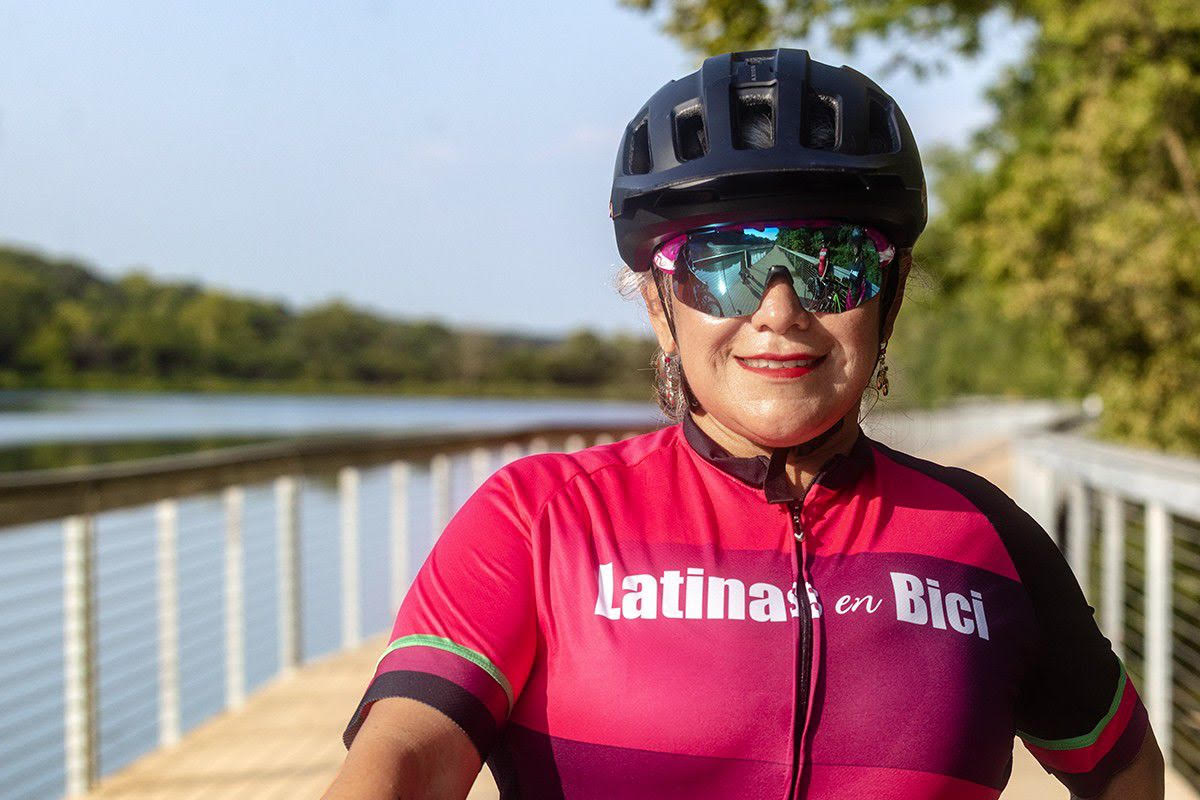
about Olivia Barraza.
I grew up in a small town in northern Mexico in Durango in a family of 8. My father was blind, and my family didn't own a car. The tricycle was our means of transportation. My best memories of my childhood were when I rode the streets of my neighborhood on my bicycle, due to the poverty in which we lived, I had to leave my family to search for the American dream. In 1994, I arrived in Bentonville, Arkansas. I didn't know how to speak English. I didn't have a car either. It was a culture shock. Leaving my home and family was difficult, and I remember crying.
Tyson was my first job. Then I worked at Walmart. In life, I have gone through many challenges that Macardo has given me, but without a doubt, the strongest challenge of my life was when Alejandro had a tragic accident that changed my life and the life of my family. Before I started riding a bike, I was going through a dark moment in my life. I felt alone, with four hopeless children, isolated with a furious depression and guilty for the accident that put my son in a wheelchair.
In 2016 I started cycling, and little by little I began to feel better. I enjoyed feeling the air on my face and that feeling of freedom when I got on my bike made me fall in love with the experience. La Bici opened another world for me, I started going to bike events in my community, but I noticed that there were no more women of my color. In a sport dominated by men, I wonder why there weren’t more Hispanic women. Where is my community? My desire to see more Latina women involved in cycling and to help more women who were going through some difficulty similar to mine. From that feeling of helping and motivating, in 2019, I decided to open a group for women who would like to learn to ride a bike, a place where they feel they belong and identify with women with the same physical characteristics and cultural background. I knew it wasn't going to be easy and I couldn't do it by myself either, so I went to the bike shop to borrow bikes, and I used the van where I transported my son, to take the bikes to the women who didn't have bikes.
Since 2019, we have created a sisterhood, a family, a community that we have fallen in love with the experience of feeling free of connecting with nature and of feeling capable of making distances that we never imagined we could achieve. Through LEB we have developed a program to support our community. Where we offer bikes and educational workshops to learn to ride a bike for free, so other women learn to navigate these beautiful trails and that you can use it as a mode of transportation to go to key places in the city, regardless of their socioeconomic status.
My wish is that with our example we motivate women throughout the country to give time to themselves, so that they feel free from stress and improve their physical and social condition, but also use it as a means of transportation and empowerment. for this life. For 2026 year the Hispanic/ Latino population in NWA will increase 18 % are we ready for this change?
Growing Latina/o population in NWA
Per ADH 2019 Data, in Benton and Washington counties 67-68 % of adults are overweight or obese. Per NWA Trails & Active Transportation Equity Report by Trailblazers, despite NWA residents’ growing adoption of biking, people of color and low-income residents face barriers to their use of trails and sidewalks and are underrepresented at regional events.
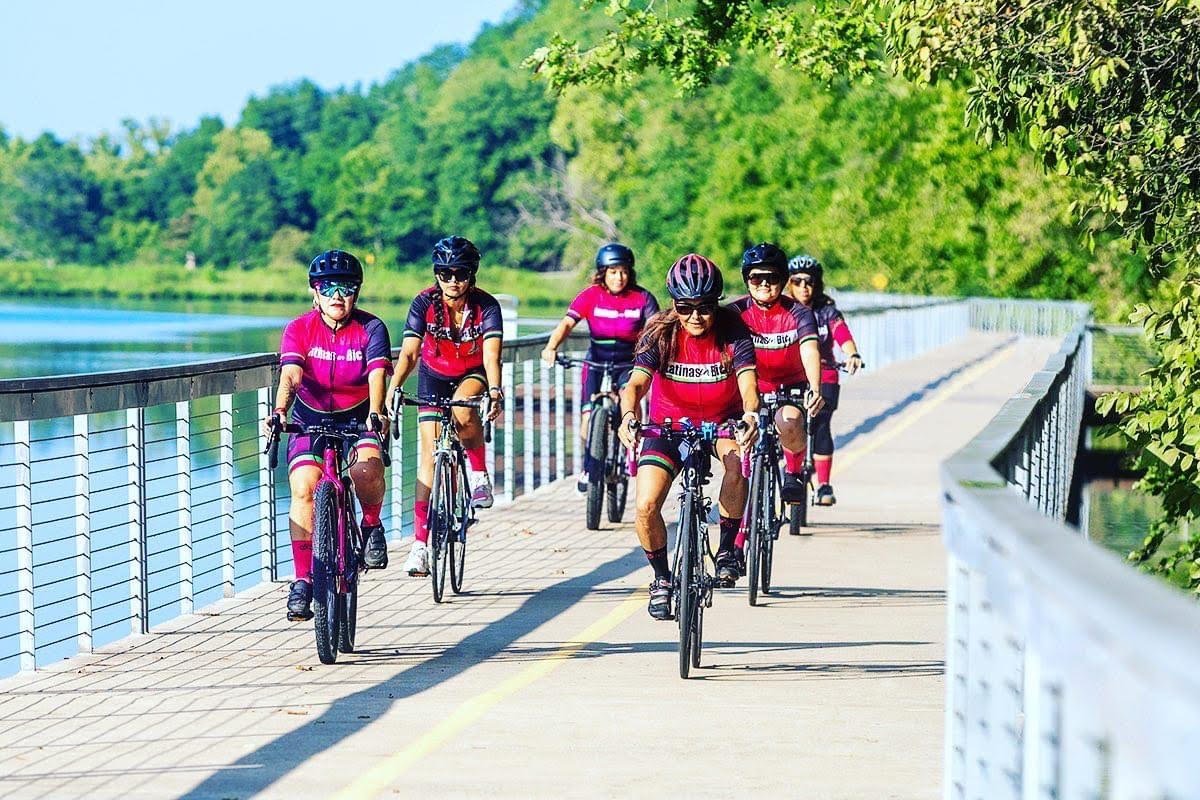
Photo by https://www.latinasenbici.org/
route.
The route for this episode is the 2022 Tour de Frida. Go ride and enjoy then plan on riding for the 2024 Tour de Frida. You won’t regret it.
music.

episode notes & references.
episode transcription.
episode preview.
[00:00:00] olivia barraza.: If we really want to see that diversity community, that is a question that my fellow cyclists needs to ask if they really want to see a different, a more diverse community.
I feel like I have doing a lot of part of that, but I cannot do it alone. I do, I have done and work hard, but It's not going to be up to me, . You know, it has to come with, from other, other entities, other leaders
because the Hispanic community is already here. We're, we're left for countries to look for a better place and this is a better place, you know, there's no Looking back for me. It's not looking back. So I'm already here what I'm gonna do to do to create a better community I'm already doing, but my other amigos y amigas needs to also be part of this change.
episode intro comments.
[00:01:44] mike.: Well, you are listening to the underview and exploration in the shaping of our place. My name is Mike Rusch and in 1990, the Hispanic Latino population in Northwest Arkansas was estimated to be approximately 1 percent of the population. And since 1990, it has grown a lot, and today it is estimated to be at 17 percent of the total population of Northwest Arkansas, and that's reported by the NWA Council.
Today's story is about the 1%. Olivia Barraza moved to northwest Arkansas in 1988 from the state of Durango. That's in north central Mexico. She moved here to start a new life, to seek better opportunity, a place to build a family, and to pursue this idea of the American dream.
That dream started in the chicken plants here in Northwest Arkansas. It evolved into a 20 year career with Walmart, and today it looks like a community of women inviting others who are new to this place to join them in the making and shaping of this place.
And, of course, I'm biased because Olivia's story is one that uses the bicycle as the medium for a community's connection and also to connect her community to everyone else. We do talk about the cycling community a little, but this conversation is really about so much more than that.
Her story has hard parts that are not easy and that's not uncommon. However, her story is one that I would put next to anyone's as an example of what it means to have the courage to start all over again. There's still work to do in building our community so that everyone feels welcome. So maybe Olivia's story can help us close the gaps because her story and the story of her community is something that we should be proud to be a part of.
So sit back, grab a cup of coffee or a glass of wine, and listen to Olivia's story. I promise you won't regret it.
episode main interview.
[00:03:25] mike.: Olivia, thank you for sitting with me. I'm anxious to learn about the work that you're doing, but maybe before we get started, I would love for you to just share your story of who you are and yeah, tell me your story.
[00:03:38] olivia barraza.: Thank you, Mike, for inviting me in open up the space for me to share. Well, my name is Olivia Barraza. I'm the co founder and director of Latinas en Bici. I moved here in 1988. Bentonville. I moved from a small town called Gomez Palacio in the state of Durango, which is about six hours from the border.
I left my home looking for a better opportunity. Looking for the American dream, and thank God, I landed here in Bentonville. 1998, I was a young girl 19 years old. Don't do the math, please. And I landed here, and I moved to a place where it was not familiar with me. It was a culture shock. I didn't speak the language.
I was, you know, I didn't own a car. I didn't have hardly any friends. There was not a community here. I remember back then there was around three houses max, five houses of Latinos in Bentonville. So it was hard. It was hard to, to get used to another culture. I remember feeling homesick, sad, nostalgia, a lot of nostalgia about, you know, my hometown, my roots, and, you know, my family.
I was alone. And, but, you know, I know that this was, a good for me. This was a part of the new life that I want to build. So, now, you know, I have four, four young men and Northwest Arkansas became my homeland. But when I first came here, you know, there was not, not a community. There was no tortillerias, there was no supermercados.
That, that Hispanic community was not formed yet And that feeling of, of not feeling like I belong was very, very traumatic for me in a way. That you know, that that I have a lot of moments where I was, you know, feeling sad and I want to go back home, but, you know, I started my first job was Tyson, which was located where is the 8th Street Market.
And then Walmart was my second job, which I worked for 20 years, and I was, you know, proud of work for one of the biggest companies in the world. But you know, little by little the Hispanic community has built, you know, a community. I remember I moved, I lived here in Bentonville for two years, then, you know, I moved to Rogers where the Hispanic community was, was getting bigger.
You know, the chicken, the chicken plants was bringing a lot of Latinos from Central and South Latin countries. And it was when then I started making friends and I started to also helping the, the immigrants that were living moving here. But that time I learned a little bit more English and I was able to, to help other friends who didn't speak in English, but I helped them to get, get a, find a job, find a home.
And I helped in any way that I could, because I know how hard it was for me when I moved here. When you, you didn't have no family, you didn't have no community. I remember going to Walmart and I didn't see any jalapenos or, or that food that I love. And I was like, wow, it was, it was hard. I remember my cousin and I going through the aisles at Bentonville Walmart, and we heard somebody speaking in Spanish, and I said to my cousin, quiet, shh, shh, quiet.
There's someone that was speaking Spanish, and we were like, who, who, where? So we run through the aisles and we find someone, they looked like us, but that time my cousin was I invited my cousin to move here, so there were still not enough people who looked like us. When we saw our friend we run to each other and we hug and we ask ourselves, did you speak Spanish?
And she said, yes, well, me too. And so that was that was great. And I, years later, you know, until the present, I have formed a family. The Latino community has grown, especially in Rogers and Springdale. And to me when I saw the first tortilleria, the first supermercado, I was like, oh, this reminds me of home.
So, now with You know, with these communities growing and we, we're building things that remind us of our, of our origins, of our country where we grew up. That community is here now. So, it's important to, to embrace that community and make a space for people like us who, who we came, who came to look for a, a better life.
We came to look for the American dream. And but that, that is part of, of my story, how, how I landed here, and, and now this is my homeland town that, that I love very much, and I I try to do the best I can to, to make a, a better community because the Latino community has came and opened a lot of opportunities.
We, we want to, you know, create a space where we can feel like we belong and we can celebrate our culture too.
[00:09:49] mike.: Thank you. Yeah, I'm glad you're here. I think you've actually lived in Northwest Arkansas longer than I have. . I'd love to understand what, what does Arkansas mean to you today?
[00:10:01] olivia barraza.: Today means opportunity. Opportunity to shape this state to. To a better place for different cultures, for different point of think, different point of life. And they can enrich this, this state. We can make it even better.
[00:10:23] mike.: Is this home then for you? You said this was your homeland, but what does that mean? Do you feel at home now?
[00:10:30] olivia barraza.: 90% I live here more than I have lived in Durango. I came here at a very young age and now my roots, part of my roots are here. My four young men are, was born here. And after I came, I invited my cousin, my sisters. And we have, I have a family here too, but I, I feel like, you know, at home, it needs to be more than a physical address more than a, a house.
At home needs to feel like we belong and it's, to me, home needs to feel like a sense of community where we are welcome and it's not there yet.
[00:11:19] mike.: In your time here in Northwest Arkansas, how has that sense of home or belonging changed? And what I, what I mean by that is you said when you came, it felt very lonely or isolated. But today you're building a community. What has helped that happen ?
[00:11:39] olivia barraza.: But, what I hope it happens is that, you know, we don't see separations, you know, in, in culture. And how are we going to know that is, Feel that energy, you know, when someone comes to Bentonville, they look, they look like me or doesn't look like you.
It feels like it's welcome, you know, not, not by saying, by feel. And that's what I hope, that we can create that space and we all are part of that, you know. I feel like we're, we're, we're doing since I come. Since 1988 to now, we have grown and we have we have created a better sense of community, but not, not quite yet.
Still a lot of changes to be made, and still a lot of people who need to open their heart and the space to welcome other, other people.
[00:12:44] mike.: I want to ask more about that question, this question of not quite yet. Before we get there, though, I'd love to understand because you, you are doing some really beautiful things and creating community, and I'd love to understand a little bit of your background first before we maybe come back to that question.
I'd love for you to share a little bit about the organization that you've been a part of founding, Latinas en Bici. Can you share?
[00:13:09] olivia barraza.: Yes. Well, before Latinas en Bici, I was in a place where my mental and physical and emotional life. Wasn't, wasn't quite well I was under a lot of stress I was single, mother of four, four young men, and one of them was in a wheelchair after a dramatic near drown accident that changed my life completely.
So, I was in a dark moment.
I had no, no desire I didn't really have a physical or or, or physical activity for myself. And also it's part of a culture, you know, that women, we are the main key caregiver of our family and we tend to put ourselves at the end of the list. So, I didn't, I feel like I didn't have a schedule for me or I didn't exist in my list.
So, I started to riding bikes in 2016 and, you know, right after I bought my first bike, I, and I started riding, I was remember memories of my childhood. When I ride my bicycle in my hometown was it transformed me back there. Then, you know, I start seeing the benefits and the changes that it was that my body was feeling.
You know, my men, my mom was clear, more a sense of joy. I was I was feeling better. And then I was start writing from Rogers to Fayetteville for Bentonville to Fayetteville. And then I said, this is good for me. And I started going, I started going to the events that it was around here in Northwest Arkansas.
And for not having friends into being isolated, I made, I started make new friendships. And that really was changing my whole life. I was feeling physical and mental and emotional much better. And when I, I remember one of the events that I was that I joined along with my sister. I look around and there was no other, other people that looked like me.
And, you know, after also writing with the, with the Girls by Bentonville, they're a very group that I, You know that I love very much. And you know, that was a good started for me, eh, but it was not something that, that it make me feel like it was. That I belong, you know, the whole cycling community is very friendly, very nice, but I needed it.
I needed it to have a space for women that look like me, and with the same physical and cultural background. And from that feeling, and that desire to share what I was feeling, and to share how my life was changing, I said I wanted to create a group with women like me can feel like, you know, they belong, they can have a safe space, and they can enjoy this beautiful trails of Northwest Arkansas.
So in 2019, You know, I started Latinas en Bici, and we are a non profit organization dedicating in improving the physical, the mental, the emotional well being of the Latinas through our programming. You know, through Latinas en Bici, we have created a programming that we lower the barriers financial. And that intimidation part to any Hispanic woman who would like to learn about, you know, how did they get into cycling?
So, almost five years to the present moment, we have impacted our community. Uh, we have created a space and, and I feel like we have, uh, created a great impact in our community where I can see more interest in women they are reaching out. How did I get into cycling? I want to be part of this group that you have, that you, that you have created.
We are very welcome a group of ladies. Just because we call Latinas, that doesn't mean we don't welcome. We are very open to anyone. So that's what Latinos in BC is.
[00:17:55] mike.: It sounds beautiful. First of all, thank you. I, I'm curious about the sense of community that you feel like you are finding within the people that are participating.
How would you maybe continue to describe the sense of community that you either feel you're a part of, or you're or that people are experiencing as a part of some of the work that you're doing?
[00:18:21] olivia barraza.: Is that you know, the, the cycling? It's grown here. You and I, we know, and we can see that difference from 10 years to now.
I feel like that Hispanic community wants to be part of this ecosystem that is forming, you know, and how we can, in that particular community, how we can feel welcome. I think that the leaders in the cycling community, they are manage, I mean, manage a groups, organizations, entities, they I feel like, you know, creating a space and be more open to welcome that, a more diversity community that is very crucial to shift, you know, the growth of the cycling community in particular.
Because when I first started, it was 99. 999% in white, and still it's a big percentage. Why this now has changed, you know? Latinas en Bici is, we're doing our part, you know? It's, it's trying to push and we are the bridge through, through, for cycling. But after that, what is? What other leaders in the cycling community are doing to welcome?
You know, that a more diverse community. So there is a, there is a
a calling for those leaders to ask themselves what I'm doing with my programming, with my resources, with that space that I'm able to have in a table. What I'm doing?
I think that's.
[00:20:10] mike.: I, from what I understand about the work you're doing this is not just taking people who are already cycling within the Hispanic community. And asking them to, to, to ride together. Although there is some of that. You're actually teaching people how to ride bikes and get bikes and introduction to how to go on gravel rides and mountain bike rides.
You're the starting place for the work that you're doing is really critical because you're not just asking people to be a part of a already existing Hispanic community that is cycling. You're trying to really create pathways and avenues for people to even start this in the first place. I'd love to understand more about that because your investment in the cycling community is not just participation.
It appears to me that your investment into the cycling community and into the community here in Northwest Arkansas is one of helping to try and grow it. In a way that allows it to be more inclusive and more people to be able to participate in the beautiful thing that cycling is here in Northwest Arkansas.
Is that, is that a fair assumption? I'd love to hear more about that passion too.
[00:21:27] olivia barraza.: Yes do you know So, we are the bridge through, for our community to going through the, the cycling community. And we are teaching this to, to learn and, and not only to learn for themselves, but to go home and teach them, you know, and we started from zero.
Yesterday, I mean, Tuesday, we had a, a workshop that it was called my first bicycle, which women come and learn. We, what kind of bicycle they need to get. If they decided to enter into the cycling, and that was, you know, we're, we're giving them a tool, not only to, to enjoy the, the cycling in the outdoor recreation, but we're giving them a tool that is going to be a life changing in their, in their, in the culture, in their families, and, but also independent, in the independence, a lot of our, of.
Latin community come from other countries. They, you know, when they come here, they might not have the driver's license or the status. Where they can drive a, a vehicle. So using the, the bicycle is a tool to, to have an independence for them to go to work, for them, to go to the hospital, for them to go to the tortilla.
And and a super mercado. That is a tool of independence itself for, for women in my community. So, yes, we are, teaching, we're empowering, we're also looking at the, at the health of of their, of the person, their health and giving them a, you know, a motivation for them to look at their health. We empower then, you know, health through cycling is a better way to motivate somebody than, you know, do this so you can feel better, so you can reduce cholesterol, even though, you know, our community is, you know, we have a history of have diabetics and other disease.
How we gonna motivate them to become more active. Did I answer your question?
[00:23:51] mike.: You did. I feel like I went, No, you did. You absolutely answered the question.
Because I, I, I think what I hear is that, this is not, Just let's go on a bicycle and have fun. This is a holistic view of how something that's happening in our community and being encouraged in our community can be a tool for what sounds like a fuller, richer life in general, from community building to physical health and mental wellness to break, uh, what I see at least speak for myself to break well, what could be. To break communities that are isolated from each other. And Bill, you've said it already. We're, we're the bridge. You're building bridges in our community to try and connect people and unite people. So to me, that, that's just, it's a really beautiful thing in a holistic way.
That I think our community has a lot to frankly to, to learn from. And so I'm, I'm thankful for that. Go ahead. Were you going to say something? No, no, go ahead.
When, when you think about this aspect of creating that, the, the, this. Community, I know we're using cycling as the example, but, but this is more than that.
And I want to try to understand that a little bit more because as you think about using this tool of the bicycle to create communities, if all we're doing is going and riding bikes together, that's 1 thing. And that's good. But what do you want to see happen maybe beyond that even more if you will. And it could be within the community of people that you're working with, but it could also be across. Bye. Bye. Some of those cultural gaps that you're building bridges across.
[00:25:34] olivia barraza.: Well, I don't know if you heard that statistic that how many people move here in northwest Arkansas. A percentage of those people are Hispanic Latinos. So, when they come here, They, you know, if they don't see something that they feel like is part of them or they feel like it's a welcoming or belonging, well, some of those people are not going to stay, you know.
So what are we doing to, to build this welcoming not only in cycling, but in, in general here in the Northwest Arkansas? So, to create that community that I see that ambitious and I, I feel like he needs more than just, uh. Having a jobs here. What did you do? What we're going to, what that, that the, what Northwest Arkansas?
has for those communities. They are saying, this is what I want to be. This is what I wanted to live my life and also to, to make a positive impact in the community. Because there's a lot of individuals, a lot of good people are moving here that wants to be part of, of something bigger than just, you know, going to work and go back home and watch TV.
You know, what are we, What are, it's a community we offer to them and I tell I feel like it's the only more work to do in that part and, you know, there is also the socioeconomic aspect of, of this region where we live in, you know, if it's high scale, if it's not something that is within our capacity to, you know, to have and then you know, what are we What are we doing for those people?
You know, it's it's something that the entities and, and people in power, you know, can, can ask their self and, and do the work, do the job because we, we are here to stay and there's a lot of good people like me that wants to create something positive and wants to better their life, their family, and the community that we live, you know.
So, we have a good, a lot of good intentions, but we also need to feel like, you know, we're part of this. And, and going back to when I first moved here, you know, feeling lonely, feeling isolated. This is not healthy for, for anybody. So, I feel like Northwest Arkansas is changing and I love it. I'm, I'm feel proud to say that I've, part of this community, but there's some times that even myself, I don't feel like home.
I don't feel welcoming in some spaces. And, and I feel like there's a lot of opportunity to grow for the people who are Native here in Arkansas to welcome and to you know, change that perspective and mentality of, you know, of, The racial aspect, because when I came here, you know, I was very intimidated to go to other towns.
And I remember some people, you know, mentioned, don't go to this town, don't go to there. And why? I didn't know. Oh, this, you know, it's very how do you say How do you say RA
[00:29:01] mike.: Like a racial bias of some sort? Yeah.
[00:29:03] olivia barraza.: There was a racial bias and I didn't know, I didn't know much back then, but, you know, in some pla in some places, in some spaces, you can feel, you know, that welcoming is not there.
It's an opportunity, so still opportunity to, to better the community that we want to live.
[00:29:27] mike.: I'm curious to that aspect about how we are thinking about Northwest Arkansas growing or more people being included what would you suggest or what are some of the ways that we can be.
more proactive about creating a place that truly is welcome a place of welcome for everyone that's here.
[00:29:48] olivia barraza.: Well, you're already doing it by inviting me here. You know, you opened the space for me to come and share, you know, my perspective, my feelings, my thoughts, eh, and my, and the opportunities. So there's other people that are empowered.
Other people, they are, you know, in charge of, of spaces. Welcome them, invite them, listen. We're not judgmental, you know, and, and I think that's, that is a good way to start and to see how the people they live in, they will live in this community with what we think, what we want to see, what we love. To see and at one point in how we can help also because we're asking for a space to be open But we also it's because we're gonna do something, you know, it's not just opening and don't know we We want to be part of the work also And you know, that there is resources that can be shared resources that can benefit everyone and not just one part.
So that is important part from entities to be open into the willingness to see this community to grow. I feel like, there is You know, there is opportunities that we haven't tapped in because the that fear, the fear to open the space, the fear to, to share resources, stop. The people, you know, and you know, it's for my, for my part, I want to do the best I can that if I'm not invited, if I'm not know about the resources, how I'm going to continue with this mission.
How are we going to continue to grow and create safe spaces for our community? I think there's a calling. To these people who are in charge of, of entities in a space to be more, a little bit more open and see the, the work that we have done. The work that the Hispanic community has done in Springdale, in Rogers in particular, in those cities where we have created business service, and, or, or hard to put those, those service to everyone, you know.
We, we have created a positive change here, and there is a lot of people, there's few people in my community who has done an incredible job, and not only me, but other ones, they have seen the barriers, they have seen the the needs, and they are opening it. In, in trying to make a, a community much, much prosper, much better in every way we can.
[00:32:46] mike.: Do you have any specific areas that you may want to mention where we need to focus as a community on either breaking down barriers or making sure that everyone is, is welcome at that table?
[00:33:02] olivia barraza.: Well, education is one of the important things. I remember when I moved here. I was just finished my high school in Mexico.
I moved here. I didn't know the language. There was not any opportunities of education for me which I didn't, I didn't continue my education. That's one. I think opening this in some of the in particular in the cycling communities on bike shops, you know, bilingual personal bilingual communication is so important in the workforce also opportunities for leaders to, to be able to, to, to be able to be part of the, that this decision makers where they can advocate for the other communities.
I feel like, you know, the government, you know, when we see other, other, I'm not getting into the political space, but when you see other people that is not the regular people trying to take spaces, be more open because we want to see representation in each sectors. Of each community, because there's not only Latinx community here, but there is other communities here.
So we want to be, we want to see a representation of who represent us in each subject. So, make a space, invite. And, you know, don't, don't be afraid. You know, we're here to, to make a positive change. Not to take the whole space. I'm starting to be more political.
[00:34:41] mike.: Well, I'm fine with that. I've got some episodes that are very political. So it's fine. If there's, if you want to talk more about that, we can.
I think for me, the, the, the thing that's most interesting, it's just, it's the work in the sense of community that you, that you are working on.
It's really beautiful to listen to you talk about the work that you're doing and just the difference you're making in the lives of people and building communities and, and doing that in such a way that's so welcoming. And so I, there's, it would be hard to argue that this community is not a better place for the work that you are doing here. And would love to see that continue to move forward.
What are there some things that we as a community can do to support the work that you're doing that would help build those senses of community and continue to encourage people to get involved in the work that you're doing?
[00:35:31] olivia barraza.: Yes, I mean, I, I feel like you know, support or, or programming, support, or mission in, I think that will be, you know, a way of, of creating the community. We would like to see if it's, if it's a diversity community that you would like to see. It was in Latinas en Bici, we have opportunities of volunteers opportunities of support, sponsorship in.
Opportunities are welcoming to your space. We have events, uh, where we, throughout the year we have events that, you know, we do fundraising to continue with our programming. There is one that is coming up, Tour de Frida, which is going to be at the Crystal Bridges. If you want to be part of it, you know, reach out and, and get to know what we're doing, and get to know you know, how you can be involved.
That, that is a way to. To support our mission, but also to open the space for, for you know, organization to be part of it. We, we collaborate with a lot of organizations and other entities who have a greater impact than, than, you know, that we can, you know, use as a resource to, to spread our mission.
I feel like also another way you know, to, they can help us in that Hispanic and Latinx community overall is to create pathways, to create infrastructure, infrastructure, how do
[00:37:11] mike.: you say it? Infra, inf, now I can't say it, infrastructure, yeah.
[00:37:15] olivia barraza.: Creating frustration from, from those neighborhoods, they are not connected to the, to the green weight.
You know, there is, uh, some of that has, some of the, the Neighborhood they are in springdale and Rogers are not connected to, to the, to the Greenway. They're not, they're cycle paths or critical.
[00:37:40] mike.: Yes. The, just the neighborhood, the neighborhood connectivity and what connectivity benefit that would be from an infrastructure development for communities in Rogers and Springdale.
Mm-Hmm. .
[00:37:49] olivia barraza.: So we don't, they're not isolated to these you know, Greenway trails. Where if we want to activate those communities, that will be, you know, a great opportunity for the department development of each city to see where are the opportunities that they can connect those neighborhoods in that too, so they don't feel isolated because riding a bike on the streets where they don't have a bike lane, you know, there's a in.
Very intimidated. I don't even want to do it, you know, but if we want to be get everyone involved that that would be a great you know, opportunity for the, for the cities and say how we can create the, a pathway that this community can be more active if that's, if that's what they want, you know?
[00:38:40] mike.: I, I ask everyone this question and I'm, the more I ask it, the more the more I'm not sure if I should ask this question or not.
So, I'd love to understand as you think about, Northwest Arkansas and the work that you're doing what, do you carry, what are the, do you carry fears for this place as it continues to grow and move forward?
[00:39:01] olivia barraza.: Well, that you know, there's still a fear, you know, of not feeling welcome, most likely.
It's not a fear of something's going to happen to me, but a fear of not feeling welcome and not feeling part of. You know, of this place. Yes, it's an immigrant community. That's our biggest fear. You know, we want, we want to feel like we're part of this. We left, we left our country to come here and create a better opportunity.
And of course, I mean, going to a new place and not feeling welcome, that, that doesn't feel good, you know. So, yes. That's the biggest fear of, of people who move here and how do we, we overcome that fear. How do we you know?
Yeah.
[00:40:03] mike.: Yeah. And I, it, I, I also would, would just say that I, I feel like it's the people that maybe have been here for a long time too. It's our responsibility to, to, I say this meaning to this country. My family are immigrants to this country also just many, many, many, many, many years ago. And so I feel a deep sense of responsibility that maybe while our countries of origin are different and our space and time may be different.
That we also have a responsibility to be a part of making this a welcoming, open, accessible place for, for everyone. And so
[00:40:42] olivia barraza.: I feel like there's fear in both sides, you know, for the people who has lived here all their life, who have afraid, afraid to see these region to growth. And they feel that.
We are afraid to change the human, the humans, we're afraid for changes, but in this, I see this change it in a positive way in, you know, changing the mentality, changing the perspective of how we can create this better community for all is, is can be intimidating to some people. Some people don't want to, don't like the change.
But I see change as an opportunity. I see change as a way to growth. I see change that can unify us as a human, you know. I When I moved here and I didn't know any English and I was working on, on the chicken plant, you know, just trying to figure out what people were saying. I was afraid, you know, I was afraid but, you know, there is, beyond that, there is a good energy that I was feeling, you know, that of people who cared and wanted to help me too.
You know, I feel like, you know, there's a lot of good people here. There's a lot of good intentions, but we need to go deeper than that because there is fear in both sides of that, of community.
[00:42:15] mike.: The other question that I ask people is this idea of wholeness. And I'd love to understand from your perspective , what do you feel like wholeness looks like in the work that you're doing?
[00:42:28] olivia barraza.: Wholeness is. It is I see wholeness is, is coming together with no judgment, you know, and beyond the mental titles that we, that we put in the titles of, of who we are and what we do and we, where to work. You know, it goes beyond that. Wholeness is, wholeness unified us as a one human family.
Wholeness doesn't divide. Wholeness doesn't see colors, you know. I think we still have a very judgmental of what, what is a color, you know. And we need to go beyond that.
[00:43:15] mike.: Thank you for your words. Thank you for your leadership. Thank you for the work that you're doing to create a beautiful Northwest Arkansas. There's no question we would be less without you here. And selfishly, I'm neither Latina nor a woman.
Well, I guess it may be redundant. But I, I, I desperately, today it's raining outside, but maybe someday I can sneak into a bike ride with everyone because it sounds like a really beautiful community that hopefully I can participate in some small way. So
[00:43:48] olivia barraza.: Yes, of course we, you know, you can come and join us anytime you want to.
We also Have an event coming up this July 27 at the Crystal Bridges. We hope to see you there and it's an invitation to everyone And check us on our Facebook Website No,
[00:44:09] mike.: I sorry I went in no, no, please that's good yeah, I will put links to the, to the events on your website and all the places where people can find you in our, our episode notes for sure.
But Olivia, thank you so much for your time and for sharing your story. I'm very grateful.
[00:44:25] olivia barraza.: Well, thank you for allowing me to have this space and share what we're doing in the community and, and thank you so much for giving the space to the Hispanic community. Thank you so much for for that. I appreciate it.
[00:44:40] mike.: I'm humbled and grateful. So please keep doing the work that you're doing. Please. Please. Please.
[00:44:44] olivia barraza.: Thank you. I'm very grateful for this moment. Thank you.
[00:44:47] mike.: Thank you.
episode outro comments.
[00:44:48] mike.: Well, thanks for listening to Olivia's story. I told you, you wouldn't regret it. And hopefully you see exactly why we needed to have a conversation with Olivia. To be a part of Olivia story is to be part of what makes this community or something really special, what makes this community who we are, And I think any of us would be considered rich To have lived a similar story of coming to a new place and calling it now, as Olivia describes it her homeland.
In her experience you hear there's still work to do but it's work that requires all of us to be intentional. Intentional in seeing where people may not feel like they fully belong, taking the initiative to cross those roads and invite someone new into this place with open arms.
We've heard in our conversations from other guests, how building a community starts with building friendships, and Olivia is truly an example that models to us what it can look like if we have the courage to step outside of what is known to us.
This really is a story of our WE culture. I hope everyone will choose to learn more about Olivia's work. Check out their website or Facebook group. They have invitations to join them all the time.
Hope you're able to support their event on July 27th at Crystal Bridges, the Tour de Frida. This event fuses art and bikes to celebrate the legacy of Mexican artist Frida Kahlo. includes food, music, art exhibits, and of course, some community bike rides for beginners to more advanced routes.
I really do hope to see you there.
next episode preview.
[00:46:13] mike.: And for our next episode, we're going to stay with this conversation about what it looks like to build communities that can include everyone.
In Olivia's story, you heard about her family and her family's story of disability as well as isolation. This is not an uncommon story in our community. While I don't have specific statistics about Northwest Arkansas, in Arkansas, a 2022 report from Cornell University reports approximately 18 percent of people in our state experience some sort of disability.
So we're going to talk next with Ginny Mooney, the co founder and executive director of 99 Balloons. 99 Balloons works to change the story of disability and to build communities where everyone can not only be included, but can also be known.
[00:46:55] ginny mooney.: And so, what does it look like for Lena to be included in her community? And I think a lot of us will go, well, we just need to adapt things. Which is true.
But I don't know that always means that she is included, and we want that to be enough, right? I think we collectively as a society, a lot of times without thinking intentionally, we want it to be enough. We want there, we want to say, hey, this door is open to you. You have access. You can come in.
But real inclusion means, I think, that her presence is missed when she's not there. And that's different. She has to be known to be truly included. So it's not about just saying we're going to adapt this. I think that it's great, but we push a little bit further with that to say, this is someone who deserves to be known.
[00:47:49] mike.: Well, I'm anxious to share this conversation with Ginny. I think if you're like me, you're going to have a whole new perspective of what it looks like to build inclusive communities.
route.
[00:47:57] mike.: And then the route for this episode is the Tour de Frida route from 2022. It's a 13 mile route that starts in Fayetteville and then goes in circles Lake Fayetteville. Go and enjoy it and then watch for information shortly on the 2024 event and I hope you're planning on riding it if you can.
music.
[00:48:14] mike.: And I'll close today with music from Esther Reina, who's a native of Bentonville and was just in town for City Sessions, Home Sweet Home Festival. So I hope you had a chance to see her. She's a singer songwriter that flows between Arkansas and Utah. Enjoy your music. It's so good.
And if you're on Spotify, you'll roll right into the music. If not, check the episode webpage for links to the music.
Again, thanks for following the story. I'm humbled that you'd listen.