
the equity builder with Emma Willis.
Emma Willis, Founder of Impact Period. The topic of our discussion is the state of Northwest Arkansas & how the work of equity building is critical to shaping diverse and inclusive community.
season 1, ep. 32
listen.
episode notes.
Episode 32 is a discussion with Emma Willis, Founder of Impact Period.
Our conversation is about the state of Northwest Arkansas and why the creation of equity & the practice of equity building is a critical component of shaping a just community.
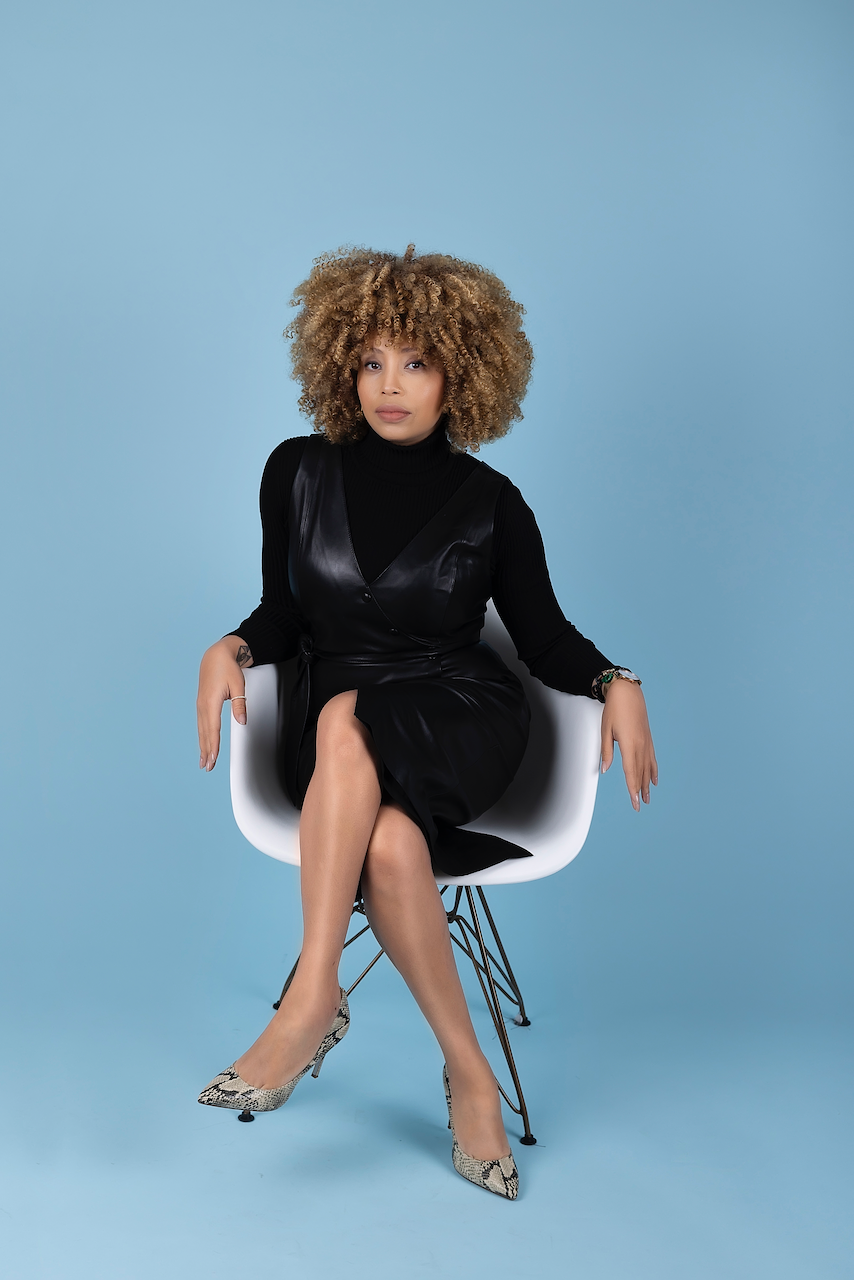
about Emma Willis.
Impact drives my work. Witnessing strategic action create lasting change fuels my passion for community development. Raised in Arkansas, I saw the disparity in access to resources. This instilled in me a lifelong commitment to building equity.
Community is my foundation. My grandparents, pastors with close-knit congregations, exemplified the power of social connection. This sense of belonging continued at Philander Smith College, where I earned my business degree. My dedication to Arkansas stems from a deep understanding of its unique communities.
Impact requires the right conditions. As Senior Strategist at Mangan Holcomb Partners, I launched a new business vertical and office, building a team and strategy. I then leveraged these skills as COO at Sootchy, a fintech startup.
Matching resources with passion is key. Recognizing the potential of 529 plans, I championed accessibility while working for the State of Arkansas. As Executive Director of Arkansas Bright Futures, I led the creation of the industry's first 529 app. Through Impact Period, the mission-driven agency I founded, we amplified the work of BIPOC entrepreneurs by launching multi-year corporate accelerators and a city-wide program.
Measurable results matter. At the Arkansas Treasurer's Office, I oversaw a growth in 529 Assets Under Management from $500 million to over $1 billion. I also reduced fees, making Arkansas' plans more competitive. MHP, under my leadership, became a new employer in Northwest Arkansas.
My passion for collaboration, inclusivity, and empowering Arkansas communities is woven throughout my experience. I excel at creating frameworks for equity, developing resources, and achieving results in new ventures and established systems.
episode transcription.
episode preview.
[00:00:00] emma willis.: You have to have community before you can have belonging because community solidifies it. If the 10 people standing around me are at odds with me, I don't belong here, but if three out of the 10, hell, even two, give me this sense of pride and community I belong, because you are signaling to me that I got your back.
I see you, I'm here with you, I hear everything that you're saying, and you may not be able to say it, but I'm definitely going to uplift your concerns and your issues. That is me finding belonging. I am here, Mike has my back, now we can go out and do anything. I belong in the fabric of NWA. But the equity piece of that has to come in with me belonging here and knowing I have a voice. That's what's equitable.
episode introduction.
[00:00:51] mike.: You're listening to the underview, an exploration in the shaping of our place. My name is Mike Rusch and today we're headed into potentially some new territory in terms of a foundational element to how our community is shaped and how it grows. Today we're going to dive into the deep end and discuss the concept and practice of equity.
Equity in the context that we're discussing today is defined as the quality of being fair and impartial. I want to make sure to differentiate this from a concept and definition of equality, which means something that is equal among all people.
Both of these are really important, but I want to address this concept of equity today because it is important that as we consider the state of Northwest Arkansas, , we do so that includes this lens of equity.
Equity can take many forms within a community, and the example that most may be familiar with would be around the concept of housing equity. All of the conversations that we've had around affordable housing would be considered housing equity.
Meaning that we're creating fair access to affordable, safe, and adequate housing. It also addresses issues like housing discrimination, gentrification, and homelessness.
And of course there's other forms of equity in a community and they would include areas of economic equity, health, education, social, environmental equity, housing, transportation, political, cultural, and of course, racial equity.
So of course I would want to have Emma Willis come and talk about this concept of equity. Emma has spent her life within various industries, businesses, government agencies, and more asking the question of what is equitable and where is equity missing.
She's the founder of impact period, an organization that amplifies the work of entrepreneurs. She focuses on black indigenous and other people of color through corporate accelerators and citywide programs. However, I think that you'll find her communal practice of equity is something that she believes needs to be applied to everyone.
One note before we start at the conclusion of this episode, I included approximately 20 minutes of an unplanned discussion about the events of the tornadoes that came through Northwest Arkansas on Memorial Day.
I went ahead and included this at the very end, but to me, it's just an authentic unplanned conversation between Emma and I about how community and belonging are such a strength for Northwest Arkansas.
All right, let's jump in. We've got a lot to cover today.
episode interview.
[00:03:38] mike.: Emma, thank you for sharing a table with me. It's incredibly humbling to be able to sit here with you, and I'd love to start with your story.
[00:03:46] emma willis.: Yeah. I was born on the fourth coldest November in the history of the planet. November 2nd, 1983. But little girl born in Little Rock, Arkansas spent most of my life in Southeast Arkansas by way of Houston, Texas. Grandparents, Methodist ministers down in McGee, Arkansas. Mom's family, farmers, and grandmother was a registered nurse.
And so farms were everywhere in my life. I always have to start with the farms and I have to start with the church and the funeral home because I was actually born into entrepreneurship and already just before I knew it, I was required to be an entrepreneur. Nobody says that when you are a child of entrepreneurs that you were just already an entrepreneur because you have a job when you can hold things.
And so you're learning responsibility. You're learning accountability and honestly you learn operations in the course of all of that. You don't know that you're learning it, but these are all the things that it takes farm families to keep things moving. And I just always knew how to rock with it.
We were early morning risers, get the chicken eggs out muck a stable, put a salt lick down, slop some hogs.
[00:05:04] mike.: I'm sorry, what did you just say? The city boy didn't understand anything you said.
[00:05:08] emma willis.: So for those of you and I grew up on a pretty large working farm down in Little Rock out in the county.
And I am from Kentucky near pinnacle mountain. And so there's head of cattle, their horses, their hogs, they're all the things that you would expect. We ate amazing, but we all had a responsibility. But yeah, we were workers. We were bushing all the fence lines before I even knew I was doing actual labor because you just got the drive early and heavy equipment was something your friends weren't using, but you knew you could handle it.
But yeah, so grew up always working one of five girls. I'm square in the middle, which means. I'm diplomacy at its best. And so all my life has been understanding the operation and the flow of a day to day, understanding mediation and how to deescalate situations and then inevitably how to fly under radar.
That's what happens when you have that many siblings on the other side of you is you are given this amazing ability to just live out loud because nobody's paying you any attention first of all. You get five kids. My dad had one nickname for five of us and you only knew who he was talking to when the inflections change for different consonants or vowels , but I will say my life and growing up gave me an opportunity, probably not like most people, but I could always just dream wildly. There was never a restriction on how big or how bold I could be. It was just whether or not I could find a willing audience to hear the next harebrained thing I was going to dream up. And luckily I always had an audience. And that also let me try a lot of the things that I wanted to do and anytime you get to operate inside of existing business structures as a kid and you really don't understand the implications but it brings about success even on a small level, you find out a lot more about yourself and you find out what you're ready for.
And so I'll say across all of those spaces, namely our family funeral home, I would always get to do work. And doing work under the age of 14 is illegal, but it is also inspiring because I think the lesson is allowing your kids hands to get dirty and allowing them to have this healthy curiosity about life.
all the structures and the things that are happening around them. And we forget a lot of times as parents, because we're so busy protecting you that we're doing you a disservice a lot of times by not allowing you to see how things actually operate. And my dad was an undertaker. So like I had this life that other kids could never understand.
Cause I'd be like going to pick up stuff from the dry cleaners, which could be. Miss Mary Sunday dressed if they wanted to bury her in and, get on my bike and go pick it up from the dry cleaners for my dad and then help him through this artistry, just get a family member back to where somebody wanted.
But it's how I learned how to respect people. Funeral homes have an interesting way of tapping you into to like human emotion and empathy. Cause I can't tell you how many times I would just sit in a wake. And it would only be two or three family members there. And so you'd sit with the family and sometimes you just hold a person's hand.
Like just to be honest, sometimes you would just sit there cause what you want to do is try to help comfort a person. And I just can remember how many sad faces I've experienced in my life. But then also the really sweet and kind things that people can express on the other side of that is, I really appreciate you for doing that.
And all of that to say, my my childhood was riddled with the most amazing experiences all of which actually shaped me. It had a lot less to do with college and had more to do with just the real people I got to interact with because I'm also a product of just a church family. So we were church Monday through Sunday. All the world's issues are underneath the roof of a church. And so again, I'm back to observation and I'm back observing human condition, what people are actually asking for versus what they show up saying that they need or want. And I think that is where I started realizing there's more to an ask than what people will ever let on.
And as I grow in my career, I actually started learning where to put that. Cause now at this point I'm named after my grandmother, I have her entire name. She was a minister in the Methodist church and in the AME church, or African Methodist Episcopal at a time when women ministers were not allowed, but they told her if she wanted to do it, they gave her the three point charge.
So my grandmother had to go to three churches every Sunday. And none of my siblings wanted to go to church that long, but I'm always game for a road trip and to watch some more people. And so she took me with her and I got to learn more about people, but then I'm starting to learn about like rural Arkansas and the issues of the people in the Delta and how was the community unseen and underrepresented and underfunded.
But it's also amazing what church was doing for people, because if you couldn't get it Monday through Saturday, Sunday was going to have to be your recharge. And so in the course of that, it started teaching me more about the spaces and places that influence people and where they go and how they do things.
And what my grandparents and my uncles and us were preparing me for was a lesson that I really didn't know that I needed. And it was just the ability to understand the human condition. I actually am not magic. I don't do anything special. All I do is actively listen, but understand during that active listening exactly where you're pulling this knowledge from and what it actually means to you when you're saying it to me.
And so then it becomes my job to rearticulate what I just understood from our interaction and conversation and try to bring it into the work that you just asked me to do. And that kind of brings us to where I am now.
[00:11:24] mike.: Thank you. I have 100, 000 questions based on just growing up and what life must have looked like for you. It sounds like number one, a beautiful family, but just the dynamics are really beautiful. And so I think, today where you're at, I've heard you described it being at this intersection of entrepreneurship and technology and community. And it's super interesting to me because you're background and growing up, in rural Arkansas.
And you mentioned the lack of resources and why asking this question, though, how does that propel you to where you are today?
[00:12:01] emma willis.: Yeah I love puzzles. And I never have been the kid that wanted the easy option because it was just not fair to my brain. There was like challenge. It's not a challenge.
We don't want it. And if anything ever seemed too easy, I always shied away from it because life has never been easy. And I think all those experiences I had with my grandparents and just having to do hard work myself made me realize if it's that easy, we're not solving anything. And so those intersections.
And I really just a series of events that are, I don't even know how to explain it. And I'll tell you how this started. So college, I went to Philander Smith college working on a degree in business administration subsequently got a degree as well in computer science. Nobody understood in the early 2000s why anybody would do all of that.
But I was paying attention to trends. And it was the thing that kept making me anxious because I'm going, Okay, we're in a dot com era. Nobody's really taking computers that seriously, but I also understand the fundamental knowledge of business and with the two I'll have analytical thinking down, and then I'll also be able to communicate in a format that makes sense to the majority of the world.
That's really where I was going with, because computers are dumb. And it requires you to think. So you have to be hyper analytical in this format. The business side of me just knew I wanted to make money and so I just need to understand structures. And by the time I graduated, I used neither. I used neither degree.
I ended up working for Service Employees International Union. It was an issue based campaign at the time. I was super excited to do it because I just like people and for whatever reason, politics will always put you squarely in community. And if anything, you'll start learning what the belly aches are about.
And did that for a few years, finished my degree, got married, had a kid. And in the course of all of this, I am still deeply entrenched in understanding humans. That is what was happening. And through the course of us trying to get certain bills passed, I think it was Blanche Lincoln that was running for no, she wasn't running for anything, it was an issue she was working to pass.
Through the course of that, me getting ready to be a parent for the first time, having to deal with having some siblings, Student loan debt. It was like a million things at one time. And in the course of that, it started dawning on me that these are all things we rarely ever talk about with burgeoning adults.
Nobody has lobbed on you the amalgam of issues as an adult. And you're like, bro, who, who was going to tap into your parents? We're like, ah, you're adulting. Yay. But for me, I was like, no, we should be sharing insights and understanding how to get through this stuff. I shouldn't be just figuring it out.
Either way that made me want to be a mediator. That's where this all led. I was like, boy, I can deescalate a situation in the toughest of times. And so I left SEIU, took a job out at Alexander Juvenile Detention Center. So I'm working in a juvenile prison.
That concluded my my dissertation on human issues and conditions. By the time I got to the youngest populations and started seeing, like, where disconnects were across family. And a lot of the politics and policies, because I am just like running across issues one by one at this point.
I did that for a year exactly. It is the job that broke my heart because when children are, have not been solved for and we can't provide for them and the hurt stems from a parent, just not being in a household, a foster system that is completely broken and needs to be reviewed or even just the fact that there are kids who are truant because they didn't eat breakfast.
You start finding yourself trying to ask like the overall question, how do I help? How do I fix this? And where do I start? And I would go home at night so drained that even my child couldn't get the best out of me. It was just gut wrenching work. I wanted to save every last kid at that facility. And I had to reconcile with myself that this is not even something you can do.
Like, where do you start, Emma? Which like institution are you building? Cause you, your professor X on X men at this point, you got to bring them all in. And I couldn't find the people that wanted to deal with the kids that had these tremendous issues. And I was And so it took some heartbreak, it took me to step back and I had to quit that job because long story short, I could not eat. I could barely sleep at night and I was just overwhelmed with a sense of, I should be saving these people. And that starts this journey. So I get a call from my uncle and he goes, Hey, I love that you love people. They love you back, but you got a kid at the house and you can't work places like that.
Cause I was working crazy shifts. They're usually like 12 hour shifts. And the last incident I had at that facility that told me I needed to go was watching a parent smuggle narcotics into a prison for her son to sell that I realized that this was not something I was going to just solve because the problem wasn't the kids.
It was the situations that they were having to acclimate to. It was what they were born into essentially. And even now thinking back to how that broke my heart because you don't think a parent would do that. And I just kept going. I remember just trying to find a friend that can understand half of what I had seen and gone through to know that I was already in the wrong circle of people because like I am so empathetic to the world.
Forget sympathy. I am feeling it. I am a sponge. I am in it. And I said, you know what? I could do better. So having a conversation with my uncle and he goes, Hey, just get this nice little government job. Took a minute to convince me to go into anything political because I grew up in politics and I was just like, Hey, the last thing I need is that.
Long story short, my uncle got his way. I took the job and in comes me needing to use my background in technology because they hired me as a network administrator. And I ended up overhauling An entire office's systems for the purpose of it meeting this new software, and that was not enough for me to be satisfied. I'll just be honest.
And I got through it It was me realizing I had practically worked myself out of my job.
So anyway, I'm sitting in my desk one day, deputy treasurer passes me. And I was like, Hey, I am bored. I don't know what else to tell you guys. This is not going to work for me. And he goes, here's the state constitution. Read it. I read the state constitution. We get out of state constitution and now my observation powers are like hyper active and I am noticing everything going on in the office of the treasurer. And so I started making inquiries about the different meetings that the state treasurer was taking and then like how we were able to afford certain programs.
And luckily I asked enough questions annoying the state treasurer at the time and she was like, fine, sit in the meetings, do whatever you need to do. do, but stop asking me. Long story short, I end up in a meeting that is the state's 529 plan, and that's where this all really kicks off. And I knew from previous experiences at like the Juvenile Detention Center, living in the Mississippi Delta region, that there were communities of people who had never heard of any of the things that I was dealing with on a daily basis, and this is where community comes back in for me.
I couldn't imagine how if we knew we had all the amazing tools, gadgets, techniques, systems, software, whatever it is, and we all hoard it for ourselves, then there's a whole population of people who are missing out. And so the first thing I asked about the 529 plan is who all is who are the adopters right now?
Who's got this plan? Get surprised Northwest Arkansas had it a lot. 529s in Northwest Arkansas are gangbusters. It's the largest piece of the portfolio. And so my curiosity requires questions. I am just like, In the weeds now asking a series of questions and everybody looked at me and was like, Oh my God, like we have failed because we can't answer any of this stuff.
And it was the reality check that they needed that they had dropped the ball and it's because we do a lot of things to just launch, but we don't always ask ourselves who all do we need to make sure we're inviting to the launch of the thing and we missed two thirds of the state. And so while the program was successful in its early stages, it was like 260 something million in assets under management, it still was a low performing plan.
And you have all these people in the state of Arkansas over four million, and less than in. Not even 500, 000 accounts. Like it was just one of those things where you're like, really guys, we think this is success. And so all I could think of in those moments where those kids in those juvenile detention centers the kids in rural Arkansas and how I have never heard mention of a 529. We started looking and I leveraged technology to do all of this. So now I'm pulling reports left and right and I'm insatiable on my data consumption. I'm understanding a plan is not accessible unless you have a desktop or you have a financial manager and those are big red flags. Because we live in a place that has digital poverty.
And I just kept asking questions and they were like, fine, here's what we're going to do. What we think you're asking. Here's a little budget, like 25K, go do something with it. I did something with it. I contacted Visa. Got Christian Ponder, a quarterback from Minnesota Vikings to come down and we promoted financial literacy.
They gave me the titles Director of Marketing for the 529, And what they found out is that I can make two pennies, two million dollars. Thanks. That's essentially what happened from there. I found myself deeply entrenched in the 529 plan to the point where I was running all the programs.
And it was a great experience because nobody had any idea what should be happening. So I was able to bring best practices in and establish something that had never happened. And so by the time I moved through my career, we had deployed successfully 1. 2 million in matching grants, did a lot of that up here.
Marshallese community was a huge beneficiary of a lot of the work I did in the 529 plan, but then so was rural Arkansas. And that came by way of a 75 county tour. I know my state really well. But that's also another point of observation where I get to see how we're failing one another. And so as we move through the plan, I realized accessibility was going to be the thing that mattered and how do we get there.
And had a conversation with my boss at the time and I said, we need to launch an app and I could tell that they thought I was crazy, but it's okay, everybody, when you say things that are not in people's. Traditional swim lanes. You just educate. And you make it a nurture campaign. You bring people along and have them understand why you're asking for the thing.
And I did. I got 1. 7 million dollars released to build out the industry's first app. And, It was the coolest thing I ever did because I was bringing technology, not just to the state of Arkansas is 529. That app launch forced an entire industry to re imagine what was possible. And because I had a program administrator that was resistant, they turned around and they had to unleash that same power for the other states they represented.
So then, It just became a wildfire, and that's the type of disruption everybody should want. The one that allows for accessibility and opportunity. And what's beautiful about the 529s is that if a kid gets a 529 and they know they have it, they're five times more likely to go to college. And so now I'm dealing in the business of just being able to bring you access and what accessibility actually means to people.
So now you get this intersection truly of community, entrepreneurship, and technology, because if it wasn't for that community lesson that I had early on, I wouldn't be thinking about how our systems have failed people and how I need to re imagine or restructure. And then the systems piece brought in policy.
So it also looked like me being able to run a number of pieces of legislation just to consider the least of us for 529s and that's foster kids. And it's because foster children have to be subjected to asset limits. They didn't ask for that. They can't help it that they're getting a SSID and all these other subsidies, but it was preventing them from being able to move some of that money.
And honestly, you should talk to people in foster care, but these kids have so much money sometimes that they direct the foster parents to just spend it on randomness because that kid can't have assets. And my job was to say if you were buying new TVs,
I take the next step and I go to our state legislators to see if I can create something that will allow for a foster child to have a 529. Because once it moves into that vehicle, the asset limit conversation is over with. And so we did that. Like It's been a lot of really good work that has made me peer into the issues that have kept people bound, reduced their ability to have any type of mobility from a wealth standpoint.
And we do, we have enough systems in this country that just say, if you want this thing and you enjoy it, you got to stay right here.
Now mark my 10 years there. And I would say those are all significant milestones and my job and my brain requires that I be challenged. For the most part. And so I left there went on to bring a marketing firm back up to NWA led that strategic effort for them.
That also happened during the pandemic. So 2019 was a blur for me. Did that for them and then immediately rode into the tech company Suchi at the end of that. And then that starts a whole new transformation in my career in terms of like really hard things.
[00:27:14] mike.: Emma, it's incredible because you're in the middle of this fighting for this equity and opportunity for underserved children, families, communities. This idea of like equity, how do you think about that?
[00:27:29] emma willis.: I think equity is a simple word, honestly. And I've been in enough community meetings to know it's the one person that can't point to when you say what is it that you want? Most people cannot answer that. Like it is really a perplex Question. It requires some complexity, it requires depth, it requires time, and we don't usually give people that in any format, right?
And I was just like, alright, what do, what are people asking for?
Equity is as simple as me saying, I just want to dress like Mike. That's it.
I mean, today we are dressed the same technically, but it's one of those things where they're asking to be able to walk in the store and get the same thing.
What they didn't ask you is to have a certain amount of money to go in and get it. They just see there are signals out there that let me know that there's a divide. That is how we get to inequity. Equity for me just looks like if I'm going to save money for your kid's college, then I'm going to save for the other kid's college.
Equity looks like the state being a better partner and communicating that to all citizens. So maybe when you get your taxes back, you get this opportunity to roll those dollars directly over into a 529 that you got refunded. That's equity. Equity is you talking to me, the It's the same way you talk to them, but then also understanding there may be a sharp learning curve here.
And so I need to change the language a little bit so you understand. I'm not telling you no. I'm just giving you explicit play by play now on how to get the thing. And I think we miss a lot of times what it is to be equitable because we immediately talked ourself out of how much work we think it's going to take.
And a lot of times it is just opening the door for everybody. It's removing the ticket barrier and saying, no, it's everybody can come in. So now it's the onus is on that person. Right? It's up to them whether or not they partake or they participate in what is being offered. But equity has to be, if I am going to have this event or do this thing, then everybody's welcome to come in.
And I know you can immediately start the argument with equity from, okay what if they're already millionaires and you want to let them in? Nine times out of 10, they actually don't need what you have, but you made it available for them. They can't say that they didn't know what was going on. So we do this thing where we parse out equitable opportunities.
It has to be to load the LMI population or, Oh, it only can be for brown and black founders. Equity is everybody getting to sit in a room. But we never frame it like that. We immediately make it exclusive to a population. But what we really need to understand is there are deficits and there are gaps in learning across the board for everybody.
It's just like me wanting to sit here and start talking to you about farming for rice. I'm assuming that Mike knows how to farm for rice. And so I would just be talking over your head and it would make it inequitable. But in my work, all I've learned is my job is to just to merely make it available to you.
Do you want to go to the thing that I'm doing? Okay, I'll pick you up. Equity. And then it's oh, we're going to eat dinner afterwards, but I'm not going to ask you because I already know. But everybody's eating dinner. So we immediately removed any indignity also in that situation because it's just taken care of.
I'm not going to separate you from anybody else and put you on the spot. I'm going to make this a welcoming space and create opportunity. And the 529 plan actually taught me that because you can't talk to money, talk about money to everybody. Like it's a really foreign idea for people that I can't have a conversation on savings with you, but you never asked me if I've ever had a savings conversation. And so everything I've ever had to do, I have to remove myself from it. It immediately becomes the most selfless act in the world. When you go to just meet people, you can't go in expecting that just the venue is going to dictate and determine who's sitting in the audience.
Cause that's not the case. But if I speak to you in layman's terms, and I can speak to you with the same light and love I would give for the millionaire down the street, because I think maybe I'm in it for something, then you are going to be okay, and you're going to be successful in how you create equitable spaces and equitable opportunity.
But we have to remember that we've allowed ourselves to start, and we're human, so I'm not going to say that it's anybody's fault, as much as a lot of it's tied to just survival. We immediately clock things and deal with things based off of our level of comfort. And comfort will make you, or the lack of comfort will make you do some weird things.
I will just say that. And it's not that we're trying to exclude people. It's just that it's what happens when I'm uncomfortable addressing a population or saying a thing. I was talking to a friend and he said, I don't think they need another white guy in a black space. It's I was like, I don't know that's true.
Like, how do we ever fix anything if you aren't a white guy in a black space? It's clear that we can't do it by ourselves. And I need to draw in expertise and knowledge from other veins. And what do we know about the world? It's inequitable. So now equity looks like me bringing the truth. That person with the knowledge, the skill set or the ability to the room so that I can establish and create equity.
I don't want to build a project or do the thing unless I know I have the right stakeholders and the right thought partners in the space to be able to execute on it. Forget what you look like. Just know that people are required in order for us to be successful. And you got to remove that one stigma or idea that somebody's here to dismantle it, because that's how we bring equity.
It doesn't have to look like a black person leading a black thing. It can look like different people helping you to lead an effort. You have to be receptive to that. And you also have to know that as part of equity just requires that I bring the right tools to every last build. That's equity.
That's the best way I can explain it. I don't skimp on that.
[00:33:58] mike.: We think about equity, how does it play itself out in a community? What's the impact of that?
[00:34:04] emma willis.: So equity playing out in a community, I don't know. I will say this is where I get a little This is actually a hard question. I'm gonna say that. Because equity in the community is not equitable So we gotta start right there.
[00:34:24] mike.: What do you mean it's not equitable?
[00:34:27] emma willis.: Okay case in point And i'm gonna go back to the gentleman that said I just want what the white neighborhood has. He had to say that in a meeting with people who were in a very different income bracket to him.
He had to bring that up in a form that he was not familiar with, which is charrettes. And it was inequitable because immediately you can tell there's a knowledge gap in the room. So equity is not always equitable. What they did do is make it accessible, because he was in the room and he was able to contribute.
That is a certain aspect of equity. Everybody gets to participate. What would have made it equitable is the delivery of the discussion so that we're all understanding fundamentally what's happening in front of us. Or if there was homework to be prepared for we deployed that homework also in a way where everybody could understand and participate in it.
And so I think we do things. And again, it's it's what has happened in the world when we try to measure impact and we try to measure things. You lose sight of the fact that you needed to measure whatever that instrument is that you're using to measure it with, prevents you from calculating the human aspect of everything because we look at it very high level and we go, Oh, everybody in this particular zip code live in this census tract.
That's an assumption. It is a huge one to make. You were just assuming, because the majority is like that, that everybody, therefore, has to be, correlate somehow with that. And it's not the case.
I can't tell you how the one project I'm working on now in Fayetteville, the Historic District, I can say inequitable all day. The equity stems from my willingness to go. I'm not going to go pocket by pocket and deliver the same message, but also know that when that, that audience gets in the room, I may have to dial it down a couple of notches. I'm not going to talk so much about developers or let's see, I'm not going to go into a lot of the financial implications of a historic district and what improvements look like or millages or TIFs or bonds, because that also creates its own point of education or requires its own point of education. And so when I say equity, isn't always equitable. At a first glance, the equity was me conducting the meetings in that district for the community at large. What became inequitable was the information and how it was delivered, because it was delivered under the assumption that everybody's education and experiences would make them all prepared to receive that information in the same way.
Did that make sense?
[00:37:25] mike.: Like Emma, when you think about this idea of equity, right? And you think about Northwest Arkansas and this growth that's happening and the challenges we have ahead. How does this idea of equity start? Are we starting from a place of equity? Yeah. As we think about how this community is gonna move forward,
[00:37:42] emma willis.: I mean we aren't But I also don't know how you would do that at this point just to be fair it's fair we are The coolest science experiment going.
I will say that. And it's because you just don't know which way to look cause it is all so stimulating and it's all so grand and it's all happening at one time. And my concern in all of this is that this is where, this is actually where inequity begins. This is if we don't catch it now, we just keep sliding south with the things that we fail to catch.
And I think symptoms of that are traffic, absolutely. This conversation around attainable, affordable housing is also a part of that. And I think those are the things we never want to give a name or say out loud why we're here, right? It's the thing that prevents economic boom if you start talking about it, because if you want people to be considerate of one another and grow responsibly. Then you're challenging my ability to the American dream or my access to it because I should be able to just go and do what I want. But we also live in a place with great wealth, but also with a tremendous amount of need all at the same time. And so what does equity look like here and how do we accomplish that?
I actually don't know. I think what happens is we really should be asking ourselves hard questions and not the easy ones. And we do a great job of asking the easy stuff, like affordable housing. It's even beautiful that we can address it. You know how many major metros would blow through this and be like, guys, we got a housing issue.
Oh unchecked. We're just going to keep growing. And if they got to leave, they got to leave. But I think we have to ask ourselves, like why? And the question is being asked right now. Like we could have totally been on this back in 2018, 2019, but here we are. And it's a knee jerk reaction to an extent.
And with any knee jerk, you miss a lot of things. And so if we're addressing affordable housing from the perspective of those who currently are employed, And I'm saying full time, because we're still not quite a part time market. Those are our teenage kids that are living at home. That's who can afford to be a part timer.
Then we already have an issue. Because now we have to look at our workforce stats. Is everybody employed in Northwest Arkansas? Great. What's the average size of that household? And how many working adults have to make a household work? Like it's a lot of things you have to consider because what if we're doing affordable housing, but now all the affordable houses need to be five bedrooms because there are three adults in one house.
We don't ever talk about that. That's always been my curiosity because I know that there are enough communities here where family dynamics extend to multiple generations. It's not just a single generation household. It's not that nuclear. And in the course of wanting to address equities, are we addressing the things and the people who actually live here in Northwest Arkansas?
And I would say we're only addressing a fraction of the population, if not only three to 4 percent of the workforce. And a lot of my comments early on with affordable housing had to stem with the fact that the education isn't equitable. Okay, there's no equity to the approach around talking about affordable housing because one, we're not speaking from the same script.
And I love that we can even have organizations lead this charge, but it's like the first rule of dealing with community is making sure everybody's getting the same information. And right now we are like flying by the seat of our pants and we have multiple definitions for affordable housing, even who should be eligible for it.
And so inequity, right, that, that becomes an inequitable practice because really if we don't catch it. It's a matter of people not thinking that this place is for them anymore. And that's the type of fear that you don't want to happen because we know good and we're a welcoming community.
We're a group of people that actually wants you to hear. And that is how the world goes round. We need everybody to make this thing happen. But, I think we just have to take a step back sometimes, and it's a collective, universal, Northwest Arkansas we, and go, guys, if we actually want the best for our citizens, if we are in fact concerned with quality of life, then what are the things that have to be true for everybody to access that?
Because then we are no better than Upper East Side and then the southern part of Manhattan who have two different realities and skew towards wealth or the lack thereof. And so you gotta start trying to put some reins on it and going, hey, if we can have all these Fortune 5 companies and greater in one area, what's the one thing that they could all be focused on while us as John Q Public support that charge?
Thank you very much. That's where we are. Like, how do we disseminate this information in a way where everybody understands this is not a threat, but an opportunity for them to really put their roots down here in Northwest Arkansas and build this place up? Because it can't just keep being the same characters.
And that becomes like this unilateral type of move when we know this is going to require it. The span of the market to really be in lockstep to move it towards something really phenomenal because I really think Northwest Arkansas was proven that Arkansas can be so much greater than what it is. And I think that's, that's concerning for some people.
I think it's great, but I think we just have to say it out loud is guys, we really have something special here. And if we can figure out how to support one another through it, we can have an equitable play. So that's what I would say about equity here in this market.
[00:44:03] mike.: You mentioned this idea of belonging within the context of equity. How, help me maybe connect the dots on how does belonging and how we feel like we belong or don't belong to this place work itself out in this conversation.
[00:44:22] emma willis.: We have talked community. We've talked belonging and what I'll have to say.
And and these were my words to you. You have to have community before you can have belonging because community solidifies it. If the 10 people standing around me are at odds with me, I don't belong here. But if three out of the 10. Hell, even two. Give me this sense of pride and community I belong, because you are signaling to me that I got your back.
I see you, I'm here with you, I hear everything that you're saying, and you may not be able to say it, but I'm definitely going to uplift your concerns and your issues. That is me finding belonging. I am here, Mike has my back, now we can go out and do anything. I belong in the fabric of NWA. But the equity piece of that has to come in with me belonging here and knowing I have a voice.
That's what's equitable. It's not trying to go into a situation and figure out if you always have to have an advocate, but having this sense of belonging that allows you to speak up and be able to talk about the things and the issues that are happening here and not make that an exclusive place to operate.
Because a lot of us are serial board members in this market. It's again, it's this own little affinity group. We all know each other. We all float around the same places, but then think about all the hundreds of thousands of people here. that don't sit in those rooms. Do they question their sense of belonging here?
Or do they need to go back into community and figure out where they established that in order to get to belonging and to feel like they actually have a voice and the ability to say the things that aren't always comfortable? But sometimes just need to be said, and it doesn't always come across as providing that level of access or even equity because it is access at the end of the day in NWA.
You have to have access. And then you find equity in a lot of these spaces because you find yourself around like minded individuals. You find yourself around people who have similar family dynamics or backgrounds from where they came from. But in order to even break into a sense of belonging, You have to have community and you have to find the confidence and the ability to have equity to share in these spaces.
And I don't think everybody has that. I don't know that our spaces are equitable in sense of you being able to speak up and talk about really hard issues. And honestly, have them be identified as a community member. I'll say that. Because we have plenty of meetings, too, where you walk in, and you're like who was that said the thing?
And they're like, ah, it was a person. I don't know. But you're like, man, that was actually a really great comment. What's equitable is that note has been taken and is uplifted in subsequent meetings to say, did we address this? What did we give this any additional thought? Oh, is that a part of another issue or concern?
Okay, let's relay it back to that human to let them know that we heard them. And so that becomes equitable. This is where again, belonging ends up being a great thing, but you have to have community, the people who support you, then you feel like you belong. But also in the belonging, we have to have equitable means of access, conversation and ability to uplift those issues.
[00:47:46] mike.: I've also heard you talk about this idea of being perfectly disconnected here in Northwest Arkansas. Could you give me some context on what that means?
[00:47:53] emma willis.: Yeah perfectly disconnected. We live in a space, in a place, and I contribute to it. I'm a huge proponent of NWA. I love everything that we do here. But There's this idea that if somebody is working on the issue, then it does not require our attention. And we don't do enough to ask why even half of the nonprofits exist in this market, which leads me to perfectly disconnected. We see them, we celebrate them on NWA gives day or giving Tuesday, and then we don't explore any more.
And my thing is we're perfectly disconnected because we wait for prompts most of the time. That is when you have the privilege of being disconnected from issues. And I will tell anybody, just ride down the eastern side of the interstate, so do any of your East Rogers, East Springdale eastern side of Fayetteville, down into some of the southern parts of the area, and you start seeing issues you don't have to address in other places, just clearly.
When I first started working here I think there was something happening where Bentonville schools had all the breakfasts for free for the kids. And I was floored. I said, as a parent, the thing you don't have to think of, you can rest your mind knowing that your kid ate something if you failed to send them lunch money.
Cause I've been that parent. But no I saw that, I celebrated it, and then it was like 24 hours later, I'm going to a meeting at Springdale School Districts, and at the time it was Dr. Rollins still leading everything, and he hit me with these stats that I was not prepared for. And it's that Springdale Schools was sitting at 80 percent free and reduced lunches.
And I was like, how, like, how does that work? And he was like, no we have the highest free or reduced lunch rate, but they're also the largest school district. They also happen to be sitting in the backyard of some of the wealthiest, like companies, corporations. And I was like, so he's trust me we've been working on trying to solve this for a while.
And so talking about the lack of equity, right? This is back to being perfectly disconnected. Because if there's not a larger signal to issues that are mounting for a region, it is when 80 percent of your educated population, and these are still grade level kids, and future workforce, are not eating.
You're now talking about mental development when you start talking about nutritional issues. So again, perfectly disconnected. We give out turkeys for the holidays. We do all the cute stuff, but you got kids that if they're on free and reduced lunch, probably don't have a meal to go to at home. So again, perfect disconnect.
We're addressing it. Yeah, we talked about it. But there are all these little things that have to happen after that kid leaves the school. And we aren't being great stewards of the places, the people, and the things that we hold true because if we are in fact focused on quality of life and we want to be these people, we have to move outside of ourselves and go I need to ask a couple more questions.
Like, how did we get here? Why is that the case? So perfect disconnect is going and doing your marathon in the morning and racing to raise money for child hunger, but not even bothering after the marathon to go and drop off the food or understand if there's something more that you can do in this community for the people who call this home as well.
And so that's my thing. And we burn out ourselves wanting to be the do gooders and save everybody. And that's also part of the perfect disconnect. Is that we see people around us every day burning a candle at both ends to save everyone. And we just think a donation of a couple bucks is gonna be it. It's not.
I was just at the Squire Jahangir Outreach Center last week. I didn't know that operation was that large. I'm standing there with Monique and she goes, We're packing these toiletry bags to send to families that just were hit by the tornado. So we're having a meeting. Packing bags and I'm just sitting here having to acknowledge for myself what I didn't know.
So then it comes the series of questions like, how else can I help? What does it look like to do more? And while Monique is one of those people, she absolutely has a heart of gold. It is where could we also be showing up for her? Or how do we help her address these zip codes that she's feeding more than others?
Because this is where, again, I get back to perfectly disconnected. We think we send resources or things to one place and that solves it. All it does is make you sleep better at night and gives you this boost of energy thinking, I'm a great person. You'd have to do it 60, 000 more times in the course of the day for you to truly feel fulfilled.
But my challenge to anybody here is if you are, supporting or giving and you should be. Always take the steps to learn a little bit more about the issues that these organizations are facing. Why they had to open their doors in the first place. Understand it's not going to always be your area funders that are going to make the wheels go round on that thing.
It's a lot of times it is community. is what's needed to make all of this work. So perfect dis perfectly disconnected from anything for me just means you stop at the surface level and you don't take the time to peer into the real issues that are going on around you. Cause we do a great job of talking and we are a community of very well educated people, but we often, are not the practitioners or the people that are willing to go in the trenches.
And so I encourage more people to roll up their sleeves and put on their muck boots and just get dirty. And you'd be surprised at what you could fix. And I. I don't know how to say that anymore, and I always shout out Melissa Leilon at ACOM because my time with them taught me a series of invaluable lessons around what people actually need in a market.
And it's how we are so quick to forget individuals was the greatest lesson. So we have the second largest population to the Marshall Islands. which means there's a whole world of people from another country here that call this home. Some people know that fun fact, most people wouldn't even know which city they needed to send into to interact with them.
But you know why it's important to know who the Marshallese are because a lot of our advancements and weapons and technology came from us decimating their island. And now they need community because they need to feel like they belong here. And the inequity in this situation is that we've allowed a C3 to just do the work.
Nobody has shown up and tried to embrace them anymore. And it's great. She does events all the time. But what happens when a community surrounds you in the course of any one of these issues? You actually make a great deal of change. There's a groundswell opportunity that comes along because now it doesn't look like the same two or three people always contributing.
Instead, it looks like people with many skills, many capabilities going I can take that piece. I'll do that piece. And before you know it, we've supported one another in a real way. So again, it takes that community to get to a sense of belonging and just also stats on the Marshallese. highest rate of communicable diseases.
A number of the women end up just having to have their children adopted. Education attainment rates are low. Truancy rates are low or high, sorry. And these kids are looking for a community to see them. They need to be seen and acknowledged. I love seeing my Marshallese brothers and sisters cause they're fishing usually when I see them, but It is a community of people who are begging for things that don't exist here for them.
They have to find belonging amongst each other and don't have a sense of belonging across the masses. And so if there was a population that would allow me to make Pleasantly Disconnected real to people, that would be the one because sometimes you just need to know what you're missing in order for you to know what more you could be doing.
[00:56:40] mike.: You're working in these spaces to really help develop a sense of belonging. I know with the historic district that you're working on there, I'd love to have you share a little bit about that too.
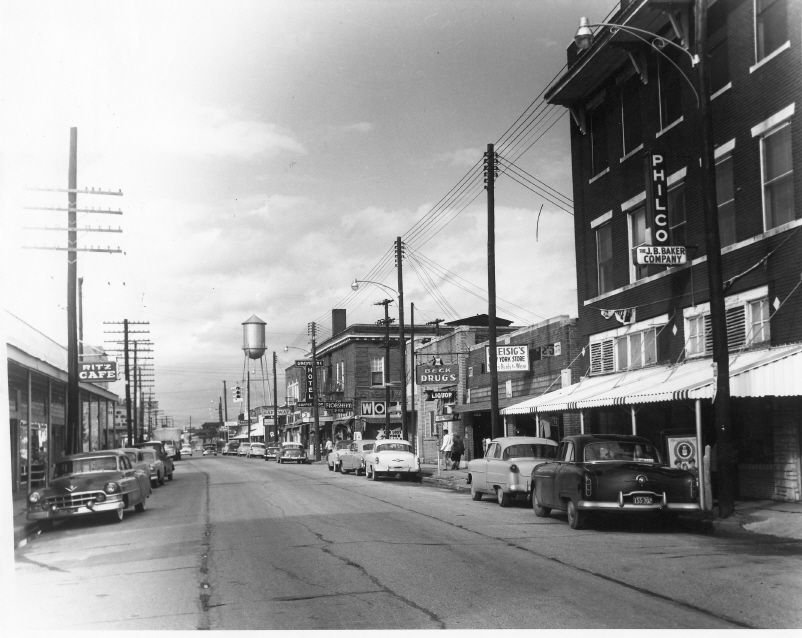
[00:56:50] emma willis.: And I will say like this the historic district or black historic district there was along the Spout Spring there in Fayetteville is It's a community that's been here longer than a lot of us. So we're talking 1830s, state constitution, Emancipation Proclamation, but there's been a black community here for a long time. And of course it, it all stems from all the ugliness of, American trade and commerce, slavery.
Washington County actually was a seat that allowed for a great deal of sales of slaves. And we had quite a few plantations in the area, but we were really one of those areas where you bought and sold across states that were right at the Mason Dixon.
Either way, lots of history in this area and that stems from people like Silas Hunt. And the Silas Hunt story just stems from our state university allowing blacks to attend law school. And he was one of the first. And if you know his story, he had to stay in the basement at the university, did not have a place to actually stay until somebody was willing to give him somewhere to stay in that neighborhood.
But that neighborhood is important because we have black people that at Emancipation Proclamation weren't a part of all the great migration and didn't go north or go back west. They set still right in that area and they became a part of our critical workforce here. So a lot of the pastures that have been cleared and a lot of the spaces that are amazingly flat and lack of a tree, those were probably cleared by slaves that were in the area.
Speed up in the future, they ended up being people that gave way to construction, masonry blacksmiths they built a lot of the stuff that's around here and the only city that would allow them to actually live in density was Fayetteville. That community now is being gentrified because of the very thing that we're talking about in this sprawl.
We are growing so quickly that now everywhere is a viable option. And what has happened in the last couple years is significant gentrification. And for people who don't understand a lot of, the issues or laws or systems that have plagued black people in America, you just started Jim Crow. And so that community has been hit with everything.
Displacement, the lack of infrastructure. These people deal with storm water. Like runoff, like nobody's business. So all their homes are crumbling underneath them. And these are homes that have been blighted on purpose. They are homes that could not get equity lines of credit. So for the masses here in NWA, just put this in context, you probably have equity in your home.
A lot of these people are just getting to the point where they have equity and it's because of the gentrification, where their land value should have still been significant enough in this market to help them even approach the bank. But because of how systems have traditionally impacted black people, they weren't able to do that.
So what would happen, people would be behind on property taxes because they're increasing hand over fist. You have other predatory measures like reverse loans or reverse mortgages that are happening to a lot of the elderly people there, or you have eminent domain taking things from them, and all these people have been subjected to all of it.
And Just fun fact, look up Northwest Arkansas Black Heritage and check them out, but it's a lot of history in this market nobody knew about, but right now we're in the process of incorporating that. We are down to needing the last 168 signatures and we're looking for people to volunteer. So if you want to help out, that'd be great.
Look for all the news and information at nwablackheritage. org, but this is a project where community, belonging, education, technology, entrepreneurship, all just collide. And it's the reason why the word equity means so much is because this one project has really made me reimagine what education looks like in a community that's trying to do a big job.
And the big job is create this region's first historic district. Cause I thought we had some, we don't. And so Fayetteville is leading yet again in a way where something's getting ready to come to fruition. And we want people to be, surprised, happy, and just, if anything, curious about the history that exists.
Because as Americans, and I don't have to just emphasize that African American history is under attack or being erased, I think it's all of us need to do a better job actually knowing about this place that we inhabit. Because my homework stemmed from knowing that the Trail of Tears goes straight through that neighborhood.
And so there is me having to pay respects to the indigenous people because they were there before this black community sprung up and it's now having to frame that for people who moved up here in the forties and go, no, sir, you weren't the first person here. Like you, you can't tell me that these people weren't here.
Maybe not when you were here, but they have been here. And the encouragement through this project is that everybody finds themself just curious to know more learn more, take the opportunity to drive into some of these neighborhoods and places and understand where you live and what's been going on.
Because again, that goes back to being pleasantly disconnected. If you aren't curious and you don't want to know, then you'll never know. But there's so much more to these places than all the new and cool things that we add. They're real people here, and they're real stories, and honestly, some really cool lessons to learn about how we can grow smarter and better together.
[01:02:42] mike.: I'm curious because I asked this question to everyone, what your perspective would be on this. And I'm curious, what are your fears for this place?
[01:02:51] emma willis.: I think my fears for this place probably goes back to that last question about equity. Like how do we even start addressing equity?
And I don't think we can ask this market to slow down, but I think we can ask for people to be a bit more in tune. So my fear is that we lose sight of community for the sake of having all the new flashy and exciting. Because these lessons are everywhere. And there'll never be a shortage of these lessons is that you can, in fact, get what you want, but then there's also going to be some level of loss somewhere else in the course of you getting the things that you think you won't.
And so I think as we grow and as this community gets larger, let's not increase the issues that are already associated with this market, but figure out how to reduce a lot of the stress and the strain of our C3s by supporting them in the work that they do now so that they don't become future issues or things that plague this market.
And that's where my fear stems from, is that we will become so grand and so big that we lose sight of community. Because I think it is important and I couldn't imagine a tornado cleanup in Brooklyn because it would not be the same thing. We'd be yelling at each other primarily still. And it's nothing against New Yorkers.
I love your personalities. But I think you, There are certain things that are true about the spirit of Northwest Arkansas, and it's that we have a great sense of pride, a deep sense of belonging for a few. And at the end of the day, there is this opportunity for this community to become even more connected.
And so let's not miss the opportunity to just keep connecting with one another. Let's not see, Mountain bikes is being a disconnector from the rest of the world because let's have always poke fun at mountain bikers. You guys are fun. It's what happened in middle school when your friend would show up with name brand things on, you immediately would be like, okay, now I got to answer back.
I'm showing up with Calvin Klein too. And it's not about that here. I think what we have to do is figure out how the funky, exciting differences that we all possess are also just welcome signs. And not these separators or dividers because I want to be on the trails, but I also don't want a mountain bike.
And then just figuring out how we welcome more people into these spaces. So it starts feeling a bit more organic because we are the natural state. If we don't do anything, we should be organic. And that's in our relationships and that's how we approach one another, but just finding ways. It's where we continue to seek community.
We continue to want to know all the new faces that move in and not let it just be a story of growth, but let it be a story of how community stays connected and tied together in the midst of uncertainty. Cause these are all wild times. This is practically the wild west. We just happen to have running water.
[01:05:51] mike.: But this is new and for a lot of us, it's something we hadn't seen. So the fear is that we'll grow and we'll lose that connection. And I think it's the thing that we have to really reinforce at this point is like where the connection lies and what the opportunity is to stay connected. Really the foundation of the questions that we're trying to understand is like what does community wholeness look like? When I use that word wholeness, Within what you see what does wholeness look like for our community?
[01:06:26] emma willis.: We're already doing a decent job at wholeness, I will say that I love the fact that you can go to events and never know what you're gonna see. Like really I went to Hootie I don't know what I was gonna see but Community wholeness is gonna probably have to start looking like cities with no boundaries Meaning we feel welcome even if I live in Rogers, I'm more than welcome to attend things in Springdale. It's not just for Springdale.
Community wholeness looks like. No longer having to just announce that we have accelerators, incubators specifically or solely for brown founders or black founders. But knowing these are more spaces where people can start feeling supported and uplifted.
And I think we missed that. Sometimes we have to announce certain things and people go, Oh, that's not for me. But the truth is. You usually are really helpful when you go and show up to places that people don't think you should be in because you can give critical feedback. You can offer resources that people didn't know existed.
And that's where the wholeness for me has to come in is us and our healthy curiosity. Find yourself in spaces that you don't think you would normally go to. Now, if you have questions, definitely ask somebody, but at the same time, just feel invited and feel the warmth of a community that is choosing to become a little bit more and.
I don't know how it starts. I don't know how you get to wholeness. I think it, it really just has to be an intention that's set in the hearts and the minds of the people that are choosing to create these events. It's what you do to create equity, in my opinion. It's understanding that there are going to be many different peoples with many different perspectives.
And in the course of that, your job is one thing. It's showing up for humans. It's not trying to create differences. And so wholeness just comes about, I think when we shared a lot of the pretense and we just choose to be our bare selves that don't know everything, but we know some things. And what's the quote?
If I I don't have to know everything, but together we can know everything or many things. And that's the wholeness we got to have. Cause honestly, this community, if we wanted to, we could be rocket scientists. You can't tell me we couldn't do amazing and big things. And it's just because there's enough of us that are crazy enough to see people and be willing to go and do what you guys did last week, which is show up at a person's house and just say, I'm here to help.
So for me, that's gotta be wholeness is knowing that there's an H word that you can use that will actually just create this idea that there could be so much more.
[01:09:19] mike.: Emma, thank you for your time. Thank you for the work that you're doing. Thank you for calling us back to this idea of wholeness. And please keep doing what you're doing. It's been a joy.
[01:09:29] emma willis.: I'm going to. It's an addiction.
[01:09:32] mike.: Thank you.
[01:09:32] emma willis.: You're welcome. Thank you.
episode outro comments.
[01:09:36] mike.: Well, I'm incredibly grateful to Emma for the work she's doing to break down and explain both what equity is and how it's applied to so many different areas of our community.
Over the past couple of months, I've had the opportunity to watch and work with Emma with both debris cleanup after the tornadoes that ripped through Northwest Arkansas Memorial Day and through a community volunteer day on Juneteenth as a part of the N. W. A. Black Heritage's Historic District Initiative.
I'll say this, Emma'suthenticity is as real as it gets. She is a true practitioner of her words and her kindness is a giant invitation To join her in the participation of the equity building needed here in Northwest Arkansas.
I know there are a lot of things in Northwest Arkansas that need our attention, but this practice of equity building in our community, specifically in our community, is maybe one of the most important elements that will determine the shaping of our place.
Long ago in episode two, I used our gravel roads as a metaphor for what the future of our community could look like.
And I said,
"these roads seem ready to hold more stories again, but they will be stories that we were layer on top of those that are already here, not to cover or hide them, but to add to them. We will write these stories together. We just have to decide what stories these will be."
This practice of equity building feels like the foundation of deciding what stories those will be.
I'm going to close today, but when Emma and I sat for this discussion, we were fresh off of the events of the tornadoes that came through Northwest Arkansas.
So the first 20 minutes of our conversation was not planned, but it was about community in that context. And so I went ahead and included that as a part of the conversation after we closed the episode. You're welcome to listen if you'd like, but to me, it's just an authentic unplanned conversation about how our community and belonging are such a strength here in Northwest Arkansas.
next episode preview.
[01:11:20] mike.: And at this point, we have three more episodes before the season ends, and I'm going to use them to start to bend us back to the beginning point of where these conversations started. I want us to return to that starting point, the starting point being the land and our connection to our place and where our place fits within the State.
So to start this process, our next episode is with Michael Spivey, the president and CEO of the Ozark Foundation. I had an opportunity to share a porch with him at Horseshoe Canyon Ranch on day two of the Arkansas Graveler. We'll get more into that in a little bit. I wanted to understand his point of view and how the outdoor recreation industry is helping to connect us to this land and to each other.
[01:11:55] michael spivey.: I think one of my frustrations is, in the outdoor recreation space, there has been this historical recognition that outdoor recreation and the broader outdoors is exclusive. If you look at the statistics, they scream the issue. At most mountain biking, cycling events, triathlons, it's 80 90% Caucasian, affluent. There's huge barriers to entry. It's well known. It's well discussed. And nobody's out there really trying to, not just chip away, but blow the wall down.
[01:12:38] mike.: So I look forward to sharing this conversation with you because the outdoor recreation industry is a big part of the forces that are shaping this place, and the Ozark Foundation's approach to bringing equity to this space is really changing things.
And also, if we're lucky, I may have some bonus content for you next week, trying to get a little bit more information and together around the Arkansas Graveler. We had an incredible experience and I want to share some of those stories.
So that's our episode today, but if you have time, here's Emma and I's conversation about the community and belonging during the storms.
This is like the after credits, the behind the scenes, the bonus clip, but Emma's words are so good. I didn't want you to miss them.
before the interview.
[01:13:19] mike.: And like I find myself going I think people Yeah, I they'll surprise you if you let them
[01:13:25] emma willis.: and I think that's been the whole week is people have surprised you and You were just in a position where you have to let them, Like you find out how many of your defenses have to be down in order for you to receive help. Which is why you don't ask for help in the first place.
It's the ultimate Need, but it's also the one thing as humans we are reluctant to ask for. It's like help. It's such a easy word. And I promise, like when you texted me, I was like, do I bother Mike with this? Or do I let insurance just deal with it? Like one gives you this sense of weight and like distress.
And the other one is an honest, I'm, I'd be happy to help. Most people are not prepared for the person saying. I'm happy to help because then you're immediately disarmed and you're like, do I actually have something I need help with? Like, how do I articulate this? And so what I'll say is I had, I just kept going back and forth because again, our conversation was super dynamic and I was super certain, but what I was not certain of is what happens when disaster is at play.
And I have to say we rallied. Like at the end of the day, we rallied and the little bit that we all did for one another in the course of this tornado is just enough for us to honestly feel like we belong here, that's what I'll say. Because now I am more interested in the people that were in my yard helping to pick up debris.
I'm more interested in the contractors that came down from Oklahoma that were willing to just pick up chainsaws and help because everybody has a life. Everybody has somewhere else they could have been, but there, but they all chose in that moment to do something really significant, which was see you as a human and a human in need and have the ability to empathize with you because they all know if that was me, I'd also love this type of help.
And so that was that was my takeaway from last week. And I have to say. I don't know that I've had, nor have I experienced that level of support. And I've been in some major instances, but nothing like this. And I'm talking about dire stuff I've been around. But this is a different type of community.
It was no questions asked. We're just going to show up and do the stuff. And, I think if we had time to spend 48 hours with each person we helped, we'd also find something else that we could probably help with. And that time was fleeting, it wasn't long enough, but I think the encouragement here is that there is a community being built.
And sometimes you have to just step outside of your comfort zone to build it. I think that's the biggest lesson. It's not going to look like your next door neighbor or just the church that you go to. Sometimes it's going to be complete and total strangers in your front yard with chainsaws and their name written on their hard hat.
And so it's gotta be the best thing to feel and know that if you are in distress, you have a community that has your back. That's what I'll say.
Yeah. It's going to take me a while to unpack it. I've never been through something like this before. And relatively, when you look at what are, where we were we got really lucky. And so I think, but being in the middle of it where it's like, someone said, and I like, they gave me language for it, which was super helpful.
And they said. I don't know where else I should be. Like I, with all this going on around me, I have to be here. I can't be anywhere else. And I just hear reiterated time and time again. Like I have to be here. I want to be here. Someone, one of the guys that came out to your house. He was on vacation in Florida watching it, like when it happened, he got back two days later and he's I, he's I was missing out on what it looked like to really love people and to be part of the community.
Yeah. Yeah, I just, it's going to take me a long time to get my head around.
I just have to get everybody who has ever saw differences in people. Something about this event just made us all just bleeding hard humans in a really amazing way. We are probably in some of the most, chaotic times from like just political, environmental.
It's so many unknowns that everybody's navigating, but. The smiles and the willingness to just dive in was everything you needed to just reaffirm anything about humanity and what we could be. And so I think if you have to say anything about this tornado, the prayer is that Northwest Arkansas figures out that they actually can be better together.
That's what I'll say. Like it, it was absolutely a beautiful outpouring of support and community, like just use the C word way more often, like we can, we are a community. For those of you that didn't participate in any tornado cleanup, it's not too late to get a rake, just pick up some trash flying around.
But my front yard turned into like the community center we didn't know we had. And it had more to do with the fact that people were forced to walk through my lawn because it was just so much debris. But, it was sitting in the rockers and then realizing that people just needed somewhere to talk about what they were a part of.
And it's still disbelief and it's still shock. But just being able to share a cup of coffee and laugh about how a tree fell is probably the thing that will teach me the greatest lesson. And it still is. I'm amazed every day at how little I have had to do to make this all turn around. And I could have easily just been sad and depressed and completely bummed out cause I'm about to have to do more work to my house.
But. People saved the day, surprisingly. And not people with capes on, or titles, or just gobs of money. They just showed up, honestly, ready to help one another out. And that's what I'll say. This was, it was an epic show of who we are. And how much more we could get to know each other because this the feeling of all of that is still really fresh.
And it's something I hope just carries everybody over into future moments of needing to band together to create and do bigger things here in Northwest Arkansas.
[01:20:09] mike.: Where's the have you found what's the root of it?
[01:20:15] emma willis.: I don't know. I made the comment to you a couple weeks ago that we are pleasantly disconnected here.
And I still believe that we are. And it's because we do such a great job of showing people all the amazing things we do. And when you think things are taken care of, somehow you go they got it. We don't need to do it. I think where we go from here. is trying to remove the comfort that exists in a place like this.
So if it's that perfect, then you have to ask yourself at what costs. I think that's where we are right now. If we could band together and we can solve like tornado damage and not even solve it, if we can clean it up and make it bearable from one another, what else can we can, what else can we do up and down 49?
To the same extent. And it really only takes a couple of people is what's amazing. You guys were in my house, two hours flat and handled it like any crude that professionally clears debris. And it's if we can come together for two hours and make monumental change and deal with trees over 300 years old, what other issues could we go and address collectively?
And I think that's what's really sweet about this, is us realizing our ability to rally, come together, and take on these issues in a more strategic way, and in a way where community leads it. Because we rely too much on the people that are the practitioners, the C3 leadership, the people that we expect to be in the trenches. And a lot of times it's us needing to be in the trenches right alongside those people because they're exhausted. Compassion fatigue is a real thing. You can be so compassionate that you lose sight of yourself. The people who are relying on you most closely just to save everybody else.
But once that community is behind you and backing you, guess what? We just made life a little easier for not just ourselves, but for other people while helping them maintain some dignity, feel ushered into a place that's asking them to belong, because now we are a force multiplying community because when the community shows up and not just the usual two or three people, you got a greater chance of creating it.
And I think there's a lesson here whoever's out there actually working on the lesson, I'd be happy to team up with you to figure out what those lessons were because I can't tell you it's quantifiable and It's something to say again when there's so much strain already on a market that is growing as rapidly as Northwest Arkansas to be able to just slow down and help out.
Where we go is just having a bit more awareness of ourselves and how we show up in places. And maybe it's dragging out the two or three friends that didn't have anything else to do that day to just say, hey, we could do more if you showed up. And I feel like this is going to create probably one of the coolest shifts in how we support one another.
At least it did for me. That's what I'll say. Cause now I have some real knowledge to work off of and it's not anecdotal. It's me being in the midst of it. And now knowing that because Mike showed up at my house, I was able to get two more hours of sleep and go show up at somebody else's house. Cause that's how it works. You gave me something back in my tank and then I could go and pay it forward. It's. Yeah, and but you got to look at it like that, and that's always going to be the thing is the perspective we carry into any of these situations. That's why I'm probably, indomitable is my word because I understand people's commitments when they're around me.
Because it's not something you have to do, it's something you chose, and because of that I respect it. And that respect I have for you means that I am now capable of doing even harder things than I thought I could yesterday. Because just a little bit of faith and energy that you showed up with was enough for me to be inspired to do more and help more people out.
And so hopefully, That spark is found in Walmart, totally rebrand the spark because the spark should mean way more to Northwest Arkansas now, but it should be the spark. It's really good seeing other people see you and have the willingness to sit with you in tough times. So it's just jet fuel.
That's how it is for me. I see it and I'm excited that you helped me out. And I'm like, I can't let Mike down because he showed up in the early morning hours with a chainsaw and with strangers. So it's just one of those things where you could easily just sit in what just happened and be completely beat back by it. Think about all the financial implications of major damage or what could have been lost, but what we know is we gained community in the course of all of it. That's what I'm saying.
[01:25:01] mike.: I listened to you and at the same time I think what goes through my mind is this desire that I have to be present in whatever it is we're going through. And so I would, yeah, I would count myself as a person of faith. And to me, I would That's the only place I think that I find it actually is real. Sometimes it's like in that we have this understanding of we have this shared language of pain and suffering and loss and that in those spaces, when we're all reduced to those places, I think it gives us an opportunity to just step back and peel away the layers that we spend all of our time putting on top of it.
To just to find it. So it's On one hand, I'm deeply grateful to, to go be a part of it, but like in many ways, it's super selfish too. I need, I have to go be a part of that because it's there that to me, I find that place of, yeah, I find a centering, if you will, of this is actually what matters and it's not the things and the to, like you said, the titles or the people.
Yeah. At the end of the day it's found in this. everyday humble work of just being available to do what needs to be done.
[01:26:15] emma willis.: Yeah. And I think fulfillment comes from those moments. We're not anything if we can't be of help or service to someone else. And it is great to amass things and money, but at the end of the day, they don't give you that warm sensation that flutters around your heart and in your belly and allows you to sleep well at night knowing that you just contributed something that will never have value to it. It was a moment, it was something that was a gift and it was meant to be received that way. And again, I'll always go back to perspective because we have to sometimes untrain ourselves to look at things a certain way.
Yeah, you had to get up early, you had to show up and that's all part of it. But, usually about five to ten minutes in, that thing happens where you are reassured why you're here. It's that's the, you get the confirmation. It's no, I made the right call. Having to shake out the concerns and anxiety associated with showing up at a stranger's house, but you did it, you were there.
And because of that, you actually changed somebody's life. My sister had you guys posted all over social media. And I think. It is about all the stuff we don't talk about. And we do a great job of making success a big deal, but how many people's pictures got posted this week as 40 under 40 greatest and most daring tree taker downer?
You know, because I watched it and I'm like, man, they don't know what they're doing, but it was neighbors showing up for each other. And it was great. I don't know how else to put it, but when do we get to that point in the world where we can just celebrate the success of being human? Or just being a citizen, like in what that word means, because we are all inextricably bound to one another.
And it's that thing that we never talk about. It is the tie that binds, it's the zip code, it's the things that we enjoy. Because had Crystal Bridges been harmed this week, my God. No, seriously. Destination harmed. Yeah. We would have immediately been like, guys, we got to get over there. We're cleaning it all up. That's how community would have shown up because we all love that place. It is now meant more for us as a region than a lot of other things, because we get to be proud to have that in our backyard. We're happy that it's a part of our story and who we are. And it's a gift that is given, but now we all feel responsible for it.
I know for me when the damage was happening, I was like, okay, who's house do I need to just set up shop at and just go help with? Because that's what it was about. I didn't even know I had damage. I just knew we had a tornado. I was the person filing the insurance claim right as the tornado was hitting because we did have Wi Fi connections still.
But it was like, I just knew the next morning was going to be about supporting my neighbors, my community. And instead, I needed the help. But again, we find out the places that ground us will also create community, because we all love them. It is the kids sporting events that we go to, even though we know our kids are bad athletes, we just go because community has to show up, it's a lot tied to those moments.
And I don't think it's any different. But yeah I do hope and the prayer is we all become a little bit softer and a little bit more real post these experiences together.