
the hidden history with Sharon Killian.
Sharon Killian, Co-Founder and Chairperson of the Board, NWA Black Heritage. Our conversation is about the state of Northwest Arkansas and the hidden history of the Black communities that shaped this place.
season 1, ep. 29
listen.
episode notes.
Episode 29 is a discussion with Sharon Killian, Co-Founder and Chairperson of the Board, NWA Black Heritage.
Our conversation is about the state of Northwest Arkansas and the hidden history of the Black communities that shaped this place.
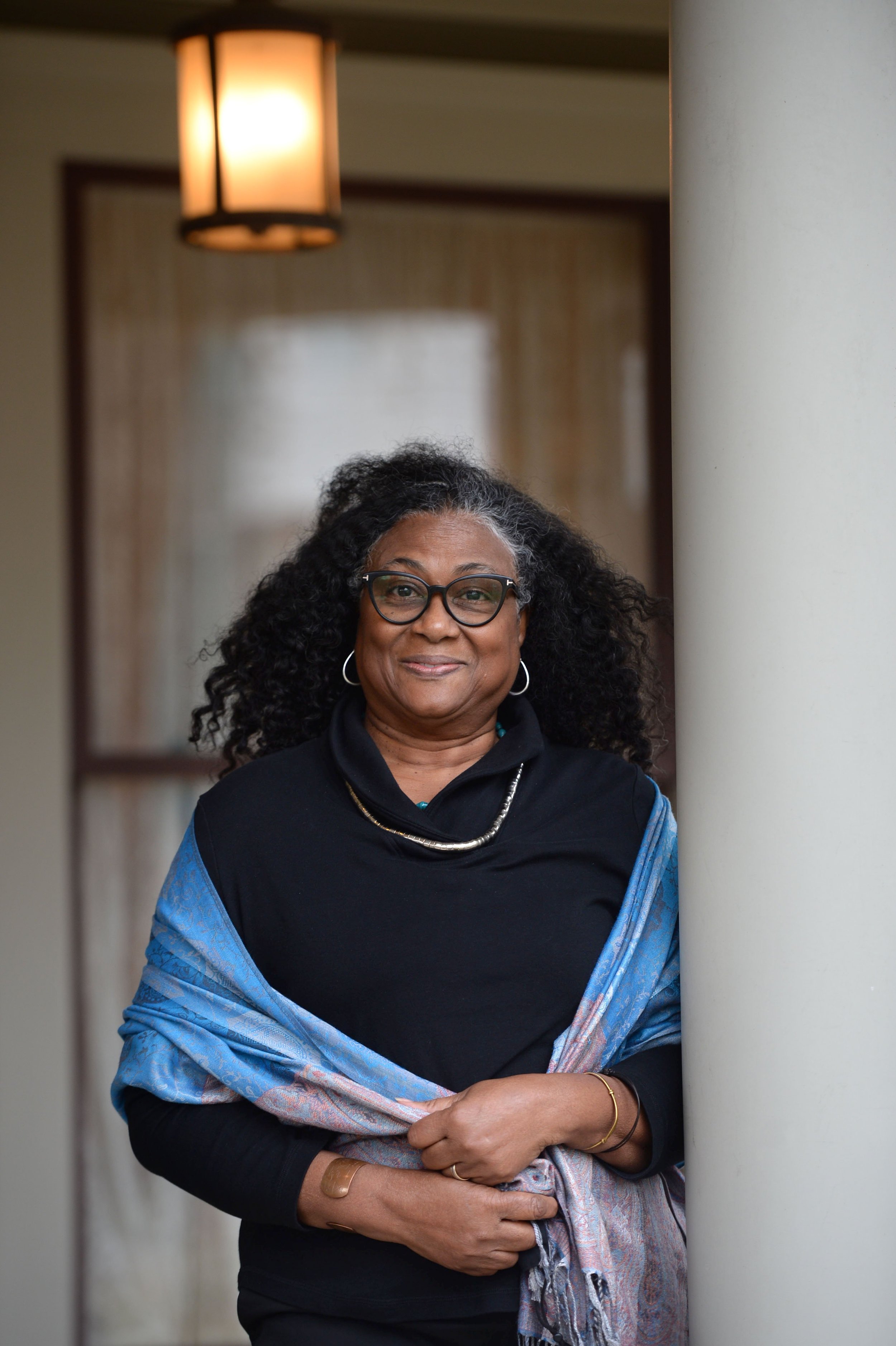
about Sharon Killian
Sharon Killian is an award-winning artist, community advocate, and educator. Sharon is passionate about filling in and correcting the historical record of Black history and heritage in Northwest Arkansas where she visited for 14 years before relocating in 2005 as an “empty nester.”
She understands that Black history and heritage in the region has suffered the system of erasure immediately set into place in 1865, that it is challenging work to undo or mitigate, and that it must be done by everyone with diversity, equity, and inclusion (DEI) in mind.
Her work as president of both NWA African American Heritage Association (NWA Black Heritage) and Art Ventures NWA melds culture with art and promotes culturally and historically informed conversation and creative engagement locally, regionally, and nationally.
episode notes & references.
Arkansas Online East Mountain Cemetary - https://www.arkansasonline.com/news/2022/jan/20/searching-for-souls-cemetery-efforts-honor/
episode transcription.
episode preview.
[00:00:02] sharon killian.: And this really, I see it, as an effort to help us all in our region heal. Every, every city, every town around Fayetteville was sundown town.
And we have to take the layer, we have to scrape off the cover To heal it. And we are doing that in Fayetteville, I believe. We're doing it in Fayetteville because, just because Fayetteville wasn't a sundown town doesn't mean that they did not go on a march for erasure from the very beginning.
There was a march for erasure from the very beginning and a diminishment that was taking place throughout the whole. And you can, we can read it in the archives, you can read it in the statements, you can read it everywhere. You can see it. It's the truth. And I think the people here are beginning to accept the fact that it's all true.
episode introduction.
[00:00:57] mike.: You're listening to the underview and exploration and the shaping of our place. My name is Mike Rusch and today I have the privilege to speak with Sharon Killian.
Sharon is an artist, educator, and a passionate community advocate about filling in and correcting the historical record of Black history here in Northwest Arkansas.
She is the co founder and chairperson of the board for NWA Black Heritage that is active in working to uncover the hidden histories of Black communities here in Northwest Arkansas.
As we start today, I have two recommendations.
First, if you did not listen to the previous episode titled, The Greatest Way with Dr. Nick Ogle, I would ask that you stop and go back and listen to that episode first, because it's going to give you some context to listen to this conversation that I believe is really necessary.
Second, if you're like me, part of a majority culture group here in Northwest Arkansas, meaning the white community, Sharon's language may be disorienting for you.
What you'll hear in her language is a concept known as markedness.
In language, markedness is the state of standing out as different compared to the regular. In a marked unmarked relationship, the unmarked term is generally considered the broader dominant one, the way of being by the majority culture group.
For example, in gender, it is common for the male language to be unmarked, while the female language is marked.
For example, the NBA, or the National Basketball Association, is unmarked. However, the women's equivalent, or the WNBA, the Women's National Basketball Association, the leading women's is the marked language. It's marked as different than that of the regular one or the beginning one.
This happens in language about race as well. It shows up in conversations about our communities and schools. For example, when we're referring to the Jefferson School in South Fayetteville, I've heard it referred to as the black school versus just a school, which would imply that it's for white students.
I'm not saying this is right. It's not. But this is what markedness is. It reveals something about us, about our starting point or point of reference, our assumed cultural norms.
So when Sharon speaks, this markedness is removed, or even reversed. And for white communities that do not understand this, you may be confused at times about who she's referring to. And hint, she's not talking about white communities.
And that is one of the reasons why we are having this conversation. Sharon and her team at NWA Black Heritage is currently working to establish a historic district in Fayetteville.
It's been called the Black Historic District, a marked term, and we'll dive deep into why this initiative is so important to discuss about what it means to understand our region, how it's shaped, and how it's being shaped for the future.
All right, let's get started. We've got a whole lot to cover today.
episode interview.
[00:04:14] mike.: Sharon, good morning. Thank you for sitting with me. I'm humbled that you would accept the invitation and thank you for being here.
Thank you so much, Mike. It's my pleasure to be here with you.
Well, I'm anxious to hear your story and maybe as we Start into that first. I would love for you to describe where we are this morning.
[00:04:33] sharon killian.: Sure. We are at a site that really is the center of Fayetteville. The center of what was at least its original plat. And I'd say also the center of the lives of the Black people who created homes and living space at emancipation.
This space likely was also a place where they had to run, as it was forested, to, to hide if you know, somebody needed time to understand that The person who quote unquote owned them was free now so anyway, this is East Mountain Cemetery It used to be called Fayetteville Municipal Cemetery back in the 1800s and You would never know it, because whenever it was mentioned, whenever this space was mentioned in the Washington County Historical Society books, you know, or, or notes, or flashbacks, it was always called the Walker Sutton Cemetery.
Walker and Sutton were two partners, I think close friends and partners in the development of the landscape in Fayetteville. And so they are side by side. The, the plots are side by side. Walker's the one with the Confederate sign in it. And the one to the left or the north is Sutton. And they had a really serious impact on the space throughout the region, not only in Fayetteville city limits at the time, proper 1830s but throughout the region.
They had the hand in everything, everything along the waters, everything along the waterways where the bought, sold because they came here early enough and picked up the fertile landscape. They also in any event directly across from me or to the east of, of us right now is the Confederate cemetery.
I believe that was built, I think it's 1877 by the Southern Memorial Association women who were going to, uh, say eventually, essentially that, uh, the confederates were good, great men, folk, and they must be celebrated and they put the mark on Fayetteville though it was a conflicted kind of a place here at the time.
When the constitution conventions were held ear in the early six in the sixties, 18 61, 62, that kind of thing. In any event they captured this place well, and it was, it was one, and Walker House was here. Walker, as I said, is right here. A Walker house was on that property as well as.
Quarters for enslaved people. They definitely scraped off the, the quarters for the enslaved people. No more signage of them.
Before the Confederate burials were done, there were Union burials here. but they were exhumed. And then the Confederates and the Southern Memorial Association created the, the Confederate cemetery in the center of our town. And it gathered people from all over to come and celebrate
In any event, the entry to this property that, say, if you put the Confederate Cemetery space, which is near Willow Avenue actually is called to the west, the entry was down at Willow Avenue to this property space. Thanks. So you'd come all the way from Willow, all the way up and through this, this this property.
Lynn and Elaine Wade deeded 1. 8 acres to us in 2014. And that was a kind of a curvilinear shaped space and it excluded The Walker plot and which was given to was deeded to the Southern Memorial Association, and they promptly put up a sign and fixed the fencing that was damaged from the ice storm 2009. So it, it looks pretty, pretty nice when you walk up in here. It's very pleasant and done and clean and straight.
[00:09:20] mike.: Sharon, I want to hear more of these stories cause this is part of some work that you're obviously leading which we want to learn about. I'd, I think as before, maybe we jump into some of that, I'd love to hear kind of your story, however you want to define that.
[00:09:36] sharon killian.: Okay. My story, my story is that I, I was born in Jamaica and in the West Indies. And I'm one of originally six kids. My mom and dad, and my mother's, my mother's parents whom I didn't know because they were dead long before I was born. In fact, my mother was probably four years old when she became an orphan. They had gone to Cuba to cut cane and everything just went horribly wrong. Of course, as you can, as I'm telling you, the kids were all orphaned, four girls.
So I'm the product of the remnants of slavery directly. I, I feel it. I, I've always felt it. I felt it as a little girl. That the system was set up to make me hungry and it affected everyone around me, everyone, my teachers, my, my mom, my dad, everyone, my neighbors, and some had, and many of us didn't, I was, I know hunger.
And I've always been this way. And what is this way? I'm not sure exactly how to describe it, but I have always felt that I own everything. Everything belongs to me. And when there is someone or something or a system or whatever it is that says that's not then they're wrong. Because I am 100 percent human being. And so I, then I moved to Harlem. And lived there, and the same thing. I knew, I knew it all. I also knew pleasure was mine. Pleasure was mine, and I saw pleasure in, in, in lots of things. Inside my house, and outside of my house. You know, sadly, in hunger and not. In hunger and plenty.
I mean, I could choose not to get something. I, I don't want to be assuaged by a thing. I've always been that way. Try not to put value necessarily on objects. I still do that. I like them. I can create them.
[00:11:48] mike.: Yes, you can.
[00:11:50] sharon killian.: But, the underpinnings of those things are more important, and I believe that if the underpinnings are, are excellent, are good, are worthy, then the objects will be too.
And then when they go, if they go, if they're taken, you still have the underpinnings. And you can do more with that. It helps me to overcome pain, I suppose.
So that's, you know, then I, I, I moved to D. C. after going to college and all that in Rochester University of Rochester. And, and I met my, my present husband maybe 37 years ago. Charles Killian is from Fayetteville. My heart.
We found each other and I am here and I love it. I love where I am. I, of course, looked for the community. Very first, poor thing. He drove me to, to this very community right here. Of course, it's again, it's the only one remaining. There were many others, but this is the one that was remaining.
And I, I asked, so where are the people? You know, I was taken to meet, he took me over to meet, um, this young man who was at, Yvonne Richardson Center, which was built in 96. And, and I've been coming back and forth here since 91. His name was Fisher, the young man that I met and he introduced me to one other person and we were going to build a house and we did we were looking for, because that's how I do it, how we do it.
I'm looking for the black construction workers. You know, I'm looking for the, the black architects and the black, and there, it was, oh, it was very bad. You know, they run people off. We run people off here. And so the skills were not here. There was somebody who was in the water department who pretty much ran that. And so that was good. But I couldn't find enough people to work for me, for us to do the, to build the house. And, that we ended up building. And I, you know, that bothers me.
There were remnants of our existence here. And, and the, the way our remnants usually appear tells you exactly what, it tells you exactly what has happened. And to me then it was the same thing that has happened everywhere. And why, why wouldn't it be? You know, I felt like that had to change.
Here I am now at home. This is my home. And that meant that I was going to have to make a change. I was going to have to help to make a change. I was going to have to be myself.
Thankfully, I didn't work for anyone. I met, I met a woman Six foot one, black, stately and she kind of had her nose up in the air a little bit. And I thought, I met her right here in this community, At the St. James United Methodist Church, So that was in two thousand Seven, and we were, we were both apparently going to the same lecture there and for, for Black History Month.
She was punishing a wheelchair with this woman in it. And it turns out that woman was Theresa Hoover, who was essentially the Grand Poobah of United Methodist women worldwide. And she had, had health issues as we tend to do as elderly. And she wanted to go to the lecture too. So there they are come to this little church.
And I thought she was interesting at the reception afterwards. I saw, I asked her who she was. I went up to her and I, I thought, you know, this is just the right person for me to go say hello to, you know, and she was a kindred spirit after all. That nose up in the air was just not, was just a, a practice, was a practice of her internal, um, measure of self-worth that, and personality.
It was just her. That's the way she looked, but she was the loving, loving, beautiful woman. And we started N. W. A. Black Heritage.
[00:16:19] mike.: I've, I've asked other guests this. I'm curious as you describe this place, what, what does Arkansas mean to you today?
[00:16:29] sharon killian.: Today it means to me as I am so ensconced in the work is an engulfed in the work is that I built it.
I had to whether it was, What my personal inclination would be you know, to, to scrape trees off or not my back, remove trees. My back created the space to build homes and I did it under complete duress. Without the opportunity to enjoy any of it. Or be the one to necessarily make the decision about whether a tree should be removed or not. I built this and you know, I think that, that The beauty of it, it's a beautiful place. I love it . I wouldn't trade it, I'd rather visit other places if I have to, right? And I've traveled some, and I love to see how other people respond to their spaces and all, you know, what they've done with it. And I really like my landscape.
[00:17:46] mike.: I've always appreciated this about you, when I hear you talk, you always speak in this first person aspect. And I would love to understand maybe the background behind, behind that.
[00:18:01] sharon killian.: I, are you talking about how I say I built this?
That's correct.
I feel it. I do that because, because it's, it's me. I feel the, I feel all of it.
I feel all of it. And I, I think. I may be presumptuous because there are so many so many different ideas about who we are inside us, inside our own, you know, cultural space and outside. And the best thing I can do, I think, for myself is to be real for me, because I can't really tell you, how every single person feels.
But I believe that there is a thread of me. The basis of me, the basis of my survival, that is a part of many. I mean, of course, throughout every culture, there are supplicants, there are warriors, there are, get people who get along, all sort of quiet folk. People who, I mean, we take many different ways to survive as anyone would.
We're not a monolith. So as I say, when I say my back, you know, my energy, I feel, I feel the generations for me. I feel it. And since I am surviving, I'm here. I'm at least one of the people who has been through this. Generationally and therefore I have validity and so I can speak from a personal perspective about it.
And my validity includes being here in this space because it is my world now. Now. And so and I have had to live be as a part of the diaspora. And my diaspora is wrapped right inside Northwest Arkansas.
[00:20:00] mike.: That, as you describe that, it, I think, I don't even, I don't know if I even have language for this, but, I don't know. I think as you describe that the word belonging just seems to be rooted in what you're talking about. I would love to understand how, when I say that belonging, what does, what does that mean to you?
[00:20:20] sharon killian.: I think it's a, this is a really great question because I hear it a lot in Northwest Arkansas. And maybe someone understands it. Someone besides me understood it. And then thought, you know what? Belonging is an important thing. Yeah. How do I, I feel belonging is really important. I feel belonging is centered in self.
And that It is not something that's given. Everybody who's talking about belonging, you, you can talk about how, what the process may feel like or look like or whatever, but in the end, everything has to fall into place around a person. You know, I mean, you have to feel like it belongs to you. If the system says and is set up to make sure you don't feel that, which is how it's been set up for black people, then you know, they need, the system needs to change.
I hear belonging from white people a lot. We don't really talk about it that way, but we know, we know our, we know what we've done. And we feel it, even when the kids don't know, if kids don't know, haven't been taught it, haven't heard it, their parents have been silent about it because they don't want the kid to be disappointed. It's inside, it's inside of us. And if it's being eroded, there is a real problem. It's And we know how that happens. It is our responsibility, our, as a people, as a region, well, as a society, to, to dismantle the systems that create a situation where people, people's belonging is taken away. And our responsibility, we are such a gentle people generally, I think.
even thoughwe could be angry or upset or whatever, I mean be pushed to the limit. I mean, I say we are pushed to the limit. Limits have gone, we have gone beyond limits now. It's time for the system to be dismantled and really, I shouldn't have to do that. I am doing it. I am trying to do it. But I shouldn't have to be doing that.
So again, it's a belonging I think should, well, I can't describe that for everybody, but I am saying out loud I belong here. I don't even have to say it. I just love my space. And the suppression of belonging is not a good thing. I am sitting here right now, looking at the wall of the Confederates, who, it's called the Lost Cause. It's about enslaving me. And I, and whenever I see, hear anything, see anything about they were want me enslaved still. It's time for people to start putting up signs themselves in their space to say this was, this is a monument to to a lie. And we can go and look at the lie. I, I own that too, that confederate cemetery. I own that too. I only don't go in very much because I don't really enjoy looking at it. You know, the, the headstones and things like that. But that space is mine. What would I do with it if I had a chance? Put up a sign saying that this, we are wrong. That would help them. I would help them to me. It would mean something.
They might, I hope somebody's listening, put up a sign saying you were wrong. And it would be good right here in the black community. Okay. This space, yes, all of it is sacred space. Not only where I'm sitting right now, but this whole, this whole our, our United States, really.
It's a bloody sacred space. And this piece, this little piece, I feel there are people who are, many descended from slavers, who are learning to be different, learning about what they're actually doing.
Someone said to me the other day that It just, it's taken so long to learn about diversity and, you know, what's right as a white person, you know, how to, how to be anti racist way.
and my response to that is please, my friends, you are living it every single day. All you have to do is see it, because you know exactly what's happening to you and what is happening to me. And all you have to do is look, think, listen, see. You don't have to become, you know, black knowledgeable. Just be white knowledgeable
The facts are plain. And we can do it on the numbers. Just do that and you know exactly what is happening. And then you make a decision about where you want to be. And you don't have, you have to know that, I probably boast a little bit, but I mean there's brilliance across the table, really. And it moves so quickly for you during reconstruction, you didn't know what to do, but quell it. You know, there's nothing you think you can do that I can't do. Just, you know, center yourself and think. We would have a beautiful world, you know? So that's what I mean about, did I answer your question?
[00:26:18] mike.: You, you, you did. I mean, these are the questions that I think part of what we're trying to do is, is this pursuit of this idea of wholeness, right? And my my statement that I've used is that we have to have, We have to be connected to our community in an honest and authentic way.
And that means we should celebrate the things we should celebrate. But it also means that we have to acknowledge and be honest about the things that and I know this says this on, on the. Website that has really been this hidden history in many ways and if we want to be whole as a people as a community as individuals then this acknowledgement and this authentic pursuit of being honest with ourselves and acknowledging the history that we are a part of or that we have inherited or that we are living within the currents of that history today.
The way I don't know if the word overcome is the right word. It's probably not, but the we have to go through it. And so I think that's why I'm so deeply appreciative of you and just your willingness to To sit and to talk with me and I think the work that you're doing, I would love for you to give a little context because I mean, you've been describing the work that you're doing already but like formally as you tried to root this community in its history, you are doing that in a formal way.
And yeah, please explain the work that you're doing with Northwest Arkansas Black Heritage and. And yeah, I would love to hear more about the work that you're doing formally in our community to center us all in this history.
[00:27:58] sharon killian.: Yes. So I'm giving you some background about myself and, Getting here and so on. One of the things that happened is I, Melba and I went to a Washington school open house fundraiser in this neighborhood that now I think is called Washington Willow historic district and that's Lafayette street, Maple, not really Maple, is it a spring street all around it, just a little Mountain in spring.
We know how our lives, black people know how their lives went wherever they are, like here, we know that we've been everywhere we're missing. We are from, right? And we visited these wonderful homes in the neighborhood, in the Washington Willow district, and everyone was welcoming to us. I mean, not that we really cared. We had our tickets, but there were nice people. And some of the people that greeted us in more than one home, I don't know how on earth we got on the topic of, um, desegregating schools and all the things. But one, and also about that there was no slavery in Fayetteville. And this is like in the 20s, like 2007, eight, whatever. And our mouths dropped. Melba said, I lived here. Okay. And this is my home. And I experienced that. I experienced it myself. It was segregated, you know, and, and, and there was slavery here. I am dissented from people in enslaved here, Washington County and Fayetteville and Cane Hill and whatever, all around here.
That's, these are my people. And and I'm, and I told you about my looking for, also looking for the people who live in the community. And I thought, you know what? This is too much. I've got people, I've met people who are here. Melba introduced me to a lot of folks in this very landscape. And then I read too.
And she shared history with me and some of her writings. And, you know, met her family and extended family and all of that. And I was appalled.
What is happening? Well, I knew what was happening, but this cannot continue. So I started to talk to the white people who named it Tin Cup. The white people who called it Nigga holler. You know, and also the ones who used to come over here and party because we had that space too. And they're the ones with money, actually. All the boys, well, grew up here. And I know them too. It had to change. And what we are doing is we are creating and, and one of the, the people in the city council said when we proposed to build the historic district here in the black community. She said to the rest of the people in the room that this, there is already a historic community. Just because you don't name it such doesn't mean it's not here. To the whole group in the room, in, in collaborate, in, in, in agreement with me that this is a natural progression of things.
This And that it should have happened sooner. And the erasure should have been stopped. So the erasure was rampant. Gentrification is rampant. This, the plans from 1945 were being followed through on in 2023. And it was, it was noted in the, in the quote unquote master plan of 2040. And the whole way that that master quote unquote master plan say quote unquote because of the master word, but It's a little thing, you know it was it was done in the same way the development of that plan was done in the same way all of these plans occur By using the people Picking one out and saying, let's get this one in the room. And then we're going to do some, you know, charrettes or whatever. And it'll be us in the room. We'll fake some people in, make them think one thing, and it turns out it was never for them.
And I opened that up.
And I also wanted to get the Jefferson School back. That's how it really started. I was gonna, I went there and offered a dollar. Because that building, that school was put there to block us from advancement across the road. Where we actually were anyway. And we had to watch them play in the beautiful yard and building while we Had to come to our school with the right across the, right next to the Confederate cemetery with the old rag, raggedy books. And, nevertheless, it's the same story. It's a, it's a story that is being lived through many, many other places. But here I offered a dollar for the Jefferson school property, which really belongs to the community.
And it was given to a white led group a church group not given, they bought it. They were, but it was a, I'm sure when we, when we look at it and we look at all the details between my offer, our offer and when they started discussing it with certain people that it was already a done deal. I just didn't know. I assumed that it could be, but the tears in the room were interesting as I presented and Emma Willis came back to me. Emma Willis is a young person, woman, black woman from Arkansas who has joined me. We have brought her on board as our leadership for this project to create the Historic District here in Fayetteville. And I know several years ago, we all the state, all the cities in the northwest Arkansas region got together said we, we want to promote our region as a region, not only as individual cities within the region, but actually our parts make up our whole.
And this really, I see it as an effort to help us all in our region. Heal. Every, every city, every town around Fayetteville was sundown town. And we're not all talking about that at all. And well, I talk about it.
And we have to take the layer, we have to scrape off the cover. To heal it. And we are doing that in Fayetteville, I believe. We're doing it in Fayetteville because, just because Fayetteville wasn't a sundown town doesn't mean that they did not go on a march for erasure from the very beginning.
There was a march for erasure from the very beginning and a diminishment that was taking place throughout the whole. And you can, we can read it in the archives, you can read it in the statements, you can read it everywhere. You can see it. It's the truth. And we are going to hear I think the people here are beginning to accept the fact that it's all true.
Because it's their own writing, and that it's not, we don't have to hide it. We're still alive. It hurt, it hurt our feelings. But we are still alive, all of us. And actually, our relationships are getting better. Black people may not automatically anymore feel that it, anything that they try to do, it doesn't work to help us as a city, as a region, will be dismissed. Usually it's just because, and sometimes if you have a, a white friend or whatever, maybe it's something will, good will happen, but you're still in a precarious position. And certainly, you know, if it's good enough, then it's not yours anymore.
It's not something you do anymore. It's not what we do. We are getting support and from our from, from organizations, from grantors, funders, and hopefully it'll, you know, we'll get what we need as opposed to just a little bit to entice you. But yes, and we are not having to make it a secret about what is happening.
We are plain, we're not trying to cover anything up. We're not, you know, an Afrofuturism, Afrofuturist. It is real. It is my imagination. It is other black people's imagination. And you'll love it. You know, it's opening up, opening us all up to more excellence. And it's all for us.
[00:37:41] mike.: Sprout Spring will be the name. Is that?
[00:37:43] sharon killian.: Nope. We don't know what the name it's going to be yet. We are still talking about that. We're, we're talking with each other and we're going to set up, um, more meetings and go through the process of creating a name for the, for the place. It is along spout spring.
And so I know that it's been stated that, you know, spout spring in a historic district. But that is not a name that we've given it.
We have called it various things, ourselves, from our own center. Our own center is not the holler thing, because that wasn't what we decided. It was something that we broke apart, and from the derogatory name, and you know, yeah. That's it. And tin cup, the tin cup, the name that they gave all of the places like this across, you know, there are so many. There was the one in, in Eureka Springs had a tin cup. Did you know that?
[00:38:45] mike.: I did not.
[00:38:47] sharon killian.: It's gone. There is a plaque that says, I decided that we didn't need to have a plaque. We shouldn't have a plaque. We should have the real thing, and so that's what we're going to do. That's what we're trying to do. And, and actually I was approached by developers in this area, in this very neighborhood.
Who wanted to get the historical information for black people because they know that they've taken the lands of black people and they're built on it. And they wanted to be able to put up a sign or signage throughout that touted the, the historic nature of the place. And it would just be a sign.
Meanwhile, I don't exist. And I am sorry that that is just backwards. It doesn't make any sense to me. Where's the authenticity in that? No, that's a use again. You know, no, you're going to make a historic district from, from signage and I'm not even part of it. No. So just like the, the, the fencing here is still a little bit broken. There is no signage because there shouldn't be any until I am able to say that this is authentic from the bottom up. That's just the way I feel. Now, I could be, challenged by anybody, black, white, whatever, but I believe that it's better to have the real thing and signage too.
[00:40:19] mike.: As you explain this though, this is rooted in this authenticity. You, you said it. This is like. When we do it, it needs to be done the right way that we know for certain. Why, why do we settle for less sometimes in our culture?
[00:40:37] sharon killian.: I, I don't know. I, it, it, it could have something to do with the speed of things sometimes.
And it, the speed of things, you know, the speed has changed over years. You know, with our access to each other. You know, over the airwaves and the web and all the things. And you know, I, I admit to working too hard. I, although I don't think that that is about the same thing necessarily. It's just a lot to do.
But yeah, we need to start there. We like to cover up things. Sometimes, for some people, it makes it easier. For black people, It, it harms me. It weathers me. It, it, it says that I'm not valued. I know I'm valuable. My children, our children need to know it. It's terrible to hear them, to hear them have to say, you know, I'm gonna do exactly what, or I'm trying to do what I'm doing.
As three, four times their age. that they're still saying what I'm, concerned about. It's time for us to make a change with that. It really is.
[00:41:51] mike.: You use the word healing earlier.
Part of me wants to ask if healing is possible, but I feel like there's a road to travel before we get to that question. And we've used this term What does it look like to repair? Can you give me some navigational markers in this? Like, if healing is possible. And I'm saying if, because I think healing is possible, not if it's healing according to me, it's healing if it's according to you. To people who have been on the other side of that imbalance, of that power. How do we get to that point where we can start to ask that question, what healing looks like?
[00:42:41] sharon killian.: That's a really good question. And it's, it's such a long, hard road that we've traveled to be in a place where we don't know if healing is possible. That is a long, hard road. I think that I guess I'm a futurist, you know, Therein, Afrofuturist.
[00:43:02] mike.: I'm going to become one. I don't know if I can become one, but I'll aspire to be.
[00:43:08] sharon killian.: Yeah I think it's possible. Now, is it going to be? It's not just one big healing and happens all at once, I don't think.
There is so much to do. At the basis of all of this, I submit to you that not having pushback over every little justice making, you know, pushback from white people over every little justice making will make a difference, will help to to bring us closer to that. What black people are saying about authenticity and stop the erasure is the truth.
Don't make me have to go and find the receipts for you. Read it. Know it. Know it in your heart. You know it already. It's a process. Lots of people are talking about it. It's true. If you need proof, go look. You'll find it. I'm telling you, I can do it too. But why should I have to do it for you? Do that and come to me and tell me, I found this thing.
That's another thing. Say it. Say it. Because it releases you, you know. And I'm not saying say it and then tell me I'm going to pay the price for it. You don't say it and then say I'm going to kill you because of it. You, you say, please, I have found this. I have, I have been blind about this. I know it doesn't feel great to be wrong.
I don't like to be wrong either. I don't like to, I don't like to make mistakes. I try to think stuff through and hope sometimes that I'm just, that I'm just right in myself and a good enough person that I can make a good decision without a lot of machinations. But I think that healing begins here.
Healing begins with truth. And the, the outlook and looking out for justice. Justice leaning will help us to get closer to healing. And reparations is a totally different story. Okay? And it can happen for you. I mean, you're repairing. , I will receive repairing to hopefully what we're doing to me right now is not that what's, what's happening here is a willingness of, for people to come to a place where truth telling is really important and that we are willing to, to see each other eye to eye.
And that we are concerned and we are in love. We can love each other. And as ourselves, not only historically, right, but we are saying, we are here. It's been 400 years or more, right? I am part of that, and it is time for us to make, to change. And each individual, my, the other way I think about this too is that, and why I say, why I, I, I put everything in the, in the eye, you know, the first person, it's because each of us, And I really, literally mean every single person is responsible. Not some system, something pie in the sky that you don't think you are, you are in control of it. We do it. We made it, we did it, and we have to unbraid it.
[00:46:45] mike.: What do we sacrifice as a community if we don't go through these types of conversations and do this work?
[00:46:54] sharon killian.: We sacrifice our children. We sacrifice the future, really. We sacrifice your your ability to create an environment and a place that you really, really want to have. You sacrifice that. You sacrifice an immense, uh, opportunity to Create the world in which you want to live. Because when you do what we're talking about, we're talking about not only social justice, we're talking about environmental justice. We're talking about economic justice. All of these things come together.
And we are only going to gain. We're not going to lose, we're going to gain. And I'm not only talking about money, which will likely naturally be enough and more than enough. From a, the perspective of folks who are in the race for for that. financial gain, you know, there is, tourism will happen.
It's not going to, the people, when they go places, they're not really thinking about spending money. They're not doing that. They're going to find out what's up. They want to see culture. They want to feel it. They want to experience. And naturally, they, They're going to support whatever they have to do to have that, that experience.
It, it's going to happen here too. Placemaking from an authentic perspective. We will not succeed in all of the work if we don't touch on authenticity. We'll just be a bunch of buildings, and meanwhile There is knowledge because that doesn't really go away necessarily. You just choose not to, to express it or to look at it.
Until you say out loud who you've been, what you've done, you can't truth and reconciliation everywhere needs to happen. My absence is my presence and I want you to know it and I want you to say it. You should say it because I didn't choose not to be present and it should happen. It's, it's okay. Really?
Everybody knows. Well, everybody doesn't necessarily know it. They should know it. I mean, I have talked to some young people who have. They're living like two on two different levels, or they're living, you know, one rah rah life. Oh, this is so cool and everything like that. And then I say, you know what?
What's the basis of all of this and oh, I know that or I've heard that or have it and they just go completely depressed and the, the young folk are trying to make a way for themselves, trying to enjoy themselves. And they find themselves having to enjoy themselves in a lie. They have to create boxes to put information in and keep it there. It's work. It's no good. Consider that they have to do that and how much easier it would be to eliminate that box for them instead of having to create a box. No boxes here. Fully authentic.
And look at who we are now. Look at who we are now. Come on, you belong. Let people choose. Take away the shrouds. Be authentic for everyone. Or you'll still have people come up here who know the truth and can see that you don't want to tell it. And they will leave. And, you know, some people might want us to leave, but You know,
I think that's kind of essential, you know, that authenticity. I'm,
[00:50:55] mike.: I'm curious. There's like, there's the programs that you're working on, right? What you're talking about is at a much deeper level. I don't want to go to the programs like you've explained those, which is, which is super helpful. I think
I want to ask you two questions, and then I would love it if we could maybe move through the, through the place together, if you're okay with that.
[00:51:19] sharon killian.: Yeah, okay.
[00:51:20] mike.: The first question, and it's a question that I've asked, everyone that I've had a chance to sit with is, what do you fear for this place?
[00:51:29] sharon killian.: What do I fear?
I, I suppose I fear, do I fear it? I talk about what if it doesn't work? I talk about what if Our friends, our neighbors, fail us. Because this is good, this is a good thing. What we're doing is good. And I've had I'm mostly optimistic. Sometimes too much. But I believe this. I believe in us. I believe in us, all of us. I believe in everybody. in making this work.
So, that may not be fear, but apprehension, because, you know, if it doesn't work, I don't want to, I do not want to kick off before some things happen. I want to see some things happen. I, I know it's already begun. I, it's already begun.
This, the, the, the change of minds, that's a huge thing. To me, the, the acknowledgement that, okay, I knew it and I'm going to work to make it, make a difference. . I had an experience at Baldwin Cemetery, which is off of Mally Wagnon Road, half acre and a square.
And I had the experience, an experience of the worst kind, I think, well, not the worst kind, I guess. I'm still alive. They stole a piece of the land, of the half acre and a square, and dug a trench through, Probably the area where the black woman who owned the half acre of the square had to buy it, right? And her mother were buried and put a driveway on it. On land that they didn't own. And they knew the developers that knew, and their friends, and that's old Fayetteville. They're still, they're still here. Who's, Antecedents were slavers and they have some of the sameideas about blackness being worthless.
Because I tried to get an attorney to help me explain to the, the developers that the half acre a square was in the deeds. And everything else accepting that. And actually the 40 acres around that was also owned by a black person who had to get out of town. Had to move. So they took, she had to get rid of those 40 acres or they would kill her. You know, or whatever. Because we were moving you out. And the half acre of the square was left accepting. Lots of history from these very same people here at Baldwin Cemetery, Fisher Mountain, so on, so on. And they dug, even after I told them, even after I spoke up, even after white neighbors spoke up, they dug through.
I am still devastated. So that's like something I feared, but I didn't really expect it. It wasn't really a, I don't know. I'm too optimistic, I suppose, but that I don't want that to happen anymore. I don't want that to happen anymore. I don't want something like that meanness. And I was going to give them a piece of land.
We were going to give them a piece of land so that it wouldn't have to do that. But instead they dug, dug through it, through this, the half acre and a square and, and did that. So my fear and any real fear is probably more personal than, than that. You know, I think, I think about my children and that kind of thing, my personal stuff.
[00:55:17] mike.: That's fair. I hear you when I ask you about fear, you start to actually move. It sounds like you move in some ways towards hope. And I think in this idea of what does it look like to pursue community wholeness, I'd love your thoughts on what does wholeness look like?
[00:55:35] sharon killian.: Yeah. Wholeness. Wholeness for me is a few smiles in places where I usually don't see them. You know, in the community, a realization that they can be upset, the people can be upset, or that they can have some hope, you know, themselves, because it's always been pushback. No matter what, it's just been a terrible fight, and To see, to see a smile in a meeting, you know, is, is nice.
The hope beyond boundaries was created with that premise. We had that first meeting and there will be others that I wish I could talk about right now, but we are so fluid , trying to create this thing with the best intentions and, and and opportunities for inclusion.
I brought a couple of funders up here. Actually, they asked. I mentioned it and they asked. And we, and it was so beautiful. And I believe they can see it. And what is that? One person, two people, each with the feeling and the experience, make a change. Because that was a successful application. I was asked. There, there are possibilities. You know. Did I answer that? I may have missed something.
[00:57:02] mike.: You did. No, you did. I, I. Again, it's not, it's like, it's not for me to define, right? It's like, this is the, this is the pursuit of trying to understand that I believe selfishly or maybe I believe as a value that we, we find wholeness in, in community through other people and that when anyone in that community is not able to pursue that idea of wholeness that, that and maybe it's selfish at the end of the day, but, but my ability to thrive also is diminished as well. And so I think this is the idea of trying to pursue finding the spaces, the corners, the historical corners, the dark closets, the, the hidden histories, as you say.
If, if they remain hidden then, then selfishly I think we as a community are never going to be able to pursue what it looks like to, to be for each other, to understand each other, to, to have empathy for the people that are here today and I don't, I wish I knew how to fix things I think maybe the longer or the older I get, I'm I find that sitting in these spaces with people who are doing the work, who understand it at a way that I I, that I do not that the, the richness that comes from those spaces and, and the desire to move into those spaces to be a part of helping to, if, if my help is wanted, needed, warranted, like what does it look like to move in those spaces too to see change
[00:58:39] sharon killian.: if, you know, if somebody has that feeling of wanting to help, that is, that's a gift, you know, a truthfulness about wanting to do that is a gift. It is not easy. That is, that is, that is, that is value. That is value. And it's good. We have to do, this is what I was saying before, it's all of ours.
It is all of ours. And, and if we can do it, that is welcome. It's welcome and accepted. We want people to feel it. We want everybody to to feel like they participating. We need participation. We want you to know that this is yours. When we do the Black Historic District. It's all of ours. It belongs to all of us. We all are connected and, and it's, it's all of ours. All my family, , all my family is part of it and they're not all black. We are mixed up. We all have, we all have relationships and, and, and we are capable of love. And we are more capable of love when there is truth and understanding. And it's work and understand, you know, it's work for all of us, not only you, we have to work to survive, to navigate, to know everything about everybody. How to navigate the worlds. And we all have to learn how to do it. So it's not so difficult.
[01:00:16] mike.: Sharon, I'm incredibly humbled to be able to just sit with you in this space.
This is a sacred space. I can feel the weight of that myself, but I, I can, I, I think you are sharing that with me. And so I'm, I'm just humbled and honored to be here. I'm thankful for the work that you're doing because it is rooted in a, My hope would be, I guess, that it's rooted in a history that needs to be told, but you do it for all of us in this community.
Please don't stop. Please tell us how we can move into those spaces and support the work you're doing, but thank you for who you are first. And and for, for the story that you're telling in our community.
I, I look forward to seeing the beautiful things ahead that you have in store for us all. So thank you for this.
[01:01:04] sharon killian.: Thank you so much. It's been a pleasure for me. Yeah, I'm, I'm so glad that we've, we've come over the years to this. It's wonderful to see. It's wonderful to, to, to be in this space with you. I appreciate it very much.
[01:01:20] mike.: Thank you for sharing it with me.
episode outro comments.
[01:01:21] mike.: Well, if you're like me, after listening to Sharon, you may need a moment to process that or back up and listen to it all over again. To sit in such a sacred place at East Mountain Cemetery with Sharon is truly a humbling experience.
We have to ask, why is this history hidden? Why have we not heard of this history before? Why has this history been erased from us? And when I refer to we, I'm referring to the white communities, because this history has been hidden from us. Sharon used the term erasure, and rightly so. And that is not just a real thing in Northwest Arkansas, but in most places in this country where black people have lived and passed through.
This is a part of our story, a part that we must remember. This work of remembering and repairing that Sharon has dedicated her life to is incredibly important. And even more than that, it's necessary. It's necessary to the understanding of our place and it's necessary to not just be included, but to be remembered as a part of our region.
It's a story that needs to be repaired. And it's a story that our entire community must work to make a reality.
Tomorrow is Juneteenth, the day in 1865 that we remember is when freedom finally arrived in Galveston Bay, Texas.
This is when the Union Army arrived and announced that more than 250, 000 enslaved people in the state of Texas were free and no longer under Confederate control. This event took place a full two and a half years after the Emancipation Proclamation was declared.
Juneteenth is known as our country's second Independence Day.
And to commemorate Juneteenth, N. W. A. Black Heritage is hosting a neighborhood volunteer day in the future home of this historic district. So I invite you to come and volunteer. Information is available on their website and social media.
So thank you to Sharon and everyone who's working to the establishment of this historic district in Fayetteville. And if you live in Fayetteville, I would ask that you reach out to your elected representatives and your mayor, and let them know that you support this initiative, because there is still so much to do before this becomes a reality.
next episode preview.
[01:03:13] mike.: And in our next episode, I sit down with Fayetteville City Council Member Sarah Moore. Sarah is also the Executive Director of Arkansas Justice Reform Coalition. She talks about the intersection about affordable housing, poverty, and our criminal justice systems. It's the focus of her work, and I want to better understand just how our current policies and priorities around justice systems and community building are shaping our communities.
[01:03:35] sarah moore.: We are in one way or the other going to be addressing and solving for and paying for every person within our community in one way or the other.
For me, when I look at the evidence behind and the data behind how we currently approach statewide in Arkansas and even in our region individuals struggling with poverty or some of these other unmet needs. There's this tremendous upward opportunity and how we meet folks.
People in poverty, unfortunately have a higher propensity to end up in the criminal legal system. To face arrest. To face mounting fines and fees that they can't pay within our court system, and so there's just a continuing cycle of part of our population that struggles to have full opportunity within our communities.
[01:04:26] mike.: well, I look forward to sharing this conversation with Sarah with you. I'm incredibly humbled that you would follow along on this journey. Thank you for listening and thank you for being a part of the shaping of this place.