
the schools with Dr. Debbie Jones.
Dr. Debbie Jones, Bentonville Schools Superintendent. The topic of our discussion is the state of Northwest Arkansas and how our schools contribute to the forming and shaping of our community.
season 1, ep. 27
listen.
episode notes.
Episode 27 is a discussion with Dr. Debbie Jones, Bentonville Schools Superintendent.
The topic of our discussion is the state of Northwest Arkansas and how our schools contribute to the forming and shaping of our community.
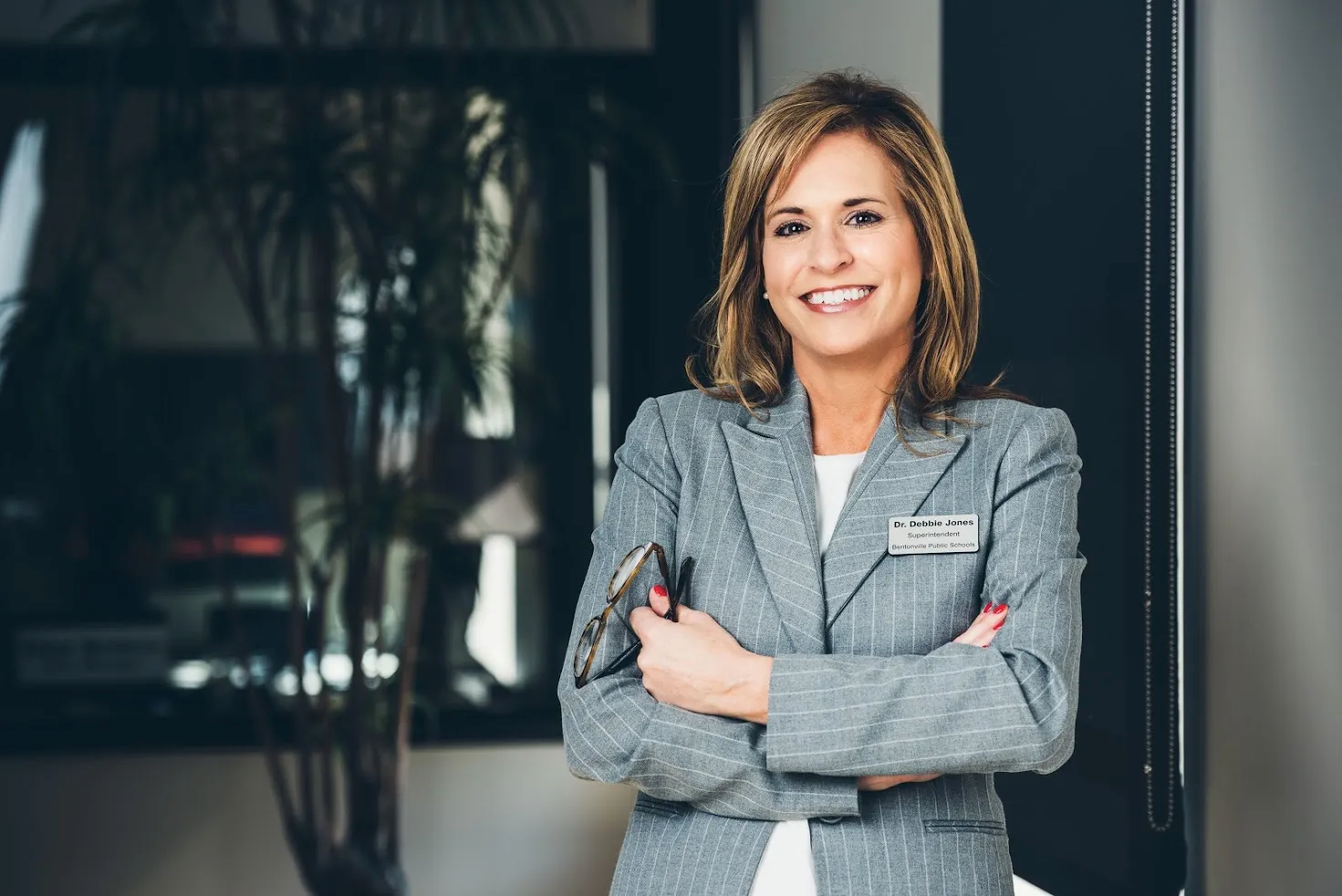
about Dr. Debbie Jones.
Dr. Debbie Jones is the superintendent of Bentonville Schools. She has more than 25 years of educator experience having previously served as Assistant Commissioner for Learning Services at the Arkansas Department of Education. Dr. Jones held the position of assistant superintendent for the Bryant School District for seven years following her principalship at Bryant High School. She worked as a teacher, assistant principal, principal and secondary director in Pulaski County Special School District.
Her academic career has led her to the highest credentials attainable for an educator. Dr. Jones received a Bachelor of Science in Education from the University of Arkansas, a Master of Arts in Secondary Administration from the University of Central Arkansas and a Doctorate of Education from the University of Arkansas at Little Rock.
She served on the Northwest Arkansas American Heart Association Board of Directors and publicly took a stand against vaping after seeing too many students, primarily high school students, become addicted. She authored legislative language to ensure superintendents across the state were notified of violent juvenile offenders. Her work represents a tremendous change in policy, allowing school principals the necessary knowledge to better protect students in the public school system.
She is CEO to more than 2,500 employees and 19,000 students who proudly call Bentonville Schools home. Dr. Jones and her husband, DJ, are parents to five children and a new granddaughter.

Photo by Nathan Dumlao on Unsplash
route.
The route for this episode is a tour of all of the current schools in the Bentonville School District.
music.
references.
HOMES Program Launch at McAuley Place Groundbreaking
Map of Bentonville School District
episode transcription.
episode preview.
[00:00:00] debbie jones.: I do feel a huge responsibility for us. In Bentonville we say "Where Excellence Lives" and to maintain excellence is a high endeavor, and so you have to work from a growth mindset and always think how can we get better and how can we grow? And I promise you that doesn't come from Debbie Jones alone.
It takes a big community of leaders who share their ideas and their opinions. It comes from a community where you have permission to make mistakes, but you are asked to be innovative. You're asked to do the very best for kids. And if you could live life in the shoes of a teacher for a day, you'd be amazed at the hours they work, or the things that they do for kids.
It's incredible. And I always feel I have to work as hard as they do because I owe that to them, and I know they're working very hard.
episode introduction.
[00:01:02] mike.: You are listening to the underview, an exploration in the shaping of our place. My name is Mike Rusch, and when we consider the shaping of any community, the influence of its school system is tremendous, especially in a region like Northwest Arkansas, where academic success is one of the key reasons why people come here.
Northwest Arkansas boasts eight high schools in the top 10 percent of the nation, not just the state, the nation. The achievements of our educators here are truly exceptional.
And as our community continues to grow, the challenges faced by our schools become even more pressing from meeting the demands of a rapidly expanding population, to being a key mechanism in the delivery of essential social services, our schools play a critical role in shaping the future of our community, More than most of us can even understand.
Although my background is not in education, I believe strongly that understanding the full scope of how our schools shape our community is fundamental to building a shared and hopeful future, not just for us, but for the generations to come.
Shortly after the groundbreaking at McAuley Place, a Bentonville Teacher Home Initiative with the Excellerate Foundation and Bentonville Schools, had the privilege of sharing a table with Bentonville School Superintendent Dr. Debbie Jones.
In this conversation with Dr. Jones, we dive into how our community can collectively understand the role of our schools and how our actions as a community will ultimately support or challenge the success of our children and future generations.
There's a whole to discuss,. So let's get started. it.
episode main interview.
[00:03:09] mike.: Dr. Jones, thank you for sharing a table with me. I'm incredibly humbled and incredibly unqualified to sit here and talk to you about education, but I believe deeply in the power of the schools and how they form and shape our community. And so I'm humbled that you had accepted the invitation and thanks for sharing a table with me.
[00:03:25] debbie jones.: Thank you for inviting me. I just, I love to have conversations and just talk more about the community and talk about the schools and our direction and responsibility to this community.
[00:03:37] mike.: Thank you for the work that you do and congratulations. You've just graduated another class of seniors. And I'm sure that's a big breath of fresh air, to see an incredible generation go move out into the world.
[00:03:50] debbie jones.: It is. It is inspirational. It's also a big relief because we have so many seniors that have so much to celebrate. We have at least a month of award celebrations, whether it's the band or the top ten students special ed graduation.
We have Ignite pinning students going off into the world to be teachers or to go into the medical profession and so many others. And By the time students walk across that stage on Saturday, I'm ready to go home and take a nap.
[00:04:27] mike.: You definitely deserve one and your entire, all the district teachers and staff deserve that.
[00:04:31] debbie jones.: Oh, I know they are. I know they are too.
[00:04:34] mike.: Let me start with this. I know you've been here in Bentonville and in Arkansas for a very long time, but I'd love to start with your story and just however you want to share that, but I'd love to know that.
[00:04:43] debbie jones.: Okay I really came to Bentonville, Northwest Arkansas, in 2016, and my husband and I waited until we had the opportunity to both get jobs in the same district.
I arrived in Bentonville as Mike Poore's deputy superintendent, and, I honestly thought to myself, I'm in God's country. I took a big breath and thought, Oh, I'm no longer in the middle of all the politics of Little Rock. Which is laughable today. But I was before we came to Bentonville, I was assistant student.
Assistant Commissioner at the Department of Education. And for about a year and a half, two years, and I had, it was a wonderful opportunity. I had the opportunity to see how law was really created. I worked with the legislators. I was over learning services and it had about 18 different units. I just learned so much about the whole process, how the sausage is made and education law and policy and programs are established.
And so that was a great experience before I was at the department. I was an assistant superintendent in Bryant, and my kids my younger two went through school in Bryant, had a great education. It's a great school district and learned so much, and I was always the assistant superintendent that shared the time.
The data, the performance data. And we had about five other districts that we compared ourselves to. We were a high performing district. But Bentonville was always one that beat us in the bar, and I'm like, Ugh, Bentonville! And so I just accepted, if you can't beat them, join them. And really Northwest Arkansas was always on my list, and at the top of that list was Bentonville.
And we know. We are very blessed to be in this community, and we're better because we had all the other experiences that we did. 25 years in Central Arkansas. I actually grew up in Charleston, Arkansas. My dad, who is a farmer, he was a farmer his whole life. But he also was a teacher and a football coach.
He taught marketing, and I used to ride around in the summer with him. He had kids that worked with businesses, Kentucky Fried Chicken, and sometimes I'd go in with him. He was checking on his students that were doing their job. Internships at the businesses. And my mom was the admin for Sister Judith Marie at Mercy for 40 years, hardworking people, raised three girls, and we were always athletes.
We had no choice. My dad was a coach. And so we played softball summer and we played basketball. My older sister and I played on the same team. It was a great upbringing in a small town. And I think we saw, we just learned the values of family working hard. I saw a mom that raised three girls and We were very much middle class upbringing.
I remember a time my sister and I played basketball, and we both had to have shoes at the same time, and they were probably 80 shoes. Goodness. Basketball, the high top. Sure. That we used to play in. I guess they're back. They're cool again. And I remember the feeling of, oh, I know this is a struggle for my parents, but they never ever, we had everything we needed.
My mother would get up and get dressed for work every day, wearing a dress and usually heels and every night cook dinner for all of us. And so it, I really had a stable upbringing. And I think that's shaped a lot of who I am today and what I want for families today. Every Sunday, we'd get up and go to church, and when I was very young, I still remember my mom wearing the little of our head when we would go to church every Sunday.
And I'm blessed. I know that I am. And I just want to carry on just really the expectations I have for myself. As a leader, and what I try to live out one is appreciation for everybody in our organization. And it doesn't matter the role that you have, you are valued as much as the supervisor in that role, because our district can't run without everyone really performing at high levels.
[00:09:28] mike.: I'm biased as I watched from afar. I think that shines very bright. Definitely for sure. And yeah, thanks for sharing your story. I think it feels like it's a very rooted story in a lot of ways. And you've been in Arkansas your whole life. I'm curious with that and the investment that you have here in Bentonville and to the future of this place what does Arkansas mean to you?
[00:09:49] debbie jones.: I was away for my first husband went to work for Walmart and so we lived six different places in three years and I was finishing up college and doing internships in different schools and so we saw a little bit of Kentucky and Tennessee and some different places.
Arkansas is just, it depends on where you land in Arkansas. In Northwest Arkansas, we are very fortunate. we live in a very strong economy. We have active business and industry. People have jobs if they want them. Not all parts of Arkansas are that way. We have lots of great educational opportunities for families.
And I think there's great disparity across this state. And that probably exists within every state. But for me, I, there's not a second that goes by that I don't realize how fortunate we are to have landed where we are. First of all, to be born in America, to have the freedoms that we have. We never can take that for granted.
if you're involved at all in the news, you have to really recognize if you were born in a different place in time, your fate may be very different than it is today. So I start with thankfulness, regardless of the many challenges that I face in the job, which there are many, sometimes they're very frustrating.
I know at the end of the day and the beginning of every day, we're very blessed. And I think if you start with that attitude. Other people want to work with you because you have a mutual respect and people have different opinions than I do. And I have a cabinet of about 10 people and trust me they know very well they can disagree with me because they do.
And one of my greatest professional lessons I think I learned from Johnny Key who was my commissioner when I was at the Department of Ed. And we were doing some setting. which would determine letter grades for all the schools in the state. And I was convinced he was setting it too high. And I told him, You're going to throw 70 percent of our schools into school improvement.
I knew I was right. And he didn't change his mind. He set the higher bar and I was wrong and I've always remembered that lesson because no matter how convinced I am that I'm right, I have to remind myself to sit back and listen. And I've learned to people and consider the fact, just suspend certainty for a minute that you're right.
And I've learned to meet the older I get, the more I realize I'm wrong. So I think operating with that's served me well in this job. And, it's really intimidating for a leader to come into Bentonville, Arkansas.
[00:12:55] mike.: I can only imagine. Yeah.
[00:12:58] debbie jones.: Because. For the first year, you think, Oh, just don't let me mess this up.
It's so good. But we also live in a progressive time that if you don't adapt and change and create, then you will become obsolete. And I think the district has done a really incredible job of that. Over the last, at least in my experience, and I know they did before I arrived they've done a good job.
In fact, you're sitting in IGNITE Professional Studies, and this is a perfect example of just adapting to the times, the programs kids walk out of here with college credit from every class they've had, with certificates so that they can walk into the workforce, but I think most importantly, they walk out of here with a business network.
People know them in the industry, they want to hire them in the industry, and it's, as a parent of my children, we have a blended family with five kids, and when you have that feeling, it's just a sigh of relief, they're going to be okay. That's the feeling. That I want every parent to have that they can sign, say, yeah, they're going to be okay.
They're going to be able to support themselves. And that's the goal. And I think we're Bentonville schools is doing a really good job of that.
[00:14:24] mike.: Yeah, it's remarkable. And to your point, like sitting in this space and this ignite, like I get a personal tour from you and I'm humbled by that. But to see the way that innovation is really being thought of here is not something I've heard about it, but I've not seen it.
And it's really remarkable. And yeah, thank you for that. It's tremendous.
I'm curious too as we, as you approach this community these conversations that I've been having are really rooted in this idea of what does it mean to belong to a community? How is this community formed? How is it shaped? Who are the people leading that? That forming and shaping and obviously the school system and all the 2, 500 employees, 19, 000 students, the parents, businesses
This is a massive part of forming and shaping a community and you being at the head of this of this school system.
I'm just really curious, like, how do you view the role of the schools in forming and shaping a community?
[00:15:26] debbie jones.: You just added lots of anxiety to me.
[00:15:29] mike.: Sorry.
[00:15:30] debbie jones.: No, it is, it, we accept responsibility that it is really the school district is foundational to this community. We have to be successful in order for people to want to stay here for people to move in. I'm still shocked. When people move in from other places across the United States and outside the United States, and they may have thought, oh, this is a southern state, I'm not going to get a good education until they walk in one of our buildings. And we've had the experience of doing a weekend tour, and the family said, now how much do I have to pay for this?
And we say, no, oh, it's free. And it really is the best kept secret in public education, but we are a really important spoke to the will. But we are part of a bigger picture, the school district, and from the time we moved to Bentonville, I started to feel that. When I began meeting with my Monday morning group and I did that when I was interim superintendent and it was Alan Drano, it was Kaylene from Visit Bentonville, the mayor, Barry Moehring, county judge, Nancy Leak, a community member activist but loves the biggest cheerleader of Bentonville.
So many key people, DBI Dana today, who does that job Sam from Amazium, and I and naming them, I know I'm missing some, but those are. Not just my community members, they're friends. We're solidly supportive of one another. And the first year I had the superintendent's job, I had to go, we had to go ask the community for a millage increase to build school buildings.
And they solidly stood behind us, and they were our greatest proponents. And it's not just that, but that was the first for me, the first, example of what this Bentonville thing is. It's different than any other community I've lived. Even my small town, Charleston, Arkansas the service community.
If you've lived anywhere else and you moved to Bentonville and you live life here our first week when we moved here, I'll give you an example. My husband and I went into Walmart and we truly were amazed at how friendly The checkers, everyone was, and I'm like, can you believe this? And my husband says, it's just because their bosses live down the street, Walmart.
And so the next place we went, and I'm like what do you think about them? They're friendly here too. And the point was, Everyone we ran across was, you could tell, it was visibly, they were visibly kinder. And such amazing service, and that speaks to the friendly nature of Bentonville. And, with the partners that I have, we call it the Monday Morning Group.
We support each other in good endeavors for the community. And of all those people, I don't think anybody does it, their work that they're doing is for a selfish reason. It's because we all love Bentonville. We think the quality of life is second to none and we want to retain that. And we realized that we have that responsibility to do whatever it takes to make Bentonville great.
And so yes, I do feel a huge responsibility for us. in Bentonville we say "Where Excellence Lives" and to maintain excellence is a high endeavor, and so you have to work from a growth mindset and always think how can we get better and how can we grow? And I promise you that doesn't come from Debbie Jones alone.
It takes a big community of leaders who share their ideas and their opinions. It comes from a community where you have permission to make mistakes but you are, asked to be innovative. You're asked to do the very best for kids. And if you could live life in the shoes of a teacher for a day, or a day in the life of a band director, or a coach, or a Jessie, or choir director, you'd be amazed at the hours they work, or the things that they do for kids.
It's incredible. And I always feel I have to work as hard as they do because I owe that to them. And I know they're working very hard. It's a tough work ethic.
[00:20:36] mike.: I had a friend of mine once say that if you really want to understand your community, you should go be a third grade teacher to really understand the lifeblood of what makes a community what it is and to understand it.
And I hear that same attention and perspective in your voice.
Yeah, it's a huge responsibility, but it always feels, and I'm biased, of course, I just had a daughter who graduated and had three children and so their success that they're having is a direct result of that. And I think I get to watch and be one of those parents who have said, I think they're going to be okay.
[00:21:12] debbie jones.: Isn't that the best feeling in the world?
[00:21:15] mike.: Now I've doubted that a couple of times. Oh, we all do. But yeah, to that point, I think part of our rootedness and belonging here is the incredible trust that we, that every parent puts into the school system and to have that fulfilled is just an incredible honor.
And and I guess it probably leads me to the to my next thought, which is like, how do you keep doing that? And that's a easy question to an incredibly complex answer. But with where our community is projected to go and the growth that we're seeing and really Bentonville in many ways, seeing so much of that growth here, like how do you think about what it looks like to not just lead a school district where it is today, but over the next five or 10 or 20 years or how long that is, where does your mind go when you think about that?
[00:22:03] debbie jones.: It goes everywhere.
[00:22:04] mike.: That's probably a fair and accurate response. When I
[00:22:07] debbie jones.: woke up at 1 a. m. last night, it was everywhere. Trying to solve all the problems, which lately I've found myself doing a lot of that. First of all, you really have to always try, like I, hire really good people smarter and better than me.
And I don't micromanage them. They know we have high expectations. And it's the team. It's all my principals is, they, outperform because they don't want to disappoint their team, and I think our teachers are that way. We have strong PLCs, but you have to be very intuitive about the future, what could happen.
I'll give you an example of that. So when I arrived, we were, there's the excellent way to do things, and that's Bentonville. And very early on, it's for example, with our elementaries, everyone gets the same. And it, there was a reason behind that, and a very good reason, because we had zoned schools.
And you must go to the school you're zoned. And we were very diligent about everyone having the same resources for all of those schools. And so nobody did anything different. And then recently, in the last couple of years, we've struggled with filling up enrollment in our downtown schools. R. E.
Baker, Sugar Creek TJ, and if you look at the big scope, that's where Bentonville began. So we have all of these elementaries downtown. And whether that be because we have Airbnbs or whether the cost of living, the housing is so expensive, we don't have lots of little kids downtown to fill up the schools anymore.
And so we took a big chance, whether anyone realizes it or not, we did. And we broke out of that traditional mold and said, let's do something different for our downtown schools with the goal of attracting So any of the parents in those border schools that are filling to the brim can choose to come to a downtown school, which makes sense.
They're going to work in a downtown business or if they're going to work at the home office. Plus we're providing transportation. And the international school. At Mary May is our first to be Parent Choice and Visible Learning at Apple Gland. And I'll tell you just a little bit about both of those.
Yeah, please. But we went through a long, year long process to get feedback from the community, to have focus groups, to have surveys. What do you want? Let's create this school however you want it and hired amazingly, we have amazing leaders at those schools and we were prepared to change whatever we needed to change to truly answer that question of what do you want in education?
And the international, which is rebranding everything, including the name the curriculum,
They're going to offer Spanish. Kids are going to have 30 minutes of Spanish, K through 4, elementary. And so they're getting extra teachers there to teach Spanish, with the goal of attracting parents. The last time I checked, over 130 additional kids had enrolled there. And that's success. First year for next year, visible learning is John Hattie's work.
John Hattie is one of the oldest, most famous educational researchers. And he did meta analysis of what are the most effective things that you can do to achieve. to achieve the highest. And some of those things are students can communicate their goals, they can self assess and tell you what they're learning, what they're not learning.
They very much own their learning, and Visible comes from when it was created, Visible Learning is looking through the eyes of the student, what should learning look like? And they have a proven record of success, because they've been doing Visible Learning, the only Visible Learning school in the state.
And they have been doing that for about, COVID messed it up just a little bit but about four years now, and they're having great performance results. And so obviously that's going to be their parent choice school. And they've had over 60 new students enroll in their school for next year. But again, that's a risk we took to break out of the mold.
And It looks like that's going to be positive, and at the same time, correct a problem. We don't want to have to go build new construction. Do you know what a new elementary school costs?
[00:27:05] mike.: I can't even fathom.
[00:27:07] debbie jones.: About 26 million dollars, 26 to 30 million. A junior high, a middle school, junior high has traditionally cost us about 40 million, and then a high school, 80 million.
When we brought, when we built West. The land in this school. And so obviously we don't want to have to just go build buildings where the growth is. We want to continue to attract families downtown, fill up our older buildings as well. And we're, it's really designed to correct that problem as well, while also giving, parent choice.
Sure, we can rezone, but it's very painful for families and it's painful for us in turn to force zoning and go pick up kids way out in Centerton, transport them Buy two elementary schools and drop them in the middle of town. Would much more prefer to create amazing opportunities that speak to their family and have them volunteer to take their kids downtown.
So those are some of the things we, I'll tell you when I speak of you have the right to make mistakes. I reserve that right for myself too because I need that. That's good. It's a good culture to set for sure. Last summer. I really I saw the need coming out of COVID. We all saw it. My team saw it.
In the summer previous to that. Right after COVID to have kids stay connected or get them reconnected that first summer. So we ran some really cool summer programs that do things like canoe and everything else. I wanted that to continue last summer because families work. We want the kids are better served when they're busy with fun activities learning.
So we wanted to create a state of the art summer program and we did. And we. I employed a person who really was successful in doing this in Dallas to lead us through the process. And rather than trying to do it the way we saw it we said, let's follow her lead the first. Let's follow her lead. Let's do it like she does it.
Now, some of them were far too expensive for our market and they all didn't fill up. And so I learned my lesson. It's okay to have a model and then do it the Bentonville way. Yeah. Okay, so I'm going to tell my team you were right. I was wrong on that one right now. So this summer we're doing, we are doing great things.
I will say that we have formalized our summer programs a lot so that parents have word early on all of our offerings and we have far more offerings than we used to have. So we did learn from that experience.
[00:29:56] mike.: the scope of how you're thinking about the role of the schools is, it is so wide, and seems to touch so many lives in so many different ways.
And I think one of the things that I'm curious about, because, obviously we task our schools, to educate our community for the future of our community. And yet, as you think about this comprehensively, you're also thinking about and taking on a lot of social services that are required to, to make sure that students come to the classroom or come to the learning environment ready to learn.
And I'm curious, like, how you view or how you feel about how the social needs of a community are really starting or not starting, have been for a long time, falling within the school district, the school systems to try to solve.
[00:30:46] debbie jones.: That is a real struggle for many and it has been for me and it really, and I'll give you some examples, but it goes back to our mission, is We must be successful in educating kids.
Bottom line, and we have to do whatever it takes for kids to be successful. And if they don't have breakfast, they can't focus. If they are not mentally in a place where they can attend to learning, then we can't achieve our goal. If they don't have, if parents don't have after school care and honestly, they can't take off at 10.
240 and be there, then we have to provide those services to meet family needs. And we do so many things for families. And I will tell you when. We've done this for a really long time. At least 20, 25 years since I've been in education. But we've taken on, a larger role, and we continue to do so during COVID when the schools shut down and some of the greatest fears were expressed to us were kids would not get the meals they needed during the day.
What did we do? Airmarks, our service provider, they cooked meals, batched them, families could pick them up, fed them for the weeks, they delivered to their house, families were fed, okay? We did have federal dollars to pay for that. There was a fear that abuse would occur and not be reported because that's a big part of what happens in counselors when that occurs and at least investigations can be done.
Okay? We were very fearful that they would come back behind, not continue, because honestly, parents had jobs. Parents have to feed their families. So we understood a lot of what we were dealing with. That's why when we were closed virtually, we sent 10, 000 Chromebooks home the Friday. We didn't know if we were going to close, but it was looking very sketchy.
The governor closed the, announced the close on Sunday, but we sent 10, 000 Chromebooks home on buses, no sleeves, with kindergartners, and we did not lose one Chromebook. That's the success of my book. But then we quickly had to really. We wanted to pivot our staff to where they could do effective online learning, which required that face to face Zoom or Google Meet that was on the screen, and it was just our attempt.
It's never as good as in person, but it was our attempt to stay connected to the kids, which required a lot of effort. of structure and systems in place. But then they were closed from March, like March 13th through the rest of the year. And then we came back the next year. Parents had the option to go virtual or go in person.
And we saw, when we began, about 30 percent, We're virtual and then that decreased all the time as parents felt more comfortable and they came back to school. But it was covered was a pure lesson for me that we are necessary. We're essential workers. We must be in person and we must provide whatever needs families need to be successful.
And we do an amazing job of that.
[00:34:36] mike.: I don't know if the right word is "fair," but it feels like it says something about us as a community, that we put this trust in the schools we expect you to deliver. Is that the way we should be thinking about it as a community? Do we need to fundamentally as a community step back and say, are we asking our schools too much?
[00:34:59] debbie jones.: I will say this. I do think there are times we ask too much of teachers. But, in this community, whatever the need is, and whoever the person is, I think that we have a unique set of individuals in our community that will meet that need, whether they think it's fair, whether they think it's their responsibility, or not and I will say that the people in our school district, and it may not be every single person, I know people may disagree with me, but my perception is that our people will go to the mat to provide for any need that they see in families.
I'll tell you the part that's not fair. And we do experience this. Have you noticed the signs that they've put up pharmacies, medical, don't attack the workers, basically signs.
[00:35:58] mike.: Yeah.
[00:36:00] debbie jones.: Our staff experiences that too. It is not okay. To attack teachers. It's not okay to be verbally abusive to teachers. It's not okay to put posts out there. It's not okay to send emails attacking.
Now, I do know that our children. Our most precious possession and we fought for our children and we can do that, but we must do that in a kind and appropriate manner. And what in the national. political arena, we experience as individuals in the school, and it's not fair. And do we make mistakes?
Sure, but we make things right too. And so that, that's what, there are things that in that realm that are truly not fair and should not be occurring. As for students needs, I know we'll continue to fulfill those. Public schools were created for a reason and our Mission goes well beyond education these days.
[00:37:13] mike.: I think it's important and I appreciate your just honesty and transparency and being a truth teller in these spaces because I think a lot of people, not just myself, but generally believe that what you desire is the best for our community. That's why you've been entrusted with the role that you're in, right?
And so I think it's good to remind people that there's a responsibility from the community. to our teachers and those that are in positions to, to serve for the future of our community, what's expected of them. And so I, yeah, thank you for sharing that.
I think it then moves to a conversation. I know there's been in the news a lot lately, you've been talking about the challenges we're facing around housing and how that even affects where we live. Where students go to school, for example it's put you right in the crossroads of trying to solve some problems around or getting caught up in the housing challenges that we have as a community.
And It was a beautiful day yesterday. I had the chance to attend and see that the McAuley Place was officially kicked off, and so I want to say congratulations to you and to the Excellerate Foundation for the work that you've done to see that project go forward. And I think I think I would love, if you're willing, to give us maybe a little behind the scenes.
What did it take to get there? And how does this, now in its current form, how does it help serve the purpose, that it was set out to serve?
[00:38:33] debbie jones.: Absolutely. Let me start with, the best thing that happened to me today, a teacher has already emailed to ask how to get enrolled for that housing. And we don't have those answers yet, but we're developing those uh, the application form.
And what does it take? The basic things it takes is a school board with courage. A community that's willing to problem solve. That's willing to rather than get mad, create solutions. And it's, it takes different organizations to really think beyond their own personal And really work together to meet needs of the community.
And so this, we were, it really became scary to me in 2021. That's when it became real because I heard people talk about the housing market and not 32 people moving here, all that. And I'm like, okay. Until in one summer in 2021, I hired three people who accepted the contract and then looked at housing and then resigned their contract before they ever started, said, I can't afford to live here and went back to the previous job that they were leaving.
And so then since that time when I do hiring, I always preface my, Any hiring was saying, have you looked at the housing market here? Do you know where you're going to live? Do you have something that you know it's expensive here? We have that conversation because I don't want to get down the road. And that's not the way we ever want to hire.
We want to be in a committee. We interview, we have a pretty diligent process. We interview lots of people. We do background checks. We try to recruit the very best. And we want to pick the cream of the crop. And not just the people that can afford to live here. And I saw this coming, and I see it getting even worse in the future, and this was, this speaks to our strategic plan. We want to recruit and retain people.
Let me tell you an example. I have one of, just beautiful principal at Cooper. And he's a perfect example. He loves Cooper Elementary. He's done a beautiful job there. His family lives in Fayetteville. He has young kids. His young kids are now getting involved in sports and activities, and he can get a job in Fayetteville. And so he did. That's where he'll be next year. And we know that as Young families start to develop, if they don't live in our community, it's hard to survive driving 40 minutes back and forth when you don't have to.
And so this is very much someone tried to insult me and say that this was an altruistic effort. First of all, that's not an insult to me. That's a compliment. But it truly is Led by our strategic plan. It's truly about our staff. It's about recruitment and retention. I want to keep our people here and we want the people, our teachers shape this community. Like you, any parent that's had kids go through the school district and they speak of their orchestra teacher or their choir teacher or their high school English teacher, they know that they have shaped their children and they shape this community.
The people that shape this community deserve to be part of this community, and they're being priced out of the market. If you're a young teacher that just graduated from college and you try to move here, even rent is becoming unaffordable. And we started down this road, and as I have done in the past, I've gone to, it's Excellerate Now. When I've had a problem with staff with housing, it was before this whole housing discussion, but if they had issues and they couldn't pay bills, I'd go with to them with a problem and Hark. They were operated Hark and they would serve needs of my teachers. They have dedicated 250, 000 a year to the district for our preschool program.
So there are, and that's been they're a long time trusted partner. So when I had this issue and I was talking to Jeff Webster, I'm like, I don't know what we can do about this. And this was over a year and he came, he said, we may have a solution. Let us work on it and came back. And I remember.
My CFO Janet Schwanhausser and Tania Sharpe and I, sitting in the room, and we went in with really zero hope. It's we know we were constructing buildings. We don't have a fund balance where we can dedicate funds to housing for teachers. We can't do it because we live on a facilities plan where that fund balance, where it looks like a lot to some, all that is savings for the next school building.
So we didn't go in with high hopes. And he presented this plan that if we donated a small portion of land behind BHS, behind the skillet, it's not used now. We're not going to build anything on that land. It's six acres that they can develop. Then they would pay for the entire development. Part of it's low income tax credits, 60 units in the middle. And then the 40. Two, two bedroom single family cottages would be reserved for staff. Accelerate would own the homes, and then teachers would rent the homes, or they could find a shared equity program. The rent would be about 750. And if they're buying into shared equity, it's higher, like 1, 500, but after five years, they'd walk away with a 50, 000 check.
We ran into some roadblocks trying to get that rezoned to residential three. And so it was very disappointing after we hit that roadblock. But two days after the decision, Jeff called and said, don't give up yet. We may have an idea. And this time I didn't doubt his idea. And he said, okay, we have McAuley Place that's already under development.
Our architect thinks we can take your project and drop it on top of that land. And that's what the groundbreaking was yesterday. So we have now 35 cottages because five. We'll go to Mercy, which is right next door to the clinic on I Street. 35 will go to us. They're deed restricted for Bentonville School staff.
That means bus drivers. We had over a thousand people when we looked them up. Based on income, if they were single family household that are eligible for the houses. But the great news is they also are building a 3000 square foot early child care center. So all the people in that community will have the first right to get the child care.
At a reduced price and it's and then the community so we will fill that out and so yeah, that's it's amazing news
[00:46:11] mike.: I'm curious what from your perspective like the community's response. I mean you went through some pretty Substantial hurdles to get to where you're at. We did.
[00:46:18] debbie jones.: We did.
[00:46:19] mike.: I'm curious what you saw the community's point of view.
[00:46:23] debbie jones.: So those that really didn't support the idea said that they did not think it was right to give away taxpayer funded land for this purpose. Which I respect other people for, to have the views that they feel they need to have and our explanation is this does directly serve our kids.
We're good. Have no doubt. Bentonville Schools is good because of the teacher in the classroom, because we have been able to hire the very best teachers. When we can't do that anymore, first of all, we're going to see to it that doesn't happen. But should we not be able to hire the very best, education will suffer.
That's what makes Bentonville what it is. And so that's why it's directly serving kids, because it's directly recruiting the best to get here. I spoke with A student of U of A that's in the education program, and the word had already spread that Bentonville is doing this. And just the effort speaks highly to the students who can apply here.
And the teachers. The future teachers. Yeah, the future teachers. ,
[00:47:34] mike.: I, from my perspective, I saw a lot of support for this type of idea and maybe not, the specifics are complicated and accelerate foundation and like how you make something like that do. It seems like rocket science to me, but there seems to be like a lot of community support that says these are the kinds of things we should be doing for our teachers.
So I'm. Is that the feedback that you received as well, too?
[00:47:57] debbie jones.: We had far more support to do this than we had, and I'm basing that upon emails to me, emails to city council and then we did those that opposed the idea, and that was a handful of emails. And I do want to represent the views of our community.
And our community, From everything expressed to me, certainly they approve of this effort for us to do this. to try to provide for a need by far. The two biggest needs when we talk about getting and keeping teachers, housing is number one. And then what we see a lot of teachers who are highly qualified, but they have that second baby and they say they're staying home to take care of family.
We know that's a childcare need. And so those are the two biggest needs that we know Our faculty is having, and we want to address those needs.
[00:49:03] mike.: Significant accomplishment to see this move forward. I want to be careful though, did we solve the problem as a community? Oh, no.
[00:49:11] debbie jones.: No and there won't be one solve.
The beauty of what was done with McAuley Place. And I just stepped back and I looked at all the people standing there with the shovel in their hand to break the ground and I thought, this is a beautiful thing. The beautiful thing is, all of these people selflessly worked to come up with a solution. A solution to a problem that's real.
A solution to A problem that says we want Bentonville to be a home to everyone that contributes to this community. And I will tell you, the restrictions on LIHTC housing are so specific and strong. I know that there's a fear upon the community that we're going to have bad people, criminals live there.
But the restrictions written are so strict that's not going to happen. And I think that everyone if they can step back for just a minute and remember back to covid when all the business or businesses were closed or they closed the front part of Chick fil a or you could, that's disruptive.
Economically, it's disruptive to our families. It's disruptive. That's what it looks like when Staff can't, you can't hire staff. Another big piece to this is we have had to invest so much into salaries and we will continue. That is job number one. We can add a 10. 5 million to our budget recurring last year for 6.
5 percent increase. This year we added another 5. 5 that's recurring. And you have 16 million we've added recurring in our operating budget year after year. And that is to be competitive and to pay the best, and we have to. But we know if you are truly aware of what's happening in our community, the growth that's coming, we have to prepare to be able to hire the staff that we have to hire to run our businesses.
And it all goes back to, remember, we're essential workers. We don't have a choice of whether to have bus drivers. bus drivers show up to work. And we have to be able to hire them. And so it's, it speaks to our need.
[00:51:43] mike.: I'm curious because I think as watching, our community go through this conversation, I think for me anyway, I don't want to assign this to anyone else, but it really made me ask questions around the role of the city and the school district and Now, as these ideas move forward
Council Member Agnew said this is like what it looks like to solve hard problems together. I'm curious going forward. What does good partnership look like? How do we as a community support the school district's needs and goals as a community well together?
[00:52:16] debbie jones.: Conversation. That suspending certainty, everyone, me and everyone included, to listen to someone else, an argument, because the other side might be right.
I think the most damaging thing that we have, and it's in national politics, but it seeps into our daily jobs, is this, you have to take a political platform, and this is what we believe. There's not a platform that I would ever sign on to and say, I'm gonna, whatever you put on that paper, I'm gonna agree to all of it.
It is issue by issue and listening to all the details of that issue. And by all the details, they matter. And so I'm not going to have any platform to teach me or to tell me how to think on an issue. You have to deeply research and read every single issue before you really can make a judgment on it.
And I, I think that, until we get back to that and it's good common sense, stop letting people tell you how to think and act and talk. Stop relying. on social media and the little short soundbots, because there's probably more to the story behind that.
[00:53:39] mike.: As we think about how all these issues, local, state, federal, all these issues come together especially around education. I'm curious, your view is the role of this. I don't know if I don't know if the right term is local autonomy, but the balance between what happens here locally within the schools and how that, also has worked on to the state or federal levels.
How should we as a community think about our local ownership or autonomy or resources we need around education with respect to how that maybe works out at the state level, for example?
[00:54:16] debbie jones.: Oh, that's a great question. Each community is unique. And Bentonville is no exception to that. But we are. We're dependent and we are accountable to the laws that are established in the state legislature. They do have direct impact on us. And we've seen this, for example, back when the facilities funding, while we're growing faster up here than anywhere, we're doing more building with construction than anywhere when they added the poverty formula to the financial funding for facilities.
[00:54:55] mike.: Can I interrupt? Yes. Can you explain that real quick before you get I'm curious what that means.
[00:54:59] debbie jones.: The facilities funding, it's our tax, your tax money. tax money is distributed. There's so much given to facilities funding. Those are distributed to approved projects within school districts. Okay. And so historically we've, and we still do, we apply for facilities funding.
When we go up, you have to have a proven need. They're looking at space. You have to really need the space.
[00:55:27] mike.: And this is the money that's used to build the new schools?
[00:55:30] debbie jones.: This is part of that money that you hope to get. And there was a time when we'd get about 30 percent back until in the legislature they changed the funding formula.
And when they added a poverty piece to that, then we were reduced almost to nothing for our buildings. And so when you facility's funding, that is then incumbent upon your budget. And that means the assessments that we do on our property, that's what pays for those 40 million, 80 million dollar buildings.
And you can see how that's why we have to save the fund balances. We do, that's why we had to go to voters in 2016 and ask for a millage increase. And it is 48, our millage, but we also are growing. We. The last thing a superintendent ever wants to do is go ask to increase taxes. It's the very last thing you want to do.
We only do that when we have the need to build new construction. And we've been, we run a very tight, efficient budget. When I say we're dependent on what they write Arkansas Learns, this is a good example of No one's going to tell me how to think. I take it issue by issue. And Arkansas Learns had so many different pieces in it.
I forgot how many pages it was. Like 140? Somewhere around there? And so there are lots of different components within Arkansas Learns. Some of them are good. Some of them I don't think are good for education. I think that grade attention to reading on grade level, third grade level, it's a good thing. I think great attention to a good solid assessment, good community service is good if the rules are written correctly so there are so many good pieces within it, security, safety and security, we, that's our number one priority, that's been our priority, it didn't change a lot, but we completely believe a lot of the things that they had required and there we were already doing, so that's a good thing.
We. I'm not convinced that merit pay is a good thing, and we recently had the experience of trying to verify rosters, and it's a very hard thing to do. To point a finger to. The individual who brought up test scores for a class of kids, because is that just that teacher of that classroom? Is it the special ed inclusion teacher?
Does the principal play any role? Does instructional facilitator? So there, it's very difficult to point just to one person. And. We run on a really good supportive morale within our school district, PLC. Everyone contributes to success. And it's hard to break people out and reward them individually when others are not rewarded for their work.
Do you think it's important for the bus driver to arrive every day to pick up the kids to get them to school? They'll never be on the list for merit pay. And that is, that's the real dilemma that we have with that. Some parts are good, and we'll see. And some we'll just have to test out. And I hope that the legislature works with us.
And if they see something's not successful, then they can modify that. But, Our problems I've operated Bentonville on the fact that we are responsible for our decisions and our actions. We follow the law, but we're not limited by the law. And we have issues. Every opportunity to be innovative and create we know what great education looks like.
We know what we want from a graduate, which is exceptional skills and not just academic skills.
[00:59:29] mike.: Number one, thank you.
I think that's super helpful in understanding that I think i'm really trying to understand this balance between a community that really we have a vested interest in understanding the education of our The idea of our children in the future of this community, specifically. And so that balance between local autonomy and that local ideas and how we really make that happen locally.
I'm really trying to understand the idea of where that stops and ends and how that's balanced with other state priorities as well, too.
[00:59:57] debbie jones.: Okay. So if our, the greatest impact that a family can have on education. is at the lowest level and that it's with that student's teacher. If and so having those conversations, communicating, being present, and it goes all the way from that classroom, knowing the teacher, to being very involved in the major issues.
Pay attention to the school board races. The school board members really have the greatest impact on creating passing policy. Approving contracts where we're doing rent last night, they passed renovation budgets and they make major decisions financial and policy decisions for the district. And then it's very important that you know your legislators at this state level.
Every session. Continue to be amazed at the number of educational acts that come out, and we must follow those laws. And knowing how your legislator voted, what they supported, what they opposed is really critical. We have to be a country that's informed and educated and active about voting. If we want to take our community and our state where we think it should be.
And everyone has a voice in that.
[01:01:30] mike.: I feel like one of the things that has been incredible about living in Bentonville, I've lived here for a very long time. Bentonville continually is in the top, not just of the state, but of the nation and standards and academic success.
How do you balance that in a state that's oftentimes ranked in the lower portions of state rankings in education.
[01:01:49] debbie jones.: Oh, that's a great question. We, when we look at ACT scores and AP scores and IB scores we don't look to the state. We are in a consortium with the highest performing districts in different states.
It's called Mid South. It's an amazing opportunity. Our, once a year, in October, we visit one of those, and there are only about seven districts in the whole organization. Forsyth County, Cummings, Georgia, has about 50, 000 kids in the school district, and I was able to take a few of my team members, my cabinet down there.
It's next level. It's when, and we will, When Bentonville Schools gets to 50, 000 kids, this is what it looks like when it's done the best it can be done. It's an incredible community. They have the same type of demographics that we have. Even their subpopulations mirror what Bentonville's are.
Incredible career programs, ACT scores, but we compare ourselves against those districts. And we are doing well. But the beauty is we also see areas that we can grow, so it keeps us growing to the next level.
[01:03:14] mike.: Thank you. I think that's super helpful dr. Jones, as you look, towards the next 1, 5, 10 years, what should our community be thinking about?
What are the things that we need to be thinking about today to make sure that you have what you need to continue to do and make this area and the school system just continue to thrive in the way that it is?
[01:03:38] debbie jones.: We have to think about maintaining a strong economy. And in order to do that, Sure, we can hire from all over the world if we want to, but we don't have to.
Businesses and industry have to treat us as their pipeline. We can provide you incredible workers, but you have to invest time with us like many of our businesses do with ignite. I believe if I were to look towards the future before At some point, all of our graduates will have to have a real internship like our Ignite kids do.
And I know that requires time from companies, but if you Do this once. Do it one year with some of our IGNITE kids. Number one, you'll find, oh my gosh, these kids are brilliant. I want to hire them. I am willing to wait and let them get through college if that's what's required for that business, or I'm willing to pay their way through college.
I want to If they'll come work here and we've had kids do that and businesses do that. So number one, it's being connected with your schools as business leaders and industry. That is critical. If we want to be next level and we can be that next level of a community. Number two, are it's really important that churches and nonprofits and Good quality human, humans and organizations serve our families because we do have families in need.
The rest of the state looks to us and says, Ah, you only have 20 percent poverty. You know what? That's about 7 or 8, 000 kids in Bentonville schools. And that's bigger than some entire districts, many entire districts in the rest of the state. And they have needs. And when We support Thelman Learning.
It improves our community. And we really this community is also very indebted to the churches. That do their work because they support the families because really for us to be successful, we have to have healthy families who send healthy kids to school. And when we don't experience that, we spend a lot of money and a lot of energy and a lot of time trying to heal kids.
And that's a hard thing to do.
[01:06:18] mike.: One of the things that I think you mentioned, which to me as a parent We have tasked the school system to do this incredible thing, but I have responsibilities to as a parent. And I'm curious what would you say to the parents of students today? What do we need to be doing to support our children, students in the district to really make sure that they are. prepared and able to receive the benefit from the school systems that you're providing.
[01:06:50] debbie jones.: One might expect that I would say, do your homework. And that's not what I'm going to say.
[01:06:54] mike.: But I may say that to my kids.
[01:06:57] debbie jones.: And you may, but that's not what I say at all. I would say, have conversations, put the screens, limit the screen time.
We're moving To that, K 4 kids don't take computers home anymore. K 6 kids won't take computers home next year. We are limiting the screen time in school. It's not healthy. And I know It's necessary, but the phones in kids hands all the time leads to some really harmful things. And mental health is in a pretty delicate place for many kids today.
And you have to have conversations. We're in a very high performing community. And sometimes it worries me that we're asking Way too much of kids before they're mentally capable, they need to play, they need to have joy in their lives. They need to have dinner around the dinner table occasionally.
And you have to check in with your kid to see what's going on because sometimes there's a lot going on with that kid and we don't know until there's too much damage done. And that's really part of what I'm asking that they do. Now, for many years there, probably about 10 years.
Educators, and we were led by many different thought leaders, stop sending homework home. Stop, y'all just take care of the education piece. That's not what we need to do. Parents need to know what we're studying in school. It is a shared responsibility. And while we don't want to overload kids, we do want you to know, what are they reading?
What are the questions? What does the math look like? And yeah, sure, and that responsibility for that, but most importantly, talk and listen to your child. Sometimes that's really hard, especially in the teenage years.
[01:09:02] mike.: It is hard, but it's right, right? I ask this to everybody because I'm curious what are your fears for this place?
[01:09:10] debbie jones.: My fears, division. division and people stop having good common sense and good conversations just like we did today. We can all, we can disagree and we probably will about things one day or another, but we lose all of our kindness because of the division. If we, I want us to remain that Bentonville that it's Been known to be that when we walked and said, Oh my gosh, These people are so nice.
That's what I want us to save for Bentonville and get past our political division and that hate and all of that trash that's put on the social media sites and just go have good conversations with people, get to know them.
[01:10:04] mike.: One of the things we're trying to work through and understand as a community is what does community wholeness really look like?
And so I am curious, what is, what comes to mind when I ask this question? What does wholeness look like?
[01:10:16] debbie jones.: Wholeness looks like yesterday afternoon, or morning, when I saw all those people putting their shovels in the ground, trying to do something good for others. They're not going to directly benefit from any of that, but working together, to solve problems for other people.
Just imagine if we all did that. Everyone felt that they belonged in this community, that they were wanted in this community, how they would give back to this community. They'd be indebted and they'd want to make it better. When I moved here and I saw, oh my gosh, all these people are so kind, it only inspired me to be a better person.
And I think that we can do that for others too.
[01:11:01] mike.: Dr. Jones, I'm just humbled. Thank you for sharing this table with me. I'm thankful for the work that you are doing the entire all in your team. You always give all the credit to your team and
[01:11:12] debbie jones.: they're the smartest
[01:11:13] mike.: you've set a culture where that thrives. And so thank you for the work that you're doing. Thank you to all the teachers and the bus drivers and all the people, the administrators that make this community really special, your impact and to all of us finding a place of belonging and place and. being rooted in our community is so great. And so thank you for what you are doing, and I know you do this already, but I know you get up every morning. What are, what problems do we need to solve? And you take it. And so thank you. Please don't ever stop and whatever support you need from the community. I'll be happy to pass along.
[01:11:45] debbie jones.: I'll do that. Okay. Thank you.
episode outro comments.
[01:11:47] debbie jones.: Am
[01:11:48] mike.: Well, I'm incredibly thankful to Dr. Jones for taking the time to sit with me and explore all the ways that our schools shape our community. The scope of her responsibilities and the dedication that she demonstrates are truly remarkable.
To see this specific story on the Macaulay Place come full circle, even through all the barriers and disappointments, is an incredible story about how our community is working to solve difficult problems, build partnerships, engage the community, and never settle for something less than the very best. It is something to celebrate, and so we should. And then it's time to also remember that this is proof of a model for how to approach more affordable housing solutions for so many more who need it. The issue is not solved, but it's incredible progress without any doubt.
To Dr. Jones and her team, the teachers and administrators, bus drivers, crossing guards, the school board, custodians, countless volunteers, and parent teacher organizations, police and safety officers, health care workers, counselors, and many, many more. Our community owes you a tremendous debt of gratitude.
While simply saying thank you feels insufficient, we acknowledge the trust that we have placed in you to shape the future of our community, and that you have exceeded our highest expectations.
However, there is one practical way that we can say thank you as a community. Please visit the BentonvilleTeachersHome. com website to learn more about this model. And there's an opportunity to contribute both your voice and your dollars to this project as a way to show our community that you believe in this solution and solutions just like it.
It's going to take us all working together to continue to remove obstacles and keep moving forward. The challenges ahead are still significant, but it is clear that this dedicated team will stop at nothing to do what is right for our children. Dr. Jones, thank you for your outstanding leadership and for serving our community so well.
next episode preview.
[01:13:40] mike.: For our next episode, I'm going to publish part two of my conversation with Dr. Nick Ogle. In part one, episode 17, he and I spent our time talking about this all too familiar yet totally foreign concept of how we as people relate to one another. In this part two of the conversation, we'll talk about what it means to find a way forward through past wrongs to repair what has been broken.
This is important because in some of the episodes to come, we're going to be walking through some of those topics, those topics of historical significance that's still hold some deep pains in our community.
[01:14:13] nick ogle.: if you look at a lot of where psychology and philosophy has evolved to today, they're using words like resilience, repair, grit, bonding, those type of words, and they all mean the same thing to some extent, they get to the same point, which says this. If we have these wounds, the greatest way to make relationship with one another is to repair it, to have resilience, to press through it, to go back to the core of having a bond with one another.
So we don't need to be afraid of the conflict or the hurt or the woundedness or the brokenness that exists there. We just have to have a mindset of, hey, we are going to repair, we are going to have resilience, we are going to bond over this.
[01:15:02] mike.: So I'm glad to have Dr. Ogle back and to share this conversation. It shows me still how much I have to learn about what it means to build an authentic community.
route.
[01:15:10] mike.: And then the route for this episode is a tour of the immense land that falls within the Bentonville School District. This route visits every school in the district. And just to give you a little scale, the most direct route that I could create is 51 miles long, if you want to visit every school.
The land that composes the district is a total of 141 square miles. It goes from the Arkansas Missouri border to the north, and approximately 5 miles to the west of Centerton. It goes south of XNA Regional Airport, and includes the cities of Bentonville, which is only 34 square miles in size, Centerton, Highfil, Cave Springs, Little Flock, parts of Rogers, and Bella Vista. It's an incredible amount of people that this school system serves.
music.
[01:15:50] mike.: And I'm going to close today with a song that I've had stuck in my head ever since my conversation with Dr. Jones, and I think, given the recent storms, it also exemplifies our region. And while Tom Petty is the original co writer and singer of this song, it just feels right that Arkansas native Johnny Cash should be the one who we turn to when we need a theme song to represent the strength and fortitude of our community because I haven't seen anything that leads me to believe that we would back down from any challenge that we may face.
If you're on Spotify, you'll roll right into the song. Otherwise, check out the episode webpage for the music.
And as always, thank you for being a part of the shaping of our place.