
the state of Northwest Arkansas with Mike Rusch.
the final episode of Season 1, features host Mike Rusch. In this episode, Mike addresses the season's central question: "What is the state of Northwest Arkansas?"
season 1, ep. 35
listen.
episode notes.
Episode 35 is the state of Northwest Arkansas with Mike Rusch.
This is the final episode of Season 1. In this episode, Mike addresses the season's central question: "What is the state of Northwest Arkansas?"
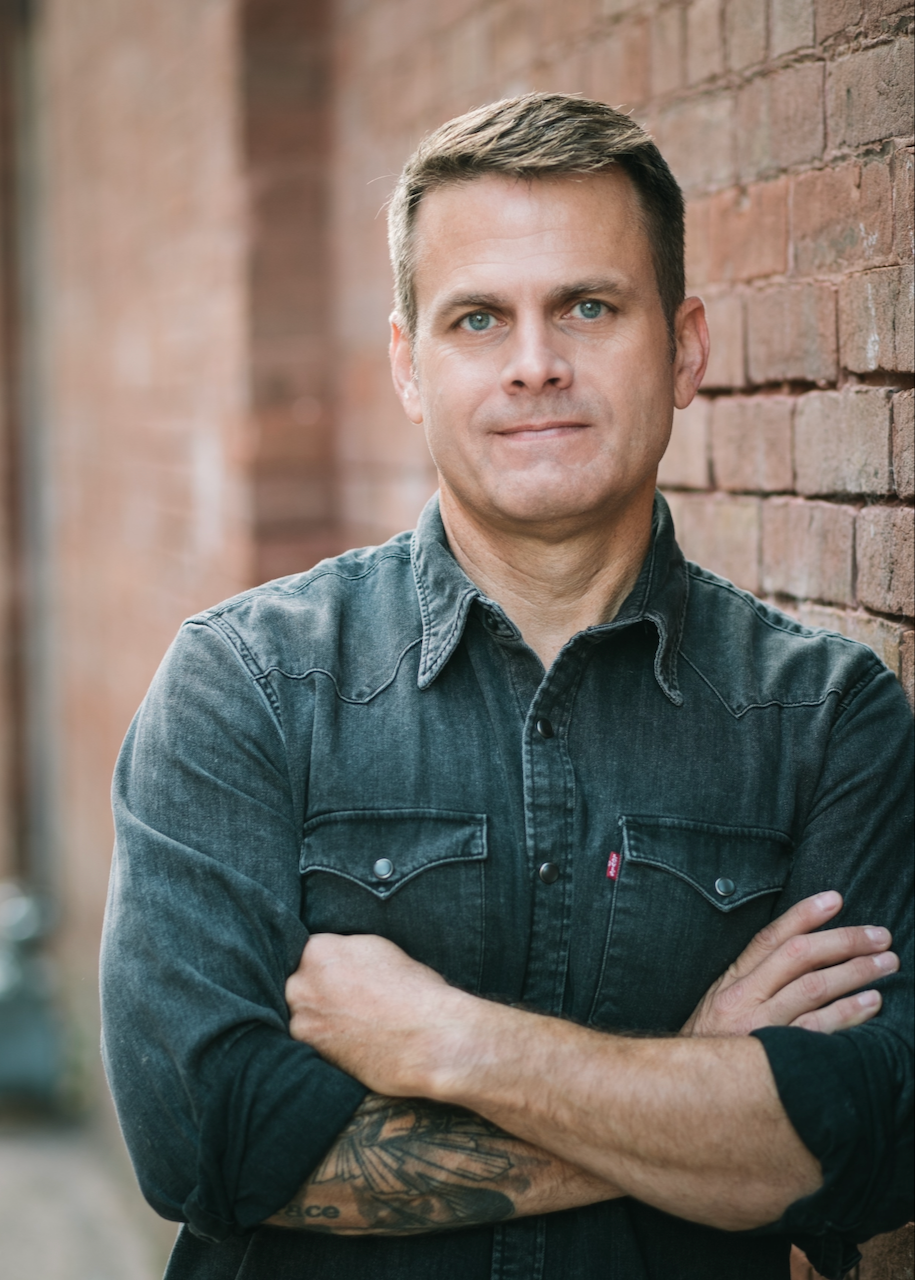
about Mike Rusch.
Mike has called Bentonville, Arkansas home since 1986. He graduated from Bentonville High School and attended the University of Arkansas, earning a degree in Computer Science and Computer Engineering.
Mike is a Veteran of the United States Marine Corps and began his career at Walmart, Information Systems Division before moving on to iconic companies such as Hershey Foods, The Walt Disney Company, and Nickelodeon/Viacom.
In 2010, Mike Rusch joined the startup team at Pure Charity, an organization developing world-class fundraising, technology, and strategy solutions for nonprofit organizations striving to address some of the world's most difficult problems. Mike serves as one of the Managing Directors of Pure Charity today where they have helped over 1,250+ nonprofits raise over $250MM.
Mike currently serves on the Board of Directors for several nonprofits, including 99 Balloons, Laundry Love, City Sessions, Mercy House Global, and New Beginnings Northwest Arkansas. Additionally, he served as a founding Board member of Canopy Northwest Arkansas, helping to create the first Refugee Settlement site in the State of Arkansas.
In addition to his professional and nonprofit engagements, Mike has been a part of the Northwest Arkansas cycling community. As an avid Gravel Cyclist, he has participated in endurance events such as Unbound Gravel XL, MidSouth, Big Sugar Classic, Rule of Three, Telluride Gravel, Birdeye Gravel Fest, and attempted Leadville MTB 100 but failed at mile 79 (that story is not over). He has also completed other endurance events like the Ironman Triathlon and numerous Marathons and long-distance cycling events including the Arkansas Traverse & Arkansas Graveler.
Mike was a part of the first graduating class of the Northwest Arkansas Community College Bicycle Assembly & Repair Technician accredited certification program and is currently a member of the Northwest Arkansas Community College teaching staff as an Instructor for the Continuing Education Program for Bicycle Maintenance Fundamentals.
He was a part of starting Bentonville Ride Club as a place of deepening local community around the thrill of riding in our community and helped organize events like the Arkansas Traverse (Documentary Link) and rides across Missouri and into Oklahoma.
Mike married the most incredible woman in the world, Corrie, and together they have four children. His love for a great story, whether told through nonprofit endeavors, professional achievements, or cycling adventures, reflects his appreciation for the diverse and interconnected narratives that shape our lives.
route.
episode notes & references.
US News & World Report Best States Ranking
US News & World Report Arkansas Ranking Details
episode transcription.
episode commentary.
[00:00:00] mike rusch.: Well, you're listening to the underview, an exploration in the shaping of our place.
My name is Mike Rusch and it's summer here in the Ozark Mountains of Northwest Arkansas. The heat has finally settled in while the southern winds fight against each other to decide if they will allow rain to fall while the unyielding heat quietly forces every green thing to submit to brown.
The [00:01:00] hay in the valley fields is now bound into rolls to wait for winter, while the streams hope for a rain whose future is still being debated.
The storms and fireworks are behind us now, but the tension of the beginning of a new school year is beginning to build.
The lightning bugs, which the newcomers can call fireflies, are becoming fewer, because each day is growing shorter.
The spring muds of the gravel roads have turned to a fine silt that fills the air and adheres itself to any available moisture source. A blade of grass, a bead of sweat, a spout of a water bottle, or even the paraffin wax remaining on a bicycle chain.
Within the narrow tire tracks on the white gravel roads along Little Sugar Creek, The memories of spring seem choked out as my eyes and lungs does everything that it can to breathe something cool, something pure, something true.
But the promise of October is a foreshadowing of a coming grace. October in the Ozarks is a certain kind of salvation. And the time until then is a season of waiting. For a gravel cyclist such as myself, it's a season of advent in this kingdom of [00:02:00] gravel.
So before the season step forward again, they force us to prepare, to recalibrate, to relinquish ideas of spring, because we have this need for certainty of place as winter approaches.
My bike GPS says that I've ridden 3, 400 miles in the past seven months since our first episode. But together, through these conversations, it feels like we've gone much, much farther than that.
Our perspective of home has hopefully expanded. Our eyes, hopefully more clear. Our minds, hopefully racing with possibilities that can see through the haze of a dusty road ahead. The many conversations we've shared about how our community is changing can easily shift to fear. And there's a temptation to reach for the brakes or the coward levers to try and slow it all down. Truthfully, none of us know what the road ahead holds, so I must fight the vain attempt to control it and resist the natural inclination to fear it.
The hope of these past months was that if we could slow down, listen without prejudice, sit in the tension of our surface level disagreements, that we may actually learn something, that [00:03:00] maybe we could learn something most importantly about ourselves first, so that we could then see our community and the people shaping it with a new appreciation for what we share.
I've been searching for a way to understand what I call our communal theology of place. The things we believe about ourselves and our place. Does it exist? What are its boundaries? And even if I can't fully define it, could I start to understand it through the eyes of another?
A kind friend processed this thought with me not too long ago. He said this,
"if we can solve these challenges together right here in our own community, it's a model for so many other communities to follow. I think I'm actually starting to see that it is possible to solve these together."
And so if one person can start to see it, then maybe I can be that second. And maybe you could be that third.
So as we try to better understand this question of what is the state of Northwest Arkansas, even if we can't define it in totality, maybe we can start to see its possibility.
Any community, and especially our community, is never one thing. It always ebbs and flows [00:04:00] between many forms, many people.
Communities are living things with depths and shadows, edges, light, and movement. A living thing to study, to observe, but never to own.
And as we begin this process, we needed a framework to ensure that we are being honest with ourselves, honest about our history, honest with the stories we believe about each other, so that we could participate in an honest pursuit of some common hope. A hope that, at the core, wants to believe that all things are being made new.
reconnect.
mike rusch.: First, we need to reconnect.
In our modern world, holding post modern enlightenment, where the maps of our countries seem to now use colors as their primary labels, our thumbs are fatigued from searching for meaning in reels and posts, and the gig economy jobs shuffle placeless industries over a mechanized agricultural economy.
The thread through all of it is that there may not be one. We are simply a disconnected people, disconnected first from the land, which is the foundation for place and belonging, leading to a disconnection from our neighbors [00:05:00] who, from behind privacy fences, we share this place with. And that has led to a disconnection from our own selves and our own families.
As a disconnected people, it's given us disconnected language and then disconnected values, which makes it hard to answer the question, What do we believe about each other? And what do we believe that we want to share?
So before we can do anything, we have to learn to reconnect to each other and to our place.
remember.
mike rusch.: Second, we need to remember, if we are disconnected from our place, we have to ask the question of why?
We have to be open to the fact that our disconnection may also be rooted in historical reasons. Maybe historical traumas, exploitation, errors of judgment, policies meant for good, but carrying the unintended consequences of a colonial origin.
After all, how can we build a shared and common future if there are still past wounds that we have not been able to reconcile, and they have not had the opportunity to fully heal?
The work of repairing our past divisions is hard, and we seldom have experience or language of how to do that. Sometimes it's just easier to [00:06:00] forget, but that only creates another cycle and a greater disconnection.
And we all know this, but our place did not emerge in isolation. We are here today standing on top of stories and events that were used to create this place. But do we really understand all the ways that our history has done this? We must acknowledge that as we view our role and our place in this community, we may not share a common history. In fact, I would say this, we do not share a common story.
We must acknowledge that even in our current chapter of economic growth, it is rooted in a deeper history than a single person, a single company, a single industry, or a single inspiration. The story of our country and the story of our state is rooted in the words that we use like freedom and liberty, but it's also rooted in power. And power is not often found innocent.
repair.
mike rusch.: Third, we have to repair as we work through an honest account of our disconnected stories. Undoubtedly we will find things that we need to repair, things that we wish had not happened, things that we wish we could [00:07:00] go back and set right.
And we frame this with words like justice and equality and equity. But justice takes many forms. There is both punitive justice, which is used to punish someone for a past offense. But there is also this idea of restorative justice. It's a form of justice that seeks to make things right, and to restore things to their original endowed form. The work of repair that we seek is this work of restorative justice for our community.
This is why we ask the questions about the challenges we have for our future. This is why we have spent so much time on conversations related to affordable housing, equity, racism, and the character of our communities.
As we work to repair, it gives us an opportunity to use our common values as tools to build common dreams for one another.
renew.
mike rusch.: And the final element of this framework is to renew. Things really do appear to be going pretty well here in Northwest Arkansas and the growth that we're experiencing. So you may ask, what is it exactly that needs to be renewed?
Well, I would propose that what needs to be [00:08:00] renewed is simply us. Our ability to understand each other's stories and lives. We need to renew our ability to connect, our ability to dream with one another, our ability to care well for our community and to create a place where we can focus once again on our communal values instead of our national ideologies.
A renewal of how we see each other, not as a label or a number used as an excuse or a sentence, but a renewal that we see each other to begin with. That we see each other as dignified for no other reason than we have a breath of life that moves through us.
the state of Northwest Arkansas.
mike rusch.: And so this is my humble attempt to answer our question, what is the state of Northwest Arkansas?
I want this to be an honest attempt of an answer, one rooted in hope but grounded in the reality of our humanity. I want to acknowledge that I have so many more questions, so many more people I want to talk with, and so many more things that I've learned but I'm still processing.
And our conversations are by no means complete, so these questions will continue. However, at this point, I think we have a fair understanding of some of the major elements of how the growth of [00:09:00] Northwest Arkansas is being experienced, the challenges, and the people who are working to solve them.
Our conversations began with Nelson Peacock, and this is how he framed our current place.
nelson peacock.: But I would say also that we're a bit of an inflection point. We've talked about this for the last couple of years. It's like, and that is as it relates to our growth. One of the fastest growing regions in the Country, and how can we absorb growth up to maybe up to a million people over the next 20 years, 400,000 additional people.
Can we grow in a way that maintains the character of our communities? Can we grow in a way that preserves the quality of life that people have? The reason people love it here. And that will be our, a big challenge.
mike.: To maintain the character of our communities and preserve the quality of life that is drawing so many people, it's definitely the goal. However, with this growth, it becomes more difficult because if that character changes or the quality of life starts to decrease, the growth is likely to [00:10:00] also stall, which risks the economic growth that the region is benefiting from.
Judge Barry Moehring stated it like this.
barry moehring.: But our challenges are all related to our prosperity and growth. Almost all of them. Everything we do is a growth problem.
It's all a math problem. Part of what we're witnessing here today is we are a victim of our own success . And you're looking at, an Metropolitan Statistical Area here, that's going to approach a million people in 2040, 2045. Everything that we have to think about has to relate to that.
the work ahead.
mike.: So as we begin, is our challenge to maintain the character of our communities, or can that character survive under the challenge of prosperity?
Is one in conflict with the other from the very beginning? Can we do both?
When we think about the state of our community, where do we even start?
These are my opinions, humble opinions, that have formed over many hours of listening to our community leaders. These are my opinions based on 30 plus conversations I've had, and I'll frame them into a series of things that we must do, a series of we must statements.
And it starts like this.
we must...begin with relationships as the foundation community building.
mike.: We must begin [00:11:00] with relationships as the foundation of community building. It's of no surprise that we are inundated every day with messages of how divided we are, how much we don't agree, and how far apart our opinions, policies, and goals are. But before we go down this road of despair, Dr. Nick Ogle actually gives us a centering position.
nick ogle.: We will find ways to divide ourselves. We do it in our communities all the time, but the only way to be resilient, to repair, is to go back to the core of I have to sit with you. I have to have empathy with you. I have to have vulnerability with you. I have to get myself into a space where I go, I want to understand the world as you see and experience it and hear this. Whether or not I agree with you, but I need you in my life because you show me a different way of seeing and experiencing the world. And the further we get away from that, Mike, the greater risk we are to no longer being people that value one another.
mike.: So I would begin here with this first [00:12:00] challenge, that this narrative of how divided and different that we are told we are, this narrative, I believe it's run its course. I don't believe it's true.
In fact, I would say this, it's absolutely not true.
Division creates neither character nor prosperity.
We have to see others beyond the boundaries that we have for ourselves. And we just see them for the value they uniquely hold.
Ginny 99 balloons explains this through the lens of her daughter, Lena.
ginny mooney.: what does it look like for Lena to be included in her community? And I think a lot of us will go, we just need to adapt things. Which is true.
But I don't know that always means that she is included and we want that to be enough, right? I think we collectively as a society, a lot of times without thinking intentionally, we want it to be enough. We want there, we want to say, hey, this door is open to you. You have access. You can come in.
But real inclusion. means I think that her [00:13:00] presence is missed when she's not there. And that's different. She has to be known to be truly included. So it is not about just building the ramp. It's not about just saying we're going to adapt this. I think that it's great, but we push a little bit further with that to say, this is someone who deserves to be known.
mike.: To be known as something very different, something very complete, something very whole, something that's beyond the temperance we have for each other, something that could actually change us.
And while sometimes the way that we see the external portions of ourselves, that cannot be the way that we hold the value of one another.
And Srividya Venkata Supramanya says this.
srividya venkatasubramanya.: My life has taken me to all these different cultural experiences, and I'm the richer for it. I've not lost anything out of it. If anything, I've gained so much more confidence and so much more understanding of, of everybody.
And that's why I, can say again very confidently that we are [00:14:00] more similar than different. you know, because That's the truth, you know, we just think, you know, sometimes, you know, the color of our skin or the clothes we wear or something we do may seem different, completely different and alien, but when you actually just talk to them and find out why they do that. You'll often see the roots are kind of the same.
mike.: Whether that is our default posture or not, if we choose this lens of seeing others, even if they seem to represent something completely different than we know, a relationship is always possible.
And sometimes we see this leadership in places that we wouldn't often think to look, Chastain explains.
andy chasteen.: That's what this boils down to face to face conversations with people that you may not have anything in common with, or maybe you have different political beliefs or whatever the case may be. You can always find common ground with people. It doesn't matter who they are. You can always find some common ground.
And that's what we're trying to do with everything that at least I'm working on. Let's find [00:15:00] some common ground. Let's make some friends. Let's wave to everyone we see on the street and let's keep this place a friendly, welcoming location for anybody who comes here.
mike.: Over and over again, I hear people express that the foundations of any community, especially our community, that it's rooted in our ability to see others as worthy of dignity, worthy of respect, and to see what we share in common, to lead with empathy and to lead with curiosity.
If this is possible, I may actually start to believe anything's possible.
So what is it that often stands in our way?
our national dialogue.
mike.: Well, I would propose, and I don't think anyone would be surprised by this, that the state of our national dialogue is one of those things that absolutely stands in our way. I don't think we fully understand how this clouds so much of our mind.
Mireya Reith unfortunately provides an example of this of how it reaches too far into our community.
mireya reith.: And I think that's one of our big challenges right now. Immigration isn't just polarized. It has been weaponized, and weaponized [00:16:00] for the purpose of winning elections.
And, unfortunately, that weaponization, because it gets so much visibility is still in our day to day rhetoric and dialogue and that is what people unfortunately are following.
mike.: And even if this rhetoric seems to have forced some to yield to the weight of it, I still believe that for all of us, yes, all of us, at its core, it's just not working. So when it shows up in places in our community, we have to work to name it and to remove it.
Bentonville Planning Commissioner Rod Sanders shows us how.
rod sanders.: The thing I hate hearing most in a meeting, and I understand, you know, they're coming out of fear, is Every once in a while someone will say, I don't want those people around me. And, you know, who are those people? Those people, I mean, I don't know who they're talking about, but that is not, that's not a lens we need to live by.
Those people could be my niece, my children, could be your children, could be my, you know, I mean, I just, those are all our, those are [00:17:00] somebody's relatives. Who is that? And that is not a good That's not a lens that you need to, to live by,
mike.: We are simply not our national dialogue. Our region is not our national dialogue. Our community cannot be expressed or defined by this national dialogue. The two prevailing opinions about how things should be run are simply not sufficient to define me, and they're not sufficient to define you.
Our national dialogue is not capable of defining our neighbors or our community. But we also sometimes have a hard time recognizing when it solidifies into an ideology beyond which our values can no longer operate independently. And so from here, we must focus on community values over national ideologies.
we must...focus on Community Values over National Ideologies.
mike.: There's a wide chasm between values and ideologies, our values being a person's principles or standards that direct their behavior, that helps them define what is important in life versus an ideology, which is a system ideas that can form the basis of an economic or a political theory or policy.
But an ideology [00:18:00] does not allow for compromise. It views itself almost as morally superior to a value. Yet our core values allow us to embrace this complexity. It gives us room for explanation and it holds a morality within itself that doesn't need a system to give it authority.
The world is increasingly complicated. I get it. I feel it.
However, limiting a decision to an ideology oversimplifies the complex. It removes empathy and it leads us into these tribal politics of our organizations and groups. So can we recognize and deconstruct those national ideologies and return to the community values that we never relinquished in the first place?
Can we speak once again from those things that can shape our belief about this place, despite the complexity and challenges, as a way of renewing the hope of our collective future?
I think Dr. Debbie Jones says this more clearly than I can.
debbie jones.: I think the most damaging thing that we have, and it's in national politics, but it seeps into our daily jobs, is this, you have to [00:19:00] take a political platform, and this is what we believe.
There's not a platform that I would ever sign on to and say, I'm gonna, whatever you put on that paper, I'm gonna agree to all of it.
It is issue by issue and listening to all the details of that issue. And by all the details, they matter. And so I'm not going to have any platform to teach me or to tell me how to think on an issue. You have to deeply research and read every single issue before you really can make a judgment on it.
And I, I think that, until we get back to that and it's good common sense, stop letting people tell you how to think and act and talk. Stop relying. on social media and the little short soundbots, because there's probably more to the story behind that.
mike.: And I realize this isn't always easy, but when we walk [00:20:00] through this, when we do this, when we practice this, it leads to unified communities.
Dr. Nick Ogle has something to say about that.
nick ogle.: we have to experience hard things together. We have to have the conversation and it not turn so conflictual that one person shuts down and the other one becomes irate. Which is what we watch 90% of our Political interactions become where we watch 90% of our harder decisions as a community become. It can't do that.
To get to wholeness we have to back up and get more into a repair, resilience mindset that says, Hey, these two live in harmony together. We need the hard things because by going through the hard things together, we ultimately get to a place of creating unity with one another, which then allows me to reconcile things inside of myself.
mike.: And at this point, I know this sounds like it's getting a little too personal, but Ada Lamone, as you've heard me say before, says that "systematic change is deeply personal."
and this is the deeply personal part because that is what is [00:21:00] required to build relationships that lead to belonging.
we must...create a common sense of belonging.
mike.: So we must create a common sense of belonging. And that requires us to acknowledge that before anything else, that we don't share a common history of this place. What do I mean by a common history? Well, a lot of things.
First, with the rapid growth of Northwest Arkansas, people are coming here from not only all over the country, but all over the world.
Each person comes with a unique cultural context, their priorities, their needs, and their history. Just think about someone who was born here in Arkansas may be very different culturally in their upbringing from someone from New York City, or London, or El Salvador, or India. different histories, different families, different priority of values, different hopes, different needs, different, you name it.
Is this a challenge? Yeah, of course.
Is this a problem? It shouldn't be.
But let's bring it a little bit closer to home. As a white man, my family's history is one of coming from Europe, seeking economic opportunities, a new beginning, and a family that was welcomed here.
But what about those who come from other places in the world today?
olivia barraza.: So, we have a good, [00:22:00] a lot of good intentions, but we also need to feel like, you know, we're part of this. And, and going back to when I first moved here, you know, feeling lonely, feeling isolated. This is not healthy for, for anybody. So, I feel like Northwest Arkansas is changing and I love it. I'm, I'm feel proud to say that I've, part of this community, but there's some times that even myself, I don't feel like home.
I don't feel welcoming in some spaces. And, and I feel like there's a lot of opportunity to grow for the people who are Native here in Arkansas to welcome and to you know, change that perspective and mentality of, you know, of, The racial aspect, because when I came here, you know, I was very intimidated to go to other [00:23:00] towns.
mike.: Olivia Barraza is one of the kindest souls I've ever met. She's lived in Northwest Arkansas longer than I have, but for some reason, I'm the one considered the local.
This is the reality of people from a majority culture. That means that I seldom have to address, or I'm able to address when I want to, and then I can retreat from them when it's not convenient.
It's just not my daily experience, and that makes me ask a whole lot of other questions.
Or consider my friend Chris Seawood's family story.
chris seawood.: But yet at the same time, and I'm, this is something honestly here later in life I've been grappling with Because in one sense you feel that this is your land, but yet at the other, on the other hand, at least for me, this is the grappling you feel as if you're a stranger in a strange land. Because yes, I can make the claim that this is my land, but it also is not.
Because of how we've been treated in this land. And that [00:24:00] there is also this separation of not knowing also our heritage of where our ancestry truly comes from, or at least my ancestry historically.
mike.: Chris's family has been in Arkansas for six generations, but Chris's family's story of coming to this country is one of unimaginable exploitation.
Or consider those who are the original caretakers of what is now called Arkansas. The Osage, the Quapaw, the Caddo people who were removed from these lands.
These histories are obviously hard histories, but they are real. And we, especially in white communities, need to remember that we all carry these stories into this place. These are the stories that we have to be honest about, the ones that we have to work to repair. Arkansas is a land shaped over the centuries by so many things, and not all of them are right or just. So our current wave of economic prosperity must be understood within the context of all these other stories. They are not separate things.
When we talk about building a shared future, we must acknowledge that we're all starting [00:25:00] from very different places.
Places that require wisdom and empathy to navigate through when trying to find a sense of belonging. Chris draws from deep wisdom here.
chris seawood.: but that's the impetus of the beloved community, and that your work matters and in belonging and in doing that kind of work, you are helping to build the beloved community, and Dr. King's vision of the beloved community is a community where people, regardless of race, gender sex, et cetera has a sense of belonging and we should be working to dismantle all systems. Any and all systems that would be deemed oppressive that prevent them from living within that community.
mike.: If I care about relationships, if I care about building our community, I have to care about these things without suspicion, without judgment.
Mireya Reith expresses this within the context of her [00:26:00] work of working with people new to this country and new to this region.
mireya reith.: My hope is that what we do, what we're seen as doing with immigrants, that we can finally elevate that it's not just about immigrants. It really is about all Arkansas.
I think that's one of the things I struggle with the most. It's making the case that we're not just another self-interest group. That immigrants aren't just yet another self-interest group that wants their piece of the pie. That this really is thought about, well thought about, it's systemic, it really is about making everything work for everyone.
mike.: So if we accept that we all benefit from a mutual and collective sense of belonging here, then it would be in our mutual self-interest to focus on that.
And that means we look to the work of repair as a way of healing for our community. Sharon Killian, the founder of NWA Black Heritage, says this.
sharon killian.: And this really, I see it, as an effort to help us all [00:27:00] in our region heal. Every, every city, every town around Fayetteville was sundown town.
And we really have to, we have to take the layer, we have to scrape off the cover okay. to heal it. And we are doing that in Fayetteville, I believe. We're doing it in Fayetteville because, Just because Fayetteville wasn't a sundown town doesn't mean that they did not go on a march for erasure from the very beginning.
There was a march for erasure from the very beginning and a diminishment that was taking place throughout the whole. We can read it and in the archives. You can read it in the statements. You can read it everywhere. You can see it. It's the truth, and I think the people here are beginning to, to to accept the fact that it's all true.
When we do the Black Historic District. It's all of ours. It belongs to all of us. We all are connected and, and it's, it's all of ours. All my family, all my family is part of it and they're not all black. We are mixed up. We all have, we all have relationships and, and, and [00:28:00] we are capable of love. And we are more capable of love when there is truth and understanding.
mike.: I believe the work of repair carries the hope of healing and moving forward together, which allows us to work towards a prosperity that works for everyone.
we must...build a prosperity that works for everyone.
mike.: And so we must build a prosperity that does work for everyone. For many in our community, the prosperity of our region is working and working well.
We celebrate that and we want that to continue, but we also know that this prosperity isn't shared across all people here. You can listen to other podcasts and journals to hear the extensive work of where our current prosperity is working.
However, there are a lot of people in our community that are working to address this where it isn't.
Jeff Webster gives us some context.
jeff webster.: that's the point here, folks, is you don't realize what's going on in our community.
And these are hardworking people, but they just can't access housing. And you look at far and away the number one thing that people come to us "I'm having trouble paying [00:29:00] rent."
It's the single biggest thing someone's going to pay. Where this starts to go is, it just dominates what everyone needs help with. And even for our Board, they're like, well, how is housing a social determinant of health? But we always say, the first doctor bill and the first copay someone pays is to the landlord. Because you don't pay that landlord, you're living under a bridge or something.
I'll never ask this question again on why housing is this big dominant part of a healthcare outcome.
mike.: And Fayetteville City Council Member Sarah Moore shares how she believes this is more than just a personal issue of responsibility, that our cities do have some influence that proactive policies can make a difference in.
sarah moore.: Things like in the city of Fayetteville, unfortunately, you know, we're experiencing 20 poverty. That's one in five people. So as you go through a shopping center. or parking lot, you know, every fifth person you count is in poverty in our community.
Are we okay with that?
Because the policies and the way we are [00:30:00] budgeting today is ultimately giving us that outcome.
And are we all right with that?
For me, the answer is no. And I think directly the types of things that we can do as elected leaders across our region around housing, around the possibility of, you know, economic opportunities for individuals to, to move upward or to meet, you know, this increased need around public health. Public health is public safety.
mike.: Bentonville City Councilmember Gayatri Agnew shares her story of how investing in a prosperity that works for everyone can literally change people's lives.
gayatri agnew.: What's important to know about me is I was also raised in an affordable housing public private partnership and before I was five years old, my family was not in stable housing and when my mom was accepted into the housing development where I was raised,
and that housing changed my life completely. Absolutely. That housing changed my mom's life. [00:31:00] It changed my sister's life. And so where you live matters.
mike.: Yes, there are some real challenges in our region that are hindering people from participating in this prosperity. The major challenges for our region today seem to be pretty clear. Housing, transportation, healthcare, and more.
Emma Willis ties this together as she explains how the lack of equity in housing can work against building a sense of belonging.
emma willis.: in the course of wanting to address equities, are we addressing the things and the people who actually live here in Northwest Arkansas? And I would say we're only addressing a fraction of the population. If not only three to 4 percent of the workforce. And A lot of my comments early on with affordable housing had to stem with the fact that the education isn't equitable. Okay, There's no equity to the approach around talking about affordable housing because one, we're not speaking from the same script. it's like the first rule of dealing with community is making sure everybody's getting the same information. And right now we are like flying by the seat of our pants and We have multiple definitions for affordable housing, even who [00:32:00] should be eligible for it. And so inequity, right? That that becomes an inequitable practice because really if we don't catch it, it's a matter of people not thinking that this place is for them anymore.
we must...celebrate that we can solve hard problems.
mike.: So belief in the benefit of our shared belonging means that we will prioritize and solve these challenges. And the good news is this, we must celebrate that we can solve hard problems together.
And we have a lot to celebrate.
I know at times it can be hard to see where we're succeeding as a community. But there are more examples of our successes than there are of our failures. Unfortunately, the failures are the only ones that seem to occupy the evening news.
the storms.
mike.: And while the affordable housing issue is often at the top of the list, one of the largest challenges we've had to face where the tornadoes of Memorial Day that ripped through and devastated so many communities and the reality of the destruction and the loss, it gave us proof that we can solve the hardest problems together and that we are the strongest when we serve and show up for one another.
josh eddleman.: hi, this is Josh Edelman. Sorry about the chainsaw noise in the [00:33:00] background. Just out here with neighbors, friends, acquaintances, cleaning up after several tornadoes hit Bentonville, Arkansas. It's been incredible over the last two days and a half days to see the cooperation in collective community, getting to meet neighbors that I haven't met before, getting to hear honest emotion and honest reflection from everyone as people experienced a collective trauma together.
And and in light of that, the response is, it's not about my stuff or your stuff it's about our city, our place together and restoring it back to safety to, to some semblance of normalcy. And it's been incredible. Thankful to be a part of this community.
mike.: And my friend Brian Hirschy shares this.
brian hirschy.: Hey, Mike, appreciate you asking me to share. Hope this is helpful in some [00:34:00] way for you. But I have to confess that when you asked me to talk about community it comes with a certain amount of skepticism because a big chunk of my life the conversation around community revolved around, um, exclusivity people, when they talk to my community, they're really looking for people that talk and think and and believe what they do.
And so exclusivity is often been built into the conversation of community for me. And as I thought about what it's like to work in disaster areas several times in my life what I've noticed is that it's very inclusive. That we really all understand the language of pain and suffering and loss.
And inherently we become inclusive. I have no idea what the people in the homes that we helped clean up today believe. I don't even have any idea what the people who were working side by side with me believe. And so there's an inclusivity that comes with that. And [00:35:00] In a sense inclusivity is the hallmark of vibrant communities.
And in a lot of ways, that inclusivity is the kind of thing that can propel communities. And it catalyzes us through hard things. And I think even the simple act of helping somebody clear their yard is in many ways a road forward to what really great community could look like.
mike.: And here we see city, county, state, and federal agencies all working together to serve those impacted hardest from the storms. And it's proof that in the most horrible of situations, we can return to our deepest held convictions of the value for each other. These can be a reminder that even when the storms aren't as obvious, or they've developed over hundreds of years, if we can recognize them, we can solve them.
housing.
mike.: And one of those is our current housing crisis, but we are solving hard problems together. We don't always appear to agree because our approaches may differ, but ultimately, I believe for the majority of our largest challenges we [00:36:00] face, we all want the same thing.
We saw this in the recent work to create the teacher housing solution for Bentonville schools. Even though we may not always agree on the way to do something, the end goals aligned.
Bentonville, city council members Becky Seba and Gayatri Agnew can demonstrate this in a real practical way,
beckie seba.: I don't ever want to look at figuring out how do we get new people into Bentonville into affordable housing while I'm pricing out the current people because they can't afford their taxes.
And so they're having to decide, can I, can I stay here or am I going to have to move out to a place where I can, in my taxes will be lower and I can afford to live. Those are the types of things that I'm kind of having to weigh.
Because would it be wonderful for all of our teachers to be able to live in Bentonville? Would it be wonderful for all of our firefighters and, and police officers and all those people to live in Bentonville? Absolutely.
mike.: And here a council member Agnew shares her perspective.
gayatri agnew.: ...but I think in part the [00:37:00] question you're asking and the thing I want most for every resident in Bentonville is how do we solve tough problems together? And that together is the most important part of that.
So we're going to disagree, of course we're going to disagree. We should disagree.
That's a, it's not the disagreement that's not productive. It's when you can't get past a disagreement that's not productive, right?
We've been really blessed, I think, and really lucky in the City of Bentonville.
Our city government not just our elected leaders, but our, our city managers, our city department leaders, are doing phenomenal work, just
mike.: and when we work together, we see the results. Dr. Debbie Jones shared this,
debbie jones.: the best thing that happened to me today? A teacher has already emailed to ask how to get enrolled for that housing. And we don't have those answers yet, but we're developing those.
And what does it take? The basic things it takes is a School Board with courage. A community [00:38:00] that's willing to problem solve. That's willing to rather than get mad, create solutions. And it's, it takes different organizations to really work together to meet needs of the community.
mike.: and when we can solve these kinds of challenges, it allows us to move forward as a community holding onto the values that we hold most dear. Bentonville Planning Commissioner Rod Sanders takes us back to the core of that.
rod sanders.: I just want to go back to that one thought there's always room for one more and we never close the door. You know, we can never those, those are two things that we just can never do. And we, when we do that and get that thought, I mean, you can, you can almost turn the lights out when you see communities do that.
mike.: And when those values shine as Chris Reichsteiner, a new resident of Northwest Arkansas and a new friend to me, well, he explains it's just infectious.
chris rechsteiner.: So, moved to Northwest Arkansas in February of 23, and my [00:39:00] wife, Christy, and I decided we really wanted to live someplace that was outdoor focused.
Something that we could really invest ourselves in and see ourselves becoming a part of. And at the core of it was it was evident immediately that this was an incredible community that really cared about the things that we cared about.
When we were here for Big Sugar in 2022, we stopped at a local place to have a beer. Started talking to a couple guys sitting at the bar next to us. Within about 20 minutes, They had provided us their phone numbers, offered directions, and tours, and realtor introductions, and just everything we could possibly have wanted to know, they couldn't have been more excited to tell us, and to share.
And their excitement in the community was infectious. And these guys, they're younger than we are, but lived here their whole lives. And have no intention of leaving. And that was really the catalyst. That was the confidence of, here are these people who were the outsiders, right? Who were invading their territory.
And they couldn't have been happier. And it was just so evident that people were really excited about what was happening here. They were really excited about the community and really loved it and wanted to share it. And that's, you know, you see something like that happen, you just kind of shake your head and say, Well, that's not normal, and after you get your head around the fact [00:40:00] that this is not normal, you really start to say, well, how do I contribute to it? How do I become a part of it? And how does something like this change me? And here we are.
we must...stop the city sprawl.
mike rusch.: And while solving this challenge of housing still requires an incredible amount of focus and a great deal of urgency, we must continue the spirit of working together both within and across our city and county relationships, but more importantly, within and across our relationships to recognizing and prioritizing our common values.
Housing developers, landowners, and municipalities, they all have a responsibility for smart growth. And they cannot see our rural communities as something to fill and occupy. Instead they need to be seen as something to celebrate, uphold, and preserve.
Practically that means we can start by agreeing that we must stop the city sprawl.
Fayetteville City Planner, Jonathan Curth, understands the complexity of this like few other people do.
jonathan curth.: There have been a lot of decisions made by our forefathers and foremothers that have made this a very desirable place to live, whether it's in regards to the outdoors, employment, a combination of those things. So regardless of what's happening at the university, we're seeing a lot of [00:41:00] growth in the city.
And that creates a lot of tensions. It's causing a huge increase in housing prices, as I alluded to earlier. That's having a lot of impact. Some people have lived here for decades. Some people are being priced out of living in Fayetteville. They're having to move further and further away. Our students are often moving out into the community because there's not enough housing on campus.
And so there's a lot of tensions to be seen there as well. I could go on and on just as you add more and more people, the dynamic and the equation gets more and more complicated
mike.: and this feels like a reality that is becoming harder and harder to stop, as long term Fayetteville resident John Ray shares. And sorry, we were riding bikes when he was talking.
john ray.: I say this not because I'm super smart or anything. But you know where this is gonna go. This pattern of rapid urbanization of rural spaces has been done time and time again across this country. It's not rocket science.
And sure, each area has specific nuances and things, but the pattern is pretty much the same.
Concentrating of wealth into the urban centers and resources and then just [00:42:00] unfettered sprawl in the unincorporated areas right outside the city limits and no like no good deed goes unpunished right. The desire planners in those urban cores to maintain The uniqueness, the character, by more and more regulation many necessary pushes this just Incredible demand for more affordability outside of the city. It drives costs up the closer you get to the center. It becomes more exclusive. , no matter how hard you try to preserve it.
mike rusch.: unfortunately, because the execution of each of these challenges ultimately requires every city to work together, we find that the challenges continue, and we often find that the progress we need isn't the progress we're aligned to pursue.
For example, in the challenge of housing, Jake Newell, local developer, looks out to what not solving this problem may look like.
jake newell.: If we don't handle this locally amongst the big cities in Northwest Arkansas my fear is [00:43:00] that the growth goes just extreme, not even in Bentonville proper, it just goes way west and we have major transportation issues and we have people living way far away from quality of life amenities that now not everyone can enjoy them. And so I think that ultimately we don't provide the supply what will happen is big outside groups will come in and they'll build whatever they want, and they'll go, they might not build it in our city, they might build it just west of our city, but they'll build whatever they want, and they'll build it at mass scale, and if they absorb, then they absorb, that gets absorbed out somewhere, and maybe it's not built in a way that really builds our culture and community longterm.
mike rusch.: At some point, if these challenges are not met, the reality of expectations of growth are going to have to change. A well paying job here isn't as helpful when the cost of housing is always rising, healthcare isn't available, or transportation challenges start to replicate the gridlock of other major cities. I don't know, maybe it already has.
We can do better. We have to do better.
And while there is no one single solution, there is a great possibility, look our city [00:44:00] centers and continue to build to allow more people, more people, not in some futuristic model, but in a model that's as old as we have known,
Megan Brown with the Urban Land Institute of Northwest Arkansas explains.
megan brown.: ......a big turning point was the creation of the automobile and allowing us to be physically more spread out. If you go to a, especially a lot of the smaller East Coast communities, everybody was walking everywhere. That was a consideration in the built environment.
So your house was close to the church, was close to the local grocery store, was close to the school, and you could access it easily. There were uh, sidewalks. There were, uh, well designed sidewalks. You know, Everything was intentionally thought of the person first instead of the the car or the, and it was community focused.
mike rusch.: But that means we're going to have to think and plan differently than maybe we have been.
megan brown.: but a lot of our ideas around housing are built around one specific type of mindset and historical vision of what a house looks [00:45:00] like. I mean, we have many groups here people groups that come from backgrounds of multigenerational housing and it's it's great grandmother to great grandson all living under one roof and that is sometimes not even legally allowed to be built here .
mike rusch.: This increase in housing options closer to our city centers has a huge impact to our other regional goals, such as the preservation of natural resources for the purposes of agriculture, outdoor recreation, and of course our own well being and health.
Leif Kindberg, the Executive Director for the Illinois River Watershed Partnership, gives us a stark reminder of what's at stake.
leif kindberg.: But when I look at the growth that happens as it expands and really quite honestly gobbles up farmland and, understandably so, land is sold for developments.
There will never be any time where we're getting that back, getting those remnant prairies back or getting that watershed that has been degraded or creek side that is now [00:46:00] inaccessible and cannot be fished by my grandkids in the future.
mike.: And in addition to the need to preserve our natural resources, Benton County Judge Barry Moehring also reflects how it's impacting way of life that this region is losing.
barry moehring.: And if you're a dairy farmer and you've been getting up at 4 in the morning and you've been busting your butt, frankly to break even or maybe a little bit more in some years not, and somebody's going to come write you a big check and you're going to get to live out the rest of your life not having to do that, that's going to happen.
And that's why we have virtually no dairy farms left in Benton County. At one point we had the most in the state, I believe, I think we had over a hundred, and then that property, you see it whether it's used for subdivisions or warehouses or, and a lot of times it's within an annexation space from a city, and that's the way this is happening here.
mike.: And while this is not a problem unique to our region, agriculture has changed so much and family farms have been disappearing at alarming rates for decades. But sprawl and land prices, they only magnify the way farm families in rural communities are changing.
[00:47:00] Farmer and Benton County Farm Bureau President Wes Evans sees it like this
wes evans.: Then you've got guys who literally farm their entire lives and they, honestly, the farm is their retirement, and so I never, ever fault anybody for wanting to sell out and move on. You got to realize too, a lot of these older farmers and people's asking, why are they selling? This is where it gets deep because. If they had kids, that farm wasn't big enough to make a living for their family and their kids family.
The next generation just could not make a living on that farm. So they had to go to town and get a job to raise their own families. As soon as that happens, you start separating farther and farther from the farm. So sometimes they still work on the farm until they, they end up retiring and taking the farm over.
A lot of times they go to town, they don't have a lot to do with the farm. If they ever do come back to the farm, They don't have the skills and knowledge it takes to actually manage that farm and it'll actually go [00:48:00] backwards, and so you have to remember that aspect if there's not somebody to turn the farm over to and people start flashing enough money that you don't have to worry about making it to your grave anymore.
mike.: And of course, our natural resources used for outdoor recreation. It can be a tremendous asset. So the preservation and use of those resources, it can really be an economic engine to benefit us all.
Michael Spivey, the President and CEO of the Ozark Foundation, sees this broad potential.
michael spivey.: I'd love to see communities in Arkansas be inspired in the way that some of the communities already are in, in positioning the state as a premier outdoor recreation destination. We see in Bentonville and the broader Northwest Arkansas region that already people coming to Northwest Arkansas for spring break, coming to summer to ride bikes.
And Mike, you know better than I do, that was not happening 10 years ago. And, [00:49:00] and, and that's a breakthrough, and again, it's thanks to the Walton family who created infrastructure that makes that possible. And now the state is, is doing these things, making these investments in state parks, making them more accessible, creating some of that infrastructure that you need.
mike.: And you can also hear Allyson de la Houssaye expand on this and how she believes that our region can lead the state and how this industry helps move this state forward.
allyson de la houssaye: How do we create a better future? And I think especially with the traverse and then the work that I'm doing at the state level is outdoor rec and cycling, can these be answers to those questions? Can the bike play a role in that?
Or the outdoor recreation, can that help uplift the Delta and these other areas of the state that are a little more economically depressed? I think those are great questions and I, it's something that I want the audiences of the Traverse to be thinking about, not only the history, but what is the future for us as [00:50:00] Arkansans?
mike.: And a great example of when these values take root is that they can draw real people to experience our state, such as this year's first Arkansas Graveler from the Ozark Foundation. It was led by event director Scotti Moody and it drew people from over 35 states to Arkansas.
scotti moody.: I think people will learn about Arkansas from this event. And my hope is it becomes a legacy event for this state.
I think the intimacy of our smaller group is very important to me. So while we may scale it, it's never going to be a RAGBRAI. I think the size of our group and the grassroots level of where we're going, dipping into our national forests, our state parks, the beautiful things that people can do. I want to keep that alive because that grassroots feel is what allows people to sink into our landscapes on a bike. And I, I really think that over time, this event will become [00:51:00] an iconic gravel cycling festival for Arkansas.
mike.: So with these opportunities and the needs to preserve our natural spaces, our natural resources, and the beauty of our rural communities, That means that municipalities are going to have to focus deeply on how city growth can happen without requiring more space.
I understand there's resistance to some of this, I see it in my own neighborhood. And maybe from my own experience, I believe that we have such large communication gaps between citizens, city planners, and developers, that they can absolutely be bridged.
But first, we have to be open to how we talk about this. Megan Brown has something more to add here.
megan brown.: I think, um, density itself has become a little bit of a dirty word in our community. And I think that's why changing a little bit of the mindset. Of, um, housing choice, or having the choice for people to choose if they want to bike to work.
I don't know that conversation specifically, but I would imagine there's not the conversation of we're getting rid of cars. You know, we're not going to allow you to [00:52:00] not drive to work if that's what you want to do. So if that is your choice to keep your car to drive, yes, you may have to drive a little bit slower.
mike.: And if we can talk about this well, I think that we can see that there are some really, really great ways to do this. As Jake Newell explains here.
jake newell.: And we are just super passionate about finding locations where there's already infrastructure, there's already water, there's already sewer, there's already electric.
And, we're close to ultimately quality of life, we're We want to be somewhere where someone can leave their most likely walk, but at least bike access grocery store, access work, as access school access parks, access trails, museums, and fortunately we're in downtown Bentonville and that checks a lot of the checks all those boxes and so that is to me infill development is You know versus going out and creating infrastructure you we're tapping into existing infrastructure, cost less, should, take less time.
It's less [00:53:00] expensive for cities to maintain, less expensive for cities to maintain because you're building on infrastructure they're already maintaining
mike.: and here's where we can also simply return to what Nelson Peacock shared with us at the very beginning. He gave us this.
nelson peacock.: The goal is to have enough density in our downtowns where we can bring more people in, have more things to do absorb, these 400,000 additional people over the next 20 years, but also not feel have it feel overbearing and too dense like, some of our major urban areas across the country and also do it in a way where, you know, the teacher that teaches, can live there or the firefighter or the police officer that they don't have to live out, in a rural community and commute in.
so I think about quality of life and character of our communities more in terms of people rather than buildings. People get focused on the building and like, is it too big? Is it too small? But really, it needs to serve what the people need, because that's what creates the character of our communities. [00:54:00]
mike.: I led with We Must Stop the Sprawl, but where we are ending is with a reminder that at the root of what we are trying to do is both preserve and continue creating the character of our communities, and that is not just an urban or city idea. This must also be a work that stretches across our entire region, and so we ask municipalities to focus here. We must show our rural neighbors this character because they have the right to be skeptical of us.
we must…build bridges between urban & rural communities.
mike.: So we must build bridges between urban and rural communities. There are many reasons I named this as a, we must, the rapid growth of our region is also rapidly moving urban populations into traditional rural areas. At the core of this is land use and the associated rise in land values.
New people on new land brings new challenges and new questions. A people in a new land without a developed sense of belonging and responsibility to that land coming into places where people have a deep sense of belonging and responsibility to the land doesn't happen without disruption at best.
The boundary water of sorts here is unclear and often [00:55:00] undefined, it flows with the market demands of a storybook idea of what a home should be. Something tangible, something that stands alone, something with a white picket fence, something that allows us to say, this is mine and that is yours.
But just like the days of old, this new land, it's old land, and the people who belong to this place have opinions to what it means to live in these spaces. And with new people comes new definitions on what it means to be connected to this land, oftentimes at the expense of a belonging that is dismissed as from another time and another generation.
And so, change happens.
And from my point of view, this is often most seen on a bike that is now, quote unquote, discovering these lands and with all the baggage of a new world that seems to assume itself upon a place without asking for permission.
And soon it can turn into us and them, city and county, new folks and old folks, liberal and conservative, or whatever label you'd like to use. It's just another story of colonialism, except this time we all speak the same language.
So, how [00:56:00] do we cross this divide? Benton County Judge Barry Moehring gives us a little glimpse where the problems start.
barry moehring.: What I see that is interesting there is probably where the tension has been the greatest is right there on a county road. Where a, where a bike and a farm implement come face to face, okay.
For a number of years, we were getting pushback from our rural area about primarily the gravel bikers being out there. And a coalition was formed, included the Farm Bureau and the Cooperative Extension and Benton County and the Runway Group that represents a lot of the biking community. And we worked together to just try to take that tension down. We call it Respect Rural Roads, which I think has been a great idea.
mike.: And as a gravel cyclist, I'm going to return back to what Andy Chasteen has done.
andy chasteen.: Rural recreational roads is building relationships with the folks who live on those roads. Farmers the people who live out there. And also let's not, let's not forget, you know, there's other ways to enjoy those roads, whether it be, you know, people horseback ride on those gravel roads, people run on those roads.
So it really, it was really built to be. a almost like a we really wanted to preserve the rural experience. Let's just say that. The rural [00:57:00] recreational roads initiative is let's look, let's preserve the rural experience, whether on the recreational side, whether it be, you know, cycling, running horseback riding, whatever recreational, you know, activity that, you know, folks do on those roads.
Let's build relationships with the people who live out there because there is this disconnect between. People like me who live in the city and people, and people who live on these rural roads. So let's, let's, let's build a bridge between that disconnect. Let's build relationships with with them. And, and let's also, let's also add economic value to some of these small towns who have amazing gravel infrastructure.
mike.: And Andy, he's a practitioner, and you can hear this in his words, and the relationship that he's built with people who live in these counties where these bikes often go. But we have to be able to approach this from a position of respect.
Wes Evans is teaching us how to do this.
wes evans.: So when we've got to respect each other, when [00:58:00] we're having any of those conversations, and if you don't go in with an open mind and respect for somebody else, it, That's where we start losing it and things start going backwards. The biggest thing as far as community and trying to bring everybody together with the rural cycling thing, the best thing I heard was my good friend Andy Chasteen with the Runway Group.
He said, did we lose that with the wave? And so me and him had a complete conversation about the wave, and between farmers and cyclists. You'll see that going down the road, if somebody doesn't wave at you, you automatically, I'm just gonna say, you almost just don't care for that person, right?
But if you throw a finger up or a hand up and make it a point, hey, I see you and I, respect you out having a good time, that changes the whole demeanor of each other. And it forms more of a community bond. And where did we lose that wave in [00:59:00] Northwest Arkansas? At what point?
It still exists. It's still here. And I applaud, the cycling community for trying to bring it back in the agriculture community.
mike.: This isn't the only idea or the only place, but from the seat of a bike, this one seems to be working. It seems to give us a common language to acknowledge the humanity of each other. And then maybe it gives us permission to listen to someone's story in a new light.
To sit in the conversation, to see the dignity of another, to welcome, to listen, to move through these spaces and not see the beauty, to not see what we have become disconnected from, and to not feel the call to return to something beautiful is to miss the voice inside that was once alive.
we must...understand that we all fear the same things.
mike.: One of the questions I've asked everyone was, what are your fears for this place?
And so we must understand that we all fear for basically the same things. For most, it was a question that they were unprepared for. Some answered from their position, some answered from their person. But both answers were valid responses.
Fear is the thing that we don't often know how to articulate, or how to [01:00:00] reveal. So it comes out in ways that sometimes are even perplexing to the one answering the question. However, the one thing that is universally true is that we all carry them.
My question was meant to normalize this, to draw it out, to make it part of a conversation. To acknowledge that even in our best scenarios, it's an emotion that is present. So if we can normalize our fears, it offers a form of vulnerability and vulnerability expressed honestly leads to empathy.
If we were to aggregate all of the responses to my question of fear, you would find that they are all very, very similar. And those leaders that can turn their fear response to hope are the ones whose words spoke the loudest.
chris seawood.: If I'm honest, I fear that the bubble will pop. And what I mean by that, in that, and I definitely don't mean to disparage me. I so love this. I do love this place. I love Northwest Arkansas. I do believe, I've come across some of the nicest people. Genuinely, [01:01:00] all the nicest, kindest people. I think I could ever meet anywhere in the world. Just genuinely. And that's across the spectrum. Black, white, gay, Christian, Buddhist. It doesn't matter your makeup. Just genuinely. Just love beautiful people. Rich, poor. But, they're it's just always seemed like there is this air of what do we call it?
I don't know what the right word is. Almost like this southern chivalry exists. And maybe that's not my fear. Maybe that's my hope that pops because it's like, it's almost like it's not real. I'm like, what is this that we can't we can't be genuine and honest about who we are or what really is happening in our lives or more deeply in the [01:02:00] community. I know we want, and it's great to put our prosperity on display. That's fine. That's awesome. But it's also okay to say, there are hurts that happen in the community.
So maybe it'd be some of my fear and my hope or cross over goals. I don't know that maybe a little sadistic I hope that doesn't sound like the case.
debbie jones.: My fears, division. division and people stop having good common sense and good conversations just like we did today. We can all, we can disagree and we probably will about things one day or another, but we lose all of our kindness because of the division. If we, I want us to remain that Bentonville that it's Been known to be that when we walked and said, Oh my gosh, These people are so nice. That's what I want [01:03:00] us to save for Bentonville and get past our political division and that hate and all of that trash that's put on the social media sites and just go have good conversations with people, get to know them.
allyson de la houssaye: My fears, I have great fears. Having been here 11 years and seen transitions I hope that the heart And the soul of Northwest Arkansas can continue to be that. You know, I think when you walk down the street, people say, hi, howdy, Hey y'all. Right. And you get this warm greeting. It really does feel like a small town. And I hope that we can still preserve that. You know, people, I say you're welcome to come, but when you get here, here's the rules.
mike.: You may have to publish these, but go right.
allyson de la houssaye: And you take care of your neighbors. And I hope that with our growth, we can still maintain that sense of what it means to live in [01:04:00] Northwest Arkansas and be a part of this community. So I hope we can maintain that. That's my biggest fear is I don't want this to turn into any other version of any other city.
mike.: in a place where change is so fast, the unknown, the uncertain, and even change itself can create fear. Our response to fear, some try to control, others become paralyzed. However, if we can push through to hope, amazing things are possible.
And when we as a community talk about our fears, they fall into two main areas. A fear that our community will change into the form of something we no longer recognize, or that change will create disunity between each other. When we ask, what is the state of Northwest Arkansas, maybe we don't need to look any farther than this?
If we did nothing more than invest our time and resources into securing the future of these two things, unity in our communities and a growth that preserves what we value today.
Maybe just maybe, even if we don't understand it in totality, we can start to see its possibility.
And [01:05:00] maybe as I mentioned at the beginning, we can find that fourth person to believe with us as well.
For now, that concludes my list of the we must.
But are we done asking the question, what is the state of Northwest Arkansas? By no means, while what we've covered is comprehensive, it is by no means complete. There are people and communities that we have not had an opportunity to listen to. Some of these are not singular stories and no one person can give a representative answer. People like the politicians, the families, the foundations, healthcare, businesses, and the faith communities .
So, I will still have questions about their work in the building of our community
and so our conversation will be ongoing about the state of our community because every person here has a part to play. Every person has their own story about how they are a part of the shaping of this place.
That story is always growing, evolving, and changing because of both things that we can control and things that we can't. So I consider this an unfinished work. which means that we will continue to revisit the topics and the people who are [01:06:00] shaping our community, and we'll check in with our past guests from time to time to see how their work continues to move forward.
the story of Northwest Arkansas.
mike.: And so what's next? We understand where we are and the challenges that we have, and from here it's natural to ask the question, where do we go from here? So I asked my dad to read this quote from the poet Wendell Berry.
gregg rusch.: To deal with so great a problem, The best idea may not be to go ahead in our present state of unhealth to more disease and more product development. It may be that our proper first resort should be to history to see if the truth we need to pursue might be behind us where we have ceased to look.
mike.: Others have expanded on these ideas by asking the question of not where we are, but when are we? The meaning being, do we understand when we are in the story of our place? And what could that reveal to us about where tomorrow may take us? And why ask this question of [01:07:00] when?
Because there are things that have influenced and continue to influence how this place works today. There are people in communities who have stories, and these stories need to be remembered, to be reconnected to, to be repaired, and to be renewed.
So we're going to take a break for a couple months to go pursue some deeper discussions about our region's history, talk with more incredible people, and create some new content. We have some big decisions to make as a community and as a state and as a nation, and they must be rooted in a common story.
A common story that is honest with each other, a common story that is actively working to repair, that we can mutually celebrate our prosperity and allows us to see the mutual values we hold and agree upon so that we can build the foundation of our community.
I want to understand what is the story of Northwest Arkansas?
state ranking.
mike.: And so I'm going to close season one with this.
In the latest 2024 ranking by U. S. News and World Report, the state of Arkansas was ranked number 47 in our country in terms of measuring [01:08:00] how well each state is performing for their citizens. Ranked at number 47, that means that Arkansas is viewed as almost at the bottom of the list. Unfortunately, this year, our state is actually down two places versus previous year.
Among the reasons for this low ranking include the state of crime and corrections, economic opportunity, public health and healthcare, the care of our natural environment and the quality of education in our state.
We are a one party state, meaning that our state leaders are all of one political party, and they hold all the keys. The majorities are everywhere. Our state government can make the decisions it wants to make change. Yet here we are as a state, together, ranked at number 47.
My questions about this are deep, extensive, pointed, and urgent.
the people.
mike.: However, I don't believe that this is the story of the people of Arkansas. This is certainly not the story of Northwest Arkansas. The people of this state are resilient and the people of this region are proving this narrative of Arkansas is not universal.
What is possible is being defined in Northwest [01:09:00] Arkansas. We are a people who can see challenges and solve them. And my belief in what is possible has never been more alive. Our challenges are real, but our spirit is greater.
we must...define our Communal Theology of Place.
mike.: And to meet those challenges, I guess I have one final we must, and that is we must define our communal theology of place, meaning the things that we believe about ourself and about our place.
But what do we believe about our place?
I claim no authority here, but based on all the people that I've had a chance to sit with, I would humbly offer these as a simple reflection of what I've heard.
We believe everyone has a place here.
We believe in showing up for each other.
We believe in removing barriers that hinder someone's sense of belonging.
We believe in the healing power of repair.
We believe in the power of community.
We believe we can build a just and equitable community.
We believe in the power of investing in our future, things like education, public health, trails, medical schools, diversity, entrepreneurs, available housing, and so much more.
We believe our region's [01:10:00] economic opportunities can serve new startups all the way to the fortune one.
We believe we can meet any challenge ahead, together, and
We believe that we can lead our state.
I believe fully that you could also add so many of your own "we believe" statements, and I would encourage you to do so, but I choose these to begin with because I simply refuse to believe any other narrative for our community.
At the beginning of these conversations, we set out to understand our sense of wholeness. First for ourselves, and then for our community. I've asked everyone that I've talked with to offer their idea of wholeness. These answers have given me hope and permission to expand my own idea of what is possible here.
And so maybe, to end this first season, I'm going to offer up my own answer to my own question of what is wholeness.
wholeness.
mike.: What does wholeness mean to me?
To me it means to be known, to have equity, to feel belonging to this place, to reconcile the hard questions and hidden histories, to normalize our fears and face them together, to be still and celebrate each life, to advocate what [01:11:00] is just, not what is easy. To know that hope is real and to be a people who are active in the greatest story of all time, the renewing of all things.
And so I'm going to leave you with this with just a simple thank you. Thank you again for following this journey. Your presence in this community makes you a valuable part in this work of the shaping of our place.
You'll hear from me again soon. Until then, you'll find me on a bike immersed in the dust of these roads. The gravel roads of Little Sugar Creek to the east will always hold my soul. But it's time to explore the stories of our gravel roads to the West. These roads, Eastern and Western are not separate. They are connected.
These Western roads, they simply hold more in different stories. stories we need to hear. Stories that rise into our lungs and become a part of us. Stories that have existed from the beginning of time.
route.
mike.: And if you'll check the episode webpage, I'll leave you a route. It goes out west upon some of the roads that I've been following for many, many months. They hold some stories that we're going to be working through. And maybe as you ride these [01:12:00] roads, you'll start to get a glimpse of what our future may hold. [01:13:00]