
the christian nationalism with Dr. Andrew L. Whitehead.
Arkansas leads the nation in Christian nationalism. Sociologist Andrew Whitehead, author of Taking America Back for God and American Idolatry, defines the framework, traces its history, and names what to listen for in our pews, schools, and civic life.


episode notes.
Arkansas ranks 1st in the nation in support for Christian nationalism. More than half the state qualifies as supporters or sympathizers in the Public Religion Research Institute's fifty-state study, and almost six in ten white Arkansans do. This episode sits down with the scholar whose research built the scale behind those numbers. Dr. Andrew Whitehead is a sociologist at Indiana University Indianapolis, co-director of the Association of Religion Data Archives, and author with Samuel Perry of Taking America Back for God, the first comprehensive empirical study of Christian nationalism in the United States. He is also a Christian, raised in a one-stoplight Indiana town, and his second book, American Idolatry, was written from inside the faith. In this conversation he defines what Christian nationalism is and what it is not, traces its history from a fifteenth-century papal decree through manifest destiny to the present, and explains why a framework that is actually shrinking in numbers has never been louder or better positioned.
The conversation stays rooted in place. What does it mean that the framework shows up in school boards, county buildings, and the state Capitol, not just sanctuaries? What should a listener listen for in a sermon, starting with the American flag at the front of the room and the edges of the word neighbor? And what does resistance look like for people of faith? Dr. Whitehead's answer begins with a sentence anyone can say and ends with a practice of democracy he compares to a muscle. The first full conversation in the show's series on Christian nationalism, and a companion to the reckoning, the episode before it. This is not a conversation against Christianity or against America. It is a conversation about power, who has it, who wants it, and what happens to neighbors when faith becomes an instrument for taking it. Recorded with co-host Monica Kumar framing the question the series carries forward. Who really is my neighbor?
about our guest.
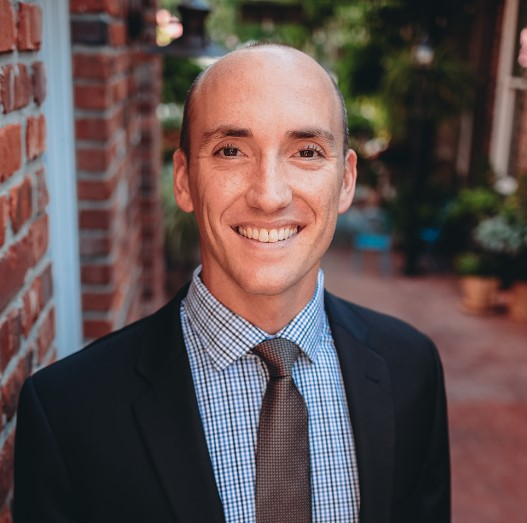
Andrew Whitehead is Professor of Sociology and Executive Director of the Association of Religion Data Archives (theARDA.com) at the Center for the Study of Religion and American Culture at Indiana University Indianapolis. He is also a research fellow for the Charles F. Kettering Foundation. Whitehead is one of the foremost scholars of Christian nationalism in the United States. He is the author of American Idolatry: How Christian Nationalism Betrays the Gospel and Threatens the Church, which was awarded the 2024 Gold Medal Book Award for Religion from Foreword Reviews and the 2024 Midwest Book Award for Religion and Philosophy. He is also the lead author of Taking America Back for God: Christian Nationalism in the United States—along with Samuel Perry—which won the 2021 Distinguished Book Award from the Society for the Scientific Study of Religion.
He writes at https://andrewwhitehead.substack.com/
Dr. Whitehead's writing from Kettering Foundation on Christian nationalism
- Five Elements of Christian Nationalism: https://kettering.org/five-elements-of-christian-nationalism/
- How Christian Nationalism Weakens Democracy and What Can Be Done about It: https://kettering.org/how-christian-nationalism-weakens-democracy-and-what-can-be-done-about-it/
- Ableism in America: How Christian Nationalism Informs Project 2025: https://kettering.org/ableism-in-america-how-christian-nationalism-informs-project-2025/
- Economic Inequality: How Christian Nationalism Weakens Democracy: https://kettering.org/economic-inequality-how-christian-nationalism-weakens-democracy/
episode references.
- Andrew L. Whitehead and Samuel L. Perry, Taking America Back for God: Christian Nationalism in the United States (Oxford University Press, 2020): https://bookshop.org/p/books/taking-america-back-for-god-christian-nationalism-in-the-united-states-assistant-professor-of-sociology-andrew-l-whitehead/c8c396c99850c108?ean=9780190057886
- Andrew L. Whitehead, American Idolatry: How Christian Nationalism Betrays the Gospel and Threatens the Church (Brazos Press, 2023): https://bookshop.org/p/books/american-idolatry-how-christian-nationalism-betrays-the-gospel-and-threatens-the-church-andrew-l-whitehead/cec9a4e2c9b03a8f?ean=9781587437182
- PRRI, "Mapping Christian Nationalism Across the 50 States," 2025 American Values Atlas (February 2026): https://prri.org/research/mapping-christian-nationalism-across-the-50-states-insights-from-prris-2025-american-values-atlas/
- Association of Religion Data Archives: https://thearda.com/
- Arkansas ranked first for religious liberty, Office of the Governor announcement (July 2026): https://governor.arkansas.gov/news_post/arkansas-ranks-1-for-religious-liberty/
- Martin Luther King Jr., "Letter from Birmingham Jail" (1963): https://www.africa.upenn.edu/Articles_Gen/Letter_Birmingham.html
- the underview, season two, the story of Arkansas told from below: https://www.theunderview.com/season-2/
episode outline.
- Episode preview (00:00)
- Episode intro with Monica Kumar, the space between the cross and the flag (02:10)
- Welcome, and Dr. Whitehead's own story of faith (06:18)
- Defining Christian nationalism, and what it is not (10:24)
- Extra cultural baggage, how the framework orders society (13:13)
- A cultural framework, the glasses we see the world through (17:03)
- Where does white Christian nationalism come from? (18:49)
- The white in white Christian nationalism, and systemic racism (22:41)
- Elaine, Tulsa, the Trail of Tears. Is this something new? (27:11)
- Taken for granted, why it surfaces now (29:15)
- The flag in the sanctuary, a field guide for the pew (31:26)
- Which neighbors? Us versus them, or us for them (34:32)
- Arkansas first in the nation, the fish and the water (36:38)
- Religious liberty, for all or for a few (40:00)
- Ten Commandments and In God We Trust in public spaces (42:49)
- Doug Wilson, the Pentagon, and a shrinking but louder movement (45:58)
- What resistance looks like, working the civic muscle (49:27)
- The cost of speaking up (52:40)
- Fears, his kids, and who counts as a citizen (54:55)
- Wholeness, no one is whole alone (58:12)
- Episode outro, a conversation about power and belonging (01:01:24)
episode transcript.
episode preview.
[00:00:01] Andrew Whitehead: Christian nationalism, we show empirically, is this desire to see a very particular expression of Christianity privileged in American civic life, and wanting to see the government at its various levels privilege that particular expression of Christianity in how we define who is an American, what our national identity is, what our future should be. And so when Americans are thinking about this should be a Christian nation, what we find empirically is that they aren't just thinking about Christianity writ large, like the historic Christian beliefs of Jesus is the Son of God and things like that. They also bring with it what I like to call extra cultural baggage. So when they hear that term Christian and wanting to make this nation Christian, it isn't just historic Christian beliefs, but also what we find is that they have a very particular understanding of how they want society to be ordered.
episode intro.
[00:02:10] monica kumar.: You're listening to The Underview, an exploration of the shaping of our place. My name is Monica Kumar, and this season has been a table for reflection and conversation about faith in our homes and in our hearts, what sustains us, how we grieve, where we find deep spiritual meaning. But as we discussed in our last reckoning episode, faith is private, but religion can be very public.
[00:02:35] monica kumar.: It shapes how we see our neighbors, how we design our systems and institutions, and who we believe our country is built for and is responsible to. So if we're going to talk honestly about faith in America right now, we have to talk about what happens when faith and national identity start to merge.
[00:02:53] monica kumar.: That's not politics wandering into a faith conversation. It's a question at the heart of our daily lives and our societal values. Who do we worship, and what do we hold up as democracy and truth in action? As an American and patriot, I consider our flag a shared civic promise, one that belongs equally to every resident of this country, whatever our beliefs or religious values.
[00:03:19] monica kumar.: And as we have heard from many this season, the cross points to a kingdom with no borders, to a God who's always there and turns away no one. And both can be held with deep love, but they are not the same thing, and the space between them matters. That space is where conscience lives. It's where faith can bless a nation and by that very belief, hold a responsibility to call it to account.
[00:03:45] monica kumar.: When that space collapses, the cross is in danger of becoming a logo, and the flag can be seen as only for some. And neighbors who don't share a faith can quietly but consistently become less than full members of the country we call home. Keeping that space open protects and holds sacred our faith, the Church, and our democracy.
[00:04:08] monica kumar.: This spring, the Public Religion Research Institute released state-by-state data on Christian nationalism, and Arkansas ranked first in the nation. A number like that doesn't tell you what's in all of our hearts, but it does invite honest, discerning questions.
[00:04:26] monica kumar.: When does our love of country morph into something else? What happens to faith when it's asked to carry the majority of the burden of political power? And maybe the most important question of them all: Who really is my neighbor?
[00:04:42] monica kumar.: This is the first episode in a series on Christian nationalism and what it might mean for faith and democracy. We are not here to indict anyone or any belief systems. We're here to ask questions, be thoughtfully discerning, and hopefully see more clearly together.
[00:04:58] monica kumar.: Our guide in this episode is Dr. Andrew Whitehead, a Christian sociologist at Indiana University Indianapolis. With Samuel Perry, he wrote "Taking America Back for God," the research that gave much of the country its vocabulary for this conversation.
[00:05:16] monica kumar.: His twenty twenty-three book, "American Idolatry," was written as a Christian to Christians arguing that Christian nationalism betrays the very gospel it claims to protect. In our conversation, he helps us to understand what Christian nationalism is, what it isn't, and the three idols he names power, fear, and violence, and also why the quiet middle may matter so very much.
[00:05:44] monica kumar.: We ask what to listen for in a sermon or at a school board meeting. Then we hold it all up to Arkansas, our ranking, the language of religious liberty, how faith shapes the way we see immigrants, and whether this is something new or something old in shiny new clothes. And we ask what a faithful response might look like.
[00:06:05] monica kumar.: He closes his book with the place that I want us to begin. Sometimes the bravest thing we have is hope.
episode interview.
[00:06:18] Mike: Well, I have a privilege today of sharing a table with Dr. Andrew Whitehead, who's a professor in the Department of Sociology and Anthropology at the Center for the Study of Religion and American Culture at Indiana University in Indianapolis. Dr. Whitehead is also the co-director of the Association of Religion Data Archives. And so, Dr. Whitehead, what a privilege it is to be able to speak with you. Thanks and welcome to this conversation. Really glad you're here.
[00:06:41] Andrew Whitehead: Yeah, good to be with you. Appreciate it
[00:06:44] Mike: A- as we jump into the subject of white Christian nationalism I'd love to ask you to maybe share a little bit about your own story and your background.
[00:06:50] Mike: I know as you have written and done your writing that you're coming sometimes writing from within the church. And so, it's my understanding you have your own story of faith, and I'd be willing if... maybe you'd be willing to share some of that.
[00:07:00] Andrew Whitehead: Yeah. No, I'd be happy to. Yeah, as you said the two books that I've written on Christian nationalism thus far kind of chart the kind of two parts of that story. So, my first book written with Sam Perry, Taking America Back for God that was the culmination of a number of years of scholarly work that we've done around Christian nationalism and wanting to write a book for a broad audience and bring, you know, some of that data, but really help categorize what we're learning about Christian nationalism in a way that's digestible. So that was kind of the reflection of my scholarly work as a sociologist and studying, you know, what Americans believe and how religion both influences what they believe, but also how American culture can influence religion and Christianity. And then my second book _American Idolatry _kind of is a reflection of the other part of my journey as a, a person of faith.
[00:07:53] Andrew Whitehead: So as a identifying practicing Christian growing up in northern Indiana in a really small town, you know, like 1,600 people one, one stoplight, that type of thing. And growing up in this kind of community that really cared for me and really cares for each other and was kind of raised in the faith there and taught, you know, that we are to love others and serve others.
[00:08:18] Andrew Whitehead: But then as I grew older and moved on to college and my faith journey continued starting to see where the boundaries of the other, you know, began and ended, right? So we cared for each other in the community, but does it extend to people that maybe aren't like us in various different ways? And so that's where my faith really began to have to wrestle with some of those things.
[00:08:40] Andrew Whitehead: And what I realized, too as I kind of began my scholarly journey in grad school and my ongoing faith journey is that there was something about Christianity in the US and the community I grew up in where we basically took it for granted that to be a good Christian meant probably you're American, and to be a good American, you really needed to be Christian, that those two things were intertwined.
[00:09:04] Andrew Whitehead: And so I got really interested in that. And so again, as I became a sociologist, turning some of the methodological skill sets that I gained toward this question of, well, then what does that mean? How do people think about this idea that to be an American, you have to be Christian? How does that influence how they see the world?
[00:09:21] Andrew Whitehead: How does that influence the practice of their faith, who they love, who they see as their neighbor, right? Where those boundary lines are drawn. And so that, yeah, that story, I kind of tell that in American Idolatry that latest book. But that's been a part of what I've been interested in these last, you know, fifteen now, almost twenty years as a sociologist and as a person of faith.
[00:09:44] Andrew Whitehead: And so, yeah, the journey continues because obviously as we look around us this idea of this is a Christian nation, should be a Christian nation that is still really prevalent in both our policies and what type of world people wanna build.
[00:10:00] Mike: Yeah I would say for your work, and I'm sorry probably unfortunately you've been probably very busy as of late.
[00:10:06] Andrew Whitehead: Yeah
[00:10:06] Mike: maybe just to kind of center us in this conversation as we jump into this maybe for someone in Northwest Arkansas who's
[00:10:11] Mike: following along and they're hearing this term white Christian nationalism kind of thrown around in the news, and as we begin to talk through this term I'm curious if you could help us define it,
[00:10:21] Mike: And maybe also define what it's not also.
[00:10:24] Andrew Whitehead: Yeah, for sure. Yeah, so this is the really... I- I'm so glad you asked that question, and one that I really like to spend a little time on because we are hearing the term Christian nationalism used in the broader social discourse more and more. And it was a term that was around even before we wrote "Taking America Back for God" in 2020, but not very broadly or widely by some journalists.
[00:10:47] Andrew Whitehead: And then to that point, it hadn't been defined in a scholarly way. There was no what we would call empirical data that was gathered to help really see what this was. So when I define Christian nationalism, I like to just point out that this is a term that has empirical data and support backing it up, and that's really important because some folks will use Christian nationalism as a smear, right?
[00:11:12] Andrew Whitehead: Or just will use it to define almost anything they don't like that Christians may or may not do. But then other folks will say, just dismiss any of the findings that we have about Christian nationalism and saying, "Oh, well, they're just using it as a smear." And so those are the two sides that we really don't want to get bogged down with.
[00:11:31] Andrew Whitehead: So with that preface, Christian nationalism, we show empirically, is this desire to see a very particular expression of Christianity privileged in American civic life, and wanting to see the government at its various levels privilege that particular expression of Christianity in how we define who is an American, what our national identity is, what our future should be.
[00:11:56] Andrew Whitehead: So the key phrase and key word really of that definition is a particular expression of Christianity. Because when we're talking about Christian nationalism, we're not talking about all the various expressions of Christianity. So where I grew up in rural Indiana where you are in Northwest Arkansas, small towns, small places, yet we see that there are various expressions of Christianity even in very rural areas, right?
[00:12:23] Andrew Whitehead: So even in the town I grew up in in a five-mile radius, there's probably 12 different churches serving that, and they're of different denominations. So there isn't just one expression of Christianity Many different expressions. But Christian nationalism wants to privilege a particular type. And so when Americans are thinking about this should be a Christian nation, what we find empirically is that they aren't just thinking about Christianity writ large, like the historic Christian beliefs of Jesus is the Son of God and things like that. They also bring with it what I like to call extra cultural baggage. So when they hear that term Christian and wanting to make this nation Christian, it isn't just historic Christian beliefs, but also what we find is that they have a very particular understanding of how they want society to be ordered.
[00:13:13] Andrew Whitehead: So a very traditional social hierarchy with men leading, women following. Marriage is between men and women. They should have lots of kids, right? They wanna see society ordered like that. They also want strict ethno-racial boundaries, that this s- this country was built by basically white men for the benefit of their families, and this country's future should be kind of centered around those families and those people.
[00:13:41] Andrew Whitehead: Also have a very particular understanding of how our economic society should be structured that there's going to be inequality, and God has designed it this way. It's a meritocracy, and if you have a lot, it's probably because you earned it, and that's it, and so we shouldn't really redress any of those things.
[00:14:00] Andrew Whitehead: Also a comfort with authoritarian social control.
[00:14:04] Andrew Whitehead: So when they think of how society should be ordered and they look around themselves and see that it isn't ordered in that way The fear is that God is going to punish the U.S. because it's not aligning with, again, this particular expression of Christianity's beliefs of how society should be ordered.
[00:14:21] Andrew Whitehead: So there's a comfort with supporting authoritarian rule, somebody who will come in and enforce order. And so that really is something different than a democracy where everybody has equal say. And then the final aspect is a real kind of sense of populism that there are elites who are trying to steal this country away from the common man and woman.
[00:14:45] Andrew Whitehead: And this opens them up to more conspiratorial thinking that there are forces, shadowy forces at work that we can't trust. You can't trust the government. You can't trust academics. You can't trust the media. You can't trust, you know, on and on. And that has real implications, too, for how we live life together.
[00:15:05] Andrew Whitehead: So again, when people imagine that Christian of a Christian nation, it's that particular expression of Christianity that we find, again, empirically brings with it all this extra cultural baggage. Now, there are plenty of expressions of Christianity that are quite different from what I just described, right?
[00:15:25] Andrew Whitehead: And so when we're talking about what Christian nationalism is, it also is not any time anybody brings their Christian faith to bear on how they might see the world structured or how policies, you know, should be structured.
[00:15:39] Andrew Whitehead: So, for example, Martin Luther King Jr., obviously a key historical figure in our country, fought for equality across the board, particularly voting rights for non-whites and Black Americans.
[00:15:53] Andrew Whitehead: And his faith was a key aspect of why he thought Blacks should have equal access to the democratic process in the U.S. That is not Christian nationalism, even though it is faith in politics. And so those two things are not one and the same. When we're talking about Christian nationalism, again, it's a particular type of Christianity that does want to create inequality around racial issues because they feel as though this country was made by and for white Americans, ideally.
[00:16:25] Andrew Whitehead: So, again, a long explanation, but again, after 15 years of empirical research, this is what we find really is the cultural baggage that comes with the Christianity of Christian nationalism.
[00:16:38] Mike: Thank you very much. I think that's incredibly helpful. And fr- from my readings of yours you're really careful to say that Christian nationalism, this is not, to your point, this is a particular strain
[00:16:49] Mike: or type of Christianity, that it's not a theology necessarily or a denomination, but you call it a cultural framework.
[00:16:56] Andrew Whitehead: Угу
[00:16:57] Mike: what's the difference, and how does that framework how does that play into this definition of Christian nationalism?
[00:17:03] Andrew Whitehead: Yeah, great question. Yeah, so when we're talking about a cultural framework, I like to think of it as I'm wearing my glasses today, essentially like a pair of glasses that people can wear, where everything that they see and perceive in the world around them is going to be refracted through those lenses.
[00:17:20] Andrew Whitehead: And so Christian nationalism provides symbols, it provides narratives, it provides a history it provides a rhetoric that people can build identities around. And as they interact with the world around them, they're interpreting everything they see and do, and everything that's done around them or to them through those lenses.
[00:17:41] Andrew Whitehead: And so, Christian nationalism is not just localized in a particular denomination. It's not just localized in a particular organization. But the fact that it's a cultural framework means that it's actually influential well beyond the boundaries of institutional Christianity. And so it isn't just, let's say, a certain type of Baptist who these are the Christian nationalists, quote, unquote.
[00:18:06] Andrew Whitehead: But rather, we find Christian nationalism in all different types of Christian denominations. We actually find some folks who are not affiliated with a Christian church or denomination at all can still strongly embrace Christian nationalism. So it actually cuts across the American religious, institutional religious landscape.
[00:18:25] Andrew Whitehead: And so in that sense, it's really powerful because you don't have to be in a particular church or denomination. Even though we do find it is much more prevalent in certain places it does cut across those. And so that's what we mean when we talk about a cultural framework. It's something that is enveloped by these cultural symbols, identities, rhetorics, narratives, and histories.
where does WCH come from?
[00:18:49] Mike: I think this has been a question that as we've spoken with faith leaders from this region, talk about this process maybe of enculturation and really trying to ask the question of how does faith inform, you know, our culture and our world and our politics, or maybe the other way,
[00:19:04] Andrew Whitehead: Yeah
[00:19:05] Mike: too. When we talk about white Christian nationalism, I mean, is this something that comes from inside the church, or is this something that comes from outside of it, or h- how, where does it come from?
[00:19:16] Andrew Whitehead: That's a great question, and I really love the way that, you know, you're exploring this with faith leaders, that the arrow of influence points both ways, right? That yes, Christianity and religion does influence our social world, but we have to realize that the Christianity that we practice on these shores has been influenced by forces outside the religious faith.
[00:19:37] Andrew Whitehead: That there are things about it that are unique to this place. And that's really the interesting part, I think of sociology and the sociology of religion. So with that said, I think, yeah, in, in thinking about your question, **Christian nationalism in the US by and large, yeah, is a product of institutional Christianity, right? **And so even before the founding of the US, as the Christian faith came to these shores, it was bringing with it baggage from wherever it came from. But we find that some of that baggage is the result of the influences of different politics, right? Or monarchies, let's say. And so they're bringing with it some of that baggage that then takes on a whole new flavor here based on the needs and desires and what, you know, folks faced here that influenced how it grew and operate.
[00:20:28] Andrew Whitehead: So one example of this Is with race and racism. So, racism wasn't, you know, an invention of the American experiment but has played an incredibly influential role in what we look at in our history, whether it's religious or otherwise here in the US. But we know that as Christianity came to these shores, you know, there's a papal decree in the 1400s that we see as kind of the first time we see this linkage between skin color and whether these are God's people or not.
[00:21:02] Andrew Whitehead: And that influenced the Christian faith and those that were moving out to go explore new lands, let's say. And then as those folks came to the US and they had to think about, well, there are indigenous populations already here. We're also bringing with us slaves from Africa. We have to make sense of why we're able to do-- have slaves that, you know, their skin color looks different than ours, or push off these indigenous populations from this land.
[00:21:28] Andrew Whitehead: We have to make sense of why we can do that. And so part of that was this idea of manifest destiny, that we are God's people, and God has opened up the world to us, and we should go to take our religion to save, quote-unquote, "these people," but we have a right to this land. And so here again, we see how a desire for new lands, a desire for riches and then also the religion of those lands, those two things intermingle and get intertwined, and it easily becomes something that can be very dangerous and harmful to other people.
[00:22:01] Andrew Whitehead: And so that is part of the American history as well, and has played a role in why slavery was legal for centuries here why we fought a civil war. And we had people on both sides using the Bible to say that slavery, A, should be legal or B, should not be legal in these lands. And so again Christianity can be flexibly used by different groups for whatever their desires might be.
[00:22:28] Andrew Whitehead: And so, that is both obviously a difficult part of it, but then an opportunity too to really try and think through, well, what is this faith about? What does it actually mean? How should it be faithfully lived in this moment?
WCH connection to systemic racism.
[00:22:41] Mike: One of the things that I think was really enlightening to me is that while we may use the term Christian nationalism you are actually using the term white Christian nationalism.
[00:22:50] Mike: And so I'm glad you brought up this aspect of of racism, and I know you talk about this in your books as well too, but o- one of the things that w- y- you state is that a Christian nation is generally understood to be one where white natural-born citizens are held up as the ideal, with everyone else kinda coming in after that. And I would really love to understand maybe even more i- if you can elaborate, kinda to understand how this white Christian nationalism is really intertwined with this idea of, and this practice of systemic racism in the United States
[00:23:23] Andrew Whitehead: Yeah, definitely. And so yeah, a lot of times when we're talking about Christian nationalism, we are kind of the unspoken part can be the white part, right? Because again, one of those pieces of cultural baggage that I mentioned earlier is this desire for ethno-racial boundaries around ideal American citizen and they do align with being white or not And part of this is historical.
[00:23:44] Andrew Whitehead: So, when again explorers and others came to this land and tried to make sense of who they were in this new place and community and why they had Black slaves they started to intertwine this idea of Christian equals white and heathen equals Black and bad. And so we see racism kind of become a part of the understanding of that Christian faith right away.
[00:24:09] Andrew Whitehead: Not for everyone, but for a large portion, and became really influential on these shores. And so part of that is historical. And so too, when we're talking about white Christian nationalism, this also doesn't just point to the skin color of the person holding those views. So it isn't just like white people who are embracing Christian nationalism but the white is really pointing to, as you said, this understanding of whiteness, that our social systems and structures are ordered in such a way, and have been historically, to benefit white people. And the empirical evidence to this is pretty overwhelming because when we look at you know, who was allowed for centuries to gain higher education, right? White Americans, especially white men, have never had any sort of blockages to access. If you could pay, you could go, essentially. But women obviously were blocked access and non-whites were blocked access for obviously centuries.
[00:25:11] Andrew Whitehead: I used to work at Clemson University, and the first Black student at Clemson to enroll in South Carolina was in the 1960s. And so it's... This is recent, very recent. So that's one example because we know and we encourage folks if they wanna improve their earning potential, right? Go to college, get a degree.
[00:25:29] Andrew Whitehead: That's been a part of it. And so we inherently understand that things like education are ways to improve the, your lot in life. But we systematically kept certain populations from having access to that. And that's what we're talking about with systemic racism. It isn't just keeping one person, but whole groups of people blocked access to that.
[00:25:50] Andrew Whitehead: Another example would be for those returning home from war who went and served our country. Did they have access to the housing grants, right, that allowed them to purchase a home? And that's the key way for Americans to build wealth, middle class Americans anyway, is to own a home and to one day pay that off.
[00:26:09] Andrew Whitehead: But Black American soldiers who served in the war were not allowed to have those, you know, government loans to purchase a home, and so they couldn't build wealth. So there again is a systemic, system-wide hurdle that was placed in front of certain populations or Black populations to keep them from that So when we're talking about white Christian nationalism, the white part is looking at whiteness, the way that society is structured to benefit a certain group of people who doesn't mean they haven't had to work hard, right?
[00:26:43] Andrew Whitehead: Doesn't mean that they haven't earned, you know, what they've gotten, but they haven't had certain hurdles placed in their way that non-white Americans have. And so Christian nationalism, again desires these strong ethnic racial boundaries that white people should have the easiest access to social benefits, civil rights than other groups, including those with non-white you know, skin colors.
[00:27:06] Andrew Whitehead: And that's what we're talking about with white Christian nationalism.
[00:27:11] Mike: Our second season of this podcast, we really, we spent went really deep into the history of the state of Arkansas, really told from the position of those that never really had their choice sometimes added to that record.
[00:27:24] Andrew Whitehead: Yeah
[00:27:25] Mike: Here in the state of Arkansas, we unfortunately have a long, history of what relationships between Black and white and even immigrant communities look like. Of Elaine, Arkansas in 1919, which is thought to be one of the largest racial massacres that ever occurred in this country that most people have never heard of.
[00:27:42] Andrew Whitehead: Mm.
is WCN something new?
[00:27:43] Mike: Too far from Tulsa and what happened at Black Wall Street. The Trail of Tears runs literally three miles from where I sit. Yeah Of sundown towns. And so, Little Rock Central High and what civil rights looks like. And I think as I listen to you, I... is it fair to say that this is not something new that is arriving? That maybe this is something old is finding new life or maybe given permission to breathe again?
[00:28:10] Andrew Whitehead: Yeah. No, that's really insightful. And I'm so glad that, yeah, I'm sure many of your listeners have already listened to season two, but maybe some of us need to return to that. This sounds fascinating and just perfect examples of what we're talking about. And so to your question this isn't something new, right? Is the headline there, that this has been with us since before the dawn of our country. So before 1776, Christian nationalism was a part of the colonists and how they understood themselves. Now, it has changed. There are different iterations. It has you know, remolded itself to whatever was happening in that moment. The current iteration we're living through really is the result of the upheaval, cultural upheaval of the 1960s. So with the civil rights movement the gender and sexual revolution, all of that upheaval. In the '70s, we see political operatives on the right and also conservative white Christian leaders kind of joining forces to push back against what they saw as this country going down the wrong path, creating the moral majority and that movement.
[00:29:15] Andrew Whitehead: And so, but they were building off of a foundation that had been there, right? Of folks that had been building off of foundations from generations before them. And so again, this, yeah, Christian nationalism has been with us. I think what's different in this moment is that as we've seen growing both demographic and religious diversity increases in the US, so we're more diverse now than we ever have been.
[00:29:42] Andrew Whitehead: Since the mid-1990s, we've seen the percentage of Americans who are unaffiliated with any religious tradition grow from around seven, 8% for decades to now close to 30% of the population. So Americans who maybe embraced Christian nationalism in decades past would look around them and be able to pretty much assume everybody believes and thinks like I do.
[00:30:07] Andrew Whitehead: But as they see more diversity around them, they can no longer take that for granted. And Christian nationalism is most powerful when it's taken for granted. Like in the, for me growing up in that small town, everybody believed and looked like I did. I never really needed a word for Christian nationalism because it just the way, it was just the way things are.
[00:30:27] Andrew Whitehead: But as I moved out from that, I started to see like, okay, there are very different ways of seeing and understanding the world. And so what we see right now, and I think the reason why it may be coming to the forefront is that people aren't able to take it for granted, and so now it becomes more salient in what sets us apart from them.
[00:30:45] Andrew Whitehead: And it is a really powerful rhetorical narrative tool to bind the us, quote-unquote, together against what we see as our enemies on the outside. And that's why I think it is, yeah, an increased part of our social discourse and what we see happening around us in this current moment.
[00:31:03] Mike: It's really helpful because, you know, I think one of the questions that I've been wrestling with is, like, what does this look like arriving in a s- worship service or in a sermon or in the practice of a church? I think it's fair to say most people that are sitting in a pew, maybe kind of to your point about growing up in the town that you did, most people sitting in a pew would never say, you know, raise their hand and say, "Hey, I'm a white Christian nationalist."
[00:31:26] Andrew Whitehead: Right
who does this WCN apply to?
[00:31:26] Mike: So, like, how does an ordinary a- attendee of a church, how do they absorb this? What does that enculturation process look like within a church? I don't know if you have data that supports that. But I'm curious, like, for those that would hear this and say, "Well, that doesn't apply to me," how do we, like, really dial it back and kind of our own gut check to say, maybe it does and here's how"?
[00:31:49] Andrew Whitehead: Yeah. I think there's a couple ways. So one thing I tried to do in my second book American Idolatry, is provide a field guide for Christian nationalism, right? And it isn't, you know, there-- A lot of that stuff I think is useful. It's, it doesn't cover every single thing. But there's a couple that come to mind even right now.
[00:32:06] Andrew Whitehead: And so I wanna preface it with, like, throughout that whole book and as I think about and talk about Christian nationalism now, I think it's really important to, to not understand it in terms of us and them, right? That it is we. So if you're a person who is a Christian, identifies as a Christian, then it's all of us.
[00:32:24] Andrew Whitehead: We are we, right? And so I wanna preface it with that. But let's say you're sitting in a congregation and this may be true of some of your listeners. And so I just encourage, like, to really think of how this might make you feel, and then to kinda go one step deeper and understand why, right?
[00:32:41] Andrew Whitehead: What's going on there? So many of us have sat in congregations, I know I did growing up and now it's still true, where there's an American flag at the front of the sanctuary, right? Now, what would happen? How would you feel internally, and folks may be across the spectrum here or how do you think your congregation might react if that next Sunday, that American flag is gone from the front of the service sanctuary, and it's no longer at the front?
[00:33:06] Andrew Whitehead: When I talk to religious leaders and Mike, maybe this is true of those you've talked to, or you can start asking this what would happen if they had a flag in the front of the sanctuary? What would happen in their church if they took it away? And most folks who if it is true about their sanctuary say, "If I ever wanted to create an uproar," right?
[00:33:24] Andrew Whitehead: "Is to move that American flag." Because for many folks, just seeing it there is this kind of unspoken part of how they understand their Christian faith. The American flag should be there. For other folks, seeing it there creates kind of this opera- opposite visceral reaction, where they don't know why it's there, because the Christian faith spans nations and nationalities.
[00:33:48] Andrew Whitehead: So if a person coming from a different country to worship saw the American flag there, again, how might it make them feel? Are they welcome? Are they equal on terms if they don't pledge allegiance to this flag or why that flag is there? And so I think that's one way to start thinking about. Now, not every congregation that has a flag there I'm saying is Christian nationalist.
[00:34:09] Andrew Whitehead: I actually don't even like to label people or organizations as Christian nationalist. Always to talk about Christian nationalism, because again, this cultural framework people embrace it more or less strongly. It's not an either/or binary, right? Some places really embrace it strongly. Others are more just sympathetic, but maybe not embracing it that strongly, and congregations I think can be the same way.
[00:34:32] Andrew Whitehead: So yeah, that American flag. I think, too, the messages that we hear from the pulpit When people or a pastor or religious leader is talking about loving our neighbors, which neighbors are they talking about? How broadly is that understood? I mean, we're living in a day and age where some of the religious leaders are saying our neighbors do not include immigrants explicitly.
[00:34:56] Andrew Whitehead: They do not include people that are undocumented. Other expressions of Christianity would take a different view of that, that our neighbors include non-white or undocumented or whatever else. And so again, the messages that we hear when we hear them quoting the Bible or thinking about a particular verse, how are they applying that and how broadly when they're talking about love, neighbors, different things like that?
[00:35:19] Andrew Whitehead: I think that's another way to understand it. And then too when we're looking at not only what is preached or kind of the environment itself but what is done in the broader community and how do they understand those outside of this sanctuary? Is it us versus them or is it us for them?
[00:35:39] Andrew Whitehead: And I think again, that particular expression of Christianity that is wrapped up with Christian nationalism is always gonna be about us versus them. Who do we fear? Who do we have to fight against? They see the world as an enemy. The Christianities, these different expressions that are not really aligned with Christian nationalism tend to understand the church as for the world, for those outside not seeing them as an enemy or something to fight back against.
[00:36:07] Andrew Whitehead: So those are some of the ways I think to start to look at what we're hearing, what we're seeing in our religious spaces to understand, you know, are there aspects of this cultural framework that are actually influential here that maybe I didn't see before?
[00:36:22] Mike: I think that's super helpful, and we'll definitely refer people into your into the, to, to the field guide because I think it is super, super helpful to continue down this road of trying to recognize those things. So I really appreciate you bringing those things up because I think it helps bring some context to this.
[00:36:38] Andrew Whitehead: Yeah
Arkansas ranking as #1 WCN state.
[00:36:38] Mike: Wanna, if we can maybe shift a little bit. The Public Religion Research Institute, released a 50 s-state data set where it showed Arkansas that it came in first in the nation at Christian nationalism, and that 54% of Arkansans qualify as supporters or sympathizers and that almost 60% of white Arkansans also felt the same way.
[00:37:01] Mike: And I know one of your roles is part of the kind of running the largest archive of religious data that, that, that exists. And i'm curious, when you look at that number, when you look at that kind of study, I'm curious, what does... what do you see? Or what does that tell you that we maybe here in Arkansas may not understand?
[00:37:20] Andrew Whitehead: Yeah, I think, you know, one of the benefits of that type of data is it does provide a really good broad context to understanding kind of what's happening, again, at that broad scale. So a lot of the work I do is with broad scale survey data. And PRRI, I used to be a board member for that organization. And the questions they ask and how they build their scale is really built off of our first book, where you ask, you know, six, five, six questions.
[00:37:49] Andrew Whitehead: People can agree or strongly disagree across a whole scale with each of those. And then you bring all those together for each individual to essentially create a larger scale of how strongly or weakly they embrace Christian nationalism. And PRRI has been asking enough of those surveys of enough people in each state to be able to then pull it all together to get a rough estimate.
[00:38:12] Andrew Whitehead: And that's what it is at this point. As we get more and more people in those surveys, be able to be, you know, more precise with it. But so with that kind of grounding and understanding of what is going on, I think what's helpful is it can kind of give a flavor, at least at that broad scale of each state.
[00:38:31] Andrew Whitehead: So Indiana, I think, is 12 or 15 on there. And so then when we look across the policies that are being advocated for, we see who's being voted in or out, right? It can help kind of open up a window to some reason as to why. And so we wouldn't want to say that the sole reason for anything happening in a state or certain policies is because of this Christian nationalism.
[00:38:54] Andrew Whitehead: It's probably not a direct line. But it does help provide some of that grounding and foundation to probably how does the social discourse, you know, in politics or around the kitchen table or in those congregations, how does it look and feel? And we know a lot of people are influenced by that. And so it kind of gives, again, this window into what's the general framework for what's taking place.
[00:39:20] Andrew Whitehead: What types of things, again, are taken for granted? And those are the most powerful. When people don't see it, it's essentially, you know, the thing about the fish asking it to describe water. It couldn't even tell you what it is because, again, that's its whole world. And so in that sense, I think in Arkansas and Indiana and other states, a lot of times for many folks, this is just the way things are because so many of us around us embrace these things.
[00:39:48] Andrew Whitehead: And so why would we question it? And so I think that is kind of helpful to get that broad scale flavor of maybe what's going on in that social discourse.
Arkansas named as first in "religious liberty"
[00:40:00] Mike: Another piece of news Arkansas was just named as the number one state for religious liberty. And in your book, American Idolatry, you said that religious liberty and religious freedom are now rhetorical and legal tools in service of gaining power. You went farther and said that you kinda name them as religious liberty and religious freedom as really a dog whistle almost language for conservative Christian supremacy, and I'd love to understand that more,
[00:40:27] Andrew Whitehead: Угу
[00:40:29] Mike: I first hear that I would necessarily associate with white Christian nationalism, if that's a fair thing to do.
[00:40:35] Andrew Whitehead: Yeah. No, it is, and I think this is again where it's really important to understand too how these things get taken for granted. So when we're talking about religious liberty, most Americans, if they heard that, would say, "Well, yeah, of course, like we're built on that." But what we see more and more as folks say, "We're defending religious liberty, and so we should pass X proposal," when we look at that proposal it really is in benefit to, again, that particular expression of Christianity.
[00:41:04] Andrew Whitehead: It isn't that all different expressions of Christianity or various religious expressions or those who have no religious affiliation at all should have the same type of privilege. But then again, it's so that they can practice or privilege a certain type. So one example is, you know, religious liberty folks will talk about prayer in public schools or teachers leading prayers in public schools.
[00:41:30] Andrew Whitehead: So they'll say, "We need to defend religious liberty. We should be able to pray." But then when you ask them, "Well, do you also believe that, you know, students who have no religious belief or maybe who practice Wicca, let's say, should be able to lead, or teachers should be able to lead, you know, certain religious aspects that are non-Christian or Buddhist or Hindu?"
[00:41:52] Andrew Whitehead: All of a sudden, what you'll usually find in those circles is that they would say no, and they would say, "Well, it's because this country is Christian that is kind of the normative thing, and we should just do that." So again, it isn't in service of religious liberty for all, but really about protecting privilege for the religious few or a particular expression of Christianity in that sense.
[00:42:14] Andrew Whitehead: And so that's where religious liberty and religious freedom in some way has been weaponized, as I s- as I write, by that particular group in service of perpetuating, right, their privilege and the fact that they've usually been the ones that have been the taken for granted normative thing. And so anything outside of that then should be feared.
[00:42:35] Andrew Whitehead: And so, that's again kind of pushing on those, are we saying it's equal for everyone or just a particular few that again resonate with what they see as the best types of religion or Christianity overall?
religious designations in public spaces.
[00:42:49] Mike: I, I ask that because I think we've seen a growing trend within the state of Arkansas see things like the Ten Commandments
[00:42:56] Andrew Whitehead: Угу
[00:42:57] Mike: Back in schools, and In God We Trust signs placed in our local, every local county building that we're in. so we're starting to see this kind of framework become, feels like, more bold, starting to appear in government buildings
[00:43:11] Mike: instead of just church buildings.
[00:43:12] Mike: And I'm curious if this is, like, Is this a movement that is kind of, like, unhindered in its pursuit of moving forward? Is something changing? Or are these, like, declarative things that you would say, "Hey, for those that may not support white Christian nationalism," the, these are, these really are monumental and important things that need to be contested or understood or challenged or at least discussed in great depth?
[00:43:35] Andrew Whitehead: Yeah, I would definitely say the latter. Especially for those that identify as Christians, I think the best way to create a context within which our fellow citizens of any religious faith or no faith at all feel as though they are equal citizens, which that is the underlying goal of this nation, that all are created equal and have the right to pursue happiness and justice here in this nation is, you know, posting these Ten Commandments or mandating prayer how would that make a student who is Buddhist or Hindu feel?
[00:44:11] Andrew Whitehead: And if you were a Christian in a nation where they mandated your Christian student had to follow along with a Buddhist prayer or a Hindu you know, religious aspect, how would you feel? And so just that little change, right, of perspective, I think hopefully helps bring into context where it's like, well, that, I wouldn't necessarily like that, and so then taking that next step, well then how can we ensure that our neighbors do feel like they're equal parts of this?
[00:44:38] Andrew Whitehead: And so, and that even, it, what's funny about the Ten Commandments thing is that, you know, they wanna post that, but a lot of times the, the Ten Commandments that they wanna post isn't actually found in the Old Testament, that it's kind of a conglomeration of a couple places in the Old Testament where they have a list of commands.
[00:44:56] Andrew Whitehead: And then even going beyond that, the interpretation of which form of the Bible, right? Is it the NIV? Is it the NRSV? Is it the ESV? Which one? So even among Christians, the subgroup that wanna impose this once they actually have to figure out, well, which are we gonna use, they actually will fight each other some because, you know, which Ten Commandments, which wording or which Lord's Prayer or which prayer.
[00:45:21] Andrew Whitehead: And that's where again it kind of falls apart and it becomes clear that these attempts really are just about a very particular type and not broad. And it also creates, you know, outsiders of everybody else who isn't quite like this. And so I think the best way for, you know, Christians who wanna live in a pluralistic democratic society to love our neighbors is to think about and how we can advocate for them and not try to privilege our religion or even this one expression of it.
[00:45:51] Mike: Thank you. I think this is all for myself maybe, and maybe hopefully for those following really trying to gain perspective
[00:45:57] Andrew Whitehead: Mhm
[00:45:58] Mike: do we-- what is that water that we're swimming in, and can we recognize? I think one of the things that we've observed in local sermons and maybe churches that would trend towards this white Christian nationalism is references to churches and maybe parts of this movement outside of Arkansas. And an example of that, we increasingly hear Doug Wilson's name brought up, who's the pastor of Christ Church in Moscow, idaho,
[00:46:23] Mike: Who's been on a national platform at the pentagon leading services. And you know, when we start to see this kind of thing happen where it's being referenced outside of this state to me, it feels like this really is a mainstream thing that is happening. and I'm curious if that tells us kinda where this movement is, maybe within our country, so that we can try to understand from Arkansas maybe where we fit into that
[00:46:47] Andrew Whitehead: Yeah. I think there's a couple of things going on there. So when we look at broad national data of the number of Americans that strongly embrace Christian nationalism, we actually find over the last ten to fifteen years, that number is slowly shrinking. It's getting smaller. So it isn't as though Christian nationalism is like spreading like wildfire everywhere.
[00:47:06] Andrew Whitehead: We see no empirical evidence of that. But what we do find is folks, like you say, in powerful political and social positions who are much more willing and are actively bringing Christian nationalism rhetoric and arguments into the social discourse as to why the world should look the way that it looks.
[00:47:24] Andrew Whitehead: So, you know, our... the current speaker of the US House of Representatives or Pete Hegseth leading the Department of Defense these are two examples of men who will gladly say "Yeah, Christian nationalism in this country should benef-- or should be privileging this particular expression of Christianity."
[00:47:43] Andrew Whitehead: And so when we have people in powerful positions advocating for that at that large level it's been... it's made Christian nationalism much more a part of our social discourse. And so that's why we hear about it more and it kind of is at the forefront of everything that's happening around us. And the other thing that happens, too, is as this group of Americans who embrace Christian nationalism grows smaller the as they understand themselves as a group that embraces this or sees it that social identity becomes even more salient, right?
[00:48:13] Andrew Whitehead: They see their embrace of Christian nationalism as what sets them apart from everything else around them and becomes more salient to them in how they see the world, how they act within it. And so this then, too, raises the importance of Christian nationalism in the current moment. So even though there are fewer Americans each year that probably strongly embrace it, to those that do, it's become more important.
[00:48:36] Andrew Whitehead: And there are really powerful people in positions of influence who also embrace this strongly. And then for Doug Wilson and those like him this is a moment where a lot of their writings that may have been fringe are getting more and more central play because there are more Christians, again, of that kind of shrinking number who say, "Well, we need to do something to defend this country that, as we see it, should be Christian like us from all this change."
[00:49:02] Andrew Whitehead: And so they're willing to, yeah, bring them on and to center them in a lot of these conversations. And that too is, yeah, a real threat to democracy because it isn't about everybody having equal say. It's about the right people being able to have a say, and they get to decide who those right people are.
[00:49:23] Andrew Whitehead: And it often doesn't include a lot of different minority groups, however you wanna cut it.
resistence to WCN.
[00:49:27] Mike: Dr. Whitehead, I think you know, as you say that it's not growing, then, it, gosh, it sure feels like it is,
[00:49:32] Andrew Whitehead: Yeah
[00:49:33] Mike: so maybe it's our ability to pay attention, our ability, maybe the rhetoric that's coming out of that. I'm curious what does it look like to organize against it? Or is there a counter movement to white Christian nationalism, where as someone such as myself who would say that I'm a person of faith, obviously a white man,
[00:49:49] Andrew Whitehead: Mhm
[00:49:50] Mike: like, what does it look like? What is my role and responsibility to be a voice that maybe raises a hand and say, "This is not okay"?
[00:49:57] Andrew Whitehead: Yeah. Well, honestly, Mike, it starts right there like that. Saying from where you sit that this is not okay, right? The more that we have people of faith who are Christians who say, "I'm a part of this "we," but I do not agree with that." Right? I think that is the wrong way for us to go. The more that Christians stand up and do that, I think that is the start of something.
[00:50:21] Andrew Whitehead: And then when we find each other and we join forces and create in our communities you know, small civic social units and connecting people to see that really we aren't alone. And then how do we... And I-- this is kind of the, the strong case I try to make too in American idolatry, is that the more that we can leverage whatever privilege we have to the benefit of those with less, I think that's key.
[00:50:46] Andrew Whitehead: So that is voting, but voting is every two to four years. But in our communities, how can we leverage the privilege we have to say that I wanna make sure that these privileges that I've enjoyed are open to those who maybe came to this country as young people and but this is the only country they've ever known, but maybe they're undocumented.
[00:51:07] Andrew Whitehead: Or for people that don't have the same skin color as me, or maybe aren't you know, my same gender or maybe, you know, haven't gone to college as much as me or anything else. Like, do they have equal opportunity? Have they-- do they have those doors open? And so I think that's where we can start, is other Christians saying, "This is not okay, and this is not right," based on my faith, the Christian faith.
[00:51:32] Andrew Whitehead: And then two, leveraging whatever privilege we have to benefit those in need and those around us. I think those are two key steps. And the more that we... I have a, a colleague who studies social movements and organizing and she really looks at this moment and describes it as, you know, civic engagement and being a part of de-democracy is like a muscle, and we have to work the muscle to actually have the muscle, right?
[00:51:59] Andrew Whitehead: So it can't just lie dormant and then just hope one day it snaps into place. We have to flex it and work it and you know, have that resistance. And so in the same moment she sees a lot of our kind of civic organizing and movement as kind of atrophied. And Americans have to kind of realize that democracy isn't something that just exists, but it's a practice that we're all a part of.
[00:52:20] Andrew Whitehead: And so we have to work that muscle, and the more that we do, the stronger it gets. And so I think the more that Christians like us are able to say, you know, "Because of my faith, this isn't right. Because of my faith, this is the way we should go," and that we work those civic muscles the stronger we'll be both in our communities our states and our nation
[00:52:40] Mike: As I listen to you, you know, I obviously agree that, you know, it starts with standing up and saying, "This is okay." And I'm curious if you maybe share from your own experience, maybe as a way of kind of giving people the really, reallys. Like, certainly everyone's fine with you saying that.
[00:52:57] Mike: There couldn't be any pushback or any cost to that, right? I mean, I, I'm curious maybe what this stands for you or this work. are there going to be real practical pushback or costs a- as a result of maybe standing against that?
[00:53:13] Andrew Whitehead: Yeah. I think, you know, in some ways I've been shielded because I'm a white male and so I probably don't receive... I know I don't receive the amount of hate mail and different things like that than some of my colleagues who are writing about these sorts of things who are women or minorities or both. And so I think that has shielded me some, but I still receive some of that. And you know, for the most part at this point, it's... We're still in a moment where at least where I sit, I can still talk through my research and as a, a private citizen, you know, what I believe in. So, there haven't been massive costs.
[00:53:49] Andrew Whitehead: But interpersonally, you know, family members wondering when... how I could still be Christian and, you know, write the things that I do talking about Christian nationalism. And again, I think that's a window into how for many folks their Christianity is this Christian nationalism. And I guess too, that really helps with empathy for folks.
[00:54:09] Andrew Whitehead: Like, if they feel as though we're telling them to give up their entire religion, that's big, right? And that's scary, and we wouldn't want that. So being, again, able to help them see that to stand against Christian nationalism doesn't mean you have to let go of Christianity. That there are many expressions that you can embrace and maintain that faith tradition that doesn't result in ostracizing or limiting other groups or people from being able to practice their religion or to live in peace, or to have civil rights and benefits.
[00:54:42] Andrew Whitehead: So yeah, I think that's been a part of my ongoing journey. But to be honest too, I think, yeah, a lot of my social position shields me from the worst of that, but still receive a little bit
fears.
[00:54:55] Mike: Every guest that we've talked to through these series of conversations I've asked them two questions as we kind of, kind of move towards closing. And the first one is your, about your fears. When you think about everything that you see within what we've been talking about and all your studies and research, I... and I ask really more out of just a normalization of that, so that we can speak that into, maybe into existence, those that may have fears here. I'm,
[00:55:20] Andrew Whitehead: Угу
[00:55:21] Mike: like, what are your fears about this topic? Or what are your fears for maybe what's ahead within this?
[00:55:28] Andrew Whitehead: Yeah. Well, I can, I mean, this will get kind of nitty-gritty really quick. So I can speak really clearly about some of my greatest fears. So I have three kids, and two of them have pretty severe intellectual disabilities. And so they're on Medicaid waivers to help support some of the, the medical things that they, you know, face.
[00:55:47] Andrew Whitehead: And then as a family, obviously that is kind of... Yeah, it realigns our whole life, right? It just revolves around, around this. But here in Indiana, and then at the national level too, and in other states some real cuts are being made to Medicaid. Real cuts are being made to funding for special education programs in public schools trying to realign how the Department of Education even operates or even dissolve it.
[00:56:13] Andrew Whitehead: And so there are gains that have been made in the disability community in the US over the last you know, forty years. The ADA Americans with Disabilities Act, right, passed in the early nineties and folks that look at it now say it would never pass today, right? And that was with a Republican president that it was signed into law, but it would never pass today.
[00:56:33] Andrew Whitehead: So when I look at when we're talking about minorities or we're talking about those who face struggles the disability community is right at the forefront because of my kids and all that we have to kind of work through and deal with. And so I live in fear, and I definitely fear that what little supports we have, 'cause trust me when I tell you that what we have, we still could use so much more support.
[00:56:59] Andrew Whitehead: Even what little we have could be taken away in a real way in our state and in our nation because of the policies and politicians in place, and Christian nationalism is a part of that story. Because a real citizen is economically productive, and disabi-disabled people are viewed as not economically productive, and so they're not true citizens.
[00:57:23] Andrew Whitehead: They're not those that are really what it's all about. So that's my fear that I have right now that I live with. But then broadly and generally, knowing what it's like for us and kind of our little slice of yeah, status, you know, minority status for those with other aspects like that, my heart breaks.
[00:57:44] Andrew Whitehead: I wish this country would be one that did work so hard to support those who are facing whatever struggles, whether it's disability or being undocumented or anything else. Yeah, my fear is that so much of what could be good really is being harmed or taken away. And it'll take many decades to try to fix some of that.
[00:58:08] Andrew Whitehead: And so that, those are my fears.
wholeness.
[00:58:12] Mike: I, number one, thank you for sharing that personal story. I think it gives us a window into a broader yeah conversation for
[00:58:18] Mike: sure, and a broader understanding of that. Maybe one final question for you.
[00:58:22] Mike: The other side of that is this question about wholeness. And within the work that you are doing and how you view this subject of white Christian nationalism what does wholeness look like to you in this space?
[00:58:35] Andrew Whitehead: Yeah. I love this question. A lot of times people ask, like, "What brings you hope?" And I have a, you know, I have an answer that I, you know, go back to on that and try to hold onto that. But this question of wholeness I really like that, that angle because I really think it points to how you know, and this is something that others have said and Martin Luther King Jr.
[00:58:55] Andrew Whitehead: has a, a good quote on this, and I'll kinda butcher it, but the sense of it is that injustice or inequality experienced by some, right, is a threat to us all and harms us all. And so when we're talking about wholeness, that isn't-- we can't just think about that as individuals, right? We're part of a broader web of communities and states and nations and regions of the country.
[00:59:18] Andrew Whitehead: And to the extent that we have those among us who are being harmed by policies, and it may not come for us specifically, but if it's coming for them, if they're being weakened and harmed, it har- it weakens and harms all of us. And we can't experience wholeness when there are people in our communities that are being harmed like that.
[00:59:37] Andrew Whitehead: And so much of kind of the American myth is this idea of individualism but it is just a myth. Like, we can't by ourselves as individuals experience wholeness. We need to be part of communities of care and wholeness, and that's the only way that we're going to actually ever experience true wholeness.
[00:59:56] Andrew Whitehead: But so much of our world right now is focused on tearing away those bonds of community or harming certain groups and thinking that won't ha- then harm us or come for us, and I think that's a lie, and that's what we're living through. It poisons all of us. So I think that is the way that I think about wholeness and what we can experience. It's to the extent that we can advocate for those with less so that they can now have the same access. That's how we experience wholeness
[01:00:26] Mike: Dr. Whitehead, I'm incredibly thankful for your time, for the work that you're doing. I think this has been really helpful as someone, here in the state of Arkansas who's trying to understand this and trying to understand what our role in hopefully, you know, establishing a space where white Christian nationalism isn't the pervasive force moving and organizing our society. I think your work has been very enlightening and very helpful. And I hope everyone that's listening will have a chance to dig deeply into the work. And so, Dr. Whitehead, thank you for being a part of this conversation. It's a gift, and it's an honor to have met you.
[01:00:59] Andrew Whitehead: Yeah. Thank you, Mike. I appreciate the work you're doing and the area that you're doing it. I think stuff like that is so necessary to really build up what can we do where we're at, right? And you're doing that and the folks that you're working with are doing that, and I think that's key. Do what we can, where we can, for however long we can and that has a real impact. So appreciate the work you're doing
[01:01:18] mike rusch.: Amen to that. All right. Thank you so much.
episode outro .
[01:01:24] mike rusch.: Well, I want to say thank you again to Dr. Whitehead. I'm incredibly grateful for his time, for his research, and for the care that he took with all of us who call this faith our own. His books are in the show notes, and I'd recommend starting with "The Field Guide" and "American Idolatry." Before we go any farther, I want to say this plainly what this conversation is and what it is not.
[01:01:43] mike rusch.: It is not anti-Christian. Christianity is not the problem, and I believe Dr. Whitehead would be the first to say so. He is a Christian, and so am I. This is not anti-American. Loving this country is not a problem either. I'm a veteran myself. I've gone in harm's way, and I love this country dearly. This is not right versus left, Republican versus Democrat, or one faith tradition pitted against another. What we looked at today is how Christianity and nationalism get picked up and used as levers, tools for gaining power and holding power.
[01:02:13] mike rusch.: This is a conversation about power, who has it, who wants it, and what happens in our neighbors when faith becomes an instrument for taking it. And in a place, power always shows up as belonging. Underneath every episode of this show sits one question, who belongs in this place? We have been calling the answer a communal theology of place, a shared understanding of who this land is for, what we owe each other on it, and what we're willing to build here together.
[01:02:41] mike rusch.: And what Dr. Whitehead described today is a rival theology of place. Christian nationalism is not just a set of political opinions with Bible verses attached. It is an answer to the belonging question. It looks at a place like Northwest Arkansas and says this was built by particular people, for particular people, and everyone else lives here as a guest. It decides who belongs before anyone ever gets introduced.
[01:03:07] mike rusch.: And that answer never stays inside the sanctuary. It walks out the doors on Sunday and goes to work on Monday. It sits in school board meetings where the Ten Commandments go up in the classroom. stands in the county building under the "In God We Trust" sign. It testifies at a capitol in the language of religious liberty. It shapes who gets hired and who gets zoned out, and who gets prayed for by name, and who gets talked about as the problem.
[01:03:31] mike rusch.: There are a significant number of faith communities that either lean towards or overtly claim Christian nationalism as a part of their framework, and that makes it more than a church issue. It is the civic life in our region.
[01:03:44] mike rusch.: It is the water that we're swimming in. It's the water that our schools and courthouses and city councils are also swimming in.
[01:03:51] mike rusch.: So the work this week is learning to hear it, and it starts in our own pews. When your pastor says, "Love your neighbor," listen for who is inside that word. Does it reach the immigrant family in Springdale, the Marshallese nurse in your hall, the coworker who voted the other way? Because where the word neighbor stops, belonging stops also.
[01:04:09] mike rusch.: Ask what would happen in your congregation if the American flag came down next Sunday. Not whether it should, what would happen. The answer may give us some insight into what we've attached our faith to without ever saying a word about it out loud.
[01:04:23] mike rusch.: Ask whether the posture of your community is us versus them or us for them, whether the world outside the sanctuary sounds like a neighborhood or a battlefield. Fear is in the tell. Who are we being taught to be afraid of? And when religious liberty comes up on Monday at the Capitol or in the school board, ask the question he gave us, liberty for whom?
[01:04:44] mike rusch.: Would we defend the same freedom for the Buddhist student, the Hindu family, and the kid with no religion at all? If the answer is no, it was never about liberty. It was all about who belongs.
[01:04:55] mike rusch.: As you start listening, hold on to the most clarifying thing that Dr. Whitehead told us. The number of Americans who strongly embrace Christian nationalism, it's not growing, But those people are holding it more fiercely with powerful voices in Washington advocating it openly. national writers and content producers who spent 40 years on the fringe, they're now preaching it from national platforms.
[01:05:17] mike rusch.: It may feel like this is everywhere because the people who hold it have never been louder or better positioned. And that distinction matters. This is not a problem that we cannot solve. It requires our focus and it requires our organization. He told us where that organization begins, not with a program, with a person of faith saying from where they sit that this is not okay. This is how that process of organization can begin. questions. Where did this come from and how deep does this history run in our own state? What does an authentic faith look like when we've lived it out in our institutions and not just in our hearts? And what does it mean for Northwest Arkansas that the fate of this place has this inside of it? Those questions are the road ahead for the next few episodes.
[01:06:02] mike rusch.: Monica opened this episode with the space between the cross and the flag. That space is where a real communal theology of place gets built. Not a faith that owns this place, but a faith that serves it. A shared understanding of what we value that is wide enough to hold everyone who calls these hills home.
[01:06:19] mike rusch.: We wanna know what you're hearing and how you're feeling and what you're wrestling with. There's a "send us a voice message" button on the underview.com homepage, and your questions are already shaping where this season has gone. We would invite you to continue to share with us. For everyone that was listening, I wanna say thank you for being the most important part of what our community is becoming.
[01:06:38] mike rusch.: This is the underview, an exploration in the shaping of our place and our faith