
the statue with Judge Barry Moehring.
Judge Barry Moehring on the move of Bentonville’s Confederate statue and what it reveals about history, memory, and community.
season 2, ep 15.
listen.
episode notes.
the statue with Judge Barry Moehring.
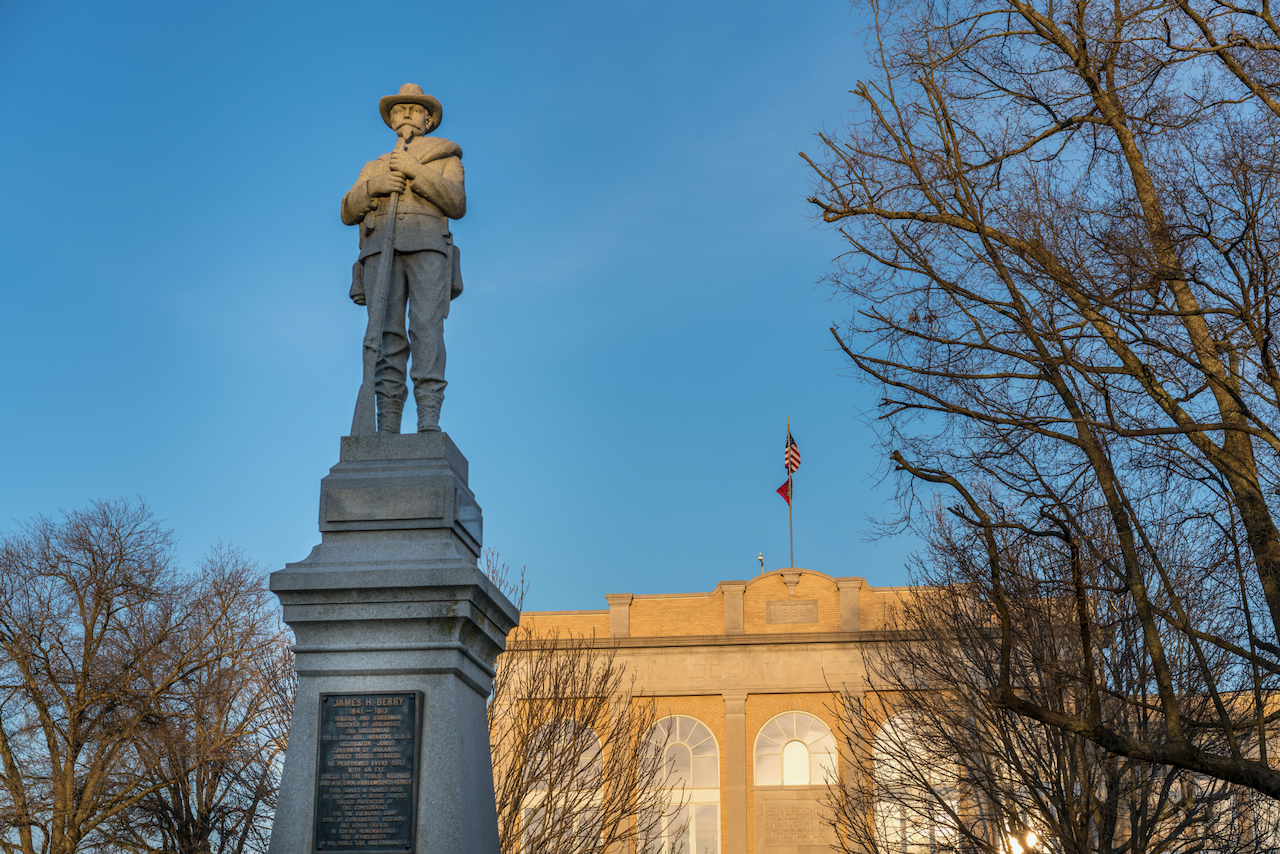
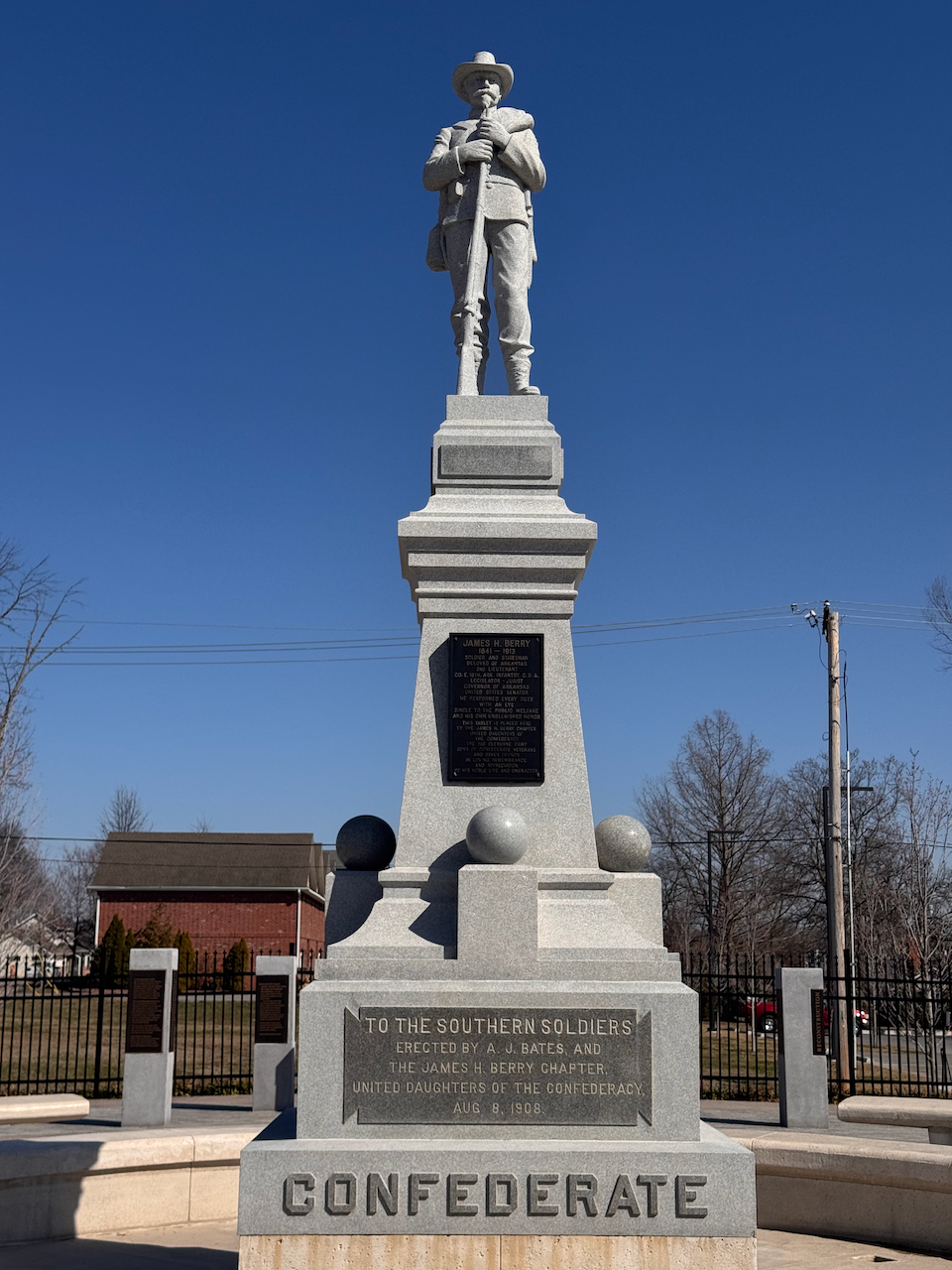
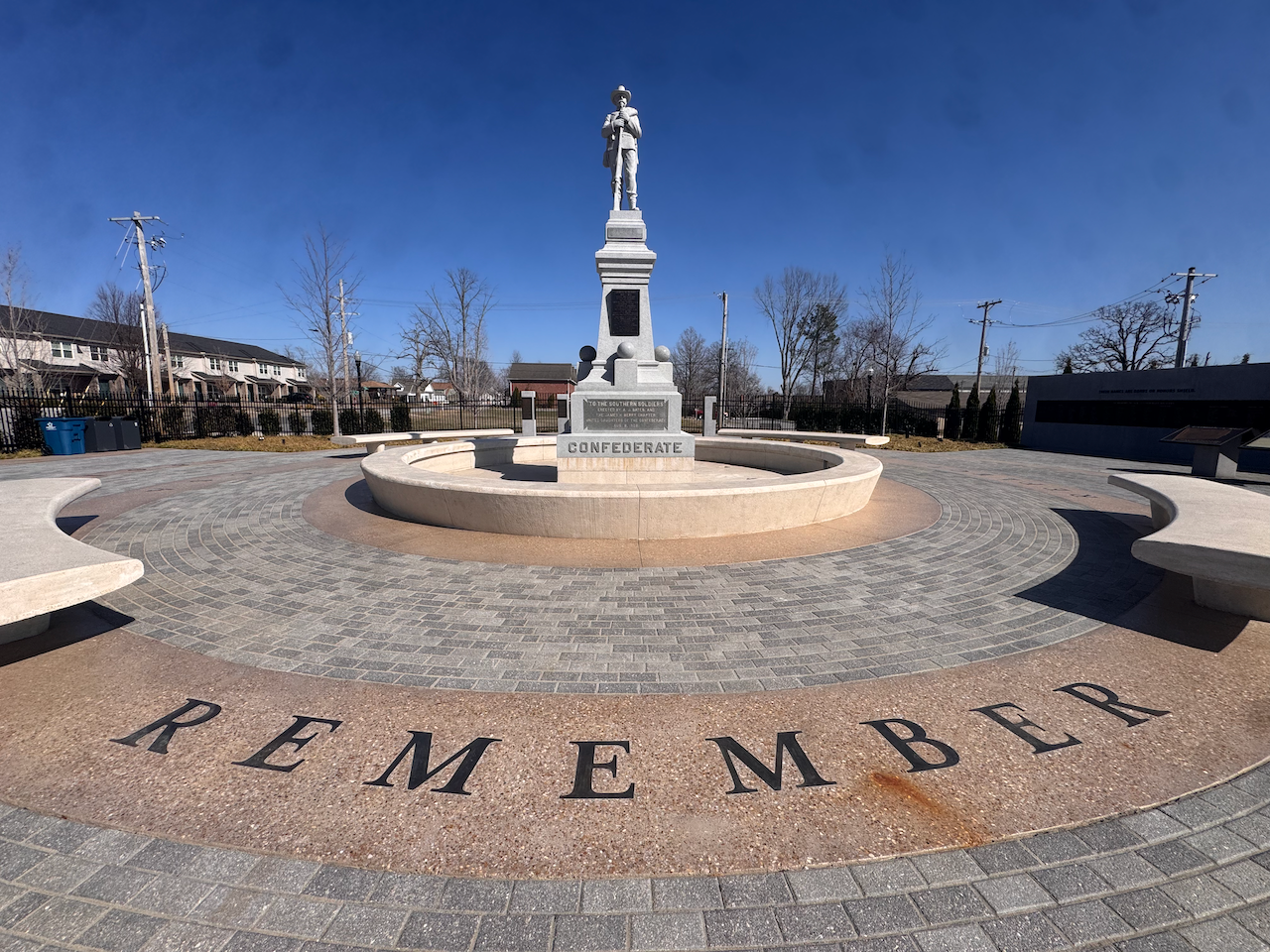
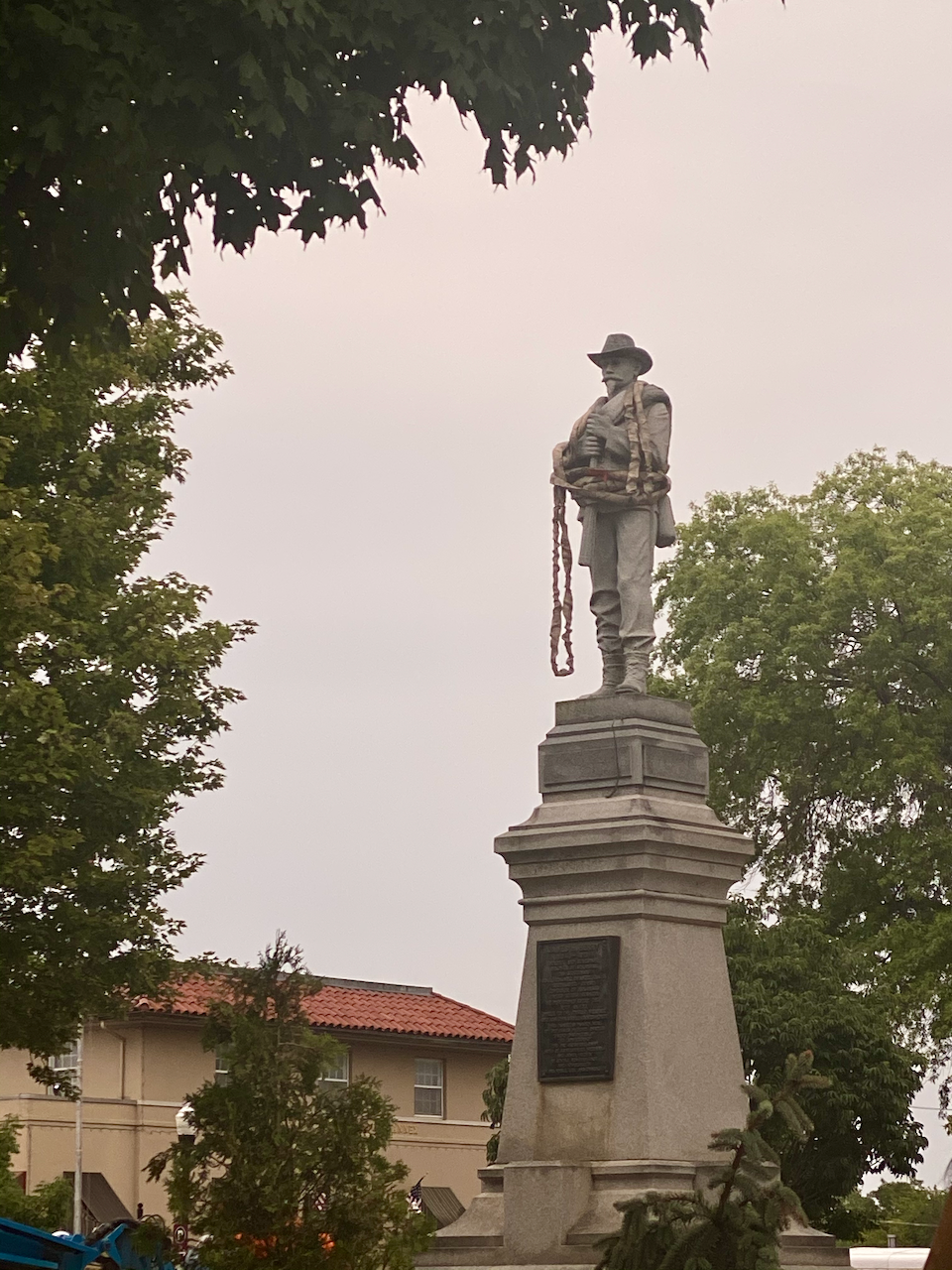
In September 2020, Bentonville’s Confederate statue was removed from the downtown square and relocated to a new park near the city cemetery. The decision came after years of debate, heightened by the national reckoning on racial justice following the murder of George Floyd.
In this episode, Benton County Judge Barry Moehring reflects on the process that led to the statue’s removal, the tensions and perspectives that shaped the conversation, and what it revealed about our community. Nearly five years later, what can we learn from that moment? How do we navigate historical memory, public space, and the values we choose to uphold?
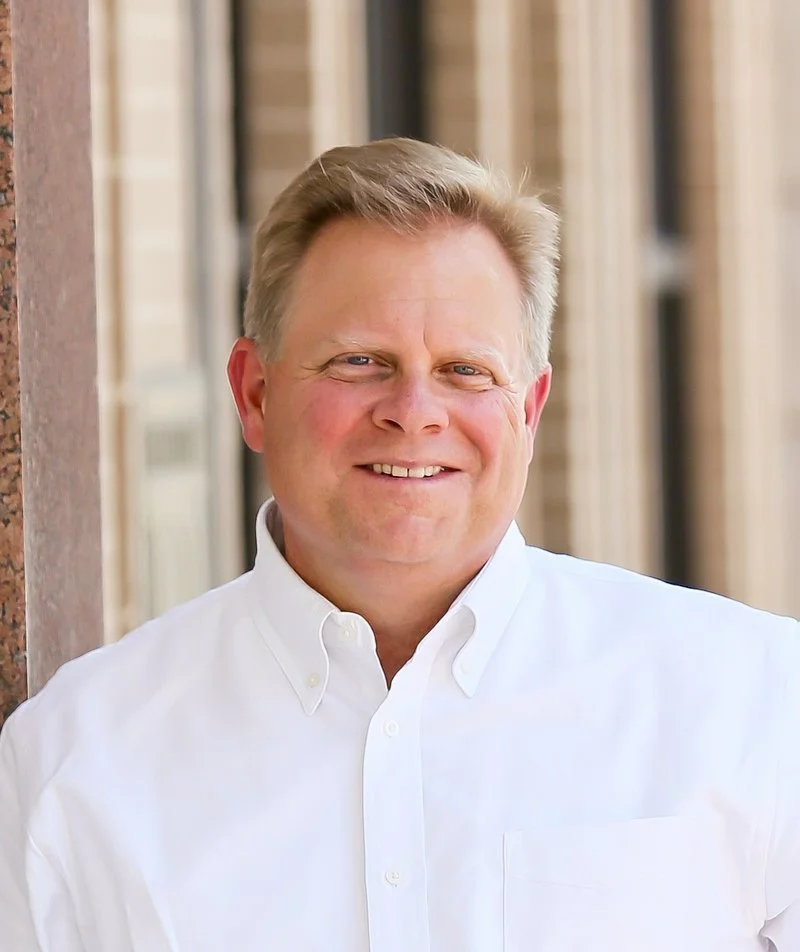
about Judge Barry Moehring.
Barry and his wife, Cindy, moved to Benton County on Valentine’s Day in 1999.
They’ve been married for 32 years and have three kids – Allison, Hayden and Bennett.
In 2016, Barry was elected Benton County Judge and has been reelected twice since then. In that role he leads over 250 county employees and manages a budget of more than $30 million. The responsibilities of the County Judge include overseeing the County Road Department, Planning, Building Safety, Environmental Management, Emergency Services, 911 Dispatch, the Juvenile Detention Center, the Benton County Veterans Service Office, all county facilities and many of the county’s internal departments such as Accounting, Finance, Human Resources, Information Technology and Communications.
Additionally, Barry is the Chairman of the Northwest Arkansas Regional Planning Commission and the Benton County Solid Waste District. He is a member of the County Judges Association of Arkansas Executive Committee and Legislative Committee.
Before becoming County Judge, Barry served two terms on the Benton County Quorum Court..
Before his service at Benton County, Barry spent 25 years in executive and leadership positions with some of the world’s top companies, including Motorola, The Walt Disney Company, Dreamworks Animation and Walmart Inc. Prior to his private sector career, Barry worked in the US House of Representatives for two different Members of Congress from Arizona on a variety of issues including appropriations, defense and national security, commerce, trade and foreign affairs.
Barry holds a Bachelor’s Degree from the University of Arizona.
Barry has been involved in numerous local community activities and clubs including Bentonville Rotary, the Northwest Arkansas Lightning Soccer Club, Babe Ruth Little League and the Boys and Girls Club of Benton County.
Barry and his family are members of the First United Methodist Church in Bentonville.
episode references.
related episodes.
The Civil War with Dale Phillips – https://www.theunderview.com/
The Weary Land with Dr. Kelly Houston-Jones (Parts 1 & 2) – https://www.theunderview.com/
The Downstream People with Betty Gaedtke – https://www.theunderview.com/
The Doctrine Today with Melissa Horner, Part 3 – https://www.theunderview.com/
historical context & subjects.
Bentonville’s Confederate Statue History – https://encyclopediaofarkansas.net/entries/confederate-monument-bentonville-4743/
The United Daughters of the Confederacy (UDC) – https://hqudc.org/
Confederate Monuments Debate – https://www.smithsonianmag.com/history/confederate-monuments-removal-history-180975048/
The Civil War in Benton County, Arkansas – https://www.nps.gov/peri/index.htm
news events & sources.
George Floyd’s Murder & 2020 Protests – https://www.nytimes.com/2020/05/31/us/george-floyd-protests-minneapolis.html
Bentonville Tear Gas Incident (June 1, 2020) – https://www.arkansasonline.com/news/2020/jun/01/deputies-fire-tear-gas-protesters-bentonville-squa/
Statue Relocation (September 2020) – https://www.nwaonline.com/news/2020/sep/02/bentonvilles-confederate-monument-relocated/
Current Confederate Monument Removals & Ongoing Debates – https://www.washingtonpost.com/national-security/2023/12/19/arlington-confederate-monument-removal/
episode transcript.
episode introduction.
[00:00:45] mike.: You are listening to the underview, an exploration in the shaping of our Place. My name is Mike Rusch, and today, I have a bonus episode that connects with our previous episode with historian Dale Phillips. In that episode, we explored the Civil War’s impact on Arkansas, and is a part of that discussion. Mr. Phillips discussed Ben's Confederate statue. Its history, its meaning, and ultimately its removal from the Bentonville Square.
If you remember, in the summer of 2020 following the murder of George Floyd, the Bentonville statue once again became the center of public controversy. Demonstrators gathered in the square calling for its removal while others defended its place in the center of our town square. The tension escalated when law enforcement deployed tear gas on protestors, an event that underscored the urgency of the conversation happening, not just in Bentonville, but at the time across the country.
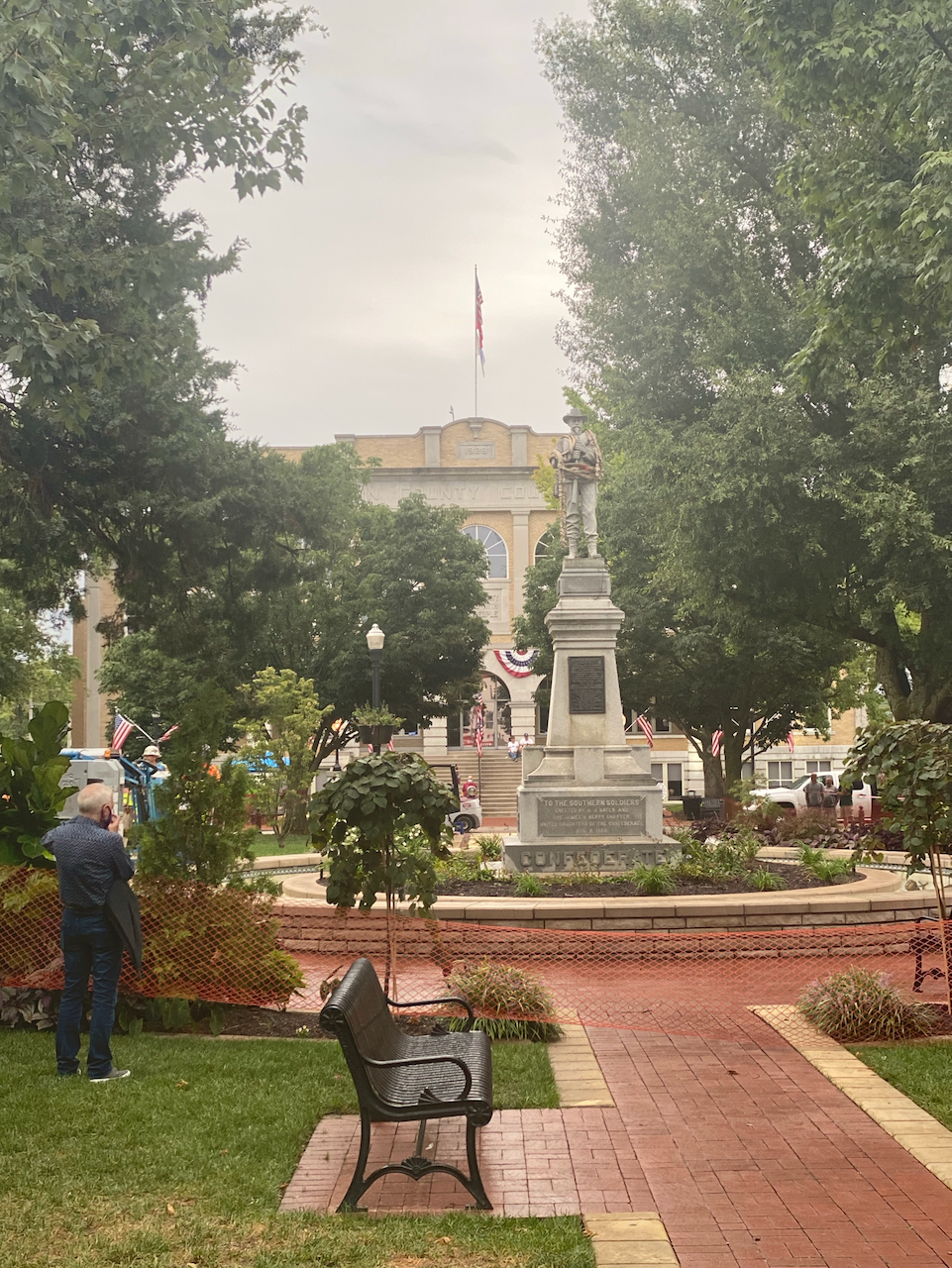
Benton County Judge Barry Moehring found himself at the center of that moment but rather than allowing division to dictate the outcome, he brought together a small group representing all perspectives on the statute's controversy to engage in an honest conversation about what should happen next. And by September of 2020, those discussions led to the statue being removed from the square and relocated to a new park near Bentonville Cemetery.
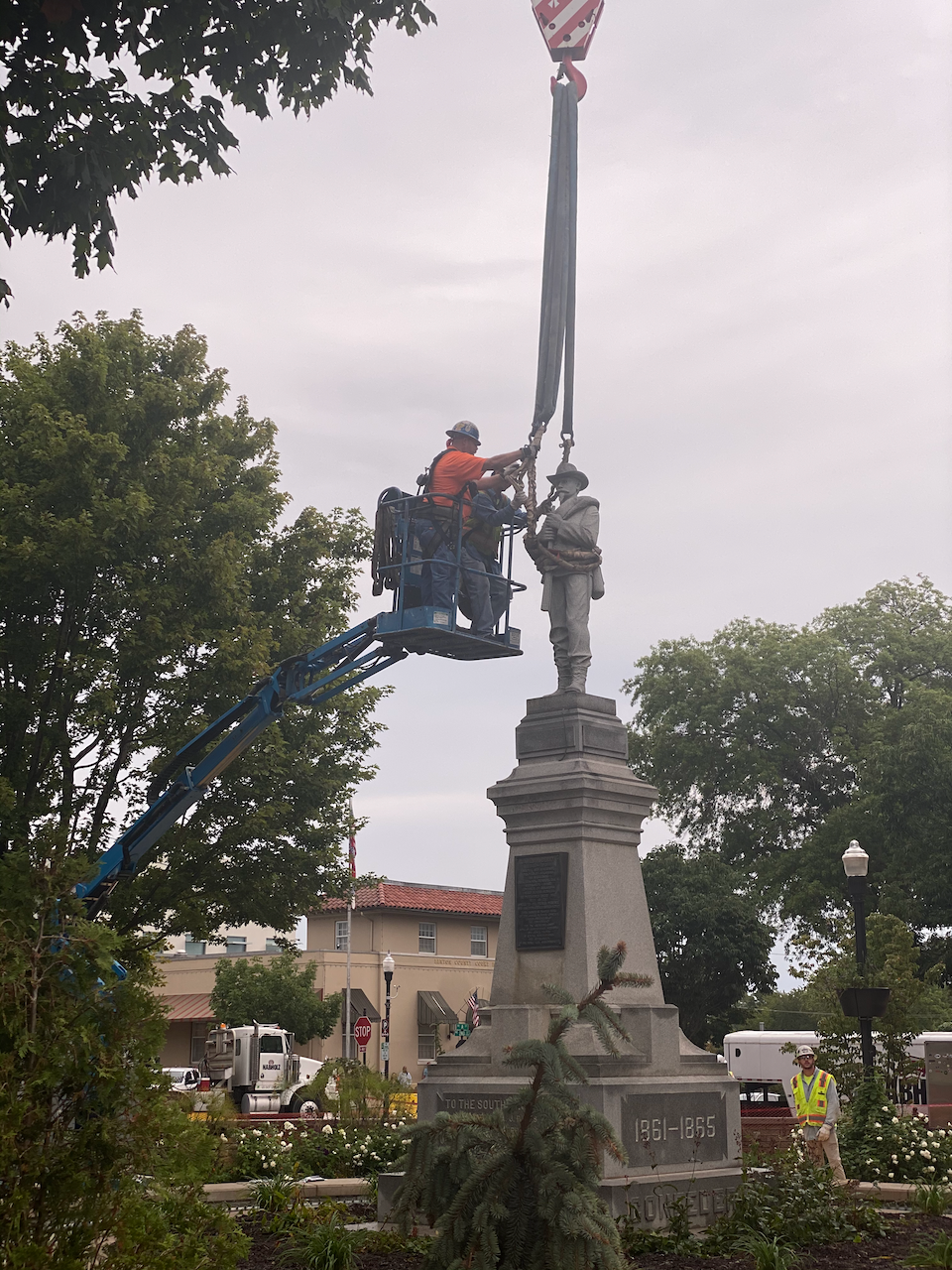
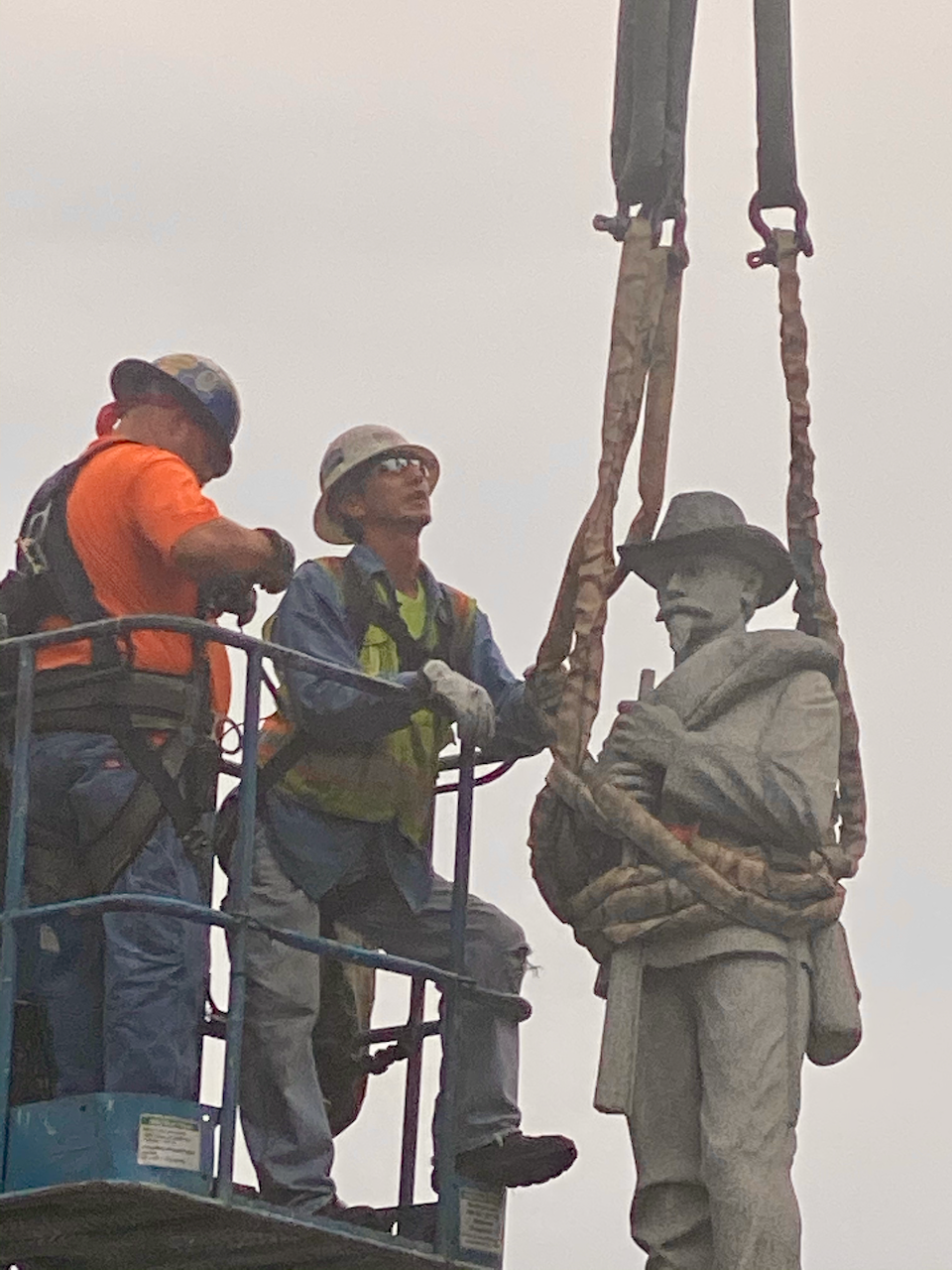
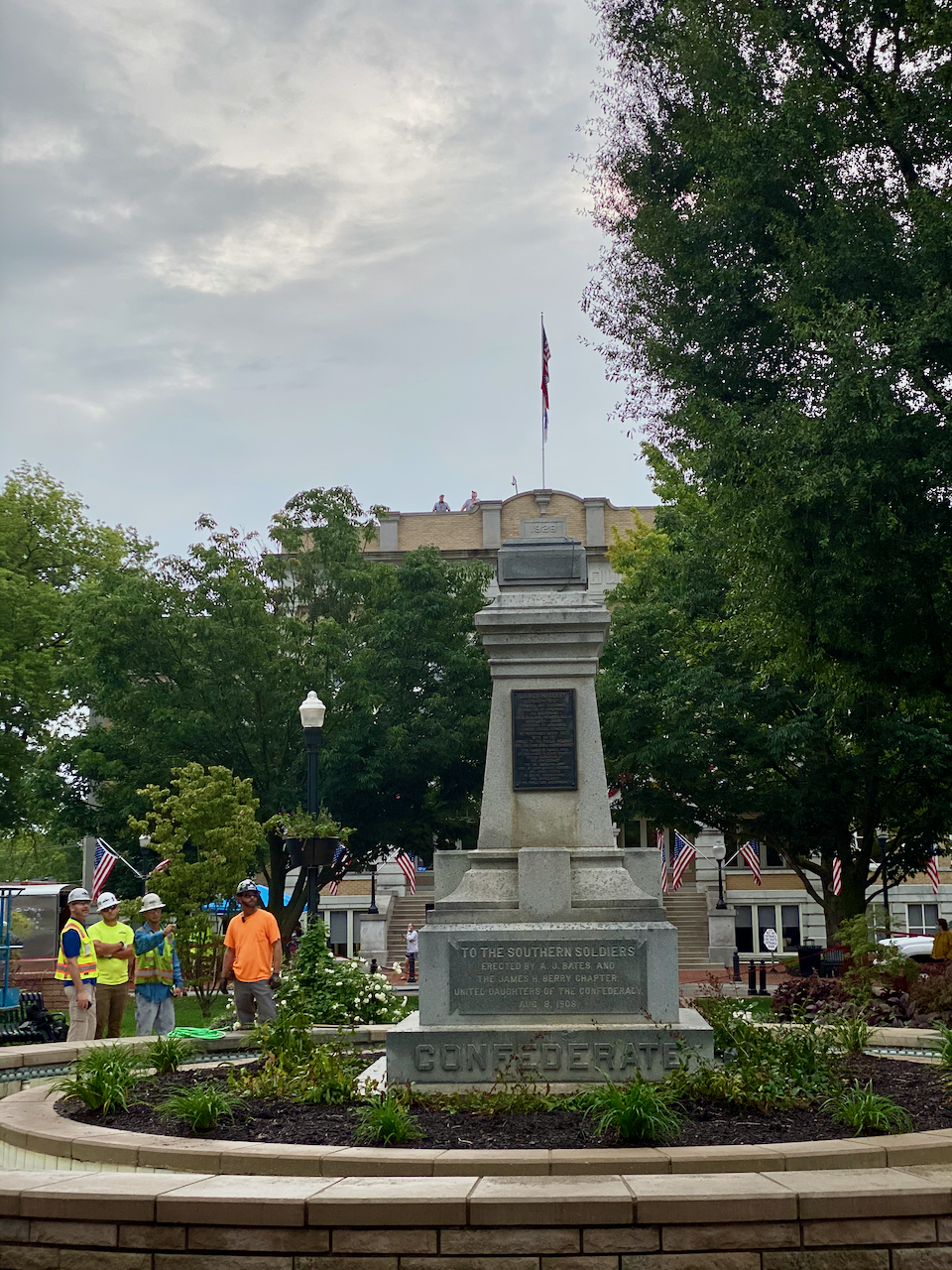
I was there that day that the statue was removed. I witnessed the moment that it was lifted off of its pedestal and onto a truck to be stored while the other park was being created. It was a time for many that felt like a very significant moment in the public memory of our place.
Now, almost five years later, I had the opportunity to sit down with Judge Moehring to reflect on that time. What did he learn? How did that moment shape our community, and what lessons from then might help us navigate the tensions of today?
One last thing, I'm gonna start with Mr. Phillips' comments from the previous episode regarding the statue and monuments to give a little context to this conversation with Judge Moehring. So in what will follow, you will first hear the conversation between Dale Phillips and I, and then I'll transition directly to the conversation with Judge Moehring.
All right, let's get into it.
Dale Phillips.
[00:02:52] mike rusch.: our community went through the removal of the Confederate statues a few years ago, but those types of Southern types of ideals or that Southern position being the one that seems to be remembered in our our landscape. I'm curious your thoughts. Is that an accurate representation, or is that how the history evolved afterwards?
[00:03:11] dale phillips.: As I said, in the immediate aftermath of the war most, there was still animosity, of course, but basically things died down fairly quickly. And but in the late 1800s and early 1900s, there was an effort, it's it's called the Lost Cause.
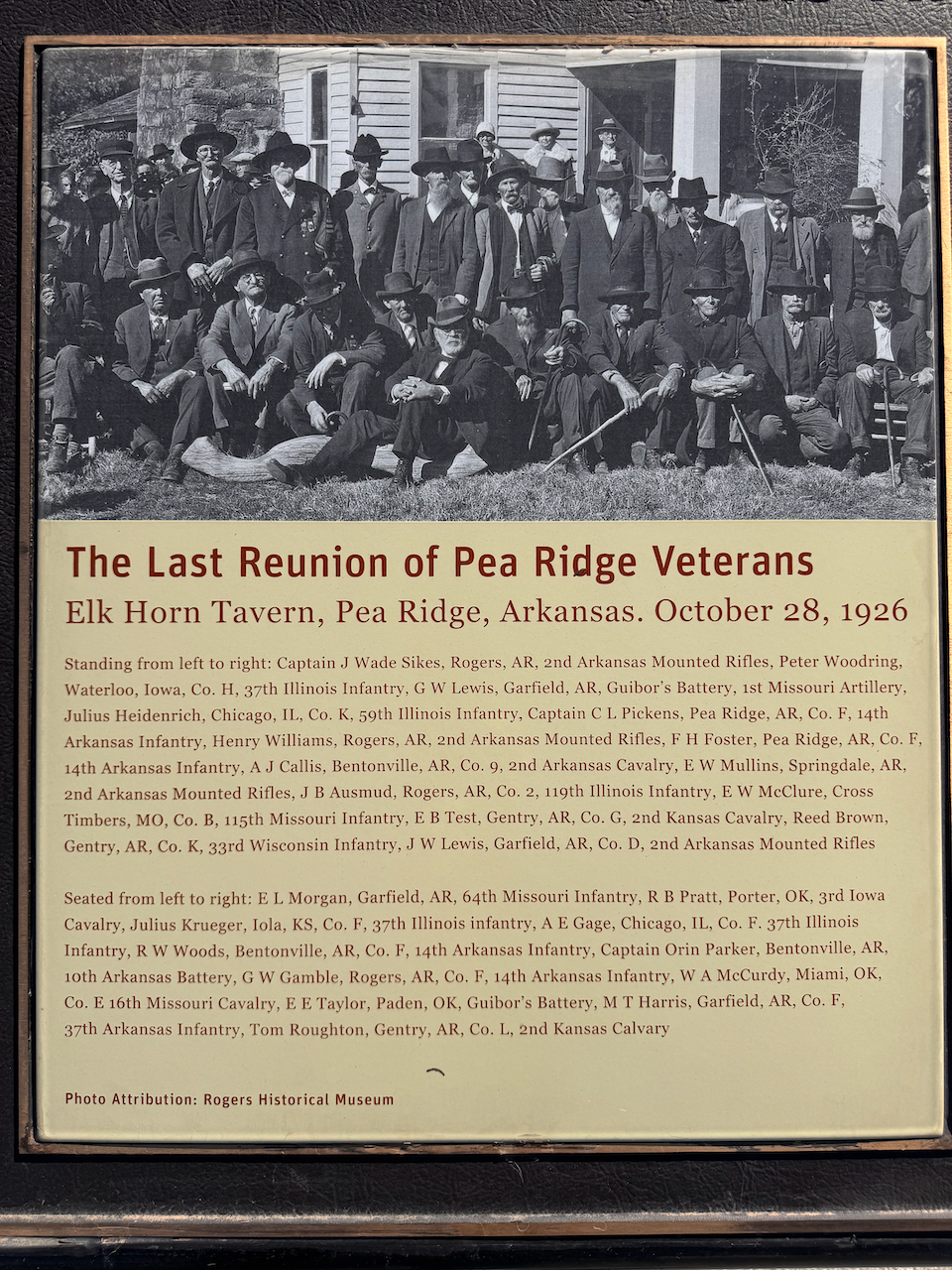
There was an effort to rewrite history to some degree, to justify the war on both sides, north and south. In a lot of the memorialization that you see on town squares, the battlefields were an entirely separate entity. Those were usually established by the veterans. Monuments placed by the veterans and they play a different role, but on many courthouse squares, North and South, you began to see that monumentation as the last of the veterans are passing on.
And the next generations come along. Um, they reflect an entirely different period in our history. The post-war period, they said late 1800s, early 1900s. Part of it, the best way to explain it is, and monuments are moved. Throughout history. My personal, this is my personal opinion is that monuments are artifacts.
They If they're on public property being maintained by tax dollars, if the people paying those tax dollars no longer feel that monument is appropriate to their beliefs, they have every right to vote to remove that property and not maintain it. Now, should it be destroyed? Absolutely not. They are part of our history.
I like very much what we've done in Bentonville. I like the establishment of the par, the new park uh, the location of the monument, the interpretation, which tells the story of Benton County in the civil war. That is the way I believe to handle it. Don't sugar coat anything, tell the story, tell why it's important to us and definitely not destroy What is a part of our history, whether you agree with it or not, but when it comes to it being placed and maintained on public property, that is really up to the discretion of those paying the bill. Basically,
[00:05:15] mike.: Maybe share a little bit more if you can about this idea of the lost cause where we're talking about.
Where do we still see that, obviously in monuments, but do we see that showing up in other places in our culture today
[00:05:26] dale phillips.: to some degree and again, you touched on it earlier with that idea that slavery really wasn't a major factor in the civil war. That is just unacceptable. That just is not true.
There's an attempt to, again, as I said, justify The actions of the Confederacy based on that time period. And that that's just not going to hold any water to anyone who actually is a student of history. And it has nothing to do with heritage. There is no reason not to honor our ancestors.
We may not agree with what they fought for, such as myself, but there is absolutely no derogatory action in not recognizing the valor, the conditions they faced and that they believed in what they were fighting for. And that's one of the reasons our national battlefields are so important because that is its role, not to judge, but to make sure that memory and that sacrifice is not lost by both sides.
Judge Moehring.
[00:06:25] mike rusch.: I think one of the deep questions that we're trying to always understand is just how our collective communities are formed. You and I, had a opportunity to have conversations about something that happened a few years ago, which is the removal of the Confederate statue from the city square. We're now probably two, three years, I guess, on the other side of those conversations, but the statue has been moved. It's now in a new location, in Bentonville. as you think about that, maybe reflect upon that, I'd love your thoughts on what did that mean? What does that mean if it still does, attitudes, values, points of view around, the conversation about what ultimately resulted in that statue being moved to a different location in the city.
[00:07:12] barry moehring: Sure. So, you know, if you rewind, I'm, I may not have my dates exactly right, but if you rewind to when I took office in January 2017, I think it was that summer when there were the, protests and riots and the tragedies in Charlottesville. And, I had a, I'll just say a wise counselor sit me down and say that statue is going to get a lot more attention.
And it did over subsequent years. And, and you know, it was one of those interesting issues where when I ran for county judge, I really didn't think much about the statue. In fact, a lot of people don't even know that you mentioned it as the city square. It's not the city square, it's the county square.
County owns the square, curb to curb, in Bentonville. We have an agreement in perpetuity with Bentonville that they will, keep it pretty for us, because at the county we don't do pretty very well. City doesn't have an excellent job. And so, as time wore on, particularly when we got to protests of the summer of 20, the George Floyd tragedy happened, And we had protests in the square.
There were a lot of things that happened where the statue was just simply becoming more than a conversation piece. It was becoming a lightning rod for controversy. And it was a controversy for those who wanted it removed, and then therefore it was a controversy for those who wanted it to stay. And what I would say was really successful about that is, we are one of the only locations, perhaps the only location in the country now. Where, through a long series of events that I was involved with some and not involved with a lot, the statue was removed peacefully, in daylight with, the Daughters of the Confederacy who own the statue. They are supervising it and taking pictures of it, going up on a crane and being removed.
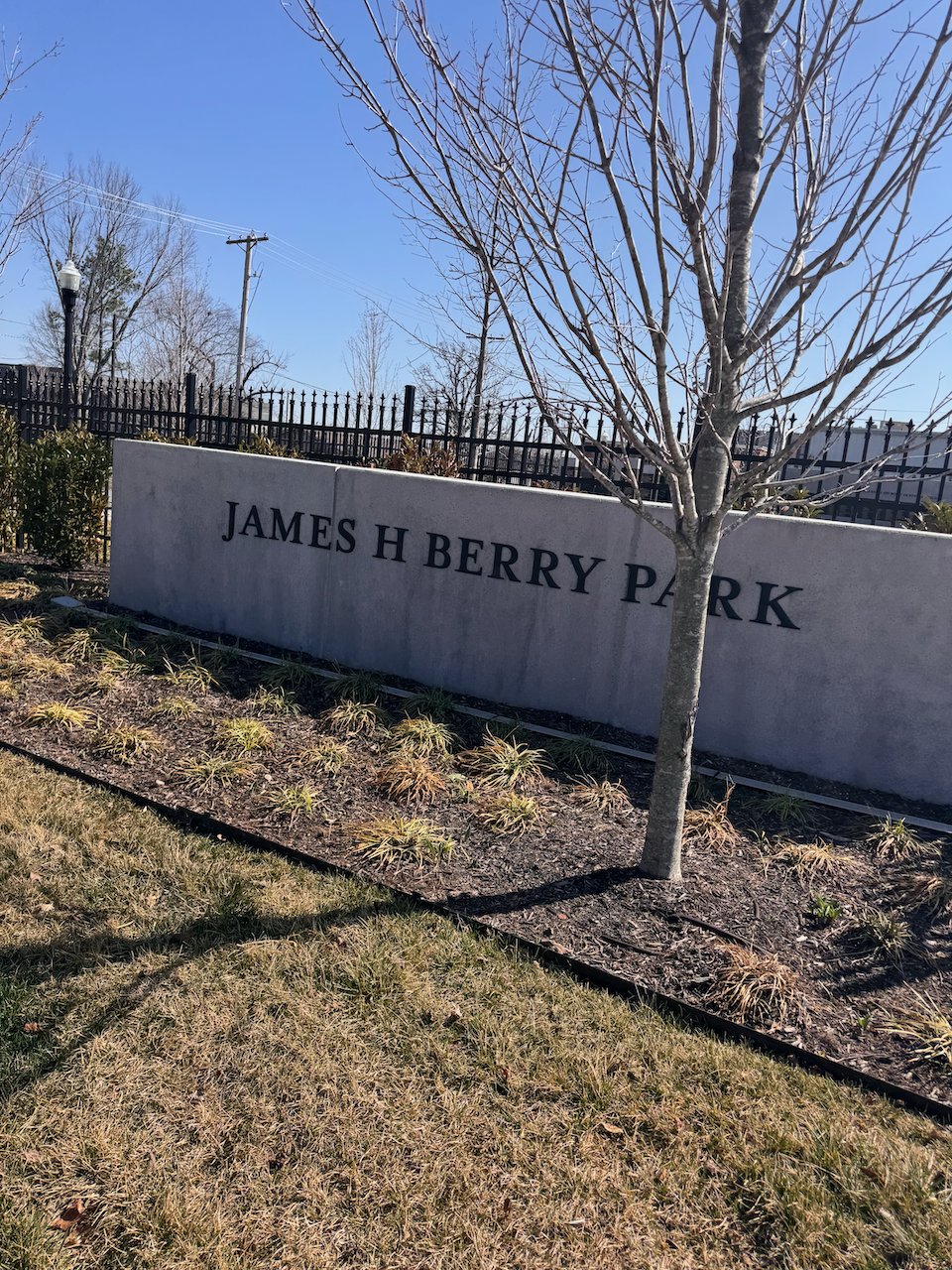
And through, a variety of other Partnerships that really the county wasn't involved with. A place was found and that statue was replanted as part of a Civil War park, not just Confederate, but it's a park that pays homage to folks in Benton County who fought on both sides of that war. And that park now is over there by the Bentonville Cemetery and that statue stands over there for those who want to go see it and respect it.
And in the meantime, the square now, that center part of the square is where the city does various types of landscaping and now there's a Christmas tree there. And so. All in all, considering how really controversial that issue was around the country, even today, there's an issue with a statue in Arlington Cemetery right now.
I think that all the parties involved who really had specific vested interests worked really hard to do that, what I would say is the right way. It may not be a way that made everybody happy. but it did result in our square now. not having that controversial statue in it, and I will be criticized for that because some will say, well, that's not even controversial.
yeah, it was. Of course it was. And it's moved to a place where people want to go, not just see the statue, but learn about the history of the Civil War in Benton County, they can go do that. And that's a cemetery, where James Berry, who the statue portrays, That statue is not of James Berry, but it's dedicated to James Berry. He's buried there. His family's buried there. Confederate, you know, unknown soldiers, the Confederate army are buried there. and so it's a very, it's an appropriate place for it. and now we have a square that for those who might not have felt welcome before, they can certainly feel welcome now.
[00:10:43] mike rusch.: You mentioned, the process, maybe that it was worked through in a healthy way in a good way. can you explain that a little bit more? could you share a little bit about maybe either what you learned from that or. What it took to come to that result.
[00:10:57] barry moehring: I would say that, publicly it almost seemed like there were unreasonable people around all sides of that issue. but I'll come back to like the Daughters of the Confederacy. they ended up taking a very pragmatic and reasonable position on it. The historic preservation commission took a very reasoned stand on it.
And so, I think what I learned is that there is a way. I think, for some of the hardest issues to be addressed, if people get around a table, I mean, I had conversations with people, I mean, they were not over my dead body, is that statue going to move? And then I had conversations with other people that are like, you know, that statue is coming down. We can do this the easy way or the hard way, but that statue is coming down. It was a very hard place to be. and, And I think that the real stakeholders in that, and keep in mind the UDC owned that statue. It was in a square owned by the county that was called the City of Bentonville Square. It was a very complicated thing.
[00:12:03] mike rusch.: But people came together and I think they all, everybody gave and looked at what was the bigger opportunity here to do the right thing that would make, that would satisfy the most number of people. Didn't satisfy everybody. I still hear about it. But I think the outcome was satisfactory.
now that, that the statute has been moved, so maybe that chapter is over. as you look back on that, what do you think we as a community can learn from that as, undoubtedly, these conversations I don't think are necessarily over. Not that there's any flashpoints in our community at this point but what do you think we can learn from that, and draw from that and approach issues, maybe not, of this type, but, maybe of equal importance? What can we learn from that?
[00:12:47] barry moehring: You know, when we started this conversation, it was a little bit about why did Cindy and I choose to stay here and live here?
And I think I described, you know, quality of life, easy living. but I do think this community can pull together around some things. and I, we may have. Some secret ingredients that other communities don't have. I don't know if what happened with the statue could have happened in some other places.
Maybe it could have. I don't know. And maybe it has. I don't know. But what I learned is that, is that it's possible to deeply care about this community from entirely different perspectives. and that if you start with the folks that deeply care about the community and recognize that there's a problem, then I think you can put people around a table.
I don't know if that happens everywhere, particularly in today's world. And I hope we haven't lost some of that. Um, because even since 2020, this is a more acerbic, you know, political atmosphere than it was. But there were definitely people who were adamant about that statue on both sides that ultimately had to give to make what happened to happen and that I'm really proud that happened in this community. .
[00:13:59] mike rusch.: watching it from the outside. it seemed like it was, yeah, it felt like a, You can hear me, I'm still trying to process it these years later, but having grown up in this place with that statue, it seems to have been something that the community came together on to find a solution.
[00:14:19] barry moehring: I think a lot of the community. I would still say though, I think there are people upset that it's gone, and I think there are people that are upset that it got, they term it replanted. There's no way this outcome was going to make everybody happy. But if this had happened tragically or violently, that would have been the worst case scenario. And keep in mind as county judge, my job is if I see that issue coming at us, I've got to head that off. I have to. That's what I'm here to do. Right.
[00:14:55] mike rusch.: Well, I appreciate your leadership through it all. definitely not, something. That you signed up for, but by virtue of your position was your responsibility in many ways.
[00:15:04] barry moehring: I had, when I had won the primary long before I had gotten sworn in. I had somebody sit down with me and he says, you know what your biggest issue is going to be down the road, don't you? I said roads, ambulance. He said, no, it's going to be that statue. And he was the same one that told me later, as I mentioned, he said, okay.
This is going to be a real problem, like this went from a, you know, level two or three, and now it's going to be five or six, and there's going to be a time when it's going to be a 10. And, and it was, you know, it was a tough issue.
[00:15:32] mike rusch.: Well, I am thankful for your role, in it and, thank you for your leadership.
[00:15:39] barry moehring: And no, I didn't sign up for it, but boy, it was an interesting issue as we were going through it.
episode outro.
[00:15:46] mike.: Well, a huge thank you to Judge Moehring for sharing your insights, for walking us through what it meant to be at the center of that moment, and for helping us to understand what was learned in the process.
If this conversation teaches us anything, it's that the past is never, just the past, the way we remember history. Who gets a seat at the table, whose voices are heard and whose stories are given space. It shapes the world that we live in today and the work of making a place where all people feel a sense of belonging. Where history is remembered honestly, and with care, it is never finished because our present is never disconnected from our past.
The Confederate statues stood for over a century, but the forces that put it there, the myths, the power structures, and the resistance to racial justice. Didn't stay in the past. The murder of George Floyd in 2020 and the protests that followed, they weren't isolated moments. They were part of a much longer struggle. One that continues to demand our attention today.
So as we move forward, what are the conversations that we need to be having today? What are the symbols and the stories and the systems that either welcome or exclude? And how do we like those who sat around the table to reckon together around this statue? Choose to engage with honesty and courage, even when the path forward may not be easy.
That's the challenge that I walk away with today.
So I wanna say thank you for listening and thank you for being the most important part in what our community is becoming.
This is the underview, an exploration in the shaping of our place.