
the county with Barry Moehring.
Judge Barry Moehring about the current state of Benton County Arkansas. We explore the opportunities and challenges that currently face Benton County, how the County is changing, and how Judge Moehring has found a home in this place.
season 1, ep. 5
listen.
episode notes.
Episode 5 is a discussion with Judge Barry Moehring about the current state of Benton County Arkansas. We explore the opportunities and challenges that currently face Benton County, how the County is changing, and how Judge Moehring has found a home in this place.
Judge Barry Moehring (read full bio) also flips the script on Mike when the topic of Gravel Bikes on County Roads comes up. In that, we may have learned the true motivation for this entire podcast.
about Barry Moehring.
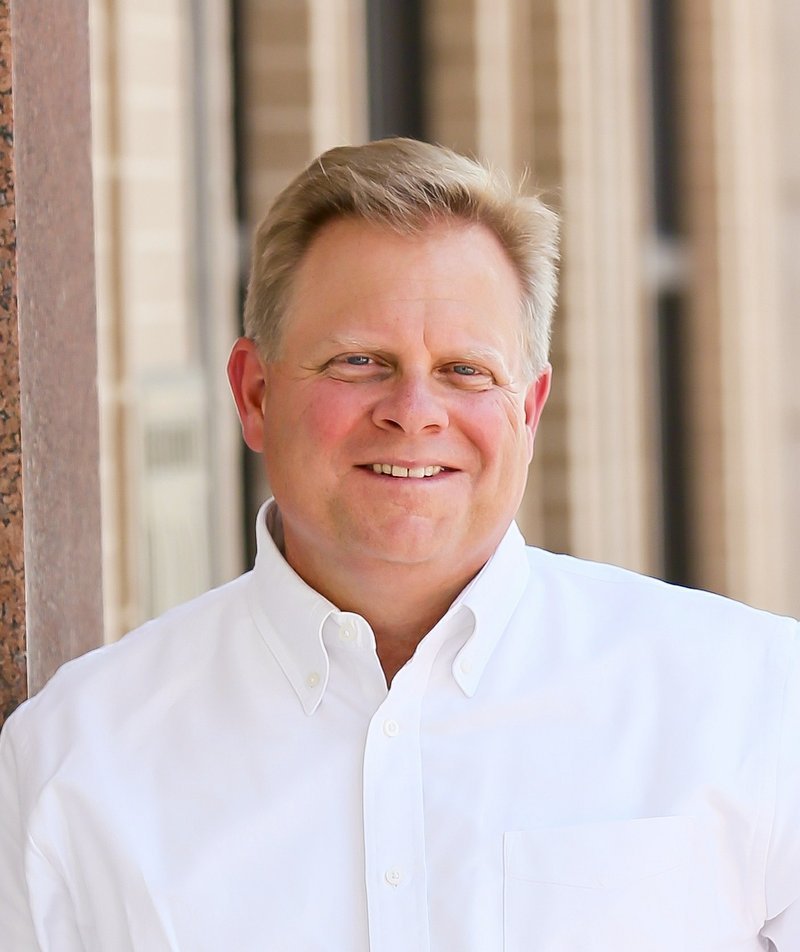
Barry and his wife, Cindy, moved to Benton County on Valentine’s Day in 1999.
They’ve been married for 32 years and have three kids – Allison, Hayden and Bennett.
In 2016, Barry was elected Benton County Judge and has been reelected twice since then. In that role he leads over 250 county employees and manages a budget of more than $30 million. The responsibilities of the County Judge include overseeing the County Road Department, Planning, Building Safety, Environmental Management, Emergency Services, 911 Dispatch, the Juvenile Detention Center, the Benton County Veterans Service Office, all county facilities and many of the county’s internal departments such as Accounting, Finance, Human Resources, Information Technology and Communications.
Additionally, Barry is the Chairman of the Northwest Arkansas Regional Planning Commission and the Benton County Solid Waste District. He is a member of the County Judges Association of Arkansas Executive Committee and Legislative Committee.
Before becoming County Judge, Barry served two terms on the Benton County Quorum Court..
Before his service at Benton County, Barry spent 25 years in executive and leadership positions with some of the world’s top companies, including Motorola, The Walt Disney Company, Dreamworks Animation and Walmart Inc. Prior to his private sector career, Barry worked in the US House of Representatives for two different Members of Congress from Arizona on a variety of issues including appropriations, defense and national security, commerce, trade and foreign affairs.
Barry holds a Bachelor’s Degree from the University of Arizona.
Barry has been involved in numerous local community activities and clubs including Bentonville Rotary, the Northwest Arkansas Lightning Soccer Club, Babe Ruth Little League and the Boys and Girls Club of Benton County.
Barry and his family are members of the First United Methodist Church in Bentonville.
route.
two distances: 22.9 miles (below) & 27.9 miles (link)
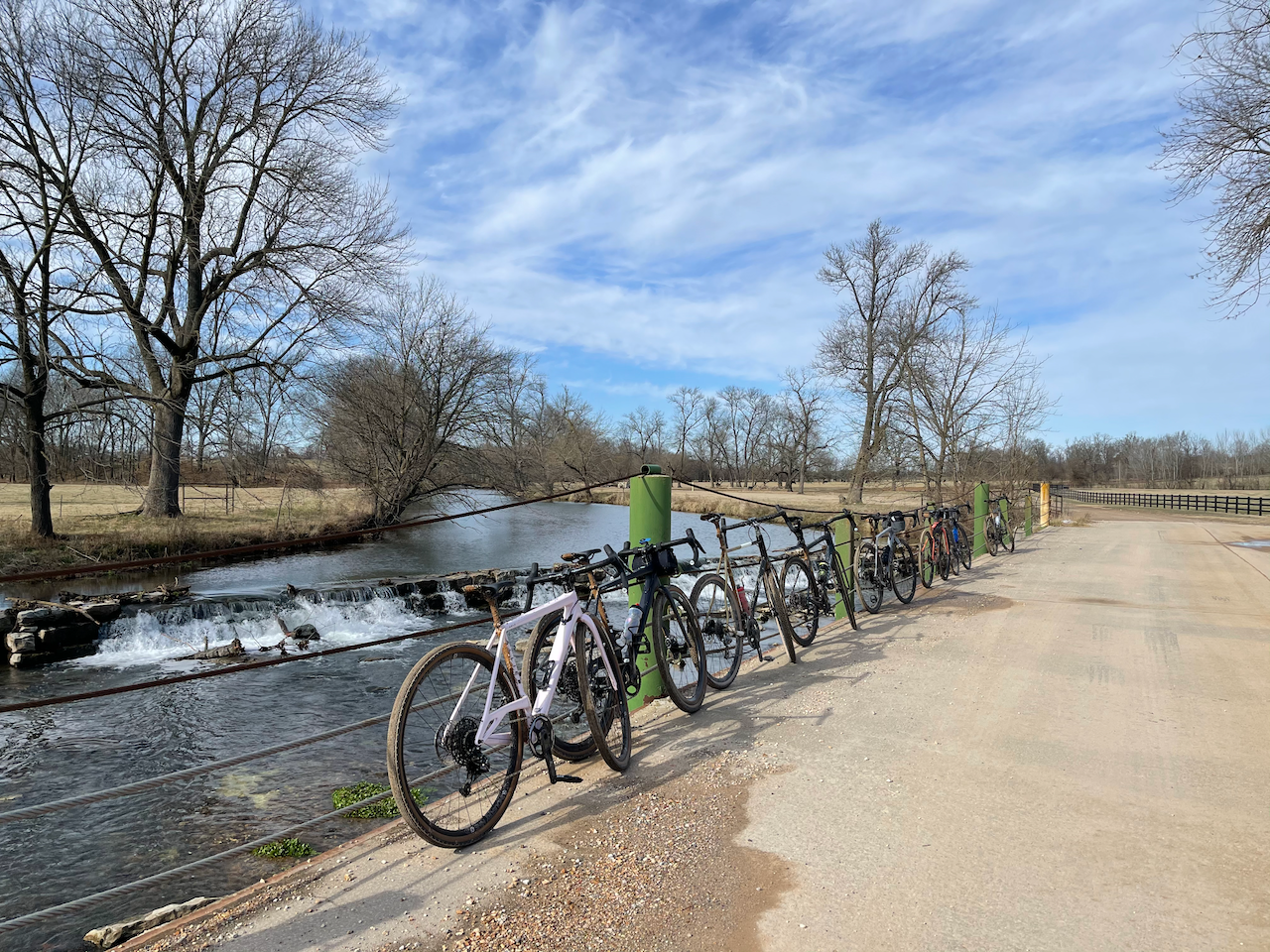
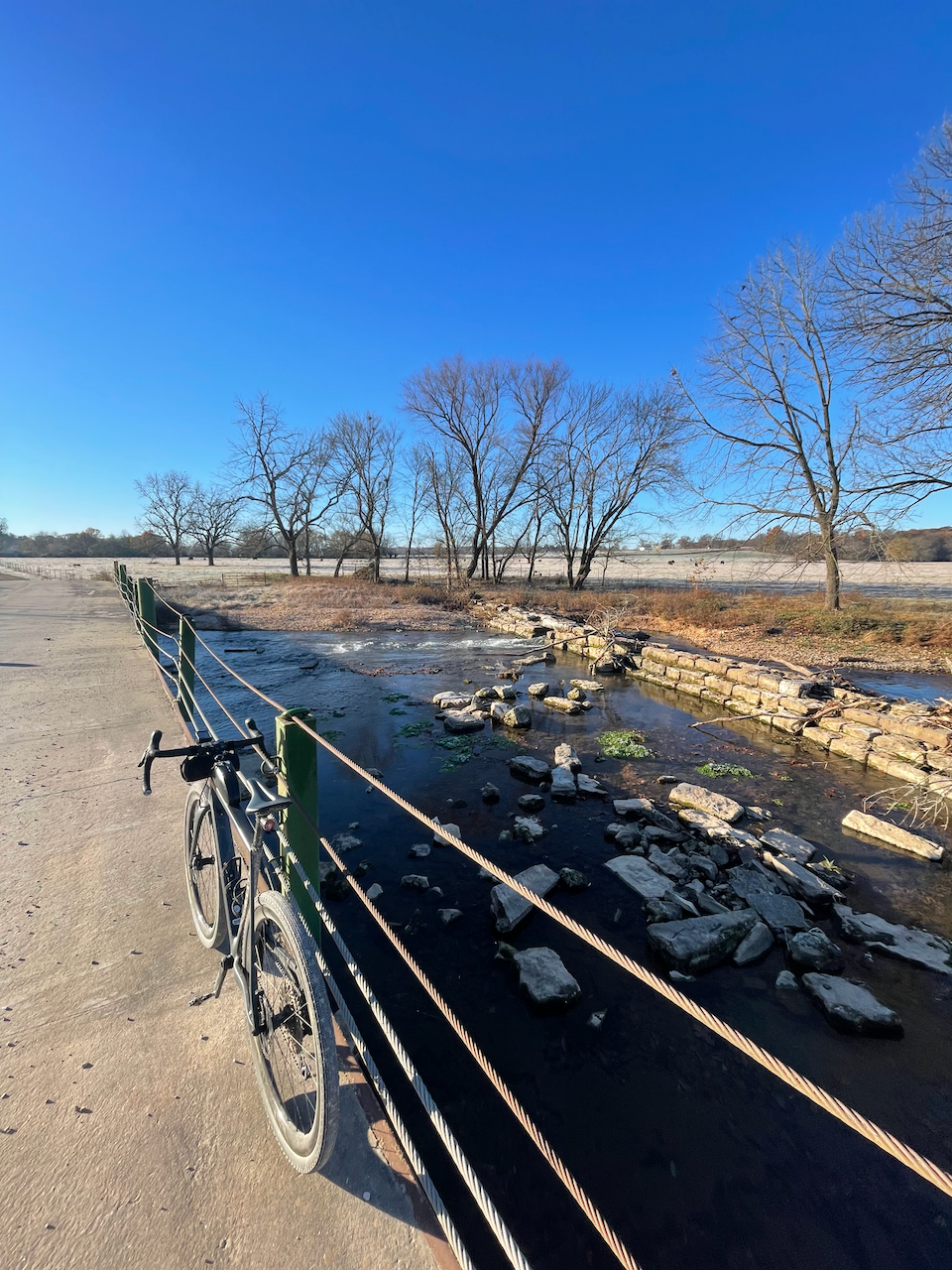
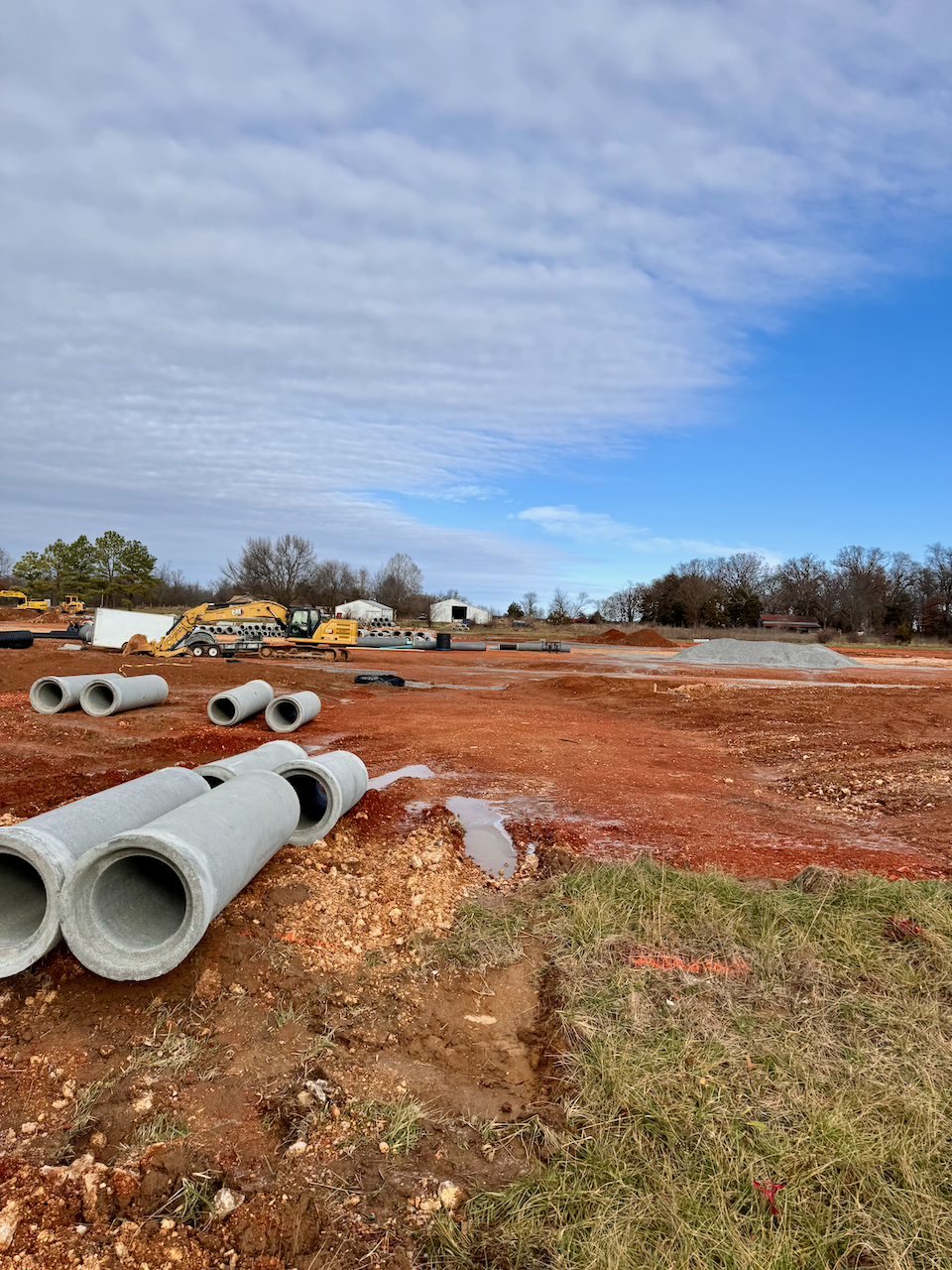
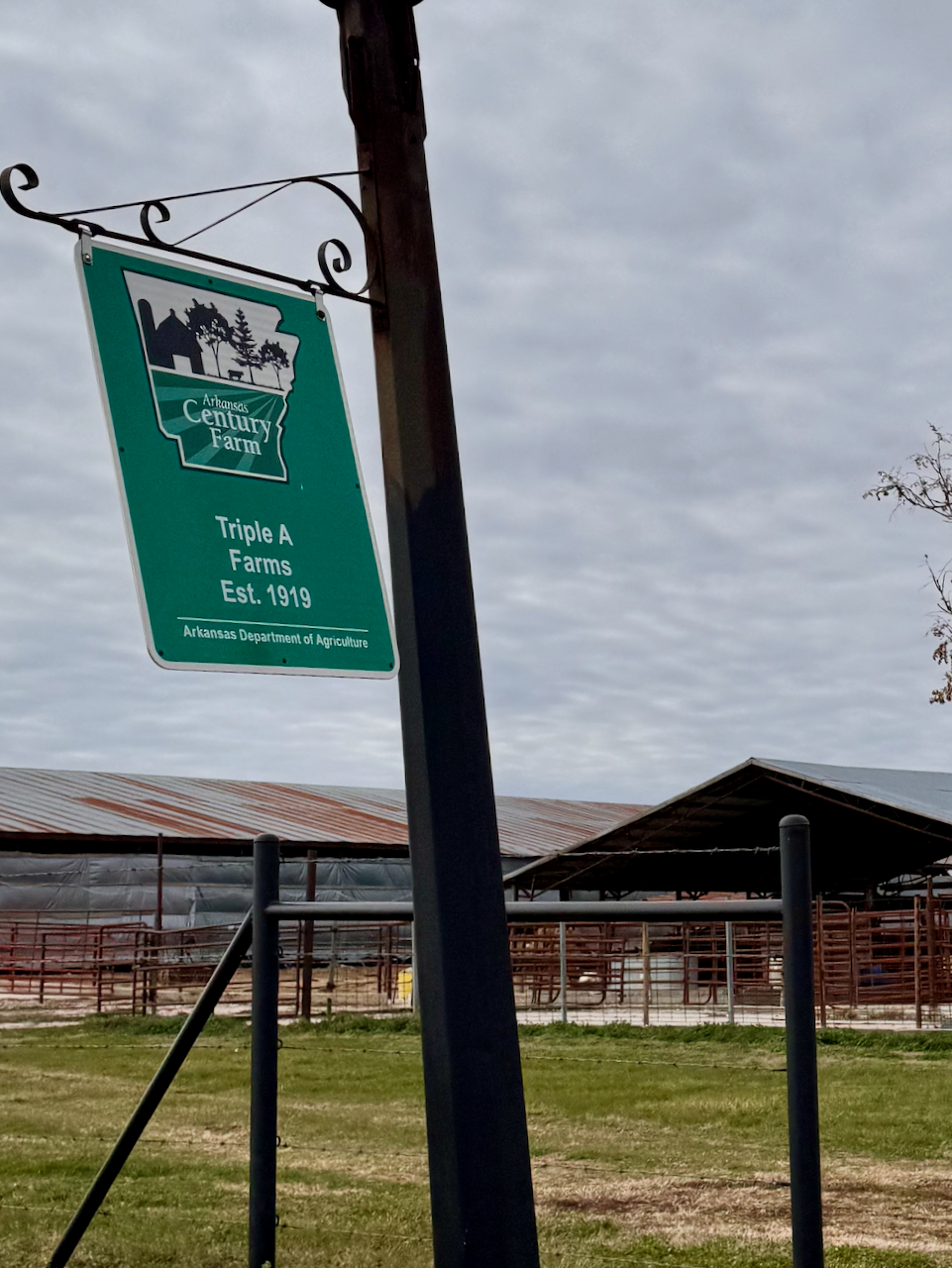
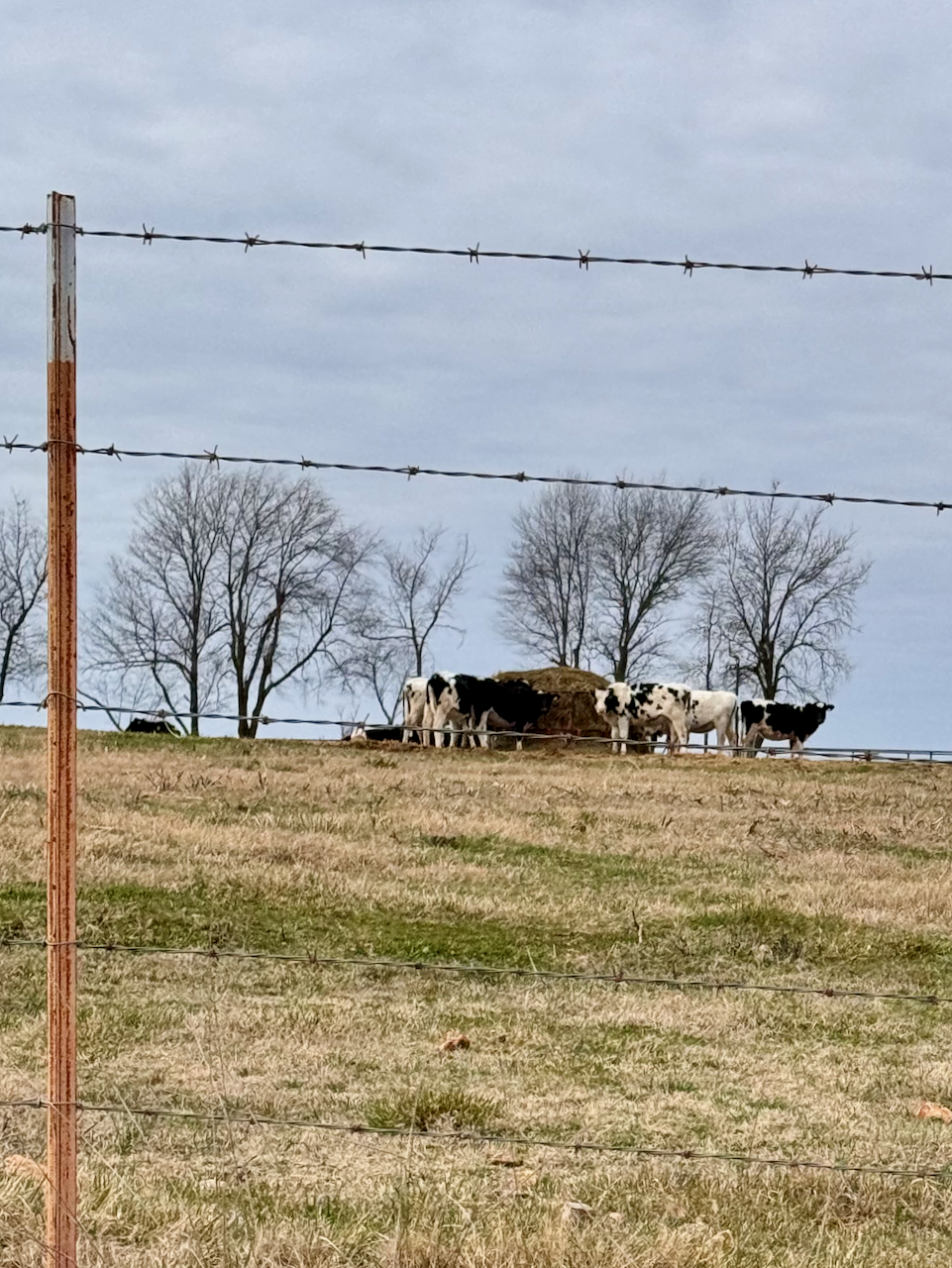
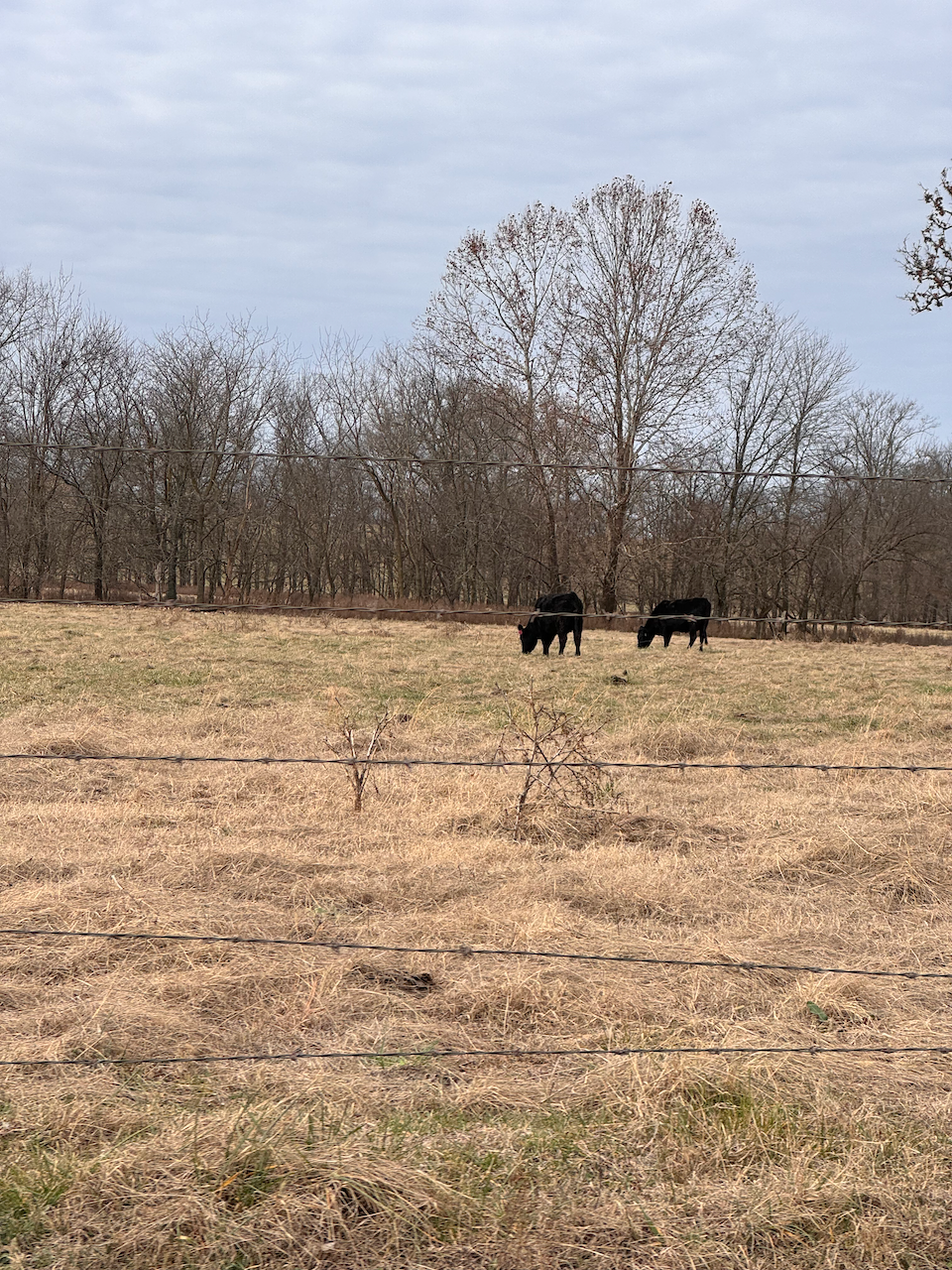
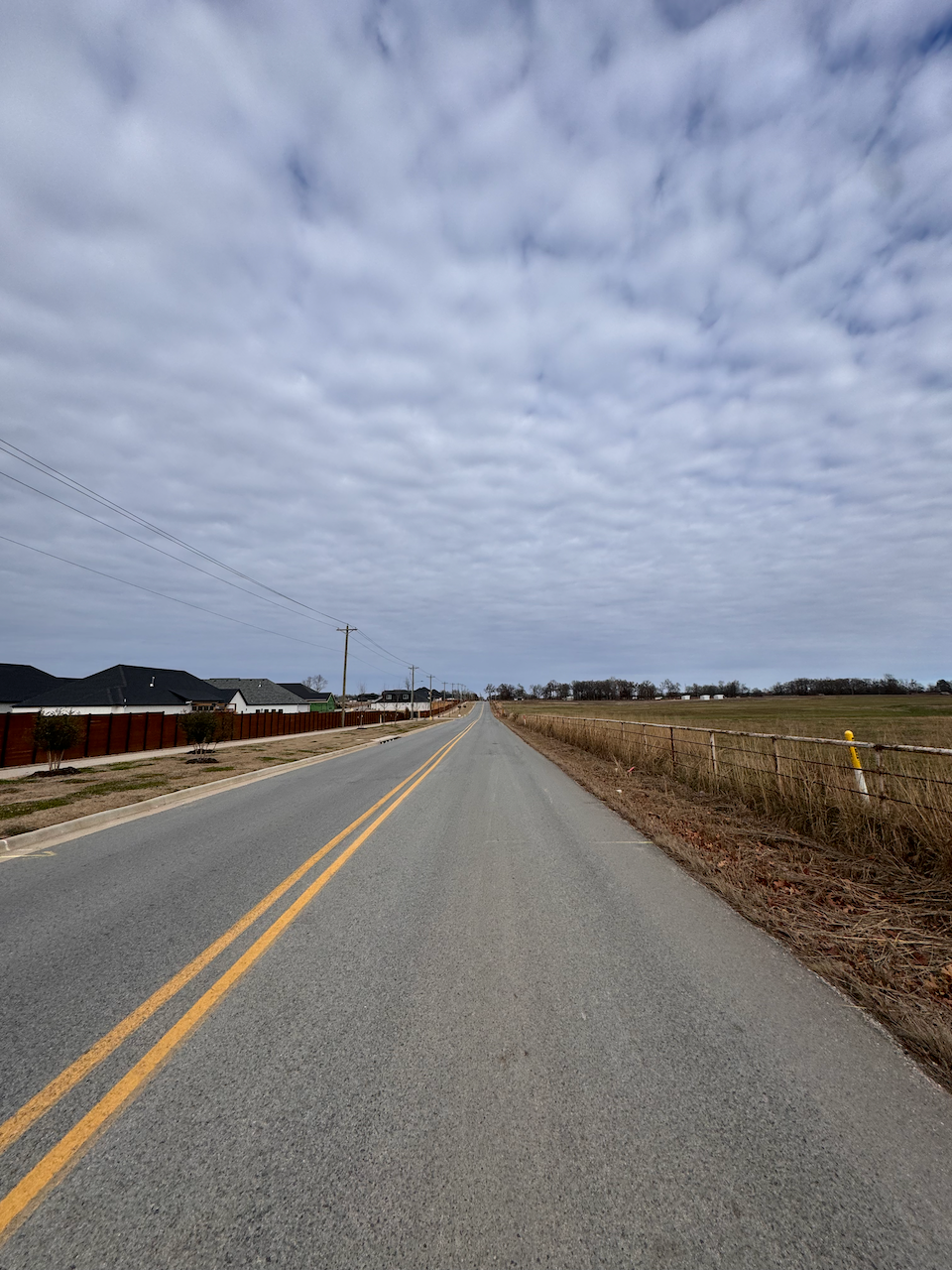
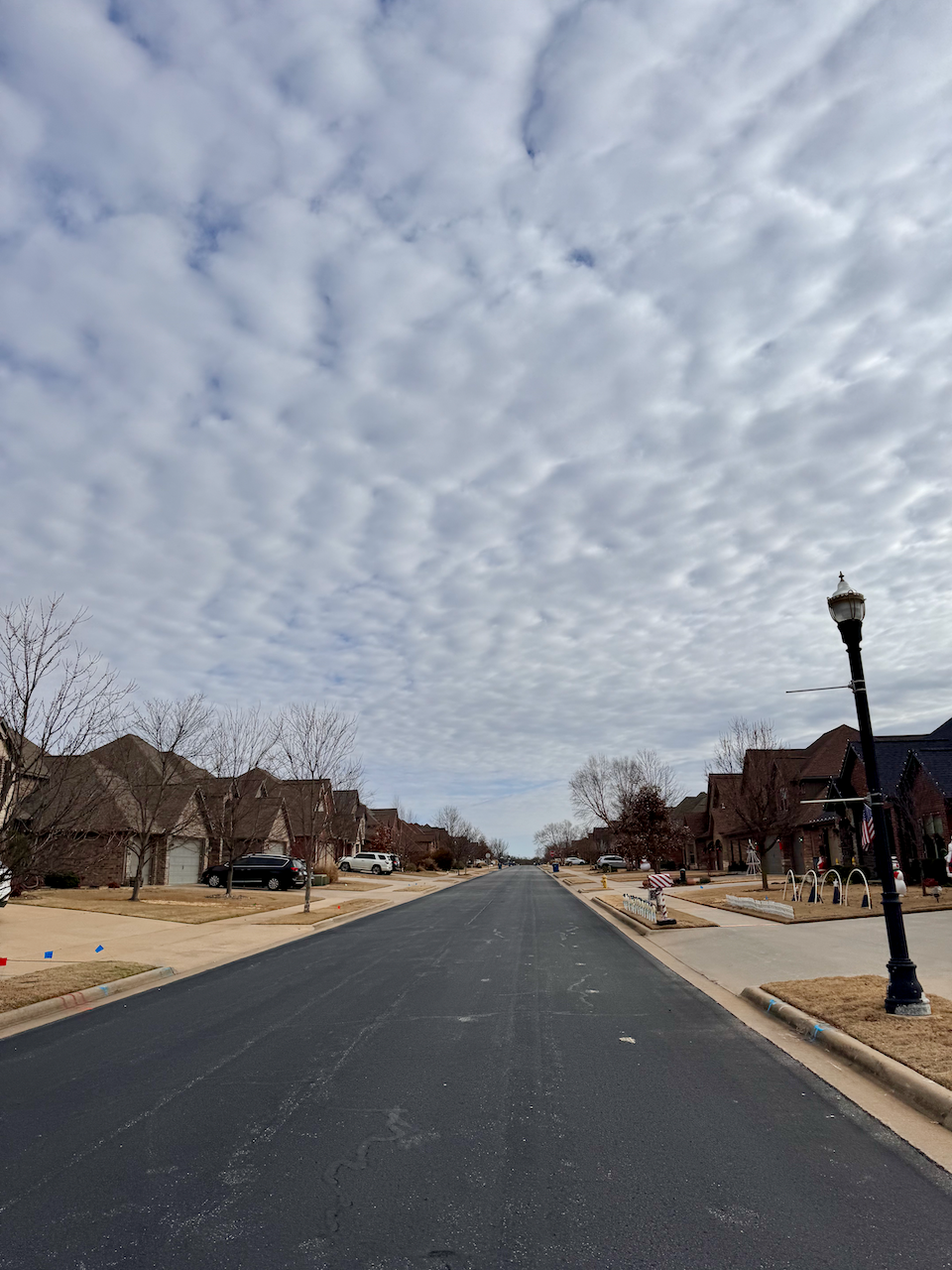
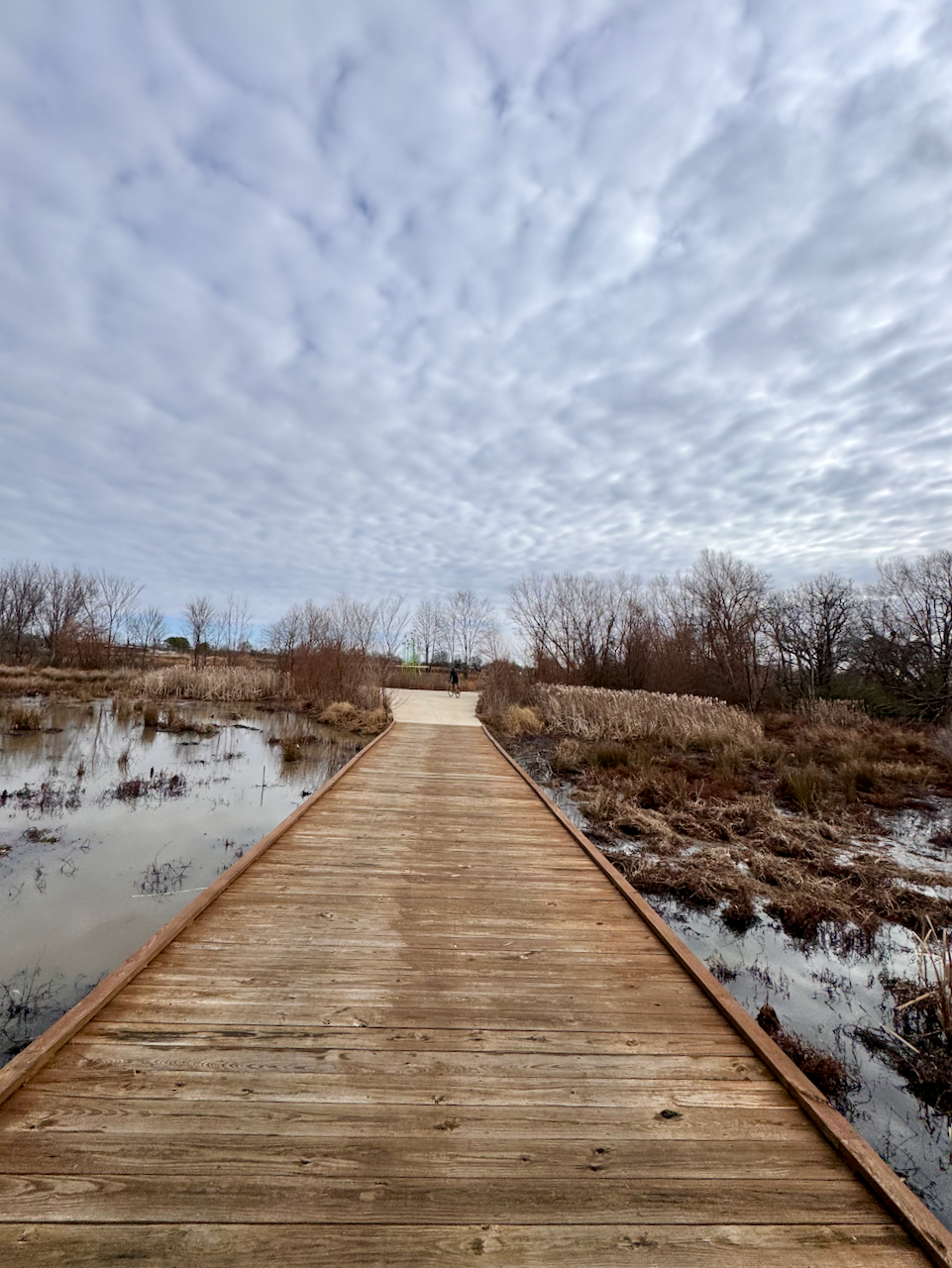
The County (Judge) is a route that starts at the Benton County Courthouse in Bentonville & makes it way west into Benton County. This route will show the extent the City is growing, former farmland that is now subdivisions, one of the last remaining Dairy Farms in the County, and see the way growth is changing this place.
music.

Ashley McBryde was born in Waldron, Arkansas and raised in Saddle, Arkansas. Her father was a farmer, a doctor, and a preacher.
McBryde has received one Grammy Award from six nominations, one Country Music Association Award, three Academy of Country Music Awards, and was nominated for a Daytime Emmy. She earned one of country music's crowning achievements when she was invited to become a member of the Grand Ole Opry by Garth Brooks and was subsequently inducted by Terri Clark on December 10, 2022.
I had the privilege of first hearing Ashley in Bentonville through City Sessions at the house of Beau & Kourtney Barrett. Ashley was early in her career & we spent most of the night talking to friends not realizing the success that was ahead for her.
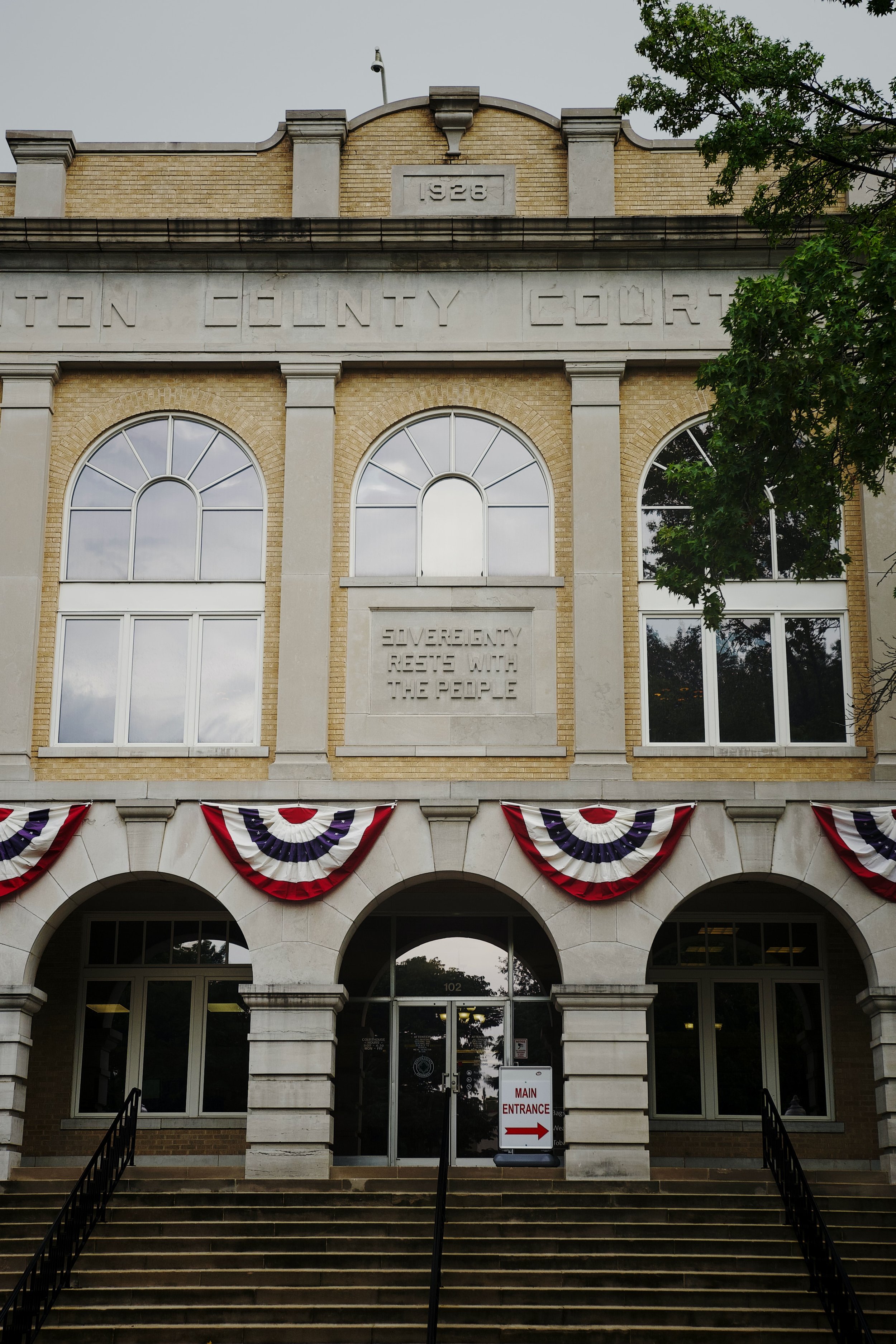
Benton County Courthouse, Bentonville, Arkansas - Photo by Brad on Unsplash
references.
Benton County Geographic Information Systems Maps
episode transcription.
episode introduction.
[00:00:00] barry moehring.: But our challenges are all related to our prosperity and growth. Almost all of them. Everything we do is a growth problem.
It's all a math problem. Part of what we're witnessing here today is we are a victim of our own success . And you're looking at, an Metropolitan Statistical Area here, that's going to approach a million people in 2040, 2045. Everything that we have to think about has to relate to that.
introduction comments.
[00:00:23] mike rusch.:
You're listening to the underview, an exploration of the shaping of our place. My name is Mike Rusch and my guest today is Benton County Judge Barry Moehring. Our topic is the state of Benton County, where we have come from, where we're going, and the challenges and opportunities ahead. This discussion relates to our previous episode about the challenges facing our region.
However, today we take one step closer to my home county as a way to understand how our county is being shaped. Judge Moehring also takes the opportunity to flip the script on me a little bit as I make an ultimate ask as it relates to the future of gravel cycling in northwest Arkansas. And while that's not the main point of the conversation, it's an important point. Talk to you after the show.
main interview.
[00:01:49] mike rusch.: Judge Moehring. Good morning.
[00:01:54] barry moehring.: Good morning.
[00:01:55] mike rusch.: Thank you for sitting with me. I'm glad to have you dip into these conversations and been thankful. We've had the opportunity to know each other for, for many, many years, probably more years than either one of us would want to admit, but thank you for, thank you for coming and sitting with me this morning.
[00:02:12] barry moehring.: Absolutely.
[00:02:13] mike rusch.: Tell me your story. I'd love to hear your, your story of who you are and how you got to this place
[00:02:19] barry moehring.: Well, that's a long story, but I'll sum it up. I was, I was born in Tucson, Arizona, and I won't go back to the, the history there, but I think, I think probably for the purposes of this discussion, what's important is that in 1998, 1999, my wife and I, through a very strange set of circumstances, were given the opportunity to come to Northwest Arkansas and both of us work for Walmart in the Walmart home office.
And and we decided to do that. We had. A two year old and a three week old baby when we got here on Valentine's Day, 1999. And we looked at each other. We had a rental house over off of Walton. And what we remember the most about the rental house is bright red carpet on Valentine's Day. It was unbelievable.
But we looked at each other and we said, five years. We're going to stay here five years. We're going to live in Arkansas. And we're going to work for Walmart for five years, and then we're out of here because our lives prior to that had been we moved here from Phoenix. And before that, we were in Washington, D. C., and we could never have envisioned living in a place like Bentonville, Arkansas, and and now, nearly 25 years later, here we are. This is the longest we've ever lived in one place. We have no plans of going anywhere. I'm not sure what would ever pry us away from here. It wouldn't be career choices at this point.
And, We've raised three great kids. We've gotten involved in our community, been involved in our church. We've had great career tracks and we're thankful beyond measure that we ended up in Northwest Arkansas, but when we came here, we would never have thought that in fact, we didn't think that, and now here we are, it's been phenomenal.
[00:03:57] mike rusch.: What changed in that decision to say, we're going to do, we're going to make
this home.
[00:04:03] barry moehring.: It had everything to do with raising our kids. I mean, so, so don't get me wrong. We, we both had really great opportunities at Walmart. I was in marketing. My wife was an attorney. She was in legal, but man, we, we live five to 10 minutes away.
We were able to coach ball teams. We were able to show up for school events and the quality of life was just phenomenal more than anything else in Phoenix. You know, we're 45 minutes away. I worked in downtown Phoenix, and we lived in an area in Phoenix called Ahwatukee. She worked in, my wife worked in downtown Phoenix, and, and The sheer quality of life was phenomenal for us and we're not the kind of people that needed, you know, we don't need professional sports teams.
We don't, we didn't need a lot of that, but we need is a good, you know, firm family foundation, a nice, decent place to live, a good place to work and the way to get back and forth. And we had that and it just kind of evolved. I mean, 5 years became 10 years and then we'd never consider. We would never consider actually going anywhere else.
That was awesome.
[00:05:04] mike rusch.: So this sounds like home.
[00:05:06] barry moehring.: Oh, yeah. Yeah. I mean, Arizona will always be my homeland. And my family still is. A lot of my family still lives in Tucson. And so we go back and visit Tucson, but you know, I have no plans to retire to Tucson like a lot of people do. No, we'll run out. We'll run out the clock here.
I'm quite sure.
[00:05:21] mike rusch.: What do
you think, if you can even summarize it, what is it about that makes this place home today? 25 years later, if I remember correctly, that kind of holds you in this place.
[00:05:33] barry moehring.: You know? It's not so much about career opportunities anymore because we've had those, so, you know, we ran out the meat of our career, if you will, here, it's really about quality of life.
It's about I think the people are genuinely friendly here. I think that it's a pretty welcoming community and welcoming means a lot of things, but for us, it's we've got a lot of friends. We can make new friends. We, we love the activities that are available here. We also have the proximity. And just, you know, we lived in hard places.
Phoenix is a hard place to live. Phoenix is a megalopolis. D. C. is a hard place to live. Not that there's anything wrong with that, but, but living, living's pretty good here. And so we, we just love it here. Love the climate. I mean, I don't miss the desert. Thought I would, I don't, but it's great.
[00:06:20] mike rusch.: Can you tell me, so we're sitting in your office this morning, can you tell me a little bit about where we are?
[00:06:25] barry moehring.: Sure, so we're in the We're in the Benton County Administration Building. In all of its glory. Basically, this building was built by Judge Bruce Rutherford a couple of decades ago. It's basically a Lego block. We don't, we don't shoot for design awards here at the county. And, and this is the county judge's office here in the corner.
But this is the, this is the heart of county administration. Here in Bentonville, Bentonville's our county seat.
[00:06:48] mike rusch.: You
mentioned D. C. I know you've got a background, obviously in business, but you also have a background in public servant, if I can use that term, if that's fair. Can you tell me a little bit about
that background?
[00:07:00] barry moehring.: So I went to the University of Arizona and Really caught the bug to be involved with things political. And and so one of the things I did while I was at the university of Arizona is I did five different political government internships. And one of those was to go to DC to be an intern for Senator Deconcini.
It was before my senior year. And that's where I met my wife, Cindy. She was a Intern for Senator Bond from Missouri. And we met in DC , as interns back when DC intern was fairly scandalous term, but after I graduated school, I wanted to work on the Hill. And so I went back and worked on Capitol Hill for four years while my, my wife went to law school back there and, and loved it.
It was, I mean, working on Capitol Hill, as a staffer worked for two different members from Arizona. I worked on a lot of great policy issues. Worked for a lot of great committees. I worked for the Appropriations Committee for a couple years for Congressman Colby from Arizona, just probably the greatest experience ever.
But when, but when it came time to grow up, we didn't want to stay in D. C. We didn't want to try to buy a home there and raise a family there. And so we went back to Arizona after that. But yeah, out of school, I went and worked on the Hill for about 4 years. So
you stepped into serving our community here as the, as the county judge what led to that decision.
It's interesting because I, Mentor of mine at our church named Tim Summers.. And Tim knew a little bit that I had a political background, but by then I'd been here a number of years. When we moved here, I had no political aspirations whatsoever. When I left Arizona, I figured I'd left those all behind and my aspirations here, career and business were in it.
But he talked me into running for this thing called the Quorum Court. I didn't even know what that was. And he said, no, no worries. It's basically like a county commission. You get your name out there, you'll run. It'll be fine. Pretty much nobody even runs for it. Well, I, that didn't happen. It was in 2012, I ended up running and I went and had coffees and stuff with people.
When it came time to file, I had not one, but two individuals file against me. A gentleman named Will Hanna, who is still very respected here in the community. Will Waltina, are great people. And Tim Cook, who was police captain. And at the time, Will was actually the fire marshal for Benton County, and Tim was captain up in Bella Vista.
And I went home to my family, and I said, Okay, I told you I was going to run for this thing, and I thought it would be pretty easy, but guess what? I have two opponents now and you're going to see dad had a little different gear here because I had actually managed campaigns in my previous life and had been pretty successful at that.
And so I said, look, I'm going to have to, I'm going to have to really put it in a fifth gear here. And I'll never forget my son Bennett said, well, who are you running against? And I said, well, gentleman named will Hannah. He's the fire marshal at Benton County and a gentleman Tim Cook. He's the. Police captain Bella Vista and my son looked at me and he said, Oh man, you're toast.
But I ended up winning in a run off and, and Will and I actually became friends over that. He's awesome. And that was back when you could, run for office and shake hands afterwards. And, and I did the court thing for a couple of terms and decided that if I was going to be involved in county government, it was something that interests me.
Then I wanted to run for the county judge job. That's the CEO job. And we had a person who was judge at the time who, frankly, I had some differences of opinion on policy with and ran against him in a primary and prevailed. Tough campaign, but that's democracy.
All right, well, let's fast forward to today because I'm curious when you think and you've seen this place grow
what are your top thoughts on the challenges and opportunities for Benton County?
So, first of all, we're one of 75 counties I wouldn't trade my problems for any of theirs. So let's, let's just start there. Not that we don't have problems, but, I get asked that question all the time and I have to think about it because I want to put it in the context of the problems that we get to work on here, that in Chico County or Searcy County, they don't get to work on those problems.
So we'll start there. But our challenges are all related to our prosperity and growth. Almost all of them. You can go down the list, whether it's things that we have to deal with with stormwater and flooding or in law enforcement or in detention or in providing for streets and roads or enough schools or sewage, sewer treatment, everything we do is a growth problem.
It's all a math problem. Part of what we're witnessing here today is we are a victim of our own success in that I can show you a chart that will take you back to around the year 2000. And Northwest Arkansas regional planning for the year 2020 was planning on about 185, 000 people in Benton County.
And we missed that by about 100, 000. So it's nearly 300,000 people, And Washington County, you know, their chart would look similar too. And you're looking at, an MSA here, Metropolitan Statistical Area here, that's going to approach a million people in 2040, 2045. Everything that we have to think about has to relate to that.
And so that, you know, you can spill almost any challenge we have from there, but. But, as, as my former Mayor, mentor and friend Bob McCaslin would say, it sure beats the alternative. And that's unfortunately what other parts of the state are dealing with, is they're dealing with decline. They're dealing with a declining population, a declining tax base, a declining level of prosperity.
And so, I actually think they have a bigger challenge than we have.
In this challenge that's driven by really the growth of the region, how does that relate? What are these challenges that relate to us as we think about how we use the land of Benton County and the background are really kind of where I want to kind of ask you to go is as the cities grow and moves into once was county space..
What are some of the challenges we face as we think about how we use our land here?
So you, you've got two opposing forces at play here. We are a very strong property rights oriented community and area. That's, that's fine. What that means is that the way that we're structured. From a legal standpoint, and how cities portray their growth does not lead to quality land use planning.
And you can argue, and the arguments can certainly be made, well, but that's what this population wants. If I own property out on the west side, I ought to be able to do whatever I want with them. Fair enough. By that being the case, then what we get, and I know you can't see this on audio, is you get a map that looks like this.
And so we don't have a master plan for land use in Benton County, and the way county government is structured versus the cities, we're not empowered to do that legally. So cities really get to call their shots on how they are going to grow. And and some I think grow more rationally than others.
And I think a lot of cities have master plans and things like that, but those plans only look at things within their boundaries, whether it's their actual city limits or their, their extraterritorial boundary. And what that means is we, we have not to be critical of cities because that's what they're elected to do, but, but cities really are looking at this myopically when you think about something happening regionally.
And people will look to the county to see if there's something we can do about that. And frankly, the way we're legally structured, we are not in the annexation approval any business anymore. Basically, annexations get approved nearly automatic. And the way those annexations get approved is something that we don't have any input in.
And so you end up with. Unfortunately, what I see happening in Benton County is similar to what has happened in the Phoenix area. You can almost drive a hundred miles east to west, north to south in the greater Phoenix area. And the differences between Tempe and Chandler and Gilbert and Apache Junction and Mesa and Phoenix, the vast majority of that population doesn't care.
They're just going back and forth and living their life. But you've ended up with this unfettered growth out there. And, it's a huge metropolitan Megalopolis place, but the switch is Arizona is a very much free property state, and that's the way they've chosen to be, and that seems to be the way that we've chosen here.
I'm not going to say that's either right or wrong, but that is that is the path that we seemingly have chosen to
talk a little bit more about some of the challenges around this land use or planning between the cities in the county. Where do you feel that you can be proactive in this space? Or do you feel like the county are being reactive to what's happening?
[00:15:15] mike rusch.: Can you talk a little more about that?
[00:15:17] barry moehring.: I would say from a policy standpoint, strategically, we're, we're pretty much entirely reactive. And again, I'm not going to say that's necessarily a bad thing, but we don't have zoning in the county, for example, and there, there won't be zoning in the county. I don't see that as. As far as I can see, we do have a planning code and the planning code, governs land use when you want to apply for a permit and an alternate. So if you want to build a storage facility, or if you want to build a manufacturing facility, we do have planning codes and we have building codes to inspect that.
But as far as, as being in a position where we tell people what to do with their property, we're not in a position to do that. And I'm not sure we should be. It's also unique that A lot of other places have a lot of property that will never be developed, whether it's Forest area or some other kind of area.
We have some of that on the east side. Obviously the lake water. We have Hobbs state park. I mean, we have some buffering, but if you look basically from the lake to Oklahoma, it's all private property, almost all of it. And so, you know, we're not, we're not in a position to tell people to do or not do with their property.
What does that mean? That means a farmer that 10 years ago would have gotten X amount for their acreage will now get Y amount. And if you're a dairy farmer and you've been getting up at 4 in the morning and you've been busting your butt, frankly to break even or maybe a little bit more in some years not, and somebody's going to come write you a big check and you're going to get to live out the rest of your life not having to do that, that's going to happen.
And that's why we have virtually no dairy farms left in Benton County. At one point we had the most in the state, I believe, I think we had over a hundred, and then that property, you see it whether it's used for subdivisions or warehouses or, and a lot of times it's within an annexation space from a city, and that's the way this is happening here.
[00:17:12] mike rusch.: Do you think there are different priorities between what the , municipalities are trying to do? Versus maybe residents of the county. What can you compare what those priorities may be?
[00:17:24] barry moehring.: There's a lot of tension between rural agriculture, Benton County and urbanizing Benton County.
And I think if you were to do a poll, the urbanizing Benton County is winning them. When I started on the quorum courts, this has been about 10 years ago, I think. Almost 24 percent of our population was in unincorporated Benton County. That is now 15%. So very relatively few people live outside of a city limit now, and as these cities grow, particularly with the, with arguably the boom that we've had here in the past, you know, since we came out of the Great Recession, which, which hit us here, but didn't hit us as badly as some other places, , land values, housing values, it's just more than somebody who's had land can walk away from.
I mean, you're not, you're not doing yourself or your family or your, your heirs any favor by walking away from that. And so that's what, that's what's happening. We're definitely becoming a more urbanized county. And that does create tension because there's a lot of resistance.
Is there certain areas of the county that seem to be having to deal with this more or less than other?
The west side. Yeah, I think it's. So in the east side, basically have three, the way I define it, I think we have three zones in the county. You've got the lake, . You've got the 49 corridor and just take everything on 49 and go, , five to eight miles on either side. And then you've got the West side.
The West side is some of the best agricultural land in the, maybe in the world. We have some of the best farmers in the world. We're the number one agriculture county in the state of Arkansas. A lot of people don't realize. But it is. It is becoming harder to be a farmer by virtue of the opportunity cost that you're passing up.
And so that's where geographically I think a lot of our challenge there is, is that kind of that clash between growth. You know, I talked to our mayors on the west side and they're figuring out how do they accommodate new subdivisions? How do they accommodate the infrastructure for those subdivisions?
Gradually that That kind of that, that jigsaw puzzle grows out there.
I don't want to characterize your comments. It feels like there's a little bit of maybe a sense that the progress and growth that we are seeing is going to continue. And this is kind of not an impending inevitability of what's going to happen within the county.
I mean, is that a fair statement? Do you feel like what is happening in the way growth is happening the way that you. potentially projected to be for the, for the next 20 years, that these problems are going to become greater and, or are they preventable?
I would almost say that some of these problems will simply become accepted and preventable.
I'll go back to what I said originally. These are great problems to have. These, these are the problems born of prosperity and market forces. If you're the farmer that's now making the windfall by selling your property, this is not a problem for you at all. This is a, this is a tremendous opportunity. So I need to be careful on how I characterize it because for a lot of people this is a game changing thing for their way of life.
For the area as a whole, , there's a lot of places that have gone through this and have come through it on the other side and they're prosperous, successful areas. Let me come back to Phoenix, for example. So arguably, That Phoenix Scottsdale area is, I was just back there for a wedding, it's dynamic, it's growing, they have all sorts of amenities, it's, I mean it is, it is jamming in Phoenix, they've got it going on there.
And there's a lot of people there that love that, there's a lot of people that love living there. So for a lot of people that's success. I mean, so you have to be careful to tee this up as problems, because, because one person's problem is another person's, you know, success. What I think that means for us in the government sector is you have to be able to figure out how do you, how do you keep up with that and still provide the quality of life that people are expecting.
And we are struggling there, but you know, to be careful to identify these as only problems. These are good problems to have.
[00:21:16] mike rusch.: As you pointed out earlier, this potential tension or this, these different types of communities, rural, if I agricultural communities versus urban cities, many municipalities, pardon me, that are growing.
It changes the culture would be my assumption. There are values that are held by, long time Benton County landowners that they have formed and shaped over time and as cities expand and what was a maybe a farmland is now a subdivision. The communities that occupy these places now are maybe bringing different ideas, different values, different desires or needs into the into those spaces.
Is that an ongoing conversation within the government of Benton County? Maybe has or does not have responsibility to help form and shape those communities.
[00:22:05] barry moehring.: It's interesting that that is happening. So certainly the characteristics of our community are changing.
There are some cultural, I mean, Bentonville is probably the best example, right? But again, a lot of those. Kinds of cultural change at least from what I've seen have been have been pretty positive. I actually in terms of People who have come here recently in whatever way that they got here in whatever capacity versus the people who are still here I would actually say the tension level there isn't that great.
I will I don't I don't you know, we're And that goes back to what I said in the beginning. I still think we're pretty easygoing, accepting kind of community compared to what may be happening elsewhere. I can't, which I really can't speak to. But I, I don't actually sense too much tension or a clash of, of culture or conflict there.
I'm sure it exists, but I think a lot of people are able to come here and assimilate and inculcate and be just fine. I'm not, you know, I'm not sensing there's a problem. And maybe it's just gone past me, but it doesn't land on my desk
[00:23:10] mike rusch.: as this kind of development continues to push out into areas of the county that have could have been undeveloped land as you think about kind of environmental concerns, the health of our environment, our waters or watersheds or streams.
What do you see happening in those spaces from your point of view?
[00:23:27] barry moehring.: Yeah. So I think, Do you think there's a concern there?
Probably the most pronounced is what's going on with the Illinois River. You know, we still have this dispute with, with Oklahoma over the phosphorus levels. And a lot of that's related to the, to the, to the poultry industry having, we have here.
But, but here's what's interesting about that. If you look at the charts that show the levels of phosphorus and other kinds of contaminants, they've actually made tremendous progress there. And yet the poultry industry here stays very strong. And we've grown. And so I actually think relative to our growth, we've had a lot of progress there.
I think generally our, our streams, if you want to go there, I think are, are clean. They're recreational. I think people enjoy them. And I think we're in, we're in pretty good shape. I think Beaver Lake, generally, and Beaver Lake Water District does. They keep our drinking water safe, and I think we're in pretty good shape there.
Growth is going to put a strain on that. And from a county perspective, probably where we see that strain the most is in stormwater drainage. You know, we have bank stabilization issues. But the actual health and safety and cleanliness of the water itself, while certainly something everybody has to pay attention to, I think we've actually done okay there, considering the growth we've had.
[00:24:43] mike rusch.: The outdoor recreation industry here in Northwest Arkansas is exploding, if I can use that, that word. I'd love to know what your perspective is about what that looks like as, as people are exploring new areas or using more and more people are going into new rural areas that have not been used before.
[00:25:01] barry moehring.: Yeah, it is exploding. Hard to argue that that hasn't been a tremendous benefit to the area in terms of how it's affected rural Benton County. What I see that is interesting there is probably where the tension has been the greatest is right there on a county road. Where a, where a bike and a farm implement come face to face, okay.
For a number of years, we were getting pushback from our rural area about primarily the gravel bikers being out there. And a coalition was formed, included the Farm Bureau and the Cooperative Extension and Benton County and the Runway Group that represents a lot of the biking community. And we worked together to just try to take that tension down.
We call it Respect Rural Roads, which I think has been a great idea. And it's simple. It's a simple idea. I mean, we, , do a little bit of advertising. We put some, signs out. But Farm Bureau lets their membership know. I've been at Farm Bureau meetings where they talk about this.
And I know that the biking community talks about this. And, and what's been great to see is that, is that. People are gonna learn to live with each other. And now that's transitioning to, people are starting to learn to figure out this is actually a pretty good deal, not a, not a, not a bad thing to have bikers going by my house or my farm and some of the other communities.
Pea Ridge is a great example where they're like, yeah, I think we better embrace this. This is, this is a great idea to have the biking community come to Pea Ridge. And we're seeing that in some of our other towns as well. So I actually think it's been a great thing . It also is that the county caused us to focus a little bit more.
Where are those bikers going? What roads are they on? Where do we need to pay attention? Whether it's potentially a funding issue or some sort of other maintenance issue. And I think it's also going to, at some point, I wouldn't say it's directly impacted this yet, but it's probably going to cause us to make some choices about what we do with some of those roads.
And, and I think that's going to be. Set up that's going to be set up down the road. And what do we, what do we do with some of those roads? Because the recreation influence is going to be really important there. So, I actually think it's been a net positive, but I do think it's taken a little bit of work.
[00:27:14] mike rusch.: Yeah, and full disclosure too, I think people that know me, I'm one of those gravel riders who has ridden just about every where
is that? Okay. I'm maybe, maybe actually you've called this meeting for me to I am. I am one of those people. Who loves going and riding out on our gravel roads and
[00:27:35] barry moehring.: what have you found then?
[00:27:36] mike rusch.: Yeah, I don't want them to change selfishly. If I, if I reveal my point of view
[00:27:41] barry moehring.: Two questions, let me ask you.
[00:27:42] mike rusch.: Sure. Okay. Here we go.
[00:27:43] barry moehring.: First one is how have you been received by the population? The folks that live out there? That's my first question.
[00:27:51] mike rusch.: I think we've seen that tension at times.
[00:27:54] barry moehring.: Has it gotten better
[00:27:56] mike rusch.: to be determined?
I think, I think the initiatives that we've seen are spot on and that it is a, there's a lot. I don't think we give ourselves credit for the things that we actually have in common that we value around those spaces and the beauty of Benton County the, the roads that are being used for commerce and agriculture and recreation, there is a vested interest in preserving those things because they, they're of great value.
[00:28:22] barry moehring.: So, so the second question then is. About whether or not we should pave more roads.
[00:28:27] mike rusch.: Well, now I have, I feel like I'm getting set up here a little bit because I, I, we have joked with, our ride club that we should start an unimproved road society coalition that would actually ask that none of those roads. Be changed and I would even go so far as to say, I would like to talk with whoever's in charge of the grading of the roads that maybe we could work closer together to. Okay. Well, come right to the horse's mouth. Yeah, that there's probably different gravel qualities that we could talk through a little bit more.
Maybe the timing, the schedule.
[00:29:02] barry moehring.: You want us to adjust our grading and gravel qualities for somebody who lives in the heart of Bentonville. So it's convenient for you when you happen to go out and visit these roads on your recreational jaunt.
[00:29:13] mike rusch.: I feel like if we could get that done, all of my questions around this podcast would be answered.
[00:29:17] barry moehring.: Yeah, yeah. You know, let's talk about roads a little bit. So County Judge is one of their nicknames, it's King of the Roads, which is kind of funny. Yeah,
[00:29:25] mike rusch.: I've not heard that, but I may now be tempted to use that forever now.
[00:29:30] barry moehring.: And I will tell you, I was at an event a couple years ago, and I'll just say, a prominent member of the biking community is there.
He comes up and he says, you really need to stop paving all those roads. I said, what are you talking about? He said, we just, we just look at you and you're, you're just the, the guy that wants to pave all the roads. And I had to remind him that actually we've paved very few unpaved miles of road in Benton County relative to previous judges.
And here's, here's how we score roads that we're going to either Maybe we can back up some more. When I took office, we did a survey of all of our paved roads. A video survey of every square foot of pavement we have in Benton County. I'm happy to share that if you're interested.
[00:30:13] mike rusch.: There may be some people that would be interested in seeing that.
[00:30:15] barry moehring.: This is hundreds and hundreds of miles and what we found out is nearly 50 percent of our paved road was substandard. Cracking potholing and once you pave a road, you have automatically created a significant maintenance issue. It is a lot, a lot less expensive to keep track and and groom an unpaved road than a paved road.
So we had hundreds of miles of substandard road and we've spent probably 90% of our effort on roads on fixing those roads, not on paving new roads. When we fix road or when we pave a road, we have basic criteria that didn't exist before. Real simple stuff like, well, how much traffic's on there, so new traffic counts.
We find out if school buses are on there. Do school bus routes go on there? What has been the pattern of emergency response on those roads? And have first responders been able to effectively get up and down those roads? And then we look at the cost benefit analysis of doing Anything that road at all, some roads would be 10, 000 a mile and some roads might be a million dollars a mile.
I'm exaggerating on both ends, but, and then we determine what our road plan is for the year. Most of our road plan is redoing roads that are already paved. Very few times do we pave of new road having said that. We'll make those determinations based on those needs and and so sometimes we do choose to pave. A road, but it's not as often as it used to be. Well, we don't put into that mix is the recreational use of that road. And in part it might be because we're not aware of it. We might, we might intuitively know that or anecdotally know that. Take Sugarcreek Road. That's, we know that's a popular one with the bicycling community, but I don't know if that's popular with, you know, 200 people or 2000 people.
So maybe we need to start taking that into account. Keep in mind also why those roads are there. Those, those roads are there primarily to move vehicles and to assist commerce. That's primarily why they're there. We're not going to change our opinion on that.
[00:32:07] mike rusch.: Yeah. Love this. This may push us into all of my biases. I have a list of roads. I would like you to unpave if that's an ask.
[00:32:15] barry moehring.: I have folks from your tribe that come to me all the time.
[00:32:19] mike rusch.: Well, that's good. Actually, it's super encouraging to hear that. That's top of mind. Just because I think part of some of these questions that we're exploring for this conversation are.
How are people connected to this place? How are they connected to the land? What, what holds them in place? What holds them from loving this place and caring about it and investing in it? And there's no, there's no question that cycling and what cycling has done here in Northwest Arkansas is exposing people to parts of our community that have, that they otherwise wouldn't.
And I think there's a responsibility of those cyclists to go. And to use those roads with respecting them to use that term to know about them to learn about them so that they can be enjoyed by more people in many ways. And so, as we talk about progress and growth and cities expansion, and there's a whole lot of gravel roads that are no more, not necessarily because it's not because of the county per se, but maybe just because of the growth of communities and subdivisions as they move out.
And so maybe selfishly you've revealed. Yeah. To me now, as I think through it, that maybe the whole goal of all of this is to keep our gravel roads intact, but it's, it's something that I think, is pertinent to our community discussions.
[00:33:31] barry moehring.: So let me turn that back around.
What's the plan? I've had this discussion with the cycling community. We, we want to facilitate all sorts of traffic on those roads. And again, I'll go back to just basic economics. It's a lot more efficient for taxpayers to maintain in good shape, a dirt road, gravel road than it is a paved road.
So let's start there. But I've been asking different people in the cycling community for what their plan is for years. You can't have them all. Which ones make the most sense? And then what do we do to focus attention on those? We're open, but I haven't seen that.
[00:34:05] mike rusch.: That's good. Feels like work to be done for sure.
Let me go back if I can to, yeah, what's the role of those agricultural communities today? If, if we were once the, largest dairy producer in the state, how do we hold on to those things? Do we hold on to those things? Are those small farmers, landowners in those spaces? Are they, do they still play a role in what the future of Benton County and the future of this community is going to look like?
[00:34:29] barry moehring.: They do. Sure, particularly in those communities. I mean the, the, the agriculture farming influence, particularly along the 59 corridor on the west side is really, really important. I don't see that going away anytime soon. What I wish is there's a way that we could handle this growth and prosperity and that role could still be enhanced.
I don't know what the answer to that is. As far as the role of the cities go, you know, cities are in an interesting spot because they have to promote growth in their city. A lot of times that's not agriculture growth. It's not related to agriculture at all. And so I'm not sure what role they're playing in promoting agriculture anymore.
You know, I think that the days of when livestock auctions happened every day or whatever, you know, whatever those farming activities were, and I'm not, I don't have farming background. I think a lot of that's diminished, but I'm not sure farming works that way anymore either. Like poultry farming doesn't work that way, for example.
So I do think it's a change that's evolved. You know, farming, farming is a lot different than it used to be. And I think one of the, one of the things, again, I'm going to get out of my expertise real quick, but we have the most efficient, effective farmers in the world. It takes far fewer people to produce much more food today than ever before.
And it's also a high tech business. I mean, there's a, there's a lot of technology involved with farming. So I'm not sure that , the days of old and how farming operator the way they are today at all anymore. So I'm not sure the cities feel a huge role in promoting that or not.
[00:35:54] mike rusch.: That's a good, interesting perspective. Thank you for for sharing that. I think there's a lot of conversations that revolve around. How do we balance or what is the role or how does all of that work today? And I think it's a question. There's a lot of passion behind those questions and positions.
[00:36:10] barry moehring.: So, even think the term farm might be antiquated.
Because there's a lot of different kinds of agriculture activities that happen. I mean, one of the trendy things now is this farm to table to help supply the restaurants along the 49 corridor. And that's great. Nothing wrong with that. That's a lot different than a commercial dairy farm or than a poultry operation.
I mean, so, so agriculture, I think, particularly for those, those of us that live in Bentonville. I'm one of those, or in any of our cities that don't have a lot of relationship directly with farming. My relationship is through this job, my heritage is not though. You learn that farm is a catch all, kind of like almost you would say retail.
You know, retail encompasses an awful lot of things now. Farming does as well.
[00:36:52] mike rusch.: I got a few more questions for you and then I'll, I'll set you about back to the business of the county. What are you most excited about for Benton County?
Oh, man. So
[00:37:02] barry moehring.: I, I get to go around the state professionally.
I don't travel around the country professionally much anymore, but I've been around a lot of this country. This really is one of the best places to live on the whole planet. It just, it just is. And all of the issues and everything we've talked about. I don't see that changing anytime soon. I really don't.
I mean, we're going to have issues with infrastructure and land use, and we're going to have, of course, we're going to have issues. Everybody's got issues, but this is a great place to live. It's a great place to work. It's a great place to raise a family. That hasn't changed. That's not going to change anytime soon.
[00:37:32] mike rusch.: What are your hopes for the future of this county?
[00:37:36] barry moehring.: That we don't lose the ingredients that make what I just said happen, and I don't think we will. We have a really strong Base and I'll, and I'll, I'll credit some of these companies and these entrepreneurs, you know, Sam Walton and the Simmons and hunts and the folks that, you know, I know that a lot of them get a lot of criticism, but let's be clear, they formed the foundation of what has led to what a great place this is to be now.
And I know that, that not everybody agrees with some of the things that happen out of the business sector here, but by and large. This is a pretty darn great place to be. And and we have a combination of having an entrepreneurial spirit, unbelievable economic opportunity. I think we have relatively conservative values that, that I think attract people here.
And I think people feel safe here. I think they feel safe here economically. I think they feel safe here physically. I think they feel safe here to raise their families. And and that's just, that's, that's what this future looks like as far as I can see.
[00:38:39] mike rusch.: Let me ask you. The opposite of that question.
What are your fears for this place?
[00:38:43] barry moehring.: I actually don't have too many, I actually don't have too many really well founded fears. I don't, I think about my hometown of Tucson, Arizona. They've got real fears there. You know, I think about, Some other parts of the country that have real fears. By and large, I also think there's a lot of great parts of this country, too.
And this is, this is one of them. What would I be afraid of? I mean, how could the wheels come off here? I suppose the wheels could come off of some sort of commerce thing here. I don't think that'll happen. I don't think the fundamental nature and character of this place is going to change soon. And I don't think people coming here change that.
It drives me crazy when I hear people say, Oh, I came from California or New York. Okay, you came from somewhere. I mean, at one point, there was just a few people here. We all came from somewhere and somehow that's enhanced what's happening here. I think that's still going on. I don't, I don't, I don't have any problem with any of that at all.
Arguably, we're a much better community for the growth and the diversity that's happened here than we would have been otherwise. And I don't see that changing either.
[00:39:49] mike rusch.: We've used This term wholeness that is maybe a collective understanding, but also may have a personal perspective as well, too. I, I'd love to know if I, if I ask you, what does wholeness mean for this county?
If you could put words to that,
[00:40:07] barry moehring.: I hadn't really thought about that. It's an interesting term. I guess wholeness automatically leads me to believe where do we have gaps? And I think we're fortunate that we don't have a lot of gaps. I mean, I, again, I, I don't hear of too many people. Maybe it's just because where I reside, but I don't hear of too many people that come here that don't believe they have a great personal and professional opportunity, and we need to keep that going.
To me, that's, that's wholeness. So I don't, I don't know that I can find that much more other than where do we have gaps and we don't have too many.
[00:40:38] mike rusch.: What if I had not asked you today, is there anything related to this conversation that you feel like you'd like to share or reemphasize or anything that we need to.
[00:40:50] barry moehring.: I don't, I don't think so. It's funny. I've had three of these kinds of conversations in the last two months where people have sat down and wanted to do kind of in depth interviews on kind of taking an inventory of, of the community and where we stand and what problems we face and where we might be advancing or declining.
So I guess there, there must be a lot of conversations going on about, you know, what is. You know that county 2. 0 or 3. 0 look like I don't know that there's anything else I would add other than I will go back to my own personal experience here. I think has been both incredibly positive and pretty typical.
I don't think it's been a typical. I think a lot of people have come to this community kind of wondering what their future holds and have discovered that their future belongs here. I don't. I think that's a pretty common story and you hear of some that come in and go, but it's more common in the supplier community to don't, you know, we've got a lot of neighbors, they work for three or four suppliers, not because of being fired or anything, but because they didn't want to go to headquarters.
It's like, yeah, I'm not going to Minneapolis. So I'm going to go work for this other supplier. And you hear of that all the time. I, you know, I know, I know that certainly Walmart has people that come and go and I know there's a lot of that, but there's a, there's a core to this community that I think a lot of people attach onto.
That's great. You know, it's a wonderful place to live and work and play the whole slogan. It's actually true.
[00:42:19] mike rusch.: Well, Judge Moehring, thank you for what you do. Thank you for what you do for this county. Thank you for what you do for this place. Thank you for what you do for my family to try to make this place all that it can be.
Obviously, the work that you do is incredibly impactful and relevant to the formation and shaping of this community. And so I'm grateful for it. Thank you for Doing it in a way that yeah, it demonstrates excellence and a desire to work on behalf of all of us to try to bring people together to try to understand why we love this place and what we can do to make sure that it continues in the future.
So, I'm incredibly thankful for your time and thankful for what you do. And yeah, thanks for letting me sit down and talk with you.
[00:43:02] barry moehring.: Thank you.
This was great. Good to spend some time with you.
[00:43:05] mike rusch.: Take care.
[00:43:05] barry moehring.: Thank you.
outro comments
[00:43:10] mike rusch.: Well, thank you again to Judge Moehring for his insights into the forces that are shaping our county. I take away from these discussions a better understanding of the current way the county is working through the growth of the region and how that is being received by the people who live there. With the point of view that the majority of our problems are being driven by our prosperity, we do have to pause and ask the question, is everyone able to take part in that prosperity? Or, maybe who is not? Sounds like progress of the cities won't be slowing down anytime soon, and with an estimated population reaching almost a million people in the next 20 years, there's a lot of work ahead for our community leaders.
The people living in the county, like those families who are involved in our agricultural industries, They're an important part of our community and we just can't afford to lose that. whIle there is still work to do to fully align the priorities of both the urban and rural communities.
I'm thankful for the opportunity to sit with Judge Moehring and continue the conversations to understand both our values and what we share. I do think we share more than we give ourselves credit for. I hear the calling asking for the cities to continue to prioritize making sure they understand how their growth is impacting the county and the people that call it home.
And you know, it may not sound like a big thing, but the simple idea of engaging the cycling community and helping plan the future of growth of the roads, to help preserve the county's beauty, way of life, and to learn from the county residents, could go a long way towards the future of shaping our place.
I think we could use more simple ideas like this, especially as the number of people expected to travel our county roads is going to grow, probably going to grow a lot. And in the meantime, I'm going to go check the mail real quick to see if Judge Moehring sent me my appointment to the URSC. You know, the "Unimproved Road Society Coalition" that I mentioned.
In that, maybe I can help plan the Gravel Roads grading methodology quality in the schedule. I mean, after all, who am I to deny an invitation from the "King of the Roads?"
route comments.
[00:44:59] mike rusch.: The route that goes along with this episode is called "The County" and it's designed to let you experience the city and county growth boundaries and where the farmlands become housing developments. where the cities and the counties basically are bumping into each other. This is not necessarily a scenic route with much gravel, but it's purposeful and it matters. It starts at the Benton County Courthouse, and you'll make your way west out of Bentonville.
You'll go through many new subdivisions that were once farmland, and you'll eventually turn south to clip a small remaining section of the county through existing agricultural land.
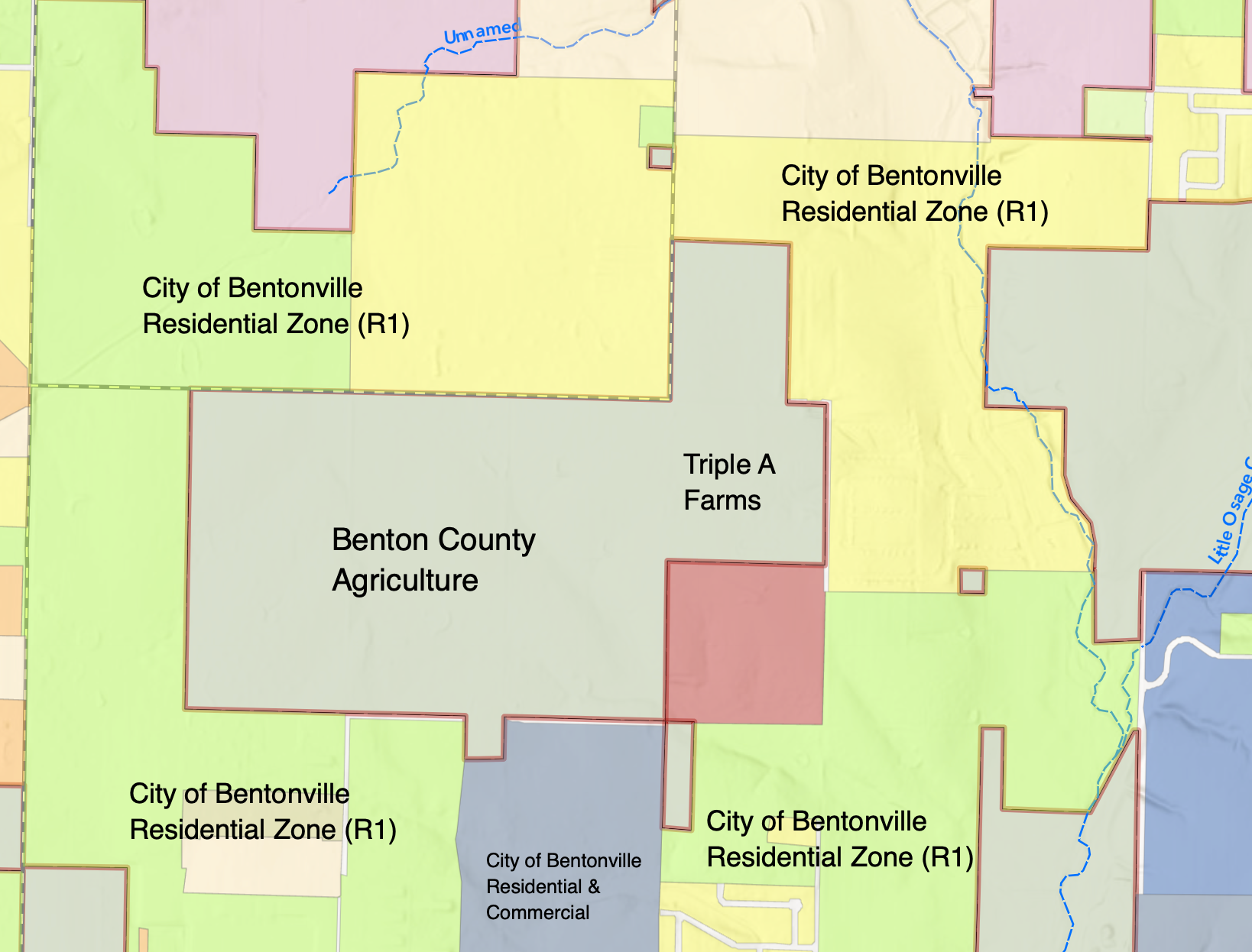
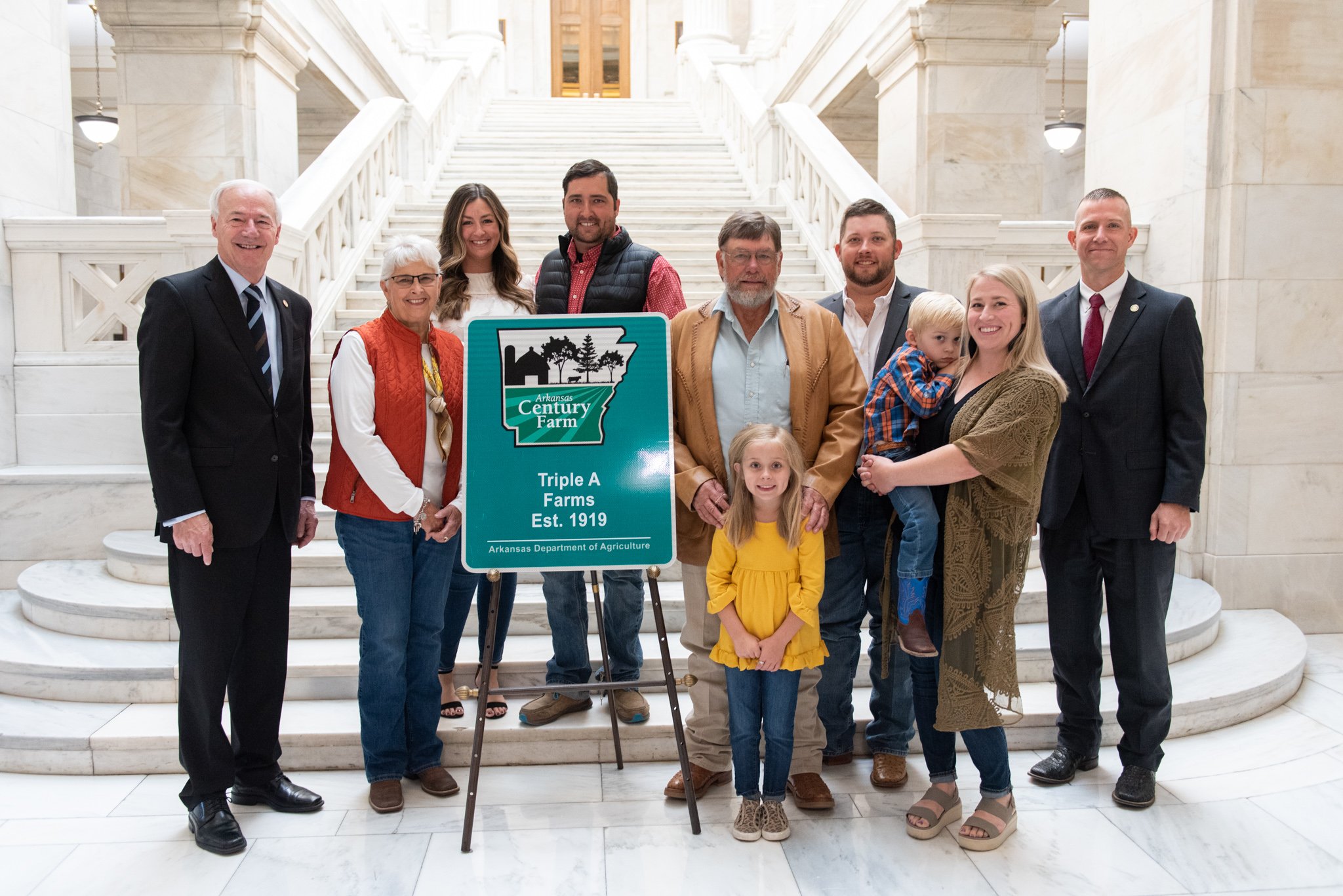
Judge Moehring mentioned that almost all the dairy farms are now gone from the county, but on this route you'll see one as we prepare to cross Highway 12. This dairy farm is AAA Farms. It was established in 1919 and is an Arkansas century farm. What this means is that they can trace the ownership of this farm through the same family back more than a hundred years.
This farm is surrounded by new housing subdivisions on all sides. It is still considered county land. But the city of Bentonville has this small parcel surrounded with zoning of all kinds. We'll talk more about the city in the coming episodes, but after more than a hundred years of farming, time certainly seems to be closing in from all sides.
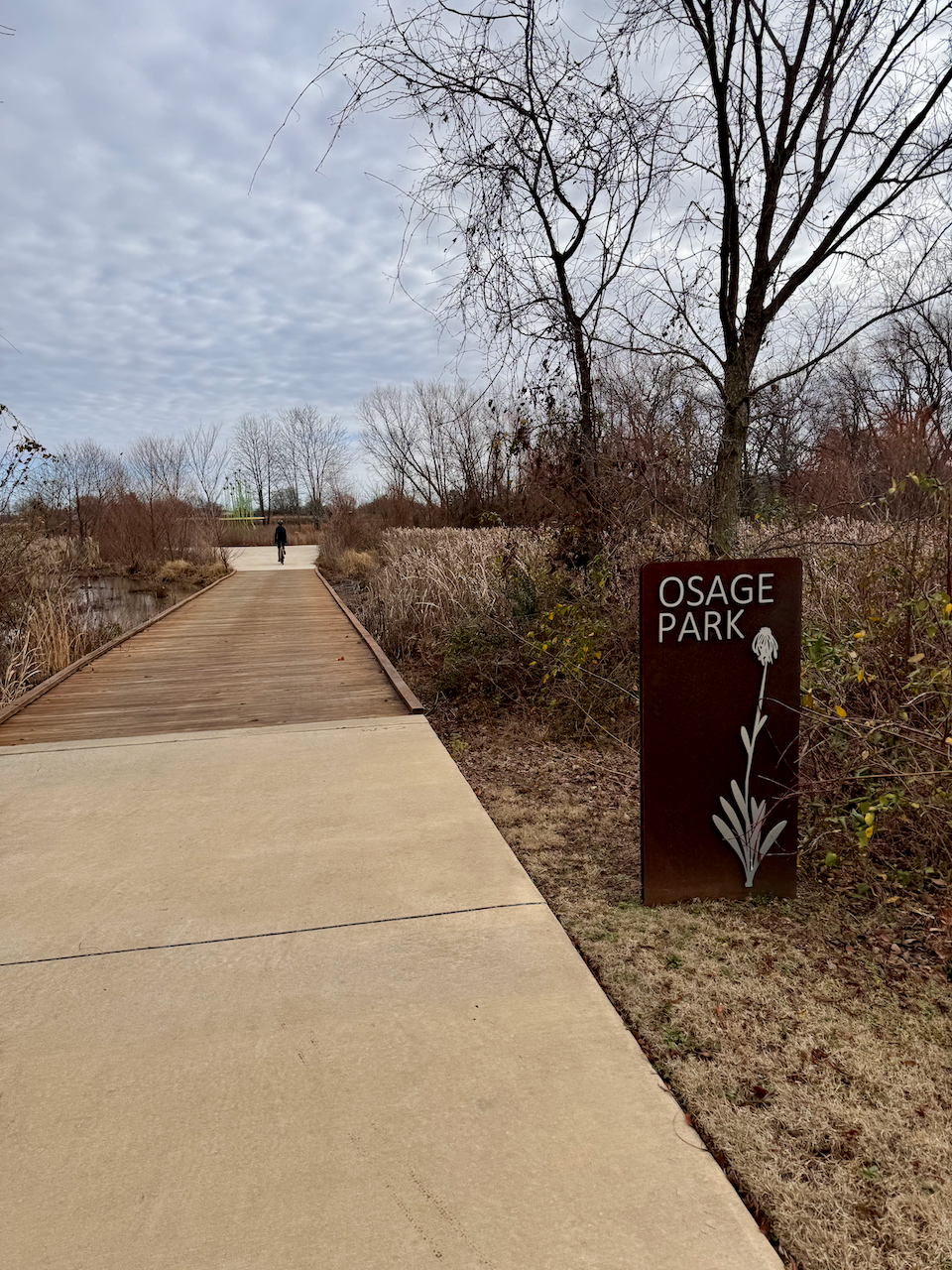
The route crosses Spring Branch Creek and Little Osage Creek on Mill Dam Road. There's a beautiful stone dam as you cross the bridge over Little Osage Creek before a short climb back into Bentonville. As you head back into town from the south, you'll pass the Bentonville Airport, Osage Park, and then back to the county courthouse.
next episode preview.
[00:46:34] mike rusch.: Coming up in the next episode, I sit with Leif Kindberg, the Executive Director of the Illinois River Watershed Partnership to understand how this large geographic area that spans both Benton and Washington Counties works, how it impacts our communities, both urban and rural, and the impact of our water and land use to our neighboring communities to the west, like the Cherokee Nation in Oklahoma, and eventually back to the rest of the state of Arkansas.
Here's a short preview of the episode to come.
[00:47:00] leif kindberg.: We will care for what we actually feel connected to and preserve what we feel connected to, and so it's so important to develop the next generation of folks that actually really appreciate that.
But if we can, if we could connect everyone to this river in some way, it would transform how we invest in this river and actually preserve it for future generations. The disconnection from it, the detachment from it is troubling to its future.
[00:47:32] mike rusch.: I look forward to sharing this full discussion with Leif in the episode to follow. The work that he is helping to lead is incredibly relevant to inform the growth strategies in both Benton and Washington County.
music comments.
[00:47:44] mike rusch.: And I'll leave you today with the music of Ashley McBryde.
She was born in Waldron, Arkansas, and I first heard Ashley through City Sessions in Bentonville. She was in the corner of a living room singing while everyone else stood around and talked to each other. Little did they know that they were in the room with a future Grammy Award winner, Country Music Association Award winner, three time Academy of Country Music Award winner, nominee for a Daytime Emmy or that she would earn one of country music's crowning achievements when she is invited to become a member of the Grand Ole Opry by none other than Garth Brooks.
Enjoy this from Ashley McBryde as she sings about her father, who was a farmer, a doctor, and a preacher.
If you're listening to Spotify, the episode will roll right into the song. And if not see the show notes for links to listen to the music.