
the ward with Beckie Seba.
Two Parts with Beckie Seba, Ward 1 Position 1 Council Member, City of Bentonville. How cities are facing the challenges of growth, how city-level decisions are impacted by city planning needs, and how are we preparing our cities for the number of people that are coming to NW Arkansas every day.
season 1, ep. 13 & ep. 14
listen.
part 1.
part 2.
episode notes.
Episode 13 (part 1) & Episode 14 (part 2) are a discussion with Beckie Seba, Ward 1 Position 1 Council Member, City of Bentonville.
Our topic of discussion is the State of Northwest Arkansas to understand how the cities are facing the challenges of growth, how city-level decisions are impacted by city planning needs, and ultimately, how are we preparing our cities for the number of people that are coming to Northwest Arkansas every day.
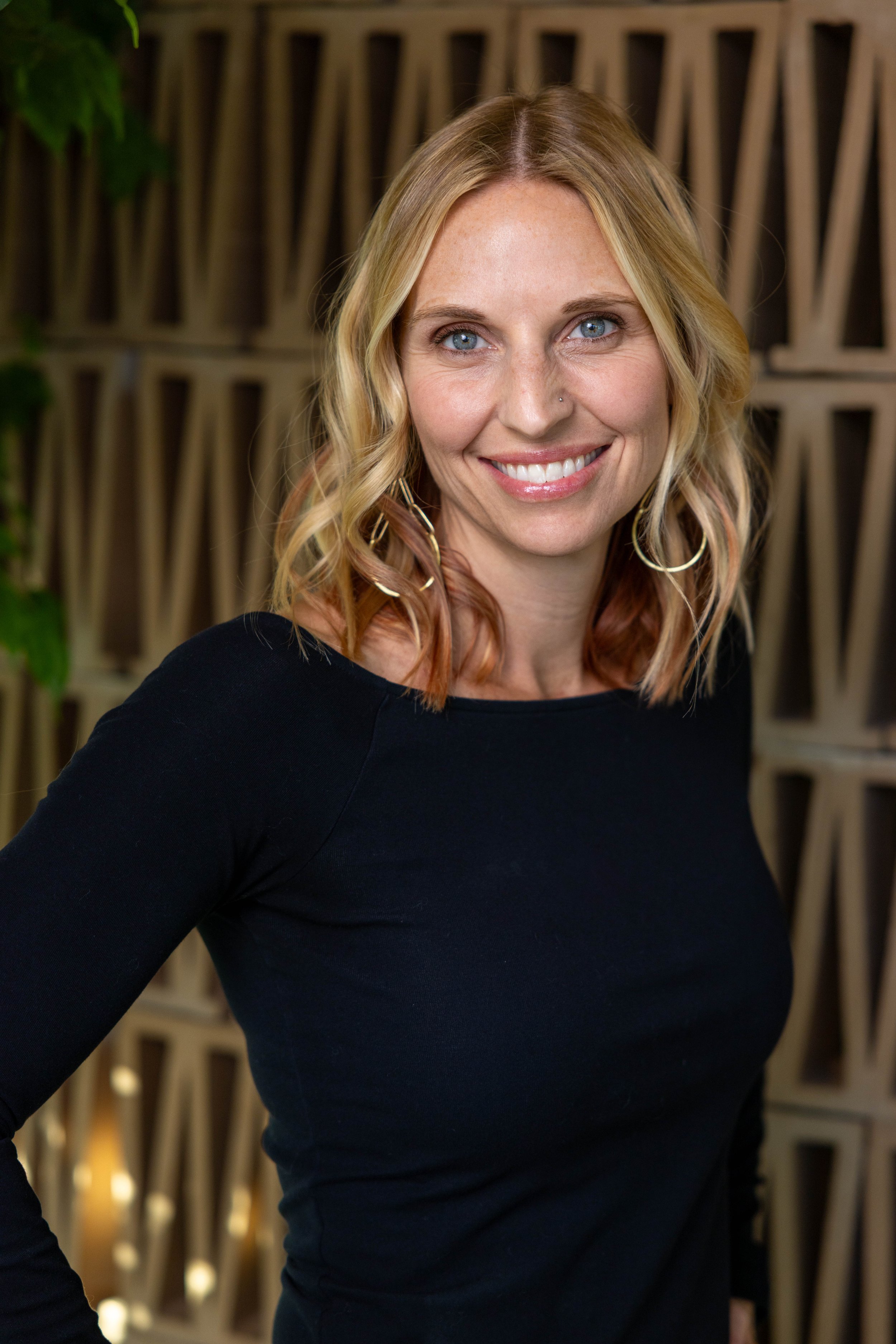
about Beckie Seba.
Beckie Seba, Senior Vice President with The Necessary Real Estate Group at Weichert, Realtors- The Griffin Company. With an impressive track record in the real estate industry, Beckie has been recognized for excellence throughout her career.
Background - She is a Weichert Rookie of the Year award winner, multi-year Northwest Arkansas Board of Realtors Double Diamond Award winner, and multi-year Weichert Chairman's Club award winner. Beckie works with several national and international relocation companies including Graebel Relocation, CapRelo, and Weichert Workforce Mobility and more to assist buyers and sellers as they transfer in and out of Northwest Arkansas.
Motivation - Beckie strives to understand the specific needs and challenges of those relocating to NWA in order to create the best possible experience. Her thorough knowledge of NWA results in an efficient use of the limited time transferees often have as they are searching for their new home. Relationship building is her favorite part of real estate and she treats each client as if they were family. Her goal is to make an often stressful and complicated process simple, easy and joyful. Every client is her most important client.
Community - In addition to her career in real estate, Beckie is also an active member of the Bentonville community. She is currently serving as a Bentonville City Council Member, advocating for the needs of her constituents and helping to shape the future of the city. As a former Bentonville Public Schools teacher and a small business owner in the community, she has a wide experience base and is committed to do her part to keep Bentonville an incredible place to live, work, and play. Her role also keeps her apprised of everything going on in the area and makes her a more informed agent. Beckie is also a dedicated coach and mentor, having volunteered her time for three years as a coach for the National Interscholastic Cycling Association (NICA), helping young cyclists to develop their skills and reach their full potential. She also leads 7th grade girls at her church student ministry.
Family - Beckie graduated from Texas A&M University-BA (1999) and Sacred Heart University-MAT (2003). Beckie and her family have called Bentonville home since 2003, enjoying the beauty of the natural surroundings and the many opportunities for outdoor recreation. Beckie lives in Bentonville with her husband of 20 years, Bryan, and 2 children, Boston (15) and Britan (13). Beckie and her family especially love the mountain bike trails in NWA and try to get out to ride as often as possible.

Deer at Crystal Bridges in Bentonville, Arkansas (in Ward 1 of Bentonville) - Photo by Brad on Unsplash
Photo by BAYLEIGH OLSON on Unsplash
routes.
music.
Our music for this episode is a true reflection of the Ozark Mountains bluegrass with Arkansauce. You get a guitar (of course), but also a bass, banjo, and mandolin...so nothing to complain about there.
You'll find them in Fayetteville at George's Majestic on March 16th, so go enjoy! Or, check their website for upcoming shows.
https://www.arkansaucemusic.com/
episode notes & references.
Bentonville City Council Meeting, November 28, 2023 (starts at minute 13:00)
Bentonville City Council Meeting, February 13, 2024 (starts at minute 26:00)
Excellerate Foundation (McAuley Place Info)
Bentonville Public Schools Arkansas Democrat Gazette Report
episode transcript.
the ward with Beckie Seba (part 1).
episode preview.
[00:00:00] beckie seba.: And so, it's an exciting time to be involved in Bentonville and I'm, I'm really happy to be able to put my edge in in this way to represent my constituents. I ran on a platform of, maintaining Bentonville as as a city that has a small-town welcoming feel while promoting growth that makes sense and trying to do it in a way that doesn't throw us into a big spin-out.
episode introduction.
[00:00:29] mike.:
You're listening to the underview and exploration and the shaping of our place. My name is Mike Rusch and today we continue in the discussion of what is the state of Northwest Arkansas.
Today we take one step closer to how our elected city leaders are looking at the challenges of growth.
To do this I have the opportunity to talk with one of my city council members who represents the ward in Bentonville, where I live. Council Member Becky Seba is one of the two representatives for the ward on the city council for the city of Bentonville. The goal of this conversation is to start to understand how the cities are facing the challenges of growth, how city level decisions are impacted by city planning needs, and ultimately, how are we preparing our cities for the number of people that are coming to Northwest Arkansas every day?
While this conversation may be specific to Bentonville, I think you'll find two things that are relevant really for all of Northwest Arkansas and maybe even beyond.
First. I hope these are the kinds of conversations that everyone is having throughout every city in our region. If not, maybe this will provide a few ideas on how to get them started.
Second, the decisions that are made in Bentonville do impact more than just Bentonville because we, as a region, are still so close and tightly working together. It's true that other decisions made in other cities can also affect what's happening in Bentonville and no surprise the topic of affordable housing is something we'll be discussing. But now we're talking with the elected officials who we have asked to make these kinds of decisions on our behalf. These are the policymakers, the vote casters, and the decisions made here will create ripples for other cities in our community.
When I originally requested an interview with Council Member Seba, the goal was simply a continuation of understanding how our city planning processes are ready or meeting the challenges for growth.
However, this interest evolved as a series of affordable housing initiatives were voted on by the Bentonville City Council. Council Member Seba was one of the city council members who voted no on two proposals from the Excellerate Foundation, and so that provided an opportunity to dig in deeper on these two specific issues and try to understand the value is behind the decisions being made. Cause they have real impact on our community today.
So this conversation has two parts.
The first part is my conversation with Beckie on January 17th, and that's just simply hear her story and understand the values that she holds to make decisions for the ward on the city council. However shortly before we spoke, she made some comments about the assumed ideology of one of the affordable housing proposals that seems to have gained the attention by some people in our community, so we do have a chance to talk about that also.
The second part is my follow-up conversation on February 27th. This is after the city council voted four to three to reject a proposal for rezoning from the Excellerate Foundation that would advance a proposed affordable housing solution to benefit Bentonville public school teachers and school district employees. The program that Jeff Webster laid out in the previous episode.
This is a longer conversation, but I think it's really important because this is where the rubber meets the road.
It would be easy to cut this down, but we're going to unpack this and maybe unpack it more than anyone expects.
So here's what we're looking at. I'm asking you to pay very, very close attention in here. You'll hear just how influential the decisions that the city council members make are based on citizen feedback. We really can't expect our city council members to represent us well when they only receive feedback after the fact.
A lot of ground to cover today, so let's get started with part one of my conversation with Council Member Seba, which took place on January 17th.
episode interview.
[00:04:37] mike.: Beckie, thank you for coming and sitting today with me. I appreciate your time, so welcome.
[00:04:43] beckie seba.: Yeah, thank you so much. I'm glad to be here.
[00:04:45] mike.: Well, thank you. Tell me your story of who you are and maybe how you got here.
[00:04:49] beckie seba.: Sure, absolutely. So, my background, I am actually not a native Arkansan, although I did move here in 2003. So, yeah, with it with a pause in the middle where we lived overseas, but I grew up in Connecticut. I'm New Englander. And so, some of my. tone and the way I speak and my forthrightness and boldness comes from growing up in that part of the country. And, and that's, that's kind of the way we do things. We don't have a whole lot of nuance and sensitivity all the time. So, working on that. But I grew up in Connecticut to a single mom who eventually married my stepdad who raised me, my great dad, and then also I have my biological dad that I have a relationship with and one brother that lived with me in my home.
Grew up in a pretty conservative Christian family. My parents raised me with a biblical worldview, and I continue to hold that. Hopefully, it informs most of what I do. If not all of what I do. And I grew up great family, great, great life, moved to Texas to Texas A&M for my college education. And when I was in at Texas A&M, I studied speech communication. Not a whole lot to do with that other than sales and eventually decided to go back to school for, So I got my master's in teaching back in Connecticut.
My mom was really concerned when I moved to Texas for college that I would marry a Texas boy and never come back to Connecticut, so she was really happy when I moved back to Connecticut. Unfortunately, I met an Arkansas boy there and moved to Arkansas. So that, that kind of threw off her plans a little bit, but it's fine.
And that's how that's ultimately how I got to Bentonville is I met my husband, Brian, who is a local. He grew up in Bella Vista and we moved back here after about a year of being married. We were living on love and the most expensive,
[00:07:00] mike.: that sounds like a song, by the way,
[00:07:03] beckie seba.: there's a lot, there's a lot in here that could go into a country song or like a current or pop song, something like that, but we, we decided to move back to the area and I can tell you that I cried for about five months when, when I moved here, but about five months into it, I was like, what am I crying about? This is such a great place to live. And we just have developed a life here. That's been such a blessing.
It has been a dream of a place to raise our kids would have stayed here permanently never had a thought of moving until we actually had the opportunity to move overseas to South Asia. And we did that when our kids were three and one. And so we moved to South Asia to work with marketplace ministry to we, we started a business. We had over 55 employees from three different countries in our business and through that business, we're able to really just minister to people in a emerging second-world country.
And then and that was, I say, when we moved from Bentonville to South Asia, Crystal Bridges was a hole in the ground. So that just kind of gives you an example. And then seven years was a, there was a huge change in this area. We would come back once every three years and three or two years sometimes and it was just amazing to see, I think if you're in a place day to day, you don't notice the change as drastically as you do if you're gone for a few years and you come back and see just a complete overhaul of things.
And as That, as Bentonville was changing in, I think, amazing ways, the country was changing very drastically over that period of country, of time that we were out of the country. And so, it was, when we moved back here, it was quite a culture shock. It was a culture shock for my kids because they were moving away from home.
They grew up from three and one in South Asia. For us, it was moving home, but home felt a little bit different in really exciting ways. And then in ways like, whoa, what is happening? So, Yeah, so we've been back here. We moved back in 2017 and the place has continued to grow in very exponential ways.
I have a lot of ideas of how things should go. I started a career in real estate, I've been really successful in that. I've been doing that for almost five years. And I, I Through that lens, I've seen change in a different way than maybe some people have, I, I've actually day to day with people that are moving into the area from other cities, states, countries.
And then also dealing with people that are locals here and the, the way that the growth has impacted them that, that have lived here for a really long time, the OG, if you will. And so I, having a lot of opinions on things and, feeling like I can put my edge in.
I decided that, if I, if I was going to have a big mouth, I should be able to put my money where my big mouth is. And that's when I decided to run for city council. It's the first public office I've held. So there's certainly a learning curve. I've been in office for about a year, and I, I don't even know how to run my own personal budget, so learning how to be in charge of a city's budget and all those kinds of things, certainly I've had to, to do a lot of there's a ton of learning that's gone into it.
But it's been very exciting also. I mean, this is an exciting place to live. Bentonville will continue to, you, The problems of growth, especially extreme, very fast growth will always, there will always be problems there, but they're much better than the alternative when you have a city that is dying or is not growing, is stagnant.
And so, it's an exciting time to be involved in Bentonville and I'm, I'm really happy to be able to put my edge in in this way to represent my constituents. I ran on a platform of, maintaining Bentonville as as a city that has a small town welcoming feel while promoting growth that makes sense and trying to do it in a way that doesn't throw us into a big spin out.
Just that's the hard part, growing in a really smart way. And yet I look at it and I'm, I just pinch myself that I get to live here and that the, the things that you would never expect to find in a small town in the Midwest slash South, I don't know. But those, those things that you just would never expect to find in a place like this and just the blessings that we have in the city. And I'm excited to be able to continue to have a part in navigating that.
[00:12:34] mike.: That's great. Okay. I've got it now I've got a thousand other questions for you. So.
[00:12:39] beckie seba.: I gave you a lot.
[00:12:41] mike.: No, thank you. No, it's super helpful to, to understand yeah, your background and how you think about forming and shaping this place. Can we back up for a moment? I'd love to know kind of from your perspective, like, what does Arkansas mean to you? Or what does Bentonville like mean to you?
[00:12:58] beckie seba.: Well, I, I think Arkansas, I'm really excited about what's happening in the state in general. I think that we have this really cool opportunity to go from, we're, we're kind of like the bottom of the barrel in a lot of different areas and spaces, but I think that we're seeing amazing things happen all over the state in terms of different industries that are coming in that are really going to impact us economically.
Anytime you have growth economically, that should be a harbinger of good things to come for the state in general. We're making some moves that will really kind of hopefully elevate us out of that bottom, that bottom part of the states in certain in certain areas.
But, obviously, when I moved here, I was like, what, where am I going?
What on earth? When we flew in here for the first time mean, XNA was like, you're flying over cow fields. Like, there's not a whole lot going on. And, yeah, just found, even as this New Englander that, you know, probably for all intents and purposes shouldn't belong here, just felt very welcomed into this area, particularly.
I think a lot of that has to do with the fact that there aren't a whole lot of OGs here. We have such a, at one time it was pretty transient, but I would always say, whenever I talk to people like, oh, we moved here with a vendor for Walmart. Well, we're, we have a two-year contract, we have to do our stint here. And then when it was time for them to have to go, they were like, how do we figure out a way to stay here? And I think that that just is, is in a nutshell, that people are, it's unexpected.
You come here, you have this, you have an expectation that gets totally blown out of the water. You're welcomed here by the people, natives and, and you can find a community in lots of different ways because there are people here from all different, they've come from all different backgrounds and cultures and places and socioeconomic situations. So that's how I look at Bentonville as a place that is, it has, I do believe that it has a strong identity, and yet it's willing to flex that identity in order to, be welcoming to a diverse group of people.
Does that answer the question?
[00:15:22] mike.: It's, this is your definition. So it's no, it's a question to try to understand like, I mean, part of it is trying to understand, home is, is this home?
So to you.
[00:15:34] beckie seba.: And, and I think that a big part of that has to do with the fact that there are opportunities here that as, as a person that a grew up 60 miles from Manhattan and went into the city to go see shows on Broadway that I can find that here, I just have to run down the, down the road to Fayetteville and go to the Walton Art Center like those types of Itches can be scratched here.
But also a person that has very strong family values and faith values that are again, it's just such a great place to raise a family. I. I am totally comfortable letting my kids ride their bikes anywhere they want to go. Sometimes I check Life 360 and I'm like, Oh, Boston's down some creek in Bella Vista.
How did he get there? Well, he rode his bike there. He had his fishing pole in his backpack, on his back, it's just a, it, it makes for such a It is home because it feels safe. It feels like there are opportunities for my kids to grow and learn and see different things. We went to the momentary yesterday and saw the Amazon exhibit. And that's something, I mean, we were all like, what on earth is going on here? I mean, the momentary tends to, like, do some things that are going to make you go, what? But just the fact that we can go there and we can look at this perspective and, another perspective from an artist that has spent a lot of time in South America, those, that just makes it such a great place to live in it.
And it really does feel like home for me.
[00:17:20] mike.: So you obviously decided to run for city council. I'd love to hear the backstory of that. What was it when you came to this point and said, yes, this is a, a way I'm going to step in and be involved in our community in a very formal way.
[00:17:31] beckie seba.: Well, I, during COVID I remember meeting with several ladies outside of, we go to Fellowship Bible Church. We were meeting in Rogers at that time. It's before Fellowship Bentonville opened, and we would come out after the services and we would talk a lot about all the things that were going wrong with, in lots of different areas that we were very concerned with.
And as we Would chat, eventually we came to the point of okay. Listen, we're we don't need to continue to just complain about these things. We need to be praying and so we organized a group called Warrior Women and It's a group of women in the area that we would get together once a month, and we would discuss different areas of culture.
We, we would talk about what was happening in education and talk about what was happening in the medical field. Obviously, COVID was a huge thing. We were talking about what's going on here. We would talk about the government, so our legislators and our cities, we would talk about the pro-life movement, which was really important to us do all these different areas.
And usually we would try to have a guest come that was, that had some expert knowledge in one of these areas. A couple of our legislators came to, to speak with women, Delia Hawk came to, to our group, to people from Loving Choices, pro-life Clinic. So we would kind of get a little background on what was going on, talk about a few things, and then mostly spend most of our time in prayer for the people that were making the decisions for the, the really difficult things that were happening in situations.
And for, and, and then we would also have like a, a call to, to action in certain areas if we felt like we needed to contact our legislators on a certain subject or, we needed to, to get involved in a certain area of, of the culture. And for me, that. was a really healthy step because I think a lot of times if all you're doing is consuming and then you're in a constant conversation about all the things that are going on but you don't have an opportunity to do anything about it.
That can be really anxiety producing and so for me taking it out of just like this Conversation and actually putting things into action, actually doing something about something really helped was really help helpful for my emotional state in my mental state, and through those relationships we, I started to discuss some things about school board and, potentially running for school board or helping some candidates for school board and and then eventually, well, maybe City Council is the way to go.
And my Ward had, Council Member Robinson was our was in my position and he decided to step out and not run again And so it was an open position and I had you know, some people come and say hey, would you consider this?
and to be honest my first thought was I really need to wait until after my kids are out of the house. I've got a lot going on. I work full time. My job is pretty intense. I have teenagers, two of them. They're awesome kids. They are, they are fantastic, make great decisions for the most part, but they're teenagers and they take a lot of energy, mental, emotional energy. So, And I, I, I lead a cell group for Fellowship Bible Church. I lead the some 8th grade girls in Bentonville.
So I've had a, it's not like I was looking to fill a, a space in my life. But I, the, the people that, the person that approached me, she just said, Hey, listen, talk to a council member, see what it involves in terms of time and all of that kind of thing. And then, talk to Brian, see if this is something that he can get behind because it, it will impact him and then, and just pray about it.
That's what she asked me to do. And I said, okay, I can do those things. And did, did figure out like, okay, I think I can actually fit this into my schedule and have to rearrange some things, reprioritize. I think I talked to Brian and Brian basically was like, you were made for this. And then I, I really felt like the Lord said, To me, what, what's the holdup?
And for me, it was a fear of failure. I, I often feel like I have this imposter syndrome, like, am I, do I know enough to do this? And I don't think, I, I think you have to go into it like, okay, what do I not know? And how do I figure it out? How do I find out? And so, I, I decided that, that fear was not going to control this area of my life and ultimately decided to go ahead and run.
And, and that got a little rocky for a while because the person that I ran against, I was very, I didn't know if she was running when I submitted my name. I think she's great. She's going to be great. She's already contributing so much to our community, and I think she's gonna continue to do that. And, and that was, but that was I, I did have a relationship with her and so that was a little bit tricky, but I just, I really felt like this was what I was supposed to do at this time.
And had a group of people surrounding me that said, Hey, how can we help? And and so that, that's kinda what led to led to that, that place. Or I did it and I won. So. One year later, here we are.
[00:23:26] mike.: Thank you. That's super insightful. When you think about Bentonville specifically always curious of the values that drive those decisions. And when you look on your website around what are the kind of elements that you said, hey, for city council, these are the things that I find important. And I'll maybe I'll read those just real quick so everyone can hear that.
But Family Values, Smart Development, partnership with Bentonville Schools and Adequate Infrastructure.
I'm curious the why behind those four things or four elements. What was the impetus behind those elements of really kind of forming and shaping how you wanted to move forward with the city of Bentonville?
[00:24:05] beckie seba.: Well, I, family values a biblical worldview for sure, informs so much of, of who I am, how I've formulated my opinions on things. And, I think that a lot of what, a lot of the struggles in our society have come due to the breakdown of the family. I, I think family is, It's, it's so critical. I want to be a proponent of strong families in every way that I can.
I'm starting my own family so, because family is hard, there, there's, there are a lot of challenges to it, but I do believe that it forms the core of a strong society. So that for sure is, is one of them.
The smart growth and infrastructure kind of go hand in hand. I mean, I think if you drive around Bentonville, you can say we've got some issues when it comes to moving people around the, around the city.
And as the rest of Northwest Arkansas grows, they're facing those same types of things. And how do we. Not how do we not just become a bunch of people putting out fires all the time? Instead, how do we look to the future? We're not slowing down. It doesn't seem like we're slowing down. 35 people a day moving into northwest Arkansas.
I'm selling them houses. I know they're, this, this is a real number. This is not a, this is not some made up thing. But how do we, Look to the future. How do we make sure that that planning for that is is. Right, how do we work with developers work with stakeholders to make sure that as we're doing that, we're not turning it into something that, doesn't look like Bentonville anymore.
Bentonville schools, really, I am a former teacher in the district. I have You have a city and then you have almost another city with the Bentonville Public Schools. And so I think that any ways that we can, can partner with them, partner with Bentonville Schools we have our civics programs and the mayor has her, her programs to like teach people about city, municipal government, things like that.
So those are just some of the things that are important to me and I'm figuring out now that I'm in the job, how I can be a part of that, how, what things make sense for me. So not all things, not all things do make sense to me. And so you'll see that in my vote.
I'm also very much a proponent of small government. I don't want to see government growing and growing and growing. I think government was created to move very slowly for a reason, but that means that they don't do everything well.
And so, as I'm looking at all these areas, I'm also looking at , what Does the city need to actually be involved in what things should they stay out of, and we're so blessed in this area to have really amazing amount of industry and foundations and nonprofits and people that are, that want to, to be a part of it that we need to use and then we also just have great innovation here and so that, All of those things, we should certainly leverage as the city and, and as much as possible, use those other avenues in order to keep the city in the lane that the city should stay in.
[00:27:53] mike.: I'm really curious about this, maybe a line of, of the conversation because on, on one hand, if I, and correct me if I'm wrong, please, but I listened to maybe a little bit of the backstory about why you decided to make some of this, these conversations to serve in this way and then maybe some of the things that you're involved in.
Yeah, I'm curious, how do you think about the, the foundation by which you're making decisions for those things that may be important to the residents of the city?
[00:28:20] beckie seba.: I think that it's, you have to, we have to be really careful to make sure that we're looking Not just into the future in terms of who's coming to our city, but also who's already in our city and I think there are a lot of decisions that seem to be. I don't even know how to put it, but could could be could seem to be a compassionate decision that has unintended consequences for others And so I I think that as I'm weighing these I have to really look at, okay, well, how is this impacting the citizens that already live here? How is, how is the decision that I'm making going to either make this a better place for those citizens to live or it's going to put more pressure on those citizens?
And weighing, weighing things through that lens, also while looking at, okay, but we're growing, we, we're getting new people in here, we've got to figure out systems that work for the growth and, and there is, there's certainly a tension in that between preserving what is and preserving what is. Thanks.
It has been just an incredible city up to this point for me. I mean it has its issues for sure No place is perfect. But how do we preserve that?
I mean these people are coming because they see that. People are moving here because they understand that this is a place that they can come and they can they can fit in, they can find their place, they can have activities that are life-giving and healthy, surrounding them very easily, they can be economically prosperous because there are, there are jobs here, there's growth going on here. They're coming here for that, how do we preserve that while also understanding that things are going to change, too. We cannot, we cannot stay the same and grow at the rate we're growing in. So, I don't know if that's answering your question, but...
[00:30:37] mike.: yeah, maybe, what would be an example of that? Do you have one that you would want to venture forward?
[00:30:41] beckie seba.: Well, this is, this is certainly a hot-button topic, and I didn't know if it it would come up, but affordable housing. Okay? Affordable housing is obviously on the, the, It's a on the forefront of people's minds.
[00:31:00] mike.: It's hard to have a conversation anywhere.
[00:31:02] beckie seba.: Yes,
[00:31:03] mike.: without running into housing conversations or affordable housing.
[00:31:06] beckie seba.: Yes. And, and, and there's, there's such different views on what that is and how it should be attained what parts of it should be the government's focus, the city specifically how much the city should get involved in that And I feel strongly that the city does have areas that they should put their edge in, and then I also feel that there are areas that they shouldn't.
We have, it's very difficult to build in Bentonville. It's one of the hardest municipalities to build in. So how do we, as a city, that's something we can do. We can figure out ways to make it easier for developers to come in and to develop a product that will be something that is attainable for, for people in lower income brackets.
There are ways that we can deal with parking and zoning and height requirements and time periods and all of these kinds of things that the city and our, our staff is doing a great job of, like, working through all the different avenues in order to do that. And then there are areas that I don't believe that the city should should be involved in if if it's something that's going to cost our current taxpayers more money than I feel like the city needs to say no we have one of the highest tax. Tax I don't even know how to, like, our taxes are the highest in the area, right? So I don't ever want to look at figuring out how do we get new people into Bentonville into affordable housing while I'm pricing out the current people because they can't afford their taxes.
And so they're having to decide, can I, can I stay here or am I going to have to move out to a place where I can, in my taxes will be lower and I can afford to afford to live. Those are the types of things that I'm kind of having to weigh.
Because would it be wonderful for all of our teachers to be able to live in Bentonville? Would it be wonderful for all of our firefighters and, and police officers and all those people to live in Bentonville? Absolutely.
When I moved here, I was a teacher. Bye. It was my, it was 2003 even back then, I couldn't afford to buy a house in Bentonville. I, my husband and I lived and saved and then we bought a house in Bella Vista that we could house hack.
We knew we could, with our own sweat and, put in that sweat equity and we could add square footage to this house. We bought it for that purpose and turned around, sold it for a profit. Then we bought the worst house in Bentonville. It was a foreclosure. It was 2008. We walked in, most people would have said, there's no way.
And we looked at it and we're like, we can make something out of this. And it happens to be an awesome, awesome location in Bentonville. We, we looked at the neighborhood and we said, we love this neighborhood. This house is terrible, but we can do something with it. We, we worked on it. We did it all ourselves and we were able to live there.
But I drove for four years from Bella Vista to, to Central Park to, Before I could actually afford to move to Bentonville and I had to do it, you know It was a lot of sweat and tears and all the things He when we moved overseas we kept that house and rented it out and when we came back It was not big enough for us.
We needed to our family was now not one and three, it was, ten and eight and big and growing. And so, we started looking around for other houses. Well, we couldn't afford any other houses in Bentonville at that time. So, we made a decision. Okay, we're gonna Add on to this house. We do, you do the things that you got to do, but it wasn't something that was handed. It wasn't easy. It was something that was very, I mean, we put in a lot of work to do that.
And I think that we have to, people have to understand that this is not just a given and and that's not a, There are a lot of people that, are not, haven't been happy with me and my, my response to this because I mean, you're, hey, you're not going to make everyone happy, but also just want to, share my story so you can see, like, this isn't something I've lived through this for me to get to Bentonville took a lot, and many years.
So, I do have some background in that. And then, again, my filter is always going to be, is this going to grow government? Is, should government get involved with this? How does it impact people that are already here? Does it impact them in a negative way? Because I have to consider that. And then, what are the ways that we can get involved in order to have a an opportunity for people to be able to, to have Apartments that they can rent that's reasonable and all those things.
So, that that would be an example.
[00:36:22] mike.: Housing obviously is a big thing all over Northwest Arkansas, every city, every municipality is working to understand what does it look like from an affordable housing perspective. I, I'm curious, what do you feel like your role is as a, as a council person?
[00:36:37] beckie seba.: Well, I think, like I mentioned, that's where the city can, can the, and the planning department has done a great job to say, okay, these are the areas that we can increase, a lot of the developers are, they can't actually build to the amount that the density that the zoning allows.
How do we increase that density in a certain sub, subdivision or certain development, how do we increase that density? How do we make sure that it stays aesthetically nice, that it stays safe, but that we can figure out ways to make tweaks that actually allow more housing to go in that area? I mean, those are, those are areas that we can put our edge in.
That doesn't cost our taxpayers. That doesn't necessarily grow the scope of government. We're doing that. We're doing zoning. We're doing code. We're doing all those kinds of things. Anyway, how do we make it easier for developers to do these things? Those are areas that I believe that as city council, we, we've, we're, like I said, the plan, city planning is doing an awesome job with responding to things that we're asking them to do and looking into these things as far as, Impact fees, things, waiving impact fees, paying for impact fees, those types of things that take money from one area of the city budget and move it into this other area that's where I feel like that, that then there's a hole that has to be filled, right? We have to be made whole and we're eventually that How do we get, how do we make ourselves whole? And if we can't, we can't.
[00:38:28] mike.: I, I know what you're talking about. I don't know if people listening would I believe what you're referring to is a conversation around waiving the fees for affordable housing project. I believe down on I street. And the, the request was to waive impact fees which the city has the authority to do.
[00:38:46] beckie seba.: It was actually a request to, for the city to pay the impact fees. So, the thing with impact fees is that in order for us to continue the same level of service when we have more people is that the developer comes in and pays these impact fees because we need to, more people means more services. So Okay.
The impact fees have to be paid. If, if that's the way that, you know, and, and they're, that's a whole nother conversation on if impact fees is the way to go. I, I'm not gonna get into that, but the impact fees, they, they have to be paid in order for the level of service to remain the same. The question was, would we move money from One area of our budget to pay those impact fees and take that off of the developer in order to, in order for them to be able to, to make the housing, the numbers work for it to be truly considered attainable housing. The problem is, is that when you, like I said, remove or move money from one area of the budget to pay those impact fees, then that budget has to be made whole in some way, and that either means cutting other areas or it means increasing taxes.
And like I said, that is something that I don't feel is the right thing for the city to do. That's, there are a lot of other ways that we can be involved without having to put any more pressure on the current citizens of the city.
[00:40:26] mike.: I think I do have to ask just because you brought it up .
What I hear you speaking from is a place of value, on what are the things you're trying to achieve from the values that you bring into that, into that seat? I am aware that the terminology you used in that space was...
[00:40:42] beckie seba.: Um, and I personally have to put that aside, no matter how great I feel about providing housing for people, because it's an, it's an ideology question. And for me, that question is, does the city belong in this space and are we heading into socialism with these projects?
[00:41:06] mike.: ...and I'm, I think it maybe caught me a little off guard if I'm honest, and trying to understand, I'd love for you to unpack that a little bit when we talk about values or ideology I, I think an argument could be those are two different things.
And ideology at, at this maybe level of city government is just not something that I, I think I've heard in many places before. And so just maybe I'd love to understand kind of in the fullness of what your comment was. What does that mean?
[00:41:40] beckie seba.: Yeah, I, I think that when. You take something from one group of people and move it to another group of people that I mean that's essentially what we're talking about And I've continued to say I have a responsibility to the current citizens of Bentonville So if I'm doing something that impacts the current citizens of Bentonville negatively In order to positively impact this future, we don't know necessarily who it is, but this future Bentonville citizen, that, like, that's where I can't.
I can't reconcile that so that's I mean that's essentially what I mean. I don't I don't think that we should take from one group to give to another group. I think there are. That's not the role of city government now. I am. I'm certainly a proponent of charity. I'm certainly a proponent of partnerships between nonprofits and there are, and churches and all the different, I just think we have to take that out of the role of government and look outside in order to do those things.
And so that's, I mean, that's really. Where I'm coming from.
[00:43:16] mike.: I didn't mean to go down into this rabbit hole.
[00:43:18] beckie seba.: Okay. I said it. So,
[00:43:20] mike.: I think just out of yeah, out of an understanding that out of balancing the needs of people who are here and people in this place growing.
I've heard estimates a million people by 2040, 2045. I've heard estimates a million people by 2045. Obviously, I live in downtown Bentonville. I have the privilege of doing that and it's unaffordable. I don't know if I could buy my house today. And so I do understand that within the scope of growing and the Northwest Arkansas area that we have to be inclusive of what housing looks like within this area.
I know there's a lot of people that are working on those things. And at the same time to make sure we have inclusive communities that diversity and housing costs is something that's going to, it needs to be addressed is the top of everyone's mind. I'm not saying anything that's news to anyone. And so, obviously the planning commission to dos and approvals come across the desk of the city council.
And so that is ultimately within your purview of making decisions about how to make policy around either, creating more affordable housing options or letting the market continue to decide what happens. And so I think it's trying to understand how do we, from a values perspective, how do we, as a community, think about people who are coming to this area, the growth that is happening.
We've done an incredible job of making this an incredibly wonderful place and so can't blame people for wanting to come here.
[00:44:44] beckie seba.: Absolutely. Yes.
[00:44:45] mike.: I'm assuming that the topic of affordable housing is going to come across the desk of the city council again. What are things that we can be thinking about as a community to facilitate programs or ideas that would help move us towards a place of where I think everyone's wanting to go, which is to find more diversity, more affordable housing to accommodate the people that are coming here.
[00:45:09] beckie seba.: Well, I think that we have options for sure. I mean, like I said, I think we have such a great amount of public and private and charitable and I mean, I, I think the churches certainly should get involved in these types of things we need to be having having conversations in our churches and. I'm open to looking at anything that makes sense that doesn't grow government and doesn't put any undue pressure on the people that are already struggling to be able to stay in Bentonville in general. Like I said, we've, we've come up with a lot of different options. We had a workgroup the work group put forward some suggestions and we said, as a city council, we would look at those suggestions.
I think. Some people's ideas were that we said we would do all those suggestions, but what we said is we would take all those suggestions and we would put them into our planning department and we would figure out what makes sense, what we can actually do, what is in our lane and what's not in our lane.
And I think that that's what we have to continue to do is we have to continue to, and we've, I mean, like the amount of giving, the amount of grants, the amount of outside thinking outside the box type of funding and money that can come in. I think we have to be looking at all of those areas because.
As we grow, like you said, there will be more need. And so, thankfully, this area does have an an inordinate amount of that about of those foundations and nonprofits and even corporations that are willing to put their edge in in these different ways. I mean, with that, that certain neighborhood that we're talking about we were $187,000, I think was the ask for those impact fees. That's not It's going to be difficult for that, that money to be raised. And I think that we have to be more creative. We can't just, we, if the money doesn't materialize, unfortunately, it has to be raised. People will, give to what is important to them.
But I don't think that's the government's, the city's lane, to be in so, thankfully, I think that that community will actually come into fruition and that, there will be that and I don't know, 400 units of affordable housing that hopefully will take some strain off of it, but I think we have to continue to look at those things as we go through.
What can the city do? And I think there are things the city can do and should do and things that they shouldn't. You want to talk about short term housing too while we're at it?
[00:48:08] mike.: Well, I mean,
[00:48:09] beckie seba.: short term rentals.
[00:48:11] mike.: Yeah I don't. If you want to talk about it, I just, let's talk about all the controversy. I mean, I do think, I mean, to that point, it is a part of shaping communities because it can change communities.
Anything that's going to change communities I think is worthy of a discussion, especially for residents who have been here, and I live next to an Airbnb now, which I was not anticipating to have happen. I also live now closer to higher density housing that I was not expecting to have happen either.
Let me ask you this. We'll reframe it because I want to make sure we can close well.
I'd love your perspective. What are the decisions that we need to make as a community within the next year or five years or 10 years that you feel are going to be really important to both preserving what we have that's beautiful here, but also setting the table, if I can use that term, for those that are coming to this place.
[00:49:10] beckie seba.: I think that there are a lot of areas that we need to make sure that, that we're keeping the same level of service. I mean, that's a huge thing we have to be able to maintain. As we grow, we've seen the, the sprawl start to happen. We are trying to figure out how to we be the best stewards of our infrastructure. How, how are we the best stewards of our roads? How are we the best stewards of connecting Bentonville? I think that's a huge thing. We're connect Bentonville making sure that we can get from place to place on whatever mode of transportation we can find whether that's a car, a bike, a skateboard, a scooter, whatever that is and, and we've seen as we've continued to grow out, we, we have all.
Often had a very myopic view and looking just at downtown and what is downtown mean for Bentonville, but not everyone lives downtown. So, as we grow, as we expand, we need to be looking at, and I think the city is, is really working hard on this. How do we make sure that, we put parks in places that people live. How do we make sure that we can connect kids walking from school to their homes and to the parks and to the places that they want to go? How do we encourage nodal commercial so that someone doesn't have to travel all the way to Walton from Greenhouse in order to find something that they need to buy or a service that they need to acquire?
I think those things, if we can focus on how do we connect the city as a whole and then not not just our city, but with our surrounding cities that feed into us, because. Bentonville schools cover so many more cities than just Bentonville. How do we make those connections and keep a cohesive city that's not, oh, you're the downtown people, oh, you're the West Bentonville people, a West Bentonville people is getting having all these, these things put in it, but we don't have a park, how do we make sure and I think that is really the focus that we need to have. How do we make sure that the people all over our city feel connected feel like they are having the infrastructure and parks and all of these things put in their communities.
And we can do that with a lot of developers are doing. Their planned use communities that incorporate parks and incorporate ponds and things like that. But we need to have the, the grand plan
Plan Bentonville is, is something that I really would encourage everyone in Bentonville to go in to look, just go on to Plan Bentonville website. Make your concerns and your desires known to the city as we plan all of these things because we want to know what the constituents want. We want to know what the pressure points are. We want to know what the, the ideal would be. What, what would this city look like? If you could just put the things you want in it.
And so having that, that avenue to communicate is really great. And if we've already had a great response from the community, but if if. If you have something to say, there's an avenue to say it, and we'd love to hear what people in this community want to see going forward.
[00:53:28] mike.: Those are big decisions that are going to be made here within the next year or so, I'm assuming. Sooner than that, around what the next land use plan for the city looks like. So, everyone's involvement really, really, really matters.
Let me ask you this. It's a question that I I try to ask everyone that I meet with. And the question is this, what do you fear for this place?
[00:53:52] beckie seba.: Well, I, after college I moved to Austin, Texas, and Austin was a really, really cool place to live. And I think that as it has grown, it has changed a lot. It, it doesn't look like what it did, in 1999 anymore and there are some major social issues that are having to be dealt with. There As a result of the growth and as a result of policy, certain policies.
And I think that would be my fear. I think that my fear would be that we don't get ahead of this growth. That we continue, like I said, to be putting out fires as they come versus taking that long view of what We know it's happening. I mean, it's not a secret. Like you said, we're, we're growing and we're growing quickly and we're growing big.
So, how do we take the long view? How do we prepare adequately? How do we make sure that we're not behind the eight ball in whatever areas these are with, with infrastructure and housing and social issues and all those things? Um, I, I just love this place so much. I think that it is, it's been such a blessing to live here, to raise my family here.
And it's a blessing now to be a part of, of being able to guide it, into the future. So, my fear is that we wouldn't do a good job at that and but I see everyone, like I said, I think the city is doing a great job of taking the long view and trying to figure out how we can step into the future with that, that long view versus just a, a very short, short sighted view on things.
[00:56:04] mike.: The other term that we use is, is really the, the pursuit of this idea, this concept of what we would consider community wholeness. And so I'd love your perspective on what in, in this area, in this space, within this community, what does wholeness look like to you?
[00:56:24] beckie seba.: I think wholeness has, I would say they're different. I mean, this is, I need to think about this.
[00:56:32] mike.: That's fair.
[00:56:33] beckie seba.: I think if you're looking at something holistically, you want a balance. And so I think that this, in order to create that, we need to make sure that people have opportunities, opportunities for jobs, opportunities for great education opportunities for cultural items that can enhance their worldview, expand their worldview. We need to be safe. We need to be healthy. Those are just a few of the things that sort of pop into my mind. Bentonville, I, I do believe is a really a place where you can come and you can find jobs.
You can become financially free. If you, if you make good decisions, you can find great churches, great schools, great communities. The biking community is, is, is one that, has been something for me that's been a great and, and then also, like I said, my, my faith community is really important to me, but I think that even my view has been expanded as I've been on city council because I've, I'm very happy to be a part of the public art committee.
And this is an area that I, I, I've never really. I know if I like something when I see it, but I don't, haven't had a whole lot of experience in art, but like seeing that this, this is a way of, of place, making a place that brings the community together through art, what a wonderful opportunity we have to do that in this area.
So I think there are a lot of all these different areas that make it home. And it's, it's an exciting time to be able to look at all these different areas and say, how can we put our edge in, in these areas that when people come here, they feel welcome. They feel like they have opportunity. They feel like they can find a space in a community that they can relate to and get involved with, that they can go out and do healthy things in nature.
And, that they're mentally and physically and stimulated and in a lot of different ways. And so I guess that's what I would say wholeness would mean to me.
[00:59:11] mike.: Thank you. What am I not asking? Is there anything maybe within the scope of conversation or anything that you feel that for those listening, hey, we need to make sure you walk away with this or
[00:59:25] beckie seba.: yeah, I mean, I think people feel in general that there's these this group of people and they're just doing what they're going to do and and nothing that they have to say has an impact on this group of people specifically the, the city government and I, I would hope that people would hear from me that Engagement is so important to us.
We love to hear from our constituents. We love to have people come to city council. I, I would, I had a couple of friends text me the other day, what, what time city council? And I let them know and I was like, is there something going on? And they're like, no, we just want to be able to hear what's happening at, at the city level.
And I was like, that is so fantastic someone's showing up to city council. Without something specific, just want to hear what's going on. Just want to be involved. Maybe they hear something there that really impacts them or, inspires them in some way. And so I would say, the more that people can get involved, the better, the more people can show up and ask questions.
And maybe you have an idea that would make our city better. Show up and tell us about it because if, if it's important to you, then we want to hear about it and, and hopefully have a chance to, to wrestle through it and see, is that, would that be great for the city? So
[01:00:56] mike.: Beckie, thank you for your time. Thank you for putting yourself in a position to yeah, to just talk through where you find the beauty of this place and the challenges that it's facing. And so I'm appreciative of the work that you're doing and. Yeah, thanks for coming and sitting and talking with me today. I appreciate it.
[01:01:12] beckie seba.: Yeah. Thanks for having me.
episode outro comments.
Well, this is where we'll stop for part one. I'm really thankful for council member Seba for her time, her explanation, and really for bearing with me through all my questions.
The next episode will pick up on part two of my conversation with her on February 27th. This conversation is after the city council voted four to three to reject an update to the land use plan and subsequent rezoning. This was proposed by the accelerate foundation in partnership with Bentonville public schools to try and find some innovative, affordable housing options that could benefit Bentonville public school teachers and school district employees.
After part two, we'll recap, both episodes we'll have a great route for you as some. Great music. And we'll also preview what's up ahead for our next episodes. So, thanks again. We'll catch you on the other side.
the ward with Beckie Seba (part 2).
episode intro.
[00:00:02] beckie seba.: And so, as I'm looking at all these areas, I'm also looking at , what does the city need to actually be involved in what things should they stay out of, and we're so blessed in this area to have really amazing amount of industry and foundations and nonprofits and people that are, that want to, to be a part of it that we need to use and then we also just have great innovation here and so that, All of those things, we should certainly leverage as the city and, and as much as possible, use those other avenues in order to keep the city in the lane that the city should stay in.
episode intro comments.
[00:00:46] mike.: You're listening to the under view, an exploration in the shaping of our place. My name is Mike Rusch and today we continue our question of what is the state of Northwest Arkansas.
However, this is part two of a conversation with Bentonville City Council member, Beckie Seba. She is one of the ward, one City Council representatives for the ward where I live in Bentonville.
This conversation took place on February 27th after the February 13th Bentonville City Council meeting, where a request from the accelerated foundation for an update to the land use plan and subsequent rezoning was submitted this request from the accelerate foundation was an affordable housing initiative that would have benefited Bentonville public school teachers and district employees.
However, the City Council voted four to three to reject the request, and that has prevented the project from moving forward.
But before we get to the conversation with council member Seba and her no vote on the proposal, I think it may be helpful to hear a few of the public comments made in the City Council meeting where this proposal was voted on. I posted a link in the episode notes to the entire City Council meeting and I would encourage everyone to watch it.
These are some of the comments by those involved in putting this before the City Council, before it was voted upon, the first voice you'll hear is Roger's attorney, Bill Watkins who is soon as speaking on behalf of the Excellerate Foundation.
City Council public comments.
[00:02:43] Bill Watkins: Thank you, Mayor. Ladies and gentlemen, Bill Watkins on behalf of the applicants. I think it's important for the audience at least to understand what is before this body tonight. And what's not before this body tonight is the politics of this concept and its legality. Arkansas Attorney General's Office, the Attorney for the School District, and the Attorney for the Excellerate Foundation have all issued formal written opinions stating that this is legal and proper.
The only thing before you tonight is the rezoning and land use aspects of this.
Bentonville Public School District comments.
[00:03:10] Debbie Jones: Our next speaker is Debbie Jones. Yes, thank you. Uh, thank you for the opportunity to speak. This is Debbie Jones, superintendent of Bentonville Schools.
Thank you council members for considering our request tonight. I stand before you not as a large corporation, but as Bentonville schools and Bentonville schools has been faithful on its promise on delivering excellence, and we intend to continue to be faithful to that promise in order to do that.
in providing excellence in academics, in fine arts, in athletics, there's a secret and it's to hire the very best. And in order to do that, we need to be able to attract and continue to retain all kinds of staff, teachers, para pros, bus drivers. There are so many employees within our district. And over a thousand of those employees on a single income would be eligible to apply for those 40 dedicated cottages within our project.
We have challenges ahead. I know you see it as a city. We feel it as a district. And this is simply a solution to address one problem for our staff. As they have many options to continue to work outside our district. We need to continue to be an option for them to come to Bentonville schools. Thank you for your consideration.
This is a good return on investment for our school district and for our taxpayers. This parcel of land is dedicated for this purpose. At the end of the project, the property value will be paid back to the school district. In the meantime, Tom. Um, 40 of our staff members, employees have dedicated space to live for up to five years.
And then of those, those that have participated in the shared equity program can walk away with a check around $50,000 to invest on their first home. It is an honor for us to give them this opportunity to live in our community and work in our community. It's also an honor to have the 60 apartments in the middle.
For which many of our employees will be eligible. Our workforce needs the opportunity to live close to our schools. We're giving them the opportunity to do this with this project. Thank you.
excellerate foundation comments.
[00:05:34] Jeff Webster: I'm Jeff Webster, CEO of Excellerate Foundation. Live here in Bentonville. Thank you, Mayor Orman, Council Members for the opportunity to speak. What I want to touch on is a little bit just, um, there's some misinformation on there. A lot of stuff swirling around this project. So maybe to clear up a few of these things.
Who are we? First of all, you know, we're not big business that people talk about. We are a nonprofit. We are community foundation. We are a public charity. That's we are. We're not a private foundation. Um, we're the 100 percent owner of this initiative. We will own all of these different, um, Units there that will be 100 of those.
And we are the developer of it as well. So at the end of the day, you know what we do. We help the citizens of Northwest Arkansas. We've invested over 125 million in Northwest Arkansas in terms of helping citizens. We've done things such as help build the women's hospital, the Arkansas Children's Hospital.
We put a million dollars into building the Bentonville Community Center. We've invested and distributed millions of dollars to the citizens in Bentonville when they struggled with emergency rental assistance, including part of that coming directly from our foundation and who those people are. You know, we help people through Hark.
So we've helped thousands of people within Bentonville. What do they tell us far and away? What's the number one thing I need help with? I need help with housing. That's what they say to us. So, but this really isn't about us tonight. It's, it's about the zoning. Um, but I do want to mention this question around taxes.
People are confused about this. This is going to raise the taxes if I live here. No, it isn't. This simply works the following way. We all pay taxes. I wish we didn't either. but we pay federal taxes. The money goes to the federal government. The federal government turns around and allocates the money to the states.
A portion of this to get workforce housing built. Then Adford in Arkansas and Little Rock turns around and says, we're going to make that money available. Our Bentonville money, the money I paid in and the money all of you paid in. We're going to make it available to viable projects. And so the question is, is our money coming back home or not?
it's coming to Arkansas and it's going to some city within here. So we are the champion to get our money back into our state. In addition to this, it's a 25 million project and we will invest 5 million of our own grant money from our foundation. It's I believe the second biggest grant we've ever made as a foundation to support Benville.
But it's not about taxation. What you're going to hear tonight is some valid concerns from citizens north and south here with respect to water and you're going to be, um, concerns around traffic. Those are both valid points that I think need to be addressed and they will be addressed during the large scale process, but it's not really about the zoning.
Um, so the last thing I'd say on this is we're not your conventional developer. Hopefully you already know that and you garner that from what I'm saying. And what we're not going to do is help our neighbors between 18th Street and 21st Street and forget our friends and neighbors to the north and south on 21, on 21st Street.
That's not who we are as a foundation. We will do this the right way and make sure we support them. Thank you.
mike comments.
[00:08:38] mike.: Okay, this is Mike again. In my opinion, there isn't much discussion of substance before the vote. However, please go watch the entire City Council meeting and judge for yourself. I want to include a comment from Council Member Bill Burkhart around his support of this affordable housing proposal, the vote on the decision came after these comments.
City Council comment.
[00:08:57] Bill Burckart: I appreciate everybody's comments tonight and I understand the concern about what happens in your neighborhood and how that is addressed.
The zoning here is, and I'm going to just show this because I was trying to understand some of the emails that I had. Uh, and we are under a current land use plan until the other one is adopted, which encourages this.
So it's not like we need to wait for anything because we spent four years on that plan in 18 to get that completed, and we're under that guideline currently. Uh, if you see here, everything in this. is medium density, everything. Uh, and the rezoning request is medium density as well. It's not high density,
this is a perfect fit for transition. And unlike all other zonings we've ever had that I know of, unless it's a PRD or PUD, we actually know what they're going to build, which is much less than what R3 allows.
So if this is a transition property, it should be in medium density. If it was anybody else, it could be in extreme density. At any price, our average rent is $1,500 $2,000 a month, so not only do we know this is going to be less dense, but we also know the favorable rents because of the agreements. and the non profits that are involved in this.
What I'm trying to understand, if we can get away from all the politics for just a minute, we're talking about $25 million dollars invested by non profits and partners coming together to try to solve a problem that we've all been talking about for decades. We even talked about the contribution of land to create these partnerships. We have these partnerships of all these groups coming together to say, we're following your recommendation. We're following your zonings pattern that you recommended in the land use plan. We see that this is a perfect medium density fit. We've talked to planning before we even started this. It was passed unanimously by the planning commission.
Everybody's in agreement with this. Where else are you going to get 25 to 35 million worth of value, given to you? I don't, I can't comprehend this really.
I've been fighting for affordable housing for 35 years. And for the last two decades, I've worked diligently inch by eighth of an inch by eighth of an inch to try to get affordable housing here, and for the first time. It's not a section eight. It's not some general project. We have partners coming together that is solely in the interest of providing these house for who? Our citizens and our kids.
We have a workforce in this building that 80% of them don't even live here. Ask the police department. They'll tell you ask the firemen. They'll tell you they can't live here. And the reason our overhead and our infrastructure gets so out of control is because we're only have the housing availability that we have and until we address that, our infrastructure cost is going to be four times what it should be because we're going to bring all these people in to do every single service work and activity that we have done that they work their butts off every night, but they have to drive out of town and contribute nothing in the evening to our tax base.
This is a no brainer for me.
I have heard threats. I have heard that I'm going to be sued. I have heard all these different things. The emails today were all over the case. The ones that I got to talk to, once I described what we're doing, "oh, well, that's not what I heard."
So for those of us that don't want to wait on a process that's going to take probably two years. Are you going to stop all zonings?
We have several more. So I encourage the questions that we had about capacity and stuff like that. Mayor, are we going to ask that on every one of these zonings before we as we go through these? Is this a precedent that we're setting that we're going to require all these type of questions, but just in the space of rezoning, it's never happened before.
Why are we dealing with it now? Why are we asking those questions? If it's been voted on and it's been done, why are we injecting questions that we're not going to do on every one of these voting items after this or two weeks ago? So I don't understand the difference between this project and every other project we've done, except I know the players and I know the limit that they're going to do on the density, and for me to wait three years for us to see where the plan is, our plan is already in place.
And all of the work the housing groups done, all the work that other people have done, the chamber, school. This is a big deal, and to say that the individuals in the public has not had a chance to talk about this. They've been talking about it with the school district every single board meeting for the last six months.
We've had conversations of planning. We've had conversations here. So I don't really know. I've heard a lot about this council and administration that cares for affordable housing, wants affordable housing, and we have one come up here that brings it to us in a basket all with nonprofits, and for some reason we have it, but we don't want to do it.
I've been so strong support for this and I commend everybody coming up to work as partners. This is money that they're providing out of the charity of the organization. And if y'all want to look at the charity of this organization and the people that are part of this and say, no, thank you. And that's on y'all. They'll go somewhere else and do this, and I'm ashamed of it.
follow-up comments.
Okay, Mike, again, hopefully that gives a little more context to the conversation that comes next. And one more thing before we jump in, I do want to acknowledge that I sent an email to council member Seba prior to the February 13th City Council meeting asking her to support the affordable housing proposal.
I want to be clear with that because she agreed to sit down with me knowing that I did not agree with her on her no vote. She didn't have to sit with me. And so I'm really thankful that she would.
Also, I made one edit to the conversation where I mistakenly said that this issue was approved by the Arkansas Supreme court and council member Seba corrected me because it was the Arkansas attorney general and not the Arkansas Supreme court.
I removed that just for clarity of discussion, but I wanted to make sure you were aware just in case it created any confusion in our conversation. Okay. I don't have anything else, to add. let's jump on in.
follow up interview.
[00:15:06] mike.: Council Member Seba, thank you very much for sitting back down with me.
I'm very appreciative of you being here again today.
So I wanted to follow up on just conversations really specifically about affordable housing. There's been a few affordable housing things that have come across the City Council's desk that you have voted not to move forward, and so this is trying to be Just an honest conversation about why and understand and trying to get our heads around that.
And so I think what prompted my request for this conversation was that you voted no to the request to rezone a seven acre plot of land that would have been used by the Excellerate Foundation to provide an affordable housing option to benefit Bentonville Public Schools.
Which, is that a fair assumption of that?
[00:15:48] beckie seba.: Yes.
[00:15:48] mike.: The rezoning request, just for the record, was supported by the Bentonville public school system. It was approved as proper and legal, and it even went to the Arkansas Attorney General where that was, um, permitted, and then there was a 6 0 recommendation to the City Council from the Bentonville Planning Commission, and so I think it ultimately, I would like to understand why you decided to vote against that and where we can start this conversation of trying to understand that.
[00:16:15] beckie seba.: Sure, absolutely. So, I have received a lot of feedback after the vote. Obviously, people wondering why I voted the way I did. And concerned about the vote equally had people reach out to say, thank you for voting this way.
And I've seen a lot of feedback that it was a result of some kind of tallying how many for how many against or, not voting for something that was about flooding or traffic or something like that.
I think if you look back in my record, you can see that we've had a lot of those not in my backyard zoning changes come across our council and I have probably overwhelmingly voted to go ahead with new zoning for development, that sort of thing, because I've dug into the issues and have determined that those things will be addressed and will not be a problem and overwhelmingly my my stance is that property owners should have the right to do what's highest and best for their property.
The problem is that this is a lot more nuanced than that. This is not private property. This is public property. So, while the zoning on its face may have been a doable thing for the property. I had to look deeper than that, and I had to look at it from the stance that this is public property. But the legality aside, which we can talk about in a second, we also have to look at the fact that this is a public property that citizens of Bentonville, in some way, provided.
And so looking at and what I've said in City Council that day was listen, Planning Commission just said, hey, we need to hold up on some things until we get a clear picture of what this city direction needs to be going in. For some reason they did it on something that I actually thought, wow, that makes a lot of sense. But then they didn't do it on this project.
This project to me is much larger in scope as far as, is this a direction that we're going to go in? And it has a lot of. Implications for other public properties in the future. So I was looking at it holistically in the sense that we have something coming up here Plan Bentonville that is specifically designed to take stock of what we have coming down the pipe, take stock of our growth, take stock of the areas in which we need to improve. We need to dig into in order to make our city the best possible city.
We can have if excellerate and public schools, I believe, had done a better job of actually reaching out to the community and I have seen. Oh, well, they talked about it in the school board meetings for a long time. I get that. That's a very limited scope of who, who will get that information from going to or listening to schoolwork. So that's a very limited group of people. We did have media fawning over this, so you would think that there would have been a great public outcry for going ahead with this if it was just based on media.
The problem is that the people that really need to have a voice in this did not really hear from Excellerate or from the Bentonville Public Schools and it's not on them to try and dig into it. It should be on the people that are trying to make this change to actually reach out to get into the community to do all the things to set it up for community approval or buying or whatever it is, if it's legal, I say that I say all this with the caveat is it's legal?
Now, we have this opportunity to come up and that is coming up in plan, but there's a kind of a. Thought process of, because this is time specific for accelerating for Bentonville public schools, it doesn't mean that Bentonville should rush into something that is not right for our city. So, and that's exactly what I said in City Council.
I said, look, we should table this. We should have the opportunity to bring this before the people of Bentonville to really make sure they understand what it is to make sure they understand that we may be putting the car before the horse here. In terms of it, the legality of it, I'm going to keep going back to that.
We may be putting the car before the horse and giving them an opportunity to weigh into this. And I'm not talking about the people that are coming and saying some of the things I get it. Some of the comments that were in City Council were would. Were clearly not informed comments. And so I bring that up to say, I did not make my decision based on an informed comments.
I, I tried to do. I weighed this, I measured it, I prayed about it. I did everything that I could possibly think of to dig into. I spoke with lots of people and I think that at the end of the day. What I recommended is still what I recommend. I'm not saying that this is off the table, although I do have some problems with it that would need to get cleared up.
I'm not saying it's off the table. I'm saying it needs to be a broader discussion before we start this because this would set a precedent that, maybe we can't put the worms back in the can if we don't really flush it out, so then the next thing is going to the legality of it. I've spoke with several state, state representatives and senators that cautioned me. (https://www.arkansasonline.com/news/2024/jan/09/state-lawmakers-express-concerns-about/)
Hey, this is not something that you want to go a road. You want to go down for the city until you really until it really gets flushed out there right now. If we had passed it, we would be going through the development for the property that would take a lot of resources from the city. If we have to go through a lawsuit, because someone challenges the legality of it, that would take resources from the city. And my job ultimately is to represent my constituents, but also to make sure that the city is doing the right things and is stewarding our resources and the best way possible.
Therefore, for me, I've really had to look at it through this broader lens and ultimately say, what I want to do is pump the brakes, slow it down, make sure it's done right. And I, and it felt like this was a, again, I've used this word before and I truly believe it, an emotional plea to ram something in that hasn't really been completely thought through.
So, um, I want people to hear that because I'm not, I think that the thought is that there are people that don't care about people on our City Council and that's just flat, not true. And again, I mentioned this when we talked before I think that we have to really consider the people that live in this city already.
And the fact that we also can make decisions that can make Bentonville unaffordable for those that already live in the city. And that is where I'm, I really want to underscore the, the zoning, um. Let's see what happens. The whole idea of is this the right thing to do for the school districts?
Should school districts be in housing? It's a totally different conversation. I think again, it opens a can of worms that we really need to be sure we want to open and I just, I wasn't sure.
[00:25:19] mike.: Okay, thank you very much. So Arkansas is a land owners states rights place, right? So the owner of the land would be the Bentonville Public Schools.
I realized that was the owner of that was for the Bentonville Public Schools came about because of public tax funding. The public also has an opportunity to vote for those school members. So they have a public accountability to really in the terms of schools to do what those people who they're representing and ask them to do, and when they vote in favor of that, can you maybe help me understand the school board's decision versus the City Council and did this, what did the school board get wrong in trying to represent the people that put them as a part of the school board?
[00:26:07] beckie seba.: No, I think they did. I guess they've. They thought through all these things and again, I'm not speaking to that. That's another side for me as far as is that the right thing to do for Bentonville Public Schools and is should build public schools, be in the housing business and all of that.
That's a different consideration again. I'm, I am not, I'm not beholden to Bentonville public schools. I'm beholden to the city and the constituents in the city. And so again my decision goes back to is it being good stewards of the, is it being a good steward of the city's resources? Is it being transparent and open and taking feedback from the constituents of the city in order for me to vote?
An affirmative for it, and I feel like again, I can beat the dead horse, but I feel like we have a lot of unanswered questions that need to be answered. We need to make sure that we have all these box check boxes checked before we go down a road and then, we're a year down the road into the large scale development of a property and the legislature goes into session and they bring something that puts a stop to it. It doesn't make sense to me to put the cart before the horse in this instance. It's not, it just feels like, again, we're being rushed to do something because of someone else's deadline. We need to make the right decision despite someone else's deadline.
Does that
[00:27:53] mike.: I do, I guess I think what you're referring to and correct me if I'm wrong, someone else's deadline being the date to apply for that, that Excellerate Foundation. The, I guess the other deadline would be the school's deadline around hiring teachers to make sure they're prepared for upcoming School semesters as well, too. So how do you, like, from an urgency standpoint this is a long project.
The land use plan that we're currently under is not going to change for probably, what, at least 2 more years. So I think and I know that this was brought up in the City Council meeting and discussion about this.
How do you determine then which projects get put on it?
Hold until the new land use plan and which ones don't yeah, I have to wait for that kind of evaluation.
[00:28:39] beckie seba.: Yeah, that's a great question. And one that, has to be taken on in case by case, just like we do with all of our decisions, does this does this seem like it's the direction we're going? Does it not?
The problem is that this is not the same as all of those. And that's what I continue to just try to hammer home, is that this is not. You, you say that Bentonville Public Schools owns this land. Okay. Yes, but the public schools, that's the whole point of it, and that's where I just can't I have to be more nuanced in this vote had to be more nuanced in this vote.
So, do I think that we should really, we really should make sure that we're not thinking 5 minutes down the road. We should be thinking years and years down the road when we're going and going into this now, we're doing this. It make it may be a little bit more difficult to change things because we do want to hear from people and I also, I saw an article saying, there's, 2,000 people took the survey that kind of thing.
That's not the majority. Sure. Absolutely. And that's why I know I have been trying to get out the word to as many people as possible. That's why I love the strategy of the pop ups in places where people are to get people's opinions versus just having open houses where, the normal people who are normally involved are going to be engaged, but that it's a broader conversation.
And I think that's a really. It's a great step that the city is taking, and I feel strongly that we should listen, that we should, we have this opportunity. Use it. Don't be, don't be myopic in how we're trying to do things. We're all in it. Look at what the city, the people of the city really want this to be and where you want to go.
And it might end up being that they want Bentonville Public Schools to go into the housing business. If it's legal, okay, that's, I'm not, I'm not trying to be the sheriff of I'm purely trying to watch out for Bentonville's best interest. And I believe that we have a great opportunity to do that coming up.
And so I wanted, and I wish they would have tabled it. Honestly, because, yeah now they're going to miss their deadline to come back in a year. They can't come back for a year. So, I wish they would have tabled it. I wish they would have taken that, that recommendation. Because again, I want to see how it plays out.
I just don't want to invest city resources into it while we're trying to navigate this.
[00:31:25] mike.: I'm trying to understand, like, to me, as just an everyday citizen who's not involved in these things, it's incredibly confusing because I feel like I'm trying to understand that there seem to be on the surface some good, some proposals to bring affordable housing solutions, and there, there don't appear to be a whole lot that are market driven at this point.
And and I don't, I guess I'm trying to understand, like, So Cool. If the goal is to solve that market driven issue and ride, ride solutions, like, it feels like we need to get really specific really quickly around what are the exact things that need to be done. And it's my understanding that in the Project Arrow conversation, there were some very specific things that were recommended, and I understand those are recommendations.
But do we need to start like, do we need to start over again in that area? Or do we have active things in place?
[00:32:21] beckie seba.: I don't think necessarily, but what people need to understand is a government moves slowly and it moves slowly for a reason.
There are things in place, but they have to go through a lot of levels in order to, or there are a lot of things in process, but they have to go through a lot of levels to determine feasibility. I'm. I've I'm the same way with you. I'd like to see some of these things start to go through and I think that we have had seen like, variances that have been allowed and that kind of thing.
The thing is with private for profit. 1 of the considerations is not financial consideration. For the city, that's not 1 of the considerations that the board of adjustment and the. Planning commission take a look at is a, is this. Variance needed because it's a financial thing.
Well, ultimately, this all comes down to finances, right? This all comes down to if it's a financial consideration for the developer and the developer can't build it because of this financial consideration, then they're going to have to build a more expensive product or they're not going to build at all.
And so that's something that I'm digging into right now is what are the variables. Considerations that we are willing to take in order to help these developers bring an affordable product and. Do we have the right considerations and that's, that's something that I'm actually actively looking at right now with a specific project and I'm not a liberty to say who that project is.
But if there are other developers that are out there that are saying, like, I can't build an affordable product in Bentonville because of these hoops, I'm happy to. To hear from them, real estate development, that's my area. That's why I'm trying to dig into this to understand and I'm happy to continue the conversation to say what is it?
What are these areas that we can be fixing this problem? Because this problem we've caused other municipalities don't have this problem. They're building affordable products because they have a much shorter timeline. They have different, Okay. methods to get things changed. And I, and that's exactly what I'm working on right now.
[00:34:42] mike.: Is there other timelines associated with that? I think to me, it still feels very vague, right? So like, I think, and again, for the purposes of clarity and saying, I think the motivation, if I'm honest with myself behind it is I don't understand, or I'm trying to understand, like there are solutions that, that seem to check the boxes that I understand that they should check. And then there's solutions that aren't possible in the market space because of a lot of, frankly, it sounds like bureaucracy if I'm honest. And so how do we wade through the bureaucracy?
Developers have that responsibility to do that school teachers at the end of the day that's not their ability. So they have other people that are working on behalf of them to try to understand that. And. At the moment, it feels like it's just paralyzed in many ways. So is that a fair characterization?
[00:35:35] beckie seba.: No, I don't think it's paralyzed. I think that people in our planning department are Very anxious to help with this issue. I think that you've seen support from people that are in, that are in charge of our city's plan.
[00:35:54] mike.: Well, sure. They recommended the,
[00:35:56] beckie seba.: yeah, I'm not talking about staff versus the planning commission, but but again, this is something that, I, as a pretty much a layperson when it comes to development, like, I'm not a developer, but as a layperson, I can go and I can say, like, these are the things that I see.
These are the issues that I see. Why are we stuck on this? Why can't we, what do we need to change here? How do we fix these things? So that the problems that we're facing become, that these are the pathway is a lot easier. Then, the entire planning department has to go through and say, okay, these are the things that we can do. This is why this is not going to work. This is why and that's the process. The process is not just like, I want this done and let's get it done. There are a whole lot of levels that, we have to rely on staff and their expertise to say. We need this much parking and then we have to, we really have to make sure that's well understood by the decision makers, because even I, we've
[00:37:03] mike.: the decision makers,
[00:37:04] beckie seba.: the City Council, because, there, there have definitely been split votes on some developments that have gone in because concerns about parking concerns about, all these other these zoning things and code things.
And so it really it's a matter of communication from, and I think that could definitely be better. I think it definitely could be better between. City Council planning and we tried to do, once or twice a year combined between planning and City Council and that's helpful. Certainly helpful.
But there are, but again, it is. Unfortunately but probably by design is slow and we have created this problem over a long period of time, and it's not something that can be changed immediately, but. I really do believe that most of the people are concerned with this issue. It's not a, it's not that everyone's just like, well, that's just the way it is.
I truly believe that people are concerned with this issue, but they're concerned that it's done in the right way. And it's, it's not going to get solved in a day.
And again the whole teachers and all of that's a different conversation than affordable housing in general. But I do believe that the city has a role to play and I think gears are turning, even if you can't see them, and even if they're slow, they are turning and I think we have, we do have a, all of us can have a similar goal or just, it's a matter of how do we get there and what, what mechanisms need to be pulled and levers need to be pulled to get there. It's not, I know it's not the answer everybody wants, like you want to snap our fingers and we want to say this is this.
[00:38:55] mike.: No, I, I hear you. I understand. It's complex, but government has to work for the people, right?
And so I think that's maybe the root of the question is in this area of affordable housing that dominates so much of what our needs are and are going to be.
How are our government functions working for us in order to help alleviate this problem, to make this a community that is open and accessible to people of all kinds of backgrounds and all kinds of income levels that are part of our city are contributing to our city?
How, if the government has no role, then fine, but the government You know, in this idea in the cloud, right? Like, how is the government working for the citizens of Northwest Arkansas to solve this problem?
[00:39:46] beckie seba.: Yes, I agree that the government does have a role and I, like you said it's complex, especially in a city like ours that is growing at the rapid pace that it's growing.
I'm, I think I'm a year into this role and, I cannot claim to know how to do it all. I'm wading through. It's a learning curve. I'm trying to figure out who do I talk to for these things? How does this go? And we do have people that have been on City Council for a long time that have to put their edge in, in, in maybe a different way than they think in order to solve this problem. But I think there is there certainly is a role and I'll go back to this again. That role needs to consider the current citizens of Bentonville as well as the citizens that we want to be able to move into our city and that just brings more complexity to the conversation as well, so. Yeah, it's a difficult one. I don't have all the answers. I'm wading through it and I do see, I do see people headed in the same direction. It's just that there's a, there are some differences and opinions on how to get to where we're going, and that's going to, that's again, that's going to have to be flushed out and certainly the legalities of all of these things have to be considered as we move down the path.
[00:41:37] mike.: Yeah, I think for me to zoom out from a technical government function to say, what is the purpose of land use plans? What is the purpose of zoning? It's to create a community that hopefully is available to as many people as possible, and so when we make decisions about how those kinds of mechanisms are able to include people, we're also making decisions about what people will be excluded from that.
And today, that seems to be that it's an exclusion based on how much money they make. And we hear this term workforce, not a fan of the term workforce. But we hear this need from everyone we talked to about the need for more affordable housing, and yet at the same time we're not moving forward to to do that.
So it how do we use the systems of government to include more people into our community? Otherwise, it just sounds like we as a community don't even want affordable housing. Maybe we are we trying to exclude people from our communities who don't financially have the ability at the same level that others do to be a part of it.
So, how do we solve that problem? Do we solve that problem? Is that a problem?
[00:42:51] beckie seba.: Well, I think that. If we're going to get into, like, the finite of the deal, or we can look at the public schools as an example.
Bentonville public schools is really strong. Are the numbers the budget the anyway, the financial state of our Bentonville public schools is strong, I think we've all heard like, oh, we can't hire any teachers. I think that's disingenuous. I think that we've hired lots of teachers.
Now we've had a few teachers that have said, I can't afford to live here. We don't even know what that means. Does that mean that they can't afford the same house that they had in the place that they're coming to, to the place that they're moving to? Well, that's a very, that's pretty ambiguous.
Dr. Jones herself lives in Centerton because she wants a certain House in a certain type of neighborhood and that kind of thing and that she founded in Centerton I think we have to and I'm not Poopooing the entire thing. I'm not saying that it's that there's no issue. I'm just saying that what really is do we even know what the issue is?
Is it an issue? You're absolutely right. I'm, I have to understand all that because and is it a new issue? That's the other thing. We've talked about my situation. I couldn't afford when I was a moving here as a teacher, I couldn't afford to buy in Bentonville in 2003 when it was, houses downtown were $100,000, this is certainly there are things you get to do as you move up in your career, as you make more money, as grow in your net worth and all those kinds of things that you don't get to do early on. So I'm not saying that to be to have a lack, with a lack of empathy or any of those kinds of things, but it's just such a nuanced topic.
And we're trying to dig into it. We're trying to figure out how do we do these things? I'm. Most specifically interested in what is the role of the city and I feel like I'm very clearly laid out what my belief is on that. I don't think that there's any, ambiguity and what I think is.
The path for the city to help in this area and I've also been really clear about, that
I believe strongly that you don't take from someone that has to give to someone that has not without their permission and their, their desire to do that. And so I, again, this is there's an issue we're working toward trying to solve it. We've got to figure out the way to do that. 100%. I agree with you on that.
But we really also just need to understand what. What is the problem? Is there a problem? Is there a, what we need to drill down on all of these things in order to understand it and that's where we're having the conversations and it's top of mind and I think people are, I'm happy to listen to anyone that wants to tell me, this is what I believe and I'm happy to talk with them. I'm happy to share my story and to just like we're doing here. Yeah. But it's not like I said, it's not something that I think we can solve in a day and we have to.
[00:46:33] mike.: Well, and you are a teacher and serve the city of students and people of Bentonville. And so, I would assume you have a better understanding of what that looks like than I do.
So, but I think the other the flip side is if the solutions we bring for teachers, firefighters and policemen and the people that, are helping make this city grow, we can either bring solutions or find solutions to lower the cost of housing, or we're going to have to tax people more to pay teachers the wage, maybe that they deserve.
[00:47:08] beckie seba.: So, which we're already having to do, the LEARNS act has raised the minimum salary for teachers to a point where it that just a few years ago, that was the cap for teachers that didn't have master's degrees. So that's something that we're already having to do and so.
That's another thing, like, there should be some results from that, that allow teachers to be able to afford more and this is a new thing. So we're we do need to see, like, how does this LEARNS Act and the, the hiring of teachers came before that the issue with hiring several teachers who couldn't afford to find housing came before the LEARNS act came through and before these changes and in public school salaries I'm not, we're talking about teachers, that doesn't impact firefighters and all those types of things, but we are, certainly having to talk about teachers. And so the revenues for from Bentonville Public Schools, the finances are strong for Bentonville Public Schools. There should be ways that Bentonville Public Schools should signing bonuses or those types of things to be able to say, like, yeah, we get it. It's more expensive here. We're gonna help you with this and from a millages that and school funds that we've already promised.
So
[00:48:37] mike.: yeah, and again I'm trying to get an understanding of like, at the end of the day, the School Board and the Superintendent of Bentonville Schools says this is something that they need and they are. That's, it feels like that's their responsibility and their accountability to make decisions around how they use their resources for the purposes of education.
[00:49:01] beckie seba.: It just needs to be legal and you asked, we need more solutions. So that's why I brought those things up. I think that we need to, there are solutions that the school, if they want my opinion on it, I'm certainly willing to give it. But like you said, that's their and again, I'm not responsible for the public schools.
I'm not responsible for their budget, how they determined to use it. I know that their finances are strong and they could potentially use those to hire teachers, and again we don't know what the situations were for those 4 or 5 teachers. I don't know, even know what the numbers are that determined that this was not a good move for them that people make decisions that things are not a good move for them all the time for various.
And I'm not trying again, trying to say that it's not a problem. I'm just saying I need to understand that problem better. If that was the only thing that I was looking at, and it was not in my decision with affordable housing, my role is to look at is with this one, particularly with the teacher with the public school affordable housing is.
What are we going to get ourselves into as a city, legally, that we, what are the unintended consequences of passing this zoning now? And then, for all the other reasons that I stated,
[00:50:29] mike.: but if I can interrupt you just real quick, the request for was a revision to the land use plan and subsequent rezoning. That's it. So, is there a legal exposure to the city for approving a revision of the land use plan and rezoning that, wouldn't the legal exposure be to the school district?
[00:50:51] beckie seba.: However, as the city is highly involved in the large scale development of a property, we are certainly pouring resources into the projects.
Not knowing what the ultimate outcome of that's going to be on the legal side. I feel like it was putting the cart before the horse.
[00:51:18] mike.: But the on the legal side, I do realize that the state legislators when they found out this was happening, Excellerate, school board went down and met with them and (https://www.arkansasonline.com/news/2024/jan/09/state-lawmakers-express-concerns-about/) Arkansas Democrat Gazette reported that this now may be a subject for legislation, the legislative agenda next year.
And so, in a way, that seems to indicate that it would actually block these types of things. And so, We have a situation which is ultimately the school board, city now going to a state level around affordable housing to determine if it's legal and
[00:51:57] beckie seba.: for the schools to be involved in affordable housing, not if affordable housing is legal.
[00:52:02] mike.: You're correct. Yes, that's correct. For the school district to be.
And so. It just doesn't, I guess my question is how do we navigate through this? As a City Council member if you're going to say, if this kind of situation comes up again, or another affordable housing, or, and I realize these are all different and they're unique and they're, and I understand the complexity of it. What does our community need to do?
What are the solutions that you feel like Can be put in front of the City Council if it makes it that far right to, to something that you would say yes to affordable housing. What and I'm fine to say, like, what was it around either the school board or the I guess it's Southwest I street or yes.
Like, if those are going to keep coming back, it doesn't feel like they're going away. What do you want to see differently? Or is this a sit down with those planners more directly to have a conversation about the nuances of it? Or is there a policy aspect at place here that anytime something comes in front of the City Council from a policy standpoint that doesn't meet this guideline, the expectation should be that it's probably going to be a no from your perspective.
[00:53:11] beckie seba.: No, that's not true. In fact, we have we have actually We've had people that have come to us after planning commission has told them no, and we've changed, we're ultimately the deciders. So again, this is a for me, it's a case by case basis and I have to look at all the facts for each case, McCauley place.
I believe that's what you're referring to. And we voted against waiving or paying their impact fees. But that project is still going to go on, they will find the funds, which I believe is the right thing for them to do. They'll find the funds outside of that. I think that there are. There are lots of ways for people to get involved and people should talk to, I'll just give you an example.
Fellowship Bible Church has done an incredible job with homeless, with food insecurity through Samaritan Ministries. They currently have given, donated a huge portion, parcel of their campus in Rogers for Samaritans they can do a garden, a major food production facility there. That's they're putting their edge into food insecurity and homelessness and providing for, the people that are living in poverty in our area.
As the church, and the church people are don't generate generously donating to that. I spoke with my pastor, we exchanged, conversation about affordable housing is absolutely our church should get involved in this. If this is, if we're going to be the hands and feet of Jesus to our community.
Absolutely. If this is something that the church should get involved with, if, with affordable housing. So, I think that certainly we, these types of things should reach out to other opportunities. We can not take money that we have earmarked for one section of the budget and move it to another section of the budget without making it hole.
That's the bottom line. So, it's not that project can't go forward. There has to be another avenue for which it can go forward. Is the city, allowing things in that. Are there variances that are that can happen in that subdivision in order to make it more affordable? Yeah, let's see what they are.
Absolutely. I'm 100% on board for that. But again, I just, I feel that this kind of going around and same answers are coming out of my mouth because they haven't changed. The city has roles that the city can play. I believe that we are not pulling all those levers that we can. My goal is to push for that because I do think that's something that is within the scope of what our government should our city government should put our edge with and, that's my commitment is to not just let things ride for another however long they have been so that we can start turning the it's ocean liner or the carrier, we're not a cigarette boat and that's, that's my commitment to my constituents and to the city.
[00:56:41] mike.: Well, Beckie, thank you for your time.
I just, I appreciate your willingness to sit down, at least answer the questions around why we're making decisions that we are as a city and try to give clarity on what that looks like going forward.
[00:56:53] beckie seba.: I appreciate you. I appreciate the opportunity. Like I said, I will never shy away from bringing clarity to my process, my, how I work through things. I'm happy to hear from anybody on, if they have another view, I'm happy to listen. My goal is always to seek to understand and, I thank you for providing me that opportunity to just clarify my my position and hopefully, you'll see in the way that I vote that I remain consistent and and that I do have this city's best interest in mind.
outro comments.
Well, if you've hung with us this far, thank you. I know we've covered a lot of ground.
As it relates to these two conversations with Council Member Seba,
First I want to say I'm incredibly thankful to Becky for a time for her to share a story and discuss her role as a city council member. And talk about the challenges the city is facing. She was willing to spend two hours with me and some of, you know, that's way too much time to spend with me. But she was willing to work through my questions for a public interview, not once, but twice. She didn't have to do that. And so I want to say, I respect your leaning into the conversation and for being a public official is willing to stand behind her decisions. And try to explain them to someone who may not agree with her, our community and our culture, frankly, our country needs public officials who are willing to do this.
Second after spending two hours with Becky, try and understand the reasons why she did not support the two proposals.
I do have to be honest. I can't say that I'm any closer to understanding why the proposals of the Excellerate Foundation and the Bentonville public schools were problematic.
Let me explain.
We spent a lot of time over the past few episodes, listening to some of our community leaders talk about regional challenges and why housing availability is such a challenge. So much, so it could actually impede the progress of our region.
You may ask, why have we spent so much time on this with council member Seba?
Well, I was searching for the communal value, the communal belief that we can all circle around about how we can build our communities to include everyone. And at this point, I have to walk away from these conversations feeling like I'm not sure I found it.
I refuse to give up, but for now, I'm just going to have to set that down because I'm not a hundred percent sure where we go next, at least not with concrete, next steps or actions to take from here. You see, I want
to live in a community that values, including people, actively making room for everyone who wants to live here.
I think there are a lot of others in Northwest Arkansas who also want this, this conversation about land use and zoning. It can not be in the abstract. We have to talk about it with real people at the center. I said this before this conversation is really not about zoning or land use as a technical government function.
This is much, much bigger. This issue is rooted in one basic question about our community.
Who will we include in our community?
And we were talking about this, about who we include. We're also talking about who's going to be excluded. Finding a home in Bentonville or a place in Bentonville is starting to feel like a story. I heard once about a camel and a needle.
Unfortunately, we arrive at a place today, at least in Bentonville, where it looks like the challenges are not only going to continue, but likely will only become more difficult to overcome. It's disappointing to see that there are potential solutions available, but there is an apparent lack of willingness by a majority of the members of the city council to see them move forward or offering real guidance on what to do next.
But to be clear, I'm not just disappointed about these two proposals. I'm disappointed because I fear about what it says about the posture of our community to actively make space for everyone. Zoning land use as a technical government function about how many people can live in an area, it's called density, is currently the tool that we use to welcome people into our community, through a process. But my fear is that they are currently being used to keep people out,
people who don't earn enough, but remember, these are people who don't earn enough by choice so that they can serve the public good. We just really need the public good to serve them in return.
I also heard a lot of concern about the legality issue. Not necessarily about it today, but some potential exposure somewhere out there in the future that may or may not materialize.
However today this action has been judged legal. I'm not an attorney, but due diligence was done by the Excellerate foundation by the Bentonville public schools. And it was agreed to by the Arkansas attorney general.
Maybe it's the fact that this is legal is what's causing fear. If this is legal in the state, what is it about our state that we feel like we need to close the door here? Today the door is open, but it sounds like there's some activity trying to figure out how to close it. Why? what are we afraid of?
This model that was created and first proposed in Bentonville is something that is intended to be repeated. Bentonville's actions have now put that ability in jeopardy, not just in Bentonville, but in any city in Northwest Arkansas and potentially the state.
This is the ripple effect that we talked about earlier.
Historically, there's a whole lot of reasons why some people can't afford and some people can't afford to live in certain places. These are deep generational, systematic, sometimes institutional things that if we don't understand, we can actually perpetuate them.
Housing or the availability of housing has been used in the past to create divisions among people to literally segregate people, prevent wealth from being built, not allow people the tools to escape poverty and to keep people from having equal access to our communities and systems of government.
Housing policies have been and continue to overwhelmingly negatively impact non-dominant culture groups. When we talk about the financial resources people have today, We have to also be mindful of these historical realities that have influenced where we are today.
I once heard a man say it's a cruel jest to say to a bootless man that he ought to lift himself up by his own bootstraps.
So what are we afraid of?
Well, I'm afraid that we're repeating or perpetuating these systems and policies. Not in the abstract of some historical idea, but like tangibly right now to actual people. It feels like there's a fear here about including more people or certain types of people in our community.
Look, I hope that's not true. I really hope I'm wrong. I would love to come back and do another episode and say, I misunderstood and I was wrong, but for now, all I can look at as the results of these decisions.
I heard also concerns about how this can impact the people who already live in our community.
Well, here's how it's impacting people in our community today. The lack of affordable housing creates urban sprawl as people build houses farther away from the city. Moving into less expensive county areas, which also changes rural communities. . It leads to increased infrastructure in city service costs. More roads, more traffic, more congestion, more time in cars.
All of that requires more funding and that creates funding demands that we could actually be using for other types of investments. Things that need to be addressed to meet the challenges ahead. We could even use them for increases in salaries for police and firefighters.
It increases the impact to our watersheds, and it leads to a higher property taxes for existing city residents.
Council member Seba actually called this out.
[01:03:54] beckie seba.: So I don't ever want to look at figuring out how do we get new people into Bentonville into affordable housing while I'm pricing out the current people because they can't afford their taxes.
And so they're having to decide, can I, can I stay here or am I going to have to move out to a place where I can, in my taxes will be lower and I can afford to afford to live.
However things like the lack of affordable housing are one reason why house prices are going up. And the property taxes with it. I think we can help alleviate the property tax issue by creating more affordable housing in the city. You see all of these things and more are related to having less affordable housing in our city.
And then Council Member Seba's comment about socialism in part one of this discussion has been a hard one for me to get my head around. I just, honestly, I'm not sure what to do with it.
The mention of this type of ideology is not something I've heard of the city level before.
The dictionary define socialism "as various egalitarian, economic and political theories or movements advocating collective or governmental ownership and administration of the means of production and distribution of goods."
And this is hard because right now I can give you 12 examples of government ownership and administration of the means of production and distribution of goods in our systems today.
One example is the government control over the distribution of ,electricity and water. Yet,, no one on the city council is fighting to change that. Why? Well, because utilities are managed this way to protect customers from monopoly utilities. What is a monopoly utility?
You say, well, it's a market driven solution that controls too much and can fix prices so that the people can't afford them, so city controlled distributions of things like water and electricity helps keep prices low. It's a good thing.
So socialism is not the idea of taking from one to give to another, without their permission. That's just called stealing.
So I would ask that we stop using that term as a sort of boogeyman that is secretly trying to take over our community. Last I checked the water department wasn't trying to push some socialistic agenda. Maybe their motives are just about making sure everyone is included in their ability to have clean water.
So the belief or the value that I hold is this.
We can create communities that include everyone. A community that looks for those that are not included, those struggling, those excluded those at the margins.
I'm trying to understand why we can't work for those together. Why we can't take a risk. If there is one.
I want our leaders to fight, to include everyone in our community, not mitigate risk.
I want our leaders to stand in the gaps and build bridges, not walls.
I want our leaders to advocate for the people in our community, not the institutions and not hedge our bets because we don't want risk.
Leaders risk for people.
Leaders serve their community.
And Becky is obviously a person of faith and I respect that and she said something in our discussion about the hands and feet of Jesus. Well, I'll be the first one to volunteer, to go with her, to get those hands and feet dirty by going out to those places where people are excluded and we can bring them in.
Let's risk, something to make a community for everyone to flourish. Because when those who are excluded flourish, we all flourish.
In one of our first episodes, Nelson Peacock said this.
[01:07:00] nelson peacock.: I think about quality of life and character of our communities more in terms of people rather than buildings. People get focused on the building and like, is it too big? Is it too small? But really, it needs to serve what the people need, because that's what creates the character of our communities.
[01:07:16] mike.: I know for certain that the character of our teachers, police officers and firefighters EMTs is something that I want as a part of the fabric of our communities. And not just when they're working.
I will list of other standing questions, but I'm not going to go through them cause they're all rooted in the same belief.
We can create communities that include everyone.
This was the belief that I was searching for. I'm sure there are a lot of questions. I'd love to hear yours. Send them in via the website or via social media.
Again, thank you for bearing with me through all of this.
The original goal was not to spend this kind of time here. However, it's a real example of how our city's zoning policies and requested changes along with city council operations are working to form and shape our communities.
I'll conclude my comments with this, in episode two the invitation, I said these words.
We will write these stories together. We just have to decide what stories these will be. So the hope of these discussions ahead is to help shape our communal understanding of our place and each other, our communal understanding, meaning the things we believe about ourselves and our place that, that theology of sorts.
So this is the story we're writing. These are the stories that are shaping our communal understanding of our place and each other.
Is this what we collectively believe about how we approach this topic of affordable housing? If it's not, then I would ask you to reach out to your elected leaders and let them know.
next episode preview.
[01:08:36] mike.: In the episodes to come we're going to continue with our question about what is the state of Northwest Arkansas, but we're going to expand this and start talking to people who have a voice in different communities that make up this region. And to get started. I'm going to talk with Chris Seawood.
Chris lives in Fayetteville and is currently the corporate and institutional giving manager at theater squared. He's also the Treasurer of the Northwest Arkansas Martin Luther King, Jr. Council, a member of the Northwest Arkansas Juneteenth committee and a Board Member of a new organization called the Zacchaeus foundation.
[01:09:05] chris seawood.: You mentioned before we started the broadcast of talking about positive growth, positive urban planning. It's, and my mind started for some reason, thinking in colors, and it was like, okay, I was thinking about this, taking a paintbrush with all these beautiful colors, and it's like, sweeping over this beautiful landscape with all these beautiful colors, but, and it's like, well, we're going to paint this beautiful picture, and it's going to create this beautiful scene.
But then I started thinking, I'm like, but I wonder if the painter that's painting over everything with this broad stroke of the brush is considering what's going on beneath the surface of that brush. Who's being impacted? Maybe they didn't want to be painted purple. Maybe purple wasn't the best color for that particular area of the city. Maybe green was the best color there.
So it's just, so it's equitable to the painter, but maybe not to the people that are being impacted on the ground. So I sometimes am wondering from the powers that be, are we truly taking into consideration with all this wonderful, positive, impactful growth that's happening 10,000 feet in the air, are we really taking into account what's happening on the ground, grassroots level, are you truly talking to Truly truly talking to the African American community?
[01:10:45] mike.: Well, I hope you can tell that this is a really powerful conversation that I had the chance to have with Chris. I'm really, really looking forward to sharing it.
route.
[01:10:53] mike.: Okay onto the route for this episode, I've created tours, routes of all the Wards in Bentonville. You'll find a route for each ward on the episode webpage, and I'd love to include ward or district routes from any other city if anyone has those to share, go and see your community based on the ward where you live.
See, what is unique, who lives there, where they live and what challenges you may expect and more. See the city through the lens and share what you see.
music.
[01:11:18] mike.: And then for our music today, it's a true reflection of the Ozark Mountains.
It's bluegrass from Arkansauce. Yes, Arkansauce, like barbecue sauce, but Arkansauce. I think or something anyway, they're great. You'll get a guitar of course. But you also get a bass, a banjo and mandolin. So there's nothing to complain about. You'll actually find them in Fayetteville at George's majestic on March 16th.
So go and enjoy or check out their website for upcoming shows.