
the companies with Olivia Paschal.
Historian Olivia Paschal explores how Walmart, Tyson, and J.B. Hunt shaped capitalism in Northwest Arkansas and how their growth continues to influence housing, labor, immigration, and the deeper question of who gets to belong in our region.
season 2, ep. 31.
listen.
episode notes.
In this episode, we confront one of the most culturally significant topics in Northwest Arkansas: the role of Walmart, Tyson Foods, and J.B. Hunt in shaping not only the economy, but the entire identity of the region. These companies have brought immense opportunity, visibility, and resources to Northwest Arkansas. But they’ve also concentrated power in unprecedented ways, influencing housing, labor, immigration, policy, and public life.
To explore this history with clarity and care, we’re joined by Olivia Paschal, a Ph.D. candidate in history at the University of Virginia. Olivia’s work traces how these companies rose from the Ozarks and became defining forces in American capitalism. A native of Rogers, her work is rooted in both lived experience and deep academic research. Together, we unpack the values, policies, and conditions that allowed these corporations to flourish here, and the questions we must ask if we want to build a region where everyone can belong.
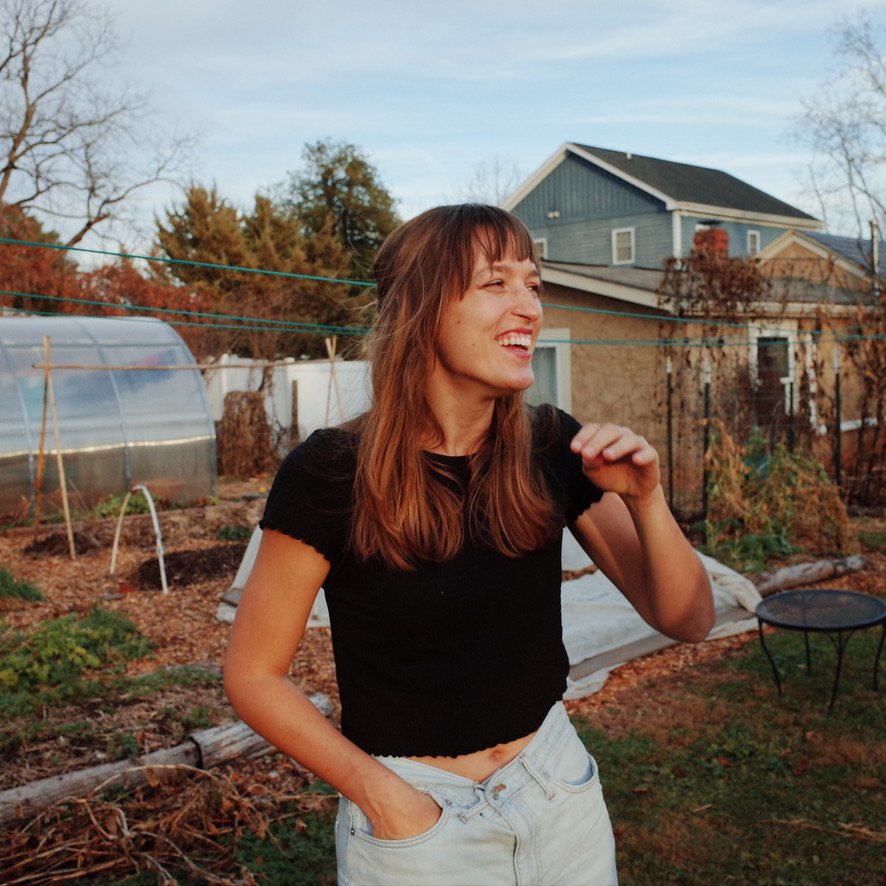
about.
Olivia Paschal is a writer, journalist, and historian. She is a Ph.D. candidate in history at the University of Virginia, where her dissertation looks at the rise of Walmart and Tyson in Northwest Arkansas in the context of local, national, and global political economies. Her work centers on wealth, inequality, and histories of land, labor, and capitalism. Olivia's writing, reporting, and scholarship have appeared in many publications including The New York Review of Books, The American Prospect, The Nation, The Atlantic, and The Guardian, Southerly, Scalawag, the Journal of Ozarks Studies, and Agricultural History. As a reporter at Facing South, she spearheaded a year-long investigative series covering the poultry industry during the COVID-19 pandemic. Olivia was born and (mostly) raised in Arkansas. She graduated from Rogers High School in 2014 and received her B.A. from Yale University in 2018.
episode notes & references.
- Olivia Paschal, University of Virginia: https://history.virginia.edu/people/olivia-paschal
- Walmart Inc.: https://www.walmart.com
- Tyson Foods: https://www.tysonfoods.com
- J.B. Hunt Transport Services: https://www.jbhunt.com
- Facing South article on Tyson labor practices by Olivia Paschal: https://www.facingsouth.org/2021/06/magaly-licolli-organizing-poultry-workers-starts-learning-together
- CBS News report on Tyson indictment (2003): https://www.cbsnews.com/news/tyson-cleared-in-smuggling-case/
- LA Times report on Tyson indictment (2001): https://www.latimes.com/archives/la-xpm-2001-dec-20-fi-16550-story.html
- We’re Off to See the Waltons by Olivia Paschal - https://www.dwell.com/article/waltons-walmart-bentonville-arkansas-format-festival-806faff1-e1790679-e8e9baaf-0f9d3178
- OPINION | REX NELSON: A familiar approach - https://www.nwaonline.com/news/2022/jul/16/a-familiar-approach/
- POULTRY & PANDEMIC: Meat industry workers and COVID-19 - https://www.facingsouth.org/series/poultry-pandemic-meat-industry-workers-and-covid-19
episode outline.
- Introduction and Taboos Around Corporate Power – 00:00–07:30
- Olivia’s Background and Research Focus – 07:30–12:15
- The Rise of Walmart, Tyson, and J.B. Hunt – 12:15–21:45
- How the Ozarks Became Fertile Ground for Corporate Growth – 21:45–30:30
- Labor, Immigration, and the Shaping of the Workforce – 30:30–39:40
- Corporate Influence in Civic Life and Nonprofit Culture – 39:40–48:55
- Comparisons to Other Regional Economic Models – 48:55–54:30
- Power, Belonging, and the Cost of Silence – 54:30–1:02:45
- Reflections and Pathways Forward – 1:02:45–End
episode transcript.
episode preview.
[00:00:02] olivia paschal.: the questions that are really interesting are where do the Ozarks sit in this system of globalized capitalism, global labor, and supply chains? What can we learn from other places where similar dynamics are at play and how are people doing things differently?
[00:00:19] olivia paschal.: And I do think the question of capitalism, good or bad, is actually a really good starting point for looking at these other questions because if you are not willing to question the system, then maybe you aren't seeing the other alternatives. Northwest Arkansas alone is not gonna make or break the capitalist system, but we do happen to have two major players in it, in our own backyards.
[00:00:41]
episode intro.
[00:01:24] mike.: Well, you're listening to the underview, an Exploration and the shaping of Our Place. My name is Mike Rusch. Today we're stepping into a conversation that's often avoided in northwest Arkansas. Not because it doesn't matter, but because it's really hard to talk about, and if I'm honest with myself, it's not one I even probably feel comfortable having.
[00:01:41] mike.: But if we're truly seeking an honest understanding of the history of Northwest Arkansas. One that helps us understand how this place was shaped and who feels like they belong, then this conversation needs to be a part of it.
[00:01:51] mike.: Today we're talking about the companies, Walmart, Tyson, and JB Hunt. These aren't just major employers, they're foundational institutions.
[00:01:59] mike.: Their influence has helped transform Northwest Arkansas through jobs and infrastructure investment, philanthropy, and global visibility. They've played a central role in shaping the region's identity and fueling its growth. That influence is real. And so are the questions that it raises. How do these companies shape civic life? What role do they play in housing and labor, immigration and belonging, and how do we talk about that impact in a way that's honest without falling into blind loyalty or sweeping critique?
[00:02:26] mike.: Because in a region where relationships run deep, even raising these questions can feel risky, and as a result, conversations like this can feel quietly off limits, but silence has its cost. And if this season of the underview has taught us anything, it's that hard. Questions often hold the key to a deeper understanding.
[00:02:44] mike.: Our guest today is Olivia Pascal. She's a PhD candidate in history at the University of Virginia where she's researching the rise of Walmart, Tysons, and JB Hunt in the Arkansas Ozarks, and how they helped shaped American capitalism and the modern south.
[00:02:58] mike.: Olivia also grew up here in northwest Arkansas, so this isn't just academic. Her questions come from a lived experience shaped by the same landscape and institutions and the community that ties many of us together. I wanted to talk to Olivia because she has a voice that carries the tension of place and belonging. A voice that carries love for this place, but also holds the courage to look closer. That kind of perspective keeps us open, and it reminds us that asking hard questions isn't disloyal. It's a form of care.
[00:03:26] mike.: And just to be clear, I'm not asking that you agree with everything you hear in this conversation. I'm asking you to listen with curiosity, because if we're serious about telling the truth of Northwest Arkansas and how it has been shaped, then we can't leave parts of the story out just because they're difficult to say or difficult to hear.
[00:03:42] mike.: Cards on the table and hopefully no surprise, I love northwest Arkansas, and because of that love, I believe in asking these questions that that helps us grow into a place where everyone can belong.
[00:03:53] mike.: My hope is that in this conversation, it can be rooted in care for our region and for our neighbors and for our shared future. I also want it to be one that values the positive difference that these companies have made and helps us to navigate forward together in a shared understanding that helps deepen our sense of community.
[00:04:10] mike.: All right, we've got a whole lot to work through today. Let's get into it.
episode interview.
[00:04:13]
[00:04:16] mike.: Well, I have the privilege today of sharing a table with Olivia Paschal, who's a PhD candidate in history at the University of Virginia. And Olivia, I know you've been working on 20th century US history, the history of capitalism, rural agrarian studies. This is really in the conversation zone of where we've been talking lately. And so I'm really thankful to have you as a part of this conversation. Welcome to the conversation. Thanks for being here. I appreciate it.
[00:04:41] olivia paschal.: Yeah. Mike, thank you so much for having me, and it's been a pleasure to listen to the podcast and to get to know you a little bit through listening and working together.
[00:04:48] mike.: That's very kind. I appreciate that. Let's jump in. Maybe give us a little context and framework of you and your background and your connection in northwest Arkansas.
[00:04:57] olivia paschal.: Yeah, absolutely. Yeah, I grew up in Rogers for the most part. I was born there. I went to school there. I went to Providence Classical Christian Academy for those who were familiar. And then graduated from Rogers High School in 2014. And since then I went off to college. I was a journalist for many years and then went to grad school at the University of Virginia where I study the history of northwest Arkansas and the history of the corporations and kind of labor in this region in the late 20th century.
[00:05:24] olivia paschal.: But yeah, my family my parents both went to John Brown. My family is deeply tied into to the corporations that I study more than I knew when I started my research. So I found out in the course of doing some oral history work a few summers ago that I had known that my great grandparents were chicken farmers. 'Cause I think everybody's great grandparents were chicken farmers if you go back far enough in this region. But they were some of the earliest Tyson growers I learned in the sixties and seventies. And then my grandparents also met on the chicken processing line at the old Campbell Soup Factory in Fayetteville where my grandma was working to put herself through college at the University of Arkansas.
[00:06:01] olivia paschal.: Which yeah, these kind of tie into the economic and political and cultural history of this region that I didn't know I had when I started the project. But I think part of what I'm saying in my work is that the Northwest Arkansas region and the Ozarks have been really shaped intimately by these kind of global networks of commodities and capital that flow through the region. And I, the ways that I've discovered that surfacing in my own life have been really surprising.
tension.
[00:06:27] mike.: this is like both an academic study, right? And a passion, but this is your family. How do you hold those two things in tension? Like how do you that seems difficult to me.
[00:06:35] olivia paschal.: Yeah. It is, it's really interesting. I think it gives me appreciation for the kind of complexities and contradictions of this region that, it's tough to have as a scholar if you are studying maybe some place that is not your own place or some even like era that you don't have a kind of personal feeling for. But I think growing up in northwest Arkansas, growing up, with like classmates whose parents were Walmart supplier, executives, and really seeing this region grow and change and understanding what that's meant in really complicated ways for different groups of people. I think it just leads me to ask different questions and also helps me see connections between certainly between Walmart and Tyson and JB Hunt, which you can't really explain any of those three without the other.
[00:07:19] olivia paschal.: But also helps me trace these lines between the like local and like deeply personal and this like larger scale, multinational view. That that are maybe less easy to see and poke at if you are not enmeshed in all of them. But it is also very complicated, right? My opinions differ from my family, which we can talk about, but but yeah, it makes the conversations richer and more interesting, I think.
evolution of companies.
[00:07:44] mike.: This study of the history of capitalism in the 20th century, especially here in the Ozarks, which is fascinating to me. You're looking at these companies, Walmart, Tyson, JB Hunt, that started pretty modestly, local companies who over the course of 50 years or so have grown into this global, political, economy of a lot of influence and have really dramatically shaped and formed this region. And so give us a starting point of how you think about the beginning point of when these maybe economic factors really started to influence Northwest Arkansas. What did that look like? Maybe how did that evolve? I.
[00:08:25] olivia paschal.: Yeah, I think that if you're talking about northwest Arkansas and it's 20th century, late 20th century economy, you really have to start with talking about the chicken industry and the poultry industry. Which, as your listeners will know, starts in the forties, fifties and Arkansas poultry companies are really innovators in that space. Which I think has something to do with the lack of other real commodified crops in the region at the time. So the Ozarks is not a place that produces row crops, really, like large scale, kinda what we would think of as agribusiness crops that are very profitable until the chicken industry.
[00:09:04] olivia paschal.: But until the chicken industry comes along, people are not able to like farm one crop, until the chicken industry comes along and finds a way to monetize and really scale up production of chickens.
[00:09:14] olivia paschal.: Which also had not really been a commodity on the scale of other livestock until, the fifties and sixties. And really, Don Tyson is a leader in making chicken this kind of like scalable commodity that people, a meat that people were like actually interested in eating versus A meat that was just cheap and was sometimes eaten by particular groups of people.
[00:09:32] olivia paschal.: So I think that the poultry industry locating here and this kind of relationship that the companies, because early on we're not just talking about Tyson, right? We're talking about Tyson, we're talking about George's, we're talking about Arkansas Valley Industries, Campbell Soup, like a lot of these little companies that were competing for market share at the time.
[00:09:50] olivia paschal.: The ability to produce chickens on contract with these companies. Let a lot of farmers stay on farmland in a way that it wasn't totally clear they would be able to also trapped them in cycles of debt and production and contracts with the companies that would become more exploitative. I would argue, as the 20th century went on. But also ended up, gave them some spending money in ways that maybe hadn't existed before. Which I, which kind of sets the stage for Walmart to come in and be able, the kind of business genius of Sam Walton was to say that you didn't actually need an urban center to have a profitable retail store. You could put it in the kind of center town of a rural area and you would attract people from that whole rural area when they were going into town on their buying trips or whatever.
[00:10:37] olivia paschal.: But you don't really have necessarily that kind of consumer class that Sam Walton is able to take advantage of without this, or at least in the Ozarks without this commodified chicken industry that is giving people some spending money and also like incentivizing them perhaps to not, produce food on their own farms for their own consumption, but to use that land instead for chicken.
[00:10:59] olivia paschal.: And then, I think that there's something to, I was just reading an article, a sociology piece about there's a sense in the business literature that I think is right that part of the reason Walmart was able to get so big with kind of very little attention paid to it nationally or globally until the eighties was because it was just hiding out in a place, in a part of the country that nobody in the centers of capital, in New York or like Atlanta, really was used to looking at as a place where business could come out of. And so all of a sudden Forbes named Sam Walton the richest man in the United States, and people are like, wait, what?
[00:11:35] olivia paschal.: Who is that guy? We've never heard of this of this company. But the way that he was able to do that in part was like, Walmart went public pretty early but also like Steven's investment is in Little Rock, and they were able to get capital from Stevens to finance Walmart in the early stages, but also hide out right away from their competitors and go unnoticed until they had this big market share that nobody had recognized that they had.
[00:11:58] olivia paschal.: So I think that there's interesting kind of spatial features, economic features and cultural environmental features of the Ozarks that made it a place where these what would by, the end of the 20th century be two of the most important multinationals in the world are located.
NWA Unique?
[00:12:12] mike.: When you talk about the geographical aspect of that, is Northwest Arkansas unique in that or is it just, hey, this is what happened here. Not, maybe not by coincidence, but is there something unique about Northwest Arkansas that allows that to happen here?
[00:12:28] olivia paschal.: I think that northwest Arkansas, every every region is unique from every other region. But when you're thinking of it, when you're thinking about it regionally in terms of maybe take the American South, so the Ozarks are not a big plantation economy, right? They, there is, you can't really grow cotton in the Ozarks because the soil is not good enough for that or really for anything. But so there's not a plantation economy that, is competing with other crops. And so the lack of a plantation economy and of like major slave economy creates certain economic conditions in the Ozarks that are different from the Deep South.
[00:13:03] olivia paschal.: People will also compare the Ozarks to Appalachia, which I think is a much more useful comparison economically and culturally probably. But the major difference is that vast swats of Appalachia are covered in coal mines. We don't have that. We do have some mining. And it's not totally absent from the region, but this kind of massively extractive economy and this very industrial kind of economy that exists in Appalachia, does not exist on the same scale as the Ozarks.
[00:13:33] olivia paschal.: And so really the kind of three major industries where capital is coming into the region, it comes much later than it comes in other regions. And it's more of these it's industrial agriculture and it's like the service economy and the logistics economy, which is a different kind of economic relationship than coal or manufacturing. Or yeah, like cotton where you're just like absolutely wearing out the soil, right? If you plant it, or even like soy and rice, same thing. Chicken farming does have a very clear and quite bad impact, environmental impact on the region. But it's a different kind. It's a, it's of a different sort.
[00:14:12] olivia paschal.: So I think that there are these kind of, these like unique, again, geographic spatial environmental factors to northwest Arkansas. The other one being that, Arkansas is more or less in the middle of the country. It's at this kind of nexus point between the south and the west and the Midwest. One of the kind of things that the poultry industry and the trucking industry both talked about early on was like, if you built the right highways or railroads or whatever. Northwest Arkansas has direct access to Kansas City and Chicago. It can go west to San Francisco. It can go east to the coast. It's more centrally located than a lot of its competitors. Especially in like in chicken and trucking were, and so when they did build the highways and they did build the airport, that also gave it a geographic advantage, speaking economically to other regions.
economic and poltical systems tied together.
[00:14:58] mike.: How do we understand the history of this rise of corporate influence? whether that be politically, you mentioned the democratic process around how corporations have a very large voice here versus maybe how that democratic process would work without the presence of those corporate influences. How does that evolve and how do we see that having influence within this story or within this region with these companies?
[00:15:20] olivia paschal.: Yeah. I think just to speak nationally for a second the kind of emphasis of governance in the south and in the country really starts to change in the seventies and eighties with Deindustrialization.
[00:15:34] olivia paschal.: So to to rewind it like all the way back the New Deal order is a kind of specific period of US history where the state became very involved in, not in fact in socialism, which is what many on the far right would have you believe the new deal was. But actually in maintaining capitalism the New Deal was an effort to maintain, yeah, to maintain the institutions of American capitalism by, through all of these alphabet soup agencies that we could talk about. But it involved a government, strong government investment in public goods and public works. WPA, the Civilian Conservation Corps, et cetera, et cetera, et cetera.
[00:16:10] olivia paschal.: Historians will say that the new deal order begins to break apart in the seventies and eighties for a variety of reasons. One of which is this crisis in the seventies of stagflation and the kind of commensurate policies of Nixon and Carter and et cetera, et cetera, et cetera, to try to address the, what was rapidly becoming a very unstable economic situation. The global economy is also expanding, globalization, which is pushed by some of the very kind of corporate interests that we're talking about here who want access to markets overseas, who want to be able to produce products overseas are building out commodity chains that yeah, are really starting to reach across national and international borders.
business leaders into policy making.
[00:16:54] olivia paschal.: And so the New Deal Coalition, the new Deal order begins to fragment and is replaced by this sense in the south. And I, this is maybe just my kind of like regional exceptionalism. But I am pretty sure some of this starts in the south. As the south begins to de industrialize in the seventies and eighties. There is a sense that in order to attract capital, you need to bring business leaders into the policymaking process. Because obviously being business leaders, they know how to create the best business climate. And so you start to see at the same time, like businesses are also organizing themselves.
[00:17:35] olivia paschal.: So the business roundtable, the chambers of commerce all of these kind of different organizations of corporations and CEOs and executives on various levels start to form and become really influential at both the state and federal levels, which is really interesting that they're concerned with this, with the state as well.
[00:17:52] olivia paschal.: But so you start to see this like bringing in this intentional, bringing in of corporate leadership into the policymaking process. And to speak specifically about Arkansas for a second so Bill Clinton obviously is governor from 1978 to 1980, and then from 1982 to 1992 when he becomes president.
[00:18:11] olivia paschal.: And he in the eighties is really concerned with loss of manufacturing jobs. Arkansas is a very poor state. There's like very low state revenue, education system appears to be bad, and there's a lot of kind of efforts that they're trying to do to bring what is termed in the eighties economic development into the state.
[00:18:29] olivia paschal.: And one of his administration's efforts was to seek out the involvement of corporate leadership in policymaking process because they were very aware that like Sam Walton and Don Tyson are up in northwest Arkansas. They have a number of folks in Little Rock, the Dillards. The Stephens, the TCBY guy, whose name I'm forgetting and some oil interests in like southern Arkansas. And so they say that the involvement of kind of corporate leadership in state policy making specifically towards economic development, but not only towards economic development is very important. And so you see the formation of the Arkansas Business Council, which mostly is interested in actually education policy. And this is what I was talking about a little bit earlier.
[00:19:11] olivia paschal.: That is like that kind of thing where in this, in the case of the business council, which was chaired by Sam Walton, was its first chair. They are funding research into the state's higher education system. They are releasing policy recommendations for how to change the state's higher ed system. So that it can better prepare students for the workforce for specific jobs that they see becoming like the jobs of the like 21st century the nineties and the 21st century. And that kind of like direction of higher education towards workforce preparation is something that is, it is largely new nationally in like the eighties and nineties.
neoliberalism.
[00:19:55] olivia paschal.: This thought of we need to be developing human capital of all public policy shaped in this language of economics. This is something that scholars, we'll call neoliberalism, people use neoliberalism just to refer to very different things, but that is one of the things that gets called neoliberalism is this thought that like all public energy, public goods, education is directed towards fulfilling the needs of the market, which is assumed to be this kind of overarching almost like natural force that moves along and just needs us to fill it in the ways that we can.
[00:20:33] olivia paschal.: So yeah, so that is like one of the ways that business becomes pulled into policymaking, not just for business policy, but also for education for infrastructure in the eighties and now, and like obviously we know too that like after the bus Arkansas Business Council ends, the Northwest Arkansas Council picks up some of similar functions in the region and is the reason that we have the airport and the highway. And these are, yeah, just like these local manifestations of something that is happening in localities and states around the country. Actually most places starting earlier than in Arkansas, in most places. It starts in the sixties and seventies and we were a little bit late to the game, but really starts to pick up steam then
labor.
[00:21:15] mike.: You've mentioned like what the economic conditions, the labor conditions in this kind of early sixties, seventies type time period. Maybe give us some context to what's happening in the country. Does that, how does that affect what happens here in northwest Arkansas as well too? I'd love to understand that a little bit more.
[00:21:32] olivia paschal.: Yeah. So the sixties and seventies are a time, the sixties obviously of like massive social upheaval, civil rights movement, the women's movement, the labor movement, anti-war movement.
[00:21:43] olivia paschal.: And that's happening in the Ozarks two. I think one of the interesting, I side note Michael Pierce might contradict me on this, so you should tell me if he does. Okay. He's probably right 'cause he knows more, but but yeah, one of the interesting factors I think about the Ozarks is that, you have a kind of the, the civil rights movement and the new left kind of spur this desire for some of the more educated folks on the coast generally to move back to the land, right? So you have an influx of these back to the landers in northwest Arkansas and in the Ozarks who are setting up women's land like communes, farms, sustainable regenerative agriculture.
[00:22:24] olivia paschal.: So you have that movement in the area. But, and then you have the Fayetteville, which is a center of more of this kind of movement organizing, especially in the feminist and like the women's movement. But the labor movement is not very strong in the Ozarks. There is a very low union presence. Part of this is just, like Arkansas was one of the first states to pass the right to work law. The South is very hard to organize. And also especially as you move like into the seventies and eighties, the industrialization is just like letting union density there a lot of plans for closing across the south. And so the manufacturing jobs that would've been perhaps most likely to have been unionized were just like disappearing. And the way that like southern governors, like Bill Clinton is actually a really great example of this in Arkansas. They were thinking about how do we attract manufacturing jobs?
[00:23:15] olivia paschal.: Like what does the south have, what do our states have? That can attract global capital to our state. And one of the things that they would always talk about was, we have really low union density. Like your plant is not gonna be unionized if it comes Arkansas, right? So there's this incentive, there's this perceived incentive that to keep the business climate strong in the state, you have to keep union density low. So yeah, so labor was not so strong in Arkansas.
racial composition in NW Arkansas.
[00:23:40] olivia paschal.: The Ozarks also in the seventies and sixties, seventies, eighties in particular is incredibly white, like the whitest region in the country. Which I think is actually another reason why one of the questions of my kind of dissertation is like where was the friction between these massive. Growing companies and the labor that they are necessarily exploiting. Like why is there not more organized resistance in the region to a Walmart and to a Tyson? And I've actually found some like attempt early attempts at contract growers unions that don't, that are not like yet in the historical literature. So chicken growers tried to organize in the sixties against Tyson, and they get this letter back from Tyson that's or they get a, that provokes a letter from Tyson to all its growers that's like this, don't join like this, like communist, whatever in groundswell. Just talk to us and we'll make your conditions better. Kind of a typical anti-union, very kind of the red scare moment response.
[00:24:41] olivia paschal.: They also write to the third district's congressional representative John Paul Hammerschmidt, and they say. Can you help us? We all we're asking is better conditions from this company that we're working for. And this is good for like the economic, like for, our personal ability to live on our land and also for the regional economy. If our conditions under chicken con chicken growing contracts are better and he gets this kind and yeah, he just sends us back this response that's pretty oh, that's really nice and is offers no, no support for their efforts. Meanwhile is working really closely with different federal agencies to help Tyson expand as much as possible. So you see this kind of the political power in the region is also not really interested in making working conditions better, even for what is at the time essentially a hundred percent white male chicken farmers, they're like, that's not bettering their conditions is not really of interest.
friction from poultry industry on environment.
[00:25:44] olivia paschal.: So there just isn't much real friction until like later in the 20th century, which I think is one of another interesting thing about the Ozarks. The only place you do see resistance to tie it back to where I started is in the, like late seventies and eighties, it becomes really clear that the chicken industry is polluting groundwater, wells, stream, soil. Because when you spread chicken litter on soil, it seeps in to the ground and then it also goes in the streams and everyone's I'm getting sick from my well water, and I wasn't getting sick before. This chicken litter or chicken sludge from poultry processing facilities was being dumped near my land.
[00:26:26] olivia paschal.: And there's a real effort from the industry to push back on the idea that it's waste is polluting, but the places that the kind of environmental resistance are coming from are often in or adjacent to these back to the land communities. But not just them. There are also rural residents who are not involved at all in the chicken industry or in back to the land stuff that are like, I'm getting sick from my water, or My kids are getting sick. Yeah, I don't know if that feels like that was really Yeah. Off on your question, but
our normal culture.
[00:26:59] mike.: The maybe let me ask you this. I don't know where this will go, but maybe you can direct it, but maybe to pull this out just a little bit more, like when you talk about maybe the conditions of capitalism at the time, we talk about this economic, political tying together of things. How do we think about this as far as in many ways I grew up in northwest Arkansas here too. This where we live and the culture, this is just normal, right? This is not something that we can like probably be very objective about sometimes.
[00:27:28] mike.: How do we think about this economic idea of capitalism where in a region where it just feels normal and this is the way everything has worked and should work and that it's really working really well.
[00:27:42] olivia paschal.: Yeah, I think that it's hard, certainly for me, like I didn't really realize how anomalous northwest Arkansas is as a region until I like left for college. And then I was like, oh, it is weird that the headquarters of two, like Fortune 100 companies are 10 minutes away from where I grew up. And also I have this sense that I grew up in a really disconnected, quote unquote backwards place right there. There's something weird about the kind of cultural perception of the region versus the economic realities of it, right? And it is weird to have grown up so in, in such a small place that is also so tied into again, global capital and global commodity global commodity chains.
[00:28:27] olivia paschal.: I think that it northwest Arkansas is in many ways very unique and actually a really interesting place to look at the effects of multinational corporations and, vertically integrated agribusiness and all of this, because you're talking about like wealth on a massive scale, the Walton family is the richest family in the world still to this day. The Tysons are, up there and a place that until, and still, but like really until recently has been a really small population. And like these massive kind of wealth disparities between chicken catchers and chicken processing workers and like the, literally the Walton these are massive Gulf and the Northwest Arkansas region is an interesting place to look at what American capitalism looks like specifically because it's so small. And you can just see in a region of half a million people the like wealthiest and the least wealthy.
[00:29:21] olivia paschal.: I think that the, also the extent to which these multinational corporations have a hand in like political and cultural life is different. Like American wealth is always exercising its power and influence, not just in economic ways, right? Like the Metropolitan Museum of Art in New York City is funded by, all of that city's great capitalist going back to the progressive era. Go to any college campus and there are wings of buildings and programs named after that regions or that area's most successful businessmen. There is there is a nexus of like there public, good and public influence with the wealthiest people in the area. I think what makes Northwest Arkansas different again, is that we're talking about the biggest companies in the world. And because we're talking about such a small place and because Walmart and the Walton family, specifically have devoted so much of their attention to remaking Northwest Arkansas and making it a place where their, like their corporate employees and their suppliers, corporate employees want to live you can really see how they have wanted to shape the culture and the education system and, art and et cetera, et cetera, et cetera.
[00:30:34] olivia paschal.: Again, on a really small scale. So I think that kind of using their influence, I. Over such a small region is also unique, especially because there are no, there's not really other competing interests in the region. It is a company region. I was just at this conference and I was listening to a friend of mine, Brian Highsmith, give a paper on rethinking what we mean by when I use the term company town. And usually you think of like a mining town in which the company owns the town and they might have their own currency that you can only use in company stores. And they have the job, they have control over the jobs and they have control over the government.
corporations and democratic process.
[00:31:12] olivia paschal.: Brian argues that there's actually a different way that we should be thinking about company towns which is in terms of their sort of control over the democratic process or lack thereof. And he talks a little bit about Elon Musk's star base, I think it's called in Texas, which is a town that's like totally made up of starlink or Star Yeah. Of Musk, essentially Musk employees in that whatever his space thing is called. And that because it's only made up of his employees, like the Democratic process, it is a democratic process, right? Like people can vote on things and they vote on policies, but it's totally captured by that company's interest because everybody who votes is an employee of this company. You see the same thing in some of Disney's towns in Florida.
[00:31:57] olivia paschal.: And I think that's actually a really useful way to think about Northwest Arkansas because so much of our economy and nonprofit cultural production relies on money from, three families which is really abnormal.
the challenge of belonging in a company town.
[00:32:11] mike.: Yeah I think within this dynamic that you're explaining where we have a lot of these converging interests of economic and political and people and these kind of company town idea. For me, I've grown up in it, so it's really hard. Like I don't really know anything else. And so I think I'm trying to understand what does that do to a place's sense of culture, a place's sense of belonging.
[00:32:33] mike.: My own stake as a community holder in this, how do these economic forces and how they converge together, how does belonging, how do we feel connected to those stories?
[00:32:45] mike.: When in many ways, I don't know if I can, I'll get in trouble for saying that. How do we feel, how do we feel connected to this success of our region or the how do we feel connected to now I'm rambling. I'm trying to say how
[00:32:57] olivia paschal.: this is the problem. This is like evidence of exactly what I've kind
[00:32:59] mike.: Yeah.
[00:33:00] olivia paschal.: Which is kind
[00:33:00] mike.: maybe I should, I don't even talk about it. Include this. Yeah. 'cause maybe that's all I'll say.
[00:33:04] mike.: As a person who lives in here and has a, a stake in our community of creating a place of belonging. I have a hard time even asking probably the right questions or being objective or not measuring the questions that I ask because of the reality that my own economic plight, if you will could be influenced by what I say or what I do in such a place where all of these things come together.
[00:33:28] mike.: And so I guess I'm asking you from your perspective if you can do that. Like how do we think about this idea of a company town here in northwest Arkansas where everything is converging and all these aligning interests yet our own individual sense of belonging or our own individual sense of how we have a stake in this community?
[00:33:46] olivia paschal.: Yeah I'm thinking about a few years ago when I was writing this piece for the American Prospect that you referenced in the last question, I was interviewing a lot of people who had worked, or still in some cases worked in Northwest Arkansas's nonprofit sector. So these are people who are working a lot with marginalized communities.
[00:34:08] olivia paschal.: Doing direct service provision to people who are on the lower end of the economic scale, which, frankly often means chicken processing workers, in northwest Arkansas and to a person, they all said that they have broader systemic critiques of northwest Arkansas's economic structures and power structures that they cannot make in public because of not just where their funding often comes from.
[00:34:33] olivia paschal.: We know that the Walton Family Foundation, the Tyson Foundation, are funding a lot of the arts and nonprofit spaces in Northwest Arkansas or have but also because of this sense that like there, there is a, you could get kind of shadow banned or blacklisted if you make a loud critique of a way that Walmart or Tyson to a lesser extent, maybe JB Hunt is operating in the region because of how much political and economic power and also cultural power that they exercise. Some people, especially when you're thinking about more leftist activists and organizers have left in Transitive Arkansas, which is a trans advocacy group, was based in Springdale for many years and have gone to Little Rock because in part because they felt like the environment of Northwest Arkansas was not conducive to the argument they were, the arguments and the actions they were trying to make.
[00:35:22] olivia paschal.: And I think that is a real, I myself have find it easier to write and think. Critically about the region sometimes when I'm not there. Because there is, you just never know who's listening. And you also know that again, we, started off this conversation talking about the complexities of thinking about northwest Arkansas as this region of like massive economic growth that has relied on the exploitation of many of its own residents and also, people around the world who are now part of Walmart and Tyson's supply chain. It, and it is easier, I think, to look at that objectively when you're not literally there.
[00:35:59] olivia paschal.: Because when you are there, it's a weird experience where you're both getting smacked in the face with it every day, but you're also very aware of who is there and who is listening and what you might have access to and what you might not if you talk about the situation in certain ways. Which is like a thing that we're, this is a dynamic of the conversation we're having right now as well. Yeah. And so of course it limits belonging and it limits inclusivity because when you can't talk about the systemic forces at work. Like when you can't talk about the fact that Walmart and Tyson's wages and benefits are so low that they are, keeping people from living full healthy lives. Like during COVID, you couldn't, it, was not easy to talk about the fact or try to report on the fact that COVID was spreading through poultry processing facilities because Tyson's PR team was writing quotes for the Rogers and Springdale mayor to say that oh, these facilities are the cleanest, they're beautiful. I've seen the inside of them, they're sparkling. And in fact we now know, like without a doubt that those were the center of massive outbreaks in the Marshallese and Latino community. And so that kind of. Yeah, just that limitation on what is even acceptable to say, and the connections that it's acceptable to make is damaging.
[00:37:13] olivia paschal.: I do think that's starting to change because I think especially with the affordable housing crisis in the region now the, shall we say more negative aspects of the company's location and commitment to the area, they're starting to affect a broader range of people than they had before. I think it had largely been the negative impacts had largely been limited to immigrant communities, and now it's affecting this broader swath of people in the workforce. Where if you don't have a, yeah, if you don't really have a white collar job or if you're a teacher or if you're a journalist or a creative.
[00:37:52] olivia paschal.: Now you also are having a, not just a hard time finding housing, but also I'm just thinking about folks in the music world, hard time finding venues to play at because they're all closing in Fayetteville. Or if you're a writer a hard time finding places to write for because the journalism, seen has been so gutted.
[00:38:10] olivia paschal.: Yeah it, I think that the kind of negative, as the region grows, again, these kind of like contradictions and internal dichotomies are starting to become more tangible from more people. And you're starting to hear a little bit more distant,
company town and emerging models.
[00:38:25] mike.: From your uh, studies Like, is this normal in company towns or regions that have these characteristics? When you look at the history of capitalism or you look at how these kinds of models within capitalism emerge?
[00:38:38] olivia paschal.: That's actually an interesting question. I don't know that I can answer it entirely, but now I'm just gonna think out loud for a second. That's a super interesting question. First of all, I don't think there's anything that's very, that's one-to-one comparable to northwest Arkansas, right? Like the other things that I'm thinking about that would be even like somewhat comparable are Appalachian mining towns where you do see organized resistance in the form of UMWA and like unions and like really violent bloody strikes. In some places and in other places you see absolutely nothing and you just see totally going along to get along kind of work. John Gaventa's book Power and Powerlessness which is about Appalachia is really actually good on the kind of political like pushback or lack thereof to, to mining companies in Appalachia specifically.
[00:39:25] olivia paschal.: The other I think comparison to Northwest Arkansas that is, that can be useful is some of these as like Palo Alto or like a Silicon Valley or Seattle. And those are places with a really organized, strong left, again, largely because like of affordable housing more than any other issue, I think is what folks tend to. This is a little bit of speculation. I don't know that for sure. But but I do think that as Northwest Arkansas urbanizes and becomes more dense that is ground, that is a little easier to organize. It's really hard to organize rural places or suburban places. And I think the density and these kind of more like almost legible political issues that are now starting to surface affordable housing, labor, et cetera.
[00:40:12] olivia paschal.: And obviously we have the university which is like a, those are historically nodes for movement work.
[00:40:17] mike.: I I'm gonna play the devil's advocate for a moment. 'cause I want to try to pull this apart a little bit.
[00:40:22] mike.: When we talk about labor, like should there be organizing in Northwest Arkansas? If this is a company town, and you know, for all intensive purposes, the economic machine is growing. There is a great deal of philanthropy that happens in these spaces. Certainly is that necessary? Does capitalism do we see histories of where these can be managed well and that where there is impact maybe to marginalized communities that this economic capitalistic structure can actually address that and take care of that?
[00:40:53] olivia paschal.: I mean, No, we don't. There is not, I cannot think of a historical example where in modern day global capitalism, the wheels of capitalism actually, it's, it, you almost, I will say never, which is not a word that I use as a journalist, but I will say never see unfettered capitalism as a rising tide that lifts all boats, which is what you often hear is gonna happen.
[00:41:17] olivia paschal.: I think one way that I like to think about the need for organizing the working class or the middle class even, right? Is business is very organized. Capital is incredibly organized. Chambers of commerce, the poultry federations, industry, lobbying groups from kind of the local, I mean the Northwest Arkansas Council, right?
[00:41:37] olivia paschal.: The Arkansas Business Council of the eighties from these kind of like local organizations to the international scale. Business Roundtable is another great example. I was just reading a book about this international business group that I can't remember the name of, but that Walmart is very involved in from like the eighties on.
[00:41:54] olivia paschal.: They are capital capitalists businesses are organized around their interests and are lobbying in their interests government at every single level, right? So not only are they wielding this economic influence on the very local and state level, they're also shaping policy in their direction.
[00:42:15] olivia paschal.: And their kind of interest is almost always or always profit making. Not am I treating my workers well. The drive to maximize profit. Almost always ensures that you will not be treating your workers well, which we know is the case at both Walmart and Tyson. And so to even begin to counterbalance that force, that extremely powerful force, that's why you need people organized in the interest of working class individuals and just workers at these different corporations, right?
[00:42:45] olivia paschal.: Because we know that the executives are organized. I think also, as we have been talking about philanthropy is great as far as philanthropy goes but philanthropy only funds what it wants to fund. In the case of the Walton Foundation, the Walton family is very active in deciding where that money goes.
[00:43:03] olivia paschal.: And you can see things that they really want to fund, some of which are amazing, right? I love art as much as the next person, but you can imagine that there are things that they would not want to fund, such as things that might critique them or contradict their interests. That's true of philanthropies, like all across the country and the world.
[00:43:22] olivia paschal.: But Elon Musk's philanthropy funds apparently like one thing and it's some center for this is probably wrong, but I think it's like free speech or something at the University of Texas, Austin. So it's yeah the, we're learning that you actually shouldn't just rely on like wealthy people to do the best things for you.
[00:43:40] olivia paschal.: That is the lesson of Elon Musk and DOGE is that handing the reins over to wealthy individuals that we assume have some moral compass because they have money is not, is perhaps not the way to go. And there should be more guardrails, social guardrails in place for when the less charitable version of the Waltons comes along.
role of philanthropy.
[00:44:01] mike.: I am curious, as we think about capitalism, we think about philanthropy, we think about, you've mentioned the nonprofits in northwest Arkansas, and we think about the state. Obviously Arkansas is not a state that has traditionally had a lot of economic power especially coming out post-Civil war. We come out of reconstruction and the, just really the mechanization of agriculture. And there, there appears from a corporate interest perspective to be incentive to invest back into communities, to help Arkansas overcome some of these historical challenges.
[00:44:31] mike.: Whether in, in programs that, art that may work towards inclusivity or belonging. But I don't know how to think about that. If I'm honest, I'm probably too close to it to try to understand objectively. Are these things how suspect should we be of these things? Or can we just let what appear to be sometimes be good investments into communities for economic revitalization, entrepreneurship. Can we just take those at face value or how does can you help me unpack even my own understanding of of maybe not recognizing my own biases or my own position within kind of this larger Yeah. This larger conversation within our region?
[00:45:11] olivia paschal.: Yeah. Several years ago, Anand Giridharadas published this book, I think it was called *The Winners Take All*, which is about the sort of soft power that the wealthy are able to exert through philanthropy and through things like family foundations. Because. I know as an academic, from seeing Northwest Arkansas when people are doing work that you know, does not necessarily have a quote unquote market value in hard economic terms, we have to turn to funders. We have to turn to things like the Long Family Foundation, gates, dell, any of the people who fund like the University of Virginia, right? John now was one of our big guys. But all of that funding is reliant on what the person who could, or the family who controls that foundation wants to give to. And with almost no exceptions, the people who are wealthy enough to have philanthropies are rarely going to be interested in funding work that undercuts the economic structure that gives them power. And so I think that what philanthropy doing in northwest Arkansas is often funding a lot of good things. And we talk about inclusivity, we talk about belonging. There's elements of direct service provision. There is an argument that I, that, yeah, I will make the argument that, you don't need, you wouldn't need direct service provision to Marshallese and Hispanic communities if Tyson and their supply chain incentivized higher wages for these chicken processing jobs that these folks have been brought into this region to do.
[00:46:54] olivia paschal.: Inclusivity and belonging is not necessarily just about cultural and social divisions, it's also about economic divisions that turn into social and cultural divisions. And philanthropy of the kind that exists in northwest Arkansas is almost never about changing, state or national policy towards workers to help protect against danger on the job or push for higher wages and better benefits.
[00:47:22] olivia paschal.: It's coming in as a bandaid on the back end, and so there's a limit to what you can do with that. And there is a limit Yeah. To how much is possible. How much it is actually possible to achieve a, just and equitable. And I would say, frankly, like free in the, most political theory, democratic sense, free society when you're constrained, like when you're sources of public good, are constrained by what funders want.
[00:47:51] olivia paschal.: Because also like funders are capricious, they can be funding something for three years to five years to longer and then just decide actually that's not what we're interested in anymore and our strategy has changed. And then you've pulled the rug out, from what might have been a vibrant group of people doing important work.
[00:48:07] olivia paschal.: And so I think that, often it's better to do that through more publicly accountable mechanisms like local and state government which would require perhaps higher taxes on. Corporations or individuals in the state or, nationally. Which incidentally is something that in the eighties, the Arkansas Business Council, which was Sam Walton, Don Tyson, JB Hunt, Charles Murphy, kind of these like 15 richest guys in Arkansas, they in the eighties offered to support raising their own taxes for improvements in the state educational system.
[00:48:43] olivia paschal.: So it's not without precedent, right? That perhaps maybe more investment in publicly controlled means versus privately controlled means. Yeah, it's possible. But I do think that the problem with philanthropy is that your decision making base is small, no matter how much you're talking about stakeholders listening sessions, et cetera, et cetera, et cetera. Like ultimately, the philanthropy answers to the people who are funding the philanthropy. And so that in that way it cannot be like a reliably yeah. Democratic or systemic change oriented vehicle.
[00:49:16] mike.: We just had a conversation with Dr. Pierce who talks about how labor, if you will, it's easier to look back historically and be objective and say, okay, in this time period leading up to civil rights, the understanding of the use of Jim Crow laws is to separate people to prevent labor from an organization standpoint or the need for continued labor at very low costs.
[00:49:39] mike.: There are tools that we have historically looked at that we all look at those objectively and say, Hey, that was not good. Those are things that we should not have done. Mm-hmm. I think in listening to you, it's really hard, if I'm honest to look at what's happening today through that same lens.
[00:49:54] mike.: And it's also really hard to look at it at what's happening today and not assume that it's still not happening. And so I, as I listen to you, I think you're asking questions that are really hard to pull apart. And in many ways, I think, and sometimes in our region, we don't have permission to pull those things apart publicly.
[00:50:11] mike.: For, yeah. To your point of what could be said or what, how that's going to work itself out for me. Individuals. So I think that idea of understanding how that works itself out today, or what we should be mindful of is a. It's a really hard thing to try to discern. And so I think, yeah, maybe this is the topic of your work to help us think critically about these things.
[00:50:35] mike.: How do we move to a constructive conversation? Understanding, historically what's happened, but how do we place ourselves, in northwest Arkansas today to either better understand what happened or to better understand what does it look like going forward?
[00:50:51] mike.: And I know that's a very vague question and maybe rambling a little bit, but I'm still, I'm like, I'm still trying to find my own. Yeah. I'm still trying to find my own understanding, like I'm trying to ask you a question and understand it at the same time, which is not a good combination.
[00:51:04] olivia paschal.: And I think this is like the, this is the problem that I always have with talking about my work in northwest Arkansas in certain spaces, which is that you like can't talk about it because it is taboo. It is taboo like that. And I think that, actually if I'm rarely in the position of talking to like the Walton Family Foundation or the Northwest Arkansas Council these days, but if I were to be more often, what I would say is is it not troubling that people do not feel that they can criticize this kind of program? If we are a region that is growing in a way that is beneficial for everybody, which I do not think we are, but if we were, wouldn't you hope that people would feel comfortable criticizing and, even entering constructive conversation about what the ways that things could be different?
[00:51:49] olivia paschal.: you know, In 2021, I think it was, yeah, I wrote an article for Dwell Magazine that was about the impending affordable housing crisis, which had not been written about at that time as much as it has now. And it was a little bit polemic and it, yeah, it was a little bit of a hot take, but also it was pointing out something at the time that now the entire region recognizes as a problem.
[00:52:14] olivia paschal.: And I got lambasted for it. Rex Nelson wrote an article about me in the Arkansas Democrat Gazette, in his column. I got like comments and emails. I got a lot from people who are like, thank you for saying this. I can't say this because of my position, but it's something we all see. And then I got things from the kind of more development side that we're like, how dare you, this region is growing and it's gonna be good for everyone can't you see that? And I think that attitude is really damaging to, yeah to like any ability to actually form a community that is not just the kind the company town for white collar workers, but is actually a place where people can like, live their lives out regardless of whether or not they work for Walmart or Tyson's corporate sides.
[00:53:01] olivia paschal.: And yeah, I don't know. I don't, this is not totally an answer to your question, but but I just think about that experience and this maybe there is a I think that there's now like a lot of people who are saying, the way that these conversations have gone in the centers of power has left out a lot of people. And if, there's space for the funders to recognize that if there's space at the state legislature, maybe God knows one day for like a fair tax code or more thinking about public goods and services or even, at the city council levels. It seems to me like that would be a place to start.
[00:53:34] olivia paschal.: But I think that because it's been so hard to have those conversations for so long. You have a lot of people who have also just lost trust in the power structure, I would argue very fair reasons.
can we have conversations?
[00:53:45] mike.: It's so hard. These are such politically charged conversations. And I think I, I come to the table in these conversations really with questions about trying to understand, right? To be critical of our own place, critical of my own role in those things. Critical of a, to try to understand it better so that we can make decisions as a community together to create a community where everyone can belong, right? Can we have constructive conversations about this for our own understanding without it turning into this ideological politically charged space?
[00:54:19] mike.: Do we like from a humanity perspective or are in we could go all the way back to the founding of colonialism and how, the mythologies that we live in as a country, as we think about capitalism can we have constructive conversations in a way that yeah, don't devolve that Don't devolve in the way that I would fully expect people listening to this conversation, how they would react to that? Does that make sense? I don't know.
[00:54:45] olivia paschal.: Yeah.
[00:54:46] mike.: I dunno if that's a,
[00:54:47] olivia paschal.: I hope so, but I also think that you have to take seriously like the people who have benefited from northwest Arkansas's economic structures, have been, they've done very well. My grandparents, my own family, right? A lot of them a lot of the people that I grew up with, they had like early Walmart stocks or they had an early Tyson farm or whatever it is. And they were able to materially benefit from the economic surge of the region for a variety of reasons. And I think that those are the people often who are asking for a come to the table, civil, constructive dialogue, which is important obviously when you're trying to make policy.
[00:55:26] olivia paschal.: But also those who have been materially left behind, or those who have come to the region essentially to be exploited by these industries that we know are exploiting them. The stakes are different. The stakes were different in 2020 when people's moms were dying of COVID because, Tyson and George's and all these other companies had literally lobbied the Trump administration to keep their factories open. And we're not providing adequate PPE for, at least the early months.
[00:55:56] olivia paschal.: Like we are talking about life and death there, we are not necessarily talking about yeah, I don't know. It's just the stakes are different. And so I think, and the access to levers of power are different. And so I think the tactics and the way that you're agitating to be included in the conversation about the direction of the region is different.
[00:56:15] olivia paschal.: I think a little bit, I think a lot honestly about the Northwest Arkansas Council report. I. Like one of their first affordable housing reports, I think it was in 2020 or 2021 that talked about workforce housing, which is great and they should, but by workforce they meant teachers and nurses.
[00:56:31] olivia paschal.: This kind of like lower class of lower wage workers did not even register as people who would need affordable housing. Some of these like mixed income like housing developments that we've seen, mixed income means like if you make under $60,000 a year, then you're the lower end of that scale.
[00:56:47] olivia paschal.: Poultry workers, they might make 25 to $30,000 a year. And so I do, when I think about constructive dialogue, I think that's important. But I think also that we have a situation where we have people with access to the spaces where that those conversations are happening and we have a whole group of folks without access. And it should be on the people with the access to open the doors to that conversation.
[00:57:14] mike.: Within these conversations, are we destined to move towards a binary conversation between, Hey, is capitalism good or bad? It, is it that, is that the conversation that this ultimately Yeah falls into?
[00:57:28] olivia paschal.: On some level probably yes. But I don't think it ha that has to be the question. I think that like we have, as a historian, all of our systems are constructed historically. And I think I'm interested in looking at like, why do, why are these things manifesting in the way that they are here in the Ozarks?
[00:57:42] olivia paschal.: I think one thing that we have not, people who are interested in the Ozarks as a region have not really done ourselves any favors by considering it as a region, an enclosed region. We talk a lot about folklore, we talk a lot about culture. We talk about music. All well and good. But what I think is really interesting, I think for me, the questions that are really interesting are where do the Ozarks sit in this system of global globalized capitalism global commodity chains global labor and supply chains. What can we learn from other places, not just in the US but in Europe and in Asia where similar dynamics are at play and how are people doing things differently? The social welfare states in Europe capitalism looks different there. The situation of workers looks different there when you have nationalized healthcare versus when you're reliant on your employer for healthcare. And I think that thinking about our region in conversation with these other regions might actually be more interesting. And I, I do think the question of capitalism, good or bad, is actually a really good starting point for looking at these other questions because if you are not necessarily like willing to question the system, then maybe you aren't seeing the other alternatives. Yeah, and Northwest Arkansas alone is not gonna make or break the capital capitalist system, but we do happen to have two of, two major players in it, in our own backyards.
[00:59:08] olivia paschal.: And I think it's useful to think about the ways in which those specific corporations and the ways that they have interacted with the system and also shaped it globally, not just in our backyards, not just in our state, not just in our country, but literally internationally, reshaped supply chains and labor chains and distribution and data and like all of these things, I think that like looking at those details and thinking about how they might look different and be shaped in more equitable ways, just ways, that could be a good starting point.
religious influence in culture & capitalism.
[00:59:44] mike.: I'm curious, at the end of the day, yes, we have these systems and these institutions and these big economic models, and you know this from growing up here, these are implemented and done and decisions made by neighbors and community members who are good people, right?
[01:00:02] mike.: Who are trying to make the best decisions for their families for their communities, I think. And so I maybe I lead with, there is good intent in those spaces. How do we balance that out with the systems and the policies that may be driven by everyday participation in these systems?
[01:00:21] olivia paschal.: Yeah. I think that there's obviously a level on which decisions are being made personally and one-on-one kind of, there's also a level on which this is all implicated in systems that are like far beyond any one of our ability to control or influence individually. but yeah,
[01:00:37] olivia paschal.: When I think about like the kind of culture, religious and moral that, even I was brought up in, in northwest Arkansas I think a lot about Bethany Morton's book to serve God in Walmart, where she talks about the development and inculcation of Christian servant leadership. Which is a particular way of thinking about your people's interaction in the business world, with the folks that they're coming in contact with, but is not the only way. And I think that one, one way to think maybe beyond, " I am a good person who is doing good things in my job at Walmart as a buyer or whatever, or in my job at the foundation or in my job." Whatever the job is. I think that often, like the ways that we are taught to think in Christian or moral terms in northwest Arkansas are on this very individual interpersonal level. Am I treat, am I being charitable? Am I treating people fairly? Am I helping people when they need it? These very. Just these very individual interactions.
[01:01:45] olivia paschal.: And I think one thing that I appreciated from Bethany's book and have also thought a lot about since, like moving away from Northwest Arkansas and to be very personal rethinking and coming back to my own understanding of what it means to be Christian is that to be good in the world is not just about how I individually am interacting with other people, but it is also about the systems that I am a part of in the society that I am a part of.
[01:02:14] olivia paschal.: And Christ calls us to see the indebted, the sick, the least fortunate. And that to me is a question that has to be addressed on the systemic level.
[01:02:30] olivia paschal.: So I think that, yeah, that's how I try to think about Northwest Arkansas and also how I often think about this idea of good people working within a bad system, which we all obviously are, but we also have to question the system that we are within to see, yeah, am I working within it in a way that is pushing it to be something different or am I working within it in a way that allows it to roll on as it is.
[01:02:58] mike.: Thank you for sharing that. Yeah, that's the crux of the conversation, you must be reading my notes. I think what you said is that is the tension that we're working through is this cognitive separation of the systems from these elements of who we think we are as a people, right?
[01:03:12] mike.: I think by pulling these things apart, this is what becomes really hard. I know we're just skimming the surface, but I wanna be delicate with people as we step into this.
[01:03:21] mike.: I had a conversation with Rachel Whitaker, who's a historian at Shiloh Museum. And she made this statement, which has just captivated me. She said we could've made other choices around our historical decisions about settler colonialism, around enslavement around Jim Crow.
[01:03:37] mike.: I'm curious, when I say that we could have made other decisions does that, does anything come to mind or are there any elements that when you look at the conversation we've had that we could have made other decisions?
[01:03:48] olivia paschal.: I think that when I look at the rise of Walmart, Tyson, and JB Hunt in Arkansas as a historian, we also are always looking at these points of friction as times when things could have gone differently. And for me, some of the points of friction are around the stamping down of late, of attempts at organizing.
[01:04:06] olivia paschal.: So the attempt at organizing growers in the sixties, there's another attempt in the eighties that fails for similar reasons. The companies call 'em socialists, outside agitators, these kind of phrases that we're really used to hearing. Yeah. Directed at social movements of all kinds. And I think that, had there been more internal but also, external social movement support for labor organizing, for grower organizing in the region, then I think that we might see better versions of these companies than what we have. One of the driving questions of my work is why that organizing was not more prevalent. And I think it, it does have to do with like lack of external support and lack of internal support from people like congressional representatives who are, supposed to be the representatives of the people and end up just totally stamping out unionization attempts and organ organizing attempts throughout the 20th century. Yeah, that would be my answer. You can cut out that. That was not a good, no, I think
fears.
[01:05:07] mike.: Olivia, two questions that I end every conversation with I'm curious from your perspective and with your work and your study and your experience as a person growing up here in northwest Arkansas, when you look at where we are today, what are your fears for this place?
[01:05:20] olivia paschal.: Yeah. I worry a lot of things. One of which is that just this kind of inequality that we are seeing grow dramatically. That it will just continue a pace and we'll end up one of any number other gentrifying regions in the south where you can't afford to buy a house unless work at Walmart or work at Tyson.
[01:05:40] olivia paschal.: So I really worry about the rapid growth of the region, pricing out a lot of people who form up form its communities. Artists, poultry workers, farmers, teachers, et cetera, et cetera. I see this in my own kind of close knit friend circles. We all want to be there long term. And like for myself, I have not really been able to, I'm fighting this constant battle of can I do my work that is critical of this place while living in this place?
[01:06:11] olivia paschal.: And that is one side of the coin where I go back and forth from northwest Arkansas frequently, but, I'm based in Charlottesville. The other side of the coin of kind of not really being able to be based in the region is that it is becoming so expensive that the things that have made it feel like a home to me are being priced out.
[01:06:32] olivia paschal.: And it is becoming more, more like a, not to shade Austin, I love Austin, but it is becoming more of an Austin. Or, another southern metro where I have lived is the Raleigh dur, like Raleigh Durham, the Triangle. Similar things are going on there where it's all of the pieces of unique local culture that make it a place that people want to be are getting pushed out and pushed out.
[01:06:55] olivia paschal.: And so I worry about that and I worry about I. As much as Walmart and Tyson need their white collar people in Bentonville and Springdale, they do also need the service class. Like they need the service class, they need the manufacturing and processing workers and like where do those people go in this vision of the region's future?
[01:07:16] olivia paschal.: And where do those people go in? Yeah. In the absence of like strong social and political movements to protect our, and I'm saying our, 'cause I, . I think we should all see ourselves as part of this class. Like how do we protect the interests of those people and their ability to stay and live there and their like, to have good jobs and healthy jobs. . So I just worry that it's becoming a place for, that it's becoming a playground and not a place to, to be lived in.
wholeness.
[01:07:46] mike.: The other side of that is this idea of community wholeness that is really the root and the foundation of, I think, what this, these conversations are trying to work towards. And so I'm curious, what does wholeness look like to you? What does that mean when I say that? Is that possible?
[01:08:03] olivia paschal.: Yeah. I think it first is being able to speak honestly about the situation which I don't think is possible right now for all of the reasons that we've discussed and probably many others.
[01:08:14] olivia paschal.: Economic structures, spaces being open to folks, and then literally just the, yeah, feeling like you are able to criticize power and that you're not gonna get somehow hurt materially or whatever socially for criticizing. So I think that without space for honest conversation about the situation we can't be whole.
[01:08:35] olivia paschal.: But I also think about when you think about life in capitalism, to bring it back to that, a whole life is a life where perhaps you do have to work and also you have all of these other facets. I just am thinking about the river 'cause it's summer and I, and it's been raining in Charlottesville for two weeks. And I just would really love to go sit, on the Sunny River with a beer and just not really think about anything and just enjoy or just go on a float, go to a show, go to a small music show, go see like a commu, a community art show go to a protest. Like these kinds of things that are outside of the work that we do to make money for ourselves or for others, often for others, I think are also part of what it means to live a whole life.
[01:09:20] olivia paschal.: And I think one of the great things about Arkansas and the Ozarks is that so much of that is so easily available to us still and has not been overly commodified yet. And that you can go just sit on the river and fish and have a great conversation with your neighbors and your friends. But yeah, that to me is also part of what it means to be whole.
[01:09:39]
[01:09:40] mike.: Olivia, I wanna say I'm just incredibly humbled that you'd be able to sit and have these conversations, and yeah. Thanks for asking the hard questions. Thanks for challenging us all to really think deeply and critically about the places that we live and what has formed and shaped those. And, yeah for being one who will step into those spaces and help lead us in a conversation around these things. And Olivia, thanks for your time. Thanks for being here. I really appreciate it.
[01:10:05] olivia paschal.: Yeah, thanks. Thanks for having me, Mike. I appreciate the work that you're doing on this.
[01:10:09] mike.: Thanks so much.
episode outro.
[01:10:13] mike.: Well, a deep, thank you to Olivia for walking us through this conversation. I'll be the first to admit it's not an easy topic. In a region where companies have created jobs and supported public services and fueled extraordinary growth even asking questions about their influence can feel uncomfortable.
[01:10:27] mike.: But Olivia helps us remember, this isn't about drawing lines between good or bad. It's about understanding impact. These companies didn't just appear, they emerged from a particular cultural, political, and economic context, and their growth has shaped northwest Arkansas in ways that touch nearly every part of life here from labor and infrastructure to housing, immigration, and civic life.
[01:10:47] mike.: This conversation, like so many we've had this season, asks us to slow down and look closely at how power operates in our region. That kind of clarity invites accountability and accountability opens the door to possibility. If we wanna build a region where everyone can belong, we need to have the courage to ask how are our systems working? Who do they benefit? And what might change if we all had a voice in the answers. And that's the spirit of this season of conversations. Not just to uncover the past, but to imagine a different kind of future. Because if we're serious about belonging, we can't be afraid of the conversations that help us understand how the systems and institutions of our region are operating and who they're operating for.
[01:11:23] mike.: This episode also sets the stage for what's next to come. We've heard a lot in our last few episodes about the intersection of corporate growth and the need for low cost labor. In fact, I would remind us this has been a constant from the beginning of the season, and that's not just northwest Arkansas that's the larger part of our story of our country.
[01:11:40] mike.: That labor has come in many different forms. Not all of them have been good. So it's something that we have to continually watch to avoid repeating patterns of the past. In these last few conversations, that labor conversation is centered around immigrant labor in northwest Arkansas to support the poultry industry. And as someone who's lived here for almost 40 years, it's something that I actually know very little about. And something that at this point in our conversation, I just can't simply avoid and we shouldn't avoid it.
[01:12:05] mike.: So in our next conversation, we're gonna sit down with Magali Licolli co-founder and executive director of Venceremos, an organization advocating for poultry workers' rights here in northwest Arkansas. And she'll take us inside the world of immigrant labor into the plants, the policies and the everyday struggles of those who work sustains our region, but whose voices are often unheard.
[01:12:24] magaly licolli.: I think for me, it was a change in my life when I became responsible for listening the stories. Knowing that the stories of the worker, it was a story of hundreds of workers. Then when I began talking with community leaders about like "do you know what is happening inside these poultry plants? What is happening inside all these companies?" And people were like, "Oh yes, we heard, we know, but we don't wanna talk about it."
[01:12:53] magaly licolli.: Because it was the situation that people were advocating for the immigrants, but they didn't want to recognize that those immigrants were also poultry workers. And they divided the identity like I care for the immigrants, but I don't really wanna talk about the jobs that those immigrants are doing in Arkansas.
[01:13:14] mike.: These aren't separate stories. They're connected chapters in the shaping of this place. I wanna say thank you for listening and thank you for being the most important part of what our community is becoming.
[01:13:24] mike.: This is the underview, an exploration in the shaping of our place.
[01:13:28]